15 Grassless Backyard Designs for Easy Outdoor Living That Actually Look Beautiful
15 Grassless Backyard Designs for Easy Outdoor Living That Actually Look Beautiful
There is a specific kind of gardening guilt that a lawn produces in the people who own one. The mowing that should have happened two weeks ago. The brown patches that appear every August regardless of what was tried to prevent them. The edges that are never quite straight enough.
The children who wear it are thin in exactly the spots where it looks worst. The lawn that looked reasonable in April and demands constant attention from May through September in exchange for looking reasonable again.
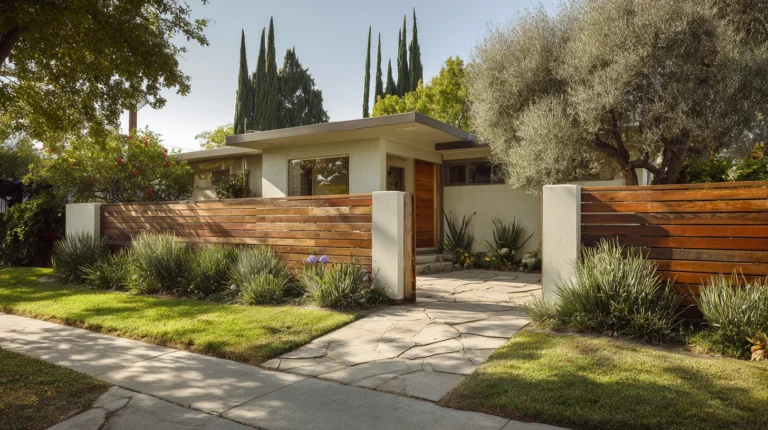
A grassless backyard is not a defeat. It is a design decision — one that replaces the high-maintenance monoculture of a lawn with surfaces and planting that look better, require less, and suit the way the garden is actually used more honestly than grass ever did.
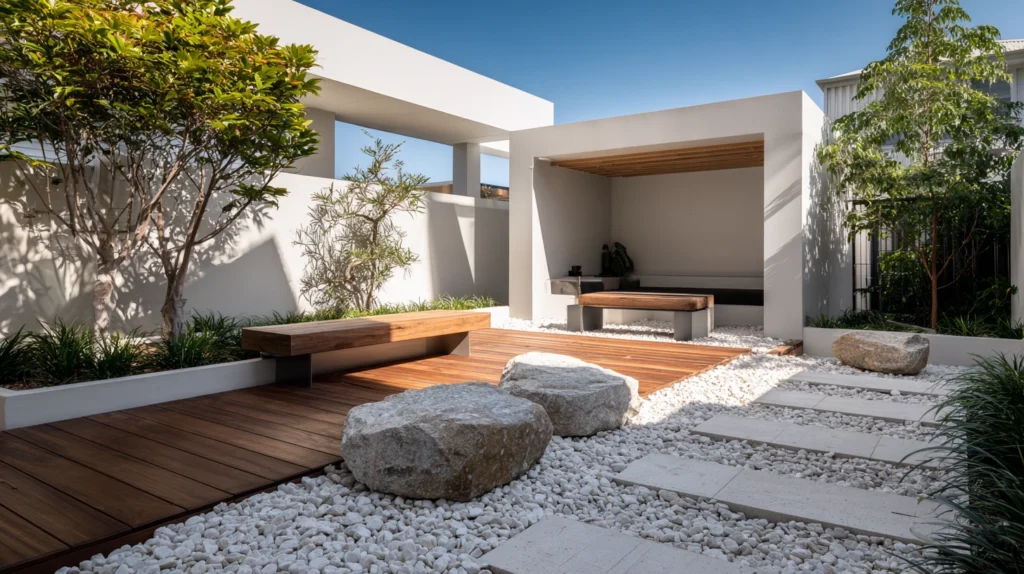
The grassless backyard can be more beautiful than the grassed one, more wildlife-friendly, more climate-resilient, and infinitely more enjoyable to maintain because the maintenance it requires is genuine gardening rather than the perpetual negotiation with a grass surface that lawns demand.
Each idea below is a specific grassless backyard design approach. Each includes what you will need, what it will cost, and a practical tip to make the whole thing work as well as the easy outdoor living it promises.
1. The All-Gravel Courtyard Garden
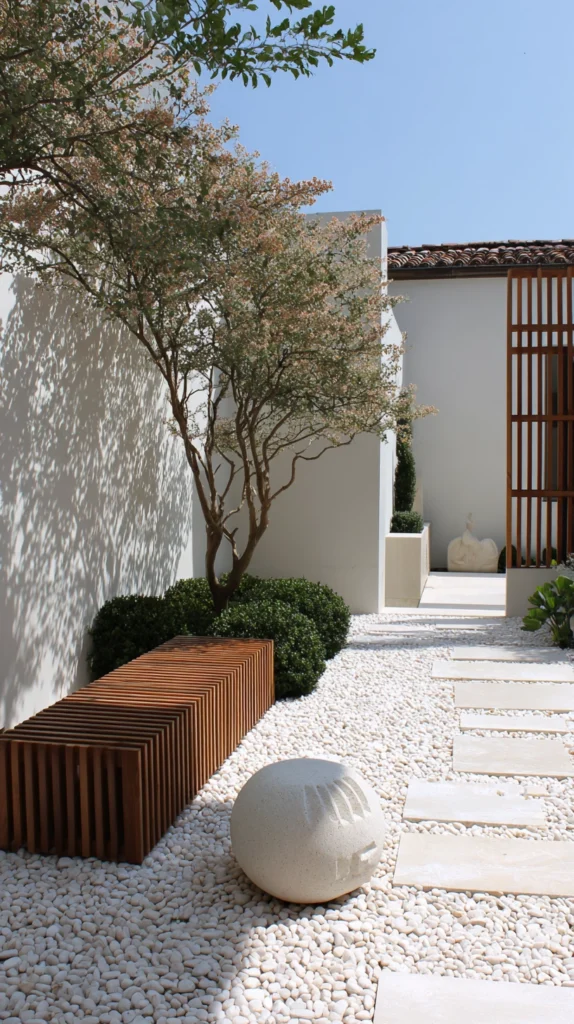
Budget: $200 – $1,000
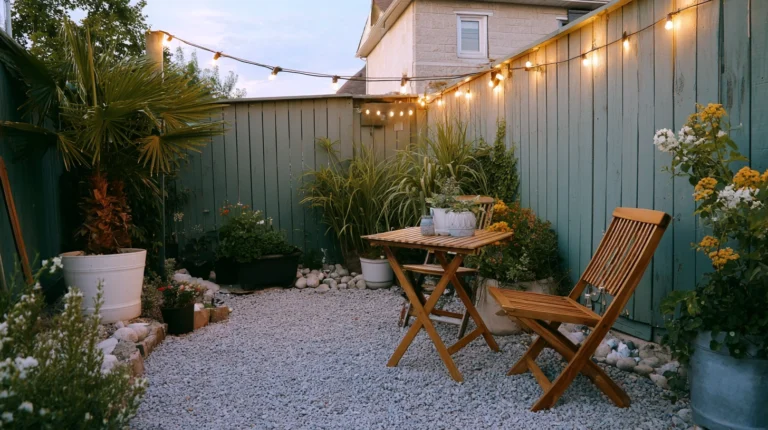
A backyard replaced entirely with decorative gravel — laid over a weed-suppressing membrane, with planting pockets cut through for architectural plants — creates the lowest-maintenance outdoor space available at any budget level. Gravel drains freely, requires no mowing, suppresses most weeds, and provides a neutral backdrop against which every plant placed in it reads as a deliberate design choice rather than as a border beside a lawn.
Decorative gravel in buff, slate, or pea gravel costs $8–$15 per 25-kilogram bag. A standard backyard of 30 square metres requires approximately forty bags at a 5-centimetre depth — $320–$600 in gravel. A weed-suppressing membrane roll runs $10–$20. Architectural plants for the planting pockets — phormium, agapanthus, ornamental grasses — cost $15–$40 each.
Style tip: Use two different gravel sizes in the same courtyard — a coarser grade as the main surface and a finer grade in the planting pocket areas immediately around each plant. The size variation gives the gravel garden the visual texture that a single uniform grade lacks, and the finer grade around each plant echoes the natural process of fine material accumulating around established planting.
2. The Paved Patio Garden
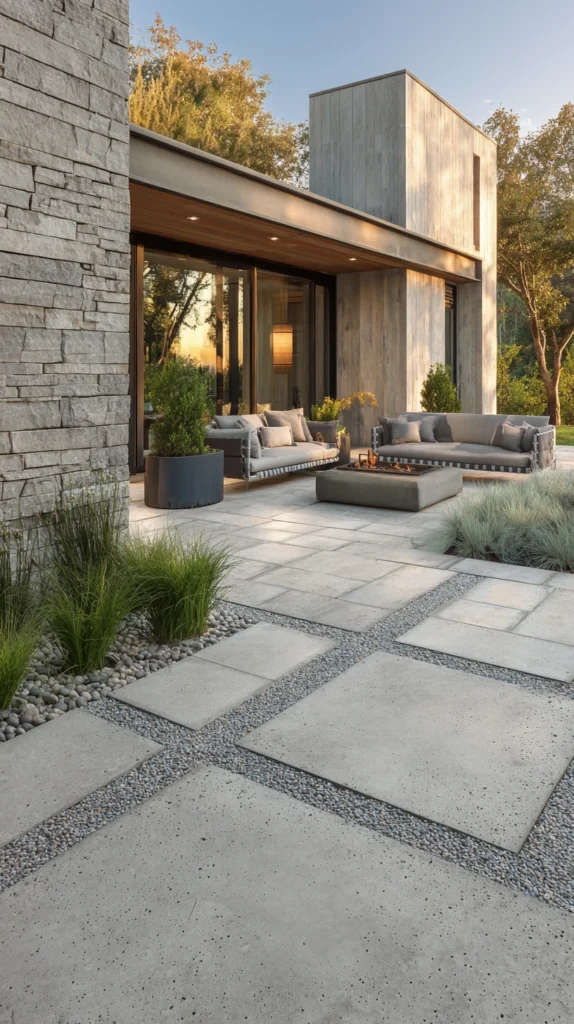
Budget: $500 – $3,000
A fully paved backyard — in natural stone, large-format porcelain, terracotta tile, or brick — creates the most durable, most versatile, and most genuinely hard-wearing grassless surface available. A well-paved backyard requires no maintenance beyond occasional cleaning, provides a surface usable in all weathers, and improves visually with age as the stone weathers and the joints develop the character of a surface that has been lived on.
Natural sandstone paving costs $25–$60 per square metre installed. Large-format porcelain tiles run $40–$80 per square metre installed. Brick paving costs $30–$60 per square metre installed. The paving quality is the specification that most determines the long-term appearance of the grassless backyard — a quality paving material chosen once lasts decades; a cheap paving material requires replacing within years.
Style tip: Break up a fully paved backyard with planted gaps rather than attempting to install all paving with conventional grout joints. Paving laid with deliberate gaps of 3–5 centimetres between some stones, filled with gritty compost and planted with low thyme, chamomile, or creeping phlox, produces a surface that reads as designed rather than as a car park. The planted joints are the detail that softens the fully paved backyard.
3. The Decked Outdoor Living Space
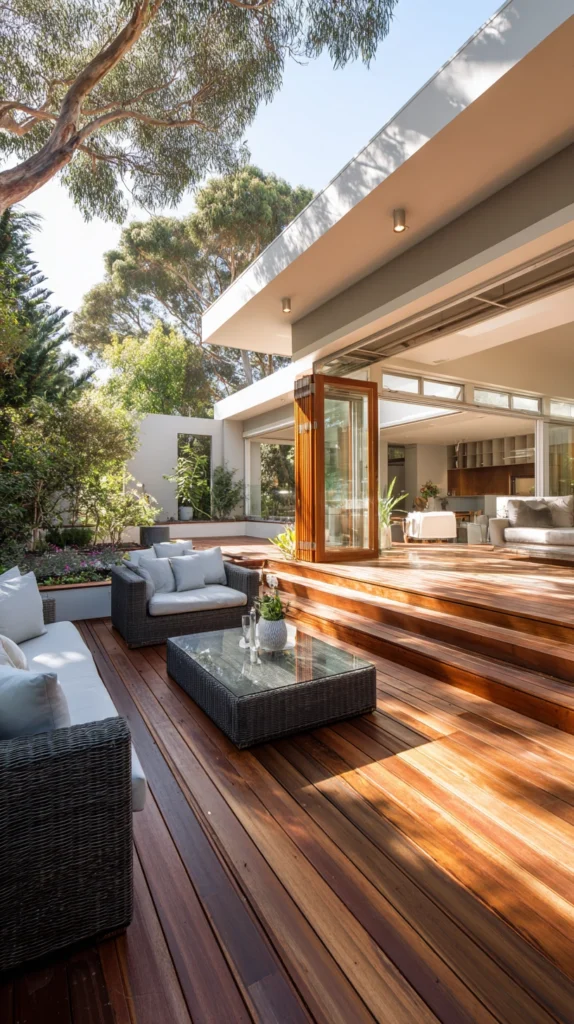
Budget: $800 – $5,000
Timber or composite decking replacing a tired lawn creates the outdoor living room that most fully replicates the indoor living experience outdoors — a warm, level, comfortable surface underfoot that accepts outdoor furniture in any configuration and improves the outdoor space’s relationship to the house by connecting the indoor floor level to the outdoor one without a step change.
Pressure-treated softwood decking boards cost $15–$30 per square metre in materials. Composite decking — the low-maintenance alternative that requires no annual oiling or treating — runs $40–$80 per square metre. Hardwood decking in iroko or ipe costs $30–$60 per square metre in materials. The subframe and installation typically doubles the material cost — budget $30–$80 per square metre for complete installed decking depending on the material.
Style tip: Lay composite or timber decking at 45 degrees to the house wall rather than perpendicular to it. The diagonal deck board direction makes the outdoor space feel larger by directing the eye toward the corners of the space rather than across its narrow width, and it gives the decked area a designed quality that the parallel-to-the-house direction, which reads as the default option, rarely achieves.
4. The Mediterranean Gravel and Drought Garden
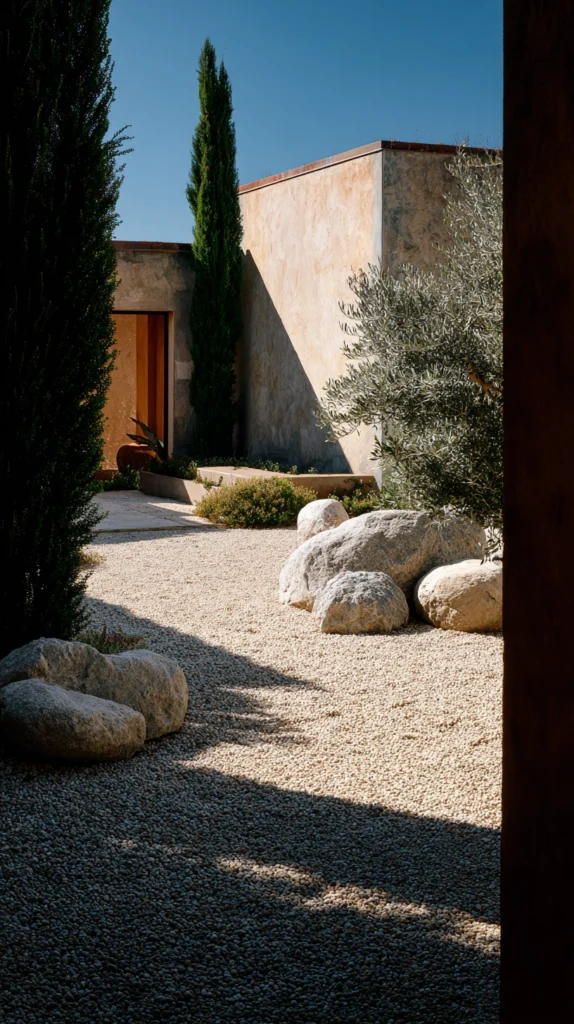
Budget: $300 – $1,500
A gravel garden planted with Mediterranean and drought-tolerant species — lavender, rosemary, cistus, sage, euphorbia, agave, ornamental grasses — creates the grassless backyard that performs best in warm, dry summers and worst in cold, wet winters. It is the right design for a south-facing garden with free-draining soil and a household that does not want to water the garden through July and August.
Gravel costs $8–$15 per bag. Mediterranean plants cost $5–$20 each — a generous planting for a 30-square-metre garden requires twenty to thirty plants. A layer of grit or gravel mulch at 5 centimetres depth around each plant — $3–$5 per bag of horticultural grit — is the detail that most determines the health and longevity of Mediterranean planting in a gravel garden context. Grit mulch prevents moisture from sitting against the plant stems, which is the condition that kills Mediterranean plants fastest.
Style tip: Plant the Mediterranean gravel garden in autumn rather than spring. Autumn planting allows the plants to establish their root systems through the cool, moist autumn and winter months before the hot, dry summer conditions that test them. A Mediterranean plant established through an autumn and winter before its first summer drought survives that drought consistently; one planted in spring and immediately subjected to summer drought does not.
5. The Wildflower Meadow Replacement

Budget: $20 – $100
Replacing a lawn with a wildflower meadow — by stripping the existing grass, clearing the soil of fertility, and sowing a wildflower and fine grass seed mix — creates the most ecologically valuable and most visually spectacular grassless lawn alternative available at the lowest cost. A wildflower meadow is not a neglected lawn; it is a deliberately planted, deliberately managed alternative that requires different management — a single cut per year in late summer rather than weekly mowing — but considerably less effort overall.
Wildflower and fine grass meadow seed mix costs $5–$20 per packet — enough to sow 10 square metres. Clearing the existing lawn requires stripping the turf and cultivating the soil to reduce fertility — wildflowers require poor, low-fertility soil and will be outcompeted by grasses and weeds on rich lawn soil. A scarifier hire or a turf stripper hire costs $30–$60 per day.
Style tip: Cut and remove the first year’s growth of the meadow in late August rather than leaving it to die back naturally. The cut-and-remove management is the most important wildflower meadow maintenance practice — it removes the nutrients from the site in the form of the cut material and gradually reduces the soil fertility toward the level that allows the finest wildflowers to thrive. A meadow managed by cut-and-remove becomes more diverse and more beautiful each year; one left unmanaged becomes dominated by coarse grasses within two to three seasons.
6. The Raised Bed Kitchen Garden
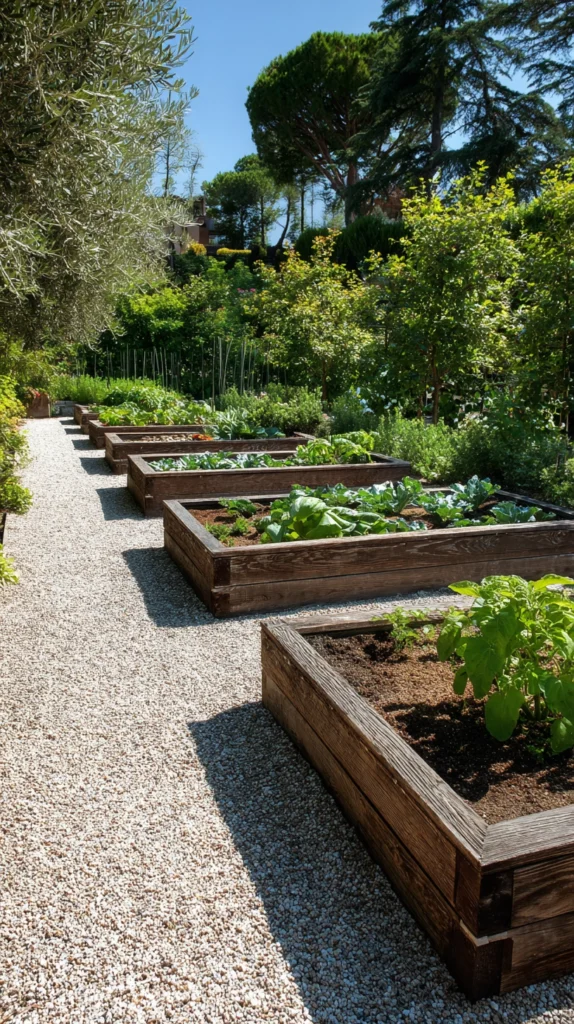
Budget: $200 – $1,200
A backyard converted entirely to raised beds — multiple productive growing spaces in a consistent material on a gravel or bark chip path surface, replacing the lawn with a kitchen garden — creates the most functional and most food-productive of all the grassless backyard designs. A household that replaces its lawn with raised beds gains a food garden, eliminates the mowing, and creates a space that improves the quality of the food on the table rather than simply the appearance of the property.
Timber raised beds cost $40–$100 each. A backyard of 30 square metres accommodating six raised beds on a gravel path surface costs $400–$900 in beds plus $100–$200 in path gravel. Fill with a quality topsoil and compost mix — $15–$25 per bag, approximately two bags per raised bed. The path surface between the raised beds should be wide enough for a wheelbarrow — 60 centimetres minimum — rather than designed only for foot access.
Style tip: Orient the raised beds on a north-south axis so both long sides of each bed receive morning and afternoon sun rather than one side being permanently shaded by the adjacent bed. The north-south orientation maximises light to the growing surface and is the positioning decision that most determines the productivity of a raised bed kitchen garden.
7. The Artificial Grass Installation
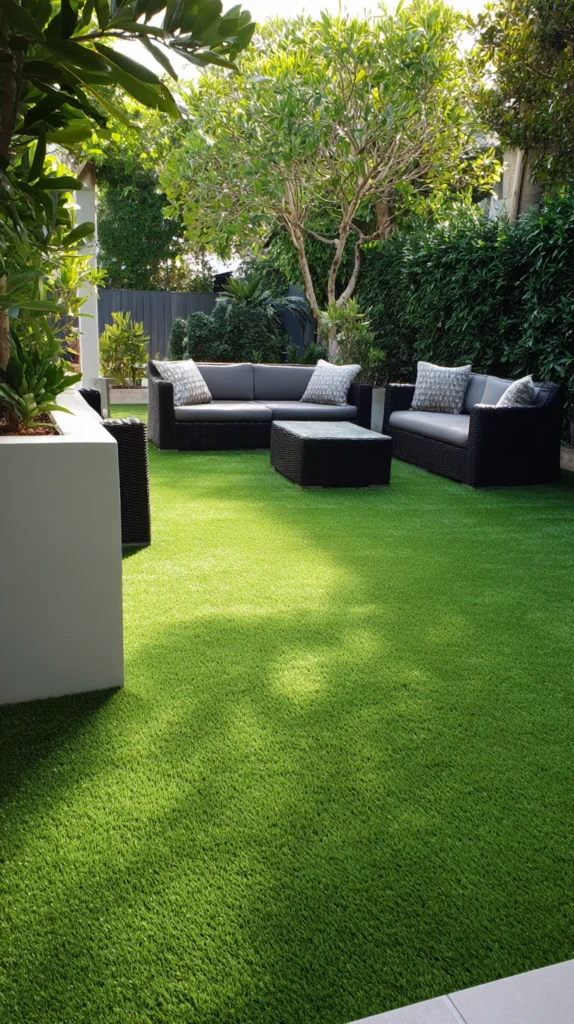
Budget: $400 – $2,000
Artificial grass — the modern high-quality version of the product that bore no resemblance to real turf, not the bright green carpet of the 1990s — creates a permanently green, permanently even, permanently maintenance-free surface that provides the visual quality of a lawn without any of its maintenance demands. The best modern artificial grass is genuinely difficult to distinguish from real turf at a conversational distance and virtually impossible to distinguish in a photograph.
A quality artificial grass installation costs $15–$40 per square metre for the grass itself plus $10–$20 per square metre for the sub-base preparation and installation. A complete installed artificial lawn of 30 square metres costs $750–$1,800. Choose a grass with a pile height of 30–37 millimetres and a blade colour that includes both green and brown fibres — the mixed colour reads as real grass in a way that uniformly green artificial turf does not.
Style tip: Install a shock-absorbing pad beneath the artificial grass rather than laying it directly on the compacted sub-base. The shock pad provides the springy underfoot quality of real turf that artificial grass without padding lacks — the difference in feel underfoot is immediately apparent, especially to children playing on the surface, and it is the installation detail that most determines whether the artificial grass feels like a surface or like a lawn.
8. The Urban Jungle Container Garden
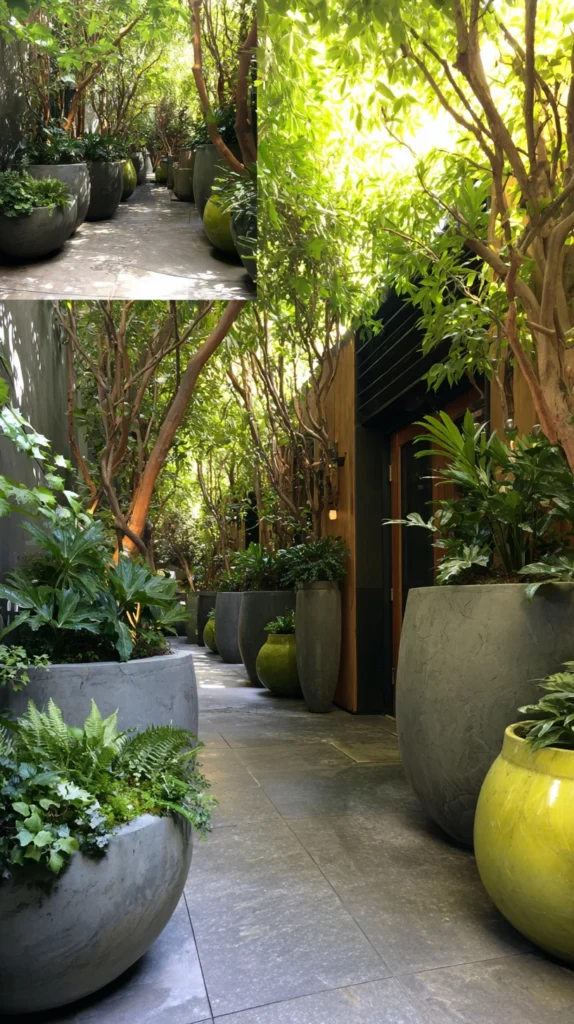
Budget: $200 – $1,500
A backyard where the entire outdoor space is occupied by containers — large pots, raised planters, grow bags, window boxes, vertical planters — with a hard surface beneath creates the most intensely planted and most atmospherically tropical of all the grassless backyard designs. The container garden eliminates the lawn while creating a planted density that a conventional garden border rarely achieves, and it has the specific advantage of being entirely rearrangeable as the household’s needs and tastes evolve.
Large ceramic or fibreclay pots of 40–50 centimetres diameter cost $30–$80 each. A collection of ten large pots for a standard backyard runs $300–$800. Plants for a tropical or lush container scheme — bananas, cannas, tree ferns, large-leafed tropicals — cost $15–$60 each. A drip irrigation system connected to the outdoor tap ($30–$80) is the infrastructure investment that makes a large container garden practically manageable without daily watering.
Style tip: Group containers in clusters of odd numbers — three, five, or seven — rather than distributing them evenly across the paved surface. A cluster of three large pots with plants at varying heights reads as a garden composition; the same three pots placed at equal intervals across the surface reads as pots placed on a patio. The grouping is the design decision that transforms a container collection into a container garden.
9. The Pebble and Planting Zen Garden
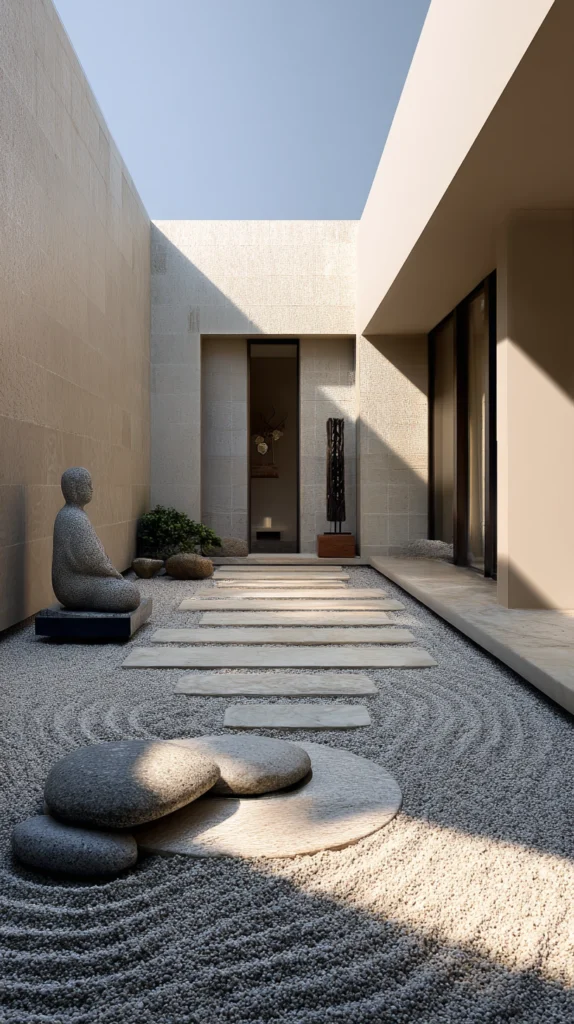
Budget: $150 – $800
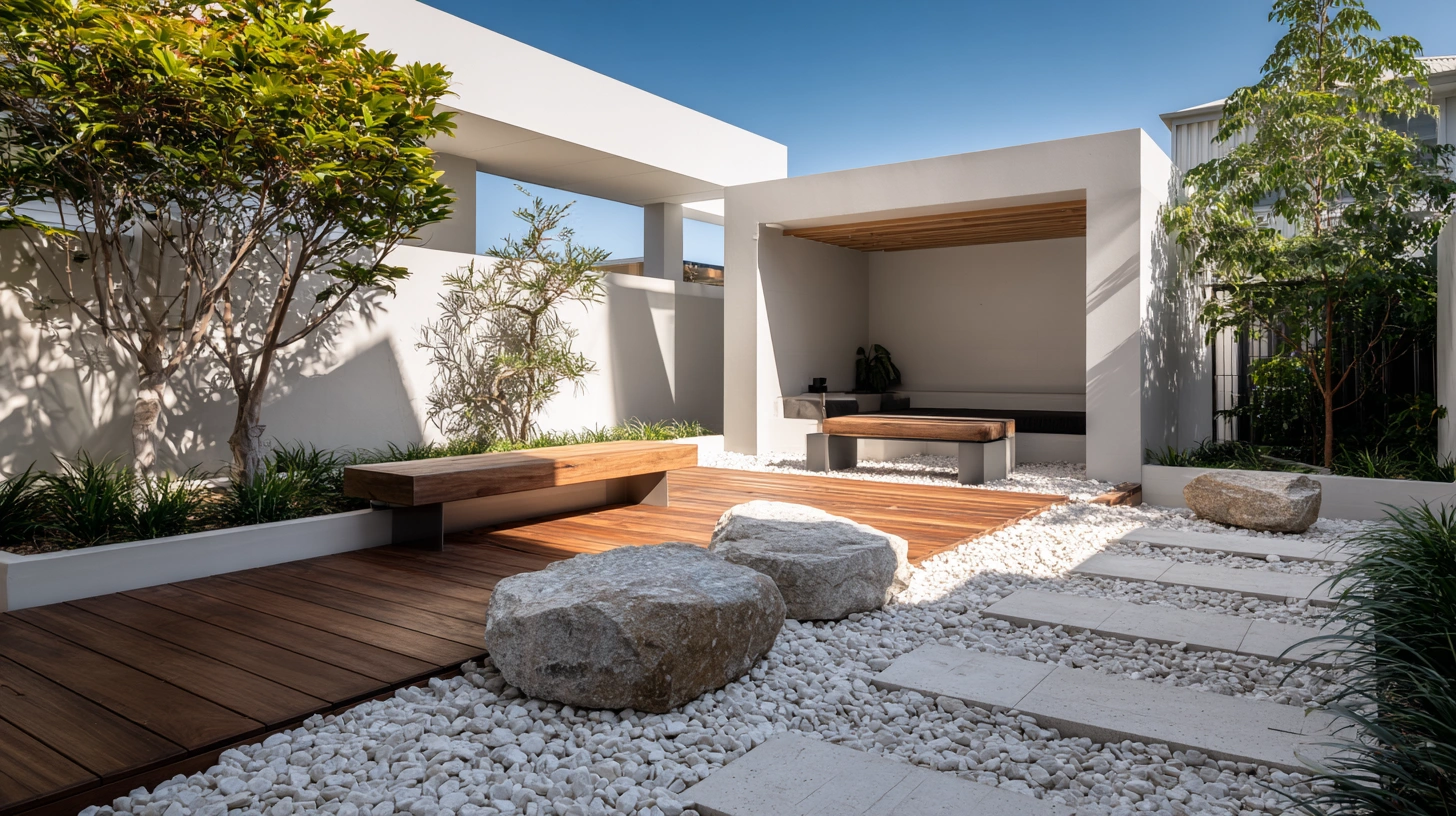
A zen-inspired backyard design — using smooth pebbles, fine gravel raked in traditional patterns, flat stepping stones, and carefully positioned specimen plants — creates the most meditative and most visually precise of all the grassless backyard alternatives. The zen garden rewards the precision of its installation and the consistency of its maintenance, and it produces a quality of calm in the outdoor space that no other grassless design approaches.
Fine granite gravel or white pea gravel costs $10–$20 per bag. Smooth river pebbles cost $8–$15 per kilogram. Flat stepping stones cost $5–$15 each. A bamboo rake for the gravel surface costs $10–$20. A single specimen plant — a cloud-pruned box, a Japanese maple, a standard-trained olive — costs $30–$120 and serves as the garden’s focal element. The zen garden requires a precisely edged boundary — a metal or timber edge — to prevent the gravel from migrating onto surrounding surfaces.
Style tip: Limit the zen garden to two materials and one plant rather than introducing multiple stone types and multiple plant species. The power of the zen design comes from its reduction to the essential elements — one stone, one gravel, one plant — and the temptation to add variety undermines the specific quality of restraint that makes the zen backyard work. Every addition to the zen garden should be resisted until the case for it is genuinely compelling.
10. The Bark Chip and Forest Floor Garden
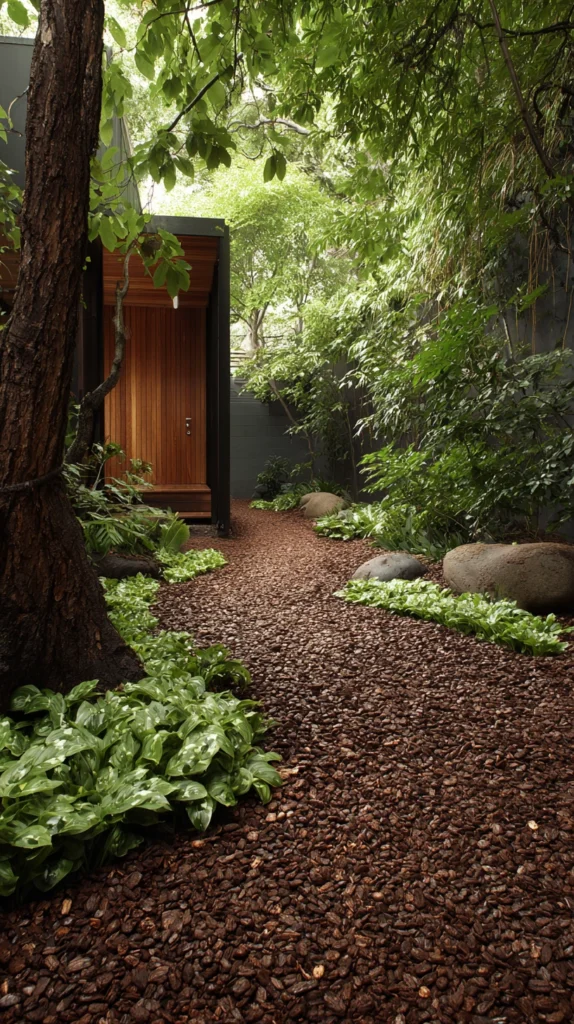
Budget: $100 – $500
A backyard covered in bark chip mulch — laid at 8–10 centimetres depth over a weed-suppressing membrane, with shade-loving plants installed through the membrane — creates the most woodland-appropriate and most naturalistic of all the grassless garden surfaces. Bark chip is the natural floor of a woodland garden and it suits north-facing or shaded backyards where grass grows poorly and conventional planting struggles with the competition from tree roots.
Bark chip costs $8–$15 per bag. A backyard of 30 square metres requires approximately twenty bags at the correct depth — $160–$300 in bark. Shade-loving plants — hostas, ferns, astilbes, hellebores, woodland anemones — cost $6–$20 each. The bark chip surface requires topping up every one to two years as the material decomposes — annual top-up is the only maintenance the bark garden requires.
Style tip: Edge the bark chip garden with a clean, defined boundary — a metal edge, a row of larger logs, a stone border — rather than allowing the bark to fade gradually into the surrounding planting or boundary. A defined edge communicates the bark surface as a designed ground cover decision; bark without a defined edge communicates a mulched bed that extended beyond its intended boundary. The edge is the detail that makes the bark garden look considered.
11. The Outdoor Room Extension
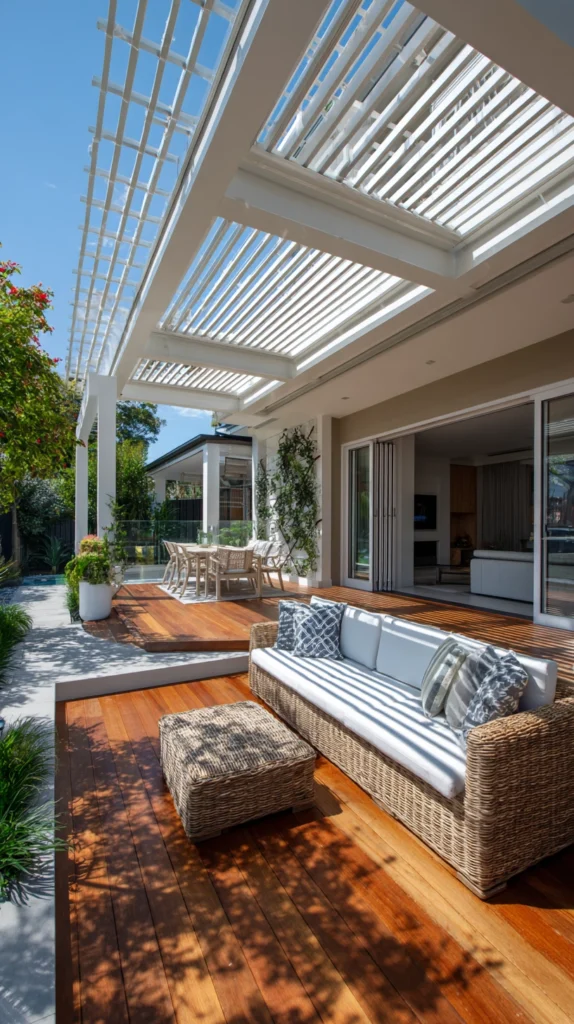
Budget: $1,000 – $6,000
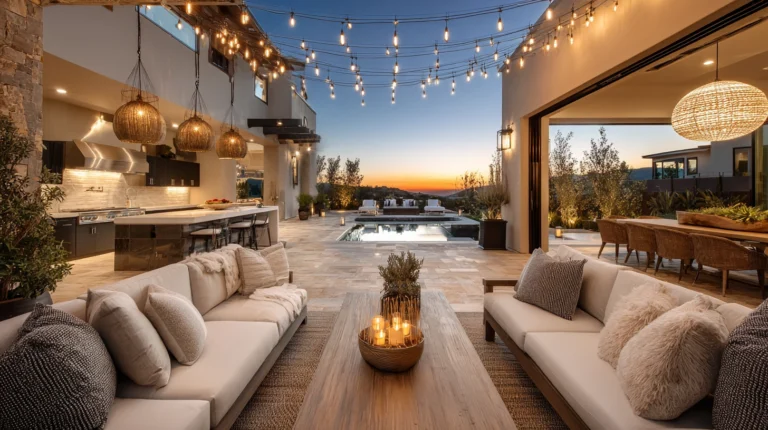
A backyard converted into an outdoor room — with a covered pergola or louvred roof structure, a quality hard floor surface, built-in seating, outdoor kitchen or bar, and permanent landscaping around the perimeter — creates the most complete and most house-like of all the grassless backyard alternatives. The outdoor room treats the backyard as the additional square footage of the house rather than as a garden, and it produces an outdoor space that functions as a living room, dining room, and entertaining space without the weather dependency that an uncovered or unfurnished outdoor area always has.
A timber or aluminium pergola over the primary outdoor space costs $500–$2,000. A quality hard floor surface beneath it costs $500–$1,500 installed. Built-in bench seating around the perimeter costs $300–$800. An outdoor kitchen or bar unit runs $400–$1,500. The total investment for a complete outdoor room in a standard backyard runs $2,000–$6,000 and produces a space that extends the functional living area of the house by the equivalent of a substantial room.
Style tip: Connect the outdoor room floor to the indoor floor at the same level — or as close to the same level as the building construction allows — using the same or a visually related floor material. The floor continuity between inside and outside is the single design decision that most powerfully eliminates the threshold between the house and the outdoor room, making the two spaces feel genuinely continuous rather than adjacent.
12. The Native Plant Meadow
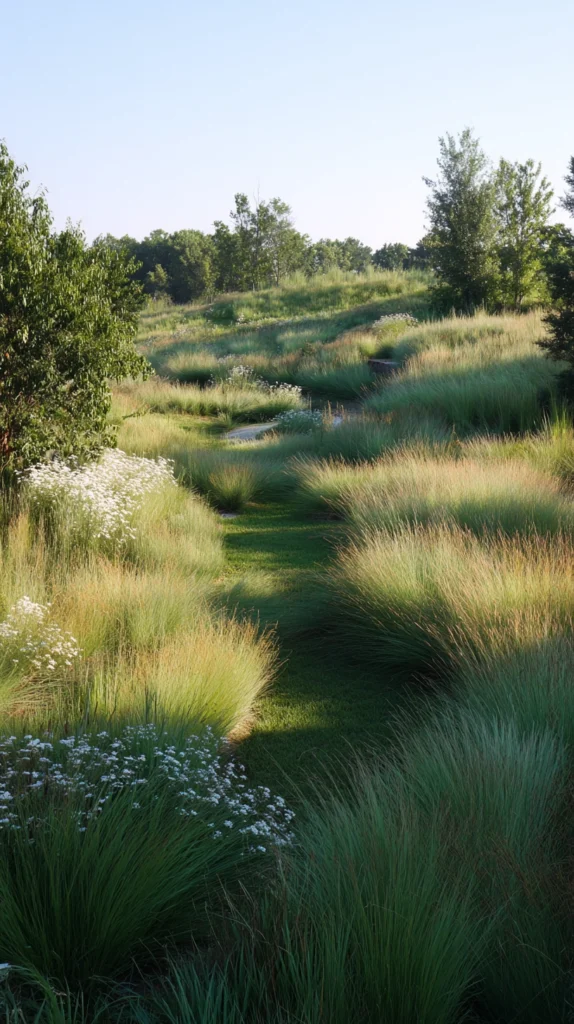
Budget: $50 – $300
A backyard planted entirely with native wildflowers, native grasses, and native shrubs — without lawn, without imported ornamentals, without any non-native species — creates the most ecologically complete and most genuinely sustainable of all the grassless backyard designs. A native plant meadow supports the full web of local wildlife — the specific insects, birds, and small mammals that evolved alongside the local plant species — in a way that no exotic planting scheme, however beautiful, can replicate.
Native plant plugs from a specialist nursery cost $0.50–$2 each. A backyard of 30 square metres planted at a density of eight plants per square metre requires 240 plug plants — $120–$480 in plants. Seed of native species costs $3–$10 per packet. The native plant meadow requires no irrigation once established, no feeding, and minimal intervention — the annual management task of cutting and removing in late summer is the total maintenance requirement.
Style tip: Research the specific native plant communities of the local area before selecting species. Native plants are native to a specific place and soil type — a plant native to chalk downland is not the same as a plant native to acid heath, and a meadow planted with species from the wrong community will underperform and gradually be replaced by whatever the local seed bank produces naturally. The local ecology record office or a specialist native plant nursery provides the right plant list for the specific site.
13. The Low-Maintenance Ornamental Garden
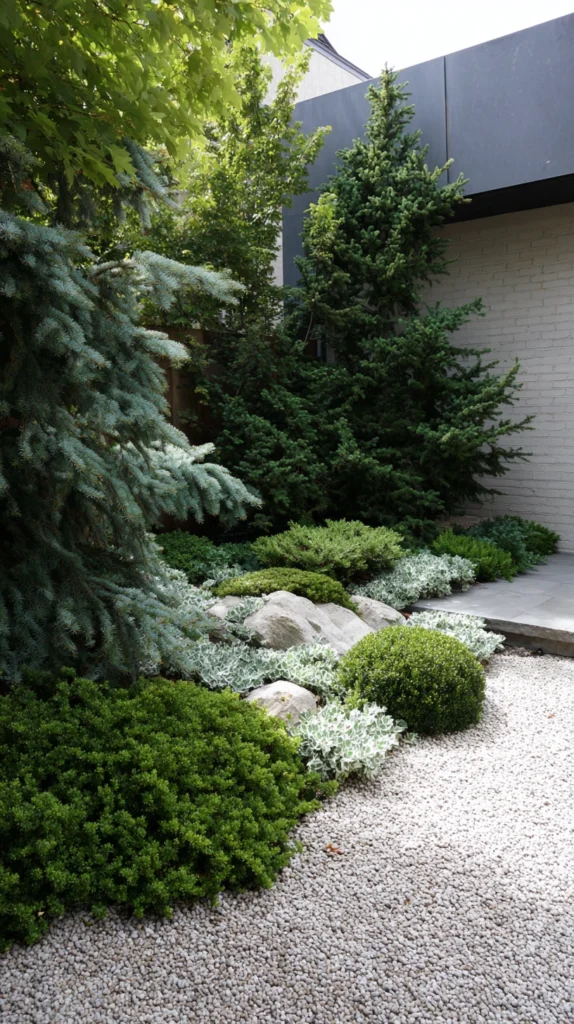
Budget: $300 – $1,500
A backyard designed around low-maintenance ornamental planting — structural evergreen shrubs, ground-covering perennials, ornamental grasses, and one or two specimen plants — on a gravel or bark mulch surface creates the grassless garden that looks the most like a conventional garden while requiring the least conventional maintenance. The ornamental grassless garden is for the household that wants the visual quality of a planted garden without the lawn maintenance or the intensive border management that conventional gardening demands.
Structural evergreen shrubs cost $15–$50 each. Ground-covering perennials run $8–$20 each. Ornamental grasses cost $10–$25 each. A garden of 30 square metres designed around ten to fifteen key plants on a gravel base costs $200–$600 in plants plus $150–$300 in gravel. Choose plants with a proven track record in the local climate — a plant that thrives without intervention is a low-maintenance plant; one that requires regular protection, feeding, and division is not.
Style tip: Invest in larger, more established plants rather than small specimens when creating the low-maintenance ornamental garden. A 5-litre shrub planted in a mulched gravel garden closes canopy with its neighbours faster than a 1-litre plant, suppresses weeds more quickly through the shading of its foliage, and looks established from year one rather than from year three. The additional cost of the larger plant is the investment in a garden that looks good immediately rather than eventually.
14. The Seating and Social Space Garden
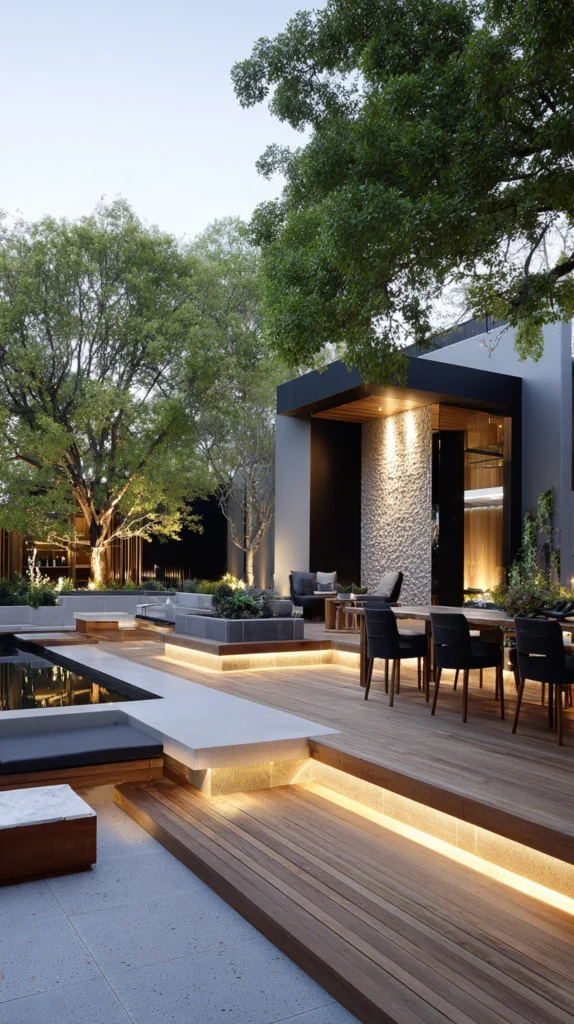
Budget: $400 – $2,500
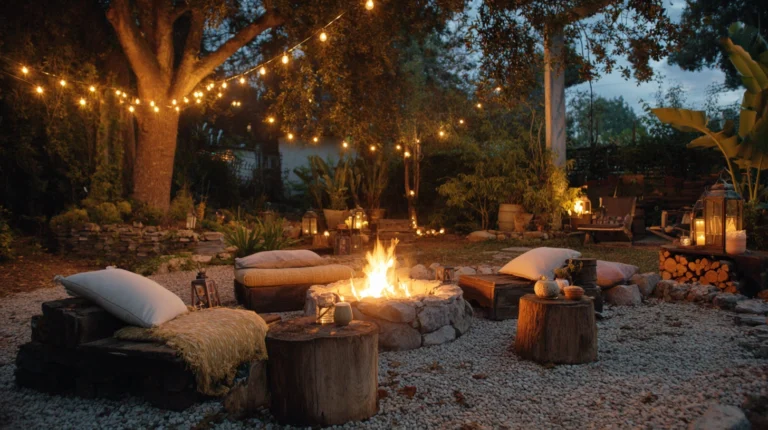
A backyard designed entirely around outdoor social use — with a large dining area, a separate lounging zone, a drinks station, a fire pit, and no lawn to maintain — creates the grassless design that most directly acknowledges how most backyards are actually used. Most suburban backyards are used for sitting, dining, and gathering rather than for active lawn use, and a backyard designed specifically for those activities with a high-quality hard surface throughout performs those activities better and looks better performing them than the same backyard with a lawn occupying the majority of the space.
A quality paved or decked dining area costs $500–$2,000 installed. An outdoor lounge area with a fire pit costs $200–$600. A drinks station or outdoor bar costs $100–$400. The total social space garden investment for a standard backyard runs $1,000–$3,500 and produces a space that hosts a dinner party, an afternoon gathering, or a family evening outdoors more effectively than any lawn-centred backyard design at any budget.
Style tip: Define each zone of the social space garden with a different surface material or level rather than creating one continuous undifferentiated hard surface. A dining area in natural stone, a lounge area on composite decking, and a fire pit zone on gravel — connected by a single path material — reads as three outdoor rooms rather than one large outdoor floor. The zone definition is the planning decision that gives the social space garden its interest and its function.
15. The Children’s Play Garden Without Grass
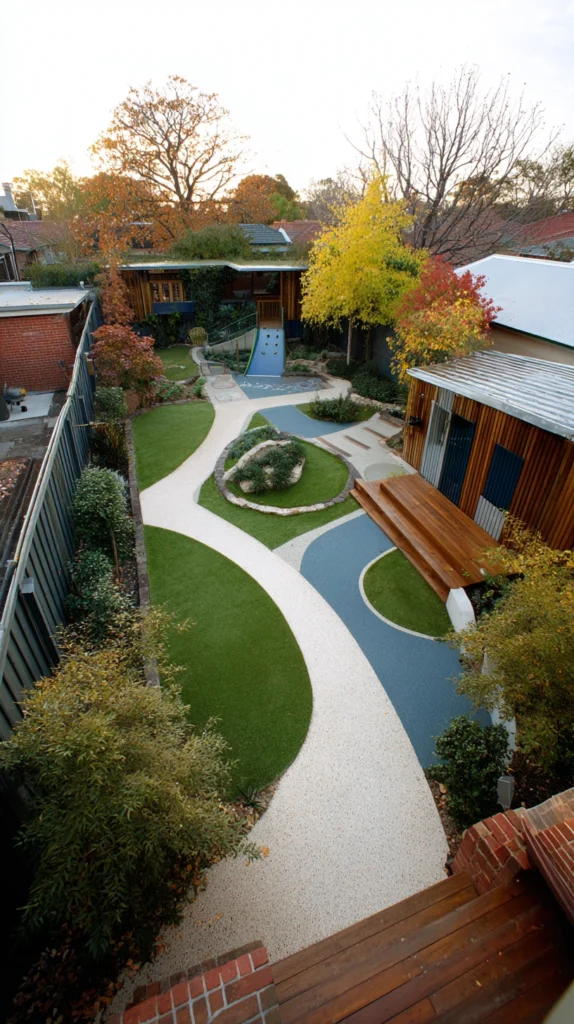
Budget: $200 – $1,500
A backyard designed for children’s use without a lawn — using rubber safety matting under the play equipment, artificial turf in the activity zones, a sand pit, a mud kitchen, a bark chip soft-landing area under climbing equipment, and a hard path surface connecting the elements — creates the most practical and most child-appropriate grassless design. Grass under children’s play equipment wears to mud within a single season of heavy use; the purpose-designed surfaces of the children’s play garden maintain their quality regardless of the intensity of use.
Rubber safety matting costs $15–$40 per square metre. Artificial turf for the activity area runs $15–$35 per square metre installed. A sand pit with a cover costs $40–$150. A bark chip soft-landing area costs $8–$15 per bag. A climbing frame on a rubber matting base costs $200–$800. The total investment for a complete grassless children’s play garden runs $500–$2,000 depending on the scale and the equipment.
Style tip: Design the children’s play garden to evolve rather than to be replaced — install the rubber matting and the path surface permanently, and configure the play equipment and the sand pit on top of it as elements that can be changed as the children grow. The sand pit that serves a three-year-old becomes a raised bed for a nine-year-old becomes a seating feature for a teenager, all on the same permanent surface. The permanent surface is the investment; the elements on top of it are the expenditure that grows with the children.
The grassless backyard that works is not the one that most convincingly imitates a lawn. It is the one that most honestly addresses what the specific household needs from its outdoor space — whether that is food production, ecological value, outdoor entertainment, children’s play, or simply the end of the Sunday morning obligation to mow. The right grassless design is the one that makes the outdoor space more useful, more beautiful, and more genuinely enjoyed than the lawn it replaced.
Choose the approach that suits the garden’s conditions — the aspect, the soil, the shade — and the household’s actual use. Install it properly, with the correct sub-base and the correct edging and the correct planting density. And then enjoy the specific freedom of an outdoor space that asks only to be lived in rather than constantly maintained.