13 Apple and Pumpkin Themed Kitchen Decor Ideas
13 Apple and Pumpkin Themed Kitchen Decor Ideas
The kitchen is where fall actually happens in most homes — cider simmering on the stove, apples piling up on the counter for pie, the oven running more often as the weather cools. It makes sense that it’s also one of the most natural rooms in the house to style around the season, using the same apples and pumpkins that are already showing up in the actual cooking.
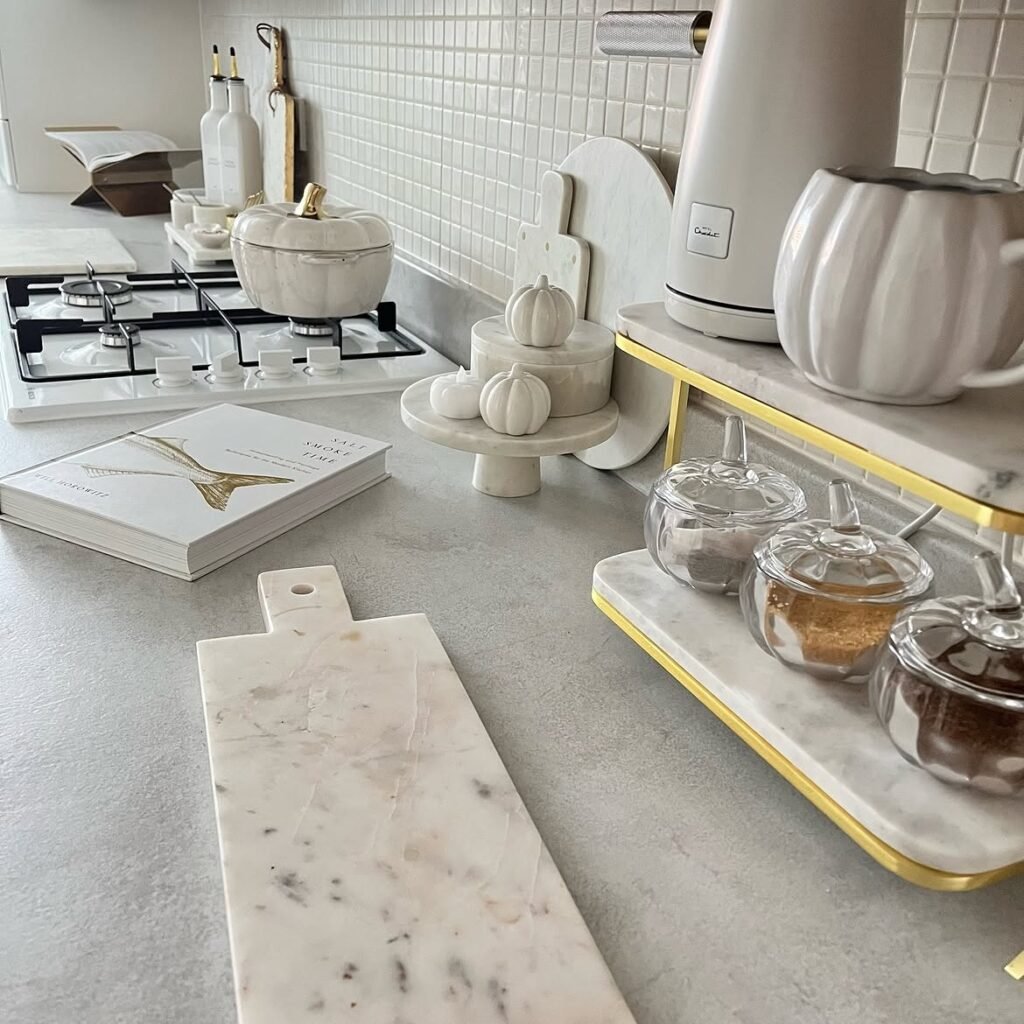
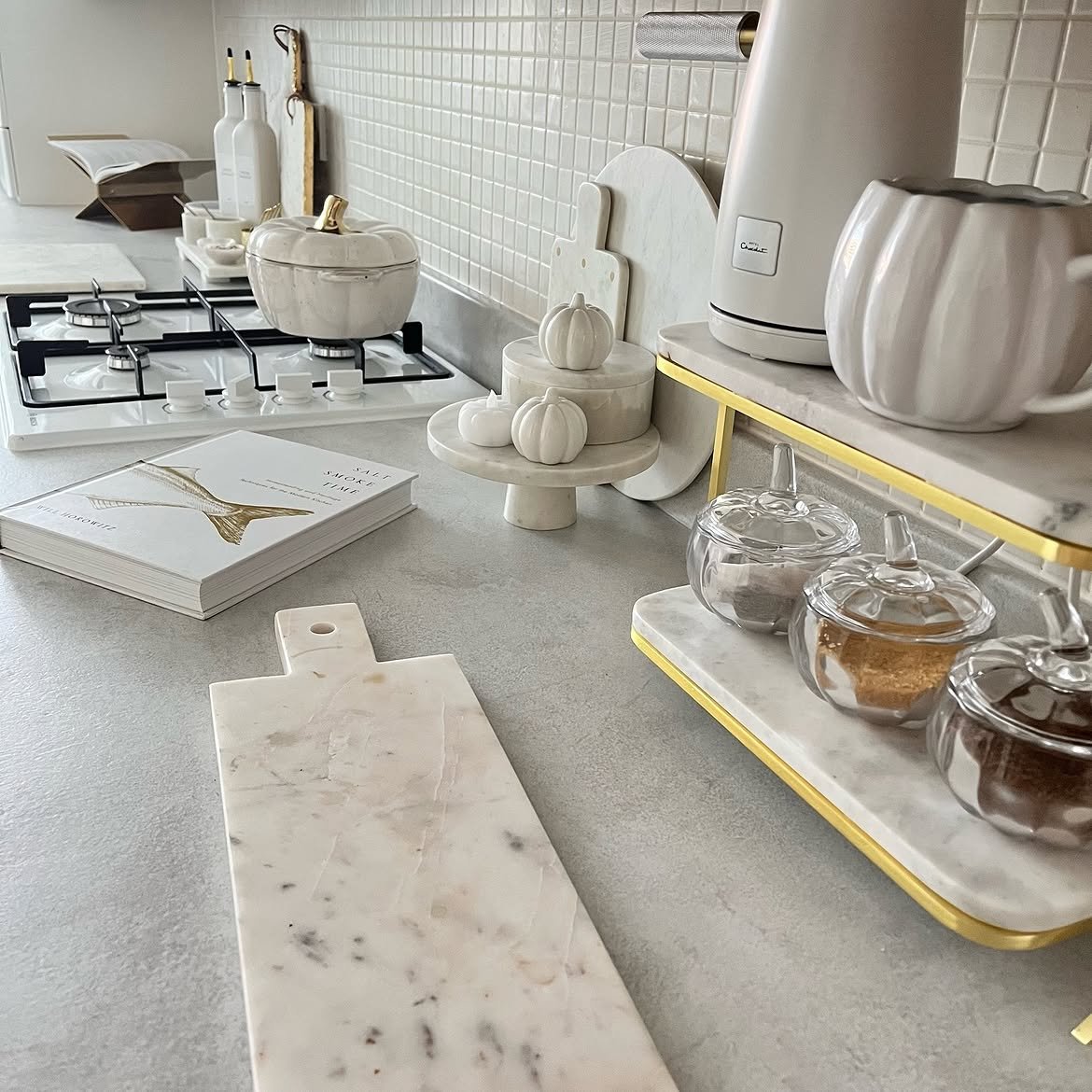
The risk with an apple-and-pumpkin theme specifically is that it can tip into novelty fast — a kitchen covered in pumpkin-print dish towels and apple-shaped magnets reads more like a seasonal aisle display than a styled room.
The version that works treats apples and pumpkins as ingredients in the room’s material palette, the same way any other seasonal styling approach treats its subject: with restraint, real objects instead of themed printed ones, and a limited number of confident touches rather than every available seasonal item at once.
Here are 13 ways to bring an apple-and-pumpkin theme into a kitchen without it reading as a decorated aisle display.
Why Some Themed Kitchens Read as Novelty Instead of Styled
The printed-versus-real problem:
Without real objects:
- Pumpkin and apple imagery printed on dish towels, mugs, and wall art throughout the room
- No actual pumpkins, apples, or seasonal produce anywhere in the space
- The result: reads as a seasonal aisle display rather than a kitchen genuinely reflecting the season
With real objects:
- Actual apples and pumpkins used as the room’s styling material, in bowls, on the counter, and as part of functional displays
- Printed imagery used sparingly if at all, limited to one or two small accents rather than throughout
- The result: reads as a kitchen genuinely stocked and styled for the season, not one decorated to look that way
The overcommitment problem:
- Every available surface — counters, windowsills, open shelves, the table — styled with apples or pumpkins simultaneously
- The result: a kitchen that reads cluttered and overwhelming rather than seasonally considered, regardless of how nice any individual grouping is
The colour-uniformity problem:
- Every accent the same bright orange or bright red, with no tonal variation
- The result: reads flat and one-note, missing the depth a mix of warm tones (cream, olive, rust, deep red) provides
The Five Apple and Pumpkin Styling Principles
Before choosing any individual idea below, these five principles keep the theme reading styled rather than novelty:
Real produce over printed imagery:
- Actual apples and pumpkins, used as styling material, do more work than any printed towel or mug
- Printed imagery, if used, should be limited to one small accent rather than repeated throughout the room
One or two concentrated zones, not every surface:
- A styled counter grouping and one additional accent (a wreath, a runner) is usually enough
- Spreading the theme across every available surface reads as overdone rather than considered
Tonal variation within the palette:
- Cream and white pumpkins alongside orange ones, deep red apples alongside golden ones
- A single uniform bright orange and red reads flatter than the same theme built with more tonal range
Function alongside display:
- Apples in a bowl that actually get eaten, cider that actually gets served
- A themed kitchen that’s also genuinely in use reads more authentic than one purely staged for appearance
Restraint in the accent count per grouping:
- Three to five pieces per styled area, following the same grouping principle that governs any styled surface
- Overfilling any single grouping undercuts the same restraint this entire approach depends on
1. A Layered Apple and Pumpkin Bowl Centerpiece
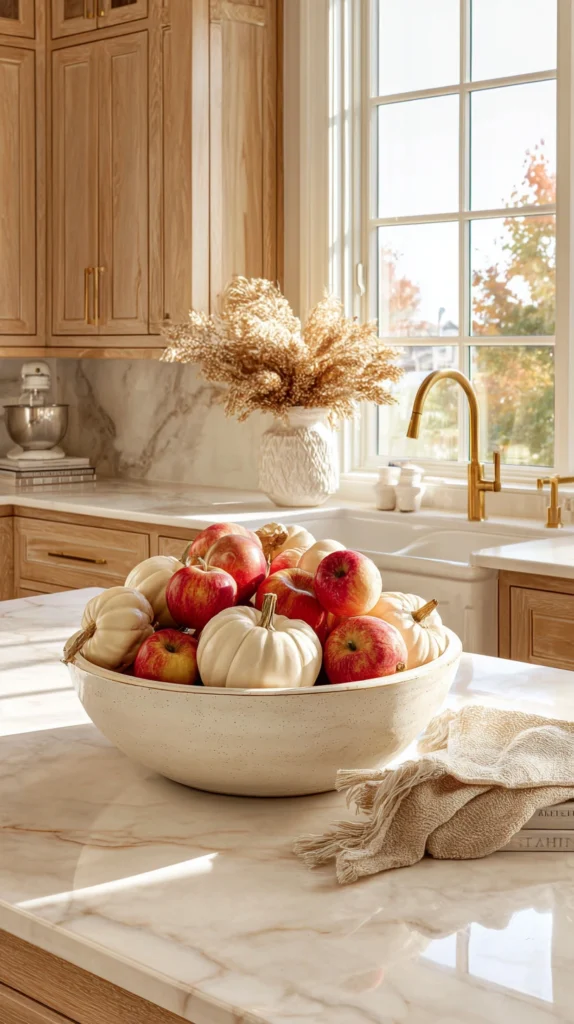
A wooden or ceramic bowl filled with a mix of real apples and small pumpkins, positioned at the kitchen island or table as the room’s central seasonal display.
Why mixing both fruits in one bowl works better than separate displays
Combining apples and pumpkins in a single grouping, rather than styling them in two separate locations, reinforces the theme as one cohesive idea rather than two disconnected seasonal gestures. The size and colour contrast between the two — smooth red or golden apples against the more textured, varied pumpkin surface — also adds visual interest within a single bowl.
Assembly
- 5–6 apples in a mix of red and golden varieties, 3–4 small pumpkins or gourds
- Layer the pumpkins toward the back or centre of the bowl, apples toward the front, rather than mixing them randomly throughout
Cost breakdown
- Apples and small pumpkins: $12–20
- Wooden or ceramic bowl (if not already owned): $20–40
- Total: $12–60 depending on existing bowl ownership
2. A Pumpkin Spice Candle Station
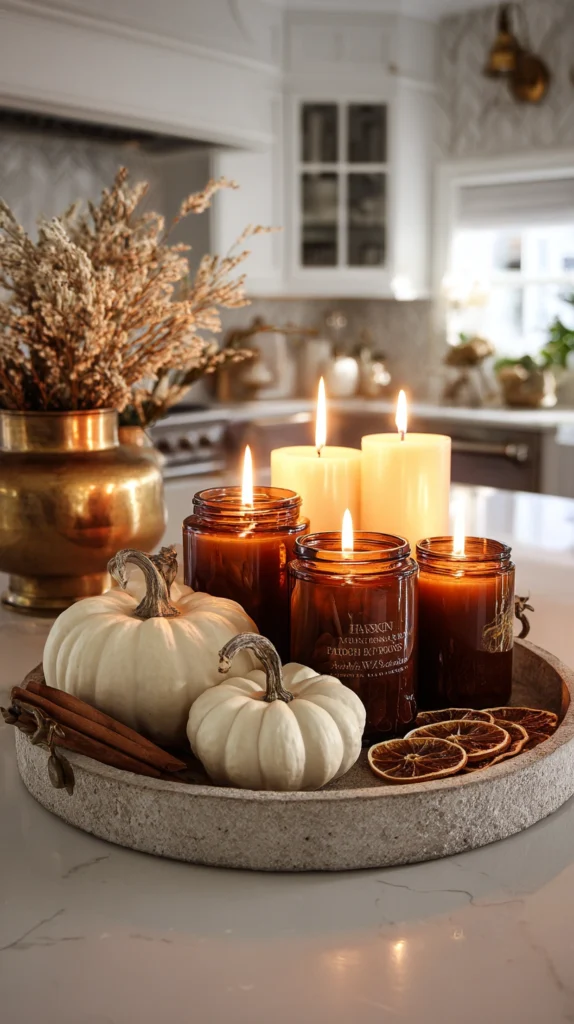
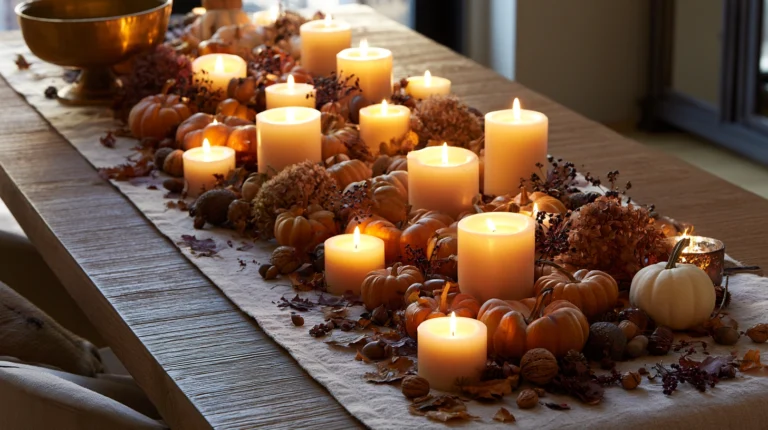
A small cluster of pumpkin spice or apple-scented candles, grouped on a tray on the counter or a windowsill, providing a scent layer alongside the visual styling.
Why scent belongs in this specific theme more than most
Apple and pumpkin spice scents are strongly associated with fall baking and cooking, meaning a candle in one of these scents reinforces the kitchen’s actual seasonal use — pies, cider, roasted squash — rather than existing as a purely decorative object disconnected from what the room is for.
Placement
- 2–3 candles at varied heights on a small tray, positioned away from the stove or any other heat source
- Lit during evening use, when the scent layer is most noticeable and most appreciated
Cost breakdown
- Pumpkin spice or apple-scented candles (2–3): $25–45
- Small tray: $12–20
- Total: $37–65
3. Gingham or Plaid Textile Accents
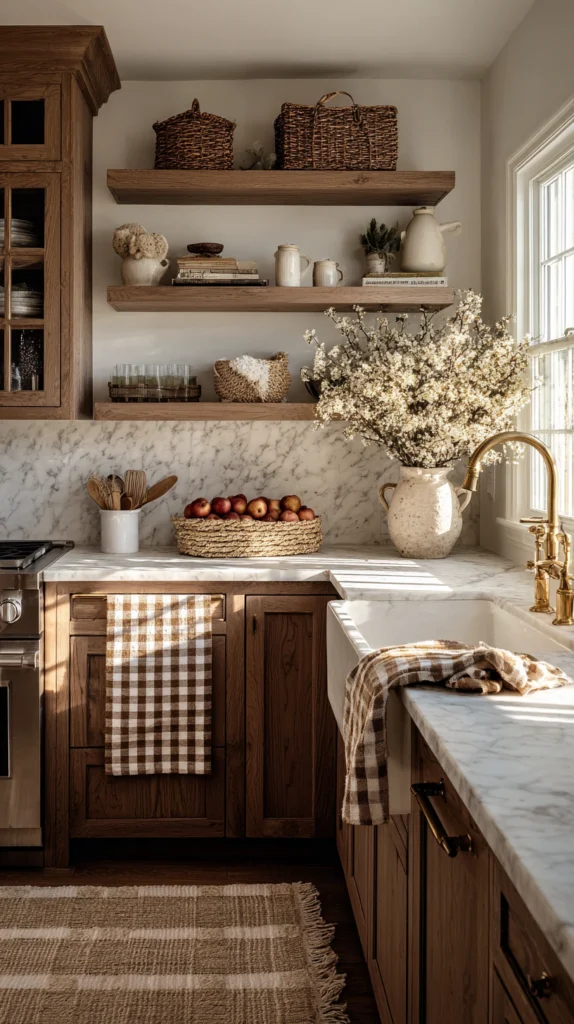
Dish towels, a table runner, or pot holders in a warm gingham or plaid pattern, replacing solid or unrelated-pattern textiles currently in the kitchen.
Why pattern textiles suit this theme specifically
Gingham and plaid carry a strong association with harvest and orchard aesthetics — apple picking, farm stands, autumn markets — that ties naturally into an apple-and-pumpkin theme without needing literal fruit imagery. The pattern does the seasonal signaling that a printed apple or pumpkin graphic would otherwise be asked to do, in a way that ages better and feels less novelty.
Selection
- A warm rust, olive, or deep red gingham or plaid, rather than a bright, saturated version
- Limited to 2–3 textile pieces (a runner and dish towels, for instance) rather than pattern applied to every fabric surface in the room
Cost breakdown
- Gingham or plaid dish towels (2–3): $15–25
- Table runner: $18–30
- Total: $33–55
4. An Apple-Motif Canister Set
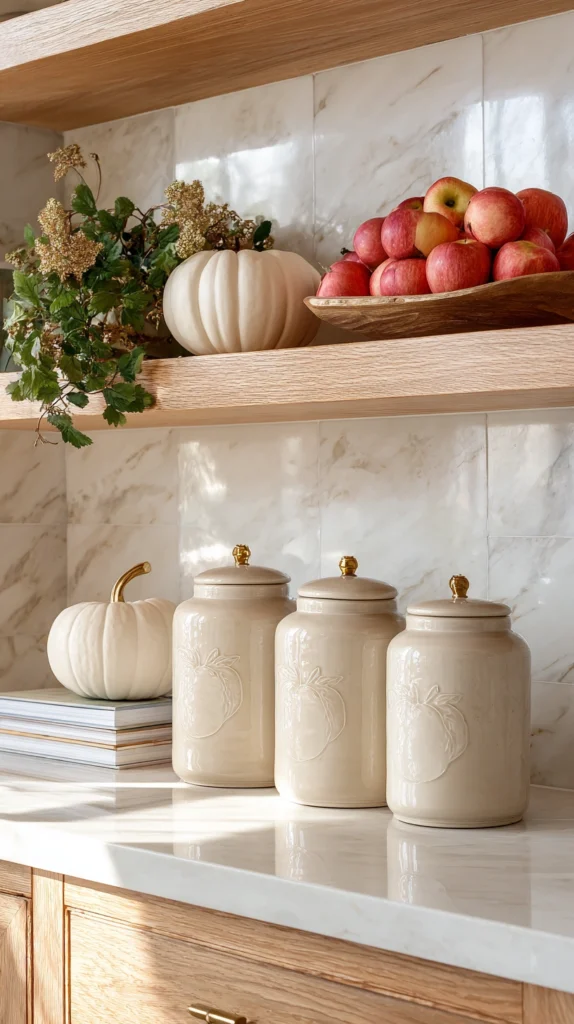
A set of kitchen canisters featuring a subtle, small-scale apple motif — hand-painted, embossed, or a simple silhouette rather than a large, literal apple graphic — used for flour, sugar, or coffee storage.
Why subtlety matters in this specific application
Canisters are functional, frequently viewed objects, making them a reasonable place for a small seasonal motif, but a large, cartoonish apple print can tip the whole kitchen toward novelty quickly. A subtle, small-scale motif — an embossed silhouette, a single hand-painted apple on an otherwise plain canister — reads as a considered detail rather than a themed purchase.
Selection
- Ceramic or ironstone canisters in a warm cream or white base, with the apple motif as a minor accent rather than the canister’s dominant feature
- A matching set of 3, rather than mismatched individual canisters, for a cohesive functional display
Cost breakdown
- Apple-motif canister set (3): $35–65
- Total: $35–65
5. A Small Wreath on the Kitchen Window
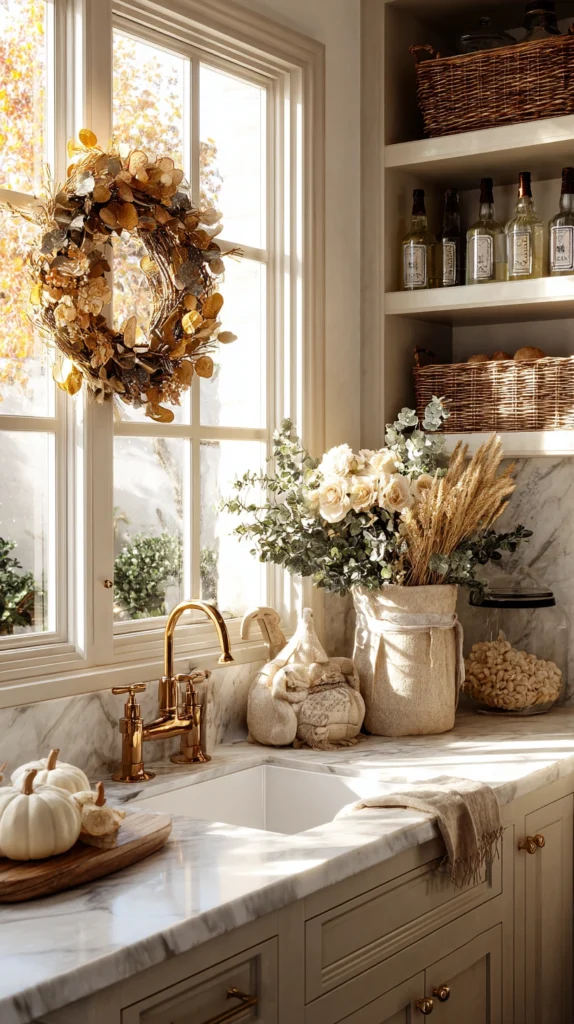
A modestly sized wreath, incorporating dried apple slices or small faux pumpkins alongside greenery, hung on the interior or exterior of a kitchen window.
Why the kitchen window is an underused seasonal opportunity
A kitchen window, often positioned above the sink and viewed multiple times a day during dishwashing or food prep, rarely gets any seasonal treatment despite being one of the most consistently looked-at spots in the room. A small wreath here extends the theme into a location most kitchens leave entirely unstyled.
Sizing and placement
- 10–14 inches in diameter, scaled to the window rather than a full-sized door wreath
- Hung with a small suction-cup hook if mounted on the interior of the glass, or a standard hook if mounted on the exterior window frame
Cost breakdown
- Small dried apple or pumpkin-accented wreath: $20–40
- Total: $20–40
6. A Chalkboard Sign With a Seasonal Message
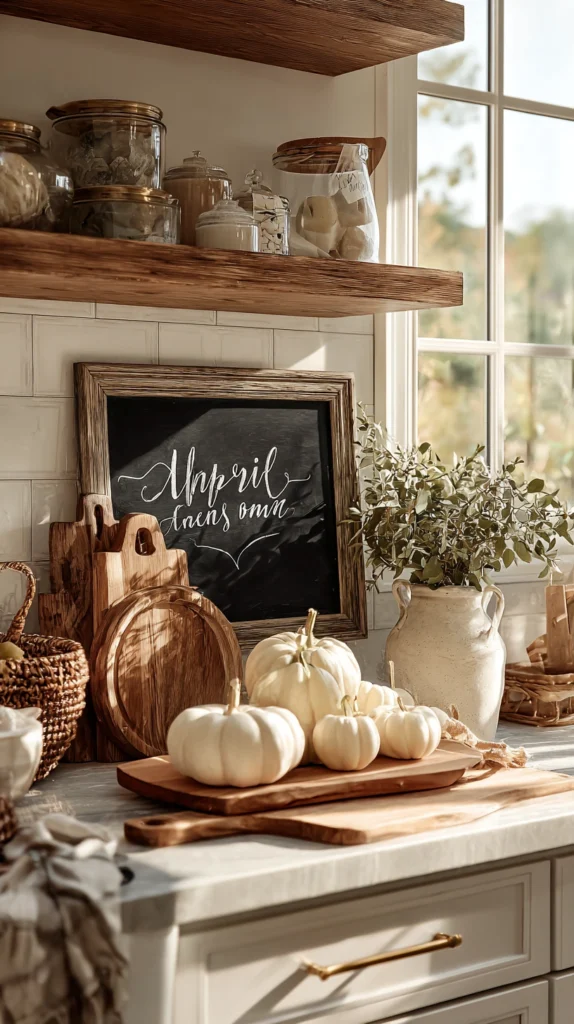
A small chalkboard, hand-lettered with a simple seasonal phrase or the week’s apple variety, positioned on the counter or hung on the wall.
Why a chalkboard adds personality without relying on literal produce imagery
A chalkboard sign is inherently changeable and personal, avoiding the static, purchased-decor feeling that a printed sign or canvas can carry. It also gives the kitchen a small, functional-feeling detail — noting an apple variety, a favorite pie recipe’s name, or simply the date of the harvest season — that reinforces the room’s actual use rather than existing purely as decoration.
Styling
- A small chalkboard, 8×10 to 12×16 inches, framed in a simple wood or black frame
- Hand-lettered in a casual, non-perfect script, which suits the kitchen’s lived-in, functional character better than precise block lettering
Cost breakdown
- Small chalkboard with frame: $15–30
- Total: $15–30
7. A Copper Pot Display With Seasonal Greenery
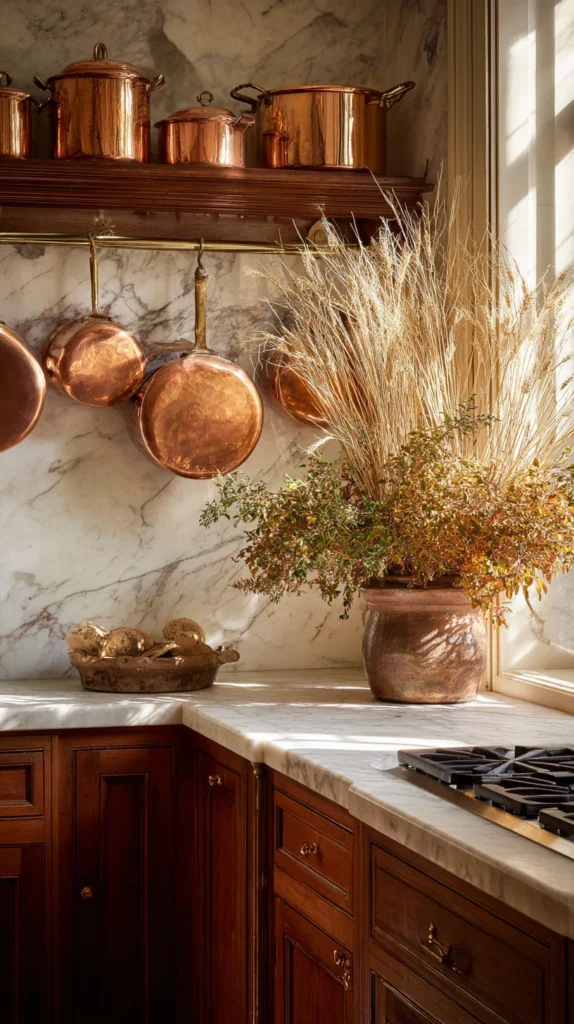
Copper pots or pans, if already owned, hung or displayed with a small tuck of seasonal greenery or a single dried stem woven between them.
Why this suits a kitchen that already has copper cookware
For a kitchen that already displays copper pots on a rack or open shelf, tucking in a small amount of seasonal greenery or a dried stem is a low-cost way to extend the theme into an existing functional display, rather than introducing an entirely new decorative object. The warm tone of copper also pairs naturally with the apple-and-pumpkin palette’s reds, oranges, and warm creams.
Styling
- A single small dried branch or a few stems tucked behind or beside the hanging pots, not wound elaborately through them
- Limited to one small addition, since the pots themselves are already the primary visual feature
Cost breakdown
- Dried greenery or stems: $8–15
- Total: $8–15 (assuming copper pots are already owned)
8. Mini Pumpkin Place Settings at the Breakfast Nook
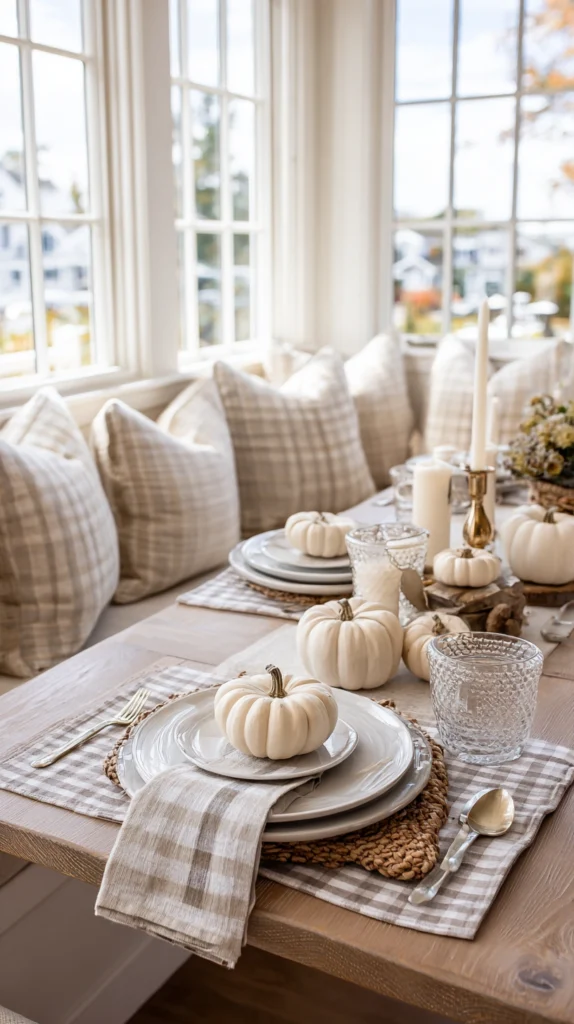
A single small pumpkin at each place setting in a breakfast nook or kitchen table, functioning as a place marker as well as a decorative touch.
Why this detail suits a kitchen table specifically
A kitchen breakfast nook is used daily, more casually than a formal dining room, making a small, functional-feeling detail like a mini pumpkin place marker more appropriate than an elaborate centerpiece. It extends the theme to where the household actually sits and eats, rather than concentrating everything at the counter alone.
Styling
- One small pumpkin (2–3 inches) per place setting, positioned above the plate or beside the napkin
- Varied slightly in size or colour (cream, white, and orange mixed) rather than uniform, for a more natural, gathered feeling
Cost breakdown
- Mini pumpkins (per setting, 4 settings): $8–16
- Total: $8–16
9. Cinnamon Stick-Bundled Dish Towels
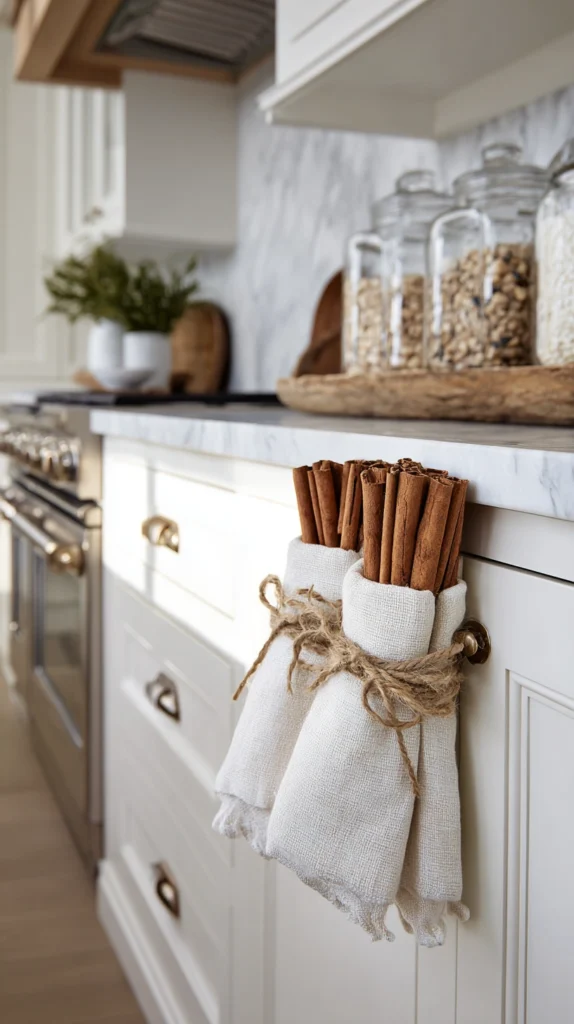
Dish towels, folded and tied with a small bundle of cinnamon sticks secured with twine, rather than simply hung flat on the oven handle.
Why this small styling technique elevates a purely functional object
Dish towels are functional necessities that rarely get styled at all, typically just draped over the oven handle without further consideration. Tying a small cinnamon bundle into the fold adds both a scent note and a textural detail to an object that’s touched and viewed constantly throughout the day, at very little additional cost.
Assembly
- Fold the towel into thirds, then tie with twine, tucking 3–4 cinnamon sticks under the tie
- Positioned on the oven handle or a hook, in the kitchen’s most frequently used towel location
Cost breakdown
- Cinnamon sticks: $6–12
- Twine: $3–5
- Total: $9–17
10. An Apple Cider Beverage Station
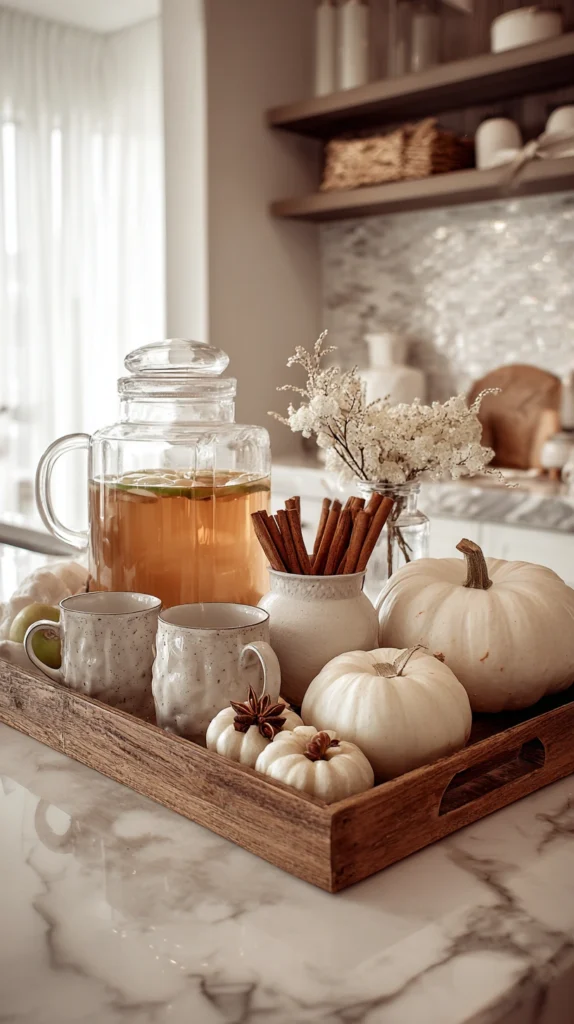
A small station on the counter or a side table, holding a kettle or slow cooker of warm apple cider, mugs, and a small tray of spices (cinnamon sticks, star anise) for guests to customize their own cup.
Why a beverage station ties the theme directly to actual use
Of everything on this list, a cider station most directly connects the apple-and-pumpkin theme to something the kitchen is actually doing, rather than simply displaying. It gives visitors a specific, appealing reason to interact with the styled area, the same principle that makes a tea station work well in a she shed or a bar cart work well in a dining room.
Setting it up
- A slow cooker or kettle for warming cider, positioned on a heat-safe surface
- A small tray with 4–5 mugs and a shallow dish of cinnamon sticks or star anise for garnish
Cost breakdown
- Apple cider (if not already owned): $6–10
- Mugs (if needed): $15–30
- Small tray: $12–20
- Total: $33–60
11. A Layered Kitchen Runner Rug
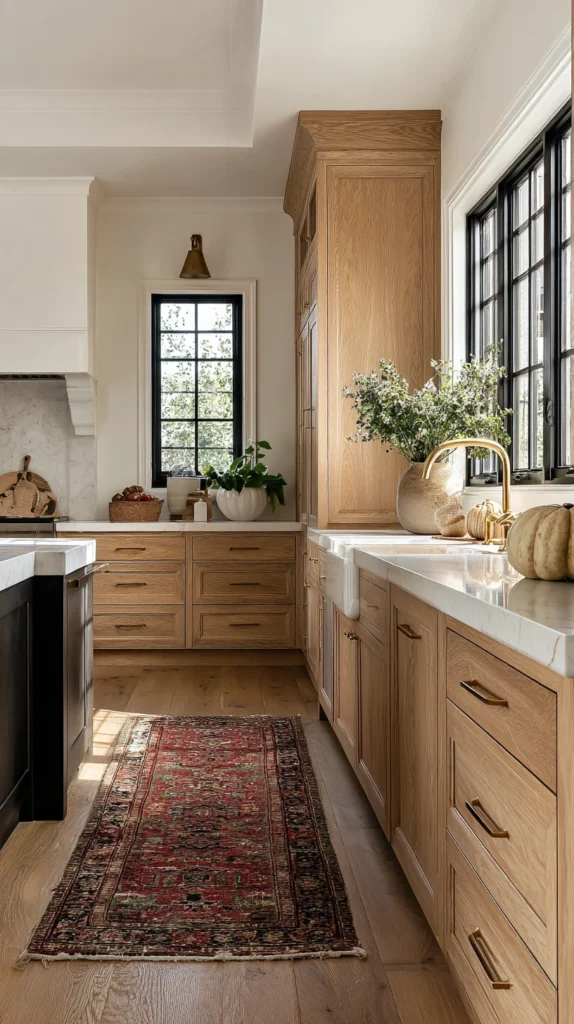
A runner rug in a warm rust, olive, or gingham pattern, positioned in front of the sink or stove, replacing a plain or cool-toned existing mat.
Why the floor deserves inclusion in a themed kitchen refresh
A kitchen runner is one of the largest surfaces in the room after the counters and cabinetry, and its colour and pattern register immediately on entering the space. Swapping to a warm-toned or gingham-patterned runner extends the theme to floor level, tying the whole room together rather than leaving the styling concentrated only at counter height.
Sizing and placement
- Positioned in front of the sink or stove, the two zones most frequently stood in during kitchen use
- Length: 2×5 or 2×6 feet, standard for a kitchen runner application
Cost breakdown
- Kitchen runner rug: $30–50
- Total: $30–50
12. A Fresh Herb and Apple Slice Wreath on a Cabinet
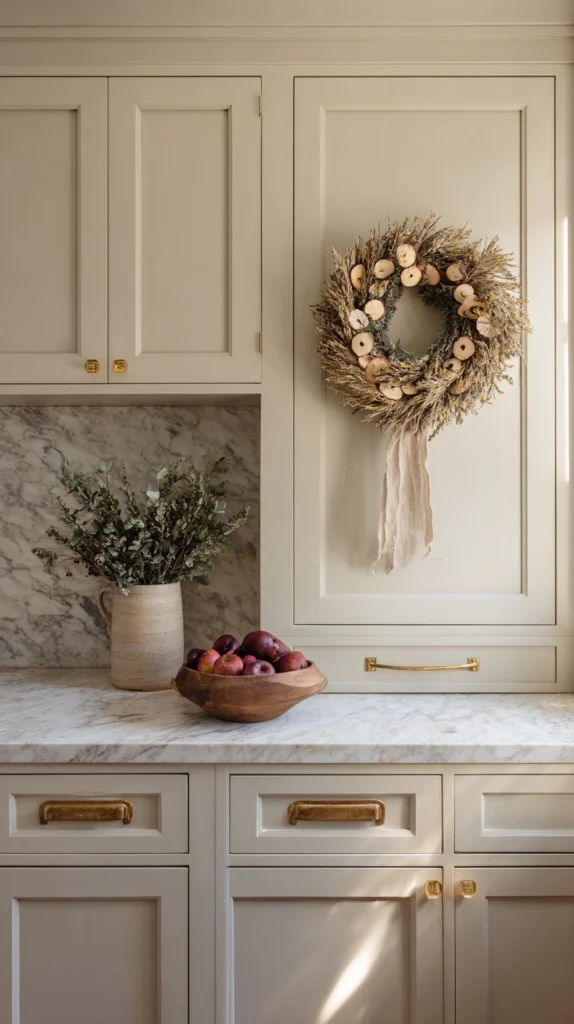
A small wreath incorporating dried apple slices and fresh or dried herb sprigs (rosemary, sage), hung on the front of a single cabinet door as an unexpected styling location.
Why a cabinet door is a distinctive, low-cost display spot
Hanging a small wreath on a single cabinet door, rather than the more expected window or entry door, adds an element of surprise to the kitchen’s styling and uses a surface that virtually never receives any seasonal treatment. It’s also one of the lowest-cost display locations, requiring only a small adhesive hook rather than any structural change.
Assembly
- A small wreath base (6–8 inches), incorporating 3–4 dried apple slices and a few herb sprigs
- Hung with a small adhesive or over-the-door hook on the most visible cabinet door, typically one facing the kitchen’s main entry point
Cost breakdown
- Small wreath base and dried apple slices: $15–25
- Herb sprigs: $5–10
- Adhesive hook: $3–6
- Total: $23–41
13. The Complete Apple and Pumpkin Kitchen
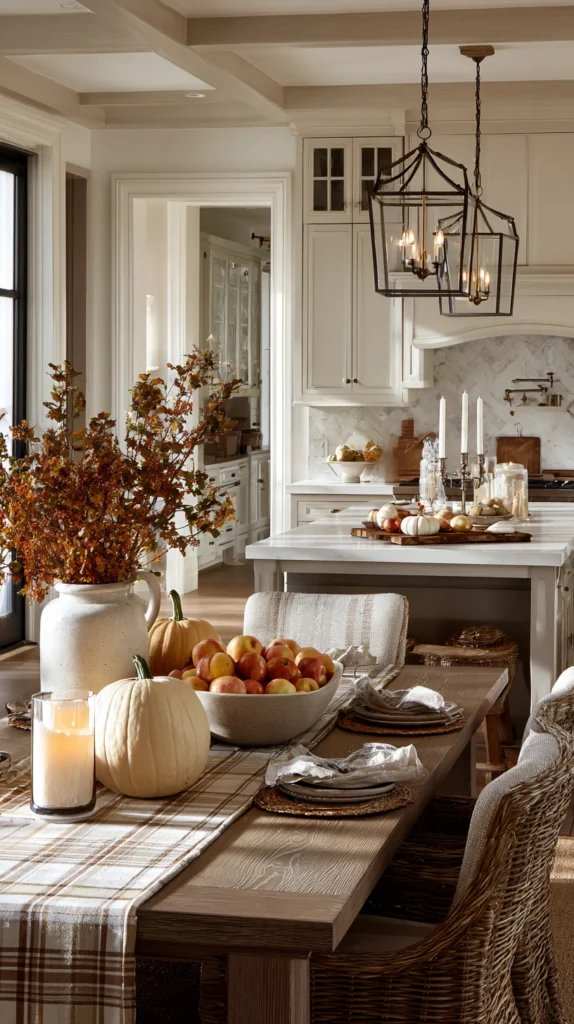
A kitchen styled with every principle above applied together — the definitive version of an apple-and-pumpkin theme that reads as a genuinely lived-in, seasonally considered kitchen rather than a themed display.
What separates the complete kitchen from a single styled bowl
A kitchen with one beautiful apple-and-pumpkin bowl on the counter, but nothing else acknowledging the season anywhere else in the room, still reads as a single decorative gesture rather than a fully considered seasonal kitchen. The complete version extends the theme across a few well-chosen zones — the counter, the table, the window, and one functional display — using real produce and restrained styling throughout, so the whole room reads as genuinely in season.
The elements of the complete kitchen
The central display:
- The layered apple and pumpkin bowl at the island or counter (Idea #1)
- A pumpkin spice candle cluster nearby (Idea #2)
The textiles:
- Gingham or plaid dish towels and a table runner (Idea #3)
- Cinnamon-bundled towels on the oven handle (Idea #9)
- A layered kitchen runner underfoot (Idea #11)
The table:
- Mini pumpkin place settings at the breakfast nook (Idea #8)
The functional detail:
- An apple cider station for guests (Idea #10)
The unexpected touches:
- A small window wreath (Idea #5)
- A cabinet door wreath with dried apple slices (Idea #12)
- A hand-lettered chalkboard sign (Idea #6)
The kitchen on an ordinary fall afternoon:
The bowl on the island holds apples that actually get eaten and pumpkins that will eventually become pie, not purely decorative stand-ins. The cider station simmers quietly on the counter, ready for whoever wanders through. The chalkboard notes the week’s apple variety in loose, casual handwriting. Nothing about the room reads as a themed display — every element is either genuinely in use or styled with enough restraint that it reads as part of an actual working kitchen rather than a seasonal aisle brought indoors.
Cost breakdown for the complete kitchen
Assuming a starting point of an unstyled kitchen:
- Bowl centerpiece: $12–60
- Candle station: $37–65
- Gingham textiles: $33–55
- Cinnamon towel bundle: $9–17
- Kitchen runner: $30–50
- Mini pumpkin place settings: $8–16
- Cider station: $33–60
- Window wreath: $20–40
- Cabinet wreath: $23–41
- Chalkboard sign: $15–30
Total: $220–434
Phased for a lighter versus fuller styling pass:
Lighter version ($60–140):
- Bowl centerpiece
- Candle station
- One textile swap (towels or runner)
Fuller version ($200–430):
- All of the above, plus the kitchen runner, place settings, cider station, and both wreaths
The complete apple and pumpkin kitchen: not a room decorated to look seasonal, but one that’s genuinely stocked, styled, and used for exactly what the season is for.
The Question Before Any Apple and Pumpkin Kitchen Project
Before buying a single item:
Does this kitchen already have real apples or pumpkins in regular use, or does the theme need to be introduced from scratch?
If the answer is: apples and pumpkins are already part of regular cooking — build the styling around what’s already there; the bowl centerpiece and cider station make the most of ingredients already in the kitchen.
If the answer is: starting from scratch — the bowl and textile swaps are the lowest-cost, most immediate way to establish the theme before considering any of the more involved additions.
If the answer is: the kitchen already has some seasonal touches but they lean toward printed or novelty items — consider replacing one or two of those items with real produce or a more subtle motif, following the tonal variation principle, rather than adding further printed pieces on top.
If the answer is: the goal is mostly for guests and gatherings — the cider station and mini pumpkin place settings deliver the most noticeable impact specifically for entertaining, more than counter styling alone.
The approach follows how the kitchen is actually used, not the most elaborate styling option available. A kitchen that already smells like cinnamon and apples from actual cooking needs less added styling than one starting completely bare.
Getting Started This Weekend
The immediate apple and pumpkin kitchen refresh:
Fill one bowl with real apples and small pumpkins, mixed together.
The single fastest, lowest-cost way to establish the theme using genuine, functional produce.
Swap dish towels to a warm gingham or plaid.
A quick textile change that reinforces the palette without any literal fruit imagery.
Light one pumpkin spice or apple-scented candle.
Adds the sensory layer that ties the visual styling to the actual feeling of the season.
Set up a simple cider station, even just a thermos and a few mugs.
Gives the theme a functional, inviting purpose beyond pure display.
The rest of the styling: the elaboration of this weekend.
The bowl: the beginning. The apple and pumpkin kitchen: what a working kitchen becomes once it’s genuinely stocked and styled for the season it’s already cooking through.