14 Farmhouse Fall Kitchen Decor Inspiration
14 Farmhouse Fall Kitchen Decor Inspiration
There is a particular honesty to the farmhouse kitchen that the autumn season makes more visible than any other time of year — the worn timber, the open shelving stacked with things that are actually used, the deep sink that has held vegetables straight from the garden for longer than anyone living can remember.
Farmhouse style was never really an aesthetic invented for decoration. It was simply what a working kitchen looked like, and autumn, with its harvest and its preserving and its long pots of soup, is the season that gives that working kitchen the most to do.

The fourteen ideas below are built on that same honesty — decoration that earns its place by being genuinely useful, material that ages rather than wears out, and a warmth that comes from worn wood and warm enamel rather than from anything purchased purely to look like autumn.
1. The Open Shelving with Stoneware Crockery
Budget: $80 – $400
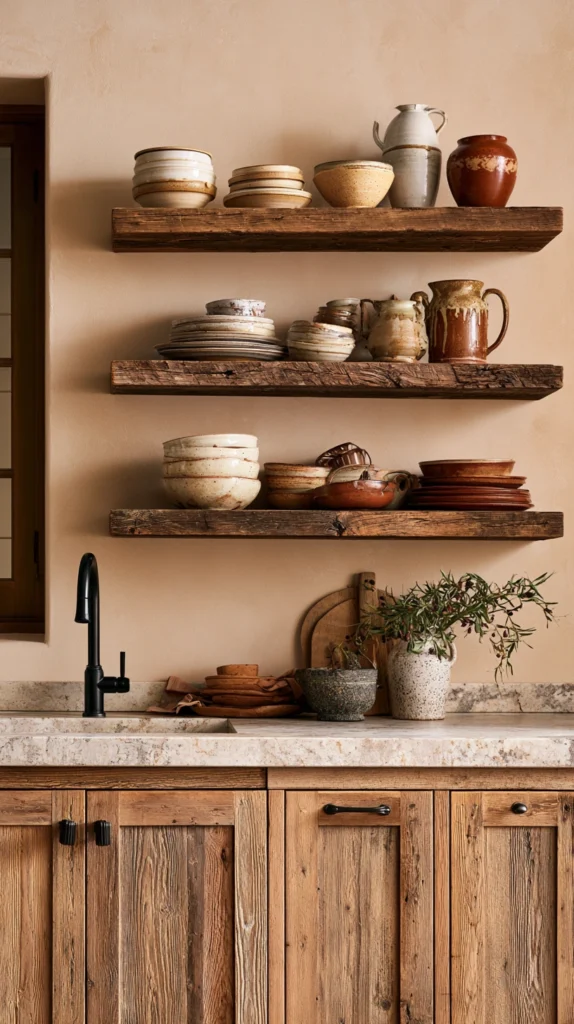
Open timber shelving in place of upper cabinets, holding a collection of stoneware and earthenware crockery in warm cream, brown, and rust glazes, gives the farmhouse kitchen its single most defining architectural feature and a permanent display of the everyday objects the season’s cooking depends on.
The open shelf in autumn is doing more visible work than at any other point in the year — the soup bowls, the large serving platters, and the extra mugs all come into heavier rotation, and a shelf that displays rather than hides them communicates the specific honesty that farmhouse style has always been built on.
Open timber shelving brackets and boards — $40 – $150. A collection of stoneware bowls, plates, and mugs — $40 – $250.
Styling tip: Stack plates and bowls in slightly uneven, leaning groups rather than perfectly aligned towers — a farmhouse shelf depends on the appearance of things placed there through use rather than arranged for display, and a small, deliberate irregularity in the stacking communicates exactly that quality.
2. The Vintage Enamel Pitcher of Wheat or Branches
Budget: $15 – $50
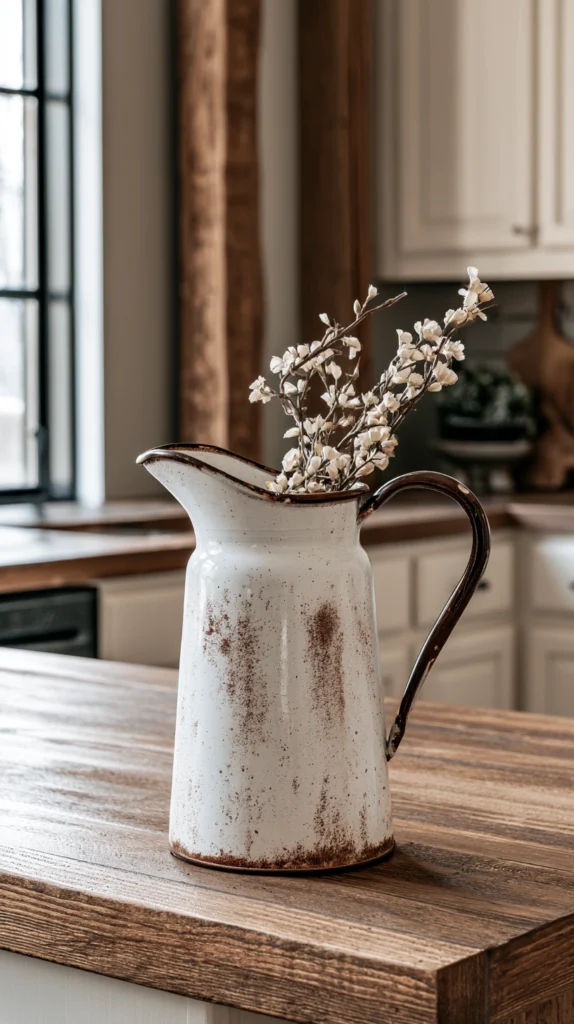
A large vintage enamel pitcher, chipped at the rim and worn at the handle, filled with a generous bundle of dried wheat, bittersweet vine, or bare autumn branches, placed on the counter or the farmhouse table, gives the kitchen its most immediately recognisable autumn farmhouse object.
The enamel pitcher belongs to the farmhouse kitchen in the way that almost no other vessel does — it was never a vase, only repurposed as one, and that repurposing is the specific quality of practical resourcefulness that the farmhouse aesthetic is built around.
A vintage enamel pitcher — $10 – $35 from a secondhand source. Dried wheat or branches — $5 – $15, gathered or purchased.
Styling tip: Choose a pitcher with genuine wear — chips, rust spots at the rim, a faded original colour — rather than a reproduction in pristine condition. The wear is not a flaw to work around; it is the entire reason the object belongs in a farmhouse kitchen rather than a more polished one.
3. The Deep Farmhouse Sink Styled with Squash
Budget: $10 – $40
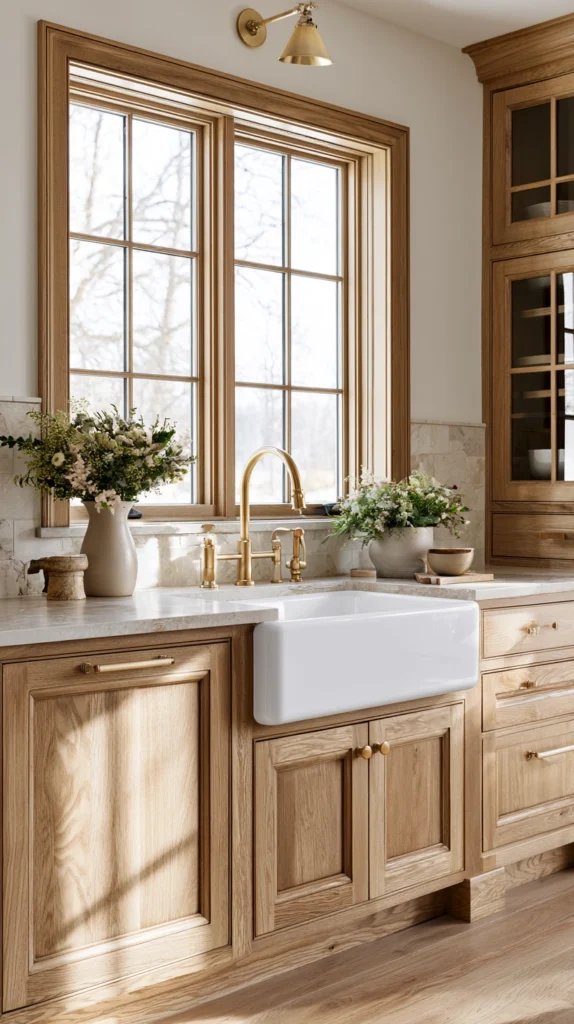
The deep apron-front farmhouse sink, when not in active use, styled with a small grouping of squash and pumpkins arranged loosely across the basin, turns the kitchen’s most architecturally significant fixture into a temporary autumn display without requiring it to be removed from service for more than a few hours.
This is a styling idea best suited to photography or a specific gathering rather than daily use, since the sink will inevitably be needed again, but it makes use of the farmhouse sink’s distinctive deep, wide form in a way that few other styling ideas can.
Small squash and pumpkins — $8 – $25. A folded linen tea towel as a base layer — already owned.
Styling tip: Line the sink basin with a folded linen towel before placing the squash directly on the porcelain or fireclay surface — the towel protects the sink’s finish from scuffing and gives the arrangement a softer, more deliberate base than the bare basin alone.
4. The Hanging Dried Herb Bundles from a Ceiling Beam
Budget: $10 – $35
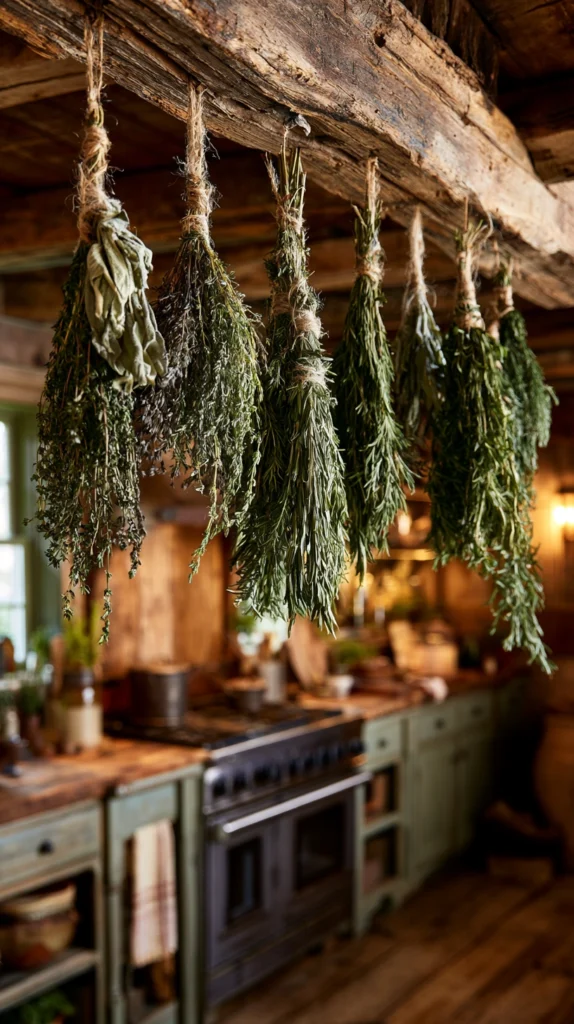
Small bundles of dried sage, rosemary, and thyme, tied with twine and hung upside down from an exposed ceiling beam or a simple hook rail near the stove, give the farmhouse kitchen its most traditional and most genuinely functional overhead decoration.
The hanging herb bundle belongs to a kitchen tradition considerably older than the farmhouse aesthetic’s current popularity — drying herbs this way was simply how a working kitchen preserved its harvest before refrigeration, and the practice’s continued use connects the modern farmhouse kitchen to that working history.
Fresh herb bundles for drying — $3 – $8 each, or grown in the garden. Natural twine — $2 – $5. A hook rail if no exposed beam is available — $10 – $25.
Styling tip: Hang the bundles at a height where they can be seen and smelled when passing beneath them, but high enough to avoid catching on anyone working at the counter or stove — the herb bundle needs to be encountered, not simply displayed out of the way.
5. The Galvanized Metal Bucket Produce Display
Budget: $15 – $50
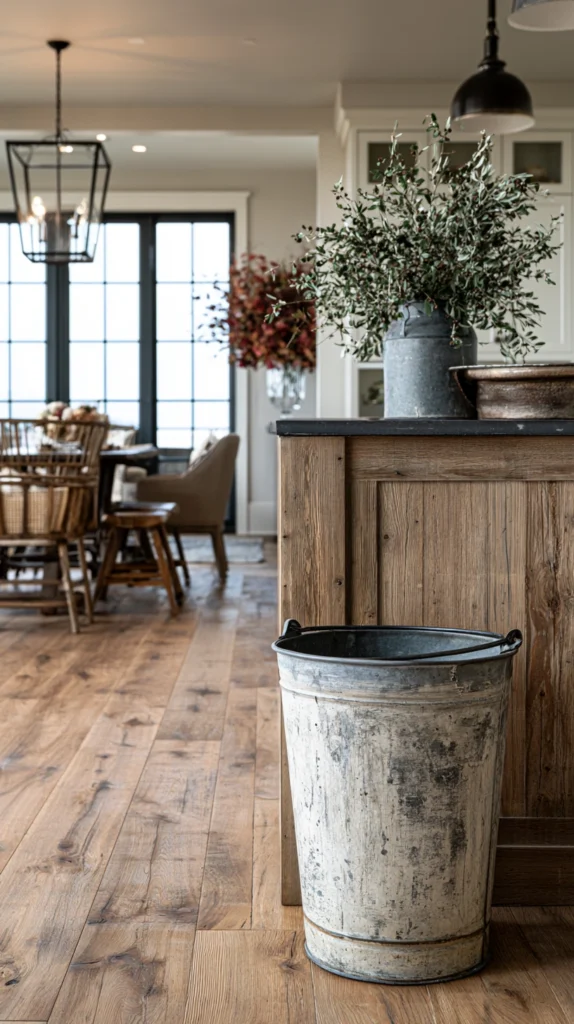
A galvanized metal bucket or tub, slightly weathered, filled with apples, small pumpkins, or root vegetables, placed on the floor beside the kitchen island or on a low stool near the door, gives the farmhouse kitchen a produce display with genuine agricultural lineage.
Galvanized metal belongs to the farmhouse material world in the same register as the enamel pitcher — a container originally intended for feed or water, repurposed for display, which is the exact pattern of practical reuse that defines the aesthetic at its most authentic.
A galvanized metal bucket or tub — $10 – $30. Apples, pumpkins, or root vegetables to fill it — $5 – $20.
Styling tip: Choose a bucket with some visible wear or a slightly dulled finish rather than a bright, new galvanized surface — a worn galvanized tub photographs and reads as genuinely farmhouse, while a pristine one can look more like a styled prop than a vessel with any actual history of use.
6. The Cast Iron Skillet Wall Display
Budget: $20 – $100
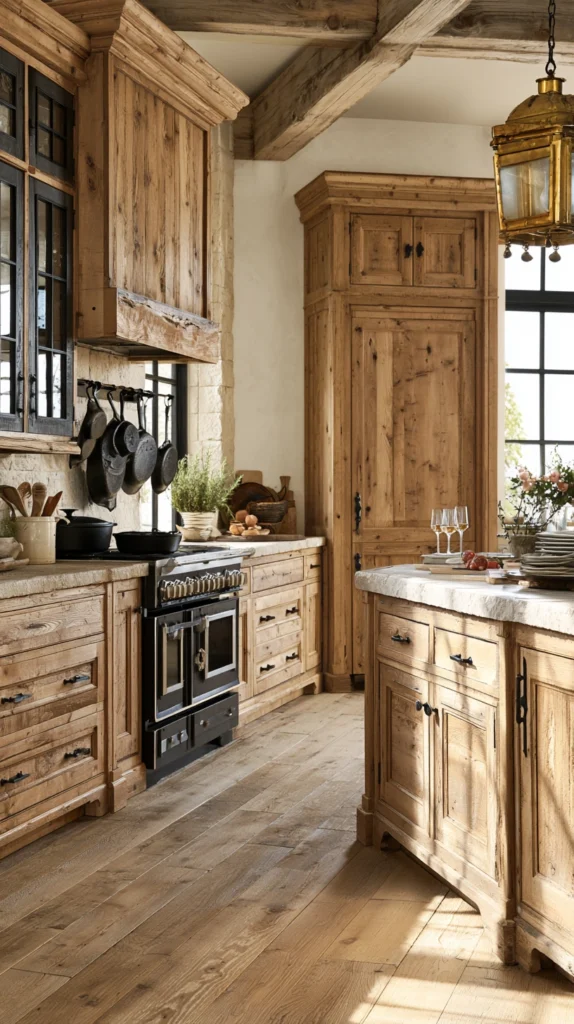
A small collection of cast iron skillets in varying sizes, hung on a simple wall rack or directly on hooks near the stove, gives the farmhouse kitchen a material and textural decoration built entirely from the cookware that autumn’s soups, cornbreads, and roasted dishes will actually require.
The hung skillet collection works because cast iron, unlike most cookware, looks better the more it has been used — the seasoned black surface and the slight unevenness of a well-loved pan are qualities that communicate genuine kitchen history rather than a purchased decorative object.
Cast iron skillets in two or three sizes — $15 – $40 each if not already owned. A simple wall-mounted rack or hooks — $10 – $30.
Styling tip: Arrange the skillets by size in a single row rather than scattering them at different heights — the visual order of a graduated size sequence reads as a genuinely useful, organized collection, while a scattered arrangement of mismatched pans can begin to look more cluttered than considered.
7. The Chalkboard Sign with a Harvest Saying
Budget: $15 – $50
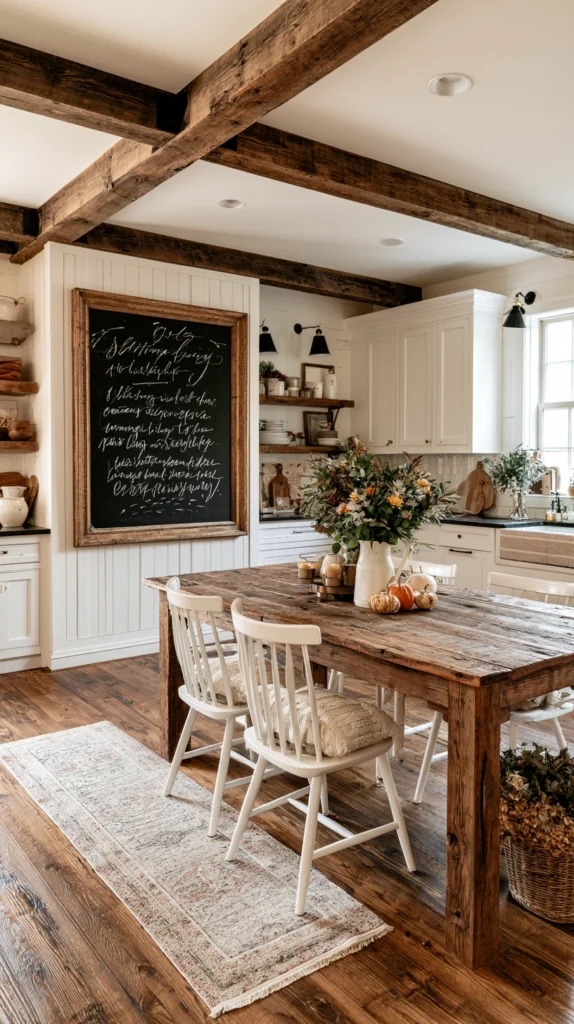
A large chalkboard, framed in reclaimed or distressed timber, hand-lettered with a simple harvest saying or the week’s autumn menu, hung on the wall or leaned against the open shelving, gives the farmhouse kitchen its most directly communicative decorative element.
The chalkboard sign is one of the farmhouse aesthetic’s most recognisable signatures, and its appeal lies in the same quality that makes the rest of this list work — it is a genuinely useful object, easily rewritten, that happens to also be a piece of wall decoration.
A framed chalkboard — $15 – $40. Chalk or a chalk marker — $3 – $10.
Styling tip: Rewrite the chalkboard’s message every week or two rather than leaving the same phrase up for the full season — a chalkboard that changes communicates a kitchen in active daily use, while one with the same message from October through December begins to read as a static, slightly forgotten decoration rather than a living part of the room.
8. The Wire Egg Basket as Catch-All
Budget: $15 – $40
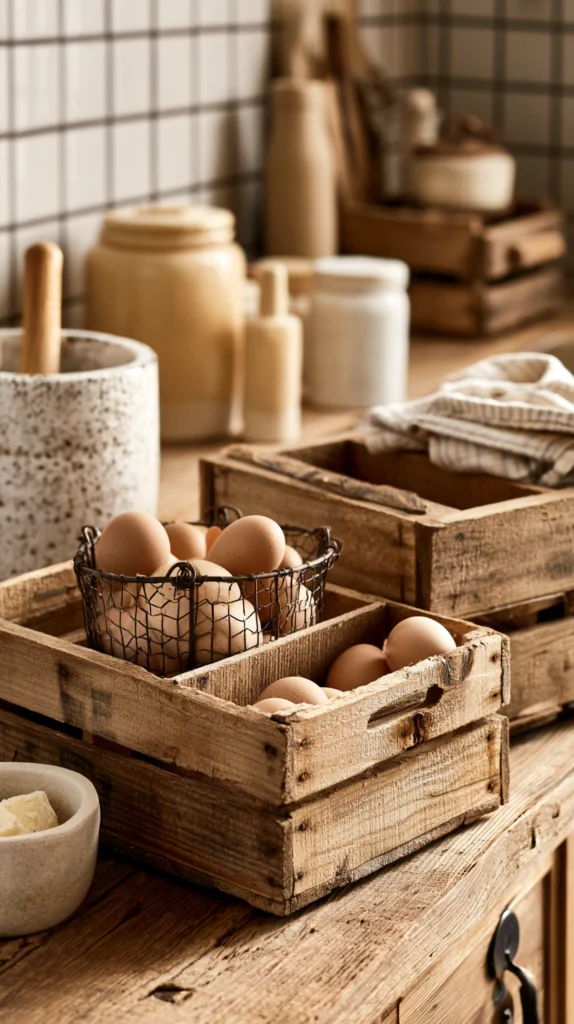
A vintage wire egg basket, no longer collecting eggs but repurposed to hold small gourds, garlic bulbs, or onions on the counter, gives the farmhouse kitchen a piece of genuine agricultural history doing double duty as both produce storage and decoration.
The wire basket’s open weave allows for the airflow that onions, garlic, and squash benefit from in storage, which means this particular farmhouse object is performing a genuinely useful function rather than simply referencing one.
A vintage wire egg basket — $15 – $35 from a secondhand source. A new reproduction version — $20 – $40.
Styling tip: Fill the basket only two-thirds full rather than to capacity — a slightly under-filled basket allows the produce inside to be seen individually through the wire weave, while an overfilled basket loses the visual texture that makes the open weave worth using in the first place.
9. The Worn Wooden Dough Bowl Centrepiece
Budget: $25 – $90
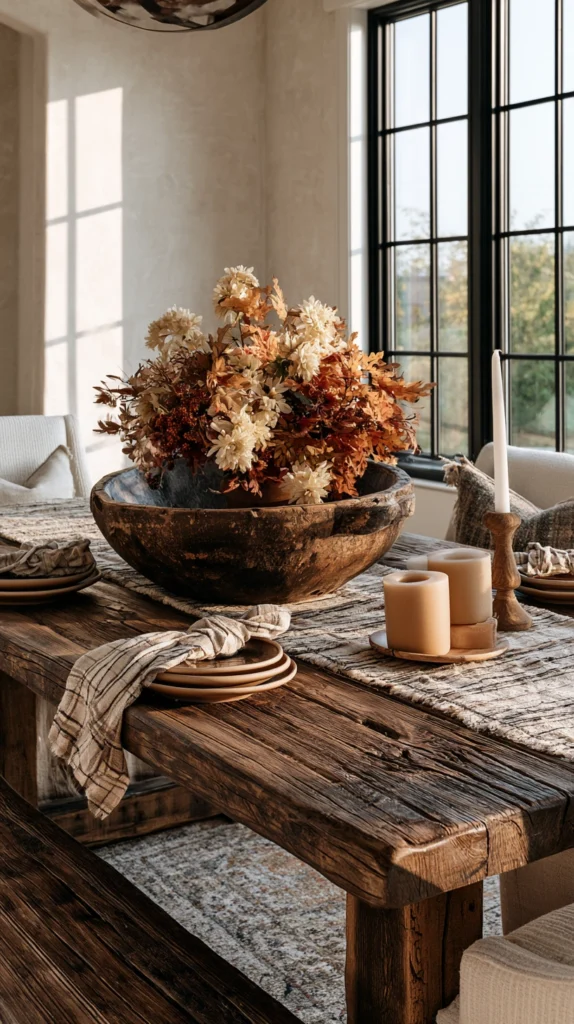
A large, shallow wooden dough bowl — an antique bread-making vessel or a quality reproduction — filled with a mix of small pumpkins, pinecones, and dried corn, placed at the centre of the farmhouse table, gives the kitchen one of its most historically specific and most visually substantial centrepieces.
The dough bowl’s wide, shallow form and its naturally worn, oiled timber surface make it one of the farmhouse aesthetic’s most distinctive objects, carrying genuine craft history in a way that few modern centrepiece vessels can replicate.
An antique dough bowl — $40 – $90 from a specialist antique source. A quality reproduction — $25 – $60.
Styling tip: Oil the dough bowl’s timber surface before filling it for the season — a freshly oiled bowl has a deeper colour and a richer grain visibility than a dry one, and the maintenance also protects an antique piece that may not have been conditioned in some time.
10. The Mason Jar Pantry Wall
Budget: $30 – $90
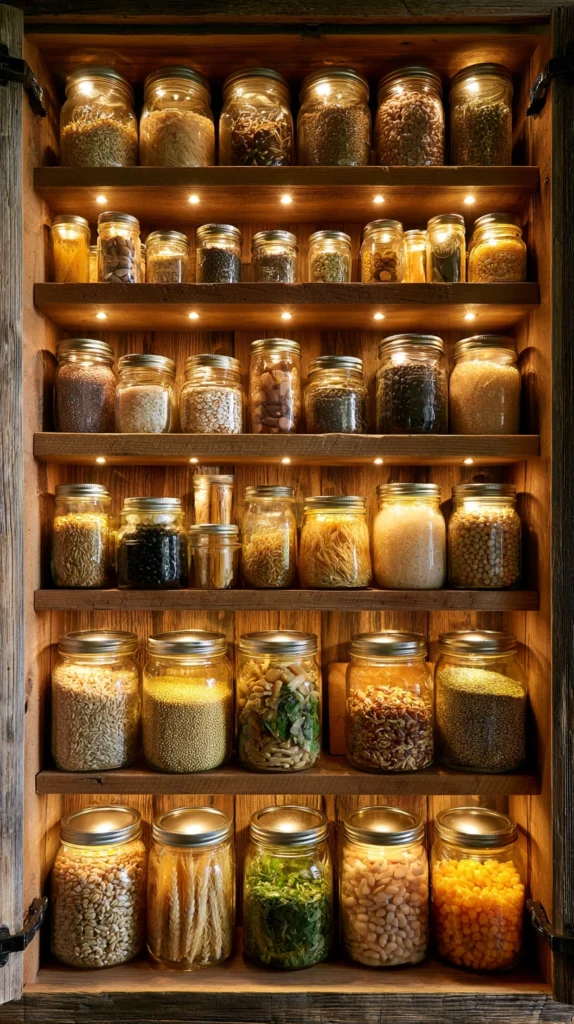
A row of Mason jars on open shelving or a wall-mounted rack, filled with dried beans, grains, and the season’s preserved goods — apple butter, pickled vegetables, a jar of dried apple rings — gives the farmhouse kitchen a pantry display that doubles as genuine, working food storage.
The Mason jar wall is perhaps the single most recognisable farmhouse kitchen feature, and its enduring appeal comes from the same source as everything else on this list — it was never invented as decoration, only adopted as decoration because preserving food in glass jars has simply always looked this way.
Mason jars in varying sizes — $1 – $4 each. Dried beans, grains, and home-preserved goods to fill them — already owned, or $10 – $30 to assemble a starting collection.
Styling tip: Vary the jar sizes and the colour of their contents along the shelf — a row of identical jars filled with identical white rice looks considerably less interesting than a row that moves from pale dried beans to deep amber preserved fruit to the warm brown of whole grains.
11. The Distressed Wood Sign with a Family Name or Year
Budget: $20 – $70
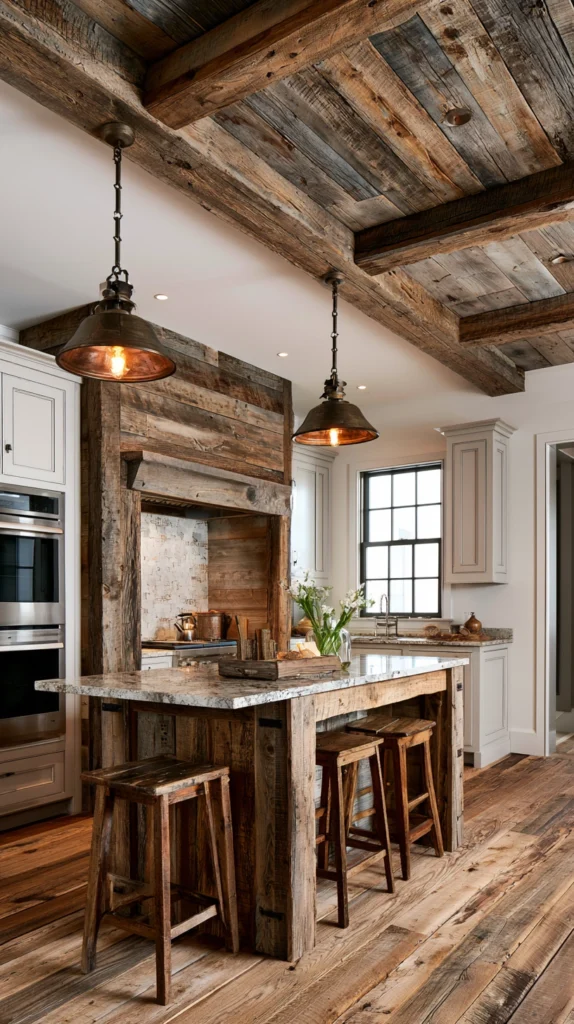
A piece of reclaimed or distressed timber, hand-painted or stencilled with a family name, a farm name, or simply the current year, hung above the stove or beside the open shelving, gives the farmhouse kitchen a personal, slightly heirloom-feeling decoration that situates the room within a specific household’s history.
This idea works because it borrows the visual language of an actual farm or homestead sign — the kind that would once have marked a property or a barn — and brings that same sense of belonging and permanence into the kitchen specifically.
A piece of reclaimed timber — $10 – $30. Paint or a stencil set for lettering — $8 – $20.
Styling tip: Choose a typeface or hand-lettering style with some irregularity rather than a perfectly uniform stencilled font — the slight variation in a hand-painted sign communicates the same quality of genuine, lived-in history that the reclaimed timber itself is meant to convey.
12. The Wool Plaid Table Runner on Distressed Timber
Budget: $20 – $60
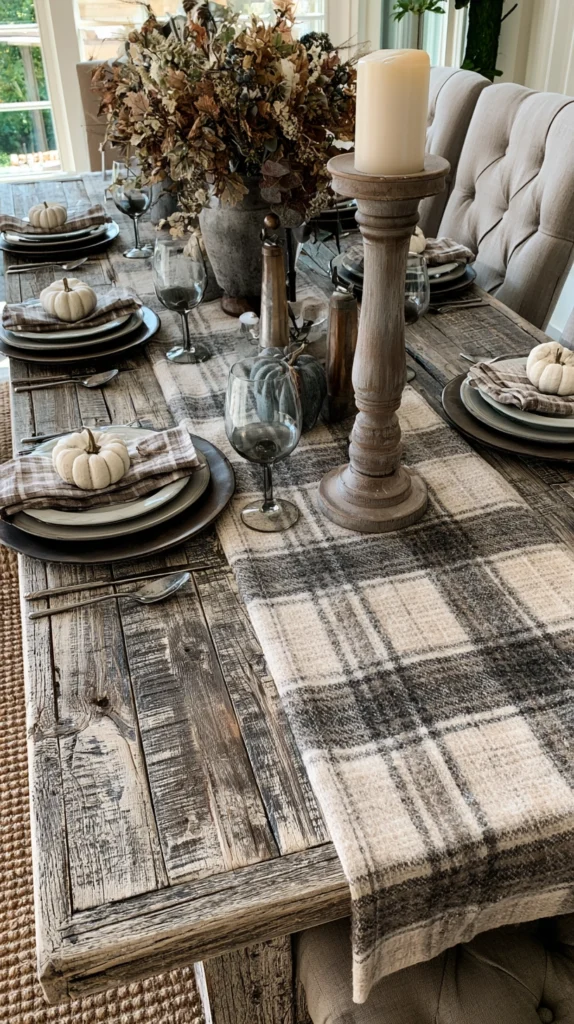
A wool plaid table runner in warm autumn tones, laid down the centre of a worn or distressed farmhouse table, gives the kitchen’s eating area its most directly seasonal textile decision while respecting the bare timber’s own visual interest by leaving most of the table surface uncovered.
The plaid runner on bare wood is a specifically farmhouse combination because it pairs a manufactured textile pattern with an entirely unpolished, naturally worn surface — the combination communicating the specific blend of considered decoration and honest material that the aesthetic depends on.
A wool or wool-blend plaid table runner — $20 – $55.
Styling tip: Choose a runner narrow enough that a generous border of bare timber remains visible on both sides — a runner that covers most of the table’s width loses the contrast between textile and wood grain that makes this particular combination work, while a narrower runner keeps both materials equally visible.
13. The Pewter and Tin Candle Collection
Budget: $20 – $70
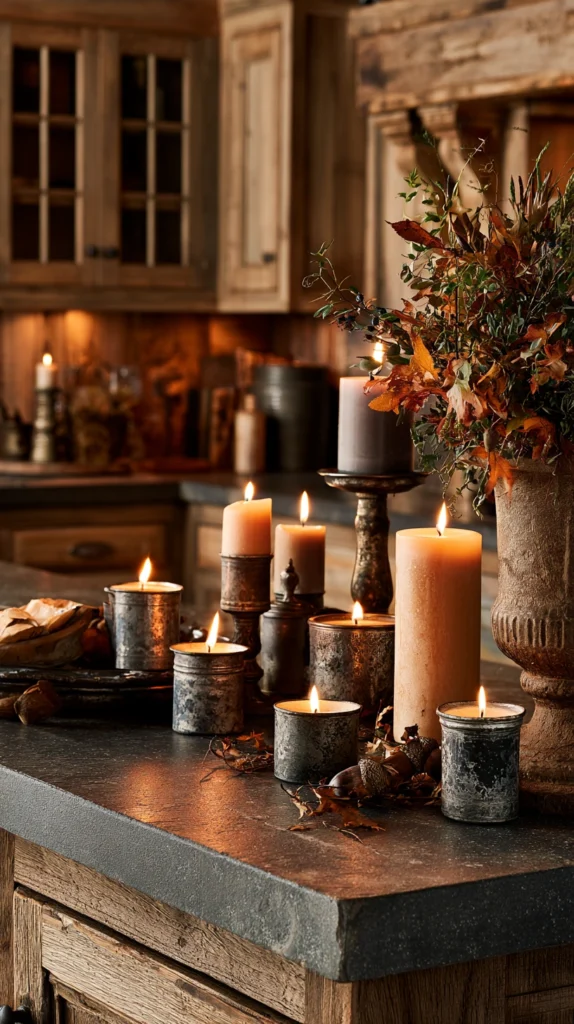
A small collection of pewter or tin candle holders, in mismatched but related forms, holding simple white or cream taper and pillar candles, distributed across the open shelving and the farmhouse table, gives the kitchen its evening lighting in a material that belongs entirely to the aesthetic’s historical period.
Pewter and tin have a soft, matte, slightly dulled quality that relates to the worn timber and the aged enamel found throughout the rest of the farmhouse kitchen, providing a metallic accent considerably more sympathetic to the room’s overall material story than a brighter, more polished metal would be.
Pewter or tin candle holders — $8 – $25 each. Taper or pillar candles in cream or white — $5 – $15 for a set.
Styling tip: Mix candle holder heights and forms within the collection rather than purchasing a matching set — a genuinely gathered farmhouse object collection, much like the stoneware on the open shelf, depends on the appearance of having been acquired over time rather than purchased together for a single decorating moment.
14. The Fully Realised Farmhouse Fall Kitchen
Budget: $250 – $1,200
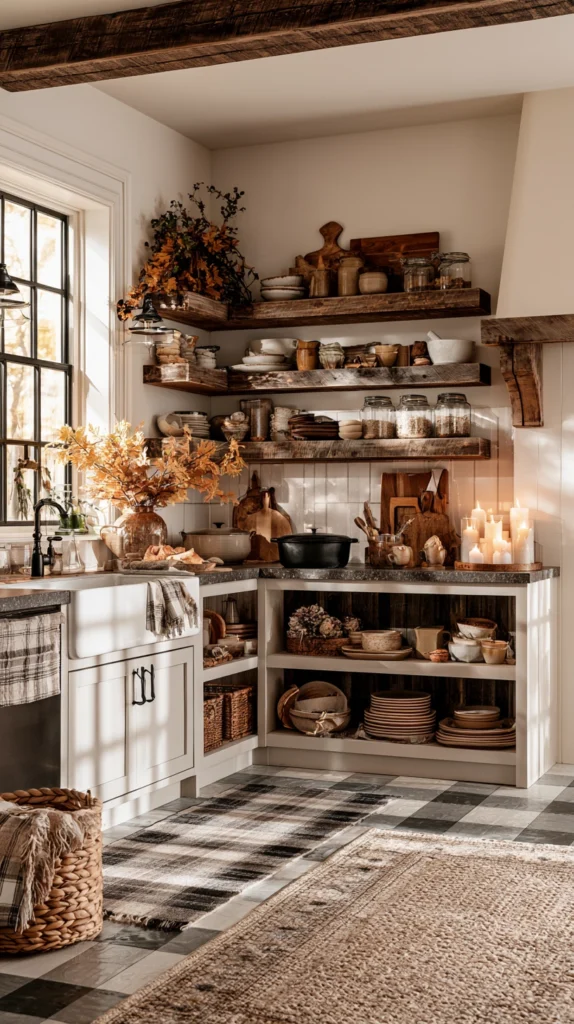
The fully realised farmhouse fall kitchen — open timber shelving holding stacked stoneware in cream and rust glazes, a chipped enamel pitcher of dried wheat on the counter, a deep farmhouse sink occasionally styled with squash, dried herb bundles hanging from an exposed beam, a galvanized bucket of apples by the door, cast iron skillets hung in a graduated row near the stove, a hand-lettered chalkboard announcing the week’s soup, a wire egg basket of garlic and onions, a worn dough bowl centrepiece filled with pinecones and small pumpkins, a Mason jar wall of dried beans and home-preserved fruit, a distressed timber sign above the stove, a wool plaid runner down the centre of the worn farmhouse table, and a mismatched collection of pewter candle holders lit through the evening.
This is a kitchen built entirely from objects that earn their decorative role by also being genuinely useful — which is the single defining principle of farmhouse style at its most authentic.
Open shelving and stoneware: $80 – $400. Enamel pitcher and botanicals: $15 – $50. Herb bundles: $10 – $35. Galvanized bucket display: $15 – $50. Cast iron collection: $20 – $100. Chalkboard sign: $15 – $50. Wire egg basket: $15 – $40. Dough bowl centrepiece: $25 – $90. Mason jar wall: $30 – $90. Distressed timber sign: $20 – $70. Table runner: $20 – $60. Candle collection: $20 – $70. Total fully realised farmhouse fall kitchen: $285 – $1,105 for a kitchen that looks like exactly what farmhouse style was always meant to describe — a room built around the genuine, ongoing work of feeding a household through the season.
Styling tip: Resist replacing any object on this list with a version too polished or too new to show signs of use — the farmhouse fall kitchen’s entire visual logic depends on wear, and a single pristine, unworn object placed among the rest will look more out of place than a gap on the shelf where nothing has been placed at all.
The farmhouse fall kitchen does not require a renovation to achieve. It requires only the willingness to let the kitchen’s working objects — the skillet, the pitcher, the dough bowl, the jar — do double duty as the room’s decoration, which is, in the end, exactly what they were always doing in the kitchens this style first learned to imitate.