14 Fall Kitchen Decor Ideas That Smell Like Autumn
14 Fall Kitchen Decor Ideas That Smell Like Autumn
There is a particular kind of memory that lives in the nose before it lives anywhere else — the specific smell of a kitchen in late October, the cinnamon and the clove and the slightly caramelised sugar of something baking, the woodsmoke drifting in from outside, the warm spice that announces the season has changed before a single visual decoration has been put up.
The fall kitchen is the room in the home where the season is experienced most completely, because it is the one room where decoration and scent and the actual business of the season’s cooking happen in the same place at the same time.

A kitchen that smells like autumn does not need to try very hard to look like it too — but the fourteen ideas below combine both, because a kitchen that engages all the senses at once is the kitchen that makes the whole house feel like the season has properly arrived.
1. The Simmering Stovetop Potpourri
Budget: $5 – $20
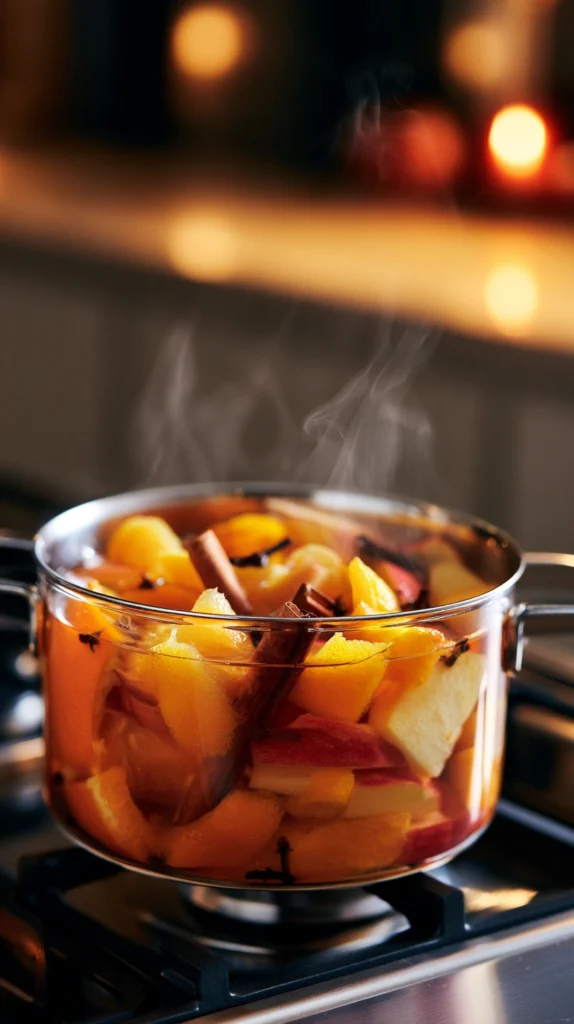
A small pot of water on the lowest stovetop simmer, filled with orange peel, cinnamon sticks, whole cloves, star anise, and a few slices of fresh apple, fills the entire kitchen and the rooms beyond it with the specific scent of autumn within twenty minutes and continues releasing fragrance for hours on a single low simmer.
This is the single most effective and most inexpensive way to make a kitchen smell like the season, and it produces a fragrance considerably warmer and more complex than any candle or diffuser, because it is the genuine scent of the spices themselves rather than a manufactured approximation.
Cinnamon sticks, whole cloves, and star anise — $5 – $12 for enough for several batches. Orange peel and apple — already in most kitchens, or $2 – $5.
Styling tip: Keep the pot on the stove’s back burner where it is visible but out of the way of active cooking, and top up the water every hour or so rather than letting it run dry — a simmer pot that has boiled away leaves a burnt smell rather than a warm one, so checking it periodically is the only maintenance the method requires.
2. The Open Shelf Spice Display
Budget: $20 – $100
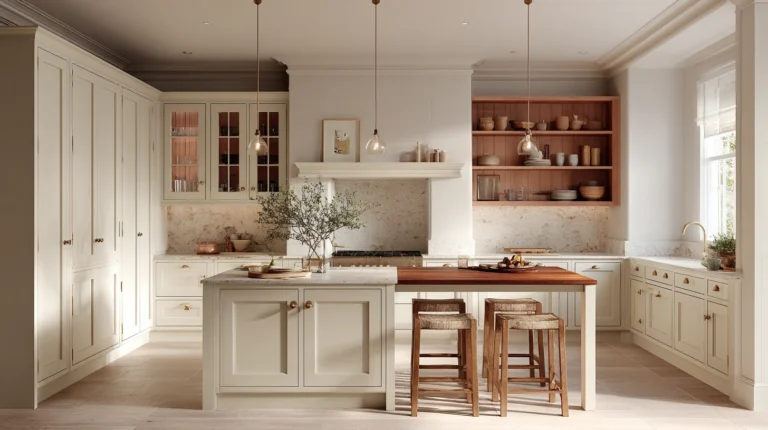
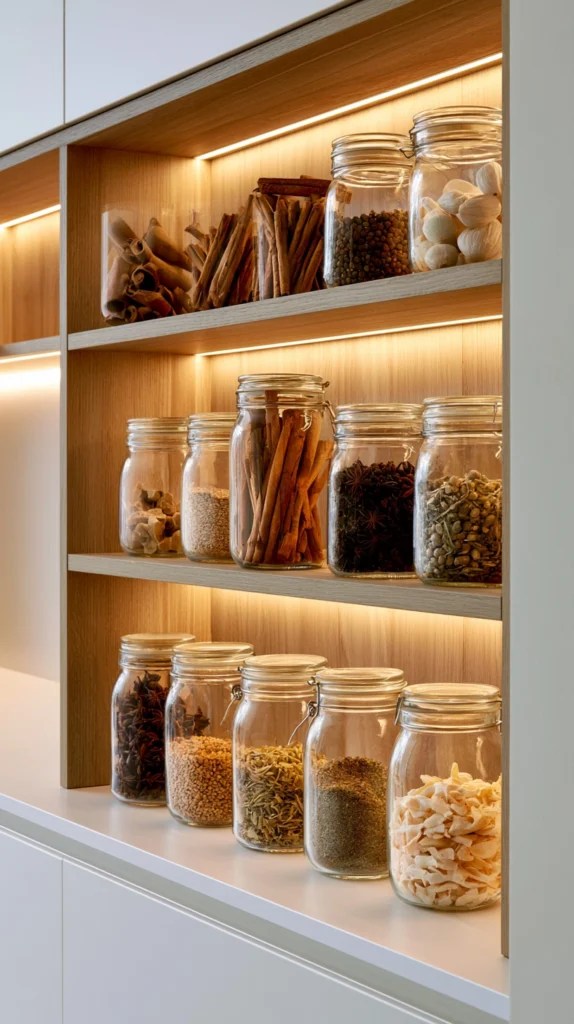
Open kitchen shelving styled with the spices and dried ingredients of the season — jars of cinnamon sticks, star anise, dried bay leaves, and whole nutmeg displayed alongside the everyday cooking spices — gives the kitchen a visual decoration that is also a genuinely useful and genuinely fragrant ingredient store.
The spice display communicates the autumn kitchen’s specific quality of decoration that serves the cooking it surrounds, rather than decoration that competes with it — every jar on the shelf is both an object to look at and an ingredient to use in the next batch of mulled cider or spiced baking.
Glass jars with cork or wood lids — $5 – $15 each. Cinnamon sticks, star anise, and whole spices to fill them — $15 – $40 for a full collection. A small chalkboard label set — $5 – $15.
Styling tip: Leave the lids off one or two of the spice jars on open display, particularly the cinnamon sticks and the star anise — an open jar releases fragrance into the room continuously rather than only when opened for cooking, turning the spice display into a passive fragrance source as well as a visual one.
3. The Autumn Wreath on the Kitchen Window
Budget: $15 – $50
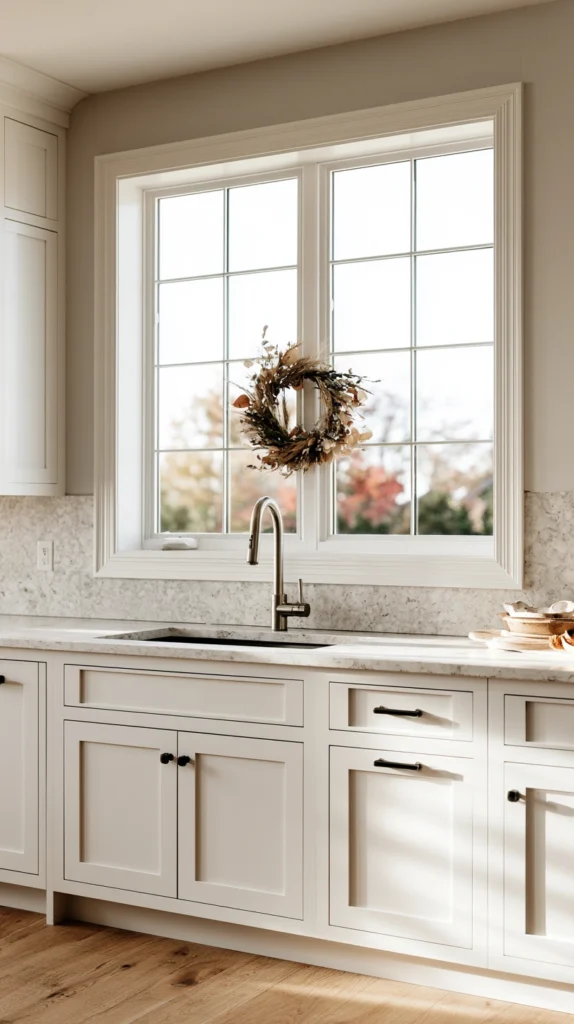
A small autumn wreath — dried wheat, preserved leaves, small dried gourds, and a length of natural twine — hung on the kitchen window above the sink or on a cabinet door, brings the season’s most familiar decorative gesture into the room where it will be seen most consistently throughout the day.
The kitchen window wreath is seen during the specific moments of washing dishes, filling the kettle, and standing at the sink in contemplation that make up a disproportionate amount of the time spent in any kitchen, which gives this modest decoration an outsized presence in daily life.
A small dried wheat or preserved leaf wreath — $15 – $40 from an independent maker. A DIY version using a wire wreath form and dried garden material — $5 – $15 in materials.
Styling tip: Choose a wreath small enough that it does not block light from the window it hangs on — a wreath that covers more than the outer third of the window reduces the kitchen’s natural light at the time of year when daylight is already becoming scarce, which works against the room’s brightness for the sake of a decoration that should be enhancing it.
4. The Pumpkin Spice Baking Station
Budget: $20 – $80
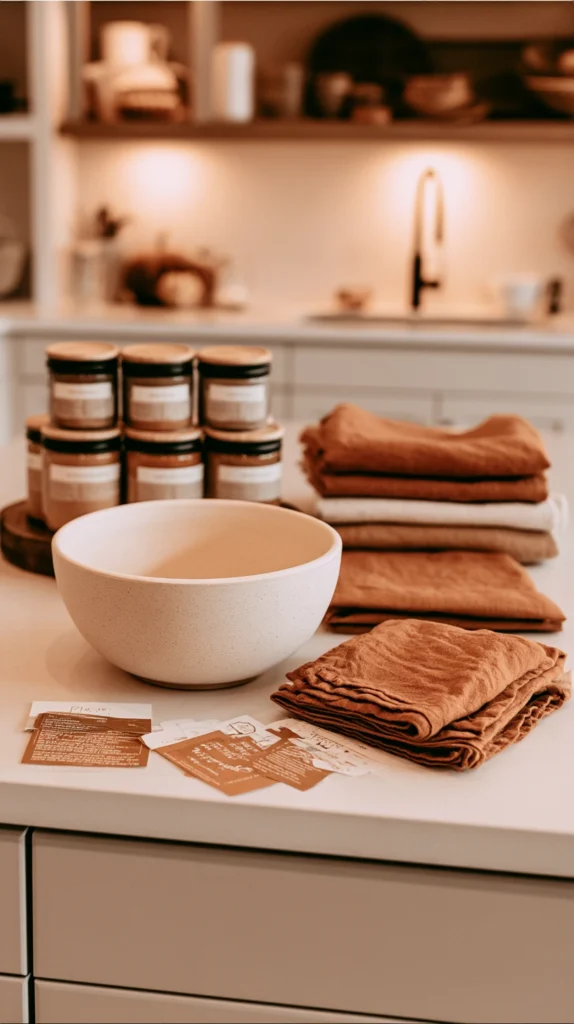
A dedicated corner of the counter set up for the season’s baking — a large mixing bowl, the autumn spice jars within reach, a recipe card holder with the household’s favourite pumpkin or apple bake, and a stack of tea towels in warm autumn tones — gives the kitchen a functional area that also visually communicates the specific activity the season is built around.
The baking station communicates that the kitchen is in active seasonal use rather than simply decorated for the season — the difference between a kitchen that displays autumn objects and one that is genuinely producing the autumn smells those objects are meant to evoke.
A large ceramic or glass mixing bowl displayed on the counter — $15 – $40. A recipe card holder or small stand — $8 – $20. Tea towels in autumn tones — $8 – $15 each.
Styling tip: Keep the baking station stocked with the actual ingredients for the household’s go-to autumn bake rather than styling it with empty jars or decorative-only items — a station that is ready to be used at any moment communicates a kitchen genuinely engaged with the season, and removes the friction between deciding to bake and actually doing it.
5. The Dried Citrus Garland
Budget: $10 – $30
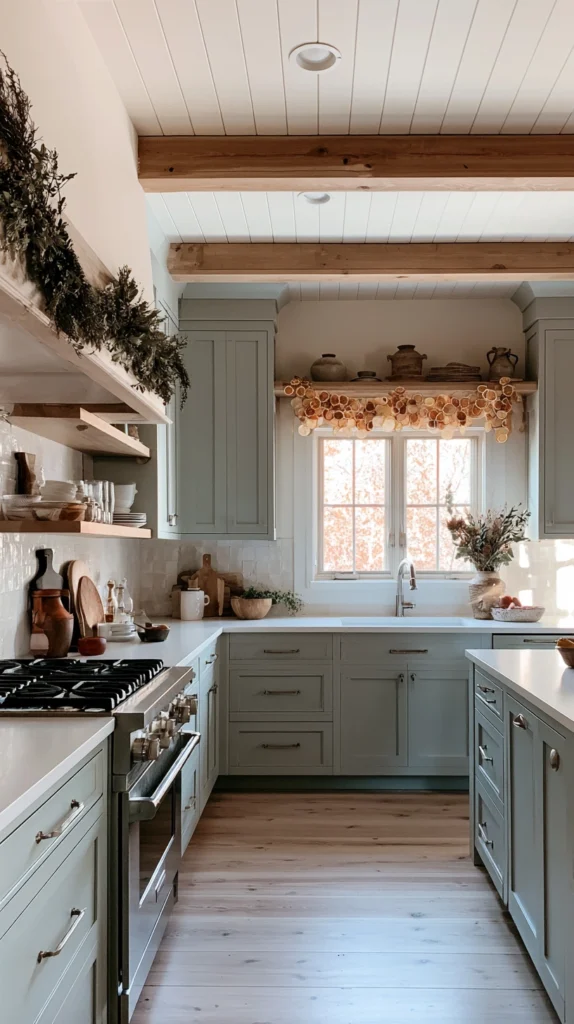
A garland of dried orange and lemon slices, strung on natural twine with a few cinnamon sticks and dried bay leaves threaded between them, draped along an open shelf edge or across the top of a window, gives the kitchen a decoration that is both visually warm and quietly fragrant as the dried citrus continues to release its scent over several weeks of display.
The dried citrus garland is one of the most specifically autumnal kitchen decorations available because the scent and the visual form belong so completely to the season — the same orange that flavours mulled wine and spiced baking, dried and threaded into a decoration that smells faintly of itself for as long as it hangs.
Oranges and lemons for drying — $5 – $15. Natural jute twine — $2 – $5. Cinnamon sticks and bay leaves to thread between the slices — $5 – $10.
Styling tip: Dry the citrus slices in a low oven at the lowest possible setting for four to six hours rather than at room temperature — oven drying produces a more consistent, less mould-prone result than air drying alone, and the kitchen will smell of warm orange for the entire duration of the drying process, which is itself an autumn kitchen experience worth having.
6. The Cast Iron and Copper Cookware Display
Budget: $30 – $200
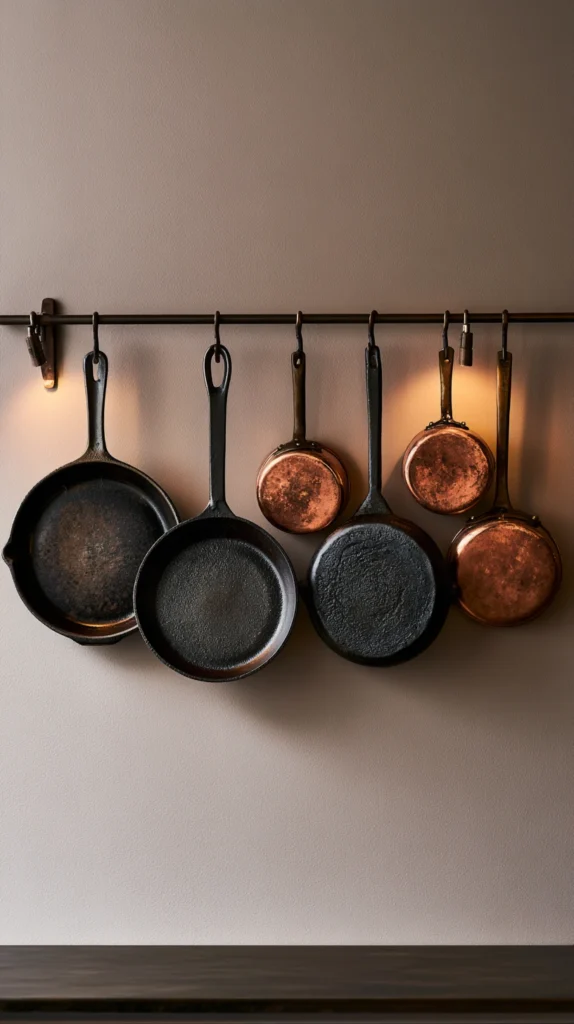
Cast iron pans and copper pots, hung from a rail or displayed on open shelving rather than stored away in cabinets, give the autumn kitchen a material warmth that relates directly to the season’s deep, rich colour palette and communicates the kitchen as a place of serious, well-equipped seasonal cooking.
The displayed cookware is functional decoration in its purest form — objects that are used constantly through the season of soups, stews, and roasts, and that happen to be beautiful enough to hang on the wall in the meantime.
A wall-mounted pot rail — $20 – $60. Cast iron skillets if not already owned — $25 – $80 each. Hanging hooks for copper pots — $5 – $15 each.
Styling tip: Hang the cookware in a loose, slightly varied arrangement of sizes rather than in a perfectly graduated or symmetrical line — a rail of pots and pans in slightly mismatched sizes and a mix of cast iron and copper reads as a genuinely used kitchen collection. A perfectly graduated, matching set reads as a display purchased for the purpose of displaying.
7. The Autumn Harvest Fruit Bowl
Budget: $10 – $40
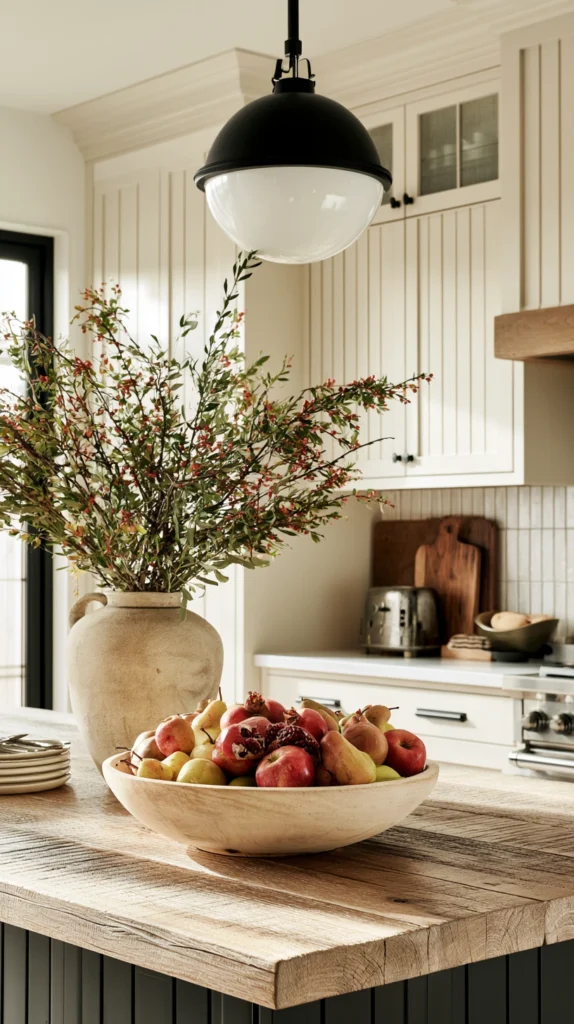
A large wooden or ceramic bowl on the kitchen counter, filled with the season’s actual produce — apples, pears, small pumpkins, pomegranates, and a few late-season figs — gives the kitchen its most genuinely functional and most quietly fragrant centrepiece, the fruit itself providing both decoration and the household’s actual eating supply.
The harvest fruit bowl is autumn decoration that disappears and replenishes — eaten down through the week and refilled at the next market visit, which gives this single object a quality of living, changing presence that a static decoration cannot replicate.
A large wooden or ceramic fruit bowl — $15 – $40. Seasonal fruit to fill it — $10 – $25 depending on quantity and variety.
Styling tip: Include at least one or two unusual or particularly fragrant items in the fruit bowl — a quince, whose perfume is famously strong even uncut, or a few physalis in their papery husks — alongside the everyday apples and pears. A quince left in a bowl on the counter will scent the entire kitchen for days, which makes it one of the most effective and least obvious additions to the autumn fruit display.
8. The Mulled Cider Station
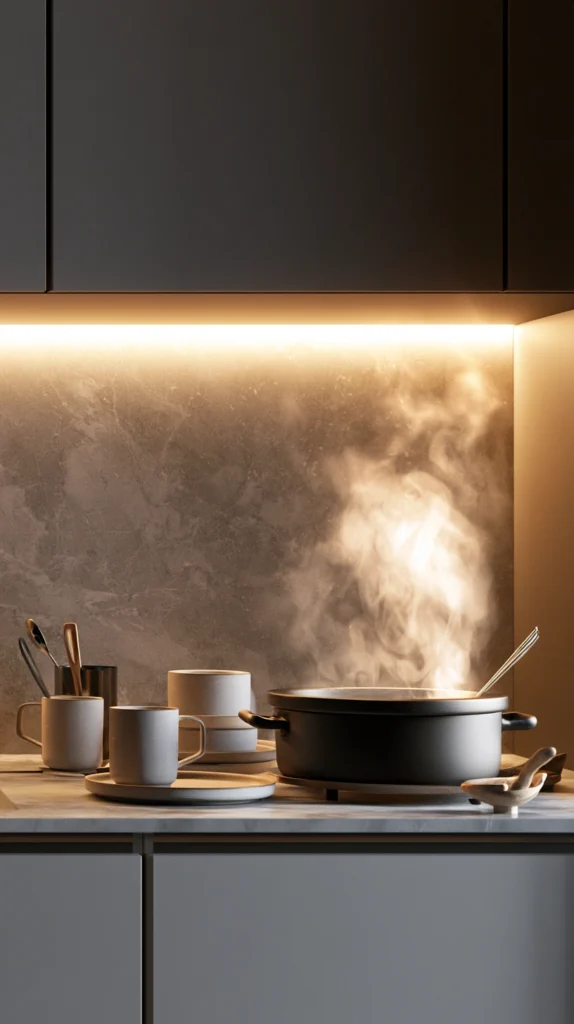
Budget: $20 – $80
A small station on the counter or a side table near the kitchen — a large pot or slow cooker for mulled cider, a ladle, a stack of mugs, and the cinnamon sticks, cloves, and orange slices needed for the mulling spice — gives the kitchen a specific seasonal ritual that fills the room with fragrance for hours at a time during gatherings or simply quiet weekend afternoons.
The mulled cider station communicates hospitality in its most directly seasonal form — the pot that anyone can ladle from, kept warm through an afternoon of guests or a single quiet evening, filling the kitchen with the specific combination of apple, cinnamon, and clove that smells more like autumn than almost anything else.
A slow cooker or large pot — already owned or $20 – $50. A ladle and a set of mugs — $10 – $30. Cider, cinnamon sticks, cloves, and orange — $10 – $20 per batch.
Styling tip: Keep the mulled cider on the lowest possible slow cooker setting rather than a rolling simmer — a gentle, low heat releases the spice fragrance steadily over many hours without reducing the liquid or intensifying the spice to an overpowering level, which is the difference between a kitchen that smells warmly autumnal all afternoon and one that smells overwhelmingly of clove for twenty minutes before the cider boils away.
9. The Autumn Herb and Botanical Hanging Bunch
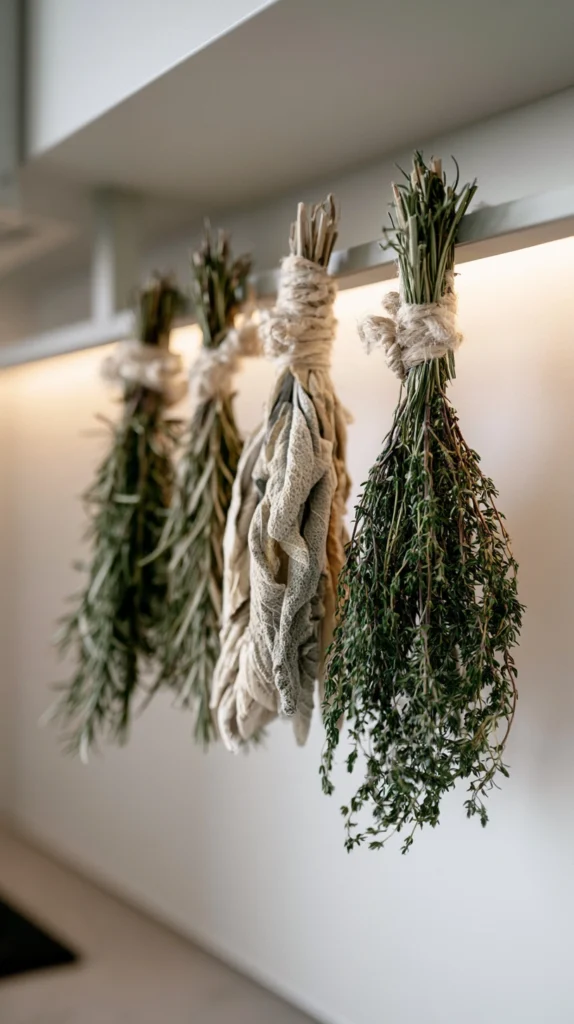
Budget: $10 – $35
Small bunches of dried herbs — rosemary, sage, thyme, and bay — tied with twine and hung upside down from a hook or a rail near the stove, give the kitchen a decoration that is genuinely culinary, genuinely fragrant when brushed against, and genuinely useful as a cooking ingredient throughout the season.
The hanging herb bunch is a decoration that earns its place in the kitchen more completely than almost any other autumn object, because it performs its decorative function and its practical function simultaneously and continuously, releasing a faint herbal fragrance every time someone moves past it while remaining available to snip for the next pot of soup.
Fresh herb bunches for drying — $3 – $8 each, or grown in the garden at no cost. Natural twine for tying — $2 – $5. A small hook or rail near the stove — $5 – $15.
Styling tip: Hang the herb bunches near enough to the stove to receive gentle warmth from cooking but not so close that they receive direct heat or steam — the gentle ambient warmth speeds the drying process and intensifies the fragrance released into the kitchen, while direct heat can scorch the leaves and produce a burnt rather than aromatic smell.
10. The Ceramic Pumpkin Soup Tureen Display
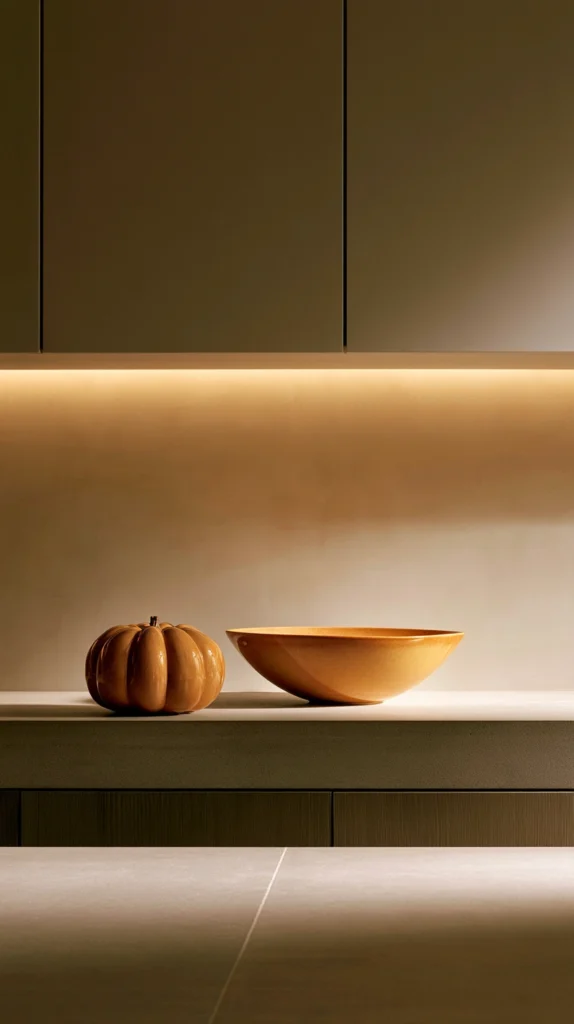
Budget: $20 – $80
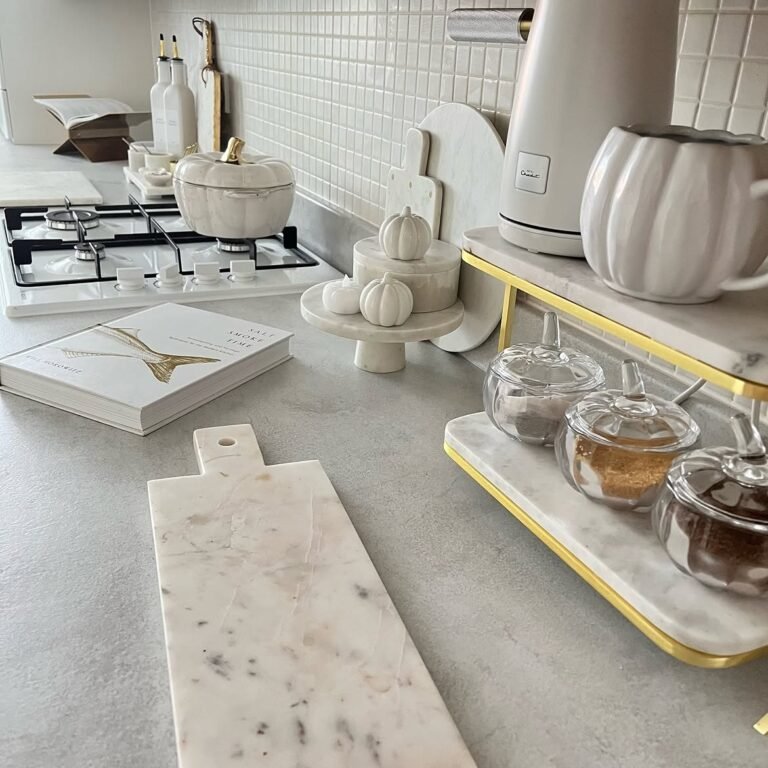
A ceramic tureen or a large decorative bowl in a pumpkin form or a warm autumn glaze, displayed on the counter or the open shelf, gives the kitchen a single significant decorative object that also doubles as serving ware for the season’s soups and stews when the household actually needs it.
The pumpkin tureen or autumn-glazed serving bowl is the kitchen equivalent of the good china kept on display rather than in the cupboard — a beautiful object that is also genuinely useful, and whose visible presence on the counter signals the kitchen’s relationship to the specific dishes the season is built around.
A ceramic pumpkin-form tureen — $30 – $80. A large serving bowl in a warm autumn glaze — $20 – $60.
Styling tip: Use the tureen or serving bowl for its actual purpose at least once during the season rather than leaving it purely as a display object — a tureen that has held an actual pot of soup communicates a kitchen genuinely engaged in seasonal cooking, while one that sits empty and untouched on the shelf for the full season communicates a beautiful object that has not yet earned its place.
11. The Warm Wood and Cutting Board Display
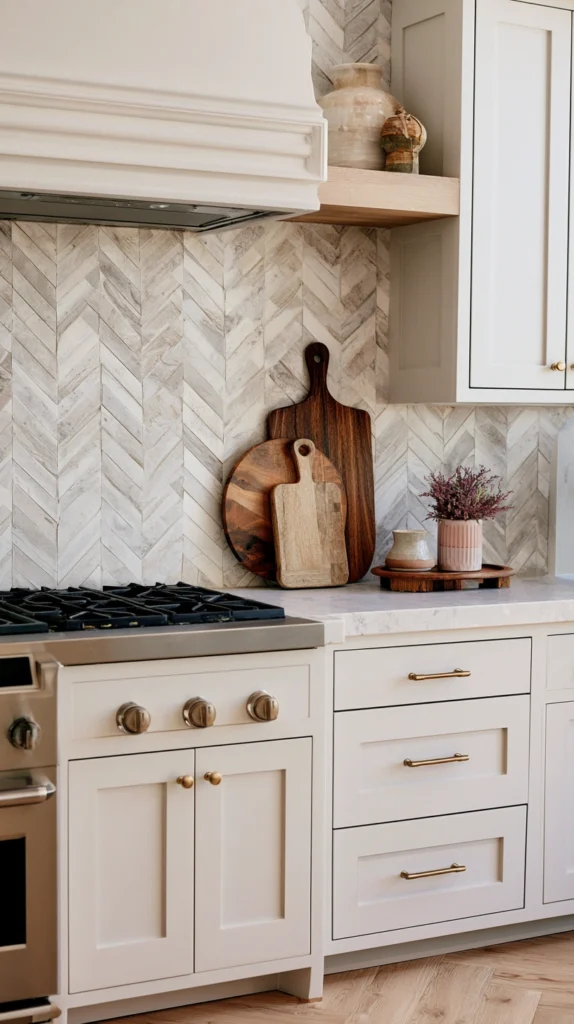
Budget: $20 – $100
A collection of wooden cutting boards and serving boards, leaned against the backsplash or displayed on a stand, in varied warm timber tones from pale ash to deep walnut, gives the kitchen a material warmth that relates directly to the autumn palette and communicates the specific richness of natural wood grain at a scale the kitchen rarely otherwise provides.
The leaned cutting board display is a decoration assembled almost entirely from objects the kitchen already owns and uses — the everyday cutting board elevated to decorative status simply by being displayed rather than stored, which makes this one of the most accessible autumn kitchen updates available.
Wooden cutting and serving boards in varied sizes — already owned, or $15 – $50 each if purchasing new. A simple board stand or rack for leaning — $10 – $30.
Styling tip: Oil the wooden boards before displaying them — a freshly oiled cutting board has a deeper, richer colour and a slight sheen that makes the timber grain considerably more visible and more beautiful than a dry, unmaintained board, and the maintenance itself extends the life of the boards regardless of their decorative use.
12. The Autumn-Scented Candle on the Windowsill
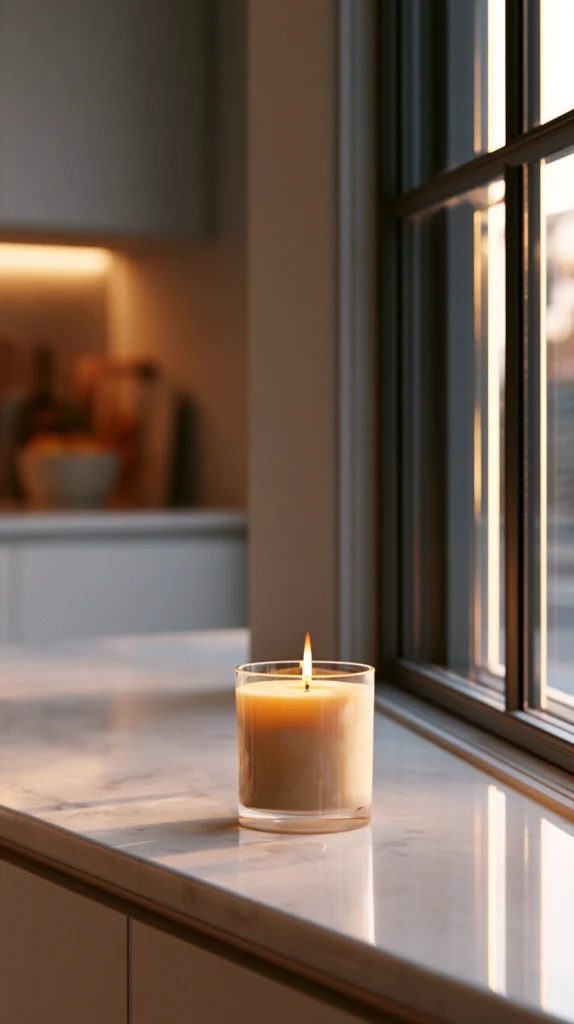
Budget: $10 – $40
A quality candle in a warm autumn fragrance — spiced apple, cinnamon, woodsmoke, or a warm amber — placed on the kitchen windowsill or beside the sink, gives the room a consistent fragrance layer that operates in the background of the kitchen’s other smells, filling in the gaps between active cooking with the same autumn warmth.
The windowsill candle is the kitchen’s most flexible fragrance source because it requires no cooking and no preparation — lit for fifteen minutes while washing dishes, it produces enough fragrance to carry the room’s scent through to the next meal.
A quality autumn-fragranced candle — $10 – $35. A simple ceramic or glass holder if needed — $5 – $15.
Styling tip: Choose a single autumn fragrance for the kitchen candle and a different, complementary one for the rest of the home — a spiced apple or cinnamon candle in the kitchen alongside a warmer amber or woodsmoke fragrance in the living room creates a layered scent experience as someone moves through the house, rather than the same single fragrance repeated in every room, which can quickly become overwhelming rather than welcoming.
13. The Chalkboard Menu Board
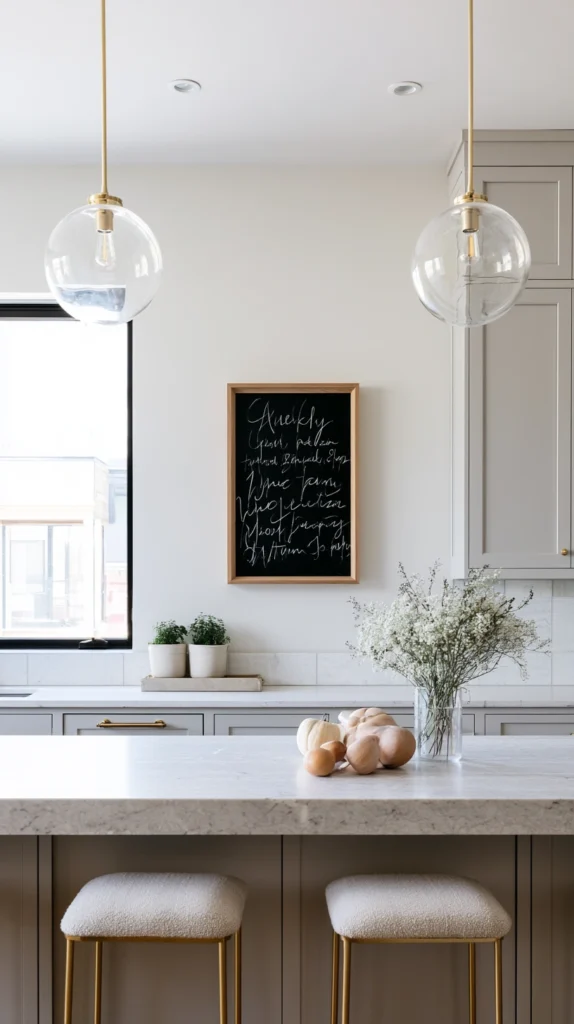
Budget: $15 – $50
A small chalkboard, framed or simply hung, displaying the week’s seasonal menu — soup, roast, the apple crumble planned for Sunday — written in chalk in the kitchen, gives the room a decoration that communicates the specific activity of seasonal cooking at a glance and gives the household a shared, visible plan for the meals the season is built around.
The chalkboard menu is a decoration that changes weekly, which keeps the kitchen’s seasonal identity active and current rather than static — a kitchen with the same display from October through December has stopped responding to the season, while one with a chalkboard rewritten every Sunday continues to.
A small framed chalkboard — $15 – $40. Chalk or a chalk marker — $3 – $8.
Styling tip: Write the week’s planned meals in a loose, slightly imperfect hand rather than in careful block lettering — the handwritten, slightly casual chalkboard communicates a genuinely used kitchen tool rather than a styled prop, and the specific imperfection of handwriting is part of what makes this kind of kitchen decoration feel authentic rather than staged.
14. The Fully Realised Fragrant Fall Kitchen
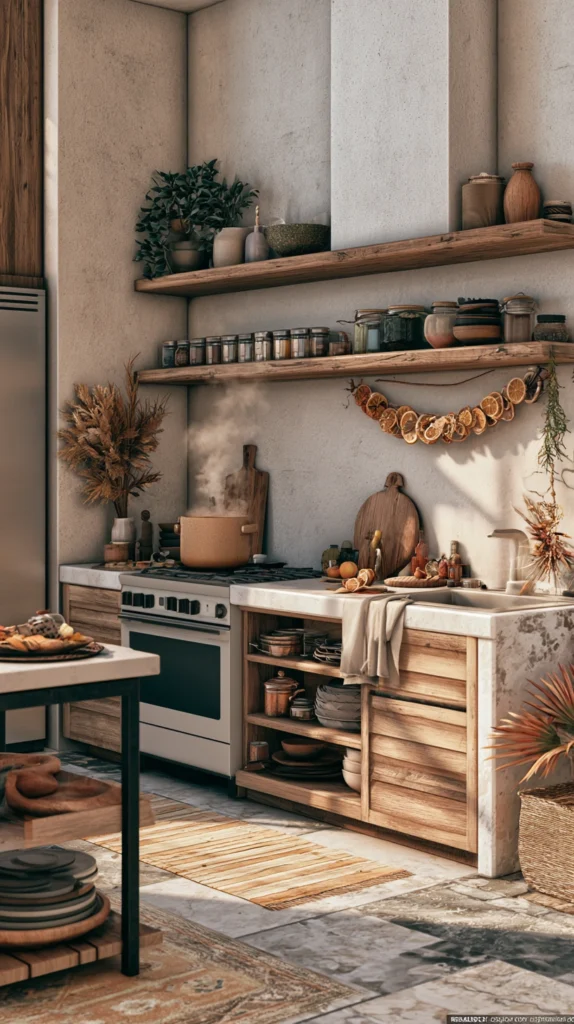
Budget: $150 – $700
The fully realised fragrant fall kitchen — a stovetop simmer pot of cinnamon, clove, and orange peel on the back burner, open shelving styled with spice jars left slightly open for passive fragrance, a small dried wheat wreath on the window, a baking station stocked and ready for the next batch of spiced bakes, a dried citrus garland along the shelf edge, cast iron and copper cookware hung in a loosely varied display, a harvest fruit bowl with a quince scenting the room, a slow cooker of mulled cider warm and ready for guests, bunches of dried herbs hanging near the stove, a pumpkin tureen actually used for the week’s soup, leaned and oiled wooden cutting boards, an autumn-scented candle on the windowsill, and a chalkboard announcing the week’s seasonal menu in a loose, handwritten script.
This is a kitchen that engages the full sensory register of the season simultaneously — sight, scent, and the genuine activity of seasonal cooking happening in real time.
Simmer pot ingredients: $5 – $12. Spice display: $20 – $60. Wreath: $15 – $40. Baking station: $20 – $80. Citrus garland: $10 – $25. Cookware display: $30 – $150. Fruit bowl: $10 – $40. Mulled cider station: $20 – $80. Herb bunches: $10 – $30. Tureen: $20 – $80. Cutting boards: $20 – $80. Candle: $10 – $35. Chalkboard: $15 – $40. Total fully realised fragrant fall kitchen: $205 – $752 for a kitchen that smells, looks, and functions like the season it was decorated for.
Styling tip: Start the simmer pot before any guest arrives and keep the mulled cider station warm throughout their visit — the kitchen’s fragrance is the first thing anyone notices on entering the home, and a kitchen that smells like autumn the moment the front door opens has communicated the season before a single decoration has been seen.
The fall kitchen that smells like autumn is not relying on decoration alone to communicate the season. It is using the kitchen for the one thing it has always done better than any other room in the house — turning raw ingredients into the specific, warm, spiced fragrance that the season has always smelled like, and simply making sure that fragrance has somewhere to go.
Which, in a kitchen prepared this way, it always does.