15 Coastal Dining Room Ideas That Bring the Serenity of the Shore Indoors
15 Coastal Dining Room Ideas That Bring the Serenity of the Shore Indoors
There is a specific quality that eating beside the sea possesses — the quality of a meal that lasts longer than it should, that ends when the light goes rather than when the food does, where the conversation is easy, and the wine disappears without anyone noticing who poured it.
It has very little to do with the food and almost everything to do with the room: the light coming in at a flat angle, the palette of the walls and the table, the sound of something outside, the specific unhurried atmosphere of a space that was designed for pleasure rather than efficiency.
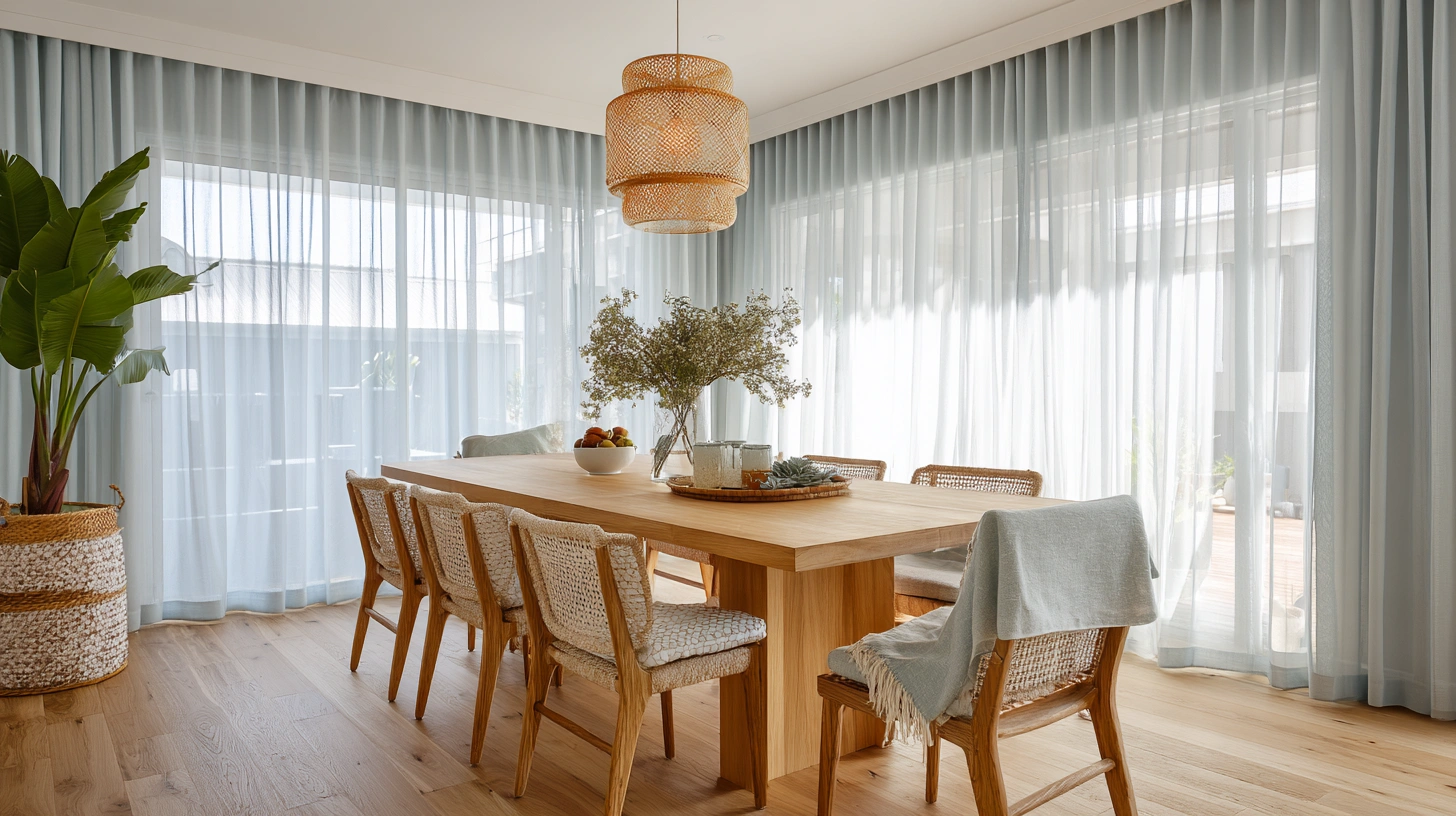
The coastal dining room at its best does not attempt to recreate a seaside restaurant. It takes the palette, the materials, and the specific atmospheric qualities of the coastal environment — bleached timber, salt-white ceramics, the particular blue-grey of sea glass, linen that has been washed in coastal air — and uses them to create a dining room that produces the unhurried quality of eating beside the water, regardless of how far from the shore it actually sits.
Each idea below is a specific approach to one element of the coastal dining room. Each includes what you will need, what it will cost, and a practical tip to make it work as well as the atmosphere it is reaching for.
1. The Bleached Timber Dining Table
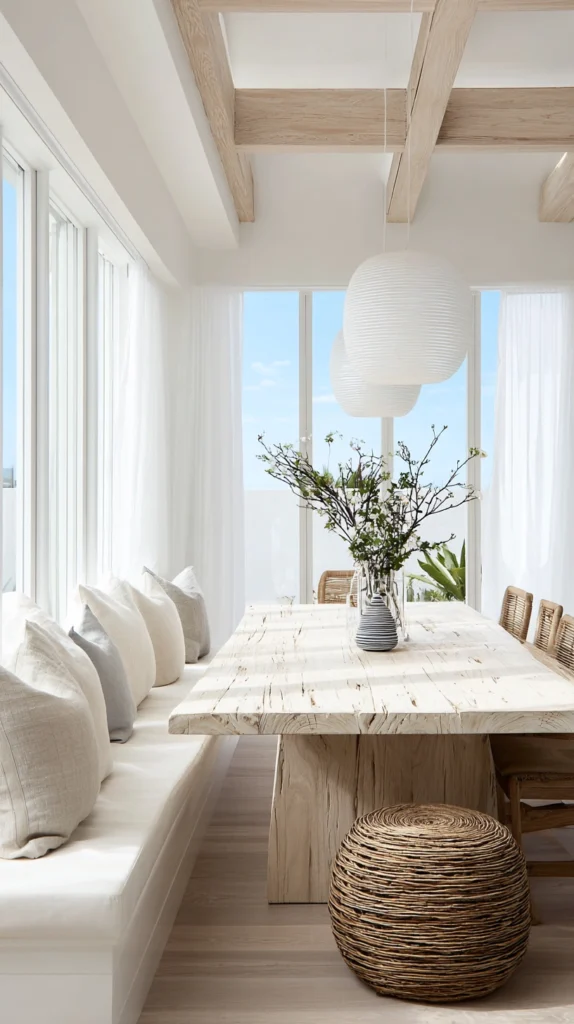
Budget: $300 – $2,000
A dining table in bleached, limed, or whitewashed timber — the specific pale, grey-toned finish of timber that has been exposed to salt air and sun rather than maintained with oil or varnish — is the most foundational material decision of the coastal dining room. The bleached timber table reads as driftwood, as a beach house table that has been in the same room for decades, as something that was part of the landscape before it was part of the furniture.
A lime-washed oak dining table in a standard six-seater size costs $400–$1,200. A reclaimed timber table with a natural bleached finish runs $600–$2,000. A DIY bleached finish on an existing timber table — using a liming wax or a diluted white paint wash — costs $20–$60 in materials. The bleached finish requires a matte or satin sealant to protect the surface in a dining room context — an unsealed bleached table marks immediately with water rings and food spills that the pale finish makes more visible than on a darker or oiled surface.
Style tip: Choose a table with a slightly irregular, hand-finished surface rather than a machine-sanded perfectly flat one. The slight surface variation of hand-finished timber — the plane marks, the grain irregularity, the gentle undulation of the surface — gives the bleached table the quality of genuine age that a perfectly flat bleached surface, however well-finished, does not possess. The imperfection is the authenticity.
2. The Sea Glass and Shore Palette
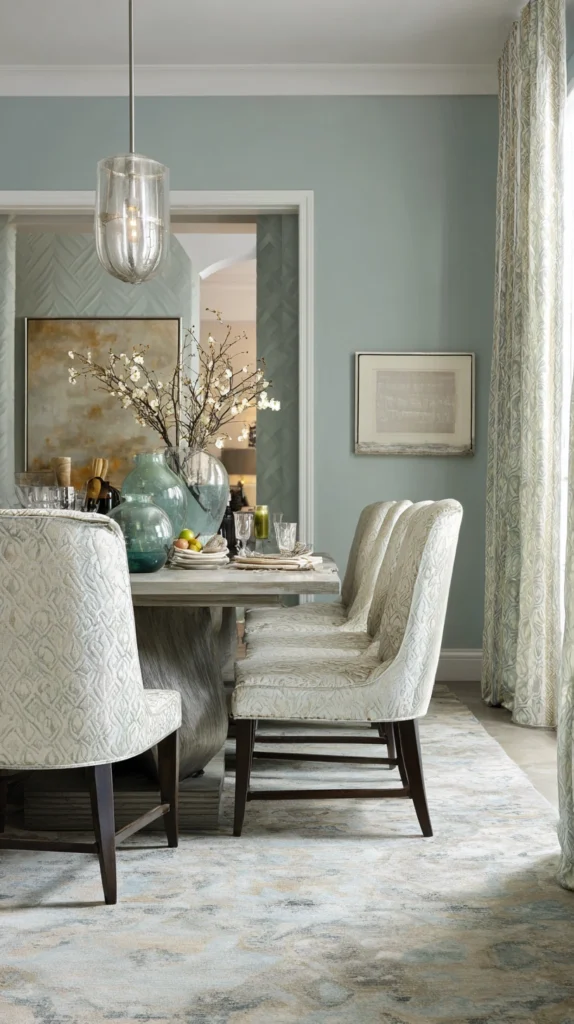
Budget: $30 – $200 to implement
Building the coastal dining room’s colour palette around the specific tones of sea glass and shoreline — the particular grey-green, the chalky white, the sandy buff, the pale cobalt, the bleached bone — creates the atmospheric foundation from which every other coastal decision follows. The coastal palette is not beach-resort turquoise; it is the more complex, more faded, more honest palette of what the sea actually looks like on a northern coast in summer.
Paint for the walls in a sea glass grey-green costs $30–$80 per tin. Linen in an undyed or pale sand tone for the curtains costs $15–$30 per metre. Ceramics in chalky white and pale blue cost $8–$30 per piece. The palette is implemented gradually rather than purchased simultaneously — the walls first, then the textiles, then the ceramics — so each addition can be assessed against the existing palette before committing.
Style tip: Test the coastal paint colour in the dining room at the time of day when the room receives the most light — usually midday — rather than in the evening or under artificial light. Coastal palette colours shift significantly between natural and artificial light, and a sea glass grey-green that reads as perfectly balanced in afternoon sunlight can shift toward a flat grey or an unexpected blue under warm artificial light. The artificial light test is as important as the natural light test for a dining room used primarily in the evening.
3. The Rattan and Wicker Chair Collection
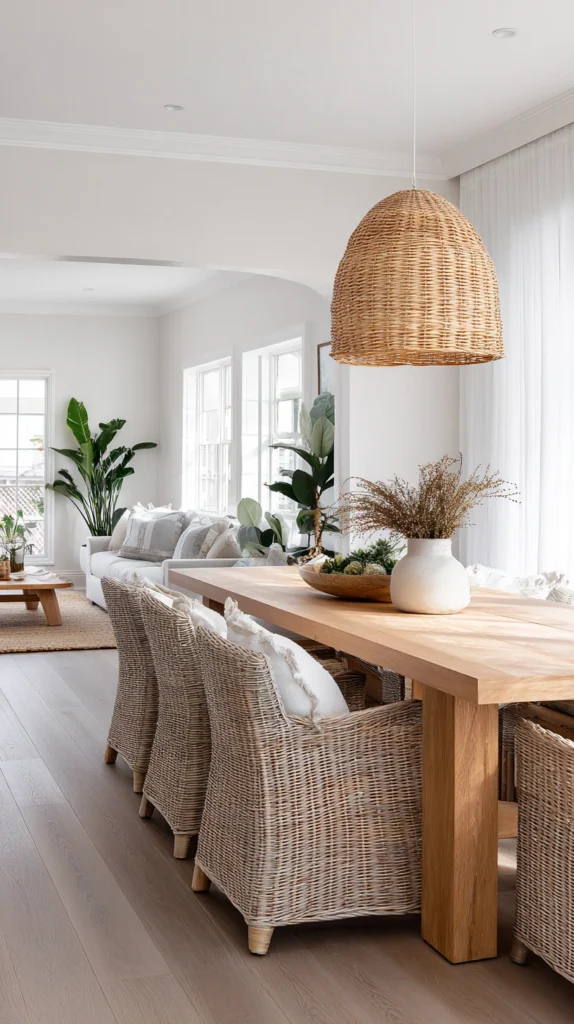
Budget: $80 – $600
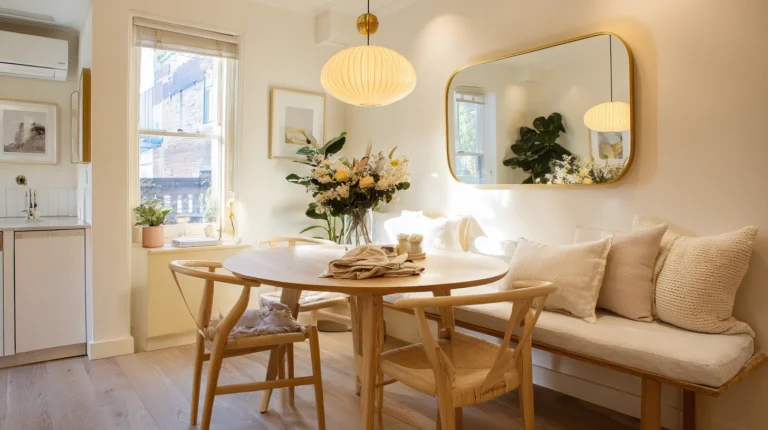
Rattan or wicker dining chairs — either a complete matching set or a collected combination of similar pieces in the same natural material — give the coastal dining room its most specifically beach-house character at the seating level. Rattan reads as warm, casual, and coastal in a way that timber or upholstered chairs do not, and the lightness of rattan seating — both visual and physical — suits the unhurried, airy quality of the coastal dining atmosphere.
A set of four rattan dining chairs costs $200–$500. Individual wicker chairs from secondhand markets run $20–$80 each — a collected set of four from different sources in the same natural rattan material costs $80–$320 and has a quality of accumulation that a bought matching set lacks. The slight variations between chairs in a collected set read as genuine rather than designed, and the coastal aesthetic values the genuine quality above the consistent one.
Style tip: Mix rattan chairs with one or two solid timber or painted chairs rather than using rattan throughout. The combination of rattan and timber at the same dining table creates the casually assembled quality that a coastal dining room should have — as if the chairs were gathered from different rooms of the beach house rather than purchased together. One or two statement chairs in a darker material anchor the rattan’s lightness.
4. The Coastal Linen Curtain Treatment
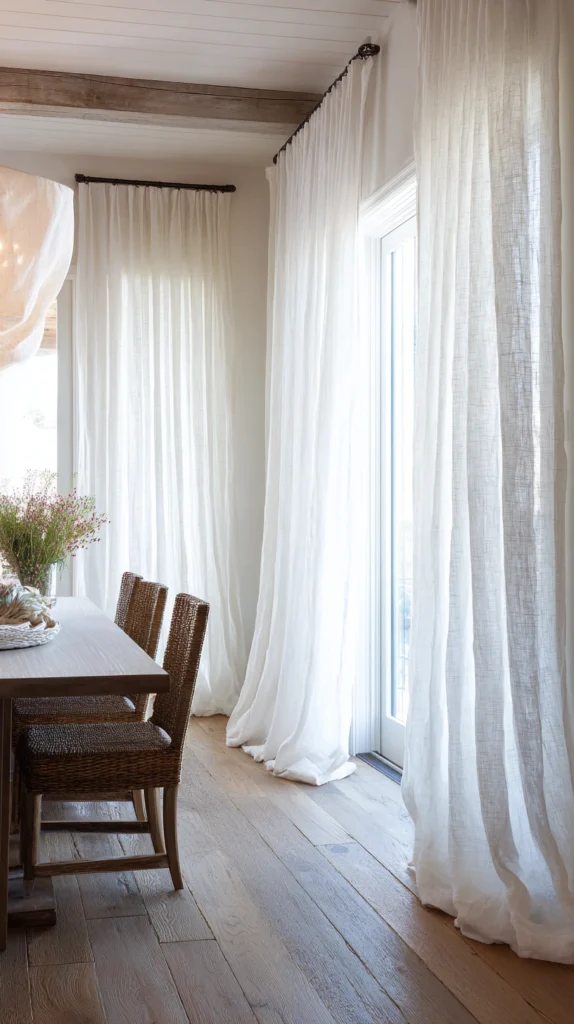
Budget: $60 – $300
Unlined linen curtains in a natural, undyed, or pale coastal tone — hung from a simple timber rod at ceiling height and allowed to pool very slightly on the floor — create the specific quality of diffused coastal light that the dining room requires. Unlined linen filters the light into something softer and more diffuse, reducing the contrast between the sunny outdoors and the shadowed interior, which is the light condition most conducive to the extended, unhurried dining experience.
Unlined linen in a natural tone costs $15–$30 per metre. A pair of curtains for a standard dining room window requires 4–6 metres — $60–$180 in fabric. Simple timber curtain poles with ring clips cost $30–$80. The unlined quality is essential — a lined coastal curtain blocks the light that the linen’s filtering is designed to manage, and the lined version creates the dark, controlled light of a formal dining room rather than the soft diffuse light of a coastal one.
Style tip: Wash the linen curtains before hanging to pre-shrink the fabric and begin the gentle softening process. Linen washed in cold water and line-dried outdoors develops the relaxed, slightly crumpled quality that makes it look as if it has been in the room for years rather than recently installed. The washed linen communicates use; the unwashed linen communicates newness, and the coastal dining room should feel inhabited rather than installed.
5. The Driftwood Centrepiece
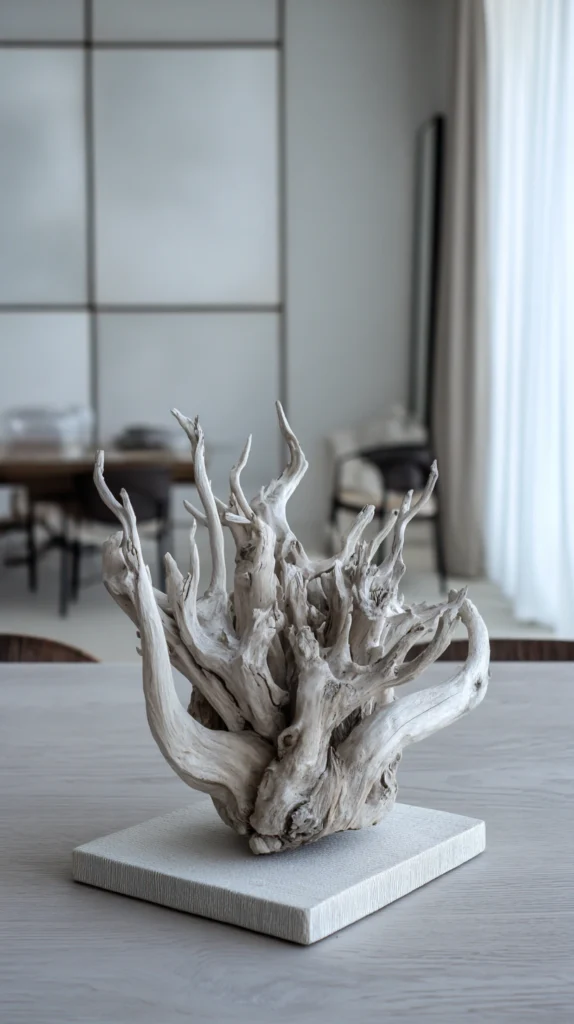
Budget: $0 – $40
A piece of driftwood — collected from a beach and dried thoroughly before bringing inside, or purchased from a craft supplier — used as the dining table centrepiece communicates the coastal material tradition more directly and more honestly than any purchased coastal decoration. Driftwood is not a decoration representing the coast; it is a material from the coast, and the distinction is the quality that makes the best coastal interiors feel genuinely connected to the landscape rather than themed around it.
Driftwood from a beach costs nothing. A large piece from a craft or garden supplier runs $15–$40. Position the driftwood on a low wooden board or a ceramic tray — the base elevates it from the table surface slightly and communicates it as a displayed object rather than something resting on the table. Accompany with a small arrangement of beach pebbles, shells, or simple white flowers in a glass vase.
Style tip: Choose driftwood with an interesting silhouette — branching arms, a twisted grain, a dramatically curved form — rather than simply the largest available piece. A piece of driftwood with architectural character reads as sculptural from across the dining room; a straight or featureless piece reads as timber. The silhouette of the driftwood is the quality that gives it its centrepiece authority.
6. The Coastal Blue Accent Wall
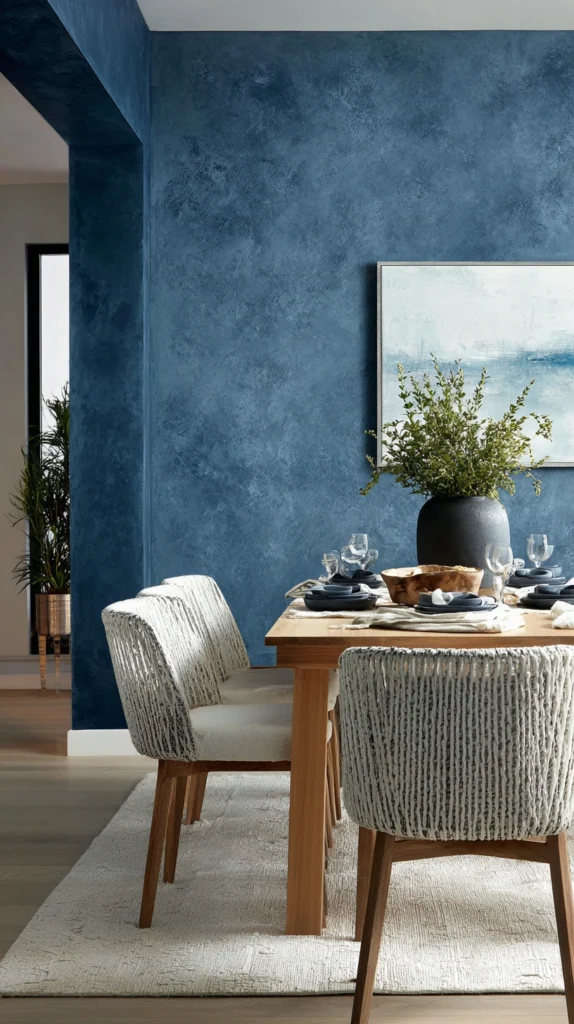
Budget: $40 – $180
A single wall in a deep, complex coastal blue — not the bright primary blue of a sailing flag but the specific grey-blue of deep water, of a stormy horizon, of the sea at dusk — gives the coastal dining room its atmospheric foundation in the most direct way available. The dark coastal blue wall absorbs light rather than reflecting it, creates a sense of depth and recession, and makes the white ceramics and pale linen of the rest of the dining room appear to float against it.
Coastal blue paint in a deep, grey-inflected tone costs $30–$80 per tin. The feature wall behind the dining table or sideboard is the most effective position for the coastal blue — it is the wall most visible from the primary seating positions and the one that most directly communicates the room’s atmospheric intention. Two coats on a standard dining room wall require one 2.5-litre tin.
Style tip: Choose a coastal blue with significant grey content — a blue that reads blue only in good light and grey in lower light — rather than a clean, saturated blue. The grey-inflected blue is the colour of actual coastal water rather than of a colour chart’s idea of coastal water, and it produces the specific atmospheric quality of the sea rather than the generic association of blue with beach.
7. The White Ceramic Table Setting
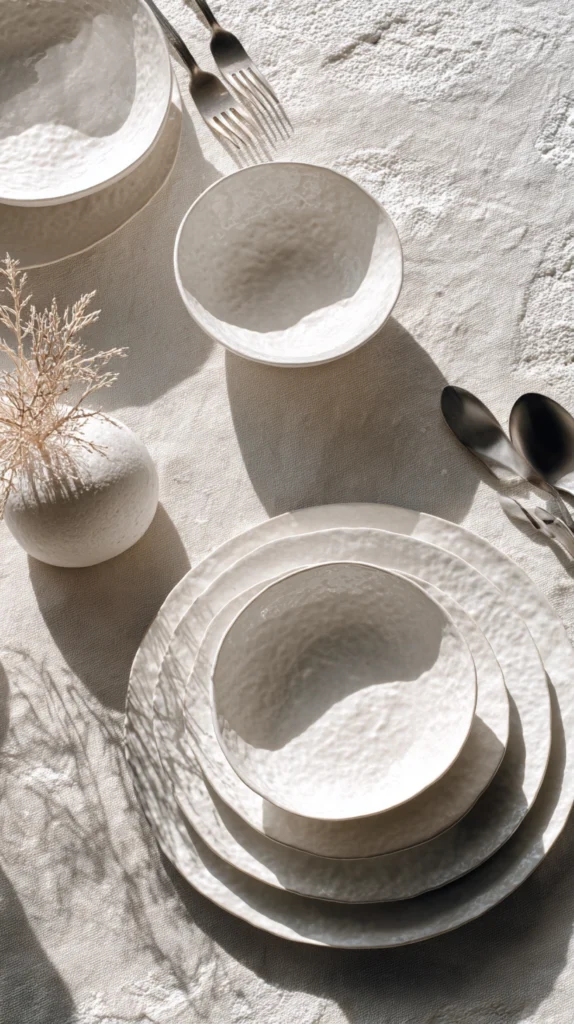
Budget: $80 – $400
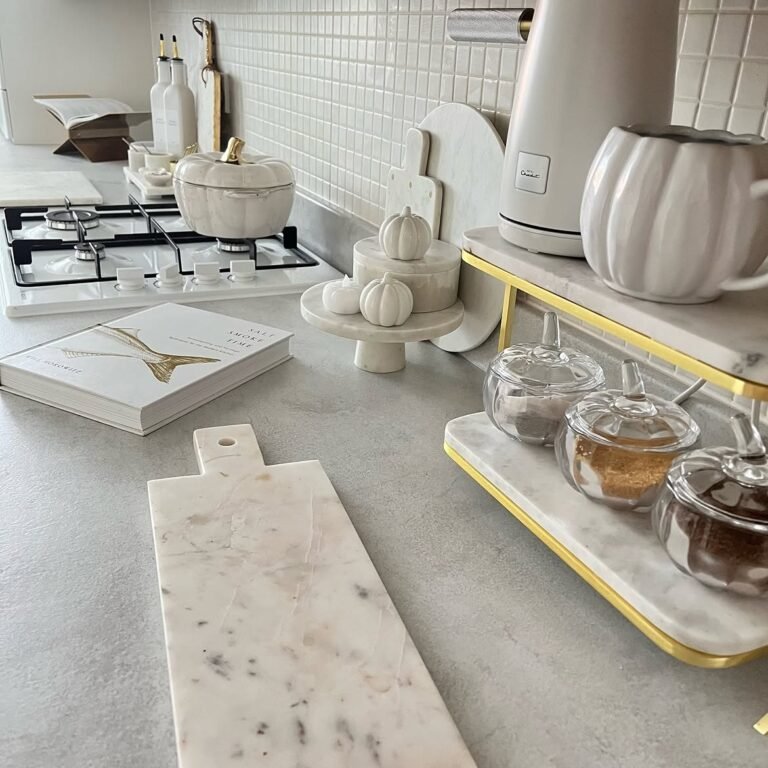
A table setting in white ceramic — handmade or hand-finished pieces with slight irregularities, in a chalky matte glaze rather than a bright gloss — creates the most specifically coastal table at which to eat. White coastal ceramics have a quality of bleached bone, of shells, of coral — the white of the natural world rather than the white of manufactured surfaces — and the slight variations of the handmade glaze communicate exactly the quality that the coastal dining room is built around.
A set of six dinner plates in a chalky white ceramic costs $60–$200. White handmade bowls run $10–$30 each. White ceramic jugs and serving pieces cost $15–$50. Choose ceramic with visible throwing marks or glaze variations rather than the uniform perfection of industrial white ceramic — the imperfection is the quality, not the compromise. A table set with handmade ceramics reads as carefully chosen; one set with perfect industrial white reads as department store.
Style tip: Combine ceramic in two different whites — one with a warm cream undertone and one with a cool grey undertone — rather than matching all pieces in the identical white. The slight tonal variation between pieces gives the white table setting the layered, coastal quality of naturally bleached materials rather than the uniform quality of a matching set, and it reads as assembled rather than purchased.
8. The Coastal Botanical Arrangement
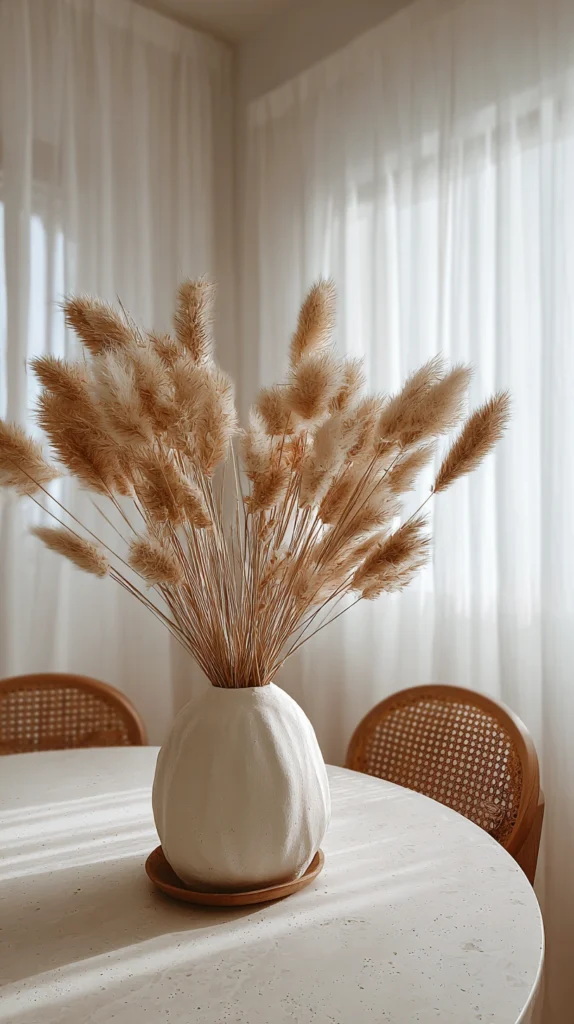
Budget: $10 – $60
A simple arrangement of coastal and shoreline botanicals — dried sea lavender, bleached grasses, honesty seed pods, dried pampas, eucalyptus branches — in a ceramic or glass vase on the sideboard or at the dining table communicates the specific botany of the coastal landscape in the way that tropical flowers and garden roses cannot. The coastal botanical arrangement uses the plants of the shore and the dune rather than the garden or the florist.
Dried sea lavender costs $3–$10 per bunch. Dried pampas grass stems run $5–$12 each. Honesty seed pods cost $2–$8 per bunch from a florist or nothing from a garden. A bunch of dried wheat or barley — the most economical and most beautiful dried botanical available — costs $3–$6. The coastal botanical arrangement is most effective in a tall, simple glass or ceramic vase that allows the dried stems to be displayed at their natural length rather than cut down to fit a low container.
Style tip: Use a single botanical material in abundance rather than a mixed arrangement of multiple types. A vase of pure dried pampas reads as a coastal feature; a vase of dried pampas mixed with silk flowers and decorative twigs reads as a dried flower arrangement. The abundance of a single material is the restraint that gives the coastal botanical display its specific quality.
9. The Striped Dining Textile
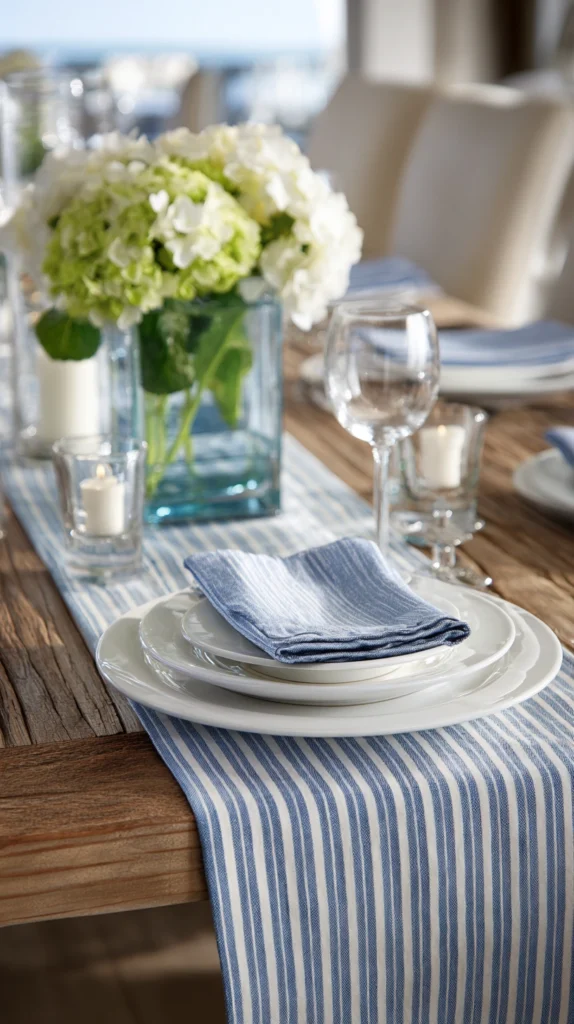
Budget: $30 – $150
A striped textile — a runner on the dining table, striped linen napkins, a tablecloth in the classic coastal stripe of navy and white or sand and blue — introduces the graphic language of the seaside into the dining setting without competing with the room’s more considered material palette. The stripe is the dining room’s seasonal decoration — brought out for summer, stored in winter, used at every coastal-dining-inspired table setting through the warm months.
A striped linen table runner in navy and white costs $20–$50. Striped cotton napkins run $8–$20 per pair. A full striped tablecloth costs $30–$80. Choose stripes in the coastal palette — navy and white, sand and cream, slate blue and natural — rather than the bright primary stripes of a children’s towel. The muted coastal stripe is the stripe of canvas deckchairs and old sailing boats rather than of beach resort branding.
Style tip: Use the striped textile as the table’s single decorative element rather than combining it with a centrepiece, a runner, and multiple decorative objects simultaneously. A striped runner is a complete table setting at the coastal scale; adding further decorative layers competes with the stripe’s graphic simplicity. The stripe needs clear table surface around it to read as a design decision rather than as one of several decorative elements.
10. The Rope and Woven Material Detail
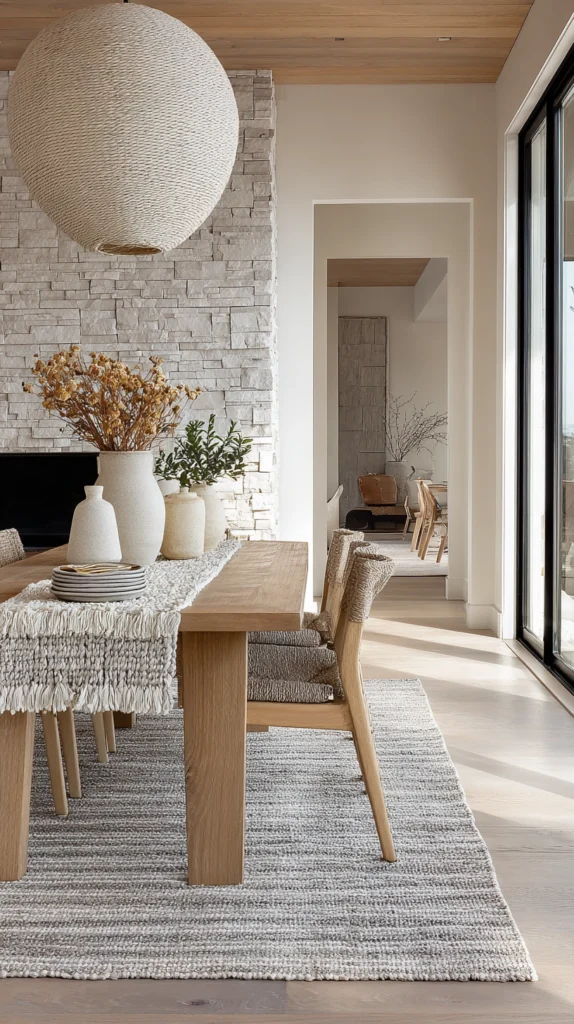
Budget: $20 – $100
Rope and natural woven materials — jute, hemp, sea grass, sisal — used as small details in the coastal dining room: a rope-wrapped napkin ring, a jute placemat, a seagrass basket on the sideboard, a sisal rug beneath the dining table — introduce the specific material tradition of the coast through the working objects of the sea rather than through decorative reference. Rope used in a coastal dining room is rope; it does not need to explain its presence or justify its reference.
Jute placemats cost $3–$8 each. A set of six runs $18–$48. Rope napkin rings ($2–$5 each) take two minutes to tie from a length of natural rope ($3–$8 per metre). A seagrass storage basket for the sideboard costs $15–$40. A sisal rug beneath the dining table costs $60–$200 for a standard size. The woven and rope materials are most effective when they are limited to one or two positions in the dining room rather than appearing on every surface simultaneously.
Style tip: Use natural, undyed rope and woven materials rather than dyed or bleached versions. The natural colour of jute — the warm buff of dried grass — and of manila rope — the pale cream of natural fibre — are the coastal palette colours in their most honest form. Dyed versions in bright blue or bleached white lose the specificity of the natural material and read as coastal-themed rather than coastally material.
11. The Whitewashed Brick or Limewash Wall
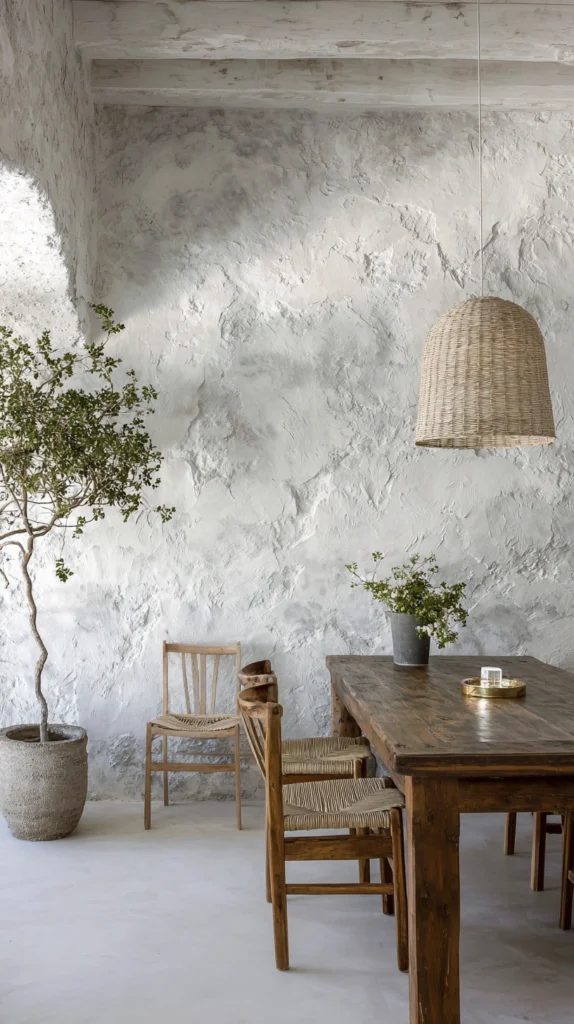
Budget: $40 – $300
A whitewashed brick wall — either an existing exposed brick wall treated with a diluted white paint wash, or limewash plaster applied to a smooth wall to create the texture of aged plaster — gives the coastal dining room its most architecturally specific surface treatment. Limewash and whitewash have a quality of age and of gradual weathering that flat paint cannot replicate — they absorb and reflect light differently at every point on the surface, creating the impression of a wall that has been in the room for decades rather than recently decorated.
Limewash paint in white or pale coastal tone costs $30–$80 per litre — a standard dining room wall requires one to two litres for adequate coverage. Diluted white paint for a DIY whitewash over existing brick costs $15–$30 in paint. The whitewash application is achieved with a dry brush rather than a roller — the brush produces the variegated coverage that gives whitewash its quality; the roller produces a flat, uniform finish that reads as standard paint applied to a textured surface.
Style tip: Apply the limewash in two thin coats rather than one thicker coat, allowing the first coat to dry completely before the second. The first coat creates the pale base; the second coat, applied in a slightly different direction and at a slightly less saturated consistency, creates the layered quality that gives limewash its depth. A single thick coat produces the coverage of limewash without the atmospheric layering that distinguishes it from white paint.
12. The Coastal Artwork and Photography
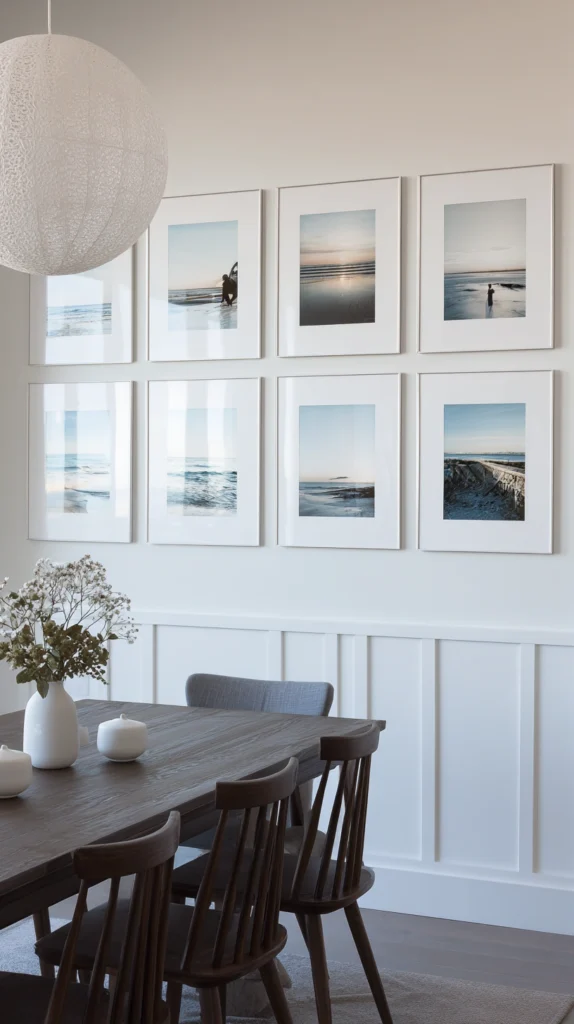
Budget: $30 – $300
Coastal photography or artwork — not the souvenir-shop print of a crashing wave but the specific, quiet photographic or painted observation of the coast: a beach at low tide at dawn, a sea horizon at dusk, a detail of weathered boat paint, a rockpool — gives the coastal dining room the visual reference to the landscape it is drawing from without making the reference explicit. The artwork in the coastal dining room should look like it was made by someone who spent time at the shore rather than by someone who was commissioned to produce coastal art.
A large-format coastal photograph printed at A1 size costs $30–$100 framed. An original coastal painting runs $100–$500. A series of smaller coastal photographs in matching frames costs $50–$200. Choose imagery that is specific — a recognisable type of coast, a particular quality of light at a particular time of day — rather than generic. The specific coastal image carries more atmospheric authority than the universal one.
Style tip: Hang the coastal artwork at the seated eye level rather than at the standard standing eye level. The dining room artwork is viewed from a seated position for most of the time it is in use — the centre of the artwork at 120–130 centimetres from the floor is the seated viewing height that places the imagery at the direct eye level of the person eating below it. Coastal artwork seen from a comfortable seated angle produces an immersive quality that the same artwork hung higher does not.
13. The Oversized Lantern Lighting
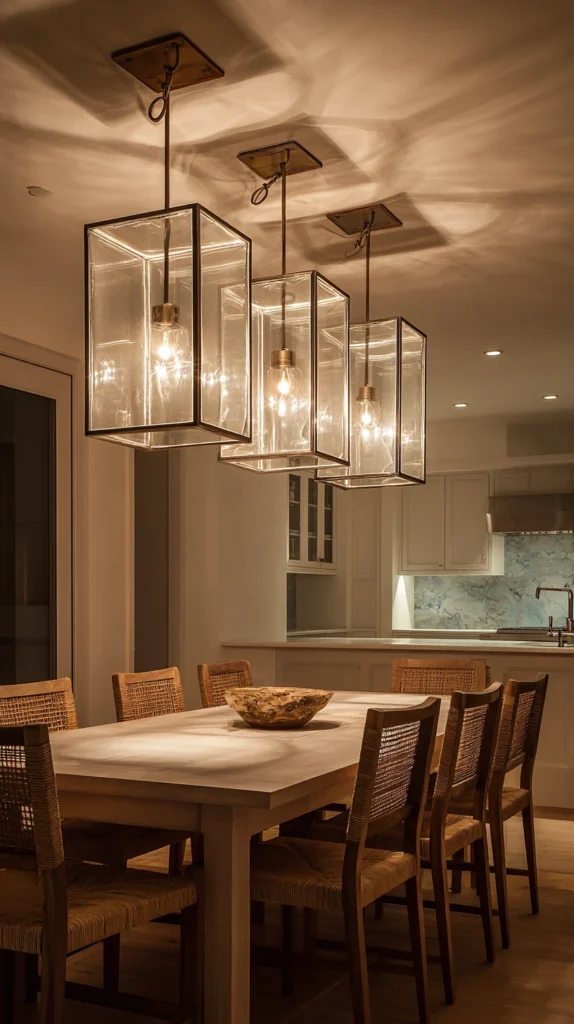
Budget: $80 – $400
A large glass lantern pendant — or a pair of oversized lanterns hung at different heights above the dining table — communicates the coastal and the nautical tradition of lantern light in a domestic dining context. The glass lantern is the specific light fitting that belongs in the coastal dining room: warm, slightly industrial, clearly functional in its design logic, and beautiful in the quality of the diffused light it produces over the table.
A large glass and steel pendant lantern costs $80–$250. A pair of matching lanterns run $160–$500. Hang the lanterns so their bases are 70–80 centimetres above the table surface — the hanging height that produces the intimate pool of light over the table that the coastal dining room requires. Specify warm white bulbs at 2700K — the light temperature that produces the golden warmth of candlelight rather than the flat brightness of cool white.
Style tip: Use vintage-style Edison bulbs within the glass lanterns rather than standard LED bulbs. The visible filament of the Edison bulb, glowing amber within the glass lantern, communicates the quality of a working light — a lantern that was designed to be a lantern rather than a light fitting that happens to look like one. The Edison bulb is the detail that makes the lantern read as genuine rather than decorative.
14. The Coastal Dining Room Scent
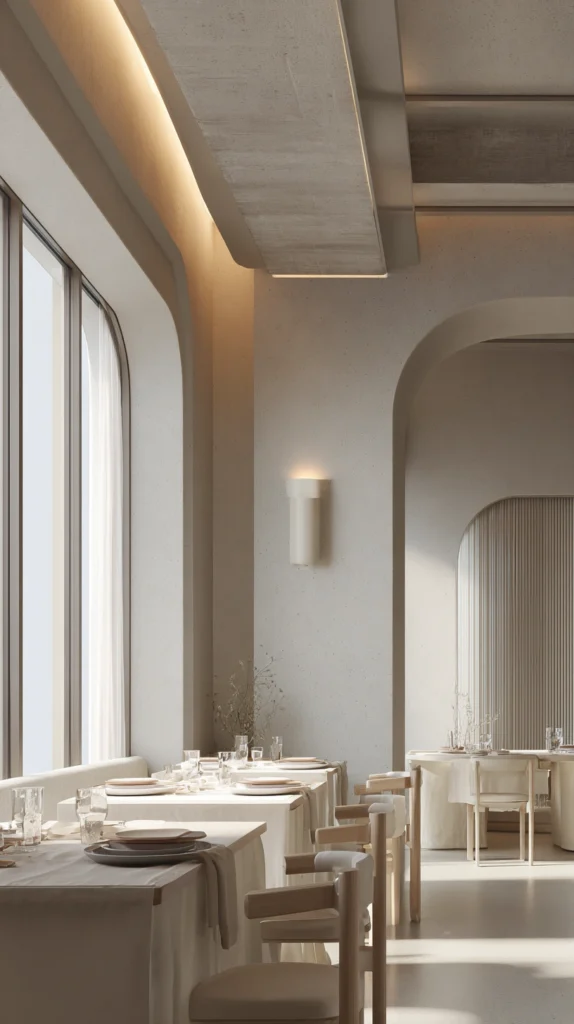
Budget: $15 – $60
A coastal dining room should smell coastal — like sea air, like warm sand, like the specific combination of salt and sun and dried botanical that distinguishes the coastal from every other landscape. A candle in a maritime fragrance — sea salt, driftwood, sea grass, coastal air — lit before guests arrive and burning through the meal creates the olfactory dimension of the coastal dining experience that the visual elements alone cannot provide.
A quality coastal-scented candle costs $15–$45. A reed diffuser in a sea salt or marine fragrance runs $15–$40. The candle or diffuser should be positioned on the sideboard rather than on the table itself — a strongly fragranced candle on the dining table competes with the food being eaten, and the best position for a room fragrance is one that scents the air the diners breathe rather than the food they smell directly above.
Style tip: Choose a coastal fragrance that is clean and simple rather than complex. The coastal scent is sea air and salt and the faintest botanical — not a complex perfume with a development and a dry-down. A fragrance that reads as simply clean, with the faintest salinity and the lightest suggestion of dried grass, is more specifically coastal and more appropriate to a dining context than an elaborate marine fragrance that competes with the meal.
15. The Extended Dining Table for Gathering
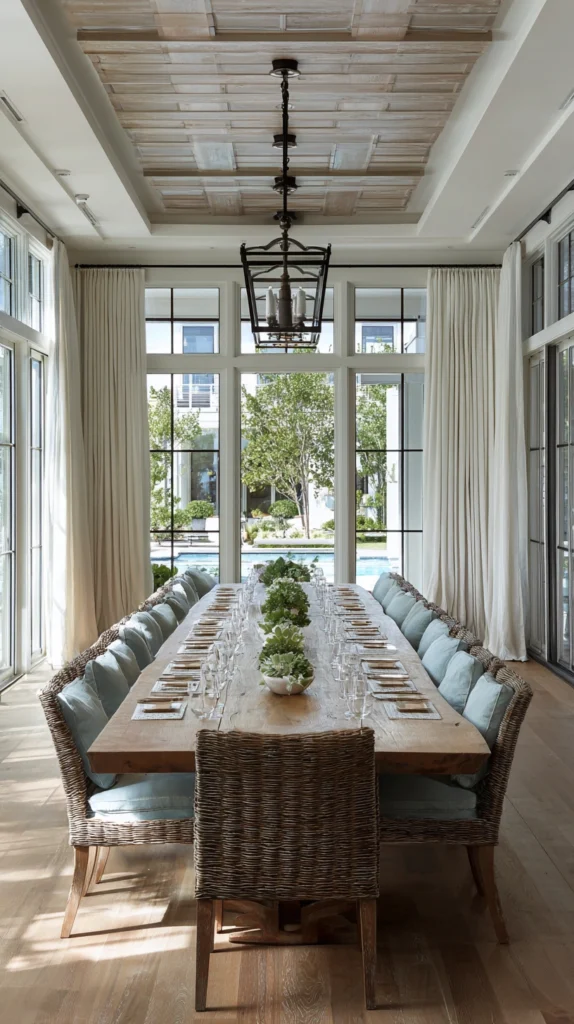
Budget: $200 – $1,500
The coastal dining room’s most defining quality — the unhurried meal that lasts until the light goes — requires a table large enough for everyone to be comfortable through a long dinner, with enough space between settings that the table does not feel crowded. The coastal dining tradition is specifically generous with space — the long table with room to breathe at every setting is the physical provision that makes the extended meal feel like a pleasure rather than an endurance.
An extendable dining table that seats six comfortably and extends to ten costs $400–$1,200. A solid fixed table for eight costs $300–$1,000. The space between settings at a coastal dining table should be wider than the minimum functional requirement — 60 centimetres per person rather than the standard 45 centimetres — so the table communicates generosity even before a single person sits down. The generous table is the specific material expression of the coastal dining philosophy: there is always room for one more, and no one should feel crowded.
Style tip: Position the dining table so at least one end faces a window — so that whoever sits at that position looks outward rather than at another wall. The coastal dining experience is partly defined by the awareness of being near a view of the outside world, and a table positioned so that the window is visible to at least some of the diners at all times maintains the connection between the interior dining room and the exterior world that the coastal dining atmosphere requires.
The coastal dining room at its best is not a room that tries to be the seaside. It is a room that uses the materials, the palette, and the specific atmospheric qualities of the coast to produce the same quality of unhurried, sensory, genuinely pleasurable dining experience that eating beside the water provides. The bleached timber, the chalky ceramic, the salt-white linen, the lantern light at the right height: these are the conditions. The meal and the conversation are what happen inside them.