13 Coastal Bathroom Ideas for a Breezy, Serene Feel
13 Coastal Bathroom Ideas for a Breezy, Serene Feel
There is a specific quality to the most admired coastal bathrooms that the most common approach to the coastal bathroom aesthetic consistently fails to produce. It is not the quality of seashells arranged on a shelf or rope-wrapped towel rings or a sign that says something about the beach.
It is the quality of a room that communicates the coast through its materials — the bleached timber, the chalky white ceramic, the pale stone, the specific blue-grey that is the colour of the sea on an overcast morning — rather than through its decoration. The material coastal bathroom is the one that reads as coastal because it was built from the same palette as the coast, not because it was decorated with references to it.

The coastal bathroom at its best is a room of simplicity, good light, and honest materials. It communicates the quality of a room near the water not through the objects placed in it but through the specific tonal and material quality of the room itself — the walls, the floor, the fixtures, the light. It is the quality of a room in a beach house that has been used and loved rather than recently styled, and achieving that quality requires material decisions rather than decorative ones.
Each idea below is a specific approach to one element of the coastal bathroom. Each includes what you will need, what it will cost, and a practical tip to make it work as well as the breezy, serene room it is reaching for.
1. The Sea Glass Tile Palette
Budget: $80 – $500
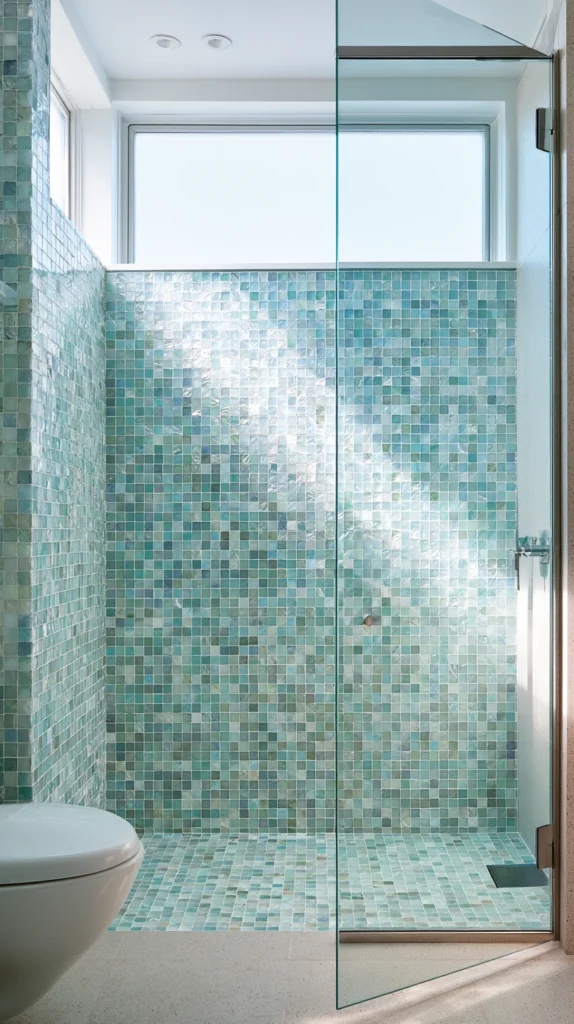
Sea glass mosaic tiles — the pale aqua, frosted sage, and soft blue-grey of glass tumbled to frosted translucency — used as the primary shower tile, the bath surround, or a feature splashback create the most materially specific coastal bathroom wall surface available. Sea glass tiles communicate the coast through the colour and the quality of the material itself — the specific palette of the tide line, the frosted surface that references glass worn by salt water and sand — rather than through any decorative representation of the coastal environment.
Sea glass mosaic sheets in a 30 by 30-centimetre format cost $15–$40 per sheet. A standard shower enclosure requires fifteen to twenty sheets — $225–$800 in tile material. Install with a white adhesive rather than a grey — the translucency of sea glass tiles allows the adhesive colour to influence the tile appearance, and white adhesive preserves the pale, luminous quality of the tile colour.
Style tip: Use sea glass tiles on one surface only rather than throughout the entire bathroom. A single sea glass tile surface — the shower wall, the bath panel, or the wall behind the vanity — creates a specific material moment that reads as considered; the same tile on every surface of the bathroom reads as thematic. The restraint of one sea glass surface allows the material quality to communicate without the application becoming an aesthetic statement about the sea.
2. The Bleached Timber Vanity
Budget: $200 – $1,500
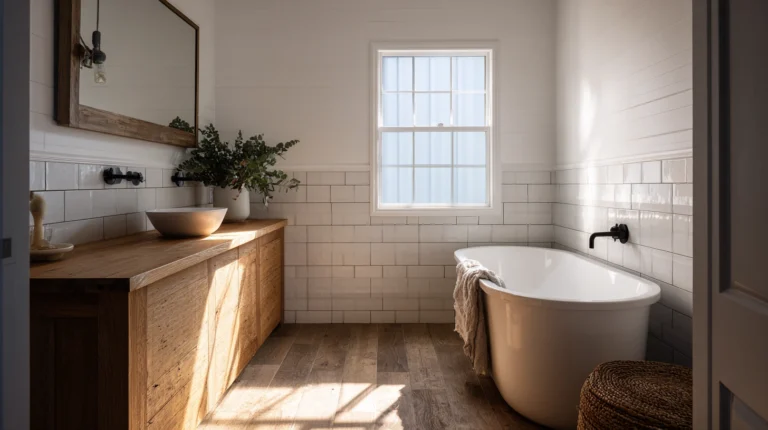
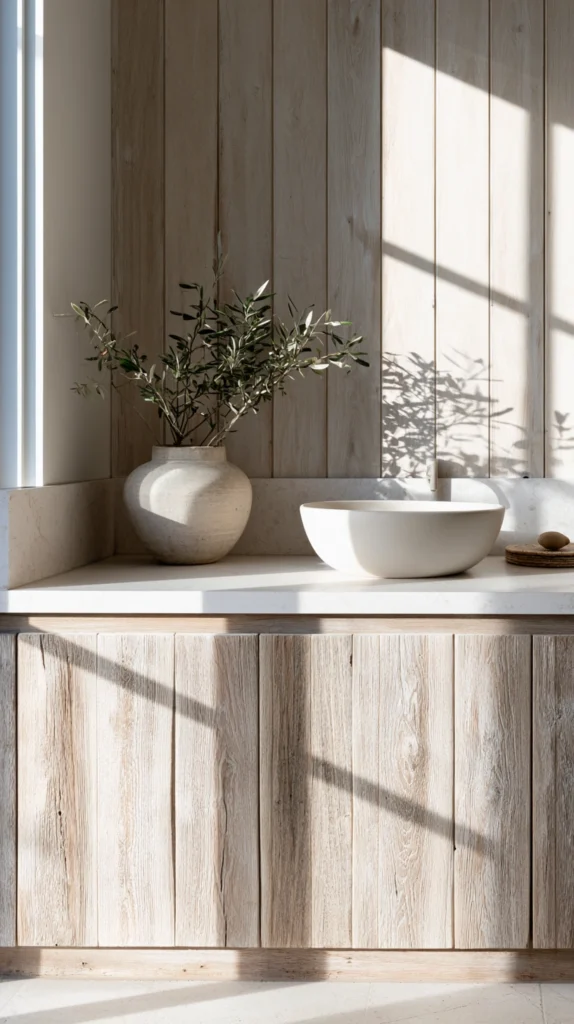
A vanity unit in bleached, limed, or whitewashed timber — the specific pale, grey-toned finish of timber that has been exposed to salt air and sun rather than maintained with oil or varnish — creates the bathroom’s most immediately coastal material element at the largest available furniture scale. The bleached timber reads as driftwood, as the weathered joinery of a beach house that has been in the same room for decades, as something that was part of the landscape before it became part of the furniture.
A lime-washed oak vanity in a standard 60-centimetre width costs $300–$800. A reclaimed timber vanity with a natural bleached finish runs $400–$1,200. A DIY bleached finish on an existing timber vanity — using liming wax or a diluted white paint wash applied to a sanded surface — costs $20–$60 in materials. The bleached finish requires a water-resistant sealant specific to bathroom use — an oil or hard-wax oil rated for bathroom humidity — applied to all surfaces before installation.
Style tip: Choose a vanity with a slightly irregular, hand-finished surface rather than a machine-sanded perfectly flat one. The slight surface variation of a hand-finished timber — the plane marks, the grain irregularity, the gentle undulation of the surface — communicates genuine age and material honesty in a way that a perfectly flat surface, however well the bleached finish is applied, does not produce.
3. The White Shiplap Walls
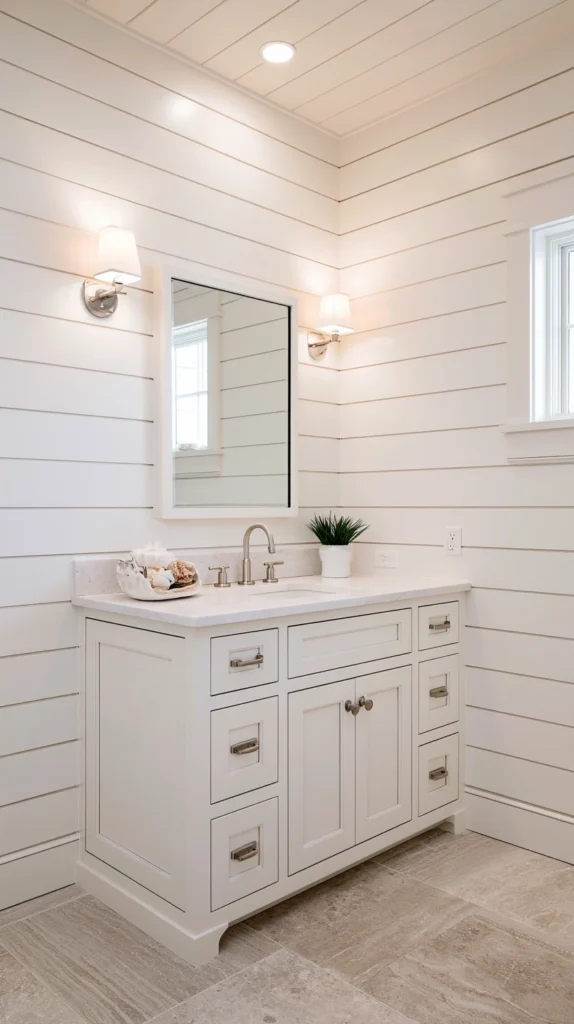
Budget: $80 – $400
Horizontal shiplap panelling in white or warm off-white — on the walls of the coastal bathroom, either full height or to chair-rail height with a complementary upper wall treatment — creates the most universally recognised coastal bathroom wall treatment and the one that communicates the specific interior tradition of the coastal cottage and the beach house most immediately and most completely. The horizontal line of the shiplap draws the eye along the wall, makes the room read as wider and more open, and provides the specific warmth of timber in a room defined by water.
Moisture-resistant MDF shiplap panels cost $20–$50 per sheet. Genuine timber shiplap in a moisture-resistant species runs $15–$40 per linear metre. A half-wall application of shiplap at chair-rail height for a standard bathroom requires 8–10 linear metres — $120–$400 in materials. Paint the shiplap in a warm white — ivory, antique white, or a slightly cream tone — rather than a brilliant white that reads as clinical.
Style tip: Apply a bathroom-specific paint to the shiplap rather than a standard emulsion — the moisture in a bathroom is sufficient to cause standard emulsion to peel from the face of MDF shiplap within the first wet season regardless of the quality of the paint application. Bathroom-specific formulations include the moisture-resistance that the shiplap application requires.
4. The Freestanding Roll-Top Bath
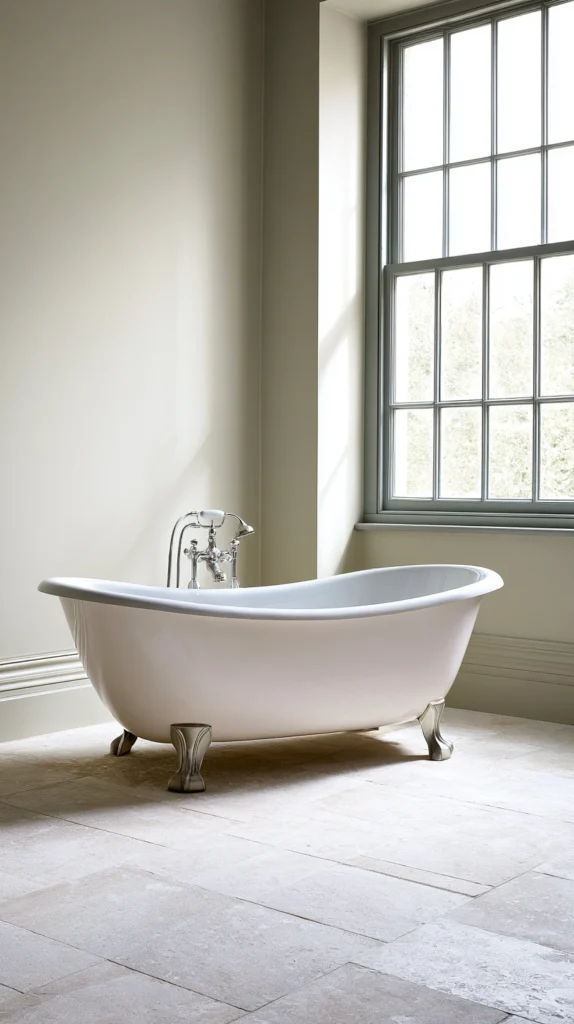
Budget: $600 – $3,000
A freestanding roll-top bath in the coastal bathroom communicates the unhurried quality of bathing near the water — the bath as a place for a long, warm soak on a cool evening after time at the beach, rather than as a functional facility for the minimum efficient wash. The roll-top bath is the bathroom element that most completely produces the coastal cottage aesthetic in a bathroom, and its positioning in the room — away from the walls, accessible from all sides — gives the bathroom the quality of a room designed around bathing as a pleasure.
A basic acrylic roll-top bath costs $600–$1,500. A cast iron version runs $1,500–$4,000. A slipper bath — the asymmetric form with one raised end — costs the same range and produces a more relaxed aesthetic than the symmetrical double-ended version. Position the bath with a view of the window wherever the room plan allows — the quality of natural light from a coastal window falling on the bath and the bather is a quality worth designing for.
Style tip: Choose the roll-top bath feet in brushed nickel or aged chrome rather than the bright chrome that most standard roll-top baths are supplied with. Bright chrome in a coastal bathroom communicates a material finish that belongs to a different aesthetic; the slightly duller finish of brushed nickel or aged chrome relates to the weathered, natural quality of coastal materials.
5. The Coastal Colour Palette
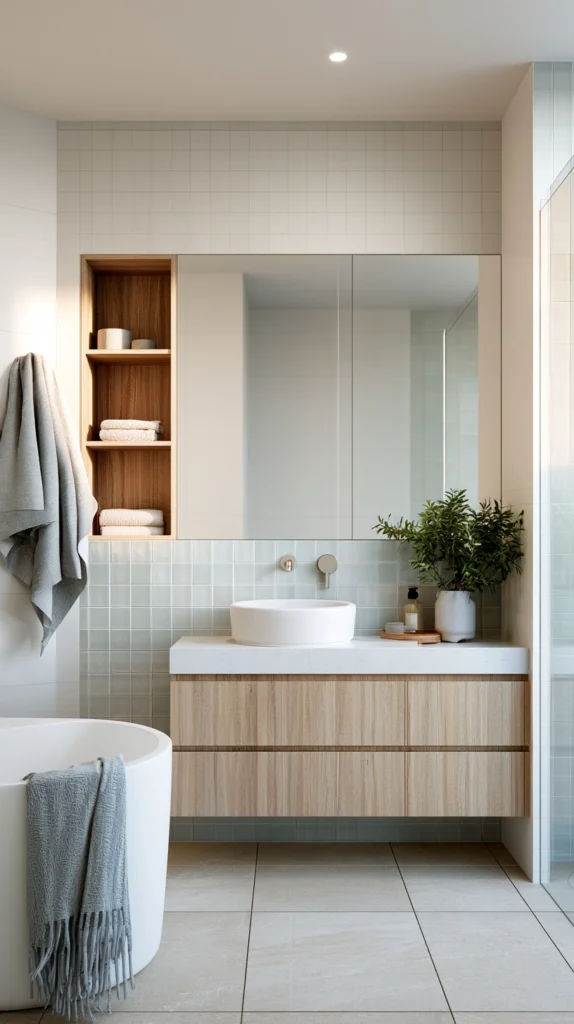
Budget: $30 – $150
The coastal bathroom colour palette — the specific combination of tones that references the coast through material rather than motif — consists of: the white of bleached bone and sun-faded paint, the blue-grey of sea and overcast sky, the warm sand of dry beach, the pale aqua of shallow water, and the natural green-grey of coastal foliage. These five tones, distributed across the walls, the floor, the fixtures, and the textiles, create the coastal atmosphere through the honest material reference of the palette rather than through any coastal subject or motif.
Wall paint in the coastal palette costs $25–$60 per tin. The ceiling and woodwork in a consistent complementary tone runs $15–$30 additional. Towels and textiles in the natural and warm white tones cost $10–$30 each. The palette requires discipline — every element should be assessed against the five coastal tones, and any element in a colour outside the palette should be replaced or stored rather than allowed to dilute the coastal atmosphere the palette produces.
Style tip: Apply the coastal palette in the natural proportions of the coastal environment — white and neutral tones as the dominant (walls, ceiling, floor), blue-grey as the accent (textiles, accessories), and aqua as the smallest punctuation (one tile detail, the colour of a single accessory). The proportional distribution of the palette is the compositional decision that makes the coastal bathroom read as the coast rather than as a bathroom decorated with coastal colours.
6. The Natural Stone Floor
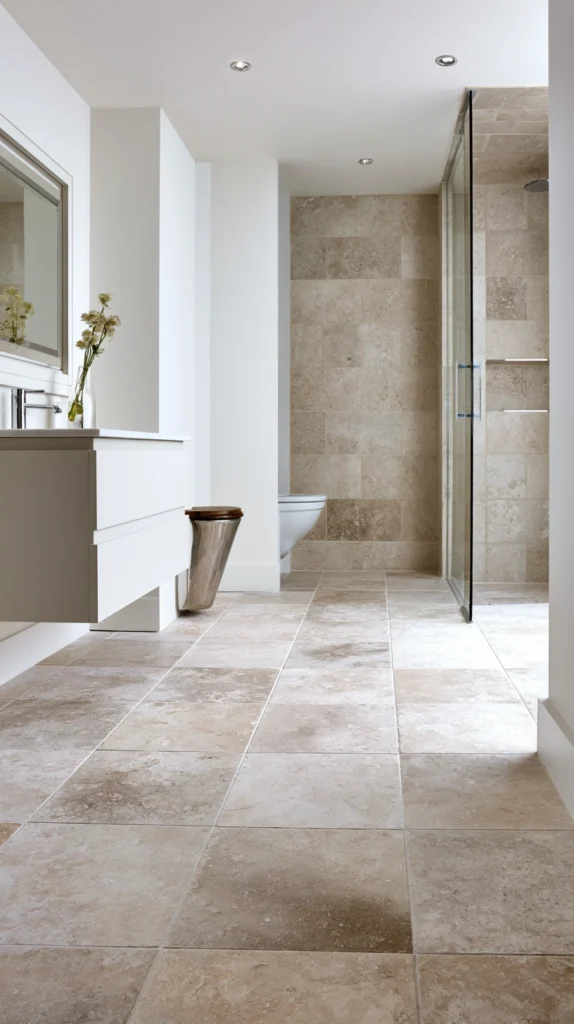
Budget: $200 – $1,200
A natural stone floor — in limestone, travertine, or slate in a format and a finish that references the stones of the beach or the cliff — creates the coastal bathroom’s most material-honest and most specifically geological floor surface. Natural stone in a coastal bathroom communicates the specific quality of something that came from the earth rather than a factory, and the colour variation, the surface texture, and the specific quality of aged stone underfoot produces a floor of genuine material character that no manufactured tile, however quality its surface finish, can replicate.
Honed limestone in a warm grey or cream tone costs $25–$50 per square metre. Travertine in a filled and honed format runs $20–$45 per square metre. Slate costs $20–$40 per square metre. All natural stone in a bathroom requires a penetrating sealer applied before use and refreshed annually — unsealed stone absorbs soap, cosmetics, and organic matter that stains permanently within the first weeks of unprotected use.
Style tip: Choose a stone with a honed rather than a polished finish for the coastal bathroom floor. A polished stone reads as formal and manufactured; a honed stone reads as natural and honest — the specific quality of a surface worn smooth by use rather than finished by machinery. The honed quality communicates the coastal material tradition more specifically than the polished alternative.
7. The Driftwood Mirror Frame
Budget: $30 – $150
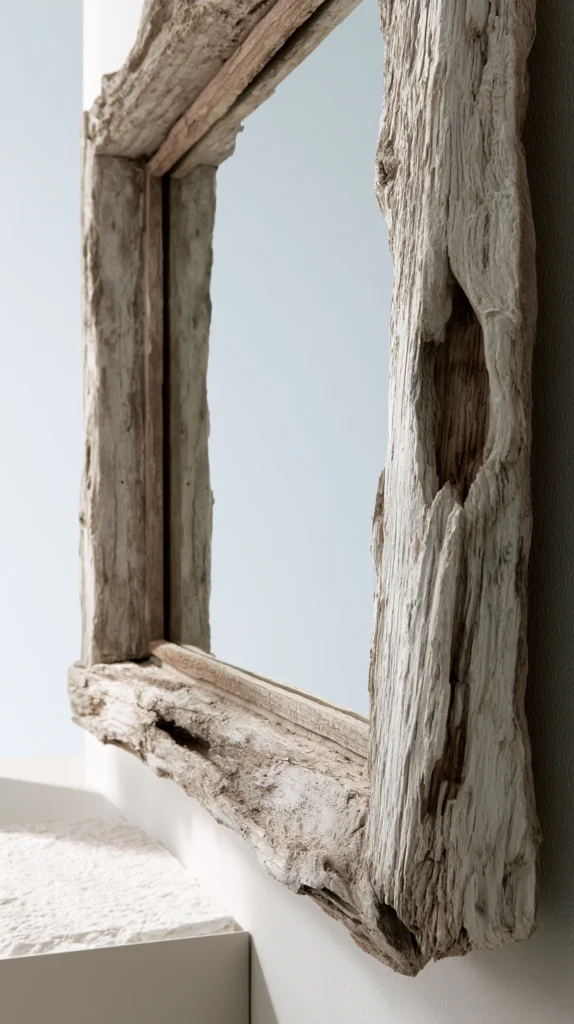
A mirror framed in driftwood — either genuine beach-collected driftwood arranged around a mirror glass, or a purchased driftwood-effect frame — creates the coastal bathroom’s most specifically material decorative element. The driftwood mirror communicates the coast through an actual coastal material rather than through a colour or a pattern, and the specific quality of weathered, salt-worn timber around a mirror glass produces a combination of surface and reflection that is immediately and irreducibly coastal.
A genuine driftwood mirror frame built around a standard mirror glass costs $30–$60 in materials for a DIY version. A purchased driftwood-effect frame in a resin or reclaimed timber format costs $40–$120 for a standard bathroom size. Position at the correct height — with the mirror centre at 145–150 centimetres from the floor — and in a position that reflects the best light the bathroom receives rather than the most convenient wall position.
Style tip: Choose a driftwood mirror that is slightly larger than the vanity below it rather than exactly matching the vanity width. A mirror that is wider than the vanity reads as a room element rather than a vanity accessory, and the coastal bathroom’s mirror is most effectively experienced as a room element that reflects the quality of the space rather than as a functional attachment to the sink unit.
8. The Rope and Natural Fibre Details
Budget: $20 – $80
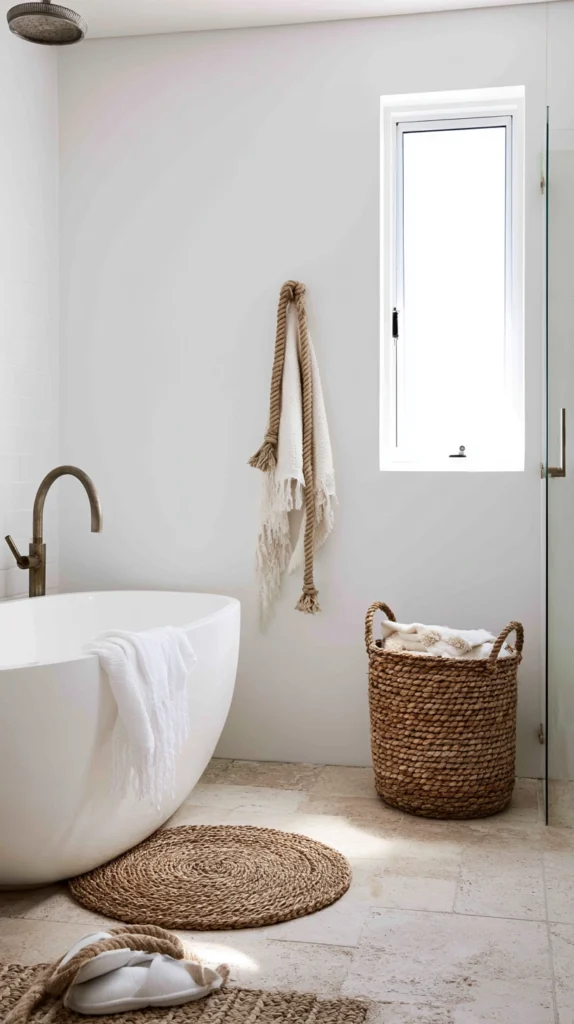
Rope and natural fibre details — a rope-wrapped towel ring, a jute bath mat, a seagrass storage basket, a sisal floor mat beside the bath — give the coastal bathroom its material warmth at the scale of the everyday accessory without the decorative excess of sea-themed ornaments. The rope and natural fibre references the working materials of the coast — the rigging, the lobster pots, the nets — through the material itself rather than through any represented form, and it communicates the coastal aesthetic most honestly at the object level.
A rope-wrapped towel ring costs $15–$35. A jute bath mat runs $15–$30. A seagrass basket for storage costs $15–$40. A sisal floor mat costs $20–$50. Use natural rope and natural fibre in their undyed, natural tones rather than painted or bleached versions — the natural honey-amber of undyed rope and jute relates to the warm natural material tones of the coastal bathroom palette; dyed or bleached versions lose the material honesty that makes these accessories coastal rather than coastal-themed.
Style tip: Seal rope accessories with a water-resistant wax or varnish before installation in the bathroom environment. Natural rope in constant moisture deteriorates and develops mould within the first season without adequate water resistance treatment. The treated rope maintains the appearance and the material quality of the coastal accessory through regular bathroom humidity levels.
9. The Porthole or Round Window
Budget: $100 – $800
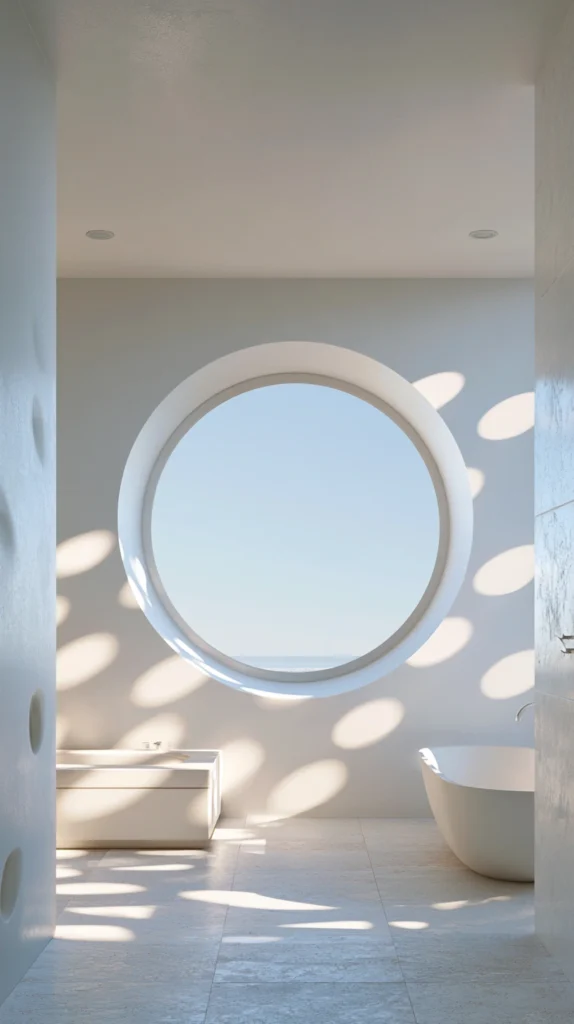
A circular or porthole window in the coastal bathroom — installed in the exterior wall or in the internal wall between the bathroom and an adjacent room — creates the most specifically nautical architectural reference available to the bathroom at the structural scale. A porthole window communicates the coastal aesthetic through the architectural form that most directly references the maritime tradition, and the quality of round, framed natural light that it provides is distinct from any rectangular window in its quality of directed light and its specific visual character.
A standard circular window frame in a white or aluminium finish costs $100–$300. A quality porthole-style window with a bronze or chrome-effect frame runs $200–$600. Installing a porthole window in an existing wall requires structural assessment and planning permission may be required depending on the jurisdiction and the building type — the installation decision should be checked against local regulations before any work begins.
Style tip: Position the porthole window at a height where it provides privacy while admitting light — typically at 180–200 centimetres from the floor in a wall that faces a public view direction. A porthole at this height is above the eye level of anyone outside, provides the quality of sky light and the nautical reference of the circular form, and requires no obscured glass or screening.
10. The Coastal Textile Collection
Budget: $40 – $200
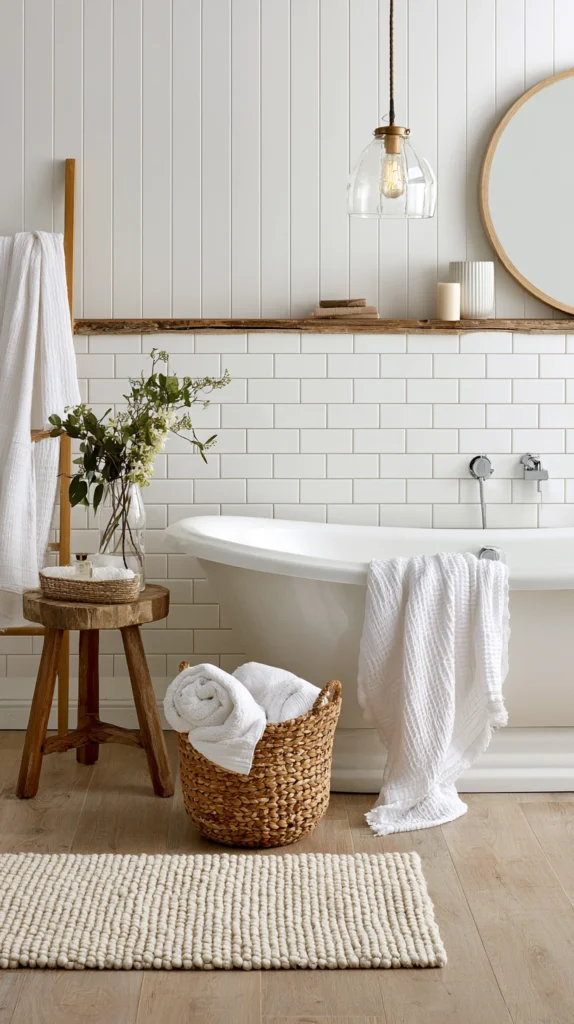
The textiles of the coastal bathroom — the towels on the rail, the bath mat on the stone floor, the robe on the hook behind the door — give the room its soft layer and its daily domestic quality in the specific tonal palette of the coastal aesthetic. White or warm white towels in a quality weight (600 grams per square metre minimum), a sand or natural linen bath mat, a pale blue or striped hand towel — these are the textiles that communicate the coastal bathroom through daily use rather than through decoration.
A quality white bath towel at 600 grams per square metre costs $15–$35. A natural linen bath mat costs $20–$40. A striped cotton hand towel in navy and white costs $8–$20. Choose towels in a weight that communicates quality rather than efficiency — the feel of a heavy, absorbent towel is the tactile equivalent of the quality of a good stone floor or a well-specified vanity, and the daily experience of a quality towel in a coastal bathroom is part of the atmospheric contribution of the space rather than separate from it.
Style tip: Fold bath towels in the hotel style and display them on the towel rail or a wooden ladder rather than hanging them casually. The precisely folded towel on a natural timber ladder communicates the quality of a bathroom that is tended with care — the coastal equivalent of the hotel towel display that communicates a room prepared for pleasure rather than simply available for use.
11. The Open Shelving With Coastal Display
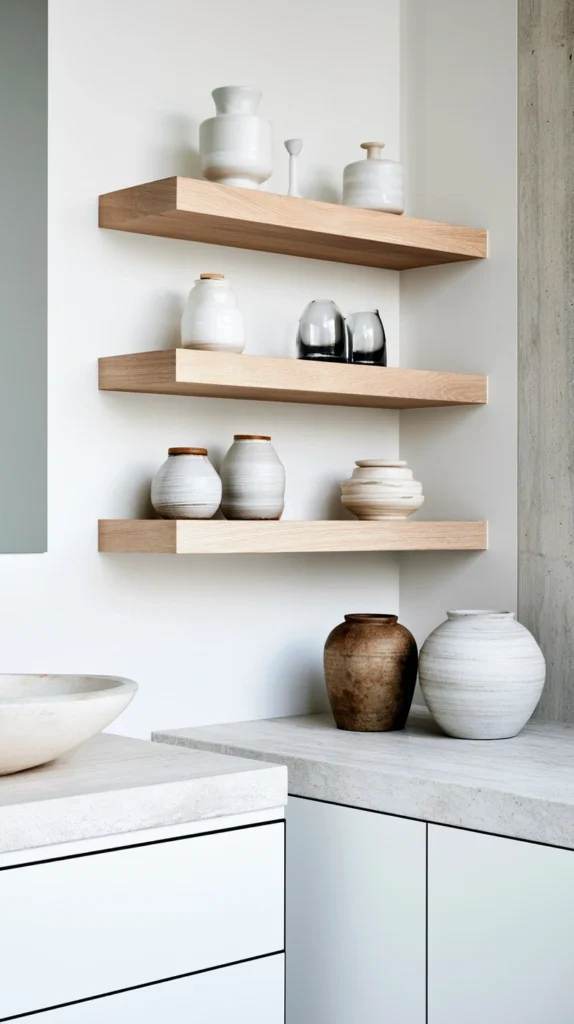
Budget: $40 – $200
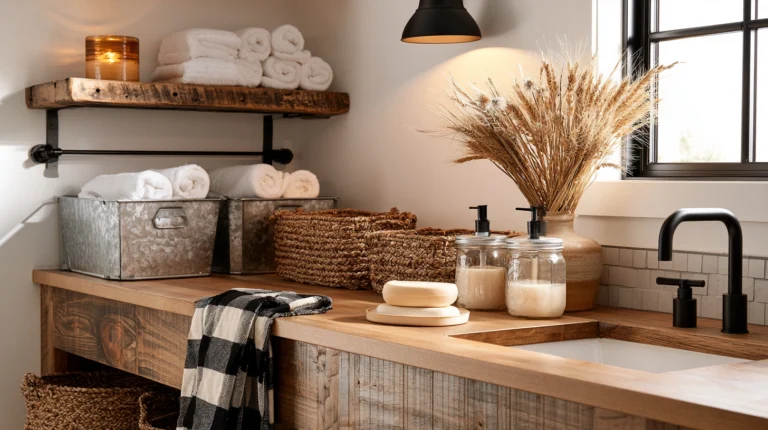
Open timber shelving in the coastal bathroom — raw oak, pale driftwood-toned pine, or a white-painted timber — styled with a considered collection of functional and decorative objects in the coastal palette creates the room’s most personal and most characterful display surface. The coastal bathroom shelf is not a sea-themed display — it is a curated collection of beautiful functional objects in the specific material palette of the coastal room: white ceramic vessels, glass storage jars, one or two smooth beach stones, a small dried botanical, rolled white towels.
A pair of reclaimed timber shelves on industrial brackets costs $50–$100. White ceramic storage vessels cost $8–$25 each. A glass apothecary jar for cotton products runs $5–$15. The styled coastal shelf communicates the same quality as the styled shelf in any well-considered interior — that the objects were chosen for their specific beauty and their relationship to the palette around them rather than accumulated for convenience.
Style tip: Limit the decorative objects on the open shelf to no more than three — one tall, one medium, one small — alongside the functional storage containers. A coastal bathroom shelf with three considered objects and the functional storage communicates the coastal aesthetic of simplicity and honest utility; one with many decorative objects of varying scales reads as an attempt to establish a theme rather than to create a material environment.
12. The Vintage Chrome Hardware
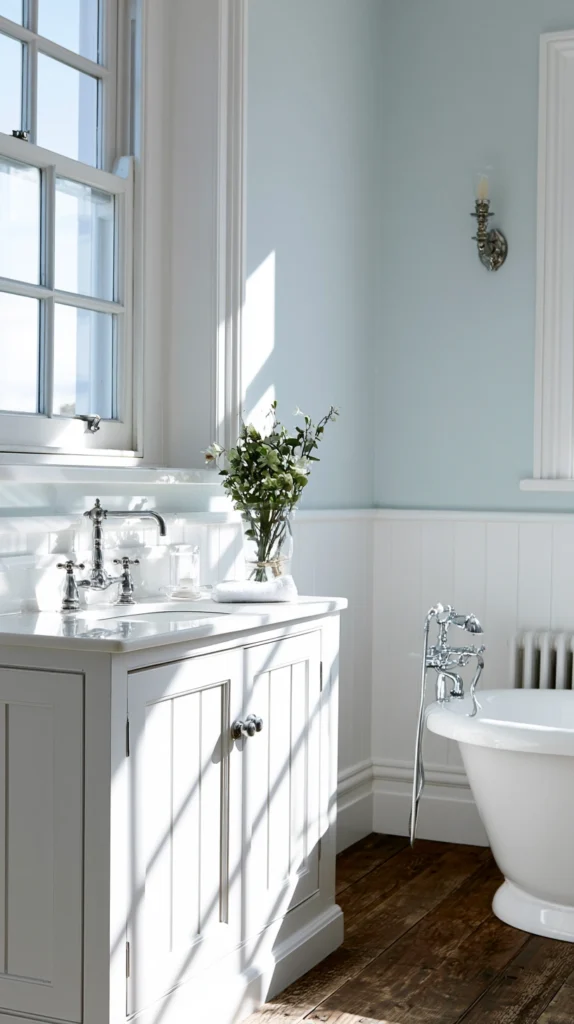
Budget: $60 – $250
Replacing standard chrome lever taps with vintage-style cross-head taps in brushed chrome, aged nickel, or antique chrome gives the coastal bathroom the period hardware quality that relates the room to the tradition of the English seaside bathroom — the boarding house, the beach hut, the coastal cottage — in which the quality of the fittings was honest and period-appropriate rather than designed for a contemporary aesthetic. The vintage hardware communicates the specific tradition of the coastal bathroom without requiring any other coastal reference to justify it.
Cross-head basin taps in brushed chrome cost $60–$150 for a pair. A period-style bath filler runs $100–$300. A telephone handshower in a matching finish costs $60–$150. Specify ceramic disc valves within the period bodies rather than older rubber washer types — the ceramic disc provides the period appearance without the maintenance requirement.
Style tip: Choose all bathroom hardware in a single consistent finish — all brushed chrome, or all aged nickel — rather than mixing finishes. The hardware finish consistency is the specification that most distinguishes the designed coastal bathroom from the assembled one. A single vintage chrome finish throughout reads as a considered material palette; mixed finishes read as components chosen at different times without a unifying principle.
13. The Woven Grass and Natural Material Accessories
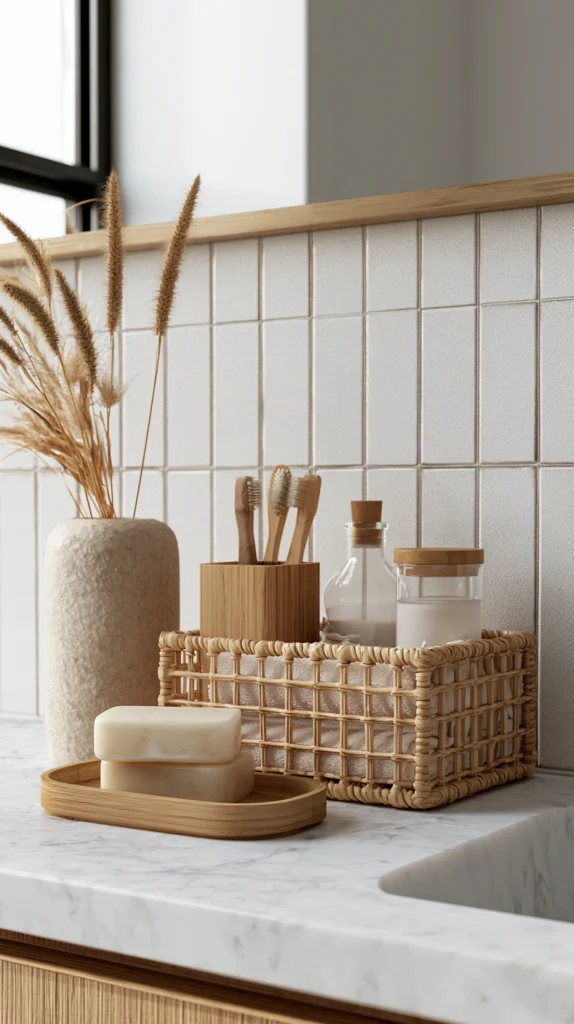
Budget: $20 – $100
The final layer of the coastal bathroom — the woven grass toilet brush holder, the bamboo soap dish, the natural fibre hand towel, the sea sponge on the bath edge — communicates the coastal aesthetic through the most everyday objects of the bathroom in the most honest and the most uncontrived way. These are the objects that are touched daily, that are present in every view of the room, and that communicate through their material quality — the woven texture of the grass, the natural colour of the bamboo, the organic form of the sea sponge — the specific relationship of the room to the natural coastal environment.
A woven grass toilet brush holder costs $12–$25. A bamboo soap dish runs $8–$20. A natural sea sponge costs $10–$25. A woven seagrass laundry basket costs $25–$60. Choose accessories in their natural, undyed tones throughout rather than mixing natural materials with coloured or artificially finished alternatives. The material consistency of natural accessories in a coastal bathroom communicates the specific quality of a room where the materials were chosen for what they are rather than for how they look.
Style tip: Replace the accessories when they wear rather than when they become unattractive. Natural materials in a bathroom context — rope, grass, bamboo, sea sponge — age gracefully through regular use and the aged version of a well-made natural accessory often has more character than the new version. The accessory that requires replacement is the one that has reached genuine functional decline rather than the one that has simply lost its initial freshness.
The coastal bathroom communicates its quality through the accumulated quality of its material decisions — the bleached timber, the sea glass tile, the honed stone floor, the vintage hardware, the natural rope and fibre, the warm white towels — rather than through any single element or any decorative reference to the sea.
It is a room that was built from the coastal palette rather than decorated with coastal objects, and the distinction between building from a palette and decorating with references is the distinction between the coastal bathroom that reads as genuinely connected to the coast and the one that reads as attempting to evoke it.
Begin with the materials. Choose the floor and the wall surfaces for their specific tonal and material relationship to the coastal palette. Then choose the fixtures in the hardware finish that suits the period and the quality of the room. Then choose the accessories and the textiles in the natural, honest materials that suit the coastal tradition. And then tend the room as the coast tends itself — with the daily care of an environment that knows what it is and communicates it through everything it contains.