13 Farmhouse Fall Bathroom Accessories You’ll Love
13 Farmhouse Fall Bathroom Accessories You’ll Love
Most bathroom updates focus on the big-ticket items — a new vanity, a tile backsplash, a different paint color — and treat accessories as whatever’s left over from a big-box multipack. A plain soap dispenser, a towel that doesn’t quite match, a bath mat chosen mostly for being on sale.
That approach leaves the room’s actual personality entirely up to fixtures most people never think to update again once they’re installed. The accessories are what change a bathroom from generically clean to genuinely styled, and they’re also the cheapest, fastest way to bring a farmhouse warmth into a room that often defaults to cold tile and chrome.

A farmhouse bathroom isn’t built around a single big renovation. It’s built around layered, considered accessories — galvanized metal, reclaimed wood, woven texture — chosen the way a farmhouse kitchen is, with material and warmth doing more work than a fresh coat of paint alone ever could. Add in a few fall-specific touches, and the smallest room in the house becomes one of the coziest.
Here are 13 farmhouse accessories for bringing real fall warmth into a bathroom, without a single tile getting touched.
Why Farmhouse Bathroom Accessories Play by Different Rules Than Modern Spa Style
The rules are not the same for every bathroom direction:
Modern Spa Bathroom Advantages:
- Clean, minimal surfaces with very little visual clutter
- A cool, neutral palette that reads as calming and uniform
- Easy to keep cohesive, since fewer materials and colors are in play at once
The modern spa comparison: restraint and a single material palette
Farmhouse Bathroom Advantages:
- Warmth that comes from material — wood, galvanized metal, woven fiber — rather than a single paint color
- A mix of textures that reads as gathered and lived-in rather than sterile
- Forgiving of imperfection: a slightly weathered finish or mismatched jar reads as character, not a flaw
The key insight:
- A modern spa bathroom rewards subtraction and a single cohesive material
- A farmhouse bathroom rewards layering several warm, natural materials together
- These are different design philosophies, not the same bathroom in a different color
The Material and Moisture Reality
The most important material decision in a farmhouse bathroom:
The humidity factor:
- Bathrooms run more humid than any other room accessories typically go into, and that changes what materials actually hold up
- Untreated raw wood, paper-based decor, and unsealed metal all degrade faster here than they would in a kitchen or living room
- Know this — it governs every material choice on this list before style does
The “sealed and weather-aware” calculation:
- Wood pieces need a sealant or finish rated for moisture, not just a raw or painted surface
- Metal accessories should be chosen in finishes that handle humidity — galvanized, powder-coated, or stainless — rather than anything that rusts on contact with steam
- Where a delicate material is the only option for a particular look, keep it away from the shower or tub and closer to a drier zone like a vanity counter
Most farmhouse bathroom updates build in layers, not all at once:
- The hardware and fixture layer comes first, since it’s the most structural and hardest to change later
- Storage and textile layers come next, since they set the room’s working logic and color story
- The smallest finishing touches — jars, a sign, dried botanicals — come last, and are the easiest layer to swap seasonally
1. The Galvanized Metal Storage Bin (Function With Built-In Texture)
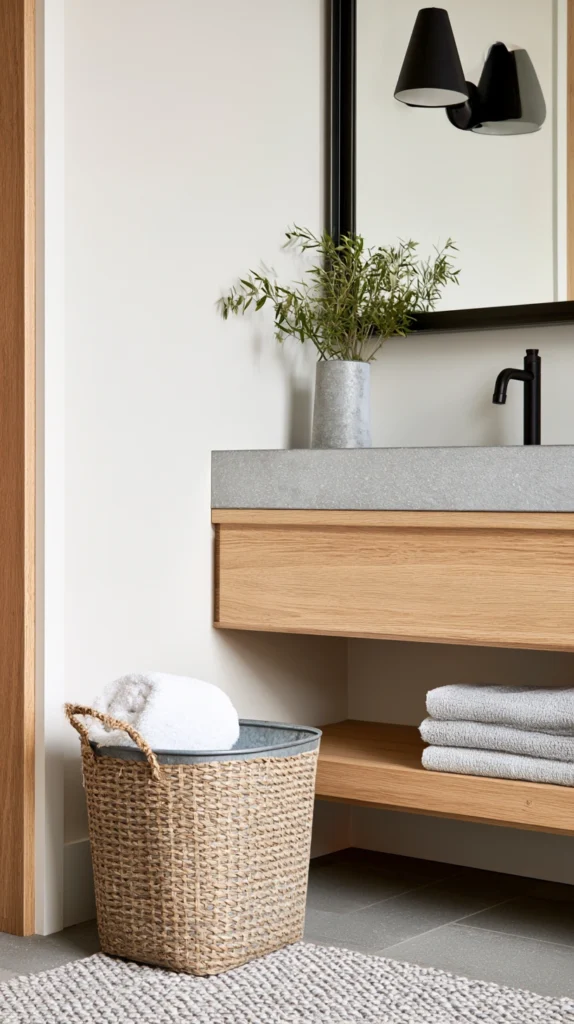
A galvanized metal bin or caddy used to hold rolled towels, toilet paper, or bath products — the single accessory most responsible for introducing farmhouse texture into a bathroom without a single renovation step.
Why galvanized metal earns its place over a plastic or ceramic bin
- The instant material signal: galvanized metal reads as farmhouse almost immediately, the way a marble counter reads as modern luxury
- The function-meets-texture overlap: this is genuinely useful storage, doing double duty as both a practical solution and a deliberate styling choice
- The humidity tolerance: galvanized finishes hold up well in a damp bathroom environment, unlike raw or untreated metal that would rust quickly in the same conditions
The options
- A galvanized metal bin, holding rolled hand towels or extra toilet paper on an open shelf or the floor beside the vanity
- A galvanized caddy with a handle, for carrying bath products between rooms or storing them on a counter
- A galvanized wall-mounted basket, freeing up floor and counter space entirely
- A galvanized tray, used under a soap dispenser and tumbler set for a cohesive base layer
The practical execution
- Choose a true galvanized finish rather than a painted faux-metal look, for the most authentic texture and the best moisture resistance
- Line the bin with a small basket insert if storing anything that could snag or unravel against the metal’s interior seams
- Position away from direct shower spray, even with a moisture-resistant finish, to extend its life and avoid water spotting
Cost breakdown
- Small galvanized bin or caddy: $12–25
- Wall-mounted galvanized basket: $20–40
- Total: $12–40
The galvanized bin of rolled towels on an open shelf: the one accessory that announces the whole room’s style before a guest has noticed anything else.
2. The Wood Ladder Towel Rack (Storage That Doubles as a Display)
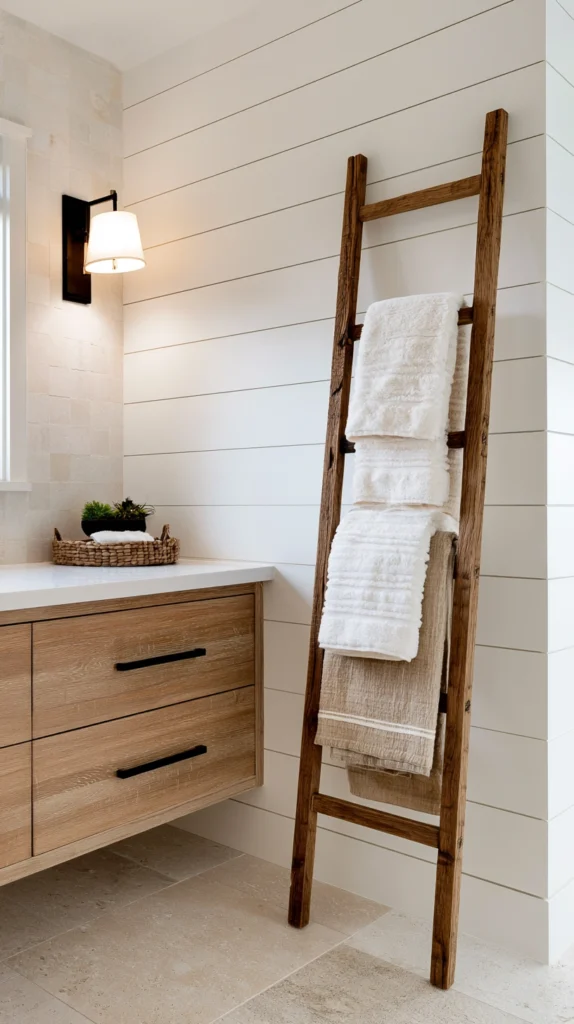
A wooden ladder, leaned against the wall and used to hold folded towels — the storage solution that turns everyday linens into part of the room’s decor rather than something tucked behind a cabinet door.
Why a ladder rack works harder than a standard towel bar
- The display-while-storing logic: like open shelving in a kitchen, a ladder rack makes everyday items part of the visual styling rather than hiding them away
- The warmth a single wood piece adds: in a room often dominated by tile, porcelain, and chrome, one substantial wood object changes the whole material balance
- The flexible capacity: a ladder holds more towels than a standard bar, useful in a bathroom serving more than one person
The options
- A reclaimed wood ladder, with visible grain and some natural variation in tone
- A whitewashed or painted ladder, for a lighter, more cottage-leaning look
- A narrow single-width ladder, sized for a smaller bathroom with limited floor space
- A wall-mounted ladder rack, securing the piece flat against the wall rather than leaning freestanding
The practical execution
- Choose a sealed or finished wood rather than raw, untreated lumber, given the bathroom’s humidity
- Secure freestanding ladders to the wall with a simple bracket or strap, both for safety and to prevent slipping on tile flooring
- Roll towels rather than folding flat for a fuller, more textured look across the ladder’s rungs
Cost breakdown
- Small wood ladder rack: $30–60
- Reclaimed or more substantial wood ladder: $60–130
- Total: $30–130
3. The Mason Jar Soap and Lotion Dispensers (A Small Detail With Outsized Character)
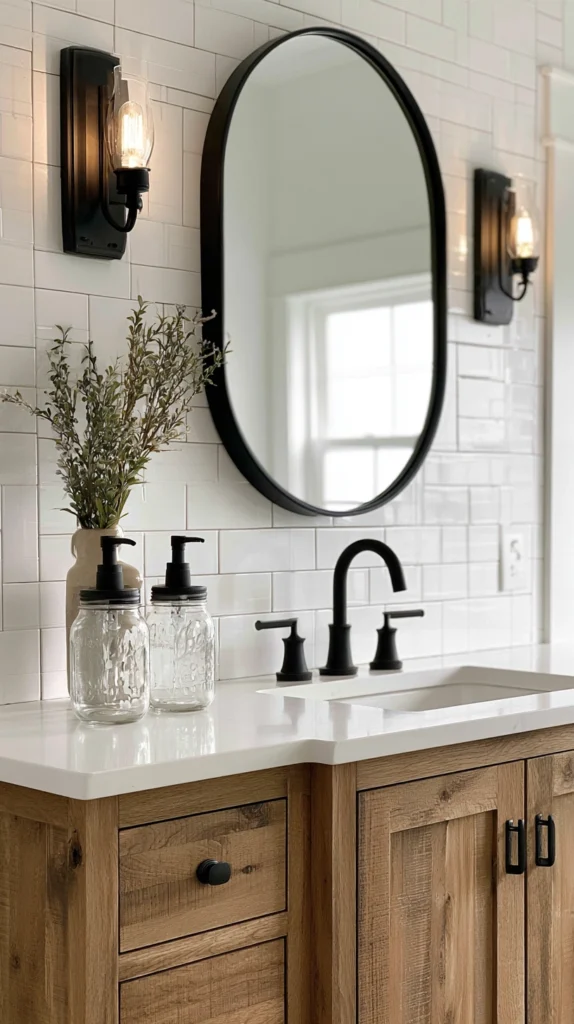
Mason jars fitted with pump tops, used in place of standard plastic soap and lotion bottles — the smallest accessory on this list, and one of the most immediately recognizable farmhouse details available.
Why a jar swap changes more than its size suggests
- The instant material upgrade: a mason jar pump replaces a mismatched collection of branded plastic bottles with a single, cohesive glass vessel
- The visibility factor: soap and lotion dispensers sit on the counter in plain view constantly, making this one of the highest-visibility accessories in the entire room relative to its cost
- The refillable practicality: unlike disposable bottles, mason jar dispensers get refilled rather than replaced, which is both a cost saving and a sustainability bonus over time
The options
- Clear mason jars with a metal pump top, the most classic and widely available version
- Amber or tinted glass jars, for a slightly different color note than clear glass
- A matched set of two or three, for soap, lotion, and hand sanitizer in a single coordinated look
- A labeled jar, with a simple printed or handwritten tag identifying the contents
The practical execution
- Choose a pump specifically designed to fit standard mason jar lid sizes, rather than improvising with a mismatched dispenser top
- Decant existing soap and lotion into the jars gradually as old bottles run out, rather than discarding usable product
- Wipe down the jar regularly, since glass shows water spots and product residue more visibly than opaque plastic
Cost breakdown
- Mason jar with pump top, each: $8–15
- A matched set of 2–3: $20–40
- Total: $20–40
4. The Woven Seagrass or Rattan Basket (Storage With Natural Texture Built In)
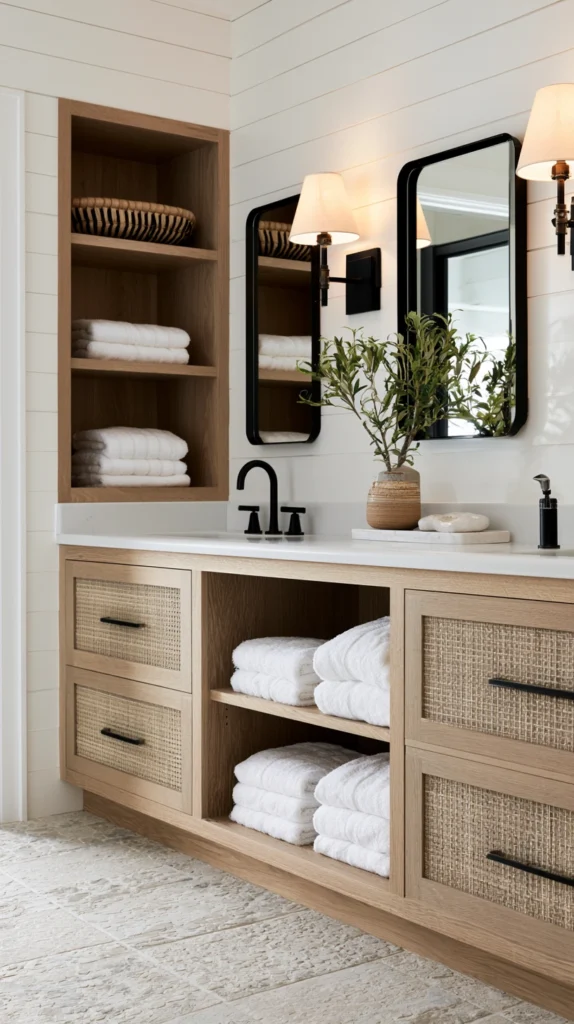
Woven baskets used to hold rolled washcloths, extra toiletries, or bathroom linens — the texture layer that softens a room often dominated by hard, glossy surfaces.
Why a basket does more than its low price suggests
- The texture-without-commitment value: a basket adds natural material and warmth without requiring any installation or renovation step
- The function it genuinely serves: baskets corral the small items — washcloths, extra toilet paper, bath toys — that otherwise end up loose under a sink or on an open shelf
- The mix-and-match forgiveness: baskets in slightly different weaves and sizes still read as cohesive, the same way they do in a kitchen pantry display
The options
- A lidded woven basket, for items that need to stay out of sight, like extra rolls of toilet paper
- An open-weave basket, for rolled towels or washcloths meant to be visible
- A small countertop basket, for cotton balls, cotton swabs, or other small daily-use items
- A hanging or wall-mounted basket, freeing up floor and shelf space
The practical execution
- Choose a tightly woven seagrass or rattan over a loosely woven option, since a damp bathroom environment is harder on more porous, gappy weaves
- Keep baskets holding paper goods away from direct shower spray or splash zones near the sink
- Line baskets holding bath toys or anything that gets genuinely wet with a small towel or mesh liner, to manage moisture and drainage
Cost breakdown
- Small countertop basket: $10–20
- Larger lidded storage basket: $20–40
- Total: $10–40
5. The Buffalo Check Textile Layer (Pattern That Reads as Both Farmhouse and Fall)
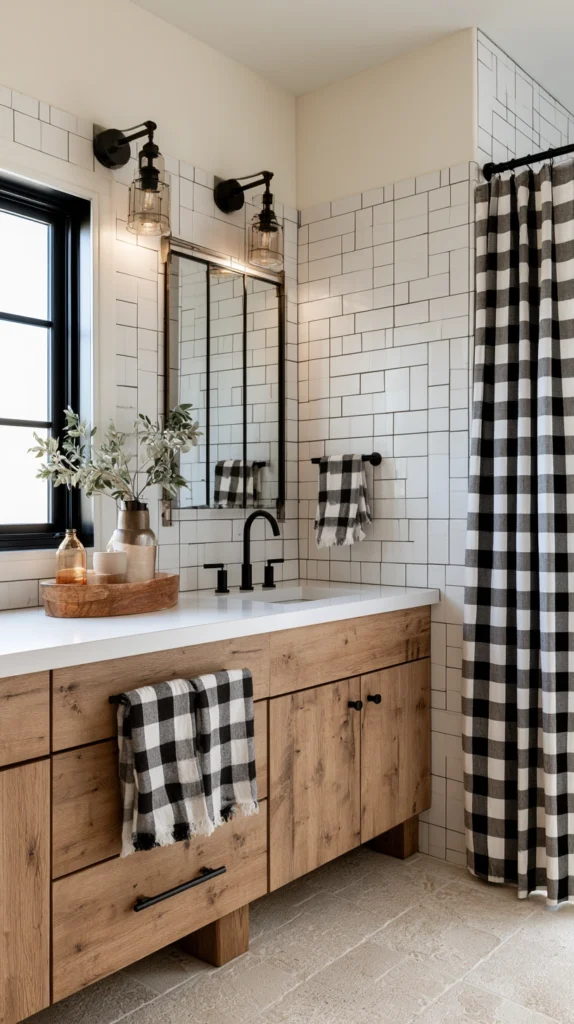
A shower curtain, bath mat, or hand towels in a buffalo check or plaid pattern — the textile choice that does double duty, reading as classic farmhouse year-round and especially fitting once fall arrives.
Why this particular pattern earns its place over a plain solid
- The dual-season logic: buffalo check is one of the few patterns that reads as both a permanent farmhouse staple and a specifically autumnal touch, meaning it doesn’t need to be swapped out again come November
- The high-visibility payoff: a shower curtain and bath mat are two of the largest fabric surfaces in the entire room, making the pattern choice here disproportionately impactful
- The color-anchoring function: a buffalo check in black, red, or deep green can set the tone for every other accessory color choice on this list
The options
- A black and white buffalo check shower curtain, the most versatile and widely available option
- A red and black check, leaning more directly into a classic fall and winter palette
- A smaller-scale plaid, for a subtler version of the same pattern on hand towels rather than the larger shower curtain
- A check pattern mixed with a solid, using the pattern on one or two pieces and solids elsewhere to avoid overwhelming a small room
The practical execution
- Choose a shower curtain liner separately from the decorative outer curtain, since most patterned fabric curtains aren’t fully waterproof on their own
- Wash new textiles before hanging or displaying, both to remove manufacturing residue and to preshrink fabric before it’s measured against fixed hardware
- Limit the pattern to one or two pieces in a small bathroom, layering solids elsewhere to keep the check from feeling overwhelming in a tight space
Cost breakdown
- Buffalo check shower curtain: $25–50
- Bath mat in a matching or coordinating pattern: $20–40
- Hand towels, a set of 2: $15–30
- Total: $25–120, depending on how many pieces are included
6. The Black Iron Hardware Swap (Small Fixtures, Significant Tone Shift)
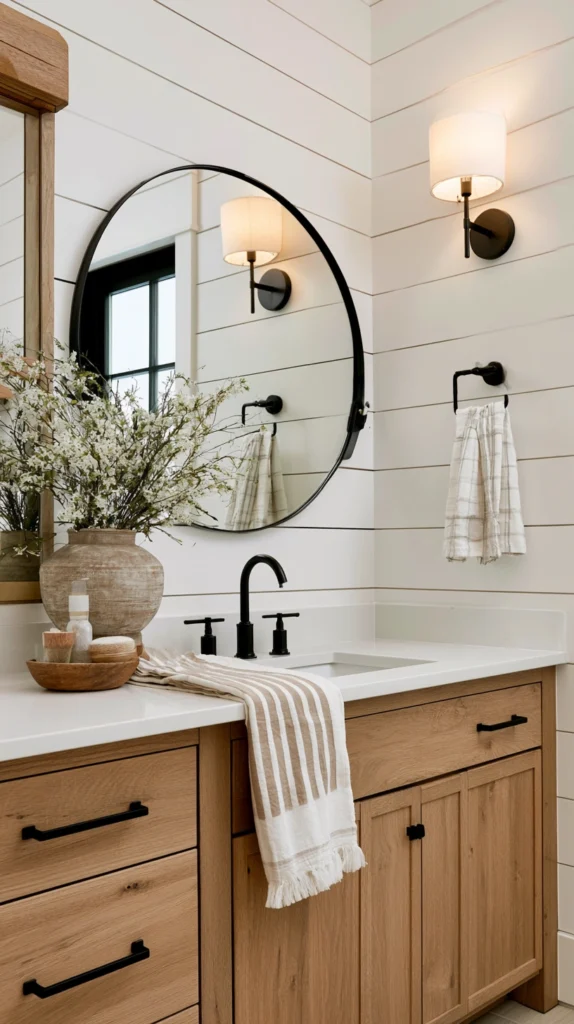
Replacing chrome or brass towel bars, hooks, and faucet handles with black iron or matte black versions — the hardware project that ties every other accessory on this list together into a single cohesive finish.
Why hardware finish matters more than its size suggests
- The unifying function: hardware touches nearly every surface in the bathroom, and a single consistent finish across all of it does more to make the room feel intentional than almost any individual accessory
- The farmhouse-specific association: black iron and matte black finishes carry a strong farmhouse and industrial-farmhouse connotation, distinct from the brushed nickel or chrome most bathrooms ship with
- The relatively low cost for the visual return: swapping hardware is far less expensive than replacing fixtures entirely, while changing a comparable amount of what’s actually seen
The options
- Black iron towel bars and rings, replacing chrome originals
- Matte black robe hooks, for hanging towels or robes near the shower
- Black cabinet pulls on the vanity, echoing the same hardware swap covered in kitchen renovation projects
- A black faucet, for a more involved but more complete version of the same finish unification
The practical execution
- Measure existing mounting hole spacing before ordering replacement hardware, since mismatched spacing means drilling new holes or patching old ones
- Choose a consistent black finish — matte, oil-rubbed, or true black iron — across every piece, rather than mixing several near-black tones
- Patch and touch up any old screw holes with spackle and matching paint if hole spacing changes during the swap
Cost breakdown
- Towel bar and ring set: $25–60
- Robe hooks, a pair: $15–30
- Cabinet pulls, a full set: $20–50
- Total: $25–140, depending on how many fixtures are swapped
7. The Apothecary Jar Display (Everyday Items Turned Into a Vignette)
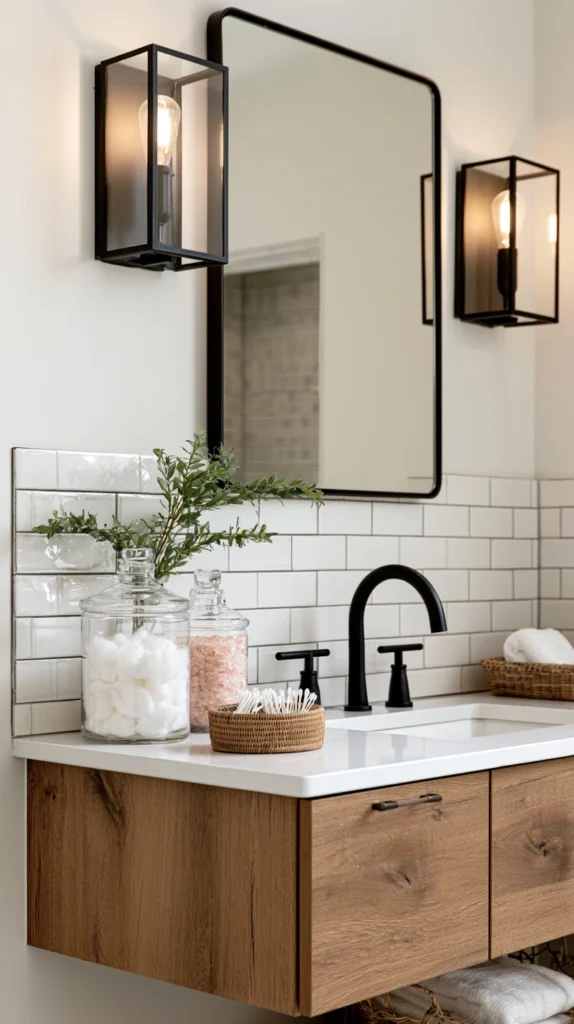
Clear apothecary-style jars holding cotton balls, cotton swabs, and bath salts on the vanity counter — the small display that turns daily essentials into deliberate styling, the bathroom equivalent of a kitchen’s jar pantry display.
Why a jar display works as decor and as storage
- The dual-purpose principle: like the mason jar dispensers in Idea #3, this idea takes something already necessary and simply presents it more intentionally
- The visual texture it adds: cotton balls and bath salts in clear glass introduce soft white and varied color directly onto the counter, where a plastic container would otherwise sit unnoticed
- The vintage-apothecary reference: this look draws directly on an older pharmacy and farmhouse tradition of storing goods in labeled glass, reinforcing the room’s overall sense of considered, gathered character
The options
- Lidded glass apothecary jars, in a matched set of two or three different sizes
- A single large jar, for cotton balls or rolled washcloths as a singular statement piece
- Jars with wood or cork lids, adding a small material contrast to the glass itself
- Labeled jars, with a simple printed or handwritten tag for each container’s contents
The practical execution
- Decant from original packaging into the jars as products are used up, building the display gradually rather than all at once
- Choose airtight lids for anything sensitive to moisture, like bath salts, given the bathroom’s naturally humid environment
- Group jars by height for visual variety, rather than lining up identical sizes in a single uniform row
Cost breakdown
- Glass apothecary jar, each: $8–18
- A set of 3: $25–50
- Total: $25–50
8. The Dried Wheat and Botanical Arrangement (A Small Touch of Harvest Indoors)
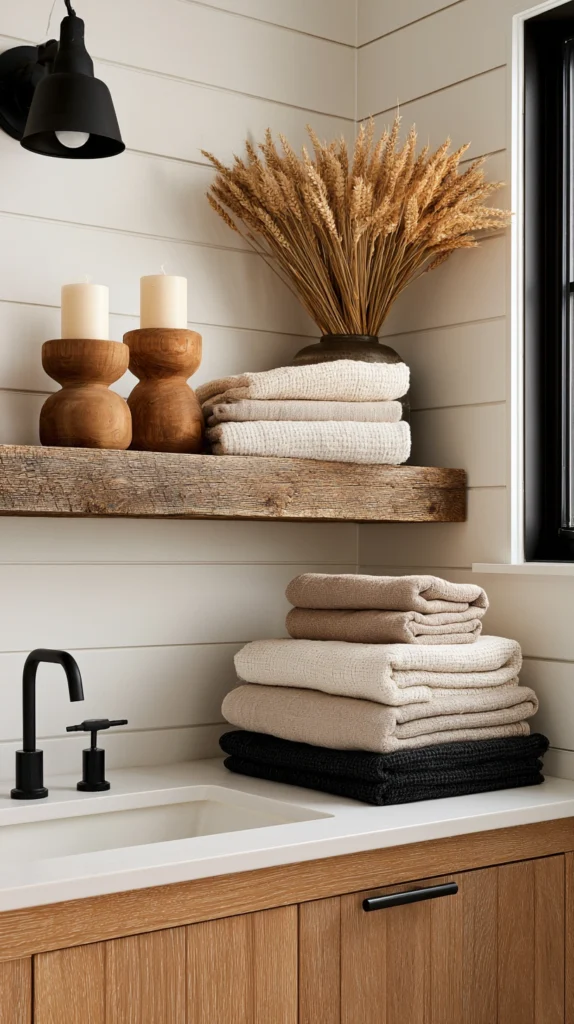
A small bundle of dried wheat, pampas grass, or other autumn botanicals, arranged in a vase or jar on the vanity or windowsill — the lowest-maintenance, most distinctly fall-specific accessory on this entire list.
Why dried botanicals belong in a bathroom specifically
- The no-water-needed advantage: unlike fresh flowers, dried arrangements need no maintenance in a room that’s otherwise consistently humid, removing one more thing that could mold or wilt in this particular environment
- The texture contrast it provides: dried wheat and grasses bring a soft, organic shape into a room dominated by hard surfaces like tile, porcelain, and glass
- The seasonal specificity: this is one of the most directly “fall” accessories on the list, more so than the farmhouse-leaning pieces that work year-round
The options
- Dried wheat stalks, bundled simply in a tall, narrow vase
- Dried pampas grass, for a softer, more textural arrangement
- A mix of dried wheat and small seed pods, adding variety without introducing fresh color
- A single dried branch with leaves still attached, for a more minimal, single-stem version of the same idea
The practical execution
- Choose a vase or jar tall enough to support the arrangement’s height without tipping, especially on a smaller vanity counter
- Keep dried arrangements away from direct water splash near the sink, since prolonged dampness can cause even dried material to mold
- Replace or refresh seasonally, since dried botanicals do eventually fade and shed over several months of display
Cost breakdown
- Dried wheat or grass bundle: $8–18
- Vase or jar to hold the arrangement, if not already on hand: $10–25
- Total: $8–40
9. The Reclaimed Wood Shelf (A Small Architectural Detail Above the Vanity)
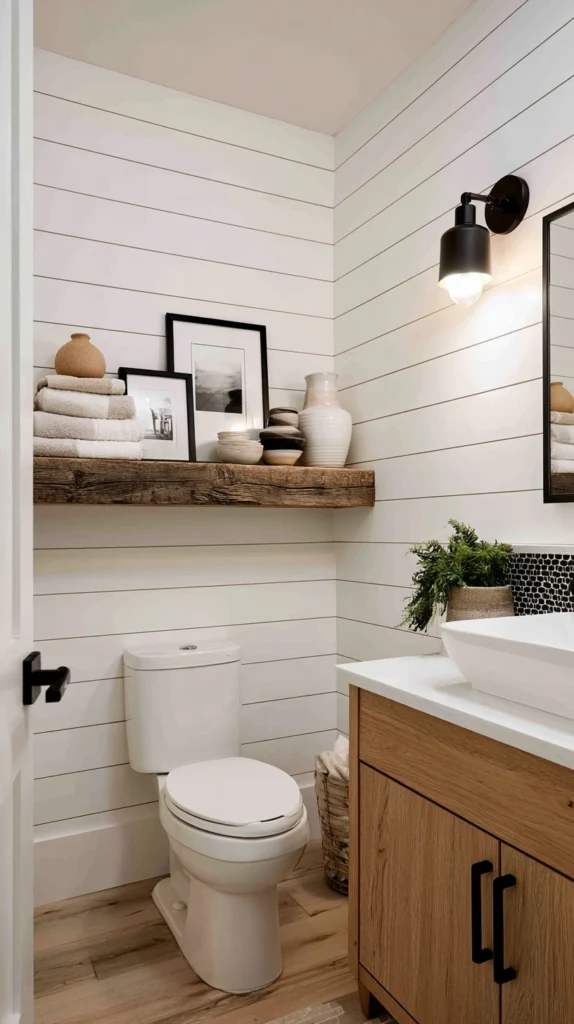
A single floating shelf made from reclaimed or distressed-finish wood, mounted above the toilet or beside the vanity mirror — the smallest structural addition on this list, giving the room a sense of built-in character it likely didn’t have before.
Why one small shelf changes the room’s whole material balance
- The warmth-to-hardscape ratio it shifts: bathrooms are dominated by tile, porcelain, and glass, and a single wood shelf introduces real material warmth into a room that often has none
- The display opportunity it creates: once installed, the shelf becomes a natural spot for several smaller accessories from this list — jars, a candle, a small folded stack of towels — to live together
- The space-efficient storage it adds: in a smaller bathroom especially, a single shelf above the toilet often represents the only unclaimed vertical space in the entire room
The options
- A single floating reclaimed wood shelf, mounted with a hidden bracket for a clean, minimal look
- A shelf with visible iron brackets, leaning further into the farmhouse-industrial pairing also seen in Idea #6
- A two-tier shelf, stacking two shorter shelves for more storage and display surface in the same footprint
- A corner shelf, for bathrooms without a full clear wall section to work with
The practical execution
- Choose a wood finish sealed or treated for humidity, rather than raw, untreated lumber that will warp or stain over time in a bathroom environment
- Mount into wall studs where possible, particularly for any shelf intended to hold more than light, decorative items
- Style the finished shelf with a mix of heights, echoing the same vignette principles used on a kitchen console or entry table
Cost breakdown
- Small floating reclaimed wood shelf, materials: $20–45
- Iron bracket shelf kit: $30–60
- Total: $20–60
10. The Vintage-Style Sign or Scale Accent (A Small Object With a Story)
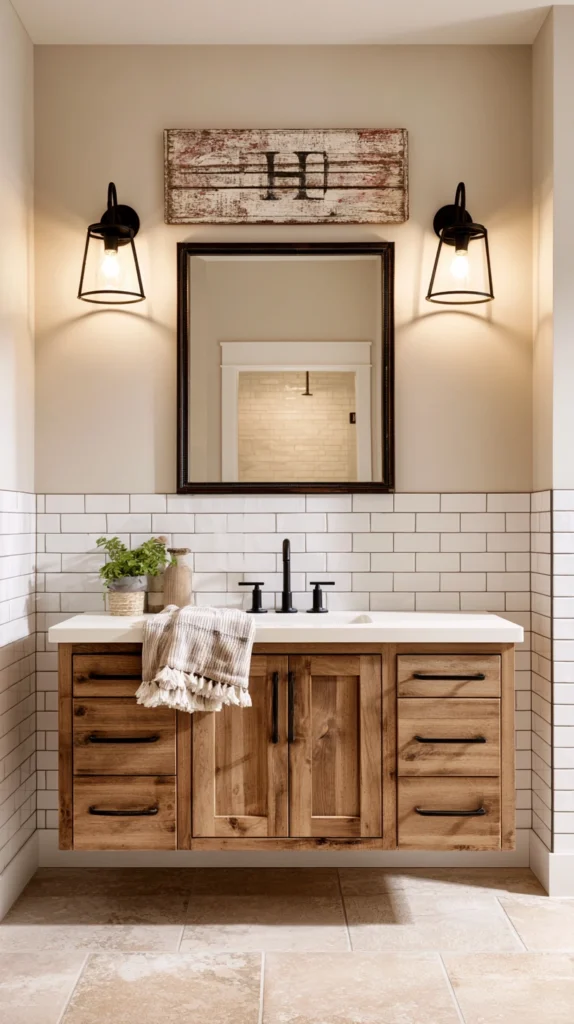
A small vintage-look sign, scale, or similar farmhouse object, placed on a shelf or the back of the toilet — the purely decorative accessory that adds a sense of collected history to the room.
Why a single object can do this much work
- The collected-over-time signal: a vintage or vintage-style object suggests a room assembled with intention over time, rather than purchased as a single matched set
- The low-footprint personality it adds: like a small sign in a kitchen, this object takes up minimal physical space while contributing real character to the overall room
- The conversation-piece value: unlike most accessories on this list, a genuinely interesting vintage object is the kind of detail a guest is likely to notice and ask about directly
The options
- A small vintage-style scale, repurposed as a decorative object rather than for actual use
- A wood-framed sign, with a simple farmhouse phrase or seasonal word
- A vintage-look tin or enamelware container, for holding rolled hand towels or small toiletries
- An old-style apothecary or pharmacy bottle, displayed empty or filled with a botanical from Idea #8
The practical execution
- Source genuinely old pieces from secondhand shops or estate sales for authentic age and patina, rather than only buying new reproductions
- Choose materials that tolerate humidity reasonably well — metal and sealed wood over untreated paper or unfinished fabric
- Position the piece somewhere it won’t get directly wet, such as a shelf or counter corner away from the sink and shower
Cost breakdown
- Vintage-style sign or small object: $15–35
- Genuine vintage find, secondhand: $10–50
- Total: $10–50
11. The Stoneware Soap Dish and Tumbler Set (Matched Pieces in a Material That Belongs Here)
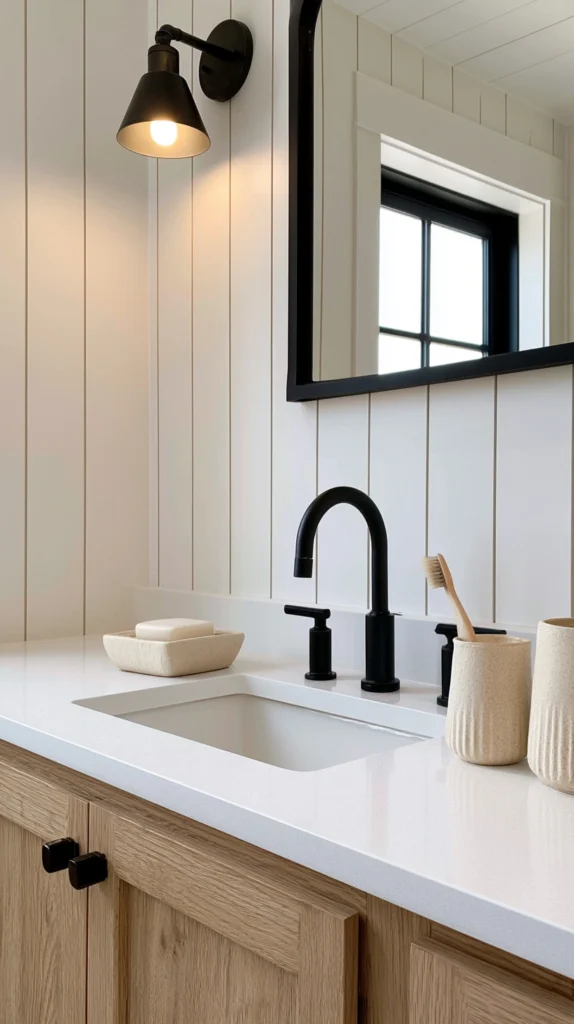
A matched stoneware or ceramic soap dish, tumbler, and toothbrush holder set, replacing a mismatched collection of plastic originals — the small set that ties the counter together into a single cohesive look.
Why a matched stoneware set earns its place over individual mismatched pieces
- The cohesion it provides: a coordinated set immediately reads as more intentional than three separate plastic pieces, even when the individual items serve the exact same function
- The material match to the rest of the room: stoneware’s slightly rough, matte texture pairs naturally with the galvanized metal, wood, and woven elements already part of this list
- The durability advantage over plastic: stoneware holds up to daily use and regular cleaning far better than plastic, which tends to discolor and crack over time in a humid environment
The options
- A simple white or cream stoneware set, the most versatile option, pairing easily with any other color accent in the room
- A speckled or reactive-glaze stoneware set, for more visual texture and variation
- A set in a deeper fall tone — rust, olive, charcoal — for a more seasonally specific accent
- An open-mix set, combining pieces from different collections that share a similar glaze or tone rather than a single matched manufacturer set
The practical execution
- Choose glazed rather than unglazed stoneware for the soap dish specifically, since unglazed surfaces hold moisture and can develop mildew faster
- Position the tumbler and toothbrush holder where they won’t constantly collect standing water, adding a small dish or tray underneath if needed
- Wash periodically with the rest of the bathroom’s regular cleaning routine, since stoneware shows soap scum and water spots more visibly than plastic
Cost breakdown
- Stoneware soap dish: $10–20
- Tumbler and toothbrush holder, each: $8–18
- A full matched set: $30–60
- Total: $30–60
12. The Layered Bath Mat (Jute Base With a Cotton Accent Mat)
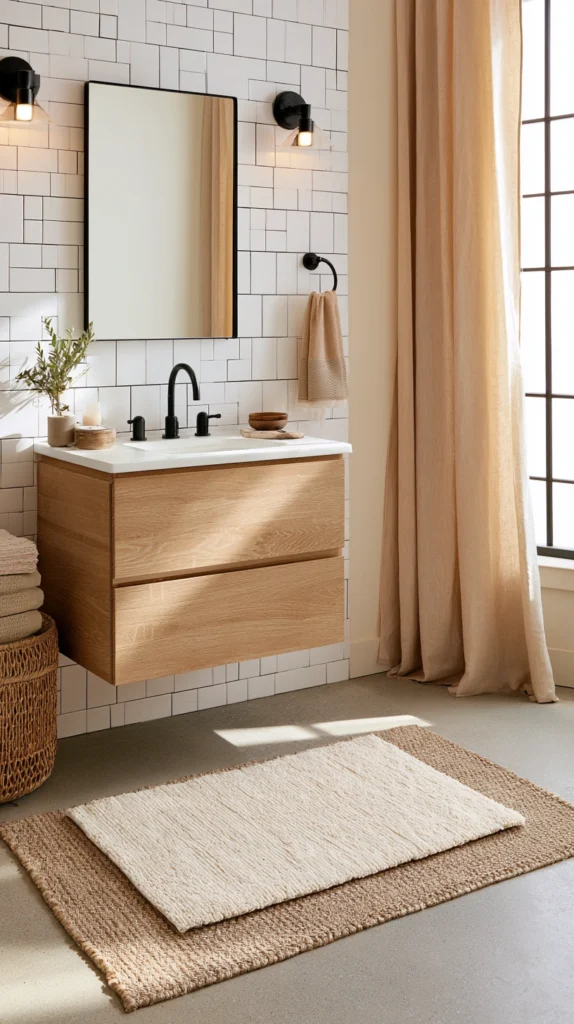
A natural jute or sisal-look mat layered beneath a smaller, softer cotton bath mat — the flooring treatment that brings the same layering principle used in living rooms and entries into the bathroom specifically.
Why a layered mat works harder than a single mat alone
- The texture contrast it creates: a coarser natural-fiber base paired with a softer cotton top layer mimics the rug-layering technique used elsewhere in farmhouse interiors, scaled down for a bathroom floor
- The functional split it allows: the base layer provides visual grounding and absorbs less foot moisture directly, while the top layer is the one actually sat or stepped on barefoot, and can be removed and washed more easily
- The farmhouse material signal underfoot: jute and natural fiber bring the same warm, textural material language used in the wood shelf and woven baskets elsewhere on this list, this time at floor level
The options
- A jute-look washable base mat, machine washable despite mimicking the look of natural fiber
- A genuine jute or sisal mat, more textured and authentic, though less tolerant of repeated heavy water exposure
- A small cotton accent mat or runner, layered on top, in a solid neutral or a subtle pattern
- A round or oval top mat, for a softer shape contrast against a rectangular base layer
The practical execution
- Choose a washable jute-look material for the base layer if it will sit directly in front of the shower or tub, where water exposure is heaviest
- Use a non-slip pad or backing underneath both layers, since stacked mats on tile flooring can shift more than a single mat would
- Wash the top cotton layer regularly, since it absorbs the most direct moisture and foot contact of the two layers
Cost breakdown
- Jute-look base mat: $20–40
- Cotton accent mat: $15–30
- Total: $35–70
13. The Warm Candle and Scent Layer (The Finishing Touch No Object Alone Can Provide)
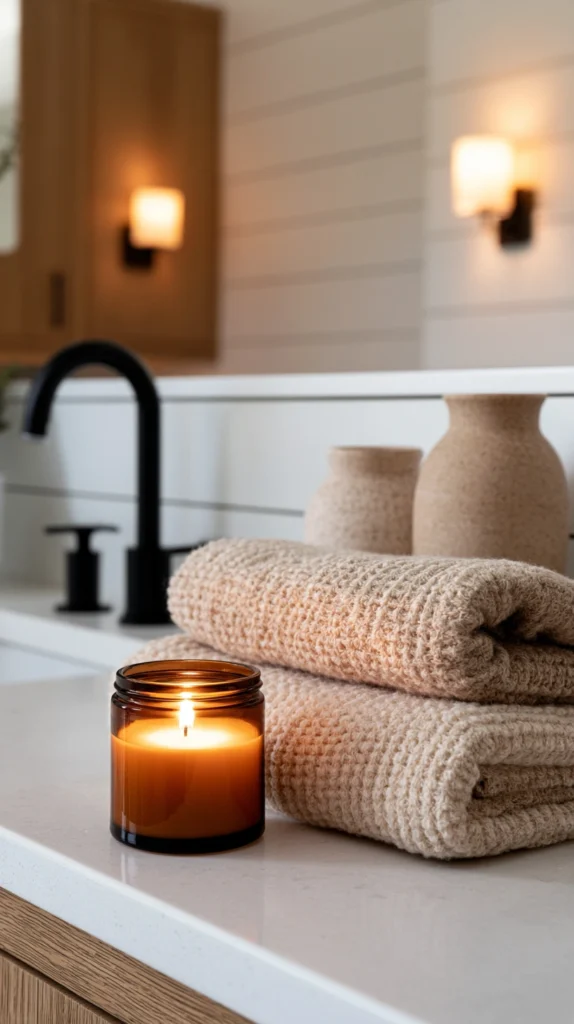
A candle or reed diffuser in a warm, fall-appropriate scent, placed on the vanity or a shelf — the sensory layer that finishes the room the way scent finishes a kitchen or entryway elsewhere in the house.
Why scent belongs on a bathroom accessories list at all
- The function this room specifically needs: unlike most rooms on a typical decor list, a bathroom has an obvious practical reason to want a pleasant, consistent scent layer
- The mood-setting value beyond function: a warm scent — cedar, amber, clove, pumpkin — reinforces the same cozy, gathered feeling the rest of the farmhouse accessories on this list are working toward
- The lowest-cost finishing layer on the entire list: relative to its impact, a candle or diffuser costs little next to the rest of the room’s accessory investment
The options
- A soy or beeswax candle, in a fall-appropriate scent like cedar, clove, or spiced apple
- A reed diffuser, for a flame-free, lower-maintenance option that runs continuously without supervision
- A simple bowl of dried cinnamon sticks or cloves, the lowest-cost, no-flame, no-electricity option available
- A candle in a stoneware or galvanized holder, tying the scent layer visually to the other materials already used elsewhere in the room
The practical execution
- Choose a flameless option like a diffuser for a bathroom used by children or where a lit candle might be left unattended
- Position away from direct water splash, particularly for a reed diffuser, which can be disrupted by humidity and moisture exposure over time
- Stick to one consistent scent across the whole bathroom, rather than layering several competing fragrances from different products at once
Cost breakdown
- Candle: $12–28
- Reed diffuser: $18–35
- Total: $12–35
The candle lit on the vanity before guests arrive: the smallest, least visible accessory on this entire list, and often the one detail that makes the room feel finished rather than simply decorated.
The Farmhouse Fall Bathroom Roadmap
The work, sequenced:
Phase One (the hardware and structure):
- The black iron hardware swap (#6)
- The reclaimed wood shelf (#9)
- The wood ladder towel rack (#2)
Phase Two (the storage and texture):
- The galvanized metal storage bin (#1)
- The woven seagrass or rattan basket (#4)
- The layered bath mat (#12)
Phase Three (the textiles and matched sets):
- The buffalo check textile layer (#5)
- The stoneware soap dish and tumbler set (#11)
- The mason jar soap and lotion dispensers (#3)
Phase Four (the finishing touches):
- The apothecary jar display (#7)
- The dried wheat and botanical arrangement (#8)
- The vintage-style sign or scale accent (#10)
- The warm candle and scent layer (#13)
Getting Started This Weekend
The immediate-impact bathroom refresh:
One afternoon, three changes:
- Swap soap and lotion bottles into mason jar dispensers (Idea #3)
- Add a galvanized bin of rolled towels to an open shelf or the floor (Idea #1)
- Light a fall-scented candle on the vanity (Idea #13)
Total cost: $45–85. Time: about thirty minutes. The bathroom will feel warmer and more finished by the end of the afternoon, without a single tool involved.
The structural investment (the next big project):
The black iron hardware swap (Idea #6) is the single most unifying project on this list. Once every towel bar, hook, and pull shares the same finish, every other accessory — the jars, the baskets, the wood shelf — has a consistent backdrop to sit against, rather than competing with leftover chrome or brass.
What a farmhouse fall bathroom provides that a standard bathroom can’t:
The warmth that comes from material, not paint:
- Wood and galvanized metal that carry their own texture without help from a tile change
- A buffalo check pattern that does double duty as both farmhouse staple and seasonal accent
- Stoneware that holds up to daily use while still looking considered
The everyday function turned into deliberate styling:
- Soap and lotion decanted into jars that look as good as they work
- A woven basket holding what used to sit loose under the sink
- A matched stoneware set replacing a mismatched plastic collection
The small details that reward a guest who actually looks:
- A vintage sign or scale that adds a story to the room
- A dried wheat bundle that needs no water and fades gracefully
- A candle that finishes the room the moment it’s lit
A farmhouse fall bathroom doesn’t need a renovation to feel completely different. It needs the same layering logic that works in every other room of the house — warm materials, a few personal touches, and accessories chosen with the same care as the furniture in a living room. The galvanized bin filled with towels on a Tuesday morning is doing the same quiet work it was doing the day it was set out. The candle lit before a guest arrives is still burning long after they’ve noticed the room looks, and feels, like fall.