14 Cozy Bath Mat and Rug Combos for Fall
14 Cozy Bath Mat and Rug Combos for Fall
Most bathrooms get exactly one mat: a single rectangle in front of the tub or shower, chosen mostly for being the right size and not much else. It does the basic job of catching drips and keeping bare feet off cold tile, and that’s usually where the thinking stops.
That single-mat approach leaves a lot of comfort on the table, especially once fall arrives and bare feet on bathroom tile stop being a minor inconvenience and start being a genuine reason to put off getting out of bed. A layered combination of mats and rugs — a textured base under a softer accent, or two coordinated pieces working a room together — does more for both comfort and style than any single mat ever could on its own.

A cozy fall bathroom floor isn’t about buying a thicker version of the same single mat. It’s about layering, the same principle that warms up a living room or an entryway, applied to the one room in the house where bare feet meet a hard, often cold surface most directly. Get the combination right, and the bathroom floor becomes one of the more quietly comfortable spots in the entire house.
Here are 14 bath mat and rug combinations built specifically for a cozier fall bathroom.
Why Fall Bath Mat Layering Plays by Different Rules Than Summer
The rules are not the same for every season underfoot:
Summer Bathroom Floor Advantages:
- A single thin mat is often enough, since cool tile underfoot feels pleasant rather than uncomfortable
- Minimal material needed, keeping laundry and upkeep simple
- Quick-dry, low-pile options matching the season’s general preference for less fuss
The summer floor comparison: function with minimal material
Fall Bathroom Floor Advantages and Realities:
- A single thin mat stops being enough once tile genuinely turns cold underfoot
- Layered materials add real warmth, not just visual coziness, to a room that loses heat quickly
- The bathroom becomes a room worth lingering in barefoot, rather than one to get in and out of quickly
The key insight:
- A summer bathroom floor rewards simplicity and quick drying
- A fall bathroom floor rewards real warmth and a layered, considered combination of textures
- These are different floor-comfort problems, not the same single mat left out longer into the year
The Material and Layering Reality
The most important principle in bath mat combinations:
The wet-zone and dry-zone split:
- The mat directly in front of the tub or shower needs to handle real, repeated water exposure and dry quickly between uses
- A mat or rug further from the wet zone — near the vanity, by the door — can prioritize softness and texture over fast drying
- Know this split before choosing any combination, since the wrong material in the wrong zone either stays damp constantly or doesn’t provide the comfort it’s meant to
The “base plus accent” calculation:
- A coarser, more durable base layer handles moisture, anchors the combination, and gets washed most frequently
- A softer, plusher accent layer sits on top or beside the base, providing the actual cozy texture underfoot, and gets washed somewhat less often since it sees less direct water
- Most successful combinations follow this same two-layer logic, regardless of which specific materials are chosen
Most bath mat combinations get built around the room’s existing layout, not in isolation:
- The wet-zone mat gets chosen first, since it has the most functional requirements to satisfy
- The secondary mat or rug — near the vanity, the toilet, or layered on top — comes next, chosen to complement rather than compete with the first
- The smallest finishing touch, like a runner extending the combination further into the room, comes last
1. The Jute Base With a Cotton Accent Mat (The Most Versatile Layering Combo)
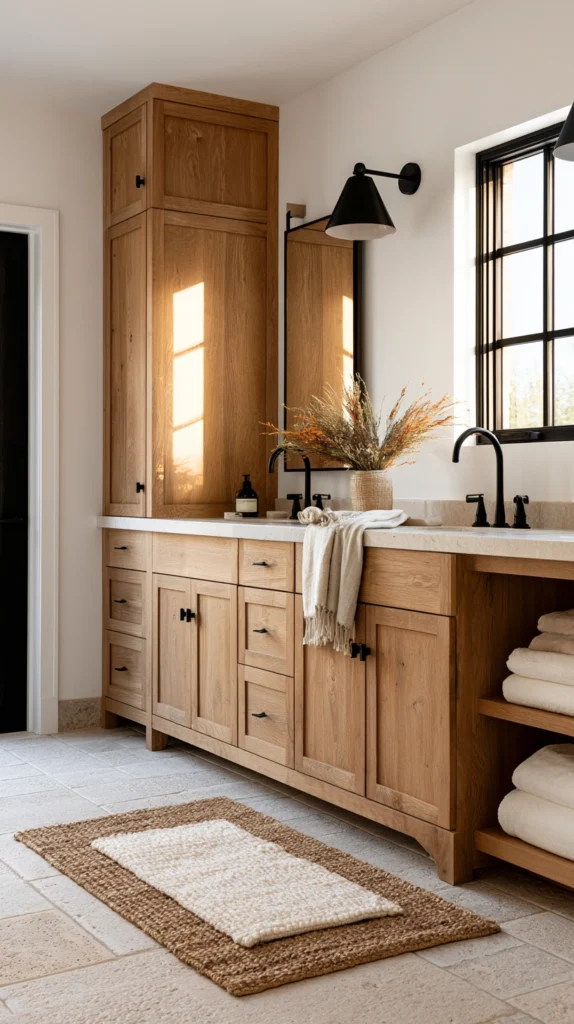
A washable jute-look base mat in front of the tub or shower, paired with a smaller, softer cotton mat layered on top — the combination most widely adaptable to nearly any bathroom style, and the clearest example of the base-plus-accent principle in action.
Why this particular pairing works as a reliable default
- The texture contrast it creates: jute’s coarse, natural weave against cotton’s soft, plush surface gives the eye and the foot two genuinely different experiences in the same small footprint
- The functional split it allows: the jute base handles the heaviest water exposure directly in front of the wet zone, while the cotton top layer, positioned slightly forward, sees less direct splash and can stay softer and cleaner longer
- The broad style compatibility it offers: this combination reads as comfortably at home in a farmhouse bathroom as in a more minimal, neutral one, making it one of the safest combinations to commit to
The options
- A machine-washable jute-look base, despite mimicking natural fiber, designed to handle regular laundering
- A genuine jute or sisal mat, more textured and authentic, though less tolerant of heavy, repeated water exposure
- A small round cotton accent mat, layered slightly off-center for visual interest
- A cotton runner instead of a small mat, extending the accent layer further into the room
The practical execution
- Choose the washable jute-look base specifically for the zone closest to the tub or shower, reserving genuine natural jute for spots with less direct water exposure
- Use a non-slip pad or backing beneath both layers, since two stacked mats on tile flooring shift more easily than a single mat would
- Wash the cotton top layer more frequently than the base, since it absorbs the most direct foot contact and moisture transfer
Cost breakdown
- Jute-look base mat: $20–40
- Cotton accent mat: $15–30
- Total: $35–70
The jute base catching the cotton mat’s softer edge: the combination most bathrooms can adopt regardless of their existing style.
2. The Memory Foam Mat With a Vintage Runner (Plush Comfort Meets Pattern)
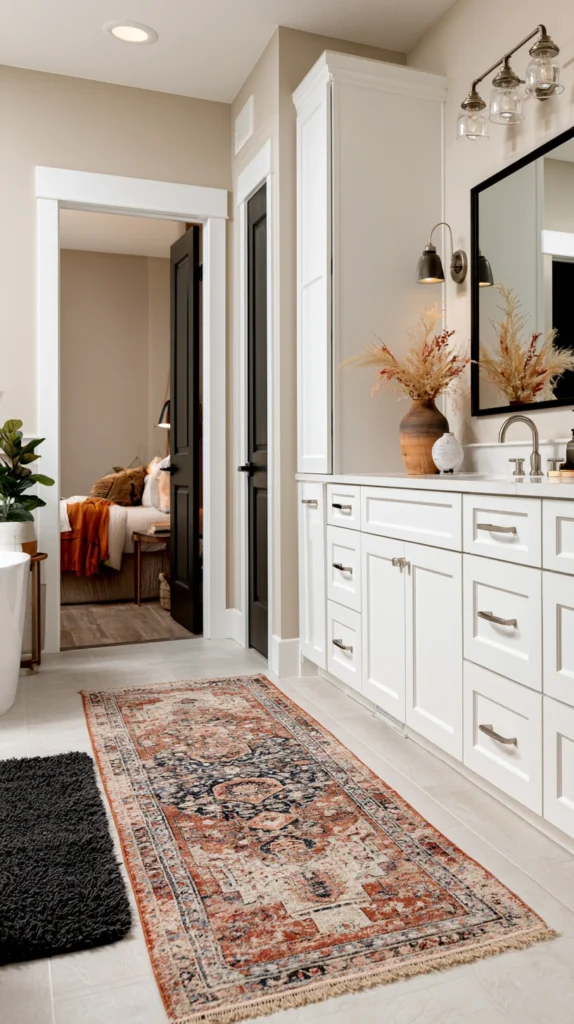
A thick memory foam mat positioned directly at the tub or shower’s edge, paired with a vintage-look patterned runner extending toward the door — the combination that prioritizes maximum underfoot softness exactly where it’s needed most, with pattern and color carrying the rest of the room.
Why memory foam earns the prime spot in this particular pairing
- The genuine cushioning it provides: memory foam compresses and contours under bare feet in a way no woven mat fully replicates, delivering the most cushioned, hotel-spa-like sensation available in a home bathroom
- The cold-floor problem it solves most directly: this is one of the most effective materials on this list for counteracting genuinely cold tile, given its density and insulating quality
- The runner’s complementary role: rather than competing with the foam mat’s plush texture, a flatter, patterned runner extends color and visual interest through the rest of the room without trying to match the foam’s softness
The options
- A solid-color memory foam mat, in a deep fall tone, kept simple to let the runner carry the pattern
- A vintage-style Persian or Turkish-pattern runner, in deep reds, blues, or golds
- A faded, distressed-look runner, already forgiving of bathroom wear and tear
- A runner long enough to extend from the tub area to the doorway, unifying the whole room’s floor in one visual sweep**
The practical execution
- Choose a memory foam mat with a washable, removable cover, since the foam core itself typically can’t go in a washing machine
- Use a non-slip backing on the runner specifically, given how much more foot traffic and turning happens over a longer runner than a single small mat
- Position the foam mat slightly forward of the tub’s direct splash zone, since memory foam tends to retain moisture longer than a flatter woven mat
Cost breakdown
- Memory foam mat with washable cover: $20–45
- Vintage-style runner: $40–120
- Total: $60–165
3. The Sheepskin Layered Over a Flatweave Base (Maximum Coziness for a Vanity Spot)
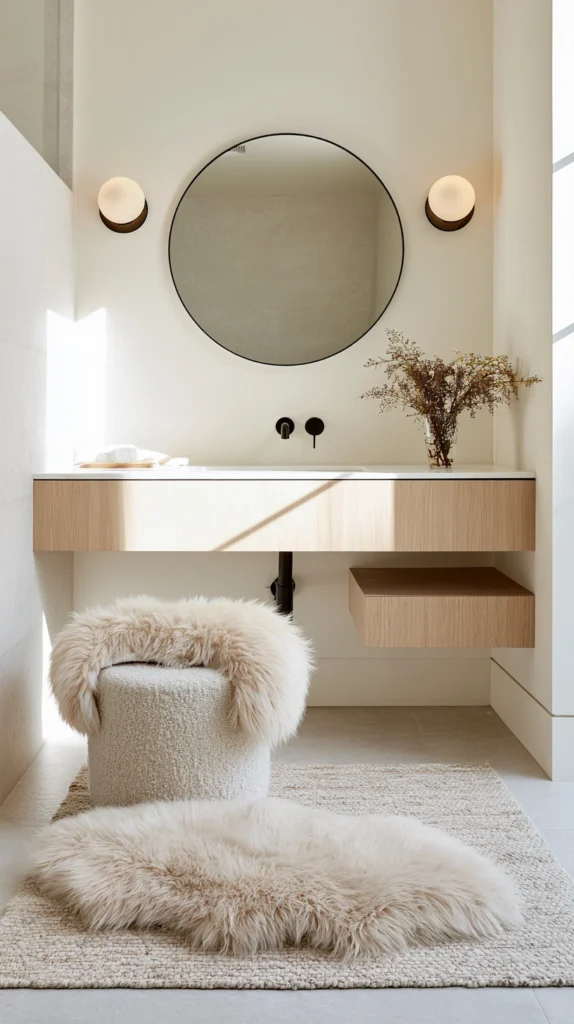
A genuine or faux sheepskin, layered over a flatweave rug specifically at the vanity or a spot away from direct water exposure — the combination that brings the season’s most recognizably cozy texture into the one part of the bathroom floor that can actually support it.
Why sheepskin belongs in the bathroom despite needing a dry zone
- The instantly cozy signal it sends: few textures communicate fall coziness as immediately and recognizably as sheepskin, and even a small placement delivers an outsized visual and tactile impact
- The dry-zone requirement that shapes its placement: unlike the tub-adjacent combinations elsewhere on this list, sheepskin specifically needs to stay away from direct water exposure, which determines exactly where in the room this combination can work
- The flatweave base’s protective and grounding role: a low-pile flatweave underneath keeps the sheepskin from sliding on tile and gives the whole arrangement a stable, finished base layer rather than letting the sheepskin sit loosely on bare floor
The options
- A faux sheepskin, more practical and less expensive than the genuine material, suited to a bathroom’s humidity overall
- A genuine sheepskin, for the most authentic texture and warmth, reserved specifically for the driest part of the room
- A flatweave rug in a solid neutral, keeping the visual focus on the sheepskin’s texture rather than competing with pattern
- A flatweave rug in a subtle pattern, for a bit more visual interest beneath the sheepskin’s solid texture**
The practical execution
- Position this combination specifically at the vanity or near the door, never directly in front of the tub or shower where it would face regular water exposure
- Shake out and fluff the sheepskin regularly, since this texture flattens with use more visibly than a flat woven rug
- Spot clean rather than fully washing a genuine sheepskin, following care instructions specific to the material rather than treating it like a standard cotton mat
Cost breakdown
- Faux sheepskin: $20–45
- Genuine sheepskin: $50–120
- Flatweave base rug: $25–60
- Total: $45–180
4. The Two-Piece Matching Set (Coordinated Pieces for the Tub and the Toilet)
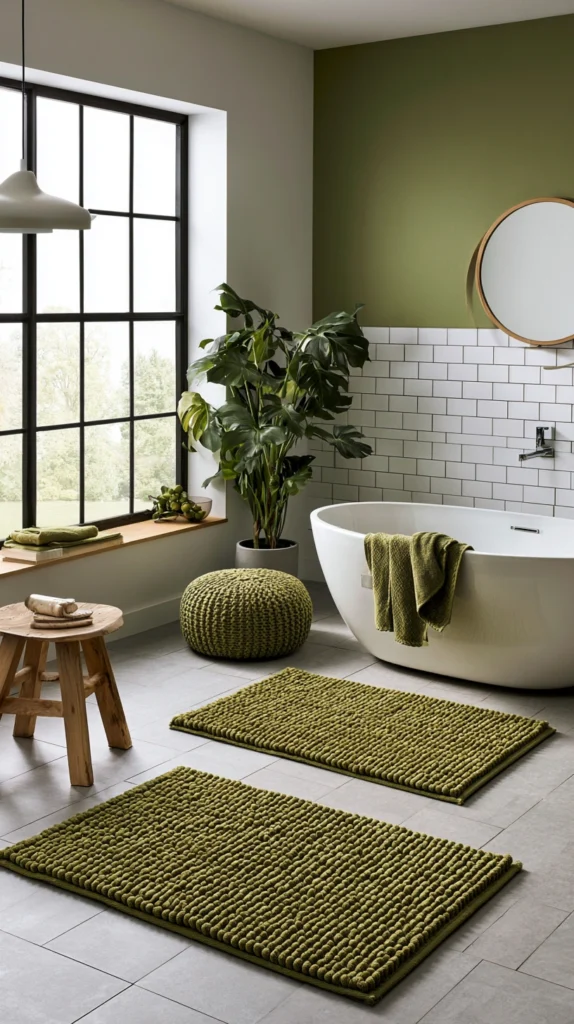
A matched mat in front of the tub or shower, paired with a smaller contour or rectangular mat in front of the toilet — the most classic combination, relying on coordination rather than contrast to create a finished look.
Why a matched set remains a reliable, polished choice
- The cohesive, intentional look it creates: two pieces from the same set, in the same material and color, read as a single deliberate decision rather than two separately chosen objects that happen to share a room
- The full-room coverage it provides: unlike a single mat addressing only the tub area, this combination ensures the toilet area also gets the same comfort and warmth treatment, rather than being left on bare, cold tile
- The simplicity it offers over a more involved layering technique: for anyone who wants a finished, cozy look without the slightly more advanced base-and-accent layering of other ideas on this list, a matched set delivers a complete result with minimal decision-making
The options
- A two-piece set in a solid fall color, the simplest, most versatile option
- A two-piece set in a textured weave, like chenille or a looped pile, for more tactile interest than a flat solid
- A contour-shaped toilet mat paired with a rectangular tub mat, following the traditional shape pairing for this combination
- A set in a deep, saturated tone, coordinating with a moody bathroom color scheme elsewhere in the room**
The practical execution
- Choose a set specifically sold together, rather than approximating a match with two separately purchased pieces, for the most reliable color and texture consistency
- Wash both pieces together on the same schedule, keeping their appearance and wear level consistent over time
- Size the toilet mat to the room’s actual toilet base and surrounding floor space, since contour mats vary somewhat in their exact cutout shape between brands
Cost breakdown
- Two-piece matched bath mat set: $30–70
- Total: $30–70
5. The Chunky Knit Mat Over a Solid Color Base (Texture as the Main Event)
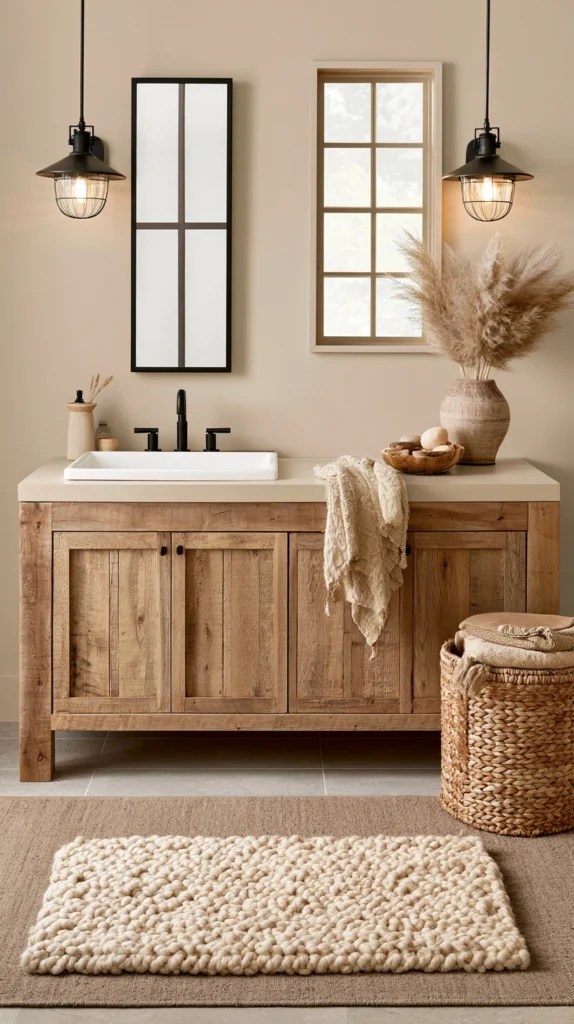
A chunky, cable-knit style bath mat, layered over a simple solid-color base rug — the combination that treats texture, rather than color or pattern, as the primary visual and tactile interest in the room.
Why a chunky knit changes the room’s whole tactile character
- The sweater-like texture it introduces: a chunky knit mat brings the same cozy, oversized-cable-knit quality associated with fall sweaters and throw blankets directly onto the bathroom floor
- The dimensional shadow it creates: unlike a flat woven mat, a chunky knit’s raised, looped texture catches light and shadow in a way that adds visual depth even before anyone touches it
- The simple base it requires to look its best: because the knit mat itself carries so much textural interest, a plain, solid-color base underneath keeps the combination from feeling overly busy
The options
- A cable-knit cotton mat, the most traditional version of this texture
- A chunky wool-blend mat, for even more warmth and density underfoot
- A solid-color low-pile base rug, in a neutral or deep fall tone
- A washable chunky knit option, for easier maintenance than a delicate hand-wash-only version**
The practical execution
- Choose a washable chunky knit specifically for bathroom use, since some decorative knit mats are designed more for a bedroom or living room and aren’t built for a bathroom’s moisture levels
- Position away from the most direct, repeated water splash, since a deep knit texture holds moisture longer than a flat or low-pile mat
- Use a non-slip pad beneath the base rug, particularly important given the additional height and potential for shifting that a thicker knit layer adds on top
Cost breakdown
- Chunky knit bath mat: $25–55
- Solid color base rug: $20–45
- Total: $45–100
6. The Striped Runner for a Galley Bathroom (Length as the Defining Feature)
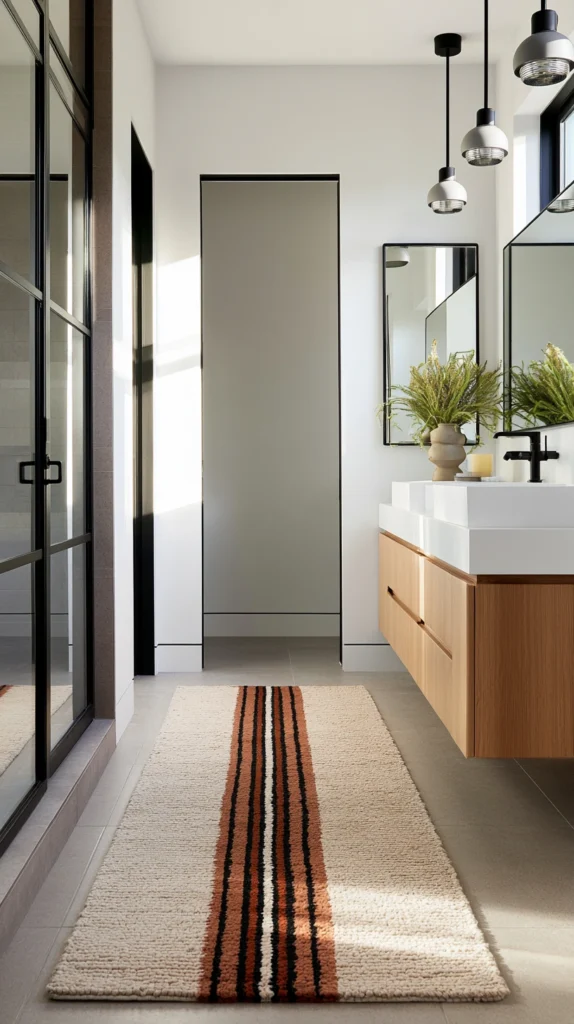
A long striped runner, extending the full length of a narrow galley-style bathroom — the combination built specifically for a room shape where a single small mat would leave most of the floor bare and cold.
Why a narrow bathroom needs its own specific approach
- The shape-specific problem it solves: a galley bathroom, long and narrow, has considerably more floor space than a single tub-adjacent mat can reasonably cover, leaving much of the room’s length on bare, cold tile without a longer solution
- The visual elongation a stripe pattern provides: a striped runner, particularly one with the stripe direction running the length of the room, can make a narrow bathroom feel slightly more spacious than an unbroken expanse of tile would
- The single-piece simplicity it offers: rather than layering multiple separate mats down a long room, one well-chosen runner handles the room’s full length in a single coordinated piece
The options
- A classic striped runner, in two or three coordinating colors
- A runner with a varied stripe width, for more visual interest than a uniform, evenly spaced pattern
- A washable runner, given how much of the room’s total floor space this single piece is responsible for keeping presentable
- A runner paired with a small contour mat at the toilet, for additional coverage at that specific spot alone**
The practical execution
- Measure the room’s actual length precisely before ordering, since runners come in a range of standard lengths that may need to be trimmed or specially ordered to fit exactly
- Use rug tape or a non-slip backing along the runner’s full length, since a long runner in a narrow, frequently walked space is more prone to bunching or shifting than a smaller mat
- Choose a flatter weave for the bulk of the runner’s length, reserving a plusher texture for the smaller portion closest to the tub if more warmth is wanted at that specific spot
Cost breakdown
- Striped runner, sized to a galley bathroom: $40–100
- Total: $40–100
7. The Round Mat Layered Over a Rectangular Base (Softening the Room’s Hard Angles)
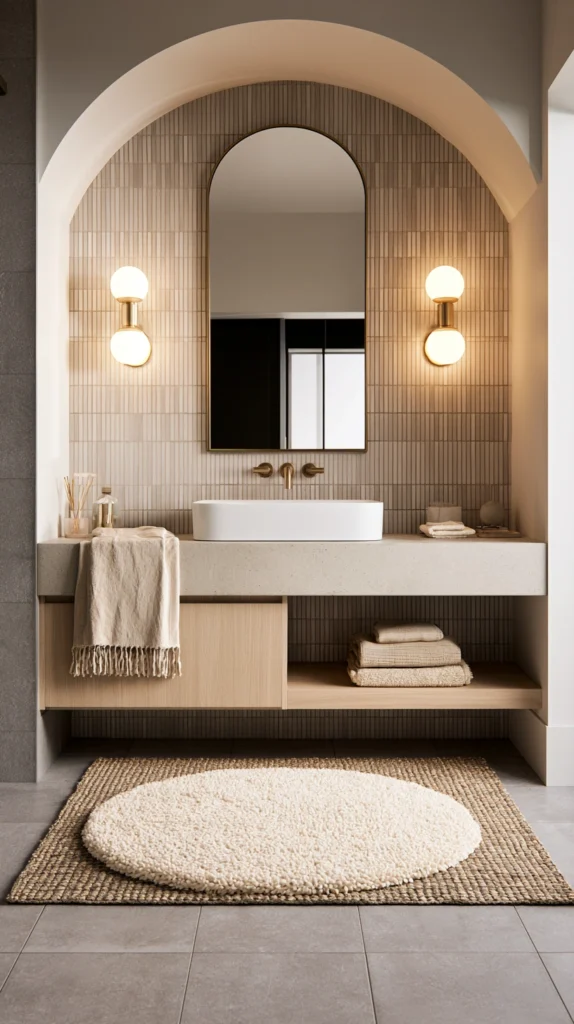
A round bath mat, placed slightly off-center over a larger rectangular base rug — the combination that introduces a curved shape into a room otherwise made up almost entirely of straight lines and right angles.
Why a round shape stands out in this particular room
- The shape contrast most bathrooms lack entirely: between the tub, the vanity, the tile grid, and the door frame, a typical bathroom offers very few curved lines, and a round mat introduces a deliberate counterpoint to all that angularity
- The visual softening effect it provides: a round shape reads as inherently gentler and cozier than a rectangle, reinforcing the same softening goal that drives most of the combinations on this list
- The layering flexibility it allows: because a round mat doesn’t need to align with the room’s straight edges the way a rectangular one does, it can be placed slightly off-center or at a gentle angle for a more relaxed, less rigid look
The options
- A round cotton or chenille mat, in a solid color, layered over a larger rectangular jute or flatweave base
- A round mat in a deep, saturated fall tone, contrasting against a neutral rectangular base
- A scalloped or organically shaped mat, for an even softer silhouette than a perfect circle
- Two round mats of different sizes, stacked or placed near each other for additional shape variety**
The practical execution
- Center the round mat over the rectangular base’s most visually prominent area, typically directly in front of the tub or sink, rather than tucking it into a corner where the shape contrast is less visible
- Choose a round mat with a non-slip backing of its own, in addition to whatever backing supports the rectangular base beneath it
- Keep the color palette between the two layers coordinated, even while varying the shape, so the combination reads as a deliberate pairing rather than two unrelated pieces
Cost breakdown
- Round accent mat: $20–40
- Rectangular base rug: $25–55
- Total: $45–95
8. The Buffalo Check Mat With a Solid Neutral Base (Pattern That Reads as Both Farmhouse and Fall)
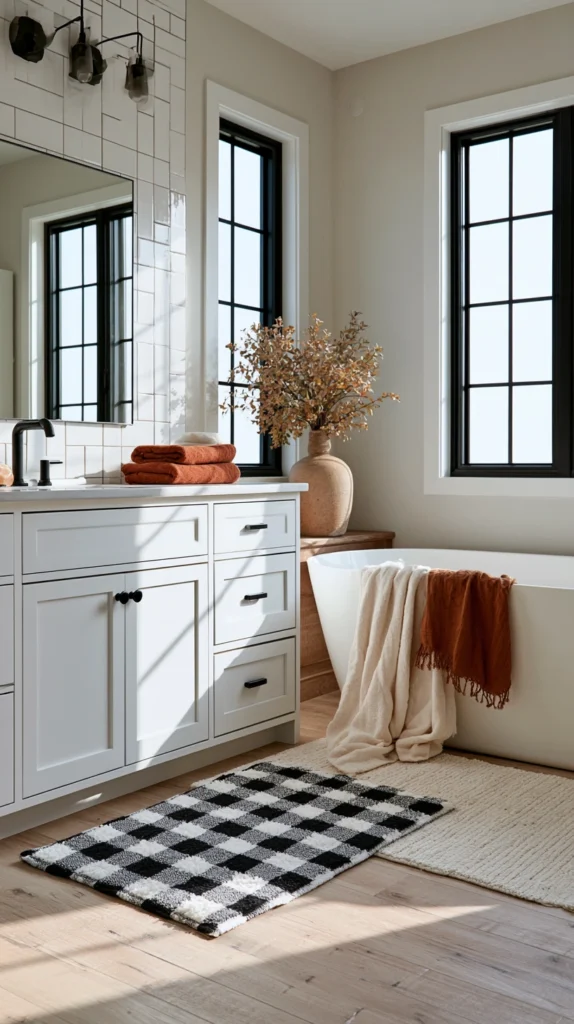
A buffalo check bath mat, layered over or paired beside a solid neutral base rug — the combination that brings one of fall’s most recognizable patterns directly onto the bathroom floor, balanced by a calmer supporting piece.
Why buffalo check works particularly well in this specific room
- The dual-season, dual-style versatility it carries: like the buffalo check textiles used elsewhere in bathroom styling, this pattern reads as both a permanent farmhouse staple and a specifically autumnal touch, meaning it doesn’t need to be swapped out again once the season changes
- The pattern-to-solid balance this pairing strikes: buffalo check is a fairly bold, high-contrast pattern, and a solid neutral base prevents the combination from feeling overly busy in a typically small room
- The strong color-anchoring function it serves: a black and white or red and black buffalo check mat can set the tone for towel and accessory color choices throughout the rest of the bathroom
The options
- A black and white buffalo check mat, the most versatile and widely available option
- A red and black check, leaning more directly into a classic fall and winter palette
- A smaller-scale plaid, for a subtler version of the same pattern family
- A buffalo check runner instead of a single mat, extending the pattern further down a longer bathroom**
The practical execution
- Choose a washable buffalo check mat specifically, given how much more visible pattern wear shows compared to a solid color
- Pair with a genuinely neutral base — white, cream, gray — rather than another patterned piece, to maintain the intended balance
- Wash on a consistent schedule with the rest of the bathroom’s textiles, since a high-contrast pattern shows soil and staining more readily than a solid, darker color would
Cost breakdown
- Buffalo check bath mat: $20–45
- Solid neutral base rug: $20–45
- Total: $40–90
9. The Distressed Vintage-Look Rug With a Plush Mat (Old-World Pattern Meets Modern Comfort)
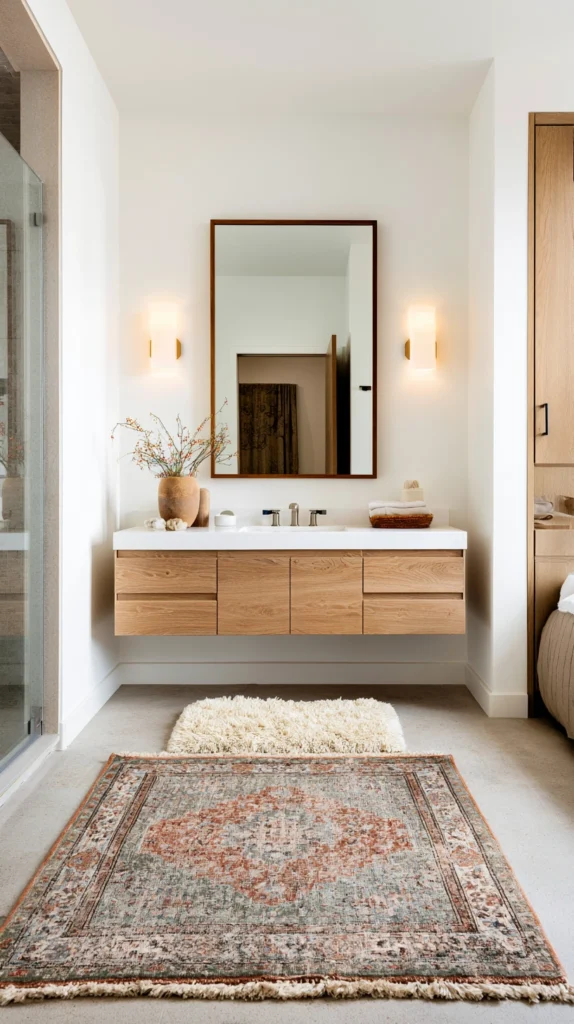
A faded, vintage-style printed rug, paired with a small plush mat layered on top closest to the tub — the combination that brings genuine pattern depth and visual age into the bathroom, balanced by a soft, comfort-focused top layer.
Why this pairing reads as more elevated than most bathroom mat combinations
- The visual depth a distressed pattern provides: unlike a flat, evenly colored mat, a vintage-look rug’s faded, irregular pattern adds a sense of history and richness that a newer, more uniform mat simply can’t replicate
- The comfort the plush top layer restores: because vintage-style printed rugs are often a flatter, lower-pile material, layering a small plush mat on top reintroduces the genuine softness underfoot that the patterned base alone doesn’t provide
- The elevated, design-forward feel it creates: this combination is one of the more visually sophisticated pairings on the list, often associated with a more curated, boutique-hotel bathroom aesthetic
The options
- A faded medallion or Persian-style printed rug, as the base layer
- A small, solid-color plush mat, layered directly in front of the tub on top of the printed rug
- A printed rug in deep, muted fall tones, rust, olive, and faded blue
- A printed runner instead of a smaller rug, for a galley-style bathroom needing the same combination over a longer footprint**
The practical execution
- Choose a printed rug specifically designed or treated for bathroom use, since not every decorative vintage-look rug is rated for the moisture exposure a bathroom presents
- Layer the plush mat only over the section of the printed rug closest to the tub or shower, leaving the rest of the patterned rug visible rather than fully covering it
- Use a non-slip pad under the base rug at minimum, and consider securing the top mat as well, given how this combination introduces more total layers than most others on the list
Cost breakdown
- Vintage-look printed rug: $40–100
- Plush accent mat: $20–40
- Total: $60–140
10. The Quick-Dry Microfiber With a Decorative Topper (Function First, Style Layered On)
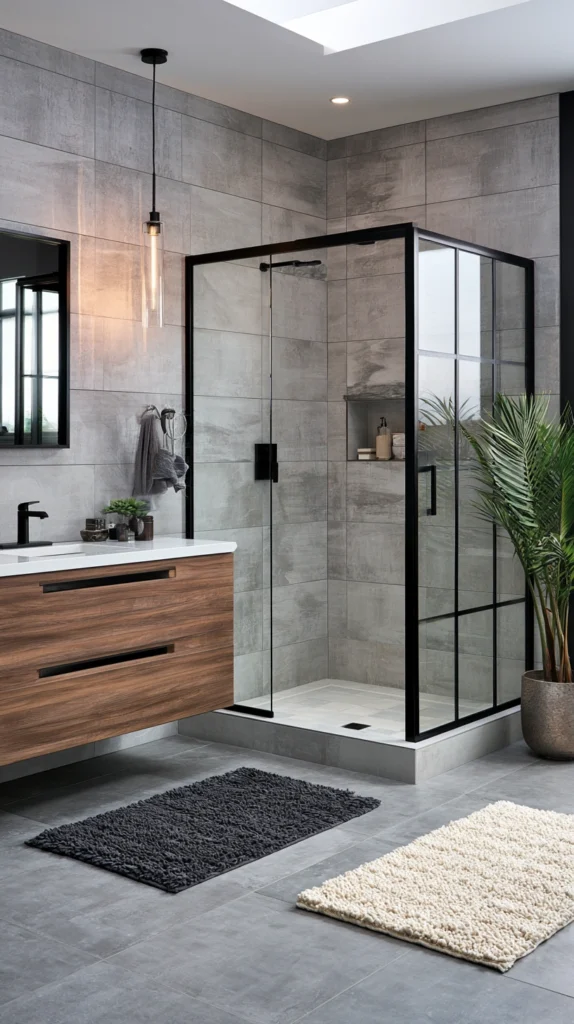
A highly absorbent, quick-dry microfiber mat positioned directly at the wet zone, paired with a more decorative topper mat placed just beyond the splash area — the combination built specifically for a household that prioritizes practical performance without giving up on style entirely.
Why function-first doesn’t have to mean style-last
- The genuine performance advantage microfiber offers: this material absorbs and dries faster than cotton, jute, or most other options on this list, making it the most practical choice for the single spot in the bathroom that gets the most direct, repeated water exposure
- The style compromise this combination avoids: rather than accepting a purely utilitarian microfiber mat as the room’s only floor textile, pairing it with a more decorative piece just beyond the wet zone keeps the practical choice from being the room’s only visual statement
- The household-specific value it offers: this combination suits a busy household, a bathroom used by kids, or anyone who simply wants the lowest-maintenance wet-zone solution without sacrificing the room’s overall coziness elsewhere
The options
- A solid-color microfiber mat, kept simple and purely functional at the wet zone
- A patterned or textured decorative topper, placed just beyond the splash area for visual interest
- A microfiber mat with a non-slip backing built in, reducing the need for a separate backing layer
- Two microfiber mats in coordinating colors, for a fully practical combination that still offers some visual coordination**
The practical execution
- Position the microfiber mat in the zone receiving the most direct water, reserving the decorative topper for an area that stays comparatively dry
- Wash the microfiber mat on the most frequent schedule of any piece in the combination, since it’s absorbing the bulk of the room’s actual moisture
- Choose a topper material that doesn’t require the same frequent washing, easing the overall maintenance burden of the combination as a whole
Cost breakdown
- Microfiber bath mat: $15–30
- Decorative topper mat: $20–45
- Total: $35–75
11. The Boucherouite-Style Layered Rug (Bold Color and Texture From a Single Statement Piece)
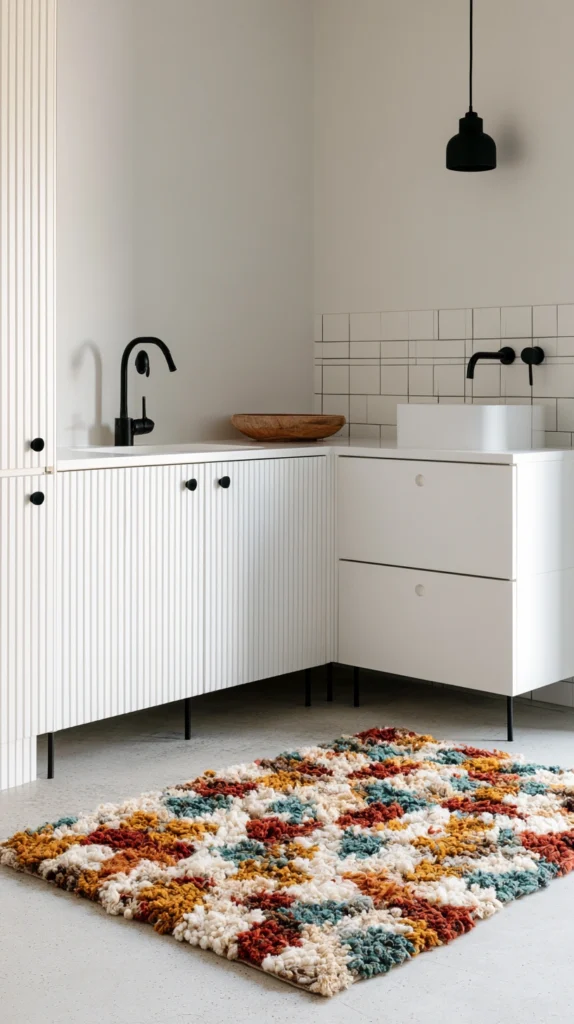
A Moroccan boucherouite-style rug, made from recycled textile scraps in bold, mixed colors, used as a single statement layer rather than paired with a separate base — the combination that relies on one visually rich piece rather than two coordinated ones.
Why a single bold piece can function as its own combination
- The built-in layering effect the material itself provides: boucherouite rugs are woven from varied fabric scraps, which means the rug already contains its own internal texture and color variation, achieving a layered visual effect without needing a second separate piece
- The maximalist alternative it offers to the rest of this list: where most combinations on this list rely on a careful balance between a calmer base and a more decorative accent, this idea embraces bold pattern and color as the entire statement
- The genuinely one-of-a-kind quality many of these rugs carry: because they’re made from varied recycled materials, no two boucherouite-style rugs are identical, giving this option a level of individual character the more standardized combinations elsewhere on this list don’t offer
The options
- A genuine boucherouite rug, sourced from a specialty retailer for authentic material and construction
- A boucherouite-style reproduction, more widely available and often more moisture-tolerant than the genuine handwoven version
- A smaller boucherouite-style accent piece, used near the vanity rather than directly in the wet zone
- A boucherouite rug paired with a simple bath mat at the tub specifically, reserving the statement piece for the room’s drier area**
The practical execution
- Reserve this rug specifically for the bathroom’s drier zone, since the varied fabric construction generally isn’t built to handle frequent, direct water exposure
- Spot clean rather than fully machine washing, given the rug’s mixed-material construction
- Let this piece function as the room’s primary visual statement, keeping other textiles in the room simpler and more neutral so the rug doesn’t have to compete for attention
Cost breakdown
- Boucherouite-style reproduction rug: $40–120
- Genuine boucherouite rug: $100–300+
- Total: $40–300+, depending on authenticity and size
12. The Wood-Look Mat With a Bath Stool Pairing (Texture Beyond the Floor Alone)
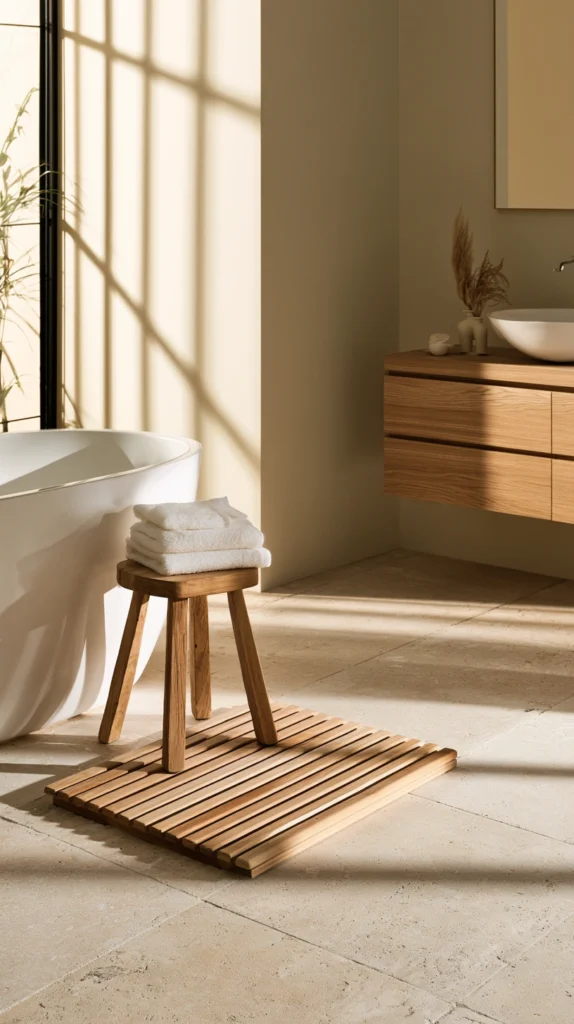
A wood-look slatted bath mat, paired with a small wooden bath stool nearby — the combination that extends the room’s warmth beyond the floor itself into a second functional piece of furniture.
Why pairing a mat with a stool changes the scope of this idea
- The material consistency it creates across two different objects: a wood-look or genuine wood-slat mat paired with an actual wood stool ties the room’s warmth together across more than just the floor, reinforcing the material story in a way a single mat alone can’t
- The functional bonus the stool provides: beyond its contribution to this combination’s overall look, a small stool offers a genuinely useful spot to sit while drying off or to hold a towel and robe within reach
- The spa-like association both pieces share: wood-slat mats and small wood stools are both strongly associated with a more elevated, spa-inspired bathroom aesthetic, and pairing them reinforces that feeling more than either piece would alone
The options
- A teak slatted bath mat, naturally water-resistant and suited to direct placement near the tub
- A bamboo slatted mat, a more affordable alternative to teak with a similar overall look
- A small teak or acacia wood stool, positioned beside the tub or in the shower itself
- A wood-look mat paired with a woven seagrass stool, mixing materials while keeping the same warm, natural tone**
The practical execution
- Choose genuinely water-resistant wood species, like teak, for any piece placed in or directly beside the wet zone, since not every wood holds up to constant moisture exposure
- Allow the slatted mat to dry fully between uses, since trapped moisture beneath a solid-bottom mat can encourage mold in a way a slatted, well-ventilated design avoids
- Oil or treat the wood periodically, following the specific material’s care recommendations, to maintain both its appearance and its water resistance over time
Cost breakdown
- Teak or bamboo slatted bath mat: $30–70
- Small wood bath stool: $40–100
- Total: $70–170
13. The Color-Blocked Two-Mat Set (Two Distinct Colors, One Cohesive Room)
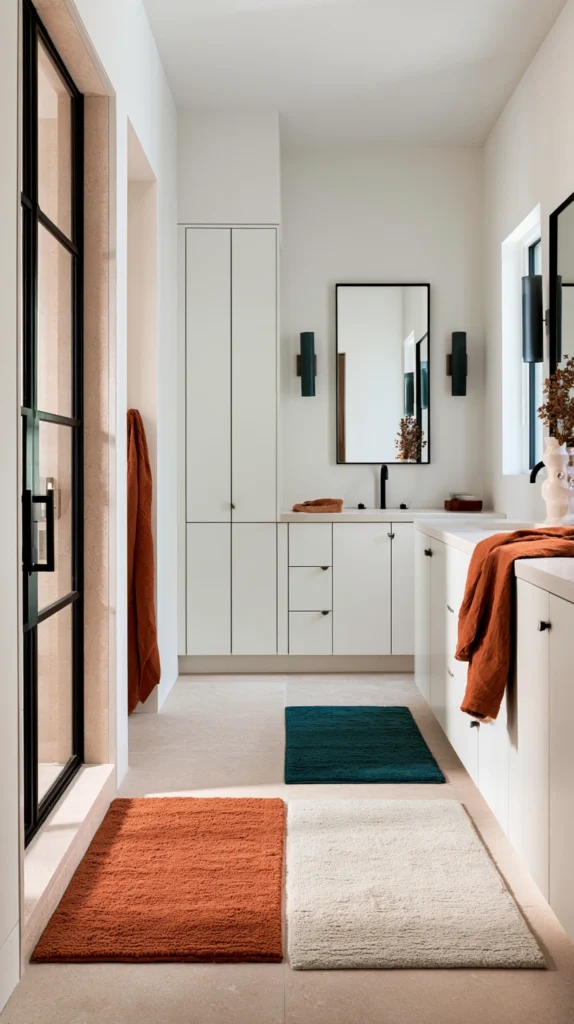
A mat in one solid color directly at the tub, paired with a mat in a second, complementary color at the toilet or vanity — the combination that uses color contrast, rather than texture or pattern, to organize the room into distinct functional zones.
Why two different colors can still read as a single intentional choice
- The zone-defining function color provides: using two different but complementary colors helps visually separate the bathroom’s different functional areas, similar to how a kitchen might use two different but coordinated colors across cabinetry and an island
- The complementary color relationship it depends on: like the rust-and-teal pairing used elsewhere in moody color schemes, choosing two colors that sit well together on the color wheel keeps this combination feeling deliberate rather than arbitrary
- The flexibility it offers for working with existing fixtures: this combination can be tailored to whatever colors are already present in the room’s tile, walls, or towels, rather than requiring an entirely new palette
The options
- A rust mat at the tub paired with a deep teal mat at the toilet, a bold complementary pairing
- A mustard mat paired with a charcoal mat, a warmer, more muted version of the same color-blocking principle
- Two mats in different shades of the same color family, for a more subtle version of this idea than a full complementary contrast
- A color-blocked runner, transitioning from one color to another partway down its length, for a single-piece version of the same concept**
The practical execution
- Choose two colors with a deliberate relationship to each other, using a color wheel or existing color scheme reference rather than picking two favorites at random
- Keep both mats in the same material and pile height, so the combination’s visual interest comes specifically from the color choice rather than being muddled by mismatched textures as well
- Coordinate at least one additional element in the room, like towels or a shower curtain, with one of the two chosen colors to tie the whole space together
Cost breakdown
- Two solid-color mats in different colors: $40–90
- Total: $40–90
14. The Heated Mat With a Decorative Layer (Real Warmth Built Directly Into the Floor)
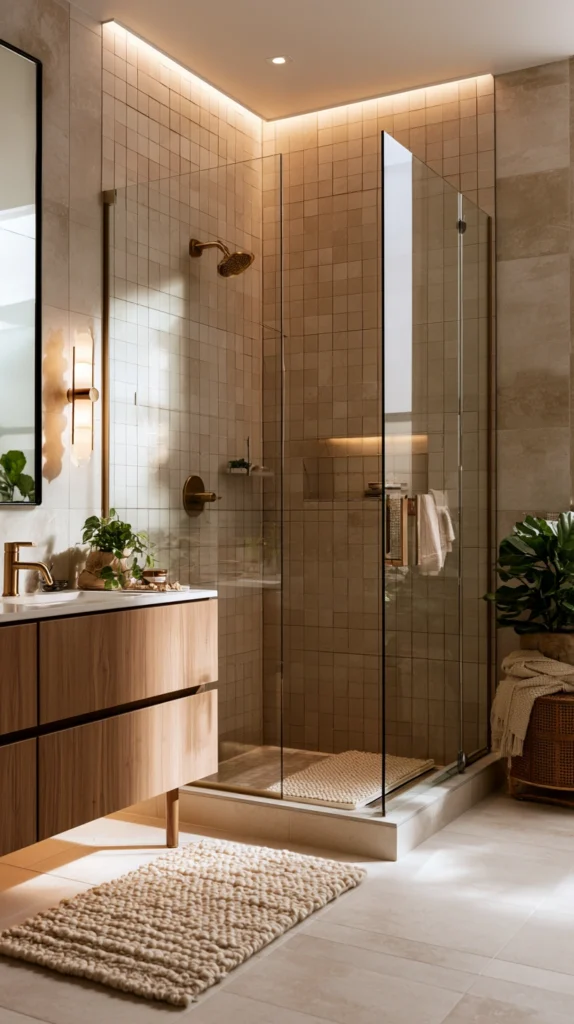
A small electric heated bath mat, placed beneath or paired with a thinner decorative mat on top — the combination that, like the heated bench idea used elsewhere in cozy fall styling, brings actual warmth rather than just the visual suggestion of it.
Why genuine heat changes this combination’s entire purpose
- The structural cold-floor problem it solves directly: no amount of plush texture fully compensates for genuinely cold bathroom tile in a poorly insulated or unheated floor, and a heated mat addresses the actual temperature rather than just the perception of warmth
- The layering logic it still depends on: a heated mat alone often has a more utilitarian, functional appearance, and a thinner decorative layer on top allows the combination to deliver both real warmth and a finished look
- The extended comfort it provides for a longer morning routine: a genuinely warm floor underfoot makes it easier to linger through a full getting-ready routine in fall and winter, rather than rushing through the coldest part of the day as quickly as possible
The options
- A small electric heated bath mat, placed directly at the tub or vanity
- A heated mat with a built-in timer, for energy efficiency and automatic operation during predictable use times
- A thin, washable decorative mat layered on top, chosen specifically for a low enough profile not to insulate against the heated mat’s warmth
- A heated mat paired with radiant floor heating elsewhere in the room, for a more comprehensive whole-room warming approach if that infrastructure already exists**
The practical execution
- Choose a heated mat specifically rated and certified for bathroom or wet-area use, given the safety stakes of combining electricity with a room that sees regular water exposure
- Use only a thin, breathable decorative layer on top, since anything too thick or insulating defeats the purpose of the heat source beneath it
- Follow the manufacturer’s guidance on cleaning and moisture exposure closely, since a heated mat has different maintenance requirements than any purely textile-based combination on this list
Cost breakdown
- Small electric heated bath mat: $40–90
- Thin decorative top layer: $15–30
- Total: $55–120
The heated mat warming bare feet on the season’s coldest morning: the one combination on this entire list solving the actual temperature problem, not just its appearance.
The Cozy Bath Mat Combo Roadmap
The work, sequenced:
Phase One (the wet-zone decision):
- Choose the primary tub or shower-adjacent mat — quick-dry microfiber (#10), memory foam (#2), jute (#1), or heated (#14) — based on how much direct water exposure that zone actually receives
- Add a non-slip backing or pad beneath it
Phase Two (the secondary layer or zone):
- Choose the accent or secondary piece — a cotton topper, a sheepskin, a runner, or a contrasting color mat — based on the room’s available dry space
- Confirm the two pieces’ colors or materials coordinate intentionally, even when contrasting
Phase Three (the full-room extension, if applicable):
- Extend the combination toward the door with a runner if the bathroom is narrow or galley-style (#6)
- Add a third smaller piece at the toilet if the room’s layout calls for it (#4, #13)
Phase Four (the finishing touch):
- Add a small stool, a wood accent, or a single statement piece if the room has room for one more layer (#12, #11)
Getting Started This Weekend
The immediate-impact mat refresh:
One afternoon, three changes:
- Replace the single existing bath mat with a base-and-accent combination (Idea #1)
- Add a non-slip pad beneath both layers
- Wash and rotate in fresh towels to coordinate with the new combination’s color palette
Total cost: $35–90. Time: about twenty minutes. The bathroom floor will already feel meaningfully warmer and more finished by the time the work is done.
The structural investment (the next big project):
A heated bath mat (Idea #14) is the single upgrade most likely to change how the room actually feels underfoot, regardless of how the rest of the combination is styled. Once genuine warmth is solved, every other combination on this list becomes a styling decision rather than a comfort necessity, freeing the choice of texture and color to be made purely on appearance.
What a layered fall bath mat combination provides that a single mat can’t:
The warmth that’s actually felt, not just implied by texture:
- A heated mat solving the floor’s real temperature problem directly
- A memory foam or chunky knit layer providing genuine cushioning underfoot
- A wood stool extending the room’s warmth beyond the floor into a second piece of furniture
The function that matches each zone’s actual demands:
- A quick-dry microfiber or washable jute base handling the wet zone’s real moisture exposure
- A softer, less frequently washed accent layer reserved for the room’s drier areas
- A runner extending coverage through a narrow galley bathroom’s full length
The style that turns a purely practical object into a real design choice:
- A round mat softening a room otherwise made entirely of straight lines
- A buffalo check or color-blocked pairing tying the floor into the rest of the bathroom’s palette
- A boucherouite-style rug offering a single bold, one-of-a-kind statement piece
A bathroom floor was never going to feel cozy on a single thin mat alone, no matter how nice that one mat happened to be. The combinations that actually work depend on the same layering logic used everywhere else in a well-styled fall home — a sturdy, functional base, a softer accent on top, and a little attention paid to where each piece actually needs to do its job. The jute mat handling the splash by the tub is still doing exactly that job months later, with the cotton layer beside it staying just as soft as the day it was first laid down.