Small Fences, Big Impact: 15 Charming Low Fence Ideas That Make Every Front Yard Look Perfectly Finished
Small Fences, Big Impact: 15 Charming Low Fence Ideas That Make Every Front Yard Look Perfectly Finished
There is something that a low fence does to a front yard that no amount of planting or paving quite replicates. It defines the boundary between the private and the public without closing the space off entirely, gives the garden a sense of deliberate edge, and communicates that the home within has been thought about from the outside as well as the inside.
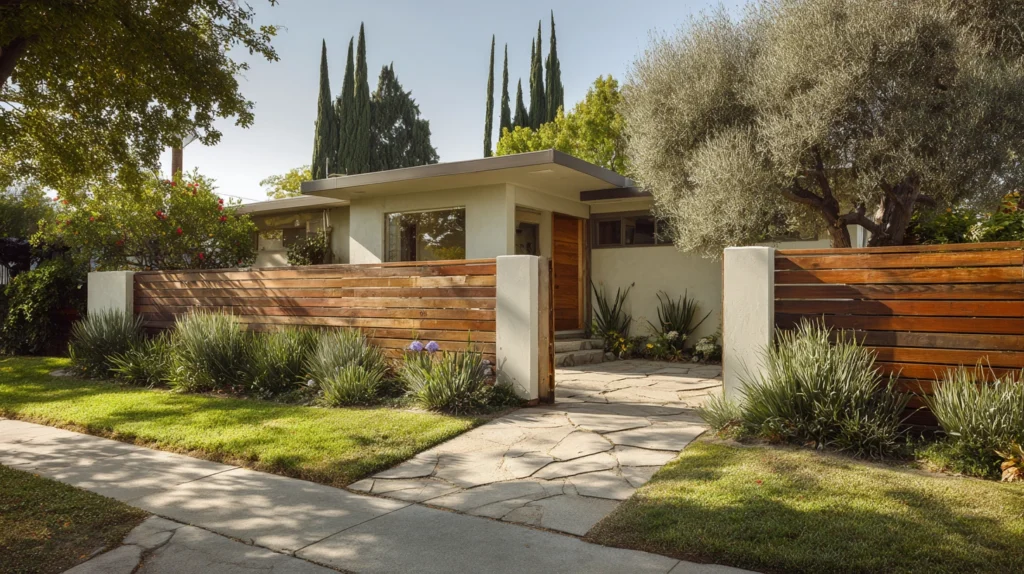
A low fence is not about security or privacy. It is about the particular pleasure of a front yard that knows where it begins and ends — and makes that knowledge look beautiful.
The fifteen ideas below cover every material, every style, and every budget for a front yard low fence, from a simple picket to a planted living boundary. Each one covers what you will need, what it will cost, and a practical tip to make it genuinely work in a real front garden.
1. The Classic White Picket Fence
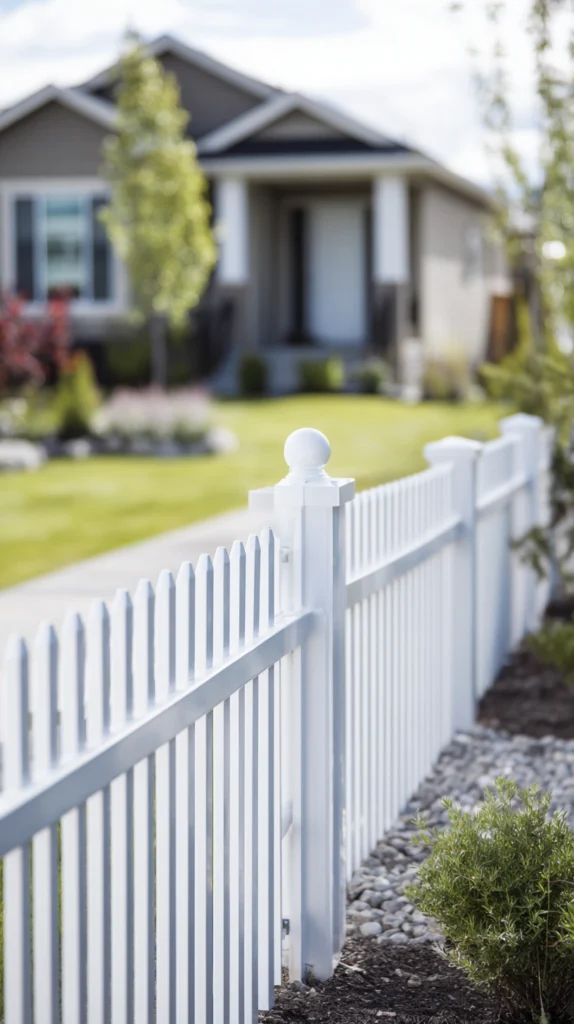
Budget: $15 – $60 per metre
The white picket fence is the most enduring front yard boundary in domestic architecture — not because it is fashionable but because it is genuinely right. It defines the garden edge clearly, allows the planting behind it to be seen, and communicates a warmth and welcome that solid fencing never achieves.
Pressure-treated timber picket fencing costs $15 – $40 per metre in materials. Vinyl picket fencing — maintenance-free and permanently white — runs $20 – $60 per metre. A standard front yard fence of ten metres sits at $150 – $600 in materials, with professional installation adding $10 – $30 per metre depending on the complexity of the ground.
Decor tip: Paint the picket fence in a warm white rather than a bright white if the house itself is painted in a warm or cream tone. A bright white fence against a warm-toned house produces a colour temperature conflict that registers as slightly wrong from the street. A warm white fence in the same tonal family as the house reads as a considered, cohesive choice.
2. The Cottage Garden Post and Rail
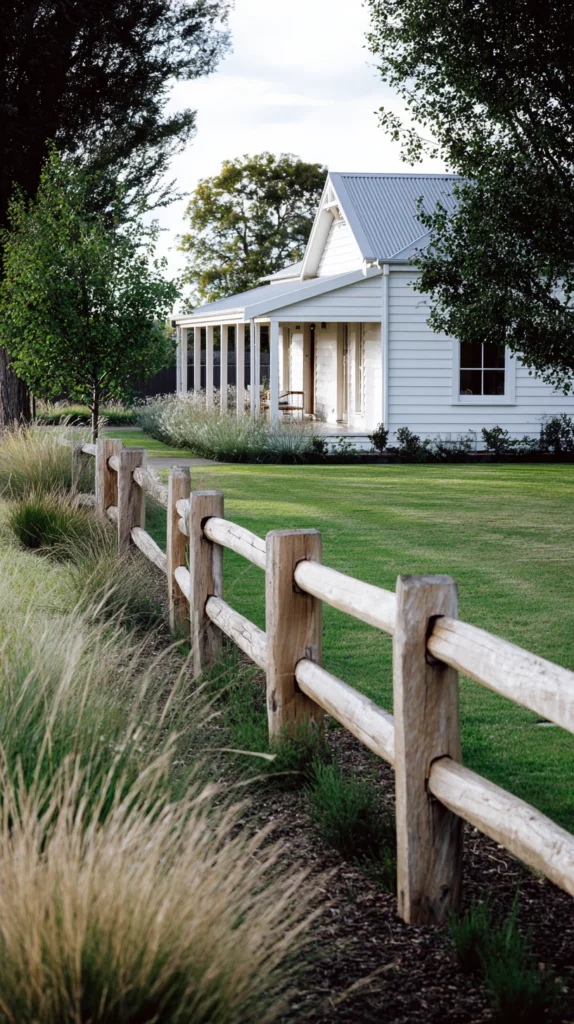
Budget: $10 – $40 per metre
A post and rail fence — two or three horizontal rails between upright posts, without infill panels — is the most open and the most relaxed low fence available. It suggests a boundary rather than enforcing one, and it suits cottage gardens, wildflower plantings, and any front yard where the planting itself is the primary feature and the fence is simply the frame.
Pressure-treated timber post and rail fencing costs $10 – $30 per metre in materials. A split chestnut rail version — more rustic and more naturalistic in character — runs $15 – $40 per metre. The open structure of the post and rail allows climbing and scrambling plants — roses, clematis, and sweet peas — to weave through the rails and make the fence a planting structure as much as a boundary.
Decor tip: Set the fence posts at a slightly irregular spacing rather than at precise mathematical intervals if the front yard has an informal, cottage character. Posts at exactly equal intervals read as formal and manufactured. Posts at slightly varied intervals — 1.4 metres, 1.6 metres, 1.5 metres — read as handmade and organic, which suits a cottage aesthetic considerably better than rigid geometric precision.
3. The Wrought Iron Low Railing
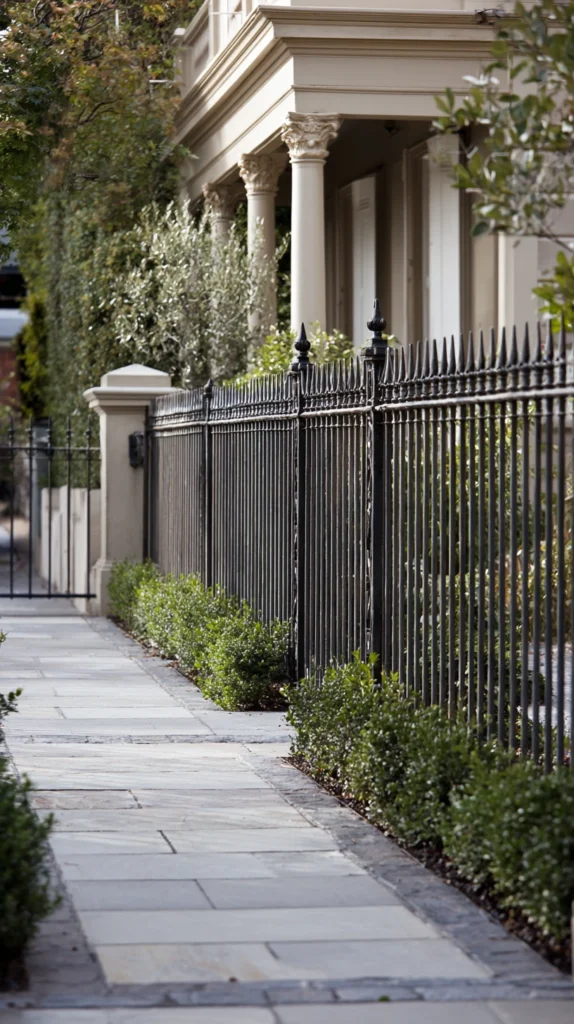
Budget: $30 – $120 per metre
A low wrought iron or steel railing — 60 to 90 centimetres in height, with vertical bars and a simple flat-top or spear-top rail — is the front yard boundary of the Victorian and Edwardian townhouse, and it remains the most architecturally appropriate choice for period properties of those eras. It defines the boundary with authority without blocking the view of the garden or the house.
Genuine wrought iron railing costs $60 – $120 per metre fabricated and installed. Powder-coated steel in a traditional design — visually indistinguishable from wrought iron at normal viewing distance — runs $30 – $80 per metre. Both are effectively permanent once installed and require nothing beyond an occasional coat of exterior paint to maintain their appearance indefinitely.
Decor tip: Paint wrought iron or steel railings in a colour that references the front door rather than defaulting to black. A railing painted in the same deep green, navy, or charcoal as the front door creates a visual connection between the boundary and the entrance that reads as a designed scheme rather than two separate decisions. Black is always appropriate. But the matching colour is always more interesting.
4. The Lavender and Low Hedge Living Fence
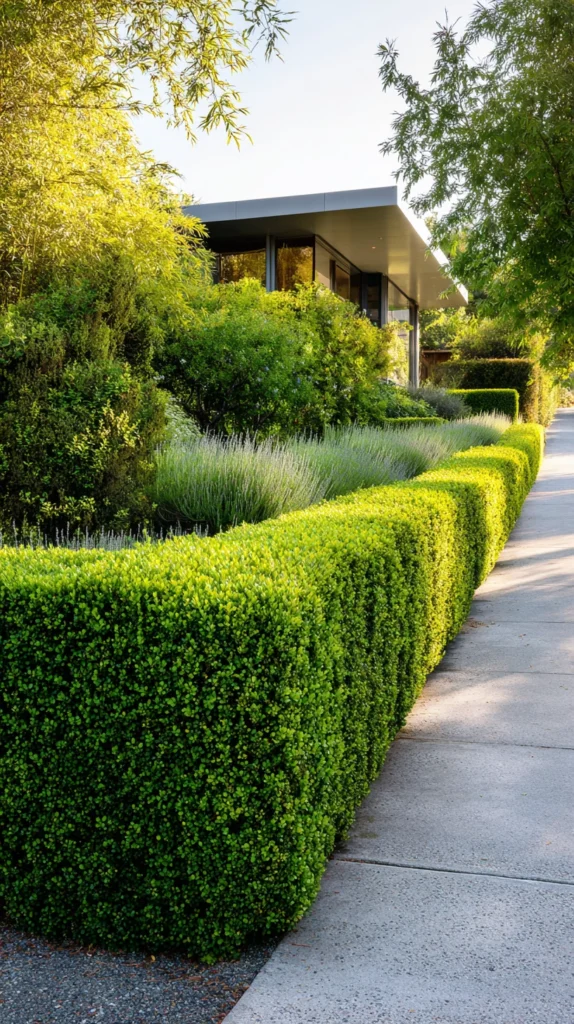
Budget: $20 – $100 per metre
A low hedge of lavender, box, rosemary, or santolina planted in a continuous row defines the front yard boundary with living material rather than timber or metal — a boundary that changes with the seasons, releases fragrance as it is brushed in passing, and improves in appearance every year as it establishes.
Lavender plants in nine-centimetre pots cost $3 – $6 each. Planted at 30-centimetre intervals, a ten-metre hedge requires approximately thirty plants — $90 – $180 in plant cost. Box hedging — more formal and more architectural — costs $5 – $10 per plant at the same spacing. The total investment for a living hedge boundary sits at $90 – $300 for a ten-metre run, with establishment taking one full growing season.
Decor tip: Clip the lavender hedge once after flowering each year rather than leaving it uncut. An unclipped lavender hedge becomes woody and open at the base within two to three seasons, losing the dense, continuous quality that makes it work as a boundary. A single post-flowering clip maintains the plant’s density, encourages the following year’s growth, and keeps the hedge at the height and shape the front yard requires.
5. The Bamboo and Natural Screening Fence
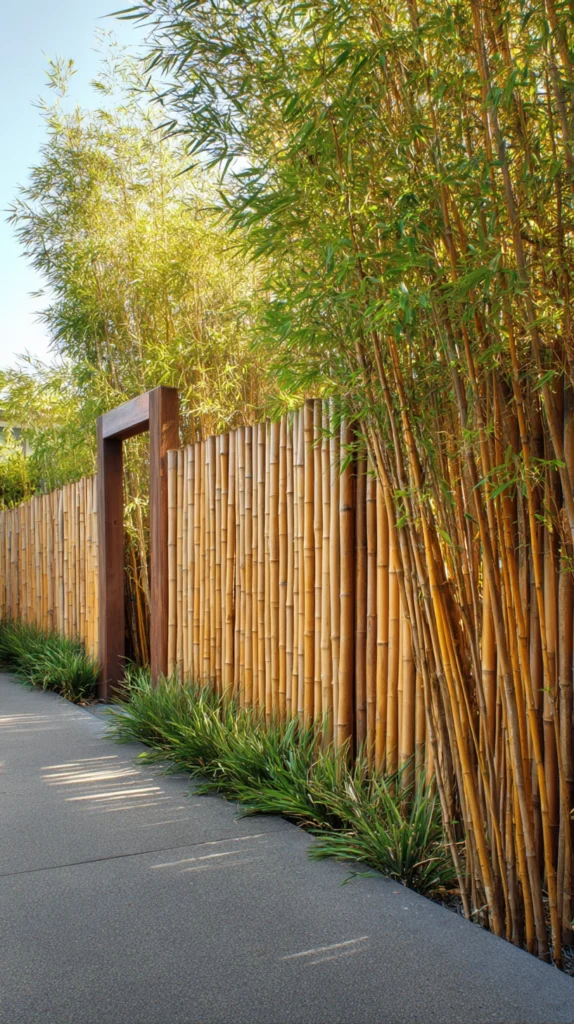
Budget: $15 – $50 per metre
A low bamboo screening fence — rolled bamboo panels on a simple timber frame — brings a warm, natural material to the front yard boundary at a price point significantly lower than timber or metal alternatives. It suits contemporary, Japandi, and natural-material-led house aesthetics, and it weathers to a warm silver-grey that is, if anything, more beautiful than the original pale bamboo tone.
Rolled bamboo screening panels cost $15 – $30 per metre. A simple timber frame of posts and cross rails to support the panels — $10 – $20 per metre in materials — completes the installation. A ten-metre bamboo fence sits at $250 – $500 in total materials for a completed boundary.
Decor tip: Seal bamboo screening with an exterior wood preservative or UV-resistant sealant before installation to slow the weathering process. Untreated bamboo weathers to grey within a single season in direct sun. Treated bamboo maintains its warm natural tone for two to three seasons before gradually silvering — giving the fence a longer period of the colour it was chosen for before the weathering process begins.
6. The Gabion Stone Wall
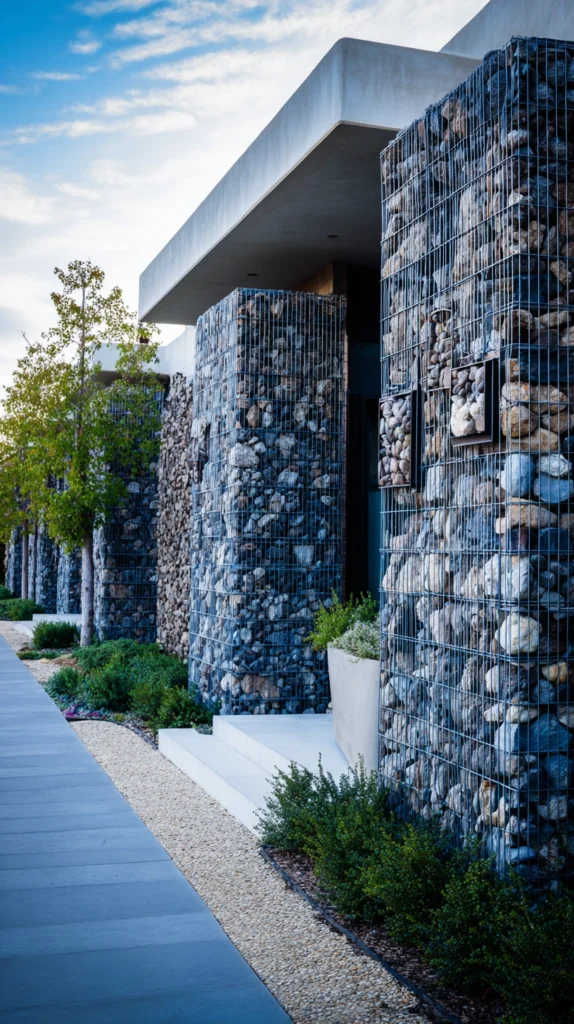
Budget: $50 – $200 per metre
A gabion wall — wire mesh cages filled with rounded river stones, gravel, or recycled concrete — is the most contemporary and most architecturally distinctive low front yard boundary available. It reads as both industrial and natural simultaneously, suits modern and barn-conversion aesthetics particularly well, and is effectively indestructible once installed.
Gabion cage units in a standard 1-metre width cost $30 – $80 each. Fill material — river stones in a warm terracotta or grey tone — costs $20 – $60 per cage depending on stone type and source. A ten-metre gabion wall at 60 centimetres height requires approximately ten cages — $500 – $1400 in total materials. The installation is achievable as a DIY project over a weekend with basic tools.
Decor tip: Choose fill stone in a colour that complements the house’s exterior material. A gabion wall filled with warm terracotta sandstone beside a red brick house reads as a material conversation between boundary and building. The same wall filled with cool grey limestone beside the same brick house reads as a material conflict. The stone choice is the design decision that makes or breaks the gabion wall’s relationship with the house it is fronting.
7. The Sleeper and Gravel Low Border
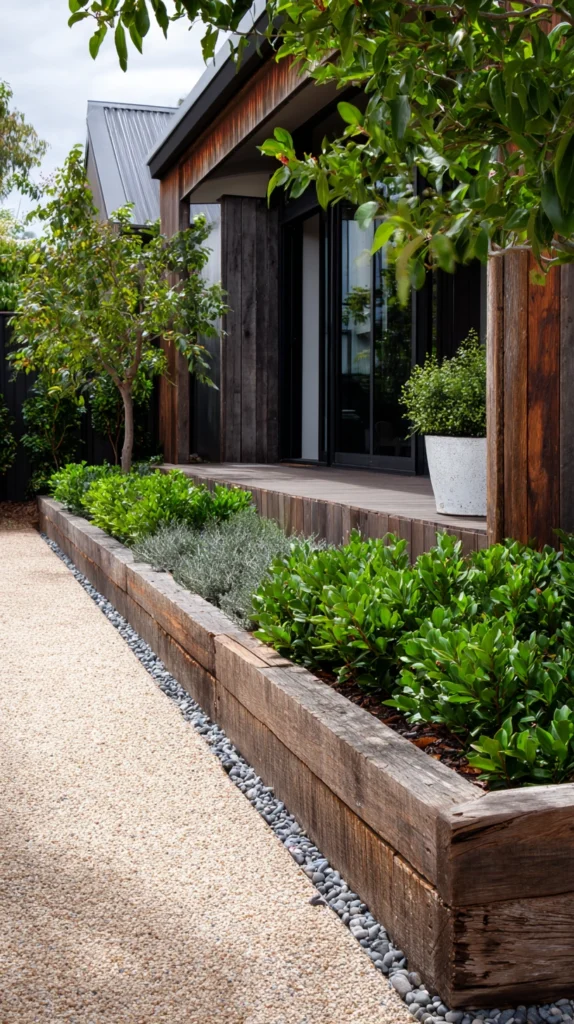
Budget: $20 – $80 per metre
Railway sleepers set horizontally at low height — one or two sleepers stacked, defining the front yard edge — create a broad, solid, and deeply characterful boundary that suits contemporary, industrial, and natural-material-led house styles. Combined with a gravel or pebble border along the inner face, they produce a front yard edge that is simultaneously a boundary, a drainage solution, and a design statement.
New hardwood sleepers cost $20 – $50 each. Reclaimed oak or pine sleepers — more characterful and more beautiful than new equivalents — run $15 – $40 each depending on size and condition. A ten-metre boundary at one sleeper height requires approximately ten to twelve sleepers — $150 – $600 in total. A bag of decorative gravel along the inner face adds $10 – $20 per bag.
Decor tip: Treat new timber sleepers with an exterior timber oil before installation rather than after. Oil applied before the sleeper is set in its final position reaches the full surface of the timber including the faces that will be in contact with the ground — the most vulnerable faces for moisture ingress and decay. Oil applied only after installation treats only the exposed faces and leaves the critical contact surfaces unprotected.
8. The Stone Wall with Mortar
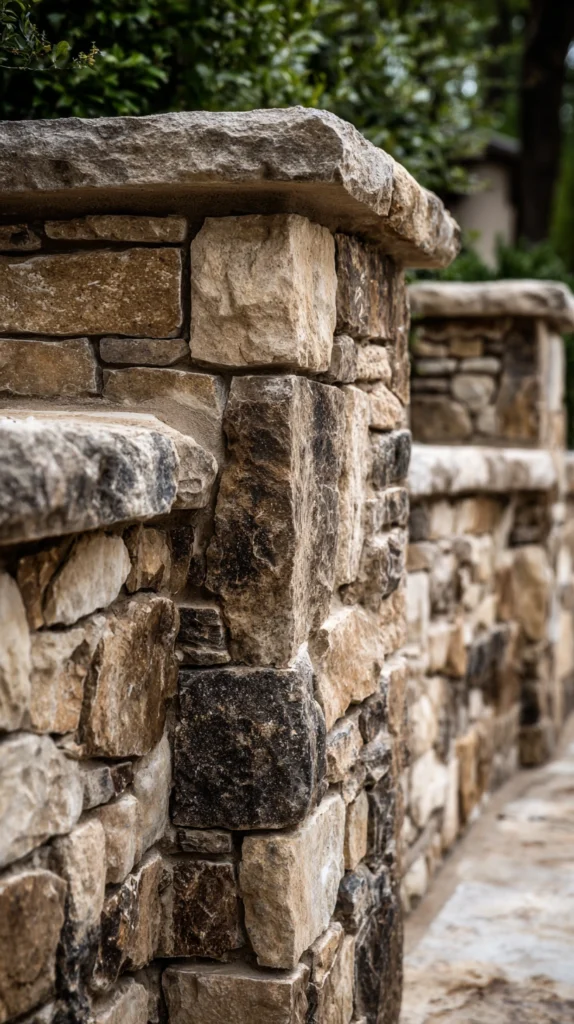
Budget: $80 – $300 per metre
A low dry stone or mortared stone wall — 40 to 60 centimetres in height, built from local or reclaimed stone — is the most permanent and the most beautiful front yard boundary available. It ages with extraordinary grace, develops moss and lichen within a few seasons, and produces a front yard edge that reads as though it has been there for centuries regardless of when it was actually built.
A professional mortared stone wall costs $150 – $300 per metre installed by a skilled mason. A dry stone wall — built without mortar, using traditional stacking technique — costs $80 – $200 per metre for skilled labour. Reclaimed stone sourced locally costs $50 – $150 per tonne — sufficient for approximately three to four metres of wall at standard dimensions.
Decor tip: Cap a mortared stone wall with a course of flat coping stones rather than leaving the top surface open. Coping stones shed rainwater away from the mortar joints below them and significantly extend the life of the wall by preventing water ingress at the most vulnerable point. They also give the wall a finished, intentional top edge that reads as properly built rather than simply stacked.
9. The Corten Steel Edging Fence
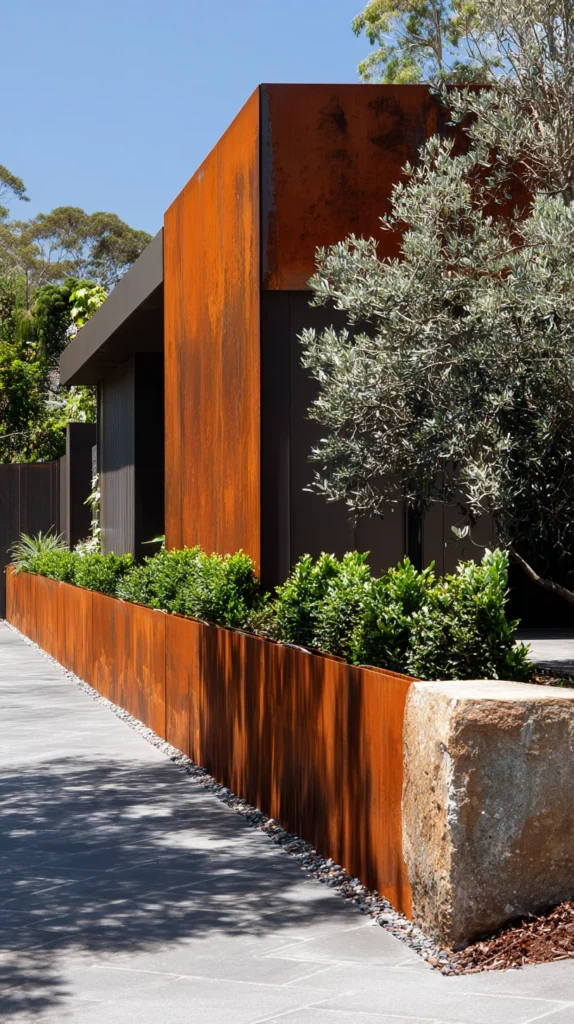
Budget: $40 – $150 per metre
Corten steel — the self-rusting weathering steel that develops a rich, warm orange-brown patina over time — makes a low front yard boundary that is simultaneously industrial and deeply beautiful. At 40 to 60 centimetres in height, a corten steel edge fence reads as a contemporary design statement that improves in character with every passing season as the patina deepens.
Corten steel edging panels in a standard front yard height cost $40 – $100 per metre. A full front yard boundary of ten metres sits at $400 – $1000 in materials. Professional installation — driving the ground spikes and connecting the panels — adds $20 – $50 per metre. The material requires no painting, no sealing, and no ongoing maintenance once the initial patina has stabilised.
Decor tip: Allow the corten steel to develop its patina naturally rather than sealing it to prevent the rust process. The rust patina is the material’s functional protective layer — it stabilises at a rich orange-brown and does not continue to corrode through the steel once the patina is fully developed. Sealing corten before the patina forms prevents the protective process from completing and leaves the steel vulnerable to uneven weathering.
10. The Painted Concrete Block Low Wall
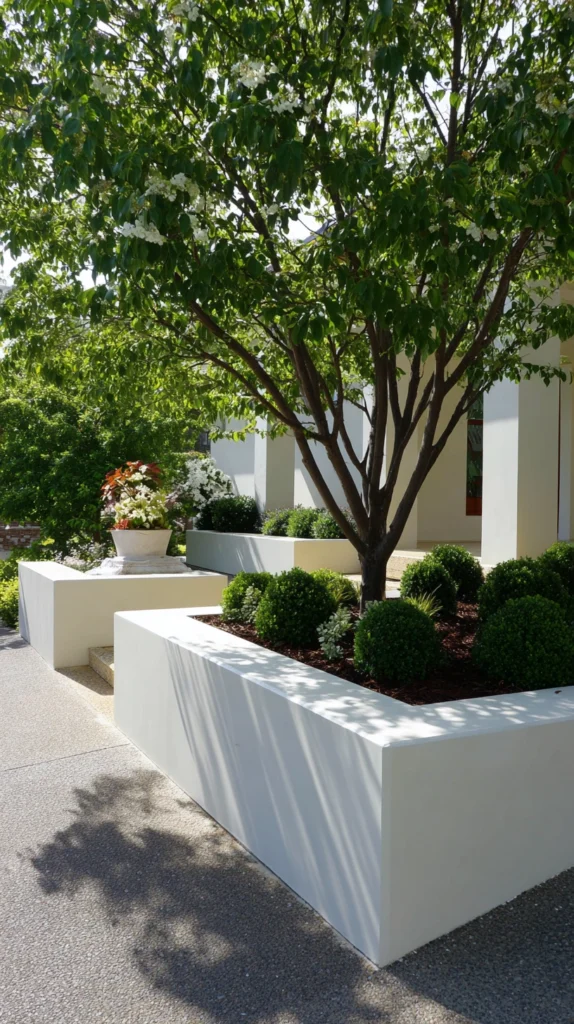
Budget: $30 – $100 per metre
A low concrete block wall — 40 to 60 centimetres in height, rendered smooth and painted in a considered exterior colour — is the most affordable masonry boundary option and one that, with the right render and the right paint colour, reads as considerably more architecturally considered than its raw material suggests.
Concrete blocks and mortar for a standard low wall cost $15 – $40 per metre in materials. A smooth sand and cement render — $10 – $20 per metre applied by a competent DIY approach — covers the block texture. Exterior masonry paint in a warm white, deep charcoal, or terracotta tone — $15 – $30 per litre — finishes the wall in a colour that references the house rather than simply occupying the boundary.
Decor tip: Round the top corners of a rendered concrete block wall rather than leaving them at sharp right angles. A bullnose render applied at the top of the wall produces a slightly rounded cap that reads as more resolved and more architecturally confident than a sharp corner. The technique costs nothing extra and is achieved during the rendering process with a standard corner tool.
11. The Picket Fence in an Unexpected Colour
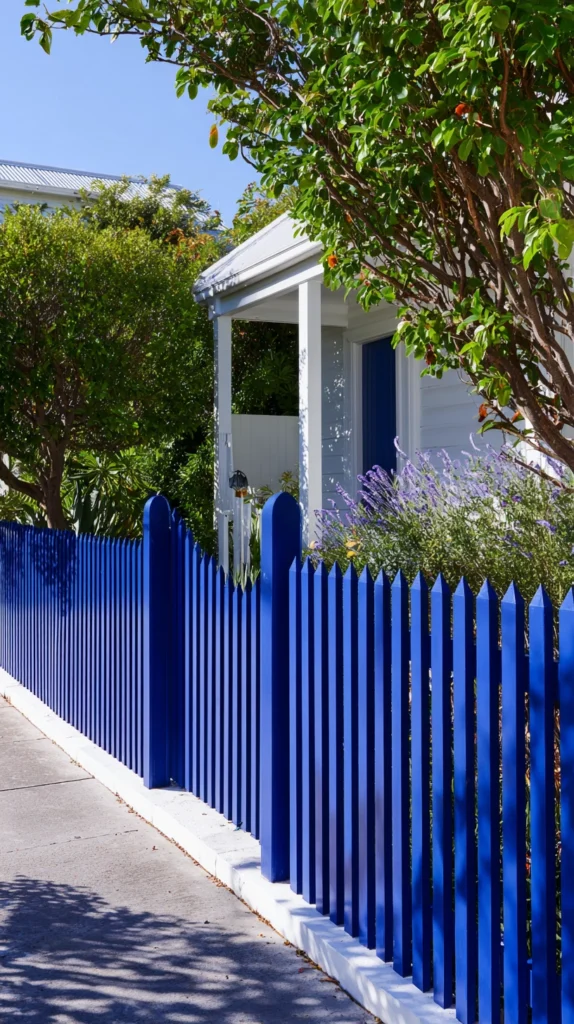
Budget: $15 – $60 per metre
A picket fence painted in a deep, unexpected colour — a deep forest green, a warm terracotta, a dusty sage, a midnight navy — takes the most traditional front yard boundary format and gives it a contemporary confidence that the standard white version rarely achieves. The structure is familiar. The colour makes it entirely new.
The fence itself costs the same as a standard white picket — $15 – $40 per metre in timber. The paint — an exterior gloss or satin in the chosen colour — adds $15 – $30 per litre, sufficient for a full coat on a standard fence length. A deep green picket fence beside a white-painted house is one of the most resolved and most beautiful front yard combinations available at any budget level.
Decor tip: Match the picket fence colour to the front door rather than the house body colour. A fence and a door in the same deep green, or the same navy, or the same terracotta, creates a colour conversation between the boundary and the entrance that frames the entire front yard as a designed composition rather than a collection of individual elements.
12. The Willow Hurdle Panel Fence
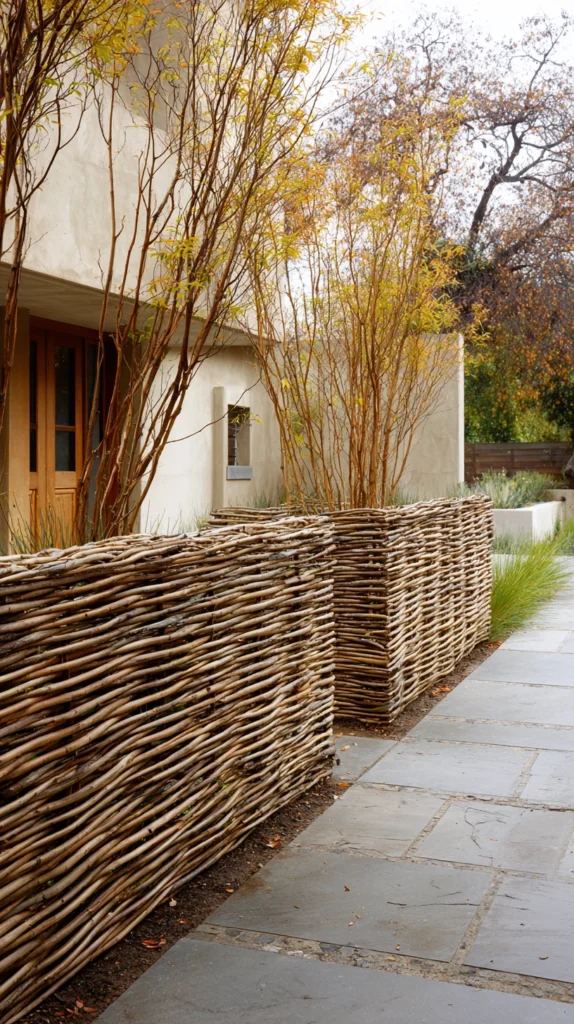
Budget: $20 – $60 per metre
Woven willow hurdle panels — the traditional wattle fencing of the English countryside — make a front yard boundary that is organic, textural, and deeply beautiful in the particular way of materials that are genuinely made by hand from genuinely natural materials. They suit cottage gardens, wildflower front yards, and any house with a rural or vernacular architectural character.
Woven willow hurdle panels in a standard 1.8-metre width cost $20 – $50 each. At 60 centimetres in height — the appropriate scale for a front yard low fence — they are available from rural fencing suppliers and increasingly from garden centres. A ten-metre boundary requires approximately six panels — $120 – $300 in total.
Decor tip: Plant the inner face of the willow hurdle fence with low-growing flowering plants — sweet alyssum, creeping thyme, or trailing nasturtium — that soften the base of the fence and integrate it into the front garden planting. A hurdle fence with bare ground at its base reads as a boundary. The same fence with flowering plants growing at its feet reads as part of the garden rather than simply its edge.
13. The Rope and Post Maritime Fence
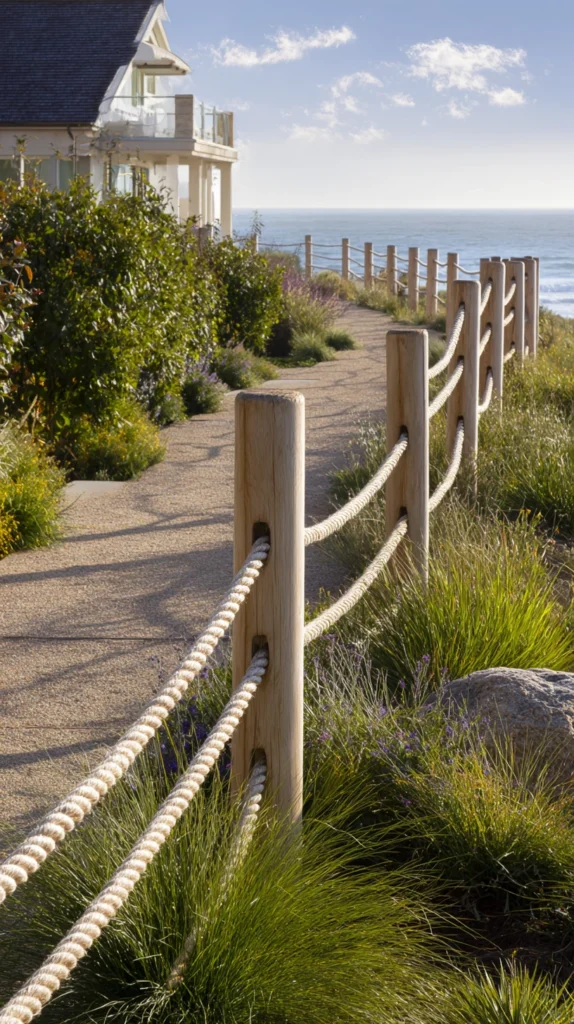
Budget: $20 – $80 per metre
A rope and post fence — timber or metal posts with a thick natural rope looped between them in a shallow swag — is the front yard boundary of the coastal home and one that brings an immediately relaxed, maritime quality to any property near the sea or simply inspired by it. It is low, open, and entirely without aggression as a boundary.
Timber posts at 1.2-metre intervals cost $8 – $20 each installed. Natural manila or sisal rope — $5 – $15 per metre — is looped between the posts in one or two horizontal runs. A ten-metre rope and post fence requires nine to ten posts and approximately twelve metres of rope — $150 – $350 in total materials.
Decor tip: Seal the rope with an exterior rope preservative or a diluted waterproofing solution before installation. Natural rope exposed to rain without treatment degrades and weakens within a single winter season, becoming frayed and unappealing before it has had a chance to weather gracefully. Treated rope maintains its strength and its appearance for two to three seasons before requiring replacement.
14. The Brick and Iron Combination
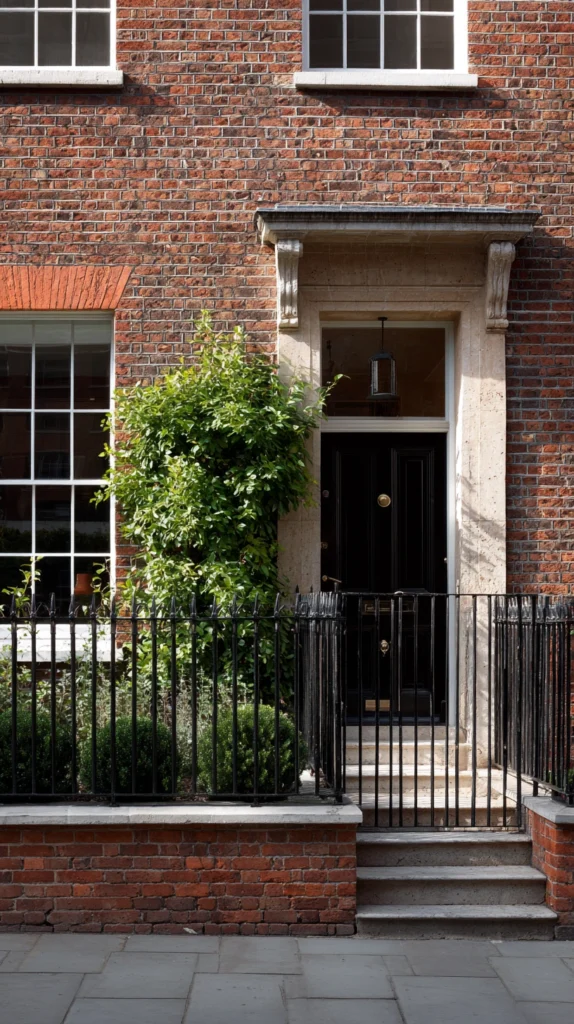
Budget: $100 – $400 per metre
A low brick plinth with wrought iron or steel railing panels set into the top — 30 centimetres of brick base supporting 40 to 50 centimetres of railing above it — is the most formal and the most architecturally complete front yard boundary available. It suits Georgian, Victorian, and Edwardian townhouses with particular aptness and reads as an original period feature even when newly installed.
Brick materials and mortar for the plinth — $40 – $80 per metre — sit below the railing panels. Powder-coated steel railing panels to set into the brick — $50 – $150 per metre — complete the installation. Professional bricklaying and railing installation costs $80 – $150 per metre in labour — producing a total installed cost of $170 – $380 per metre for the most durable and most architecturally considered front yard boundary on this list.
Decor tip: Use a reclaimed brick for the plinth that matches or closely references the brick of the house itself. New brick beside old brick of a different colour or texture reads as a repair rather than a designed boundary. Reclaimed brick sourced to match the house produces a plinth that reads as original — as though the boundary has always been there and the house was built around it.
15. The Native Wildflower Low Border
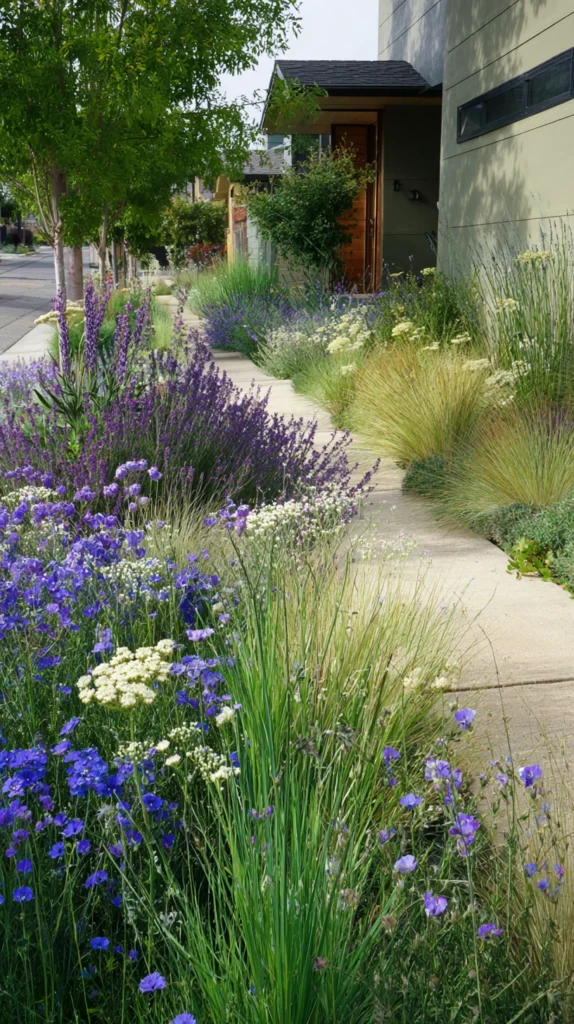
Budget: $10 – $60 per metre
A front yard boundary defined not by a fence at all but by a planted strip of native wildflowers — cornflowers, ox-eye daisies, poppies, and field scabious — growing in a dense, low-growing band along the property edge — is the most ecological, the most beautiful in summer, and the most genuinely connected to the natural world of any boundary option on this list.
A wildflower seed mix for a standard front yard boundary strip — sown directly onto prepared ground — costs $5 – $15 for a ten-metre length. Plug plants for a faster-establishing border — $1 – $3 each — require approximately thirty plants for the same length, sitting at $30 – $90 in plant cost. The boundary establishes fully within one growing season and self-seeds reliably in subsequent years.
Decor tip: Mow a clean straight edge along the outer face of the wildflower border at the pavement line rather than allowing it to spread onto the public footpath. A wildflower border with a crisp, maintained outer edge reads as a deliberate garden decision — a designed naturalistic boundary that is managed with care. The same border without a maintained edge reads as neglected grass that has been allowed to grow long, which is an entirely different impression and one that the neighbours will not appreciate with equal enthusiasm.
The front yard fence is not a purely practical decision. It is the home’s first design statement — the element that communicates, from the street, whether the garden has been considered or simply maintained.
Choose the material and the style that genuinely suits the architecture of the house rather than the one that is easiest to install or the one seen most frequently in the neighbourhood. The fence that belongs to the house always looks better than the fence that simply arrived at the boundary.
Install it properly, maintain it consistently, and plant generously along its inner face. A well-chosen low fence with good planting in front of it is one of the most reliable improvements a front yard can receive — visible every day, from both directions, for as long as the house stands.