15 Green Couch Living Room Ideas That Bring Your Space to Life
15 Green Couch Living Room Ideas That Bring Your Space to Life
There is a particular kind of courage required to buy a green sofa. Not the courage of an extreme act but the smaller, more domestic courage of committing to something specific — of choosing a colour that announces a point of view rather than accommodating every possible future decision. The green sofa is the living room’s declaration of intent, and the rooms that are built around it are almost always more interesting, more alive, and more genuinely personal than the rooms built around beige.
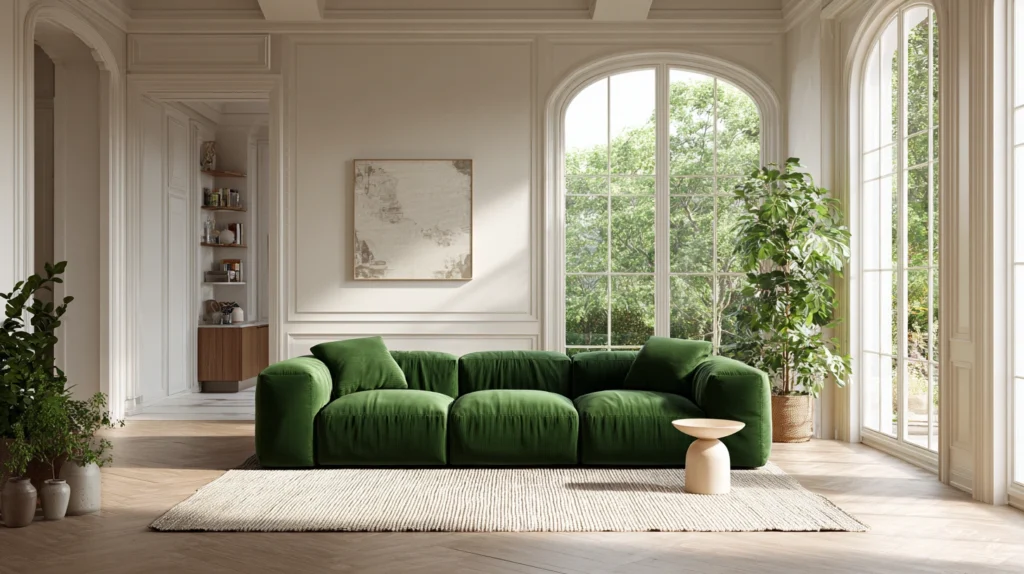
Green has the same range as any colour found in nature, which is to say, an extraordinary range. From the near-black of a forest floor to the pale sage of a dried herb, from the warm olive of a Mediterranean hillside to the vivid emerald of tropical foliage. A sofa in any of these greens is a different proposition, suits a different room, and calls for a different palette around it. The ideas below address all of them.
Each idea is a specific approach to building a living room around a green sofa. Each includes what you will need, what it will cost, and a practical tip to make it work as well as it deserves.
1. The Sage Green and Warm Neutral Room
Budget: $300 – $1,500
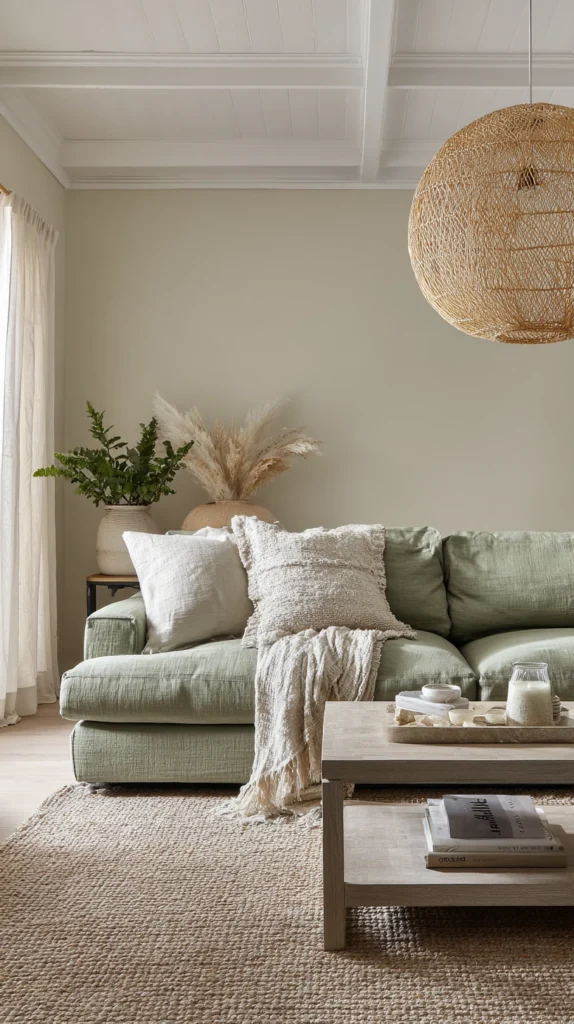
A sage green sofa — the grey-green that reads as dried herb, as eucalyptus, as something botanical and slightly faded — sits most naturally against a palette of warm neutrals. Cream walls, natural timber floors, jute or sisal underfoot, linen cushions in undyed or warm sand tones. The sage green is the room’s single colour statement and the neutrals are what give it room to be seen.
Sage green sofas in a standard three-seater configuration cost $600–$2,000. Jute rugs to anchor the seating area run $60–$200. Linen cushion covers in warm neutral tones cost $15–$35 each. The key is keeping every other element in the room within the warm neutral family — any additional colour competes with the sage and reduces its atmospheric quality.
Style tip: Choose warm white rather than cool white for the walls in a sage green room. Cool white shifts the sage toward grey; warm white pulls it toward the botanical green it is meant to be. The wall colour is the background against which the sofa performs, and the temperature of that background determines the temperature of the whole room.
2. The Emerald Green and Brass Living Room
Budget: $500 – $2,500
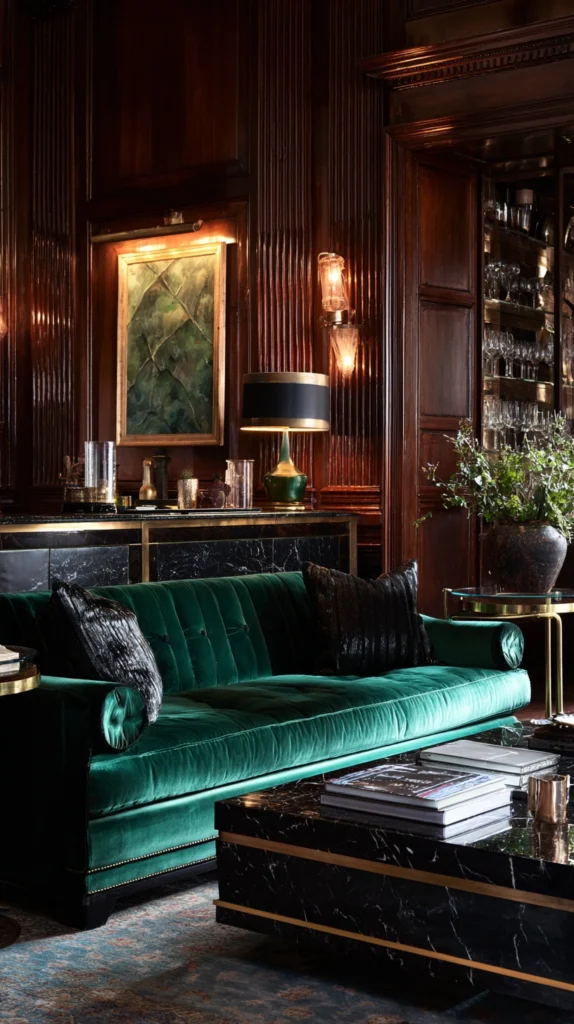
An emerald green sofa — vivid, saturated, genuinely jewel-toned — paired with brass hardware, warm timber, and deep amber accents creates a room of considerable glamour and visual confidence. The emerald and brass combination is one of the most classically luxurious colour and material pairings available and in a living room context it produces a space that reads as designed rather than assembled.
Emerald green sofas cost $800–$3,000. Brass side tables and lamp bases run $80–$300 each. Amber glass vessels and warm-toned ceramics cost $20–$80 per piece. A dark timber coffee table grounds the emerald and brass combination and prevents the room from reading as too shiny or too surface-level in its luxury.
Style tip: Use the brass accents in a consistent finish — all brushed or all polished — rather than mixing the two. Mixed brass finishes in the same room read as different generations of purchase rather than a considered material palette. The consistency of the metal finish is the detail that makes the emerald and brass combination feel deliberate.
3. The Olive Green and Terracotta Room
Budget: $400 – $1,800
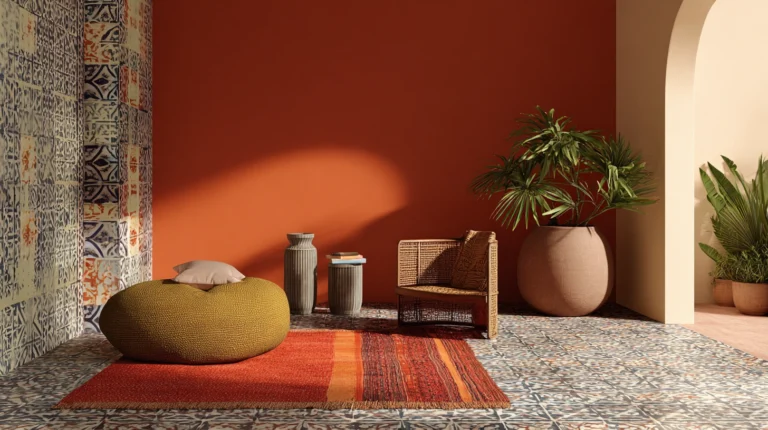
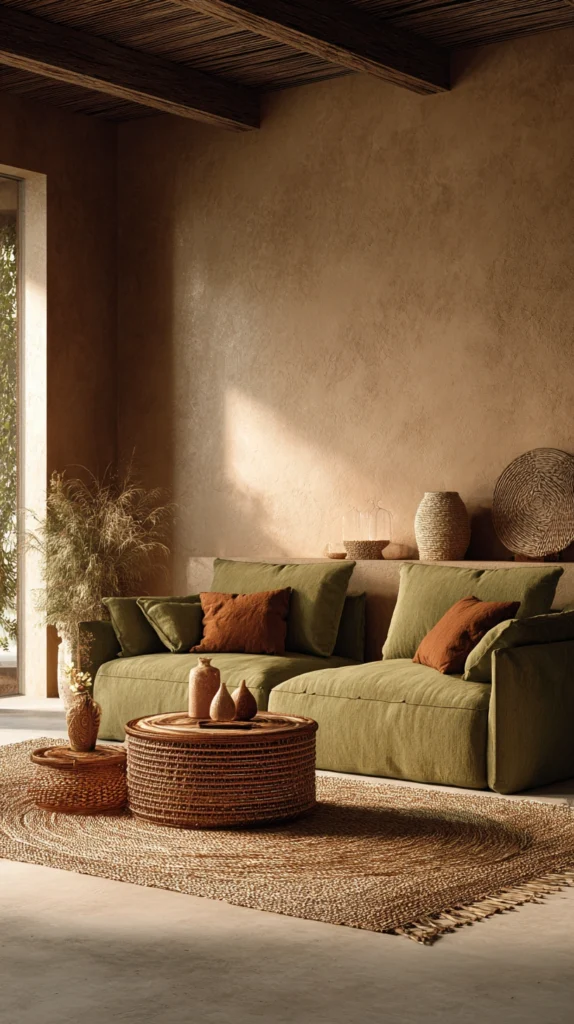
An olive green sofa — warm, slightly yellow-toned, Mediterranean in its reference — combined with terracotta walls, warm stone floors, and sun-dried botanical objects creates a room that feels rooted in the earth in the most specifically warm and generous way. Olive and terracotta are both colours of the Mediterranean landscape and they sit together with the ease of things that belong to the same place.
Olive green sofas cost $600–$2,000. Terracotta paint for the walls runs $30–$80 per tin. Terracotta pot plant collections cost $20–$80. A kilim rug in warm terracotta, ochre, and burnt orange tones runs $150–$500. Every element in the olive and terracotta room should be warm-toned — cool greys and blues work against the specific warmth that makes this combination so effective.
Style tip: Add dried botanicals — pampas grass, dried olive branches, preserved eucalyptus — as the room’s natural element. The olive sofa and the dried botanical speak the same material language, and a vase of dried botanicals at the correct scale — genuinely large, floor-standing — connects the interior palette to the natural world it references more directly than any framed artwork could.
4. The Forest Green and Natural Linen Room
Budget: $400 – $2,000
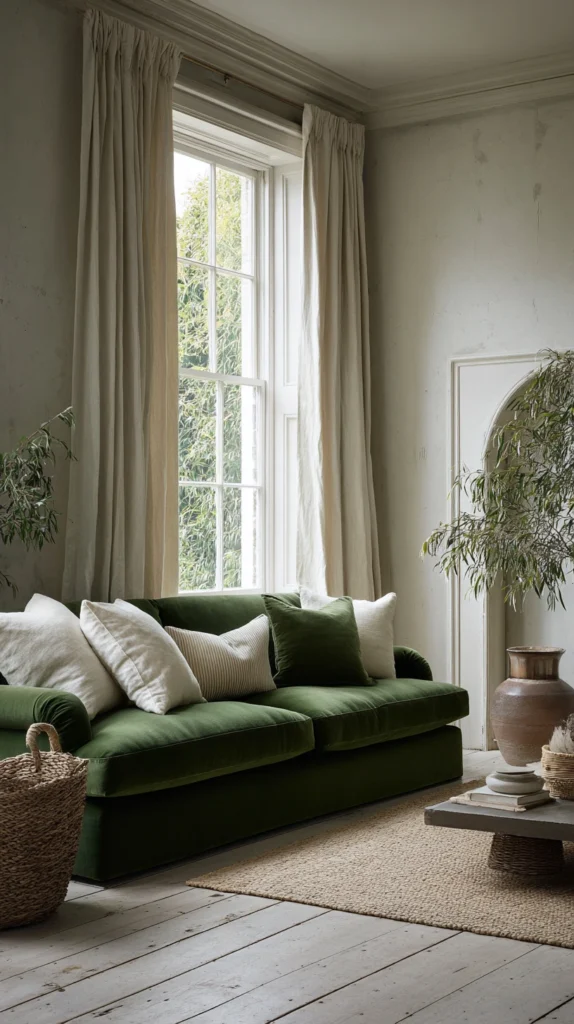
A forest green sofa — deep, slightly dark, the green of dense canopy rather than open meadow — needs the specific lightness of natural linen to prevent the room from feeling heavy. Linen curtains at the windows, linen cushion covers in undyed natural, a linen throw across one arm of the sofa. The linen provides the air that the deep green needs to breathe.
Forest green sofas cost $700–$2,500. Unlined linen curtains in natural cost $60–$180 per panel. Linen cushion covers run $15–$35 each. A large, pale jute rug beneath the seating area lifts the floor level and prevents the dark sofa from making the room feel basement-like — the pale rug is the single most important supporting element in a room with a very dark green sofa.
Style tip: Hang the linen curtains from ceiling height rather than from just above the window frame. The extra height brings light into the upper portion of the room and gives the forest green sofa the vertical context of a tall, airy room rather than a low-ceilinged one. Forest green works best with height above it.
5. The Hunter Green and White Graphic Room
Budget: $300 – $1,500
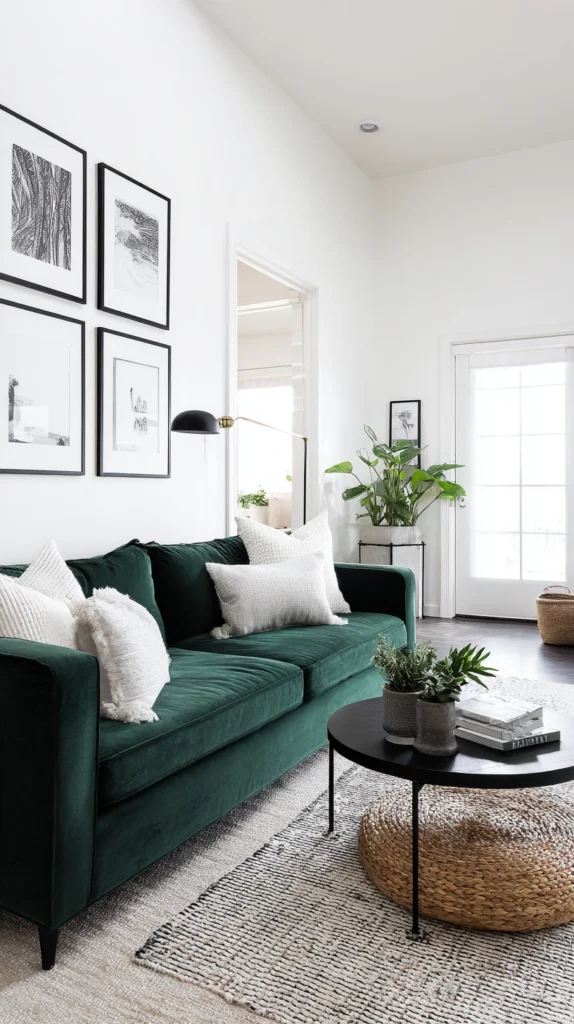
A hunter green sofa — clean, slightly cool, the green of a well-kept country house — in a room of pure white walls and graphic black accents creates one of the most visually striking living room combinations available. The white gives the green maximum contrast; the black graphic elements — lamp bases, picture frames, side table legs — give the room its visual structure without introducing a third colour.
Hunter green sofas cost $600–$2,000. White emulsion paint for the walls costs $25–$60 per tin. Black-framed artwork costs $20–$80 per piece. A black metal floor lamp runs $60–$150. The graphic black accents should be minimal — two or three elements rather than distributed throughout the room. Over-use of black against hunter green and white produces a room that reads as high contrast without depth.
Style tip: Add one natural material — a timber coffee table, a woven rattan side table, a jute rug — to soften the graphic quality of the white, black, and green combination. Without the natural element, the room reads as styled rather than lived in. One warm natural material is the detail that makes the graphic room genuinely comfortable.
6. The Mint Green and Pastel Room
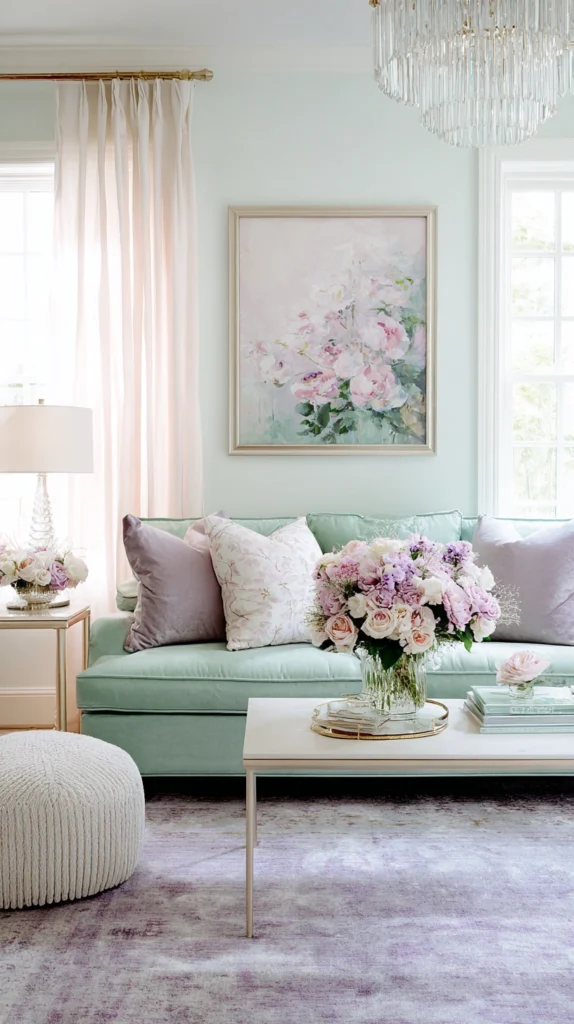
Budget: $300 – $1,200
A mint green sofa — cool, fresh, the specific blue-green that is closer to white than to any defined colour — in a room of blush pink, pale lavender, and warm cream creates the most feminine and most specifically summery of all the green sofa rooms. The pastel palette around a mint sofa requires no dominant colour — every element is at the same soft intensity and the room reads as a complete tonal composition rather than a colour and its accents.
Mint green sofas cost $500–$1,800. Blush pink cushion covers run $12–$30 each. Pale lavender throws cost $25–$60. A cream wool rug anchors the pastel combination without introducing a competing tone. The pastel room is the one that most rewards the restraint of keeping everything within the soft, washed colour family.
Style tip: Choose the mint sofa in a velvet fabric rather than cotton or linen for the pastel room. Velvet gives mint green its richest reading — the pile catches light in a way that emphasises the colour’s cool, jewel-like quality — and the tactile luxury of velvet suits the softness of the pastel palette more specifically than a flat-woven fabric.
7. The Teal Green and Warm Wood Room
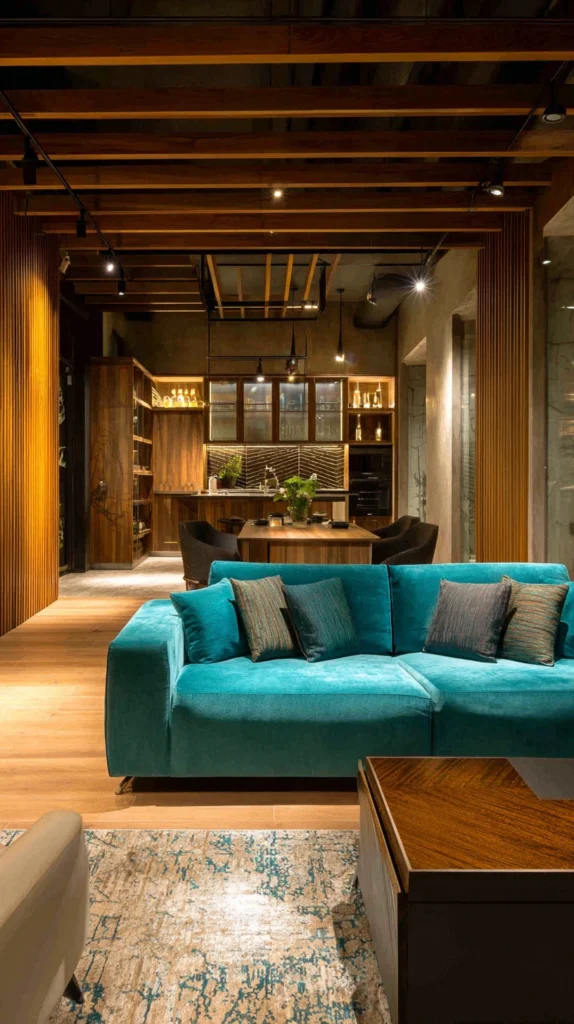
Budget: $400 – $2,000
A teal green sofa — the specific green that contains a significant amount of blue, that reads as the colour of a tropical sea in certain lights — combined with warm wood tones, amber accents, and natural materials creates a room of genuine warmth that the cool teal alone would not produce. The wood is the element that prevents the teal from reading as cold.
Teal sofas cost $600–$2,000. A warm-toned oak or walnut coffee table runs $200–$600. Amber glass and warm ceramic accents cost $20–$60 per piece. A warm-toned wood floor or a sisal rug beneath the teal sofa is the floor-level element that the colour combination most depends on — teal on a cool grey floor reads differently from teal on a warm timber floor.
Style tip: Balance the teal sofa with curtains in a warm white or cream rather than in white or grey. The warmth of the curtain fabric tone determines the warmth of the whole room’s light, and a teal sofa in a room with warm white curtains reads as warm-cool balanced; the same sofa with cool white or grey curtains reads as predominantly cool.
8. The Dark Green and Pink Accent Room
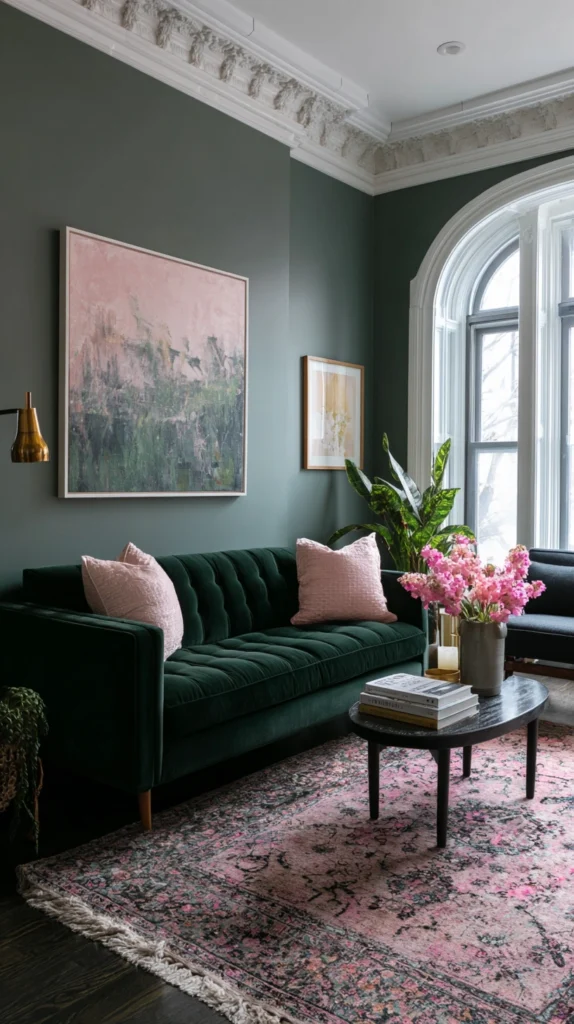
Budget: $400 – $1,800
A dark green sofa — forest, bottle, or hunter — with deliberate pink accents creates one of the most unexpected and most successful of all the green sofa colour combinations. The pink is not a soft blush but a warm, slightly saturated dusty rose that reads as a grown-up complementary accent rather than as a sweet counterpoint.
Dark green sofas cost $700–$2,500. Dusty rose cushions run $15–$40 each. A pink-toned artwork or print costs $30–$100. A small dusty rose ceramic vessel or vase runs $20–$60. The pink accent works at a ratio of approximately one pink element for every three green-adjacent elements — enough to create the complementary tension without tipping the room into a pink-and-green scheme that reads as thematic rather than considered.
Style tip: Use the pink in the cushions first and assess whether additional pink is needed before adding more. Two dusty rose cushions on a dark green sofa often provide all the contrast the combination requires. Adding pink to the walls or in large textile elements risks overwhelming the green’s dominance, which is the hierarchy the room depends on.
9. The Pale Green and Natural Stone Room
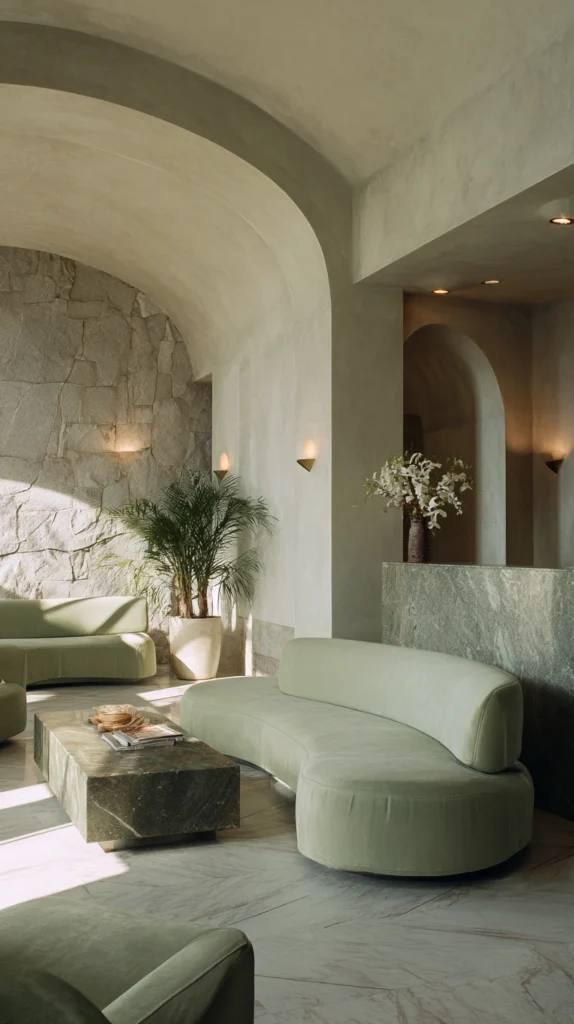
Budget: $500 – $2,500
A pale, barely-there green sofa — the green that is almost grey, almost white, that reveals its colour only in certain lights — in a room with natural stone floors, travertine or limestone surfaces, and warm cream walls creates one of the most refined and most mineral-toned living room environments available. The pale green and natural stone combination is the one that most convincingly reads as genuinely luxurious without appearing designed for that purpose.
Pale green sofas in quality fabric cost $700–$2,500. Natural stone floor tiles cost $60–$150 per square metre. A stone side table or coffee table runs $200–$800. Cream linen curtains complete the minimal material palette. The pale green and stone room requires quality materials throughout — in a room this restrained, the quality of each individual element is more visible than in a room with more decorative elements to distribute the eye’s attention.
Style tip: Keep the decorative objects in the room to an absolute minimum — one vase, one artwork, one plant. The pale green and stone palette is resolved at the material level and does not require decorative supplementation. Every additional decorative object dilutes the material quality that makes the room exceptional.
10. The Green Sofa in an All-White Room
Budget: $300 – $1,500
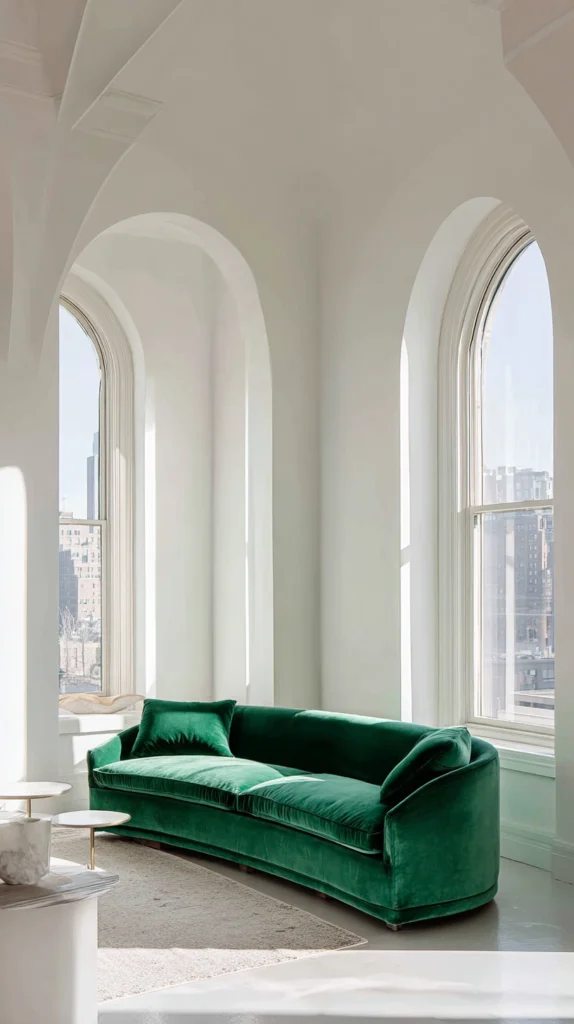
A green sofa of any shade or tone placed in a pure white room — white walls, white ceiling, pale timber floor or white rug — reads as a botanical element in a clean environment. The all-white room gives the green sofa maximum visual attention because there is nothing competing for the eye’s interest. Any green works in this configuration; the choice of green tone determines the mood of the room.
A green sofa of any type costs $500–$2,500. White emulsion for the walls runs $25–$60 per tin. A pale timber floor or a white flatweave rug costs $80–$300. The all-white room requires the green sofa to be genuinely interesting in its fabric and form — when the sofa has no competition, its quality is fully visible.
Style tip: Add one large indoor plant — a monstera, a fiddle-leaf fig, a rubber plant — to the all-white room alongside the green sofa. The living plant echoes the sofa’s botanical colour and gives the room a second green element that reads as a reference rather than a repetition. Two greens in an all-white room — the sofa and the plant — always read better than one.
11. The Green and Blue Mixed Room
Budget: $400 – $2,000
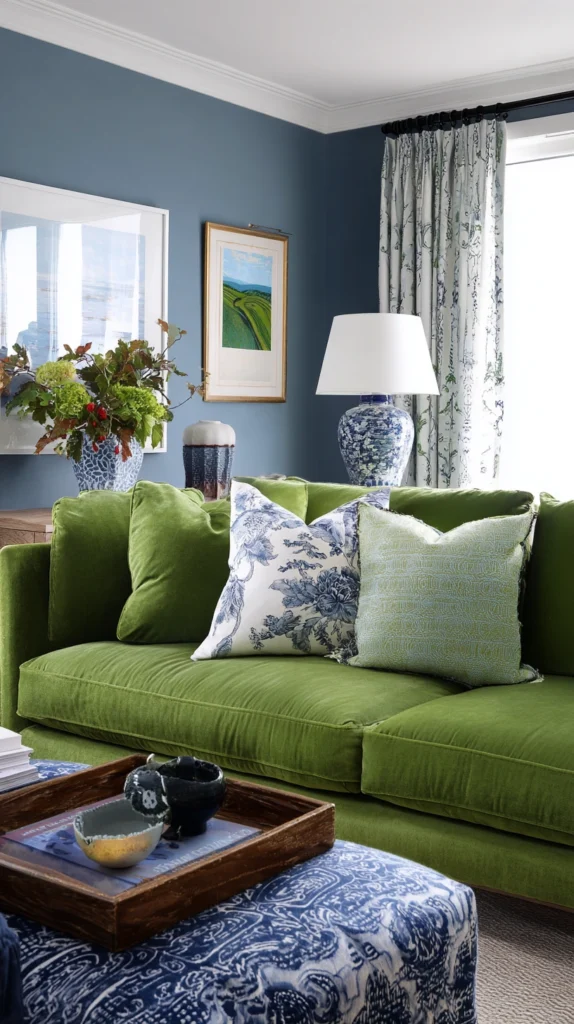
A green sofa in a room that incorporates blue — through wall colour, through textiles, through artwork — creates an analogous colour scheme drawn from the natural world’s own palette. Green and blue together reference the landscape: sea and land, sky and forest, water and leaf. The combination is one of the most naturally harmonious in the colour spectrum.
A green sofa of any specific tone costs $500–$2,500. A blue wall in the same saturation level as the green sofa costs $30–$80 per tin. Blue and green cushions in varying tones run $15–$35 each. A botanical print incorporating both blue and green tones provides the artwork that connects the two colours. Choose blue and green tones from the same temperature register — both warm or both cool — to maintain the harmonious quality of the analogous scheme.
Style tip: Use the green at the larger scale — the sofa — and the blue at the smaller scale — the cushions and textiles — rather than reversing the hierarchy. A green sofa with blue accents reads as a green room; a blue sofa with green accents reads as a blue room. The hierarchy of scale determines the room’s colour identity.
12. The Velvet Green Statement Room
Budget: $500 – $3,000
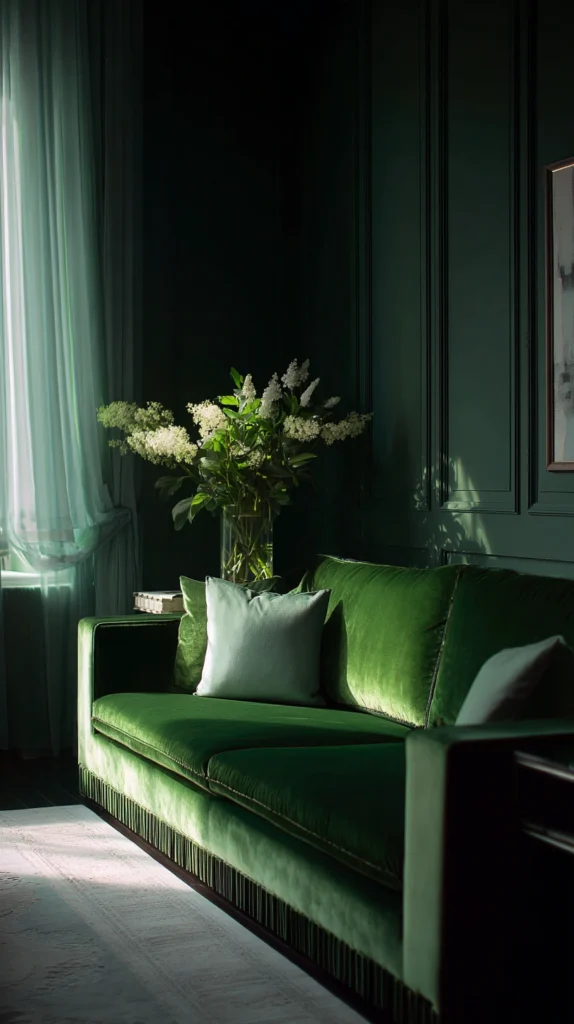
A velvet green sofa — any green, any tone — is the single most impactful living room furniture investment available. Velvet gives green its richest, most complex reading: the pile catches light at every angle, making the colour appear to shift between tones as the viewer moves through the room. A velvet green sofa in a room designed to showcase it is a room that rewards being in it over time.
Velvet green sofas cost $800–$3,000. The room around a velvet green sofa should be relatively restrained — deep walls in a complementary tone, simple furniture, quality lighting. A velvet sofa is already doing significant visual work and the room’s other elements should support rather than compete with it. A brass or gold pendant light above the seating area is the lighting choice that most flatters a velvet green surface.
Style tip: Vacuum velvet sofas regularly with a soft brush attachment to maintain the pile direction. A velvet sofa with inconsistent pile direction reads as worn and tired; one with a consistent pile reads as new regardless of its age. The maintenance of the pile is the ongoing effort that keeps the velvet green sofa performing at the level of its initial impression.
13. The Green Sofa and Gallery Wall Room
Budget: $300 – $1,500
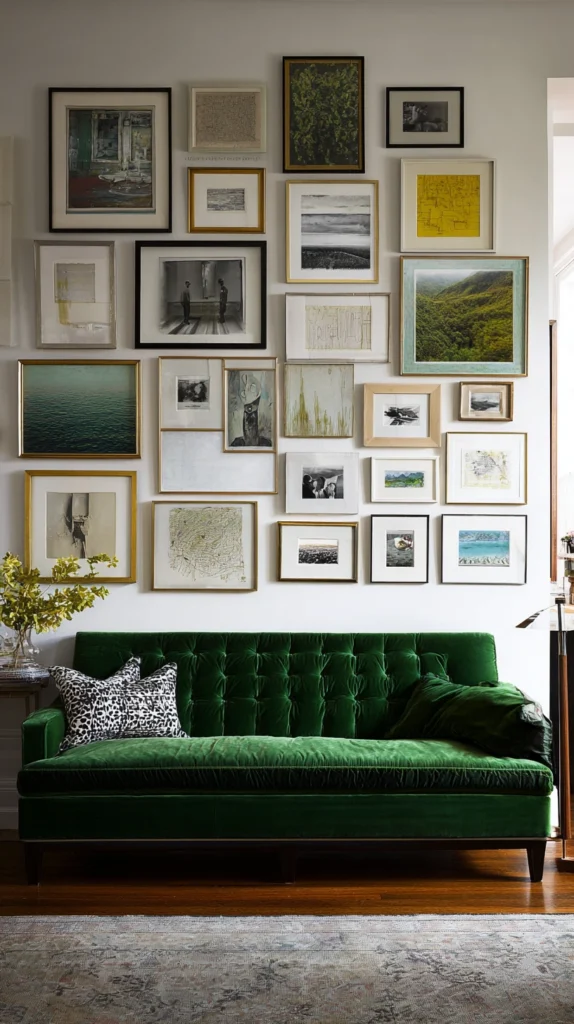
A green sofa positioned against a gallery wall — a collection of framed artwork, prints, and photographs assembled on the wall behind it — creates the most culturally and visually rich green sofa living room available. The gallery wall gives the green sofa a backdrop of collected imagery that communicates the specific interests and aesthetic of the people who live in the room.
A green sofa of any type costs $500–$2,500. Frames in a consistent finish for the gallery cost $8–$25 each — a gallery of ten runs $80–$250 in frames. Prints and artwork cost $5–$80 each depending on source and size. The gallery behind a green sofa reads best when the frames are all in a consistent finish — all black, all natural timber, all white — rather than mixed. The frame consistency gives the gallery its visual unity; the artwork provides its variety.
Style tip: Plan the gallery arrangement on the floor before hanging a single nail. Lay all frames in the approximate configuration on the floor, photograph the arrangement from above, and adjust until the composition is resolved before transferring it to the wall. The floor planning step saves the wall from multiple unnecessary holes and produces a better arrangement than hanging by instinct.
14. The Jewel Green and Dark Wall Room
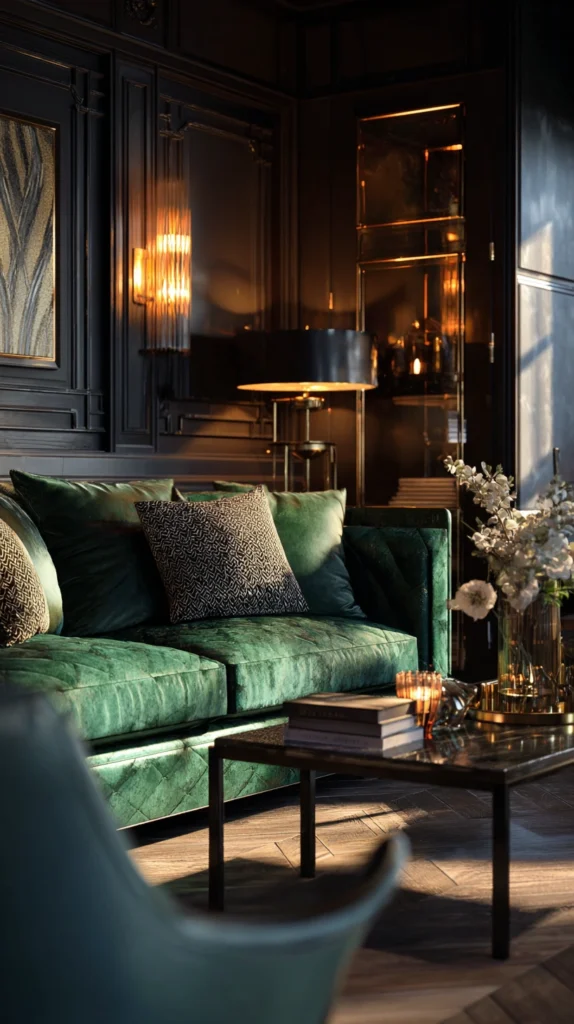
Budget: $500 – $2,500
A jewel-toned green sofa — emerald, bottle, or peacock — in a room with a dark wall colour — deep charcoal, navy, dark plum — creates the most dramatic and most specifically evening-appropriate of all the green sofa environments. The dark wall prevents the jewel green from floating against a pale background and grounds it within a rich, saturated tonal environment that suits the colour’s depth and intensity.
Jewel green sofas cost $800–$3,000. Dark wall paint runs $30–$80 per tin. Warm lighting — a floor lamp with a warm shade, a table lamp with an amber bulb — is essential in the dark-walled room to prevent it from feeling oppressive. The dark room requires more deliberate lighting than a pale room and benefits from multiple warm light sources at different heights.
Style tip: Use gold or brass metalwork — lamp bases, picture frames, cushion trim — in the dark-walled jewel green room rather than silver or chrome. Gold and brass warm the dark room in a way that silver and chrome, which are cool, cannot achieve. The warm metal is the detail that gives the rich, dark room its specific quality of luxury rather than simply its quality of darkness.
15. The Green Sofa Garden Room Connection
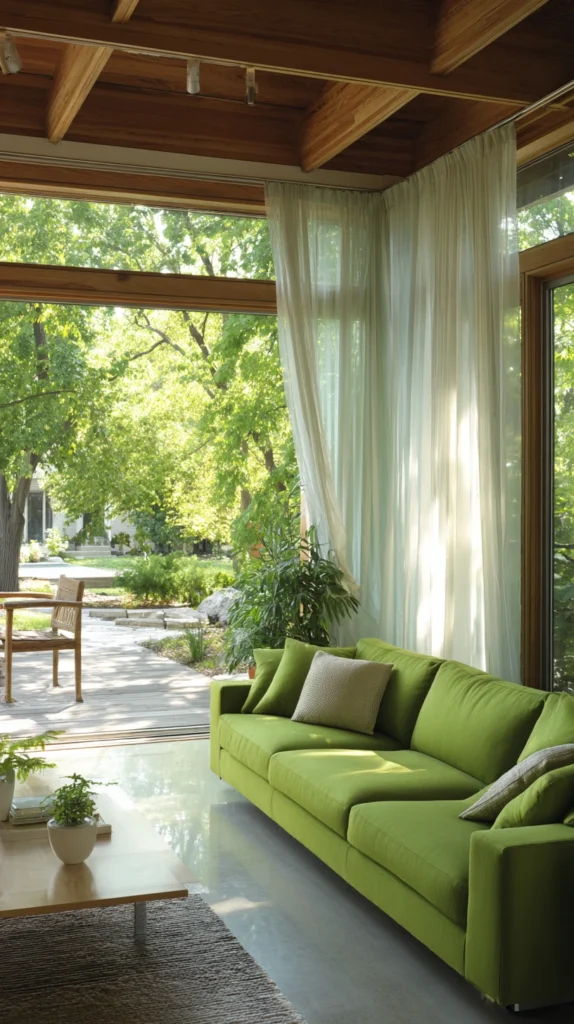
Budget: $300 – $1,500
A green sofa positioned near the garden door or the largest window — with outdoor plants visible behind it, with the garden becoming the room’s backdrop — blurs the boundary between the interior and the exterior in the specific way that a green sofa is uniquely capable of. The sofa’s colour is continuous with the garden’s colour and the room reads as a natural extension of the outdoor space rather than as a separate interior environment.
A green sofa of any tone costs $500–$2,500. Indoor plants in the same space as the green sofa — pothos, monstera, trailing plants on a shelf — reinforce the botanical connection. Sheer curtains at the garden door or window maintain the visual connection to the garden while providing privacy when needed. The garden-connected green sofa room works best when the indoor planting is generous — not a single plant but a collection.
Style tip: Position the green sofa so the garden view is in the peripheral rather than the direct sightline from the seated position. A sofa that faces the garden directly makes the garden the primary view; one positioned at an angle to the garden keeps the garden visible from the corner of the eye while the room itself remains the primary experience. The peripheral garden view is more ambient and more continuously pleasant than the direct one.
The green sofa is the living room’s most generous design decision. It commits to a colour that comes from the natural world, that changes with the light through the day, and that makes every other element in the room work harder to complement rather than simply coexist with it. The room built around a green sofa is always a more considered room than the one built around a neutral, and it is almost always a more enjoyable one to spend time in. Choose the green honestly — for the light in the room, for the materials that surround it, for the atmosphere that the colour produces at its best — and the sofa will do the rest.