15 Backyard Pool Ideas That Feel Like a Private Resort
15 Backyard Pool Ideas That Feel Like a Private Resort
There is a specific quality that the best resort pools possess that most backyard pools consistently fail to achieve — not a quality of size or of water temperature or of any measurable specification, but the quality of an environment that was designed for the full experience of being beside and within water.
The resort pool is surrounded by the specific combination of planting, surface material, shade, seating, and light that makes the water feel like a destination rather than a facility. The backyard pool that achieves this quality is not the most expensively equipped — it is the most carefully designed.

The private resort backyard is not a reproduction of a hotel pool. It is the specific outdoor environment that provides the quality of ease, the quality of beauty, and the quality of genuine separation from the ordinary domestic life of the house behind it that the resort experience is designed to produce.
It requires the same elements that the resort pool requires — the shade at the right position, the seating at the right depth, the planting at the right scale, the light at the right temperature — applied to the specific conditions and the specific scale of the domestic backyard.
Each idea below is a specific approach to one element of the backyard pool that feels like a private resort. Each includes what you will need, what it will cost, and a practical tip to make it work as well as the luxury pool environment it is reaching for.
1. The Infinity Edge Pool
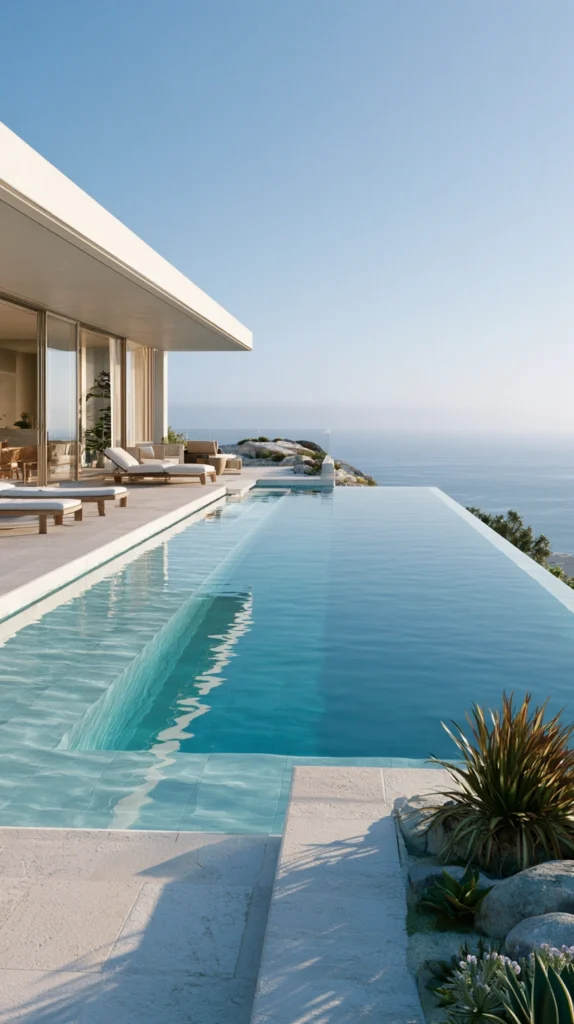
Budget: $15,000 – $80,000
An infinity edge pool — one where one or more pool walls are flush with the water surface, creating the visual effect of the water extending to the horizon beyond — is the pool design most specifically associated with the resort aesthetic and the one that produces the most dramatic visual quality of any pool configuration.
The infinity edge communicates the design intelligence of the pool beyond its functional provision, and the specific view across the vanishing edge — toward the garden, the landscape, or the sky — is the view that makes swimming in an infinity pool categorically different from swimming in a pool with conventional raised walls.
An infinity edge pool of 8 by 4 metres costs $25,000–$60,000 installed, including the balance tank that catches and recirculates the overflow water. The infinity edge requires a significant fall in the landscape beyond the vanishing wall to create the illusion of the water extending to the horizon — a flat garden behind the infinity edge produces no visual effect. The most effective infinity edge views are over a sloped garden, a lower landscape, or an unobstructed sky horizon.
Style tip: Position the infinity edge on the side of the pool that faces the most interesting or the most distant view rather than the side that is simply the farthest from the house. An infinity edge facing a planted garden bank at 2 metres distance produces a limited illusion; the same pool with its infinity edge facing a valley, an open landscape, or a sky view at the end of a steeply sloped garden produces the full resort quality of the design. The view is the infinity edge’s primary specification — the pool is built to frame it.
2. The Plunge Pool and Spa Combination
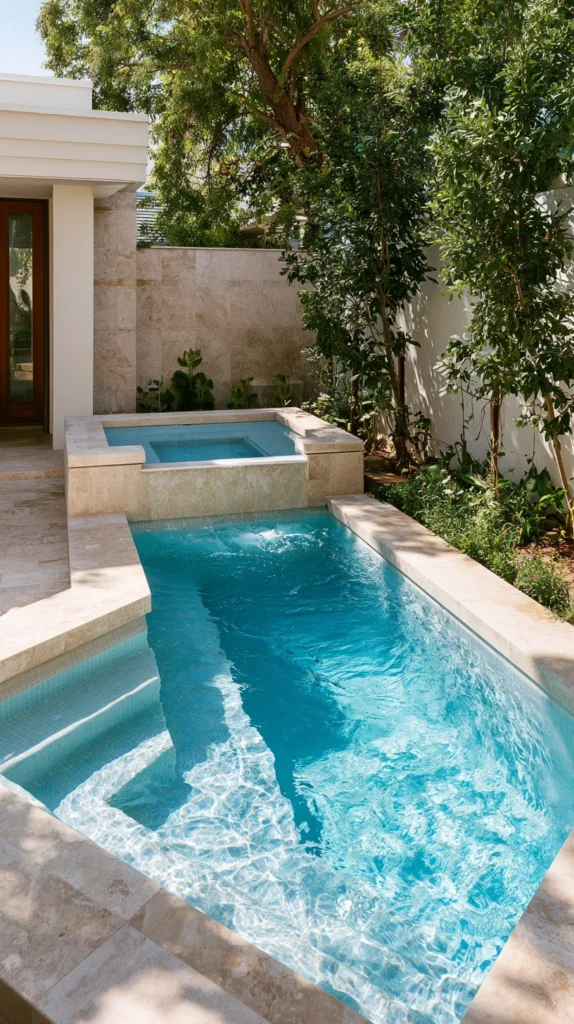
Budget: $8,000 – $40,000
A plunge pool paired with a heated spa — the two water bodies positioned in a composed relationship to each other, with water flowing from the spa into the pool as a connecting feature — creates the most therapeutically complete and most specifically resort-like of the smaller pool configurations.
The plunge pool and spa combination is not the compromise of a pool that could not be larger; it is the deliberate pairing of a cool immersion with a heated soaking experience, and the thermal contrast between the two bodies produces the specific physiological benefit that resort spa facilities offer.
A plunge pool of 4 by 2.5 metres costs $10,000–$25,000. An integrated spa of 2 by 2 metres adds $5,000–$15,000. The combined installation of $15,000–$40,000 produces a water facility that provides more of the resort water experience in a smaller footprint than a conventional pool of equivalent cost. Position the spa at a slightly elevated level so the overflow from the spa into the plunge pool creates the visual and acoustic connection between the two water bodies.
Style tip: Install a spillway between the spa and the plunge pool — a thin sheet of water falling from the spa edge into the pool — rather than a simple connecting pipe. The visual spillway creates the acoustic and visual quality of the resort water feature; the hidden connecting pipe provides the hydraulic function without the experiential quality. The spillway is the design detail that produces the resort atmosphere the plunge pool and spa combination is capable of providing.
3. The Natural Swimming Pool
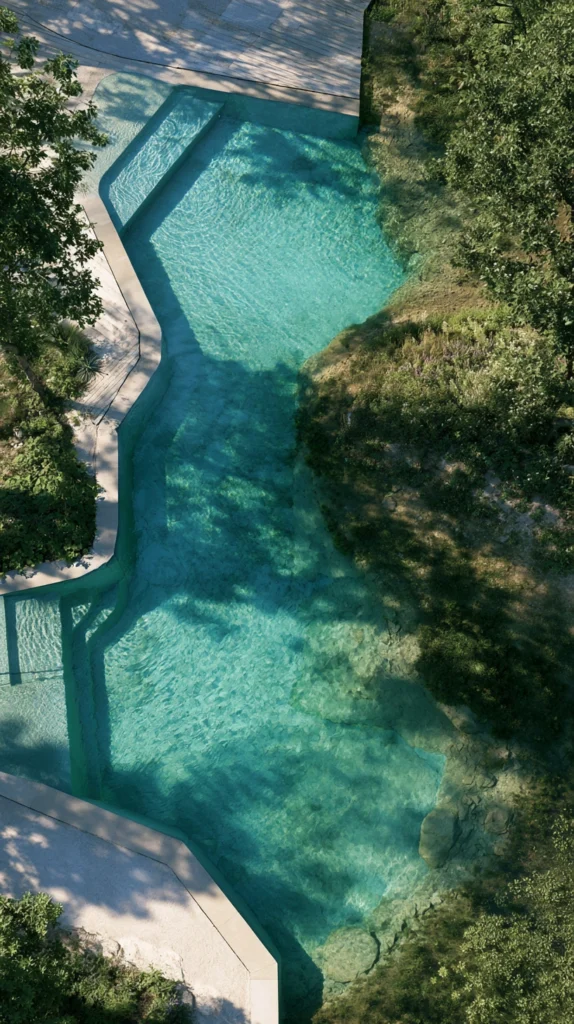
Budget: $15,000 – $60,000
A natural swimming pool — one where the water is filtered by a regeneration zone of aquatic planting rather than by chemical treatment, creating a swimming environment of extraordinary ecological richness and genuinely natural water quality — provides the most calming and most specifically different pool experience from the conventional chlorinated pool.
The natural pool is not merely chemical-free; it is alive, and swimming in water that is filtered by the biological activity of aquatic plants and the ecological community they support is an experience that is fundamentally different from swimming in water filtered by technology.
A natural swimming pool with a regeneration zone of 50 percent of the total water area costs $20,000–$50,000 installed. The water clarity in a correctly planted natural pool improves consistently through the first three seasons as the plant community establishes. No chemicals, no chlorine smell, no irritation to eyes or skin — the specific quality of swimming in naturally filtered water is the quality that all resort natural pools are specifically marketed for.
Style tip: Design the planting zone with plants of different heights and different seasonal interest — submerged oxygenators in the deepest zone, emergent marginals at the waterline, moisture-loving plants at the pool edge — so the regeneration zone reads as a designed planted garden rather than as a functional filtration area. The natural pool whose planting zone is as beautiful as its swimming zone is the natural pool that achieves the full resort quality.
4. The Pool House and Cabana
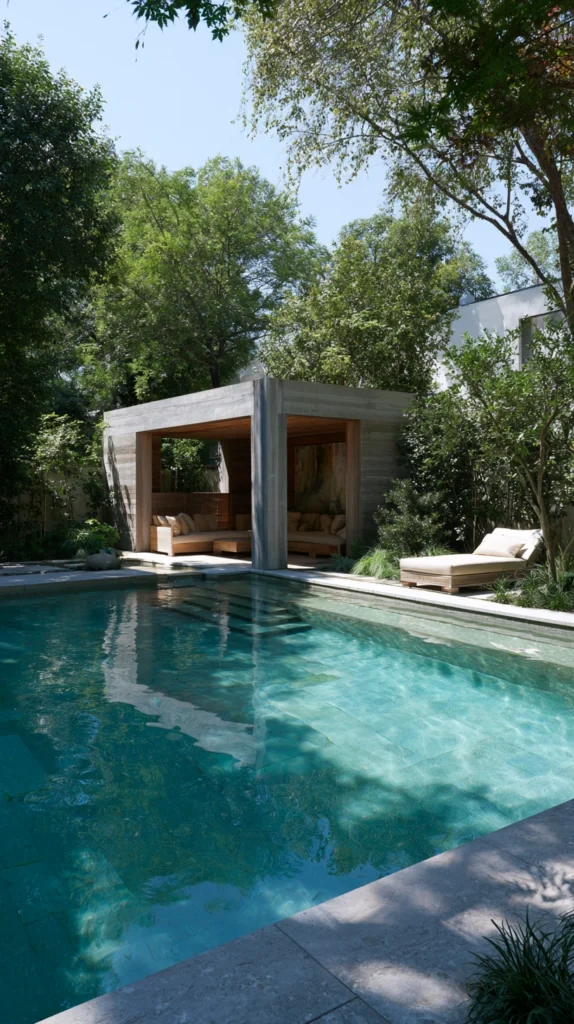
Budget: $5,000 – $30,000
A pool house or a cabana beside the swimming pool — providing changing facilities, storage for pool equipment and towels, a shower and a toilet, and covered seating that extends the poolside experience into the shade — creates the resort quality that no amount of poolside furniture achieves without it. The pool house communicates that the pool was designed as a complete facility rather than as a body of water in the garden, and its presence transforms the backyard pool from a domestic garden feature into a private resort.
A basic timber pool house of 3 by 2 metres costs $3,000–$8,000. A full pool cabana with shower, toilet, and covered seating area runs $8,000–$25,000. A simple timber shade structure with changing room costs $2,000–$6,000. Position the pool house at the side of the pool rather than at the end — the end position blocks the primary pool view from the house; the side position adds to the resort composition without obstructing the primary view.
Style tip: Finish the pool house exterior in a material and colour that relates to the pool surround and the garden — a pool house in the same stone or the same painted timber as the pool coping creates the material continuity of a designed facility; one in a contrasting material reads as a structure added beside the pool. The material relationship between the pool house and the pool surround is the design detail that makes the pool house part of the resort composition.
5. The Tropical Landscaping Pool
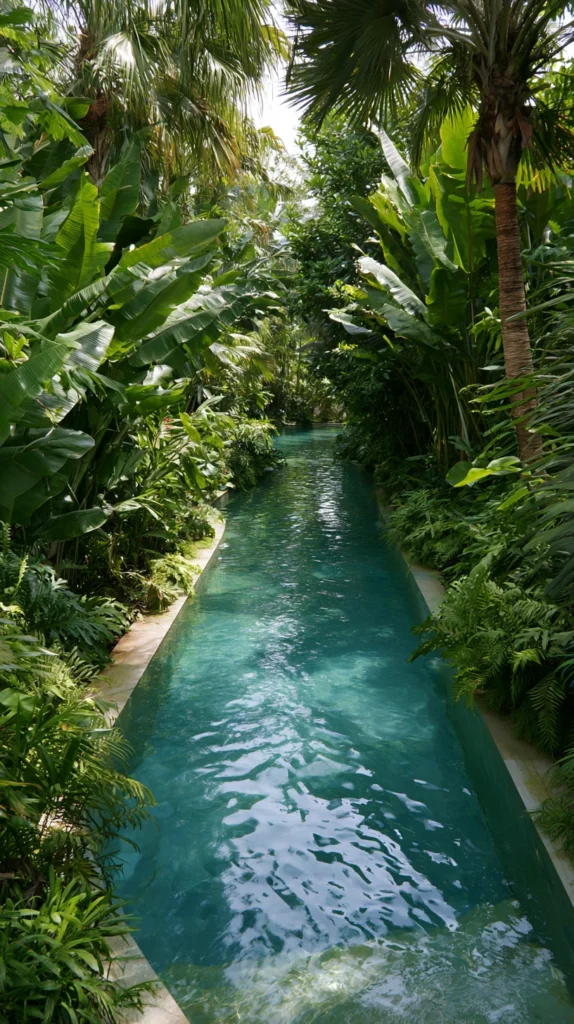
Budget: $3,000 – $20,000
A pool surrounded by tropical planting — large-leafed cannas, bananas, tree ferns, gunnera, tall ornamental grasses, and lush ground-cover planting at the pool coping edge — creates the most immersive and most specifically resort-tropical of all the backyard pool environments. The tropical planting communicates abundance and warmth, produces the specific quality of being enclosed by lush vegetation at water’s edge, and creates a pool environment that photographs as a resort and feels like one because the planting is genuine rather than decorative.
Tropical plants for the pool surround — bananas, tree ferns, cannas, gunnera — cost $15–$80 each. A comprehensive tropical planting scheme for a standard pool surround costs $1,500–$5,000 in plant material. The tropical planting requires a sheltered, south-facing position for the most tender species and will need winter protection or storage for species that are not fully hardy in cooler climates. The resort tropical pool is most achievable in a genuinely warm climate; in a cooler climate, hardier large-leafed species — gunnera, Miscanthus, Stipa — provide a comparable visual quality without the maintenance requirement of tender tropical species.
Style tip: Plant the tropical pool surround so the densest planting is at the end of the pool most visible from the primary seating position — the pool viewed across a foreground of lush tropical planting reads as a pool within a garden; the same pool with sparse planting at the primary view reads as a pool in a garden. The density at the key viewpoint is the planting decision that produces the resort quality.
6. The Pool Lighting and Ambience System
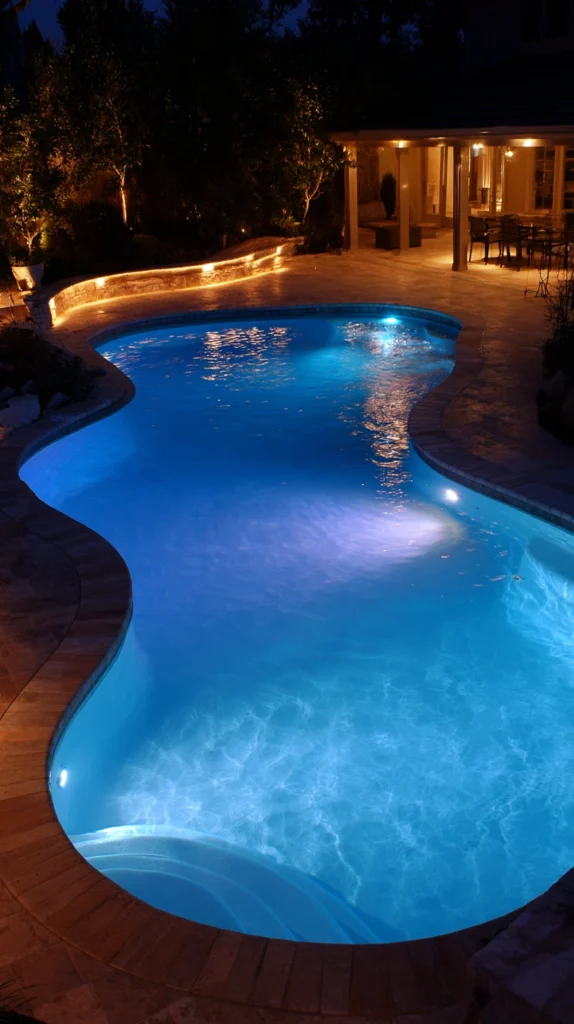
Budget: $500 – $5,000
A pool lighting system — underwater LED lights, perimeter garden lighting, pendant or string lights above the pool deck, and flame features at key positions — creates the evening pool environment that is distinct from and in some ways better than the daytime version. The lit pool at night — with the underwater lights producing the specific quality of illuminated water seen from above, surrounded by the warm light of the poolside garden — is the private resort pool at its most spectacular and its most atmospheric hour.
Underwater LED pool lights cost $80–$300 each — a standard pool requires four to six. A perimeter lighting system for the pool garden costs $200–$600. String lights above the pool deck run $20–$60 per 10-metre reel. Flame features — bioethanol torches or gas flares — at the pool corners cost $40–$120 each. Position the underwater lights at the pool ends rather than in the pool walls — end lights illuminate the water volume rather than the pool walls, producing the deep, glowing quality of illuminated water rather than the lit-wall quality.
Style tip: Use colour-changing LED lights in the pool rather than fixed warm white — the ability to change the pool water colour for different occasions (deep blue for evening swimming, warm white for social poolside gatherings) provides the flexibility that the single colour lacks. The colour change is managed from a poolside control rather than a phone app — the control that requires no technology to operate is the control that is used every evening.
7. The Pool With Swim-Up Bar
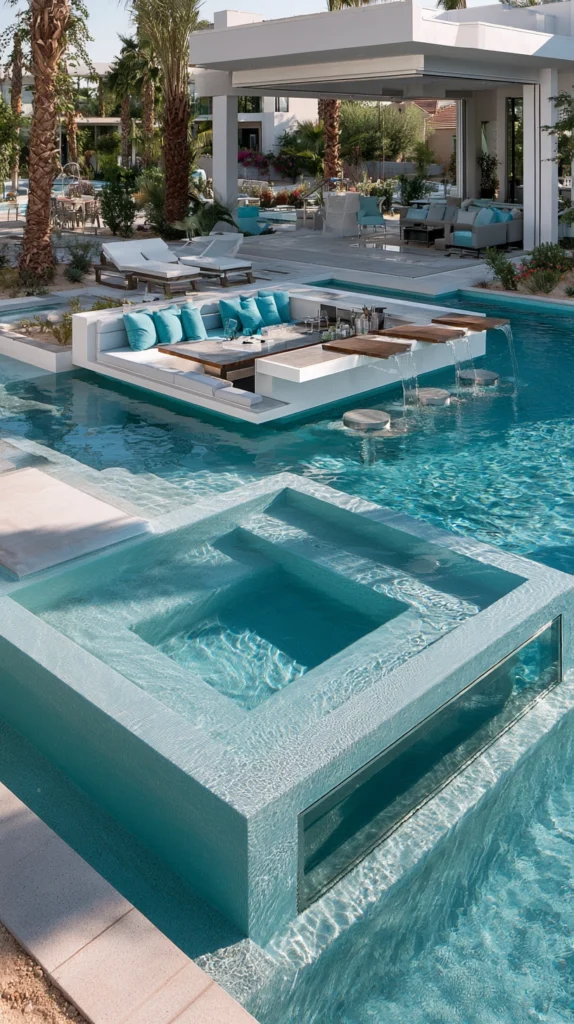
Budget: $5,000 – $30,000
A swim-up bar — a counter positioned at pool water level, accessible from within the pool, with bar stools submerged beneath the water surface so guests can sit at the bar while remaining in the pool — is the most specifically resort-identifying of all the pool features and the one that most completely produces the quality of a luxury hotel pool environment in a domestic backyard. The swim-up bar is not merely practical; it is the feature that communicates that the pool was designed for the full social experience of the water.
A built-in swim-up bar counter at pool edge level costs $2,000–$8,000 in concrete and tile construction. Submerged bar stools in a pool-safe material run $100–$300 each. An outdoor refrigerator and sink in the bar counter costs $400–$1,000. The swim-up bar requires a shallow pool area of 80–100 centimetres in depth at the bar position — the bar is not functional at full swimming depth, and the shallow zone must be designed into the pool from the original specification.
Style tip: Design the swim-up bar at the pool side that receives the most afternoon shade — a bar in direct afternoon sun is a bar that is uncomfortably hot on the face of the person seated at it, and the comfort of the bar position is the specification that most determines whether it is used as the social centre of the pool or avoided as an uncomfortable novelty.
8. The Tanning Ledge Pool
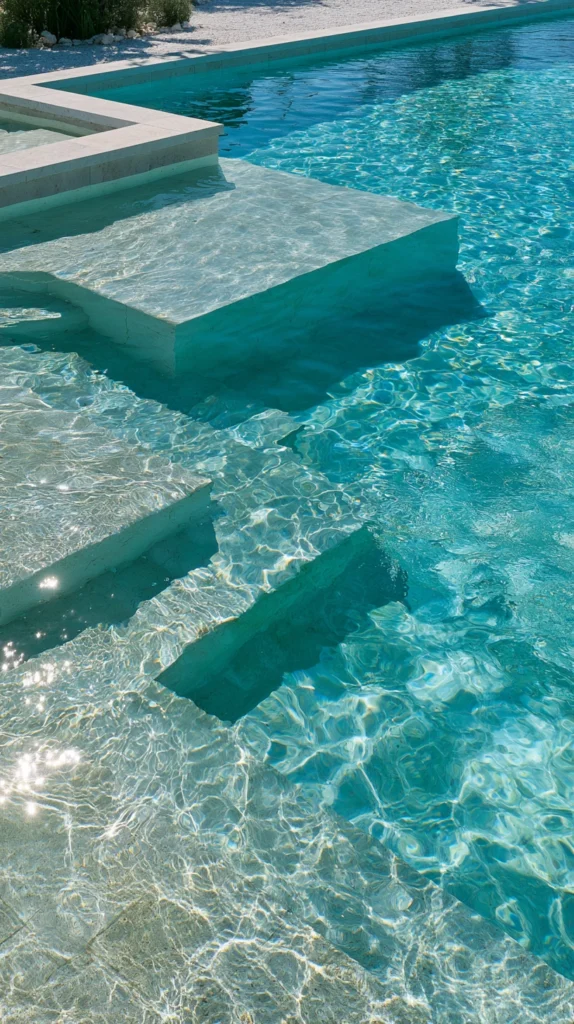
Budget: $1,000 – $5,000
A tanning ledge — a shallow, submerged platform of 30–40 centimetres in depth built into one end of the pool, wide enough for a sun lounger to sit in the water — creates the resort pool feature most associated with the luxury hotel aesthetic and most directly producing the experience of lying in water without swimming. The tanning ledge is the pool element that adds the reclining-in-shallow-water experience that the deep pool alone cannot provide, and in a backyard pool of moderate size it creates the complete resort pool facility without requiring a plunge pool and spa configuration.
A tanning ledge of 2 by 1.5 metres added to an existing or new pool costs $1,000–$3,000 in concrete and tile work. Pool-safe sun loungers for the tanning ledge — in a material that does not damage pool tiles and does not absorb water — run $200–$600 each. Position the tanning ledge at the end of the pool that receives the most sun throughout the day rather than at the shaded end — the tanning ledge function requires sun.
Style tip: Tile the tanning ledge in a lighter colour than the main pool — pale blue, pale grey, or pale green mosaic rather than the deeper tile of the main pool floor. The lighter tanning ledge tile makes the shallow depth visible from poolside, communicating the specific function of the zone from above the water rather than requiring the swimmer to test the depth. The visible depth is a safety communication as well as a design one.
9. The Pool With Fire Feature
Budget: $2,000 – $15,000
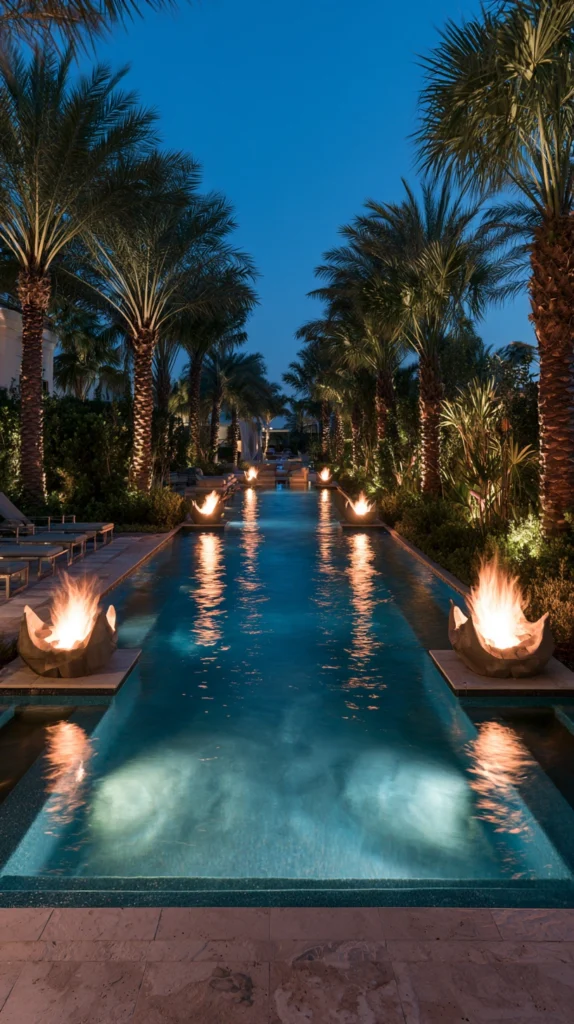
A fire feature adjacent to the pool — fire bowls at the pool corners, a gas fire pit at the pool deck seating area, or a built-in bioethanol fire in the pool surround wall — creates the most dramatically resort-like of all the poolside environments, combining the specific contrast of fire and water that the most visually memorable outdoor environments consistently exploit. The fire beside the pool is not merely decorative — it provides the warmth that extends poolside use into the cooler evening hours, the light that illuminates the pool and the faces around it, and the specific quality of an occasion that fire produces wherever it is placed.
Gas fire bowls at the pool corners cost $300–$800 each — four for a standard pool costs $1,200–$3,200. A built-in bioethanol fire in the pool surround wall runs $400–$1,500. A gas fire pit at the poolside seating area costs $300–$1,200. The fire feature adjacent to a pool must be positioned at a minimum distance from the water — check the manufacturer’s clearance specification for each specific appliance before installation.
Style tip: Position the fire features so they are reflected in the pool water when viewed from the primary poolside seating. A fire feature visible in the pool’s water surface at night creates the specific visual quality of fire above water — a composition of the most dramatic natural elements that the pool and the garden together can produce.
10. The Pool With Outdoor Shower
Budget: $200 – $1,500
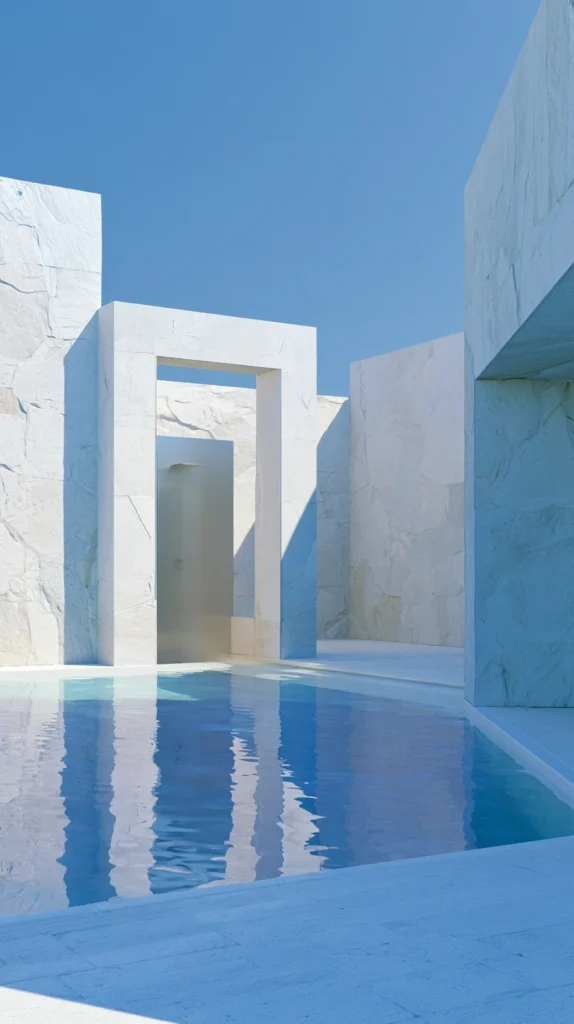
An outdoor shower beside the pool — in a considered material (timber, stone, stainless steel) with a rainfall head at full height, positioned between the pool and the house — creates the specific quality of the resort pool transition: the refreshing shower before entering the pool, the rinse after leaving it, the moment of warm water in the open air that makes the transition between the pool and the rest of the outdoor occasion feel genuinely considered. The outdoor shower communicates that the pool was designed for the full sequence of the swimming experience rather than for the swimming alone.
A teak and stainless steel outdoor shower costs $300–$800. A stone or rendered block shower structure runs $400–$1,500. A simple stainless steel shower post with a rainfall head costs $150–$400. The outdoor shower should be connected to both hot and cold water rather than cold only — a cold-only shower beside a pool is a functional facility; a hot-and-cold shower beside a pool is a resort quality.
Style tip: Position the outdoor shower where it receives natural afternoon light — the quality of showering in warm natural light outdoors is the specific resort quality of the outdoor shower, and a shower positioned in permanent shade loses the sensory dimension that makes the outdoor shower a pleasure rather than a convenience.
11. The Mosaic Tile Pool Interior
Budget: $5,000 – $30,000
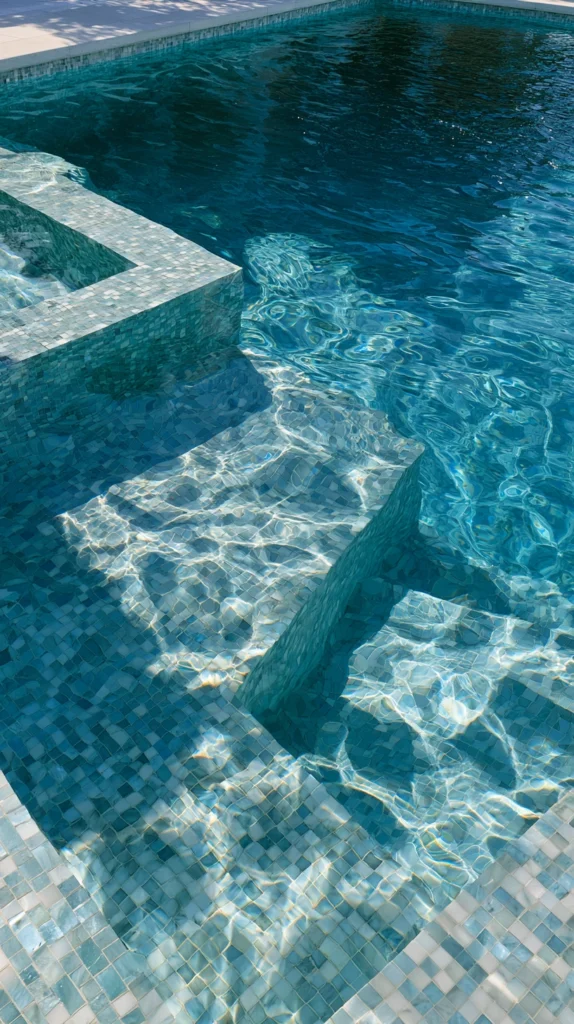
A pool interior finished in hand-laid mosaic tile — in a pattern, a gradient, or a composed design that is specific to the pool and to the garden surrounding it — creates the most beautiful and most materially specific of all the pool interior finishes. The mosaic tile pool communicates the quality of craftsmanship and of design intention that a uniformly rendered or vinyl-lined pool cannot approach, and the quality of the light through mosaic tile — the way it catches and refracts through the water — produces the specific visual quality of the most beautiful resort pools.
Pool-grade mosaic tiles in a standard 2.5-centimetre format cost $30–$80 per square metre. A standard pool of 8 by 4 metres and 1.5 metres average depth has a total interior surface of approximately 75 square metres — $2,250–$6,000 in tile materials plus $3,000–$10,000 in specialist pool tiling labour. The mosaic tile pool requires a specialist pool tiler rather than a standard tiler — the waterproofing membrane application and the grout specification for a pool environment are entirely different from standard tiling practice.
Style tip: Design the tile pattern with a gradient from pale at the shallow end to deep blue or deep green at the deep end — replicating the colour change of natural water at increasing depth. The graduated tile pool reads as natural water; the uniform tile pool reads as a tiled container. The gradient is the design decision that gives the mosaic pool its specific quality of being genuinely in the water rather than in a pool.
12. The Poolside Lounge Area
Budget: $500 – $5,000
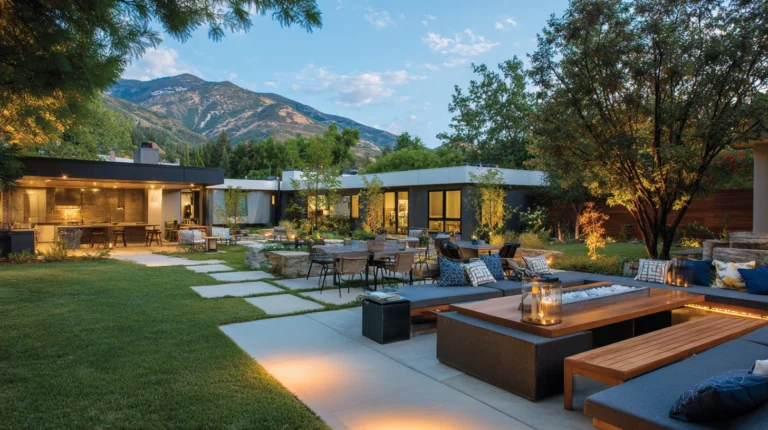
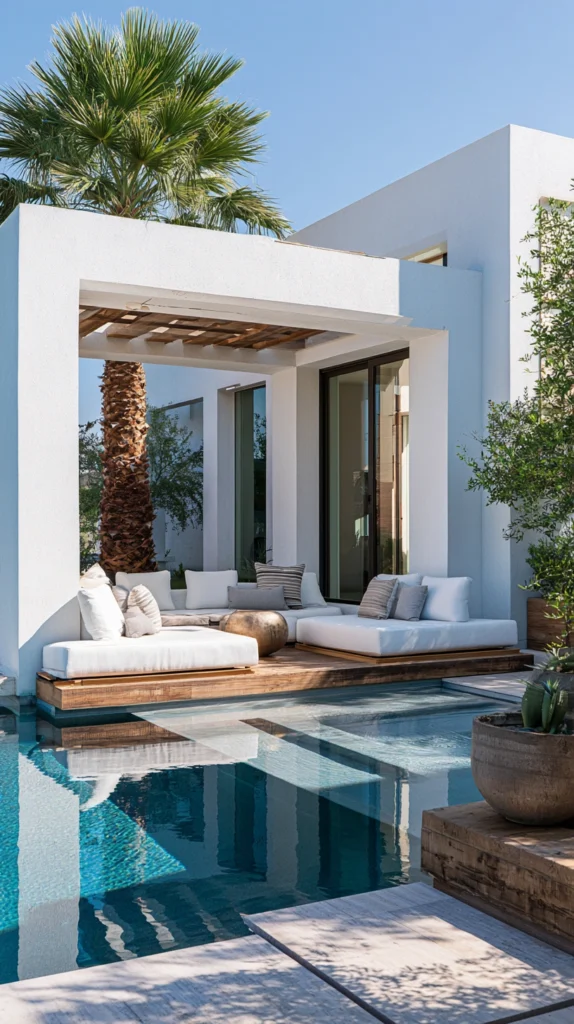
A poolside lounge area — raised slightly above the pool deck level, furnished with deep-cushioned outdoor sofas, a low coffee table, a shade structure, and a side table with a drinks tray — creates the resort quality of the pool as a complete social environment rather than simply as a water feature with furniture beside it. The poolside lounge communicates that the pool was designed for the full day beside the water — the swimming, the drying, the reading, the drinking, the conversation that extends past the point when the sun moves off the water.
An outdoor sofa in a quality all-weather fabric costs $400–$1,200. A low coffee table for poolside use runs $80–$250. A shade structure or a large umbrella over the lounge costs $100–$600. A raised platform of 15–20 centimetres for the lounge area costs $200–$600 in timber or stone. The raised platform gives the lounge a defined spatial identity at the pool level and communicates the zone as a designed seating area rather than chairs placed beside a pool.
Style tip: Position the lounge area so it faces the pool at an angle rather than directly — a lounge oriented directly at the pool has the pool as its only view; one positioned at an angle sees the pool and the garden simultaneously, which is the view quality of the resort lounge rather than the poolside seating.
13. The Pool With Waterfall Feature
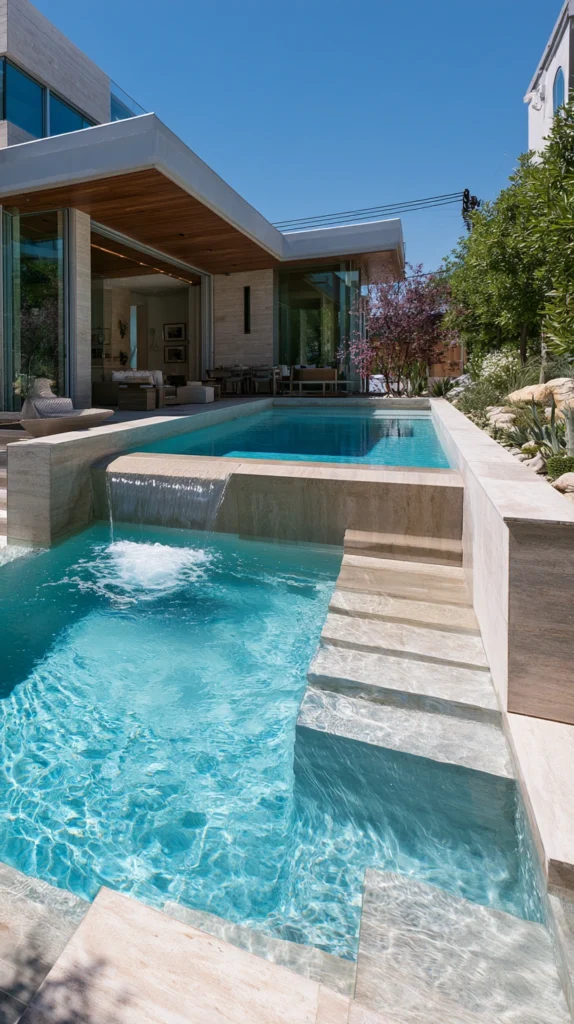
Budget: $2,000 – $15,000
A waterfall feature integrated into the pool — water cascading from a raised rock formation, a tiled weir wall, or a series of stepped overflow channels into the main pool body — creates the resort-tropical quality of moving water within the swimming environment. The pool waterfall provides the acoustic quality of water in motion, creates the visual focus of the pool’s most dramatic feature, and in a pool with underwater lighting, produces the nighttime spectacle of lit water falling through dark air that no other pool feature can match.
A natural rock waterfall feature at the pool end costs $3,000–$10,000 in stone, pump, and construction. A tiled weir wall waterfall costs $2,000–$6,000. A simple sheet waterfall from a raised coping section costs $1,000–$3,000. The waterfall pump must be rated for the volume and the head height of the cascade — an underpowered pump produces a trickle rather than a waterfall, and the correct pump specification is the technical decision that determines whether the waterfall performs as a feature.
Style tip: Position the pool waterfall at the end of the pool facing the primary seating and viewing position — the waterfall seen and heard from the poolside lounge is the waterfall that earns its presence as an acoustic and visual feature; the waterfall at the pool end facing the house wall is the waterfall that is heard but not composed in the view.
14. The Pool Garden With Privacy Planting
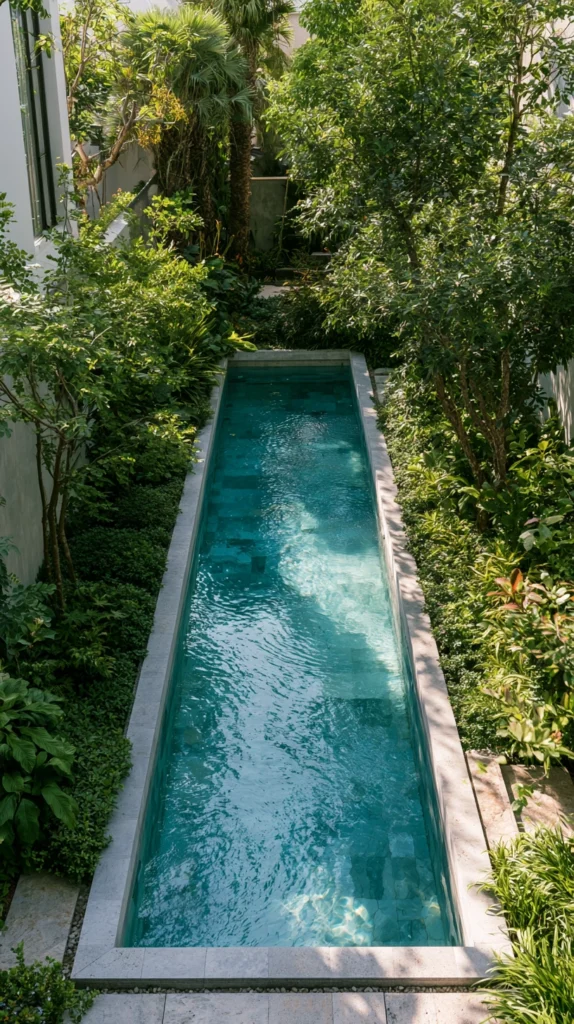
Budget: $1,000 – $6,000
A pool garden enclosed by considered privacy planting — tall hedging on the boundary sides, specimen trees at the pool corners, planted climbing structures at the fence line, and lush low planting at the pool coping edge — creates the specific quality of the resort pool that is most difficult to achieve by any other means: the quality of genuine enclosure, of being in a private water garden rather than a pool visible from adjacent properties. The private pool is categorically more relaxing than the overlooked pool regardless of the quality of any other element.
Pleached tree privacy screens cost $80–$200 per tree. A hornbeam hedge at pool surround height costs $1.50–$4 per plant. Specimen trees at the pool corners — a multi-stem birch, a cloud-pruned olive — cost $80–$300 each. A comprehensive privacy planting scheme for a standard pool garden costs $1,500–$5,000 in plant material and establishment. The privacy planting should be designed from the primary overlooking positions — the upper windows of adjacent properties, the elevated garden of the neighbour — rather than from within the pool garden itself.
Style tip: Plant the pool privacy planting before the pool is installed rather than after. Plants established in the ground before the pool construction is complete benefit from the full growing season before the pool is used; plants installed around a completed pool must establish in the disrupted soil of a recently constructed site. The pre-construction planting is two to three seasons ahead of the post-construction planting in its development at the moment when privacy is first needed.
15. The Pool With Smart Technology
Budget: $1,000 – $8,000
A pool equipped with smart technology — automated chemical dosing, remote temperature control, automated pool cover, colour-changing LED lighting on a scene control system, and a water quality monitoring app — creates the resort quality of a pool that manages its own maintenance rather than imposing the management requirement on the household. The resort pool is never green, never cold, never incorrectly lit, and never uncovered when not in use — the smart technology is the infrastructure that produces this quality in a domestic pool without requiring the pool management staff that the resort employs.
An automated chemical dosing system costs $500–$1,500. A remote pool heating controller runs $200–$500. An automated pool cover with a motorised reel costs $1,000–$3,000. A smart lighting control system costs $300–$800. The total smart pool technology investment of $2,000–$6,000 produces a pool that requires thirty minutes of weekly management rather than the two to three hours that the manually managed conventional pool consistently demands.
Style tip: Install the automated pool cover before the first full season of pool use rather than after. An automated cover that is present from the first season is a cover that is used consistently — closing automatically when the pool is not in use, opening at the touch of a control. A cover installed after the first season is retrofitted around an established pool use habit that did not include covering the pool, and the retrofit cover is used less consistently than the installed one.
The backyard pool that feels like a private resort is not the largest or the most expensively equipped. It is the pool that was designed for the full experience of being beside and within water — the planting that produces the sense of enclosure, the shade at the right position, the lighting that creates the evening version, the seating that invites staying past the point when the swimming is finished, the fire that extends the occasion past the point when the temperature would otherwise end it.
Design the pool from the experience outward rather than from the specification inward. Begin with the quality of the afternoon beside the pool that the garden is capable of providing. Then specify the pool, the planting, the shade, the light, and the seating that produces that afternoon — consistently, privately, and with the quality of environment that makes the backyard the destination rather than the departure point for the resort experience.