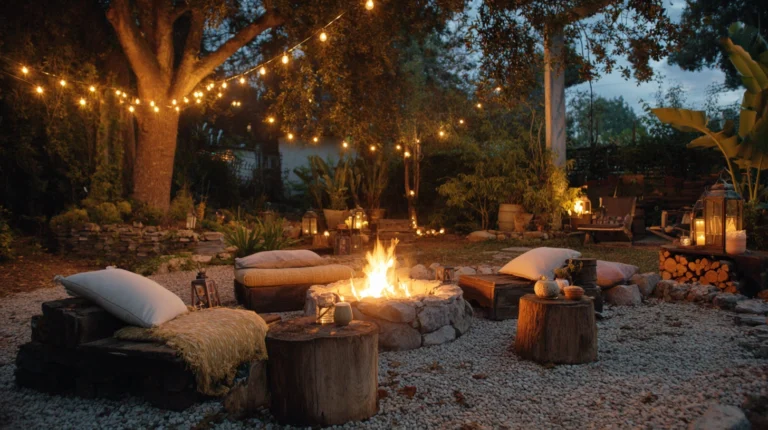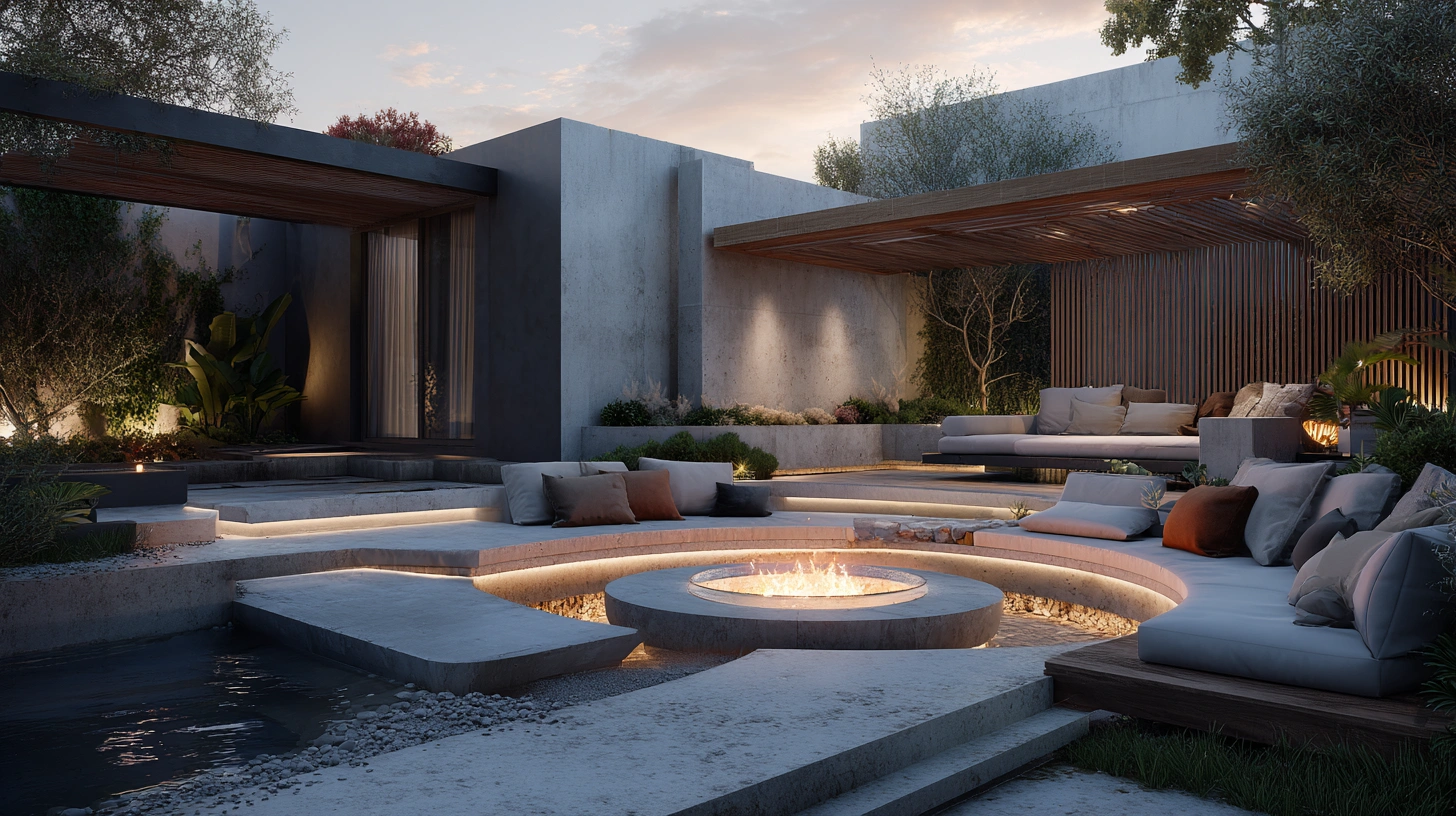
15 Cozy Backyard Seating Ideas You’ll Never Want to Leave
15 Cozy Backyard Seating Ideas You’ll Never Want to Leave
There is a specific quality that the best outdoor seating possesses that has nothing to do with the cost of the furniture or the size of the garden it sits in.
It is the quality of genuine invitation — the sense that the seat was placed there for the specific pleasure of sitting in it rather than for the practical requirement of having somewhere to put garden chairs when the occasion demands. A seat with this quality is a seat you move toward rather than a seat you use when nothing else is available.
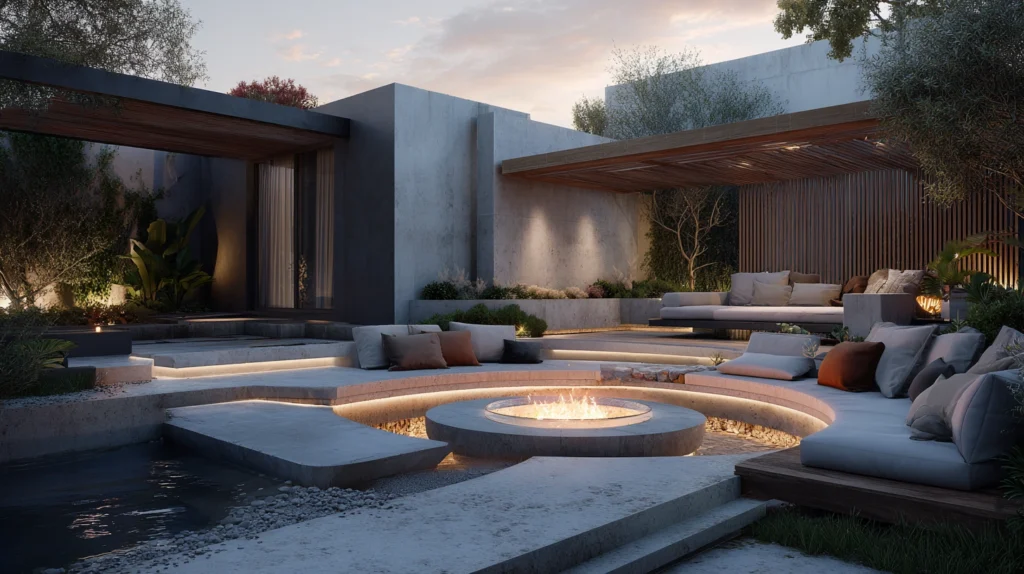
The difference between outdoor seating that is used and outdoor seating that is genuinely loved is almost entirely a question of the decisions made around and about it — where it faces, what it is sheltered by, what it smells like from the sitting position, how it feels at the two-hour mark rather than the twenty-minute mark, whether the light on it at seven in the evening is the right kind of light.
These are the decisions that produce the seating arrangement you never want to leave, and none of them requires a significant budget to make well.
Each idea below is a specific, buildable approach to one type of cozy backyard seating arrangement. Each includes what you will need, what it will cost, and a practical tip to make the whole thing work as well as the evening it was made for.
1. The Sunken Fire Pit Seating Circle
Budget: $200 – $1,500
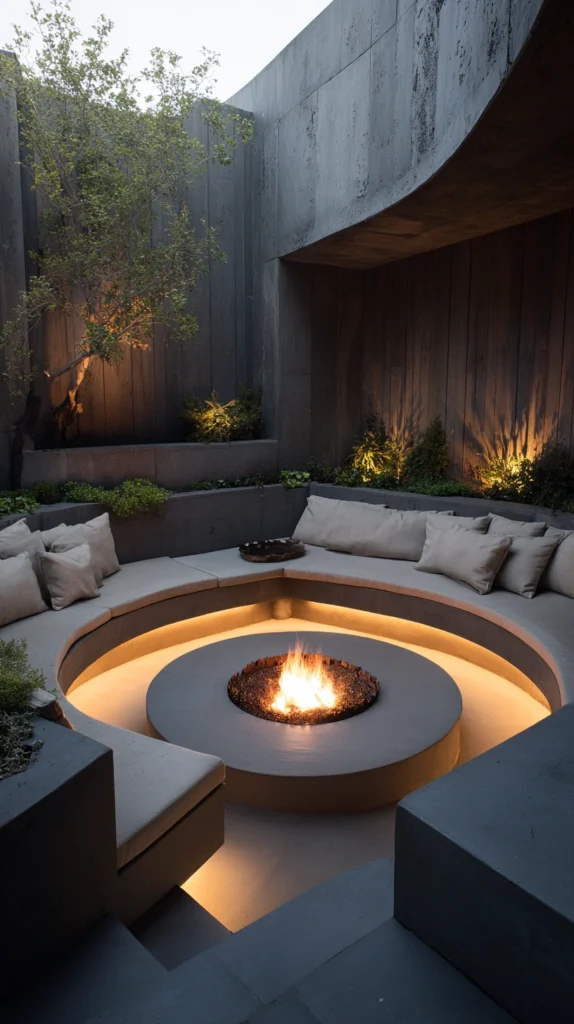
A seating area sunk 30–45 centimetres below the surrounding garden level — with a central fire pit, low built-in seating on three sides, and a gravel or stone floor — creates the most specifically intimate and most sheltered of all backyard seating arrangements. The sunken position provides wind protection that above-ground seating cannot replicate, creates a natural bowl of warmth around the fire, and gives the seated person the specific pleasure of being in the garden rather than merely on it — surrounded on all sides by the garden at eye level rather than looking across it from above.
A sunken pit of 3 by 3 metres excavated and lined with timber sleepers or brick costs $300–$1,200 in materials and basic labour. A steel fire pit at the centre costs $40–$100. Gravel for the pit floor runs $30–$80. Built-in bench seating on three sides costs $100–$300 in timber and basic carpentry. The sunken position requires a drainage solution — a gravel sub-base at least 20 centimetres deep beneath the floor gravel, with a single drainage outlet at the lowest point.
Style tip: Design the entry steps into the sunken pit from the direction that faces the house rather than from the side. An entry that descends toward the fire from the direction of the house creates the quality of arriving somewhere — the steps mark the transition from the garden level to the pit level in a way that a side entry does not. The arrival direction determines whether the sunken pit feels like a destination or like a depression in the garden floor.
2. The Pergola Daybed
Budget: $200 – $1,000
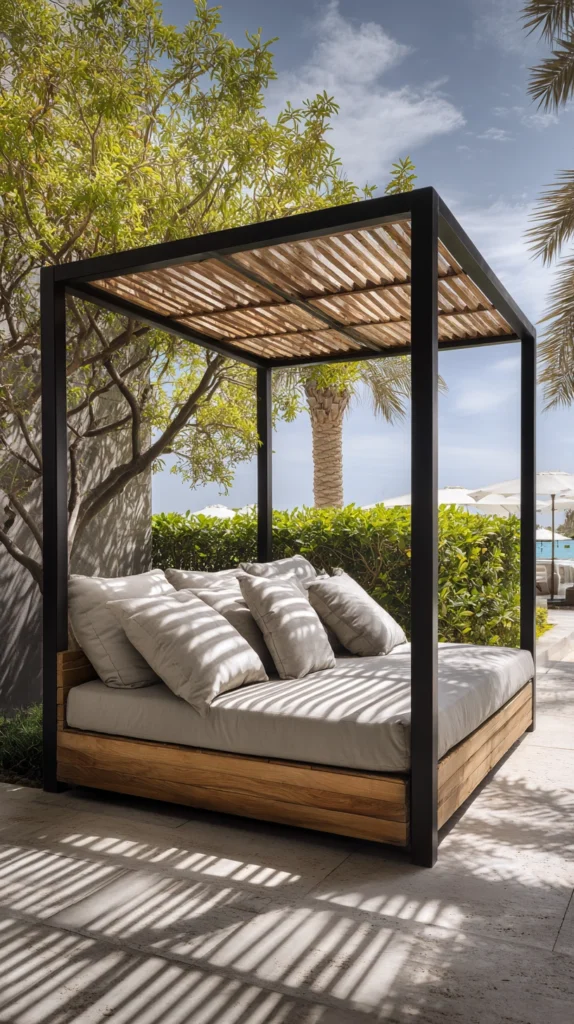
A daybed — a wide, deep, cushioned platform intended for horizontal as well as seated use — positioned beneath a pergola or a shade structure in the garden creates the most luxurious and most genuinely restorative of all backyard seating options. The daybed communicates that the outdoor space was designed for the full range of repose rather than for the upright sitting that most garden furniture supports, and the specific pleasure of lying down in the garden under a structure with climbing plants overhead is one that garden furniture catalogues rarely offer and that a well-positioned daybed provides entirely.
An outdoor daybed in powder-coated aluminium costs $200–$600. A DIY timber platform daybed with a weatherproof cushion runs $100–$300 in materials. A pergola or shade structure above the daybed position costs $200–$800. Position the daybed so the view from the horizontal position is upward through plant canopy — the underside of a wisteria, the branches of a tree, the filtered sky through climbing rose stems — rather than at the sky directly.
Style tip: Provide a side table or a low surface within arm’s reach of the daybed rather than relying on the floor — the distance between a lying position and the floor is the specific inconvenience that makes the daybed less practical than it should be, and a surface at the correct height keeps a drink, a book, and a phone within reach without requiring the occupant to sit up.
3. The Walled Courtyard Corner Bench
Budget: $100 – $600
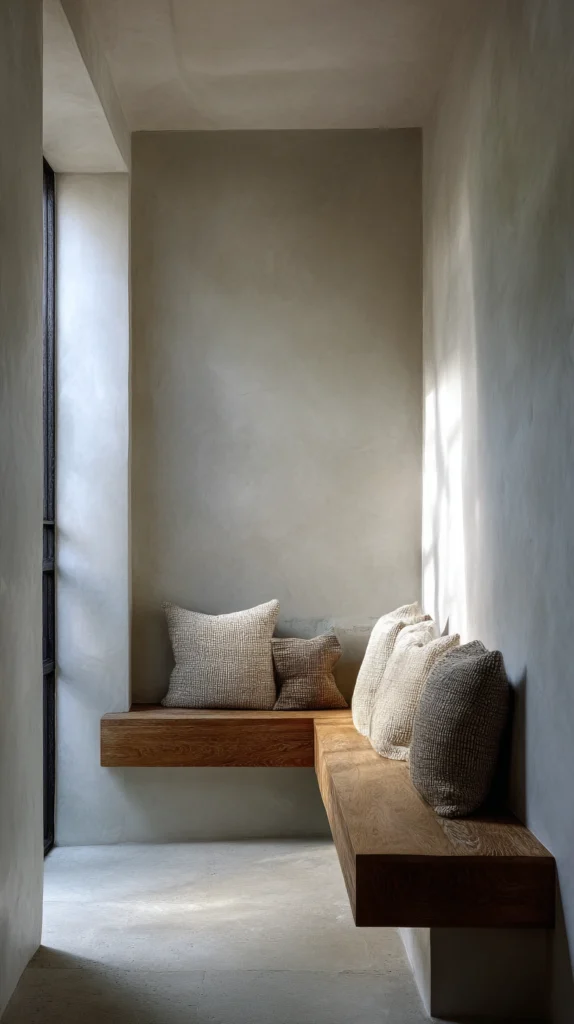
A bench built into the corner where two walls or fence panels meet — using the walls as the back and one side of the seating nook, with a simple timber seat and a fitted cushion, and planting in a container or a narrow border along the open side — creates the most architecturally efficient and most shelter-complete of all backyard seating arrangements. The two-wall corner provides wind protection from two directions simultaneously and creates the enclosure that makes a seating position feel like a room rather than a chair in a garden.
A built-in timber bench in a corner costs $80–$300 in materials and basic carpentry. A fitted outdoor cushion runs $30–$80. Container planting along the open side costs $20–$60. The corner bench should be at exactly 43–45 centimetres in seat height — the height that allows the feet to rest flat on the ground and the back to rest comfortably against the wall without the person feeling either elevated or sunken into the seat.
Style tip: Paint the two walls that form the corner in a deeper or more saturated version of the surrounding fence colour — the darker tone makes the corner feel more enclosed and more intentional as a seating position. A corner that is the same colour as the surrounding fence reads as a coincidental meeting of two fence panels; one where the corner is treated differently reads as a designed alcove.
4. The Hammock Under the Tree
Budget: $30 – $200
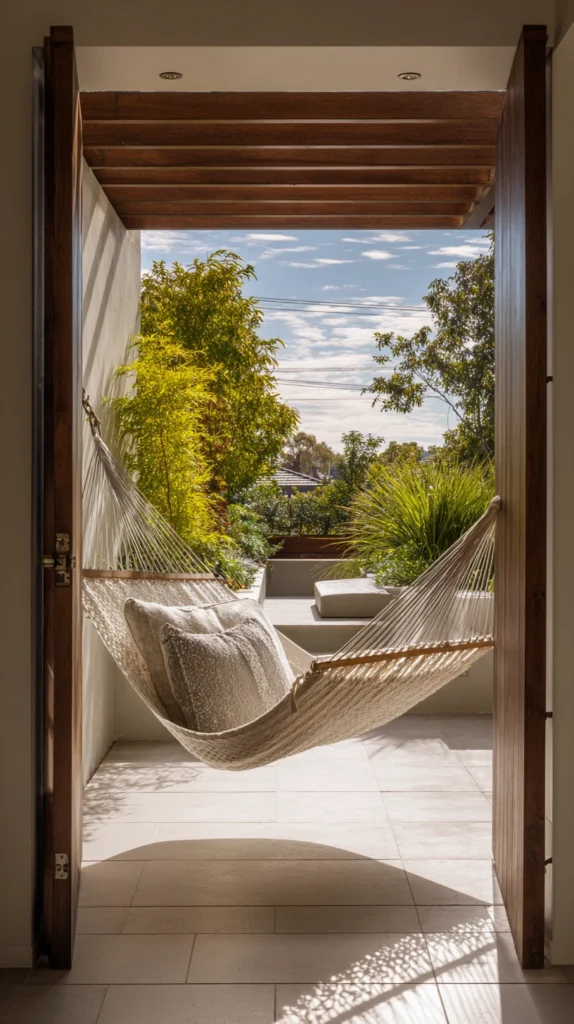
A hammock strung between two established trees — at the height and the tension that creates the correct curve when occupied, facing the best view the garden offers, with a side table or a flat stone within reach — is the simplest and most perfectly calibrated outdoor seating available to any garden with two suitable trees. The specific pleasure of a hammock — the gentle movement, the view of the canopy from below, the specific quality of being held by the garden rather than resting on it — is not reproducible by any other form of outdoor furniture at any price.
A good quality cotton or polyester hammock costs $25–$70. Tree straps that protect the bark and allow adjustable positioning cost $10–$20 per pair. A low side table or a flat stone within arm’s reach costs $0–$30. The hammock should be hung so the lowest point when occupied is 30–45 centimetres from the ground — lower than most people hang their hammock on the first attempt and the height that most correctly replicates the relaxed, almost-ground-level quality of the hammock experience.
Style tip: Hang the hammock so the occupant looks toward the west — the direction of the evening sun in the northern hemisphere — so the light falls on the face rather than in the eyes during the hours of longest outdoor use. A hammock that faces the setting sun provides the specific quality of evening light from the lying position that makes the hammock not just comfortable but genuinely beautiful to be in.
5. The Covered Porch Reading Corner
Budget: $80 – $400
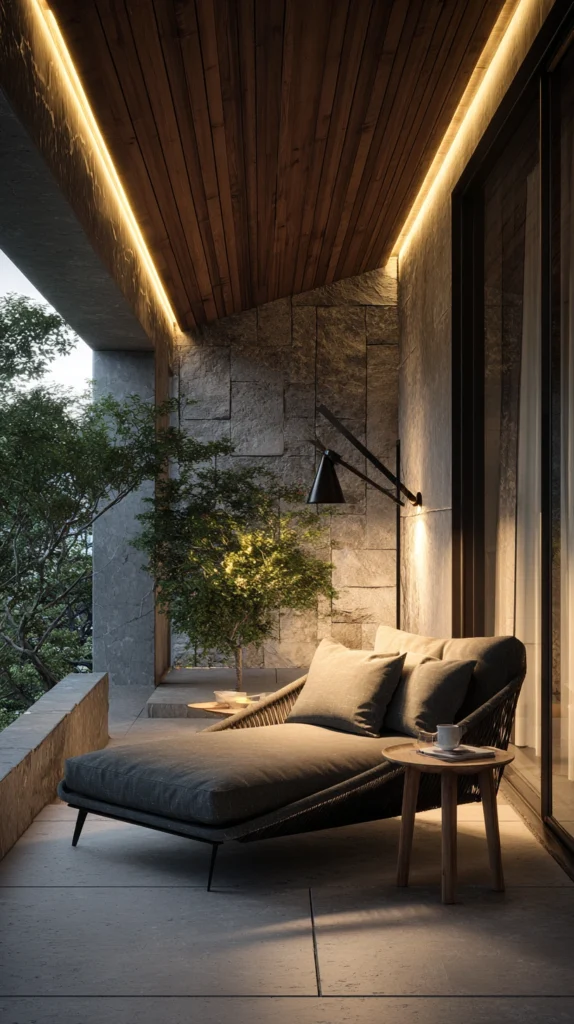
A reading corner on a covered porch or under an awning — a single armchair of genuine outdoor quality, a small side table, a weather-resistant lamp for evening reading, and a container of fragrant planting beside it — creates the backyard seating that is most consistently used because it is most consistently accessible. A covered reading corner can be used in light rain, in direct sun, in the cool hours of early morning and late evening — the full range of outdoor conditions that an uncovered seat cannot accommodate.
An outdoor armchair of genuine comfort — seat depth at least 75 centimetres, cushion thickness at least 80 millimetres — costs $80–$300. A small side table runs $20–$60. A weatherproof table lamp or a solar-powered reading light costs $20–$60. A container of scented plants beside the chair costs $15–$40. The reading corner should be positioned to receive the best natural light in the covered area — the position closest to the edge of the roof where the diffuse light is brightest rather than the position deepest under the cover where the light is lowest.
Style tip: Keep a small weatherproof basket beside the reading chair containing a throw, a spare book, and whatever else makes the seating position self-sufficient — the outdoor seating that requires multiple trips to the house to assemble its comfort is the seating that is used for twenty minutes; the one that has everything needed within arm’s reach is the one that is used for hours.
6. The Treehouse or Elevated Platform Seat
Budget: $200 – $2,000
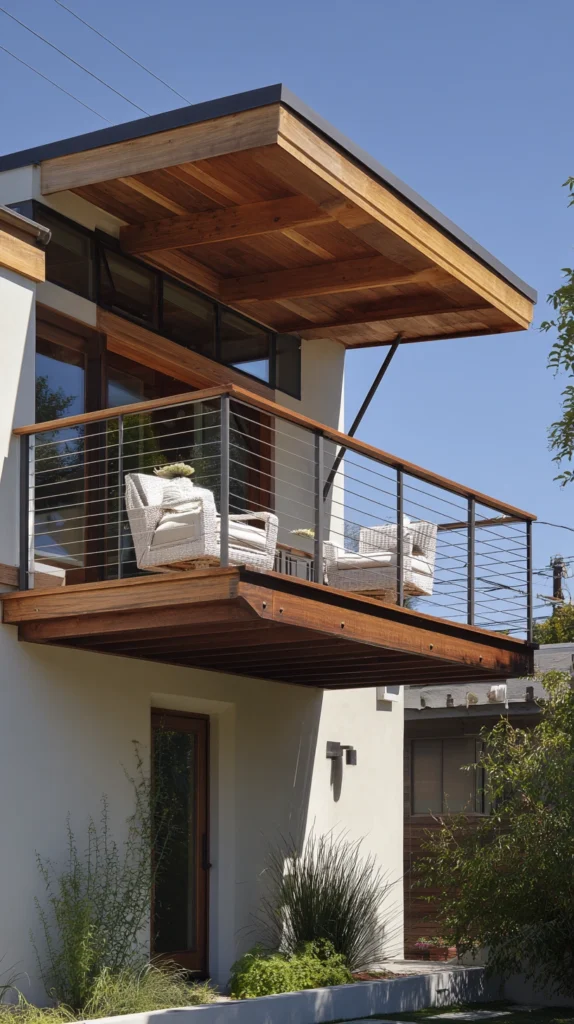
A simple elevated platform — not a full treehouse but a timber deck raised on posts to 120–180 centimetres above the garden level, accessed by a short staircase, with a railing on three sides and a pair of chairs on the deck — creates the outdoor seating position with the most specifically different quality of any seat in the garden. The elevated position provides a view of the garden from above rather than across it, creates a sense of separation from the garden at ground level, and produces the specific pleasure of sitting above the heads of the surrounding planting.
A simple raised platform of 2 by 2 metres on four treated timber posts costs $200–$800 in materials and basic carpentry. A railing on three sides runs $80–$200. Two chairs on the deck cost $60–$200. A climbing plant trained up each post provides the vertical element that connects the elevated platform to the garden rather than making it feel like a raised stage in a garden.
Style tip: Position the raised platform so it looks over the garden’s most interesting element — the planted border, the water feature, the wildflower meadow — rather than over the fence or the back wall of the house. The view from the elevated position is the primary quality of the elevated seat, and a view worth looking at from above is a view that justifies the height of the structure.
7. The Secret Garden Bench
Budget: $60 – $300
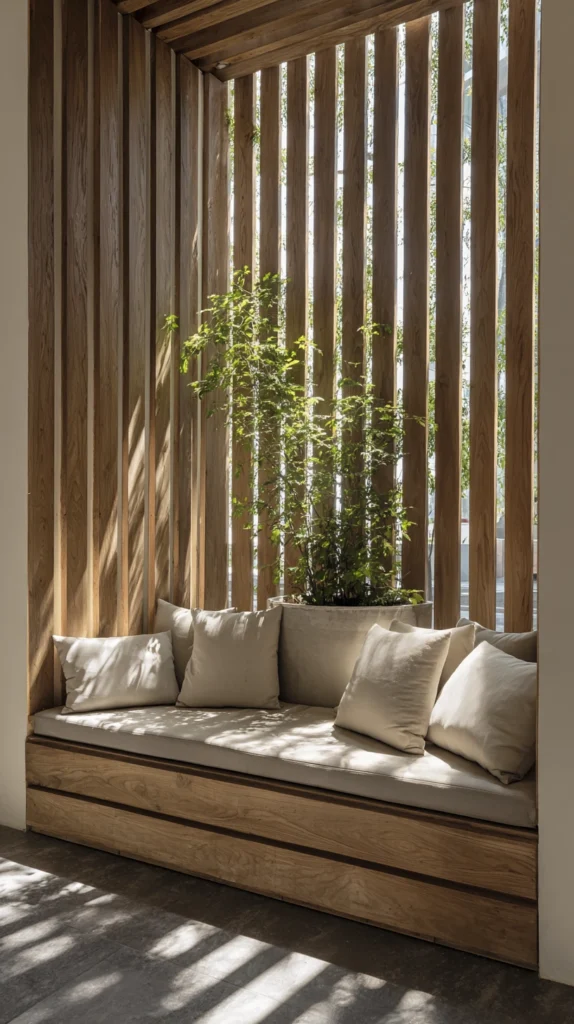
A bench positioned behind a screen of planting — tall grasses, a hedge, a trellis with dense climbing plant coverage — so that it is not visible from the main garden and can only be found by following the path that leads to it, creates the most specifically private and most specifically retreat-like of all backyard seating positions. The hidden bench is the seat that people seek rather than the seat they use when passing. The discovery of it on entering the garden for the first time produces a quality of pleasure that no visible seat can replicate.
A simple timber bench costs $60–$200. Screening planting — tall ornamental grasses, a run of lavender, a trellis with a climbing rose — costs $40–$150 to establish. The screening needs to be dense enough to genuinely conceal the bench from the main garden rather than suggesting its presence. A bench that is slightly visible through thin screening communicates an attempt at concealment rather than actual concealment.
Style tip: Place something fragrant immediately beside the secret bench — a pot of jasmine, a climbing rose at arm’s reach, sweet peas on a small frame — so the discovery of the bench is accompanied by the discovery of fragrance. A bench found by following a path and then scented when arrived at is a seating position of complete sensory experience; one that is merely hidden is only half the secret garden idea.
8. The Outdoor Sofa with Deep Cushions
Budget: $300 – $1,500
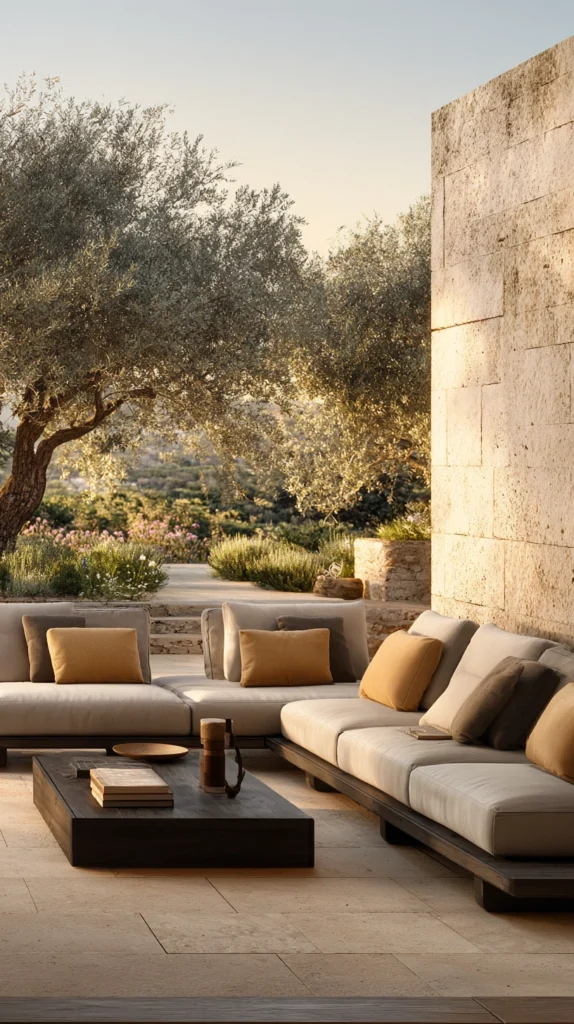
A proper outdoor sofa — with seat cushions of at least 80 millimetres in thickness, back cushions of genuine depth, and a structure that supports a genuinely reclined position rather than an upright one — is the backyard seating investment that most directly produces the never-wanting-to-leave quality. The quality of the cushion is the specification that most determines whether the sofa is used for thirty minutes or three hours, and a cushion that is thick enough for genuine comfort at the two-hour mark is the investment that justifies every other element of the outdoor seating arrangement.
An outdoor sofa with quality cushions costs $400–$1,200. A set of replacement thick cushions for an existing outdoor sofa frame runs $100–$300. A low coffee table within reach of the seated position costs $60–$200. An outdoor rug beneath the sofa and coffee table arrangement costs $60–$150. The sofa should face outward toward the garden rather than toward the house or toward another piece of furniture — the outward orientation gives the sofa the quality of a seat with a view rather than a seat facing another seat.
Style tip: Choose solution-dyed acrylic fabric for the outdoor sofa cushions rather than standard polyester. Solution-dyed acrylic resists UV fading for considerably longer than polyester — the colours remain vivid through five or more seasons of sun exposure where polyester begins to fade within the first. The cushion fabric quality is the specification that determines the long-term appearance of the outdoor sofa rather than its initial quality.
9. The Cabin or Garden Room Seat
Budget: $500 – $5,000
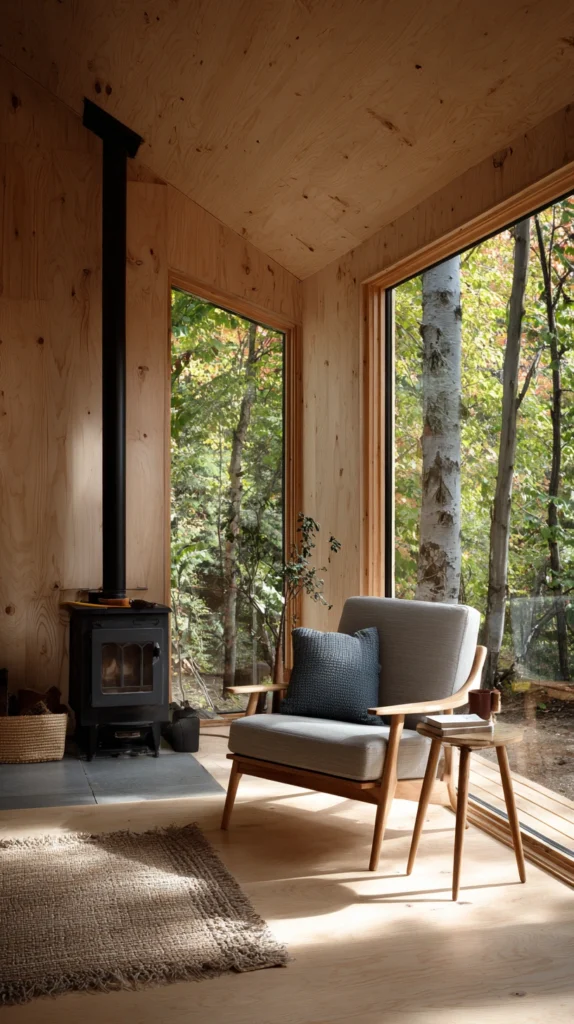
A garden cabin or a garden room — a simple timber structure with a door and a window, furnished with a comfortable chair, a small wood-burning stove, and a reading light — creates the most weather-independent and most genuinely year-round of all backyard seating options. The garden cabin is not merely outdoor seating; it is a room in the garden, and its ability to be used in every season and in every weather condition makes it the seating investment with the longest annual return of anything on this list.
A basic timber garden cabin of 3 by 2 metres costs $1,500–$4,000 including installation. A DIY version using timber frame construction costs $500–$1,500 in materials. A small wood-burning stove for the cabin costs $200–$600. A comfortable armchair that suits the cabin size runs $80–$300. The cabin is the seating investment that requires the most upfront commitment and produces the most consistently used outdoor seat — the garden room with a stove is used in February as well as in August.
Style tip: Orient the cabin window and the cabin door toward the most interesting garden view rather than toward the house. A cabin that looks back at the house communicates a retreat from the garden; one that looks into the garden communicates a retreat into it. The direction the cabin faces determines what the seating experience within it is.
10. The Rope Swing Seat
Budget: $30 – $150
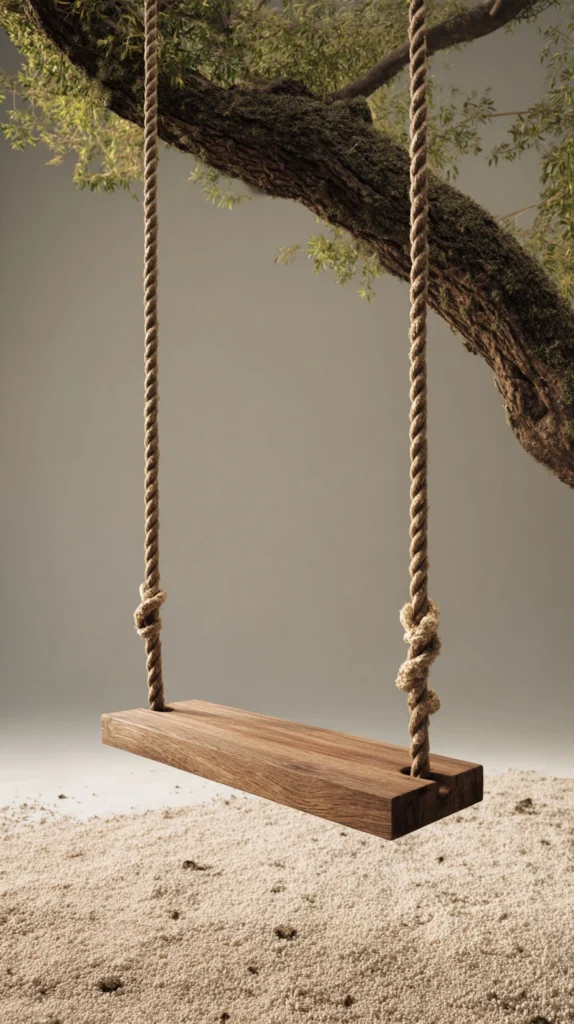
A rope swing hung from a strong branch — with a wide, comfortable timber seat, ropes of sufficient length to produce a gentle arc, and positioned over soft ground or bark chip — creates the most playfully joyful of all backyard seating options and the one that attracts the broadest range of occupants from the youngest to the oldest. A rope swing in a garden communicates a garden that was designed for the pleasure of being in it rather than the impressiveness of looking at it, and the specific pleasure of swinging in a garden — the movement, the change of view with each arc, the specific quality of being in the air — is not reproducible by any stationary seat.
A solid timber swing seat of 50 by 20 centimetres costs $15–$40. Natural rope of 25 millimetres diameter costs $3–$8 per metre — a swing of 2 metres in height requires 5 metres of rope. A tree surgeon’s assessment of the branch from which the swing will hang costs $50–$100 if the branch’s soundness is uncertain. The rope must be tied with a load-bearing knot — a bowline or a round turn with two half hitches — rather than a domestic knot that will slip under dynamic loading.
Style tip: Hang the swing so the arc carries the occupant into a view rather than into a fence or a wall. The forward arc of the swing should reveal the most open and most pleasant view the garden provides — the moment of maximum forward swing is the moment of maximum view, and the view that the swing delivers at its apex is the experience that makes the rope swing genuinely joyful rather than merely functional.
11. The Built-In Bench Around the Fire Pit
Budget: $150 – $800
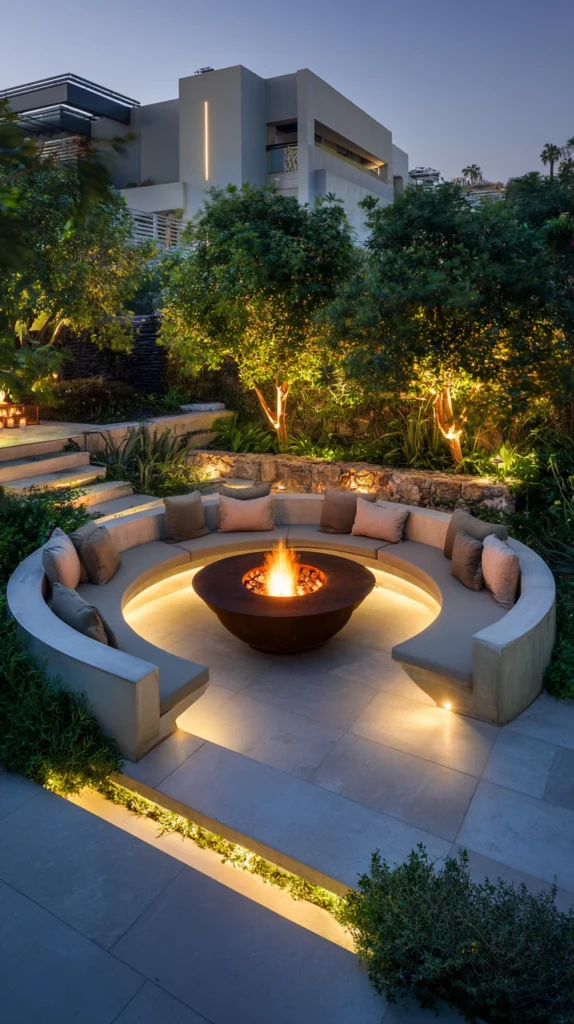
A fire pit surrounded by built-in bench seating — fixed curved or straight benches arranged in a three-quarter arc, with the fire at the centre and the open side facing the approach from the house — creates the most social and most specifically fire-centred of all backyard seating arrangements. The built-in bench communicates that the fire pit was designed as a destination rather than as a moveable piece of equipment, and the circular seating arrangement around the fire is the configuration in which people most naturally and most comfortably gather.
Built-in timber benches on three sides of a fire pit cost $100–$400 in timber and basic carpentry. A steel or stone fire pit costs $40–$150. Seat cushions for the built-in bench runs $30–$60 per section. The bench height should be 43–45 centimetres — the same comfortable seat height for a fire-side bench as for any other bench — and the distance from the bench front edge to the fire pit centre should be at least 1.5 metres to prevent discomfort from radiant heat.
Style tip: Face the open side of the three-quarter arc toward the house approach so arriving guests see the fire from the direction of arrival rather than approaching it from behind the bench. A fire that is visible on approach creates the invitation quality of a lit fire seen from a distance; one positioned so that guests arrive behind the seating must find their way around the bench before the fire becomes visible.
12. The Meadow Clearing Seat
Budget: $20 – $150
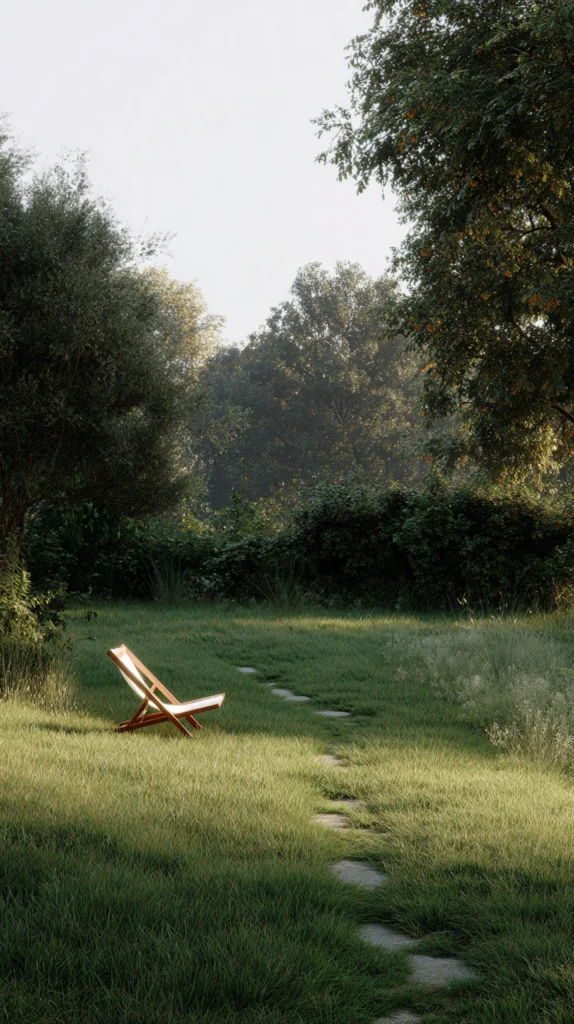
A seating position within a wildflower meadow or a long-grass area — reached by a mown path, with a flat mown circle of grass as its floor and a simple folding chair or a blanket — creates the most immersive and most seasonally specific of all backyard seating experiences. The meadow seat is enclosed by the height of the surrounding grasses and flowers, is invisible from the main garden, and provides the specific quality of being inside the planting rather than beside it — the experience that makes the meadow seat genuinely different from any other garden seating position.
A mown circle of 2 metres in diameter within a meadow area requires no materials — only a lawn mower and the decision to stop mowing the surrounding area in April. A simple folding chair costs $20–$60. A solar lantern for evening visits costs $10–$25. A flat stone as a side surface costs $0–$10. The meadow seat exists only from June to August — the weeks when the surrounding meadow is at full height — and its seasonal nature is part of its specific quality rather than a limitation.
Style tip: Mow the path to the meadow seat in a curve rather than a straight line so the seat is not visible from the entrance to the path. The curved path creates the anticipation of discovery — the seat is known to be somewhere along the path but is not seen until the last turn — and that anticipation is the quality that makes arriving at the meadow seat genuinely pleasurable rather than simply convenient.
13. The Balcony Edge Bench with View
Budget: $80 – $400
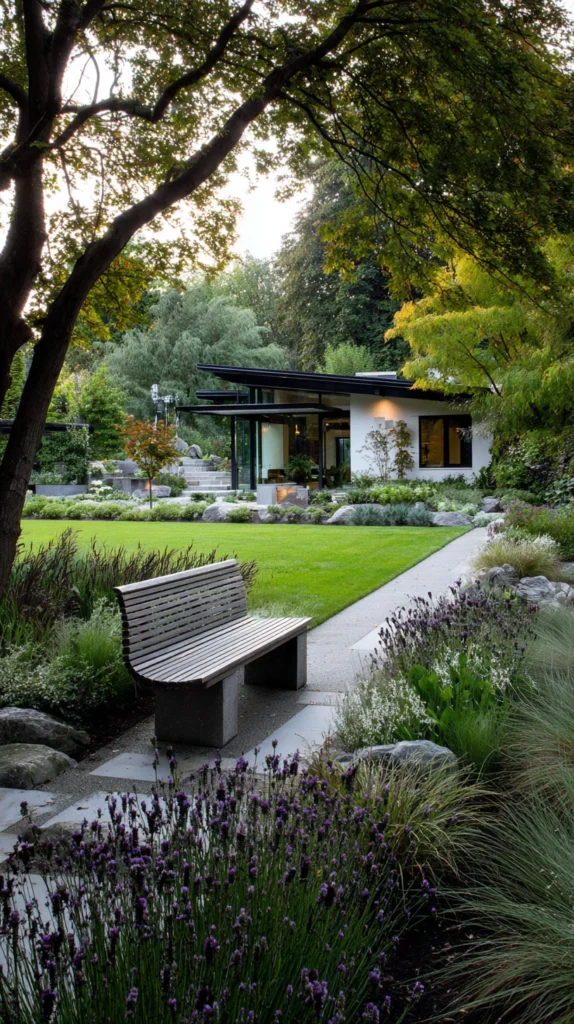
A bench positioned at the edge of the garden furthest from the house — facing back toward the house, the garden between the seat and the house visible in its entirety from this position — creates the seating arrangement that provides the most complete view of the garden from within it. The far-edge bench is the garden seen from the other direction, and the garden seen from the far end toward the house is always a more interesting and more complete composition than the garden seen from the house toward the far end.
A simple timber bench costs $60–$200. A planted border behind the bench — providing the backdrop against which the garden view in the opposite direction is experienced — costs $40–$150. The far-edge bench should face the house directly rather than at an angle — the full-face view of the house and the garden between is the most architecturally complete garden view available from this position.
Style tip: Plant the area immediately behind the far-edge bench with tall, fragrant species — a climbing rose on the fence, a shrub rose, lavender — so the seated person has fragrance from behind while the garden view lies ahead. The combination of the fragrant backdrop and the garden view ahead creates a seating position of genuine sensory completeness.
14. The Terrace Steps Seating
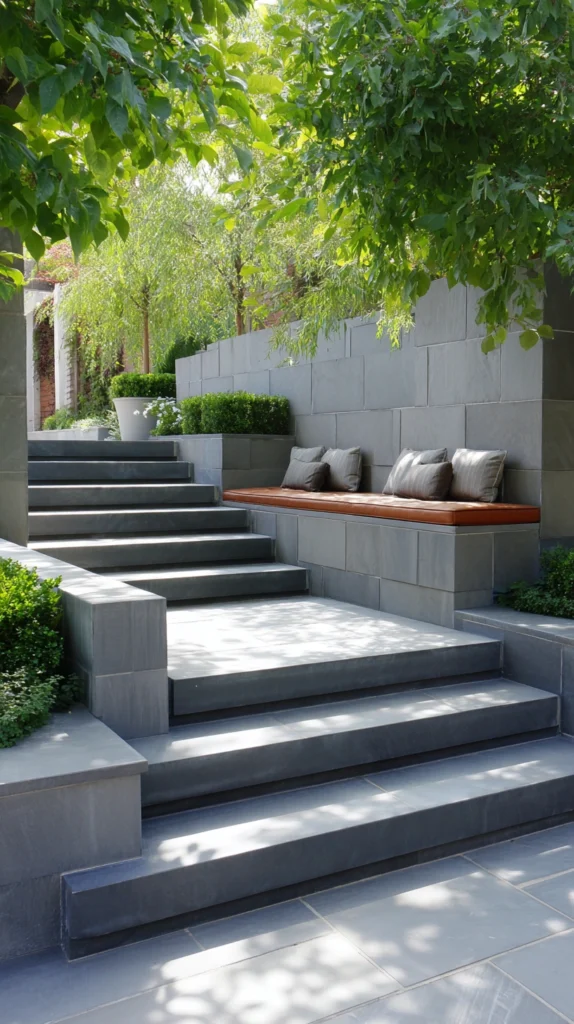
Budget: $100 – $600
Wide, generously proportioned garden steps — broad enough to sit on comfortably with cushions, designed at a riser height of 15–18 centimetres and a tread depth of 40–50 centimetres — create the most informal and most spontaneously used seating in the backyard. Garden steps that are also seating do not need furniture placed on them to be used — they invite sitting simply by being wide enough and at the right proportion. A set of broad garden steps is always more used than a bench placed at the same position.
Broad garden steps in natural stone cost $40–$80 per step in materials. Rendered concrete steps with a stone cap run $30–$60 per step. A run of three steps of 1.5 metres in width costs $120–$300 in materials. Add outdoor cushions for the top step — $20–$40 each — to transform the steps from informal perching into genuinely comfortable sitting. The outdoor cushions on the top step communicate that the steps were designed as seating rather than merely as transition between levels.
Style tip: Plant the border immediately adjacent to the steps with low fragrant planting — creeping thyme, chamomile, lavender — so the fragrance is at nose level when seated on the steps. The fragrant step-side planting is the detail that makes sitting on the garden steps a genuine sensory experience rather than an informal perching position.
15. The Outdoor Snug with Curtains
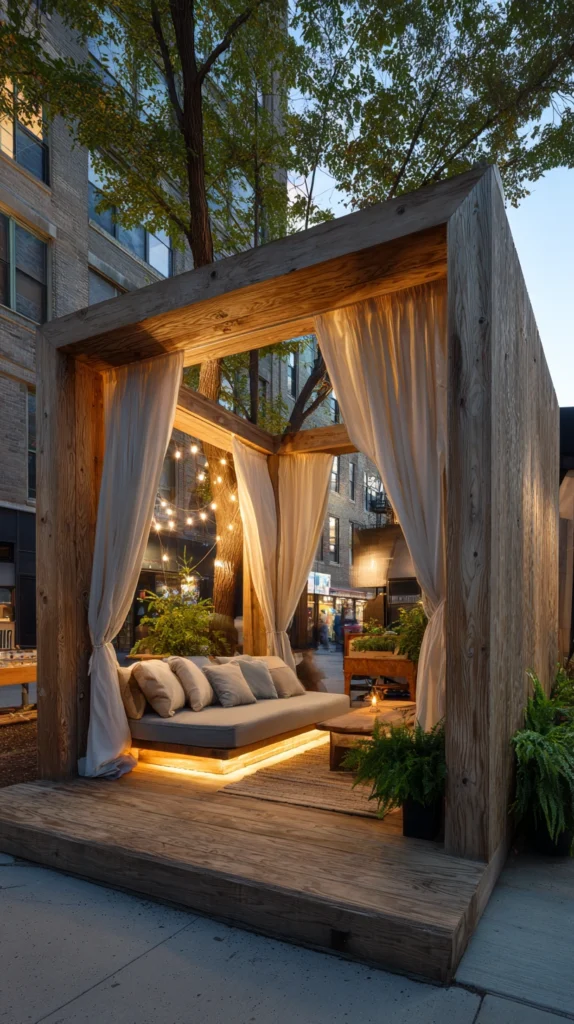
Budget: $100 – $600
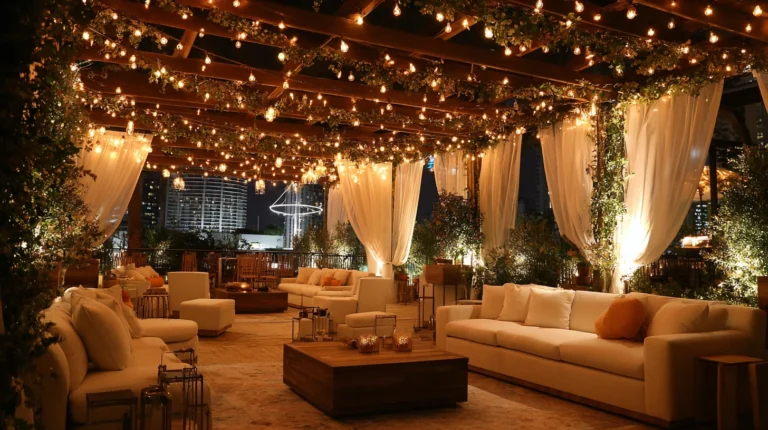
A seating nook enclosed on three sides by a timber frame with weather-resistant curtain panels — providing soft-sided enclosure that can be opened fully in good weather and partially closed against wind and light rain — creates the coziest and most interior-like of all backyard seating arrangements. The curtained outdoor snug replicates the specific quality of interior comfort — the soft walls, the sense of enclosure, the warmth of contained air — in an outdoor setting, and the ability to draw the curtains against the evening chill extends the usable outdoor season considerably.
A timber frame of three sides and a roof beam costs $80–$300 in timber and basic construction. Outdoor curtain panels in a weather-resistant fabric run $25–$60 per panel — six panels for three sides of the snug costs $150–$360. A day bed or a pair of armchairs inside the snug costs $100–$400. String lights along the frame interior cost $10–$25. The curtained snug becomes its own world when the curtains are partially drawn — its own light, its own warmth, its own view of the garden through the gap between the curtain panels.
Style tip: Choose curtain panels in a warm, earthy colour — terracotta, warm ochre, deep green, or warm charcoal — rather than a cool white or grey. A warm-coloured curtain creates a warm ambient light inside the snug when the sun passes through it, giving the enclosed space the specific quality of warmth and comfort that the outdoor snug is designed to produce. Cool white curtains produce cool light and a clinical quality that undermines the cozy intention entirely.
The outdoor seating you never want to leave is not the most expensive seat or the most elaborately designed nook. It is the seat where the specific decisions were right — the direction it faces, the fragrance beside it, the quality of the cushion at the two-hour mark, the light at the right time of evening, the enclosure from the prevailing wind, the view that makes looking outward from it genuinely worth doing.
Find the position in the garden that most of these qualities are already present in. Give it a seat of genuine comfort. Plant something fragrant beside it. Give it light for the evening. Shelter it on two sides. And then use it — the seat that is genuinely used every time the garden allows is the seat that becomes the most loved place in the outdoor space, which is the only measure of outdoor seating that matters.