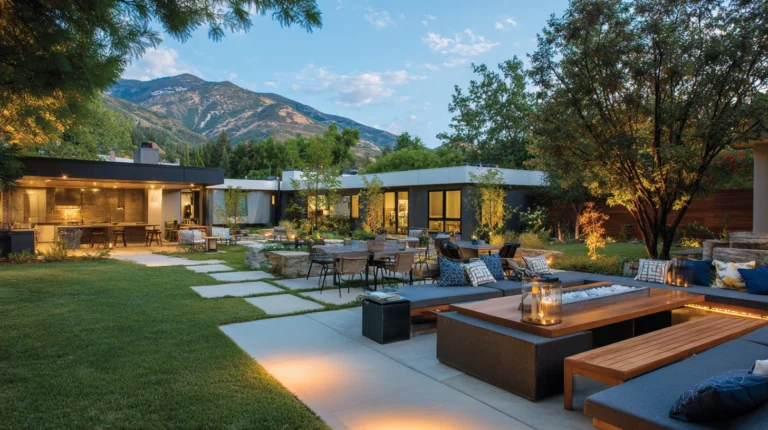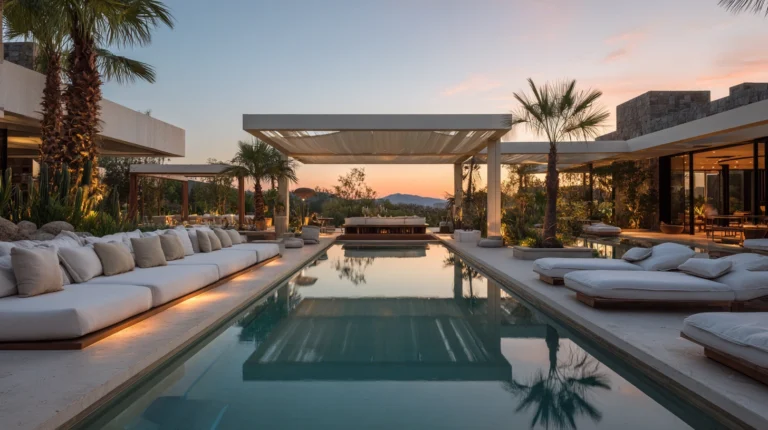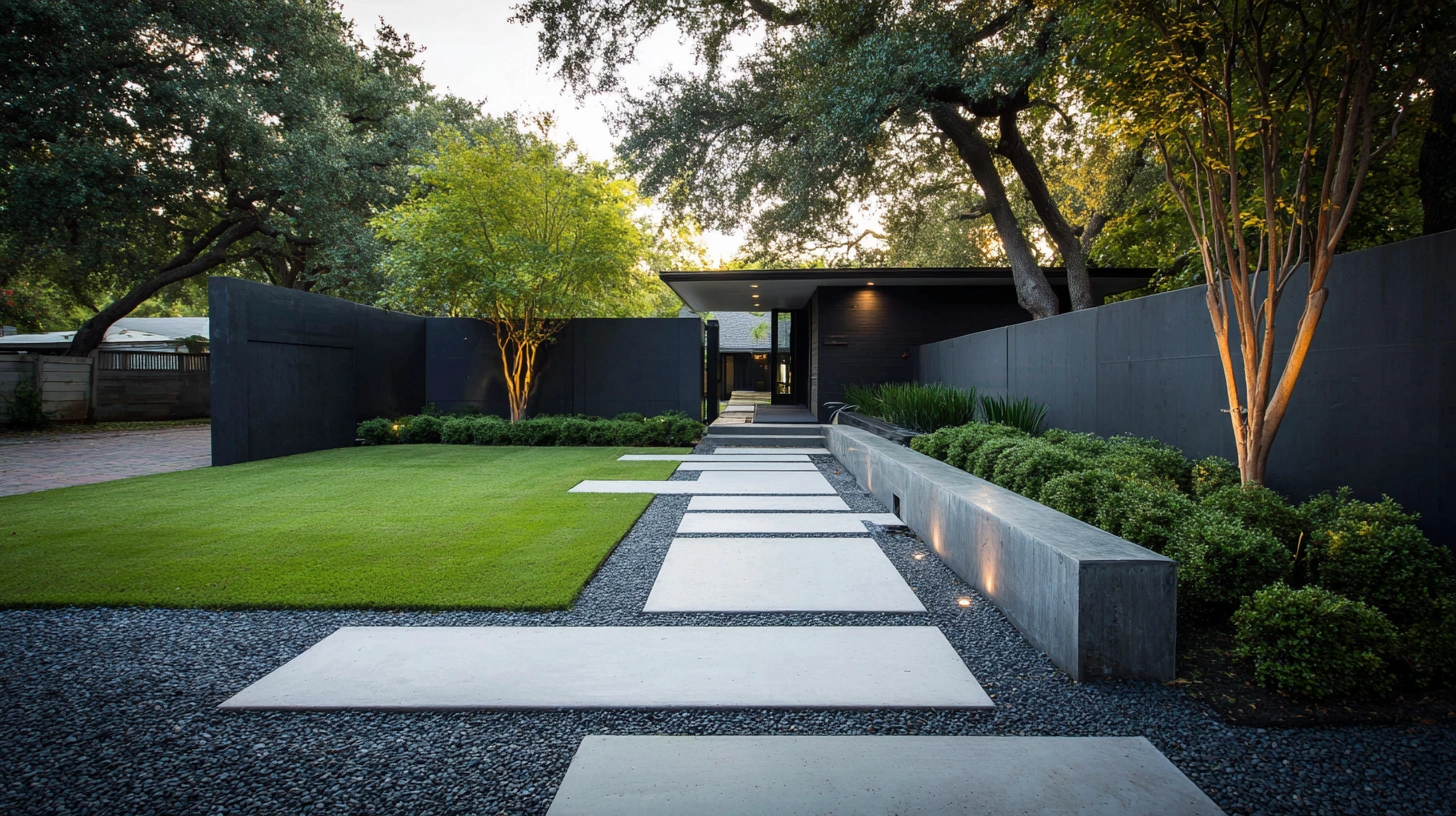
14 Backyard Landscaping Ideas That Boost Curb Appeal Instantly
14 Backyard Landscaping Ideas That Boost Curb Appeal Instantly
There is a particular satisfaction that comes from a garden that looks genuinely considered from the first moment of arrival — not because it is elaborate or expensive but because it communicates that someone thought about it.
The planted bed that is clearly planted rather than overgrown. The path that leads somewhere with intention. The lawn edge that was cut recently and straight. The fence that was painted in a colour that suits the house rather than the colour it happened to be.
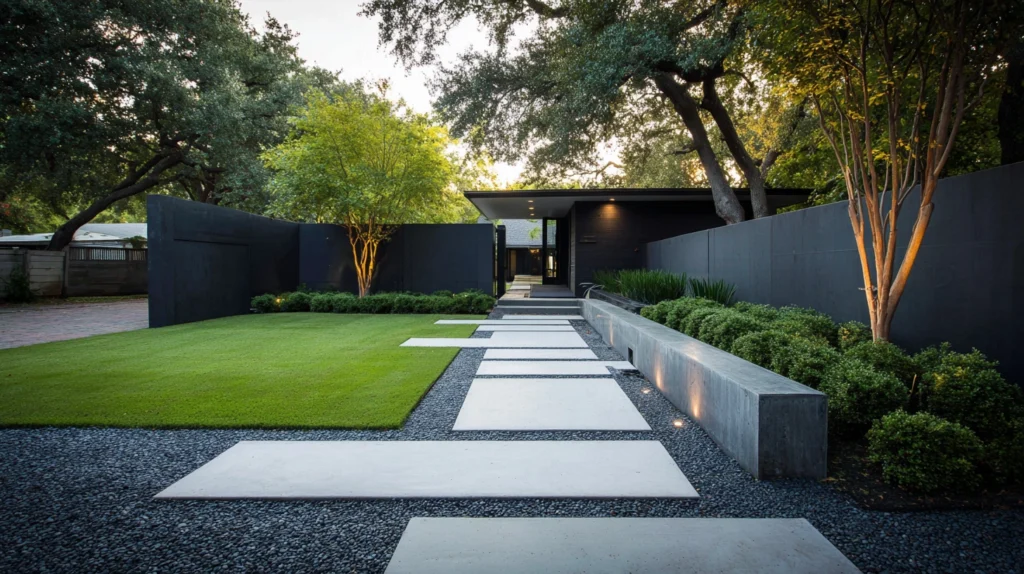
Curb appeal in a backyard is a slightly different proposition from curb appeal at the front of the house. The backyard is not seen from the street — it is seen from the gate, from the back door, from the kitchen window, from the garden seat of the neighbouring property.
It is the first thing guests see when they are brought through the house to the outdoor space, and it determines the impression of the entire garden within the first few seconds of that view. A backyard with strong curb appeal makes every hour spent in it more enjoyable because the space communicates quality and intention before a single chair is sat in.
Each idea below is a specific approach to one element of backyard landscaping that produces an immediate improvement in the visual quality and the perceived care of the outdoor space. Each includes what you will need, what it will cost, and a practical tip to make the improvement work as well as the garden it is reaching for.
1. The Defined Lawn Edge
Budget: $15 – $60
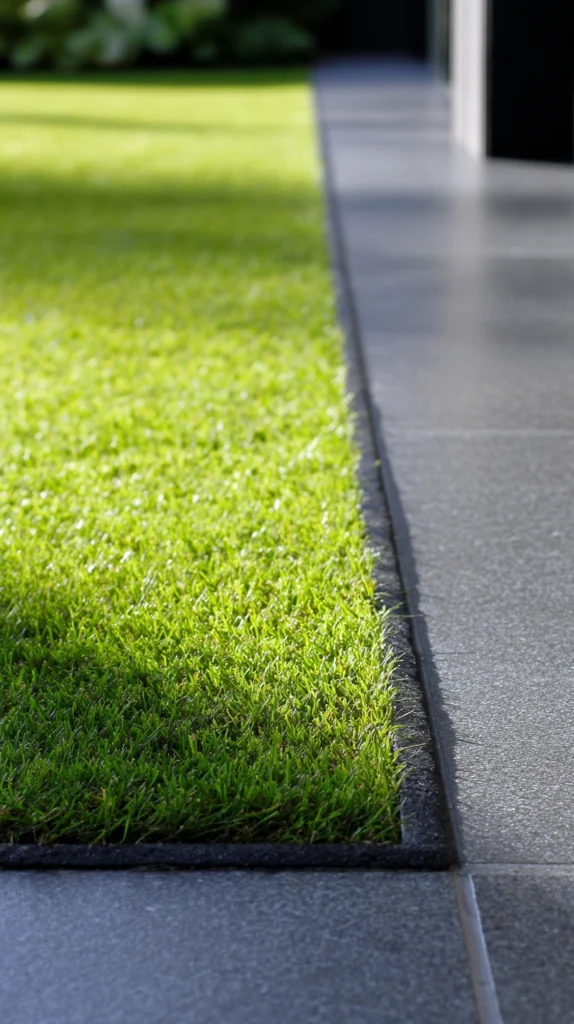
A cleanly cut lawn edge — the sharp vertical boundary between the grass and the planted border, maintained with a half-moon edger or a long-handled edging tool — is the single most immediately visible indicator of a garden that is cared for. The defined edge communicates that the garden was attended to recently, that someone made the specific effort to separate the lawn from what surrounds it, and that the distinction between the two was considered worth maintaining. A lawn with poor edges looks neglected regardless of how well everything else in the garden is managed.
A half-moon lawn edger costs $12–$25. A long-handled rotary edging tool runs $20–$50. The edging process takes twenty to thirty minutes for a standard backyard and should be performed every two to three weeks through the growing season. A single edging session before guests arrive transforms the perceived quality of the entire lawn without any other change to the garden.
Style tip: Cut the edge at a slight inward bevel — the top of the grass slightly overhanging the soil below — rather than perfectly vertical. The bevelled edge sheds rain onto the border rather than into the lawn, reduces the frequency of soil collapse into the cut, and reads as a more confident and more precisely maintained edge than the vertical cut.
2. The Planted Entrance from the Gate
Budget: $40 – $200
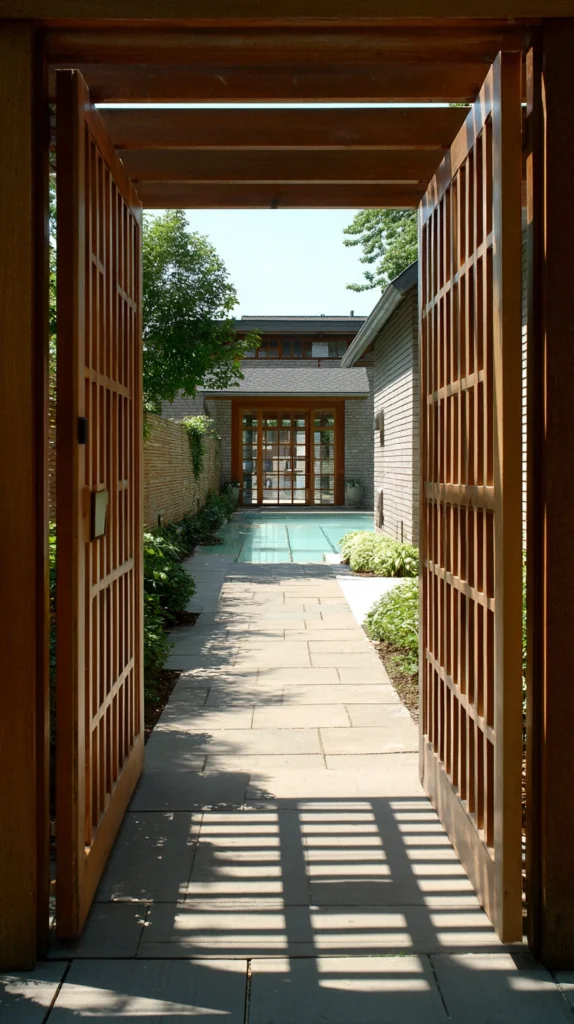
The view from the back gate — the first thing seen when the backyard is entered — determines the impression of the entire garden before a single other element is assessed. A planted border or a pair of statement pots on each side of the gate entrance creates the sense of arrival that a bare gate set into a fence cannot provide. The entrance planting communicates that the garden begins at the gate rather than at the patio.
A pair of large architectural plants in matching ceramic pots — an olive, a clipped box ball, a phormium — costs $40–$120 for the pair including the vessels. A narrow border on each side of the gate entrance planted with lavender or rosemary runs $20–$60. A climbing rose trained to flower at gate height costs $15–$35. The entrance planting should relate to the house and garden style rather than existing independently of it — Mediterranean planting suits a warm-coloured brick house; topiary suits a formal or contemporary house.
Style tip: Position the entrance planting so it partially frames the gate rather than sitting beside it as two independent objects. A plant that leans slightly over the gate or that extends a branch across the entrance creates the quality of passing through something — the sense of a garden threshold — rather than passing beside two separate planted objects.
3. The Fresh Mulch Application
Budget: $30 – $100
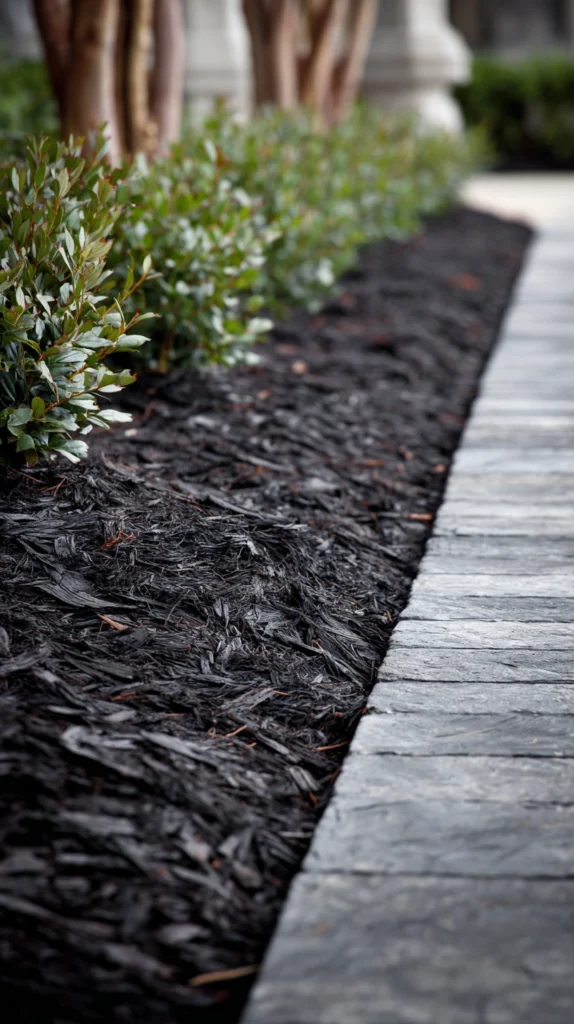
A 5-centimetre layer of fresh bark mulch applied to all planted borders after weeding creates an immediate and dramatic improvement in the visual quality of the garden by providing a consistent, dark, clean background against which every plant reads more clearly and more vividly. Fresh mulch is the garden equivalent of a fresh coat of paint — it makes everything in front of it look better and everything behind it look newer, and it lasts through the full season with minimal maintenance.
Bark mulch costs $8–$15 per bag. A standard backyard with two borders of 3 by 1 metres requires six to eight bags — $48–$120 in mulch. Apply after weeding and after watering the border — mulch applied to a dry soil traps the dryness; mulch applied to a watered soil retains the moisture. Clear all weeds before applying — a weed beneath 5 centimetres of mulch grows through it rather than dying beneath it.
Style tip: Keep the mulch at least 5 centimetres away from the stems and crowns of established plants. Mulch piled against plant stems creates the moist, dark conditions that promote stem rot and crown rot in susceptible species. The gap between the mulch surface and the plant stem is the application detail that makes mulching beneficial rather than damaging.
4. The Painted Fence Transformation
Budget: $40 – $200
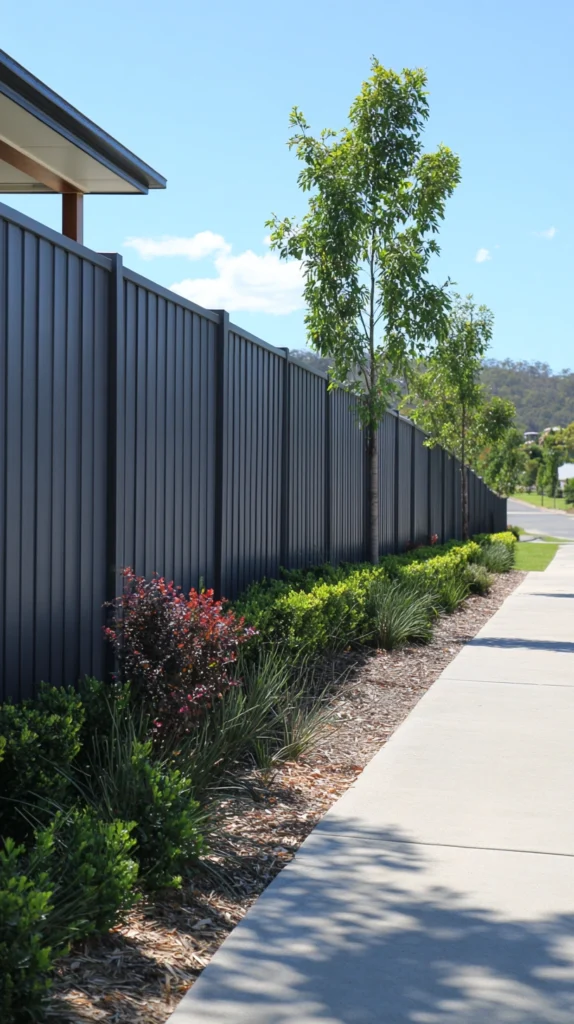
A fence repainted in a considered colour — a warm charcoal, a forest green, a soft sage, a deep navy — rather than left in the weathered brown of an untreated or originally stained timber fence transforms the most omnipresent surface in most backyards from a neutral background into a designed element. The fence colour is the background against which every plant in the border reads, and a fence in the right colour makes every plant look better than it does against an untreated alternative.
A quality exterior timber paint costs $25–$60 per 2.5-litre tin — enough for a standard fence run of 10–12 panels with one coat. A second coat runs the same cost. Forest green is the fence colour that most consistently makes planting read well against it — the green of the fence relates to the green of the foliage and gives the flowers the maximum contrast to read against. Charcoal and black also perform well. Brown and beige provide the least contrast and the least improvement to the planting in front of them.
Style tip: Paint the fence in dry weather with a minimum temperature of 8 degrees Celsius and allow two full days of drying time before the first rain. Exterior timber paint applied in damp conditions or at low temperatures does not bond correctly to the timber surface and begins to peel within the first season — the same paint applied in the correct conditions lasts five to seven years without significant deterioration.
5. The Symmetrical Planting Moment
Budget: $30 – $150
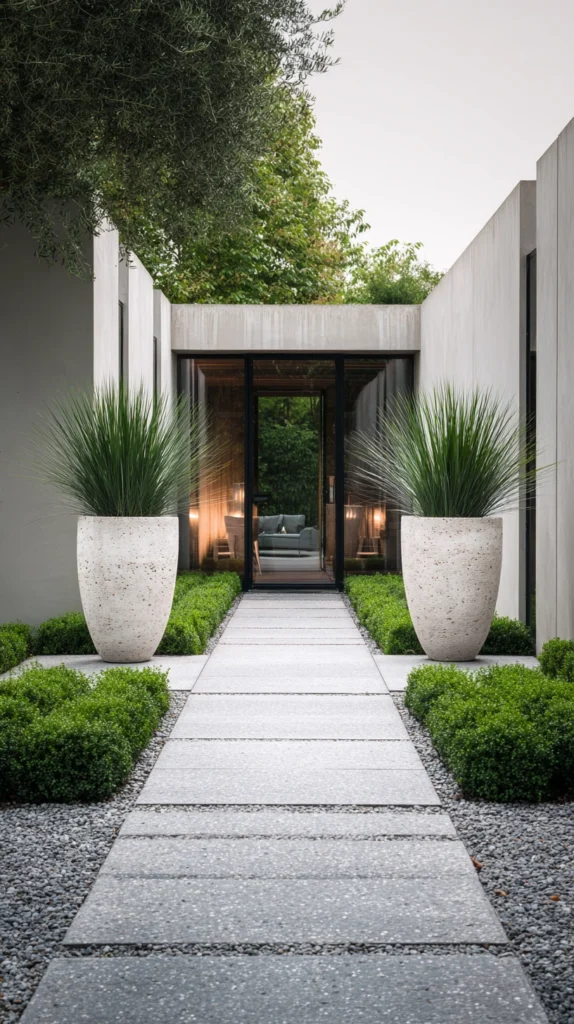
A single moment of bilateral symmetry in the backyard — two matching pots flanking the back door, two identical trained plants on either side of a gate, a pair of standard roses at the entrance to the seating area — creates the visual organisation that gives the garden a quality of deliberate design rather than organic accumulation. Symmetry communicates intentionality more directly than any other compositional principle, and even a small symmetrical element in a largely informal garden produces a quality of considered design that asymmetric planting alone cannot.
A pair of matching ceramic or terracotta pots costs $20–$80. A pair of standard-trained box balls runs $40–$120. A pair of lavender plants in identical pots costs $20–$50. The symmetrical moment works most effectively at the most significant threshold in the backyard — the back door, the gate entrance, or the transition from the lawn to the patio — rather than at an arbitrary position in the middle of the garden.
Style tip: Maintain the symmetrical planting moment with consistent care for both plants — the same pruning schedule, the same watering regime, the same feeding programme. A symmetrical pair where one plant is larger, healthier, or more clipped than the other communicates worse than no symmetry at all, because the failed symmetry reads as an intention that was not fulfilled rather than as an informal arrangement that was never attempting bilateral composition.
6. The Specimen Tree or Shrub Focal Point
Budget: $30 – $200
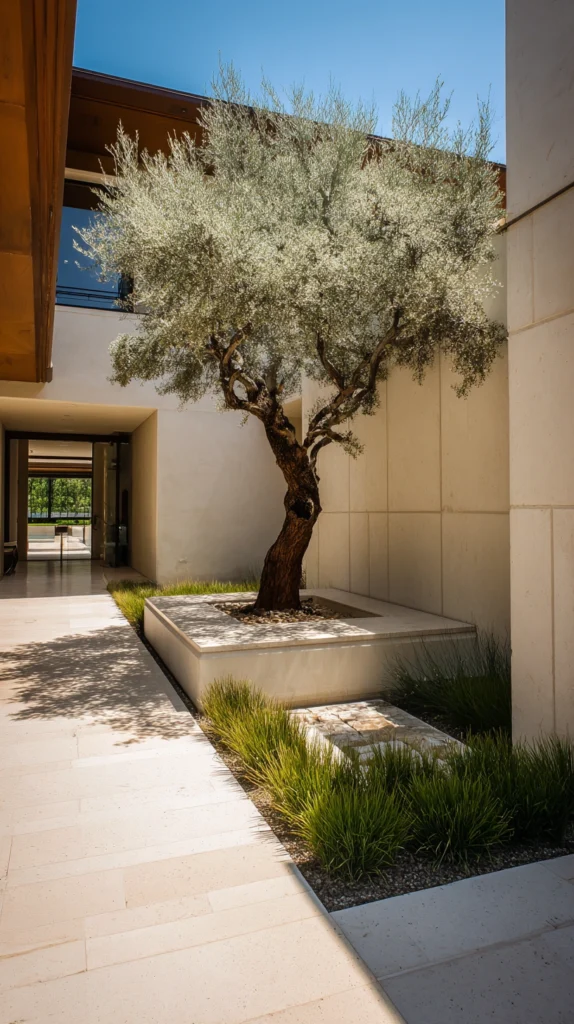
A single specimen plant — a Japanese maple, a standard-trained olive, a multi-stem birch, a cloud-pruned box — positioned at the visual focal point of the backyard creates the garden’s primary structural element and the feature that the eye finds first on entering the space. The specimen plant is the garden’s full stop — the element that all other elements are arranged around — and its presence gives the backyard the quality of organisation and intention that a garden without a focal point consistently lacks.
A Japanese maple in a 5-litre pot costs $30–$80. A standard-trained olive runs $60–$200. A multi-stem silver birch costs $80–$300. A cloud-pruned box ball costs $40–$150. Position the specimen at the point of the garden that is most visible from the primary indoor viewpoint — the kitchen window, the back door — as well as from the garden seat. The specimen that is seen from both inside and outside the house earns its position in both contexts simultaneously.
Style tip: Underplant the specimen tree or shrub with a low, contrasting ground cover that extends from the base of the plant outward — a ring of white alyssum beneath a dark Japanese maple, a circle of blue ajuga beneath a silver birch. The underplanting gives the specimen a designed base that the bare soil beneath it never provides and creates the impression of a plant that was placed with attention rather than positioned without context.
7. The Gravel Garden Extension
Budget: $100 – $400
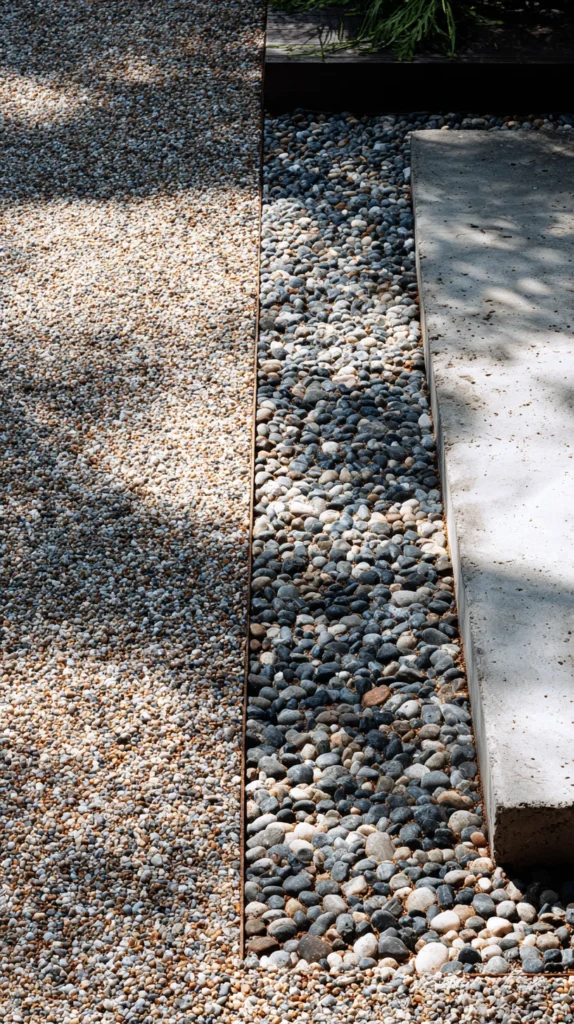
Extending the patio with a gravel area — or replacing a struggling section of lawn with a well-planted gravel garden — creates additional hard-standing without the cost and formality of additional paving and without the maintenance of the lawn it replaces. Gravel planted with architectural and drought-tolerant species reads as a designed garden area rather than as a gravelled surface, and the transition between the existing patio and the gravel extension creates a softer, more garden-like boundary than a paving-to-lawn edge.
Decorative gravel in a coordinating tone costs $8–$15 per bag. A weed-suppressing membrane runs $10–$20 per roll. Architectural plants for the gravel garden — phormium, agapanthus, lavender, ornamental grasses — cost $10–$30 each. A gravel extension of 10 square metres requires twenty bags of gravel plus plants — $160–$300 in materials.
Style tip: Choose a gravel tone that relates to the patio surface rather than contrasting with it. A gravel that reads from the same warm or cool register as the paving it extends creates the impression of a continuous designed surface with a material transition; one in a contrasting tone reads as two different areas placed beside each other without a considered relationship.
8. The Tidy and Structured Vegetable Patch
Budget: $80 – $300
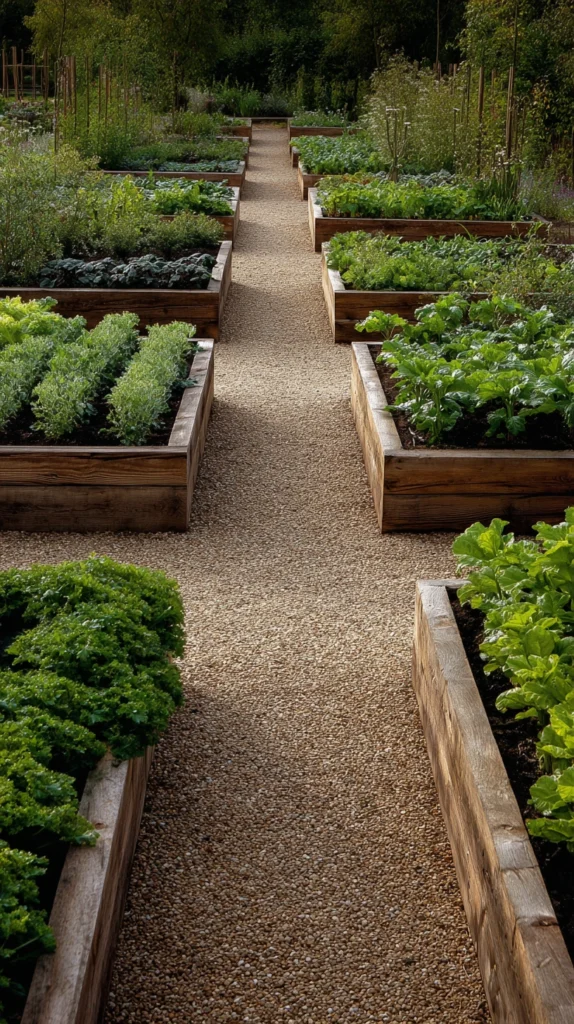
A vegetable garden that is structured, tidy, and visually considered — raised beds in quality timber at consistent heights, paths between them in a coordinating material, plant supports of coppiced hazel or painted timber in a consistent style — reads as a designed garden feature rather than a utility area. The productive garden that is beautiful as well as productive contributes to the curb appeal of the backyard rather than detracting from it, and the tidy raised bed kitchen garden is one of the most reliably impressive elements a backyard can display.
Timber raised beds cost $40–$100 each. A path of bark chip or gravel between the beds costs $30–$60. Plant supports in a consistent style cost $5–$15 each. Three raised beds on a coordinating path surface with matching plant supports — $160–$360 in materials — creates a kitchen garden corner of genuine visual quality that reads as considered rather than functional.
Style tip: Install a watering system — even a simple soaker hose connected to the outdoor tap — before the first season of growing. A raised bed kitchen garden without a reliable watering system is a kitchen garden that is attended to inconsistently, and the inconsistently attended kitchen garden looks neglected at exactly the moments when it is most visible to the people who use the backyard.
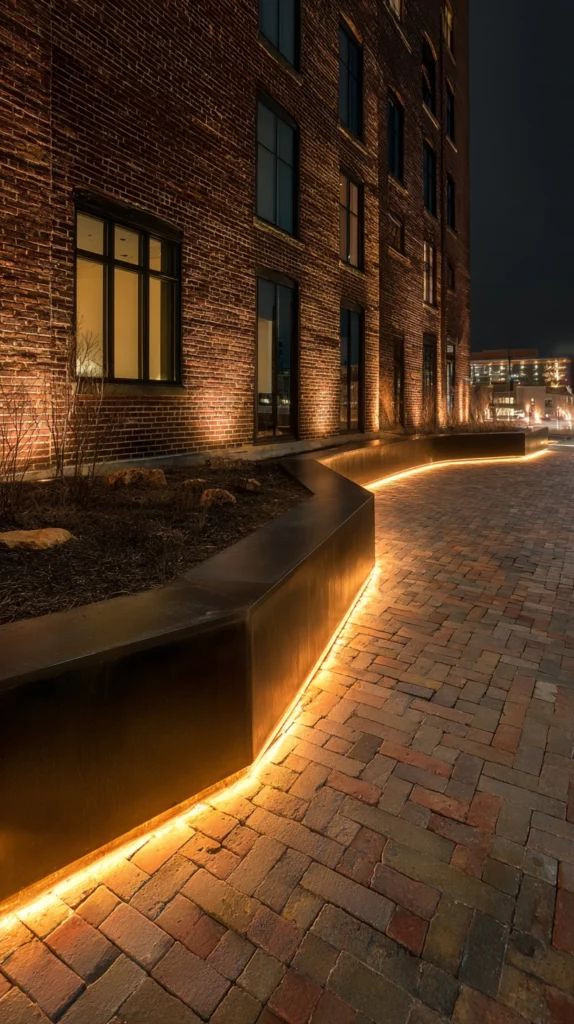
9. The Evening Border Lighting
Budget: $30 – $150
Low-level lighting installed along the primary border or path — solar ground stake lights at the border edge, uplights at the base of significant plants, path lights along the main garden route — extends the visual quality of the backyard’s planting into the evening hours and communicates, to guests arriving in the early evening, that the garden was designed for year-round use rather than daytime use alone.
Solar garden stake lights cost $5–$15 each. A set of six for the primary border runs $30–$90. LED ground uplights for significant plants cost $15–$30 each. A path of five stake lights costs $25–$75. Choose warm white at 2700K for all garden lighting — the warm temperature flatters plant colours in the same way that warm indoor lighting flatters interior surfaces, and cool white light in a garden reads as security installation rather than garden design.
Style tip: Light the plants rather than the spaces between them. A spotlight aimed at the base of a significant shrub or tree illuminates the plant against the dark garden beyond and creates the depth-of-field quality that makes a garden lighting scheme look designed. The same light aimed at the path or the lawn illuminates the ground rather than the garden and produces functional rather than atmospheric light.
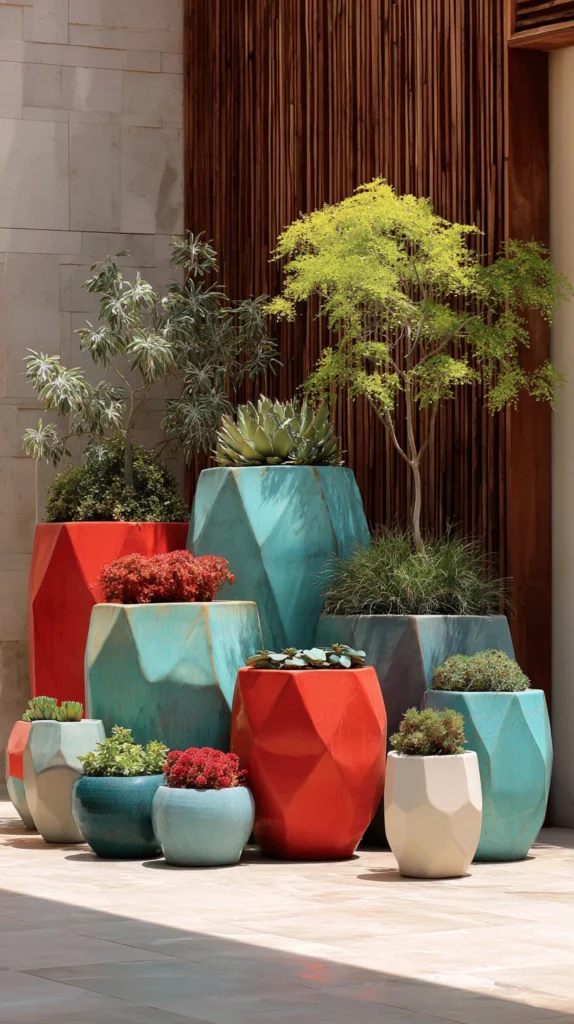
10. The Colour Coordinated Container Collection
Budget: $60 – $300
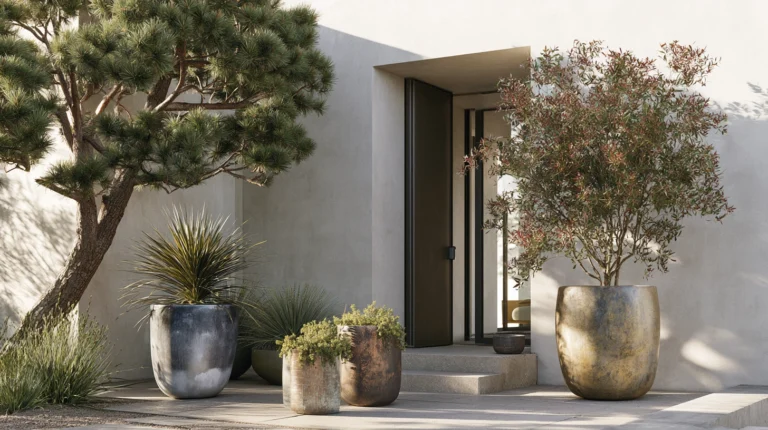
A collection of containers on the patio or along the back wall — in a consistent material (all terracotta, all charcoal ceramic, all zinc metal) and in a consistent arrangement of sizes — creates a planted display that reads as a designed element of the garden rather than as pots that have been placed wherever convenient. The container collection is the backyard’s most immediately changeable and most seasonally flexible element, and a considered collection in the right material and the right colour elevates the patio from a furnished surface to a designed garden room.
Ceramic pots in a consistent finish cost $15–$40 each. A collection of five in three different sizes — two large, two medium, one small — costs $75–$200. Plants for seasonal display cost $5–$15 each. The consistent material is the specification that makes a collection of pots read as a designed element — five pots in the same material at different sizes read as a considered set; the same five pots in different materials and different finishes read as an accumulated collection.
Style tip: Group the containers in a triangular arrangement — the tallest pot at the back, medium pots in the middle, the smallest at the front — rather than in a horizontal row. The triangular arrangement creates a three-dimensional composition with visual depth; the horizontal row creates a flat display that reads as containers placed in a line.
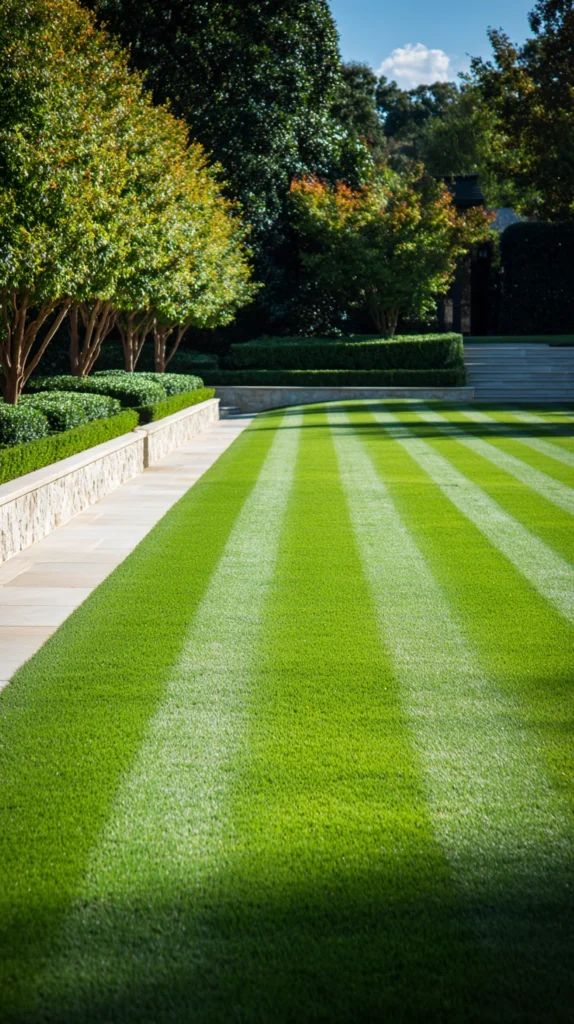
11. The Lawn Renovation
Budget: $20 – $150
A lawn that has been overseeded on bare patches, scarified to remove thatch, edged precisely, and given a single feed of appropriate fertiliser looks dramatically better than a lawn that has not received these basic attentions — not because the lawn itself is better but because the attentions communicate that someone cared about it recently. The maintained lawn is the largest surface in most backyards and its condition determines the impression of the entire garden more than any single border or feature.
Lawn seed for overseeding costs $5–$15 per kilogram. A lawn scarifier hire runs $30–$50 per day. A good lawn feed costs $8–$20 for a standard backyard. A sharp half-moon edger costs $12–$25. The full lawn renovation — scarify, overseed, feed, edge — requires a single afternoon in early autumn or spring and produces a lawn that reads as cared-for within four to six weeks of the treatment.
Style tip: Mow the lawn in alternate diagonal stripes rather than in a uniform single direction. The striped lawn — achieved by alternating the direction of the mower on each pass — creates the light-and-dark banding that communicates a cared-for lawn. The stripes are not merely decorative; they are the visual record of a lawn that was mown with attention rather than simply cut.
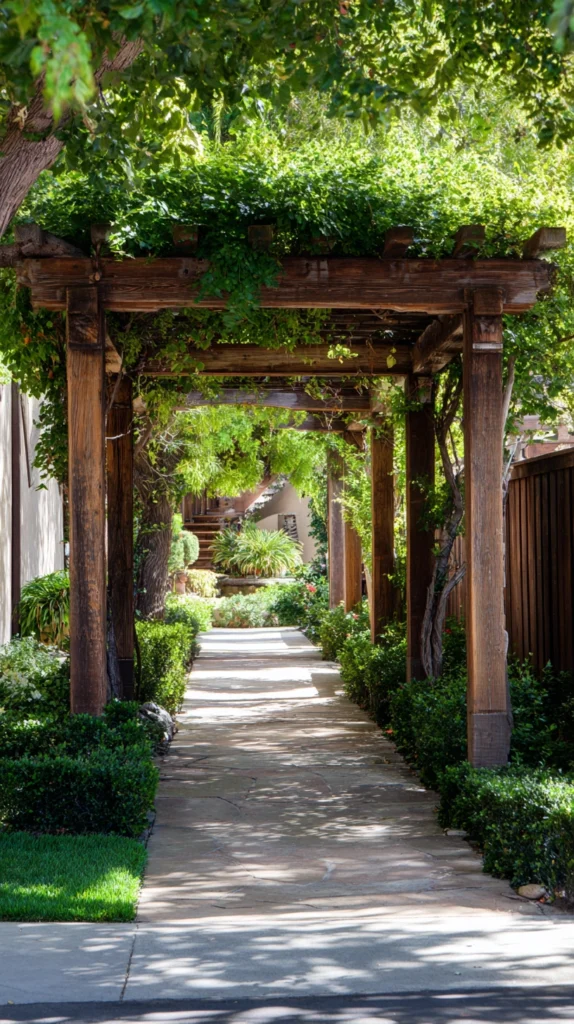
12. The Arch or Pergola Addition
Budget: $60 – $400
A garden arch — at the entrance to the garden, at the transition between two areas, or as a freestanding feature at the end of a path — creates a vertical element that gives the garden the quality of architecture. Most backyards are horizontal — the fence line, the lawn surface, the patio level — and a vertical element of any kind creates the specific quality of a garden that was designed in three dimensions rather than planned on a flat surface. An arch with a climbing rose or a clematis trained over it is a garden feature of extraordinary return per pound invested.
A metal garden arch costs $30–$80. A timber arch runs $50–$150. A climbing rose for the arch costs $15–$35. A vigorous clematis runs $10–$25. Plant a climber at the base of each arch post in the first season and train it onto the arch structure as it grows — the mature arch with established climbers is one of the most beautiful garden features available and the time invested in the training is repaid in every season thereafter.
Style tip: Position the arch so it frames a view rather than standing in front of a fence or a blank wall. An arch that frames a planted border, a specimen plant, or a garden seat at the far end of the view creates a sense of depth and destination that an arch against a solid background cannot produce. The framed view is the quality that makes an arch a garden feature rather than a garden ornament.
13. The Statement Back Wall Treatment
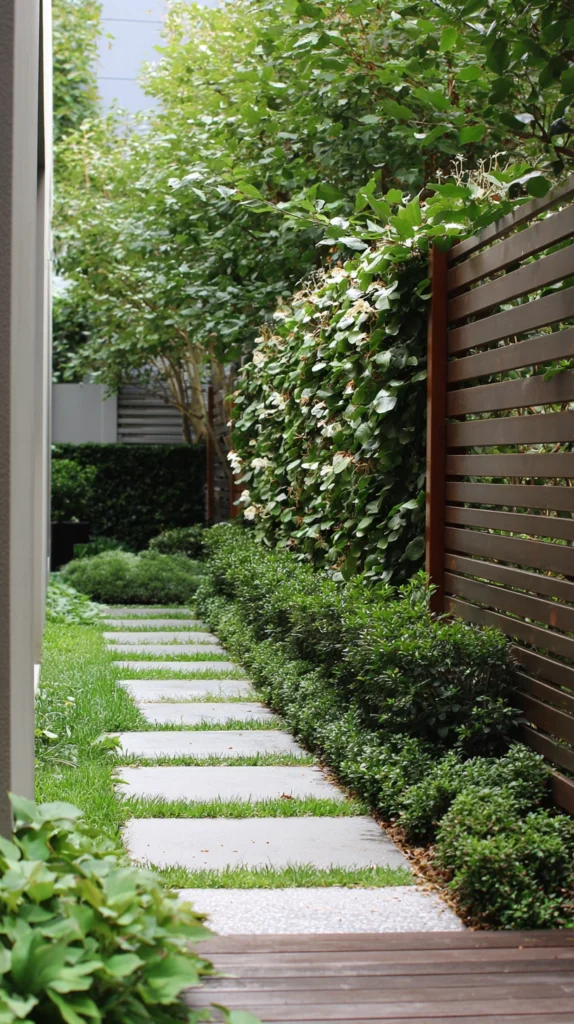
Budget: $50 – $400
The back wall of the backyard — the fence or wall most visible from the house and from the primary seating area — is the garden’s most consistently present visual surface and one of the most consistently neglected. A back wall treated with a climbing plant, a painted mural panel, a trellis with a fragrant climber, or a series of wall-mounted planters becomes a designed element of the garden rather than its boundary; an untreated back wall is a fence that exists to contain the garden rather than to contribute to it.
A large-scale wall planter system costs $60–$150. A trellis panel with a climbing hydrangea runs $30–$80. A wall-mounted painted panel in a considered colour costs $20–$60 in paint and board materials. A trained wisteria or rose on a wire system costs $15–$35 for the plant plus $15–$30 in wire and fixings. The back wall treatment should relate to the garden’s dominant colour palette — a flowering climber in the same colour family as the border planting creates the impression of a garden designed as a coherent whole.
Style tip: Treat the full width of the back wall rather than a section of it. A climbing plant that covers a third of the back fence leaves two-thirds of untreated fence visible, and the contrast between the treated and untreated sections communicates incomplete intention rather than considered design. The full-width treatment — even if it means a simpler treatment — reads as more designed than the partial but elaborate treatment.
14. The Year-Round Structure Planting
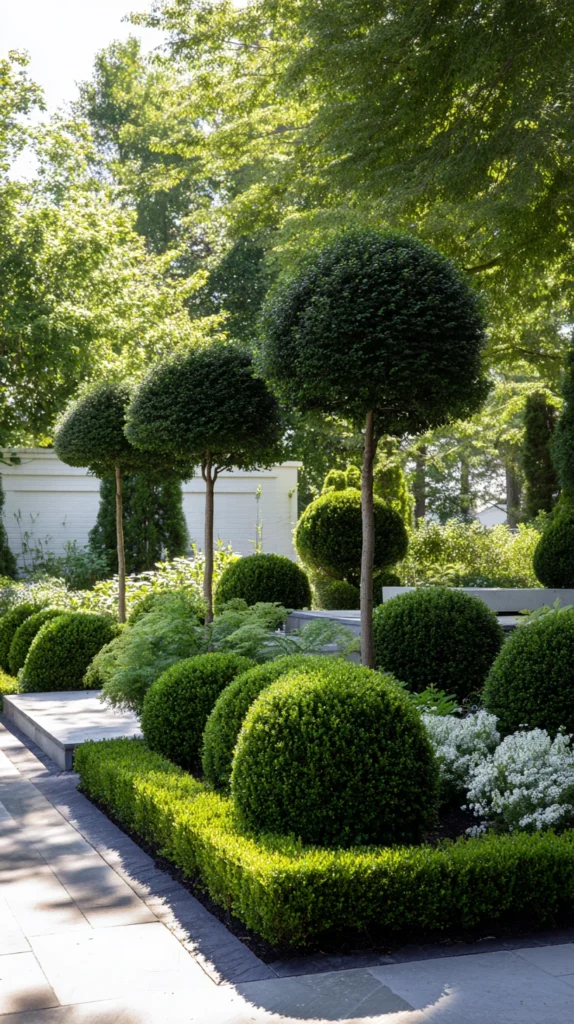
Budget: $60 – $300
A backyard that looks considered in winter — with the evergreen structure of clipped box or yew, the skeletal forms of ornamental grasses left standing, the architectural silhouette of a specimen tree against a pale sky, the berries of a pyracantha on the back fence — communicates the quality of a garden that was designed for all twelve months rather than for the peak months of the growing season. The winter garden is the garden that is most visible from the house and most consistently overlooked in the design process.
Clipped box balls in a standard size cost $15–$40 each. A pyracantha trained on the fence runs $15–$30. Ornamental grasses that hold their form through winter — Miscanthus, Stipa, Pennisetum — cost $10–$25 each. Hellebores for winter-to-spring colour cost $8–$20 each. The structural planting should be established before the annual and seasonal planting is considered — the structure is the foundation on which every seasonal change of colour and interest is placed.
Style tip: Leave ornamental grasses and seed heads standing through winter rather than cutting them back in autumn. The standing grass provides winter habitat for beneficial insects, self-seeds into the surrounding border, and creates the specific graphic quality of a winter garden that a cut-back border cannot produce. Cut back in late February rather than autumn — the late cut preserves the winter display and protects the crown of the plant through the coldest months.
The backyard landscaping that boosts curb appeal is not the most elaborate or the most expensively planted. It is the most consistently maintained, the most deliberately considered, and the most honestly responsive to the specific conditions — the light, the soil, the house style, the family’s use of the space — of the particular garden it inhabits.
Begin with the edges. A garden with clean edges and fresh mulch and a painted fence looks more considered than a garden with elaborate planting and neglected edges. The maintenance quality communicates faster and more powerfully than the design quality, and the gardener who maintains what is already there before adding what is not yet there produces a garden that always looks better than the gardener who adds without maintaining.