14 South Florida Landscaping Ideas to Refresh Your Outdoor Space
14 South Florida Landscaping Ideas to Refresh Your Outdoor Space
There is a specific quality to a well-designed South Florida landscape that distinguishes it from any imitation of it produced in a different climate. It is not the palm tree or the bougainvillea or the brightly coloured bromeliad, though all of these may be present.
It is the quality of a garden that was designed for the specific conditions of that specific place — the intense sun, the torrential summer rains, the warm winters, the salt air of the coast, the limestone substrate, and the specific ecosystem of subtropical South Florida that no other region of North America replicates.

The landscape that was designed for these conditions rather than imported from somewhere else is the landscape that thrives, requires the least supplementary intervention, and communicates the most genuine quality of being specifically here rather than generally tropical.
South Florida landscaping at its best is not a collection of tropical plants arranged decoratively. It is a designed relationship between the outdoor space and the specific climate, ecology, and aesthetic tradition of the region — one that uses the rain when it comes, manages the heat when it intensifies, and produces a landscape of genuine beauty that is more alive, more biodiverse, and more sustainable than the conventional lawn-and-shrub alternatives that most suburban landscapes default to.
Each idea below is a specific approach to one element of the South Florida landscape. Each includes what you will need, what it will cost, and a practical tip to make it work as well as the specific outdoor environment it is designed for.
1. The Native Plant Foundation Planting
Budget: $200 – $1,500
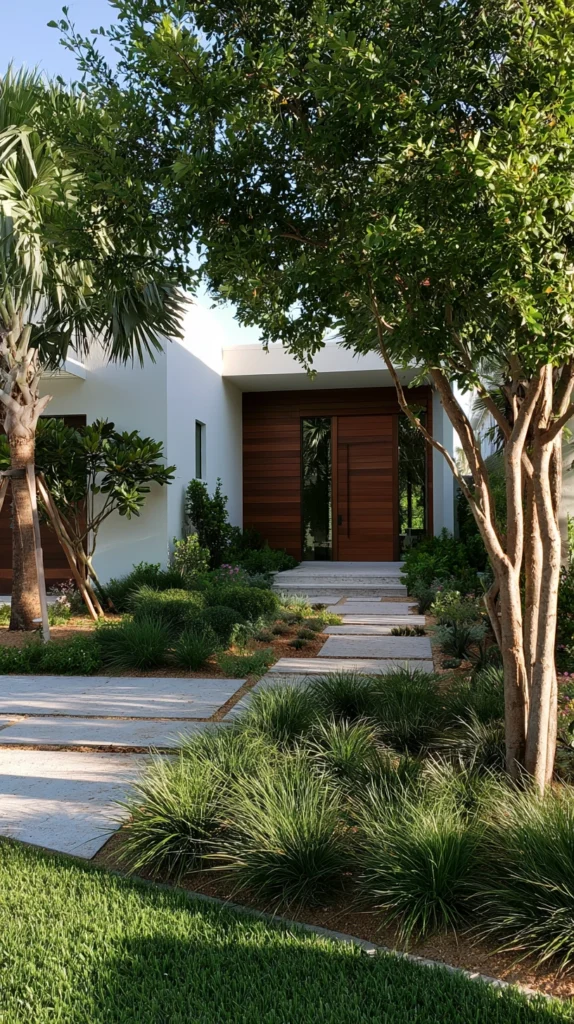
A landscape foundation built from South Florida native plants — Beautyberry, Firebush, Wild Coffee, Simpson’s Stopper, Marlberry, and Coontie — creates the most ecologically appropriate, the most drought-tolerant once established, and the most specifically beautiful foundation for the South Florida garden.
Native plants have evolved over thousands of years to thrive in the specific conditions of the region — the summer flooding, the winter drought, the intense sun, the specific soil chemistry of South Florida’s limestone substrate — and they require no supplementary fertilisation, minimal irrigation once established, and produce the most significant wildlife benefit of any planting approach.
Firebush in a 3-gallon pot costs $8–$15. Wild Coffee runs $8–$15. Simpson’s Stopper costs $10–$20. Coontie — the only host plant for the Atala butterfly — runs $10–$20. A complete foundation planting of native species for a standard residential lot costs $300–$800 in plant material. Purchase from a reputable native plant nursery rather than a standard garden centre — native species from specialist nurseries are grown from regional seed sources that are specifically adapted to the local conditions.
Style tip: Mix native plants of different heights — the tall Beautyberry and Wild Coffee at the back of the border, the medium Firebush in the middle, and the low Coontie at the front edge — rather than using all plants of similar height. The height variation gives the native foundation planting the quality of a designed border rather than a collection of native species placed in front of the house.
2. The Tropical Colour Palette
Budget: $100 – $600
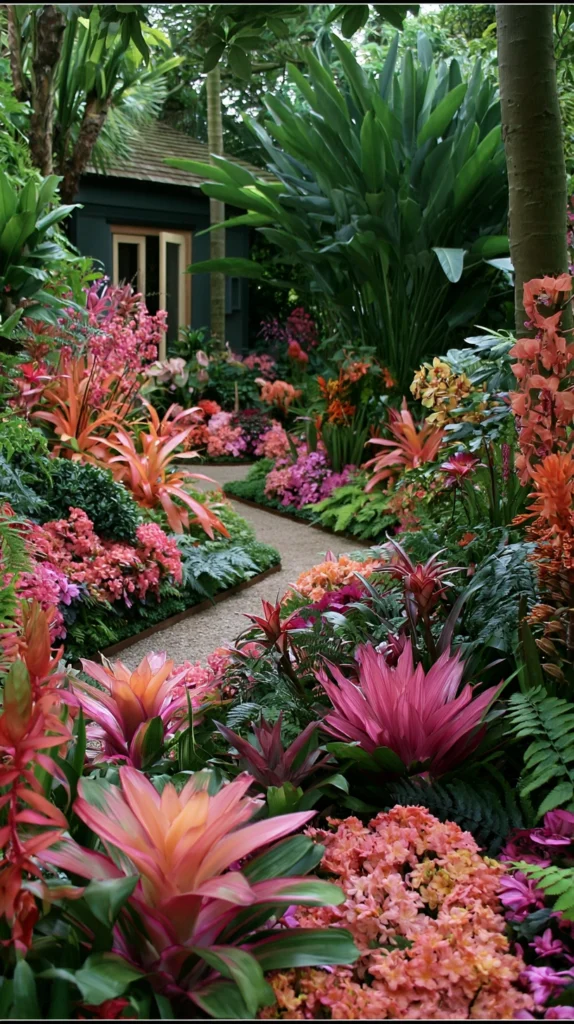
The specific colour quality of the South Florida tropical landscape — the saturated, intense flower colours of bougainvillea, ixora, pentas, and hibiscus against the deep green of their foliage, all intensified by the quality of the subtropical light — is the most immediately recognisable and the most specifically regional of all the South Florida landscape elements. A planting palette of three to four flower colours in coordinating tones, selected for their complementary relationship rather than for their individual intensity, creates the tropical colour display at its most considered rather than its most chaotic.
Bougainvillea in a 3-gallon pot costs $15–$35. Ixora runs $10–$20. Pentas costs $5–$10. Hibiscus costs $10–$25. A coordinated tropical colour planting of four species in a consistent palette costs $100–$300 in plant material.
Choose flower colours from the same temperature register — all warm (orange, red, coral, yellow) or all cool (purple, pink, white) — rather than mixing warm and cool flower colours in the same planting. The temperature consistency of the flower palette is the compositional decision that distinguishes a considered tropical colour display from a collection of individually vivid plants.
Style tip: Repeat the same plant species in multiple positions throughout the landscape rather than using each species once. A bougainvillea that appears at the entrance, at the pool corner, and at the fence line reads as a designed plant thread running through the landscape; the same bougainvillea appearing once at the entrance reads as a specimen. The repeated species creates the compositional coherence that the tropical colour palette requires.
3. The Rain Garden and Bioswale
Budget: $200 – $1,000
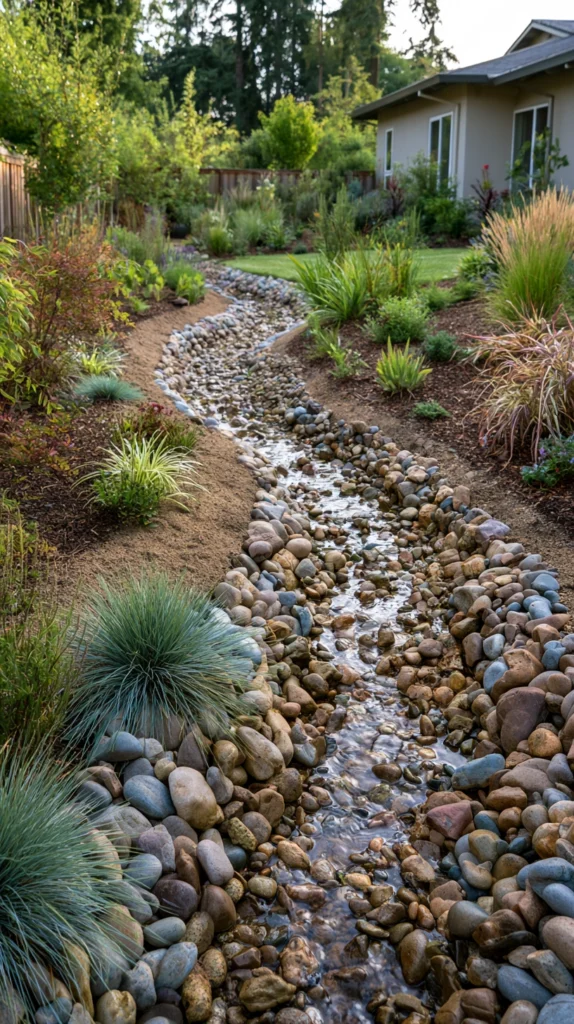
South Florida receives between 50 and 65 inches of rainfall annually, with the majority concentrated in the summer wet season. The conventional landscape — the compacted lawn with no infiltration capacity — sends this water directly to the storm drain system, bypassing the aquifer recharge that sustains South Florida’s water supply. A rain garden — a shallow depression planted with water-tolerant native species that captures and infiltrates the runoff from the roof and the driveway — converts the rainfall problem into a landscape feature and a genuine ecological contribution.
A rain garden of 4 by 2 metres positioned at the low point of the property costs $100–$300 in excavation and drainage material. Native plants for the rain garden — Blue Flag Iris, Pickerelweed, Duck Potato, Swamp Lily — cost $8–$15 each. Six to eight plants for the rain garden costs $48–$120. The rain garden does not need to be wet permanently — it holds water during and immediately after rain events and infiltrates it into the ground within 24–48 hours.
Style tip: Connect the rain garden to the roof downspout with a swale or a French drain rather than positioning it where the overflow from rain events will flood adjacent areas. The directed connection ensures that the rain garden receives water during every rain event rather than only when the surrounding ground is already saturated.
4. The Bougainvillea Fence and Structure Cover
Budget: $30 – $200
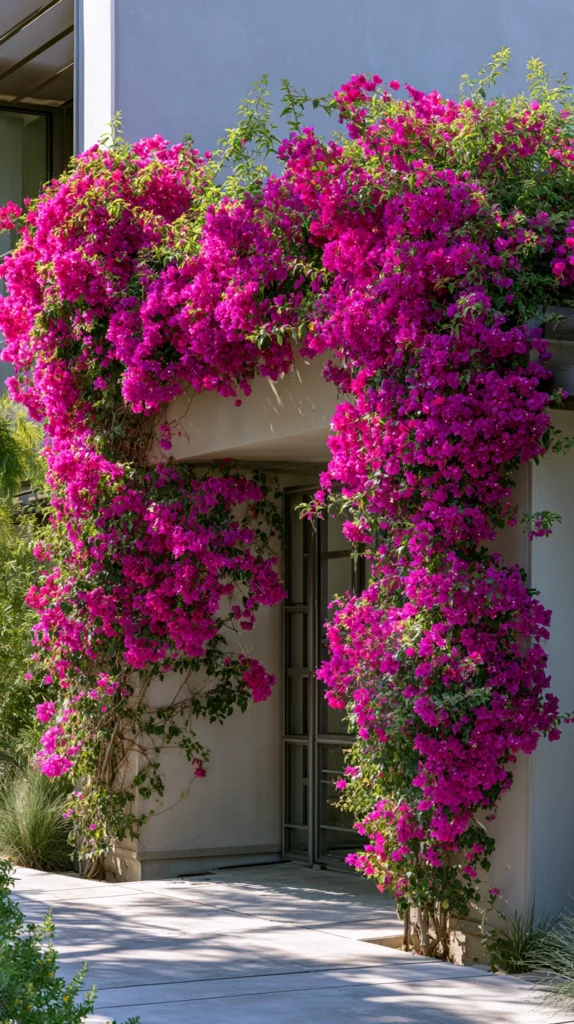
Bougainvillea trained over a fence, a pergola, a trellis, or any structural element of the South Florida landscape creates the most dramatically colourful and the most specifically tropical of all the fence and structure treatments.
In South Florida’s climate, bougainvillea is the most reliably producing colour plant available — it blooms almost continuously in the dry season and intermittently through the summer wet season, and its papery bracts in colours from deep magenta through coral and orange to pure white provide the visual spectacle that makes it the most photographed plant in South Florida landscapes.
Bougainvillea in a 3-gallon pot costs $15–$35. A vigorous variety — Barbara Karst, Torch Glow, Purple Queen — covers a standard fence panel in two seasons. Training wires cost $10–$20 for a standard fence run. Prune bougainvillea immediately after each flowering flush to encourage the new growth that produces the next bloom cycle — the pruned plant blooms more frequently and more prolifically than the unpruned one.
Style tip: Choose a bougainvillea variety that suits the specific growing position. A vigorous variety — Barbara Karst can reach 20 feet — suits a large structure; a dwarf variety — Torch Glow, La Jolla — suits a smaller trellis or a container. The scale relationship between the bougainvillea variety and the structure it covers is the selection decision that determines whether the plant is a managed feature or an ongoing management problem.
5. The Palm Tree Composition
Budget: $200 – $2,000
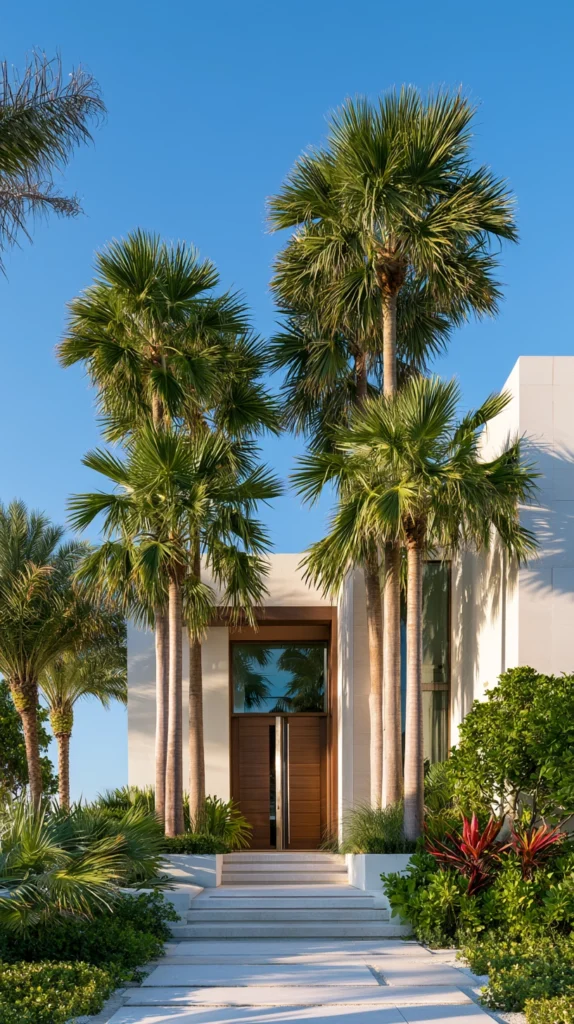
Palm trees in the South Florida landscape are not decorations; they are the region’s defining architectural plant, providing the overhead canopy, the vertical structure, and the specific silhouette against the sky that makes the South Florida landscape immediately recognisable as itself. A composition of palms — grouping multiple species at different heights to create the layered canopy of the natural tropical hammock — creates the landscape feature most specific to the regional aesthetic.
Florida Sabal Palm — the state tree — costs $25–$150 depending on the installed height. Pygmy Date Palm — the smaller-scale option for confined spaces — costs $20–$80. Foxtail Palm costs $50–$200. A composition of three to five palms of different heights and species costs $200–$800 in plant material. Plant palms with the root ball at or slightly above the existing grade — planting too deep is the most common cause of palm failure in the South Florida landscape.
Style tip: Group palms in odd numbers — three or five — rather than as symmetrical pairs or evenly spaced rows. An odd-numbered palm group reads as a naturalistic canopy composition; an even-numbered symmetrical planting reads as a formal avenue that suits the regional aesthetic less specifically. The odd-numbered cluster is the planting arrangement most closely replicating the natural palm hammock of the South Florida ecosystem.
6. The Drought-Tolerant Xeriscape Zone
Budget: $150 – $800
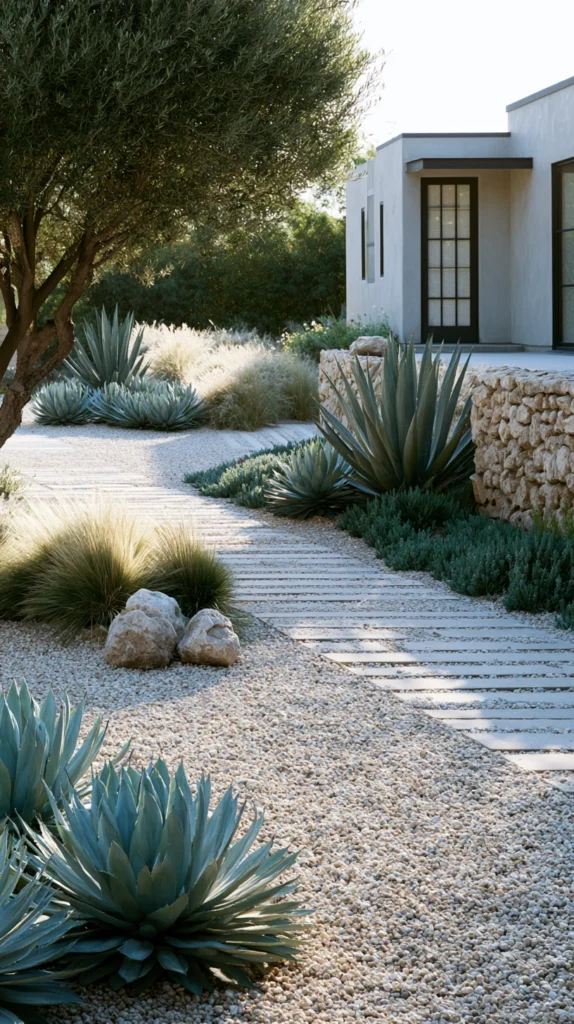
The irrigation-intensive lawn that covers most South Florida residential lots is the outdoor space element most inconsistent with the region’s ecological conditions and most costly in water consumption. A xeriscape zone — an area of the landscape designed for minimal irrigation once established, using drought-tolerant native and Florida-friendly plants — reduces the water requirement of the landscape without reducing its visual quality.
Muhly Grass costs $8–$15 each. Blue Porterweed runs $5–$10. Crown of Thorns costs $8–$20. Agave americana runs $15–$40. A xeriscape zone of 20 square metres costs $200–$500 in plant material and requires no irrigation after the six-month establishment period. Mulch the xeriscape planting with a 3-inch layer of Florida-friendly mulch — eucalyptus, melaleuca, or pine bark — rather than cypress mulch, which contributes to the destruction of Florida’s cypress ecosystems.
Style tip: Design the xeriscape zone with a mixture of textures — the fine Muhly Grass, the bold Agave, the small-leafed Porterweed — rather than a collection of plants with similar textures. The textural variety in a xeriscape planting communicates design intention rather than drought tolerance, and the most successful xeriscape is the one that looks designed rather than the one that looks like the consequence of not watering.
7. The Tropical Poolside Landscape
Budget: $300 – $2,000
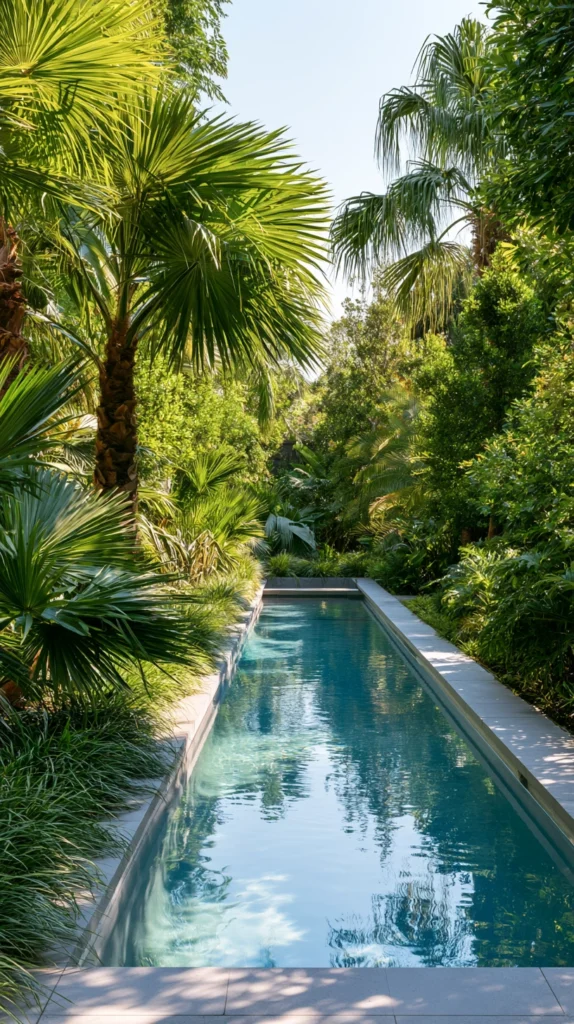
The pool in the South Florida backyard is the outdoor room’s primary feature, and the landscape that surrounds it determines whether the pool feels like a resort or a residential installation. A tropical poolside landscape — layered planting of palms at the canopy level, large-leafed tropicals at the mid-level, and colourful ground-level planting at the pool edge — creates the most specifically private resort quality of any South Florida landscaping approach.
Elephant Ears (Alocasia or Colocasia) costs $10–$25 each. Bird of Paradise runs $15–$40. Ti Plant costs $10–$20. A poolside planting of three canopy palms plus eight to ten mid-level tropicals plus a ground-level colour planting costs $400–$1,000 in plant material. Choose poolside plants carefully for their tendency to drop leaf litter into the pool — plants like Bismarck Palm and Fishtail Palm shed considerable debris that increases pool maintenance requirements.
Style tip: Position the most lush and most tropical planting on the side of the pool that is most visible from the primary seating area and the interior of the house. The pool landscape is experienced most consistently from the seated poolside position and from the glass doors of the house, and the planting that performs most dramatically in these sight lines provides the greatest visual return.
8. The Butterfly and Pollinator Garden
Budget: $80 – $400
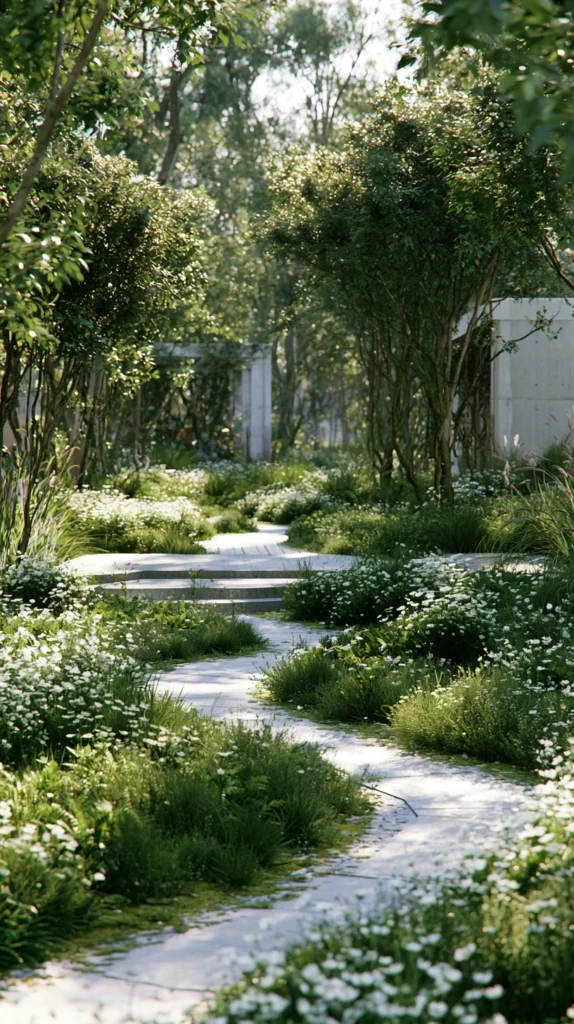
South Florida is on the Atlantic flyway — one of the most significant migratory corridors in North America — and the subtropical ecosystem supports an extraordinary diversity of butterfly species, native bees, and pollinators. A butterfly garden planted specifically for South Florida’s resident and migratory pollinators — Milkweed for the Monarch, Coontie for the Atala, Passionvine for the Gulf Fritillary, Firebush and Pentas for the general pollinator community — creates the landscape with the most ecological significance and the most continuously changing and living quality of any South Florida planting.
Milkweed (Asclepias) costs $5–$10 each. Passionvine runs $8–$15. Pentas costs $5–$10. Firebush costs $8–$15. A comprehensive butterfly and pollinator garden of 10 species planted in a 4 by 2-metre border costs $100–$200 in plant material. Include host plants as well as nectar plants — a butterfly garden without host plants attracts butterflies to nectar sources but does not support the full life cycle of reproduction and emergence that the host plant provides.
Style tip: Plant milkweed in clusters of five to seven rather than as individual plants distributed through the border. Monarch caterpillars consume milkweed voraciously and a single plant is stripped quickly; a cluster of five provides the food source through the full caterpillar development period. The cluster planting is the functional decision that makes the butterfly garden genuinely productive rather than symbolically present.
9. The Tropical Shade Garden
Budget: $150 – $600
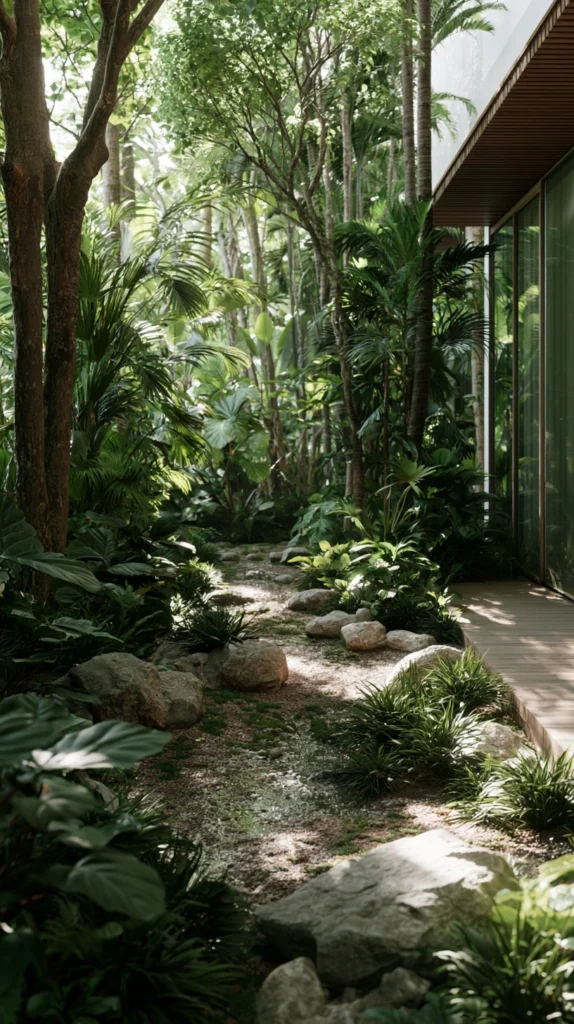
The specific challenge of South Florida’s intense sun — UV radiation levels among the highest in North America, combined with summer heat that makes unshaded outdoor areas genuinely hostile to comfortable use — is addressed by the tropical shade garden: a planted area beneath existing tree canopy or a purpose-built shade structure, using the deep green foliage and the cooling transpiration of shade-tolerant tropical plants to create the most comfortable and most lush outdoor environment in the South Florida residential landscape.
Caladiums cost $5–$15 each. Impatiens runs $4–$8 each. Begonias cost $5–$10. Giant Taro costs $10–$25. A shade garden of 10 square metres beneath an existing canopy tree costs $100–$300 in plant material. Shade gardens require more consistent moisture than sun-exposed areas — the tree canopy above intercepts rainfall and the root competition of the canopy tree draws moisture from the shared soil zone, requiring supplementary irrigation even in plants described as drought-tolerant.
Style tip: Use Caladium varieties specifically selected for their shade tolerance — Florida Moonlight, White Christmas, Red Flash — rather than varieties bred for full sun. A Caladium variety sold for sun performance that is planted in shade will produce elongated, less vivid foliage; the shade-specific variety produces the brilliant, intensely patterned foliage that makes the Caladium the most visually spectacular shade garden plant in the South Florida palette.
10. The Edible Tropical Landscape
Budget: $200 – $1,000
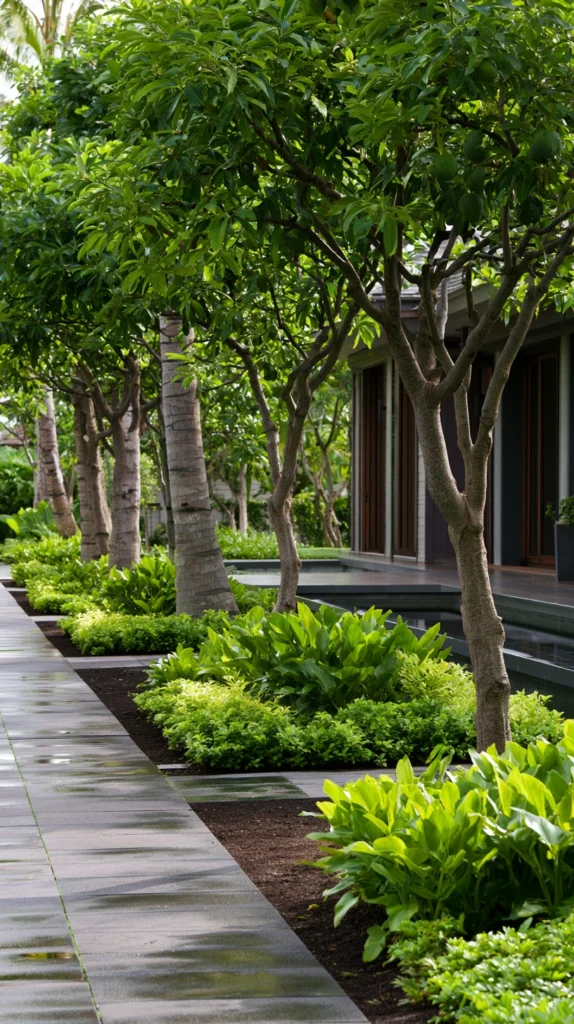
South Florida’s climate is the most suitable for tropical fruit production of any region in the continental United States, and the edible tropical landscape — mango, avocado, papaya, lychee, longan, Surinam cherry, carambola, Barbados cherry — produces the most specifically South Florida food landscape of any approach. A landscape that produces food is a landscape with a daily purpose beyond its visual quality, and the tropical fruit garden of South Florida is the most consistently productive food garden available to any region.
A mango tree on a semi-dwarf rootstock costs $25–$60. An avocado costs $25–$60. Papaya grows from seed at negligible cost and fruits within six to nine months. Surinam cherry costs $10–$20. A productive tropical fruit landscape of five to seven species costs $150–$400 in plant material and produces fruit within one to three years depending on the species.
Style tip: Choose mango varieties specifically bred for the South Florida climate and for resistance to anthracnose — the fungal disease that causes significant fruit loss in high-humidity conditions. Varieties bred for South Florida production — Carrie, Nam Doc Mai, Lemon Meringue — produce better-quality fruit in the regional conditions than California or Caribbean varieties that are not specifically adapted to the warm, humid summer growing conditions.
11. The Hardscape and Paver Design
Budget: $500 – $5,000
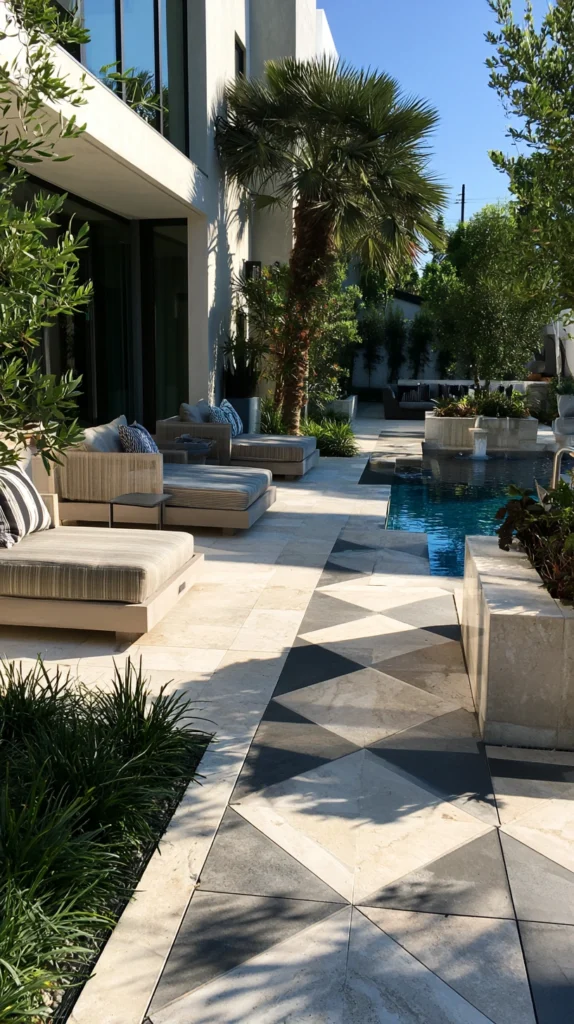
The hardscape of the South Florida outdoor space — the patio, the path, the driveway, and the pool deck — must be specified for the specific demands of the South Florida climate: the intense UV that fades and degrades many manufactured materials rapidly, the thermal mass that makes dark-coloured paving genuinely uncomfortable in the summer sun, the torrential summer rain that demands effective drainage from all hard surfaces, and the salt air of coastal properties that corrodes many metal fixings and weathers certain stone types more rapidly than inland conditions.
Permeable concrete pavers suitable for South Florida conditions cost $6–$15 per square metre. Natural travertine — the most traditional and the most thermally comfortable of the South Florida pool deck materials — runs $15–$35 per square metre. Porcelain tile rated for outdoor use costs $20–$50 per square metre. Choose light-coloured paving for all sun-exposed surfaces — a light travertine or a pale porcelain maintains a surface temperature 15–20 degrees Fahrenheit lower than a dark equivalent under the same South Florida sun.
Style tip: Install a swale or a French drain at the lowest point of every paved area rather than relying on the natural drainage capacity of the soil. South Florida’s summer rain events can produce 2–3 inches of rain per hour — a rate that overwhelms the infiltration capacity of even well-drained soil — and paving without directed drainage holds standing water that creates mosquito breeding habitat and surface damage.
12. The Outdoor Living and Dining Area
Budget: $500 – $5,000
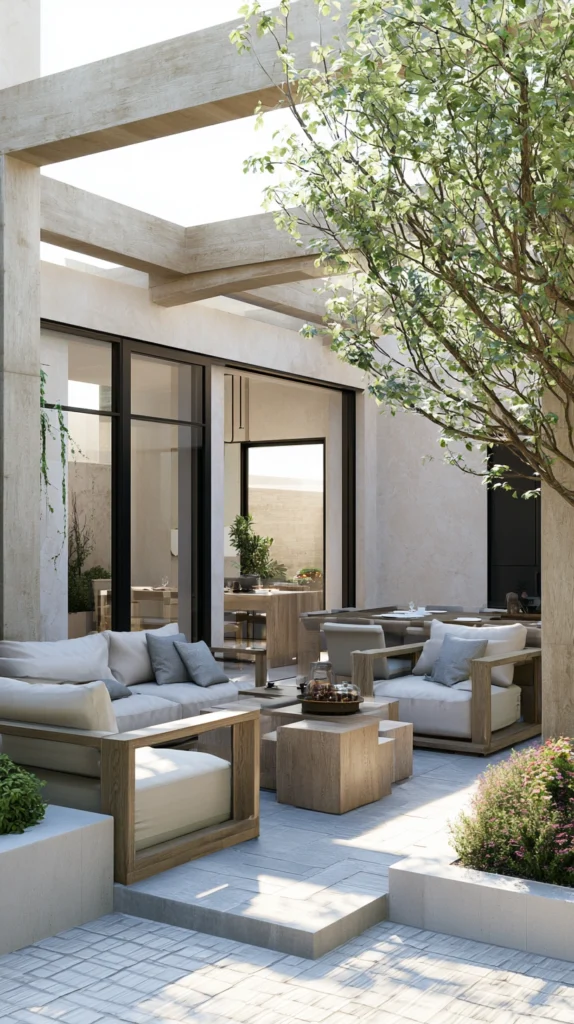
An outdoor living and dining area designed for the specific conditions of South Florida — with a shade structure adequate for the midday sun, screening for privacy and wind, ceiling fans for air movement in the humid summer air, and mosquito management through strategic planting and screening — creates the most genuinely usable outdoor room of any South Florida residential property. The outdoor living area that was designed for the conditions is used daily through the cooler months and usably in the morning and evening hours of the summer season.
A steel or aluminium shade structure costs $400–$1,500. Ceiling fans rated for damp outdoor use cost $80–$200 each. Outdoor furniture in teak, aluminium, or high-density polyethylene costs $300–$1,500 for a standard dining arrangement. Choose furniture materials specifically for South Florida’s salt air if within 5 miles of the coast — standard steel hardware corrodes within months in coastal salt air.
Style tip: Orient the outdoor living area to capture the prevailing southeast trade wind rather than to maximise the garden view. In South Florida, the natural air movement of the prevailing southeast breeze is the most effective and most cost-free cooling mechanism available to the outdoor space, and an outdoor room positioned to receive this breeze is consistently more comfortable than one positioned for its view but sheltered from the prevailing wind direction.
13. The Sustainable Lawn Alternative
Budget: $200 – $1,500
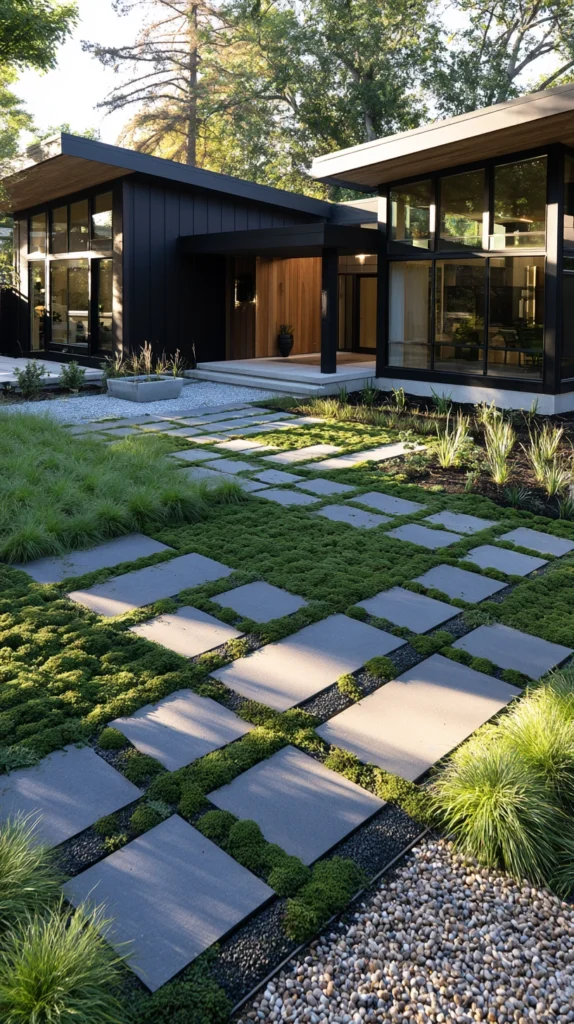
The high-input, high-water, high-maintenance conventional lawn that covers most South Florida residential properties is the least ecologically appropriate and the most resource-intensive element of the standard South Florida landscape. A lawn alternative — a low-growing ground cover, a mixed native meadow, a patterned hardscape with planted interstices, or a combination of these — reduces the water and fertiliser requirement of the landscape, provides ecological benefit for pollinators and wildlife, and communicates a landscape that was designed for the regional conditions rather than imposed upon them.
Sunshine Mimosa as a ground cover costs $5–$10 per plant — a complete lawn replacement of 100 square metres requires 50–80 plants at 18-inch spacing. Frog Fruit costs $5–$8 each. Blue Grama Grass runs $5–$10 each. A native ground cover lawn alternative costs $250–$800 in plant material and requires no mowing, no fertilisation, and minimal irrigation after establishment.
Style tip: Remove existing lawn through solarisation — covering the lawn area with clear plastic sheeting for six to eight weeks in the summer sun — rather than through herbicide application. South Florida’s summer heat under clear plastic reaches temperatures sufficient to kill the grass and its root system without chemical application, and the solarised soil is ready to plant immediately after the plastic is removed.
14. The Coastal Landscape Design
Budget: $300 – $2,000
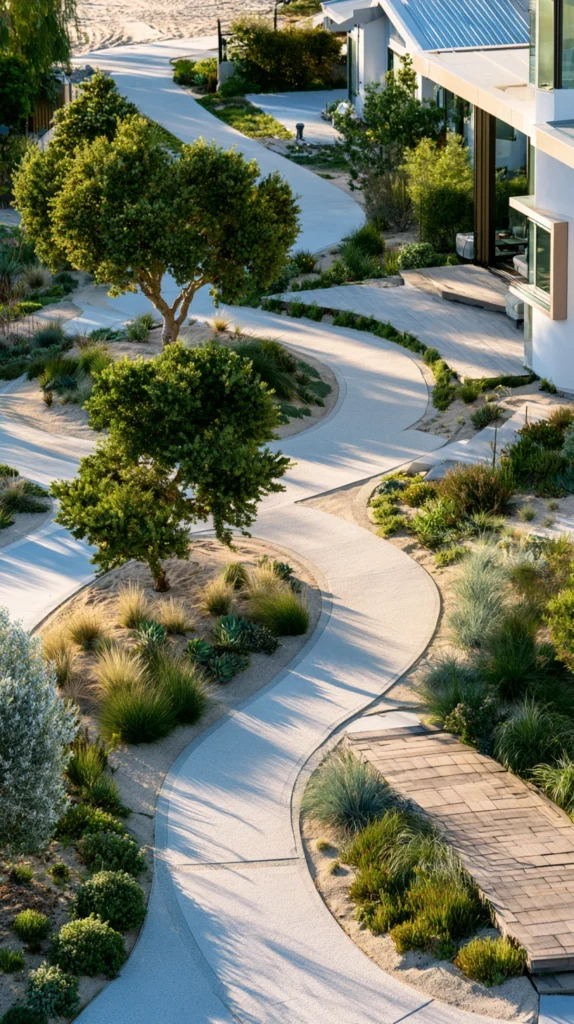
The specific conditions of the South Florida coastal landscape — the salt spray that deposits on plant surfaces within several hundred metres of the ocean, the sandy soil with minimal water retention, the storm surge risk, and the specific ecological sensitivity of the coastal dune system — require a planting palette specifically selected for coastal tolerance rather than general South Florida suitability. Many excellent South Florida landscape plants are not salt-tolerant and decline rapidly within the coastal environment.
Sea Grape is the most salt-tolerant native landscape plant in South Florida at $15–$40 each. Beach Sunflower costs $5–$10 each. Saw Palmetto runs $10–$25. Muhly Grass costs $8–$15 each. Blanketflower costs $5–$10 each. A complete coastal landscape of salt-tolerant native species for a standard residential lot costs $400–$1,000 in plant material and requires no supplementary irrigation after establishment because the species selected are adapted to the sandy, freely draining coastal soil.
Style tip: Plant coastal dune species — Sea Oats, Beach Sunflower, Beach Verbena — at the seaward edge of the property rather than garden cultivars that will not tolerate the salt exposure. Sea Oats are protected under Florida law and may not be collected from beaches, but they are available from coastal restoration nurseries for landscape installation and their root systems provide genuine erosion control as well as the habitat and the regional ecological authenticity that their specific habitat requires.
The South Florida landscape that works is the one that was designed for South Florida — the specific rainfall, the specific sun intensity, the specific soil chemistry, the specific salt air, and the specific ecological community of the most subtropical region in the continental United States.
Every plant chosen for its proven performance in these conditions rather than for its general tropical appearance, every hardscape material specified for the UV and the rainfall rather than the catalogue, every irrigation system designed for the summer wet season and the winter dry season — these are the decisions that produce the South Florida landscape that thrives rather than the South Florida landscape that merely survives.
Begin with the conditions and choose the plants for them. The South Florida climate is one of the most demanding in North America for landscape materials and one of the most generous in North America for plant growth, and the landscape that understands both qualities simultaneously is the landscape that uses the generosity to produce the beauty that the demanding conditions, properly addressed, allow.