15 Backyard Fence Ideas That Look Stylish and Secure
15 Backyard Fence Ideas That Look Stylish and Secure
There is a specific quality that a well-designed fence brings to a garden that a poorly considered one consistently fails to provide — the quality of an outdoor boundary that was chosen rather than defaulted to.
Most backyard fences are defaulted to. They are installed in the cheapest available timber in the most standard available format and painted in the brown that timber turns when nothing is done to it. They provide the boundary function adequately and communicate nothing about the garden they contain except that someone needed a boundary and chose the minimum available version of one.
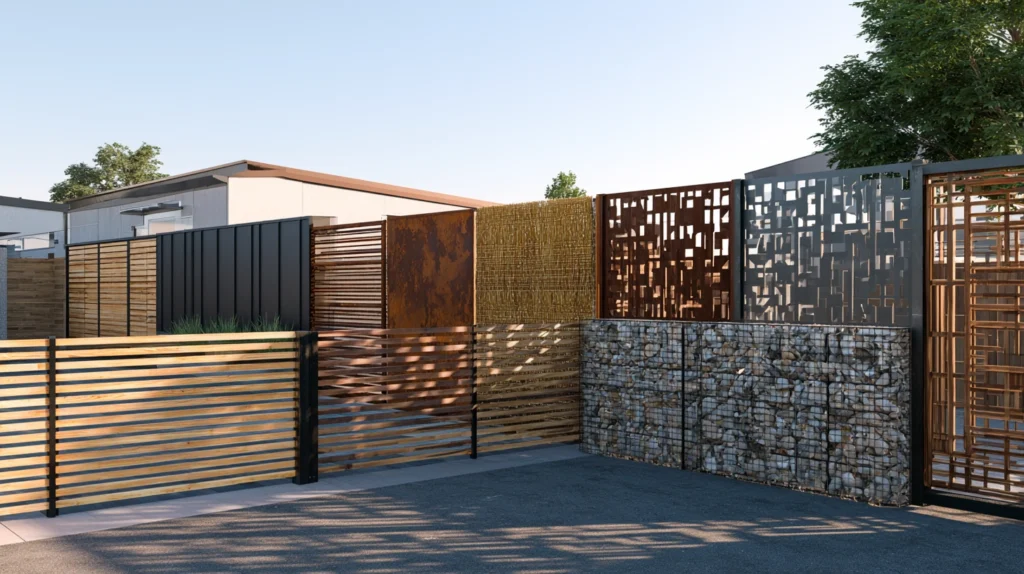
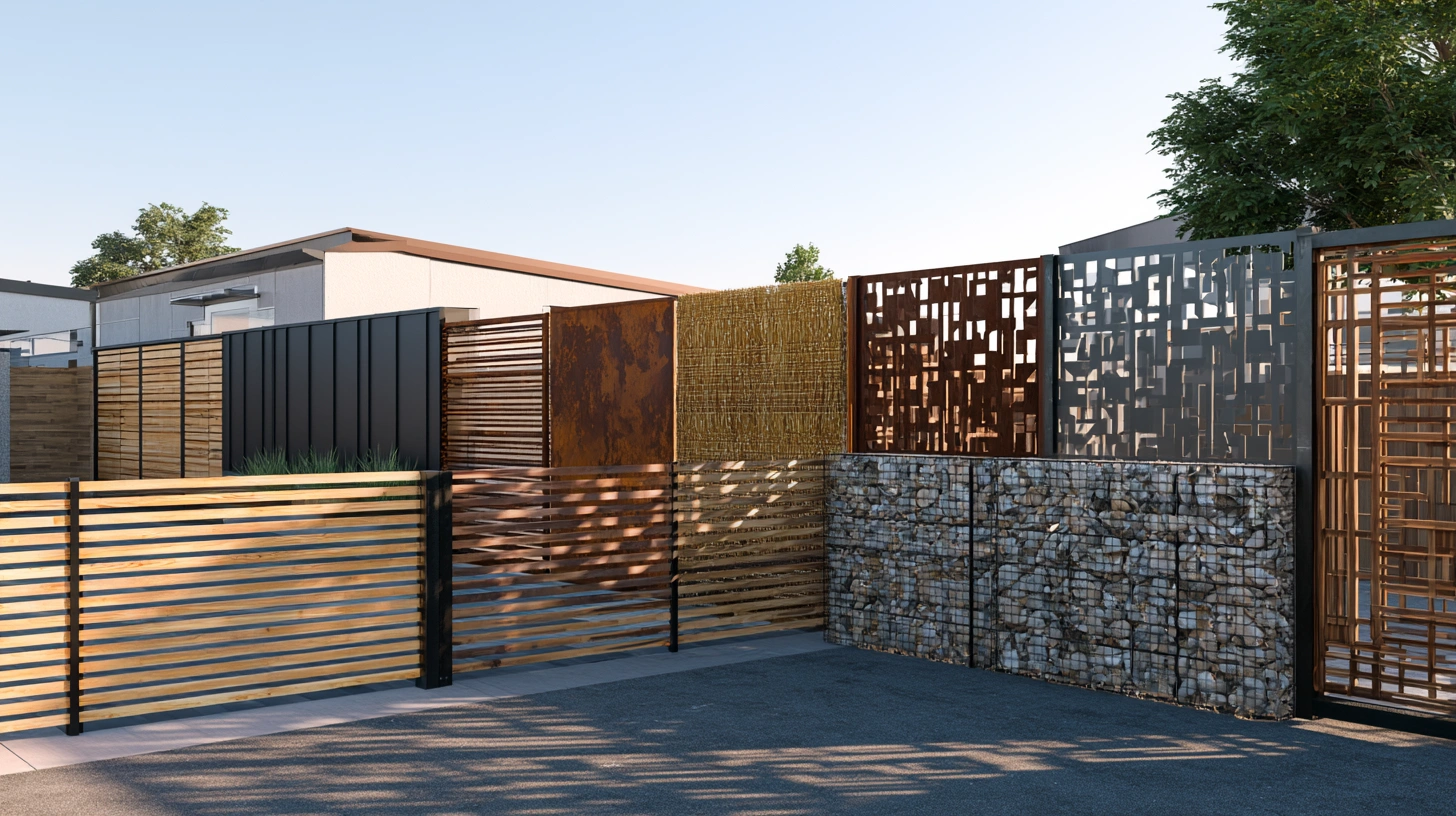
The fence that was chosen — for its material, its colour, its proportion, its relationship to the planting in front of it and the house behind it — is a different object entirely. It is the backdrop against which every plant in the border reads. It is the surface that determines the perceived quality of the garden before a single plant or piece of furniture is assessed. It is, in many backyards, the most consistently present visual surface and the one that most directly communicates whether the garden was designed or simply bounded.
Each idea below is a specific approach to one type of backyard fence that is both stylish and secure. Each includes what you will need, what it will cost, and a practical tip to make it work as well as the garden boundary it is capable of becoming.
1. The Painted Timber Horizontal Slat Fence
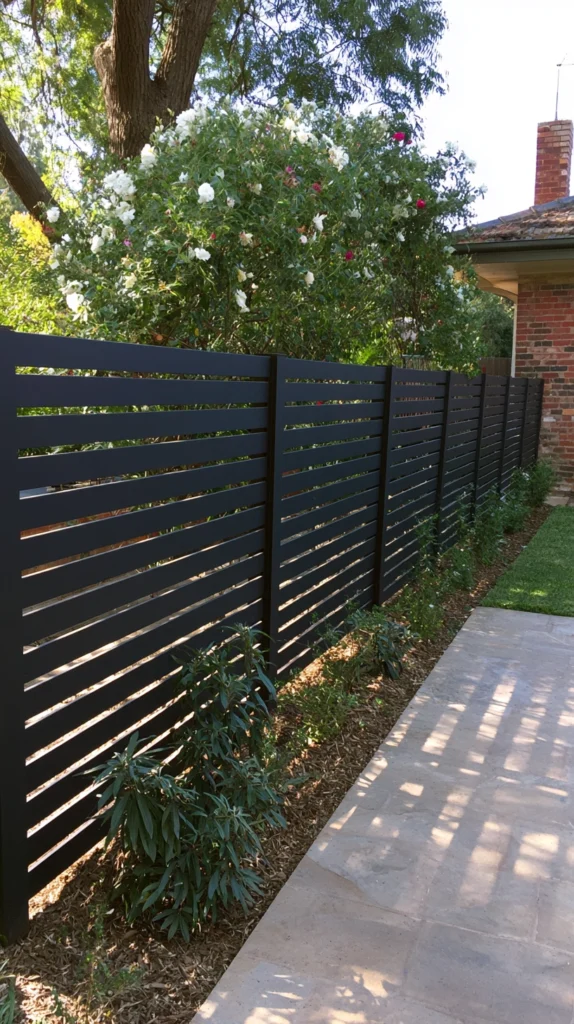
Budget: $200 – $1,200
Horizontal timber slats — boards of consistent width, spaced at regular intervals, running the full length of the fence run — create the most contemporary and most architecturally considered of all the timber fence formats. The horizontal line references the horizon, makes the boundary read as a designed surface rather than a traditional fence, and suits the modern garden aesthetic more specifically than the vertical board or the panel fence that most standard installations default to.
Pressure-treated timber slats of 9 by 2 centimetres cost $2–$5 per metre. A fence run of 6 metres at standard height requires approximately 60 slats — $120–$300 in timber. Painted in a deep, considered colour — forest green, charcoal, warm black, deep navy — the horizontal slat fence transforms from a boundary into a backdrop. Exterior paint in a quality formulation costs $25–$60 per tin and covers approximately 12 square metres per litre.
Style tip: Space the horizontal slats with a gap of 1–2 centimetres between each board rather than butting them tightly together. The slight gap creates the visual rhythm that gives the horizontal slat fence its specific quality of being designed rather than simply boarded, and it also allows air circulation behind the fence that reduces the moisture retention responsible for most timber fence deterioration.
2. The Vertical Board Close Board Fence
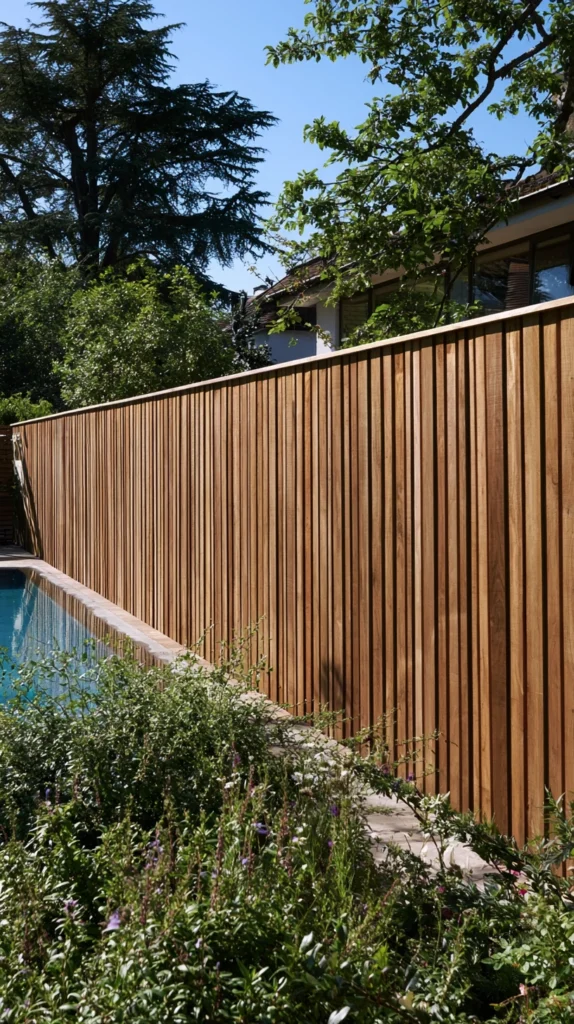
Budget: $150 – $800
A close board fence — feather-edge boards fixed vertically to arris rails between posts, with each board overlapping the previous by 10–15 millimetres — is the most robust and most traditionally English of all the timber fence formats. Close board provides complete visual privacy, excellent structural resistance to wind loading, and a clean vertical line that suits both formal and informal garden styles. Its quality is determined almost entirely by the quality of the timber and the quality of the painting or staining, and a close board fence in quality treated timber and a considered colour is a genuinely handsome garden boundary.
Feather-edge boards in pressure-treated softwood cost $1.50–$3 each. A 6-metre fence run at 180 centimetres height requires approximately 60 boards — $90–$180 in boarding. Arris rails and fence posts add $60–$120 for the same run. A painted close board fence in charcoal or forest green costs $25–$60 in paint per coat.
Style tip: Fit the feather-edge boards with the thick edge at the bottom and the thin edge at the top of each board — the conventional installation direction — but check that each board is genuinely vertical using a spirit level rather than relying on the visual alignment of adjacent boards. A close board fence where the boards have drifted out of vertical over successive panels reads as carefully installed at close range and gradually deteriorating at a distance.
3. The Metal and Timber Combination Fence
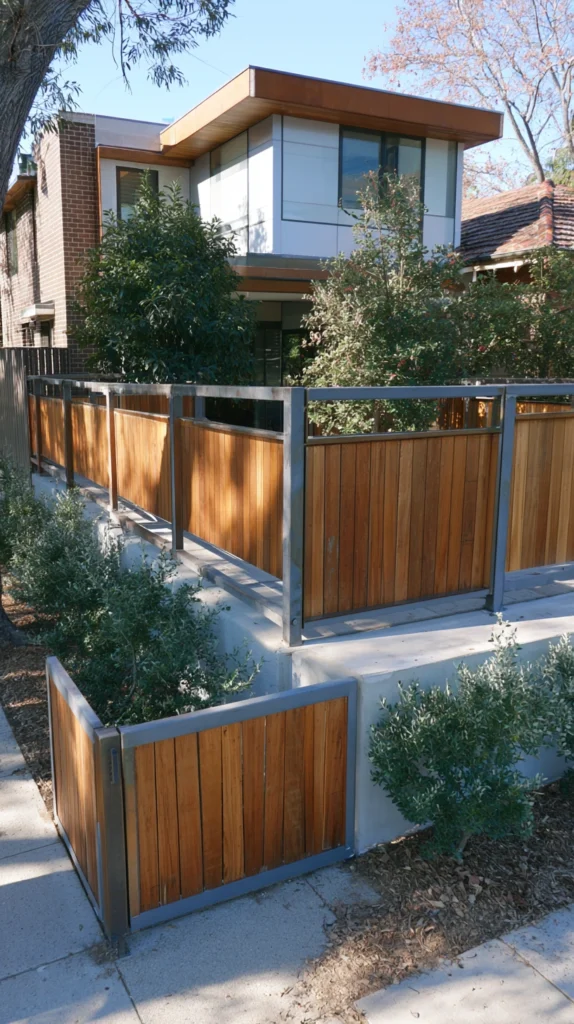
Budget: $300 – $2,000
A fence that combines steel or aluminium posts and rails with timber infill panels — or steel horizontal rails with vertical timber boards fixed between them — creates the material combination most associated with contemporary landscape design. The metal structural element provides the precision and the longevity of an engineered material; the timber infill provides the warmth and the visual softness that an all-metal fence lacks. The combination communicates material intelligence rather than material compromise.
Steel post and rail kits for fence construction cost $30–$80 per bay. Timber boards for infill cost $1.50–$4 each. A powder-coated steel post and rail system with timber board infill for a 6-metre run costs $200–$600 in materials. Choose a powder coat colour for the metal that relates to the timber stain — matching the metal to the timber finish creates material unity; contrasting the two creates a deliberate compositional decision that the colour combination must justify.
Style tip: Conceal the steel post faces behind the timber boards so only the rail is visible rather than the full post section. A fence where the steel structure is partially concealed by the timber reads as a timber fence with steel bones; one where the full steel post is exposed at each bay reads as a steel fence with timber infill. The concealed post is the installation detail that gives the combination fence the warmth of the timber material rather than the industrial quality of the steel.
4. The Painted Black Fence
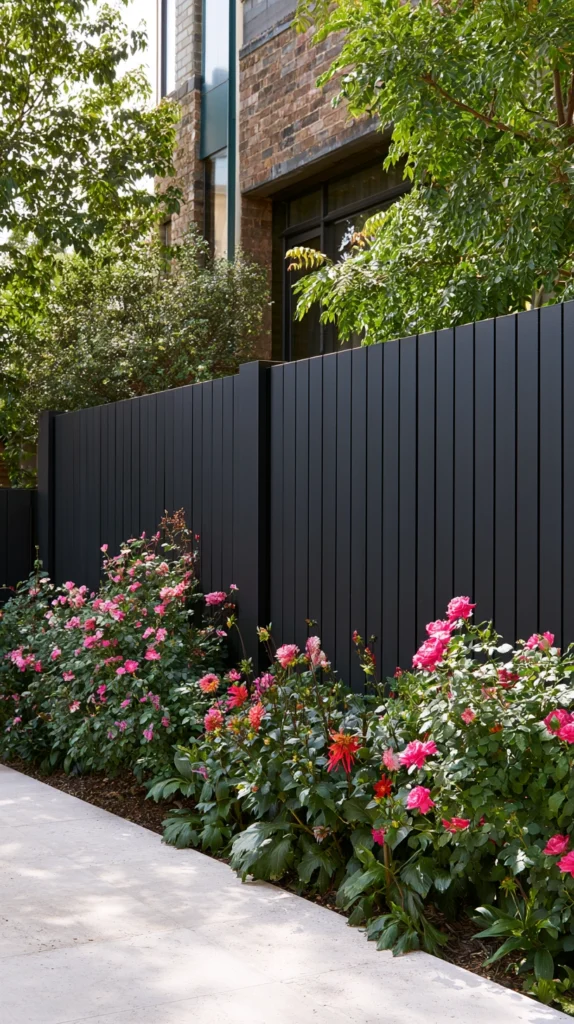
Budget: $40 – $200
Any fence — horizontal slat, vertical board, panel — painted in a flat, matte black creates the most dramatic and most specifically contemporary garden backdrop available at the lowest additional cost beyond the fence itself. A black fence makes every plant in front of it read at maximum vividness — the green of the foliage is at its most saturated against a black background, the flower colours at their most vivid, the grass at its most specifically green. The black fence is the most generous backdrop a planted border can have.
Exterior paint in a flat black finish costs $25–$60 per 2.5-litre tin. A 6-metre fence run requires approximately one tin per coat at standard fence board coverage. Two coats are essential for a black fence — a single coat of black produces an uneven, slightly transparent finish that reads as charcoal rather than black and loses the specific backdrop quality that the full black finish provides.
Style tip: Paint the back of the fence as well as the front face — the side that faces the neighbour — in the same black rather than leaving it untreated or in a contrasting colour. A fence painted on both faces communicates material care rather than minimum effort, maintains the timber’s protection from both sides, and provides the neighbourly quality of a fence that is as considered for the adjacent property as for the garden it is primarily serving.
5. The Woven Willow Panel Fence
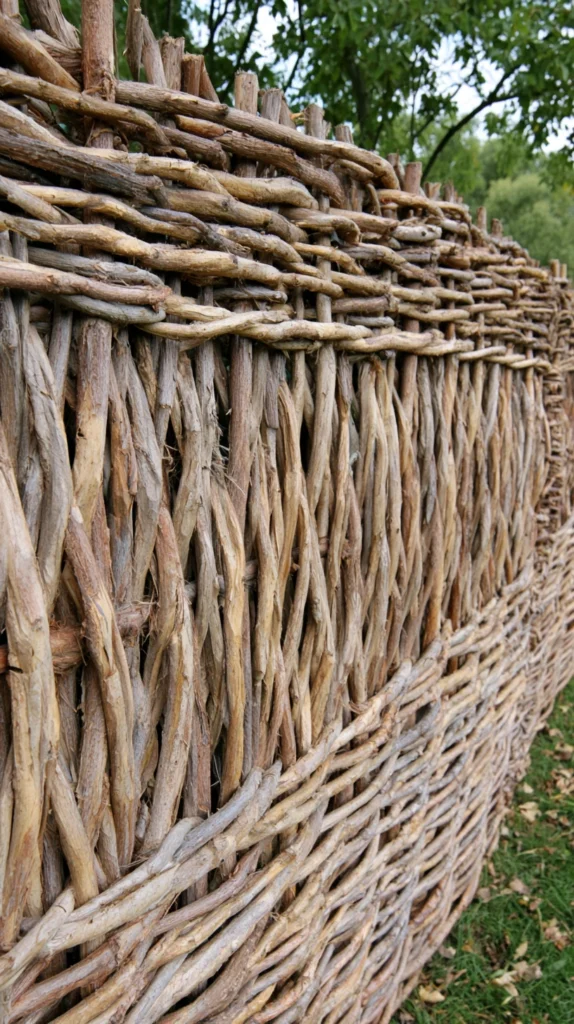
Budget: $80 – $300
Woven willow hurdles — panels of hand-woven green or dried willow that provide a warm, organic alternative to the conventional timber panel fence — create the most naturalistic and most specifically rustic of all the backyard fence aesthetics. The willow weave references the craft tradition of rural fencing and communicates a specific relationship to the natural material that no manufactured panel can replicate. The warm golden-brown colour of dried willow relates to the natural tones of the garden in every season.
Ready-made willow hurdles of 180 by 180 centimetres cost $20–$50 each. A 6-metre fence run requires three to four hurdles — $60–$200 in panels. Timber posts to mount the hurdles cost $10–$20 each. Willow hurdles last three to five years before requiring replacement — they are not permanent fence solutions, and the replacement cycle is part of the material relationship with willow as a living and gradually deteriorating natural material.
Style tip: Mount willow hurdles on a separate post and rail framework rather than directly on the boundary fence structure. Hurdles mounted on a purpose-built frame can be individually replaced as they deteriorate without disrupting adjacent panels; hurdles fixed directly to fence posts must all be removed to replace a single damaged panel. The independent frame costs $30–$60 additional for a standard fence run and provides decades of replacement flexibility.
6. The Trellis Top Extension
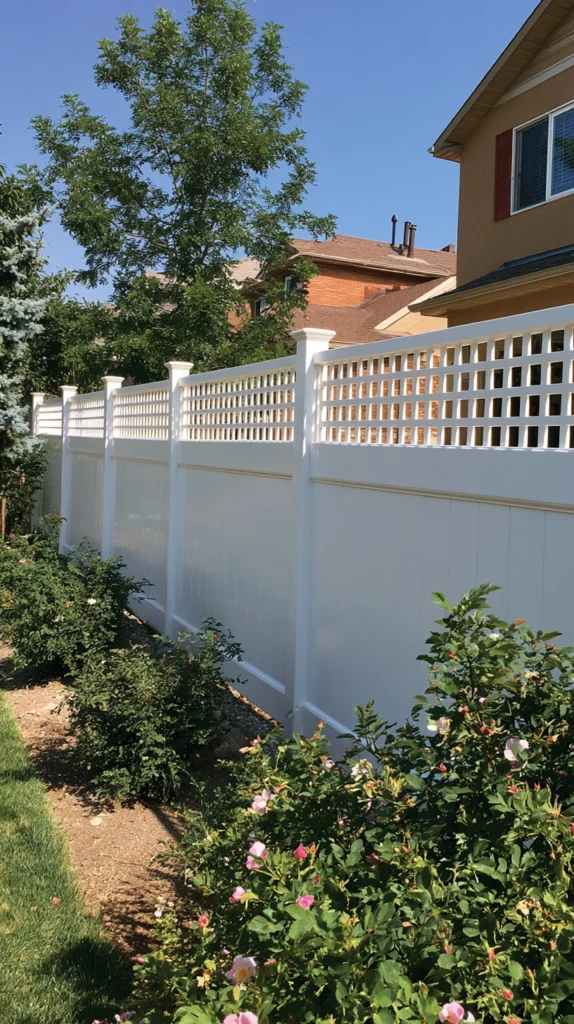
Budget: $40 – $200
A trellis panel added to the top of an existing fence — extending the total height from the standard 180 centimetres to 240–270 centimetres — with a climbing plant trained across it creates a fence that provides privacy, security, and beauty simultaneously. The trellis extension is legally permissible in most jurisdictions where a full solid fence at this height would not be, and the climbing plant that covers it provides the visual softness that the extended solid fence lacks.
Trellis panels of 30 by 180 centimetres cost $8–$20 each. A 6-metre fence run requires four panels on top — $32–$80 in trellis. Timber brackets to fix the trellis to the fence post tops cost $5–$10 each. A fast-growing climbing rose or clematis for the trellis costs $10–$35 each — one per metre of fence provides coverage within two seasons.
Style tip: Paint the trellis in the same colour as the fence below it rather than leaving the trellis in its natural timber state. A trellis that matches the fence reads as a designed extension of the fence structure; one in an unrelated colour or finish reads as something added to the top of the fence after the fact. The colour continuity is the detail that makes the trellis extension look designed.
7. The Corten Steel Panel Fence
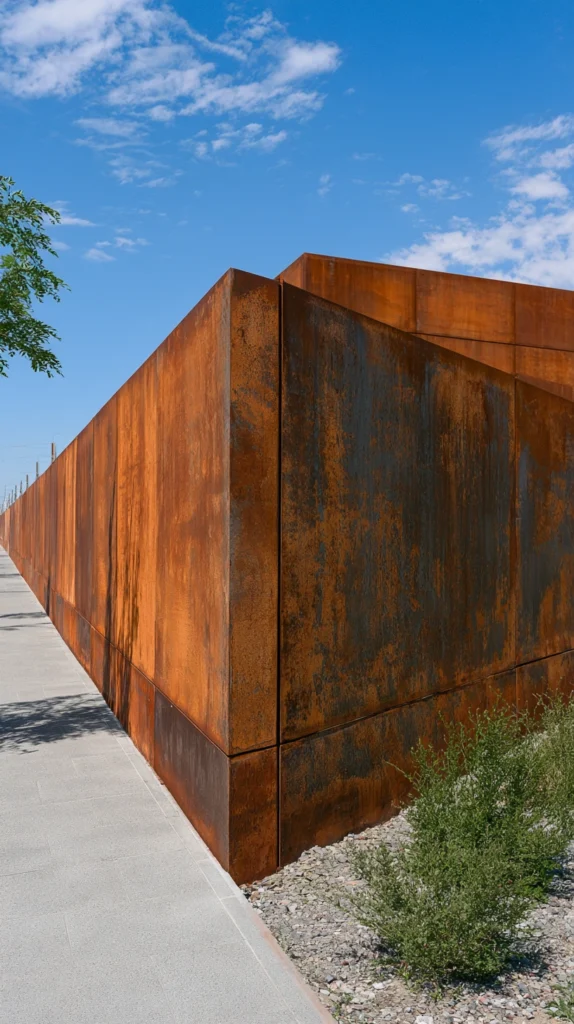
Budget: $400 – $3,000
Corten steel panels — the self-rusting weathering steel that develops a stable, warm-toned oxide patina that does not penetrate the metal — create the most dramatically beautiful and most specifically material-conscious of all the backyard fence types. The corten fence communicates a design sensibility that is comfortable with industrial material used in a garden context and that understands the specific beauty of controlled deterioration. It is the fence that improves in appearance over the first five years of its life rather than requiring maintenance to maintain it.
Corten steel fence panels of 180 by 90 centimetres cost $80–$200 each. A 6-metre fence run requires six panels — $480–$1,200 in panels plus $100–$200 in posts and fixing hardware. The corten develops its characteristic orange-brown patina within the first weeks of outdoor exposure and stabilises to a dark, warm amber-brown within the first season. Do not seal or paint corten — the weathering is the material quality.
Style tip: Allow the corten to complete its initial rusting phase before the garden is used intensively. The first weeks of corten weathering produce a rust run-off that stains adjacent paving, timber, and planting if not managed — position the panels over a loose gravel bed during the initial weathering phase, or hose the adjacent surfaces regularly until the active rust phase settles and the stable patina is established.
8. The Living Fence — Pleached or Trained Trees
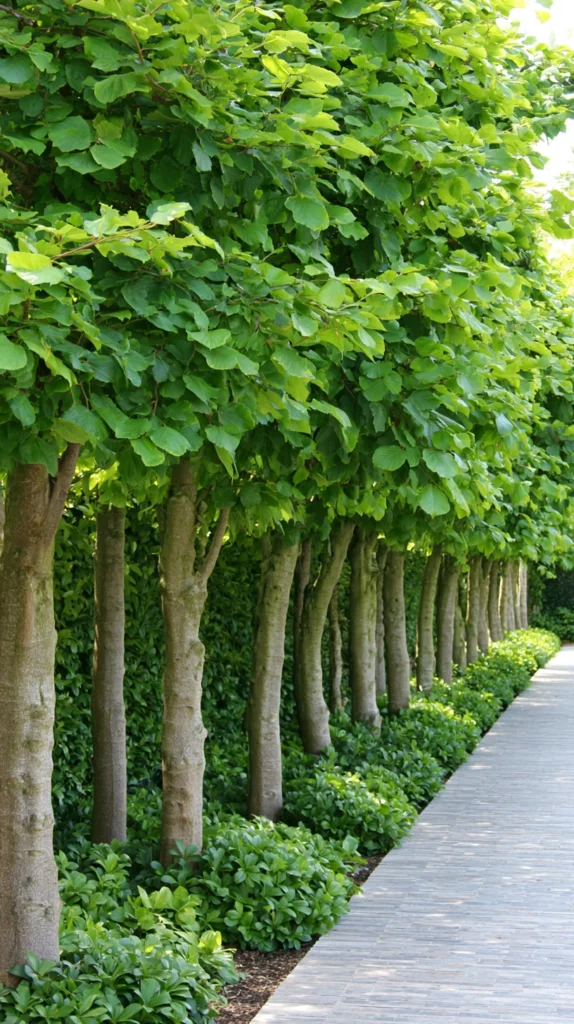
Budget: $400 – $2,500
A living fence — a row of pleached hornbeam, beech, or lime trees trained into a flat, formal hedge on clear trunks — creates the most architecturally sophisticated and most biologically alive of all the backyard boundary treatments. The pleached living fence provides privacy, wind shelter, wildlife habitat, seasonal change, and the specific quality of a garden boundary that was planted rather than built. It is a boundary that grows and improves rather than one that weathers and deteriorates.
Pleached hornbeam trees cost $80–$200 each. A row of five for a standard garden boundary run costs $400–$1,000 in plants plus $100–$300 in supporting posts and ties. Pleached trees require annual maintenance — tying in new growth in late summer, clipping the flat canopy once per year — that takes twenty minutes per tree.
Style tip: Install a temporary fence or screen at the pleached tree line during the three to five seasons the trees take to achieve full privacy height. The temporary screen provides the privacy function during the establishing period; the permanent pleached trees provide it thereafter. A garden that waits five years for privacy without a temporary solution is a garden that compromises its use for five years; one with a temporary solution compromises nothing.
9. The Bamboo Fence
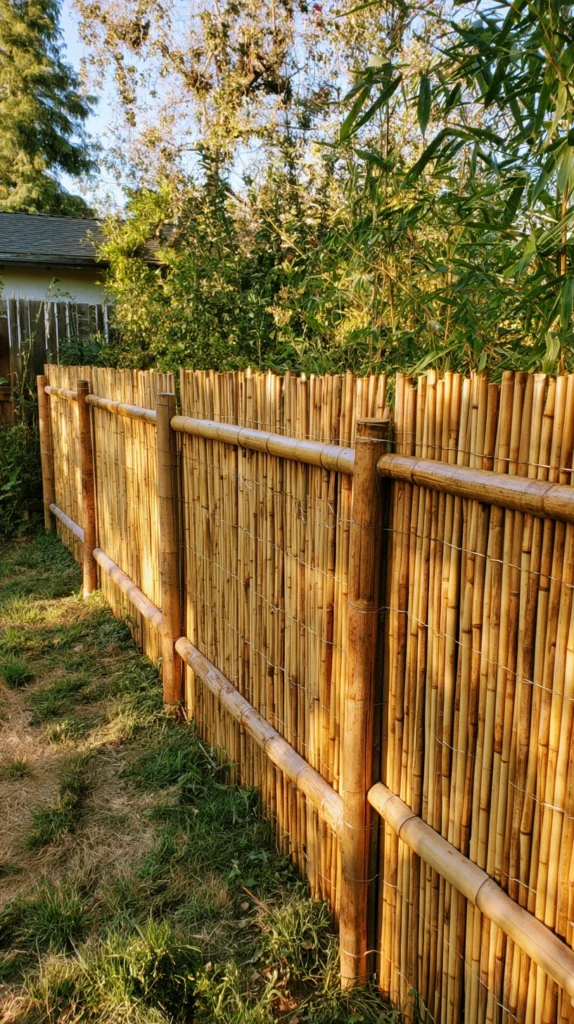
Budget: $100 – $500
A bamboo fence — either bundled bamboo poles wired to a timber framework, or bamboo panel sections fixed between posts — creates the most specifically Asian-garden and most warmly organic of all the timber-alternative fence types. Bamboo has a specific quality of vertical line and warm golden-brown colour that relates to the garden in a way that no manufactured fence panel replicates, and a bamboo boundary communicates a specific aesthetic sensibility rather than the default choice of whatever was most readily available.
Bamboo screening panels of 180 by 90 centimetres cost $15–$30 each. A 6-metre fence run requires six panels — $90–$180 in bamboo. Natural bamboo poles of 4–5 centimetres diameter for a pole fence cost $3–$8 each. Treat bamboo with a penetrating preservative before installation — untreated outdoor bamboo deteriorates faster than treated timber in sustained rain and UV exposure, splitting and greying within two to three seasons.
Style tip: Fix bamboo panels to a secondary timber framework rather than directly to the existing fence posts — the framework provides the consistent vertical and horizontal support that prevents the bamboo from sagging and bowing between post fixings, which is the deterioration mode that makes bamboo fences look neglected within a single season of unsupported installation.
10. The Mixed Material Privacy Fence
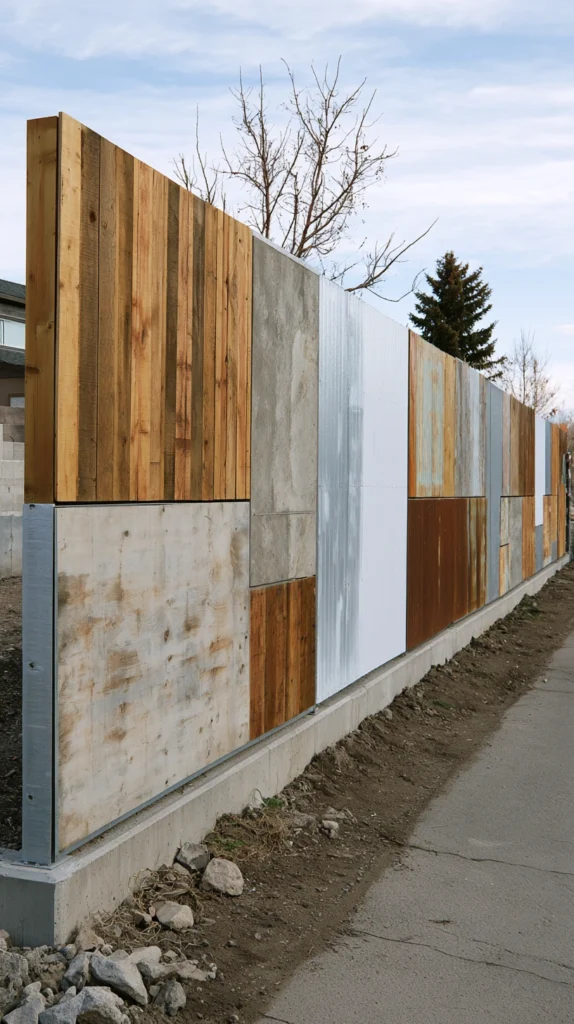
Budget: $200 – $1,500
A fence that alternates two complementary materials — timber panels with planted trough sections between each bay, concrete blocks with timber board infill, gabion sections beside rendered panels — creates a boundary of considerably more visual interest and material intelligence than a uniform single-material run. The mixed material fence communicates a design consideration that went beyond the minimum available option and created a boundary that belongs specifically to the garden it contains.
The material combination determines the cost — a timber and planted trough combination for a 6-metre run costs $200–$600; a concrete and timber combination runs $400–$1,200; a gabion and rendered panel combination costs $600–$2,000. The proportion of each material in the combination should be determined before installation — the dominant material at seventy percent and the accent material at thirty percent produces a boundary with identity; equal proportions produce a boundary that cannot decide what it is.
Style tip: Choose materials for the combination fence that share a consistent tonal quality — both warm-toned or both cool-toned — rather than mixing warm timber with cool grey concrete in equal proportions. The tonal relationship between the two materials is the compositional quality that makes the combination read as designed rather than assembled.
11. The Horizontal Slatted Screen with Planting Frame
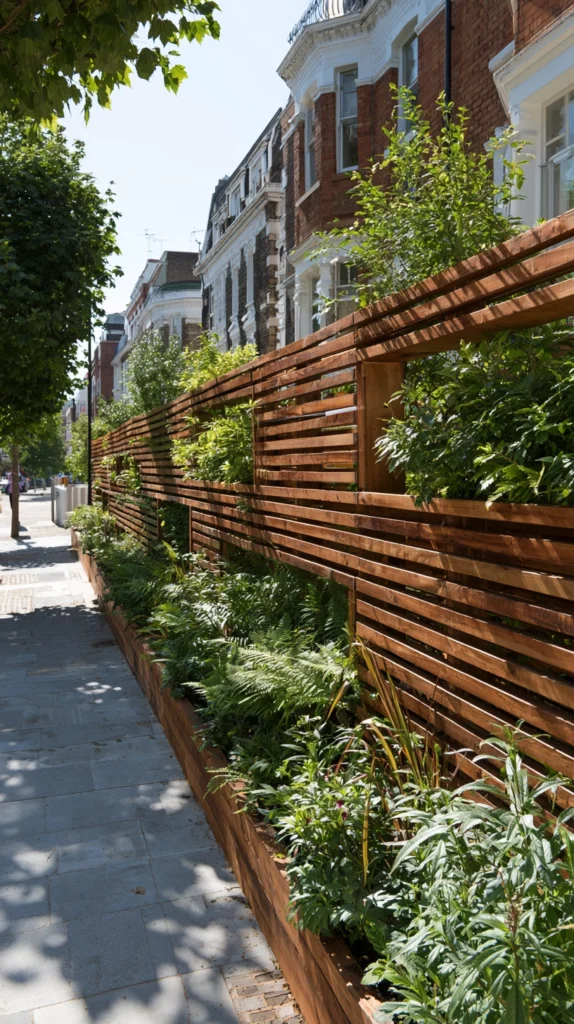
Budget: $200 – $1,000
A horizontal slatted fence with a planting trough or a planting pocket integrated into each fence post — so that climbing plants, trailing plants, or architectural grasses grow directly from the fence structure rather than from separate containers placed in front of it — creates the most intimate integration of fence and planting available. The fence with integrated planting reads as a garden element rather than a boundary element, and the planting that grows from within the fence structure has a quality of belonging to it that the same plant growing in front of the same fence from a separate container never quite achieves.
A horizontal slat fence with integrated planting troughs costs $200–$600 for a standard 6-metre run in materials. The planting troughs are fitted between the fence posts during construction — adding them afterward is technically possible but produces a less integrated result. Plants for the integrated troughs — trailing plants, climbing roses, architectural grasses — cost $8–$25 each.
Style tip: Plant the integrated fence troughs with a consistent species throughout the run rather than with a variety — a fence run with one climbing rose variety in every trough reads as a designed planting decision; one with different plants in each trough reads as a collection. The consistency of the planting species communicates the intentionality of the integration.
12. The Gabion Fence Panel System
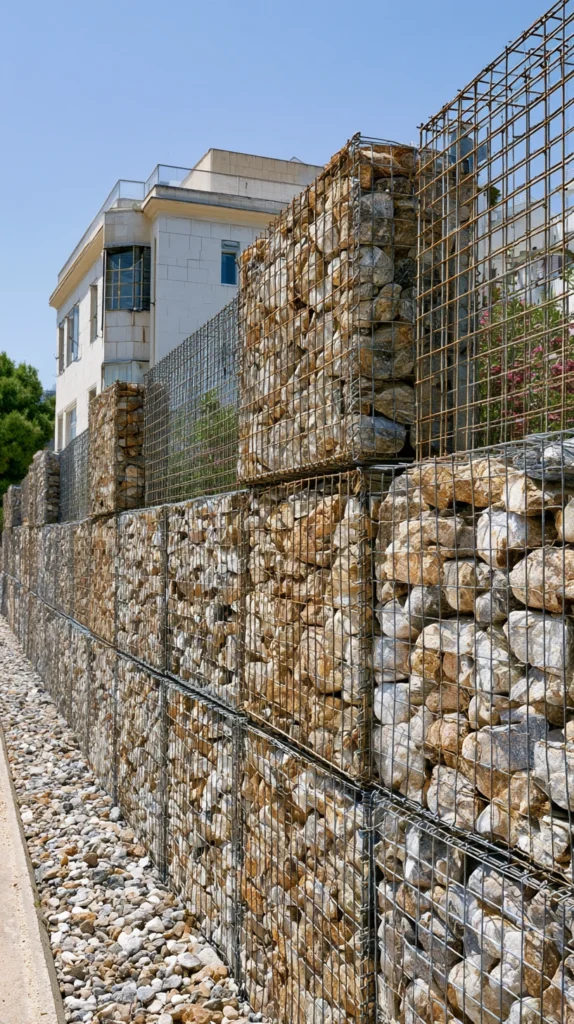
Budget: $300 – $2,000
Gabion panels — steel mesh cages filled with stone, reclaimed glass, or other decorative fill — used as fence sections between timber or steel posts create a boundary of extraordinary material weight and visual texture. The gabion is the fence format that is simultaneously the most solid and the most visually permeable — the stone fill provides genuine physical barrier while the mesh structure allows light and air through the fence rather than completely blocking it.
Gabion cages of 60 by 60 by 20 centimetres cost $15–$30 each. A 6-metre fence run at 180 centimetres height requires eighteen cages in three horizontal layers — $270–$540 in cages plus $60–$120 in stone fill per layer. Steel posts between the gabion sections cost $20–$40 each. Choose fill stone that relates to the garden’s existing material palette — the stone fill colour is the gabion fence’s most significant visual quality.
Style tip: Fill the gabion panels in layers — coarser stone in the lower panels and progressively finer stone in the upper ones — replicating the natural hydraulic sorting that water produces in a river system where larger stones settle at the base and finer material distributes above. The graded fill communicates a knowledge of the material language the gabion is referencing.
13. The Geometric Cut-Out Panel
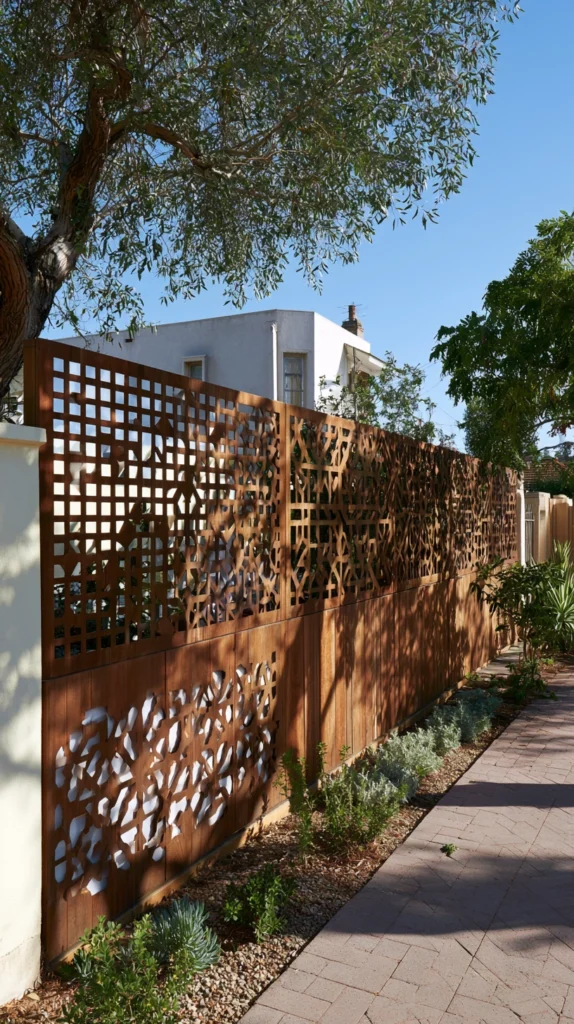
Budget: $200 – $1,500
A fence with geometric cut-outs — circular apertures, diamond patterns, or repeating geometric forms cut through the board surface — creates a boundary of surprising visual depth and lightness without compromising the structural integrity or the privacy function of the fence. The cut-out panel is the fence format that most specifically communicates the design intelligence of a pattern decision applied to a functional surface, and the shadow quality of the cut-outs as the sun moves across the fence produces a continuously changing surface that no solid fence can provide.
CNC-cut timber fence panels with geometric apertures cost $80–$200 per panel. A 6-metre fence run of custom-cut panels costs $480–$1,200. A DIY version using a jigsaw and a stencil costs $40–$80 in panel materials plus the cost of the router or jigsaw. The cut-out pattern should be sealed and painted before installation — the cut edges of timber are the most porous part of the board and the most vulnerable to moisture ingress.
Style tip: Choose a cut-out pattern whose scale relates to the garden’s planting — a large geometric aperture suits a garden with large-scale architectural planting; a small repeated pattern suits a garden of finer-textured planting. The relationship between the fence pattern and the planting scale communicates a designed visual relationship between the two elements.
14. The Evergreen Hedge and Fence Combination
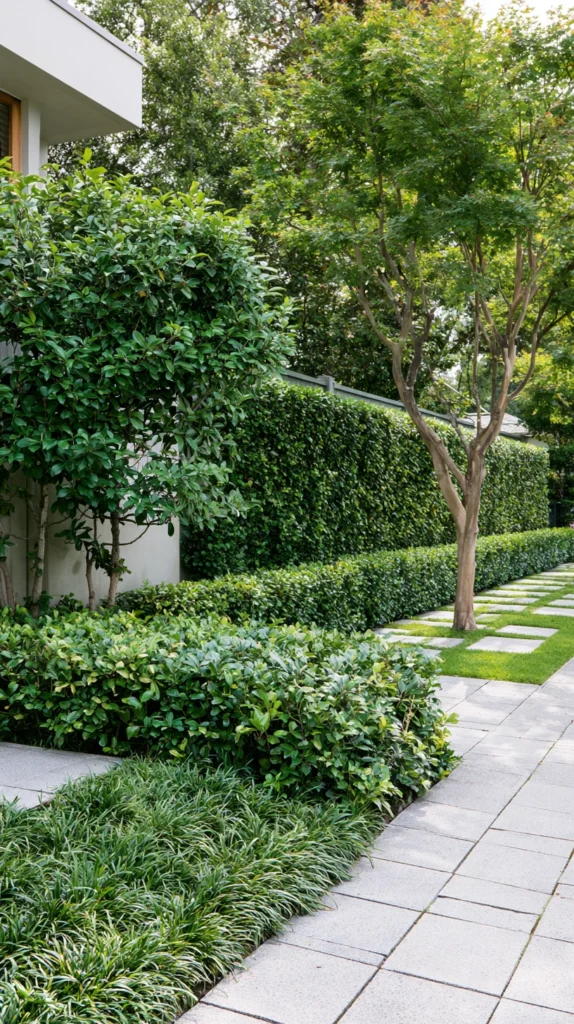
Budget: $150 – $800
An existing fence with a hedge planted immediately in front of it — the fence providing immediate privacy and security while the hedge establishes, the hedge eventually taking over the primary visual role while the fence provides the structural backing — creates the most complete and most permanent of all the backyard boundary solutions. The fence-and-hedge combination provides dual security during the establishing period and a hedge of genuine maturity and garden quality at the point when the fence behind it has reached the end of its practical life.
Box or yew hedge plants cost $5–$15 each for standard planting sizes. A 6-metre hedge run at one plant per 30 centimetres requires twenty plants — $100–$300 in plants. The fence behind the hedge requires no additional maintenance once the hedge is established — it is protected from direct UV and rain by the hedge canopy and deteriorates at a fraction of the rate of an exposed fence. The hedge itself requires a single annual clip in late summer.
Style tip: Plant the hedge 30 centimetres in front of the fence rather than directly against it. The gap between the hedge and the fence allows air circulation that benefits the hedge’s health, provides access to the fence for any maintenance that proves necessary, and prevents the hedge roots from destabilising the fence posts as the root system expands. The gap costs nothing and produces years of practical benefit.
15. The Low Fence With Overhead Climbing Structure
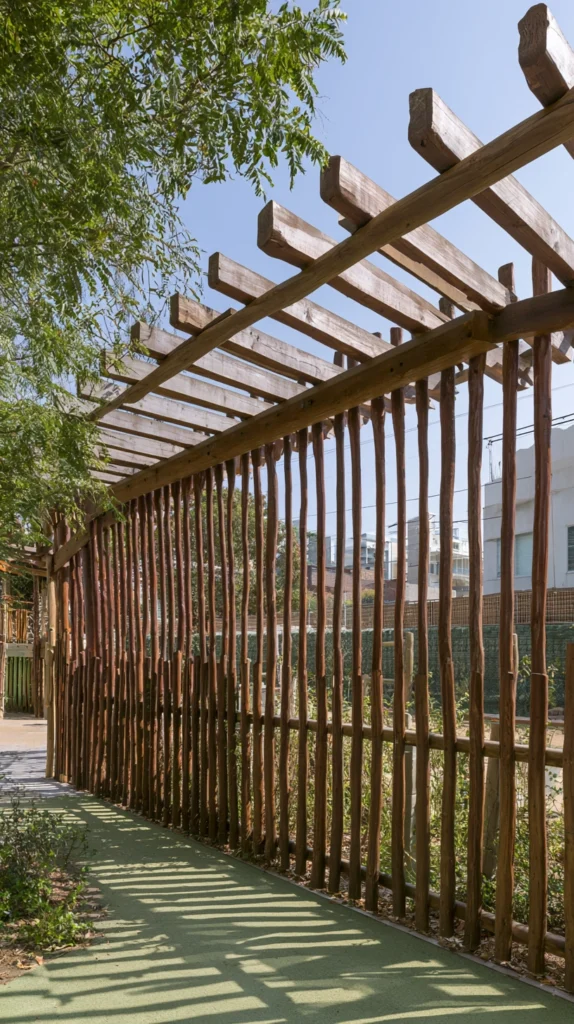
Budget: $200 – $1,500
A fence of lower-than-standard height — 120 centimetres rather than the standard 180 — with a horizontal overhead trellis or climbing structure above it that carries the plant material to the full privacy and security height, creates a boundary that reads as a garden feature at its low level and as a green screen at its full height. The low fence with overhead planting communicates a design sensibility that saw the boundary not as a wall to be installed but as a garden element to be grown.
A timber fence of 120 centimetres in height costs $100–$300 for a standard 6-metre run. A horizontal overhead trellis supported by the fence posts at 240 centimetres total height costs $80–$200. Climbing plants trained from the low fence level to the overhead trellis — roses, wisteria, clematis — cost $15–$35 each. The combined low fence and overhead planting provides security at the physical level and visual screening at the plant level.
Style tip: Plant the climbing material on the garden side of the fence rather than the boundary side so the plant growth benefits from the garden’s soil quality and the gardener’s management. A climber planted on the garden side is entirely within the garden’s management; one planted on the boundary side requires reaching over or through the fence to maintain, which is the access problem that most climbing plant boundary treatments eventually produce.
The backyard fence that is both stylish and secure is the one that was chosen for the specific garden — its scale, its style, its relationship to the house, the planting that will grow in front of it, the views it needs to screen and the views it needs to preserve.
A fence that suits the garden it serves is a fence that disappears into the garden’s design intention rather than announcing itself as a boundary. It is, in the best sense, invisible — present as structure, absent as obstacle, and present again as the backdrop against which the garden performs.
Choose the fence material with the same care applied to any other design decision in the garden. Paint it in the colour it deserves. Plant in front of it with the specific knowledge that the fence colour is the backdrop of every plant that grows there. And maintain it with the consistency of a garden element that was chosen rather than defaulted to — which is the maintenance of something you value rather than the maintenance of something you are required to preserve.