15 Small Backyard Summer Makeover Ideas on a Budget
15 Small Backyard Summer Makeover Ideas on a Budget
There is a particular kind of satisfaction that comes from transforming a neglected backyard into somewhere you actually want to spend time. Not a landscaped garden that required planning permission and a team of contractors, but a real space — somewhere with a chair you look forward to sitting in, a corner that catches the evening light, a surface you can put a drink on without it tipping over. The kind of place that makes you wonder why you did not do it sooner.
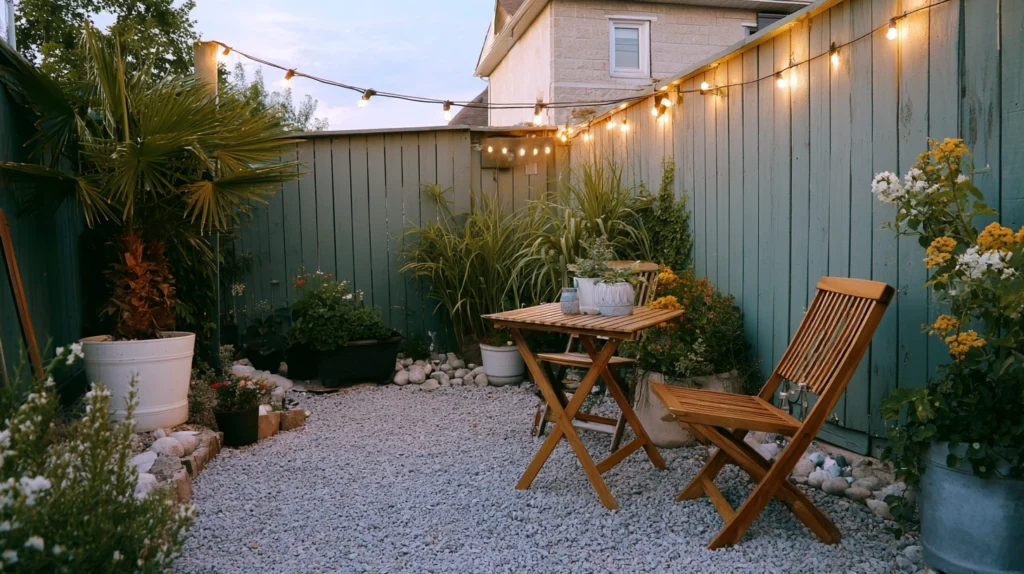
The constraint here is deliberate: small space, modest budget, no structural work. Everything below works with what you already have as a foundation and builds on it without requiring specialist skills or significant expense. Each idea includes what you will need, what it will cost, and a practical tip to make it look as considered as it deserves.
1. The Gravel Refresh
Budget: $30 – $120
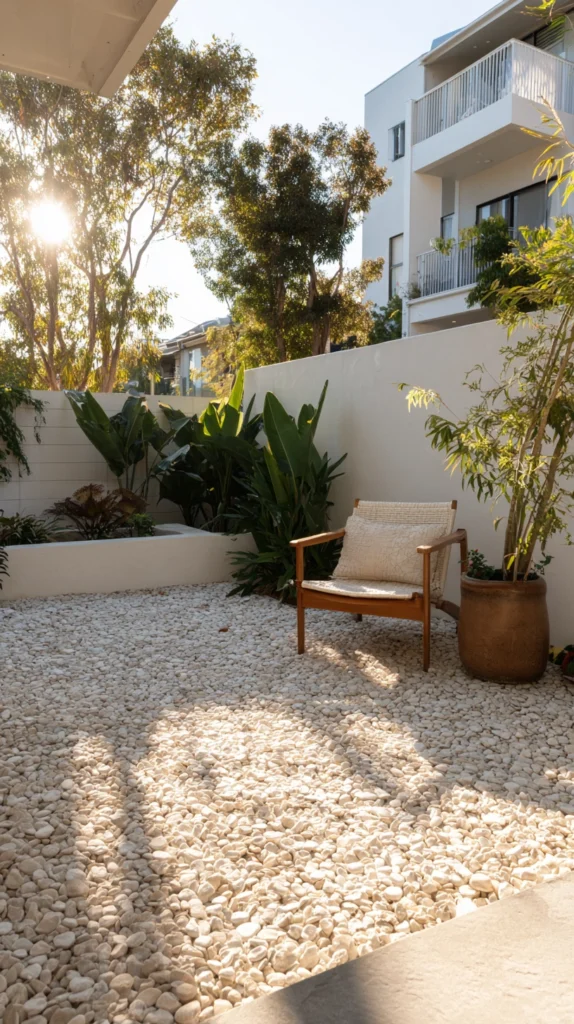
A thin top-up layer of fresh decorative gravel over an existing tired gravel area — or a new gravel patch laid over a weed-suppressing membrane — is one of the fastest visual transformations available to a small backyard. Fresh gravel reads as intentional and maintained in a way that worn, mossy, or weed-invaded gravel simply does not, and the difference between the two costs almost nothing.
A 25-kilogram bag of decorative gravel covers roughly half a square metre at a 5-centimetre depth and costs $8–$15. A weed-suppressing membrane for a new area runs $10–$20 for a standard roll. Gravel in a warm buff or honey tone reflects summer light better than grey and makes the space feel noticeably brighter on overcast days as well as sunny ones.
Style tip: Define the edge of the gravel area with a thin metal or timber border before laying. A gravel patch with a clean, defined edge reads as a design decision; the same gravel without an edge reads as something that spread.
2. The Potted Herb Wall
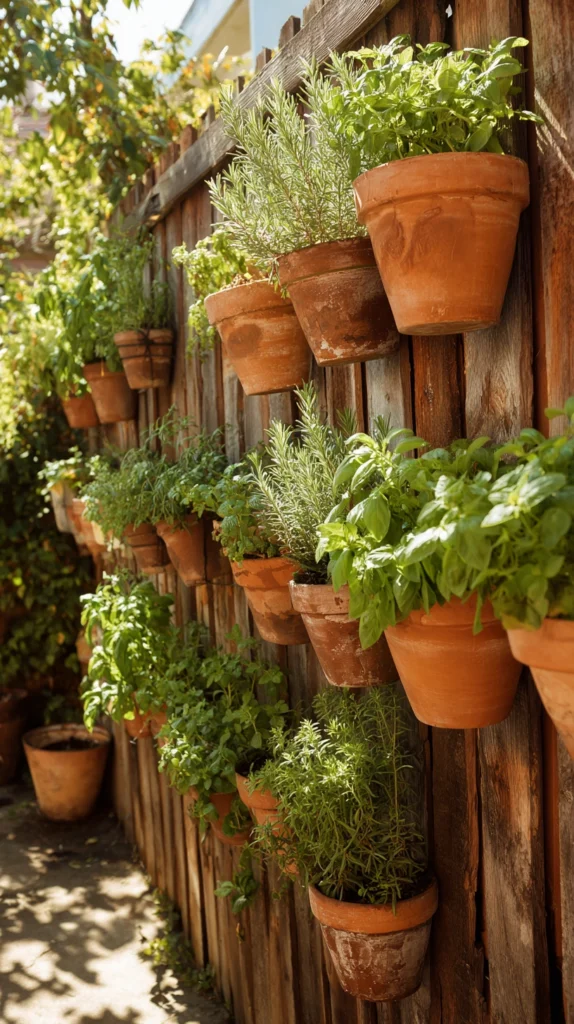
Budget: $25 – $80
Mount a row of terracotta or metal pots on a fence or wall at varying heights using simple brackets, fill them with herbs — rosemary, mint, thyme, basil — and a bare fence becomes a living wall that is useful as well as decorative. It takes up no floor space, costs very little, and adds a smell to the garden on warm evenings that no candle or diffuser can replicate. The combination of warm stone, green leaves, and scent is one of the most effective sensory upgrades a small backyard can receive.
Wall-mounted pot brackets cost $3–$8 each. Terracotta pots run $2–$6 for a 10-centimetre size. Herb plants from a garden centre cost $2–$4 each. The total outlay for six pots mounted in a staggered row sits comfortably under $60, and the herbs pay for themselves quickly if you actually use them in cooking.
Style tip: Vary the pot sizes as well as the heights — a mix of small and medium pots looks more considered than a uniform row of identical sizes. Group herbs that prefer the same conditions together: sun-lovers like rosemary and thyme on the south-facing section, moisture-preferring herbs like mint and parsley in a slightly shadier position.
3. The Painted Fence Panel
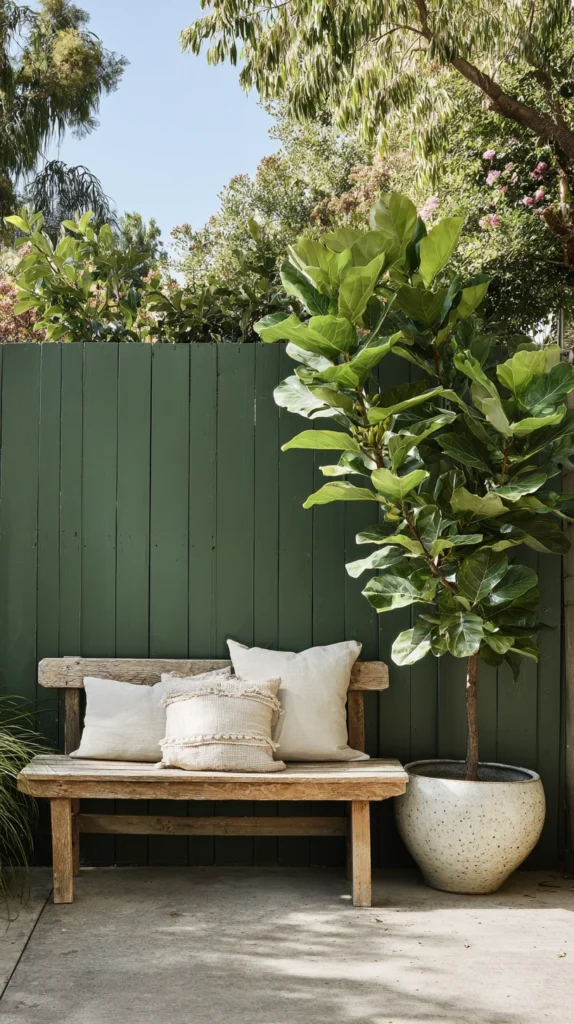
Budget: $20 – $70
Paint one fence panel — not the whole fence, just one — in a deep, strong colour: forest green, navy, charcoal, dusty terracotta. Use it as a backdrop for a potted plant arrangement or a simple wall-mounted shelf. A single coloured panel in an otherwise natural or neutral fence reads as an intentional feature wall and gives the backyard a focal point that most small gardens lack entirely. It costs one tin of exterior paint and an afternoon.
Exterior masonry or wood paint in a 750ml tester pot costs $8–$15 and covers a standard fence panel twice. A small brush and roller ($5–$10) complete the equipment. Prime bare or previously unpainted wood first with a coat of exterior primer ($8–$12) to prevent the top coat from soaking in unevenly.
Style tip: Choose the panel that sits directly behind the spot where you most often sit or where you plan to create a seating area. A coloured panel works as a backdrop rather than a standalone feature — it needs something in front of it to make sense, and a chair or a plant arrangement gives it that purpose.
4. The String Light Canopy
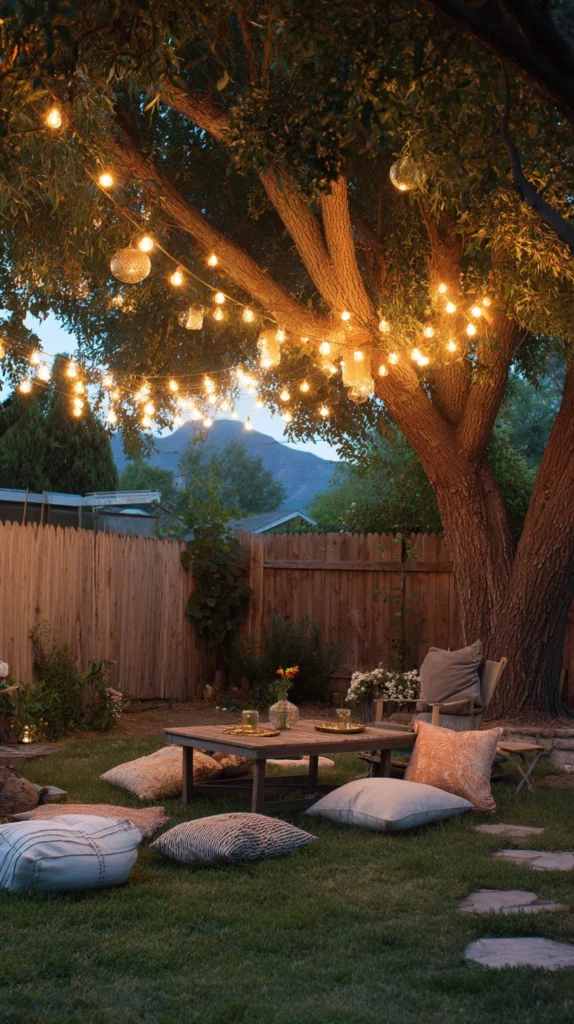
Budget: $20 – $80
String outdoor fairy lights or festoon bulb lights between two anchor points — fence posts, a wall hook and a tree branch, a pair of screw eyes in the gate and the house wall — and the backyard acquires an entirely different quality after dark. Overhead light that is warm, diffuse, and at a low level transforms an outdoor space more than any other single change, and a string light canopy costs less than a single piece of outdoor furniture.
Outdoor fairy lights on a 10-metre reel cost $10–$25. Festoon bulb string lights with individual Edison-style bulbs run $20–$60 for a 5-metre length and produce a warmer, more substantial glow than fairy lights. Weatherproof screw hooks to anchor the lights cost $3–$8 for a pack. Run the cable along the fence line rather than across the middle of the garden to keep it tidy during the day.
Style tip: Aim for a slight sag in the string between anchor points rather than pulling it taut. A relaxed curve looks intentional and relaxed; a tightly stretched string looks like a washing line. A sag of 20–30 centimetres between posts is the right amount.
5. The Raised Planter Box
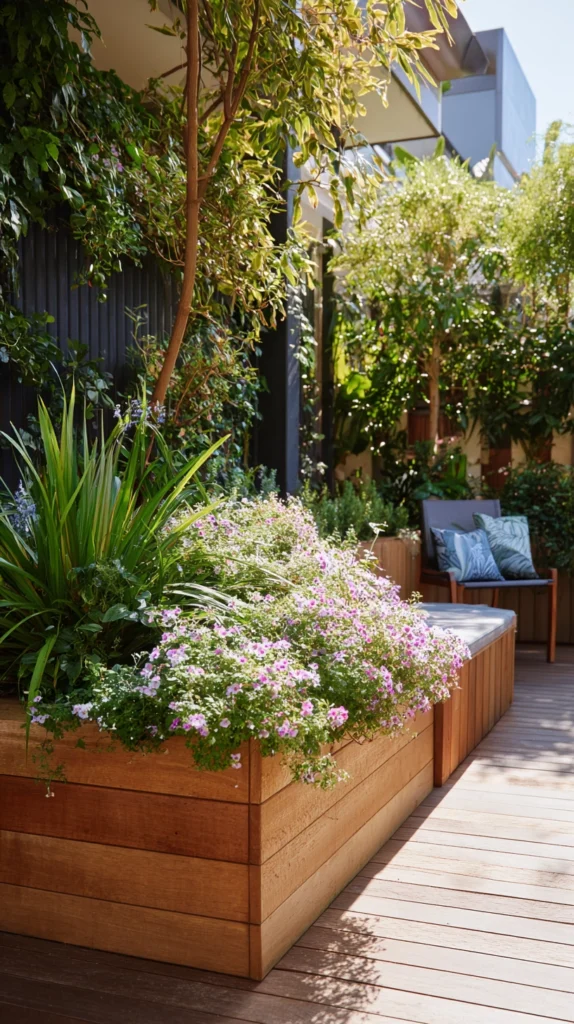
Budget: $40 – $150
Build or buy a simple raised planter box — one metre long, 30 centimetres wide, 40 centimetres tall — fill it with compost and plant it with trailing flowers, salad leaves, or a mix of both, and a flat, featureless backyard gains both height and colour without losing any usable floor space. A raised planter at the edge of a patio reads as a boundary, a frame, and a garden feature simultaneously.
A basic untreated timber raised planter kit costs $30–$60. Building one from reclaimed timber or decking boards costs $10–$30 in materials. Exterior wood stain in charcoal or dark oak ($8–$15) gives raw timber a finished look in one coat. Fill with a mix of topsoil and compost ($10–$20 per bag) rather than potting compost alone, which dries out too quickly in a raised bed exposed to summer sun.
Style tip: Plant the back row of the planter with taller, upright plants and the front row with trailing varieties that spill over the edge. The layering creates visual depth and makes a single planter look like far more garden than it actually is.
6. The Outdoor Rug Zone
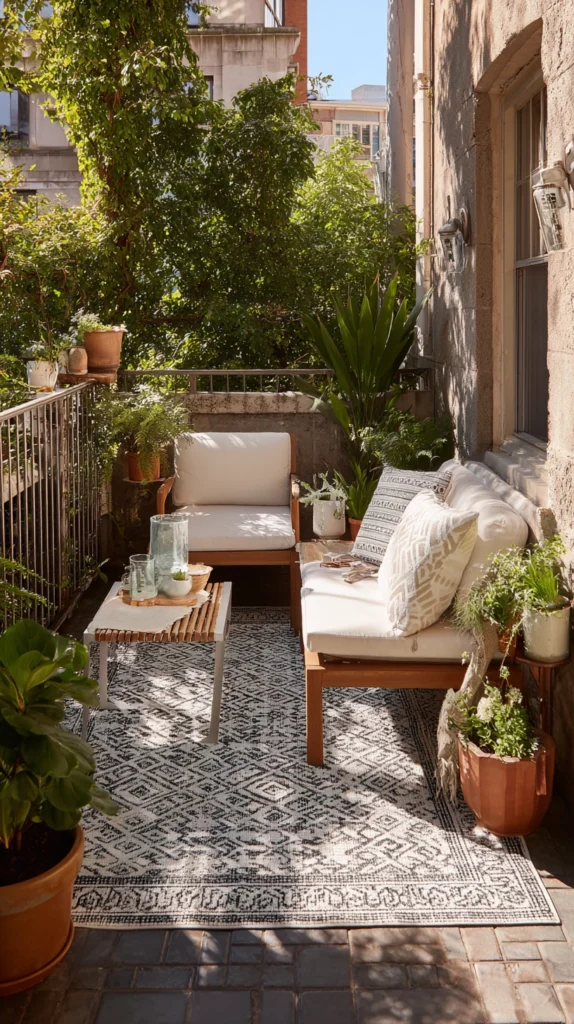
Budget: $30 – $120
Lay a large outdoor rug on the patio or any hard surface and the area immediately reads as a room rather than a yard. The rug defines the space, softens the hardness of concrete or stone underfoot, and creates a visual anchor for any furniture placed on it. In a small backyard where the floor surface is uninspiring, it is often the single fastest transformation available.
Outdoor polypropylene rugs — durable, fade-resistant, hose-cleanable — start at $30 for a 120 by 180 centimetre size and run to $80–$120 for a 180 by 270 centimetre version. Choose a size that fits comfortably under all the furniture in the seating area with at least 30 centimetres to spare on each side — a rug that is too small for the furniture arrangement floats rather than anchors.
Style tip: Secure the corners of the rug to the ground with outdoor rug tape ($8–$15) or heavy planter pots positioned at each corner. An outdoor rug that curls at the edges or shifts in the wind looks unkempt within a week of being laid and becomes a trip hazard that no amount of styling can compensate for.
7. The Upcycled Pallet Furniture
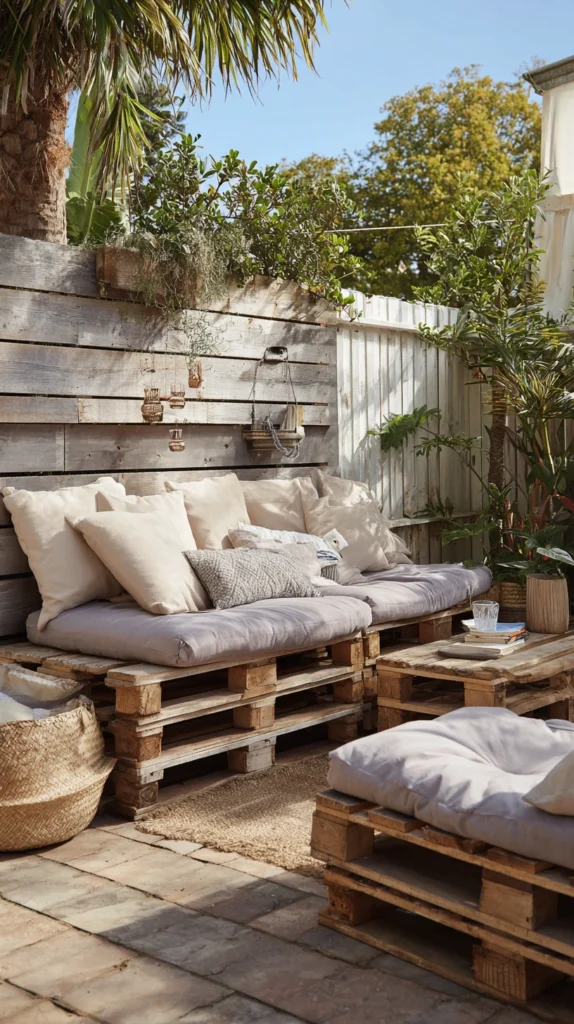
Budget: $10 – $80
Source two or three heat-treated pallets (marked HT, not MB), sand them lightly, paint or stain them in an exterior finish, add outdoor cushions on top, and a seating area that costs almost nothing becomes one that looks considerably more deliberate. Low pallet seating is comfortable, visually appropriate for a small backyard, and entirely customisable in colour and configuration.
Heat-treated pallets cost $0–$10 each from builders merchants, garden centres, or online marketplaces. Exterior wood paint or stain runs $8–$20 for a small tin. Outdoor cushions cost $15–$30 each. A sheet of sandpaper ($2–$5) and an afternoon of preparation produces a finish that holds up through a full summer season without peeling or fading.
Style tip: Paint the pallets two shades darker than you think you want. Fresh exterior paint always dries lighter than it appears wet, and a mid-tone grey or green that looks right on the brush often reads as washed-out once dry. Test on a small section and let it dry fully before committing to the whole piece.
8. The Vertical Trellis Screen
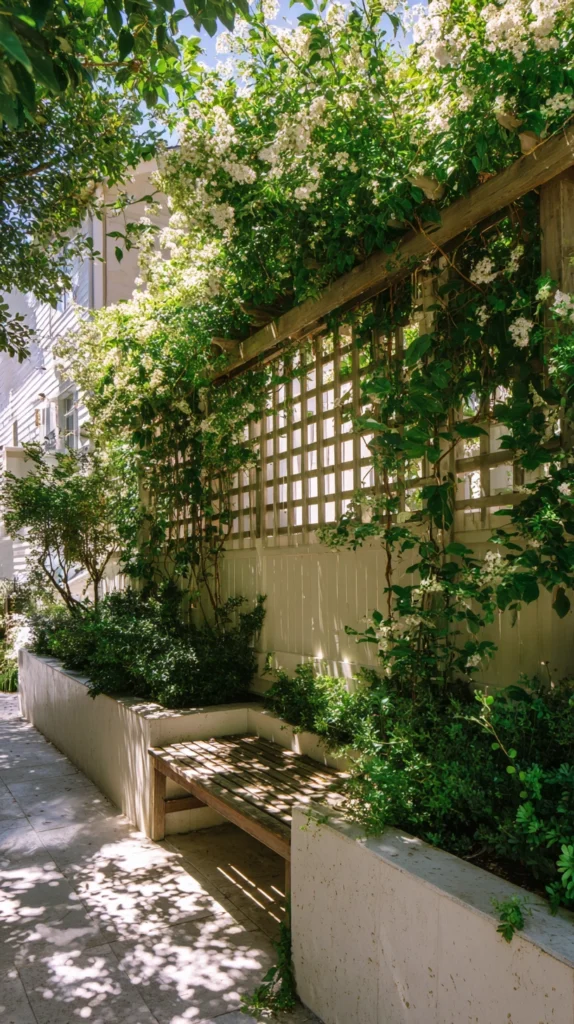
Budget: $25 – $100
Fix a simple timber or metal trellis panel to a wall or fence, plant a fast-growing climber at the base — jasmine, clematis, or a climbing rose — and within a single season a bare wall becomes a living screen. In a small backyard where the walls are always visible, covering one of them with foliage changes the character of the entire space. It also provides privacy, absorbs noise, and in the case of jasmine, adds a scent to the evening garden that nothing else provides.
A timber trellis panel costs $15–$35. A climbing plant from a garden centre runs $8–$20. Wall fixings and vine eyes to train the plant away from the wall ($5–$10) allow air circulation that prevents mould on the wall surface. Plant at least 20 centimetres away from the wall base rather than directly against it — climbers established in better soil establish faster and root more strongly.
Style tip: Fix the trellis panel 10 centimetres away from the wall surface rather than flush against it. The gap allows the climber to thread through properly, improves airflow, and gives the trellis a slightly three-dimensional quality that a flush-mounted panel lacks.
9. The Lantern Path
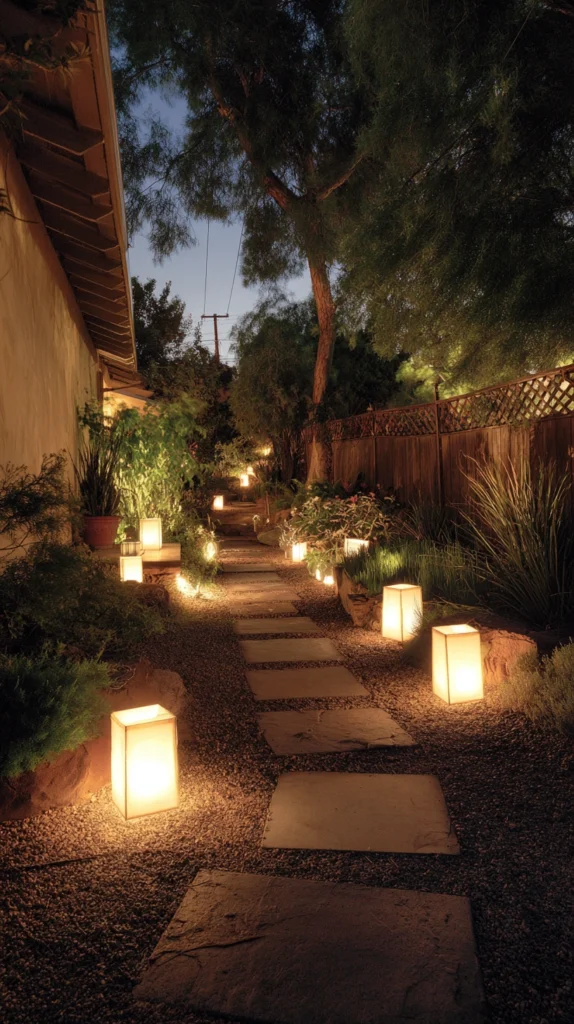
Budget: $20 – $70
Place a line of outdoor lanterns along a path, the edge of the patio, or the boundary between the lawn and a planted bed. It requires no installation, no wiring, and no tools — lanterns placed directly on the ground at regular intervals define the space after dark and give the garden a sense of occasion every evening without any effort. Solar-powered lanterns eliminate the need for batteries or cables entirely.
Solar outdoor lanterns cost $5–$15 each. A row of six along a path or border costs $30–$90 and pays for itself quickly by eliminating battery costs. Candle lanterns ($8–$20 each) give a warmer, more natural light but require tea lights replaced every four to six hours. Mix heights within the row — alternating tall and short lanterns — for a more interesting silhouette than a uniform line.
Style tip: Place lanterns in odd-numbered groups rather than pairs. A pair of lanterns at either end of a path looks like gateposts; a row of five or seven has a relaxed, gathered quality that pairs never achieve. The odd number principle applies to almost any decorative arrangement outdoors.
10. The Repainted Fence Gate
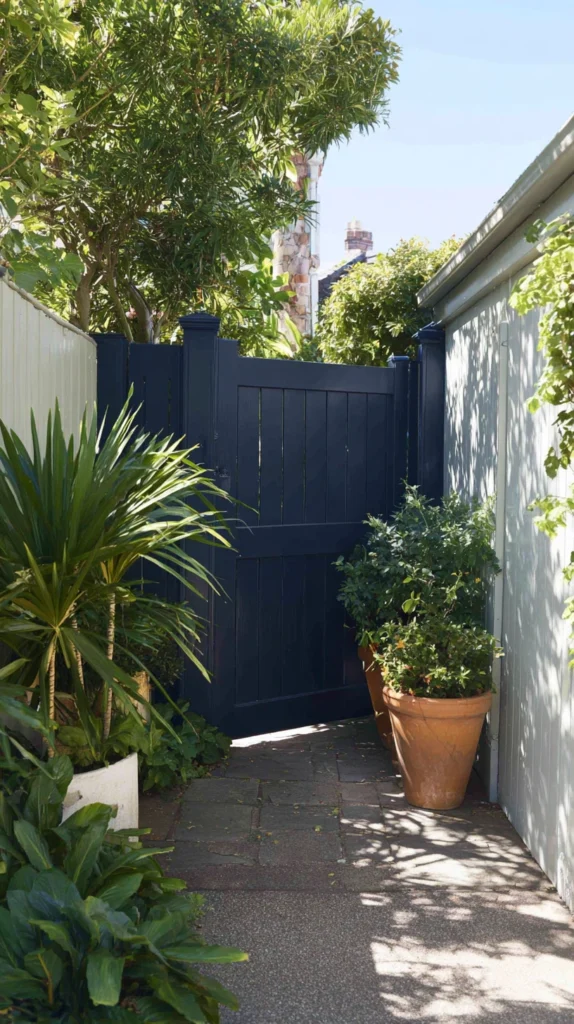
Budget: $15 – $50
Paint the garden gate in a colour that contrasts with the fence — a deep green gate in a natural timber fence, a black gate against a white-painted wall, a dusty blue gate in a grey-boarded enclosure. The gate is the first thing seen on entering the garden and the last thing seen on leaving it, and a gate that is painted with intention signals that the space beyond it has been thought about. It requires no more than a tin of exterior paint and two hours.
Exterior gloss or eggshell paint for a gate costs $10–$20 for a small tin. A small brush and fine-grit sandpaper to prepare the surface ($5–$10) complete the materials. Sand any peeling areas back to bare timber before painting and apply two thin coats rather than one thick one — a thick coat of gloss drips on vertical surfaces and takes days to cure properly.
Style tip: Paint the inside face of the gate the same colour as the outside. A gate that is one colour from the street and bare timber from the garden side looks unfinished from the inside, and the inside is the view you live with every day.
11. The Folding Bistro Set
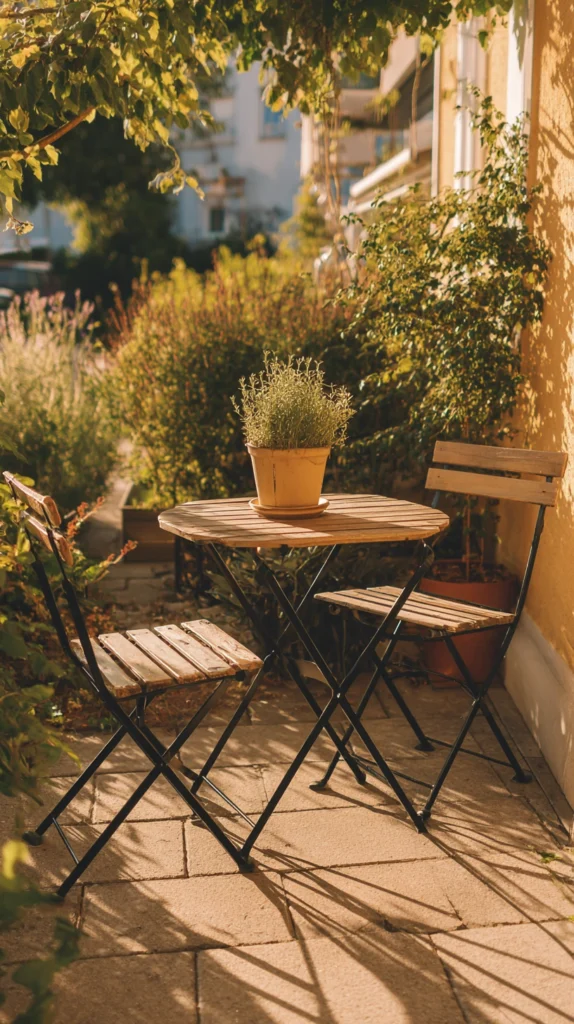
Budget: $40 – $150
A small folding bistro table and two chairs — the classic French café configuration — takes up almost no space when folded and creates a proper seating area when open. In a backyard too small for a full dining set, a bistro set positioned in a sunny corner with a pot of herbs nearby and a string of lights overhead is a complete outdoor room in itself. It is the most space-efficient seating investment available for a small garden.
A basic steel bistro set costs $40–$80. A cast iron version with more visual weight runs $80–$150. Spray paint specifically formulated for metal ($8–$15 per can) refreshes a rusted or faded bistro set to near-new condition in an afternoon without stripping or priming. A bistro set in black or forest green sits comfortably against almost any fence colour or planting scheme.
Style tip: Position the bistro set facing outward into the garden rather than facing the house. A seat that looks at the garden makes the garden feel like something to look at; a seat that faces the house makes the garden feel like an extension of the kitchen. The direction you sit in shapes how you experience the space.
12. The Upcycled Tin Can Planters
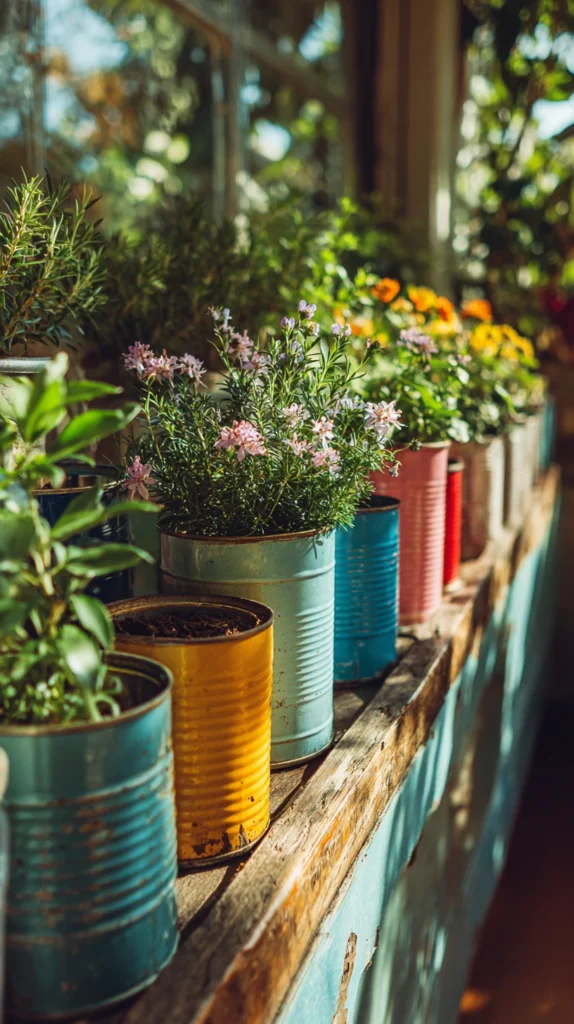
Budget: $5 – $30
Save large tin cans — olive oil tins, catering-size tomato tins, paint tins emptied and cleaned — drill drainage holes in the base, paint them in a single consistent colour, and plant them with trailing plants, herbs, or succulents. Arranged on a step, a shelf, or a window ledge in a cluster of varying heights, they read as a collected display rather than improvised containers, and the cost is essentially zero beyond the paint and the plants.
Exterior spray paint costs $8–$12 per can and covers a dozen tins comfortably. Plants cost $2–$4 each from a garden centre. A drill with a 6-millimetre bit to make drainage holes costs nothing if you already own one and $15–$25 for a basic cordless model if you do not. Paint all the tins in a single colour rather than multiple colours — consistency of vessel transforms a miscellaneous collection into a coherent display.
Style tip: Group the tins in clusters of three or five rather than spacing them evenly along a surface. A clustered arrangement has visual weight and draws the eye; evenly spaced tins along a ledge read as a line of objects rather than a composition.
13. The Hammock Corner
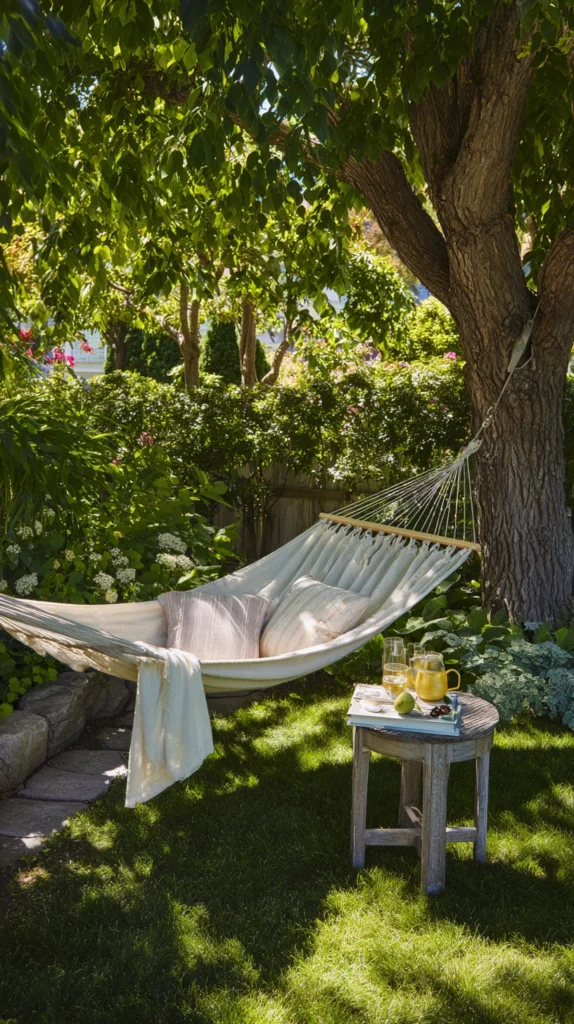
Budget: $30 – $100
Hang a cotton or rope hammock between two trees, two fence posts with hammock hooks, or a freestanding hammock stand if no natural anchor points exist, and a corner of the garden that previously had no function becomes the most desirable spot in the backyard. A hammock requires no maintenance, stores in a bag during winter, and produces a disproportionate amount of satisfaction relative to what it costs and how much space it occupies.
A cotton hammock costs $25–$60. Hammock tree straps ($10–$20 for a pair) protect bark and allow positioning adjustment without retying knots. A freestanding hammock stand ($50–$120) works where no trees or posts exist. Hang the hammock lower than instinct suggests — a hang point of 120–150 centimetres from the ground produces the right curve and swing height when occupied.
Style tip: Place a low side table or a flat stone beside one end of the hammock as a landing spot for a drink and a book. A hammock with nowhere to put things down is slightly less useful than it should be; a hammock with a surface beside it is a complete outdoor room in itself.
14. The Evening Scent Garden
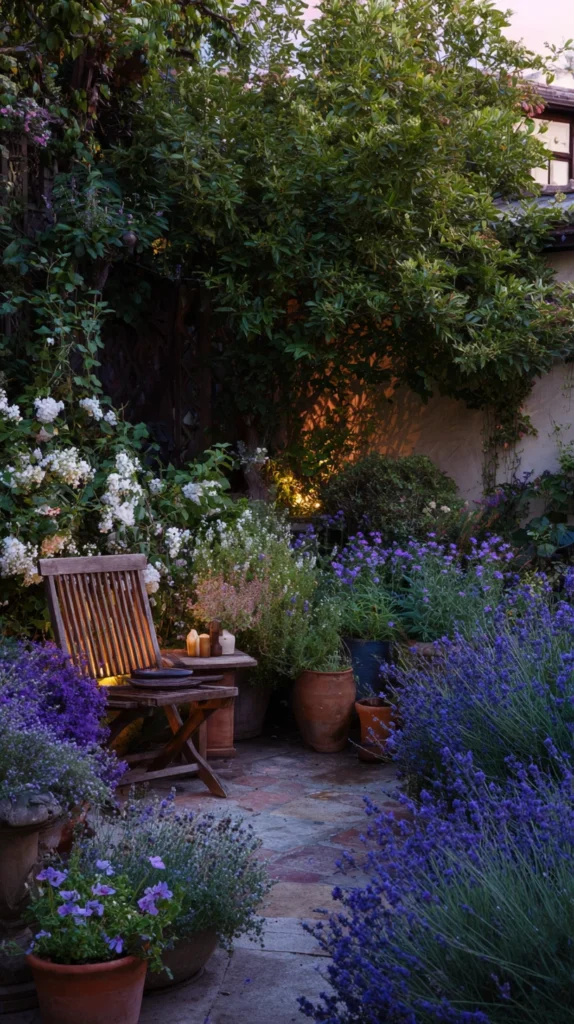
Budget: $20 – $60
Plant a small cluster of evening-scented plants in pots positioned near the most-used seating area — night-scented stock, tobacco plant, lavender, sweet alyssum — and the garden after 6pm acquires a quality that no amount of visual decoration can replicate. Evening-scented plants release their fragrance as the temperature drops, which means they perform precisely during the hours when a small backyard is most likely to be used in summer.
Evening-scented plants cost $2–$5 each from a garden centre. A cluster of three to five plants in a single large pot ($10–$20) concentrates the scent better than individual small pots spread across the garden. Night-scented stock and tobacco plant are annuals and need replacing each season; lavender is perennial and improves with age if cut back lightly after flowering.
Style tip: Position the scented pot cluster on the side of the seating area that faces the prevailing wind direction. Fragrance carried toward the seating area on a light breeze is far more effective than fragrance drifting away from it — the placement of the pot relative to the wind is as important as the plants themselves.
15. The Outdoor Reading Nook
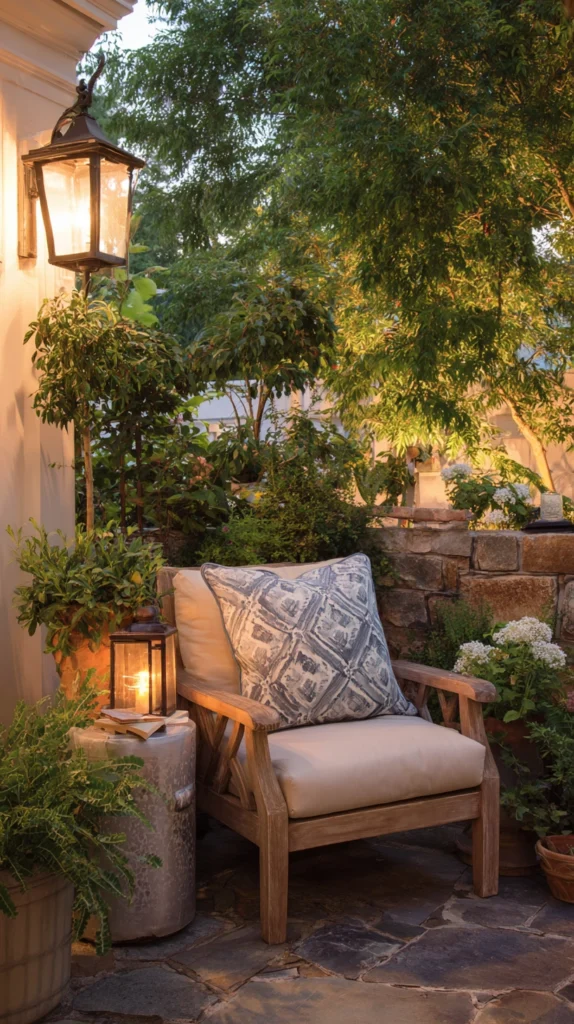
Budget: $30 – $100
Identify the quietest, most sheltered corner of the backyard — often where two fence lines meet — and claim it as a dedicated reading nook. A single comfortable chair, a side table, a solar lantern, and a weatherproof cushion box to store blankets and books is everything required. The nook does not need to be large or elaborate. It needs to be the kind of place that, when you see it from the kitchen window, makes you want to be in it.
A weatherproof storage box for cushions and books costs $30–$60. A solar lantern bright enough to read by runs $15–$30. A comfortable outdoor chair costs $30–$80. The corner itself is free. What makes the nook work is not the furniture but the designation — a corner that is explicitly understood as a place for one person to sit quietly reads very differently from a corner that simply has a chair in it.
Style tip: Add one climbing plant or a tall potted grass to at least one side of the nook to give it a sense of enclosure. A chair in an open space is just a chair; a chair with even partial enclosure on one or two sides becomes somewhere to retreat to, which is entirely different and considerably more inviting.
The best small backyard makeover is not the most expensive one or the most transformed one — it is the one where every element earns its place, nothing feels cluttered or overcrowded, and the space reflects how you actually want to use it. A well-placed lantern, a painted panel, a scented plant beside the seat you use every evening: small things, done with intention, that add up to a backyard worth coming home to.
Start with the change that will give you the most daily pleasure — the one you will notice every time you look out of the window — and work outward from there. Summer is short and the best evenings go quickly.