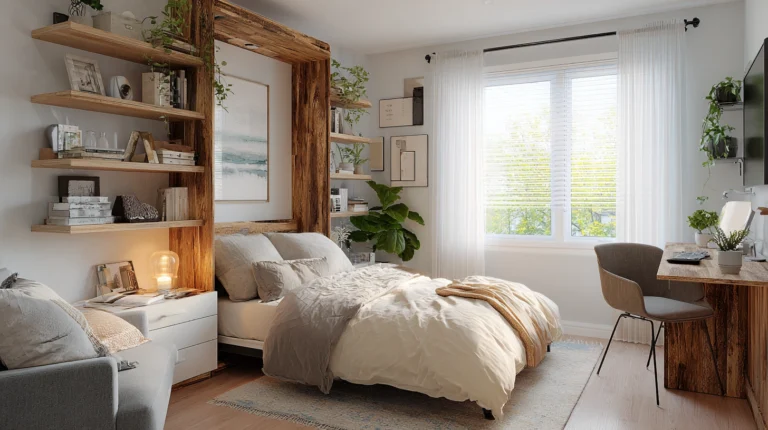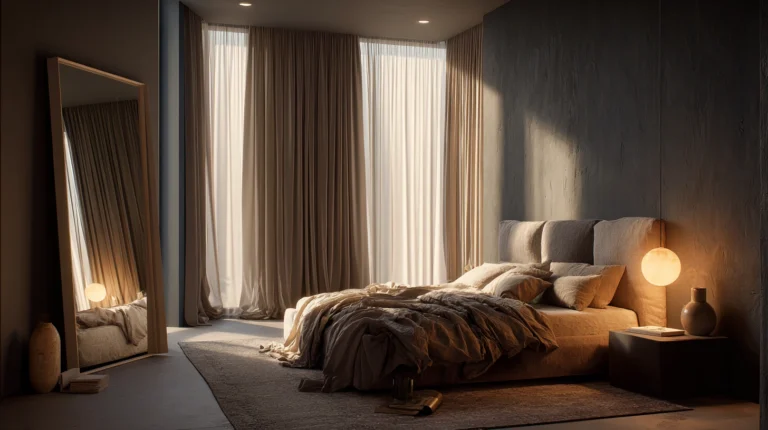
15 Budget Bedroom Ideas That Look High-End
15 Budget Bedroom Ideas That Look High-End
There is a quality that high-end bedrooms possess that has very little to do with how much was spent on them and everything to do with how the spending was directed. The expensive-looking bedroom is not the most expensively furnished — it is the bedroom where the decisions about what to spend on and what to economise on were made with a specific understanding of where quality is visible and where it is not.
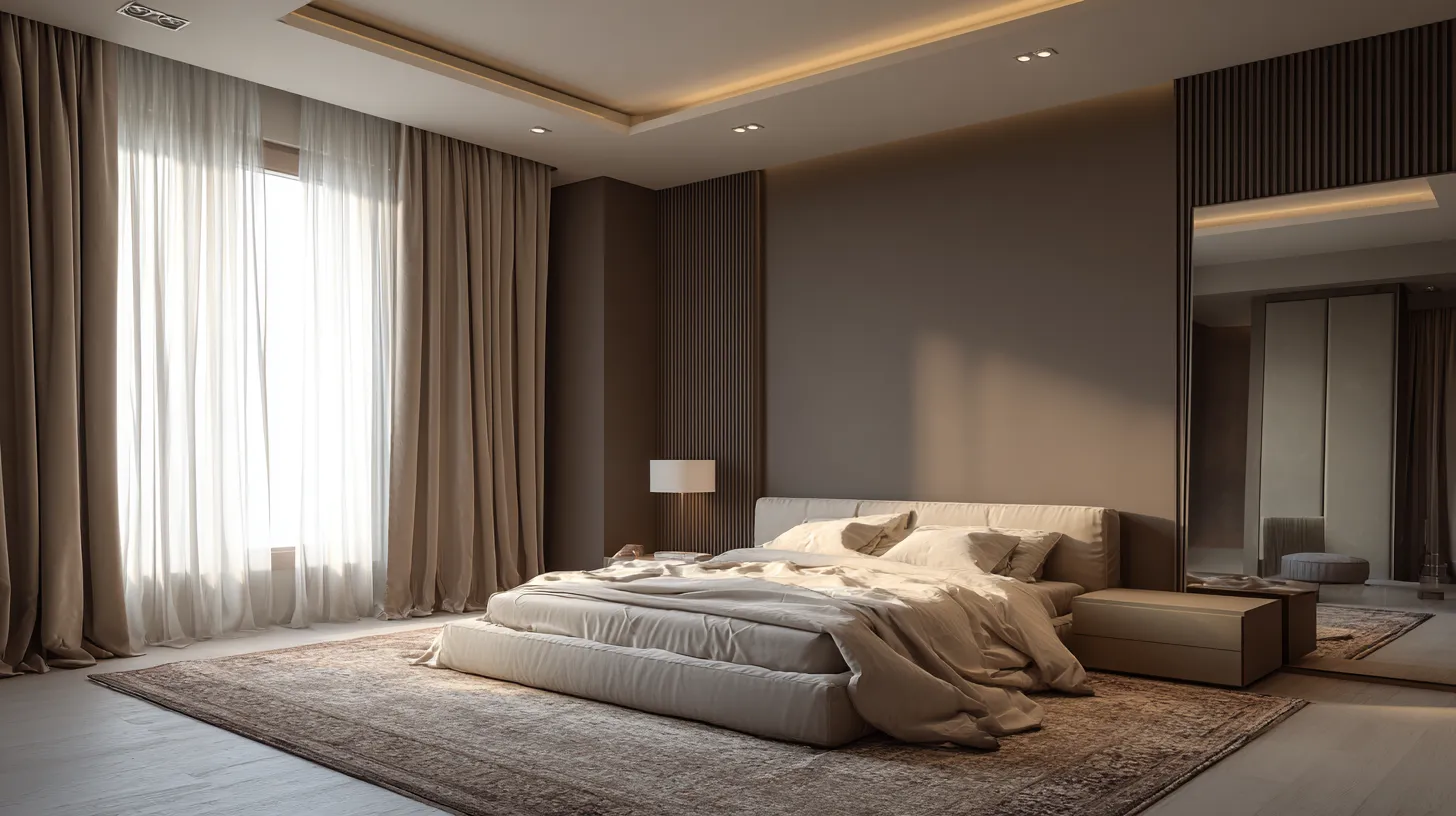
Most budget bedroom mistakes are not mistakes of spending too little. They are mistakes of spending in the wrong places — on large items of mediocre quality that dominate the room, while economising on the small details that determine how the room reads at close range.
The high-end-looking budget bedroom reverses this: it economises on large items where cost has minimal visual impact and spends carefully on the small, visible, tactile details where the quality of the investment is felt and seen every single day.
Each idea below is a specific, actionable approach to making a budget bedroom look genuinely high-end. Each includes what you will need, what it will cost, and a practical tip to make it work as well as the rooms it is reaching for.
1. The Strategic Paint Investment
Budget: $25 – $120
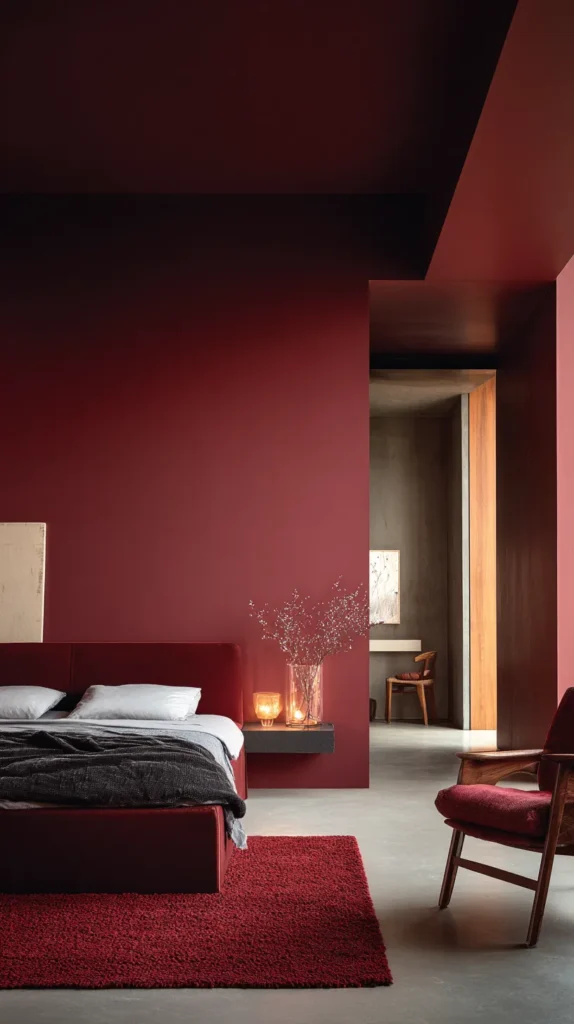
Paint is the highest-return investment in any bedroom because it changes every surface simultaneously at the lowest cost per square metre of any decorating material. The strategic paint decision — a deep, rich colour on the walls and ceiling in a single cohesive tone, or a warm white on the walls with a dramatic accent on the bed wall — produces the visual quality of a designed room rather than a decorated one at the cost of a single afternoon.
A quality paint in a considered colour costs $25–$60 per 2.5-litre tin. A full bedroom requires two to three tins for walls and ceiling. The specific colours that read as high-end in a bedroom context are those with significant pigment depth — a warm charcoal, a forest green, a deep teal, a warm plum — rather than the mid-tone colours that read as neither committed nor neutral. A committed colour communicates confidence; a hedged colour communicates uncertainty.
Style tip: Paint the ceiling in the same colour as the walls rather than defaulting to white. A same-colour ceiling and walls creates the immersive quality that the most considered interiors produce and that white ceilings prevent regardless of how good the wall colour is. The same-colour ceiling costs no additional money — it requires only the decision to apply the existing paint upward rather than stopping at the cornice.
2. The Linen Bedding Upgrade
Budget: $60 – $180
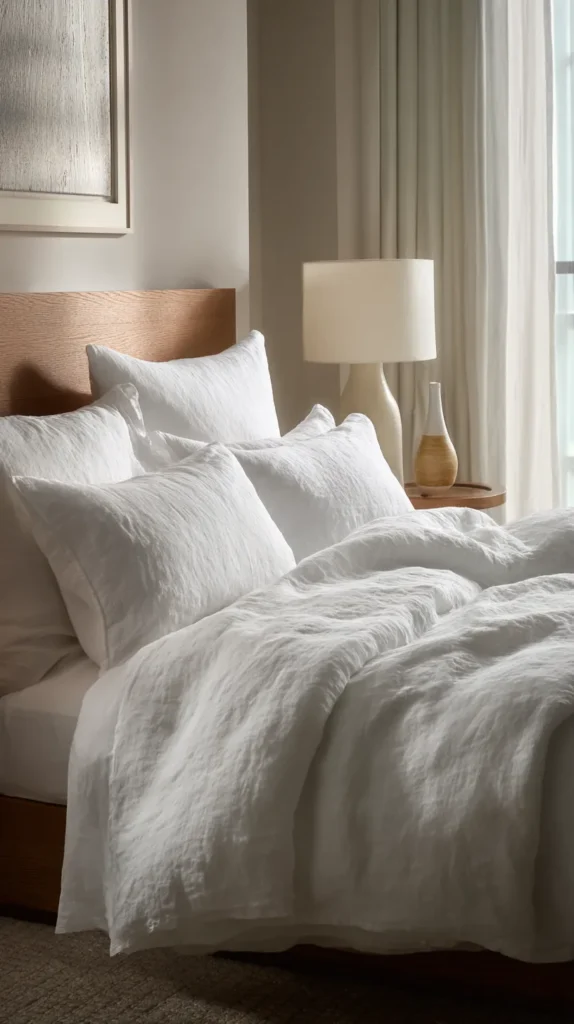
Linen bedding in a warm natural tone — washed before the first use to develop the relaxed drape and the slight texture that makes it look expensive rather than new — is the single material upgrade that produces the greatest improvement in the perceived quality of a bedroom for the least money. The quality of the bedding is the quality of the bedroom at the point of closest daily contact, and high-quality bedding in a modest room looks better than modest bedding in an expensive room.
A washed linen duvet cover in a standard double size costs $60–$120. Matching linen pillowcases run $20–$40 per pair. Choose a pre-washed version rather than a raw linen — the pre-washed fabric arrives in its best state immediately rather than requiring several home laundering cycles to develop the softness and the drape. Natural, warm white, or a soft tonal colour suits every bedroom palette; the colour decision should be made in relation to the wall colour rather than independently.
Style tip: Make the bed in the hotel style every morning — flat and smooth, with hospital corners, pillows stacked squarely, and the throw folded in a precise horizontal strip across the foot. A precisely made bed in modest linen looks more expensive than a casually made bed in luxury fabric. The making is as important as the material, and the making costs nothing.
3. The Curtain Height Correction
Budget: $0 – $60
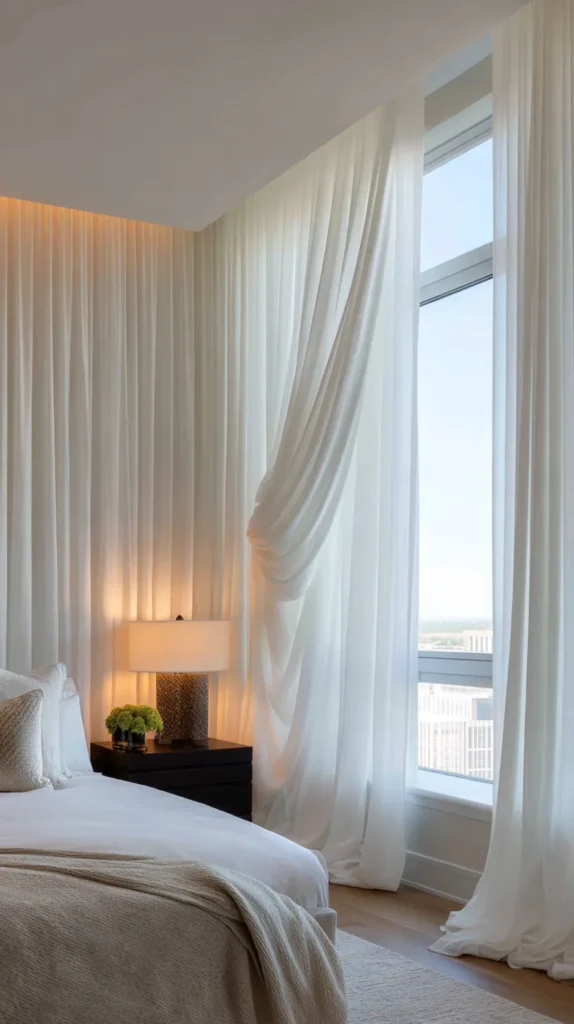
Rehinging existing curtains on a ceiling-mounted pole — so the fabric begins at or near the ceiling and falls to the floor with a slight pool — is the change that most dramatically improves the perceived quality of a bedroom’s curtain treatment without purchasing new curtains. Curtains hung from the top of the window frame read as window coverings; curtains hung from the ceiling read as architectural elements, and the difference in the visual quality of the two approaches is significant enough to justify the twenty minutes of rehanging.
A ceiling-mounted curtain pole and brackets costs $15–$40. The curtains already owned — which are probably too short for the ceiling height — are extended by adding a length of matching or complementary fabric at the top, which is hidden behind the pole, or replaced with ready-made panels at the correct length. If replacing, budget linen or velvet panels of 280-centimetre drop cost $30–$80 each.
Style tip: Hang two panels per window even if the window is narrow enough to be covered by one. Two panels that meet at the centre of the window look considerably more architectural and more considered than a single panel pulled to one side. The second panel costs the same as the first and doubles the visual quality of the curtain treatment.
4. The Hardware Replacement
Budget: $20 – $80
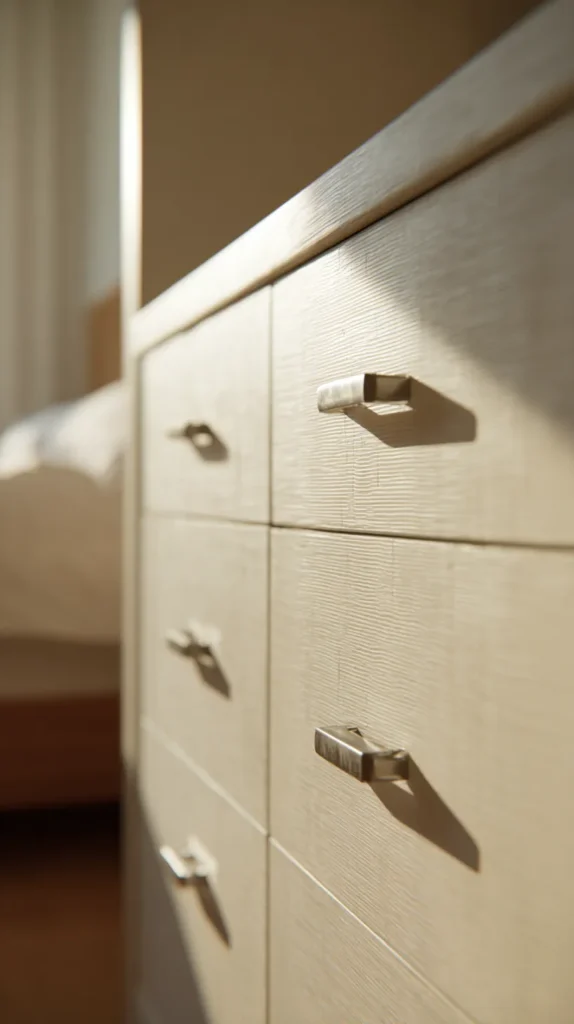
Replacing the drawer handles and door knobs on every piece of bedroom furniture with a consistent set of quality hardware — all in the same finish, all in a form that suits the furniture style — is the upgrade that most improves the perceived quality of budget furniture at the lowest cost per piece. Cheap furniture with good hardware reads as furniture that was considered; the same furniture with its original budget hardware reads as what it is.
Solid brass or brushed brass handles cost $3–$8 each. Matte black versions run $2–$6 each. A bedroom with three pieces of furniture and twenty drawers or doors requires twenty handles — $40–$160 in total. The hardware finish should relate to the other metal elements in the room — the lamp base, the mirror frame, the light fitting — so all metal reads as a palette decision rather than as individual component choices.
Style tip: Remove all existing hardware before purchasing replacements and measure the hole spacing precisely — the distance between the two screw holes on a handle varies between manufacturers and a handle that does not fit the existing holes requires drilling new holes, which damages the furniture face. Measure the existing hole spacing and purchase handles that match exactly.
5. The Gallery Wall Done Right

Budget: $30 – $150
A gallery wall executed with genuine compositional discipline — consistent frame finish, planned arrangement, correct hanging height — looks considerably more expensive than the same frames arranged without those disciplines. The quality of a gallery wall is determined almost entirely by the execution rather than by the cost of the individual prints or frames, and a gallery of $2 prints in $8 frames hung with the precision of a museum installation reads as high-end while the same prints hung casually do not.
Printed images from free public domain archives cost nothing to download and $0.30–$1 each to print. Simple black or natural timber frames cost $5–$15 each. A gallery of eight frames costs $40–$120 in total. Plan the arrangement on the floor before hanging — lay every frame in the approximate configuration intended for the wall, photograph from above, refine, then transfer the layout to the wall using the floor photograph as the reference.
Style tip: Use only one frame finish throughout the gallery rather than mixing black and gold and timber. A gallery where every frame is in the same finish reads as a curated collection; mixed frames read as a collection of individually purchased items without a unifying principle. The single frame finish is the decision that makes a budget gallery look high-end.
6. The Throw and Cushion Edit
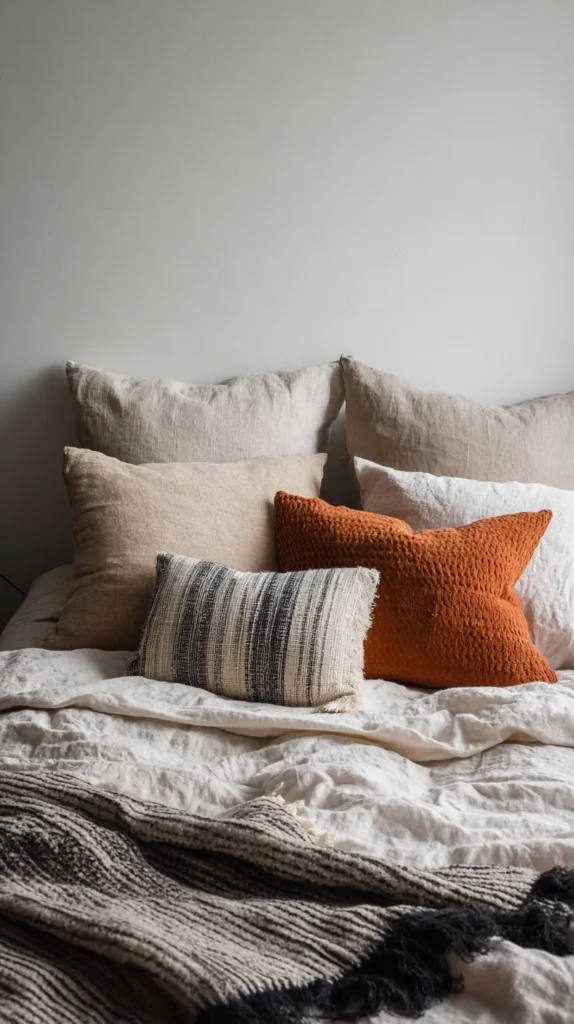
Budget: $40 – $150
A deliberately limited cushion and throw collection — three cushions in two complementary textures, one throw in the bedroom’s accent colour — reads as considered in a way that a large collection of mismatched soft furnishings never does. The high-end bedroom has fewer cushions than the budget bedroom but every cushion was chosen in deliberate relation to the others, and that relationship communicates quality more effectively than quantity.
Three quality cushion covers in two complementary textures and tones cost $15–$40 each — $45–$120 for the set. A throw in a quality-feeling material — washed linen, thin merino, or a good quality cotton knit — costs $30–$80. The cushion and throw edit requires the discipline of removing rather than adding — the existing collection should be reduced to only the pieces that genuinely work together before any replacements are considered.
Style tip: Choose cushion covers with a consistent closure style — all zip-fastened, all envelope-closure — rather than mixing closure types. The back of a cushion is visible whenever it is placed on the bed and inconsistent closures communicate the accumulated quality of separate purchases rather than the unified quality of a considered set.
7. The Plant and Ceramic Moment
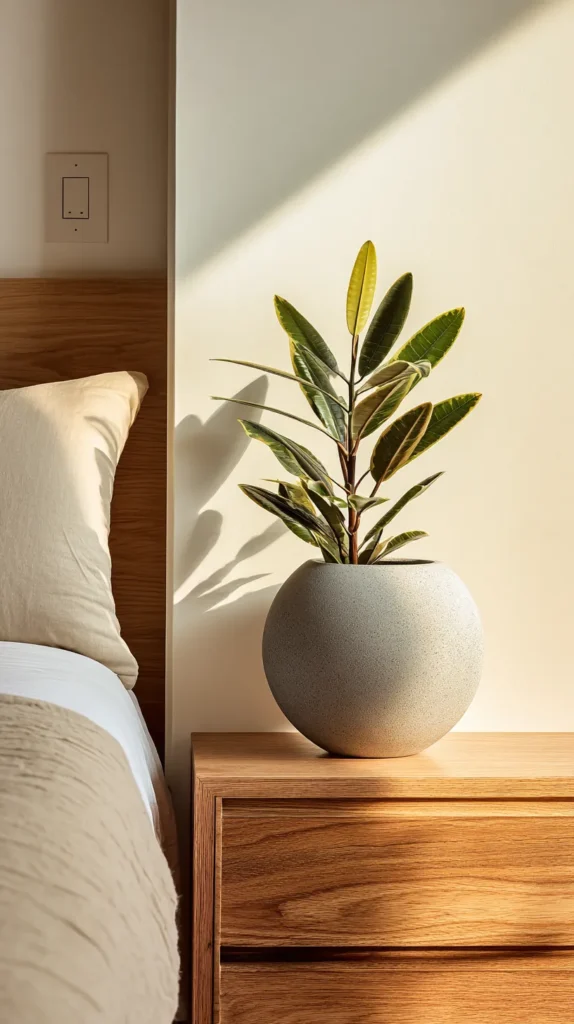
Budget: $20 – $80
One large plant in a quality ceramic pot — positioned in the floor space beside the bed or in the corner of the room where it receives adequate light — does more for the perceived quality of a bedroom than any piece of decorative furniture at the same cost. A healthy, well-positioned plant in a considered vessel communicates that the room is cared for daily, which is the quality that expensive rooms always possess and that budget rooms without plants consistently lack.
A large pothos, monstera, or snake plant costs $15–$40. A quality ceramic pot of 25–35 centimetres diameter in a matte finish costs $15–$40. The total investment of $30–$80 produces an element that grows and improves over time rather than remaining static, which is the specific quality that distinguishes a living plant from a purchased decorative object of equivalent cost.
Style tip: Choose a pot colour that was drawn from the bedroom’s palette rather than the most available terracotta default. A snake plant in a matte charcoal pot beside a dark-walled bedroom reads as a designed element; the same plant in a standard terracotta pot reads as a plant that was placed in the bedroom without reference to the room’s design decisions.
8. The Bedside Table Consistency
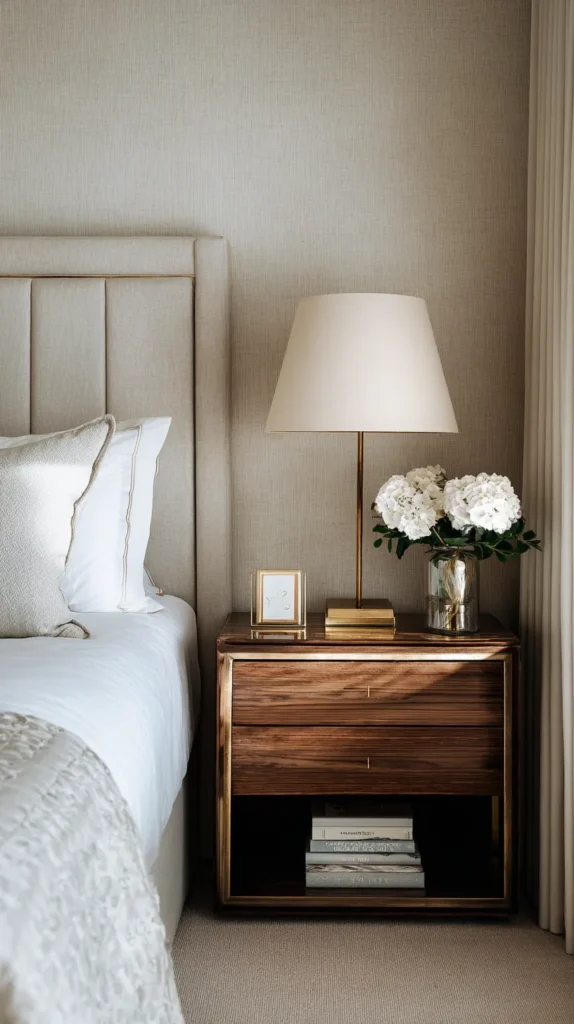
Budget: $0 – $100
Matching bedside tables — or tables of the same height and similar visual weight on each side of the bed — create the bilateral symmetry that communicates the designed bedroom from the moment of entry. Mismatched bedside tables read as furniture that was assembled from what was available; matching tables read as furniture that was specified. The high-end bedroom almost always has matching bedside tables because the bilateral composition of the bed wall is one of the first things the eye registers on entering.
If the existing bedside tables do not match, the options are to replace one with a match for the other ($30–$80 for a basic side table), to paint both in the same colour regardless of their different forms ($15–$25 in paint), or to style both identically so the matching styling overcomes the mismatched furniture. The styling approach — identical lamp, identical object on each surface — costs nothing and produces a significant visual improvement.
Style tip: Style both bedside tables with identical elements — the same lamp on each side, the same plant or vase, the same candle or small object — rather than different objects on each side even if the tables themselves are different. The identical styling creates the visual symmetry that matching furniture produces, and the symmetry is what the eye registers rather than the slight difference in the table forms beneath the identical styling.
9. The Mirror Placement Strategy
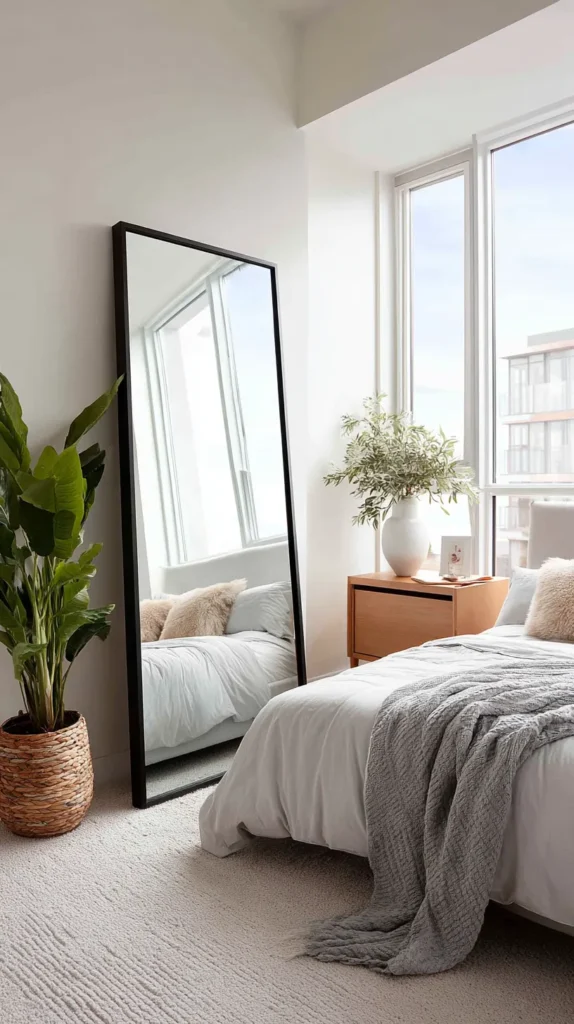
Budget: $20 – $150
A large mirror — leaned against the wall at the most reflective position in the room — makes the bedroom look larger, brighter, and more considered simultaneously at the cost of a single inexpensive purchase or a rescued secondhand piece. The mirror is the high-end bedroom element that budget retailers make available at the lowest cost relative to the visual impact it produces, and a bedroom without a large mirror is consistently a bedroom that feels smaller and darker than it needs to.
A floor-length mirror of 45 by 150 centimetres costs $20–$60 from budget furniture retailers. A large round mirror of 80–100 centimetres in diameter runs $30–$100. A vintage or secondhand mirror in a more considered frame costs $15–$80 from charity shops. Position the mirror to reflect the window light rather than to reflect another wall — a mirror that reflects the natural light source doubles the light in the room; one that reflects a wall doubles nothing of value.
Style tip: Lean the mirror at a slight forward angle rather than flat against the wall — the forward angle reflects the floor and the lower part of the room rather than the ceiling, which is the more interesting reflection and the one that makes the room look larger rather than taller. Achieve the forward angle by placing a small block or wedge at the base of the mirror.
10. The Declutter and Edit Practice
Budget: $0
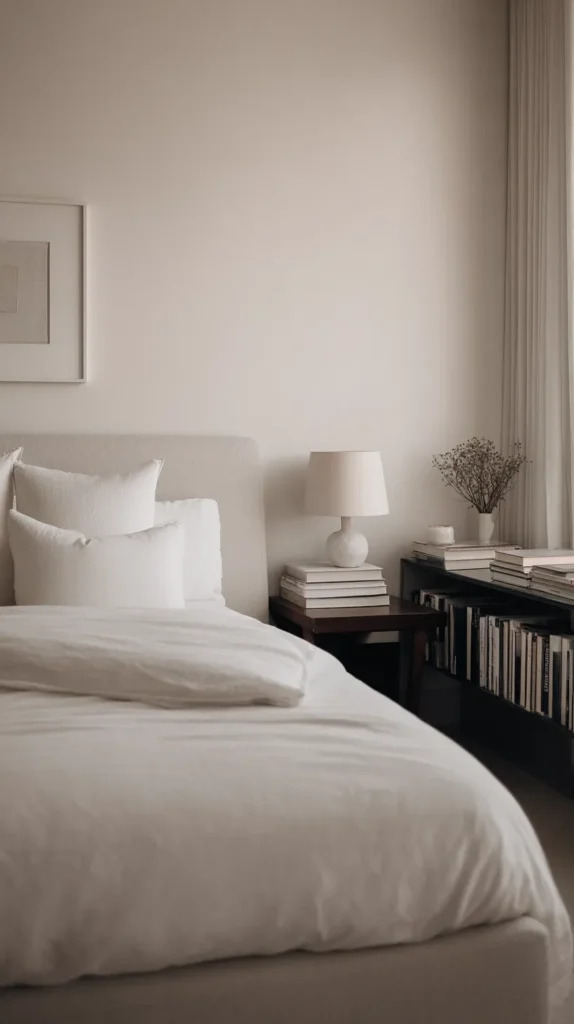
The most reliable high-end effect available to any bedroom at any budget is the removal of everything that does not belong on a surface followed by the return of only what genuinely earns its position. A high-end bedroom is not a bedroom with more beautiful things than a budget bedroom — it is a bedroom with fewer things, each one chosen, each one in a specific relationship to the others. The edit is the practice; the discipline of the edit is the quality.
Walk through the bedroom with a box and remove everything from every surface. The wardrobe top, the bedside table, the chest of drawers, the windowsill. Return only what is used every day and what is genuinely beautiful. The things that remain should be limited to one object or one small group per surface — a lamp and one other thing on the bedside table, a plant and one small object on the chest of drawers. The cleared surface communicates the confidence of a room that was designed.
Style tip: After the edit, leave one surface in the bedroom completely clear — nothing on it, no reason offered. The completely clear surface is the most high-end signal available to a bedroom because it communicates that the room does not need to be filled to feel complete. That confidence is the quality that all genuinely high-end rooms possess and that no amount of budget spending produces without it.
11. The Rug Sizing Correction
Budget: $40 – $200
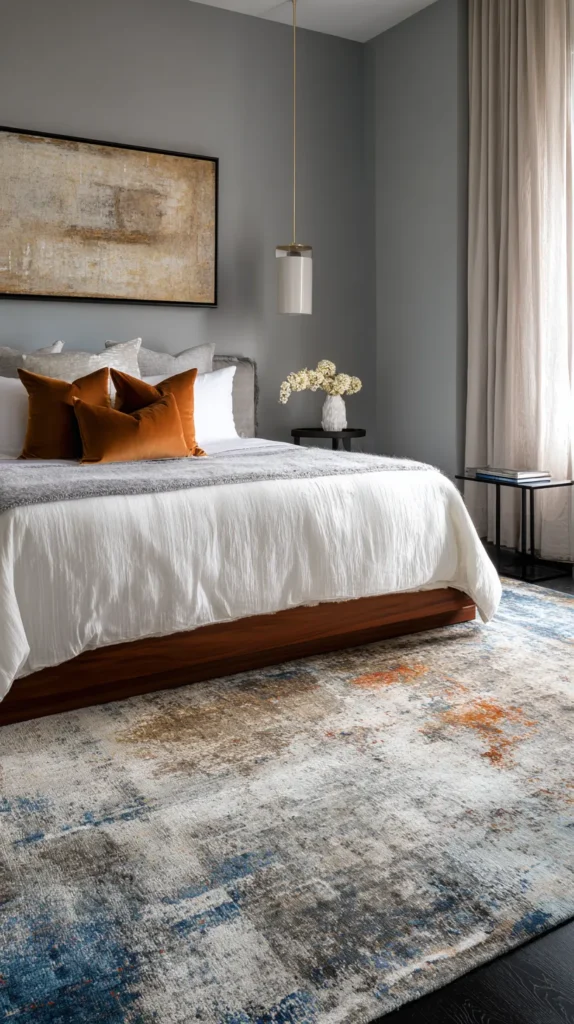
A rug that is correctly sized for the furniture arrangement it anchors — large enough that all four legs of the bed and the two bedside tables sit on it — reads as a designed floor treatment rather than as a rug placed in the vicinity of the furniture. The most common and most visible rug mistake in budget bedrooms is the too-small rug, and correcting it by replacing it with a correctly sized version immediately improves the room’s perceived quality regardless of the rug’s material.
A correctly sized bedroom rug for a standard double bed with bedside tables requires a minimum of 200 by 270 centimetres — $50–$150 for a quality-looking flatweave or jute rug at this size. The rug that is too small — which in most budget bedrooms means a 120 by 170 centimetre rug beside a double bed — sits under the lower half of the bed only and reads as an island in the centre of the floor rather than as a defined zone.
Style tip: If replacing the rug is not immediately possible, move the existing rug so it is positioned at the foot of the bed rather than beneath it. A rug placed at the foot of the bed — extending from the foot of the mattress toward the room — reads as a deliberate placement rather than an incorrectly sized rug attempting to anchor the full furniture arrangement. The repositioning costs nothing and reads better than the existing placement.
12. The Warm Bulb Replacement
Budget: $15 – $40
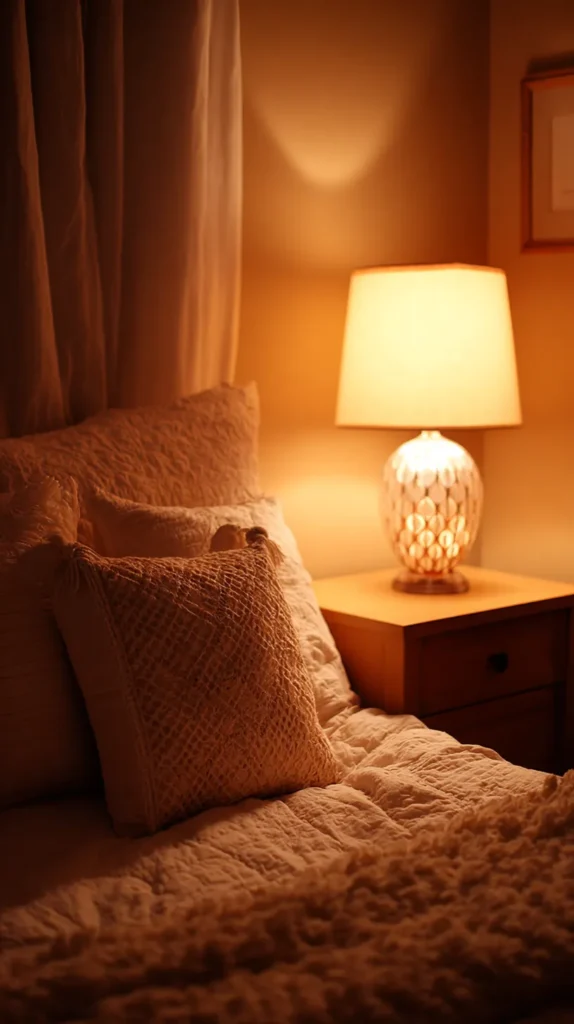
Replacing every bulb in every bedroom light fitting with a warm white LED at 2700K — the colour temperature of candlelight rather than daylight — is the single lowest-cost, highest-impact improvement available to a bedroom’s atmosphere. The wrong bulb temperature makes every other improvement in the room look worse than it is; the right bulb temperature makes every surface, every textile, and every colour in the room look better than it would under any other light.
A 2700K warm white LED bulb costs $3–$8 each. A bedroom with three light sources requires three bulbs — $9–$24 in total. Replace every bulb simultaneously rather than gradually — a bedroom with some warm and some cool bulbs reads as lighting that was not considered as a whole, which is the impression the warm bulb replacement is specifically attempting to avoid.
Style tip: Add a dimmer to at least one light source in the bedroom — a smart bulb with a dimmer app function costs $8–$15 and requires no electrical work — so the warm light can be reduced to its most ambient level in the evening. A warm bulb at full brightness is better than a cool bulb at full brightness; the same warm bulb at thirty percent is categorically different from either and produces the quality of light that high-end bedrooms consistently have.
13. The Curtain and Blind Removal
Budget: $0
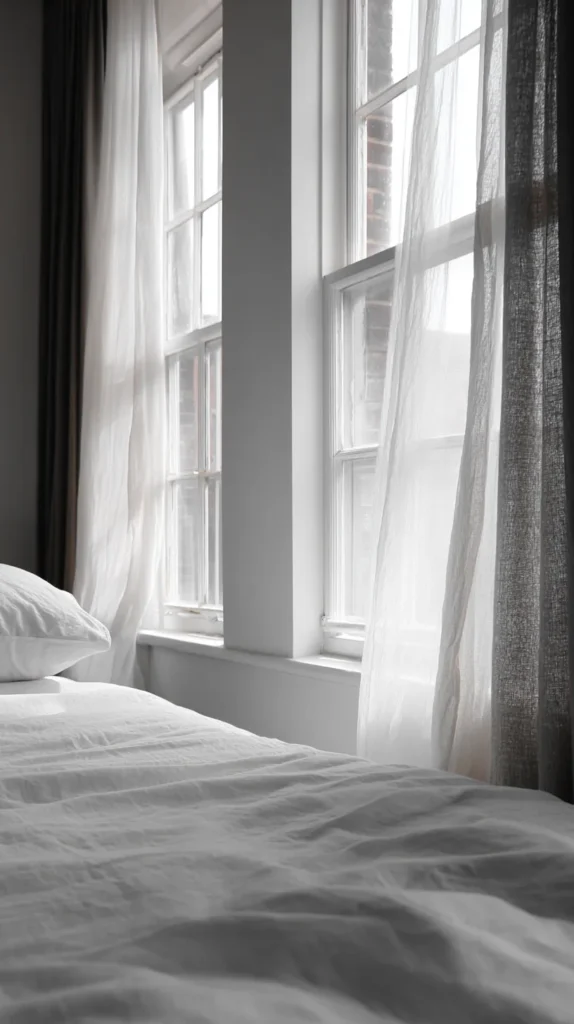
Removing inadequate curtains or blinds — the beige roller blind that came with the flat, the thin ready-made curtains that never hung properly — and replacing them with nothing while saving for a genuinely considered curtain treatment is a better approach than keeping an inadequate window treatment in place. A bare window with good natural light reads as a deliberate decision to maximise light; a badly hung blind reads as a decorating decision that was not thought about.
The cost of removing inadequate window treatments is zero. The cost of saving for quality replacements is time rather than money. In the interim, a bare window can be given a temporary treatment — a sheer length of linen fabric draped over a simple tension wire — for $15–$30 in fabric and $5–$10 in wire, which reads as more considered than most budget roller blinds and costs less.
Style tip: Before removing window treatments, assess whether the natural light the bare window provides is genuinely an improvement. A bedroom that receives good natural light benefits from bare windows; one that is overlooked, that faces a busy street, or that receives harsh direct morning sun benefits from some form of window treatment regardless of its cost. The functional requirement determines the decision; the aesthetic follows from the function.
14. The Lamp Shade Upgrade
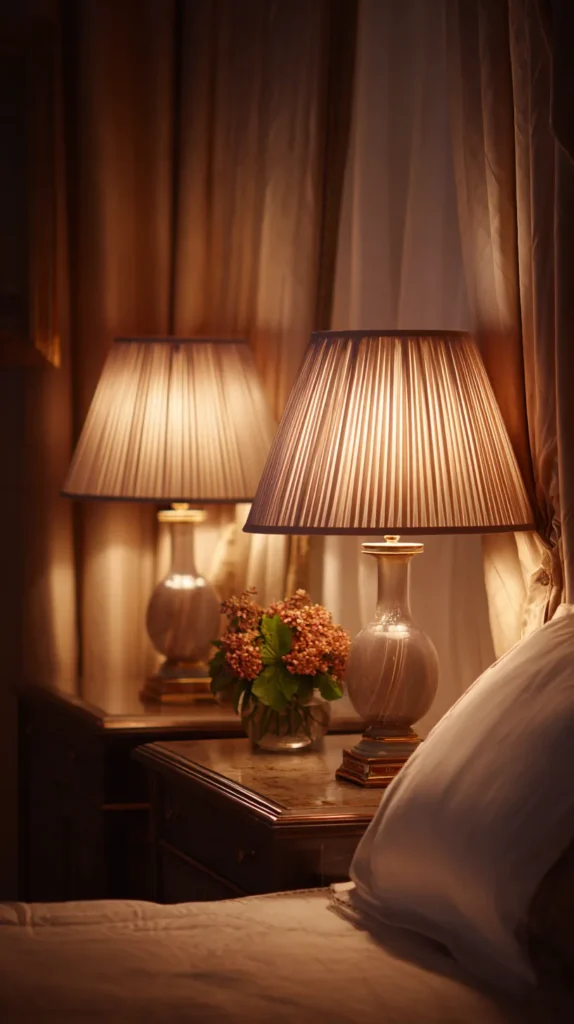
Budget: $20 – $60
Replacing the original lamp shades on existing bedside lamps with quality-looking alternatives — a pleated linen shade, a drum shade in a quality fabric, a sculptural ceramic shade — is the upgrade that most improves the perceived quality of the existing lighting without replacing the lamp bases. A good lamp shade on a mediocre base reads as a considered lamp; the original shade on the same base reads as a lamp that was purchased without particular attention.
A linen drum shade in a warm tone costs $15–$40. A pleated cotton shade runs $20–$50. A structured fabric shade in a complementary colour to the bedroom costs $20–$60. The shade size should be proportional to the lamp base — approximately 1.5 times the base width — and the shade should be positioned so the bottom edge is at eye level when seated on the bed, which is the position that most flatters the light it casts on the face of the person beside it.
Style tip: Choose shades in a warm-toned fabric — cream, oatmeal, warm white, or a light natural linen — rather than a cool white. A warm-toned shade produces a warm glow around the lamp; a cool white shade produces a cooler light that reads as functional rather than atmospheric. The shade fabric colour is the specification that determines the quality of the light the lamp produces rather than simply the quality of the lamp as an object.
15. The Morning and Evening Ritual Investment

Budget: $0 – $30
A bedroom that is genuinely maintained — made every morning with precision, tidied every evening before sleep, surfaces edited consistently rather than allowed to accumulate — looks higher-end than a bedroom of equivalent quality that is not maintained, because maintenance is the daily practice that keeps the room at its best version rather than allowing it to drift toward its average version. The high-end bedroom is not only designed once; it is maintained consistently.
A quality linen spray for the bedding costs $8–$20 and adds an olfactory quality to the made bed that communicates care. A small tray on the bedside table for the objects that tend to accumulate there — keys, phone, book, glass — costs $10–$25 and prevents the surface from reading as cluttered after a week of use. The morning bed-making ritual and the evening tidy cost nothing and produce the specific quality of the well-maintained room that no amount of design investment sustains without them.
Style tip: Set a five-minute morning and five-minute evening routine for the bedroom that is consistent rather than occasional. The morning routine makes the bed and clears the surfaces; the evening routine returns everything to its place and prepares the room for sleep. The ten minutes of daily maintenance is the investment that keeps every other improvement in the bedroom performing at the level of its initial installation rather than declining toward the domestic entropy that all rooms produce without consistent attention.
The budget bedroom that looks high-end is not the product of finding cheaper versions of expensive things. It is the product of understanding that the quality of a bedroom is determined by the quality of its decisions rather than the quality of its budget — the commitment to a colour, the precision of the bed-making, the restraint of the surfaces, the warmth of the light, the consistency of the metal finishes, the correctness of the rug size.
Every one of these decisions is free to make. Some require a modest investment to execute. None requires the budget of the rooms they produce the same quality as. Begin with the free decisions — the edit, the paint, the bulb replacement, the curtain rehanging — and build from there. The high-end bedroom is the one where the decisions were high-end. Everything else followed from them.