15 Hobbitcore Fall Decor Ideas for a Cottage-Core Vibe
15 Hobbitcore Fall Decor Ideas for a Cottage-Core Vibe
Hobbitcore borrows its name from a very specific fictional dwelling, but the aesthetic it describes has roots that predate any book or film — round doors and low ceilings aside, it’s really an extension of a much older cottage tradition: a home built from what the land immediately provides, filled with objects that are used rather than displayed, and lit by fire and candlelight rather than anything electric and bright.
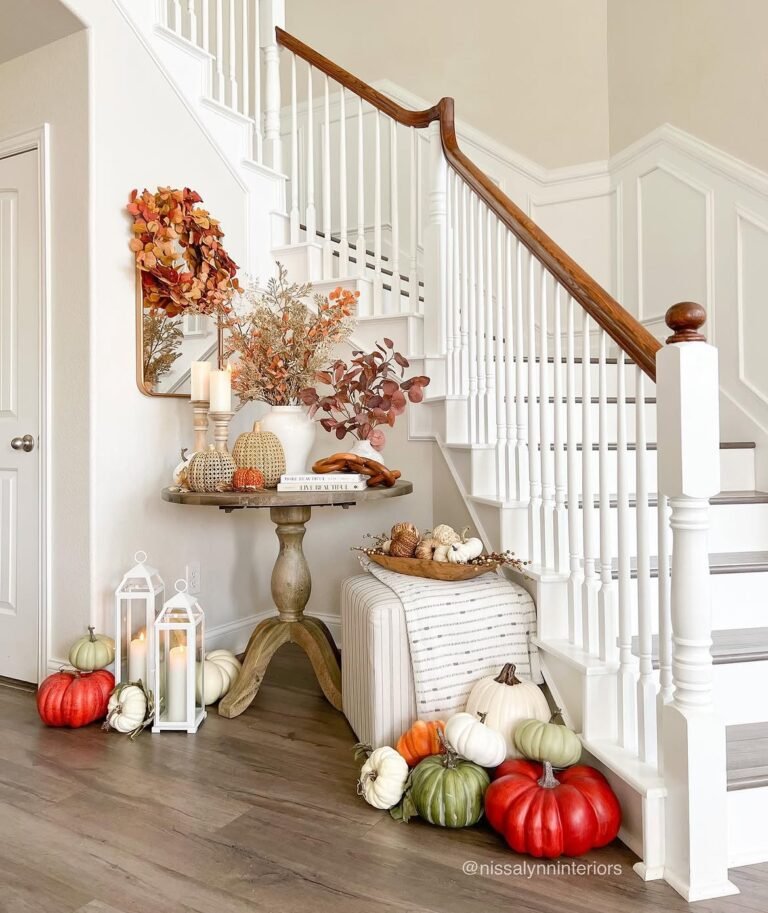
Fall is when this aesthetic makes the most intuitive sense. The harvest, the dried herbs, the root vegetables piled in a basket, the fire lit earlier in the evening — all of it lines up naturally with what a hobbitcore or cottagecore room is already reaching for. Unlike a lot of aesthetic trends, this one doesn’t require much that’s actually new; it mostly asks for real, well-worn, natural materials arranged with warmth rather than precision.
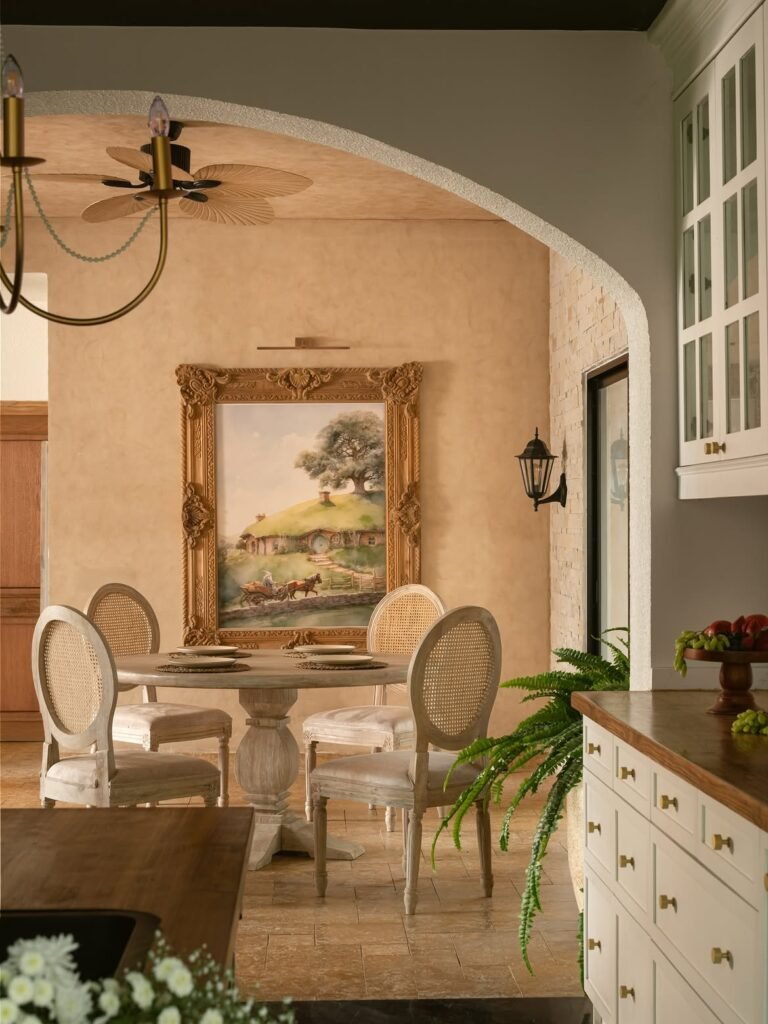
The line between hobbitcore done well and hobbitcore that reads as costume is mostly about restraint and authenticity — real dried herbs and real vintage pottery, not everything printed with a mushroom motif at once. Here are 15 ways to bring the aesthetic into a home for fall.
Why Some Cottagecore Rooms Read as Costume Instead of Genuine
The prop-versus-object problem:
Without genuine, used objects:
- Purchased “cottagecore” decor items — printed mushroom pillows, faux vintage signage — used in place of actual old or handmade objects
- The result: reads as a themed room built from a catalog rather than a home that naturally accumulated its character
With genuine, used objects:
- Real vintage pottery, actual dried herbs from cooking or a garden, secondhand furniture with visible wear
- The result: reads as an authentic extension of how the space is actually lived in, not a costume applied to it
The overcrowding problem:
- Every available surface filled with objects simultaneously, with no negative space anywhere
- The result: even with genuinely good individual objects, the room reads chaotic rather than warm and lived-in
The too-bright problem:
- Standard overhead lighting left in place, undermining the candlelit, firelit atmosphere central to the aesthetic
- The result: even a well-styled room loses much of its intended mood under the wrong lighting
The Five Hobbitcore Cottagecore Principles
Before choosing any individual idea below, these five principles keep the aesthetic reading genuine rather than costume-like:
Real materials and genuine age over purchased “vintage-look” items:
- Secondhand pottery, actual dried herbs, worn wood, rather than new items styled to look old
- The authenticity of the materials matters more than how closely they match a specific aesthetic reference
Warm, low, flickering light as the dominant light source:
- Candles, lanterns, and warm bulbs, with overhead lighting used minimally
- One of the most defining, and most achievable, elements of the whole aesthetic
Objects that show evidence of actual use:
- A worn cutting board, a chipped mug, a well-read book stack
- Function and use are part of the aesthetic, not incidental to it
Restraint in any single motif:
- Mushrooms, herbs, or any other specific motif used sparingly rather than saturating every surface
- One or two genuine touches read more considered than a dozen matching themed items
Texture built from natural, imperfect materials:
- Wood, stone, wool, and clay, in their natural, slightly irregular forms
- Smooth, uniform, manufactured materials work against the aesthetic’s entire premise
1. A Rounded Doorway or Window Accent
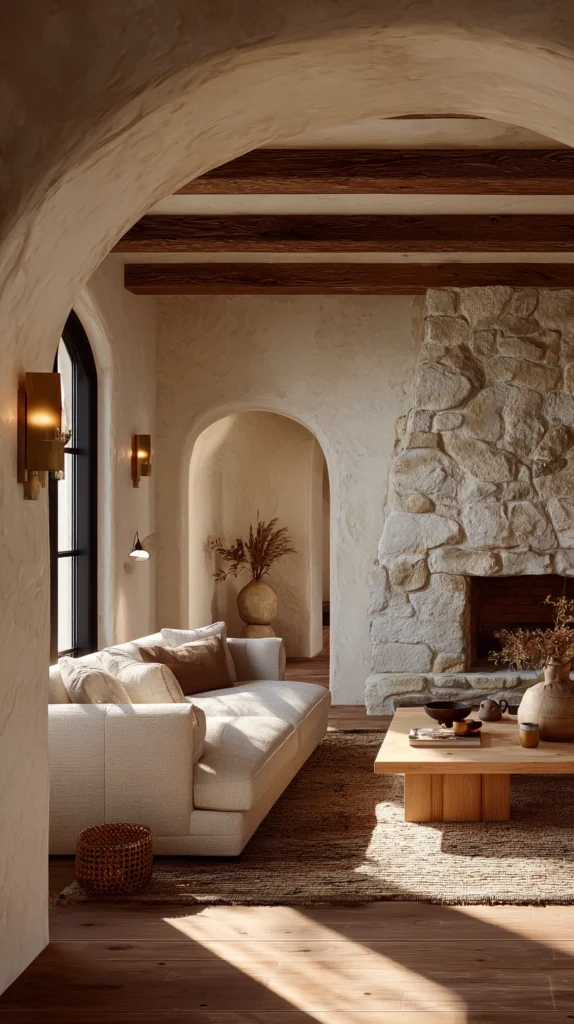
A rounded arch built or simulated over an existing door or window frame, echoing the aesthetic’s most recognizable architectural signature.
Why this detail carries outsized recognition value
The rounded doorway is arguably the single most iconic visual element associated with hobbitcore specifically, and even a modest version — an arched curtain valance, a rounded mirror frame mimicking a door shape — signals the aesthetic immediately without requiring structural renovation.
Achievable versions
- An arched curtain rod or valance installed above a standard rectangular window, creating a rounded silhouette without altering the window itself
- A round or arched mirror, positioned to echo the same shape elsewhere in the room
Cost breakdown
- Arched curtain valance or round mirror: $30–70
- Total: $30–70
2. Mismatched Vintage Pottery
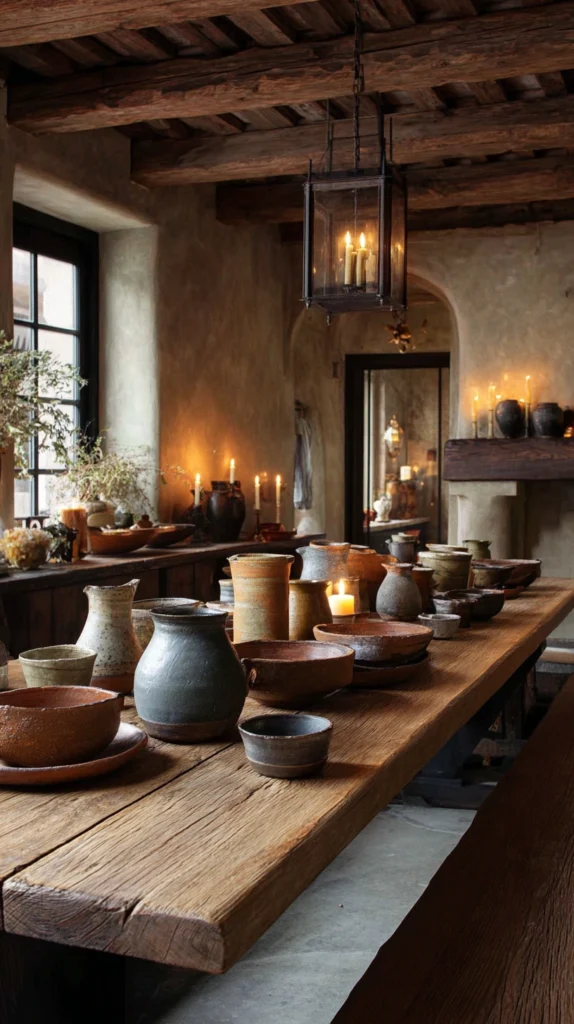
A collection of secondhand ceramic pottery — mugs, bowls, jugs — gathered from different sources, used for both display and actual daily function.
Why mismatched, genuinely old pottery matters more than a matched new set
A uniform, newly purchased pottery set undercuts the entire premise of an aesthetic built around accumulated, well-used objects. Genuinely mismatched vintage pieces, gathered over time from secondhand sources, carry the exact quality this aesthetic depends on.
Sourcing and use
- Estate sales, thrift shops, and antique markets are the most reliable and lowest-cost sources
- Used in active daily rotation rather than purely displayed, reinforcing the “lived-in” quality central to the whole aesthetic
Cost breakdown
- Secondhand pottery pieces (5–8): $20–50
- Total: $20–50
3. Hanging Dried Herb Bundles
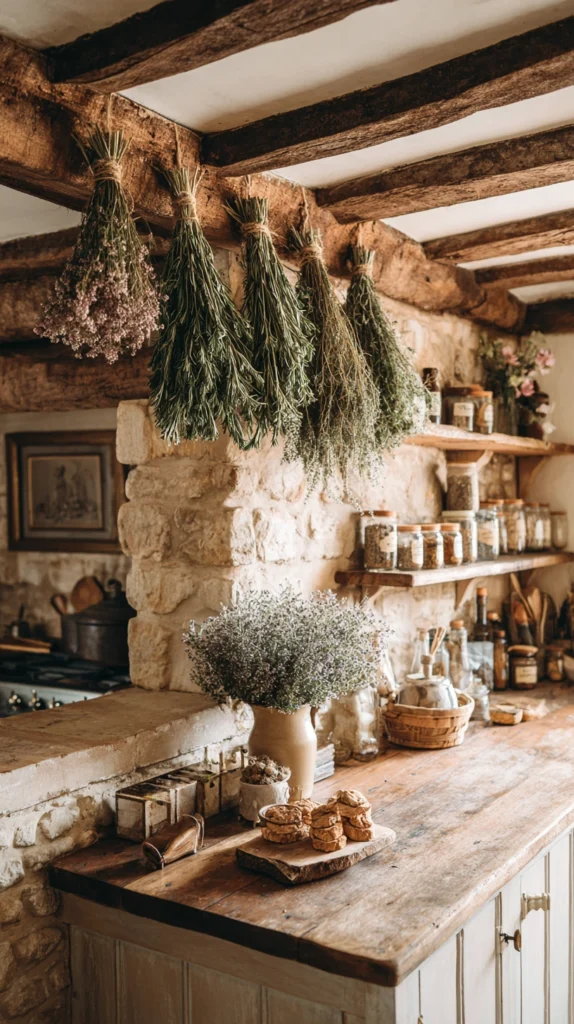
Bundles of dried herbs — rosemary, sage, lavender — tied and hung from a beam, a hook, or a simple rack, both for decoration and genuine culinary or aromatic use.
Why hanging herbs suit this aesthetic more than any purchased decor item
Drying and hanging herbs is a genuine, functional household practice with a very long history, predating any specific aesthetic trend. Herbs hung for actual future use — rather than purely decorative faux versions — deliver the authenticity this whole approach depends on.
Assembly and placement
- Small bundles (4–6 stems), tied with twine and hung upside down from a hook, beam, or small drying rack
- Positioned in a kitchen or near a window, both practical locations for herbs that will genuinely be used
Cost breakdown
- Fresh herbs for drying (if not homegrown): $10–18
- Twine and hooks: $5–10
- Total: $15–28
4. Exposed Wood Beams
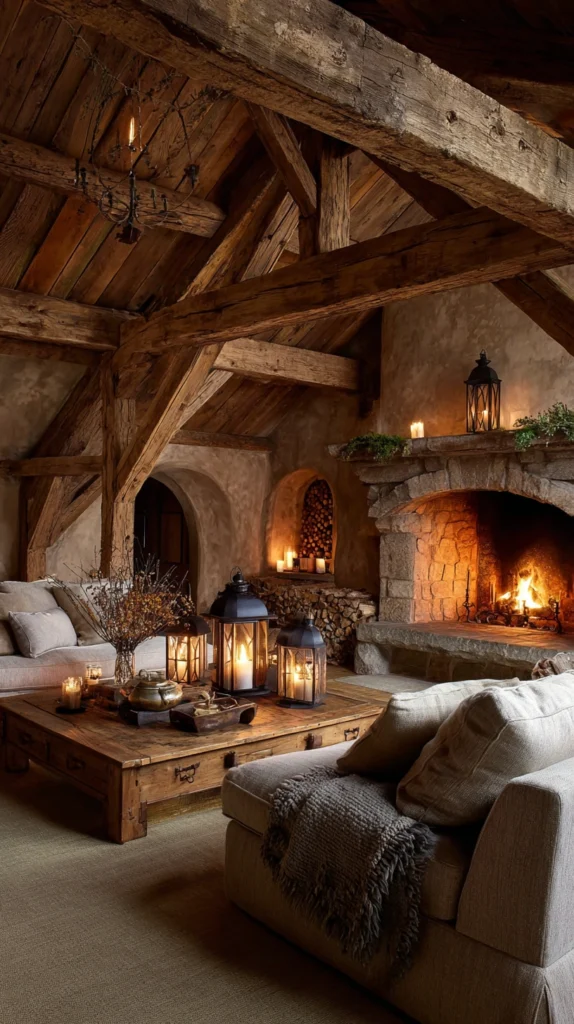
Wood beams, whether structural or decoratively added, left exposed and unfinished (or minimally finished) across the ceiling, echoing the rustic, hand-built quality central to the aesthetic.
Why exposed beams anchor the whole room’s material story
A raw, visible wood beam ceiling reads immediately as rustic and hand-built in a way few other single elements achieve as directly, providing the same visual foundation that exposed beams provide in a rustic-modern kitchen, adapted here toward a softer, more cottage-specific feeling.
Installation and finish
- Existing structural beams left exposed and unfinished, or faux beams added for the visual effect where none exist structurally
- A natural, minimally treated finish rather than a glossy varnish, preserving the raw, hand-hewn appearance
Cost breakdown
- Faux decorative beams (per beam, installed): $150–350
- Total (3 beams): $450–1,050
5. Subtle Mushroom Motif Details
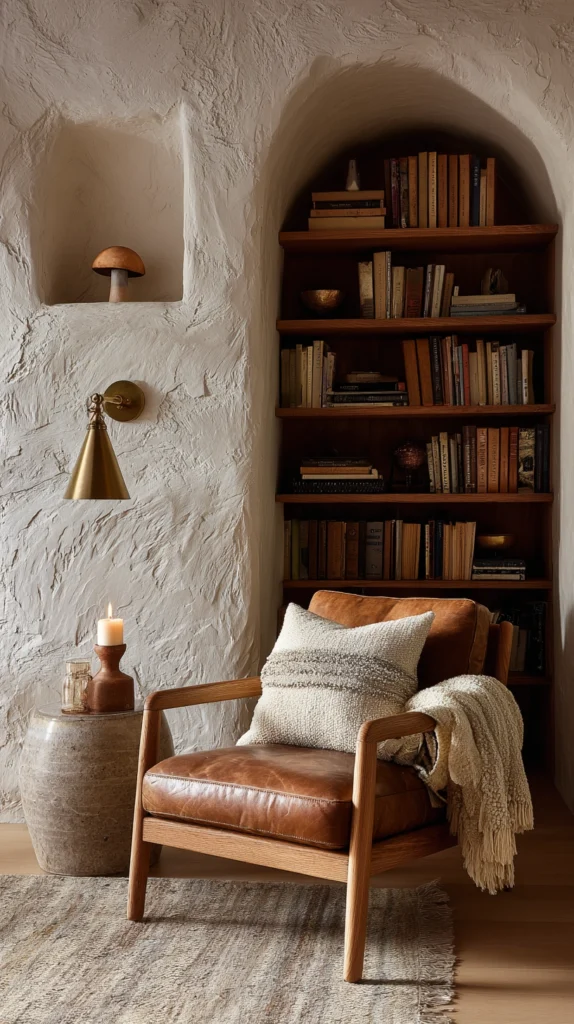
One or two genuine mushroom-related objects — a hand-thrown ceramic mushroom, a small foraged or faux mushroom cluster — used sparingly rather than as a repeated print across multiple items.
Why restraint matters especially with this specific motif
Mushrooms have become one of the most immediately recognizable visual shorthand symbols for the cottagecore aesthetic, which makes overuse one of the fastest ways to tip a room from genuine into costume. One or two well-made pieces carry more weight than a room full of mushroom-printed textiles.
Selection
- A single hand-thrown ceramic mushroom object, or a small cluster of high-quality faux mushrooms tucked into a larger display (following the same restraint used in a moss and mushroom entryway accent)
- Avoided entirely as a printed pattern on multiple textiles, which reads considerably more costume-like than a single sculptural object
Cost breakdown
- Ceramic or faux mushroom accent: $15–35
- Total: $15–35
6. A Copper Cookware Display
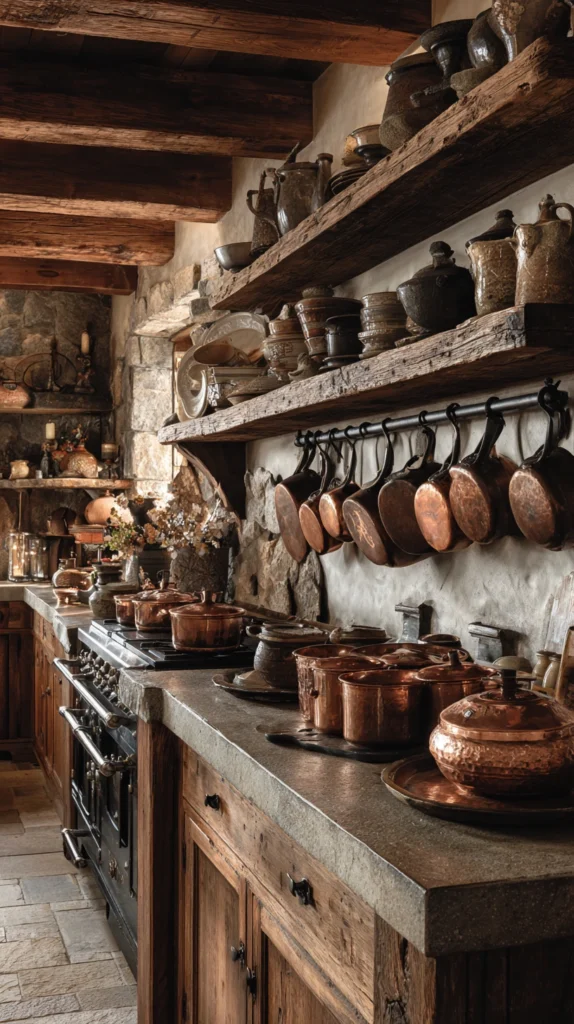
Copper pots and pans, hung on a rack or displayed on open shelving, adding both function and a warm, handmade-feeling material to the kitchen or main living space.
Why copper suits this aesthetic’s material palette
Copper’s warm tone and tendency to develop a natural patina over time align directly with the aesthetic’s broader preference for materials that show genuine age and use, standing in contrast to the uniform, unchanging finish of stainless steel or non-stick cookware.
Display and sourcing
- A wall-mounted rack or ceiling-hung rail, positioned within a kitchen for both display and genuine reach-and-use function
- Secondhand copper, often available at a lower cost than new and typically already showing some natural patina
Cost breakdown
- Copper cookware (secondhand, 3–4 pieces): $40–90
- Rack or rail: $30–60
- Total: $70–150
7. A Braided Rag Rug
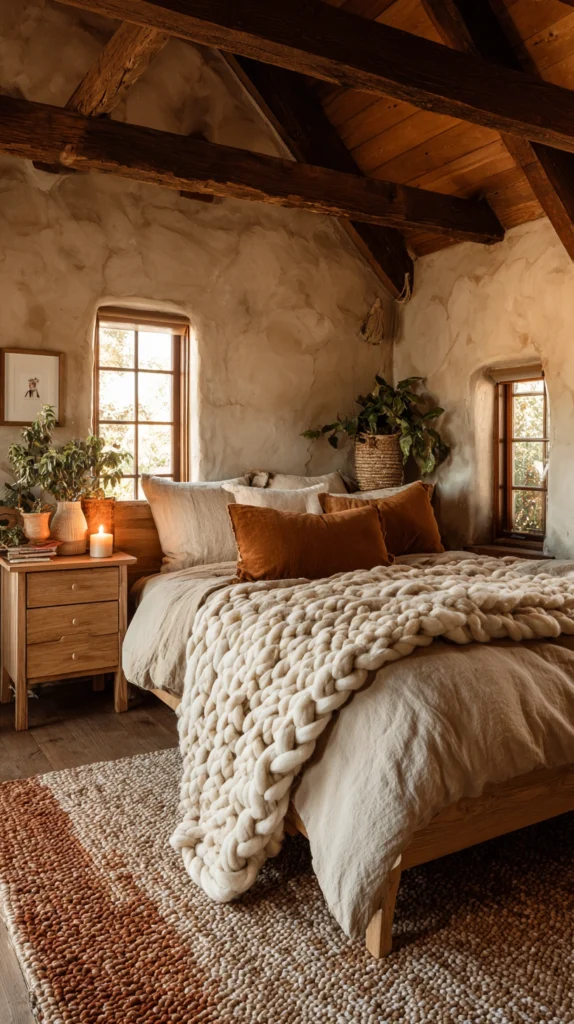
A braided or woven rag rug, in warm, muted tones, placed underfoot in place of a manufactured, uniformly patterned rug.
Why a braided rug fits this material story specifically
Braided rag rugs have a genuine handmade tradition, often constructed from repurposed fabric scraps, aligning directly with the aesthetic’s broader values around handcraft and resourcefulness rather than manufactured uniformity.
Selection and placement
- A genuinely braided or woven construction, rather than a printed rug designed to mimic the look
- Warm, muted colours (rust, cream, warm brown) consistent with the rest of the room’s earthy palette
Cost breakdown
- Braided rag rug: $50–110
- Total: $50–110
8. Earthy Textured Walls
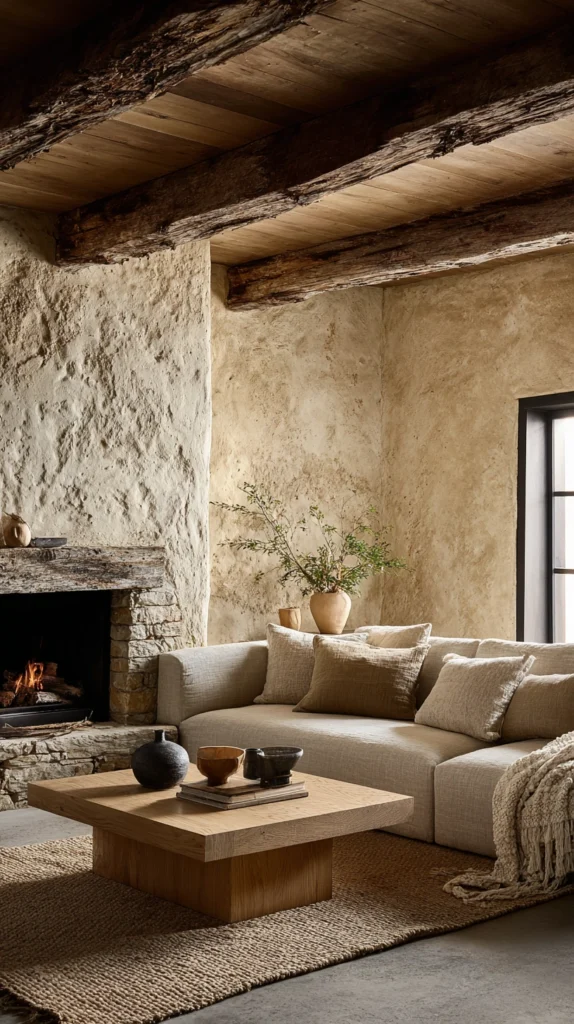
Walls finished in a rough, natural-feeling texture — a lime plaster, a rough stucco-effect paint, or genuine stone if structurally present — rather than smooth, flat drywall.
Why wall texture matters this much to the overall feeling
Smooth, flat drywall is a distinctly modern construction standard, and its uniform, flat finish works against an aesthetic built around handmade, natural imperfection. A textured wall finish, even applied as a treatment over existing drywall, shifts the room’s fundamental material character toward the aesthetic’s rustic, hand-built roots.
Application
- A textured limewash or plaster finish, applied to at least one wall if a full-room treatment isn’t practical
- A muted, earthy tone (warm cream, sage, or terracotta) rather than a stark white
Cost breakdown
- Textured limewash or plaster paint (1 gallon, covers one wall): $65–100
- Total: $65–100
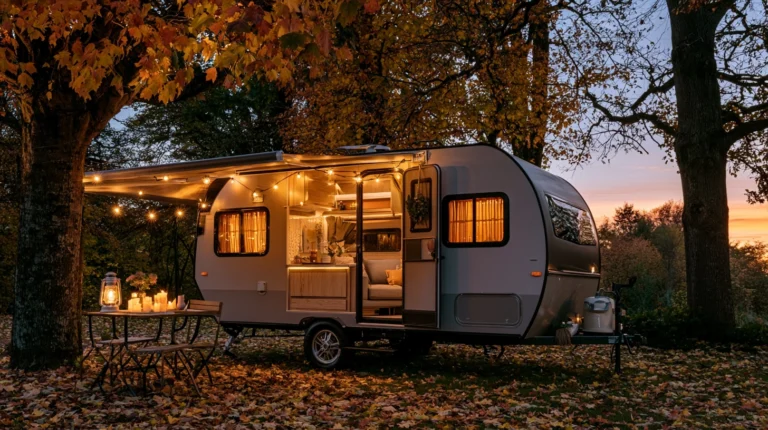
9. Candlelit Ambiance Through Lanterns and Tapers
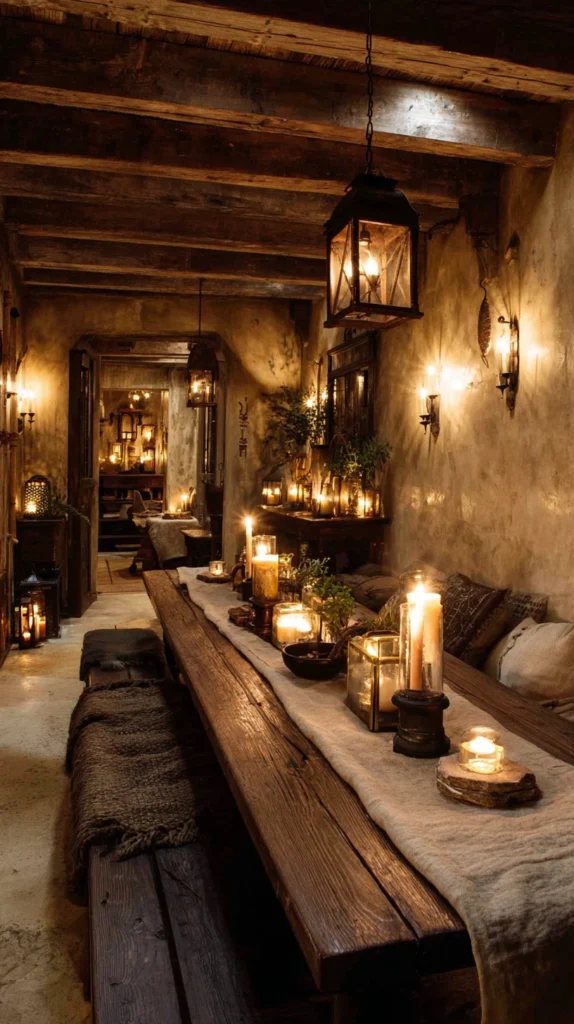
A layered lighting approach built primarily around candles, lanterns, and warm oil-style lamps, with standard overhead electric lighting used sparingly if at all.
Why lighting choice may be the single most defining element of this aesthetic
More than any specific object or material, the quality and source of light in a room determines whether it reads as genuinely aligned with this aesthetic or simply decorated to resemble it. A room full of appropriately rustic objects, lit by a bright modern overhead fixture, still won’t achieve the intended mood.
Building the lighting layer
- Lanterns (electric flameless or genuine candle) positioned at varying heights around the room
- Taper candles in simple holders on tables and mantels, providing the flickering, warm light central to the whole atmosphere
Cost breakdown
- Lanterns (2–3) and taper candles: $40–75
- Total: $40–75
10. A Foraged Nature Display Shelf
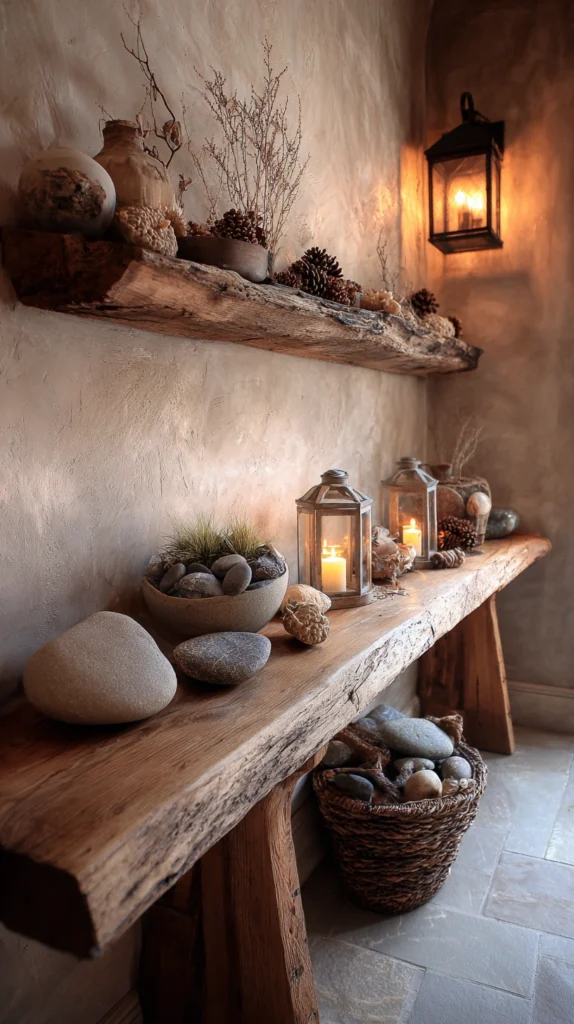
A small shelf or table dedicated to foraged natural objects — interesting stones, pinecones, dried seed pods, a bird’s nest found empty — gathered rather than purchased.
Why a foraged display embodies the aesthetic more directly than any purchased decor
Foraging and displaying natural found objects is one of the most genuine, lowest-cost ways to fill a home with material specific to its actual surrounding landscape, rather than generic decor purchased from any store regardless of location.
Assembly
- Objects gathered from walks, a garden, or a local natural area, displayed with the same restraint and grouping principles used on any styled shelf
- Rotated occasionally as new finds replace older ones, keeping the display genuinely connected to ongoing foraging rather than static
Cost breakdown
- Foraged materials: $0
- Small shelf, if needed: $15–30
- Total: $0–30
11. Stacked Vintage Books
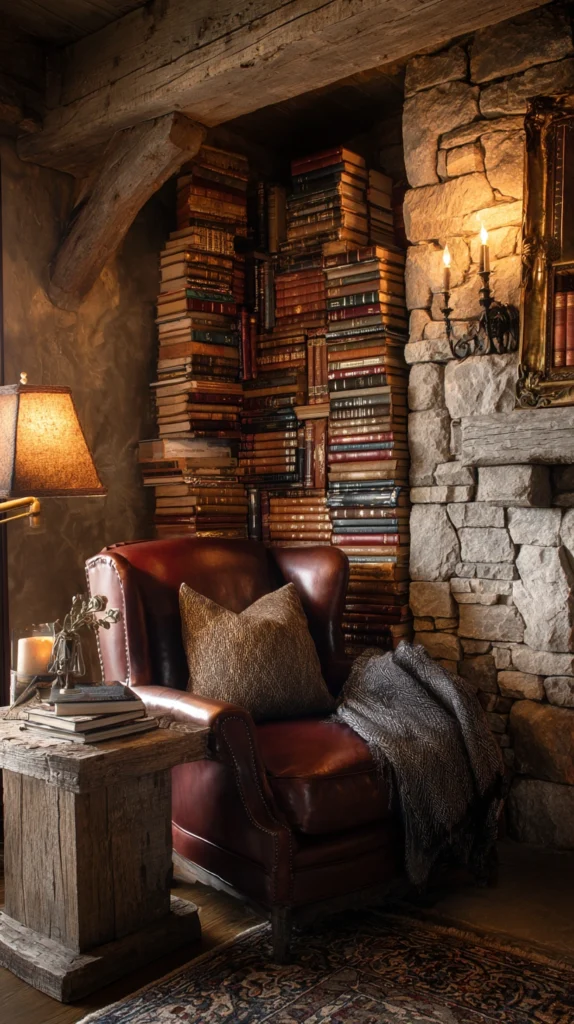
A collection of well-worn, secondhand books, stacked rather than shelved upright, used as both reading material and a textural, warm-toned display element.
Why stacked, worn books suit this aesthetic specifically
A stack of genuinely old, worn books — spines cracked, covers faded — carries a natural warmth and history that new books, however nicely bound, don’t replicate. Stacking rather than shelving upright also creates a more casual, gathered appearance consistent with the aesthetic’s overall informality.
Selection and styling
- Secondhand books, chosen by cover tone and general condition rather than specific titles
- Stacked in small groupings of 3–5, on a side table, windowsill, or the foot of a reading chair
Cost breakdown
- Secondhand books (5–8): $8–20
- Total: $8–20
12. Quilted Patchwork Textiles
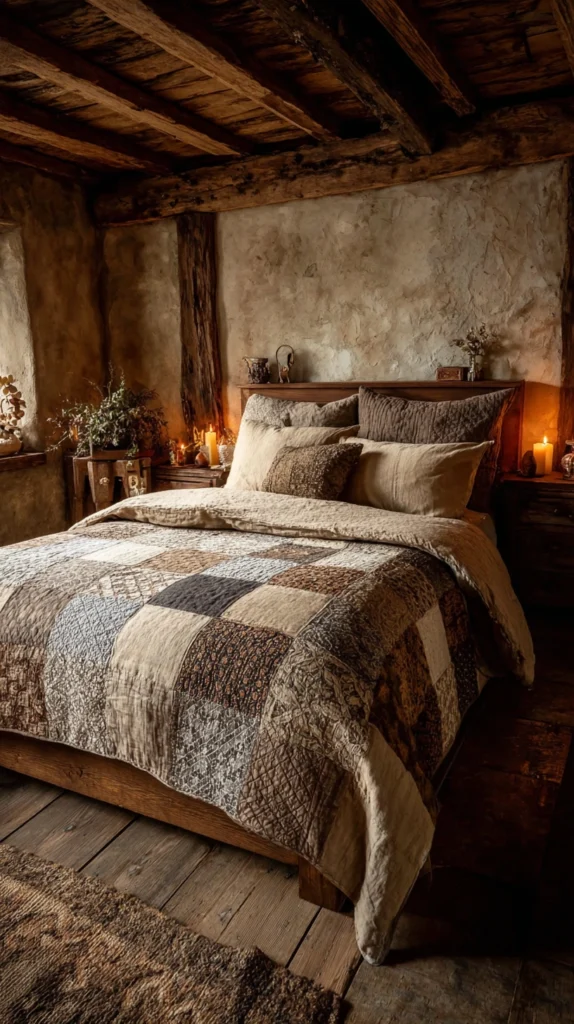
A quilt or patchwork throw, ideally handmade or genuinely vintage, used on a bed or draped over a chair, adding both warmth and a visibly handcrafted textile element.
Why patchwork specifically reinforces the handmade quality
A patchwork quilt is, by construction, made from smaller individual pieces assembled by hand, a visible process that aligns directly with the aesthetic’s emphasis on handcraft over manufactured uniformity, distinct from a printed pattern that merely resembles patchwork.
Sourcing and use
- Secondhand and vintage quilts are widely available and often significantly less expensive than a comparable new handmade piece
- Used actively on a bed or as a seating throw, rather than displayed purely decoratively
Cost breakdown
- Vintage or secondhand quilt: $40–100
- Total: $40–100
13. A Garden Harvest Basket Display
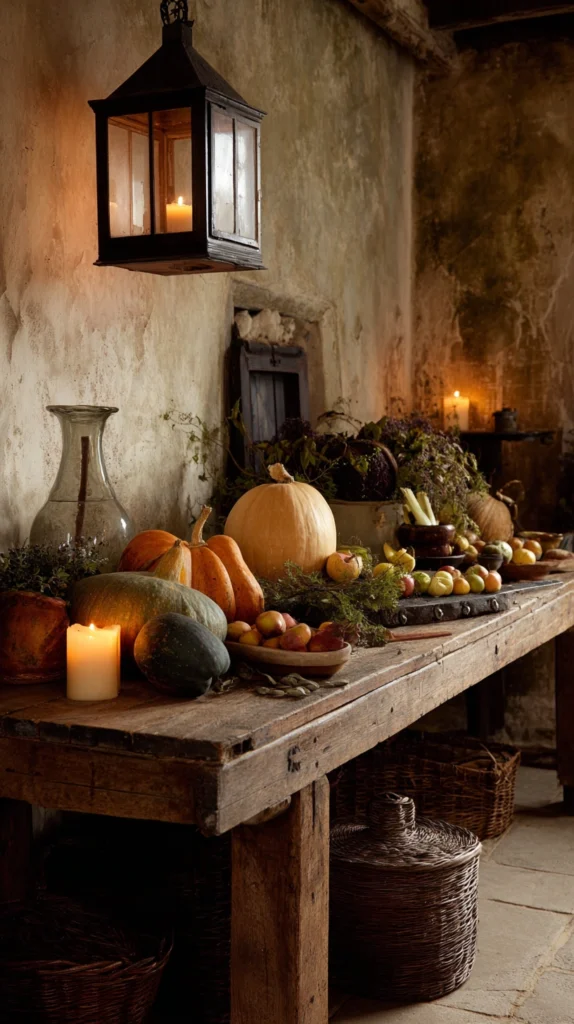
A woven basket filled with actual harvested or purchased root vegetables, apples, or squash, displayed in the kitchen as both decoration and genuine food storage.
Why a harvest basket embodies the fall season within this aesthetic directly
Root vegetables and squash stored in a basket is a genuine, functional household practice tied directly to the fall harvest season, giving this display both decorative and entirely practical value at once, without needing to introduce any purely ornamental object.
Assembly
- A large woven basket, filled with a mix of squash, apples, and root vegetables actually intended for use in cooking
- Positioned in the kitchen where it’s both visible and genuinely convenient for meal preparation
Cost breakdown
- Woven basket: $25–45
- Produce: $10–20
- Total: $35–65
14. Wildflower and Dried Botanical Arrangements
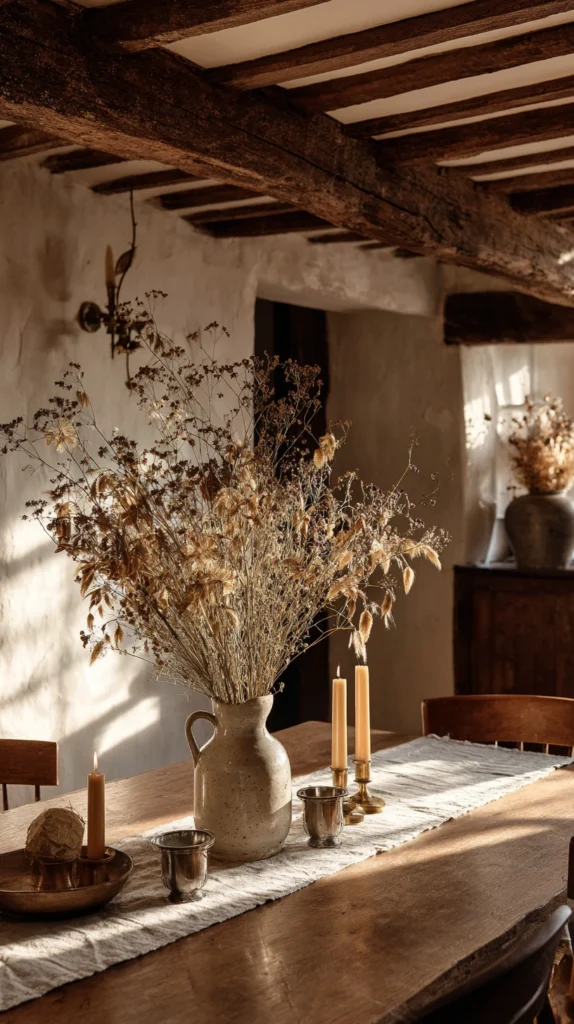
Loose, informal arrangements of dried wildflowers and grasses, in simple vessels, rather than a formally arranged florist bouquet.
Why looseness and informality matter for this specific aesthetic
A tightly arranged, formally structured floral display reads at odds with the casual, gathered-from-the-field quality this aesthetic depends on. A loose, slightly asymmetrical arrangement of dried wildflowers and grasses, gathered rather than professionally composed, suits the overall informal, natural feeling much more directly.
Assembly
- Dried wildflowers, grasses, and seed heads gathered in a loose bunch, placed in a simple ceramic jug or jar rather than a formal vase
- Left asymmetrical and slightly wild in shape, rather than trimmed to a uniform, tidy silhouette
Cost breakdown
- Dried wildflowers and grasses: $12–22
- Total: $12–22
15. The Complete Hobbitcore Cottage Room
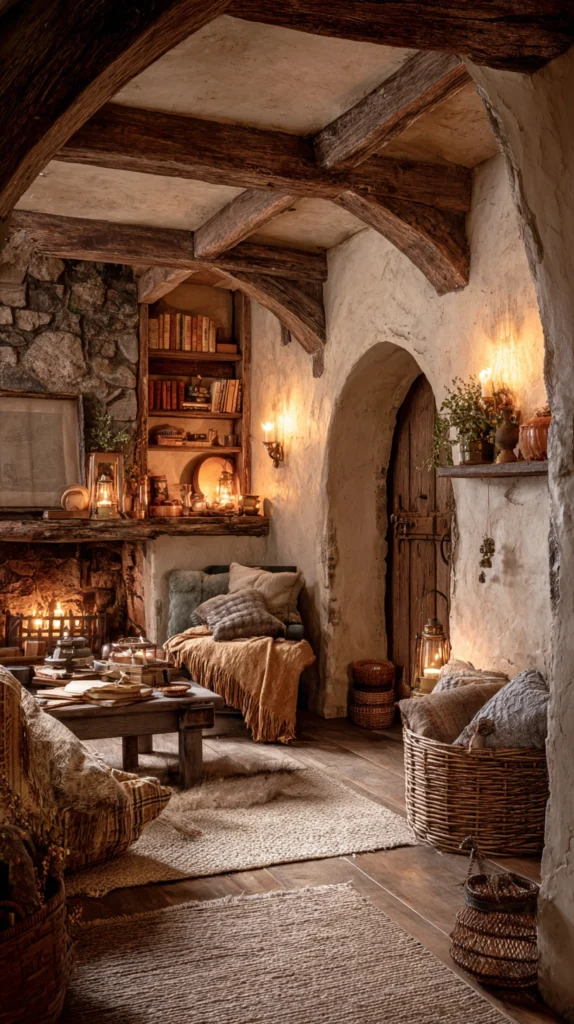
A room styled with every principle above applied together — the definitive version of the aesthetic that reads as a genuinely lived-in cottage space rather than a themed room built from purchased props.
What separates the complete room from a few isolated cottagecore items
A room with one dried herb bundle and a printed mushroom pillow, but otherwise unchanged modern furniture and bright overhead lighting, still reads as a partial gesture rather than a fully realized aesthetic. The complete version resolves the material palette, the lighting, and the overall sense of accumulated, genuine use all at once, so the room feels like an actual cottage rather than a themed display.
The elements of the complete room
The architecture and structure:
- Exposed wood beams overhead (Idea #4)
- Earthy textured walls (Idea #8)
- A rounded window or door accent (Idea #1)
The functional objects:
- Mismatched vintage pottery in daily use (Idea #2)
- A copper cookware display (Idea #6)
- A garden harvest basket (Idea #13)
- Hanging dried herb bundles (Idea #3)
The textiles:
- A braided rag rug underfoot (Idea #7)
- A quilted patchwork throw (Idea #12)
The light:
- Candlelit lanterns and tapers as the dominant light source (Idea #9)
The gathered details:
- Stacked vintage books (Idea #11)
- A foraged nature display shelf (Idea #10)
- A loose wildflower arrangement (Idea #14)
- One restrained mushroom motif accent (Idea #5)
The room on an ordinary fall evening:
The lanterns and tapers are lit well before dark, casting the same warm, uneven light a fire or oil lamp would have provided generations ago. The harvest basket in the kitchen holds real squash that will actually be cooked. The quilt on the chair and the braided rug underfoot are both genuinely worn, not staged to look that way. Nothing about the room was purchased as a themed set — every object arrived on its own, gathered or inherited or foraged, and the room reads as a home that simply grew this way rather than one decorated to look like it did.
Cost breakdown for the complete room
Assuming a starting point of a bare, modern room:
- Wood beams: $450–1,050
- Textured wall: $65–100
- Rounded accent: $30–70
- Pottery collection: $20–50
- Copper cookware and rack: $70–150
- Harvest basket: $35–65
- Herb bundles: $15–28
- Rag rug: $50–110
- Patchwork quilt: $40–100
- Lanterns and candles: $40–75
- Books: $8–20
- Foraged display: $0–30
- Wildflower arrangement: $12–22
- Mushroom accent: $15–35
Total: $850–1,905
Phased over two stages:
Stage one ($150–350):
- Pottery, herb bundles, and harvest basket
- Lanterns and candles
- Wildflower arrangement and books
Stage two ($700–1,550):
- Wood beams and textured wall
- Rug and quilt
- Copper display and remaining accents
The complete hobbitcore cottage room: not a themed purchase, but a room built from real, used, gathered materials that happen to align with an aesthetic that was really just describing an old way of living all along.
The Question Before Any Hobbitcore Styling Project
Before buying anything:
Are the objects being added genuinely old or handmade, or are they new items designed to look that way?
If the answer is: genuinely old or handmade wherever possible — this is the direction that will read most authentically over time; prioritise secondhand sourcing before any new purchase.
If the answer is: mostly new, purchased items — focus the budget on the few pieces that matter most for authenticity (real pottery, real dried herbs) and use new items primarily for structural elements like beams or textured walls, where age genuinely can’t be replicated.
If the answer is: unsure how far to take the aesthetic — start with lighting and one or two genuine functional objects (a harvest basket, hanging herbs); these alone shift a room’s feeling considerably without requiring a full commitment.
If the answer is: worried about it reading as costume — apply the restraint principle strictly, particularly around any single motif like mushrooms; one well-chosen piece will always read more genuine than several matching themed items.
The approach follows genuine sourcing and restraint over any specific checklist of objects. A room with fewer, more authentic pieces will read more convincingly aligned with this aesthetic than one filled with more items purchased specifically because they match a trend.
Getting Started This Weekend
The immediate hobbitcore update:
Switch the room’s primary lighting to candles, lanterns, or warm-toned lamps for one evening.
The single change most responsible for the aesthetic’s overall mood, testable before any other purchase.
Visit a secondhand shop for mismatched pottery or a vintage quilt.
Prioritizes genuine, gathered objects over anything new and themed.
Hang one small bundle of dried herbs.
A functional, low-cost, genuinely traditional practice rather than a purely decorative gesture.
Fill one basket with real produce for the kitchen.
Combines decoration and function in the same low-effort addition.
The rest of the room: the elaboration of this weekend, and likely an ongoing collection built over time.
The lantern: the beginning. The cottage room: what a space becomes once it’s filled with objects that are genuinely used, gathered, and worn, rather than purchased to look that way.