15 Japandi Living Room Ideas That Feel Calm, Minimal, and Warm
15 Japandi Living Room Ideas That Feel Calm, Minimal, and Warm
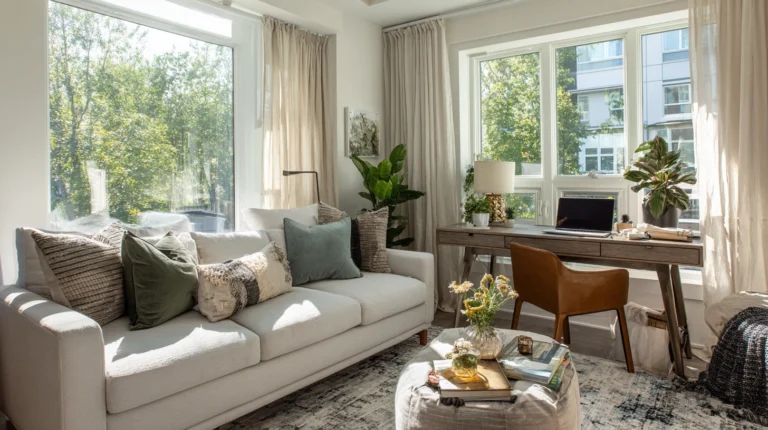
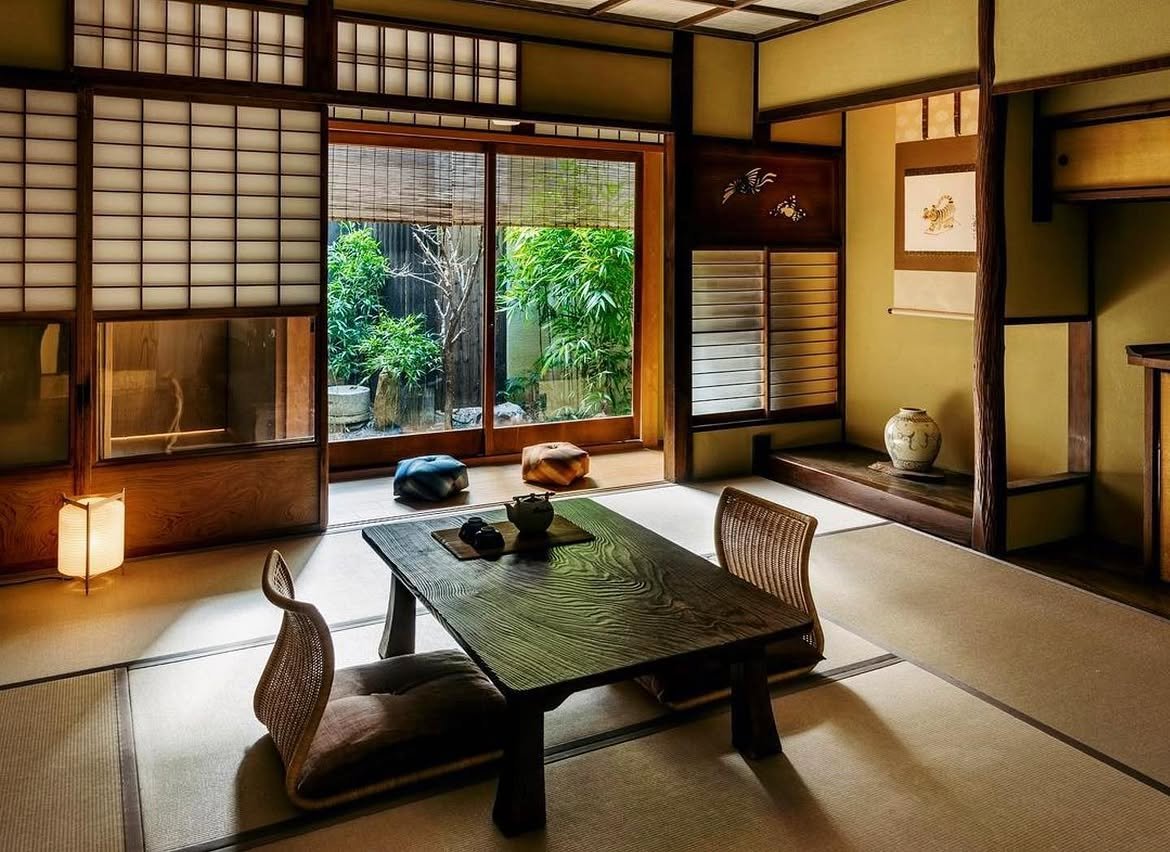
There is a specific quality that the Japandi living room achieves that neither Japanese minimalism nor Scandinavian hygge produces independently. Japanese design contributes the precision, the restraint, the specific respect for negative space and for the quality of a single considered object.
Scandinavian design contributes to the warmth, the natural material generosity, and the specific quality of a room that was designed for the long, dark hours of being genuinely at home. Together they produce a room that is both calm and warm — two qualities that most interior aesthetics achieve only at the expense of each other.
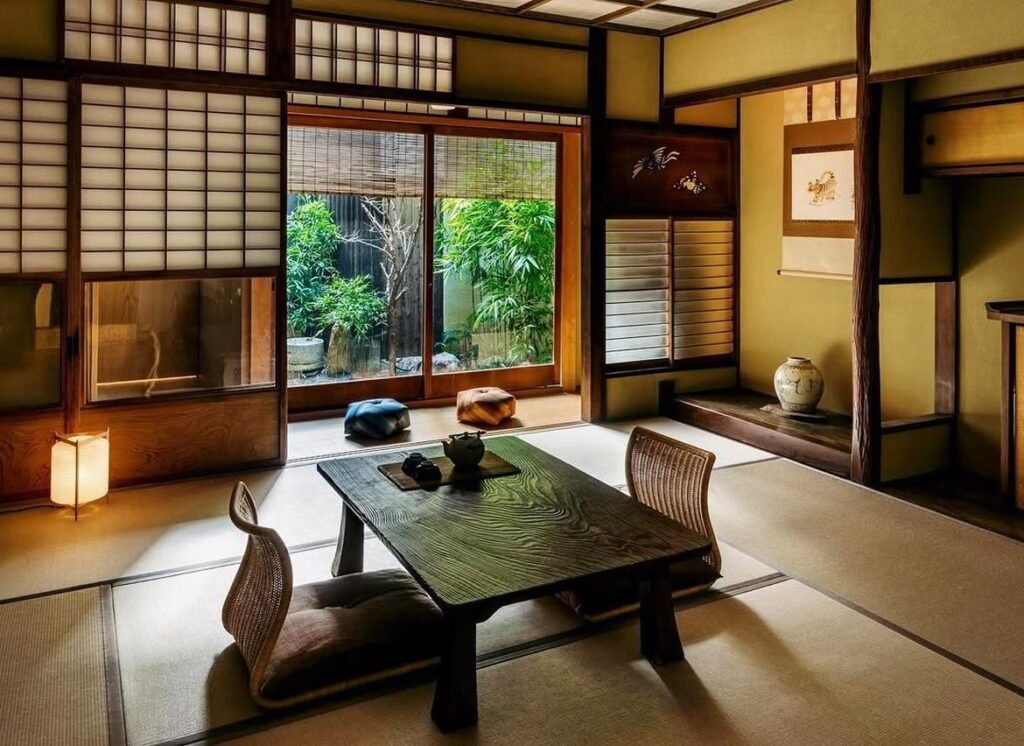
The Japandi living room is not achieved by purchasing a specific set of objects or by applying a specific colour palette. It is achieved by the quality of the decisions made about every element in the room — the discipline to remove what does not belong, the patience to choose what does belong with genuine care, and the specific understanding that warmth in a minimal room comes from material quality rather than from quantity of objects.
Each idea below is a specific approach to one element of the Japandi living room. Each includes what you will need, what it will cost, and a practical tip to make it work as well as the calm, warm room it is reaching for.
1. The Low-Profile Timber Sofa
Budget: $400 – $2,500
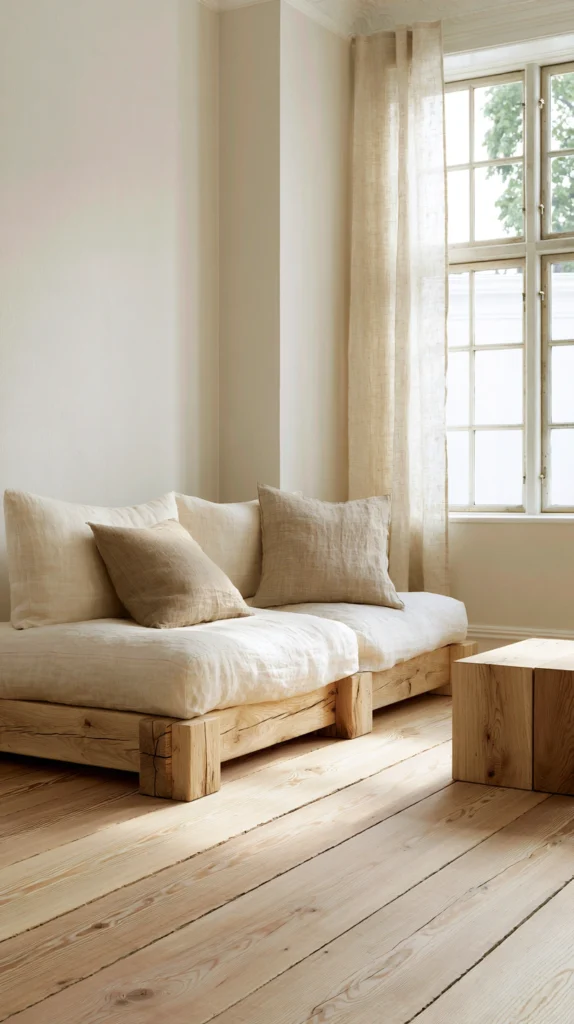
A sofa with a low seat height of 35–40 centimetres and a visible timber frame in pale oak, ash, or walnut — with removable cushion covers in natural linen or undyed cotton — creates the Japandi living room’s primary furniture piece. The low seat height brings the seating closer to the floor, which is the specific spatial quality of the Japanese interior, while the timber frame and the natural textile communicate the warmth of the Scandinavian material tradition.
A solid oak low-profile sofa costs $600–$1,800. A walnut-framed version runs $800–$2,500. Replacement cushion covers in natural linen run $40–$100 each if the existing sofa has the correct frame but inappropriate cushion covers.
Style tip: Choose a sofa whose timber frame is visible on all four sides rather than one where the frame is concealed within the upholstery. The visible timber frame is the Japandi detail that communicates the material honesty of the aesthetic — the sofa as a constructed object rather than an upholstered volume.
2. The Wabi-Sabi Ceramic Collection
Budget: $30 – $200
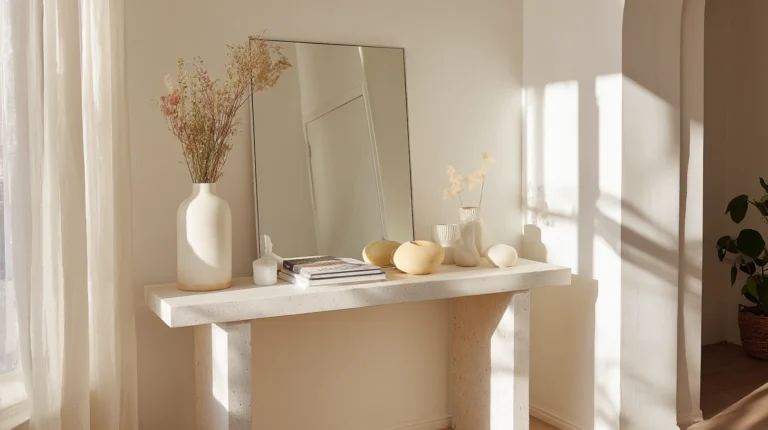
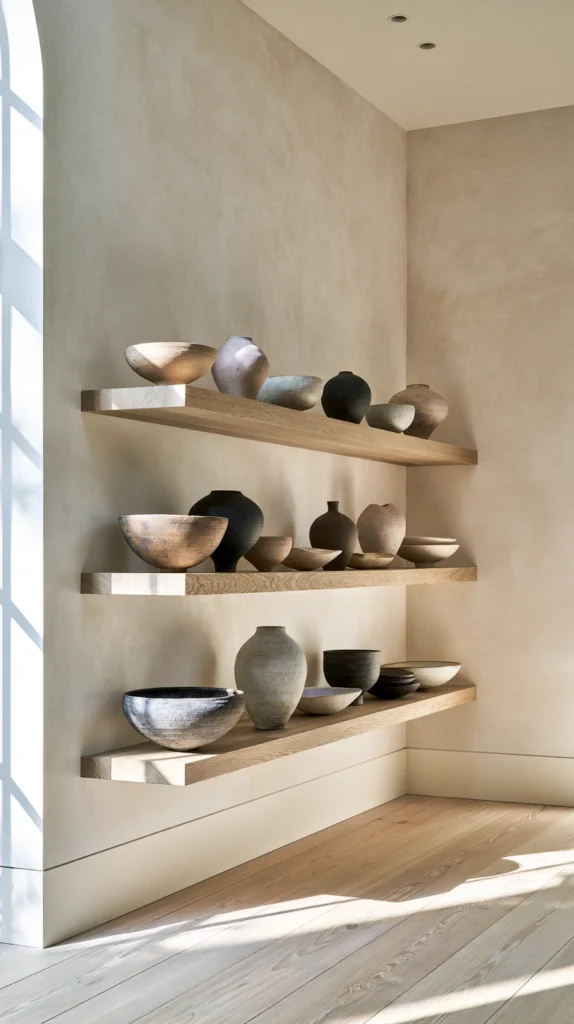
A small collection of hand-thrown ceramics — a vase with an uneven lip, a bowl with a slight asymmetry in its walls, a small dish with a glaze that has run slightly at the foot — arranged on a single surface communicates the wabi-sabi quality that sits at the philosophical heart of the Japandi aesthetic. Wabi-sabi finds beauty in imperfection and incompleteness, and hand-thrown ceramics are the most accessible and the most specific material expression of this principle.
Individual hand-thrown ceramic pieces from an independent maker cost $15–$60 each. A collection of three — one tall, one medium, one small — runs $45–$180. Position the collection on a single surface with sufficient negative space around it that each piece can be seen individually.
Style tip: Choose ceramics in the same clay body — all stoneware, or all porcelain — rather than mixing different ceramic types. The material consistency communicates a collected palette; the mixed ceramic types communicate individual purchases without a unifying principle.
3. The Pale Timber Flooring
Budget: $600 – $3,000
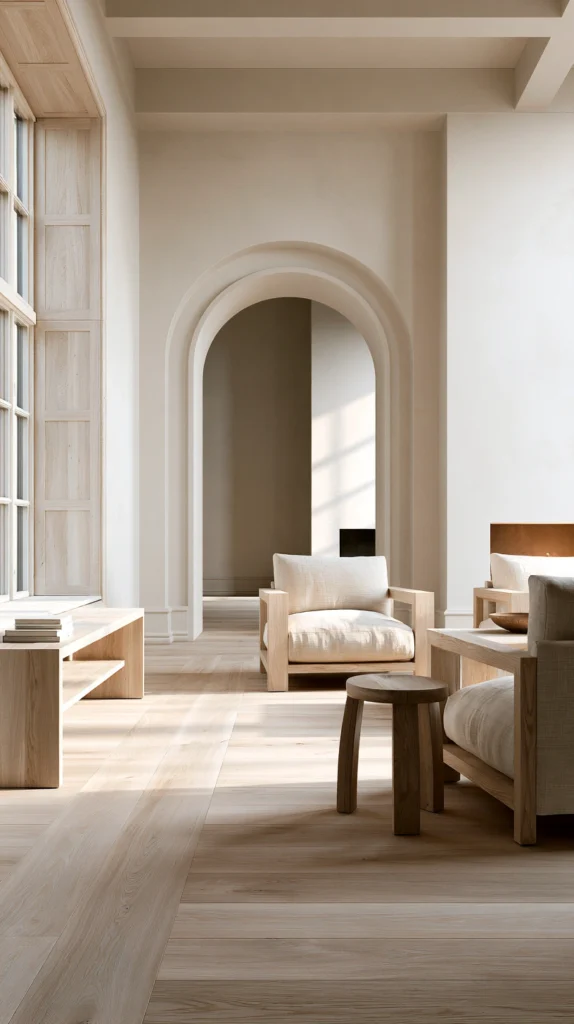
Wide-plank pale oak or ash flooring — in a matte or satin finish that shows the grain clearly, either solid or engineered — creates the Japandi living room’s most significant surface and the one that most directly communicates the warmth of natural material at the largest available scale. Pale timber flooring relates simultaneously to the Japanese tradition of the unfinished timber floor and the Scandinavian tradition of the light wood interior.
Engineered pale oak in a 150-millimetre plank costs $40–$80 per square metre. A solid version runs $50–$100 per square metre. Choose a board width of 150 millimetres or wider — narrow strip flooring reads as standard rather than as the generous, considered surface that the Japandi floor requires.
Style tip: Finish the pale timber floor with a hard-wax oil in a clear or very slightly warm tone rather than a water-based lacquer. The oil finish produces a surface that reads as wood; the lacquer produces a surface that reads as a wood-coloured finish.
4. The Shoji-Inspired Window Treatment
Budget: $80 – $400
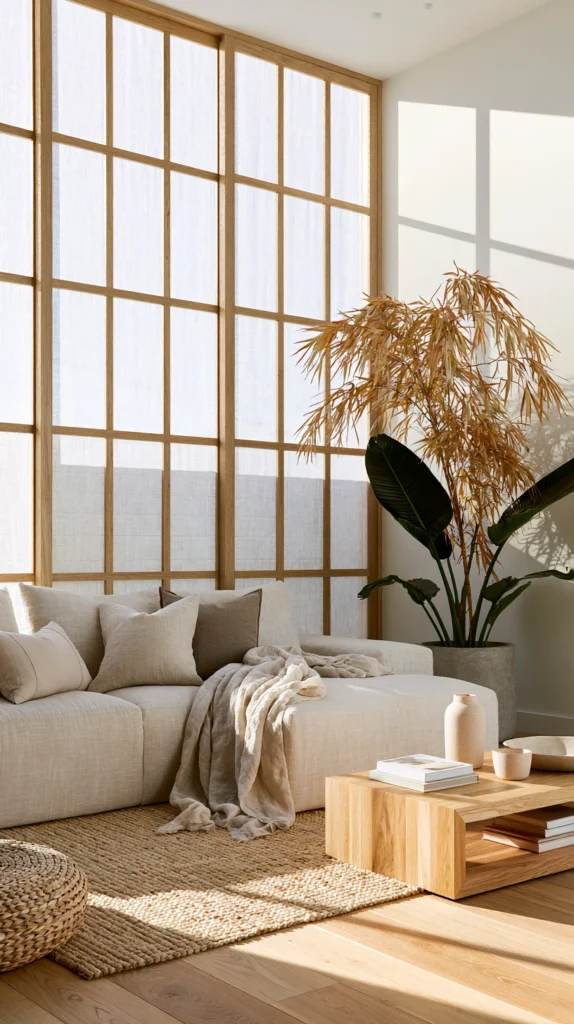
Shoji-inspired window panels — either genuine rice paper shoji screens on a timber frame, or a Western equivalent using linen or cotton voile on a simple timber frame — create the Japandi living room’s most specifically Japanese window treatment. The shoji screen filters light into the room as a diffuse, even glow rather than directing it as a beam, and the specific quality of this diffused interior light is one of the most defining atmospheric qualities of the Japanese interior.
Rice paper shoji screens in a standard size cost $80–$200 each. A linen voile panel on a timber frame of equivalent size runs $40–$120. Use two panels per window — sliding past each other on a track — to allow the light level to be adjusted while maintaining the material quality of the screen at every setting.
Style tip: Choose a frame timber that matches the other timber elements in the room — the same pale oak as the floor or the sofa frame — so the shoji panels read as part of the room’s material palette rather than as a separate window element.
5. The Single Statement Plant
Budget: $20 – $100
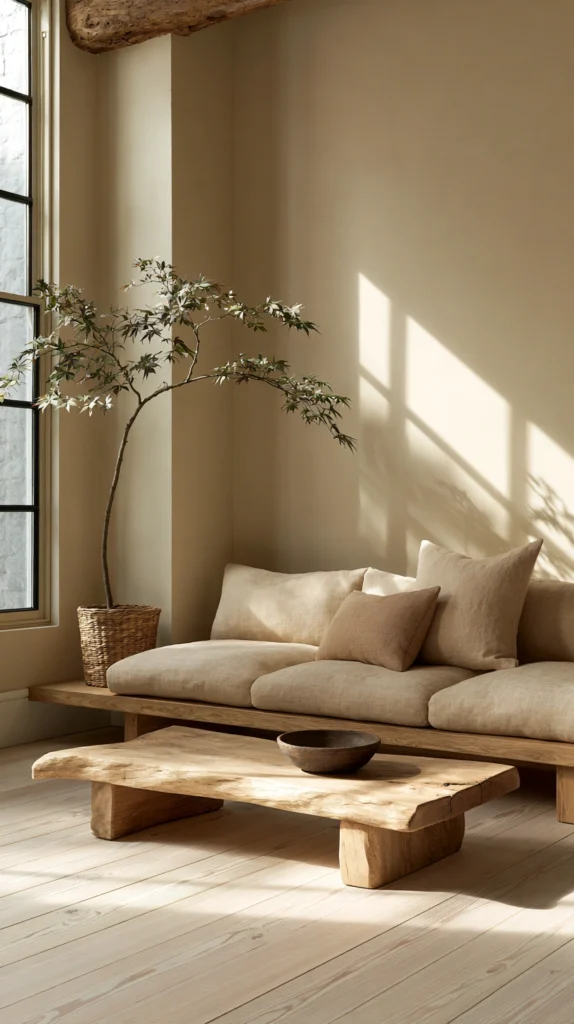
One large plant — a fiddle-leaf fig, a rubber plant, or a monstera in a matte ceramic pot — positioned at the living room’s primary focal position creates the Japandi room’s botanical element. The Japandi aesthetic does not fill a room with plants; it positions one plant with the precision and the deliberateness of an ikebana arrangement, understanding that a single, correctly positioned, well-maintained plant communicates more than a collection of smaller plants distributed throughout the space.
A large fiddle-leaf fig of 120 centimetres costs $40–$80. A monstera of equivalent size runs $35–$70. A matte ceramic pot of the correct proportions — large enough for the plant, simple enough not to compete with it — costs $20–$60.
Style tip: Position the single plant where it receives both the best natural light the room offers and the most prominent position in the room’s spatial composition. The plant that is well-placed and well-lit communicates the considered quality of the Japandi aesthetic; the plant positioned where it is convenient reads as a houseplant in a convenient location.
6. The Natural Linen Cushion Layer
Budget: $60 – $250
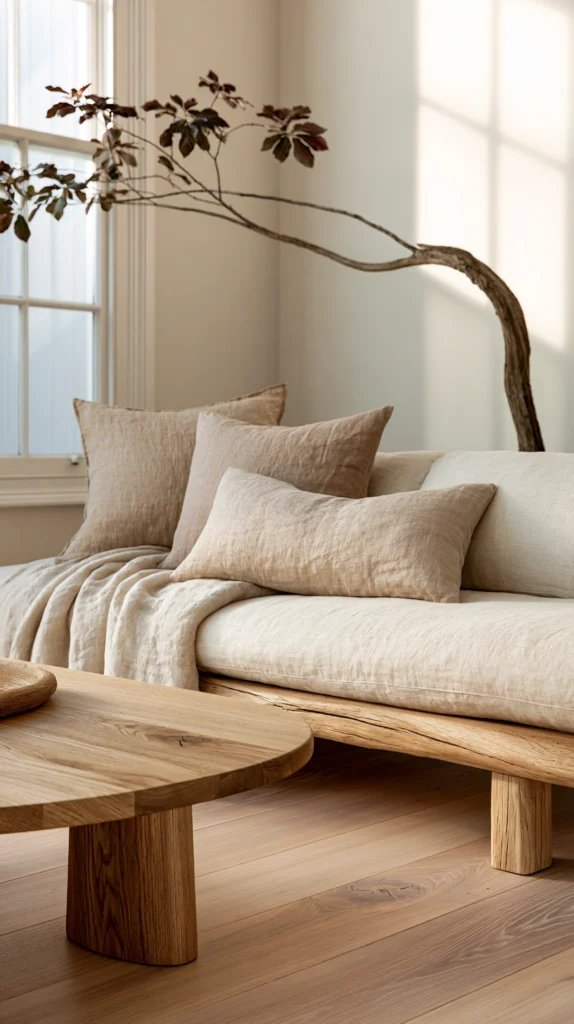
Three cushions on the Japandi sofa — in natural linen, undyed cotton, or a simple textured weave in the natural-to-warm-neutral tonal range — provide the textile softness that the Japandi aesthetic requires without the decorative excess that more cushions would produce. The Japandi cushion collection is not the maximalist cushion pile of the cozy living room; it is the minimum number of cushions that provides the visual completeness of a dressed sofa.
Natural linen cushion covers cost $20–$50 each. Three covers in the same colour family but different textures — one smooth linen, one slightly nubbled weave, one knit — run $60–$150. Choose covers in undyed or very slightly warm tones rather than any specific colour — the Japandi palette is the palette of natural materials before they are given a colour.
Style tip: Choose cushions of two sizes rather than all the same size — two larger cushions at the back and one smaller accent cushion in front creates the subtle visual hierarchy that three cushions of the same size does not produce.
7. The Bonsai or Branch Arrangement
Budget: $15 – $150
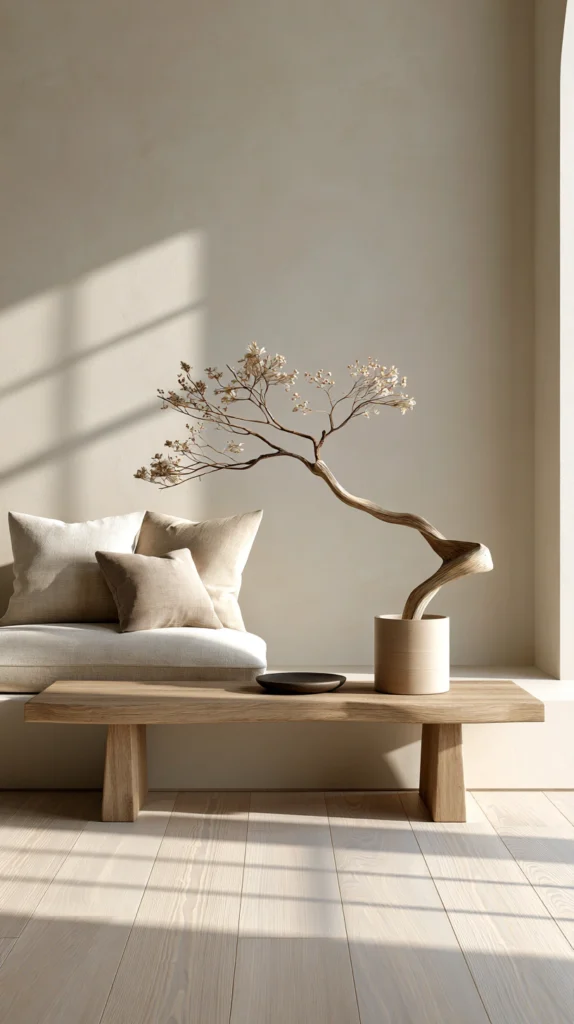
A bonsai tree or a single architectural branch — a sculptural dried stem, a living ficus bonsai, or a winter branch of a flowering species — placed in a simple ceramic vessel communicates the Japanese principle of bringing the outside world inside through a single, considered botanical object. The branch or the bonsai is not decoration; it is the room’s living focal point and its connection to the natural world.
A starter bonsai ficus costs $15–$40. An established bonsai runs $40–$150. A dried sculptural branch in a tall ceramic vessel costs $10–$30 in materials. Position on a low timber surface — a sideboard, a coffee table, a dedicated display stand — where it is seen at eye level from the seated position.
Style tip: Keep the vessel simple to the point of plainness — a cylindrical white or grey ceramic with no decorative quality of its own. The vessel that recedes allows the plant or the branch to be the object; the vessel that competes for attention divides it.
8. The Tatami-Inspired Area Rug
Budget: $80 – $400
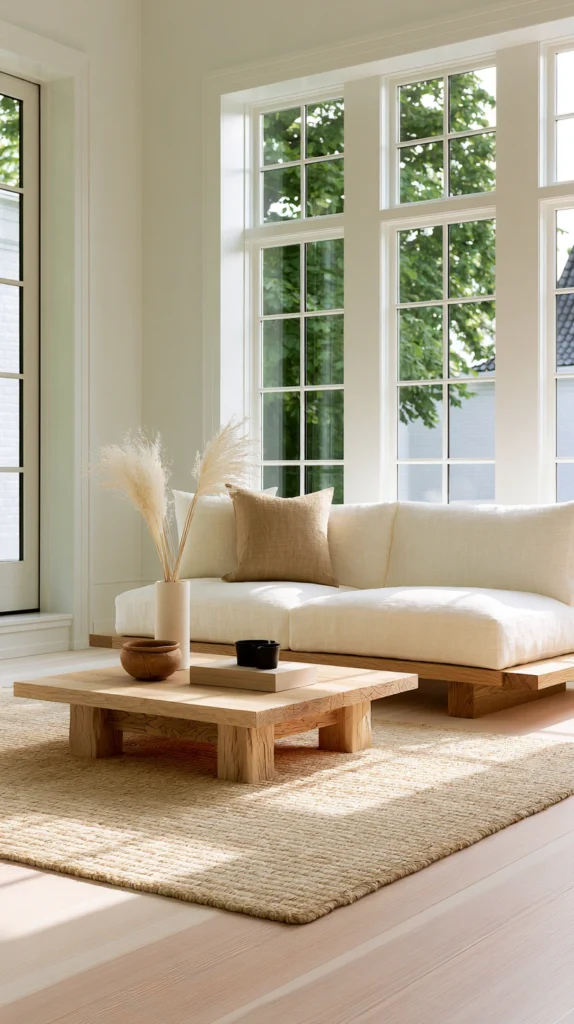
A flat-woven natural fibre rug — seagrass, jute, or sisal in a natural or warm neutral tone — creates the Japandi living room’s floor-level warmth at the seated and foot level. The flat weave references the tatami mat of the Japanese interior without replicating it directly, and the natural fibre communicates the honest material quality of both the Japanese and the Scandinavian material traditions.
A seagrass rug of 160 by 230 centimetres costs $60–$150. A jute version of the same size runs $50–$130. Choose a rug that is large enough for all front furniture legs to sit on — the rug that anchors the furniture arrangement rather than floating beneath part of it is the rug that reads as the floor definition of the seating zone.
Style tip: Choose a rug with a border detail in the same natural fibre family — a slightly darker border in the same jute or seagrass — rather than a plain rug with no border. The bordered rug has the compositional completeness of a defined object; the plain rug reads as a floor covering.
9. The Warm Charcoal or Warm Grey Wall
Budget: $25 – $80
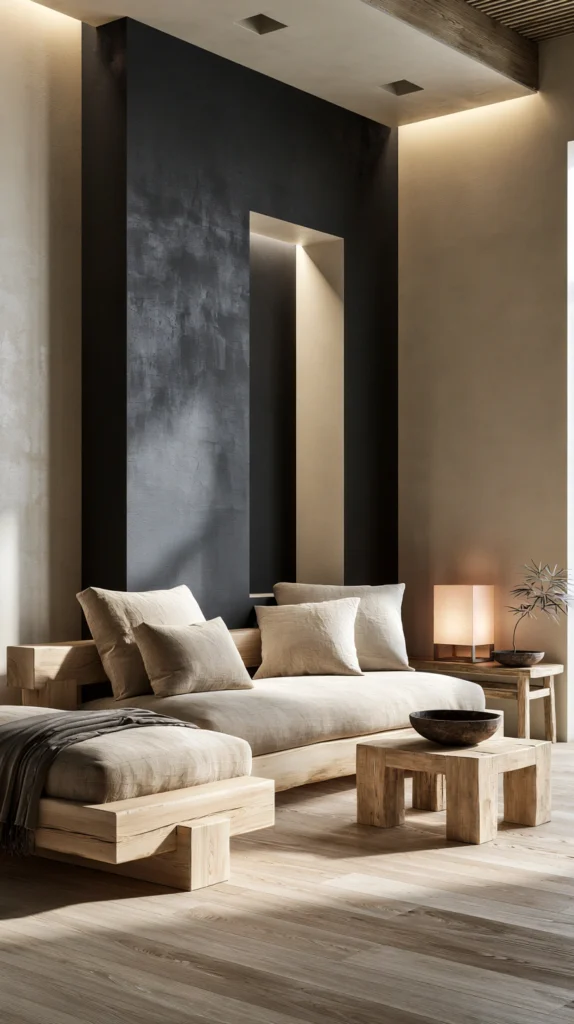
A wall in warm charcoal, warm grey, or the specific grey-brown that reads as neither grey nor brown but something between the two — applied as a flat, matte finish to the primary living room wall — creates the Japandi room’s most important atmospheric background. The warm dark wall is not the cool grey of Scandinavian minimalism; it is the specific warm, slightly earthy grey that relates to the palette of natural stone and dried botanical material that the Japandi interior consistently references.
A quality matt emulsion in warm charcoal or warm grey costs $25–$60 per 2.5-litre tin. One tin covers the primary wall with two coats. Apply to the primary wall only — the one most visible on entering — and leave the remaining walls in a warm off-white that relates to but contrasts with the darker tone.
Style tip: Test the grey on a large swatch — at least 60 by 60 centimetres — and observe it at different times of day before committing. The Japandi grey reads warm in natural light and can shift toward cool or toward brown under artificial light, and the three-hour test is the paint decision that prevents regret.
10. The Handmade Timber Coffee Table
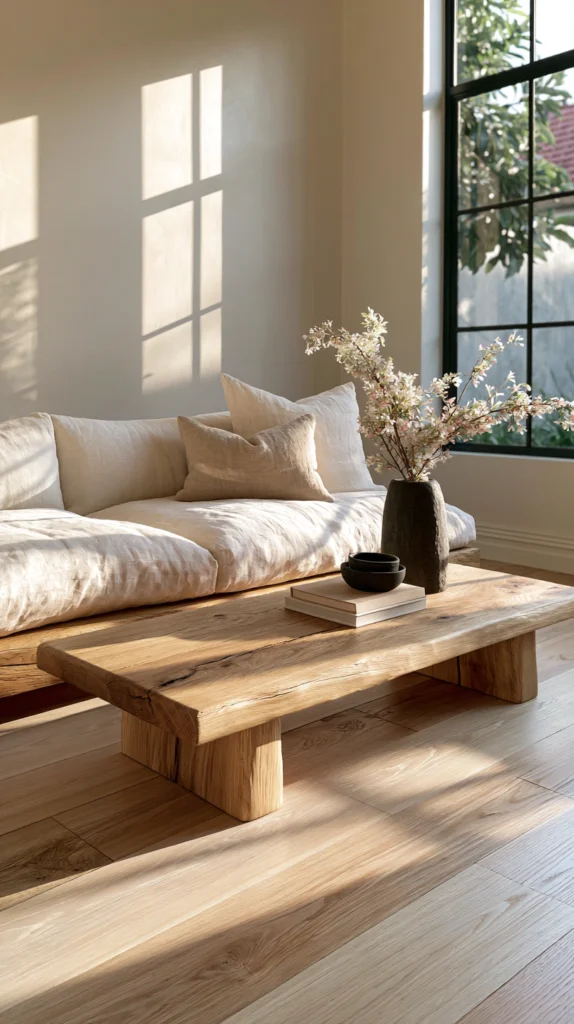
Budget: $150 – $800
A coffee table in solid timber — a simple rectangular slab on four legs, or a sculptural piece that shows the natural quality of the wood, in a warm oak or walnut — positions the Japandi aesthetic’s most functional piece of furniture as a material object of genuine quality. The coffee table in the Japandi room is not a surface for displaying objects; it is an object in itself, and its timber quality is experienced directly and daily.
A solid oak coffee table in a simple rectangular form costs $150–$400. A walnut version runs $200–$600. A live-edge timber coffee table costs $300–$800. Keep the table surface clear — one small ceramic object, one book — rather than styled with multiple objects that compete with the timber’s own material quality.
Style tip: Choose a table height of 38–42 centimetres rather than the standard 45–50 centimetres. The lower height relates to the low-profile sofa of the Japandi interior and produces the floor-level seated quality that the aesthetic is reaching for.
11. The Indirect Lighting System
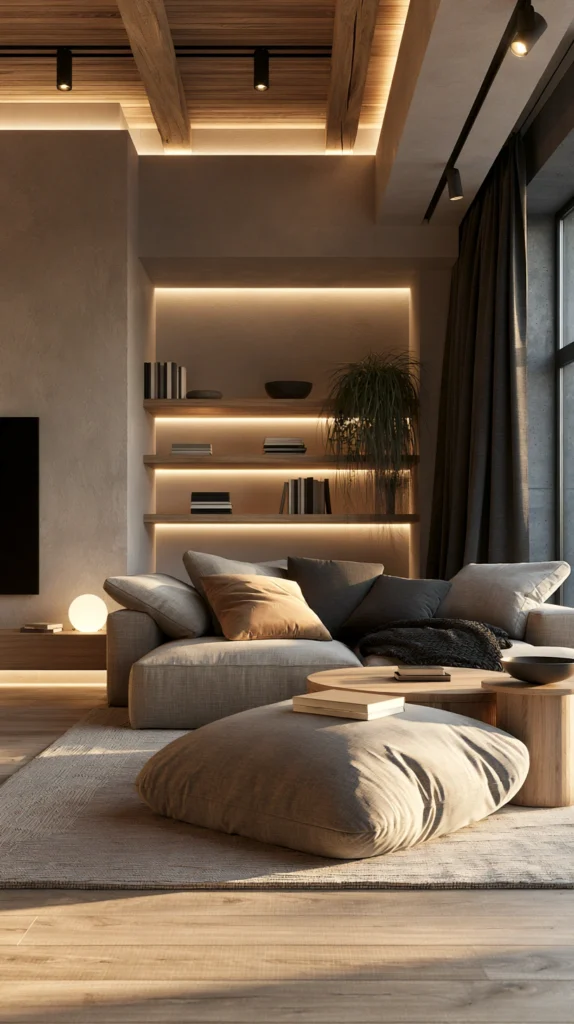
Budget: $80 – $400
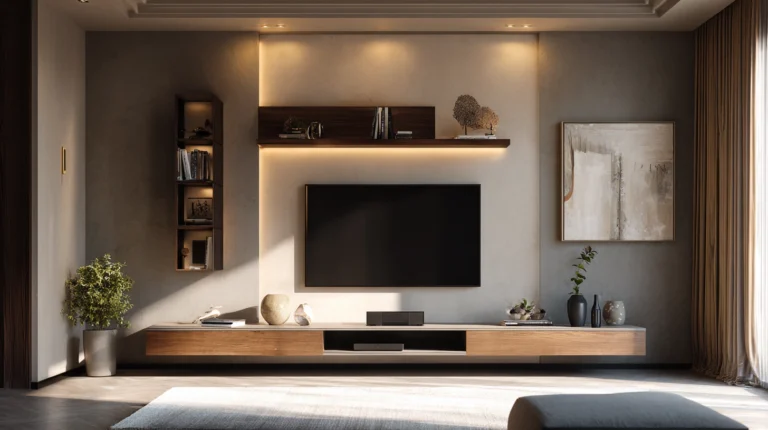
Indirect lighting — light sources that illuminate surfaces rather than shining directly into the room, creating a warm glow that appears to emanate from the wall or the ceiling rather than from a visible fitting — creates the Japandi living room’s most atmospherically specific evening quality. LED strip lights behind a floating shelf, an uplight behind a large plant, a paper lantern diffusing a warm bulb — these are the Japandi light sources.
A Noguchi-style paper lantern pendant costs $40–$120. LED warm white strip lights behind a floating shelf cost $15–$35 per metre. A simple uplighter floor lamp costs $40–$100. All light sources at 2700K warm white — the specification that keeps the room warm rather than clinical in its evening light.
Style tip: Eliminate the overhead ceiling light as the primary evening light source entirely. A Japandi living room lit from eye level and below has a quality of warmth and depth that overhead lighting flattens immediately. The overhead light used only when the room requires functional brightness — never as the primary atmospheric source.
12. The Floating Timber Shelf
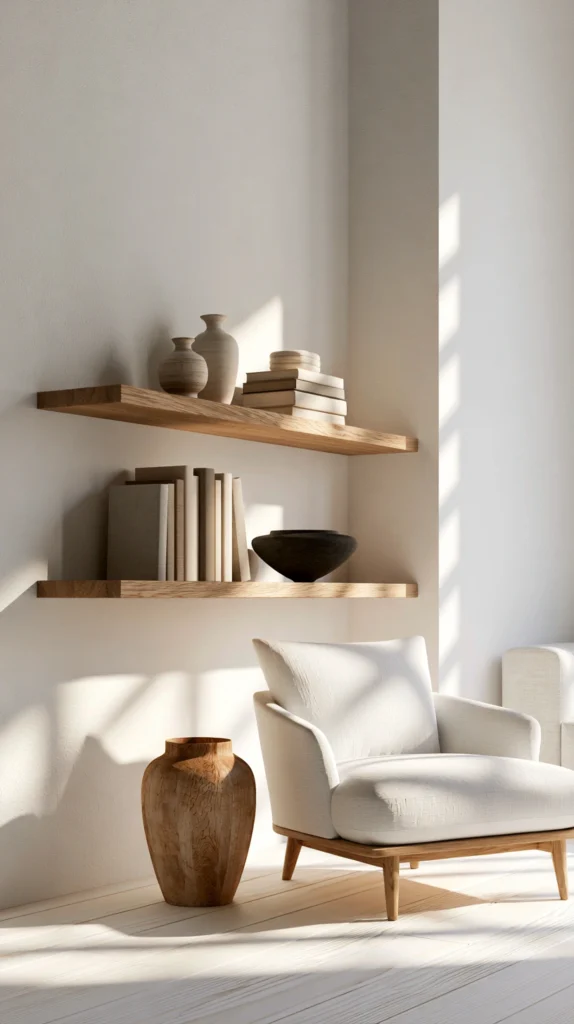
Budget: $40 – $200
A single floating shelf — in solid oak or walnut, deep enough to accommodate the ceramics and books it will display, positioned on the room’s primary wall at a height of 150–180 centimetres — creates the Japandi living room’s display surface with the maximum visual lightness of the floating format. The wall-mounted shelf with no visible brackets reads as a timber element of the wall rather than as furniture attached to it.
A solid oak floating shelf of 80 centimetres costs $40–$100. A 120-centimetre version runs $60–$150. Use invisible wall fixings — concealed within the wall cavity — rather than visible bracket supports. One shelf, not two — the single shelf is the Japandi decision; the double shelf is the storage decision.
Style tip: Leave the shelf at two-thirds capacity rather than filling it completely. The negative space on the shelf — the empty timber surface beside the arranged objects — is as much a part of the display as the objects themselves, and a shelf filled to capacity loses the specific quality of restraint that the Japandi aesthetic requires.
13. The Neutral Tonal Palette
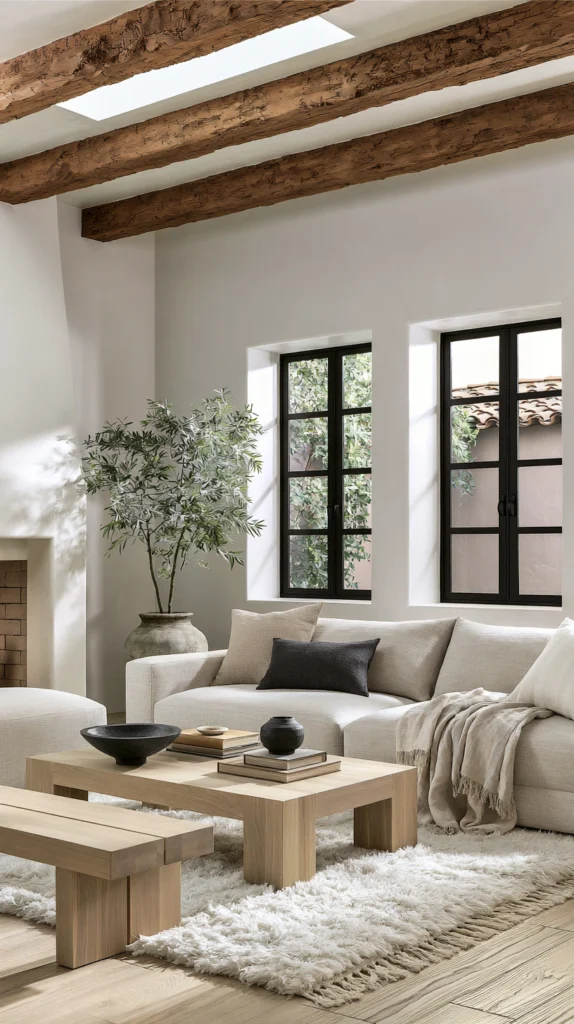
Budget: $0 – $200
The Japandi tonal palette — warm white, natural linen, pale timber, warm grey, and the occasional deep tone for depth — is implemented not through purchasing but through editing. Every element in the room is assessed against the palette, and everything outside it is stored or removed. The Japandi room in a typical Western living room already contains most of what the palette requires; it also contains a significant quantity of what the palette cannot accommodate.
The editing process costs nothing. The replacement of elements that fall outside the palette — a brightly coloured cushion cover, a decorative object in a competing colour — costs $15–$60 per replacement. Begin with the largest colour surfaces — the sofa, the rug, the walls — and work toward the smallest.
Style tip: The Japandi palette tolerates one accent colour if it is drawn from the natural world — the red-brown of dried clay, the dark green of a specific moss, the charcoal of burnt timber. One natural accent colour at the accessory scale communicates a collected palette; two accent colours communicate a colour scheme.
14. The Sliding or Pocket Door
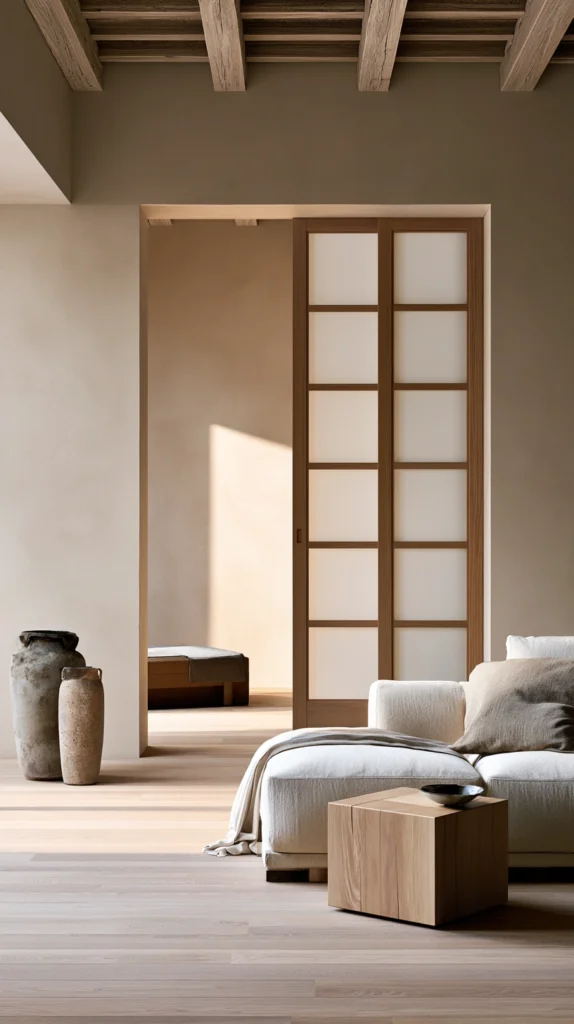
Budget: $300 – $1,500
A sliding or pocket door — in a timber frame with paper, frosted glass, or simple timber panel infill — replacing a conventional hinged door at the living room entry creates the Japandi room’s most architecturally specific Japanese element. The sliding door references the shoji screen and the fusuma of the Japanese interior, eliminates the swing space that the hinged door consumes, and communicates the Japandi aesthetic at the architectural rather than the decorative level.
A timber-framed sliding door with frosted glass infill costs $300–$800. A solid timber sliding door runs $400–$1,200. A pocket door installation in an existing wall costs $500–$1,500 including the structural work of creating the wall cavity. The door track and hardware should be concealed within the door frame and ceiling rather than exposed — the visible overhead track is the installation detail that most undermines the architectural quality of the sliding door.
Style tip: Choose a sliding door that is the full ceiling height rather than a standard door height with wall above. A full-height sliding door reads as an architectural element that relates to the ceiling; a standard-height door with a wall above reads as a door. The full ceiling height is the proportion that communicates the Japandi architectural intention.
15. The Considered Empty Space
Budget: $0
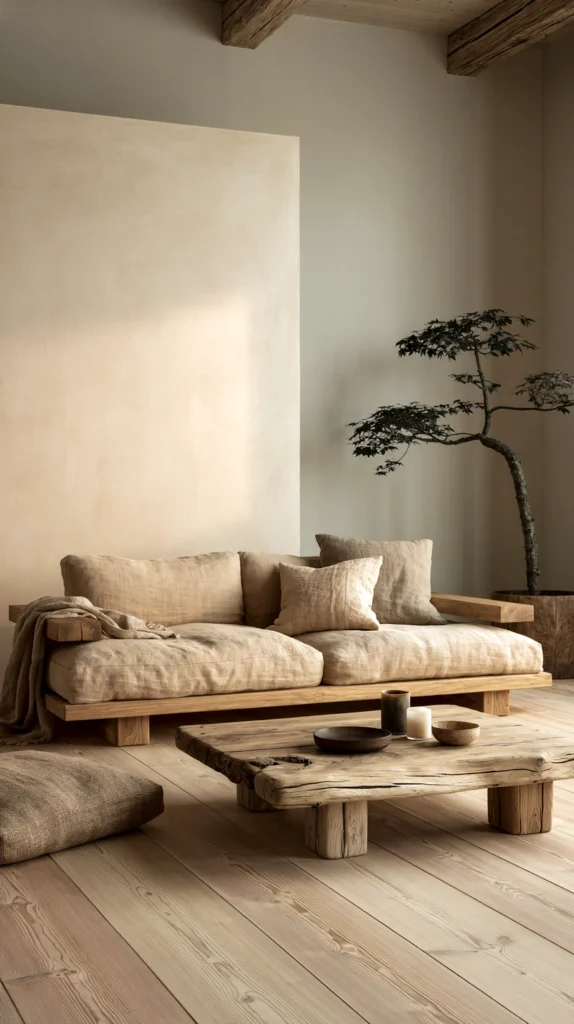
The most specifically Japandi element of the living room is not an object that can be purchased or a surface that can be finished. It is the specific, deliberate, maintained emptiness of a floor area, a wall surface, or a shelf section that was designed to be empty rather than filled. The empty space in the Japandi room is not the space that has not yet been furnished; it is the space that was specifically kept clear because the room is better for its absence of content.
The empty space costs nothing to create and requires only the discipline to maintain it against the domestic accumulation that all rooms produce over time. It is the hardest and the most rewarding element of the Japandi living room to implement.
Style tip: Designate one wall in the Japandi living room as permanently clear — no art, no shelving, no furniture pushed against it — and defend this decision against every impulse to use it. The clear wall is the room’s most expensive luxury in the specific sense that it costs the most in restraint to maintain, and the room that contains a deliberate empty wall communicates the Japandi philosophy more completely than any arrangement of carefully chosen objects can produce.
The Japandi living room is not a style that is assembled from a catalogue of correct objects. It is a quality of attention applied to a specific set of principles — less is specifically more, warmth comes from material rather than quantity, negative space is a designed element rather than an absence of decision, and the room exists for the quality of the experience of being in it rather than for the impression it makes on arrival.
Begin with the removal. Before adding anything to the room, remove everything that falls outside the principles of the aesthetic. The room that remains after the removal is often closer to the Japandi ideal than the room that will exist after the additions, and the additions, when they are made, belong to a room that was designed for them.