14 Brilliant Office-Living Room Combo Ideas to Maximize Your Smart Home
14 Brilliant Office-Living Room Combo Ideas to Maximize Your Smart Home
Creating a workspace within your living room is no longer just a “work from home” necessity; it is a lifestyle choice that embraces flexibility and modern design. The challenge, however, remains the same: how do you prevent your living room from looking like a corporate cubicle while ensuring your office isn’t just a cluttered corner of the sofa?
To achieve a high-end look suitable for top-tier design standards, you must focus on the “zones.” By defining where work ends and relaxation begins, you maintain the mental boundary needed for productivity and peace. Here are 14 expertly curated ideas to help you blend these two worlds into one seamless, stylish environment.
1. The Sophisticated Sofa-Back Desk
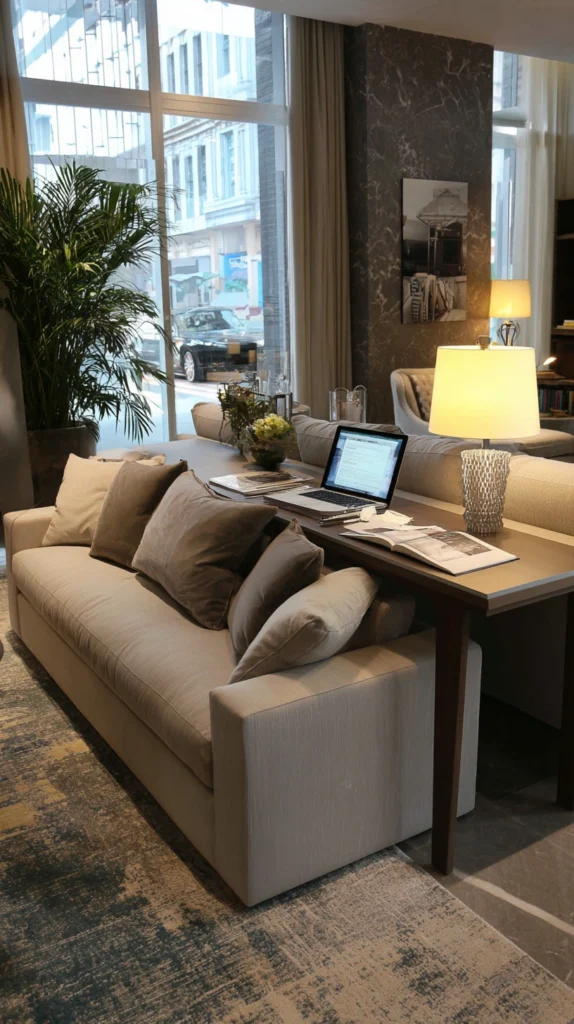
Placing a slim, long desk directly behind your sofa is a classic “pro designer” move. This layout utilizes the “dead space” that often exists between a sofa and the rest of the room. It acts as a sophisticated room divider, creating a physical boundary without the need for a wall.
Style Tip: Choose a desk that is roughly two inches lower than the top of your sofa cushions. This keeps the sightline low and ensures the desk doesn’t dominate the room’s silhouette.
Functional Upgrade: Look for a “console desk” that features built-in power outlets on the surface. This allows you to plug in your laptop and phone without stretching cords across the floor, which is both a trip hazard and an eyesore. If you have a floating sofa (one not against a wall), run the main power cord under an area rug to a floor outlet.
2. The Airy Window Nook
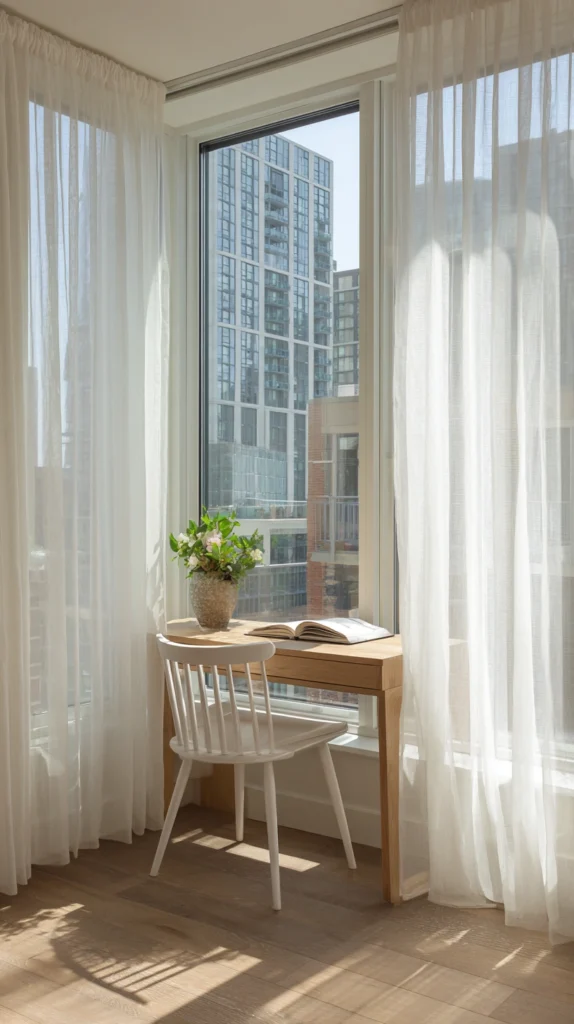
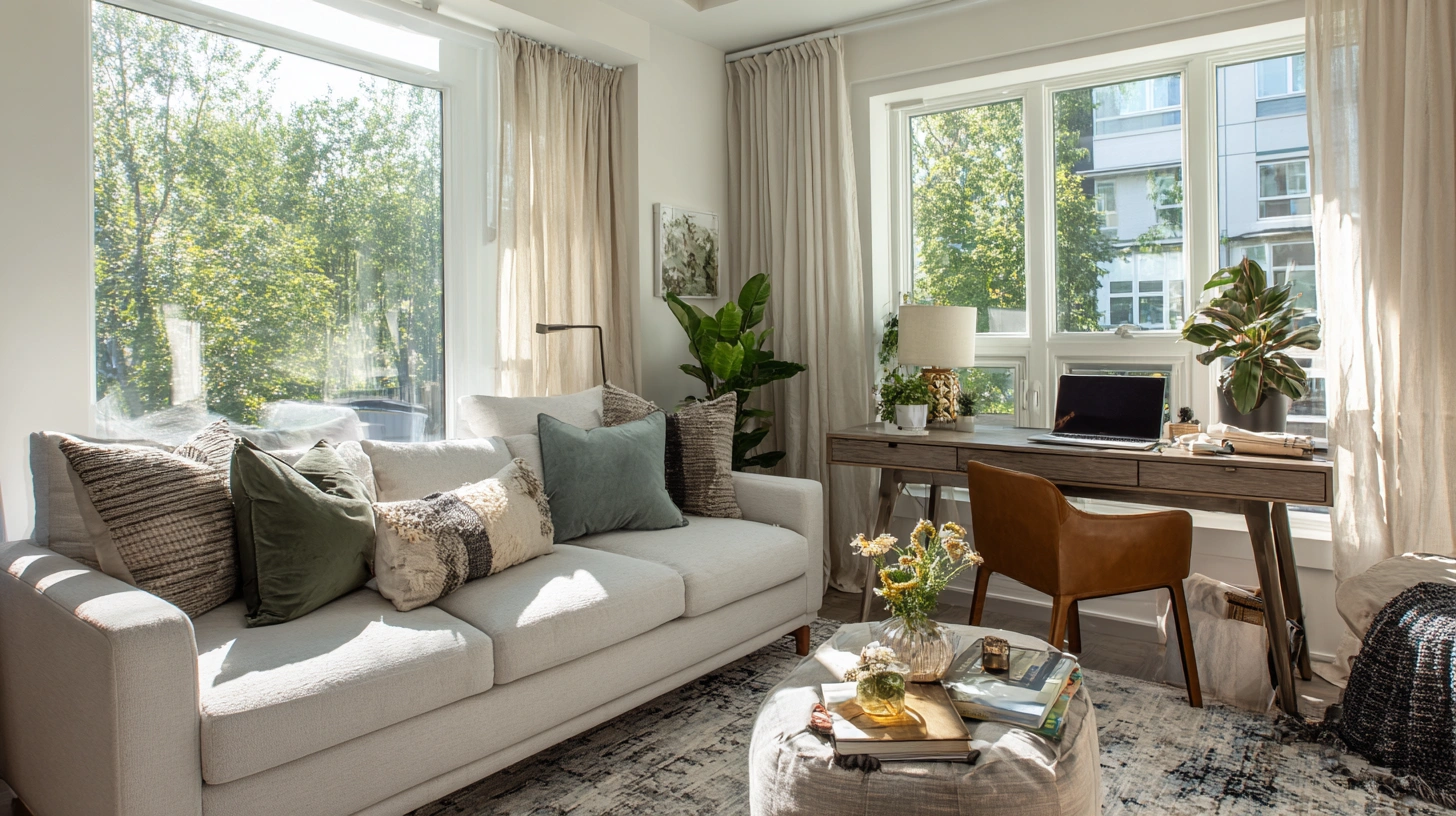
Positioning your desk in front of a window is the ultimate way to boost morale. Natural light regulates your circadian rhythm, making you feel more awake during the day and helping you sleep better at night.
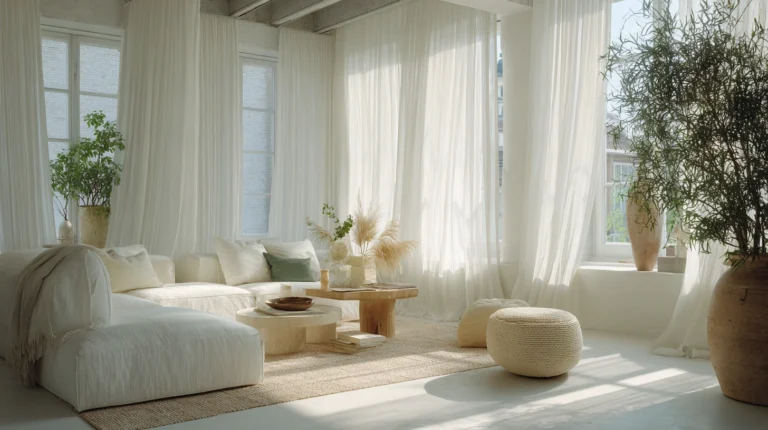
Style Tip: Frame the window with high-hanging floor-to-ceiling curtains. Even if the desk is small, the long lines of the fabric will make the “office” feel like a grand, intentional architectural feature rather than a cramped corner.
Functional Upgrade: Combat screen glare by installing solar shades or “light-filtering” cellular shades. These allow the glow of the sun to enter the room while cutting out the harsh reflections that cause eye strain. To keep the vibe cozy, add a small windowsill plant like a String of Pearls or a succulent that thrives in direct light.
3. The Professional Cloffice (Closet Office)
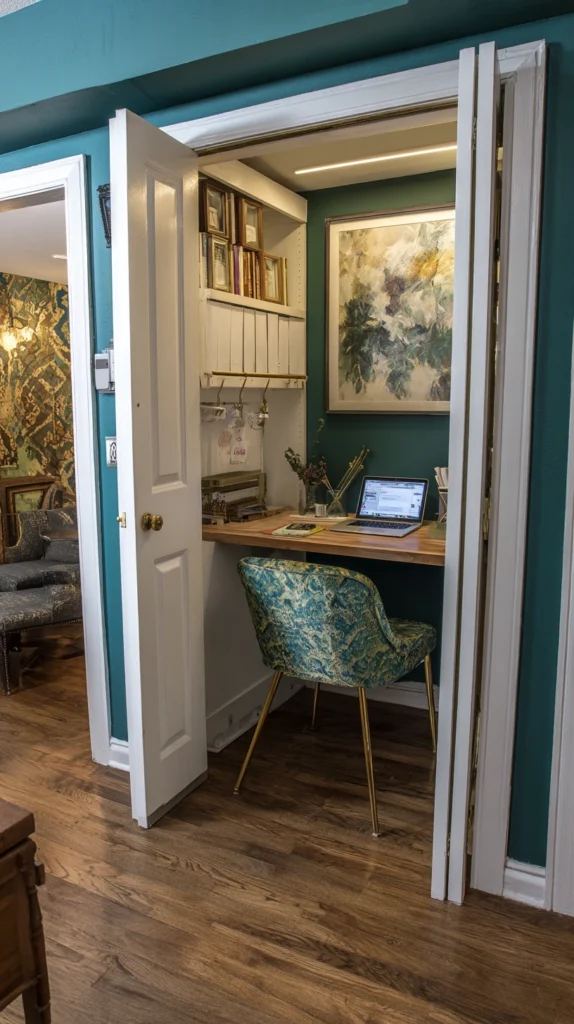
The “cloffice” trend has exploded because it offers the one thing most open-plan living rooms lack: the ability to “shut the door” on work. By removing closet doors and inserting a desktop, you create a recessed workstation that feels like its own private room.
Style Tip: Treat the inside of the closet like a feature wall. Use a bold, moody paint color or a high-contrast removable wallpaper. Since the space is small, you can afford a luxury pattern that might be too overwhelming for a whole room.
Functional Upgrade: Lighting is critical in a closet. Since you won’t have much natural light, install an LED light bar under the top shelf to illuminate your workspace. Use “command hooks” or cord clips to hide the wires along the inner frame of the closet so they remain invisible to anyone sitting on the living room sofa.
4. Minimalist Floating Shelves
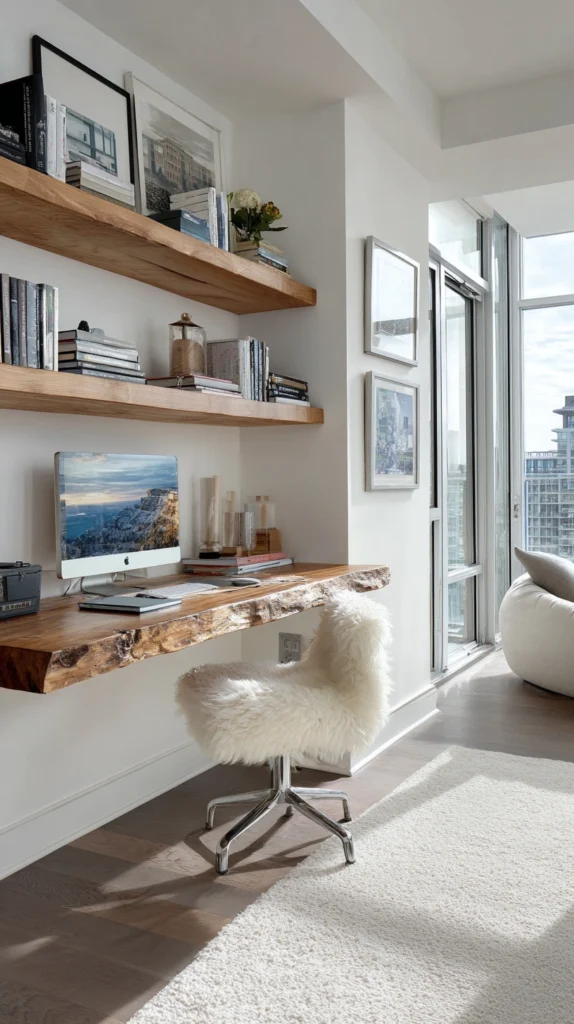
When square footage is at a premium, you have to look up. A wall-mounted floating desk removes the “legs” from the equation, making the floor look more spacious and less cluttered.
Style Tip: Create a “wall of productivity” by mounting three or four floating shelves above the desk at varying heights. Use the top shelves for decor—think ceramic vases or art—and the lower shelves for functional items like notebooks and reference books.
Functional Upgrade: Ensure your wall studs can support the weight. For a truly professional look, use a “live edge” wood slab for the desk surface to add a touch of organic warmth to a modern living room. Pair this with a sleek, ergonomic stool that can be tucked completely under the shelf when not in use.
5. The Strategic L-Shaped Corner
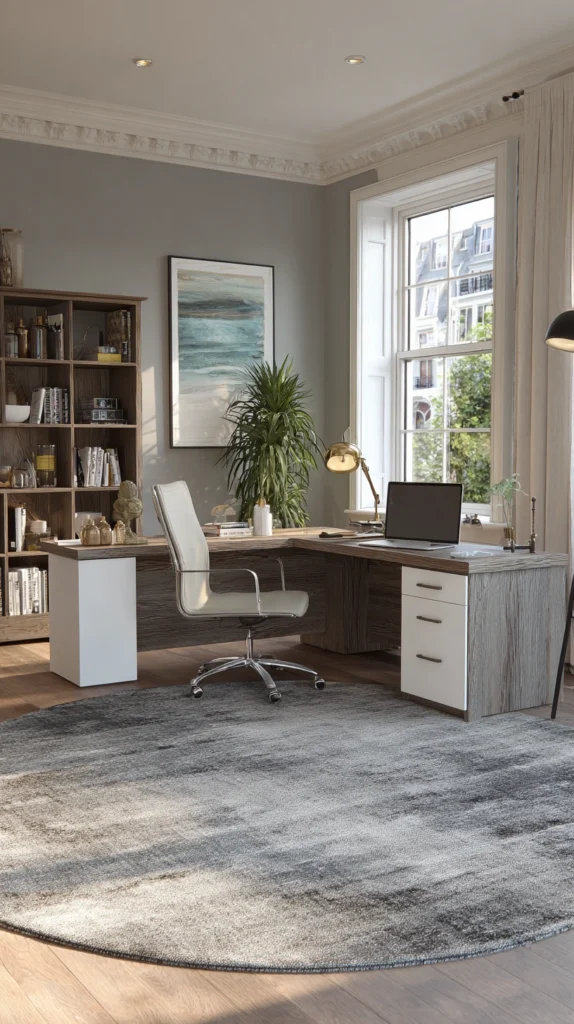
Corners are often the most underutilized areas of a home. An L-shaped desk allows you to have a “primary” work surface for your computer and a “secondary” surface for paperwork, coffee, or a printer.
Style Tip: Soften the “office” feel of a corner by placing a large, textured rug underneath the entire setup. A round rug can actually work wonders here to break up the sharp 90-degree angles of the corner and the desk.
Functional Upgrade: Use the “short” side of the L-shape for items you don’t use every minute, like a scanner or a charging station. To keep the living room looking tidy, choose a corner desk with at least one drawer to hide away messy items like staples, paperclips, and USB drives at the end of the day.
6. The Mid-Century Secretary Desk
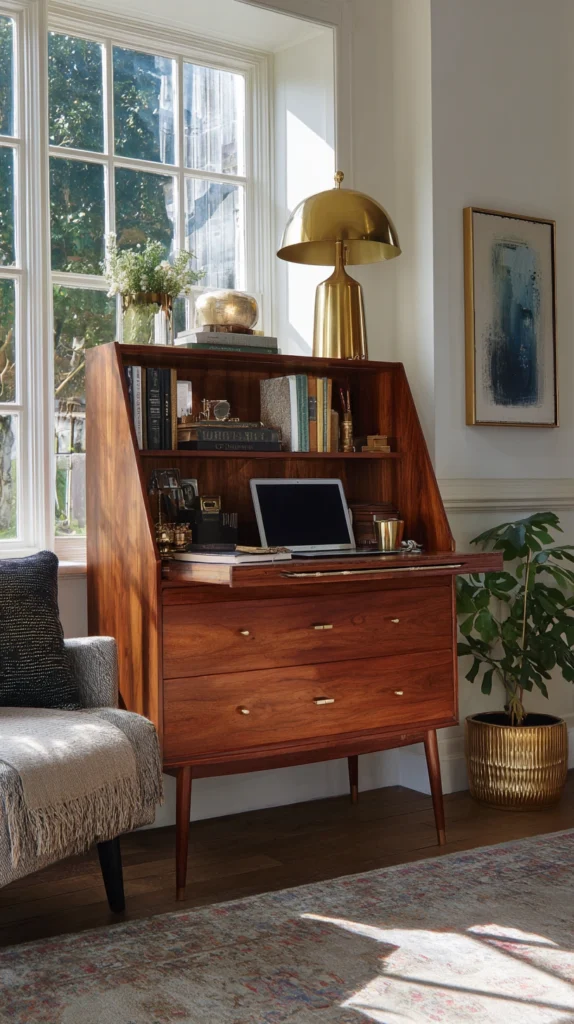
If you prefer a vintage or “Grandmillennial” aesthetic, the secretary desk is your best friend. These pieces were designed centuries ago for the exact same problem we have today: needing a desk in a multi-purpose room.
Style Tip: Look for a piece in warm teak or walnut with tapered legs. When the desk is closed, it looks like a high-end bar cabinet or an antique chest. Top it with a vintage brass lamp to lean into the “old world” charm.
Functional Upgrade: Modern laptops can get hot in enclosed spaces. If you plan to work with the laptop inside the cabinet frequently, consider drilling a small ventilation hole in the back or using a laptop cooling pad. This keeps the aesthetic intact while protecting your tech.
7. Symmetrical Fireplace Alcoves
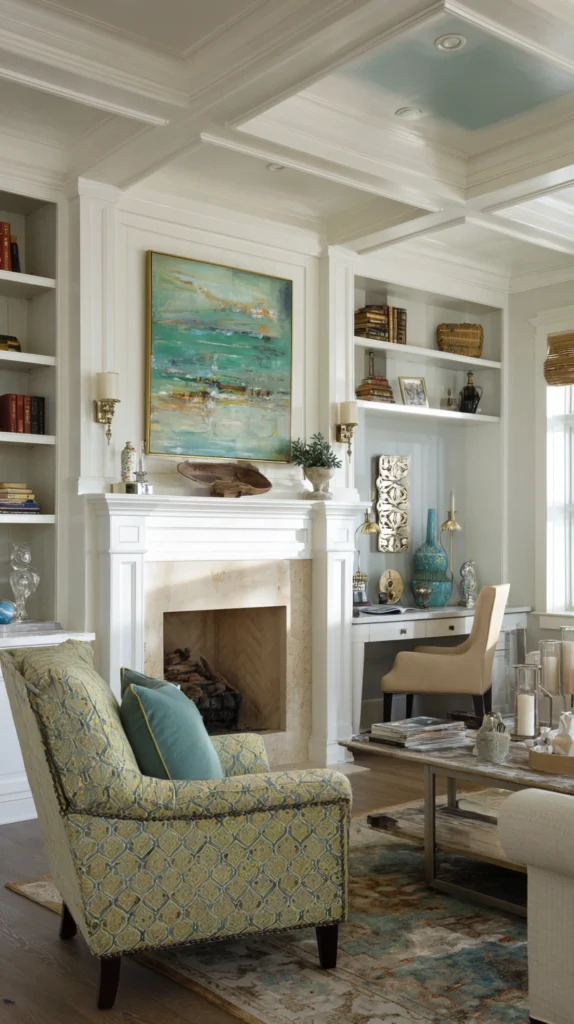
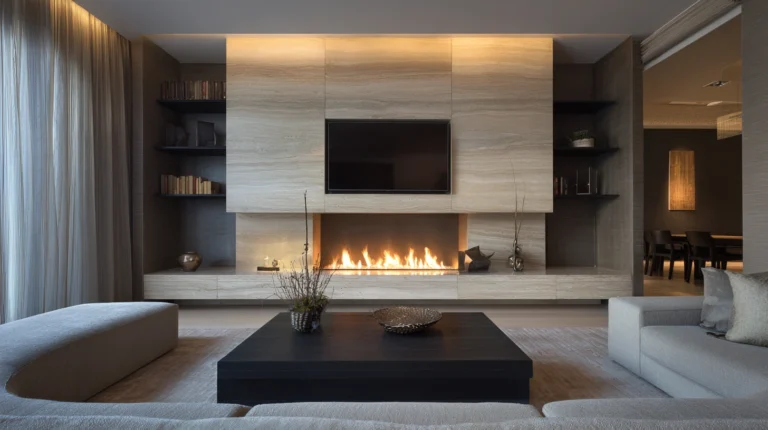
Many living rooms feature a fireplace flanked by two recessed alcoves. While most people put bookshelves on both sides, using one side for a desk creates a balanced, high-end look.
Style Tip: To maintain symmetry, keep the height of the shelves on the “office side” consistent with the “decor side.” Use matching storage bins on both sides so that the office supplies blend in with the media equipment or books on the opposite side.
Functional Upgrade: Built-in desks are a great DIY project. You can use a thick piece of butcher block or MDF painted to match the walls. This creates a “built-in” look that adds significant value to your home. Add a small puck light under the lowest shelf for task lighting that doesn’t clutter the desk surface.
8. The Modern Ladder Desk
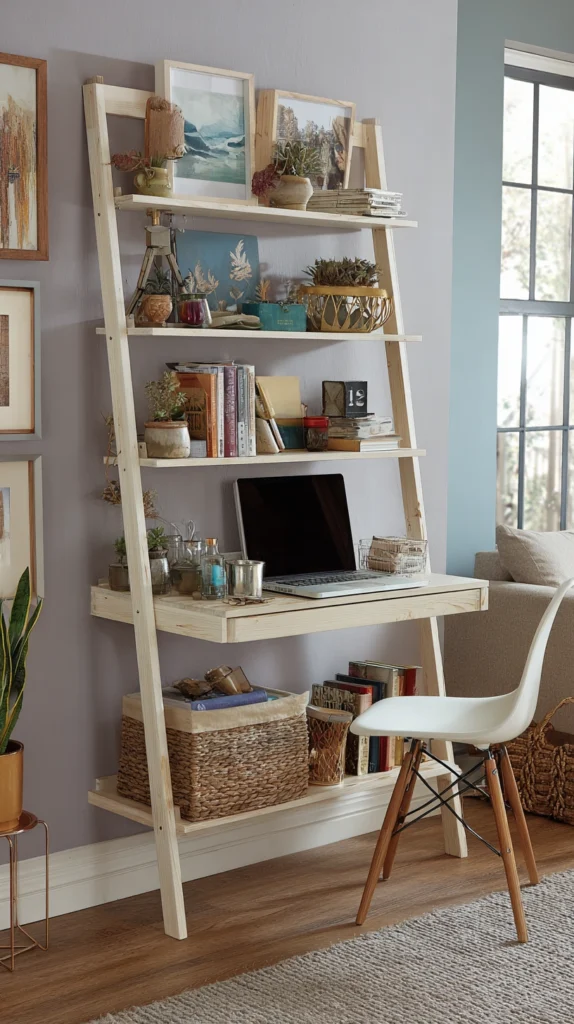
Ladder desks lean against the wall and gradually get deeper toward the bottom. They are incredibly popular for Pinterest-style homes because they look more like a bookshelf than a piece of office furniture.
Style Tip: Keep the styling “top-heavy.” Place your heavier items (like a printer or big books) on the bottom rungs and lighter, prettier items (like small plants or candles) on the top rungs to maintain a sense of visual balance.
Functional Upgrade: Because ladder desks are often slightly less stable than four-legged desks, always use the wall-anchor kit provided. This prevents the desk from wobbling while you type and protects your equipment. Choose a model with a wide bottom shelf to act as a footrest for better ergonomics.
9. Monochromatic “Invisible” Office
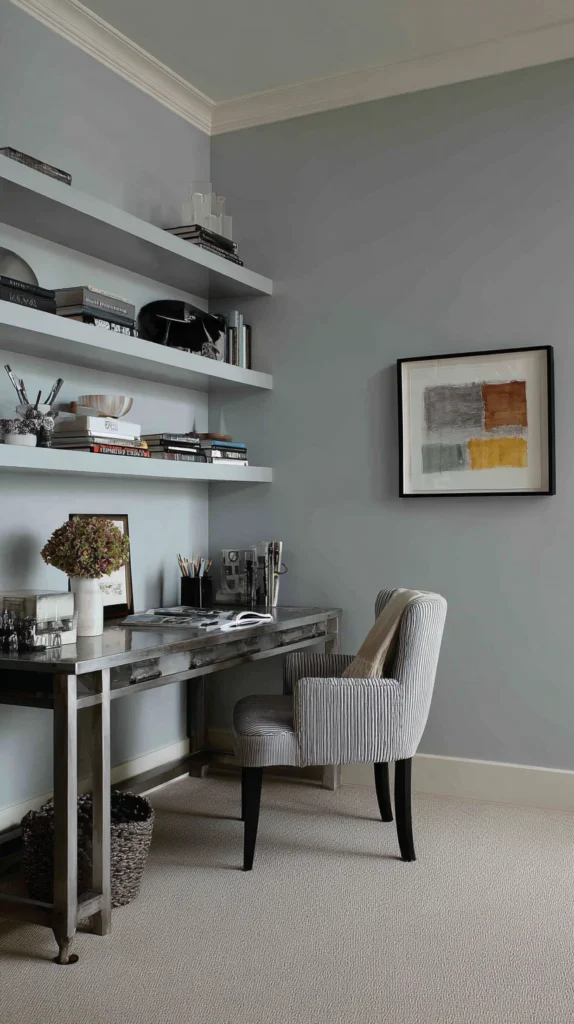
Color drenching is a design technique where you paint everything in a specific zone—the walls, the desk, the shelves, and even the chair—the exact same color. This makes the office “recede” into the wall.
Style Tip: If your living room is painted a soft “greige” or a deep “forest green,” find a desk and chair in a near-identical shade. This reduces “visual noise” and makes the room feel much larger and more cohesive.
Functional Upgrade: To prevent the space from looking flat, play with textures. Use a matte finish on the walls and a satin or semi-gloss finish on the desk. This subtle reflection of light adds depth and makes the office look like a custom architectural feature rather than an afterthought.
10. The Bookshelf Room Divider
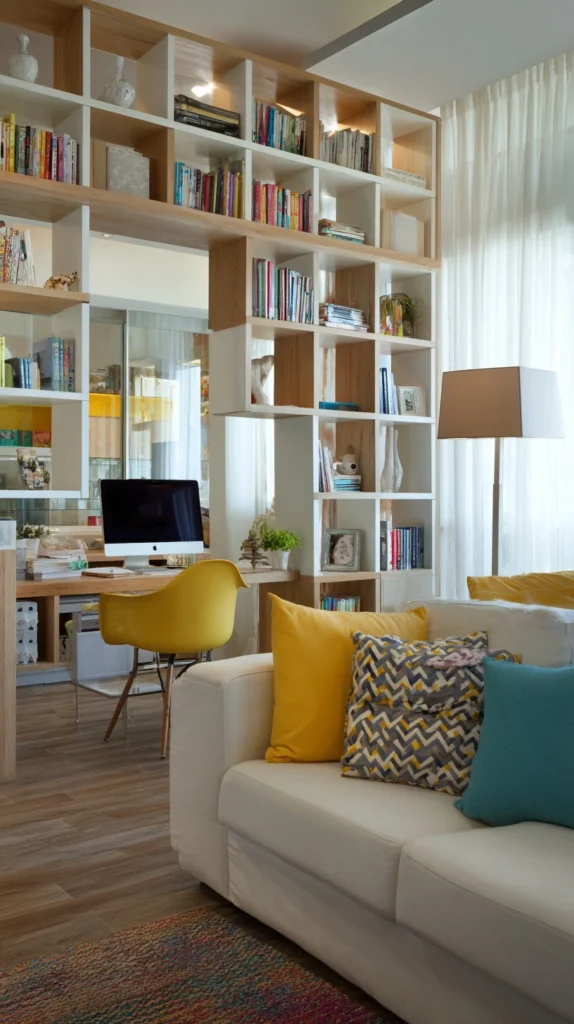
In a large, open-concept living room, it can be hard to focus. Use a large, open-back bookshelf (like an Ikea Kallax or a metal etagere) to create a “wall” between your sofa and your desk.
Style Tip: This is called “zoning.” Don’t fill every cubby with books. Leave about 30% of the shelves empty or filled with clear glass objects to allow light to pass through. This keeps the room from feeling “boxed in.”
Functional Upgrade: Use the cubbies that face the desk for office storage (files, planners) and the cubbies that face the sofa for living room items (remotes, coasters, decorative objects). This allows the piece of furniture to serve two different functions simultaneously.
11. The Multifunctional Console
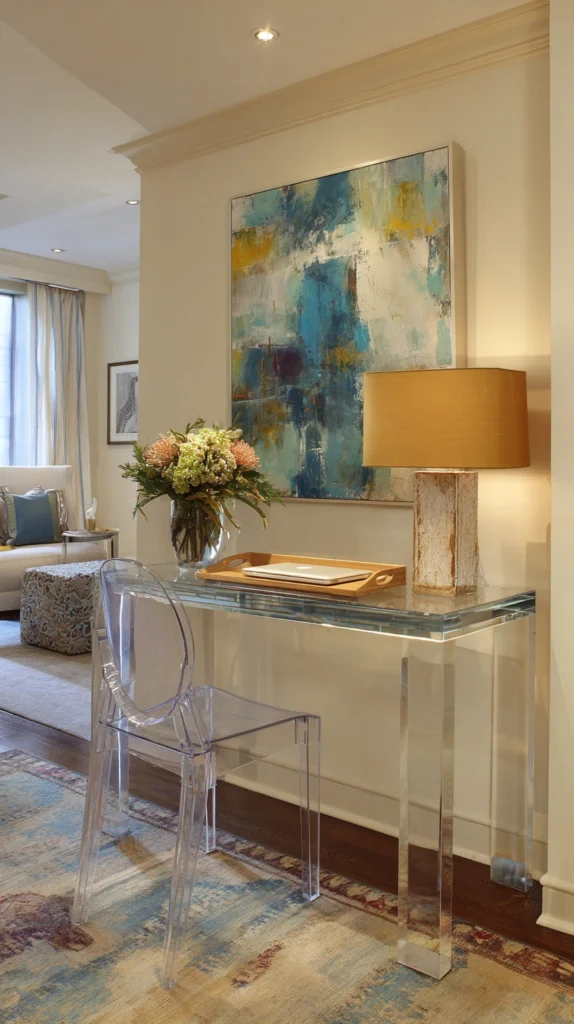
For those who only work on a laptop for a few hours a day, a dedicated desk might be overkill. A high-end console table can serve as a display for art during the evening and a desk during the morning.
Style Tip: Pair the console with a “Ghost Chair” (clear acrylic). Because the chair is transparent, it doesn’t take up any visual space, keeping the living room looking airy and uncluttered.
Functional Upgrade: Store your laptop in a decorative leather sleeve or a stylish tray on the bottom shelf of the console when you aren’t using it. This turns your work tool into a design accessory. Add a high-quality table lamp that provides enough light for reading but has a warm bulb to maintain the living room’s ambiance.
12. Industrial Loft Aesthetic
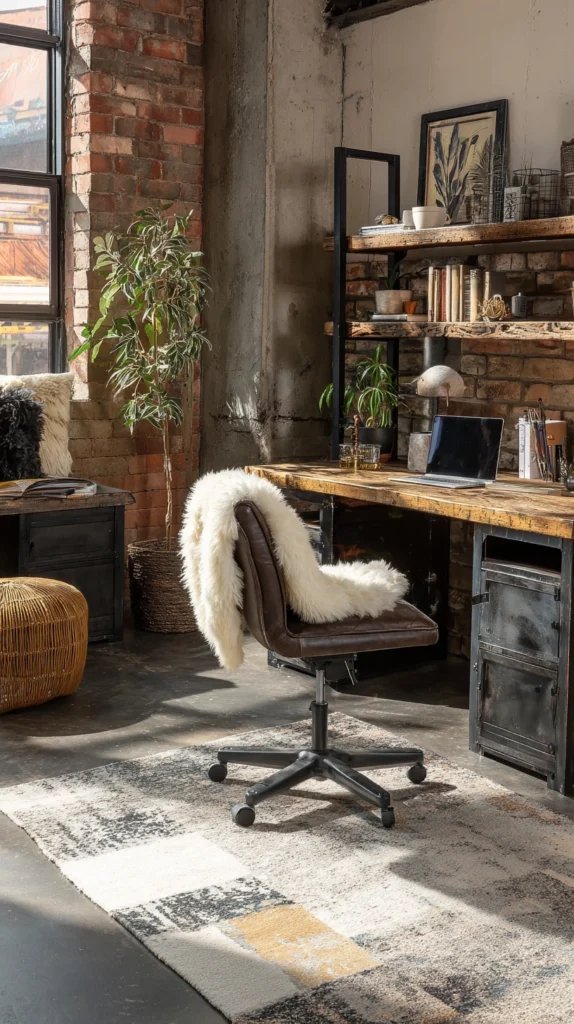
If your home features brick, concrete, or raw wood, an industrial desk made of reclaimed wood and black iron piping is a perfect match. This style is rugged and hides “wear and tear” exceptionally well.
Style Tip: Balance the “hardness” of the metal with “soft” elements. Add a faux-fur throw over your office chair or a thick wool rug under the desk. This creates a “hygge” vibe that fits perfectly in a cozy living room.
Functional Upgrade: Industrial desks often have large surfaces. Use this to your advantage by setting up a dual-monitor system. To keep the “loft” look clean, use black cable sleeves that match the iron legs of the desk, making the wires look like part of the furniture’s design.
13. Layered Rug Definition
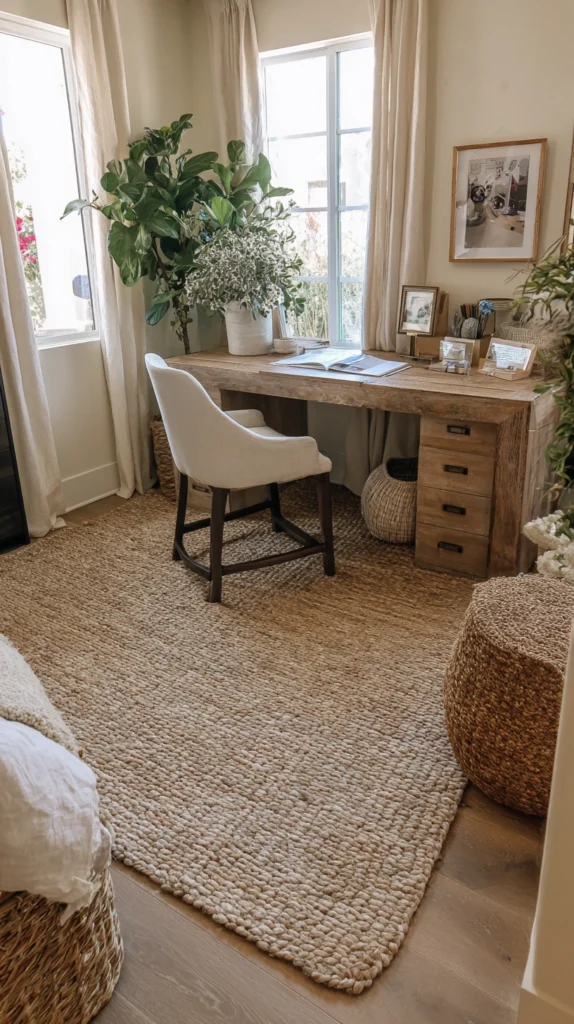
Sometimes you don’t need a wall to define a space; you just need a change in texture. Placing a distinct rug under your office area “locks” that furniture into its own zone.
Style Tip: Try layering. Place a large, neutral jute rug over the entire living room, and then place a smaller, colorful Persian or geometric rug specifically under the desk and chair. This creates a “nest” for your work.
Functional Upgrade: Choose a low-pile rug for the office zone. High-pile or “shag” rugs are comfortable but make it nearly impossible to move an office chair with wheels. A low-pile or flat-weave rug provides the visual boundary without the physical struggle of a stuck chair.
14. The Secret Armoire Office
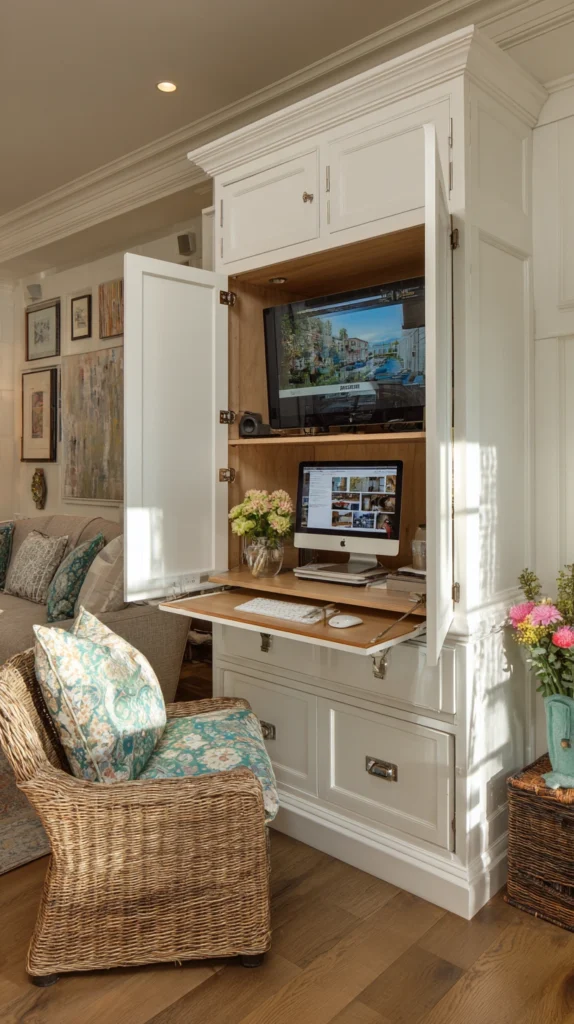
If you want your office to completely disappear when the clock strikes five, a “Cubbiform” or computer armoire is the ultimate solution. These large cabinets look like beautiful wardrobes but open up to reveal a full workstation.
Style Tip: Choose an armoire with mirrored fronts or intricate woodwork. This makes the piece feel like a statement “anchor” for the room’s decor. When guests come over, they will think it’s a linen cabinet or a media center.
Functional Upgrade: Most armoires have a pull-out keyboard tray. Ensure yours is at the right height to prevent wrist strain. If the armoire doesn’t have built-in cord management, use a hole-saw bit to create an opening in the back for your power strip, allowing you to keep everything plugged in while the doors are shut.
Conclusion: Designing for a Balanced Life
Creating an office-living room combo is about more than just furniture placement; it’s about creating a home that supports your goals and your rest. By choosing one of these 14 styles, you can ensure that your workspace is productive and your living space remains a sanctuary.