14 Backyard Fire Pit Ideas for Warm and Inviting Nights
14 Backyard Fire Pit Ideas for Warm and Inviting Nights
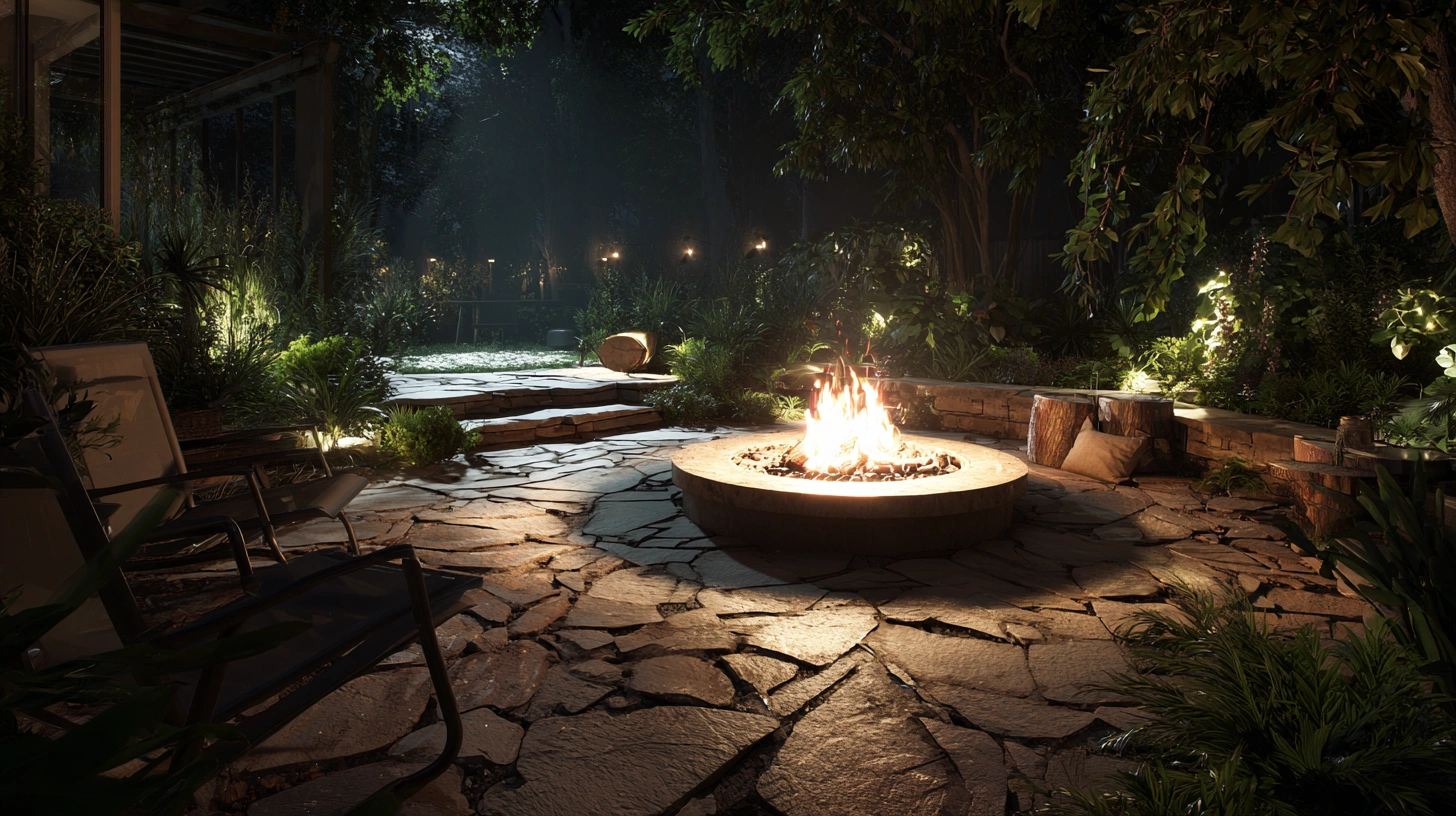
There is a specific quality to an evening gathered around a fire that no other outdoor experience quite replicates. Not the meal, not the conversation alone, not the quality of the garden or the stars overhead — but the combination of all of these things with the specific sensory presence of fire. The warmth it distributes unevenly so people lean toward it.
The light it produces makes every face look better and every conversation feel more important. The sound of it, which is the specific sound of something consuming itself in the most beautiful way available to any natural process.
The backyard fire pit is the investment that earns the most use per pound spent of any outdoor element because it is the element that most directly produces the occasion rather than simply supporting it. A fire pit is not furniture beside which things happen — it is the reason people come outside, the reason they stay past the point at which the temperature would normally drive them in, and the reason the evening is remembered as an evening rather than simply as time spent in the garden.
Each idea below is a specific approach to one type of backyard fire pit arrangement. Each includes what you will need, what it will cost, and a practical tip to make it work as well as the warm, inviting night it is designed for.
1. The Sunken Fire Pit Circle
Budget: $200 – $1,500
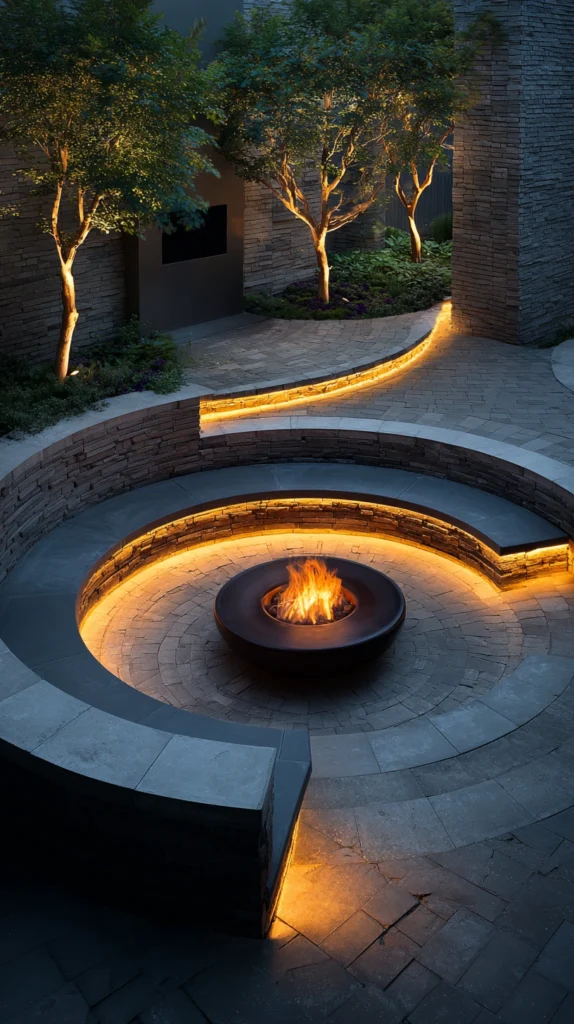
A fire pit set into a sunken area — a circular pit of 2–3 metres in diameter, excavated 30–45 centimetres below the garden level, with the fire at the centre and built-in or loose seating arranged around it at the pit floor level — creates the most specifically campfire of all the backyard fire pit arrangements.
The sunken position provides wind protection that above-ground fire pits cannot replicate, creates a natural bowl of warmth that concentrates around the seated occupants, and gives the fire the quality of being genuinely gathered around rather than simply approached.
Excavation of a 3-metre diameter circle to 40 centimetres depth costs $100–$400 in labour or a day’s personal effort. A gravel or compacted stone floor for the pit costs $40–$100. A steel fire basket at the centre runs $30–$80. Built-in seating on the pit surround — timber bench sections on a brick or stone base — costs $100–$400. The sunken pit requires drainage — a gravel sub-base of at least 20 centimetres beneath the floor surface, with a single drainage point at the lowest position.
Style tip: Position the entry steps to the sunken pit from the direction of the house rather than from the side of the pit. Steps that descend toward the fire from the direction of approach create the quality of arriving at a destination — the transition from the garden level to the pit level is a deliberate act of going somewhere, and the steps that face the approach direction communicate that arrival most clearly.
2. The Stone Ring Fire Pit
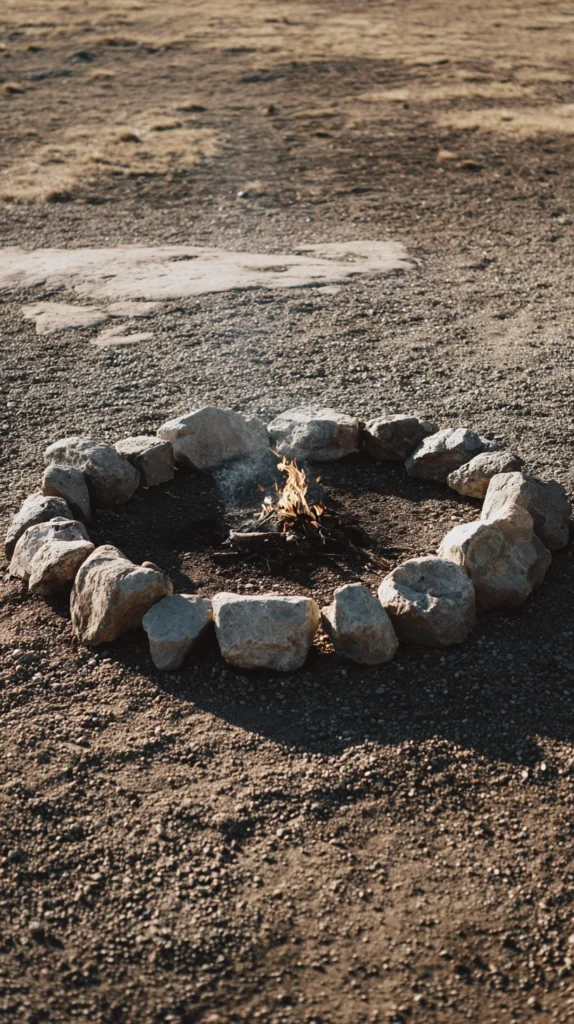
Budget: $30 – $200
A fire ring built from natural stones — large, flat, fire-safe rocks arranged in a circle of 60–90 centimetres in diameter directly on the ground — is the most ancient and most honest of all fire pit formats and the one that requires the least equipment and the least preparation. A stone ring fire pit is not a poverty of ambition; it is the acknowledgement that fire itself is the experience and that the ring of stones is simply the functional boundary that keeps the fire in its place rather than a designed element competing with it.
Natural stones of suitable size — granite, basalt, or sandstone of at least 15 centimetres in depth — cost $0–$20 gathered from a garden or a landscape supplier. A gravel base beneath the fire ring costs $5–$10. The stone ring requires a flat, level site cleared of all combustible material for at least 3 metres in every direction — the clearance is the safety specification that the stone ring does not provide structurally and that the site selection must provide instead.
Style tip: Arrange the stones in a genuinely circular pattern using a piece of string pegged at the centre as a compass — a circle drawn with string and a peg is perfectly round; one arranged by eye is not. The perfectly circular stone ring reads as intentional; the approximately circular one reads as approximate. The compass-drawn circle costs nothing additional and makes a significant difference to the visual quality of the installation.
3. The Steel Bowl Fire Pit
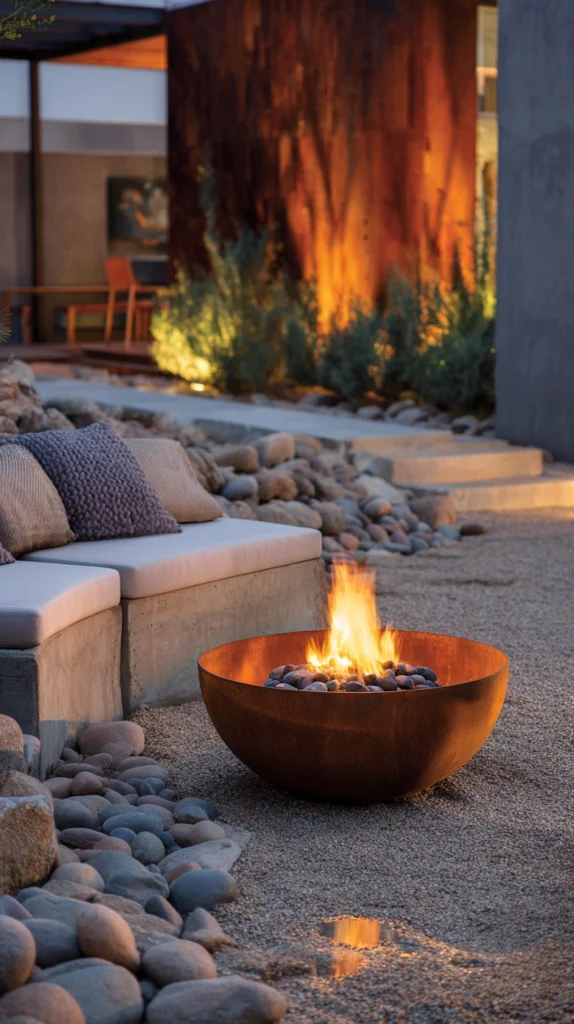
Budget: $60 – $300
A freestanding steel bowl fire pit — a large, shallow hemisphere of steel on a tripod or a ring stand, positioned at the centre of a circular seating arrangement — is the most versatile and most portable of all the fire pit formats. The steel bowl can be moved to wherever the garden’s conditions require on any given evening, requires no permanent installation, and produces a fire that is visible from all sides simultaneously — the specific quality of the freestanding bowl that makes it the best format for a seating circle rather than a fixed position.
A pressed steel fire bowl of 60 centimetres in diameter costs $40–$100. A cast iron version runs $80–$250. A copper fire bowl — the warmest-looking of all the metal options — costs $100–$300. A spark guard mesh for the bowl runs $15–$30. Position the bowl on a non-combustible surface — a circle of gravel, a paving stone, or a concrete base — rather than directly on a timber deck or a dry grass area where the radiant heat from the base of the bowl poses a fire risk.
Style tip: Choose a steel bowl with a diameter of at least 60 centimetres rather than the smaller versions that cost less and perform proportionally worse. A fire in a small bowl is a small fire that is difficult to sustain and provides limited warmth to the people seated around it; a fire in a 60-centimetre or larger bowl is a genuinely satisfying fire that produces heat at a radius that reaches everyone in the seating circle.
4. The Corten Steel Fire Pit
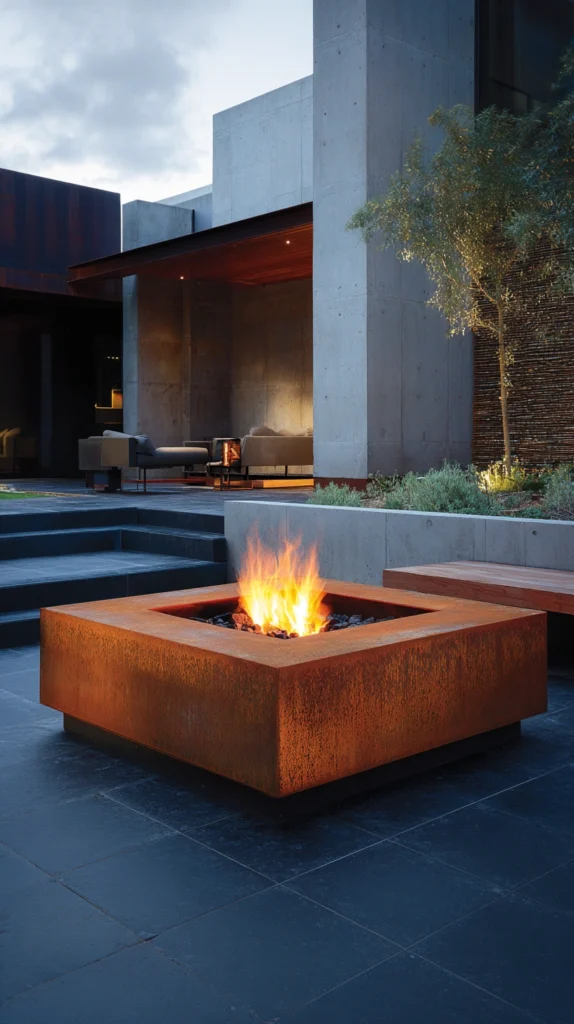
Budget: $200 – $1,000
A corten steel fire pit — the self-rusting weathering steel that develops a stable, warm-toned patina of orange-brown rust that does not penetrate the metal or cause structural deterioration — creates the most architecturally sophisticated and most contemporary of all the backyard fire pit options.
Corten is the material of choice for fire pit design because its aesthetic improves as it weathers, because its warmth of colour relates to the colour of the fire within it, and because it communicates the quality of a designed object rather than a purchased product.
A corten steel fire pit in a square or circular format costs $200–$600. A custom-fabricated corten fire pit in a specific size and shape runs $400–$1,200. A corten fire bowl on a steel stand costs $150–$400.
Allow the corten to begin its weathering process before use — the initial orange rust bloom appears within the first weeks of outdoor exposure and stabilises to the characteristic dark amber-brown within the first season. Do not seal or paint the corten surface — the weathering is the material quality and sealing it prevents the process that makes corten what it is.
Style tip: Position the corten fire pit against a background of dark planting — a dark green hedge, a black-painted fence — rather than against a light wall or paving. The warm orange-brown of the weathered corten reads most vividly against a dark background; against a pale background the colour contrast is reduced and the specific warmth of the corten is less apparent.
5. The Chiminea Fire Pit
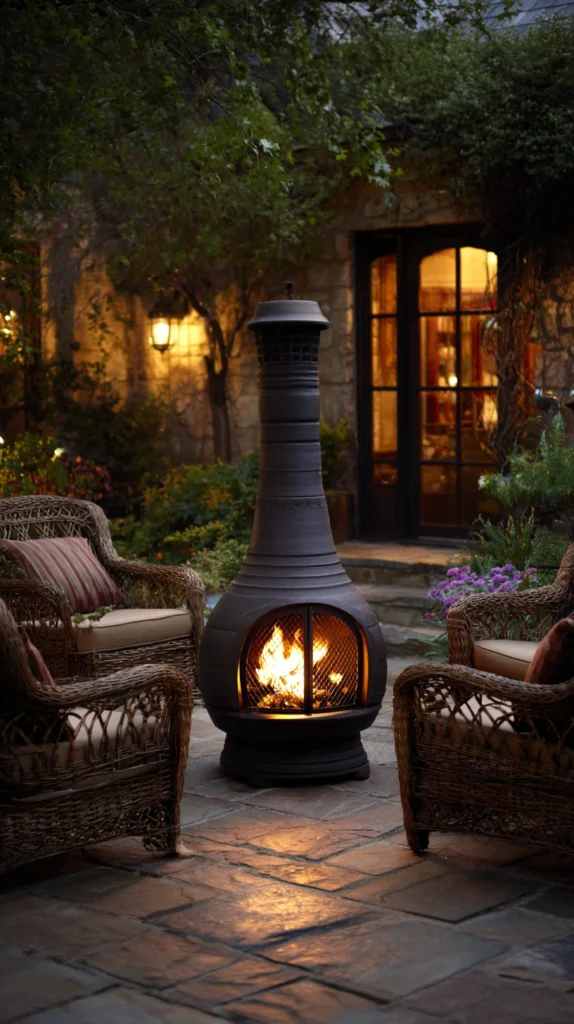
Budget: $60 – $400
A chiminea — the traditional clay or cast iron fire structure with a bulbous fire chamber and a tall, narrow chimney — is the fire pit format that most directionally manages the smoke, the one that burns wood most efficiently in a small fire chamber, and the one that is most historically and most specifically associated with the informal outdoor fire of a domestic garden. The chiminea produces a smaller, more contained fire than a bowl or a ring and suits the smaller garden and the more intimate gathering where a large fire would be disproportionate.
A clay chiminea costs $40–$100. A cast iron version runs $80–$250. A cast aluminium chiminea — lighter than iron and rust-resistant — costs $100–$300. A chiminea stand to raise the base from the ground level and improve the airflow costs $20–$40. Season a new clay chiminea with a series of small fires before building to full size — a large fire in an unseasoned clay chiminea causes thermal shock that cracks the clay body.
Style tip: Place the chiminea so the chimney opening faces away from the primary seating direction — the chimney draws air from the opening and exhausts smoke from the top, and a chiminea positioned with its opening facing the seated guests draws air across the fire toward the guests and directs smoke toward them when the wind changes. The opening facing away from the seating consistently produces a cleaner fire experience.
6. The Built-In Stone or Brick Fire Pit
Budget: $300 – $2,000
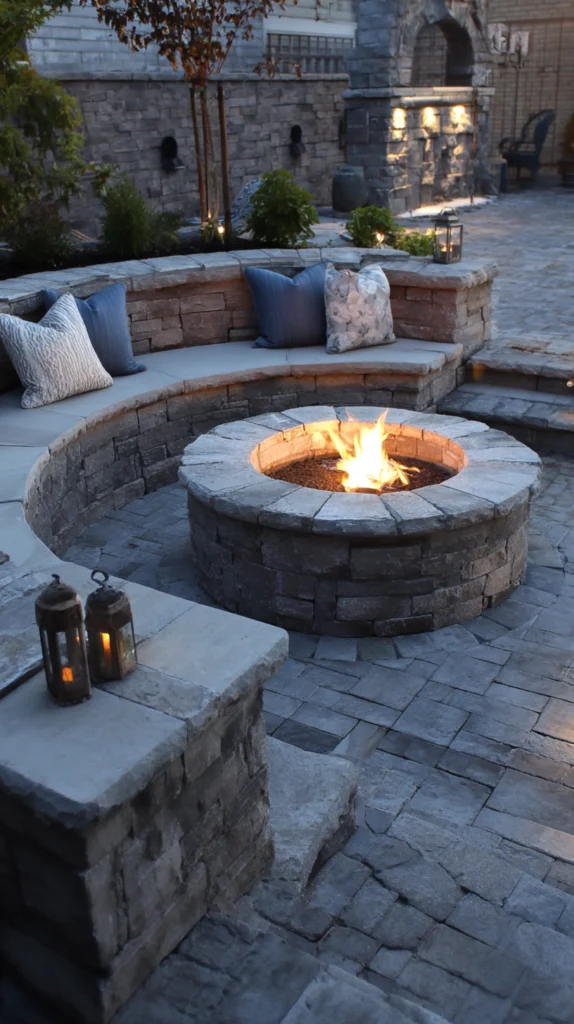
A fire pit built permanently into the garden — from natural stone, reclaimed brick, or rendered block — with a fixed grate, a fixed seating surround, and the specific quality of a garden element that was made for the site rather than placed on it, creates the most architecturally resolved and most visually permanent of all the backyard fire pit arrangements. A built-in fire pit communicates that the garden was designed for outdoor fire as a primary activity rather than as an occasional option.
A natural stone built-in fire pit of 80 centimetres in diameter costs $200–$600 in materials and basic construction. A rendered block version runs $150–$400. A reclaimed brick fire pit costs $200–$700. A fixed steel grate inside the built pit costs $30–$60. Construct the inner fire chamber from fire-rated refractory brick rather than standard building brick — standard brick exposed to sustained high temperatures develops thermal cracking that weakens the structure over successive fire seasons.
Style tip: Build the fire pit surround wall at a height of 35–40 centimetres rather than the low 20-centimetre height that most built-in fire pit designs use. The higher surround provides better wind protection for the fire, allows the seated person to rest their feet on the top of the surround, and creates the sense of a contained fire chamber rather than a ring of stones that the lower surround reads as at the seated eye level.
7. The Fire Pit Table
Budget: $200 – $1,500
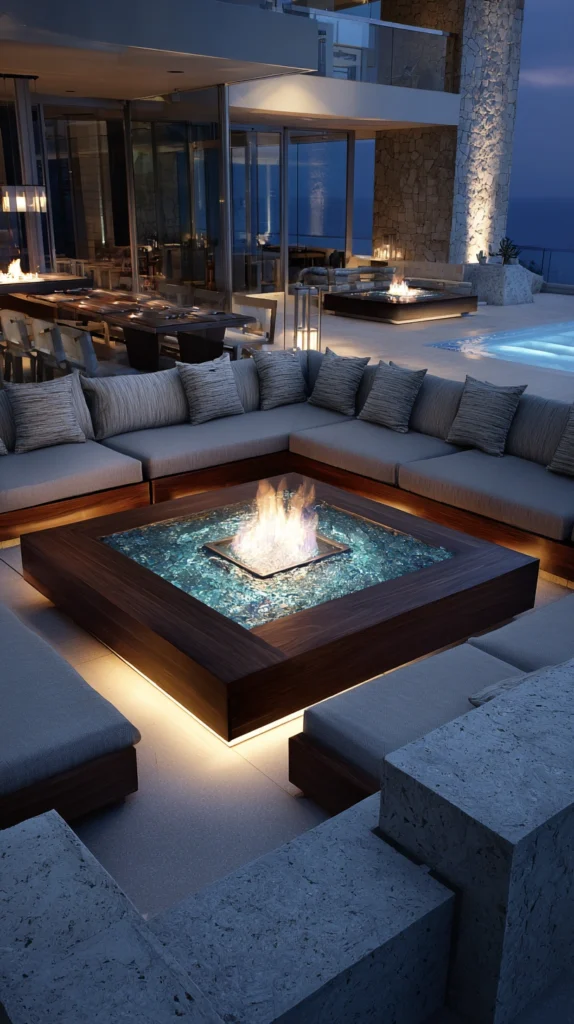
A fire pit table — a low table with a gas or bioethanol fire built into a central well, surrounded by a flat table surface on all sides — combines the functional roles of a fire and a coffee table in a single piece of outdoor furniture. The fire pit table is the most socially flexible of all the fire pit formats because it provides a surface for drinks, plates, and objects at the fire’s edge that a conventional fire pit cannot accommodate, and it produces the specific quality of a fire at table level where its light falls directly onto the faces of the people seated around it.
A gas fire pit table in a powder-coated aluminium frame costs $300–$800. A bioethanol version runs $200–$600. A corten or concrete fire pit table costs $400–$1,200. The fire pit table suits a formal seating arrangement — paired with outdoor armchairs or a sofa in a circle — more than an informal low arrangement. The table height determines the seating height required around it.
Style tip: Choose a bioethanol fire pit table over a gas version for a deck or a timber patio where the permanence of a gas line installation is not appropriate or not possible. Bioethanol produces no smoke, no soot, and no ash — it is the cleanest burning of all fire sources and requires no connection to any infrastructure beyond the supply of fuel, making it the most flexible and the most easily relocated of all the built-in fire table options.
8. The Communal Log Seating Circle
Budget: $60 – $300
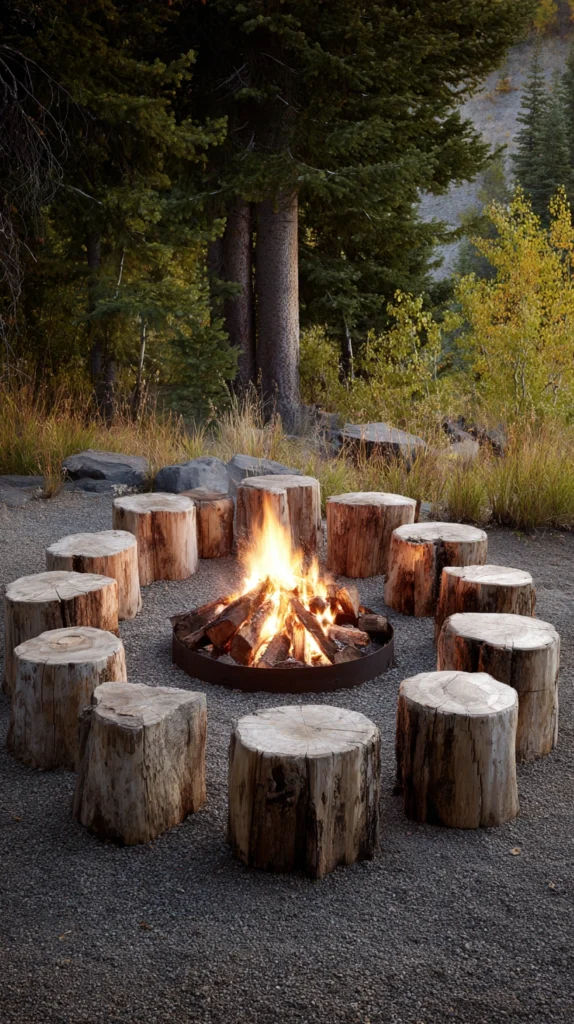
A fire pit surrounded by log rounds — short sections of large-diameter timber, 40–50 centimetres in height, arranged in a circle around the fire at the correct distance for warmth without discomfort — creates the most informal and most specifically woodland-campfire of all the backyard seating arrangements.
The log round seating communicates a deliberate embrace of the outdoors, the impermanent, and the genuinely natural that shaped timber or manufactured outdoor furniture cannot approach in its quality of honest informality.
Log rounds of 40–50 centimetres in diameter and 40–50 centimetres in height cost $8–$20 each from a timber yard or a log supplier. A seating circle of six log rounds costs $48–$120. A fire basket or stone ring at the centre costs $30–$80. Treat the top surface of the log rounds with a water-resistant sealant — $10–$20 — to prevent the surface from remaining wet after rain. An untreated log round top holds water after every shower and requires drying before use; a sealed top sheds water within minutes.
Style tip: Vary the height of the log rounds in the circle slightly — some at 40 centimetres, some at 50 centimetres — rather than sourcing all rounds at exactly the same height. The slight variation reads as natural and gathered rather than uniform and purchased, which is the quality of informality that the log seating circle is specifically reaching for.
9. The Smokeless Fire Pit
Budget: $150 – $600
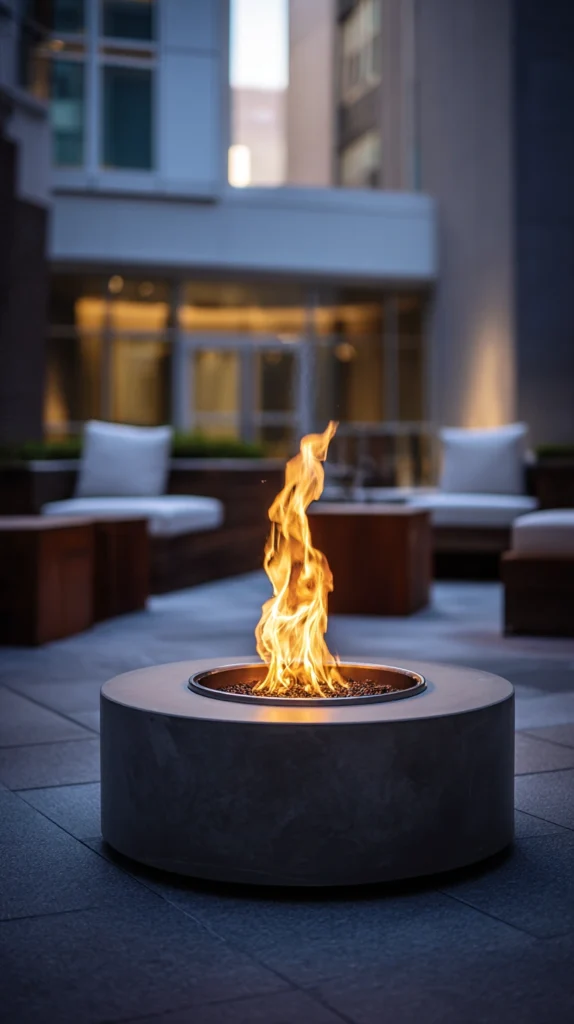
A smokeless fire pit — a double-walled steel design that draws cold air in through the lower wall and injects preheated secondary air at the top of the fire chamber, creating a secondary combustion that burns the smoke before it leaves the pit — produces a fire of exceptional clarity and exceptional efficiency with dramatically reduced smoke output compared to a conventional fire pit.
For gardens where smoke is the primary objection to a fire pit — from neighbours, from guests, from the space being small — the smokeless fire pit resolves the issue without compromising the fire experience.
A quality smokeless fire pit in stainless steel costs $150–$400. A corten version runs $200–$500. The smokeless technology requires specific management — the fire must be built with dry, well-seasoned hardwood and must be maintained at sufficient temperature to sustain the secondary combustion. A fire that is too small or that uses damp wood does not achieve the secondary combustion and produces smoke in the same quantity as a conventional pit.
Style tip: Use only kiln-dried hardwood in a smokeless fire pit rather than seasoned or garden wood. Kiln-dried hardwood has a moisture content of below 20 percent — the level at which secondary combustion functions correctly. Seasoned wood has a moisture content of 20–25 percent and performs adequately in a conventional fire but inconsistently in a smokeless pit. Damp or freshly cut wood at 30 percent or above moisture content defeats the smokeless technology entirely regardless of the quality of the pit.
10. The Gas Fire Pit
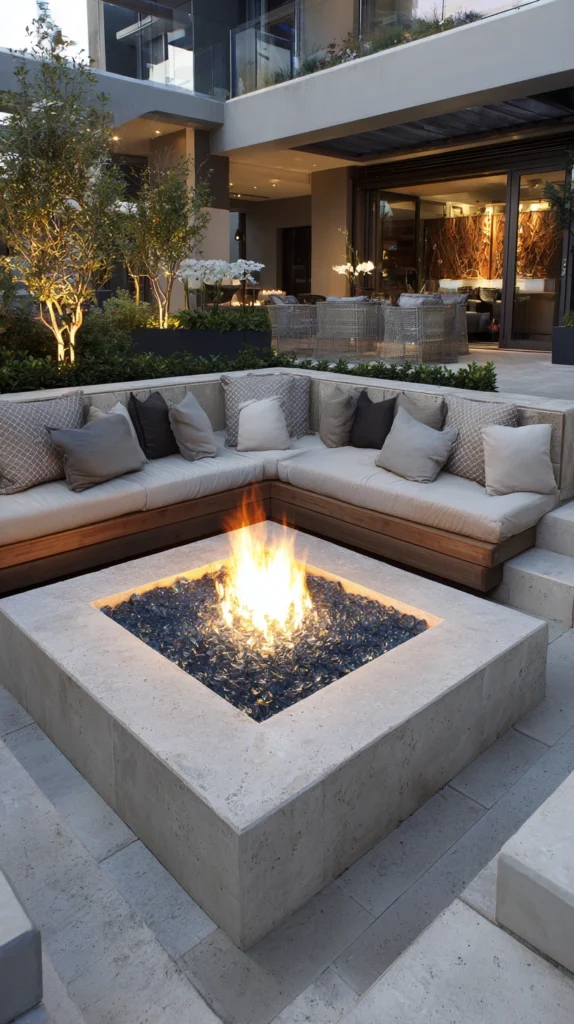
Budget: $300 – $2,000
A gas fire pit — connected to a propane tank or a mains gas supply, with a burner beneath a bed of lava rock, fire glass, or ceramic logs, producing an instant, controllable, smoke-free flame — is the most convenient and most reliably usable of all the fire pit formats.
A gas fire lit with a switch and extinguished the same way requires no wood management, no ash clearing, and no smoke management, and in a garden where ease of use is the primary criterion — where the fire should happen every evening rather than as a special occasion — the gas fire pit produces more fire evenings per year than any other format.
A freestanding propane gas fire pit costs $200–$600. A built-in mains gas fire pit runs $600–$2,000 including installation. A gas fire table costs $300–$800. The gas fire pit requires an annual safety check of all connections and a replacement of the burner membrane every three to five years — the maintenance schedule that keeps the gas installation safe for the full life of the product.
Style tip: Fill the gas fire pit basin with fire glass rather than lava rock for the most visually spectacular gas fire effect. Fire glass — small pieces of tempered glass in reflective colours — catches and reflects the gas flame from every angle and produces a fire of extraordinary visual richness that lava rock, for all its authenticity, cannot match. The blue and aqua fire glass varieties produce the most specifically beautiful gas fire when lit.
11. The Pizza Oven and Fire Combination
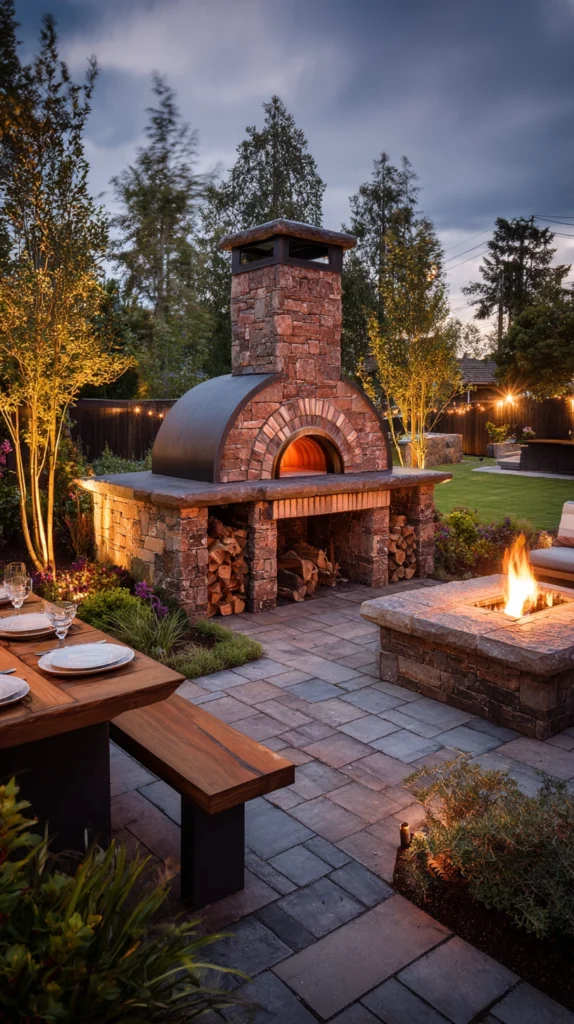
Budget: $300 – $3,000
A wood-fired pizza oven with an adjacent fire pit or integrated fire bowl — the cooking fire and the social fire positioned in deliberate relationship to each other, both contributing to a single outdoor occasion — creates the most socially complete and most culinarily ambitious of all the backyard fire pit arrangements. The pizza oven and fire combination communicates that the garden was designed for the full pleasure of outdoor cooking and gathering rather than for either activity in isolation.
A clay pizza oven kit costs $150–$400. A prefabricated refractory oven costs $300–$800. A custom-built stone or brick oven runs $1,000–$5,000. An adjacent fire bowl or fire pit costs $40–$200 as a complementary element. Position the pizza oven and the adjacent fire within a unified paved or gravelled zone so the two elements read as a designed outdoor cooking and gathering area rather than as separately installed equipment in the same general area.
Style tip: Build a timber storage bench or a log store adjacent to the pizza oven and fire pit position — the wood supply for both the oven and the fire in a single, covered, accessible structure communicates the design completeness of the outdoor cooking zone. A log store that is architecturally related to the oven and fire structures reads as designed into the zone; a woodpile at the far end of the garden reads as the wood supply for a fire that was not completely planned.
12. The Fire Pit With Built-In Seating Wall
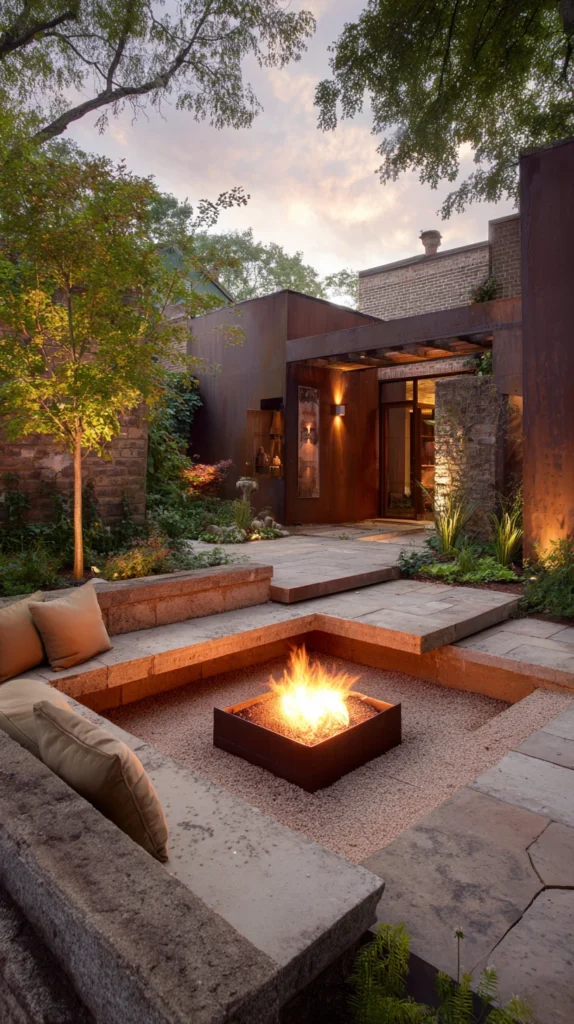
Budget: $400 – $2,500
A fire pit surrounded by a built-in seating wall — a low wall of 40–45 centimetres in height, built from the same material as the fire pit surround, providing continuous seating around three sides of the fire without the need for separate furniture — creates the most architecturally coherent and most weather-resistant of all the fire pit seating arrangements. The built-in seating wall communicates that the fire pit area was designed as a permanent element of the garden rather than as a portable installation with furniture arranged around it.
A brick or stone seating wall of 40 centimetres height costs $80–$200 per linear metre in materials and basic bricklaying. A rendered block version runs $60–$150 per linear metre. A coping stone cap for the seating wall — in a smooth, comfortable sitting material — costs $20–$60 per linear metre. The seating wall requires a coping stone of at least 40 centimetres in depth — a narrow coping reads as a wall top rather than as a seat.
Style tip: Add outdoor seat pads to the built-in seating wall rather than leaving the stone coping bare. A stone coping seat is comfortable for twenty minutes and cold and hard for the following two hours; the same coping with a 60-millimetre outdoor seat pad is comfortable for the full duration of the fire evening. The seat pad communicates the intention that the built-in seating was designed for extended use rather than occasional perching.
13. The Portable Tabletop Fire Bowl
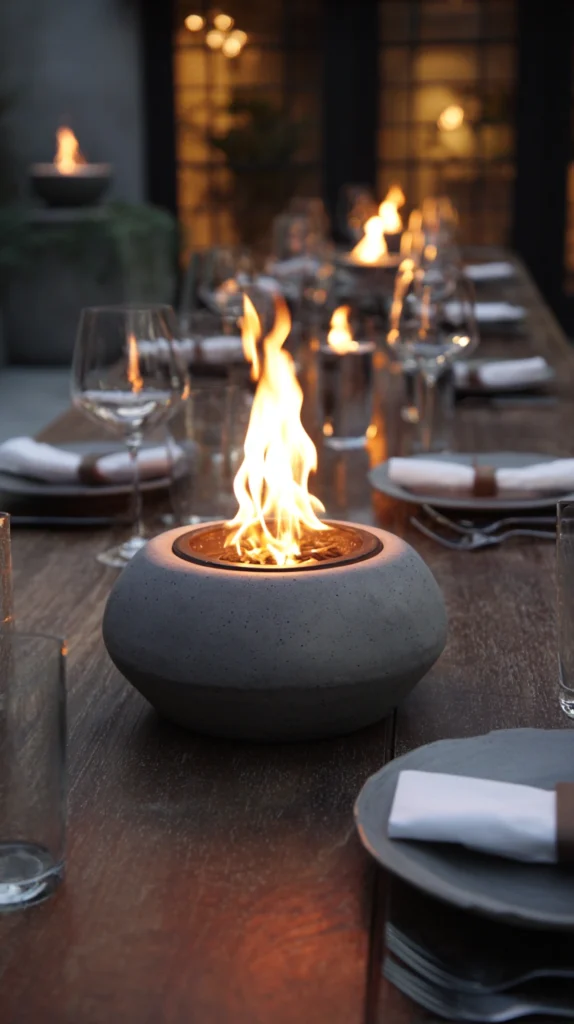
Budget: $30 – $150
A small, portable fire bowl designed for use on a table surface — in cast iron, ceramic, or copper, burning bioethanol or a long-burning candle — creates the fire experience at the intimate scale of the dining table rather than at the social scale of the seating circle. The tabletop fire bowl is the fire pit format for the small courtyard, the terrace dinner, the balcony evening — where a full fire pit would be disproportionate to the space and the occasion but where the quality of fire at the centre of the table transforms the evening from a meal eaten outside into a genuinely atmospheric outdoor dining experience.
A cast iron tabletop fire bowl of 20 centimetres diameter costs $25–$60. A copper version runs $40–$120. A ceramic bioethanol burner costs $30–$100. A bioethanol fuel supply for the evening costs $5–$10. The tabletop fire bowl should be positioned at the centre of the table rather than to one side — a fire at the exact centre of the dining table provides warmth and light to all seated positions simultaneously; one to the side provides warmth primarily to the nearest two guests.
Style tip: Light the tabletop fire bowl before guests are seated rather than at the table — the process of lighting a bioethanol or cast iron fire bowl, however simple, is more elegantly performed before the table is occupied than while guests are waiting. A fire that is already burning when guests sit down is an element of the table; one lit at the table is a process observed.
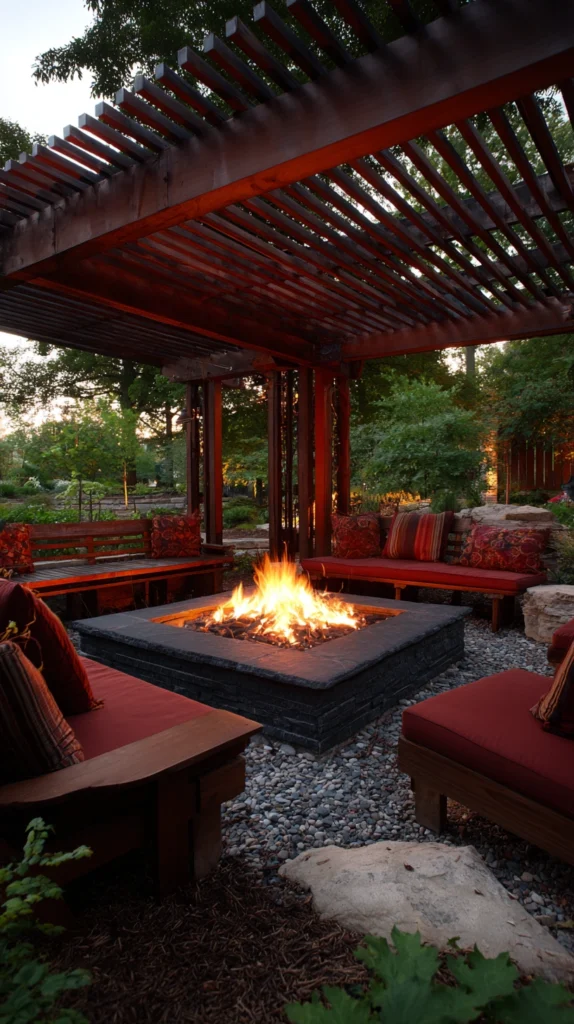
14. The Fire Pit Garden Room
Budget: $500 – $5,000
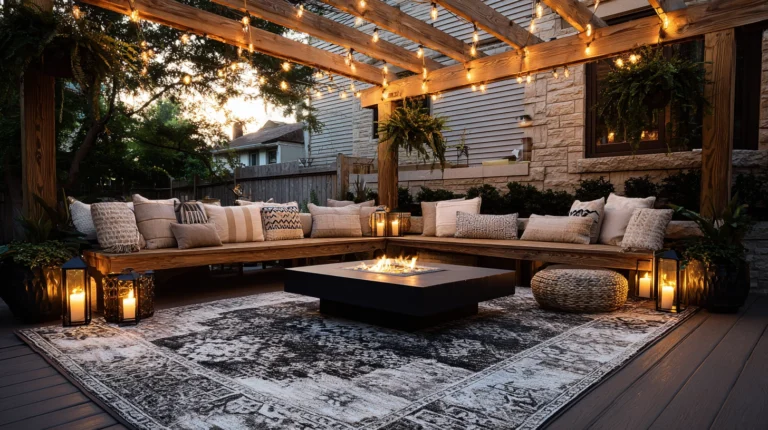
A fire pit positioned within a dedicated garden room — a space defined by planting, by hedging, by a pergola structure, or by a combination of all three, with seating specifically arranged for fire gathering rather than for general garden use — creates the most complete and most specifically designed fire experience available to a domestic garden. The fire pit garden room communicates that the fire is a primary outdoor activity rather than a supplementary one, and the room designed around it produces the specific quality of occasion that the fire alone, however beautiful, cannot create without the context that surrounds it.
A pergola structure to define the fire room costs $300–$1,000. Hedging or planting on two sides costs $100–$400 to establish. A built-in fire pit at the centre costs $200–$800. Seating — built-in bench, outdoor sofa, or log rounds — costs $100–$600. The fire room should be designed so the fire is visible from the house — from the kitchen window or the back door — so the lit fire in the evening is seen from inside the house and creates the invitation to come outside rather than requiring the decision to light the fire to precede the decision to go outdoors.
Style tip: Position the fire room at a sufficient distance from the house to create the quality of going somewhere rather than simply stepping outside. A fire pit immediately adjacent to the back door provides convenience without the specific pleasure of the walk toward the fire across the garden in the evening — the walk through the dark garden toward the lit fire is part of the fire room experience, and the distance of the walk is the detail that most determines whether the fire feels like a destination or like an outdoor appliance.
The backyard fire pit that earns its position in the garden is not the most elaborate or the most expensively specified. It is the one that produces fire evenings — the evenings when people come outside specifically because the fire is being lit, when they stay past the point at which temperature would normally drive them in, when the conversation goes on until the wood runs out and the decision must be made whether to add another log or to finally go inside.
Choose the format that suits the specific garden — the space, the proximity to neighbours, the frequency of use, the style of the outdoor space that surrounds it. Position it for the wind protection, the view from the house, and the quality of the seating around it. And then light it more often than the occasion demands — the fire that is lit on a Tuesday evening as well as on a Friday is the fire that earns its garden position most completely.