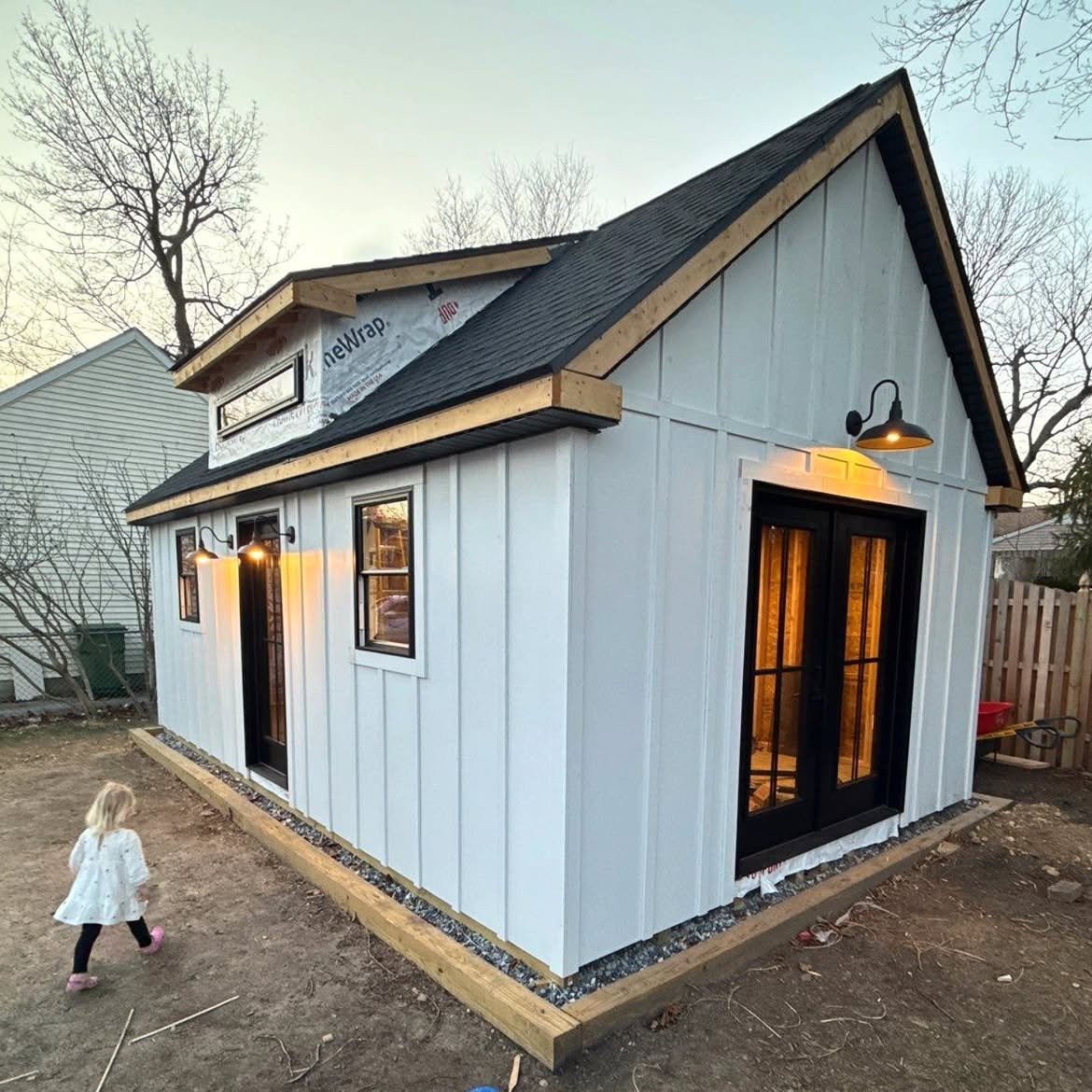
13 She Shed Makeover Ideas Perfect for Autumn
13 She Shed Makeover Ideas Perfect for Autumn
A she shed built and furnished for summer often stalls out the moment the weather turns. The string lights that felt festive in July can feel thin and cold in October. A space designed around open windows and a light breeze needs a different set of decisions once the evenings start getting dark at six and the air actually has a chill in it.
Autumn is, in a lot of ways, the season a she shed was always meant for. A small, dedicated space away from the main house has more appeal in the colder months, when the instinct to retreat somewhere quiet and warm is strongest, than it does in the middle of a busy summer. The shed just needs to be equipped for that instinct — warmth, low amber light, layered textiles — rather than left in its warm-weather configuration.
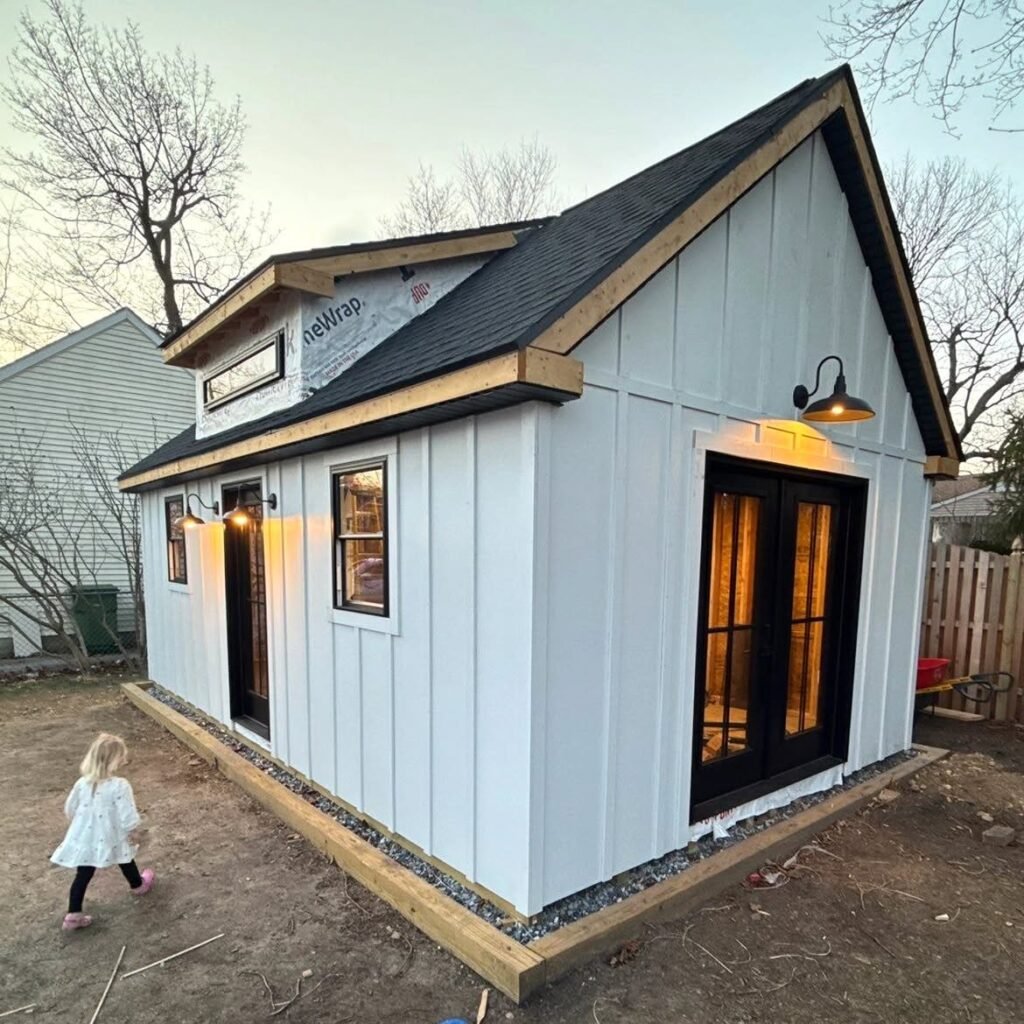
None of the changes below require a full renovation. Most are the same warmth-focused principles that work in any small interior space, applied to a structure that usually gets less design attention than the rooms inside the main house. Here are 13 ways to get a she shed ready for the season it might actually be best suited for.
Why a Summer She Shed Feels Wrong Once Autumn Arrives
The temperature drop-off:
Without a heat source:
- A shed built for warm-weather ventilation, with no supplemental heat for cooler evenings
- Comfortable for an hour at most once the outside temperature drops
- The result: a space used constantly in summer that sits empty by mid-October
With a heat source:
- Even a small space heater or a compact wood stove extends the shed’s usable season by months
- The same square footage, functional at 50°F instead of only above 65°F
- The result: the shed becomes a year-round retreat rather than a seasonal one
The daylight problem:
- A shed relying entirely on natural light, which drops sharply in both duration and quality through autumn
- No layered lighting plan for the increasingly common evening or overcast-afternoon use
- The result: a space that reads dim and uninviting exactly when its cozy, retreat-like potential should be strongest
The bare-surface problem:
- Hard flooring, thin curtains, and minimal soft furnishing left unchanged from the summer setup
- No rugs, throws, or cushions added as the weather cools
- The result: a shed that looks the same in October as it did in July, missing the layered warmth the season calls for
The Five Autumn She Shed Essentials
Before choosing any individual idea below, these five categories do most of the work in making a she shed feel ready for the colder months:
A heat source:
- A space heater, electric fireplace, or small wood stove, sized appropriately to the shed’s square footage
- Without this, none of the styling changes below matter much once the temperature actually drops
Layered, warm lighting:
- String lights, a table lamp, or a small pendant, all at 2700K
- A single bare overhead bulb reads utilitarian regardless of anything else in the space
Textiles at floor and seating level:
- A rug, cushions, and at least one heavy throw
- The fastest, most visually obvious signal that the space has been seasonally updated
Weather-sealed windows and doors:
- A basic check of any gaps or drafts before the coldest months arrive
- No amount of styling compensates for a space that’s genuinely too drafty to sit in comfortably
A reason to stay, not just visit:
- A drink station, a reading corner, or a task the shed supports
- A shed with nothing to actually do inside it gets used less regardless of how well it’s decorated
1. A Small Electric Space Heater or Fireplace
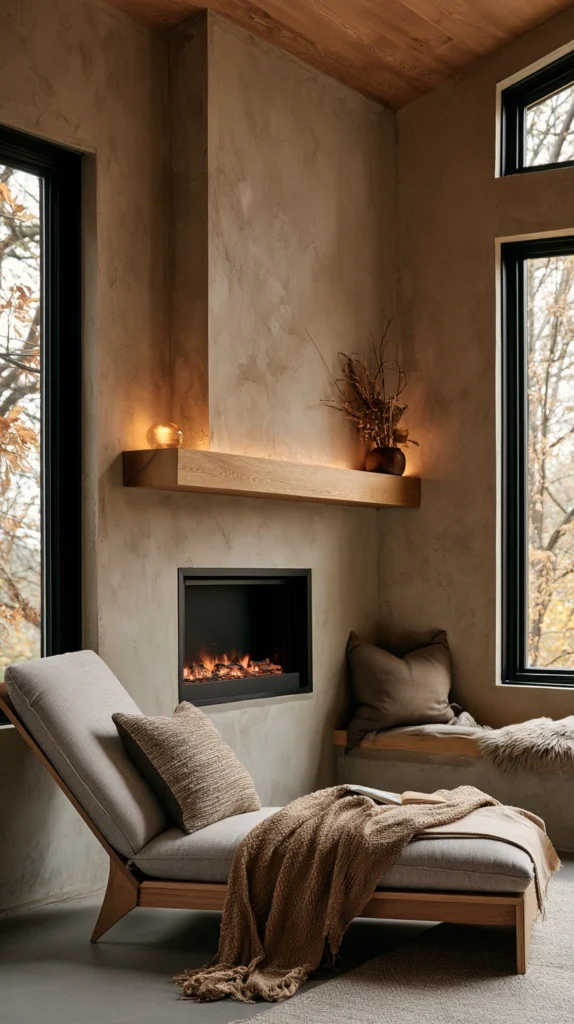
A compact electric space heater, or a freestanding electric fireplace insert, sized to the shed’s square footage and positioned as both a heat source and a visual focal point.
Why this is the first change worth making
Every other idea on this list assumes the shed is actually comfortable enough to sit in for more than a few minutes. A heat source is the foundational requirement that makes every subsequent styling decision worth the effort; without it, a beautifully styled shed still goes unused once the temperature drops.
Sizing guidance
- For a shed under 120 square feet, a heater rated for 1000–1500 watts is typically sufficient
- An electric fireplace insert, styled into a small console or mantel-like frame, provides heat and a warm visual glow at the same time, doing double duty in a small footprint
Cost breakdown
- Small electric space heater: $40–90
- Or electric fireplace insert: $150–350
- Total: $40–350 depending on approach
2. A Cozy Reading Nook Corner
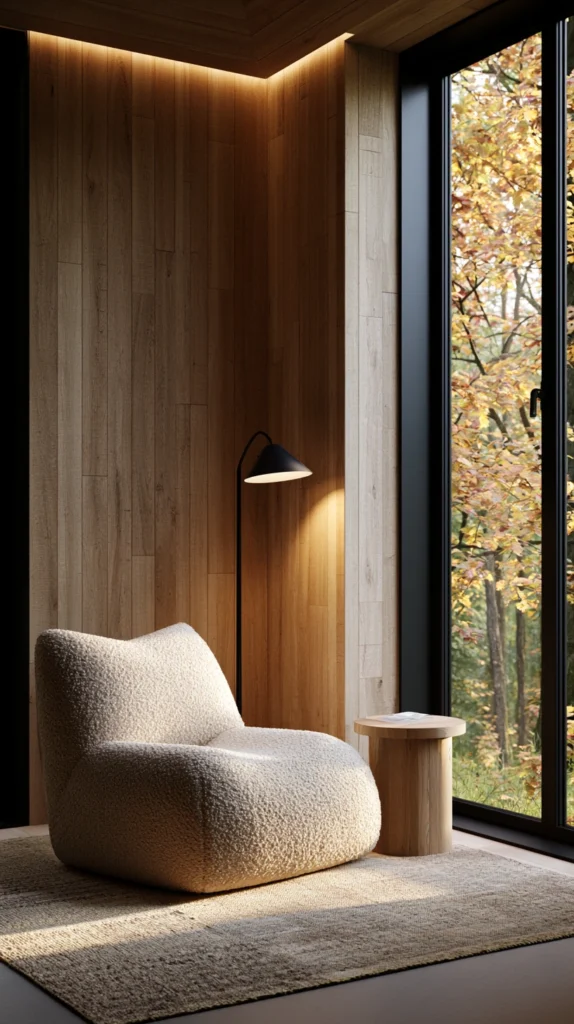
A single deep chair, a small side table, and a floor lamp arranged in one corner of the shed — the same low-commitment reading nook principle that works in a home living room, scaled to a shed’s smaller footprint.
Why a reading nook suits a she shed’s core purpose
A she shed is, by design, a space for retreat and quiet time, and a single dedicated corner built around sitting and reading reinforces that purpose more directly than general seating spread evenly across the room. It also requires very little floor space, which matters in a structure that’s rarely larger than a small bedroom.
Essential pieces
- One deep, comfortable chair (upholstered in a warm boucle or wool suits the season especially well)
- A small side table, sized for a mug and a book
- A floor lamp at 2700K, positioned to avoid glare while reading
Cost breakdown
- Upholstered chair (secondhand or budget-new): $80–220
- Side table: $25–60
- Floor lamp: $40–90
- Total: $145–370
3. A Layered Area Rug
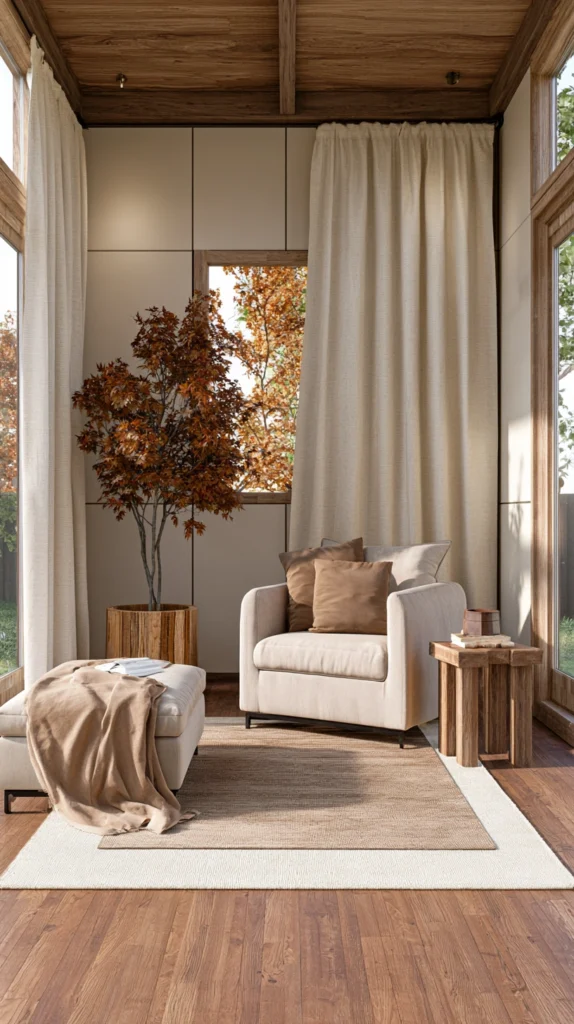
An area rug, or two layered rugs, added over the shed’s existing hard flooring — the same warmth-adding technique that works in any home interior, especially valuable in a shed’s often colder, less insulated floor.
Why flooring matters more in a shed than in a house
A she shed’s floor is frequently less insulated than a home’s, sitting closer to unconditioned outdoor temperatures. A rug adds a genuine layer of insulation underfoot in addition to its visual warmth, making a noticeable difference in how comfortable the space feels even before the heater is considered.
Sizing and layering
- Base rug: sized to cover most of the shed’s usable floor area, in a durable, low-pile material
- A smaller, higher-pile rug layered on top near the seating area, for the same base-and-top layering used in a living room
Cost breakdown
- Base area rug: $40–90
- Layered top rug: $30–60
- Total: $70–150
4. Warm String Lights, Repositioned for Evening Use
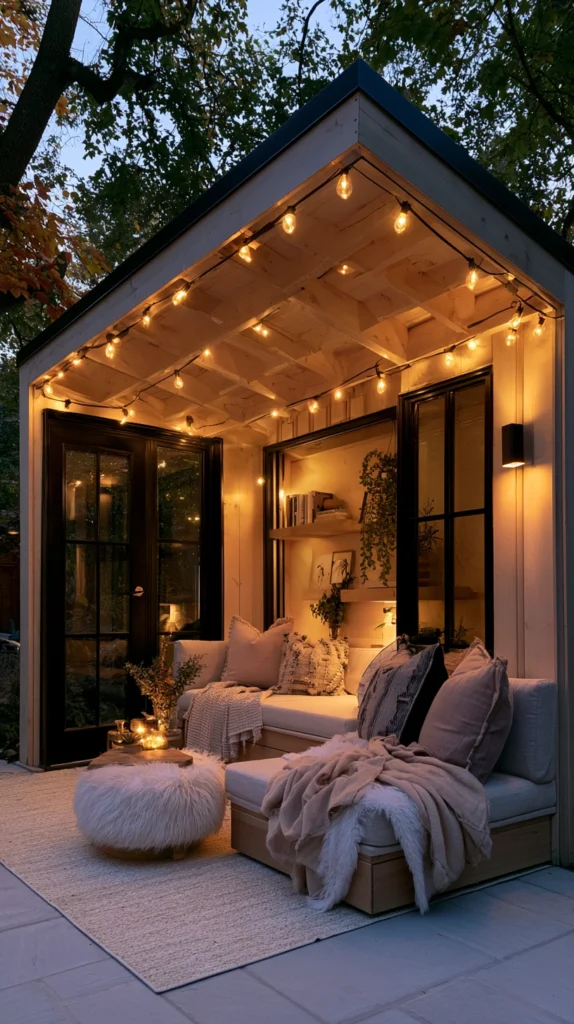
The same string lights often installed for a bright, festive summer look, rehung lower and dimmer, or supplemented with a warm-temperature bulb swap, for a cozier evening glow suited to autumn’s earlier darkness.
Why the lighting needs to change, not just stay in place
String lights hung high and bright for summer garden parties serve a different purpose than the low, ambient glow a autumn evening retreat calls for. Repositioning the same lights closer to eye level, or swapping to warmer bulbs, shifts their function from festive to genuinely cozy without requiring an entirely new purchase.
Adjustment specifics
- Reposition strands along interior beams or shelving at a lower height, rather than strung high across the ceiling
- Swap to 2700K bulbs if the existing strand runs cooler or multicoloured
Cost breakdown
- Warm white string lights (if replacing an existing cooler-toned strand): $20–35
- Total: $0–35 depending on whether existing lights need replacing
5. Heavier Window Curtains
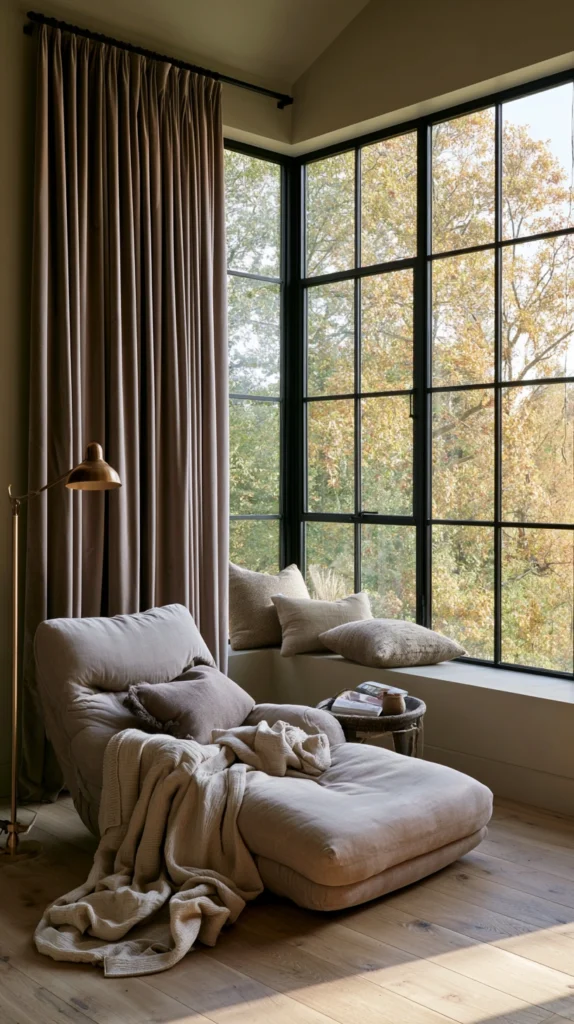
Lightweight summer curtains or sheers replaced with a heavier fabric — velvet, wool blend, or a lined cotton — both for insulation and for the visual weight and warmth heavier fabric provides.
Why curtain weight matters for both function and feeling
Thin summer curtains do little to block drafts once the weather turns, and their light, airy visual quality doesn’t match the coziness the rest of the shed’s autumn styling is working toward. Heavier curtains serve both functions at once: genuine insulation against a shed’s often less weather-sealed windows, and a warmer, more enclosed feeling overall.
Material and colour
- Velvet or a lined cotton-linen blend, in a warm neutral or deep autumn tone
- Hung close to the ceiling and slightly wider than the window frame, for maximum coverage and insulation when closed
Cost breakdown
- Heavier curtain panels (pair): $40–80
- Total: $40–80
6. A Warm Interior Paint Refresh
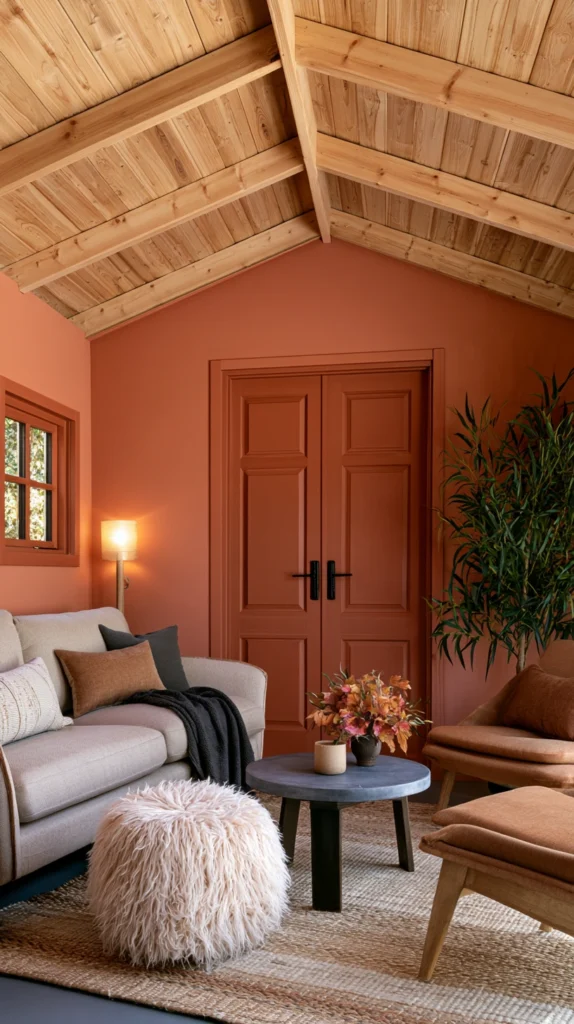
A fresh coat of paint in a warm, muted autumn tone — terracotta, olive, or warm cream — replacing a summer-bright or stark white interior.
Why the wall colour itself supports the seasonal shift
A shed painted a bright white or a cool pastel, well-suited to a light, airy summer feeling, can read cold and uninviting once autumn’s low light levels arrive. A warmer wall tone absorbs and reflects the season’s available light differently, contributing to the cozy feeling the rest of the styling is working to achieve, at one of the lowest costs on this list.
Colour selection
- Muted terracotta or warm olive for a bolder autumn statement
- Warm cream or oatmeal for a subtler shift that still moves away from a stark white base
Cost breakdown
- Interior paint (1 gallon, sufficient for most shed interiors): $35–55
- Total: $35–55
7. A Secondhand Vintage Furniture Piece
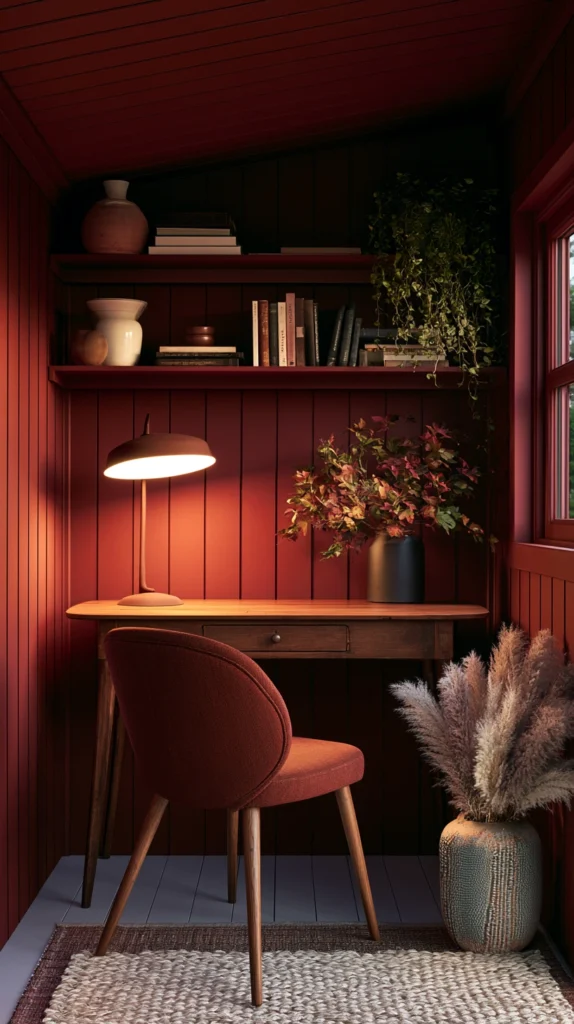
One well-chosen secondhand or vintage furniture piece — a small writing desk, an accent chair, or a low bookshelf — refinished if needed, adding character a shed’s often basic, functional furniture doesn’t provide on its own.
Why one vintage piece does more than several new budget pieces
A shed furnished entirely from new, budget-tier furniture can feel generic regardless of how well it’s styled around. One secondhand piece, with genuine material weight and some visible history, adds the same collected, personal quality that works in any home’s styling, and often costs less than an equivalent new piece.
What to look for
- Solid wood construction over particleboard or laminate, for both durability in a shed’s less climate-controlled environment and a better refinishing outcome if needed
- A small writing desk or accent table suits a she shed’s typically compact footprint better than a larger piece
Cost breakdown
- Secondhand vintage furniture piece: $30–100
- Refinishing supplies if needed: $15–30
- Total: $30–130
8. A Personal Gallery Wall
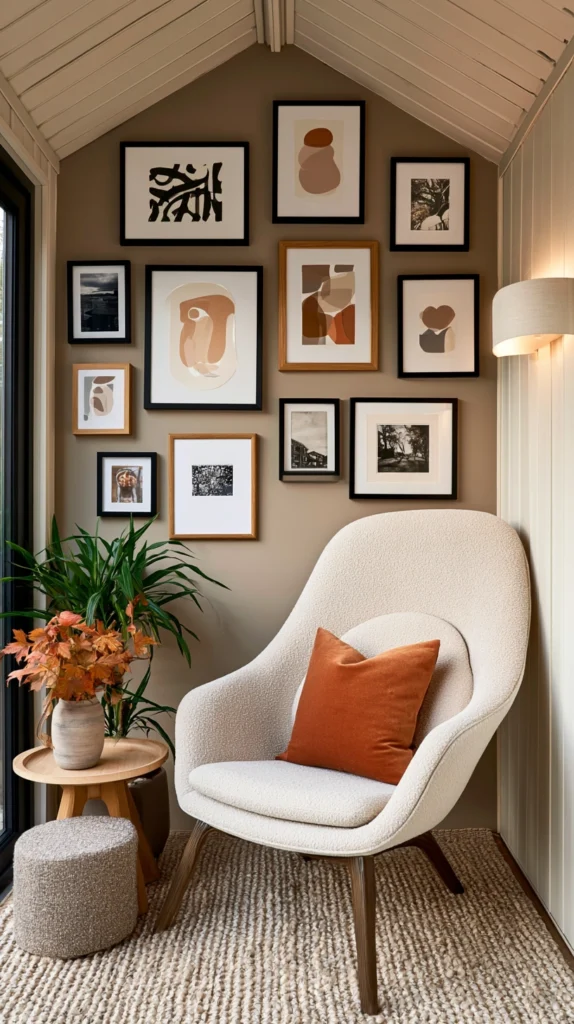
A small cluster of personally meaningful art, photos, or objects, arranged on one wall — a detail that turns a functional shed into a genuinely personal retreat rather than simply a decorated outbuilding.
Why personal curation matters especially in this specific space
A she shed’s core value is usually as a space that belongs entirely to one person, distinct from the shared rooms in the main house. A gallery wall built from genuinely personal items — rather than generic purchased decor — reinforces that sense of ownership and retreat more directly than almost any other single addition on this list.
Layout guidance
- 5–7 pieces, mixing frame sizes and finishes for a collected look, following the same gallery wall principles that work in any home
- Positioned within view of the reading nook or primary seating area, so it’s visible during the time actually spent in the space
Cost breakdown
- Frames for existing personal items (5–7): $30–70
- Total: $30–70
9. A Basket of Throws and Blankets
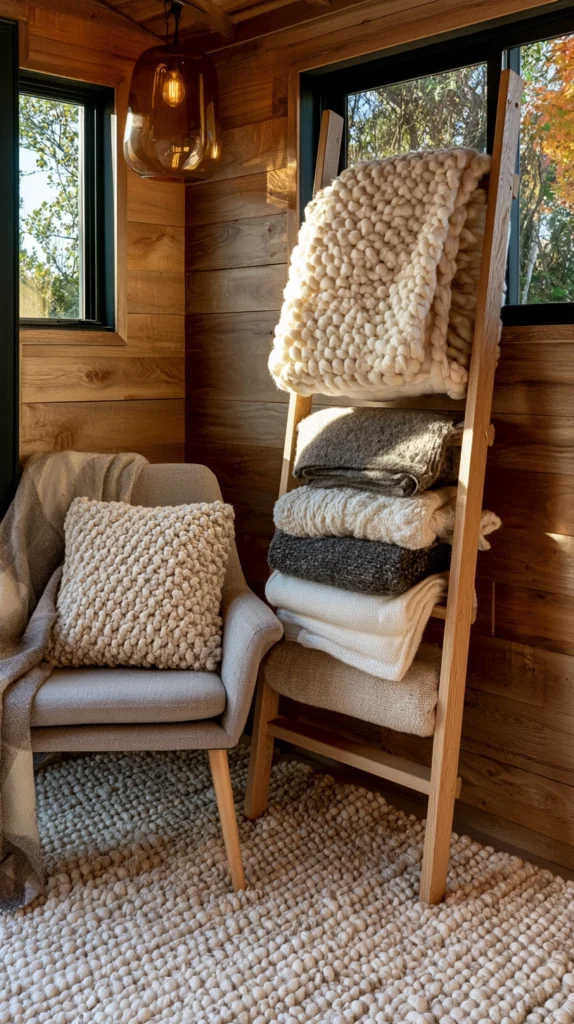
A woven basket, positioned beside the seating area, filled with two or three heavy knit or wool throws — visible, accessible warmth rather than blankets stored elsewhere and forgotten.
Why visible storage matters more here than in most rooms
A shed used specifically for cold-weather comfort benefits from throws being immediately accessible rather than stored in a closet or left folded somewhere less visible. A basket beside the seating area signals, the moment someone walks in, that the space is equipped for exactly the kind of extended, cozy sitting it’s meant to support.
Selection
- Two to three throws in a mix of textures (a chunky knit, a smoother wool blend) rather than matching identical throws
- A basket sized generously enough that the throws don’t need to be tightly folded to fit
Cost breakdown
- Heavy knit or wool throws (2–3): $30–60
- Woven storage basket: $20–40
- Total: $50–100
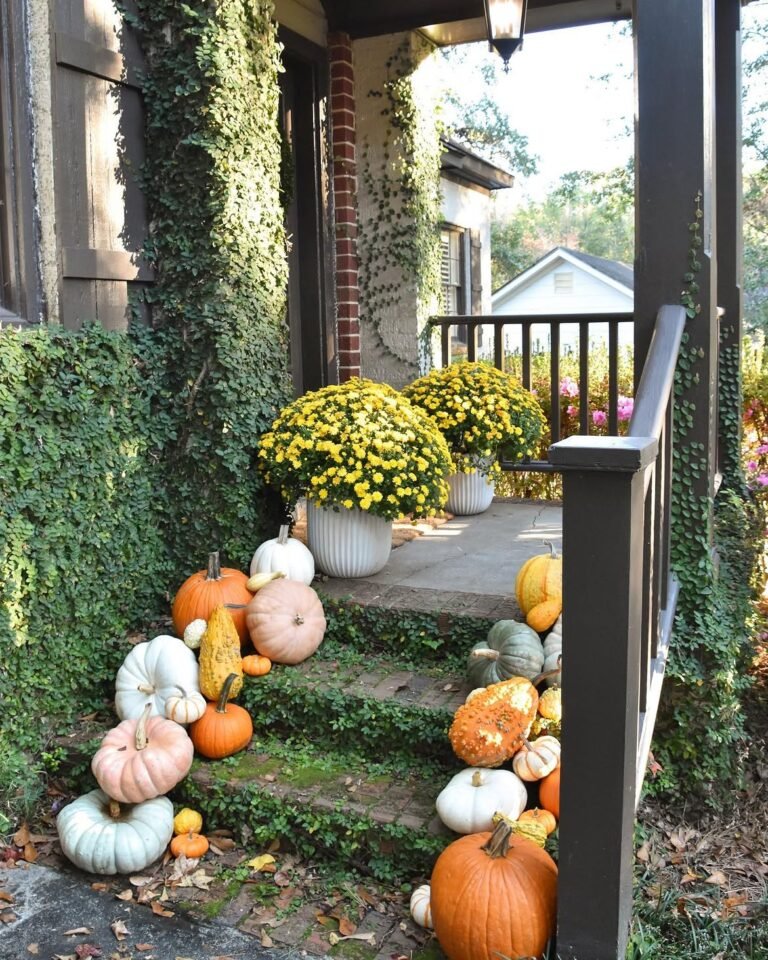
10. Potted Mums or Fall Plants at the Entrance
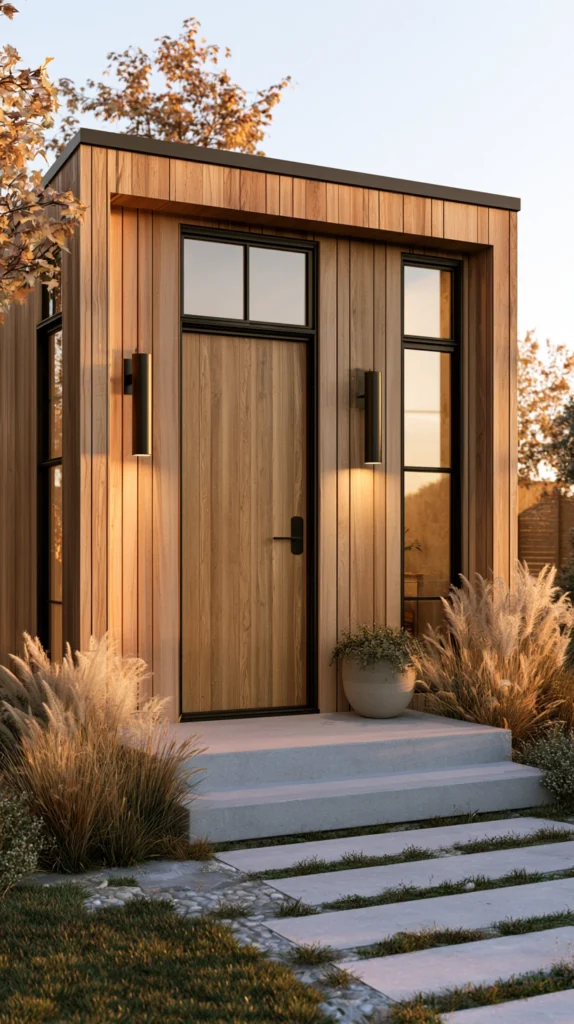
A grouping of potted chrysanthemums or other fall-blooming plants flanking the shed’s entrance, marking the transition from the main garden into the shed’s own small threshold.
Why the entrance deserves its own seasonal moment
The walk from the main house to the shed is itself part of the experience of using the space, and a bare or unchanged entrance misses an opportunity to signal the season before someone even steps inside. A small grouping of seasonal plants does the same threshold-marking work outside the shed that a styled console does inside a home’s entryway.
Placement
- Grouped in odd numbers (three pots) on either side of the door, or a single larger grouping to one side if space is limited
- Varying pot heights, using the same grouping principle that works for any container display
Cost breakdown
- Potted mums or fall plants (3): $15–30
- Total: $15–30
11. A Seasonal Wreath on the Door
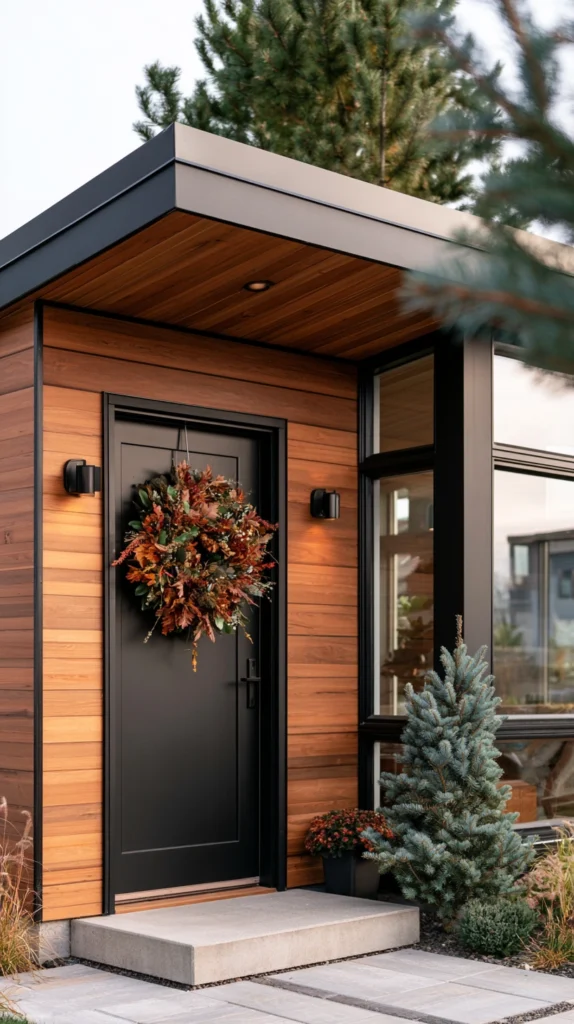
A simple, muted-tone fall wreath on the shed’s exterior door, sized appropriately to the door’s scale rather than borrowed from a larger front-door wreath.
Why a wreath matters even on a small, secondary structure
A she shed’s door often gets no seasonal treatment at all, treated as a utility entrance rather than an actual front door. A wreath, even a small and simple one, extends the same seasonal consideration given to a home’s main entrance to the shed’s own door, reinforcing that the space is a genuine room, not just a garden structure.
Sizing
- 12–16 inches in diameter, smaller than a typical front-door wreath, scaled appropriately to a shed door’s usually more modest size
Cost breakdown
- Small fall wreath: $20–40
- Total: $20–40
12. A Small Beverage or Tea Station
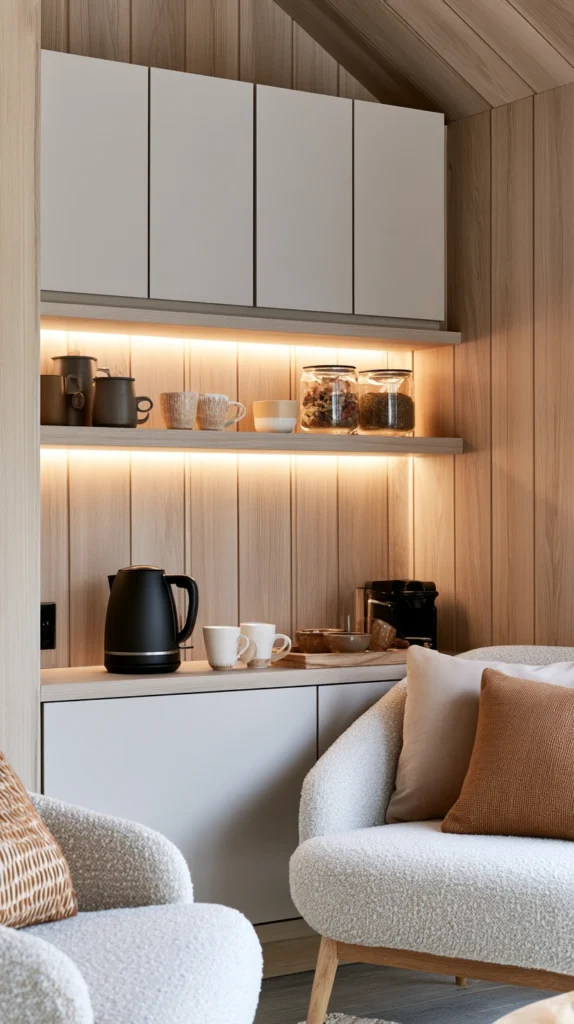
A compact tray or small shelf holding a kettle or thermos, a mug or two, and a small selection of tea or cider, giving the shed a specific autumn ritual to support beyond simply sitting in it.
Why a specific ritual increases how often the space actually gets used
A shed with no particular activity attached to it competes with the comfort and convenience of the main house and often loses. A small, dedicated tea or cider station gives visiting the shed a specific, appealing reason attached to it — the ritual of making a warm drink and settling in — that a beautifully decorated but purely passive space doesn’t provide on its own.
Setting it up
- A small electric kettle, if the shed has power, or a thermos filled before heading out if it doesn’t
- A tray or small shelf section dedicated entirely to this purpose, kept separate from other storage so it stays quick and easy to use
Cost breakdown
- Small electric kettle or thermos: $20–45
- Mugs and tray: $15–30
- Total: $35–75
13. The Complete Autumn She Shed
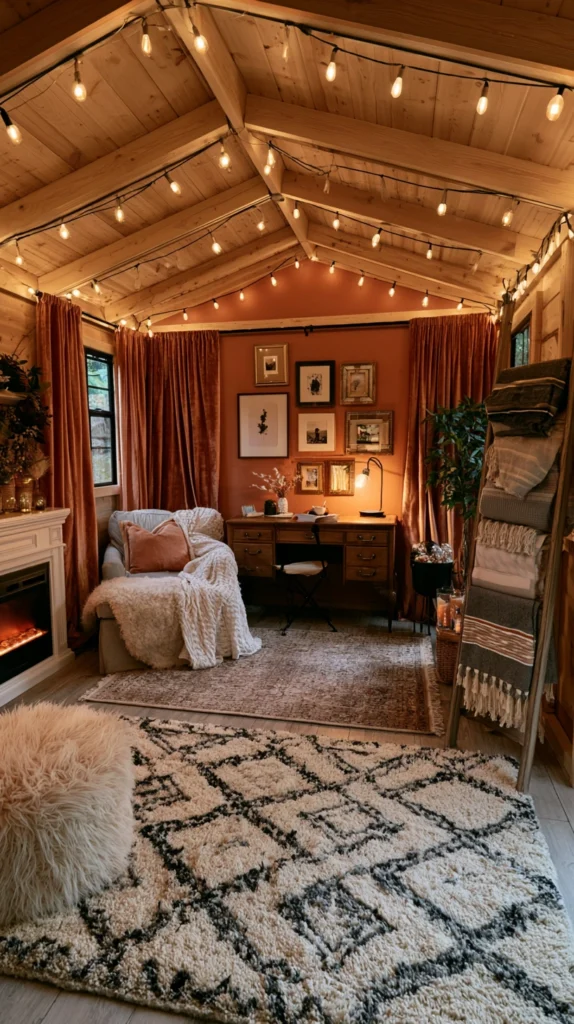
A she shed makeover applying every principle above together — the definitive version of a shed that transitions fully from a summer space into a genuine autumn and winter retreat.
What separates the complete makeover from a few nice additions
A shed with beautiful throws and a rug, but no actual heat source, still won’t get used once the temperature drops meaningfully. The complete version resolves every layer at once — heat, light, texture, personal character, and a specific reason to visit — so the shed functions as a real cold-weather retreat rather than a nicely decorated space that’s still too cold to sit in.
The elements of the complete makeover
The function:
- A space heater or electric fireplace insert (Idea #1)
- A small tea or cider station (Idea #12)
The comfort layer:
- A cozy reading nook with a chair, side table, and lamp (Idea #2)
- Layered rugs underfoot (Idea #3)
- A basket of throws beside the seating (Idea #9)
- Heavier window curtains (Idea #5)
The light:
- Repositioned, warm-toned string lights (Idea #4)
The walls and character:
- A warm paint refresh (Idea #6)
- A personal gallery wall (Idea #8)
- One secondhand vintage furniture piece (Idea #7)
The threshold:
- Potted mums flanking the entrance (Idea #10)
- A small wreath on the door (Idea #11)
The shed on an ordinary autumn afternoon:
The heater has been running for twenty minutes by the time anyone sits down, the space already warm rather than needing to warm up while occupied. The kettle goes on for tea, the throw comes off the basket without needing to be searched for, and the reading chair, positioned under the warm string lights and beside the gallery wall of personal photos, is exactly the retreat the shed was always meant to become once the weather actually gave it a reason to be one.
Cost breakdown for the complete makeover
Assuming a starting point of a bare, summer-furnished shed:
- Space heater or fireplace insert: $40–350
- Reading nook furniture: $145–370
- Layered rugs: $70–150
- String lights (if replacing): $0–35
- Curtains: $40–80
- Paint: $35–55
- Vintage furniture piece: $30–130
- Gallery wall: $30–70
- Throw basket: $50–100
- Entrance plants: $15–30
- Wreath: $20–40
- Tea station: $35–75
Total: $510–1,485
Phased over two stages:
Stage one ($200–450):
- Space heater
- Rug
- Throw basket and curtains
Stage two ($300–1,000):
- Reading nook furniture
- Paint refresh
- Vintage piece and gallery wall
- Entrance styling and tea station
The complete autumn she shed: not a summer space with a heater added as an afterthought, but a fully reconsidered small room, built for exactly the season it turns out to suit best.
The Question Before Any She Shed Autumn Makeover
Before buying a single item:
Is the shed currently too cold to sit in comfortably, or just visually unstyled for the season?
If the answer is: genuinely too cold — the heater comes first; nothing else on this list matters until the space is physically comfortable.
If the answer is: comfortable temperature-wise, just visually stuck in summer — the rug, throws, and lighting changes will make the biggest visible difference fastest.
If the answer is: comfortable and styled, but underused — the tea station or reading nook may be the missing piece; a shed with nothing specific to do in it often goes unused regardless of how it looks.
If the answer is: starting completely fresh — build the heat and light foundation first, then layer in textiles and personal character on top of that base.
The project follows what’s actually stopping the shed from being used, not the most visually appealing item on the list. A gorgeous throw basket in a shed nobody can sit in comfortably solves nothing.
Getting Started This Weekend
The immediate autumn she shed fix:
Bring in a space heater and test how the room feels after twenty minutes.
The single non-negotiable first step before any styling decision matters.
Add one rug and one heavy throw.
The fastest, most visible signal that the space has shifted into its cold-weather configuration.
Reposition or reset the string lights to a lower, warmer glow.
Confirms the evening lighting before deciding whether any fixture changes are needed.
Set up a small tea or cider station, even a simple thermos and one mug.
Gives the space its first concrete reason to be visited once the weather turns.
The rest of the makeover: the elaboration of this weekend.
The warmth: the beginning. The autumn she shed: what a summer space becomes once it’s actually built for the season ahead.