13 Thanksgiving Camping Trip Decor Ideas
13 Thanksgiving Camping Trip Decor Ideas
Most camping trips get decorated the same way regardless of the calendar — a string of solar lights from the gear bin, whatever folding chairs fit in the trunk, a cooler doing double duty as a table. That approach works fine for a regular weekend in the woods.
It falls short the moment the trip is actually Thanksgiving. A holiday built around a long table, a full meal, and a houseful of people deserves more than the standard camp setup, even when the “house” is a campsite and the table folds down to fit in a duffel bag.

A camp Thanksgiving is not a regular camping trip with a turkey added to the cooler. It asks for its own kind of decorating — one built around fire, early darkness, and a site that has to look intentional without any walls to lean a decoration against. Get the warmth and the light right, and a folding table under open sky can feel more like a holiday than a dining room ever does.
Here are 13 ideas for decorating a Thanksgiving campsite that actually feels like the occasion it’s marking.
Why a Camp Thanksgiving Plays by Different Rules
The rules are not the same for every Thanksgiving setting:
Dining Room Thanksgiving Advantages:
- Climate control, so the weather outside never affects the gathering
- Stable electricity for lighting, heat, and a full kitchen of appliances
- Storage for a complete set of dishware and as much food as the pantry allows
The dining room comparison: abundance and predictability
Campsite Thanksgiving Advantages:
- A setting no dining room can match — open sky, a real fire, ground underfoot
- A built-in sense of occasion before a single decoration goes up, since sitting around a fire already feels celebratory
- A lower total commitment, where a few well-chosen elements do more work in a small space than the same elements would in a large room
The key insight:
- Dining room Thanksgiving design rewards a fully set table
- Campsite Thanksgiving design rewards layering warmth and light, because that’s the actual challenge
- These are different design problems, not the same holiday in a different location
The Warmth and Light Reality
The most important factor in camp Thanksgiving decor:
The early sunset:
- Late November sunset arrives as early as 4:30–5:00pm in many regions
- Most of the meal and the gathering afterward happens in the dark, not in daylight
- Know this — it governs every lighting decision before anything else gets planned
The “warmth before beauty” calculation:
- A decoration that looks good but adds no warmth or light is secondary
- A decoration that adds light or heat gets set up first, regardless of how it looks
- Plan for the coldest hour of the gathering — usually well after dinner, sitting around the fire — not the milder hour spent setting up
Most camp Thanksgiving decor builds in two passes:
- The daylight pass: the table, the cooking station, anything that needs to be seen and used while prepping
- The after-dark pass: lighting, layering, the fire itself — this is where most of the actual atmosphere comes from
- The two passes are different jobs, not the same setup simply switched on later
1. The Fire Pit Centerpiece (The Camp’s Foundation Gathering Point)
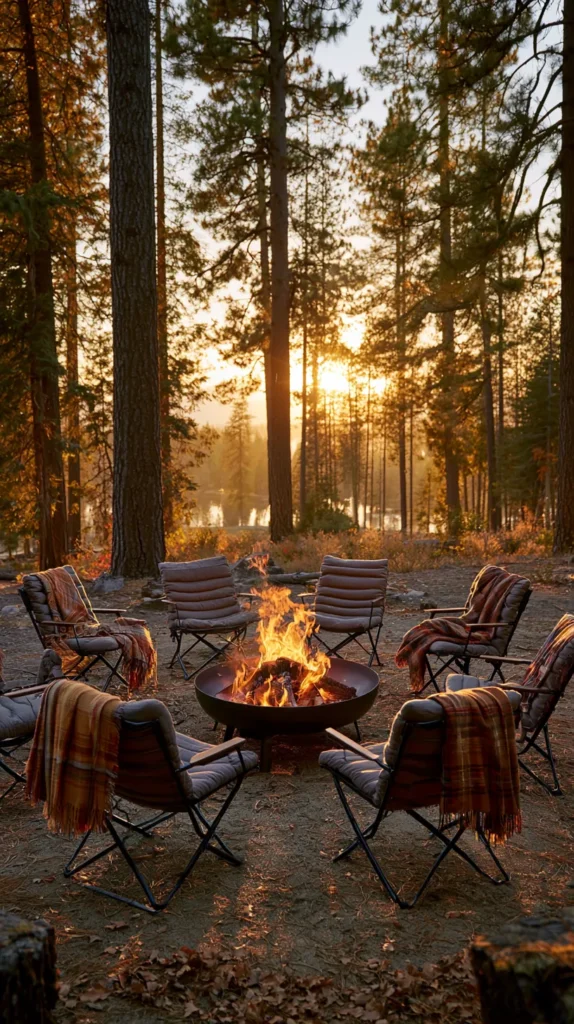
A fire pit or fire ring positioned and decorated as the true center of the campsite — the single feature that does more to define a camp Thanksgiving than any table setting could.
Why the fire is the most important decision on this list
- The anchor point: every other decision — seating, lighting, even the table — gets arranged in reference to the fire, not before it
- The function-meets-occasion overlap: a fire is the actual source of warmth and light for the evening, so dressing it up means decorating something already doing the most important job at the gathering
- The natural gathering pull: people arrange themselves around a fire without being asked to; design around that instinct rather than fighting it
The options
- A portable steel fire pit — the most common choice for car camping, easy to position and move
- A built-in stone fire ring, if the site already has one or allows building a simple one
- A raised fire bowl on legs — keeps the flame off the ground, useful on sites where ground fires aren’t permitted
- A smaller secondary fire bowl, for s’mores or coffee, set slightly apart from the main fire used for cooking
The practical execution
- Check the campsite’s fire restrictions before building anything — many sites have seasonal burn bans regardless of weather
- Position seating in a full or partial circle around the fire, with at least one gap left open for serving the table
- Keep a stack of firewood visibly nearby, both for function and because a woodpile reads as part of the decor, not clutter
Cost breakdown
- Portable steel fire pit: $40–120
- Raised fire bowl: $80–200
- Firewood for an evening: $15–30
- Total: $40–350, depending on what the site already provides
The fire pit decorated, not just built: the one feature every other idea on this list ends up arranged around.
2. The String Light Canopy (Turning a Campsite Into a Room)
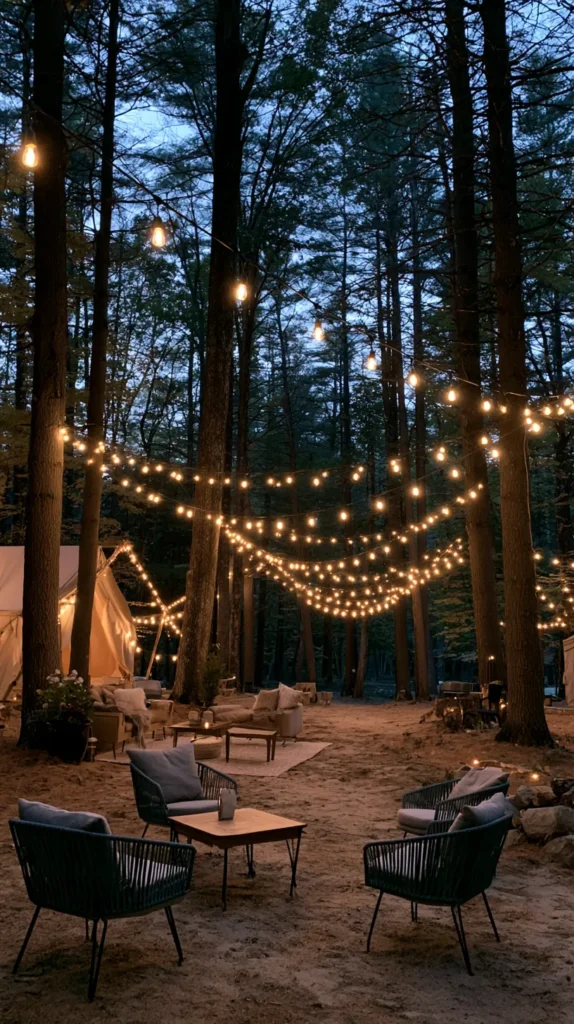
Battery or solar-powered string lights strung overhead between trees, a canopy, or a vehicle — the layer that turns an open campsite into something that feels like a defined room rather than a patch of ground.
Why overhead light matters more than any single lantern
- The boundary effect: light strung overhead visually marks the edges of the “room” the way walls would indoors, without needing any actual structure
- The early-sunset case: with darkness arriving by late afternoon in November, this is often the single most-used light source for the entire evening
- The low-effort transformation: this is one of the lowest-effort, highest-visual-impact ideas on the whole list
The options
- Battery-powered LED string lights — no outlet required, ideal for most campsites
- Solar string lights — charge during the day, useful for multi-day trips
- Warm white mini lights — closest to the warm glow of firelight
- Edison-style bulb string lights — heavier and more decorative, better suited to a shorter hang between a canopy and a vehicle
The practical execution
- String lights between two or three fixed points — trees, a canopy frame, a vehicle roof rack — rather than relying on a single line
- Hang at a height that clears the tallest person standing, generally 7 feet or more
- Bring extra batteries or a backup solar charge, since cold weather drains batteries faster than usual
Cost breakdown
- Battery-powered string lights, one set: $15–35
- Solar string lights: $20–45
- Extra batteries: $5–15
- Total: $20–95
3. The Harvest Table Runner and Centerpiece (The Dining Surface That Still Feels Like a Holiday)
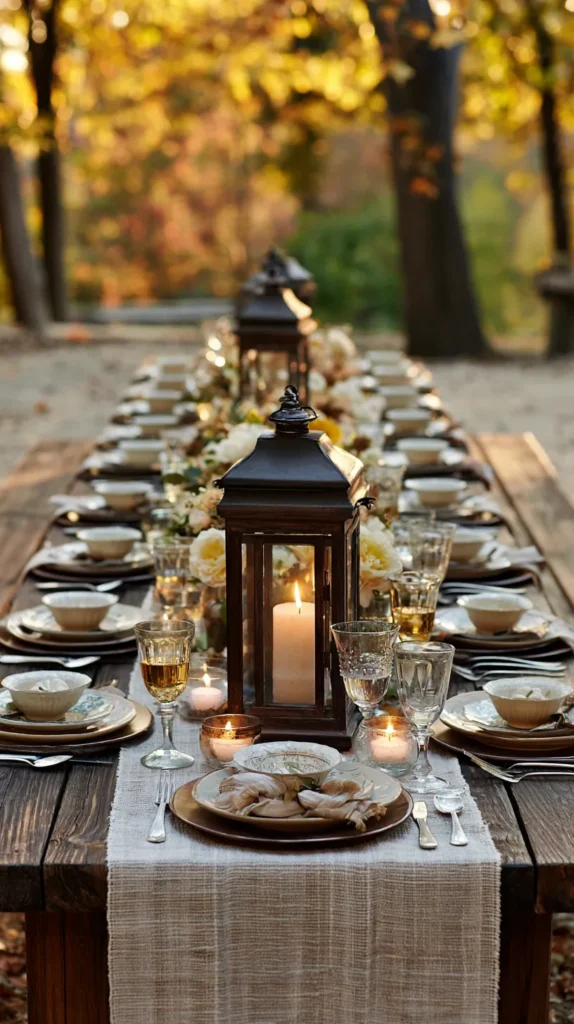
A fabric table runner and a small seasonal centerpiece placed down the center of the camp table — the detail that makes the actual eating surface feel like Thanksgiving rather than just another camp meal.
Why the table still matters outdoors
- The table-as-anchor logic: even outdoors, the table where the meal happens is the one surface guests look at directly and for the longest stretch of time
- The portability requirement: unlike a dining room table, this surface has to pack down small and survive a drive, which changes what “decorated” can mean
- The holiday-signal value: a runner and a small centerpiece are often enough on their own to make a folding table feel intentional rather than incidental
The options
- A canvas or burlap table runner — durable, doesn’t show dirt the way a finer fabric would
- A small lantern or candle cluster as the centerpiece, doing double duty with Idea #5
- A low arrangement of gourds, pinecones, or branches, kept short enough not to block sightlines across the table
- A printed oilcloth runner — wipeable, practical for a table that’s also doing food prep duty
The practical execution
- Keep the centerpiece low and narrow enough that it doesn’t get knocked over by a gust of wind or a passing dish
- Weight the runner’s corners with small stones or clips on a breezy site
- Choose materials that can get slightly dirty or damp without being ruined, since this table isn’t protected the way an indoor one is
Cost breakdown
- Table runner: $10–25
- Small centerpiece materials (gourds, candles, foraged items): $5–20
- Total: $15–45
4. The Layered Blanket Station (Warmth as the Decor Itself)
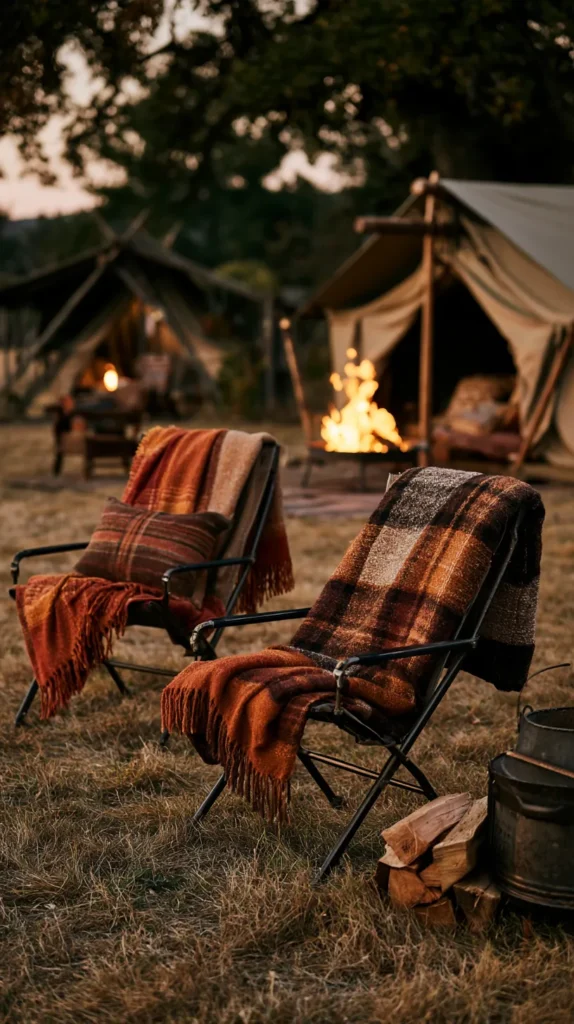
A visible stack or basket of extra blankets and throws set near the seating area — the idea that treats warmth itself as the decoration, rather than something handled separately from the styling.
Why a blanket pile counts as decor, not just gear
- The function-as-beauty principle: a folded stack of warm-toned wool blankets looks intentional and styled even before anyone wraps up in one
- The actual-comfort case: a Thanksgiving gathering held outdoors in late November lives or dies on whether people are warm enough to stay past dinner
- The color and texture layer: blankets add exactly the kind of warm, varied texture a campsite otherwise gets mostly from firelight alone
The options
- Wool or wool-blend blankets, in plaid or solid warm tones, both functional and visually fitting
- A large basket or crate to hold the stack, doing double duty as storage and display
- Smaller individual throws, one per guest, draped over the backs of camp chairs ahead of time
- A few oversized blankets, meant to be shared by two or three people at once around the fire
The practical execution
- Set the blanket station within easy reach of the seating circle, not packed away in a vehicle
- Choose materials that can handle a damp evening and a wash afterward, rather than anything delicate
- Pre-drape a blanket over each chair before guests arrive, rather than waiting for someone to ask
Cost breakdown
- Wool-blend throw blanket, each: $20–45
- A set of 4–6 blankets: $100–250
- Basket or crate for storage and display: $20–50
- Total: $100–300 for a full set, less if some blankets are already on hand
5. The Lantern Trail (Light That Guides as Much as It Decorates)
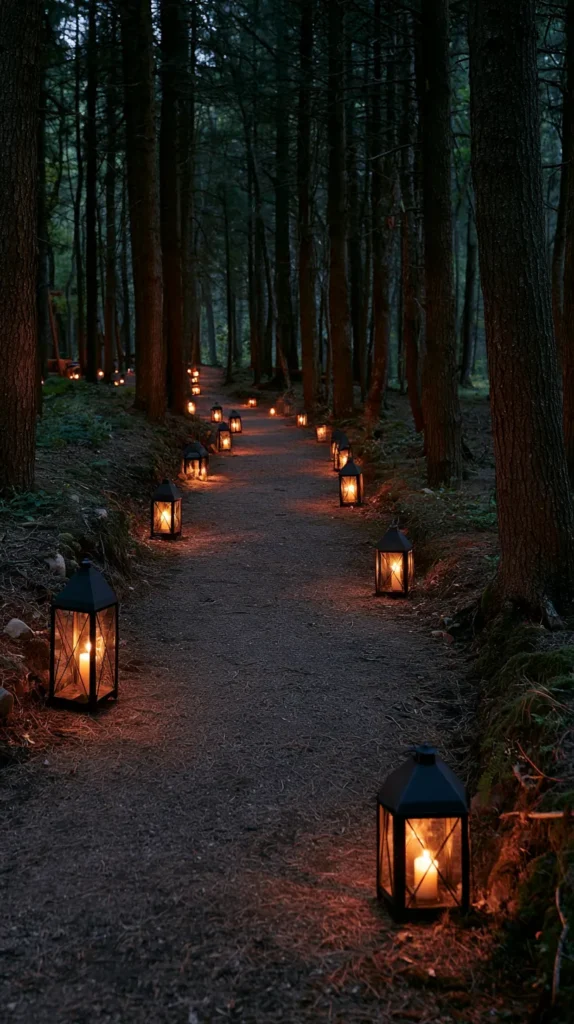
A line of lanterns marking the path between the parking area, the fire, the table, and the tents — the lighting idea that solves a real safety problem while adding to the overall glow of the site.
Why a lantern trail does double duty
- The function it solves first: an unlit path between a dark parking area and a campsite is a real tripping hazard once the sun is down by five o’clock
- The atmosphere it adds as a side effect: a trail of warm lantern light does as much to set the mood walking in as any single decoration at the site itself
- The flexible placement: unlike string lights, lanterns can be repositioned easily if the layout of the site changes
The options
- Battery-powered LED lanterns, the safest and most practical choice on uneven or wooded ground
- Solar-charged path lanterns, useful for a multi-day trip without needing fresh batteries each night
- Flameless candle lanterns, for a softer flicker without the fire risk of an open flame near dry leaves
- A mix of lantern sizes, larger ones at key points like the table or fire, smaller ones marking the path itself
The practical execution
- Space lanterns close enough together that no stretch of the path is left fully dark
- Keep lanterns off to the side of the actual walking path rather than directly in it
- Bring more lanterns than seem necessary — a path that looks adequately lit while setting up in daylight often looks sparse once it’s actually dark
Cost breakdown
- Battery-powered LED lantern, each: $10–25
- A set of 6–8 lanterns for a full trail: $60–150
- Total: $60–150
6. The Cast Iron and Dutch Oven Display (The Camp Kitchen as the Feast’s Backdrop)
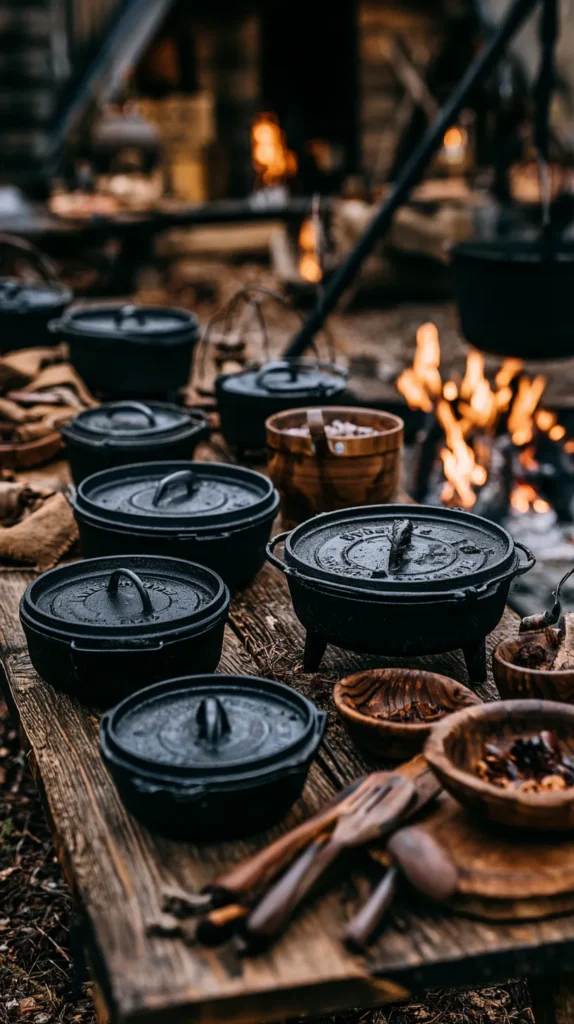
The camp cooking station — Dutch ovens, cast iron skillets, and the cooking fire itself — arranged and left visible rather than tucked out of sight, since this is where most of the actual meal is happening anyway.
Why the cooking station deserves to be seen, not hidden
- The function-already-there logic: unlike most decor on this list, this idea requires adding almost nothing new; it simply means arranging equipment that’s already part of the cooking process
- The visual weight of cast iron: dark, heavy cookware reads as substantial and intentional in a way lightweight camp gear doesn’t
- The process-as-entertainment value: at a camp Thanksgiving, watching the meal cook over a fire is part of the experience, not something to hide while it happens
The options
- A row of Dutch ovens at different stages of cooking, arranged along the edge of the cooking fire
- A hanging cast iron rack or tripod, displaying additional skillets and pans when not in active use
- A dedicated prep table near the cooking fire, kept visually tidy with ingredients in baskets or bowls rather than original packaging
- An apron and utensil display on a hook or hanging rail near the cooking station, treating the tools themselves as part of the scene
The practical execution
- Position the cooking station within the same general circle as the seating and fire, rather than off to one side, so it’s part of the gathering rather than separate from it
- Keep a clear safety perimeter around active cooking fires, especially with guests and any children moving around the site
- Use baskets or bowls for visible ingredients rather than leaving packaging or coolers in the main sightline
Cost breakdown
- Dutch oven, if not already owned: $40–120
- Cast iron tripod or hanging rack: $30–80
- Baskets and bowls for ingredient display: $20–50
- Total: $0–250, often near zero if the cooking gear is already part of the camp kit
7. The Foraged Natural Centerpiece (Decor Gathered, Not Packed)
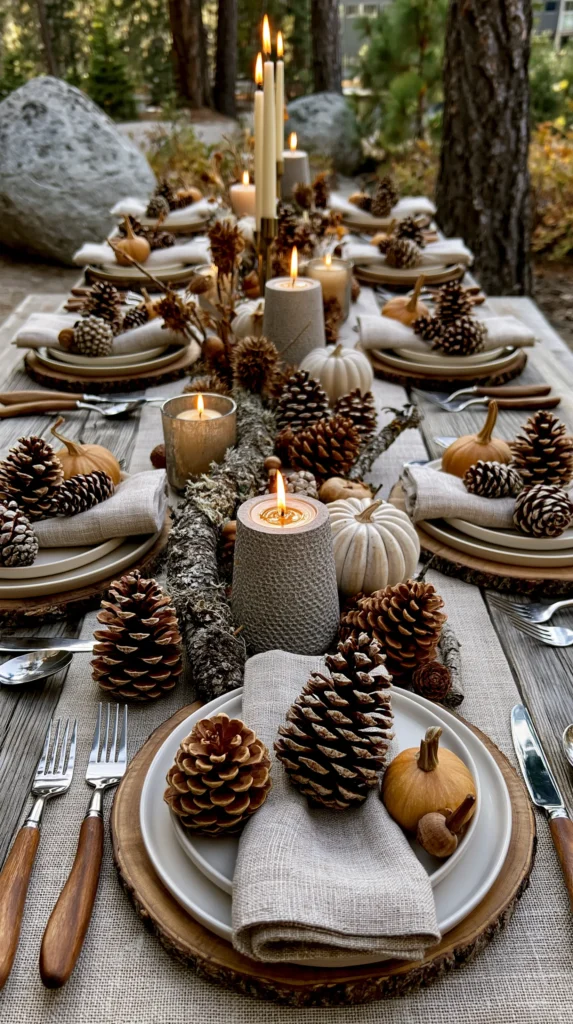
A centerpiece or set of small arrangements made from materials gathered at or near the campsite itself — pinecones, fallen leaves, bare branches — the decor that costs nothing and packs down to nothing on the drive home.
Why foraged decor earns a place on a packing-conscious list
- The zero-packing-weight advantage: nothing on this list takes up less room in a vehicle than decor that’s gathered after arriving rather than packed before leaving
- The site-specific character: foraged materials are different at every campsite, which means this decor never looks identical from one trip to the next
- The activity built into the idea: gathering pinecones and branches with kids or other guests before the meal becomes part of the day’s actual activities, not just prep work
The options
- A cluster of pinecones, grouped in a bowl or scattered along the table runner from Idea #3
- A bundle of bare branches, arranged in a jar or simply leaned in a corner of the seating area
- Fallen leaves, pressed under a small stone or tucked along the table’s edge for color
- A small wreath or swag, assembled on-site from whatever’s locally available and hung near the entrance
The practical execution
- Gather only from areas where foraging is permitted, and avoid stripping any one area too heavily
- Choose dry, sturdy materials over anything fresh and likely to wilt before the meal
- Involve guests in the gathering as a pre-meal activity rather than doing it alone ahead of time
Cost breakdown
- Materials: $0, gathered on-site
- A bowl, jar, or small vessel to hold the arrangement, if not already packed: $10–20
- Total: $0–20 — the lowest-cost idea on this entire list
8. The Hot Drink Station (Function Disguised as Decoration)
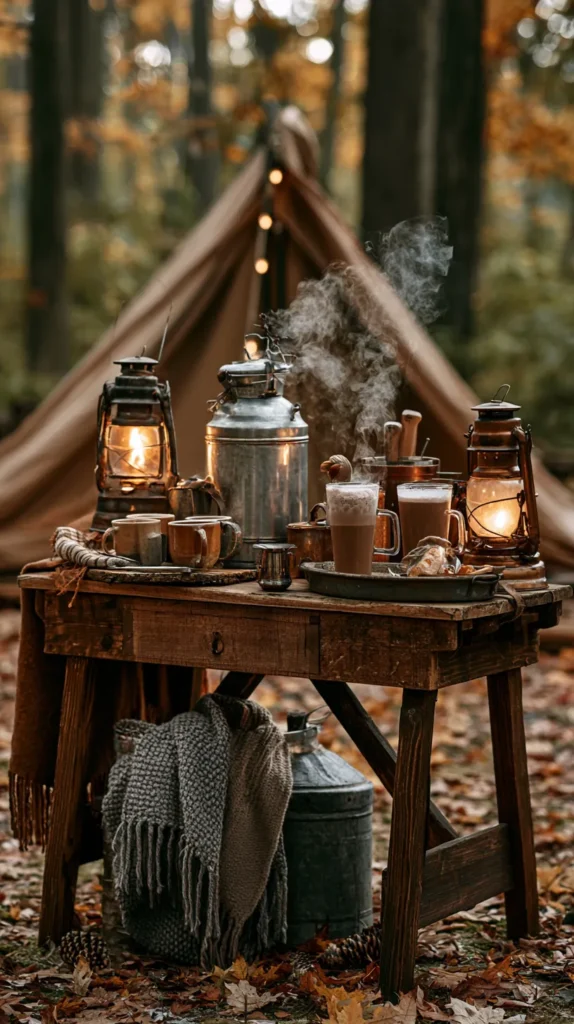
A dedicated table or crate set up with cider, cocoa, coffee, and mugs — the station that gives guests a reason to keep moving toward warmth throughout the evening, while also looking like one of the most inviting corners of the site.
Why a drink station works harder than a single decoration
- The repeated-use value: unlike most decor, a drink station gets visited multiple times throughout the evening, doing more work per dollar spent than almost anything else on this list
- The warmth-delivery function: a hot drink in hand is one of the most direct, immediate ways to keep guests comfortable outdoors in late November
- The styling opportunity built into function: mugs, a kettle, and a few jars of mix are already visually appealing without needing additional decoration layered on top
The options
- A large thermos or insulated carafe for cider or cocoa, kept warm without needing the fire constantly tended
- A camp percolator or kettle kept near the fire’s edge for coffee and tea throughout the evening
- A small crate of mismatched mugs, echoing a gathered, not-matching look that works well at a casual outdoor gathering
- A simple sign or label for each drink option, a small low-cost styling touch
The practical execution
- Position the station close enough to the fire to stay warm, but out of the direct cooking area so it doesn’t compete for space
- Keep a few extra blankets nearby (see Idea #4), since this is naturally where people will linger
- Refill insulated containers periodically rather than letting drinks go cold and undermining the whole point of the station
Cost breakdown
- Insulated carafe or large thermos: $25–60
- Camp percolator or kettle: $20–50
- Mismatched mugs, a set of 6–8: $20–40
- Total: $65–150
9. The Gratitude Garland (A String of Thanks Strung Between the Trees)
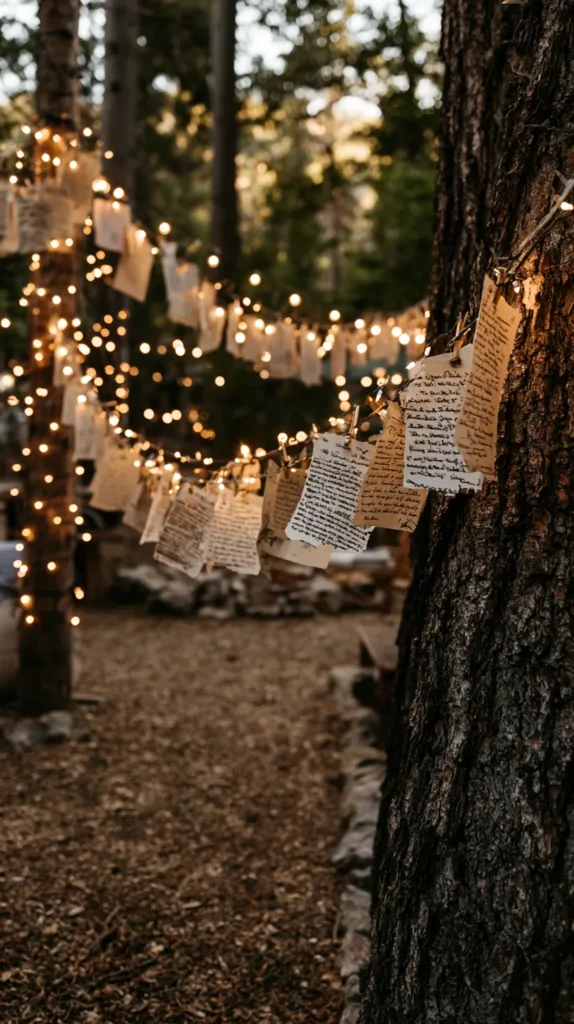
A garland made from small cards, leaves, or fabric scraps, each one holding a word or note of thanks from a guest, strung between two trees or along the seating area — the decoration that doubles as the gathering’s actual tradition for the day.
Why this idea carries more weight than its low cost suggests
- The tradition-and-decor overlap: most Thanksgiving gratitude rituals happen verbally and disappear once the conversation moves on; this idea turns that same ritual into something visible for the rest of the day
- The personal-touch value: unlike store-bought decor, every piece on this garland was made by someone at the gathering, giving it a kind of weight no purchased item can match
- The low cost, high meaning ratio: this is one of the least expensive ideas on the list and arguably the most memorable
The options
- Small paper leaf cutouts, clipped to a length of twine with mini clothespins
- Fabric scrap flags, each tied to the line rather than clipped, for a more rustic look
- Pressed real leaves, gathered on-site (see Idea #7) and written on directly with a marker
- Blank tags or cards, left out with a pen near the start of the gathering so guests can add their own as they arrive
The practical execution
- Set out the materials and a pen before guests arrive, so adding to the garland happens naturally throughout the day rather than as a forced activity
- String the line at a height where notes can be read without anyone needing to crouch or reach
- Take the garland down at the end of the trip and keep it, since unlike most camp decor, this one tends to become something worth saving
Cost breakdown
- Twine or string: $5–10
- Mini clothespins or ties: $5–10
- Paper, tags, or fabric scraps: $5–15
- Total: $15–35
10. The S’mores Bar (Dessert as Its Own Small Occasion)
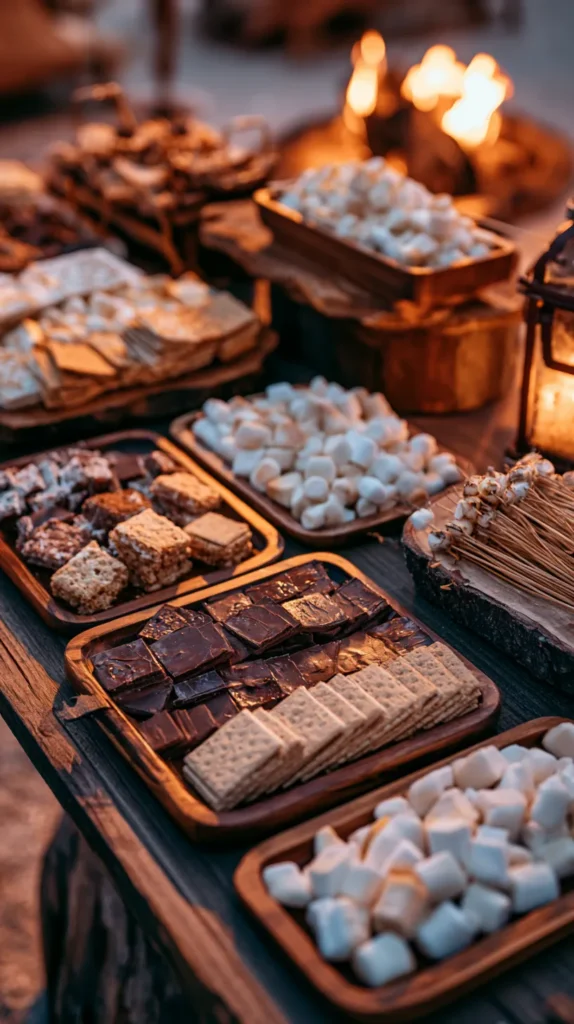
A dedicated station with marshmallows, chocolate, graham crackers, and a few upgrades beyond the basics — the idea that turns the usual end-of-night s’mores into a small event of its own rather than an afterthought.
Why a s’mores bar earns more attention than a typical dessert table
- The built-in audience: a s’mores bar requires no convincing; it’s one of the few decor ideas on this list that guests will seek out on their own
- The natural fire pairing: unlike most stations, this one uses the fire that’s already burning rather than requiring a separate heat source
- The customization appeal: laid out with a few extra options beyond the basic three ingredients, this becomes a genuinely interactive part of the evening rather than a simple snack
The options
- The classic three — graham crackers, marshmallows, chocolate bars — displayed in a divided tray or small crates
- Upgraded options, like flavored marshmallows, dark chocolate, or peanut butter cups, for guests who want variety
- Long-handled roasting sticks, kept in a bundle near the station rather than scattered around the fire
- A small chalkboard or sign listing the available combinations, a low-cost styling detail that also doubles as a menu
The practical execution
- Position the station within reach of the fire but not directly in the main cooking area, to avoid crowding
- Use small crates, trays, or jars to keep ingredients organized rather than leaving packaging out
- Set roasting sticks in a labeled bundle so they’re easy to find and easy to put back
Cost breakdown
- Classic s’mores ingredients for a group: $15–30
- Upgraded ingredient options: $10–25
- Roasting sticks and small trays or crates: $15–30
- Total: $40–85
11. The Circle Seating Arrangement (Decorating the Shape of the Gathering Itself)
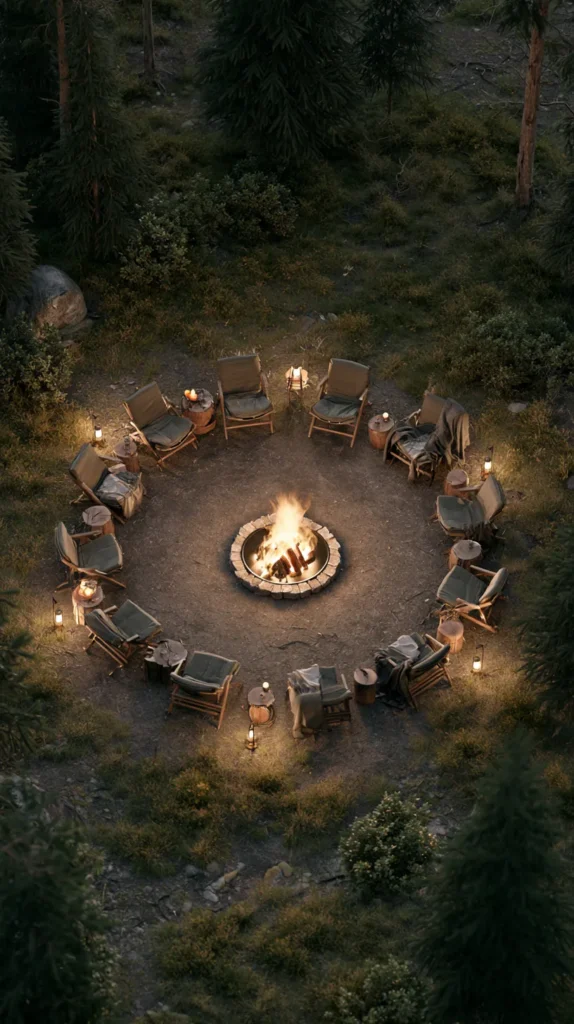
Camp chairs, benches, and cushions arranged deliberately around the fire rather than left wherever they happened to be unloaded — the idea that treats the layout of the gathering as a decoration decision in its own right.
Why the shape of the seating matters as much as any object
- The shape-sets-the-mood principle: a loose scatter of chairs reads as unplanned; a deliberate circle or partial circle reads as a gathering set up with intention
- The conversation-enabling function: a circle keeps everyone facing inward and within talking distance, which matters more at a holiday gathering than at a typical camping trip
- The texture opportunity: mismatched camp chairs, benches, and cushions together create the same kind of layered, gathered look that works elsewhere on this list
The options
- Standard folding camp chairs, supplemented with a cushion or pad for comfort over a long sitting stretch
- A bench or two, for guests who’d rather sit together than in individual chairs
- Low stadium-style seats or ground cushions, for kids or for filling gaps in the circle
- A mix of seat heights, rather than uniform chairs, adding visual variety the way mismatched furniture does indoors
The practical execution
- Leave one or two gaps in the circle for easy access to the fire and the food station, rather than closing it completely
- Position the most exposed seats — the ones facing into any wind — with the heaviest blankets nearby
- Set the circle up before guests arrive rather than letting seating happen organically, since the first chairs placed tend to set the pattern for the rest
Cost breakdown
- Camp chair, each, if more are needed: $20–50
- Seat cushions or pads, each: $10–20
- Total: $0–200, depending on how much seating is already part of the camp kit
12. The Tent and Camper Bunting (The Entrance That Sets the Tone Before the Fire Does)
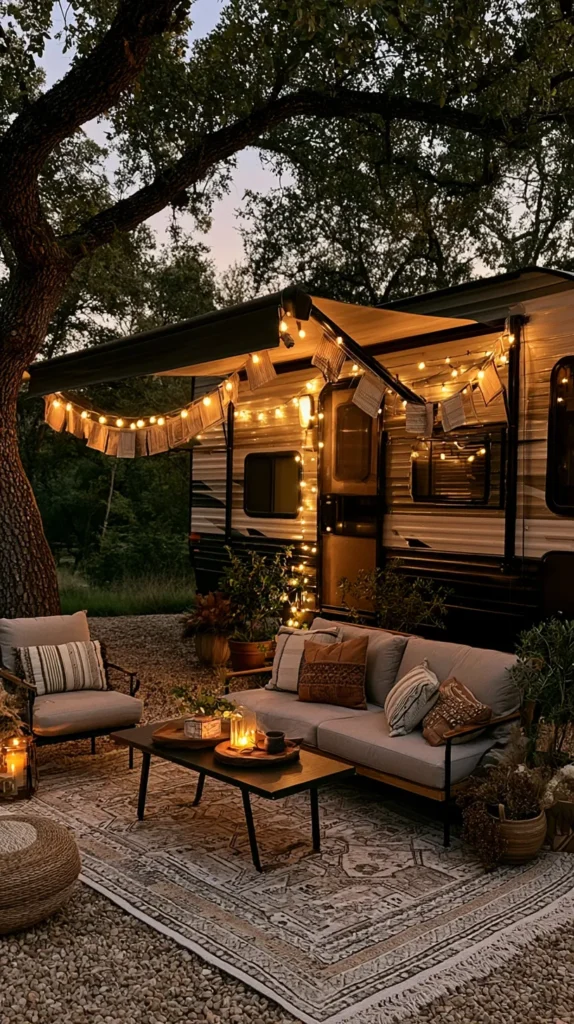
Fabric bunting or a small garland strung across a tent entrance or camper awning — the detail that announces the holiday before a guest has even reached the main gathering area.
Why the entrance matters before anything else is seen
- The first-impression timing: anyone arriving at the site sees the tent or camper before they see the fire, the table, or anything else on this list
- The low packing cost: bunting folds flat and weighs almost nothing, making it one of the easiest decorations to bring along without using significant space
- The reusable-across-trips value: unlike foraged decor, bunting packs back up the same way it came and works at the next trip too
The options
- Fabric pennant bunting, in fall tones, strung along an awning or tent ridgeline
- A small wreath or swag, hung at the tent entrance instead of a full bunting line
- Felt or burlap letter banners, spelling out a simple seasonal word or phrase
- A string of fall leaves or small pumpkins, lightweight versions made for hanging rather than the real thing
The practical execution
- Use lightweight, weather-resistant materials, since this decoration is the most exposed to wind and any rain on the trip
- Secure both ends firmly — a loose bunting line in a gust of wind becomes a nuisance rather than a decoration
- Take it down before breaking camp rather than leaving it for last, since it’s one of the easiest pieces to forget
Cost breakdown
- Fabric bunting, one set: $10–25
- Small wreath or swag: $15–35
- Total: $10–60
13. The After-Dinner Blanket Pile and Stargazing Nook (The Quiet Close to the Day)
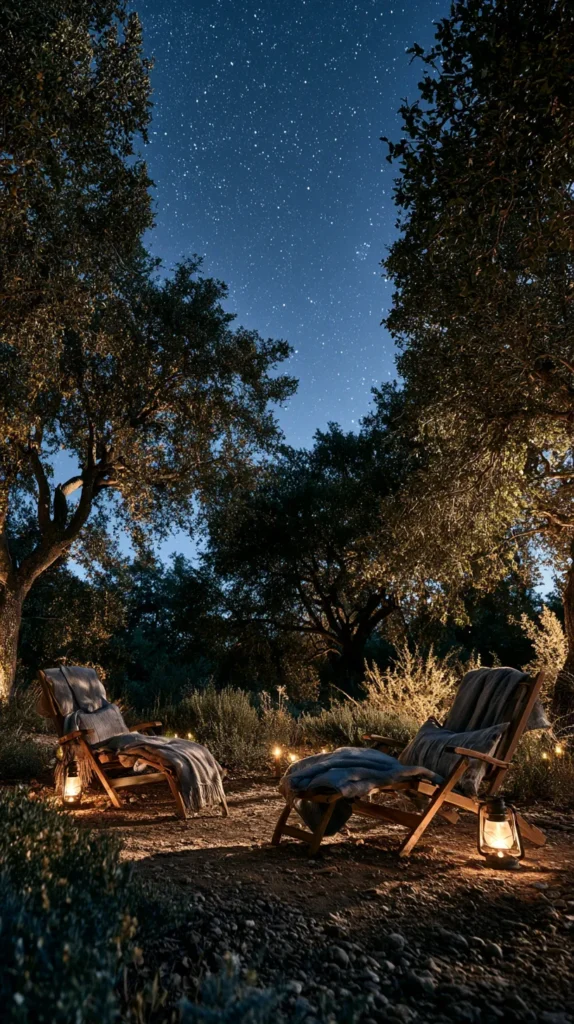
A separate small seating area, away from the main fire and table, set up with extra blankets and ground cushions for the quieter stretch of the evening after the meal — the idea that plans for the part of the day that has no other agenda.
Why this idea finishes the day rather than just the meal
- The full-day arc: most Thanksgiving decor plans for the meal itself; this idea plans for the hours afterward, which at a campsite often turn out to be the most memorable part of the day
- The lower-light requirement: this nook benefits from being slightly removed from the brightest lighting at the site, since the point is seeing the stars rather than seeing each other clearly
- The low-effort, high-payoff setup: this is largely just the blanket station from Idea #4 relocated and given a specific purpose, rather than an entirely new set of materials
The options
- A cluster of ground cushions and blankets, laid out on a tarp to keep moisture from the ground
- A reclined camp chair or two, angled away from the fire and toward open sky
- A small lantern set low and dim, just enough light to navigate to and from the spot without washing out the stars
- A thermos of the hot drinks from Idea #8, brought over rather than requiring a second station
The practical execution
- Choose a spot with a clear view of the sky, away from the brightest string lights or lanterns elsewhere on site
- Lay a tarp or ground cover underneath the blankets, since November ground holds cold and damp longer into the evening than it looks like it would
- Leave this area unplanned in terms of activity — its entire function is to give the day somewhere quiet to end
Cost breakdown
- Ground tarp: $10–25
- Additional cushions, if not already part of the blanket station: $15–40
- Total: $0–65, often using materials already brought for other ideas on this list
The night ending under open sky instead of a ceiling: the one part of a camp Thanksgiving no dining room, however beautifully set, can actually offer.
The Camp Thanksgiving Decor Roadmap
The work, sequenced:
Phase One (the infrastructure, set up first in daylight):
- The fire pit centerpiece (#1)
- The circle seating arrangement (#11)
- The cast iron and Dutch oven display (#6)
- The tent and camper bunting (#12)
Phase Two (the light layer, set up as daylight fades):
- The string light canopy (#2)
- The lantern trail (#5)
Phase Three (the table and food stations):
- The harvest table runner and centerpiece (#3)
- The hot drink station (#8)
- The s’mores bar (#10)
Phase Four (the finishing touches):
- The foraged natural centerpiece (#7)
- The gratitude garland (#9)
- The layered blanket station (#4)
- The after-dinner stargazing nook (#13)
Getting Started Before the Trip
The immediate-impact packing list:
One tote bag, three additions:
- A set of string lights and a few lanterns (Ideas #2 and #5)
- A table runner with a small lantern or candle cluster (Idea #3)
- Twine, clothespins, and a few blank tags for the gratitude garland (Idea #9)
Total cost: $50–95. Total weight: under five pounds. Everything fits in one bag, on top of the gear that’s already getting packed regardless.
The structural investment (the next big purchase):
The fire pit (Idea #1) is the single most important purchase on this list, if the campsite doesn’t already provide one. Once it’s in place, the seating circle, the cooking station, and the lantern trail all have something to arrange themselves around — much like a console table anchors a foyer, the fire anchors everything else at this gathering.
What a decorated camp Thanksgiving provides that an indoor one can’t:
The warmth that’s also the point of the holiday:
- A fire that’s both the literal heat source and the visual centerpiece of the day
- Blankets that double as both comfort and decoration, with no line between the two
- Hot drinks that give guests a reason to keep moving toward the warmth all evening
The view no dining room window can offer:
- A stargazing nook that exists purely because there’s nowhere else like it indoors
- A lantern trail that makes the walk to the table part of the evening, not just a hallway
- A sky that changes the mood of the gathering for free, without a single decoration involved
The simplicity that makes the gathering itself the decoration:
- A gratitude garland that’s finished by the guests, not by whoever set up the site
- A circle of seating that does more for the day’s feel than any single object on the table
- A meal cooked in view of everyone, rather than finished out of sight in another room
A camp Thanksgiving doesn’t need to imitate the dining room it’s standing in for. It works because it’s a different kind of gathering entirely — one where the fire is doing double duty as both heat and centerpiece, where the sky overhead is doing more decorating than any string of lights could, and where a folding table under open air ends up feeling like exactly what the holiday was always supposed to be. The garland comes down at the end of the trip. The string lights get folded back into the bin. What stays is everyone still talking around a fire long after the meal is over.