13 Laundry Room Color Schemes That Feel Fresh in 2026
13 Laundry Room Color Schemes That Feel Fresh in 2026
The laundry room spent a long time as the one space color forgot. Builder-grade white walls, a white washer and dryer, maybe a grey floor — the room treated as pure function, with color reserved for rooms people actually spend time in. That’s changed. As more homes turn laundry rooms into small, deliberately styled spaces, the color on the walls has become one of the first decisions, not an afterthought made with whatever paint was left over from another room.
What makes a laundry room color scheme feel current in 2026 isn’t a single trending shade — it’s a shift away from cool, flat, utilitarian palettes (icy blues, stark whites, clinical greys) toward warmer, more saturated, more considered ones. The laundry room is being treated less like a closet and more like a small, fully designed room, and the color scheme is where that shift shows up first.
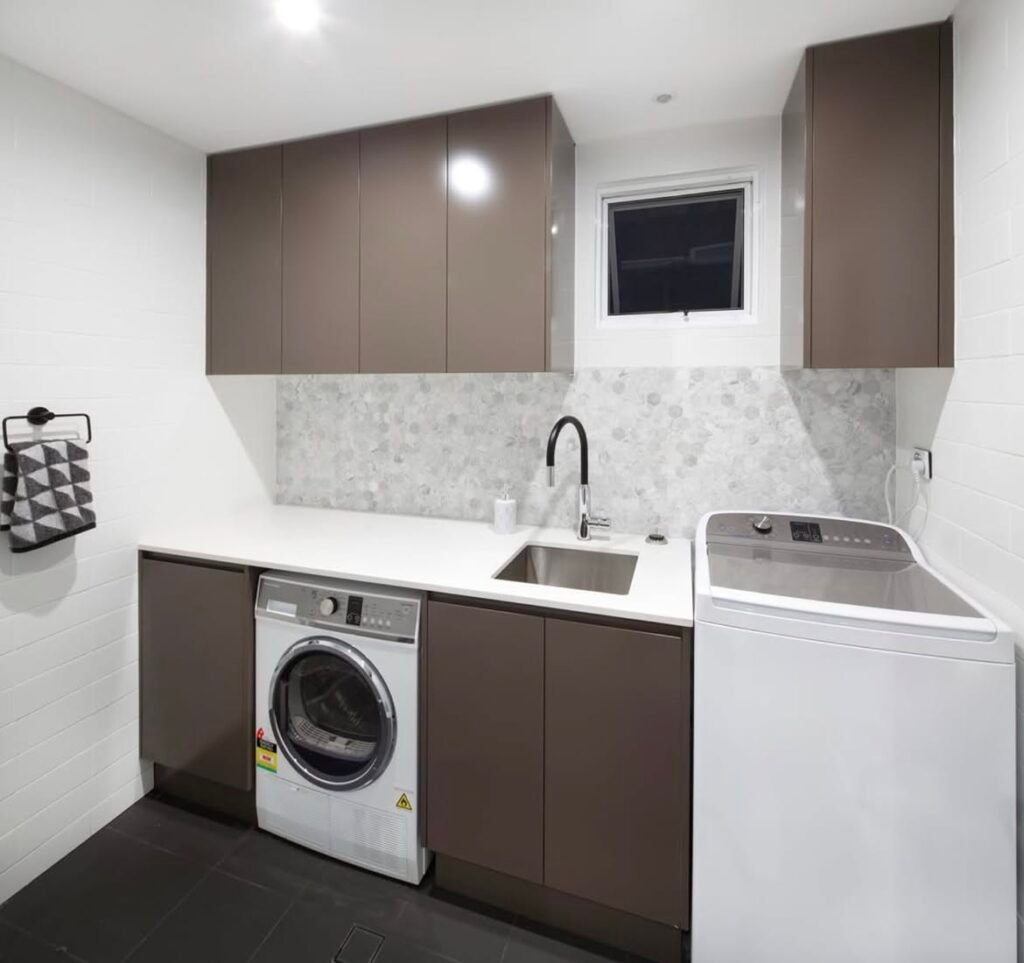
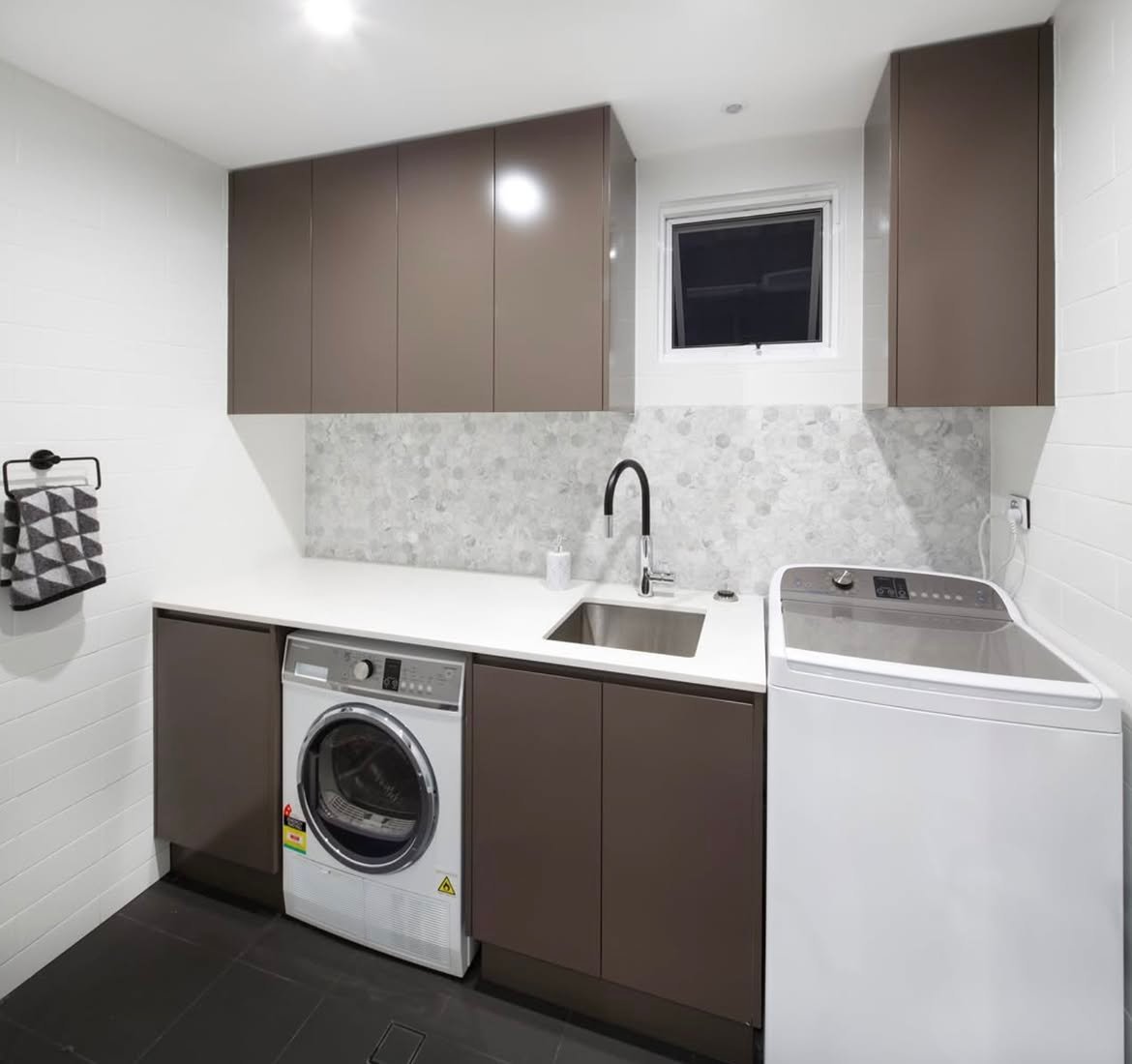
The challenge with any small utility space is that a bold color choice has less room to breathe than it would in a larger space, and a scheme that reads sophisticated in a paint swatch can read overwhelming across four close walls. The schemes below are built with that scale in mind — full palettes, not just a single wall color, so the room reads finished rather than simply painted.
Here are 13 ways to bring the laundry room’s color up to date.
Why Laundry Room Colors Feel Dated Fast
The single-color problem:
Without a full palette:
- One wall color chosen, with no consideration for trim, cabinetry, or hardware finish
- White trim and white cabinetry left as the default, regardless of the wall color chosen
- No connection between the wall color and any textiles or accessories in the room
- The result: reads as a color applied to an otherwise unchanged utilitarian room
With a full palette:
- Wall color, trim, cabinetry, and hardware considered together as one scheme
- A cohesive palette of two to three tones plus one metal finish, carried through every surface
- Textiles (towels, a bath mat, a curtain) pulled from the same palette
- The result: reads as a small, fully designed room rather than a white room with colored walls
The cool-tone default:
- Pale blues, icy greys, and stark whites have dominated laundry and utility spaces for years, largely because they read as clean and clinical
- Warmer, more saturated tones (sage, terracotta, warm butter yellow, deep olive) are what currently read as considered and current, precisely because they move away from that clinical default
- A cool-toned laundry room, however tidy, now reads more dated than a warm one, regardless of when either was actually painted
The flat-finish problem:
- A single matte wall color, with no textural or material variation, reads flat regardless of how current the shade itself is
- Pairing the wall color with a warm wood shelf, brass hardware, or a patterned floor tile keeps the scheme from reading as paint alone
The Five 2026 Color Principles
Before choosing any individual scheme below, these five principles separate a fresh, current laundry room from a simply painted one:
Warm over cool:
- Sage, terracotta, butter, and warm neutrals read current
- Icy blue, cool grey, and stark white read like the previous decade’s utility-room default
A full palette, not a single wall color:
- Wall, trim, cabinetry, and hardware considered as one scheme
- A single accent color against otherwise-unchanged white reads unfinished by comparison
One warm metal finish throughout:
- Brass, aged brass, or matte black hardware and fixtures
- Chrome and brushed nickel pull any scheme back toward a dated, clinical read
Texture alongside color:
- Wood, woven baskets, or patterned tile paired with the paint color
- Flat color on every surface reads less current than color paired with material variation
Restraint in saturation:
- A muted, slightly greyed-down version of any color reads more current than the same color at full saturation
- This is true across every scheme below, regardless of the specific hue
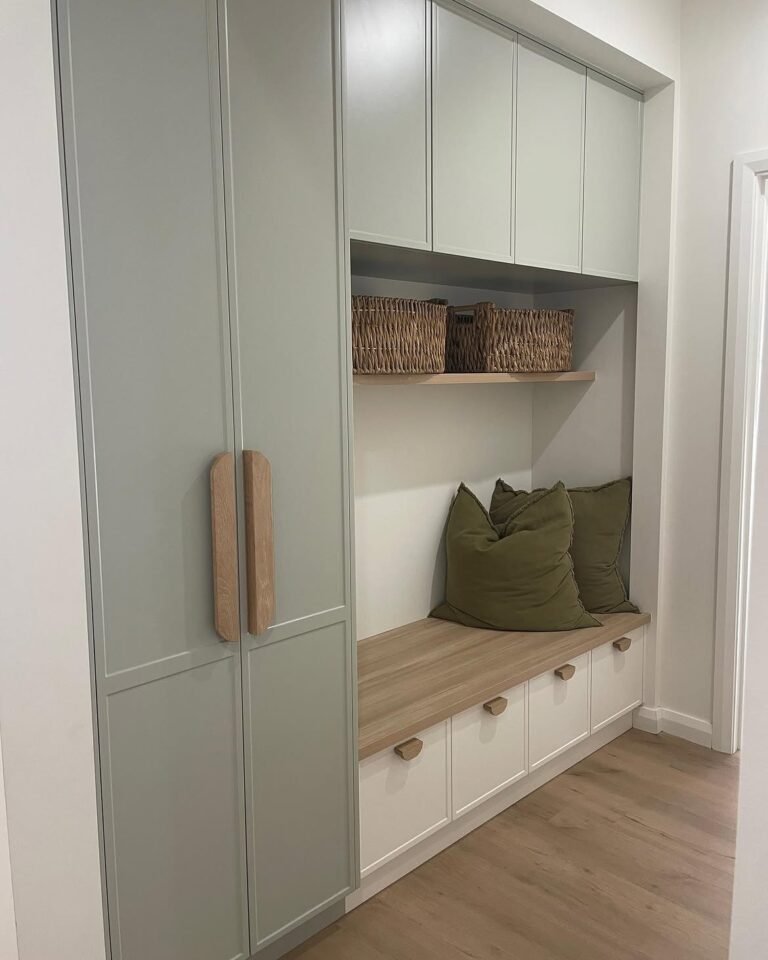
1. Soft Sage and Warm White
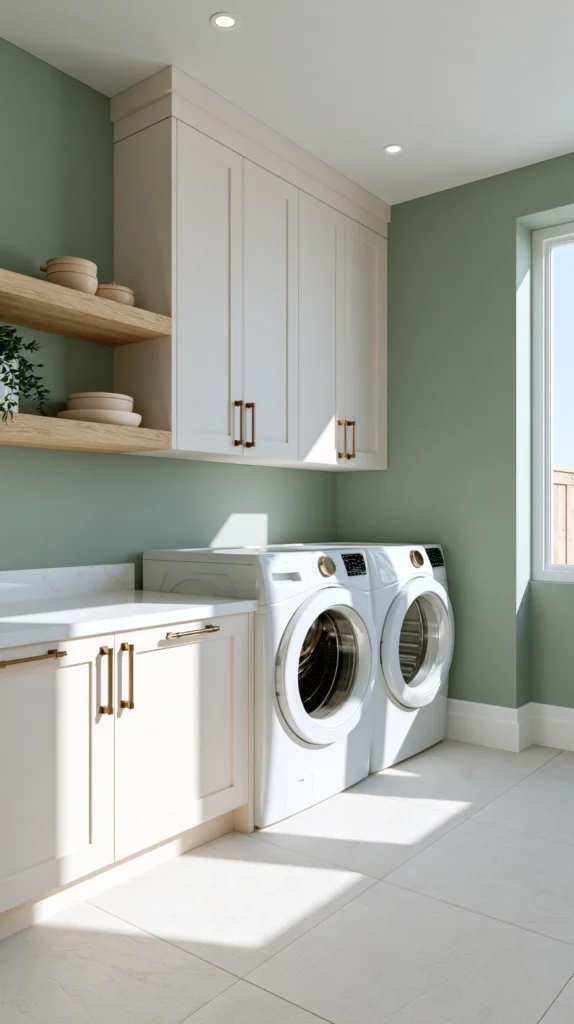
A muted sage green on the walls, paired with warm white trim and cabinetry — the calmest, most broadly current scheme on this list.
Why sage reads current in 2026
Sage has moved from a kitchen-specific trend into general use across utility and bathroom spaces, largely because its muted, greyed-down quality pairs easily with both warm and cool accents without clashing. In a laundry room specifically, it reads fresh without demanding the same commitment a bolder color would.
The palette
- Walls: muted sage (closer to a greyed eucalyptus than a bright kelly green)
- Trim and cabinetry: warm white or cream, not stark white
- Hardware: brushed brass
Cost breakdown
- Sage wall paint (1 gallon): $40–60
- Brass hardware swap: $40–80
- Total: $80–140
2. Butter Yellow and Cream
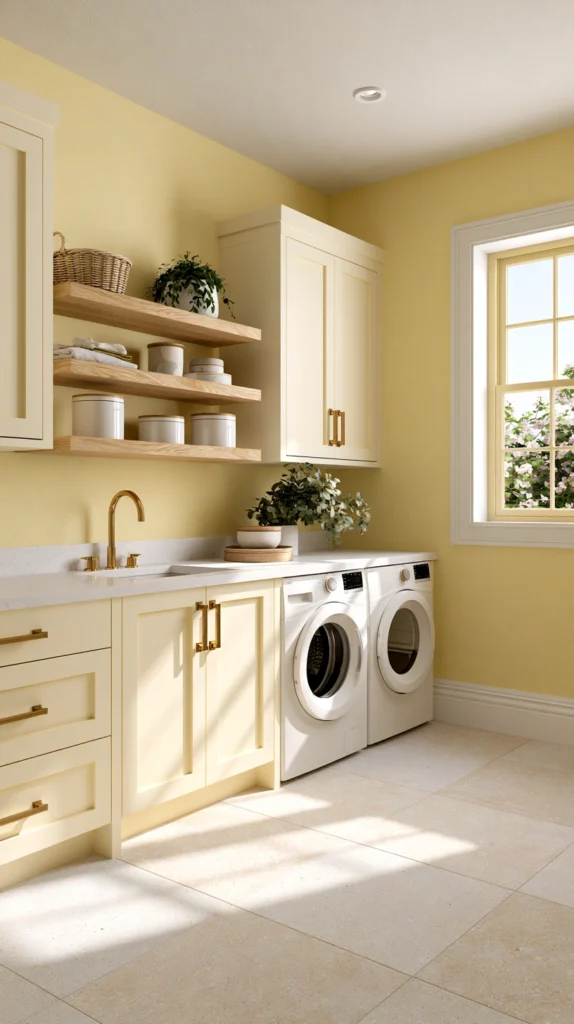
A soft, warm butter yellow on the walls, paired with cream cabinetry and natural wood accents — a scheme built for a laundry room with limited natural light.
Why butter yellow specifically, not a brighter yellow
A saturated, bright yellow can read juvenile or overwhelming in a small space. A soft, buttery yellow — closer to a warm cream with a yellow undertone than a true yellow — reads sophisticated and adds genuine warmth to a room that often lacks windows, without tipping into a nursery-adjacent palette.
The palette
- Walls: soft butter yellow
- Cabinetry: cream or warm white
- Hardware and fixtures: aged brass or warm gold
Cost breakdown
- Butter yellow wall paint (1 gallon): $40–60
- Total: $40–60
3. Terracotta and Warm Clay
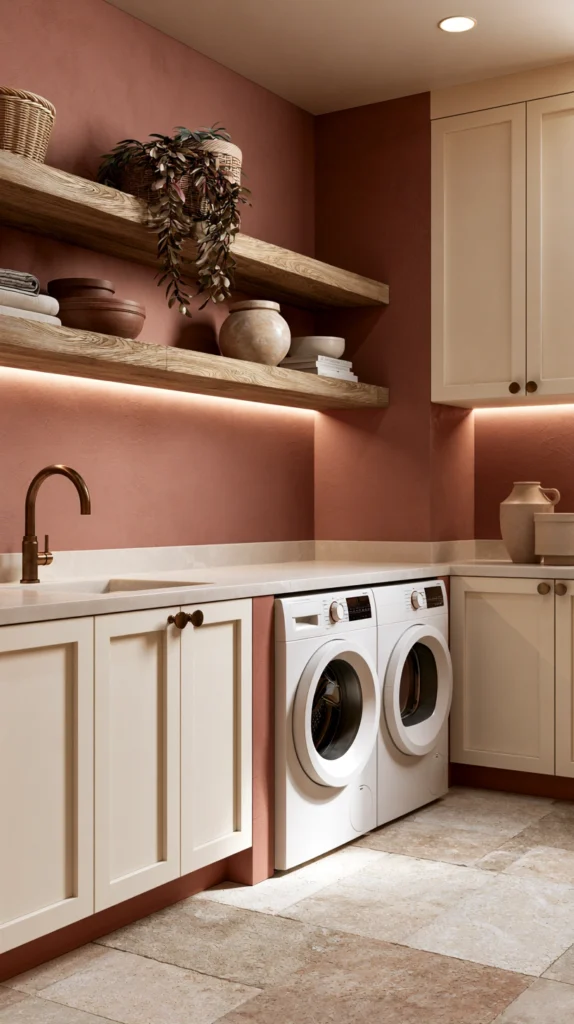
A muted terracotta or warm clay tone on the walls, paired with natural wood shelving and cream textiles — a scheme drawing on the same warm-earth palette showing up across kitchens and bathrooms in 2026.
Why terracotta works especially well in a laundry room
Terracotta’s warmth pairs naturally with the wood tones and woven baskets already common in laundry room storage, meaning the color scheme and the functional storage elements reinforce each other rather than needing to be coordinated separately.
The palette
- Walls: muted terracotta (a dusty clay tone rather than a bright orange-red)
- Shelving: natural or warm-stained wood
- Textiles: cream or oatmeal, to balance the wall’s saturation
Cost breakdown
- Terracotta wall paint (1 gallon): $40–65
- Total: $40–65
4. Slate Blue and White
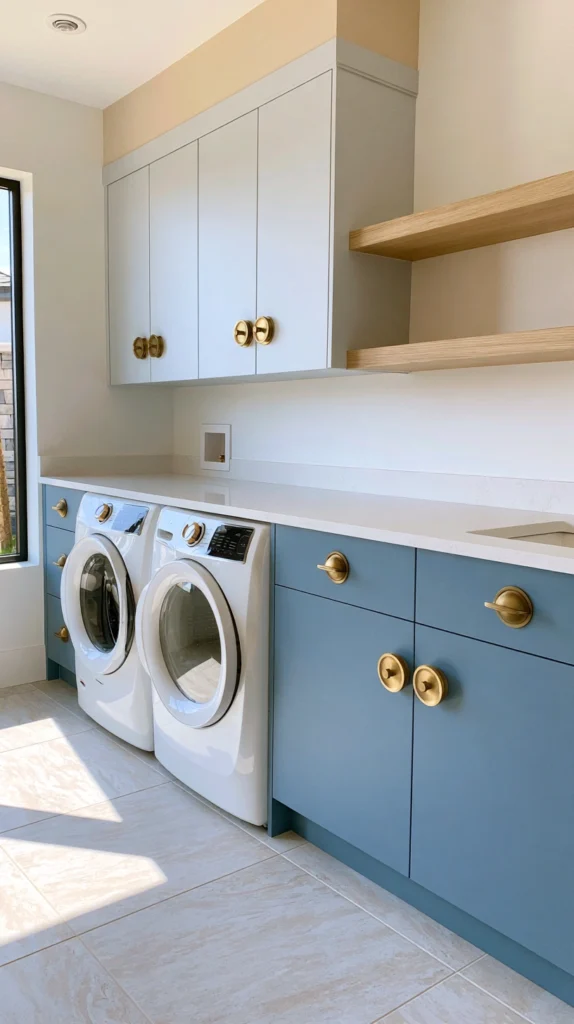
A muted, greyed-down slate blue on the lower half of the wall (or on cabinetry) paired with white above — a cooler-toned scheme that still avoids the icy, clinical blue this list otherwise moves away from.
Why slate blue reads differently than a typical laundry-room blue
The pale, icy blues historically associated with laundry and bathroom spaces read cool and clinical. Slate blue — muted, closer to a soft charcoal-blue than a sky blue — carries enough grey undertone to read sophisticated rather than utilitarian, the same quality that makes dusty blue work in a kitchen.
The palette
- Lower walls or cabinetry: slate blue
- Upper walls: warm white
- Hardware: brushed brass or warm gold, to keep the cooler blue from reading cold
Cost breakdown
- Slate blue paint (1 gallon, sufficient for cabinetry or lower walls): $40–65
- Total: $40–65
5. Warm Greige and Brass
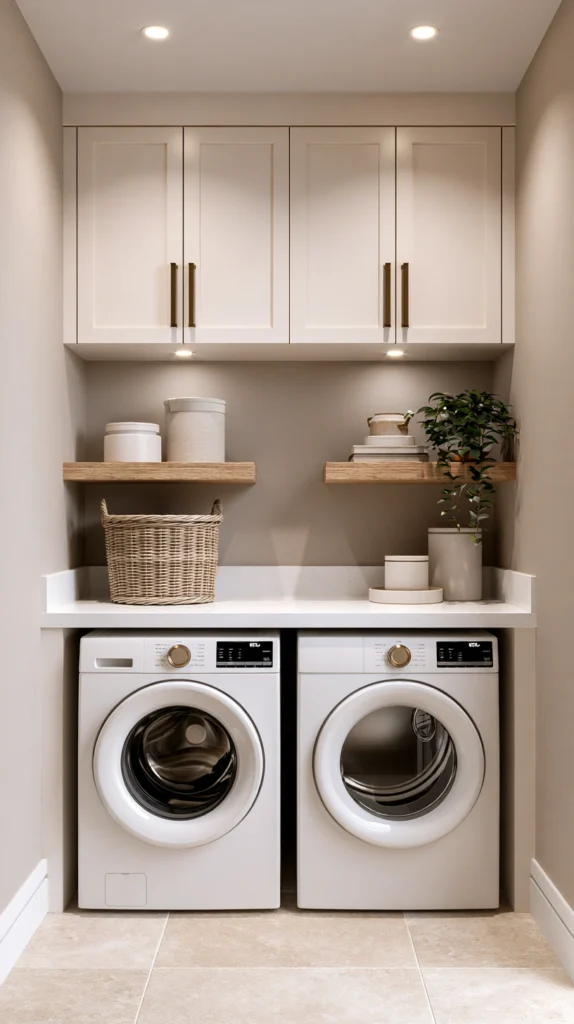
A warm, slightly beige-leaning grey on the walls, paired with brass hardware and a wood shelf — the most broadly neutral scheme on this list, suited to a laundry room adjoining a similarly neutral kitchen or mudroom.
Why warm greige over a standard cool grey
Cool grey was the utility-room default for the better part of the last decade and now reads as dated by association. A warm greige — with a beige or taupe undertone rather than a blue or green one — provides the same neutral flexibility without the cool, clinical association.
The palette
- Walls: warm greige
- Trim: warm white
- Hardware: brushed or aged brass
Cost breakdown
- Warm greige paint (1 gallon): $40–60
- Total: $40–60
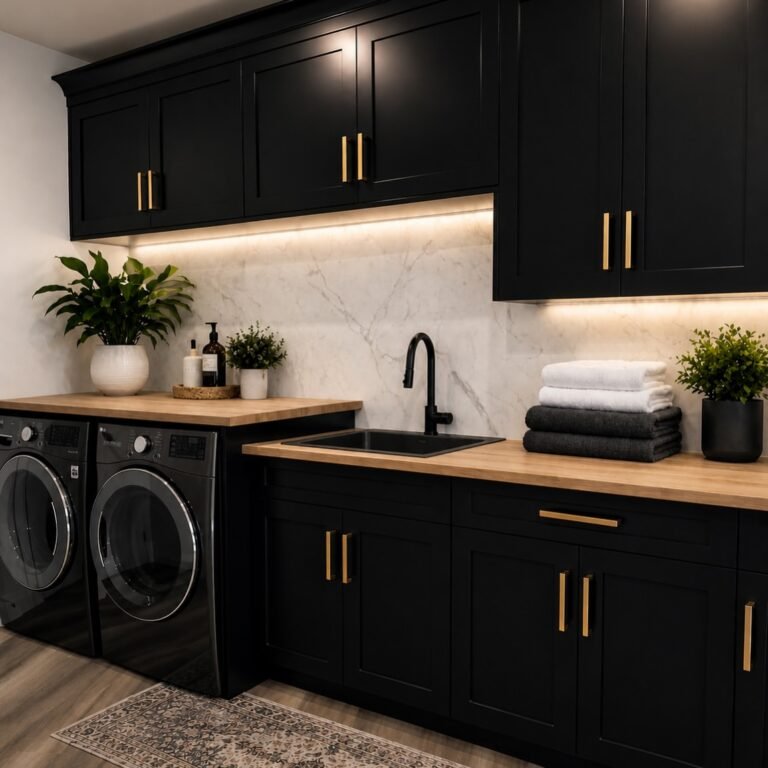
6. Charcoal and White Two-Tone
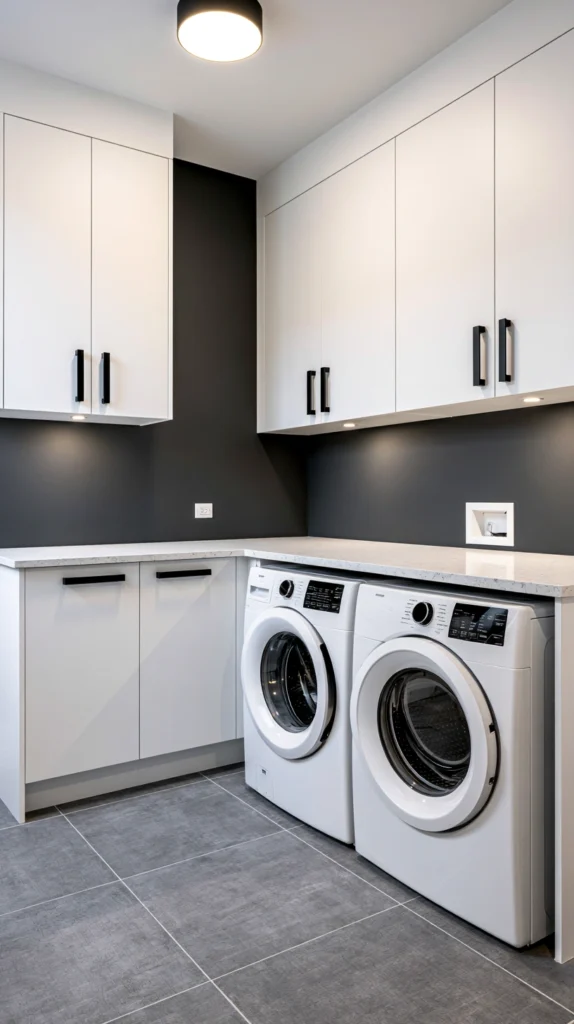
Deep charcoal on the lower third of the wall or on cabinetry, with crisp white above — a higher-contrast scheme for a laundry room meant to read bold rather than soft.
Why two-tone rather than full charcoal
A laundry room painted entirely in charcoal can feel heavy in a small, often windowless space. Splitting the wall — charcoal below, white above — keeps the drama of the dark tone while preserving enough light-reflecting white surface to keep the room from feeling closed in.
The palette
- Lower third or cabinetry: charcoal
- Upper walls: crisp or warm white
- Hardware: matte black, to reinforce the contrast rather than softening it with brass
Cost breakdown
- Charcoal paint (1 gallon): $40–65
- White paint (1 gallon): $35–50
- Total: $75–115
7. Blush Pink and Warm Wood
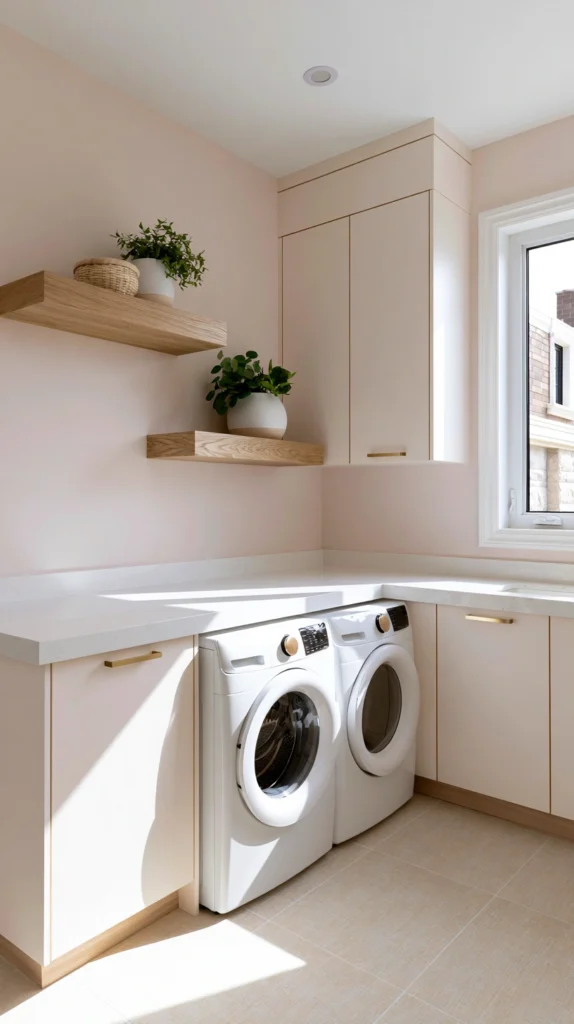
A muted, dusty blush pink on the walls, paired with warm wood shelving and brass accents — a softer scheme suited to a laundry room styled toward the warm minimalist end of the palette spectrum.
Why muted blush, not a brighter pink
A saturated pink reads playful in a way that can undercut a laundry room’s more grown-up styling elsewhere in the home. A dusty, muted blush — closer to a warm greige with a pink undertone — reads as a considered neutral rather than a color statement, while still adding noticeably more warmth than a true neutral would.
The palette
- Walls: dusty blush
- Shelving: warm oak or natural wood
- Hardware: brushed brass
Cost breakdown
- Blush wall paint (1 gallon): $40–60
- Total: $40–60
8. Olive Green and Cream
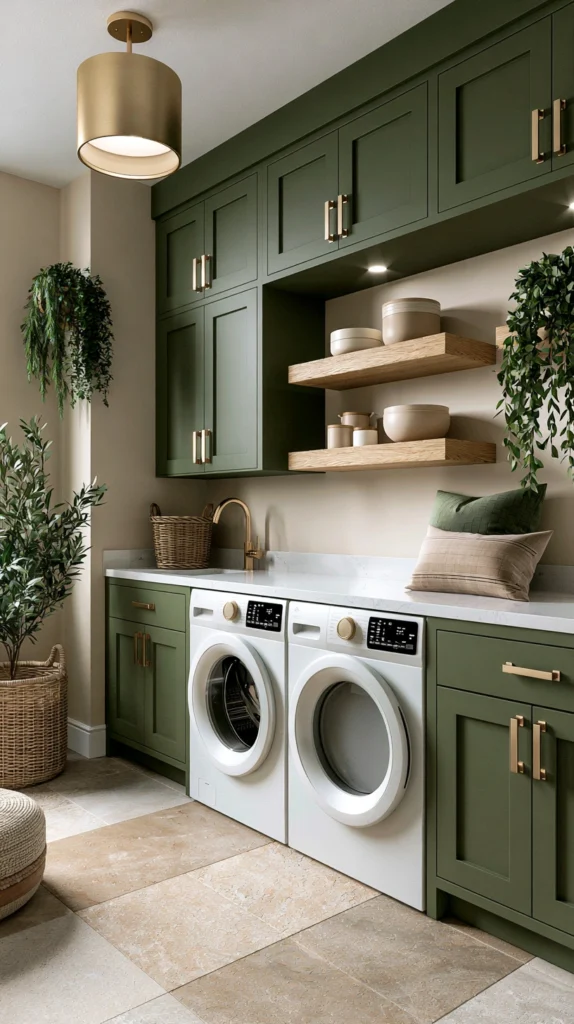
A deep, muted olive green on the walls or cabinetry, paired with cream trim and woven storage baskets — a richer, more saturated alternative to the softer sage scheme in Idea #1.
Why olive reads more current than a brighter green
Olive’s brown undertone keeps it from reading as a bright, trend-specific green, giving it more in common with a warm neutral than with a seasonal accent color. It pairs especially well with the natural, woven storage materials already common in laundry rooms.
The palette
- Walls or cabinetry: deep olive
- Trim: cream or warm white
- Storage accents: natural woven baskets, reinforcing the earthy tone
Cost breakdown
- Olive wall or cabinet paint (1 gallon): $40–65
- Total: $40–65
9. Black and White Checkerboard Floor With Warm Walls
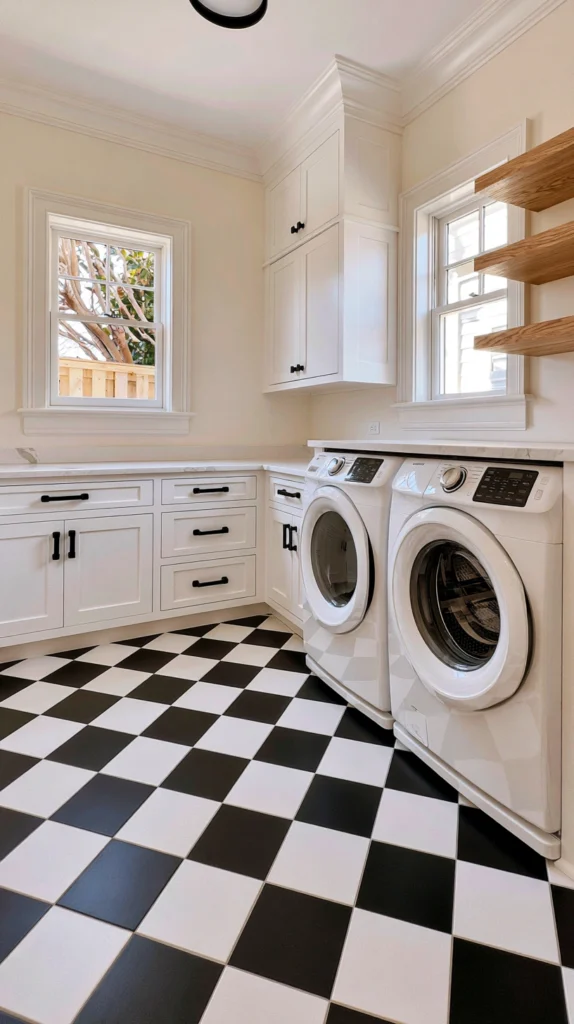
A black and white checkerboard tile or vinyl floor, paired with warm cream or terracotta walls — introducing pattern at floor level rather than through the wall color itself.
Why the pattern belongs on the floor, not the walls
A checkerboard pattern is a strong graphic statement, and applying it to the floor rather than the walls keeps the room’s vertical surfaces calm while still delivering a clear, current design signature. The warm wall color above it prevents the black-and-white floor from reading cold or overly graphic on its own.
The palette
- Floor: black and white checkerboard, in tile or peel-and-stick vinyl
- Walls: warm cream or muted terracotta
- Hardware: matte black, echoing the floor’s dark tone
Cost breakdown
- Peel-and-stick checkerboard vinyl flooring (per sq ft): $3–6
- Wall paint (1 gallon): $40–60
- Total (average small laundry room, ~40 sq ft floor): $160–300
10. Terracotta and Sage Pairing
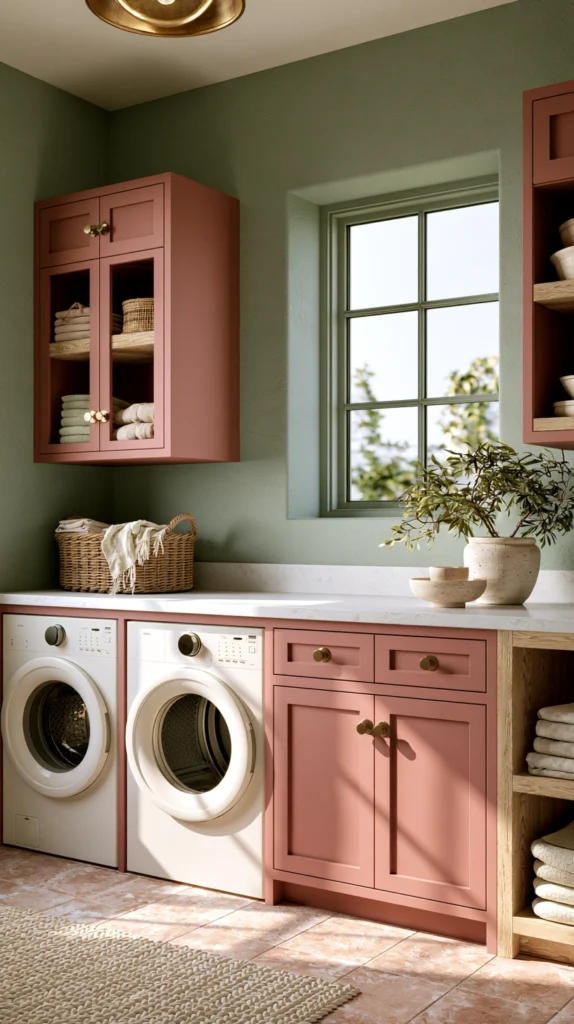
Terracotta on the lower cabinetry or one accent wall, paired with soft sage on the remaining walls — combining two of this list’s warmest, most current tones into a single layered scheme.
Why these two tones pair well together
Terracotta and sage sit on opposite sides of the color wheel but share the same muted, earthy saturation level, which keeps the pairing from reading as a high-contrast color clash. Together they read like a curated, nature-drawn palette rather than two separate color decisions.
The palette
- Lower cabinetry or one accent wall: terracotta
- Remaining walls: soft sage
- Hardware: warm brass, tying both tones together
Cost breakdown
- Terracotta paint (1 gallon): $40–65
- Sage paint (1 gallon): $40–60
- Total: $80–125
11. Muted Lavender and Warm White
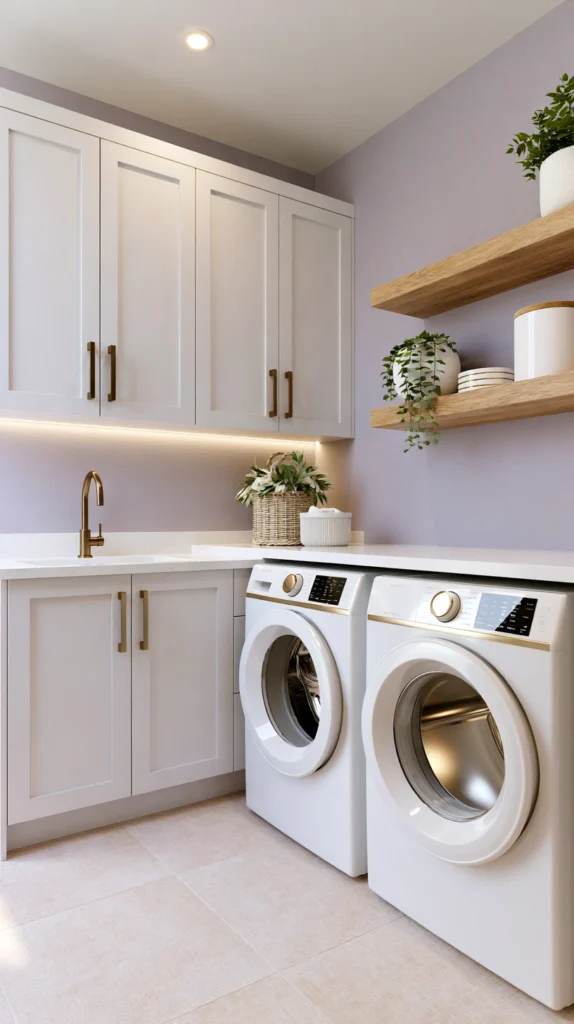
A soft, greyed lavender on the walls, paired with warm white trim — a gentle, slightly unexpected alternative to the more common laundry room neutrals.
Why muted lavender, specifically greyed rather than bright
A bright lavender or lilac reads closer to a nursery palette than a considered utility-room scheme. A muted, grey-leaning lavender, similar in saturation to the slate blue in Idea #4, reads sophisticated rather than sweet, and pairs surprisingly well with warm wood and brass accents.
The palette
- Walls: muted, grey-toned lavender
- Trim: warm white
- Hardware: brushed brass, to add warmth against the cooler wall tone
Cost breakdown
- Muted lavender paint (1 gallon): $40–60
- Total: $40–60
12. Cream and Wood Tone Monochrome
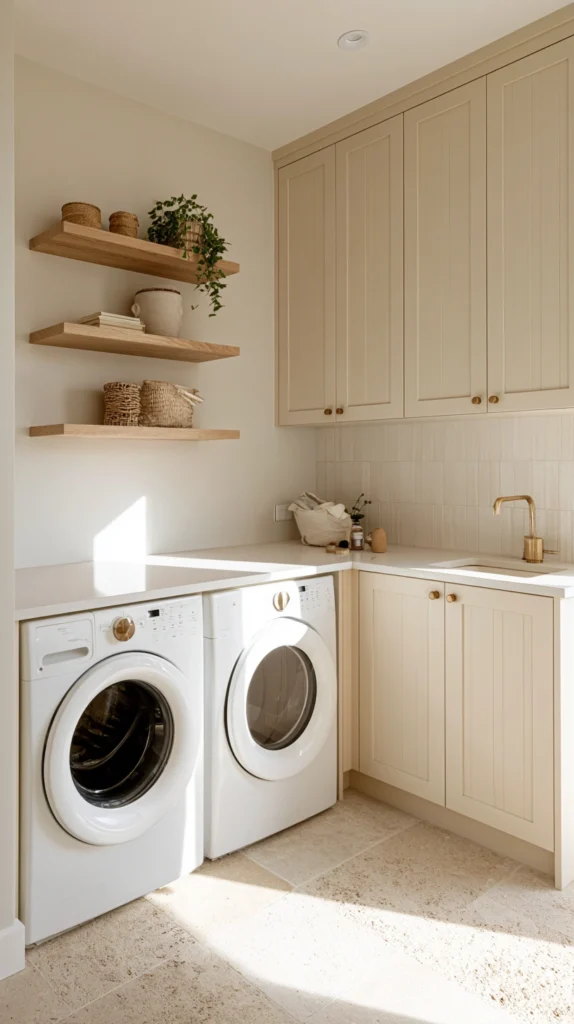
An entirely cream and warm-wood palette, with no additional accent color — walls, cabinetry, and trim all in variations of the same warm neutral, relying on material and texture rather than color contrast.
Why a monochrome scheme still reads fresh, not boring
A room built from a single warm tone family, varied only through material (painted wood, natural wood, woven baskets, linen textiles), reads calm and intentional rather than flat, provided enough texture variation is present. This scheme suits a laundry room adjoining a similarly neutral kitchen or entryway, where consistency across rooms matters more than a standalone color statement.
The palette
- Walls and cabinetry: cream, in two closely related shades for subtle depth
- Shelving: natural warm wood
- Hardware: brushed brass or warm gold
Cost breakdown
- Cream wall paint (1 gallon): $35–55
- Total: $35–55
13. The Complete 2026 Fresh Laundry Room
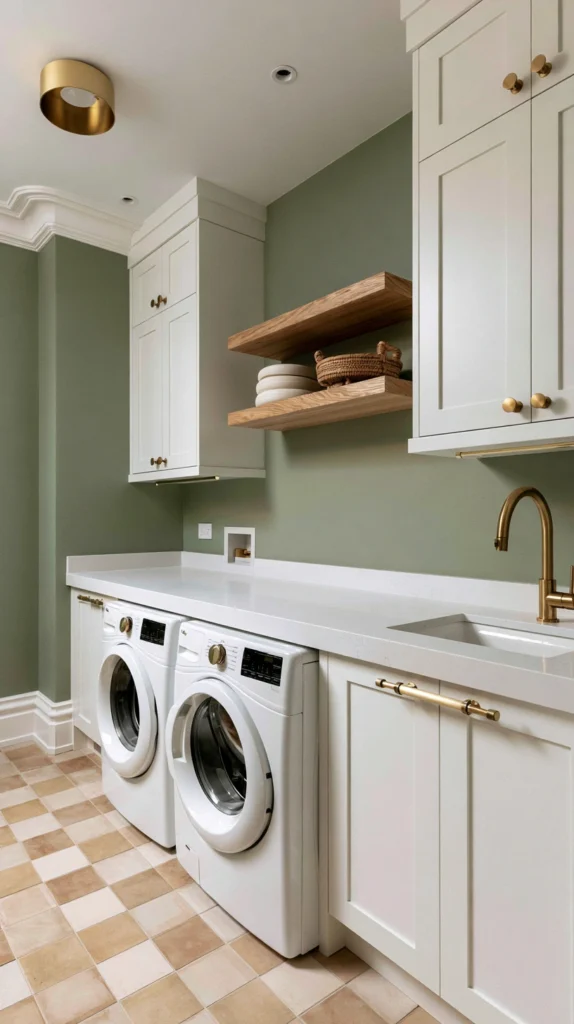
A laundry room color scheme built with every principle above applied together — the definitive version of a laundry room palette that reads current rather than simply painted.
What separates the complete scheme from a single wall color
A laundry room with a trending wall color but chrome hardware and a bare wire shelf still reads unfinished, regardless of how current the paint itself is. The complete version resolves every layer at once — wall color, trim, hardware, texture, and floor — so the palette reads as one cohesive room rather than a single updated surface in an otherwise unchanged space.
The elements of the complete scheme
The wall palette:
- One warm, muted color as the primary tone — sage, terracotta, or butter yellow depending on preference (Ideas #1, #2, or #3)
- Warm white or cream trim throughout, never stark white
The metal finish:
- One consistent warm metal — brushed or aged brass — across hardware, faucet, and light fixtures
- No chrome or brushed nickel anywhere in the room
The material layer:
- Natural wood shelving, replacing any wire shelving
- Woven baskets for storage, reinforcing the earthy, textural quality of the wall color
The floor:
- A patterned or warm-toned floor, whether a checkerboard vinyl (Idea #9) or a simple warm-toned tile, rather than a bare cool-grey floor
The textiles:
- Towels and a bath or floor mat pulled from the same warm palette as the walls
The room on an ordinary laundry day:
The walls read warm and current the moment the door opens, not just as a coat of trending paint but as a full, considered palette — brass catching the light on the cabinet pulls, natural wood shelving holding glass canisters against the same warm backdrop. Nothing about the room reads like the cool, clinical utility space it might have been five years ago.
Cost breakdown for the complete scheme
Assuming a starting point of a plain white laundry room with cool-toned hardware:
- Wall paint: $40–65
- Trim paint: $35–50
- Hardware and fixture swap: $150–320
- Wood shelving: $55–110
- Woven baskets: $60–120
- Floor update: $160–300
- Textiles: $40–80
Total: $540–1,045
Phased over two stages:
Stage one ($100–200):
- Wall and trim paint
- Textiles
Stage two ($400–850):
- Hardware and fixtures
- Wood shelving and baskets
- Floor update
The complete fresh laundry room: not a single trending color, but a full, warm, textured palette applied consistently enough that the room reads designed rather than simply repainted.
The Question Before Any Laundry Room Color Project
Before choosing a paint color:
What does the rest of the home’s palette already lean toward — warm or neutral?
If the answer is: warm, earthy tones throughout — terracotta, olive, or the terracotta-and-sage pairing will feel connected rather than isolated.
If the answer is: mostly neutral, with pops of color elsewhere — the warm greige or cream monochrome schemes will feel consistent with the rest of the home.
If the answer is: cooler tones throughout — slate blue or muted lavender will bridge the laundry room to the rest of the palette without introducing an unrelated warm tone.
If the answer is: undecided, and the room can stand somewhat apart — this is where a bolder choice, like the charcoal two-tone or the checkerboard floor, has the most room to make its own statement.
The color follows the home’s existing palette more than any single trend does. A scheme that connects to the rest of the house will read more finished than the single most current shade applied in isolation.
Getting Started This Weekend
The immediate laundry room refresh:
Paint one wall or the lower half of the cabinetry in the chosen color.
A small enough area to test the tone before committing to the full room.
Swap hardware to a warm metal finish.
Immediate impact, even before any paint changes are made.
Replace one wire shelf with a wood one, if storage allows.
Reinforces the warm palette at the material level, not just the color level.
Add one warm-toned textile — a towel, a mat, or a curtain.
Confirms how the full palette will read together before any larger purchase.
The rest of the design: the elaboration of this weekend.
The palette: the beginning. The fresh laundry room: what holds up well past whichever year introduced it.