13 Indoor-Outdoor Living Ideas That Feel Effortlessly Seamless
13 Indoor-Outdoor Living Ideas That Feel Effortlessly Seamless
There is a threshold problem that most homes have and most people cannot quite name. The indoor space is comfortable and finished and genuinely lived in. The outdoor space is — in some approximate way — also there, also used, also a part of the property. But between the two there is a join, a seam, a moment of transition that reminds you that you are moving between two different kinds of space rather than simply moving through one continuous one.
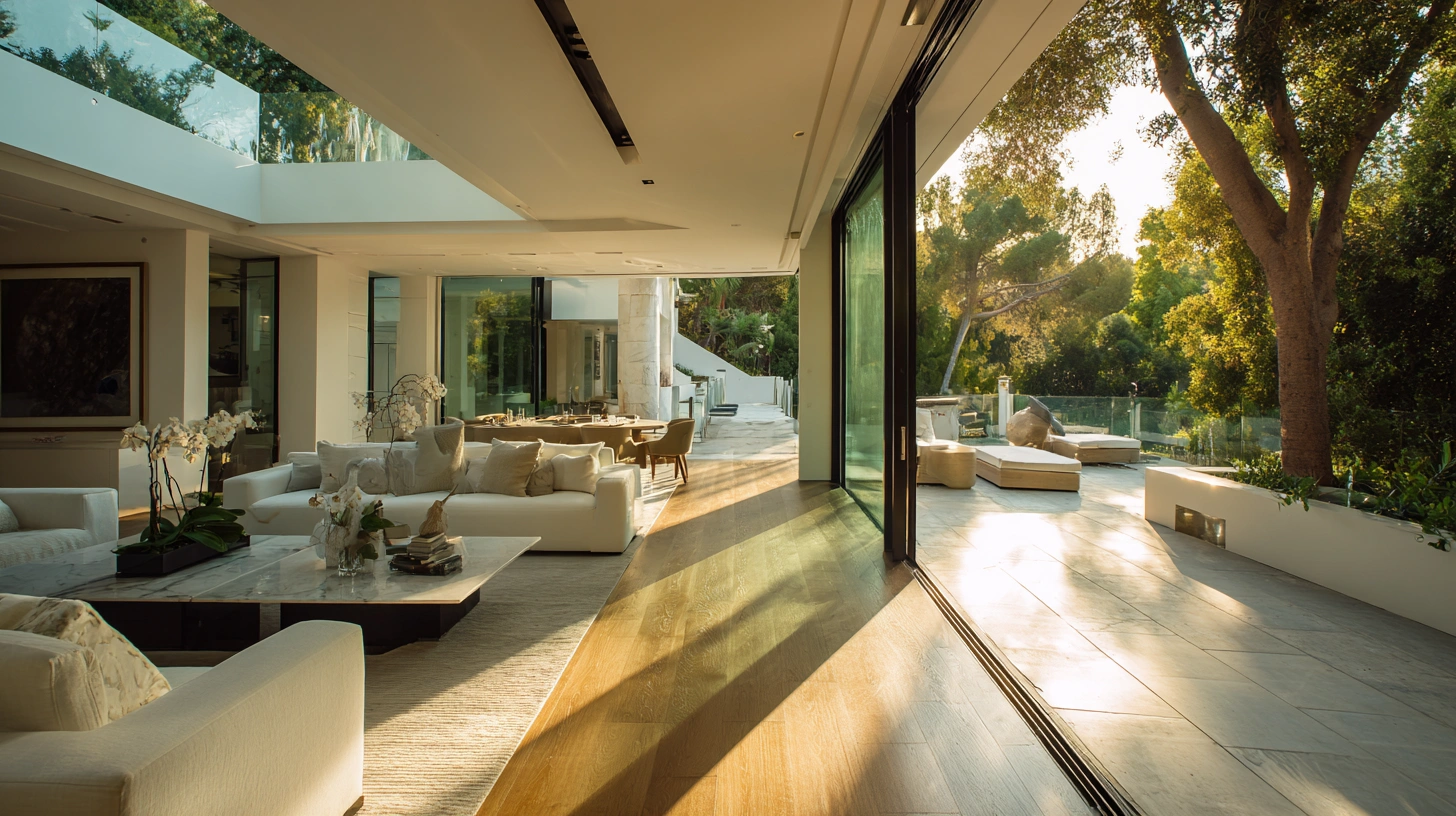
The homes that feel different — the ones where guests drift naturally between inside and outside without registering the change, where the kitchen and the patio feel like the same room, where the boundary between the built and the natural is something you experience without noticing — have not necessarily spent more money or done more work. They have simply removed the seam. The floor continues. The light connects. The furniture speaks the same language on both sides of the door.
That continuity is what each idea below is working toward. Each includes what you will need, what it will cost, and a practical tip to make the transition as effortless as the idea deserves.
1. The Continuous Floor Material
Budget: $100 – $800
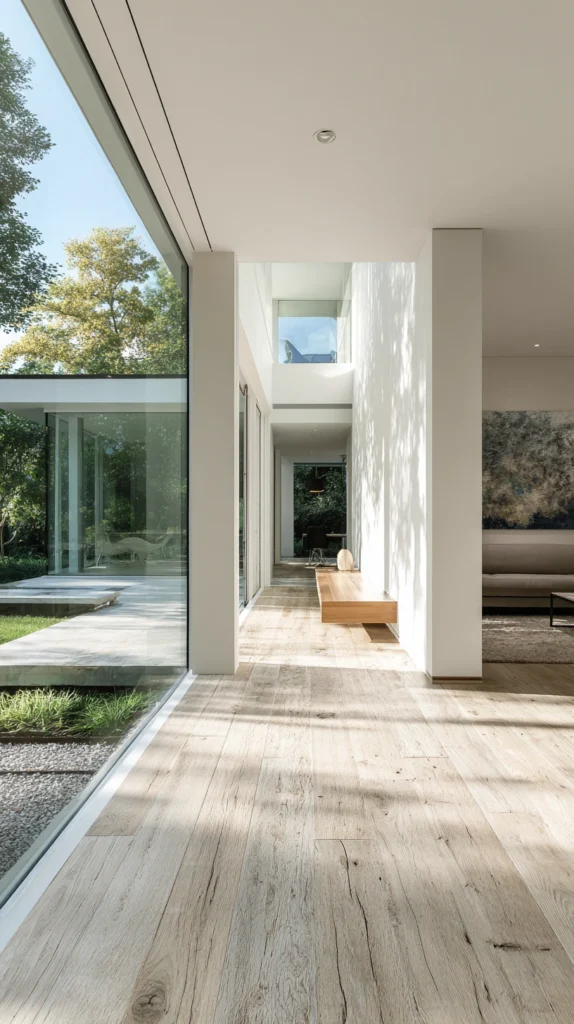
Using the same flooring material — or a material of matching tone and texture — on both the indoor and outdoor floor surfaces is the most structurally powerful seamlessness idea on this list. When the eye travels from inside to outside and the floor does not change, the brain does not register a room boundary. It registers continuation, which is the sensation that indoor-outdoor living is trying to produce.
Large format porcelain tiles rated for both indoor and outdoor use cost $3–$8 per tile in a standard 60 by 60 centimetre size. Exterior timber decking in a species and finish that matches interior timber floors runs $15–$40 per square metre. Polished concrete — poured inside and continued with exposed aggregate outside — costs $50–$120 per square metre in materials and professional finishing. The threshold between the two surfaces should be as minimal as possible — a slim aluminium transition strip ($8–$15 per metre) rather than a raised lip or a change of level that the eye reads as a boundary.
Style tip: Choose a floor material that is rated for outdoor use from the beginning rather than attempting to make an indoor material work outside. A porcelain tile specified for outdoor use has the slip resistance, frost resistance, and surface hardness that an indoor equivalent lacks, and the structural difference matters regardless of how similar the two look from above.
2. The Wide Opening Door System
Budget: $800 – $5,000
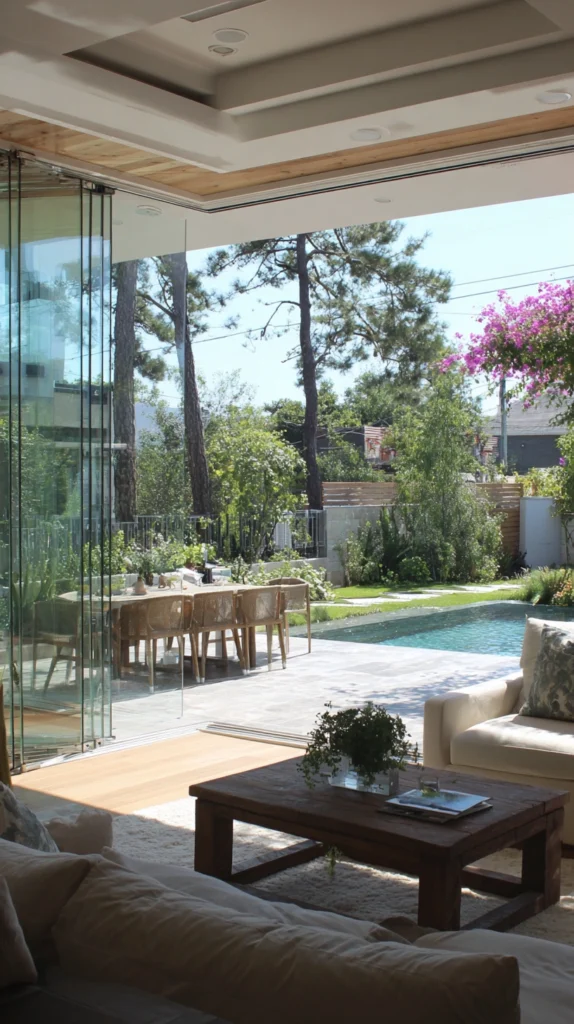
The single most effective structural change available to an indoor-outdoor living arrangement is a door system that opens wide enough that the boundary between inside and outside becomes experiential rather than physical. Bifold doors that fold completely to one side, sliding doors that disappear into a wall pocket, or a set of French doors opened to their full width all produce a version of the same effect: the wall opens and the inside and outside become one room.
Aluminium bifold doors in a standard 3-metre opening cost $800–$2,500 installed. A sliding pocket door system runs $1,500–$4,000. Standard French doors cost $400–$1,200. The investment is significant but it is also the only item on this list that changes the actual architecture of the connection between inside and outside rather than the decoration on each side of it. A wide-opening door system does for indoor-outdoor living what no amount of matching furniture or continuous flooring can fully replicate on its own.
Style tip: Specify a door system with a flush or near-flush threshold — a threshold of less than 15 millimetres in height change — rather than a standard raised sill. A raised sill is the physical seam that a wide-opening door system is otherwise eliminating, and a door that opens 3 metres wide but has a 50-millimetre step at the base has not resolved the indoor-outdoor boundary; it has simply widened the gap it creates.
3. The Matching Furniture Language
Budget: $200 – $2,000
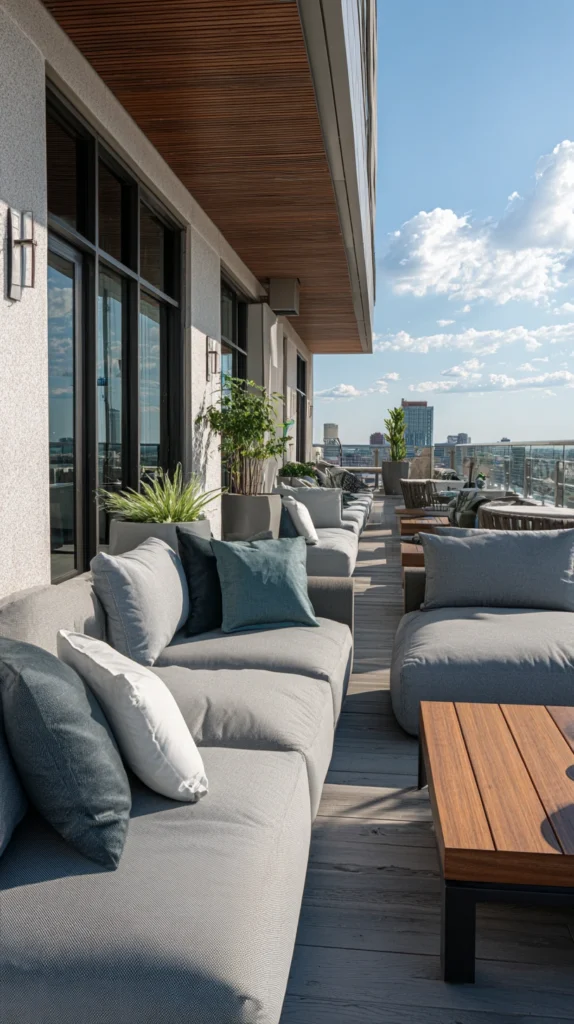
Using furniture of the same visual language — the same material, the same period, the same aesthetic — on both sides of the threshold creates a continuity that makes each space look like it was designed as part of the same room rather than as two separate decorating decisions that happen to be adjacent. An interior with natural timber, linen, and warm ceramics benefits from outdoor furniture in teak, outdoor linen cushions, and terracotta pots rather than the white plastic and primary-coloured cushions that so often appear in the garden of a carefully considered interior.
All-weather rattan furniture to match an indoor rattan accent costs $150–$600. Teak outdoor furniture to match interior timber costs $300–$1,500. The matching does not need to be literal — the same wood species in both indoor floor and outdoor furniture, or the same metal finish in interior light fittings and exterior furniture legs — but the relationship between the two sides needs to be visible enough that the eye registers coherence rather than contrast.
Style tip: Carry one indoor material explicitly outside rather than simply choosing similar outdoor materials. A ceramic indoor side table duplicated in an outdoor ceramic pot, an interior linen cushion fabric reproduced in an outdoor version, an indoor pendant light finish matched in an outdoor wall sconce: one element that is genuinely continuous across the threshold reads more powerfully than two elements that are merely similar.
4. The Consistent Colour Palette
Budget: $20 – $200
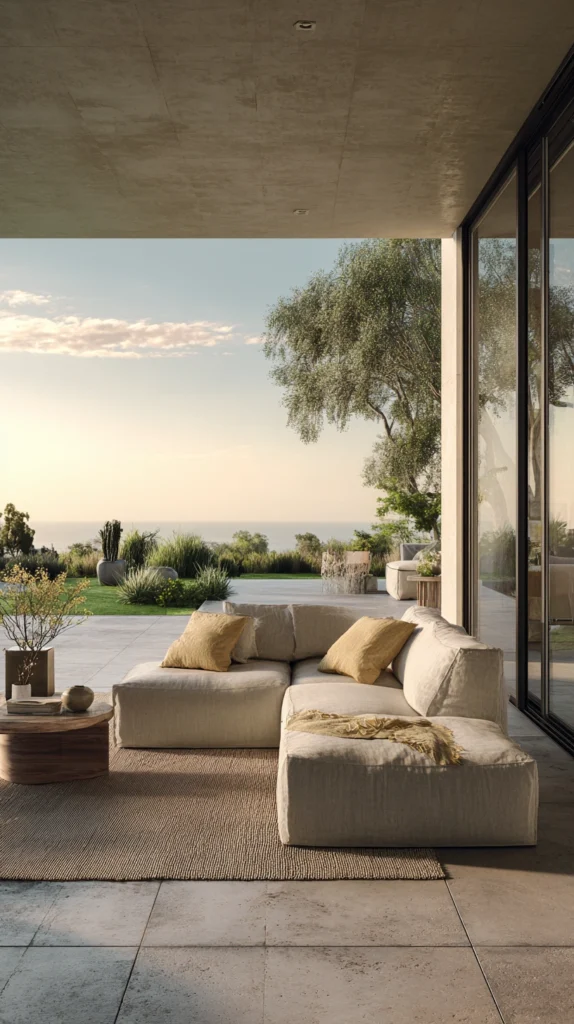
Extending the interior colour palette to the outdoor space — using the same tones in cushions, pots, planters, and outdoor furniture that appear in the indoor furnishings — creates a visual continuity that persists even when the door between the spaces is closed. Through a glass door, an outdoor space in the same palette as the room it is viewed from reads as an extension of that room; one in a different palette reads as a separate space seen through a window.
Outdoor cushions in the interior colour palette cost $15–$40 each. Planters in a matching colour run $20–$60. An outdoor rug in the same tone as the interior rug costs $40–$120. The palette extension does not need to be exact — the outdoor version can be a more faded, more natural version of the interior colours — but the relationship between the two should be visible without effort.
Style tip: Start with the interior colours and choose the outdoor palette from them rather than the reverse. Choosing an outdoor palette independently and then attempting to match the interior to it is considerably more difficult and more expensive — the indoor space has walls, floors, and furniture that cannot be easily changed, while the outdoor space has cushions, pots, and a rug that can be changed for the cost of a single afternoon’s shopping.
5. The Indoor Plant to Outdoor Plant Continuation
Budget: $30 – $150
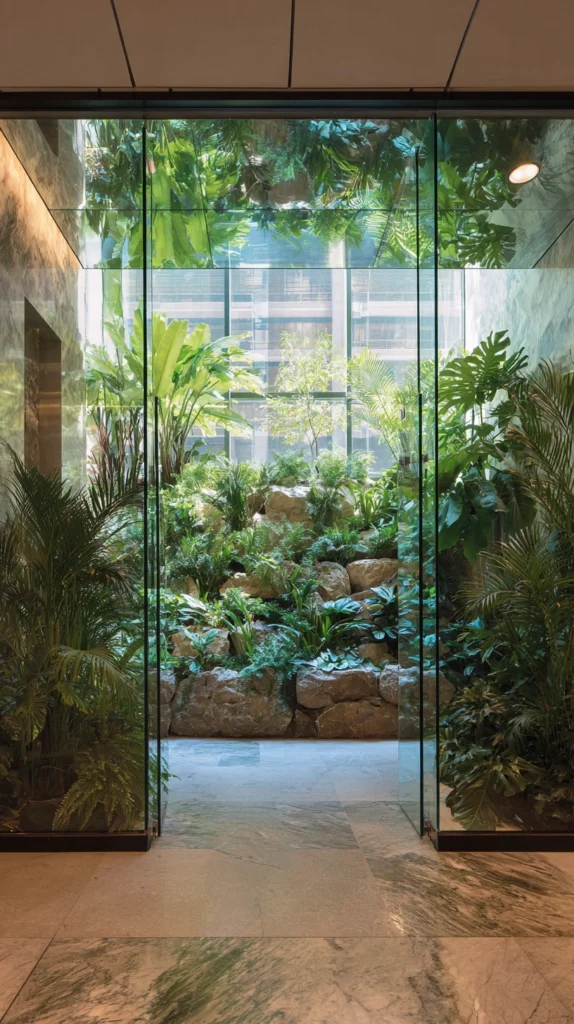
Placing the same plant species — or the same visual type of plant — on both sides of the threshold creates a botanical continuity that makes the inside and outside feel like versions of the same garden rather than a curated interior and a separate outdoor space. A large fiddle-leaf fig inside and a similar-scaled olive tree outside. A collection of succulents on the interior windowsill continued in a succulent bowl on the outdoor table. The plant is the thread that runs through the threshold.
Indoor plants suitable for continuation — fiddle-leaf fig, rubber plant, peace lily — cost $20–$60 each. Outdoor counterparts in a similar scale and visual character run $25–$80. The continuation does not need to be the same species — it needs to be the same visual weight, the same leaf shape or texture, or the same general botanical character. A large-leaved indoor plant continued by a large-leaved outdoor one reads as intentional; a spiky indoor succulent continued by a spiky outdoor agave reads as a considered design thread even though the species are entirely different.
Style tip: Position indoor plants near the glass door and outdoor plants near the same door so that both are visible simultaneously from the primary seating position inside. The visual connection between the two is strongest when both plants are in the same sightline — seen together rather than discovered separately — and the sightline from the sofa through the glass door to the outdoor plant is the most frequently experienced view of the indoor-outdoor connection.
6. The Outdoor Room Lighting Match
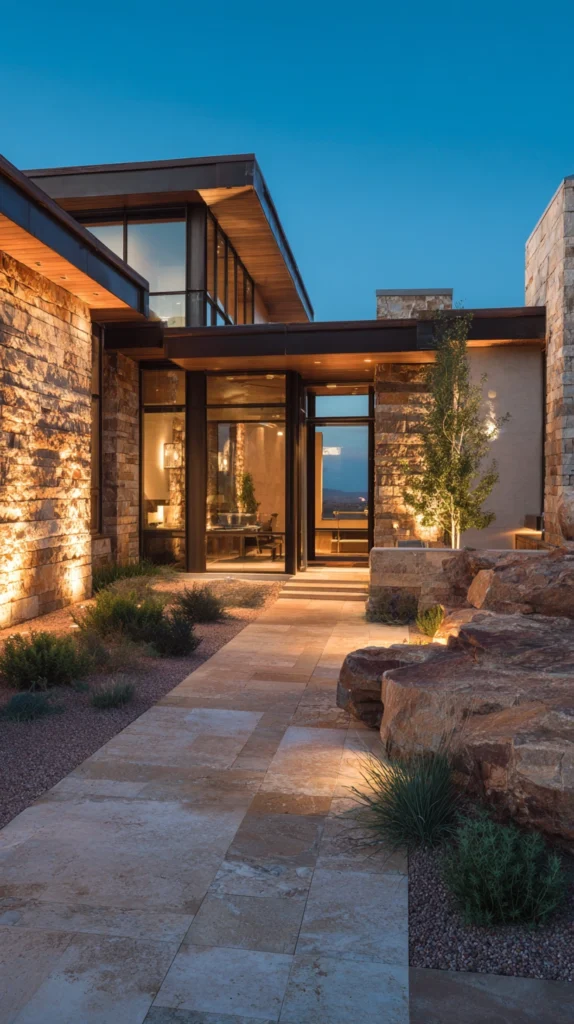
Budget: $40 – $300
Matching the quality and warmth of outdoor lighting to the interior lighting — specifically, using the same colour temperature of bulbs on both sides of the threshold — is the detail that makes the two spaces feel unified at the most-used time of day: evening. A warm interior lit by 2700K bulbs viewed through a door to an outdoor space lit by cool 5000K LEDs or — worse — nothing at all, reinforces the boundary rather than dissolving it. The outdoor space looks cold and separate; the indoor space looks warm and enclosed.
Outdoor wall sconces in a finish matching interior fittings cost $30–$100 each. Outdoor festoon lights at 2700K warmth run $20–$50. A smart outdoor plug that allows the outdoor lights to be controlled from the same system as the indoor ones costs $15–$30 and eliminates the separate switching that reminds users the two spaces are independently managed. The warmth of the light colour — 2700–3000K for the outdoor space — is more important than the fitting itself.
Style tip: Install the outdoor lighting so it illuminates the floor and the planting rather than shining directly at the people in the outdoor space or back into the indoor space. Outdoor lighting that creates a glare visible from inside the house makes the indoor space feel overlooked and the outdoor space feel exposed; lighting that creates a warm wash of illumination on surfaces rather than a directed beam makes the outdoor room feel atmospheric and the indoor view of it feel attractive rather than intrusive.
7. The Covered Transition Zone
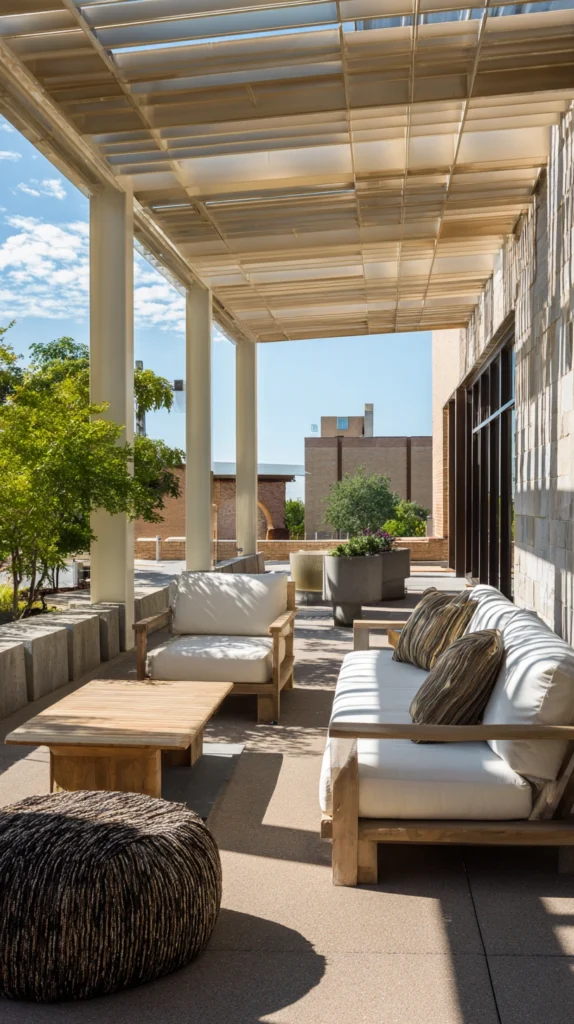
Budget: $200 – $2,000
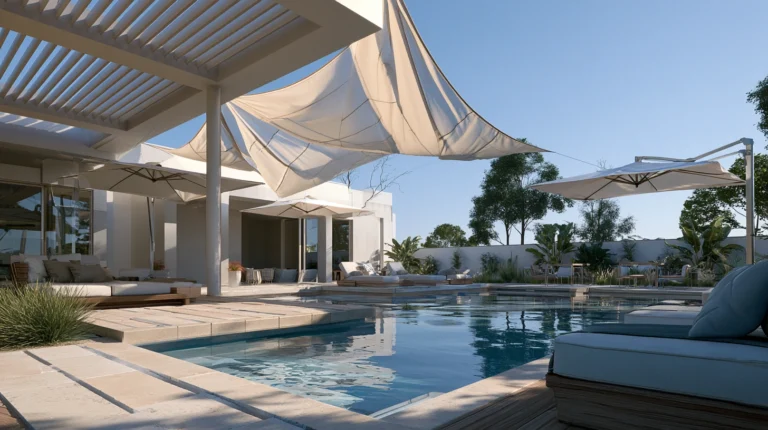
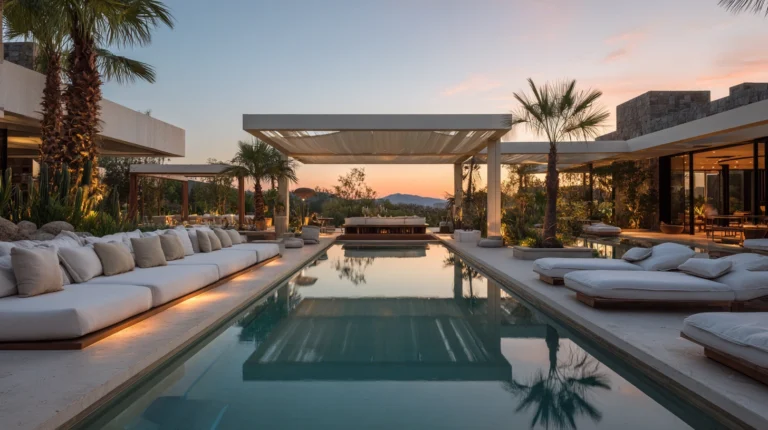
A covered area immediately outside the door — a deep overhang, a veranda, a lean-to pergola — creates a transitional zone between the indoor and outdoor spaces that belongs fully to neither and functions as the seam between them. In a covered transition zone, the experience of inside gradually gives way to the experience of outside rather than switching between the two at the door threshold. Rain can fall without ending the outdoor experience; full sun can be avoided without returning inside.
A lean-to pergola attached to the house wall in a 3 by 2 metre size costs $200–$600. A polycarbonate or glass roof panel to waterproof the structure runs $80–$200. A louvred extension kit for an existing pergola costs $300–$800. The covered transition zone is most effective when it is deep enough to sit in — at least 2.5 metres from the house wall — rather than serving only as a porch. A zone deep enough for a chair and a side table is a zone that genuinely bridges the two spaces.
Style tip: Furnish the covered transition zone as a room rather than leaving it as an empty structural element. A chair, a small table, and a plant in the covered zone between inside and outside creates a middle space that makes the indoor-outdoor movement feel gradual rather than binary — inside, covered middle, open outside — and the gradual transition is what the seamless experience is ultimately trying to achieve.
8. The Herb Garden Kitchen Connection
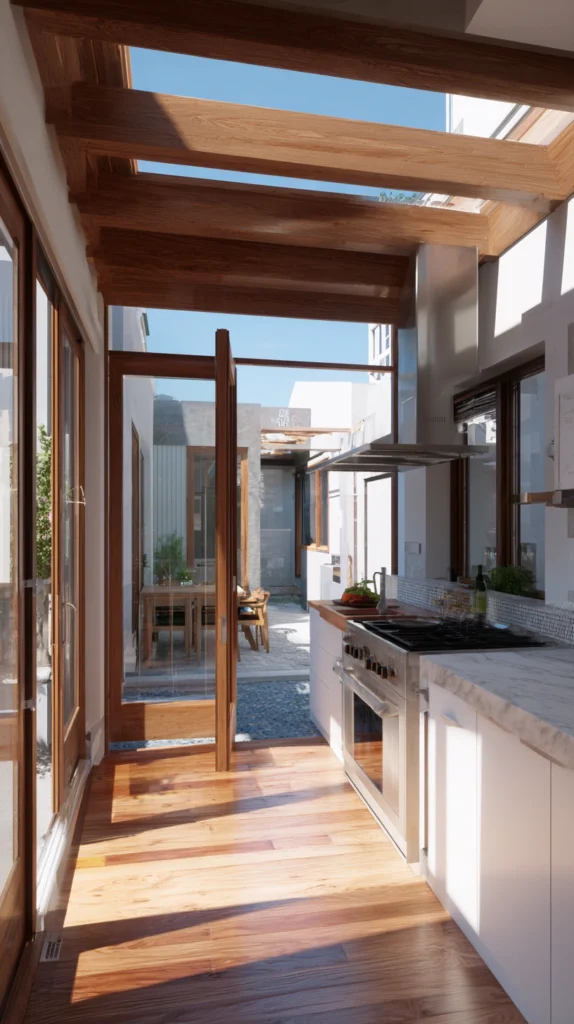
Budget: $25 – $100
Placing the herb garden — whether in pots, in a wall planter, or in a small raised bed — immediately outside the kitchen door or window creates a functional connection between the indoor cooking space and the outdoor growing space that is used daily rather than occasionally. Every time herbs are needed for cooking and are retrieved from just outside the door rather than from a pot on the opposite side of the garden, the indoor and outdoor spaces perform a small act of connection that reinforces their relationship.
Herbs in individual pots cost $2–$4 each. A wall-mounted herb planter outside the kitchen window costs $25–$60. A small raised bed beside the kitchen door runs $60–$150. The herb garden placement is a functional decision as much as a design one — herbs that are close to the kitchen are used, herbs that require a walk across the garden are visited occasionally and gradually allowed to decline. The connection between the kitchen and the herb garden is only genuine if the herbs are genuinely within reach of the cooking.
Style tip: Plant the herb garden so it is visible from the kitchen rather than simply accessible from it. A herb planter visible through the kitchen window — seen while cooking, while doing dishes, while making coffee — creates a daily visual connection between the indoor cooking space and the outdoor growing space that a planter accessible but not visible does not achieve. Visibility is the passive version of the connection; accessibility is the active one, and both matter.
9. The Continuous Textile Thread
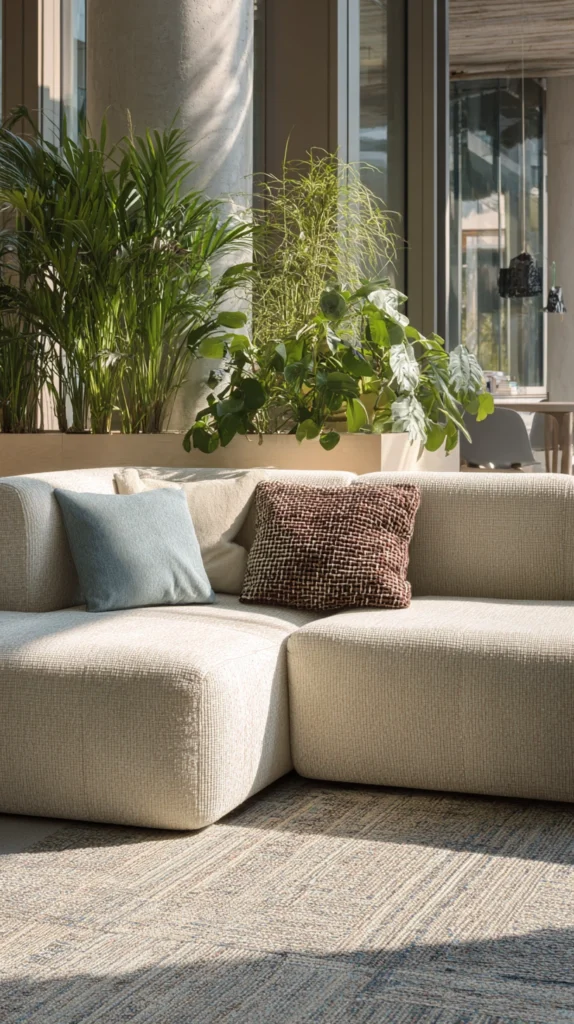
Budget: $30 – $150
Carrying the same textile — or a very close outdoor equivalent — from the interior sofa to the outdoor seating creates a thread of material continuity that the eye follows from inside to outside and registers as belonging. An interior sofa in natural linen with olive and cream cushions, continued by an outdoor sofa in all-weather linen with the same olive and cream outdoor cushions, presents the two spaces as versions of the same room rather than two separately decorated ones.
Outdoor cushion covers in a fabric that references the interior cushion fabric cost $15–$40 each. An all-weather throw in the same colour as the interior throw runs $20–$60. The textile does not need to be identical — it needs to be visually related enough that a person looking from inside to outside sees the connection rather than the contrast. A slight fading or simplification of the interior palette in the outdoor version reads as natural and intentional rather than as an imperfect match.
Style tip: Choose outdoor textiles first and interior ones second if both are being selected simultaneously. Outdoor fabric options are more limited than interior ones, and selecting the exterior textile and then finding an interior equivalent is considerably easier than the reverse. Starting with the interior and then searching for an outdoor match often produces a compromise that satisfies neither requirement.
10. The Outdoor Dining as Primary Dining
Budget: $100 – $600
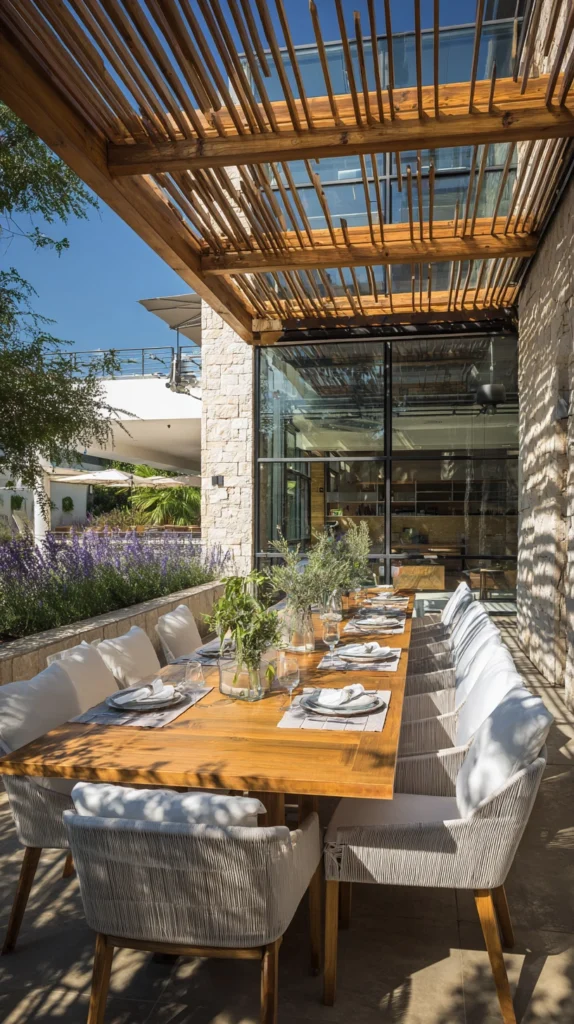
Treating the outdoor dining table as the primary dining location during the months when outdoor dining is possible — rather than as an occasional alternative to the indoor table — reinforces the indoor-outdoor connection at its most social and most habitual level. A household that eats outside whenever the weather allows uses the outdoor space in a way that integrates it into daily life rather than reserving it for occasions, and daily use produces the kind of easy familiarity with an outdoor space that occasional use never quite achieves.
An outdoor dining table for four costs $100–$400. Outdoor dining chairs run $40–$100 each. Weatherproof placemats, outdoor table runners, and a permanent centrepiece ($20–$50 total) make the outdoor table feel as set and as ready as the indoor one. Keep the outdoor table set rather than clearing it after each meal — a set table is an invitation to use it; a bare table is storage space.
Style tip: Position the outdoor dining table so it is visible from the indoor dining area or the kitchen rather than tucked in a corner of the garden that is discovered rather than seen. A visible outdoor table from the indoor space is a daily reminder that the outdoor option exists; an invisible one is used only when consciously sought out, which is considerably less often.
11. The Sound Connection
Budget: $40 – $300
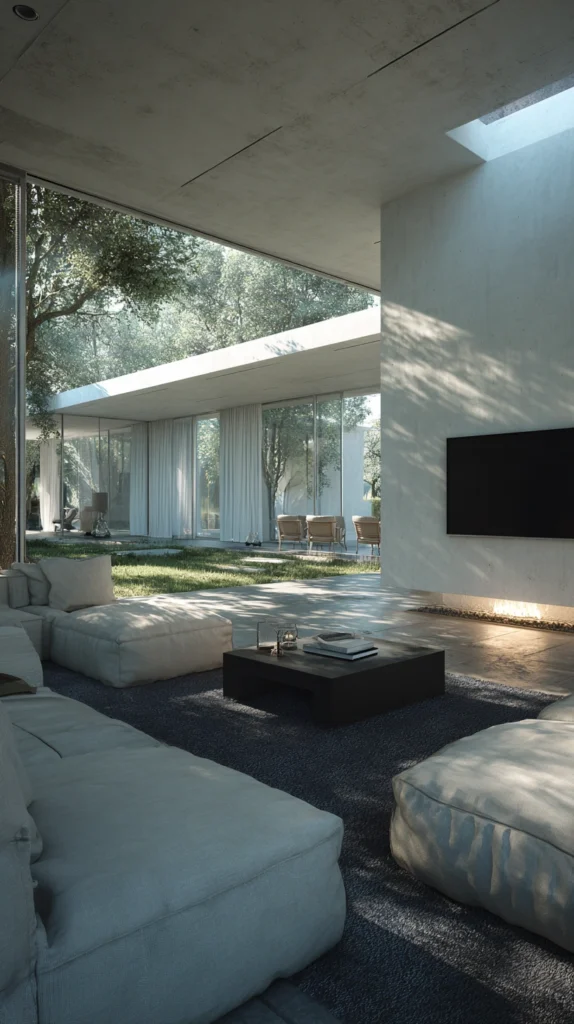
Extending the indoor audio system to the outdoor space — through a weatherproof outdoor speaker connected to the same source as the interior speakers — removes one of the most persistent seam-markers between inside and outside: the moment when music stops as you step through the door. A continuous sound environment across the threshold creates the experience of a single continuous space more effectively than almost any visual element, because sound is omnidirectional and fills a space in a way that visual elements, which require a sightline, cannot.
A weatherproof outdoor Bluetooth speaker costs $30–$80. A permanently installed outdoor speaker connected to an interior receiver runs $80–$200. A smart outdoor plug that allows the outdoor speaker to be controlled from the same app as the interior system costs $15–$30. Keep the outdoor volume slightly lower than the indoor volume — the outdoor space has no walls to contain the sound, and what feels appropriately loud inside becomes the neighbour’s problem outside.
Style tip: Position the outdoor speaker so its sound is directed toward the seating area rather than toward the boundary of the property. A speaker aimed at the seating area produces music that is heard by the people in the outdoor room; one aimed at the fence produces music that is heard by the people next door and only peripherally by the people it is intended for.
12. The Single Cohesive Lighting Switch
Budget: $20 – $100
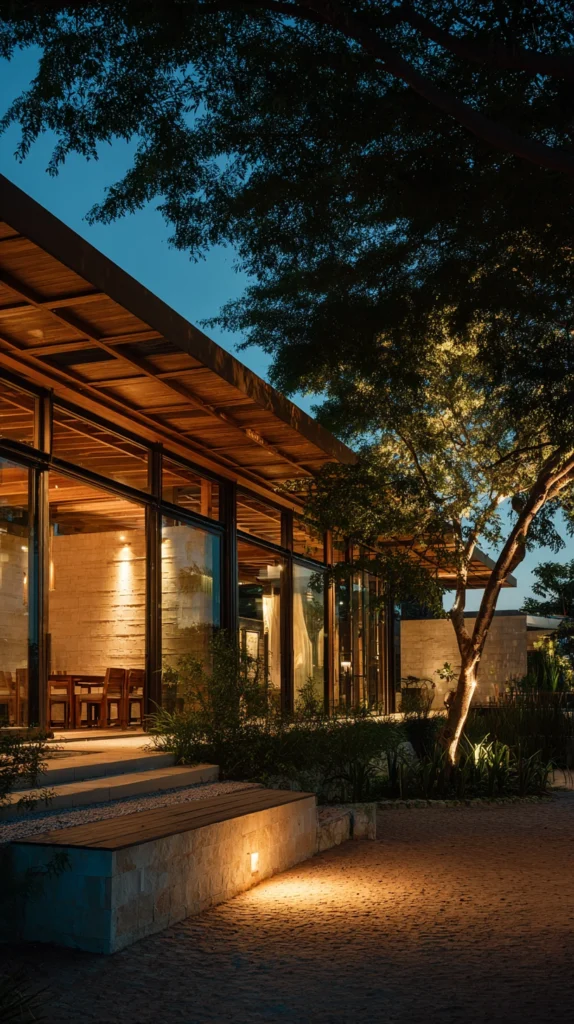
Installing a single switch — or a single smart home scene — that controls both the interior ambient lighting and the outdoor lighting simultaneously is the operational detail that makes the indoor-outdoor space function as one room rather than two separately managed ones. When the lights come on inside and outside together at dusk, the two spaces are unified by the act of illumination rather than divided by the separate switching that reminds occupants that the two spaces have independent systems.
A smart switch or smart plug for the outdoor lights costs $15–$30 each. A smart home hub that allows both indoor and outdoor lights to be controlled in a single scene runs $50–$150. A simple external timer for the outdoor lights ($8–$15) achieves a basic version of the same effect — the outdoor lights come on at dusk when the interior lights are also on, and the two spaces are lit together rather than separately.
Style tip: Set the unified lighting scene so the outdoor lights come on five minutes before the indoor ones at dusk. The outdoor space lit before the interior makes the outdoor room visible and inviting from inside — seen glowing through the glass before the interior has been dimmed, it draws rather than competes. The sequence of outdoor-first, interior-second is the lighting designer’s version of the host who ensures the garden is welcoming before the guests arrive.
13. The Blurred Plant Boundary
Budget: $40 – $200
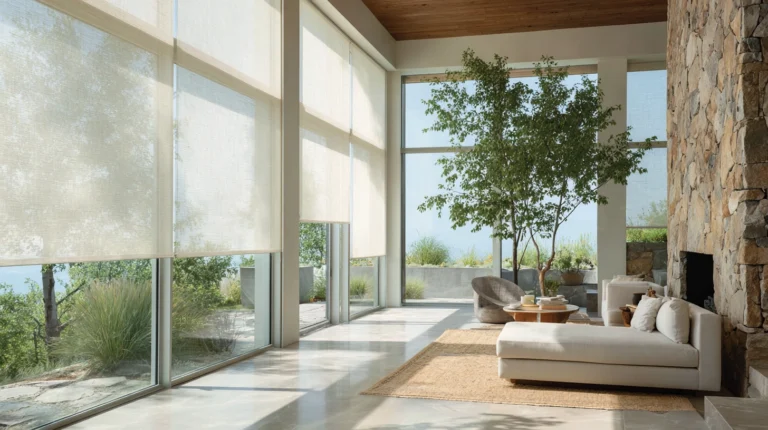
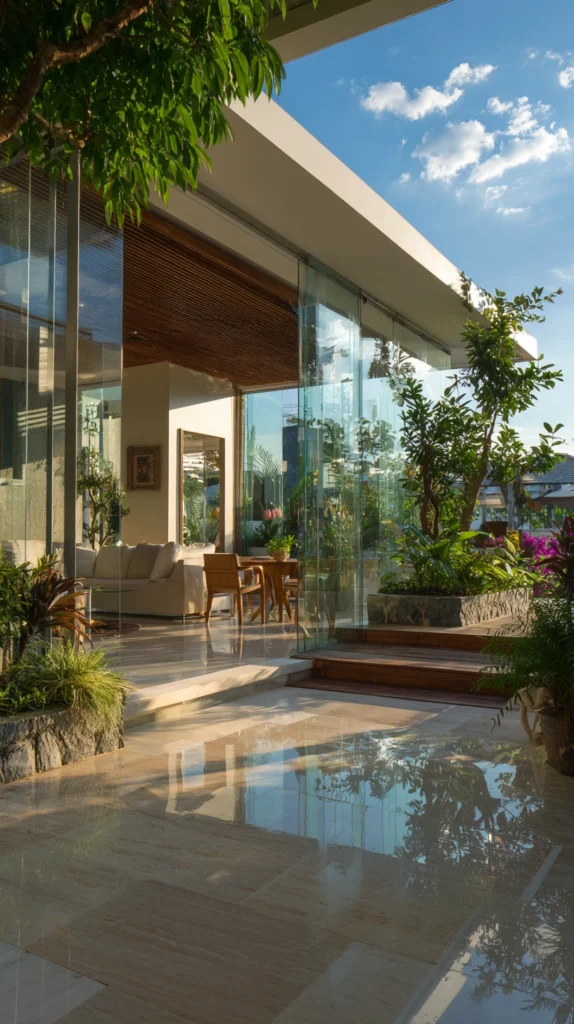
Placing indoor plants near the glass door and extending the planting to outdoor plants of the same general character immediately beyond the threshold — so that the visual line of planting runs continuously through the glass without interruption — blurs the boundary between the two spaces more effectively than any furniture or flooring choice. The planting does not read as indoor plants here and outdoor plants there; it reads as a single planted environment that happens to have a glass panel running through it.
Indoor plants in floor-standing planters near the door cost $30–$80. Outdoor plants in matching or coordinating containers immediately outside run $25–$80. The critical positioning detail is that the indoor and outdoor plants should be visible simultaneously from the primary seating position inside — both in the same sightline, both apparently part of the same planting arrangement, with the glass between them visible only when you look for it.
Style tip: Choose plants of similar height for the indoor and outdoor positions on either side of the glass. An indoor plant that is taller than the outdoor plant adjacent to it reads as two plants at different scales seen through glass; two plants of similar height read as a single plant arrangement that the glass passes through. The height match is the detail that makes the visual continuity work at the distance from which it is most often seen — from across the room, through the glass, from the sofa.
The best indoor-outdoor living is not the most designed version or the most expensively resolved one — it is the version that makes moving between inside and outside feel like moving between rooms rather than between worlds. The floor continues. The light connects. The plants run through the glass. The music does not stop at the door.
Remove the seam wherever you find it — in the threshold, in the furniture choice, in the lighting temperature, in the sound that stops when you step outside — and what remains is a home that is larger than its floor plan suggests and more liveable than its walls imply. The outdoor space was always part of the house. These ideas simply make it feel that way.