14 Narrow Mudroom Ideas for Tight Hallways
14 Narrow Mudroom Ideas for Tight Hallways
My back hallway was barely wide enough for one person to pass through with shoes on, let alone hold any kind of real storage, so for years it just stayed empty except for whatever shoes got kicked off in the general vicinity of the door.

Then I started looking specifically for solutions built for narrow spaces rather than trying to squeeze in furniture designed for a real mudroom, and it turned out a tight hallway can actually hold a surprising amount of function once everything is chosen at the right scale.
1. Use Slim Wall-Mounted Hooks Instead of a Coat Rack
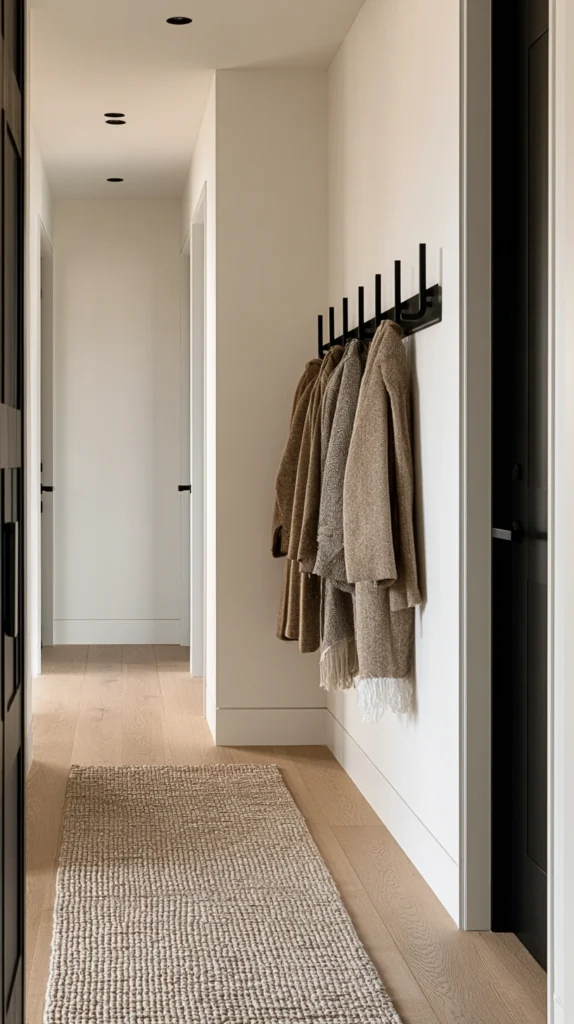
A freestanding coat rack takes up floor footprint a narrow hallway can’t spare, while a row of slim hooks mounted directly to the wall holds the same number of coats and bags using zero floor space at all. Budget: $20-35 for a row of wall-mounted hooks.
Mount hooks into wall studs wherever possible, since narrow hallways often see heavier daily use than a typical wall hanging would.
2. Choose a Shoe Cabinet Under 8 Inches Deep
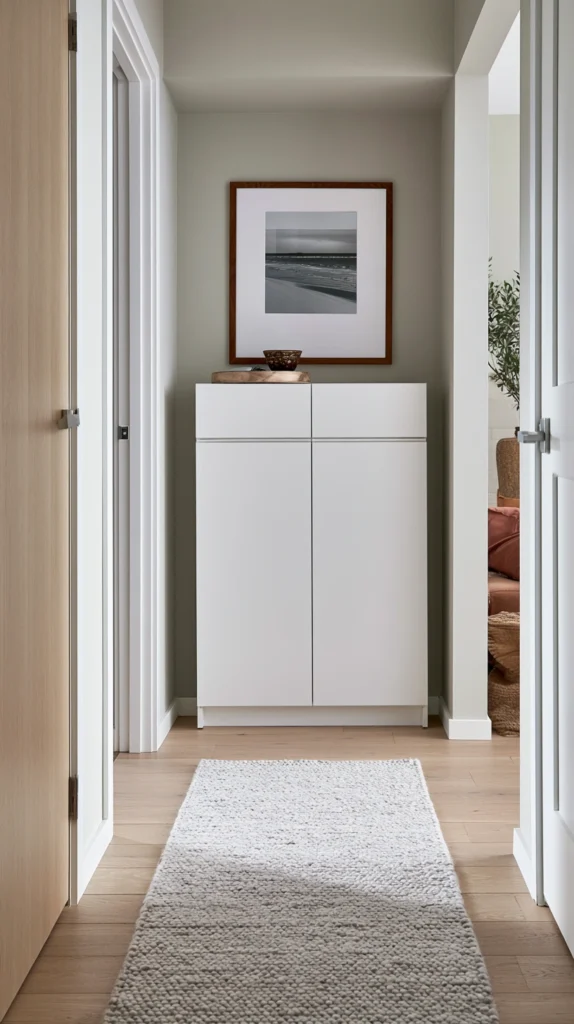
Slim-profile shoe cabinets, built specifically for tight spaces, hold several pairs of shoes vertically or at an angle in a footprint barely deeper than a single picture frame. Budget: $60-120 for a slim shoe cabinet.
Measure the hallway’s actual clear width with the cabinet door open, not just closed, before finalizing a purchase.
3. Add a Fold-Down Bench That Tucks Flat Against the Wall
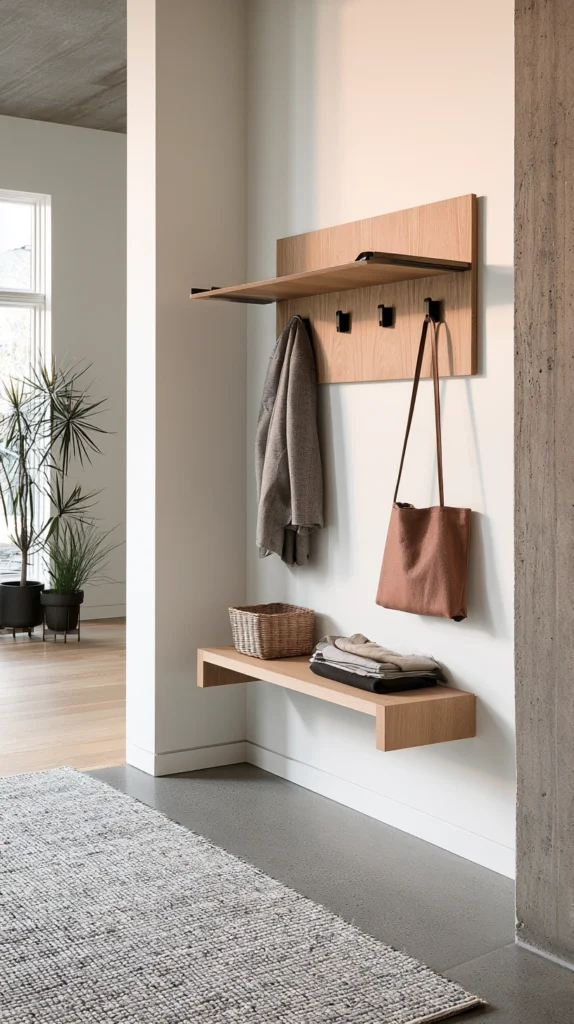
A wall-mounted bench that folds up when not in use gives the hallway a seat for putting on shoes without permanently sacrificing walking clearance the rest of the time. Budget: $50-90 for a fold-down wall bench.
Choose a model rated for adult weight specifically, not just a decorative shelf marketed loosely as seating.
4. Use a Vertical Umbrella Stand Instead of a Wide Bin
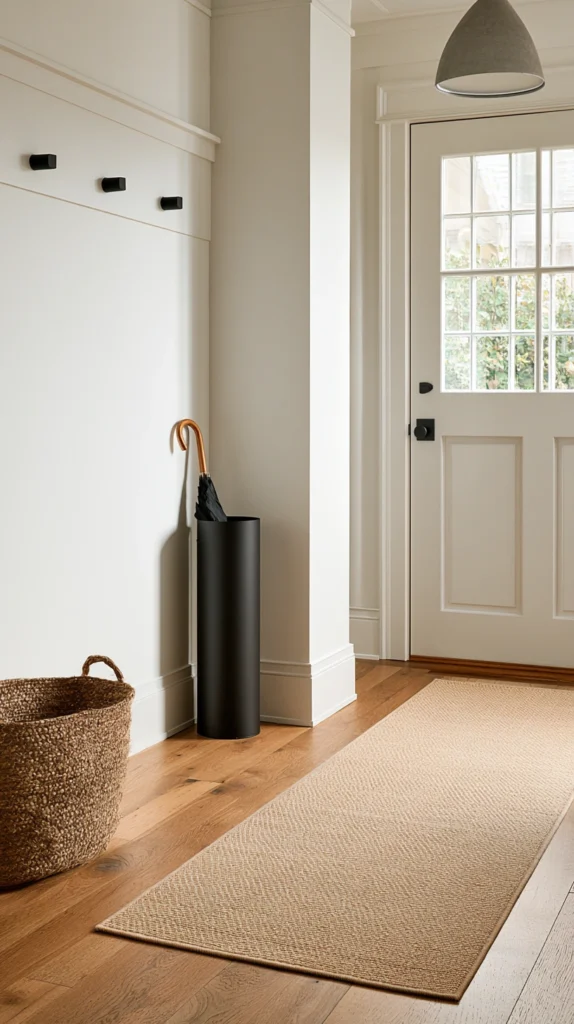
A tall, narrow umbrella stand takes up a fraction of the floor space a wide storage bin would need for the same function. Budget: $20-30 for a slim umbrella stand.
Choose a stand with a weighted base, since a narrow, top-heavy stand tips more easily than a wider one would.
5. Install a Pegboard for Fully Customizable Storage
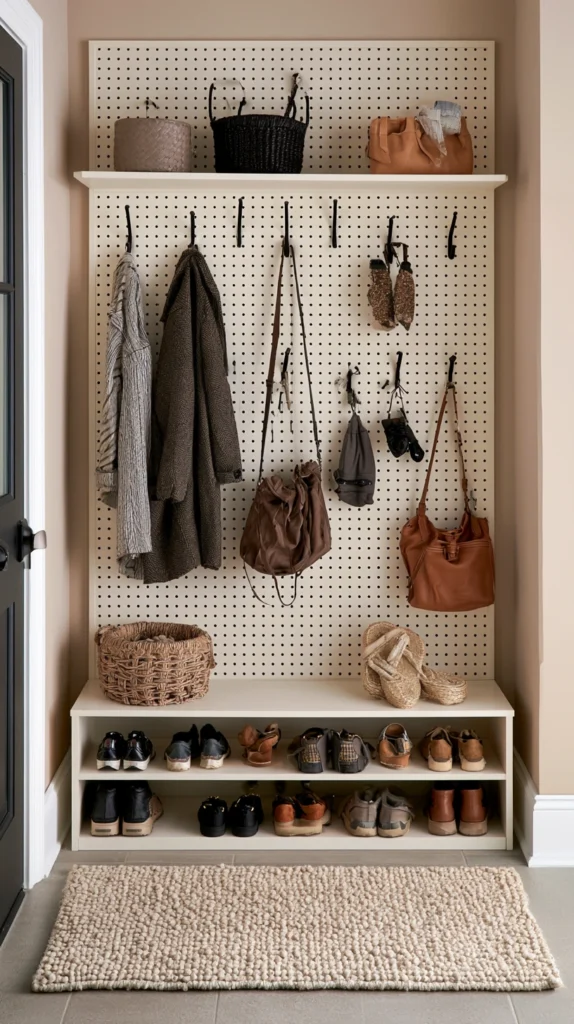
A pegboard mounted to one wall lets you hang bags, leashes, and even small baskets at whatever height and spacing actually suits your household, adjusting as needs change without any new holes or hardware. Budget: $30-50 for a pegboard panel and basic hooks.
Paint the pegboard to match the wall color if you want the storage to feel built-in rather than visibly utilitarian.
6. Add a Slim Mirror to Visually Widen the Space
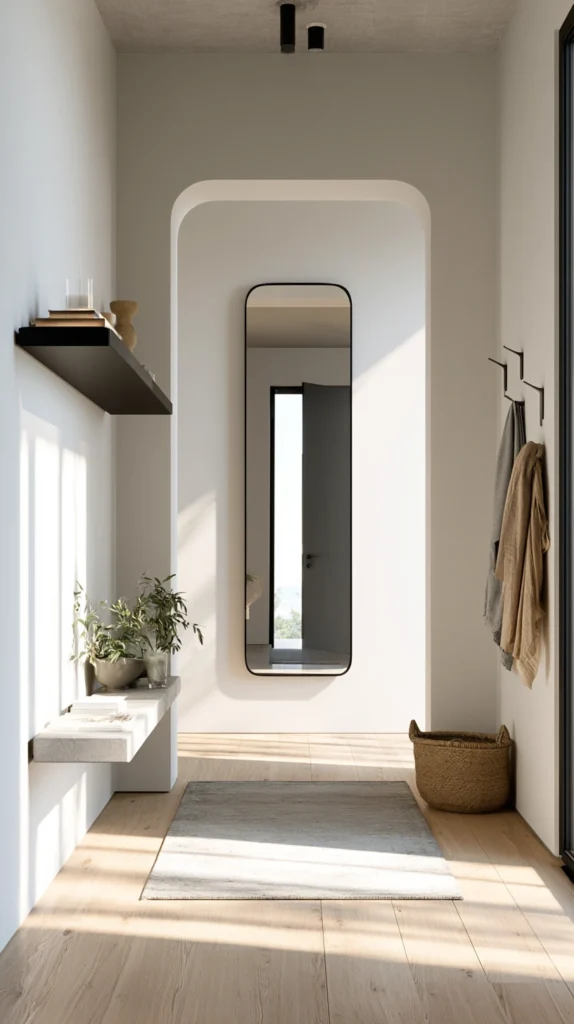
A narrow mirror, mounted vertically along one wall, bounces light down the length of the hallway and creates the visual impression of more width than the space actually has. Budget: $30-50 for a slim full-length or half-length mirror.
Hang it across from the most natural light source in the hallway to maximize the reflective effect.
7. Use Stacked Floating Shelves Instead of a Single Tall Cabinet
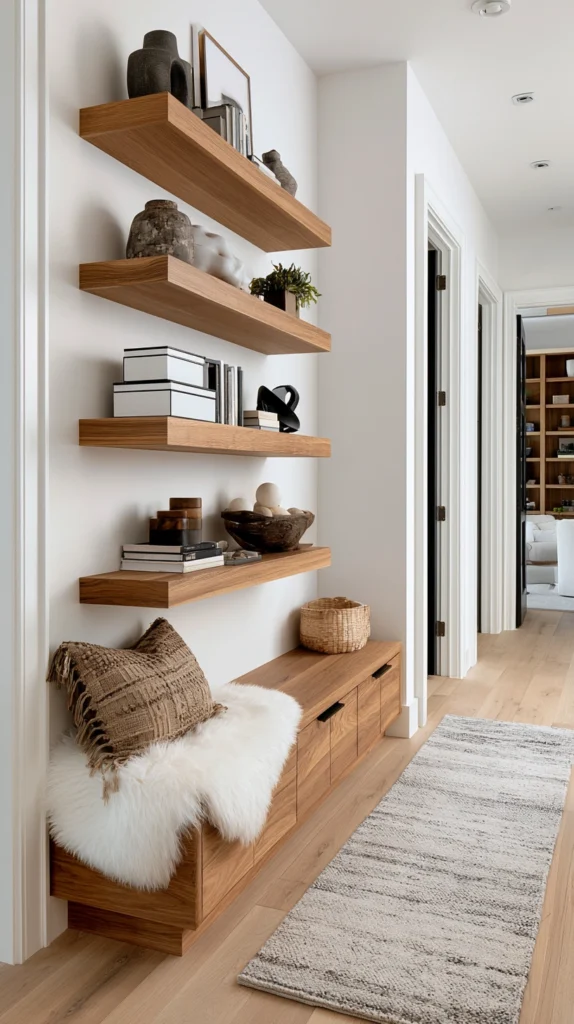
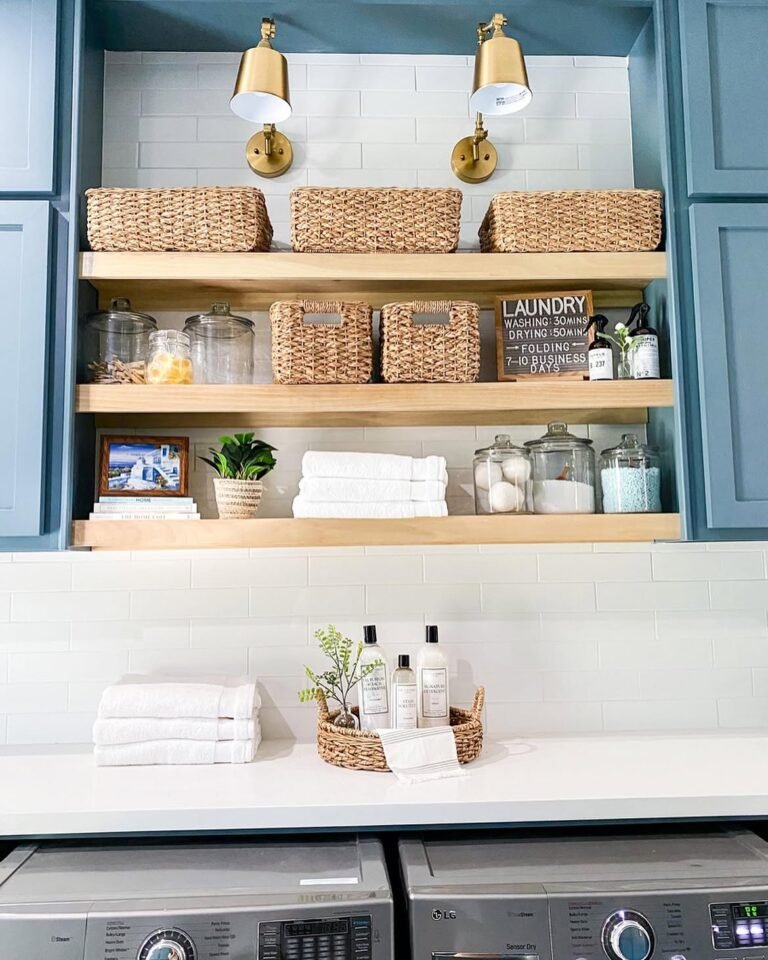
A few floating shelves, stacked vertically along one wall, hold baskets and bins without the bulk and floor footprint of a single tall storage cabinet. Budget: $15-25 per shelf for basic floating brackets and boards.
Stagger shelf depth slightly, shallower near the top, deeper near the bottom, to keep the wall from feeling like it’s leaning into the walkway.
8. Choose Baskets With Cutout Handles Instead of Protruding Ones
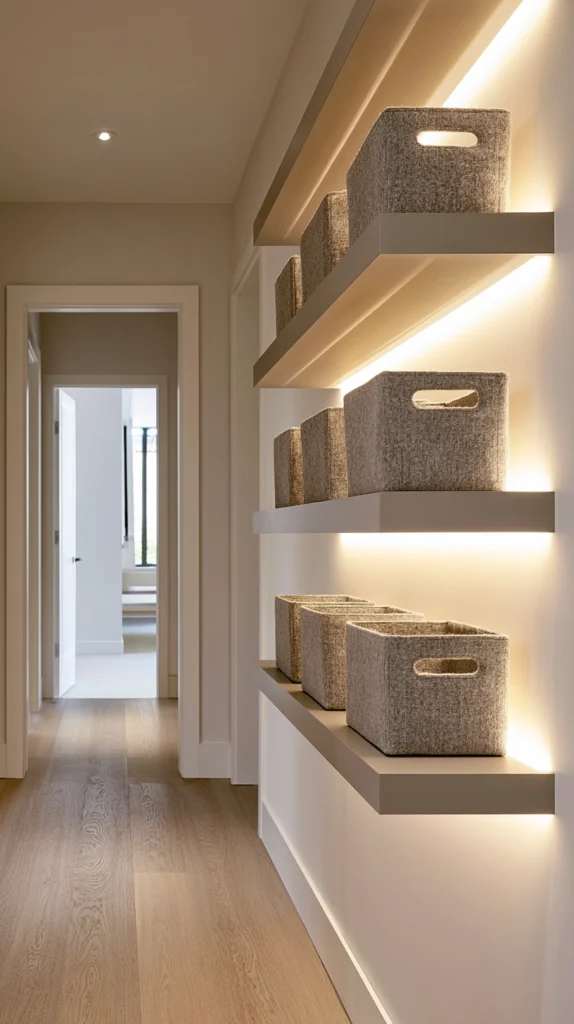
Woven or fabric baskets with cutout finger holes, rather than handles that stick outward, sit flush against shelving and don’t add extra inches to an already tight passage. Budget: $10-20 per basket.
Choose baskets sized to fit the shelf depth exactly, since an oversized basket negates the whole point of choosing a slim handle style.
9. Add a Narrow Bootjack or Boot Tray Against the Baseboard
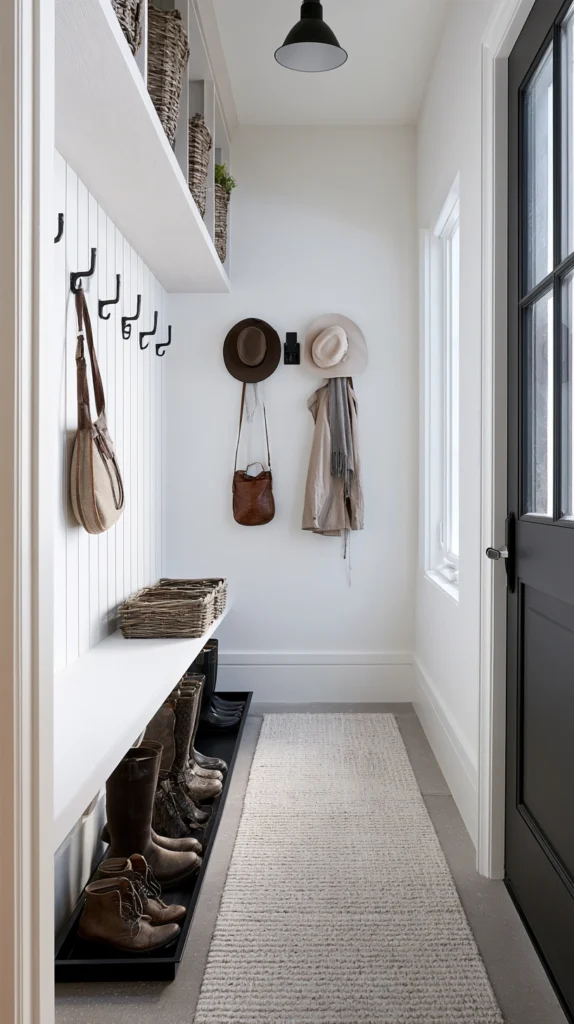
A boot tray or simple bootjack, positioned flush against the wall rather than centered in the walkway, keeps wet or muddy shoes contained without creating a tripping obstacle in the middle of the path. Budget: $15-25 for a slim boot tray.
Choose a tray only as wide as actually needed for your household’s typical shoe count, rather than the largest size available.
10. Use a Door-Mounted Organizer on a Nearby Closet
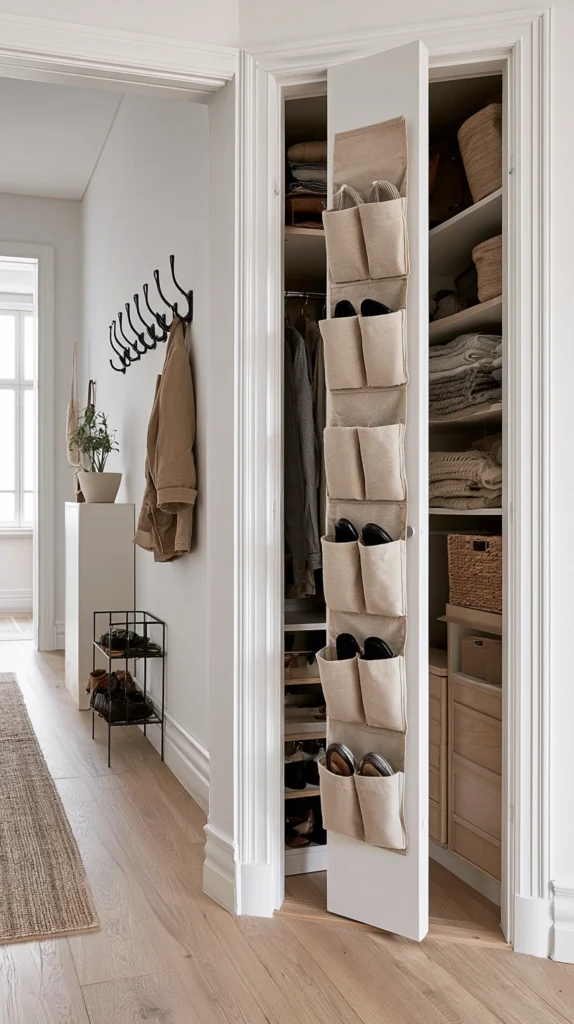
If a coat closet sits along the same hallway, a fabric or wire organizer mounted to the inside of its door adds storage that doesn’t touch the hallway’s own footprint at all. Budget: $15-30 for a door-mounted organizer.
Confirm the closet door can still close fully once the organizer and its contents are loaded, since some models add more depth than expected.
11. Add a Single Stool Instead of a Bench
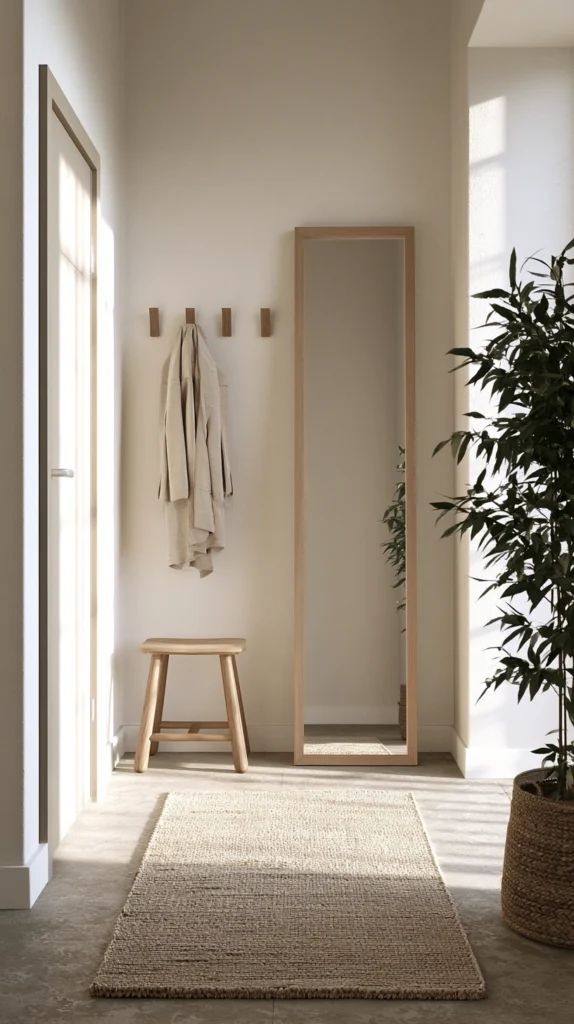
In a hallway too narrow for any kind of bench, even a fold-down one, a single lightweight stool that can be pulled out for use and tucked against the wall otherwise provides seating without committing permanent floor space. Budget: $25-40 for a slim, lightweight stool.
Choose one light enough to move easily with one hand, since the whole point is that it gets moved in and out of the way regularly.
12. Use Vertical Stripes or a Tall Wallpaper Pattern
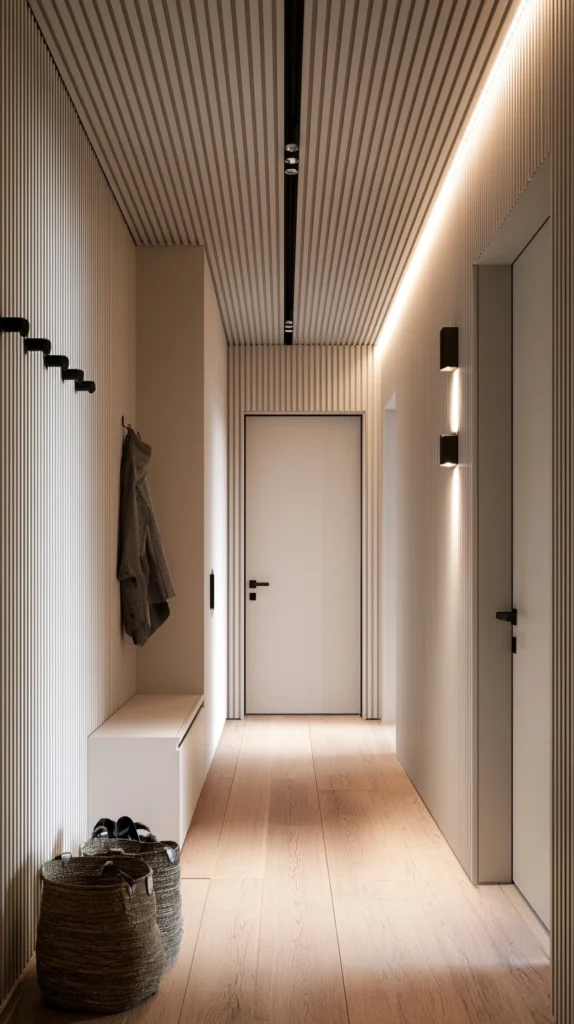
A wallpaper or paint treatment with a vertical emphasis draws the eye upward rather than side to side, making a narrow hallway feel taller and less cramped even though its actual width never changes. Budget: $40-80 for paint or a small amount of wallpaper.
Keep the pattern subtle rather than bold if the hallway is also dimly lit, since a strong pattern in low light can feel busier than intended.
13. Add a Slim LED Strip Light Along the Baseboard
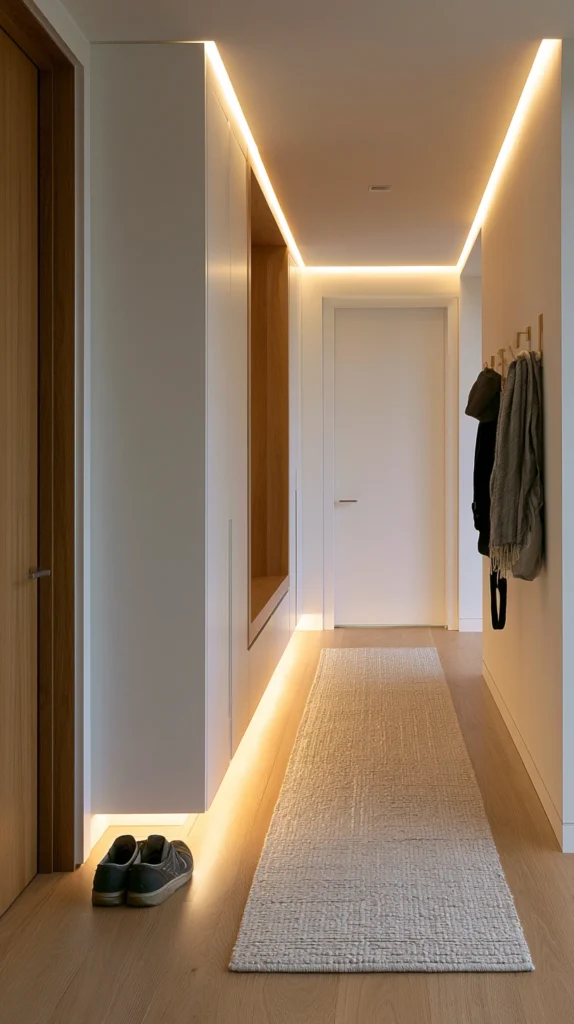
A low, subtle LED strip along the baseboard provides enough light to navigate a narrow hallway at night without needing a bright overhead fixture that can feel harsh in such a tight space. Budget: $20-35 for a battery or plug-in LED strip kit.
Choose a warm color temperature specifically, since a cool-toned strip light can feel clinical in what’s otherwise a transitional, lived-in space.
14. Combine Several of These Into One Fully Functional Narrow Mudroom
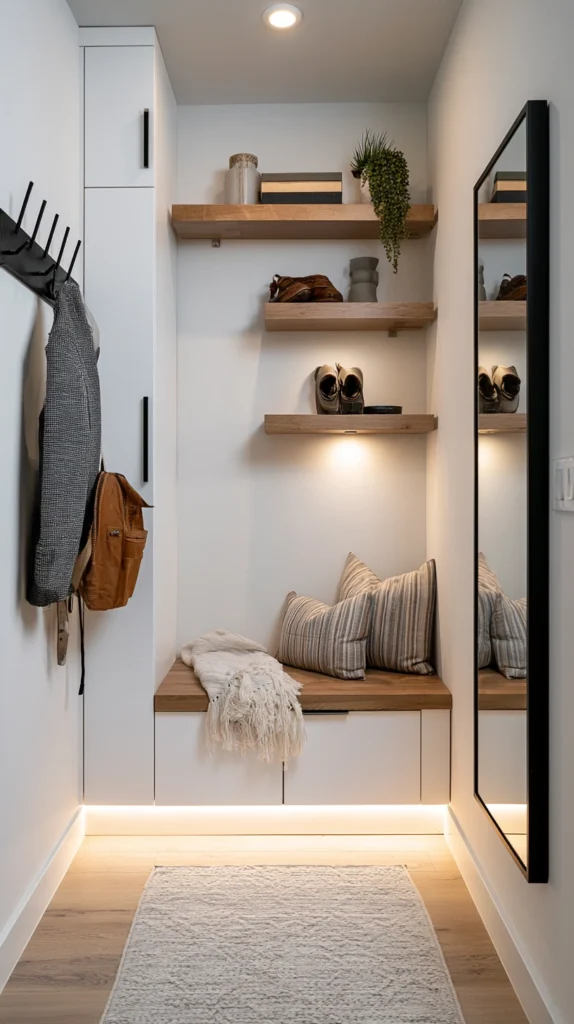
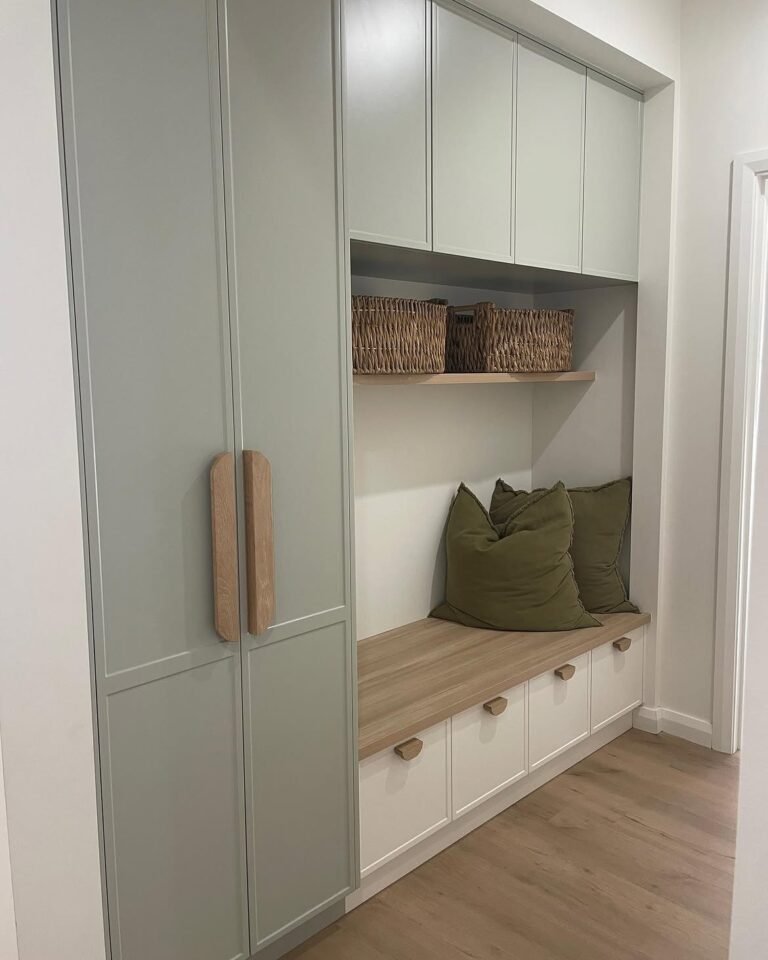
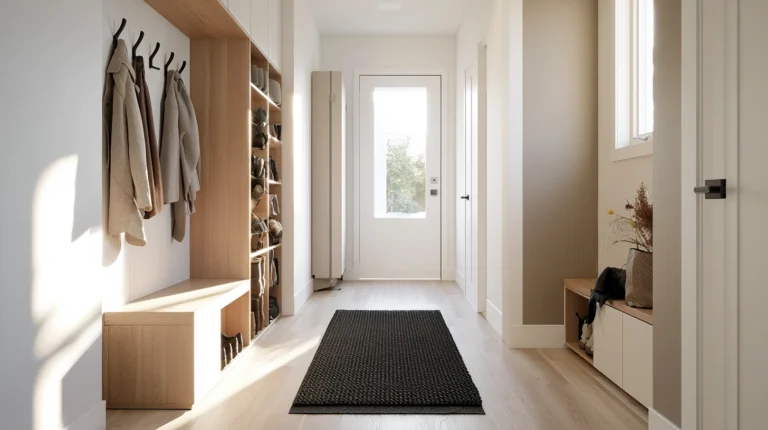
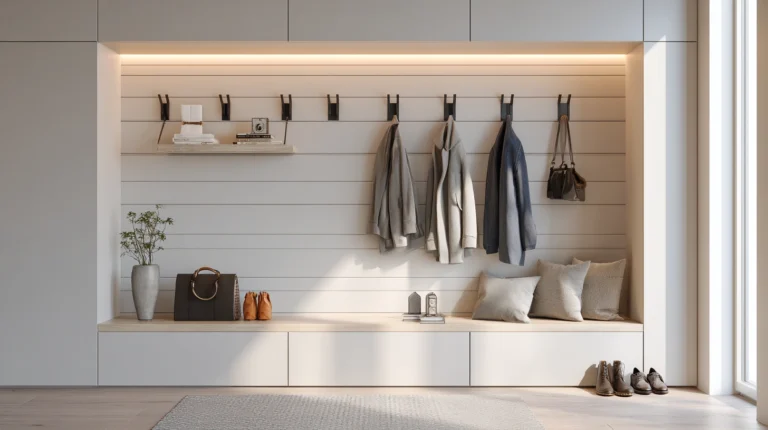
Bringing together wall-mounted hooks, a slim shoe cabinet, a fold-down bench, and stacked floating shelves turns a hallway that seemed too narrow for any real storage into a genuinely functional drop zone, proving that the issue was never really the width of the space but choosing furniture actually built for it. Budget: $200-400 to combine most of the ideas above into one full narrow mudroom setup.
Measure every single piece against the hallway’s actual clear width, including door swing and walking clearance, before purchasing anything, since even an inch of miscalculation matters considerably more in a narrow space than a typical room.
Choosing Your Approach
For the tightest possible hallway: wall-mounted hooks (idea 1), a slim umbrella stand (idea 4), and a baseboard boot tray (idea 9) add function with essentially zero footprint.
For a hallway with at least some spare width: the slim shoe cabinet (idea 2) and fold-down bench (idea 3) add real seating and storage without overwhelming the space.
For the most complete setup: combine several ideas using idea 14’s approach, measuring carefully at every step.
A narrow hallway usually has more usable function hiding in it than it first appears to, once the furniture and storage chosen actually match its scale instead of being borrowed from what would work in a wider, more typical mudroom.