15 Smart Small Backyard Ideas to Maximize Every Inch
15 Smart Small Backyard Ideas to Maximize Every Inch
There is a particular design challenge that a small backyard presents and a particular design opportunity that the same small backyard offers. The challenge is obvious — limited square footage, awkward proportions, the competing demands of outdoor dining, children’s play, planting, storage, and the general aspiration toward a space that feels generous rather than cramped.
The opportunity is less obvious but considerably more interesting: a small space, designed with genuine precision and genuine intention, achieves a quality of completeness and coherence that larger gardens rarely match. Every decision shows.
Every good decision pays dividends. Every element that earns its place makes the space feel larger. Every element that does not makes it feel smaller.
The small backyard rewards the designer who understands that maximising space is not about fitting more in. It is about making what is there feel more than it is — through proportion, through vertical thinking, through the strategic use of light and reflection, and through the discipline of keeping only what genuinely serves the space and its occupants.
The fifteen ideas below cover every approach to the small backyard — from structural decisions to planting strategies to the finishing details that make the difference between a small garden that feels limited and one that feels perfectly, specifically complete.
1. The Vertical Garden Wall
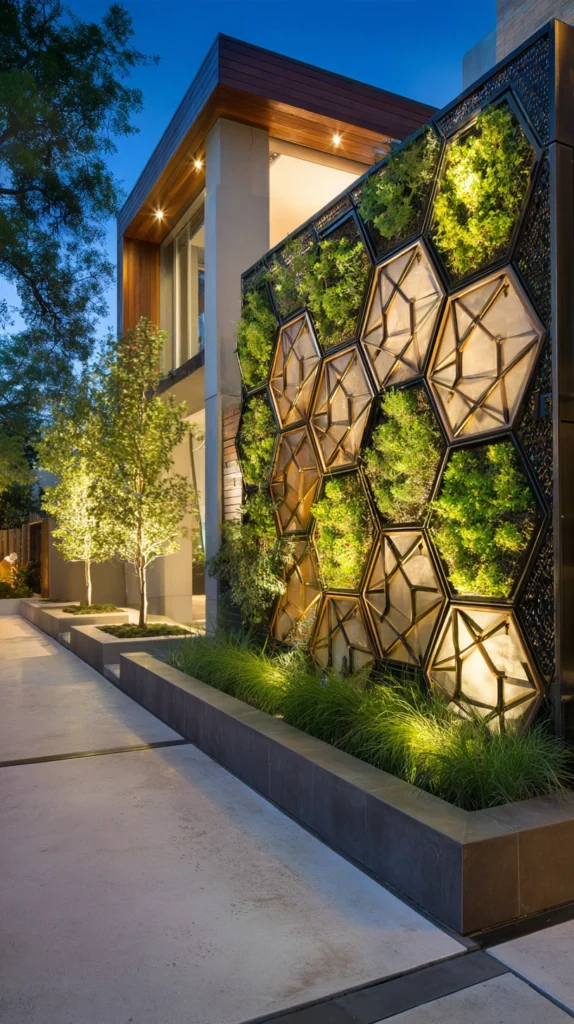
Budget: $50 – $400
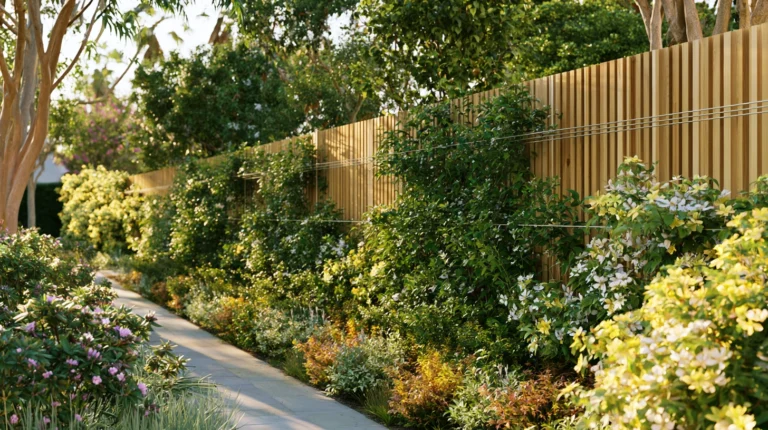
A vertical garden — plants growing upward on a wall-mounted frame, a trellis, or a pocket planter system rather than outward across the garden floor — doubles the small backyard’s planting capacity without consuming a single square centimetre of ground space. A blank fence covered with climbing plants, wall-mounted planters, or a modular vertical garden system communicates immediately that the garden has been thought about in three dimensions rather than two.
A wooden trellis panel mounted to the fence — $15 – $40 — supports climbing plants for a full season. A wall-mounted pocket planter in felt or fabric — $20 – $60 — holds twelve to sixteen individual plants in a 60 by 90 centimetre footprint. A modular steel vertical garden frame — $60 – $200 — provides a more permanent installation.
Styling tip: Plant the vertical garden in layers — trailing species in the lower pockets, upright herbs and flowers in the middle, and structural plants at the top — so that the installation reads as a genuine planted wall rather than a collection of individual pots attached to a surface. The layered approach produces a vertical garden that looks intentional and complete. Individual pots mounted at random heights on the same fence look like pots that ran out of table space.
2. The Fold-Down Wall Table
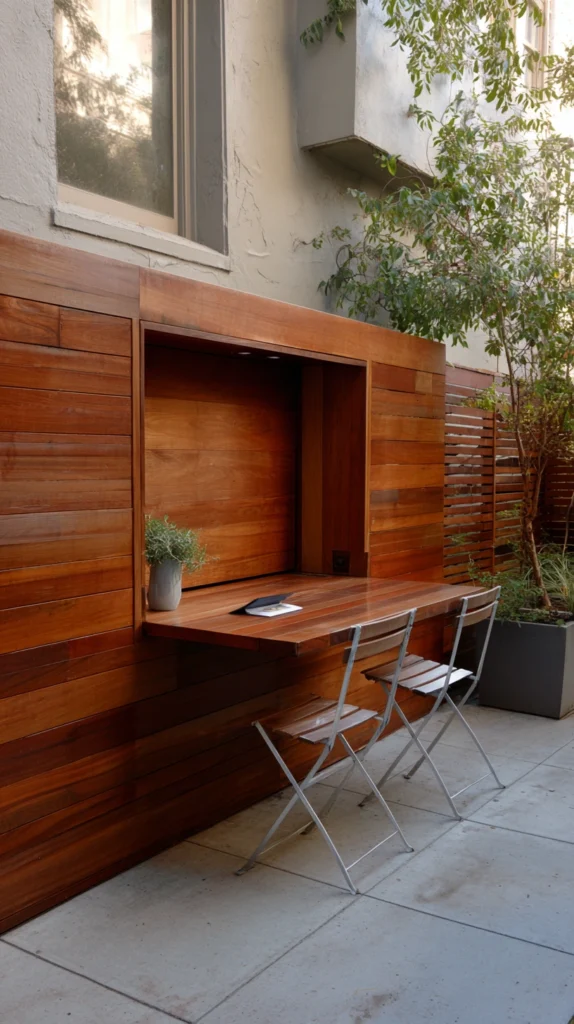
Budget: $40 – $200
A wall-mounted fold-down table — hinged to fold flat against the fence or the exterior wall when not in use, providing a full-sized dining or working surface when deployed — gives the small backyard a dining function without permanently occupying the floor space a standard outdoor table would consume. When folded flat, it protrudes approximately 10 centimetres. When deployed, it provides a surface for two to four people.
A timber fold-down wall table in a weather-treated finish — $40 – $120 in DIY materials. A manufactured version in powder-coated steel with a timber surface — $60 – $200. Wall fixings appropriate for the fence or wall construction — $5 – $15. A pair of folding chairs that store flat against the wall beside the table — $20 – $50 each — completing the dining solution with no permanent floor space consumption.
Styling tip: Install the fold-down table on the wall that receives the best shade during the hours when outdoor dining most frequently occurs — typically the early evening. A dining table in direct summer evening sun is a dining table that is too hot to sit at comfortably. The same table in the shade of the building or the fence during those hours is a dining table that is genuinely used throughout the outdoor season.
3. The Built-In Bench With Storage
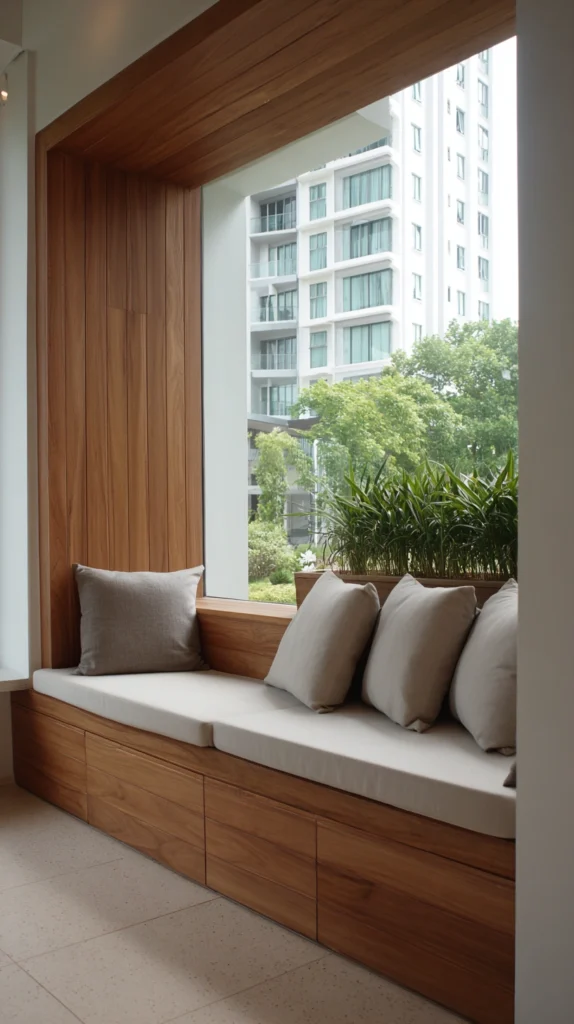
Budget: $200 – $1500
A built-in bench along one or two walls of the small backyard — with a hinged seat that opens to a deep storage compartment below — provides seating for multiple guests, removes the visual clutter of freestanding chairs, and stores the garden’s cushions, tools, and outdoor accessories in a compartment that is completely invisible from above. It is the small garden’s most space-efficient furniture decision.
A built-in timber bench with storage — $200 – $600 in materials for a DIY approach. A professionally built version in hardwood or composite decking material — $500 – $1500 for a standard garden bench length. An outdoor cushion in a quick-dry fabric for the seat — $50 – $150. The storage compartment beneath — lined with a waterproof membrane — holds two seasons’ worth of cushions, gardening gloves, and small tools.
Styling tip: Build the bench at 45 centimetres in height and 50 centimetres in depth — the standard ergonomic dimensions for comfortable outdoor seating. A bench built at a non-standard height or depth may look correct in the space but produces a seating experience that is subtly wrong in ways the body registers immediately and the mind eventually acknowledges. Ergonomics are not an optional refinement in a garden that wants to be genuinely used.
4. The Overhead Pergola and Green Roof
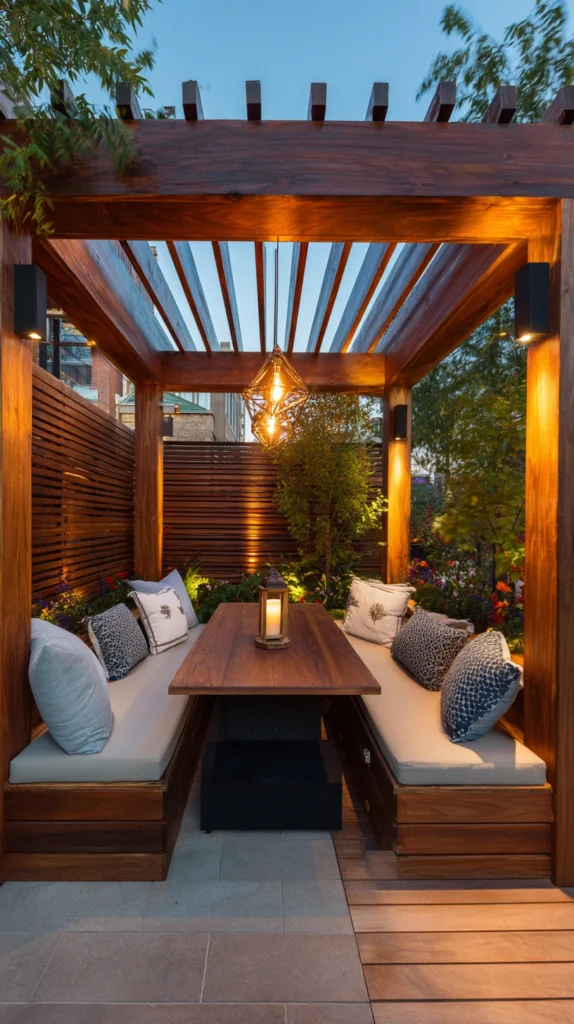
Budget: $300 – $3000
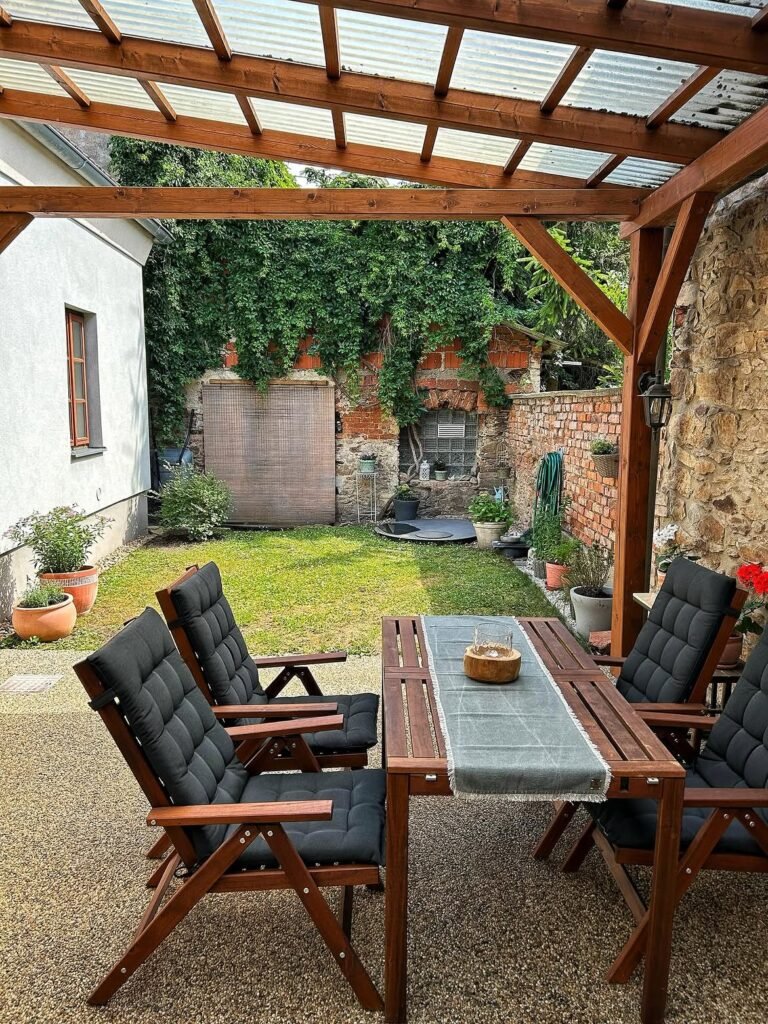
A pergola above the small backyard’s primary seating area — defining the outdoor room from above, providing a structure for string lights and climbing plants, and creating the sense of a ceiling that makes the space beneath it feel like a room rather than simply a paved corner of a garden — transforms the small backyard’s spatial character more significantly than any ground-level intervention at the same cost.
A timber pergola kit in pressure-treated pine — $300 – $800 for a standard size. A bespoke hardwood version — $1000 – $3000 installed. String lights woven through the overhead beams — $30 – $80. Climbing jasmine or wisteria at each upright — $15 – $30 per plant. A shade sail within the pergola frame for additional sun control — $40 – $100.
Styling tip: Position the pergola so that it covers the full primary seating area rather than only a portion of it. A pergola that partially covers the seating area — leaving some seats in the sun and some in shade — produces an outdoor room with two different spatial characters simultaneously, which reads as undecided rather than designed. A pergola that covers the full seating area produces a complete outdoor room with a consistent overhead character throughout.
5. The Mirrored Fence Panel
Budget: $80 – $400
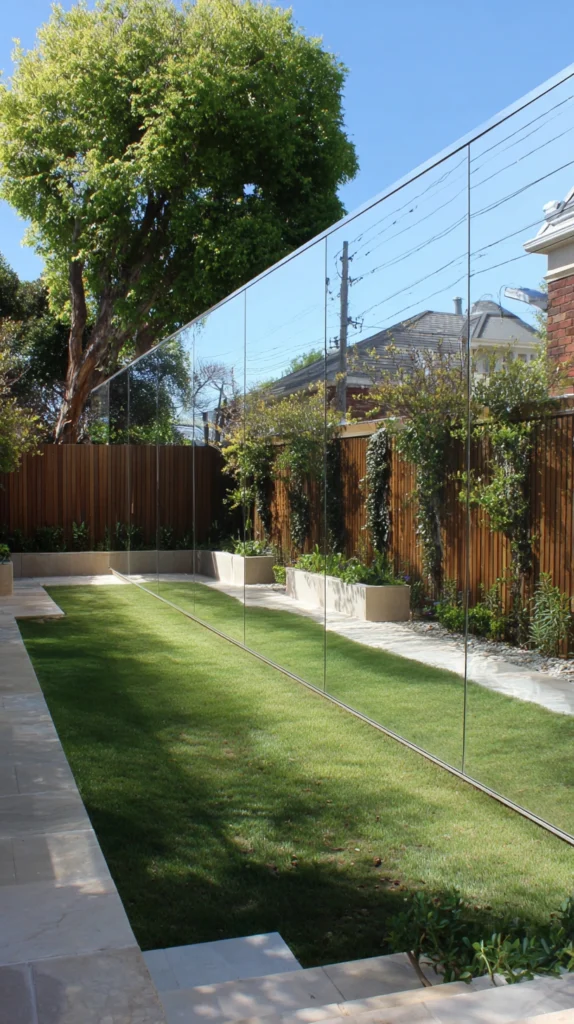
A large outdoor mirror — mounted on the fence at the far end of the garden — reflects the planting, the sky, and the space back into the garden and creates the visual impression of a garden that extends beyond its actual boundary. It is the oldest spatial expansion trick in interior design applied to an outdoor context, and it works with equal effectiveness in both settings.
A weather-resistant outdoor mirror in a simple aluminium or stainless steel frame — $80 – $200 for a standard large size. A mirror mounted at the far end of the garden, centred on the primary sight line from the house — $0 in additional cost beyond the mirror and the wall fixings. A surrounding planting frame of climbing plants or hedge — $30 – $80 in plants — blurs the mirror edge and enhances the depth illusion.
Styling tip: Position the outdoor mirror so that it reflects an area of planting or sky rather than reflecting the viewer directly. A mirror that reflects the garden’s planting and the overhead sky creates the impression of depth beyond the boundary. A mirror that reflects the viewer directly creates the impression of a reflective surface at the end of the garden — which is beautiful but spatially less effective than the depth illusion. The mounting angle — tilted very slightly upward from vertical — determines what the mirror reflects and should be tested before the final fixing is secured.
6. The Multi-Level Decking
Budget: $500 – $5000
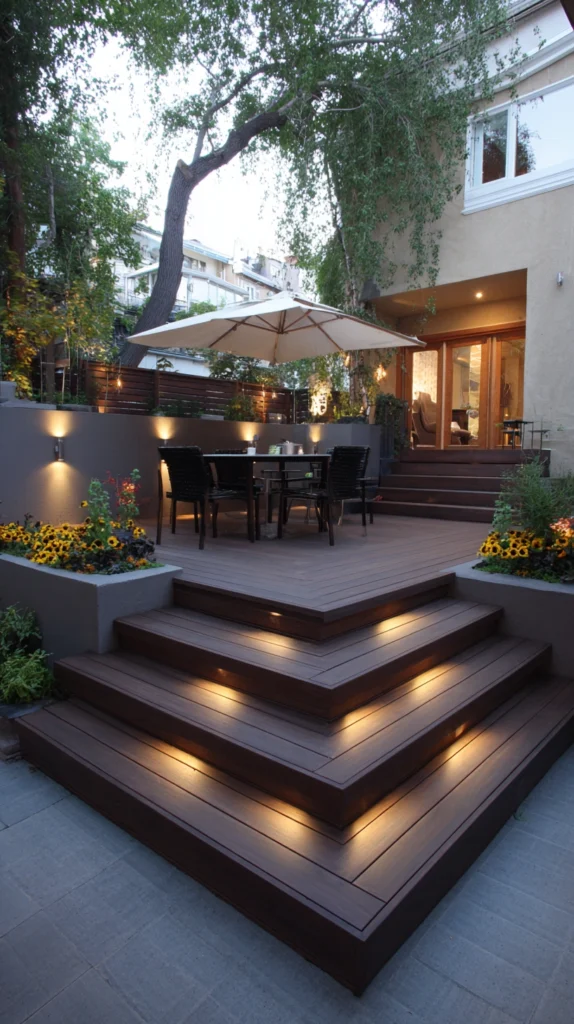
Multi-level decking — two or three timber or composite platforms at different heights, connected by one or two steps, each level serving a different function — divides the small backyard into distinct zones without constructing physical barriers between them. The change in level creates a psychological separation between spaces that makes the garden feel larger than a single-level space of equal area, because each zone reads as a distinct destination rather than a portion of a single undifferentiated surface.
A two-level decking scheme in pressure-treated timber — $500 – $2000 in materials for a standard small backyard. A composite decking version — $800 – $3000 in materials. Professional installation adds $500 – $1500 for a standard installation. The upper level — adjacent to the house — serves as the dining zone. The lower level — further from the house — serves as the garden or planting zone.
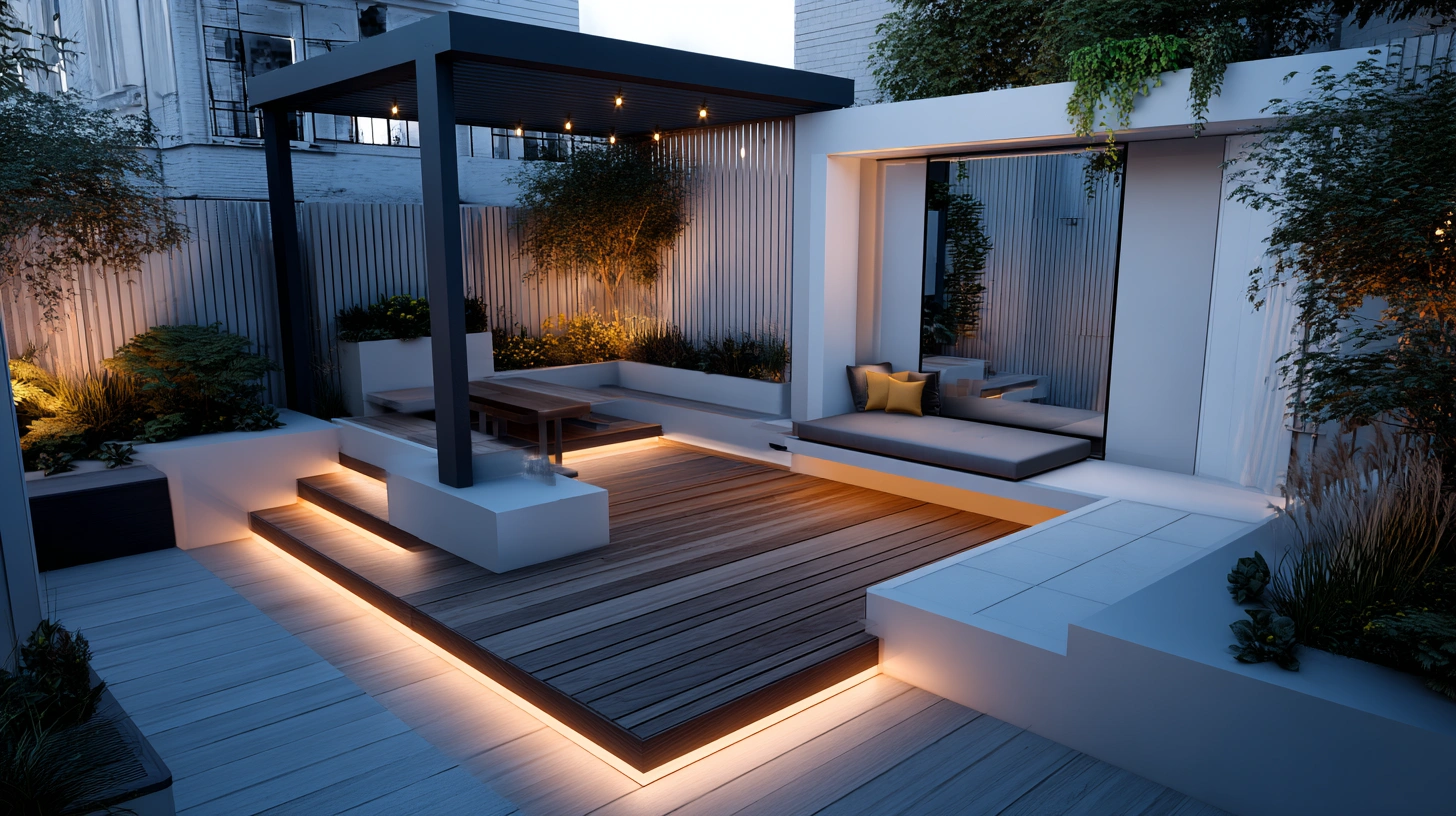
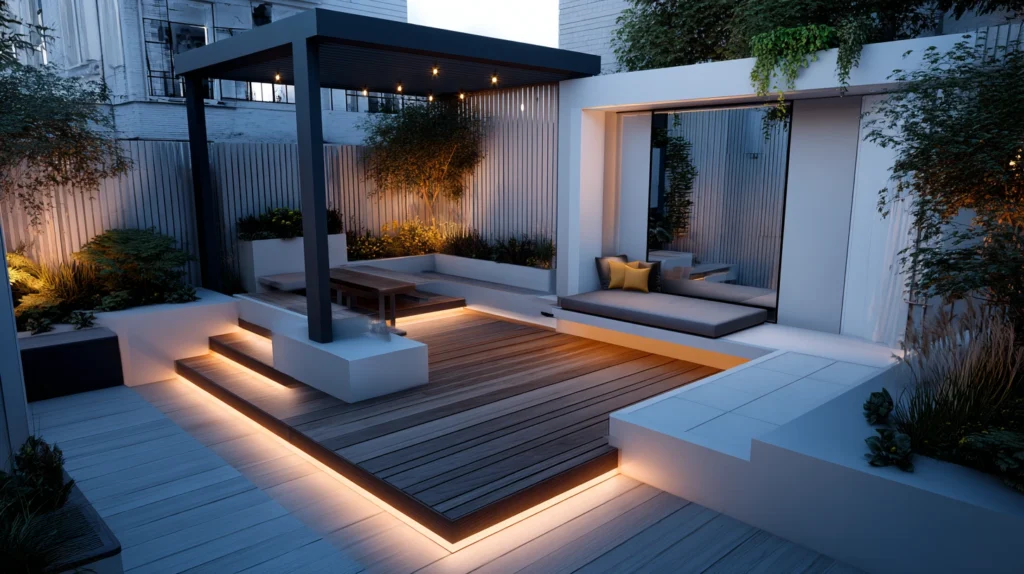
Styling tip: Use integrated LED lighting along the step edges between the decking levels rather than overhead or perimeter lighting for the small backyard’s primary evening light source. Step edge lighting illuminates the garden from the ground upward, creates a warm ambient glow without the harshness of overhead fixtures, and makes the level changes visible and safe after dark simultaneously. The step edge is the most efficient single location for small backyard lighting.
7. The Diagonal Decking or Paving Layout
Budget: $0 – $500
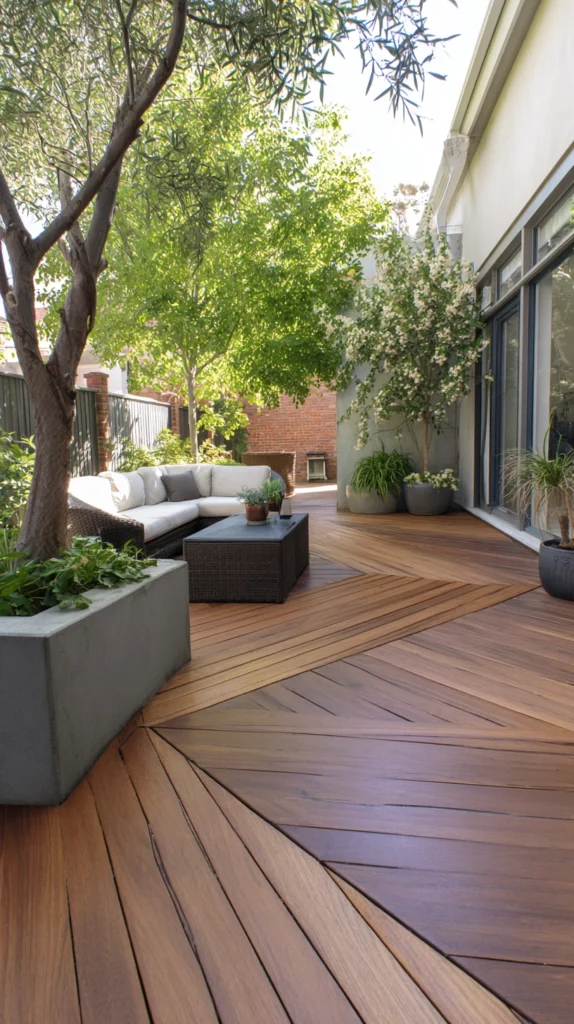
Laying decking boards or paving slabs diagonally — at 45 degrees to the garden’s boundary walls rather than parallel to them — makes a small rectangular space appear both wider and longer than the same material laid in the conventional direction. The diagonal layout draws the eye across the space rather than directly to the walls at the ends and sides, creating the impression of a more expansive outdoor floor than the perpendicular alternative.
Diagonal decking uses the same material as standard decking at the same cost — the layout direction costs nothing additional. Diagonal paving with square slabs requires slightly more cutting at the perimeter — adding approximately $50 – $200 in additional material wastage and cutting time. The visual return for this modest additional cost is a space that reads as significantly larger than its actual dimensions.
Styling tip: Align the diagonal decking or paving so that the 45-degree direction runs from the most used entrance to the garden’s furthest corner — drawing the eye along the longest diagonal dimension of the space rather than along its shorter straight dimensions. The longest line in a small backyard is always its diagonal, and a floor surface that emphasises that diagonal makes the space feel as large as its diagonal measurement rather than as small as its shortest straight dimension.
8. The Raised Planting Bed as Space Divider
Budget: $200 – $1500
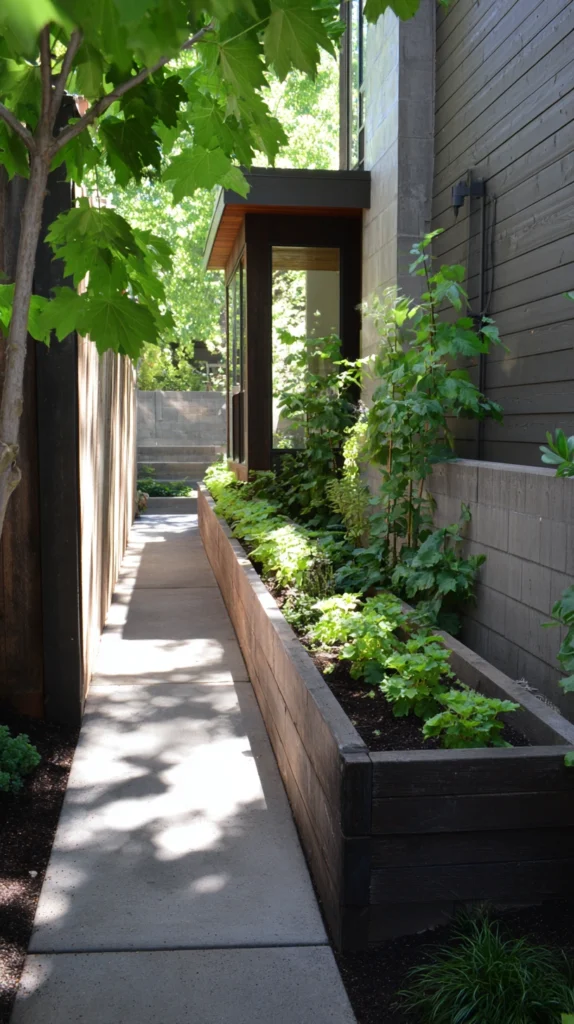
A raised planting bed — positioned to divide the small backyard into two distinct zones, providing lush planting at its height while leaving the floor space on both sides of it free for circulation and furniture — is the small garden’s most multifunctional structural element. It is simultaneously a planting space, a spatial divider, a visual screen, and a surface that contributes genuine botanical warmth to a small outdoor space.
A raised bed in timber sleepers — $80 – $200 in materials for a standard length. A rendered concrete block version — $200 – $600 in materials. A natural stone raised bed — $300 – $1000. All three serve the spatial division function equally. The choice between them is determined by the garden’s aesthetic and the gardener’s preference for the material’s long-term appearance as it weathers.
Styling tip: Plant the raised bed divider with species of varying heights — tall grasses or a standard-form shrub at one or two points creating a visual high point, medium flowering perennials filling the majority of the bed, and low ground cover at the edges. A dividing bed planted at a single uniform height reads as a hedge. A dividing bed planted at varied heights reads as a garden — which is both more beautiful and more specifically convincing as the spatial divider the small backyard needs.
9. The Compact Water Feature
Budget: $80 – $500
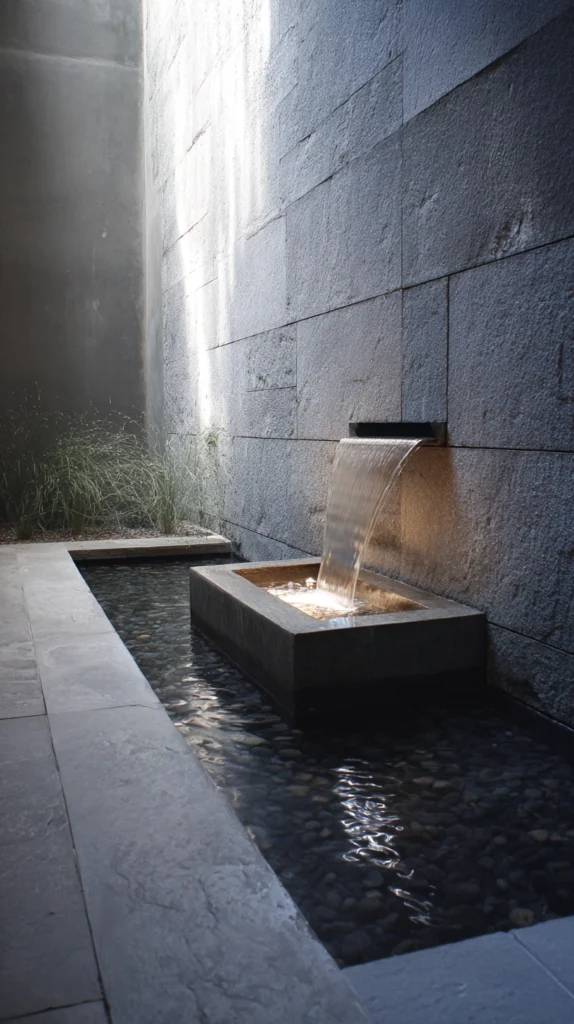
A compact water feature — a wall-mounted spout into a small basin, a millstone with a pebble reservoir, or a single pot fountain — introduces the sound and the visual quality of moving water into the small backyard without consuming the floor space that a pond or a larger water feature would require. In a small space, moving water is proportionally more transformative than it is in a large one — the sound fills the space more completely and the visual presence of the feature is more immediately engaging.
A wall-mounted spout and small basin — $90 – $255 in total materials. A millstone pebble fountain — $200 – $500. A single pot fountain — $100 – $250. Any of these provides the atmospheric and sonic quality of a water feature in a footprint small enough to fit in the narrowest garden bed or against the smallest fence panel.
Styling tip: Position the compact water feature at the point in the garden where it can be heard from the primary seating area — ideally at a distance of two to four metres, close enough for the sound to be the garden’s primary ambient sound but not so close that it dominates conversation. In a small backyard, testing the sound level before finalising the pump’s flow rate is the most important installation step — a pump running at full flow in a small enclosed space can produce a sound that is too loud rather than too quiet.
10. The Green Boundary — Pleached Trees or Espalier
Budget: $200 – $2000
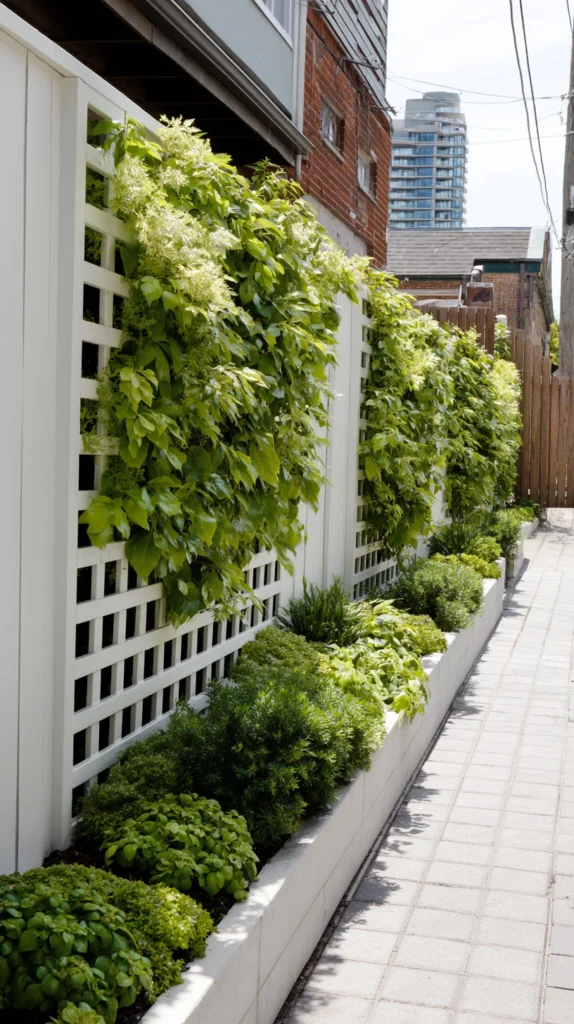
Pleached trees or espalier-trained fruit trees — trained flat against the fence, growing upward in a two-dimensional plane that adds height and botanical presence to the boundary without projecting outward into the garden’s floor space — are the small backyard’s most sophisticated boundary treatment. They create a green living wall effect at a height that provides visual screening from neighbouring windows without the solid barrier quality of a fence extension.
Pleached hornbeam or lime trees in a standard garden size — $60 – $200 each, two to four required for a standard fence length. Espalier apple or pear trees — $40 – $100 each, trained against a wire framework on the fence — $20 – $50 in wire and fixings. Professional training wires and bamboo framework — $30 – $80. Total investment: $200 – $680 for a living boundary feature that improves in quality and presence with every passing season.
Styling tip: Plant the pleached or espalier trees in the autumn — when the root system can establish during the cool months before the spring growing season begins — rather than in the spring or summer when the tree is already in active leaf. An autumn-planted pleached tree establishes its root system before needing to support a full canopy, producing a stronger and more resilient plant by its first summer in the garden. A spring or summer-planted equivalent must simultaneously establish roots and support full leaf growth — a significantly more demanding combination.
11. The Outdoor Kitchen or BBQ Station
Budget: $200 – $3000
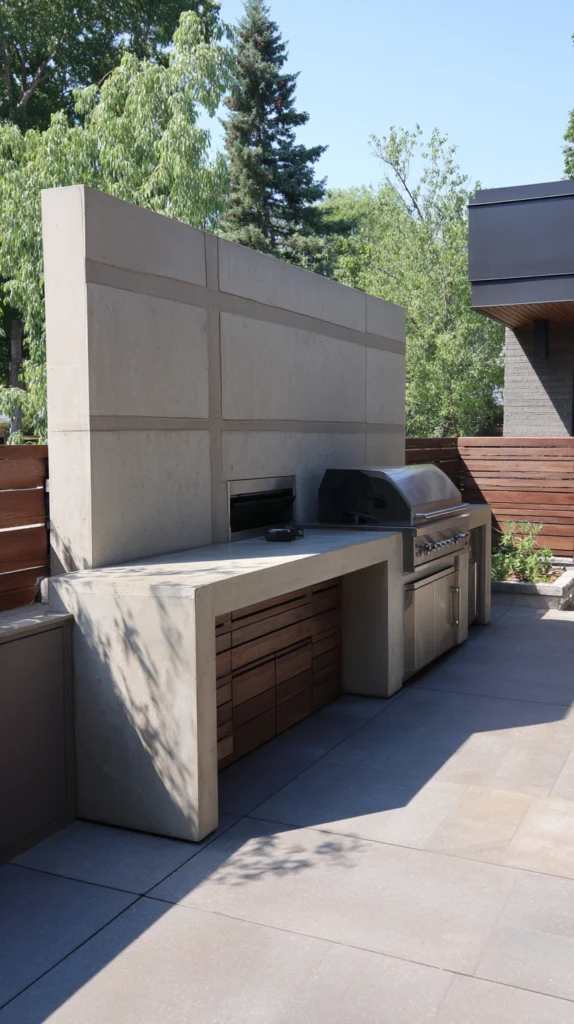
An outdoor kitchen or a permanently installed BBQ station — built against the boundary wall of the small backyard, with a worktop, a grill, and storage below, occupying the space between the wall and the garden’s primary floor area without projecting into the usable space — makes the outdoor dining function of a small garden genuinely self-sufficient without a separate freestanding grill that would need to be stored between uses.
A simple built-in BBQ station with a rendered concrete block base and a stone worktop — $300 – $800 in materials. A powder-coated steel outdoor kitchen module — $300 – $1000. A full modular outdoor kitchen in stainless steel — $1000 – $3000. All three eliminate the need for a freestanding grill — freeing the floor space the grill would have occupied and the storage space its seasonal storage would have required.
Styling tip: Position the outdoor kitchen or BBQ station on the boundary wall that is downwind of the primary seating area during the most common wind direction for the garden’s location. An outdoor kitchen upwind of the seating area fills the seating zone with cooking smoke whenever the grill is in use — which is the most consistently avoidable outdoor dining irritation and the one most easily prevented by checking the prevailing wind direction before choosing the installation wall.
12. The Artificial Grass and Low Maintenance Base
Budget: $300 – $2000
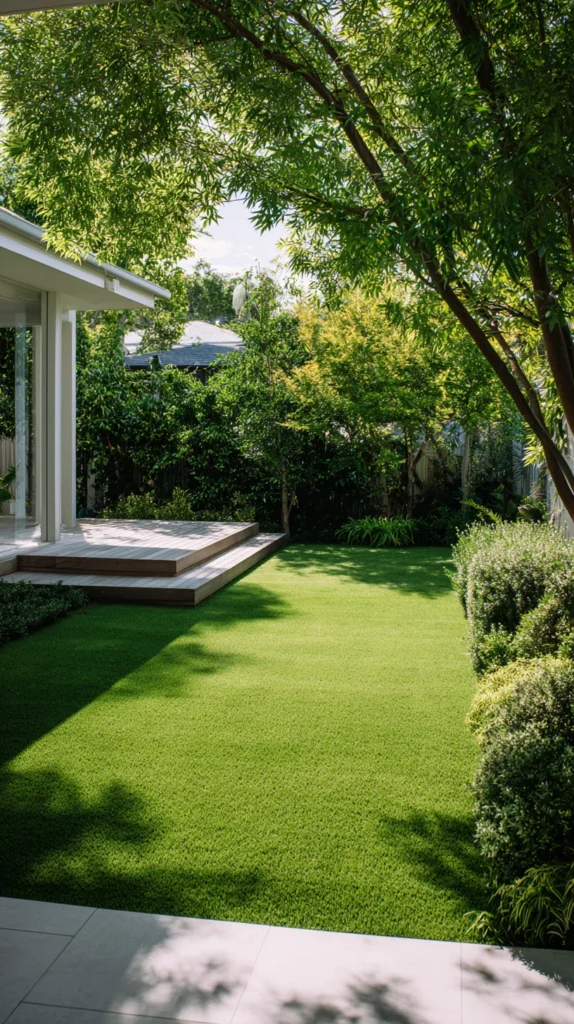
Artificial grass in a small backyard — a high-quality, realistic specification that reads as genuine lawn at normal viewing distance — eliminates the maintenance overhead of a real lawn in a space too small for a standard mower and produces a consistently usable, consistently attractive green surface that does not require watering, mowing, or seasonal reseeding. In a small backyard where every element must earn its place, a surface that requires no ongoing intervention earns its place immediately.
A quality artificial grass in a realistic pile height and colour — $20 – $60 per square metre in materials. A rubber crumb underlay — $5 – $15 per square metre. Professional installation — $15 – $30 per square metre in labour. A 20-square-metre small backyard lawn costs $800 – $2100 in total for a surface that requires nothing beyond an occasional brush to remain at its best.
Styling tip: Choose an artificial grass specification with at least two or three different blade heights and colours within the same product — grass that reads as a uniform single colour and height from a distance but has the subtle variation of real grass when seen close up. A single-colour, single-height artificial grass is identifiable as artificial from every distance. A blended specification reads as real grass from the primary viewing positions and as very good quality artificial grass only when examined at close range.
13. The Corner Seating Arrangement
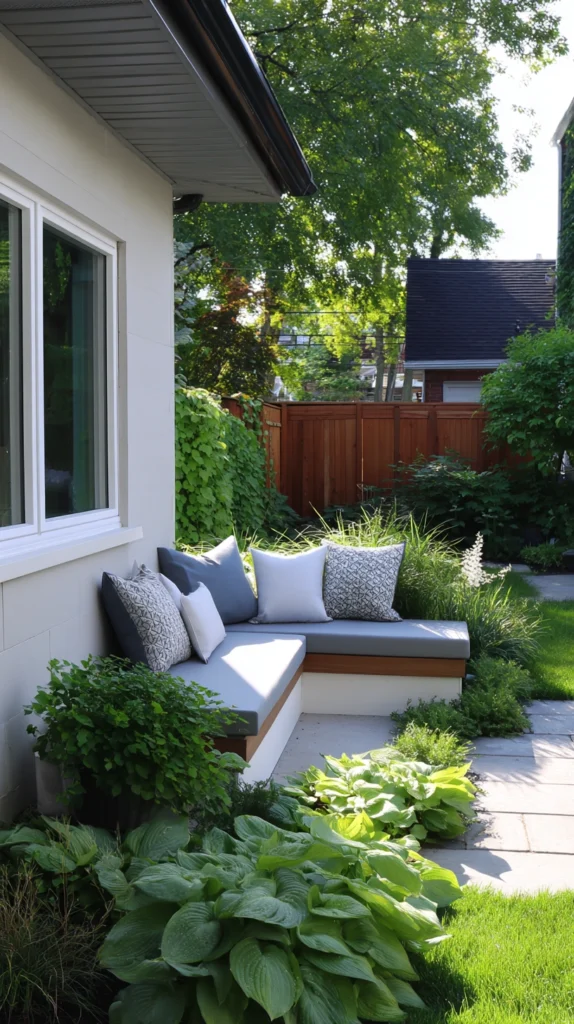
Budget: $150 – $1500
A corner seating arrangement — an L-shaped built-in bench or a modular corner sofa positioned in the garden’s furthest corner — uses the corner’s two walls as the back and side of the seating structure, leaving the full remaining floor space of the garden free for circulation, planting, and children’s play. A corner seating arrangement seats the same number of people as a central furniture arrangement while consuming a fraction of the garden’s usable floor space.
A built-in L-shaped timber corner bench — $200 – $600 in materials. A modular outdoor rattan corner sofa — $300 – $1000. An outdoor cushion in a quick-dry fabric — $80 – $200 for the built-in bench. A low central coffee table — $40 – $120. Total corner seating investment: $420 – $1720 for a seating arrangement that seats six to eight people in a space that a standard table and chair arrangement would seat four.
Styling tip: Position a small planting container at the exposed corner of the L-shaped seating — the point where the two arms of the bench meet — rather than leaving it as an unused structural corner. A tall planted pot at the corner of the L reads as a deliberate design detail, provides some visual privacy from the adjacent seating positions, and softens what would otherwise be the arrangement’s most geometrically sharp and least interesting point.
14. The Lighting Strategy That Makes Small Feel Large
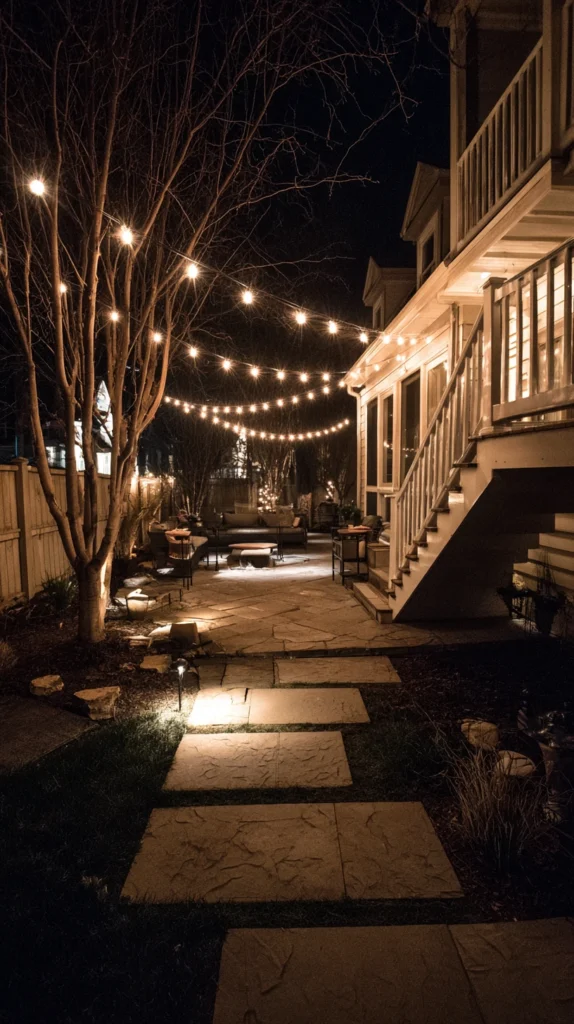
Budget: $80 – $500
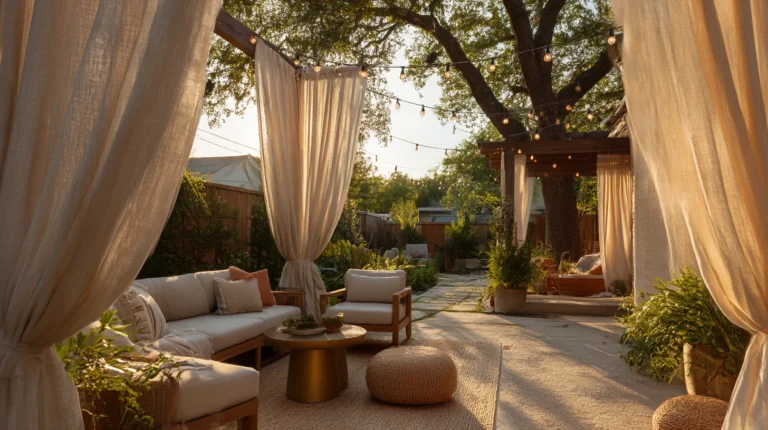
A strategic lighting scheme — low-level path lights, uplighters within the planting beds, string lights above the seating area, and step lights along any level changes — makes the small backyard feel larger after dark than it does in daylight because well-placed garden lighting reveals depth and creates shadow at the perimeter that pushes the apparent boundary of the space outward beyond the actual fence line.
Low-voltage pathway lights — $8 – $20 each. Solar uplighters within the planting beds — $10 – $20 each. Outdoor string lights above the seating area — $20 – $60 per 10-metre length. Step edge LEDs — $5 – $15 each. A solar or mains-powered control system — $15 – $60. Total backyard lighting investment: $150 – $400 for a lighting scheme that transforms the garden’s evening character.
Styling tip: Light the planting at the garden’s perimeter from below — using uplighters within the beds — rather than lighting the seating area from above with overhead fixtures. Perimeter uplighting pushes light outward toward the boundary walls and creates shadow at the centre of the garden, which produces a sense of depth and expansiveness that overhead lighting above the seating area cannot generate. Overhead lighting illuminates the seating area clearly and the garden perimeter not at all — making the space feel exactly as small as it is.
15. The Fully Maximised Small Backyard
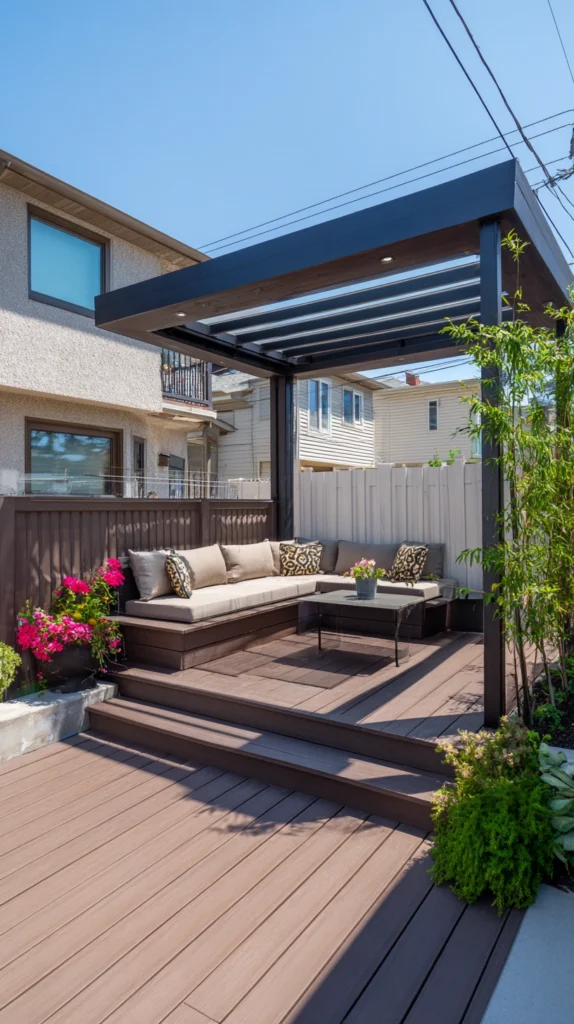
Budget: $2000 – $15000
The fully maximised small backyard — multi-level composite decking with integrated step lighting, a built-in L-shaped corner bench with storage beneath, a fold-down wall table for dining, a vertical garden wall covering two fence panels, pleached trees along the third boundary providing screening without floor space consumption, a compact wall-mounted water feature providing ambient sound, a diagonal board direction making the floor appear larger, an outdoor mirror at the far boundary extending the apparent depth, string lights beneath a timber pergola defining the primary seating area from above, and artificial grass or planting in the remaining open areas — is a small backyard that has used every available spatial strategy simultaneously.
Multi-level decking: $1000 – $3000. Built-in bench: $400 – $1000. Fold-down table: $100 – $200. Vertical garden: $100 – $300. Pleached trees: $300 – $800. Water feature: $150 – $500. Pergola: $400 – $1500. Mirror: $100 – $300. Lighting: $200 – $600. Planting and ground cover: $200 – $800. Total fully maximised small backyard: $2950 – $9000 — the cost of a small outdoor space that has been comprehensively and intelligently designed rather than partially furnished.
Styling tip: Assess the fully designed small backyard from the primary indoor viewing position — the kitchen window, the back door, the living room — as well as from within the garden itself. A small backyard that looks beautiful from outside the house is a daily pleasure even when it is not being actively used.
One that looks beautiful only when occupied is a space that rewards presence but not observation — and the small backyard that can be seen from the house should be designed to look good from that position at every hour and in every season, because that view is experienced far more frequently than the time spent in the garden itself.
The small backyard does not need to apologise for its size. It needs to be designed for it — with furniture scaled to its proportions, planting placed at its perimeter, light layered at every height, and every element chosen for the specific contribution it makes to the space rather than for its general desirability as a garden feature.
Precision is the small backyard’s primary design principle. Every decision made with precision — the diagonal board, the fold-down table, the corner seating, the perimeter uplighting — makes the space feel larger. Every decision made without it makes the space feel smaller.
Apply precision consistently. Keep only what earns its place. And discover that a small backyard designed with genuine intelligence and genuine intention is not a compromised version of a large garden. It is a different and often more satisfying thing entirely.