16 Small Entrance Hall Ideas
16 Small Entrance Hall Ideas
The entrance hall serves as the crucial transition zone between the outside world and your private sanctuary, setting the tone for your entire home while serving essential functional purposes.
Small entrance halls present unique design challenges, requiring creative solutions that maximize storage, create welcoming first impressions, and maintain flow without feeling cramped or cluttered.
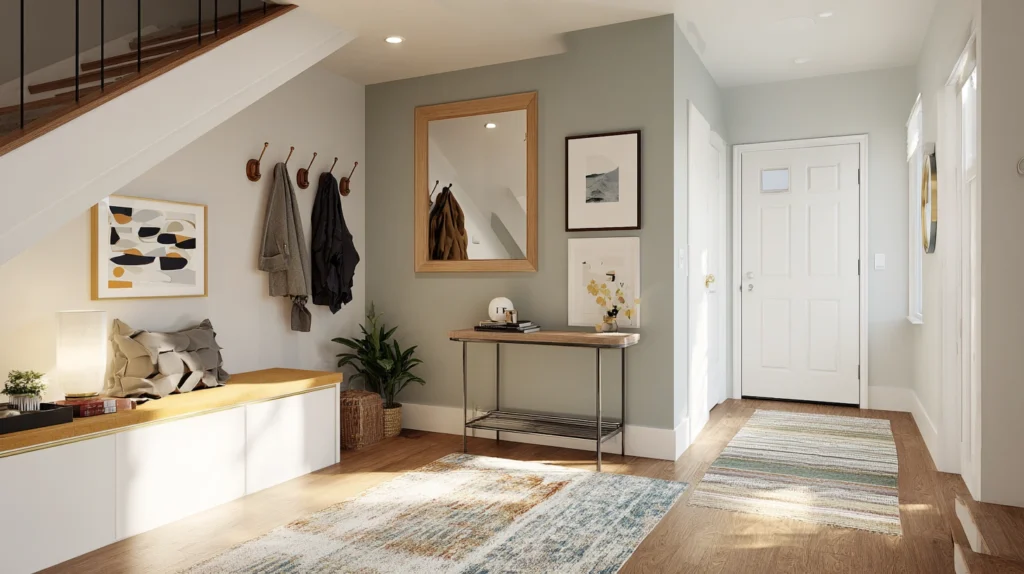
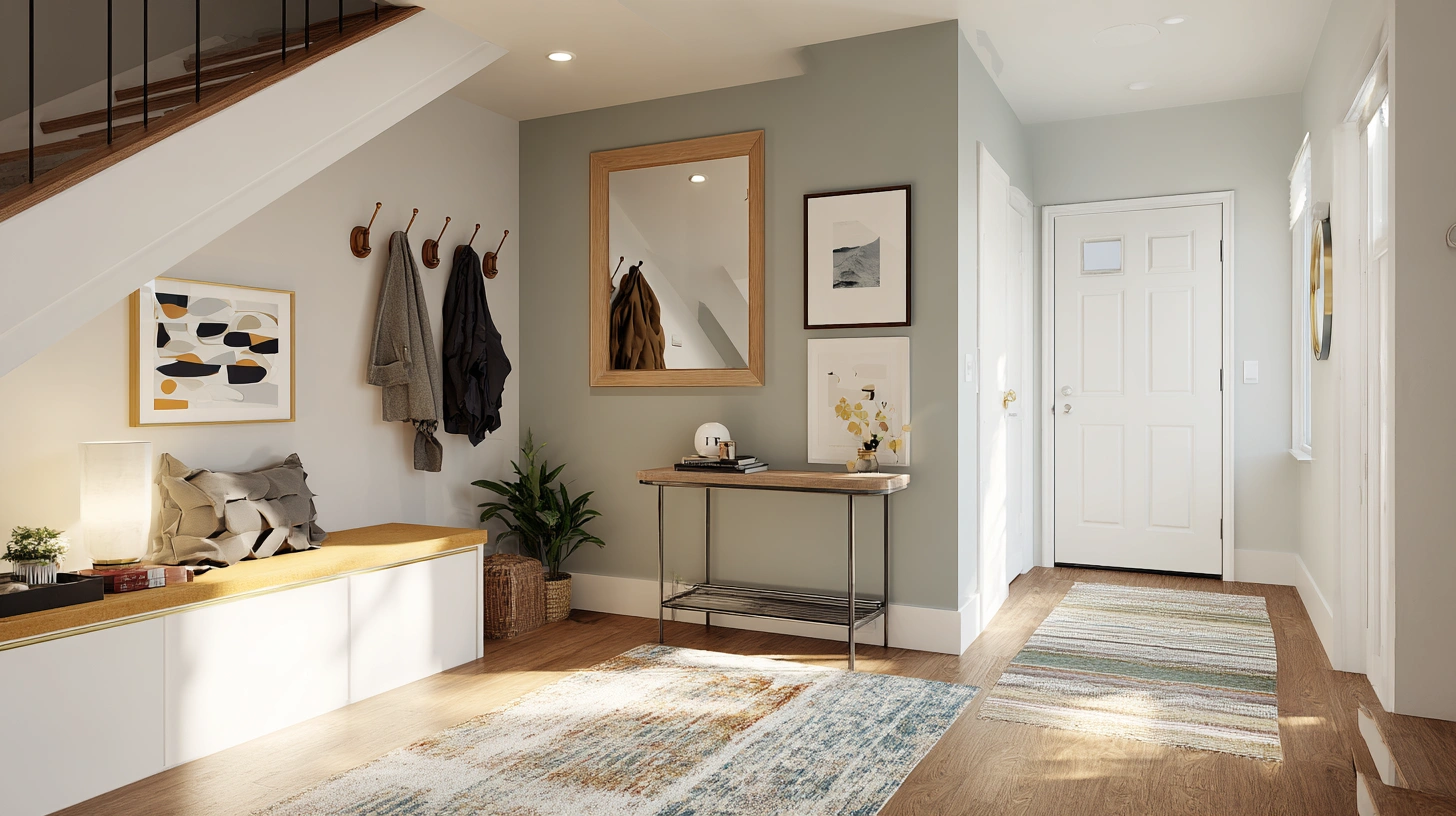
Unlike spacious foyers where you can incorporate grand furniture pieces and elaborate decorations, compact entryways demand strategic planning where every element earns its place through beauty, function, or ideally both.
These 16 small entrance hall ideas demonstrate how thoughtful design transforms even the tiniest entry spaces into organized, stylish areas that welcome you home and greet guests with polish and personality.
1. Slim Console Table Foundation
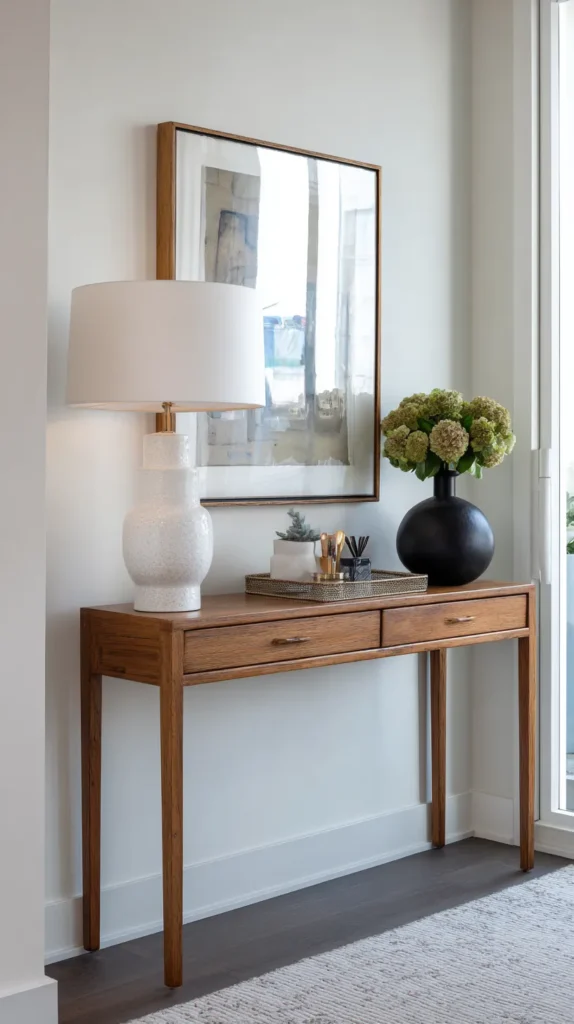
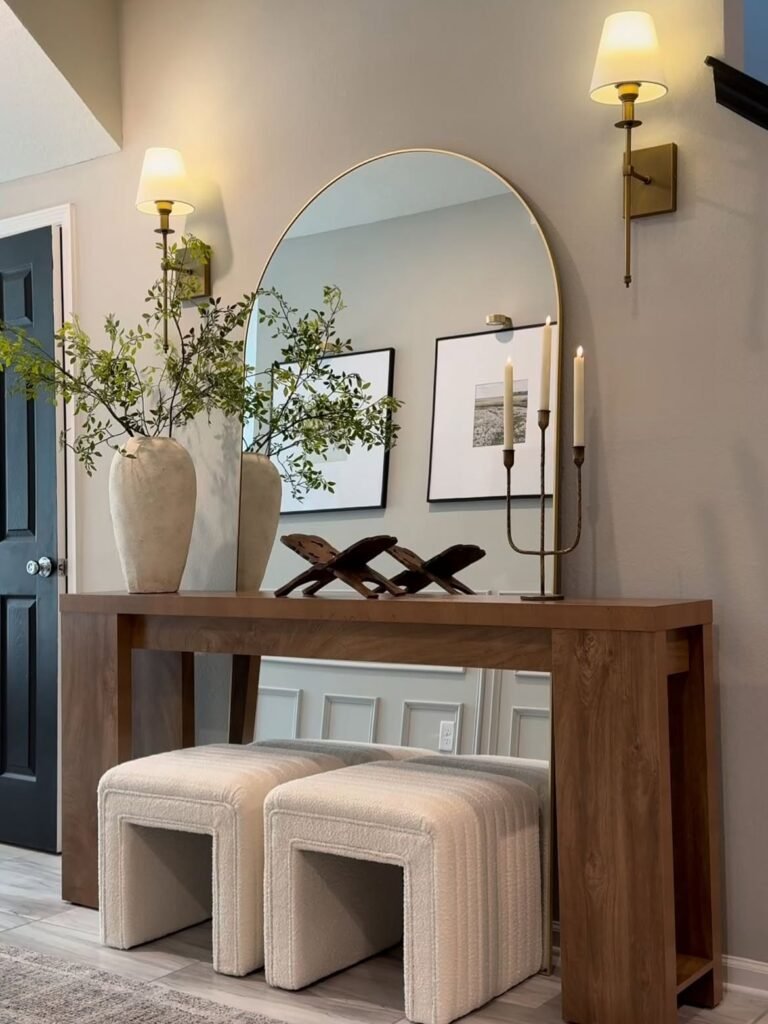
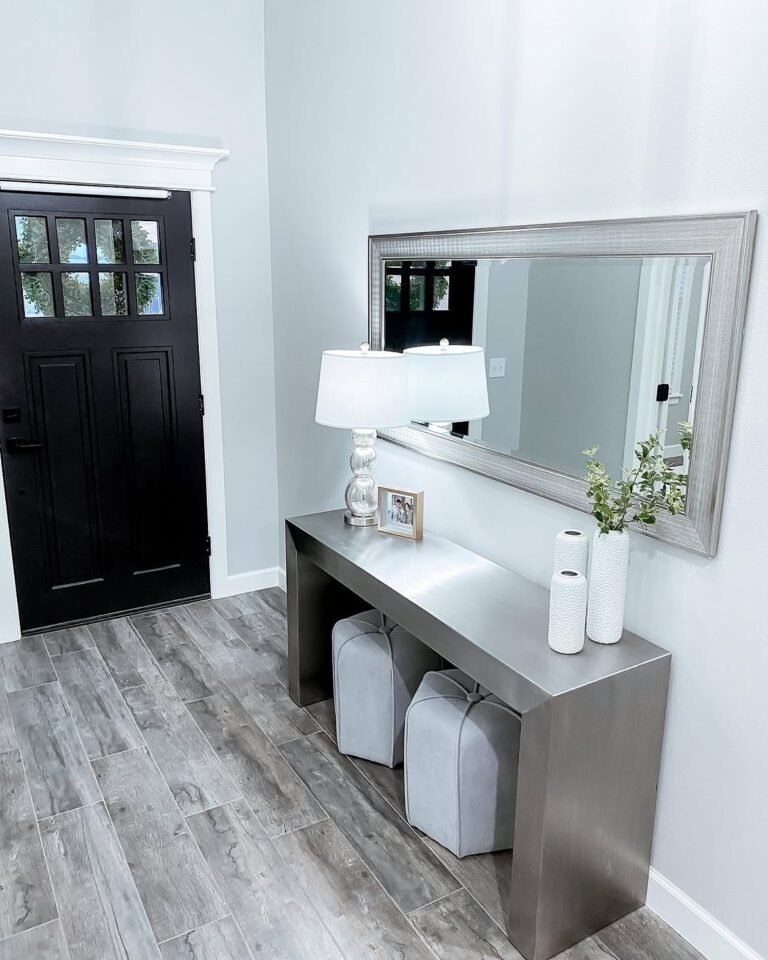
Anchor your entrance with a narrow console table no deeper than 12 inches that provides surface space without obstructing the walkway or making the hall feel cramped. Choose designs with lower shelves for additional storage and display opportunities, keeping everyday items like keys and mail organized and accessible.
Style the top sparingly with a small lamp for ambient lighting, a decorative tray for corralling small items, and a single statement piece like artwork or a mirror. This minimal approach provides functionality while maintaining the open feel essential in compact spaces.
2. Wall-Mounted Hooks and Shelving
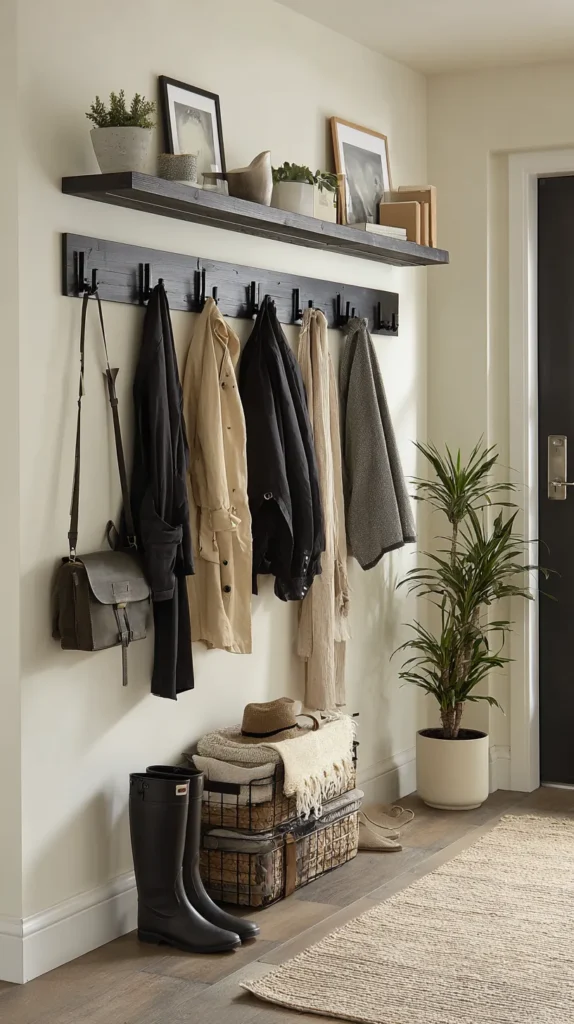
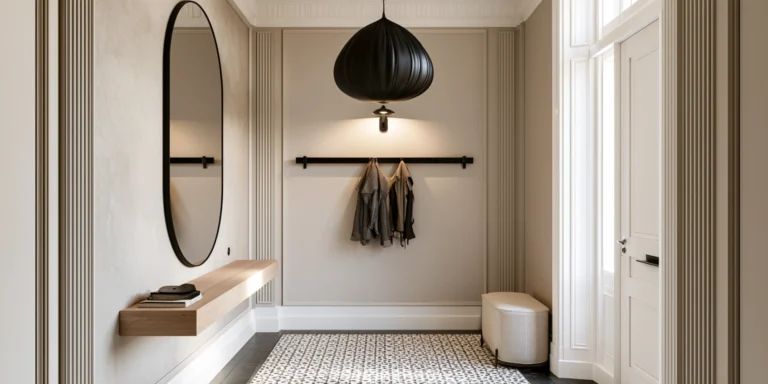
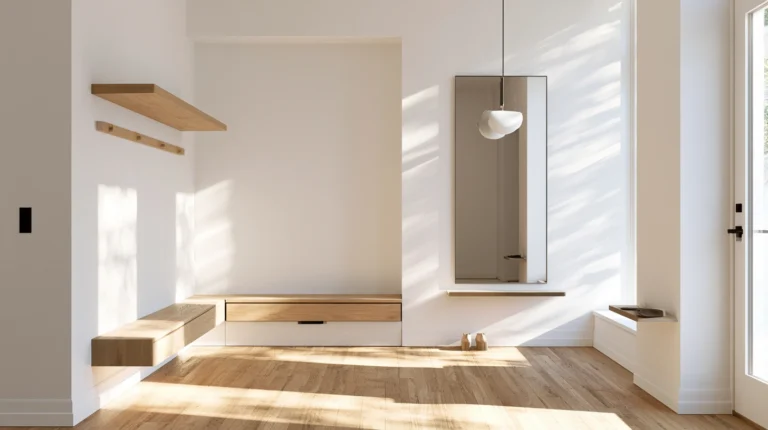
Maximize vertical space with a combination of wall-mounted hooks for coats and bags paired with floating shelves above for hats, baskets, or decorative items.
Choose coordinating finishes in brass, black metal, or wood that complement your home’s aesthetic while creating a cohesive look throughout the entry area. Install hooks at varying heights to accommodate both adults and children, ensuring everyone can independently hang their belongings.
Add a floating shelf above the hooks for items needed as you leave—sunglasses, dog leashes, or small accessories—keeping them visible and accessible.
3. Mirrored Wall Expansion
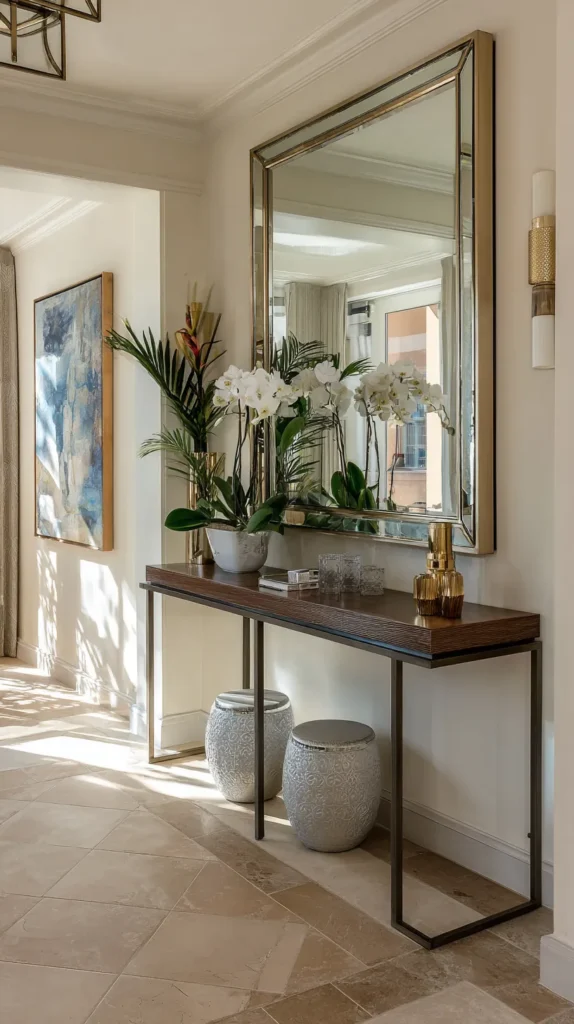
Install a large mirror or collection of smaller mirrors on one wall to visually double the space through reflection while serving the practical purpose of last-minute appearance checks. Choose mirrors with interesting frames that add decorative appeal beyond simple function, whether that’s ornate vintage, sleek modern, or rustic wood.
Position the mirror to reflect natural light from nearby windows or doors, maximizing brightness in what are often windowless or dimly lit spaces. The reflective surface creates depth and dimension that makes narrow halls feel significantly more spacious and welcoming.
4. Built-In Storage Bench
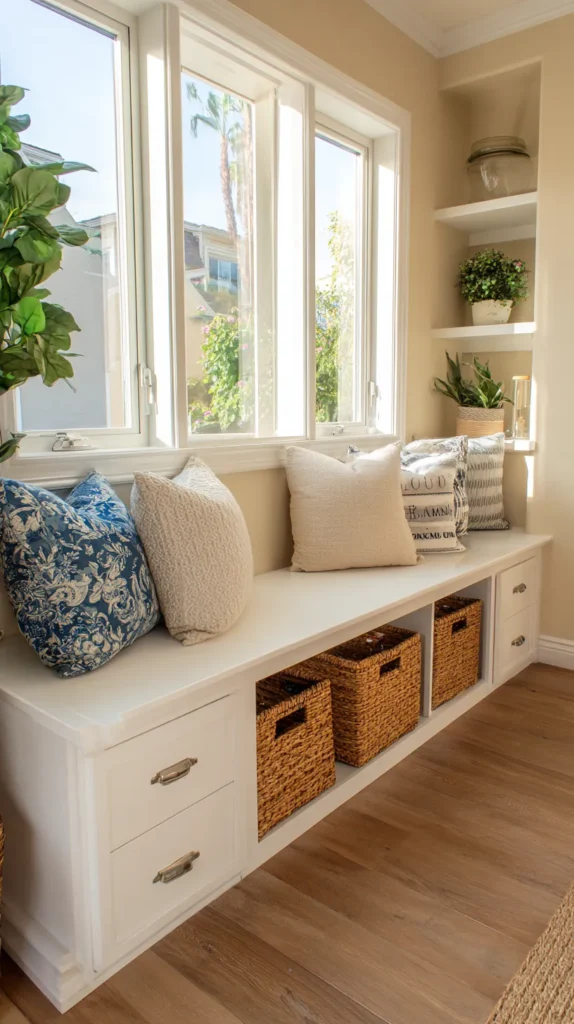
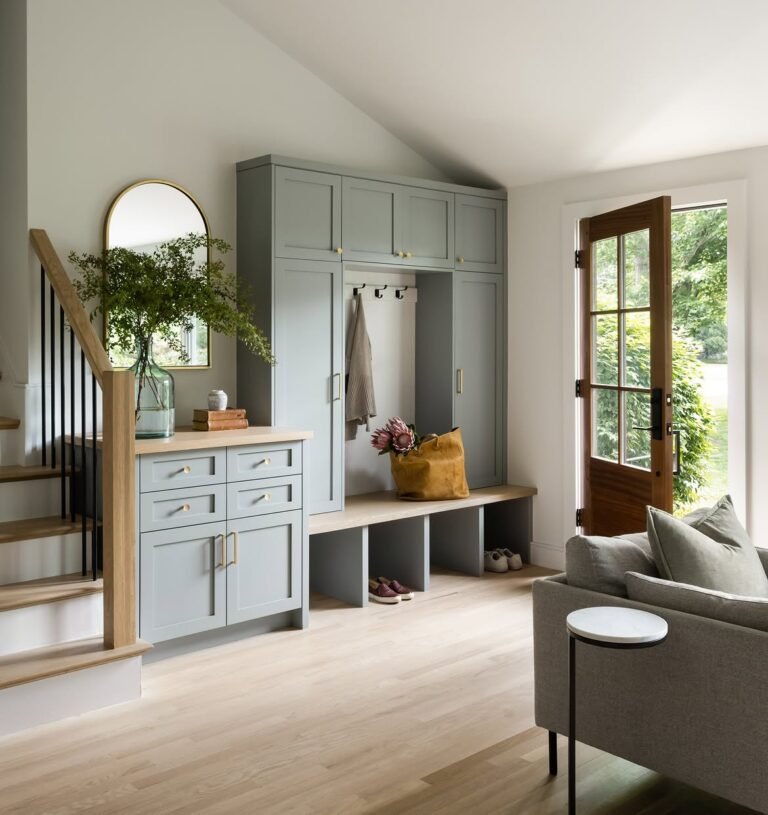
Commission a custom built-in bench along one wall with storage underneath for shoes, bags, or seasonal items, creating multifunctional furniture that doesn’t protrude awkwardly. Design the bench at comfortable seating height with a hinged top or pull-out drawers below, maximizing every cubic inch of available space.
Add comfortable cushions in durable fabrics that withstand daily use while introducing color and pattern that enliven the entry. Include hooks above the bench for hanging coats and bags, creating a complete drop zone that keeps clutter contained and organized.
5. Vertical Coat Rack Statement
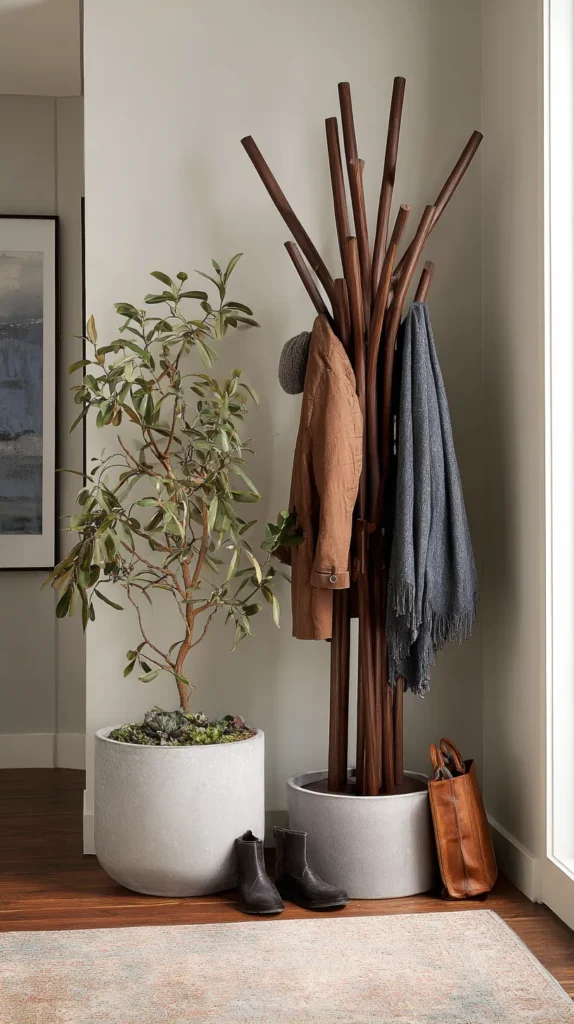
Choose a tall, slim coat rack that provides hanging storage without requiring wall installation, perfect for renters or those avoiding permanent modifications. Select designs with multiple levels offering hooks at various heights, umbrella stands at the base, and perhaps a small shelf at the top for hats or decorative objects.
Opt for sculptural designs in interesting materials like bentwood, industrial pipe, or sleek metal that function as art pieces even when not holding coats. Position the rack in a corner to minimize its footprint while maximizing its storage capacity and visual impact.
6. Gallery Wall Personality
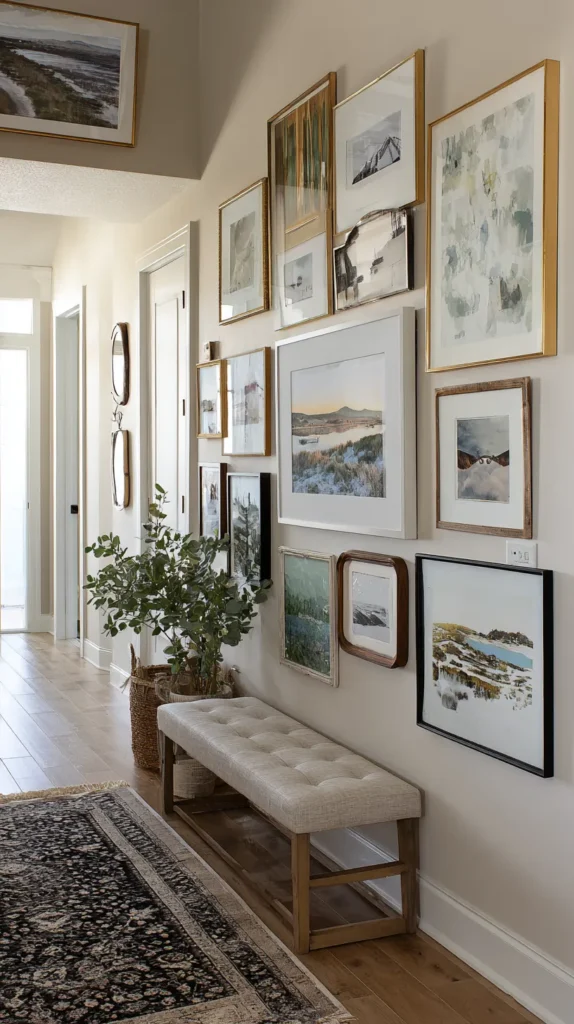
Create a curated gallery wall featuring family photos, artwork, and meaningful prints that immediately communicate your personality and make the entrance feel personal and welcoming. Use matching frames in a single finish for cohesive sophistication, or mix frame styles for eclectic charm, ensuring the overall arrangement maintains visual balance.
Include a variety of frame sizes and orientations arranged in a planned layout that fills the wall without overwhelming the narrow space. This approach adds significant visual interest without consuming any floor space, perfect for tight entries where every square foot counts.
7. Narrow Shoe Storage Solutions
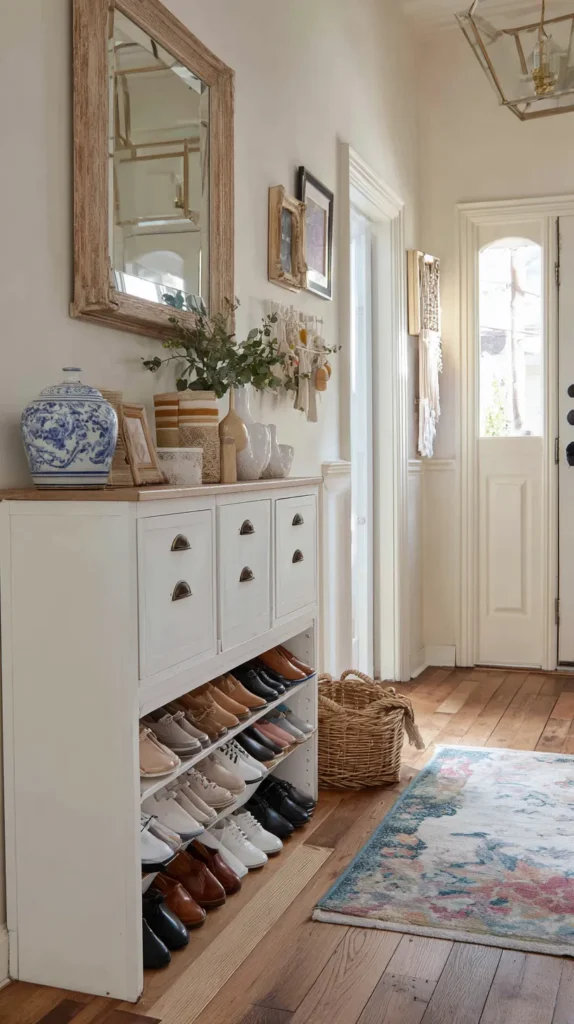
Install a slim shoe cabinet or rack specifically designed for tight spaces, keeping footwear organized and hidden while maintaining walkway clearance. Choose designs with doors or closed fronts rather than open shelving to contain visual clutter and create a tidier appearance in this high-visibility area.
Look for cabinets with tilting compartments that store shoes at angles, maximizing capacity while maintaining a shallow profile that fits in narrow halls. Position the storage near the entrance for convenience while leaving enough clearance for the door to open fully without obstruction.
8. Pendant Lighting Focus
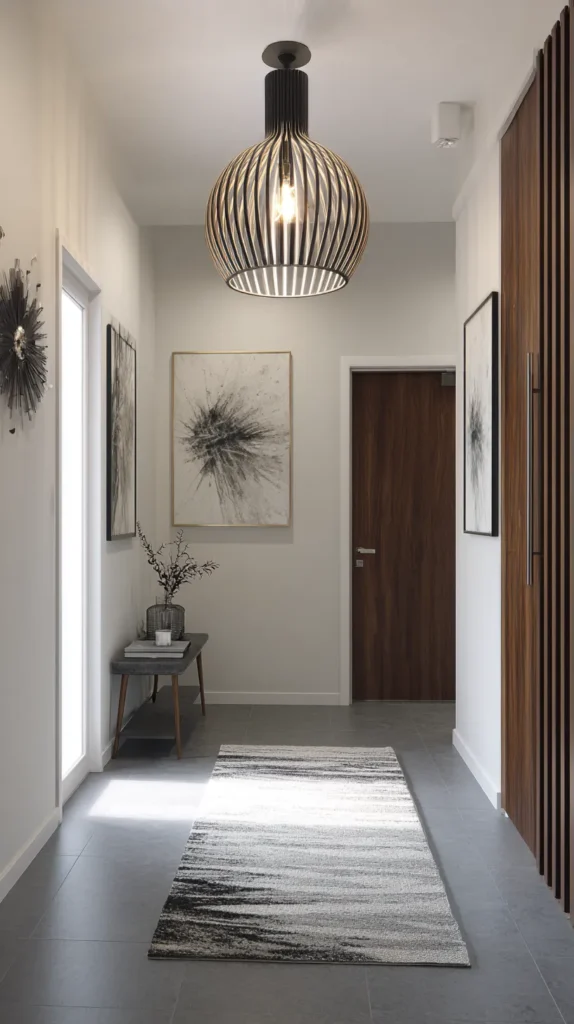
Replace basic overhead fixtures with a statement pendant light that draws the eye upward, making ceilings feel higher while adding personality and adequate illumination. Choose fixtures scaled appropriately to the space—oversized pendants overwhelm while too-small options get lost and fail to make the intended impact. Consider styles that complement your home’s overall aesthetic, from modern geometric designs to traditional lanterns or bohemian woven shades. The focused lighting creates an intentional, designed feeling that elevates the entrance from utilitarian passthrough to considered space.
9. Painted Accent Wall Drama
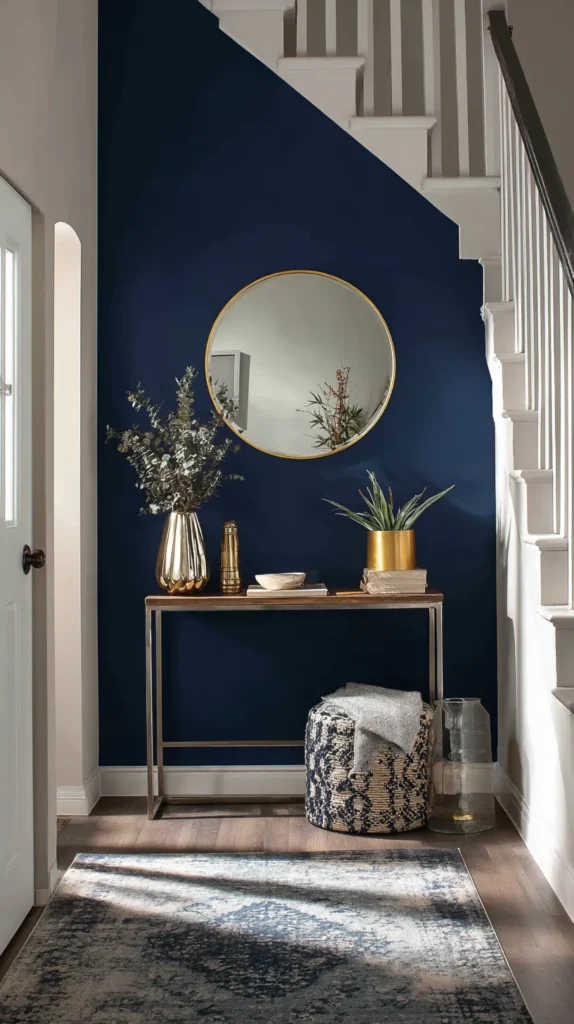
Transform a plain entrance with a boldly painted accent wall in deep, saturated colors like navy, forest green, charcoal, or burgundy that creates immediate visual interest. The dark color paradoxically makes small spaces feel more intimate and intentional rather than trying to fight their compact dimensions with pale colors.
Use the remaining walls in bright white or light neutral tones to maintain brightness and prevent the space from feeling cave-like or oppressive. The color contrast creates architectural definition and provides a striking backdrop for mirrors, artwork, or furniture pieces.
10. Multifunctional Storage Cubbies
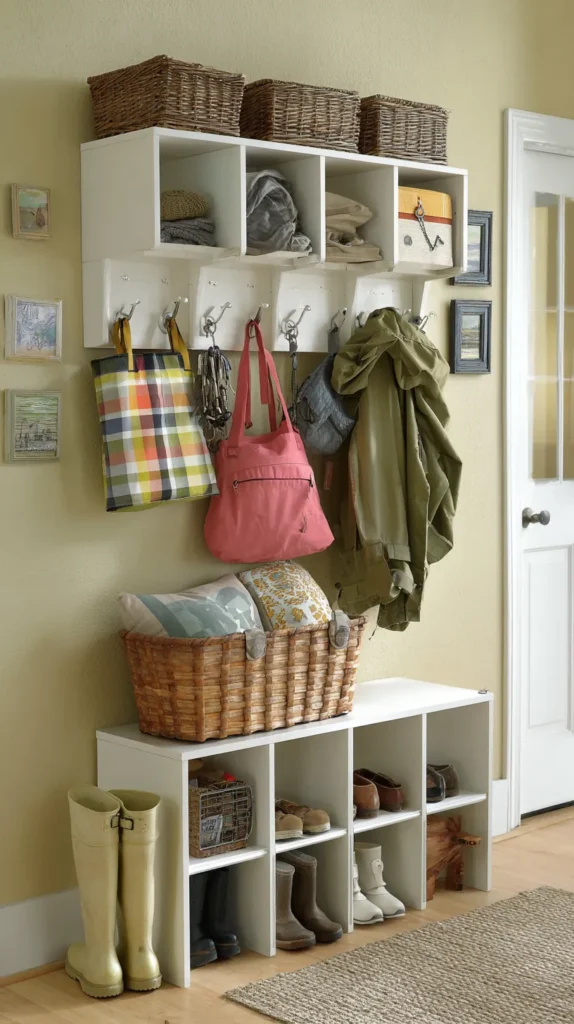
Install a wall-mounted cubby system with compartments for different family members or item types, creating organized storage that keeps the entrance clutter-free and functional. Assign cubbies for specific purposes—one for keys and mail, another for dog walking supplies, a third for children’s backpacks and lunch boxes.
Add labeled baskets or bins within cubbies to further organize contents while maintaining a tidy, uniform appearance from the front. This system works particularly well for families where teaching organizational habits and maintaining daily routines requires visible, accessible storage.
11. Layered Runner Rugs
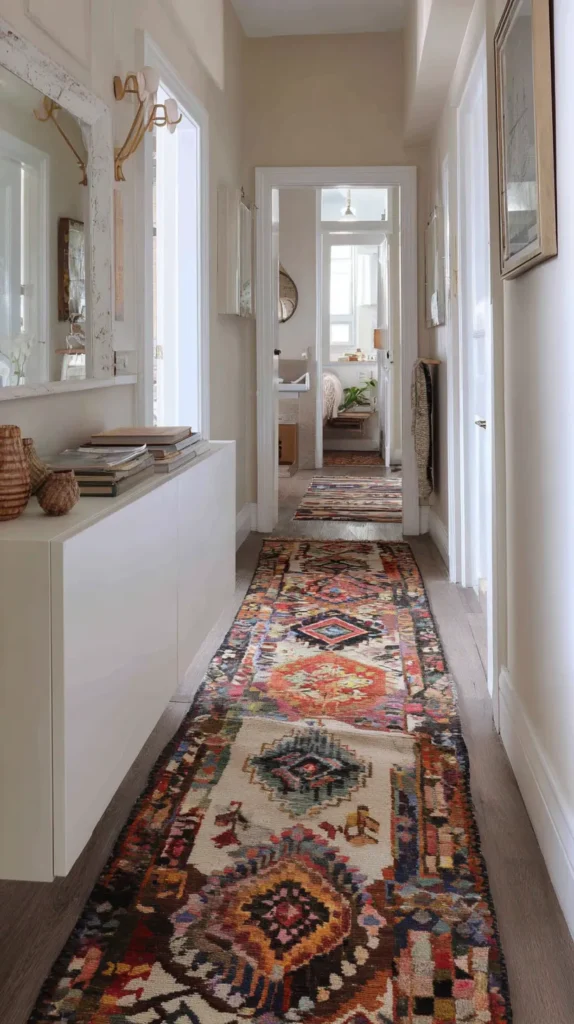
Define the entrance and protect flooring with a durable runner rug in patterns and colors that hide dirt while adding warmth and style underfoot. Choose weather-resistant materials designed for high-traffic areas that can handle wet shoes, muddy paws, and constant foot traffic without showing wear.
Layer a smaller decorative rug over a larger utility mat for added visual interest and functionality, easily switching the top layer seasonally. The rug creates a designated entry zone that psychologically separates outside from inside while adding comfort and color to hard flooring.
12. Floating Shelf Minimalism
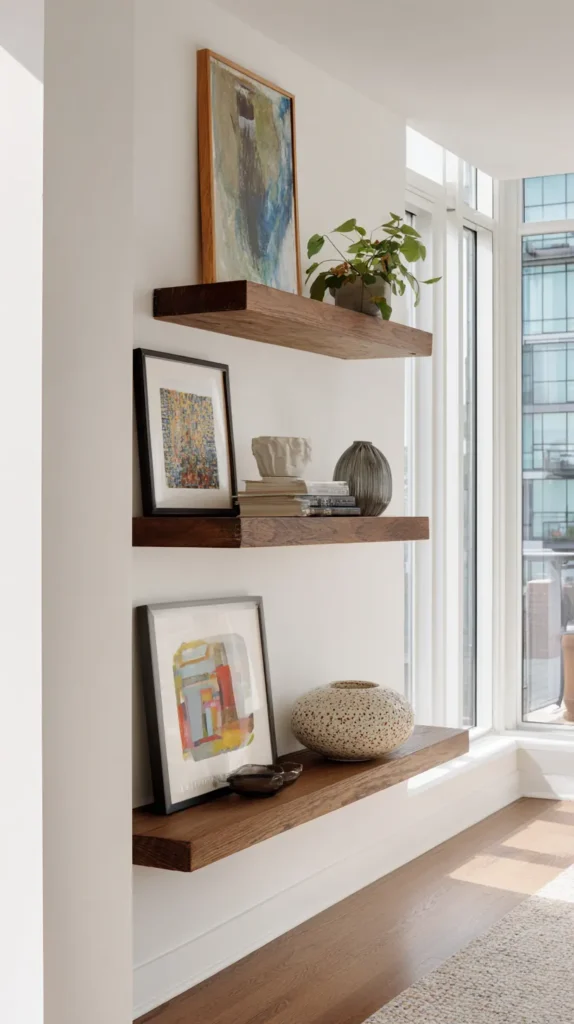
Mount a single long floating shelf at eye level for displaying carefully curated decorative objects, small plants, and essential items in an uncluttered, intentional arrangement. Keep the styling minimal with plenty of negative space between objects, following the “less is more” principle that prevents small spaces from feeling overcrowded.
Rotate items seasonally to keep the display fresh and relevant—spring flowers, summer seashells, fall pumpkins, winter greenery—maintaining interest throughout the year. The simplicity allows each item to shine while the elevated placement keeps surfaces clear for daily necessities.
13. Wainscoting and Chair Rail Detail
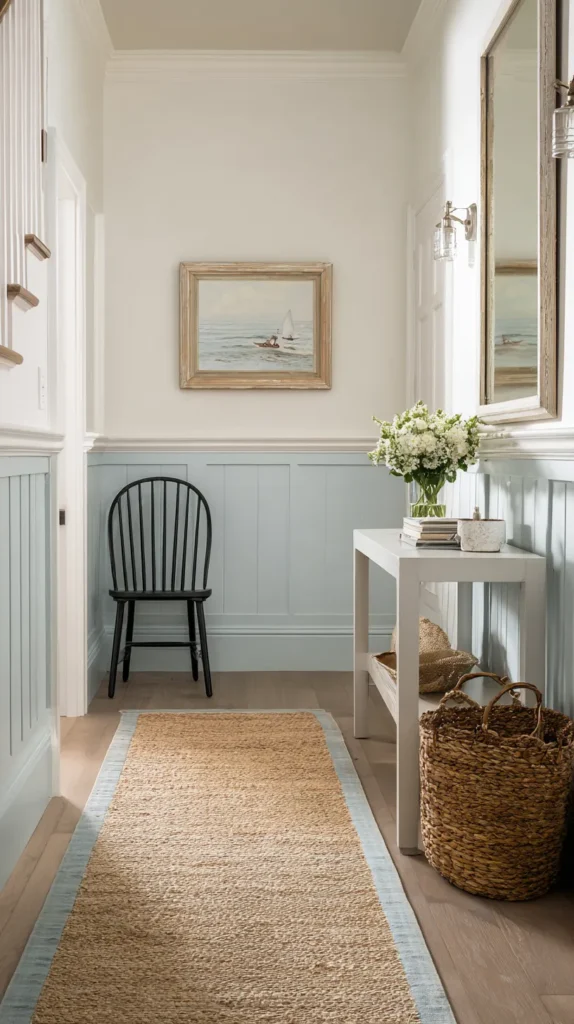
Add architectural interest through wainscoting, board and batten, or chair rail molding that gives character to plain walls without consuming floor space. Paint the lower portion in a darker color with lighter walls above, creating visual weight at the bottom that grounds the space and adds dimension.
The horizontal lines created by chair rails make narrow halls feel wider while the detailed millwork elevates the space from basic to custom. This permanent upgrade adds lasting value and sophistication that transforms the entrance into a designed architectural element.
14. Compact Corner Solutions
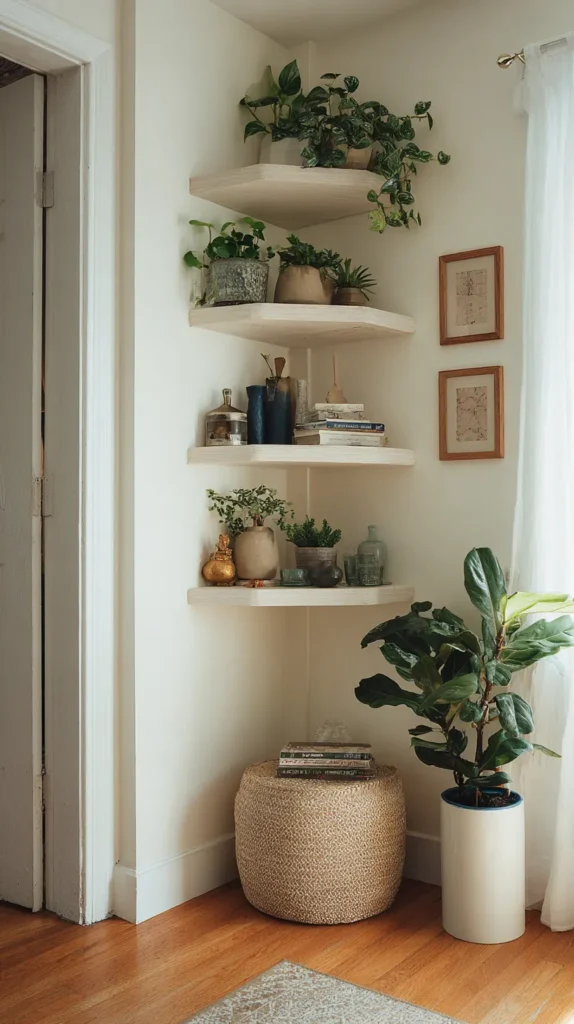
Utilize often-wasted corner space with specially designed corner shelves, hooks, or small triangular tables that fit perfectly into angles without obstructing traffic flow. Mount corner shelving units that wrap around the angle, providing surprising storage capacity in minimal square footage while maintaining clearance in the center of the hallway.
Add a corner-mounted coat rack or umbrella stand that capitalizes on dead space while keeping items organized and accessible. These specialized solutions maximize every available inch in truly tiny entries where standard furniture simply won’t fit.
15. Command Center Organization
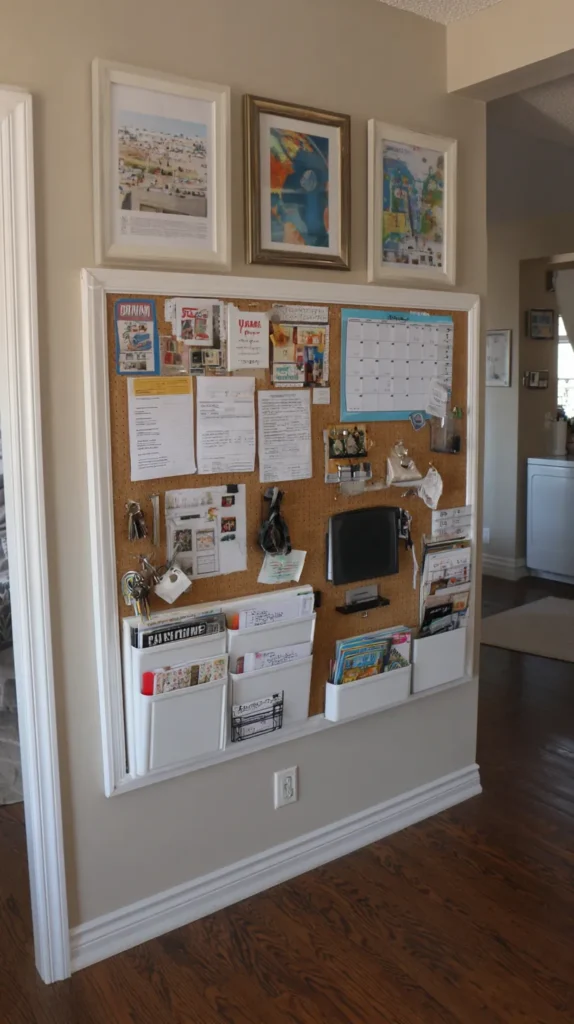
Create a family command center on one wall with a calendar, message board, mail organizer, and key hooks keeping household management visible and organized. Use a large framed bulletin board, chalkboard, or whiteboard for shared messages, appointments, and reminders that keep everyone informed and coordinated.
Add wall-mounted magazine racks or slots for incoming mail, bills requiring attention, and school papers needing signatures, preventing paper piles on surfaces. This centralized system turns the entrance into a functional household hub that streamlines daily routines and reduces clutter throughout the home.
16. Minimalist Zen Approach
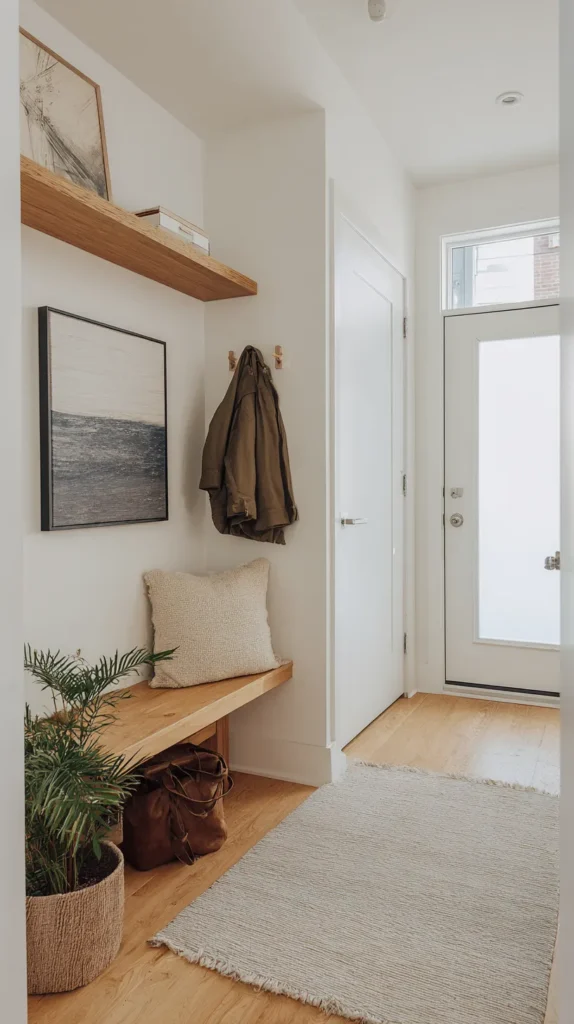
Embrace radical simplicity with an almost-empty entrance featuring only absolute essentials—a small hook for one coat, a simple shelf for keys, perhaps a single piece of art. This pared-down approach celebrates the beauty of empty space, making cramped entries feel more spacious and serene through intentional restraint.
Choose each element carefully for both function and aesthetic appeal, ensuring that the few items present are beautiful enough to stand alone. The minimalist philosophy transforms limitations into assets, proving that small spaces achieve elegance through subtraction rather than addition.
Creating Your Perfect Small Entrance
Successfully designing small entrance halls requires balancing welcoming aesthetics with practical storage needs, ensuring the space works as hard as it looks good. Measure your entry carefully before selecting furniture, choosing pieces specifically scaled for compact spaces rather than trying to fit standard-sized items.
Prioritize vertical storage solutions that draw the eye upward while keeping floor space clear for easy movement and an uncluttered feeling. Maintain the area daily with quick tidying that prevents the accumulation of clutter that quickly overwhelms small spaces.
Most importantly, design the entrance to reflect your lifestyle and actual needs rather than magazine ideals, creating an entry that genuinely serves your household while making a positive first impression.