14 Bedroom Plants to Improve Health and Wellness and Help You Sleep Better
14 Bedroom Plants to Improve Health and Wellness and Help You Sleep Better
There is a specific quality that a bedroom with living plants possesses that a bedroom without them consistently lacks. It is not simply a visual quality — the green of a trailing pothos against a white wall, the architectural silhouette of a snake plant beside a bedside table — though these are genuine contributions to the room.
It is the quality of genuine biological presence: the knowledge that the room contains something living, something engaged in the continuous quiet chemistry of gas exchange and growth, something that makes the air in the room a slightly different and slightly more complex thing than the air in a sealed box.

The science of bedroom plants and sleep quality is more nuanced than the popular headlines suggest. Plants do produce oxygen and absorb carbon dioxide through photosynthesis, but the volumes involved in a domestic bedroom are not large enough to measurably change the room’s atmosphere in the way that marketing language implies.
What is measurable, however, is the effect of increased humidity — which plants do provide through transpiration — on sleep quality in dry indoor environments, the psychological effect of biophilic design on stress reduction, and the genuine air-filtering capacity of certain species for specific volatile organic compounds.
These are the real contributions of bedroom planting, and they are worth understanding before choosing which plants earn a position in the room where health and rest matter most.
Each plant below is described with its specific contribution, its care requirements, its light tolerance, and a practical tip for making it work as well as it deserves in the bedroom context.
1. The Snake Plant (Sansevieria)
Budget: $8 – $60
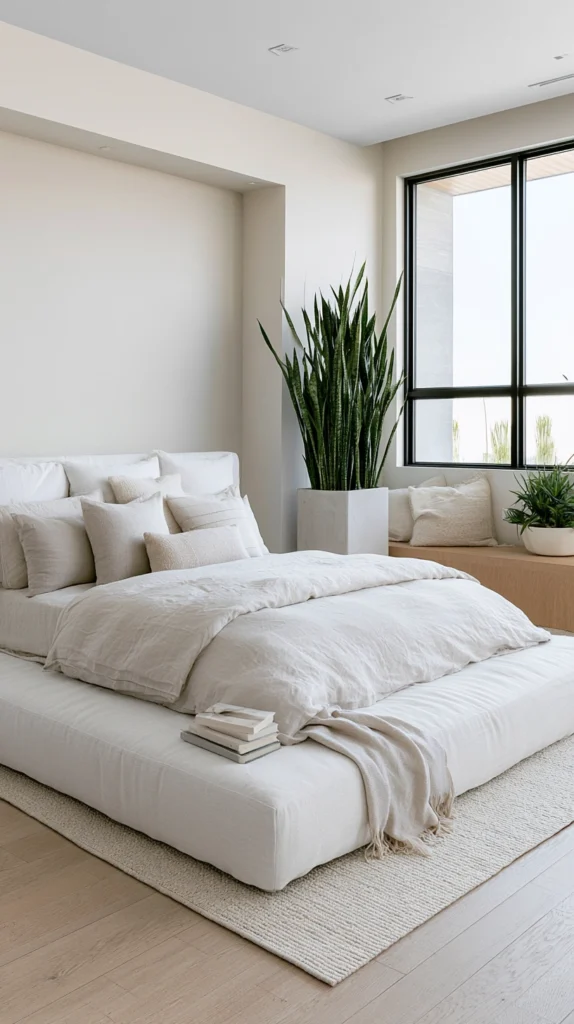
The snake plant is the bedroom plant most consistently recommended by every source on the subject, and the recommendation is genuinely earned. Unlike most plants, the snake plant performs its photosynthesis through a specific metabolic pathway — Crassulacean Acid Metabolism — that allows it to absorb carbon dioxide and release oxygen specifically at night rather than during daylight hours. For a bedroom occupied during the night, this nocturnal gas exchange cycle is the most directly relevant photosynthetic behaviour of any available houseplant.
The snake plant tolerates low light conditions that would be fatal to most tropical plants, requires watering only every two to four weeks depending on the season, and is extremely forgiving of the temperature fluctuations and the occasional missed watering that the bedroom environment typically provides. A snake plant of 60–90 centimetres in height costs $15–$40.
Style tip: Position the snake plant at the bedside or at the end of the bed rather than in a dark corner. The architectural upright form of the snake plant reads as furniture-like — it anchors the bedside position with the quality of a designed element rather than a plant placed in the room — and its nocturnal oxygen release is most valuable in the immediate sleeping environment rather than across the room.
2. The Peace Lily (Spathiphyllum)
Budget: $10 – $40
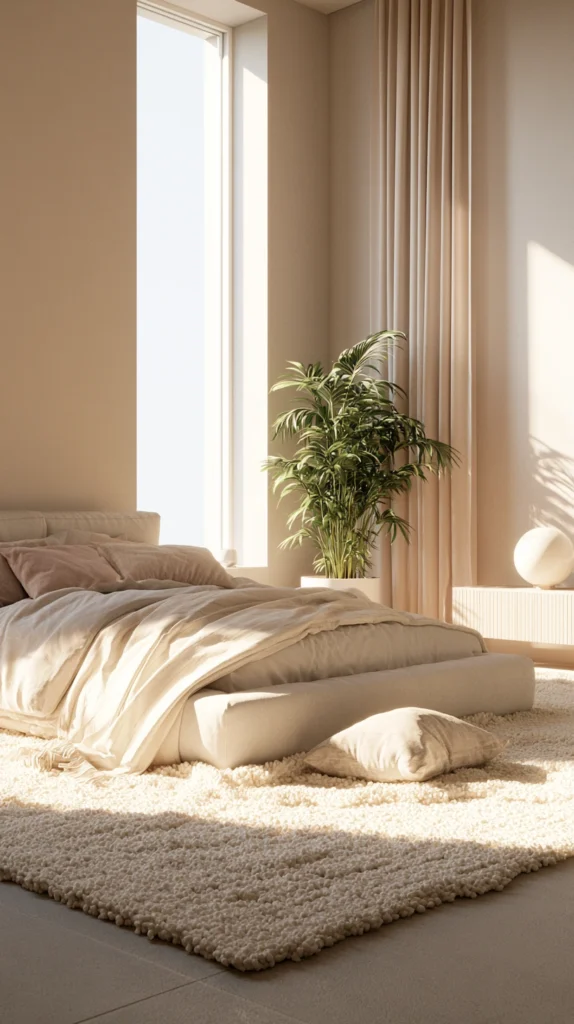
The peace lily is one of the few flowering houseplants that genuinely thrives in low-light conditions, producing its characteristic white spathes in the indirect light of a north or east-facing bedroom window without the direct sun that most flowering plants require. Its contribution to the bedroom environment is twofold: it absorbs moisture from the air through its leaves, which moderates humidity in both directions — absorbing excess moisture and releasing it during dry periods — and it has been identified in NASA’s Clean Air Study as effective at filtering formaldehyde, benzene, and trichloroethylene from the indoor air.
The peace lily communicates its watering requirement through a visible wilt — the leaves droop slightly when water is needed — which makes it one of the most communicative of all houseplants for the owner who tends to forget to water. A peace lily in a standard 13-centimetre pot costs $10–$25.
Style tip: Position the peace lily where it receives bright indirect light rather than direct sun — a position 1–2 metres from a window rather than on the windowsill. Direct sun bleaches the leaves to a pale yellow-green that loses the specific deep, glossy green quality that makes the peace lily beautiful, and the bleached plant in the bedroom communicates neglect rather than the care and the health that bedroom planting is specifically intended to provide.
3. The Lavender Plant (Lavandula)
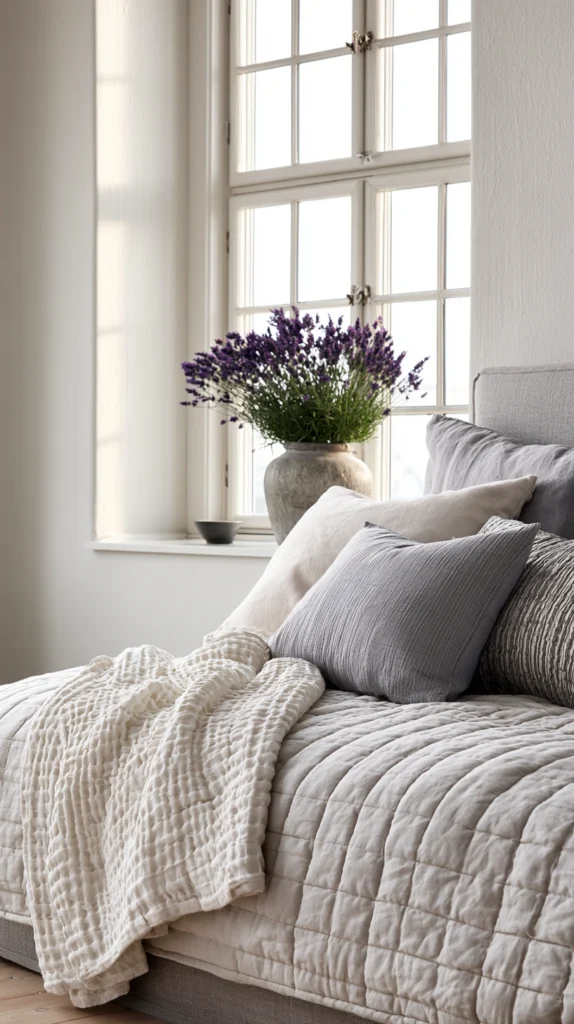
Budget: $5 – $20
Lavender in the bedroom is not primarily an air-purifying plant — its photosynthetic contribution is modest and its humidity regulation minimal. Its specific and genuinely evidenced contribution to the bedroom environment is olfactory: the specific fragrance compounds of lavender, particularly linalool and linalyl acetate, have been shown in multiple clinical studies to reduce anxiety, lower heart rate and blood pressure, and promote the specific quality of sleep onset that the bedroom is specifically designed to support. A lavender plant in the bedroom is aromatherapy that is also a plant.
A lavender plant in a 9-centimetre pot costs $5–$12. Lavender requires full sun — a south-facing windowsill — and will not persist in a room without adequate natural light. In a bedroom without a south-facing window, lavender is better used as a cut stem in a small vase, refreshed weekly, than as a potted plant that declines in inadequate light.
Style tip: Position the lavender on the windowsill closest to the bed rather than on the far windowsill where the fragrance does not reach the sleeping position. The fragrance of lavender is most effective at the immediate sleeping position — the pillow level — and a lavender plant at 1–2 metres from the bed provides considerably less olfactory contribution than one within arm’s reach.
4. The Pothos (Epipremnum Aureum)
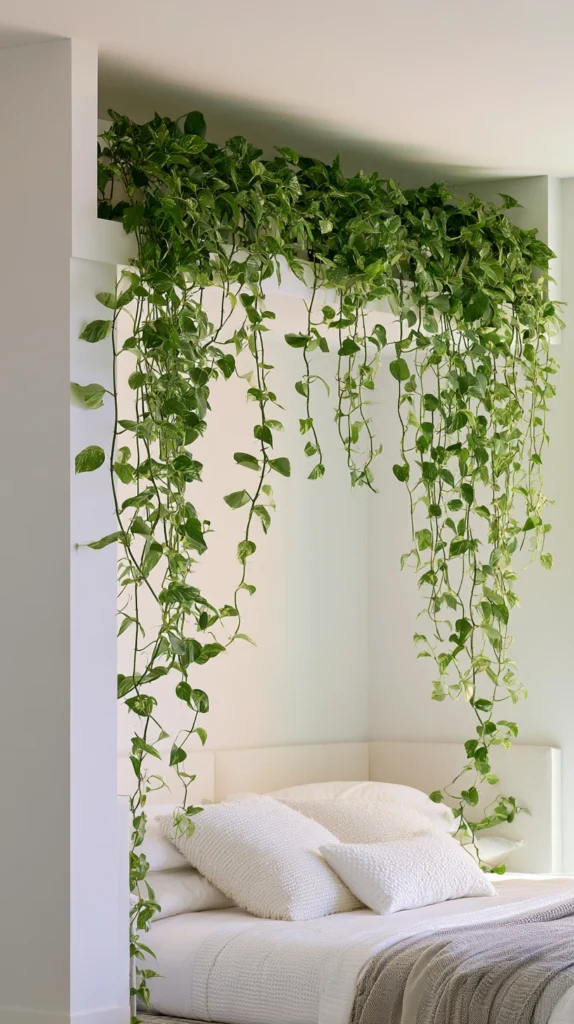
Budget: $5 – $25
The pothos is the most reliably successful of all indoor plants for the owner whose primary concern is maintaining a living plant rather than optimising one — it tolerates low light, infrequent watering, irregular fertilisation, and the full range of domestic neglect conditions that kill more demanding species within weeks.
Its contribution to the bedroom is the most modest of any plant on this list — a small but genuine filtering capacity for formaldehyde, a transpiration contribution that adds marginally to humidity — but its primary value is the specific quality of living greenery provided consistently, without the management demands that more sensitive plants impose.
A pothos in a small hanging pot trailing over a shelf or a high surface — allowing the stems to cascade downward — costs $5–$15 in a small pot and $15–$40 in a more established version. The trailing quality of the pothos gives the bedroom the specific quality of a room where planting is genuinely growing rather than simply present.
Style tip: Place the pothos on a high shelf rather than at floor level and allow the stems to trail downward — the hanging trails of a pothos plant give the bedroom a quality of botanical abundance that a squat, bushy plant in a pot at the same position does not produce. The trailing form communicates growth and vitality, which is the specific quality that bedroom planting is most importantly providing.
5. The Spider Plant (Chlorophytum Comosum)
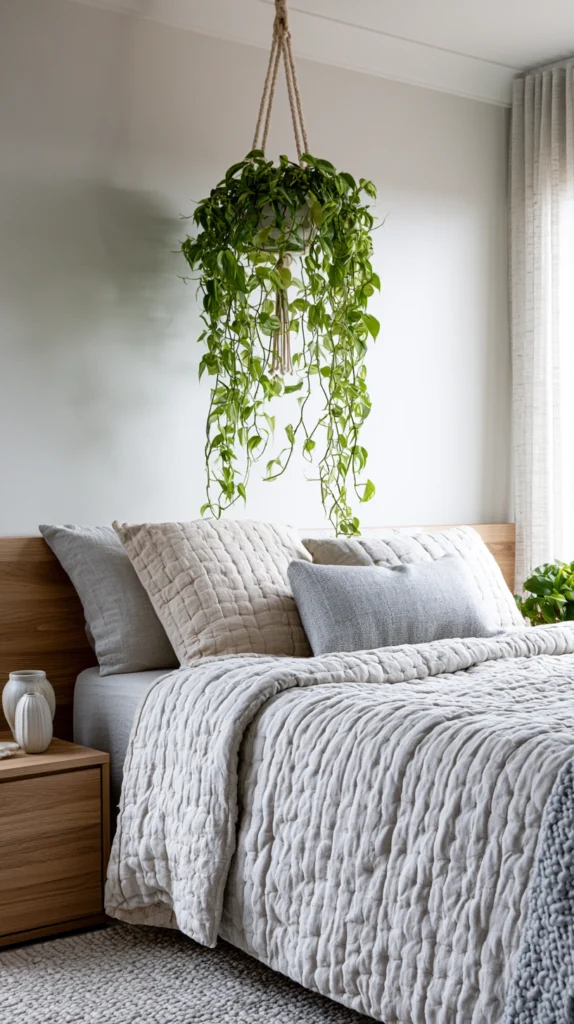
Budget: $5 – $20
The spider plant is the most forgiving of all the bedroom plants in its tolerance of irregular watering, inconsistent light, and the full range of domestic environmental variation that the bedroom provides through the seasons. Its contribution to the air-filtering quality of the indoor environment has been documented for formaldehyde and xylene — compounds that off-gas from new furniture, carpets, and painted surfaces that a recently renovated bedroom typically contains. The spider plant is the most practically appropriate bedroom plant for new interiors or recently redecorated rooms.
A spider plant in a 13-centimetre pot costs $5–$12. The spider plant propagates spontaneously through the hanging plantlets — the spiderettes — that develop on long trailing stems from the parent plant, and a single spider plant becomes three or four within the first growing season without any propagation effort from the owner. The freely produced plantlets are the most cost-effective source of additional bedroom plants available.
Style tip: Hang the spider plant in a macramé or simple hanging planter rather than placing it on a surface. The hanging spider plant — with the parent plant at the top of the hanging vessel and the spiderette plantlets trailing below on their stems — creates the most botanically interesting and the most visually distinctive bedroom display of any of the plants on this list, communicating a genuine gardening sensibility rather than the presence of a houseplant.
6. The Aloe Vera
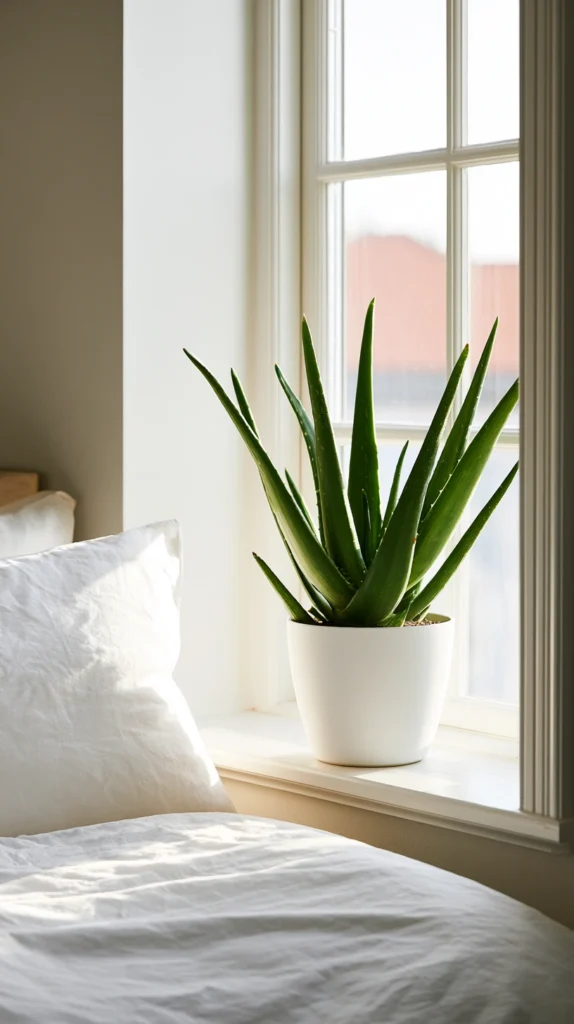
Budget: $5 – $30
Aloe vera is, like the snake plant, a CAM plant — it performs its photosynthetic gas exchange at night rather than during daylight — and its nocturnal oxygen production makes it a more appropriate bedroom plant than many daytime-photosynthesising species. Its practical contribution beyond the gas exchange is the gel within its succulent leaves, which provides an immediately accessible treatment for minor burns, skin irritation, and the dry skin that a low-humidity bedroom environment often produces through the winter months. The aloe vera plant is the bedroom medicine cabinet as well as the bedroom plant.
An aloe vera in a 10-centimetre pot costs $5–$15. Aloe requires a minimum of four hours of direct sun per day and is most successful on a south-facing windowsill — it will survive in indirect light for short periods but declines to a pallid, elongated form that loses both the architectural quality and the gel content that make aloe valuable.
Style tip: Plant aloe vera in a terracotta pot rather than a plastic or ceramic one. Terracotta is porous — it wicks moisture from the soil and allows the root zone to dry more completely between waterings — which replicates the free-draining, arid conditions of the aloe’s native environment. An aloe in a non-porous container holds moisture at the root level that promotes the root rot that is the most common cause of aloe failure in domestic settings.
7. The English Ivy (Hedera Helix)
Budget: $5 – $20
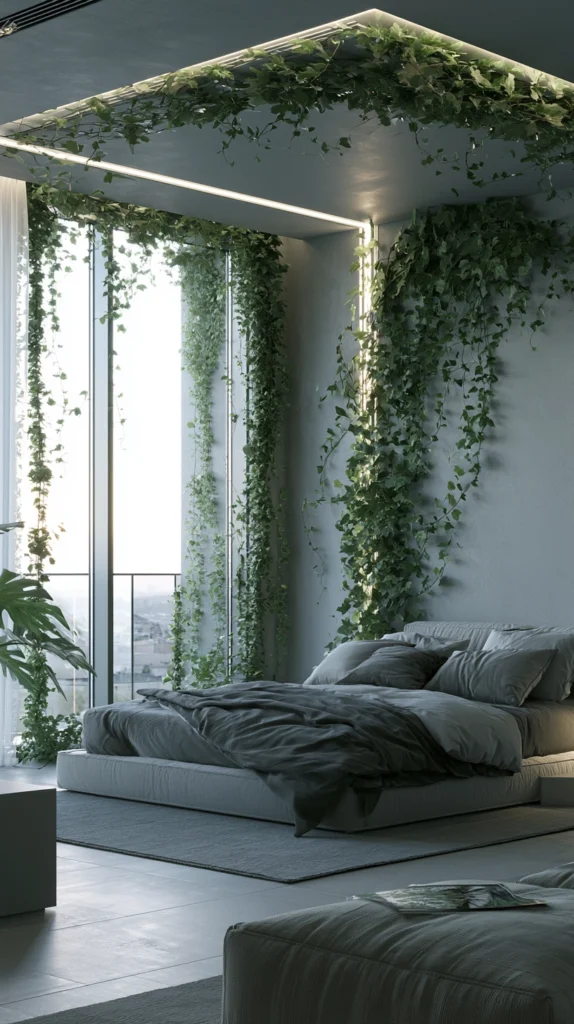
English ivy has been identified in multiple air quality studies as effective at reducing airborne mould spores — a specific contribution to the bedroom environment that is distinct from the formaldehyde and benzene filtering that most bedroom plant lists address. Mould spores are the indoor allergen most consistently associated with poor sleep quality and respiratory disturbance during sleep, and a plant that genuinely reduces airborne mould in the bedroom environment is contributing to sleep health at the most specific and most biologically direct level.
English ivy in a 9-centimetre pot costs $5–$12. Ivy requires adequate light and consistent moisture — it does not tolerate the drying out between waterings that more drought-tolerant plants survive. The trailing stems that make ivy beautiful as a hanging plant also make it the plant most likely to be tested for contact allergens — a small number of people develop skin irritation from prolonged contact with ivy leaves, and this sensitivity should be checked before establishing a significant ivy planting in the bedroom.
Style tip: Keep ivy in a position where air circulates around it rather than pressed against a wall — ivy planted against a wall in an indoor environment can develop the fungal conditions on the back of the leaves that the plant is theoretically reducing in the room air. A hanging position with good air circulation around all sides of the plant is the most appropriate indoor growing position.
8. The Rubber Plant (Ficus Elastica)
Budget: $15 – $60
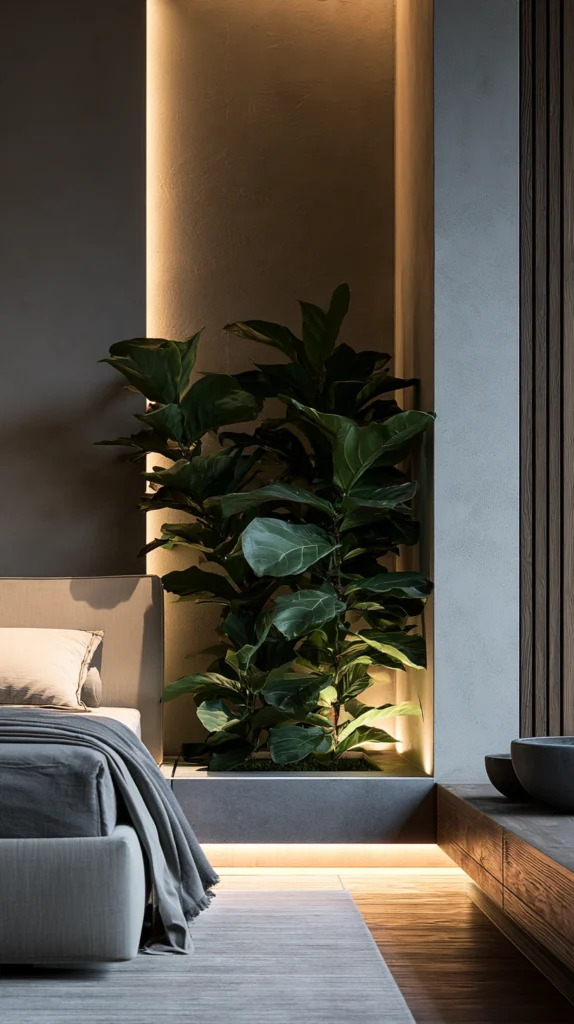
The rubber plant is the bedroom plant with the most significant architectural presence of any species accessible at the standard houseplant price point. A rubber plant of 90–120 centimetres — the height achievable within two to three seasons from a standard nursery plant — provides the floor-level architectural element that the bedroom frequently requires to anchor the composition of the room at its lower scale. Its contribution to the bedroom air quality is a genuine but modest filtering capacity for formaldehyde, and its more significant contribution is the transpiration moisture it releases — a rubber plant in a bedroom with central heating makes a measurable contribution to the humidity level.
A rubber plant of 60 centimetres costs $20–$40. A more established 90-centimetre version runs $40–$80. The rubber plant requires bright indirect light — a position 1–2 metres from a south or west-facing window — and benefits from occasional wiping of the large, glossy leaves with a damp cloth to remove the dust accumulation that reduces the plant’s capacity for both photosynthesis and transpiration.
Style tip: Choose a rubber plant variety in the deepest available green — Ficus elastica Robusta or Ficus elastica Decora rather than the variegated versions — for the bedroom. The deep, glossy green of the standard rubber plant has a specific quality of visual depth and material richness that the variegated versions, for all their decorative interest, do not produce. A single large-leafed, deep-green rubber plant in the bedroom corner is one of the most effective single investments in the quality of the room’s botanical atmosphere.
9. The Boston Fern (Nephrolepis Exaltata)
Budget: $10 – $40
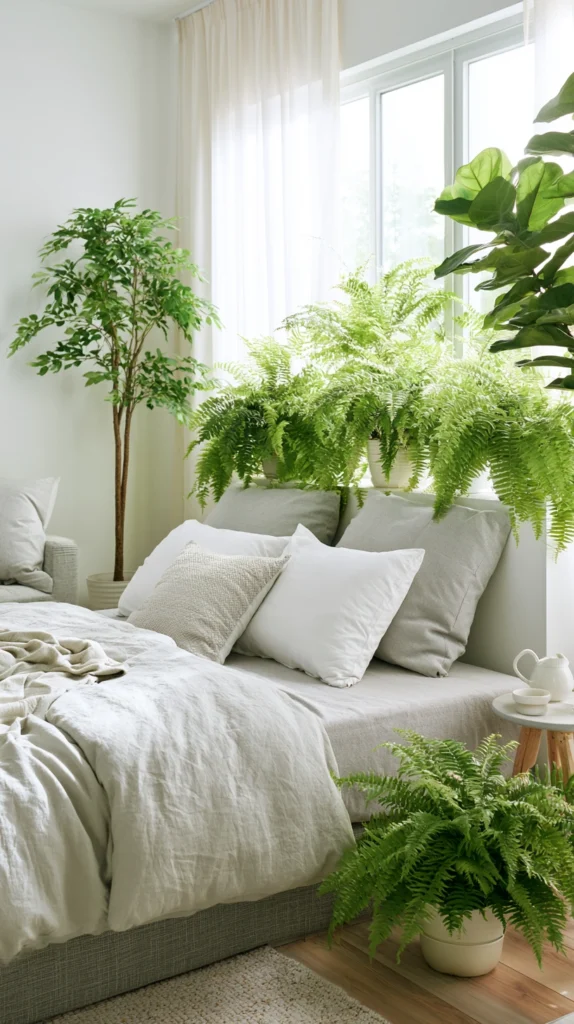
The Boston fern is the most effective of all common houseplants at adding moisture to the bedroom air through transpiration — a contribution that is particularly valuable in centrally heated bedrooms where the relative humidity can drop to 20–30 percent through the winter months, well below the 40–60 percent range that is most supportive of comfortable sleep and respiratory health. The fern is essentially a living humidifier, and its specific contribution to the bedroom environment is the most directly measurable of any plant on this list in terms of the physical quality of the sleeping environment.
A Boston fern in a 13-centimetre pot costs $10–$25. The Boston fern is the most demanding of all the plants on this list in its care requirements — it requires consistent moisture, high humidity, and indirect bright light, and it declines rapidly in the dry air of a centrally heated room. Misting the fronds daily during the heating season is the maintenance practice that most directly addresses the specific irony of keeping a humidity-producing plant in the dry conditions that its humidity production is most needed to address.
Style tip: Group the Boston fern with two or three other humidity-tolerant plants — the pothos, the peace lily, the spider plant — to create a microclimate of higher humidity around the plant group. Plants grouped together maintain a higher humidity in their immediate vicinity than the same plants distributed individually throughout the room, because the transpiration of each plant contributes to the humidity experienced by the adjacent plants.
10. The Gardenia (Gardenia Jasminoides)
Budget: $15 – $50
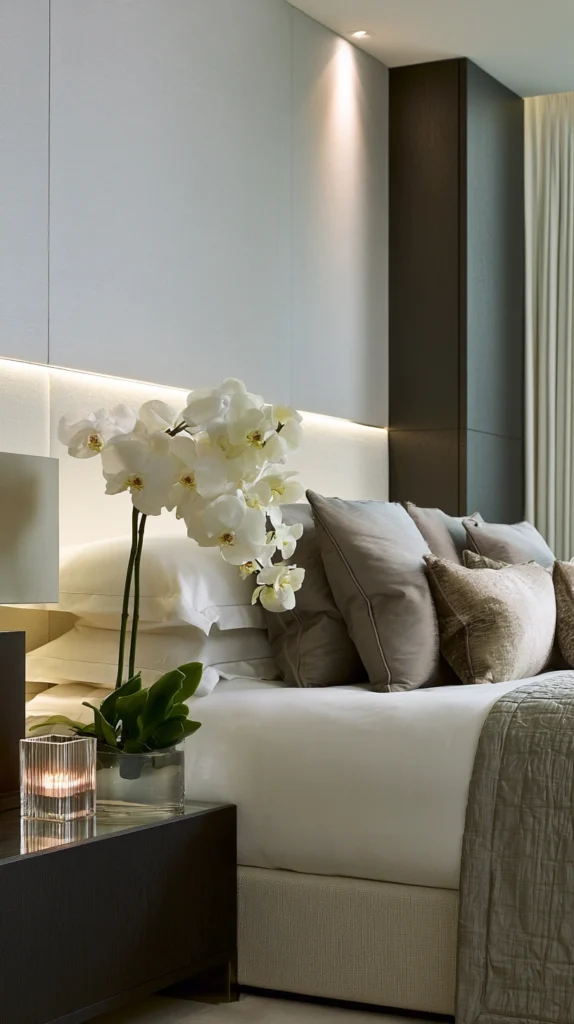
The gardenia is the most demanding plant on this list in its cultivation requirements and the most rewarding in its specific contribution to the bedroom sleeping environment. Its creamy white flowers produce a fragrance of extraordinary intensity — a warm, sweet, slightly exotic scent that has been associated in multiple sleep studies with improved sleep quality and reduced anxiety at levels comparable to the pharmacological effects of some mild sedatives. The gardenia is not a plant for the casual bedroom gardener; it is a plant for the committed one who is willing to meet its specific cultural requirements in exchange for the specific and genuinely evidenced sleep benefit it provides.
A gardenia in a 13-centimetre pot costs $15–$35. The gardenia requires high humidity, consistent moisture at the root, bright indirect light, and a consistent temperature range — it drops its buds if the temperature fluctuates significantly or if the compost dries out between waterings. Place on a tray of damp gravel to maintain the humidity level it requires.
Style tip: Keep the gardenia at room temperature consistently rather than allowing the bedroom to cool significantly at night. The bud drop that most gardenias experience in domestic settings is caused primarily by temperature fluctuation — the plant requires the same temperature at night as during the day, which is the condition least likely to be met in a bedroom where the heating reduces overnight.
11. The Chinese Evergreen (Aglaonema)
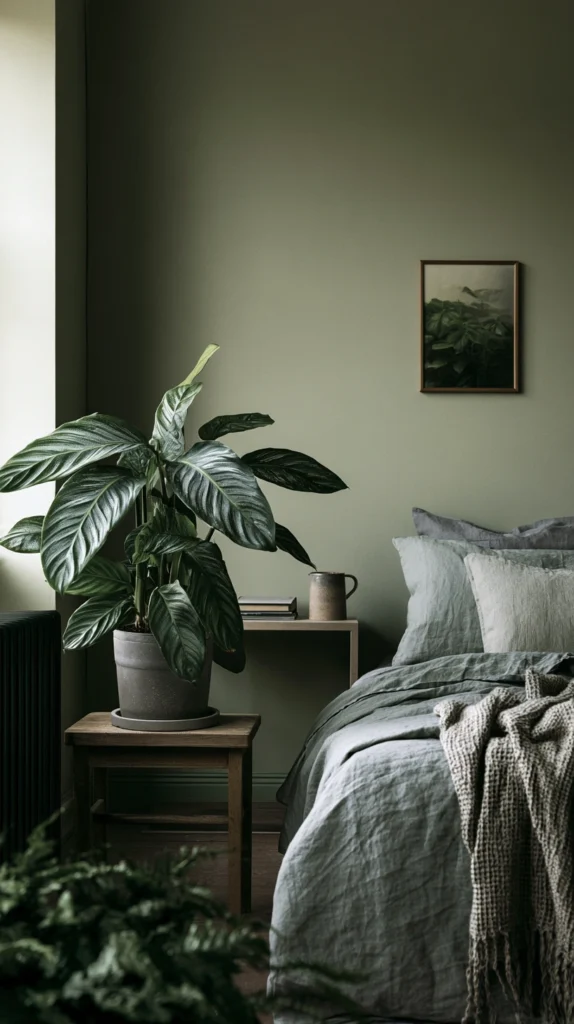
Budget: $10 – $40
The Chinese evergreen is the bedroom plant that most effectively balances low-maintenance cultivation with genuine air-filtering capacity. Its tolerance of low light — lower light than almost any other tropical foliage plant accepts without significant decline — makes it the most appropriate plant for the bedroom that faces north or that receives limited natural light through the day. Its air-filtering capacity for benzene and formaldehyde is among the more reliable of the commonly cited bedroom plants, and its attractive patterned foliage — green with silver or cream markings depending on the variety — provides the visual interest of a considered planting without the cultivation demands of more sensitive species.
A Chinese evergreen in a standard pot costs $10–$30. The plant is one of the most genuinely low-light-tolerant of all indoor plants — it survives in positions where most other plants require supplementary artificial lighting to maintain health — which makes it the most appropriate choice for the bedroom where natural light is genuinely limited.
Style tip: Choose a Chinese evergreen variety with the darkest green markings for the lowest-light bedroom positions — the silver queen or silver bay varieties with their high proportion of pale marking require more light than the predominantly green varieties to maintain the variegation quality. A predominantly green variety in a low-light position maintains its health and its colour; a highly variegated variety in the same position reverts toward green as the low light prevents the variegation pattern from being maintained.
12. The Jasmine Plant (Jasminum Polyanthum)
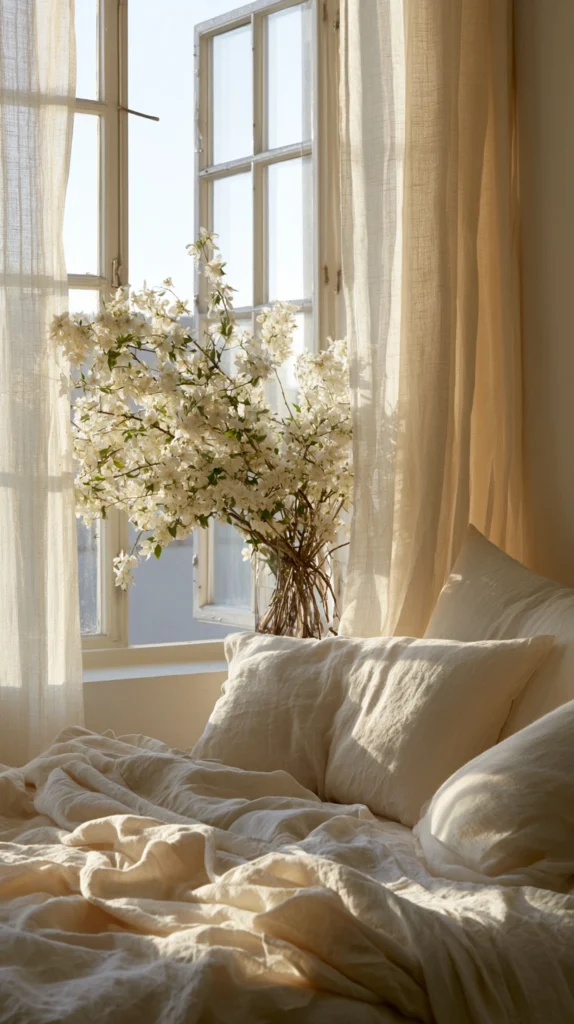
Budget: $8 – $30
Jasmine, like lavender and gardenia, earns its position in the bedroom through its olfactory contribution rather than through its air-filtering capacity. The fragrance of jasmine — sweeter and more complex than lavender, warmer and more accessible than the exotic gardenia — has been associated in research with reduced anxiety, improved mood on waking, and the specific quality of relaxed alertness that supports both sleep onset and the refreshed waking state that quality sleep is meant to produce. Jasmine in the bedroom is an evidence-based aromatherapy treatment that also happens to be a plant.
A jasmine plant in a 13-centimetre pot costs $8–$20. Jasmine requires a bright position — a south-facing windowsill — and cool temperatures in winter to initiate the flower buds that are its specific contribution to the bedroom environment. A jasmine kept in a consistently warm bedroom throughout the winter will produce healthy foliage without the flowers whose fragrance is the plant’s entire purpose.
Style tip: Move the jasmine plant outdoors or to an unheated but frost-free space in autumn and allow it to experience the cool, short days that trigger its flowering response before returning it to the bedroom in late winter as the buds begin to develop. The cool period is the cultivation technique that most reliably produces the flowering quality that earns the jasmine its bedroom position.
13. The Valerian Plant (Valeriana Officinalis)
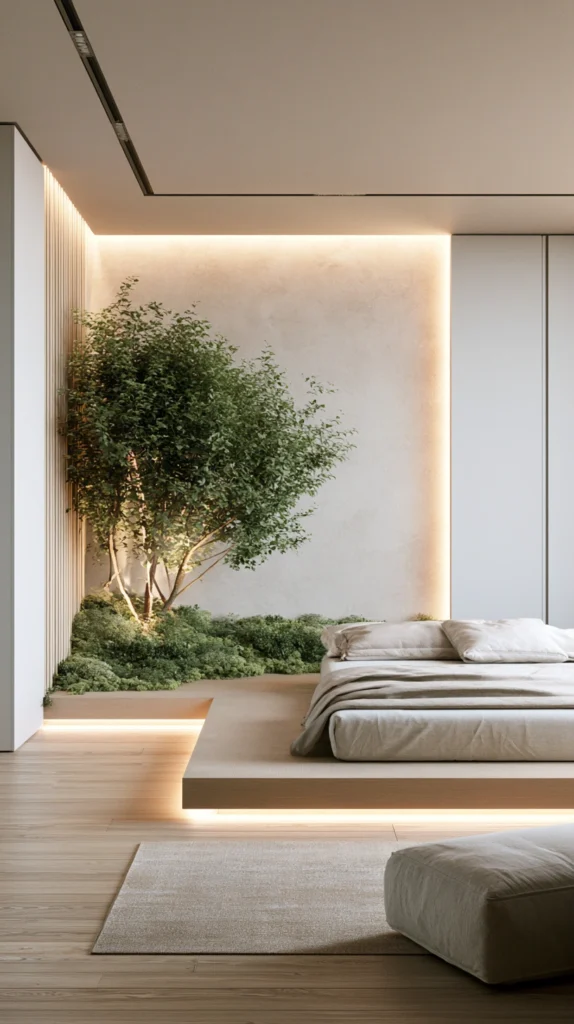
Budget: $5 – $20
Valerian is the most specifically sleep-focused of all the plants on this list — its root extract has been used as a sleep aid for centuries and is one of the most studied natural sleep interventions in the clinical literature. The living plant in the bedroom does not provide the concentrated extract that the supplement form provides, but the fresh fragrance of the valerian plant — sweet, slightly vanilla-toned, with the specific quality of a botanical sedative — has been associated with improved sleep quality in several small studies. The valerian plant is the bedroom plant whose presence provides the most specific evidence-based case for its position in the sleeping room.
A valerian plant in a 9-centimetre pot costs $5–$15. Valerian requires good light and consistent moisture — it is a meadow plant in its natural habitat and requires the conditions of a well-watered, well-lit position rather than the dim, dry corner that low-maintenance bedroom planting often provides.
Style tip: Grow valerian in a pot that can be moved outdoors during the summer months — valerian is a garden plant as much as a houseplant, and the outdoor summer period allows it to develop the root mass that is the source of its specific sedative compounds. The larger and more developed the root system, the more intense the fragrance from the living plant and the greater the specific contribution to the bedroom environment.
14. The Monstera (Monstera Deliciosa)
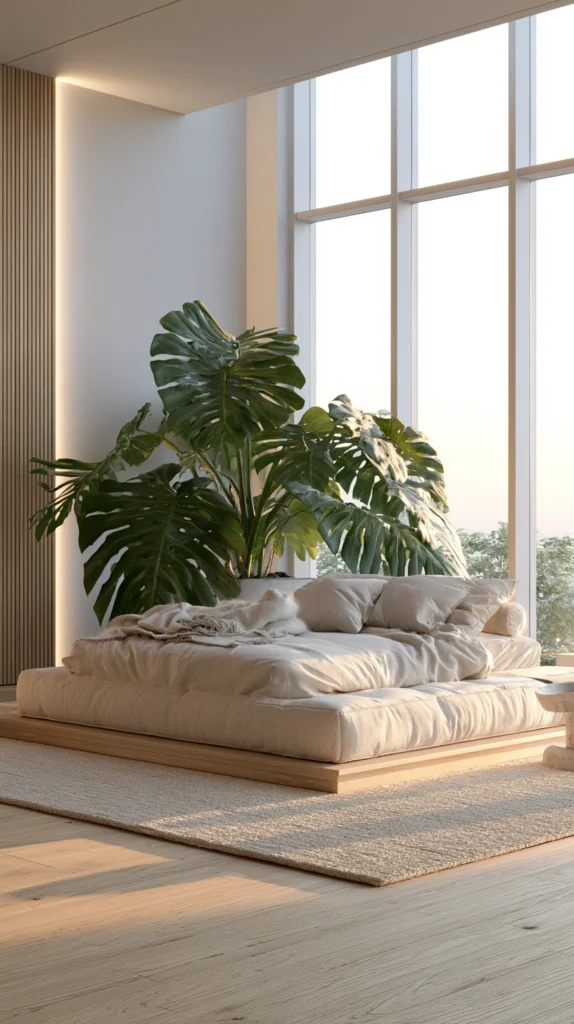
Budget: $15 – $80
The monstera is the bedroom plant with the most significant visual impact at the most accessible price point of any large-format houseplant. Its contribution to the bedroom environment is the most psychologically significant of any plant on this list — not because of specific chemical compounds or specific filtration capacities but because of the sheer scale of its botanical presence and the specific quality that large, complex living plant material brings to the bedroom environment through the biophilic dimension of design. The monstera communicates the natural world in the bedroom at the scale and the visual complexity that smaller plants cannot provide, and the biophilic quality of the living, growing, genuinely large plant in the bedroom is the most holistically health-relevant of all the contributions that bedroom planting provides.
A monster in a 13-centimetre pot costs $15–$30. An established plant of 60–90 centimetres costs $40–$80. The monstera requires bright indirect light and watering every one to two weeks — it is tolerant of the occasional missed watering but declines in consistently low light, producing small leaves without the characteristic fenestrations that give the plant its visual quality.
Style tip: Give the monstera a moss pole or a bamboo stake to climb as it grows — the supported monstera grows upward and produces the large, fenestrated leaves that are its most beautiful form; the unsupported monstera sprawls horizontally and produces smaller, less distinctive leaves. The moss pole is the cultivation decision that produces the architectural quality of the mature monstera at the earliest opportunity.
The bedroom plant that genuinely improves health and wellness is not the one with the most dramatic marketing claim or the longest list of filtered compounds. It is the one that the specific bedroom can support — the light conditions it provides, the humidity it maintains, the temperature it sustains through the night — matched to the specific plant that thrives in those conditions and contributes to the sleeping environment in the most appropriate way for the specific occupant’s needs.
Begin with the conditions the bedroom provides and choose the plant that suits them, rather than choosing the plant whose claimed benefits are most appealing and forcing it to survive in conditions that are inadequate for its health.
A thriving, healthy plant in a bedroom — whatever the species — contributes more to the quality of the sleeping environment than a declining, stressed plant whose specific health claims were accurate but whose cultivation requirements were not met. The living, growing plant is the contribution; the specific chemistry is the bonus.