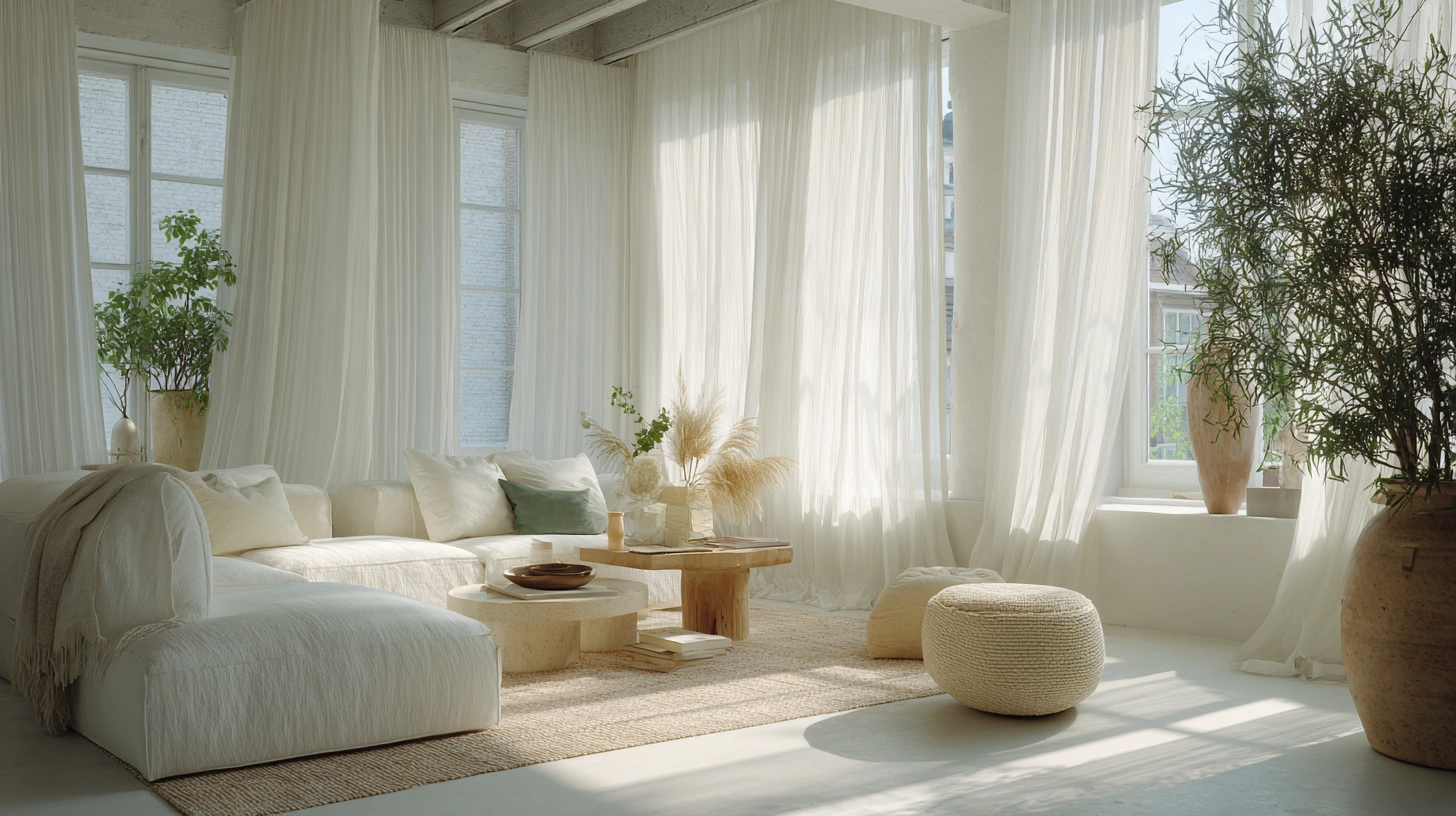
15 Summer Living Room Ideas That Feel Light and Airy
15 Summer Living Room Ideas That Feel Light and Airy
There is a version of the living room that most people experience briefly and accidentally — usually on a morning when the curtains were left open overnight and the early light comes in at an angle that makes the room look like it belongs to a different house entirely. Everything is the same. The sofa is in the same position. The rug has not moved. But the quality of the space is entirely different, and the difference is almost entirely the light.
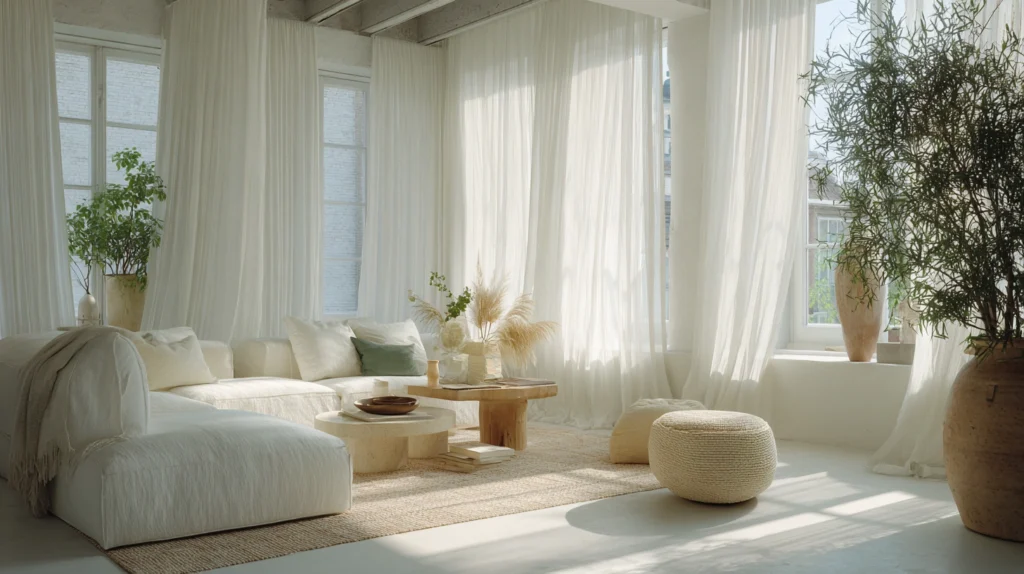
Summer is the season that makes that quality available consistently rather than accidentally, but only if the room is adjusted to receive it. The heavy curtains that were necessary in January are working against the room in July. The dark throws that added warmth in winter are adding visual weight in summer. The room that was perfectly calibrated for the cold half of the year has not been recalibrated for the warm half, and the result is a room that is pleasant but not the version of itself that summer makes possible.
Each idea below is a specific adjustment — some small, some more considered — that moves the living room toward the light and airy quality that summer provides the conditions for. Each includes what you will need, what it will cost, and a practical tip to make it work as well as the season deserves.
1. The Sheer Curtain Replacement
Budget: $30 – $150
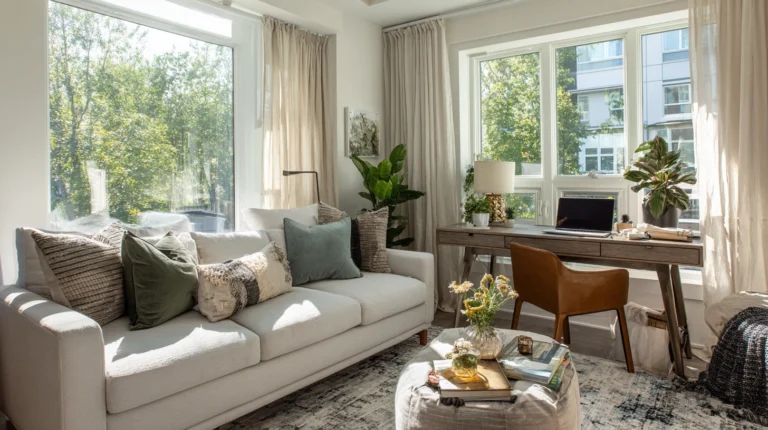
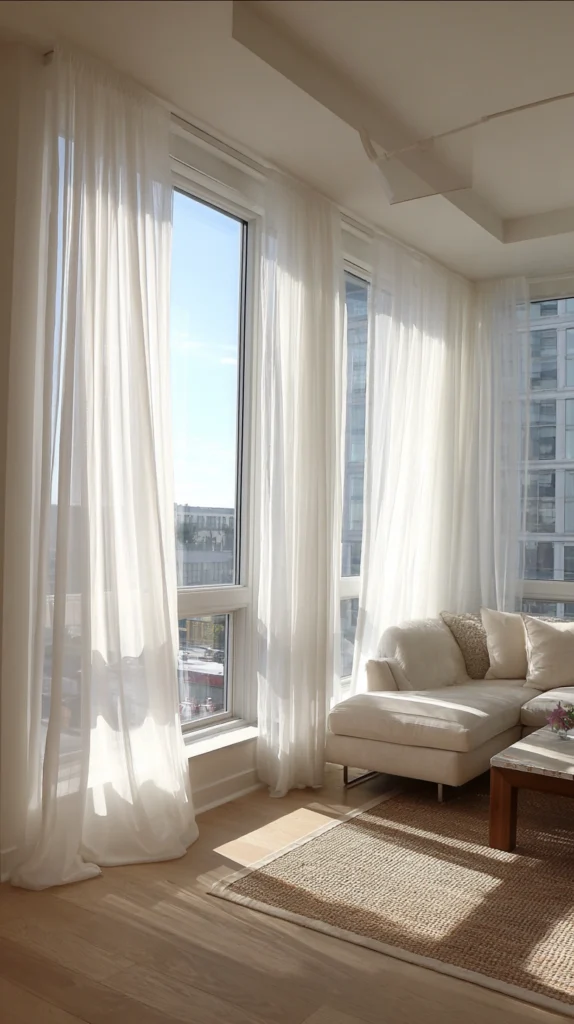
Replacing heavy lined curtains with sheer white or natural linen panels is the single change that produces the most immediate and most dramatic transformation of a living room for summer. The room does not lose its privacy — sheer panels obscure the interior from outside during daylight — but it gains the quality of light that thick curtains permanently suppress regardless of how far open they are pulled.
Sheer curtain panels in white or undyed natural linen cost $15–$40 each. The same curtain pole, the same rings, the same fixings — only the panels change. Store the winter curtains folded in breathable cotton bags rather than plastic — plastic traps moisture that produces a musty quality in fabric stored for months. Wash the sheer panels before hanging to soften the fabric and begin the gentle drape quality that new linen lacks.
Style tip: Hang the sheer panels from as close to the ceiling as the pole position allows rather than from directly above the window frame. A panel that begins at the ceiling and falls to the floor reads as generous and architectural; one that begins at the top of the window frame reads as a window covering. The extra height makes the room feel taller and the light feel more abundant than the actual window size provides.
2. The Light Palette Cushion Swap
Budget: $30 – $150
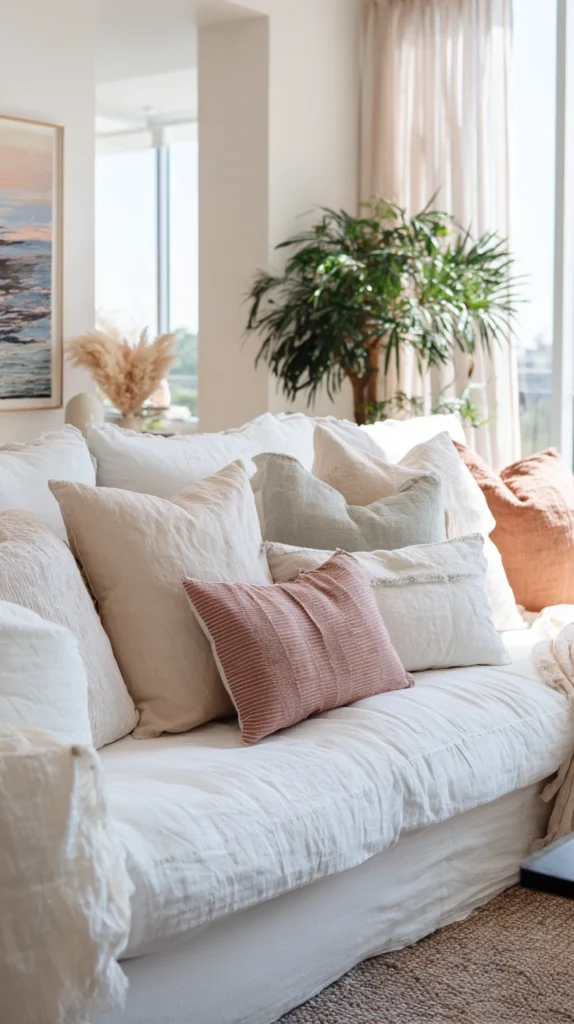
Remove the winter cushions — the dark, heavy, textured versions in charcoal, navy, rust, and deep green that belong to the cold months — and replace them with a summer palette of soft whites, warm creams, pale sage, faded terracotta, and bleached linen. The furniture stays exactly where it is. The room shifts its season entirely through the cushions alone.
Outdoor or indoor-outdoor cushion covers in a summer palette cost $8–$25 each. A set of four for a two-sofa arrangement runs $32–$100. Store the winter palette in a vacuum storage bag — it compresses to a fraction of its uncompressed volume and protects the fabric from the months of disuse. Limit the summer palette to three tones maximum — a dominant neutral, one soft colour, and white — and apply them consistently across every soft furnishing in the room.
Style tip: Replace the cushion covers but keep the same inserts rather than buying complete cushions. The cover is the seasonal element; the insert is the structural one, and buying new inserts each season is an unnecessary expense that the cover-only swap eliminates. The insert quality stays consistent; the cover quality signals the season.
3. The Natural Fibre Rug
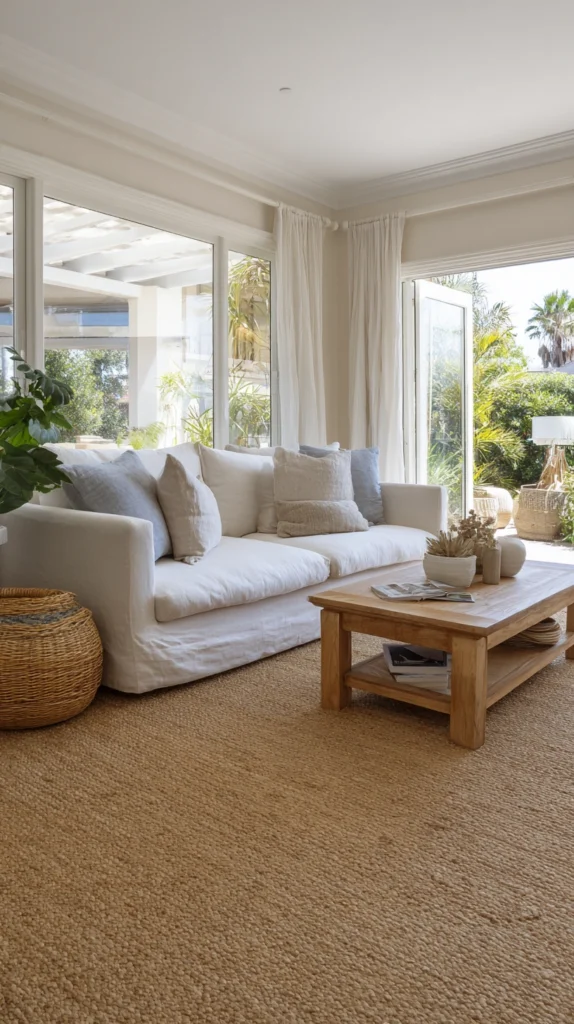
Budget: $50 – $250
A jute, sisal, or seagrass rug replacing the winter rug — or replacing the absence of a rug, which a summer bare floor approach sometimes produces — gives the living room its most grounded natural material at the largest single scale. Natural fibre underfoot in bare feet in summer is one of the most specific sensory experiences of the season, and the tone of natural jute — warm, sandy, the colour of dried grass — reads as summer even in a closed room.
A jute rug in a 160 by 230 centimetre size costs $40–$120. A larger version for a full seating arrangement runs $80–$200. Use a non-slip underlay beneath the rug regardless of the floor surface — natural fibre rugs on smooth floors move with foot traffic in ways that become hazards. Vacuum rather than beating and keep moisture away from natural fibre rugs — they shrink and distort when saturated and the damage is not reversible.
Style tip: Choose a rug size that allows all front legs of the seating to rest on it with at least 15 centimetres of rug visible beyond the furniture on each side. A rug that is too small for the furniture arrangement floats beneath rather than anchoring the seating, and the floating quality undermines exactly the grounded, settled feeling that a well-proportioned rug produces.
4. The Decluttered Surface Edit
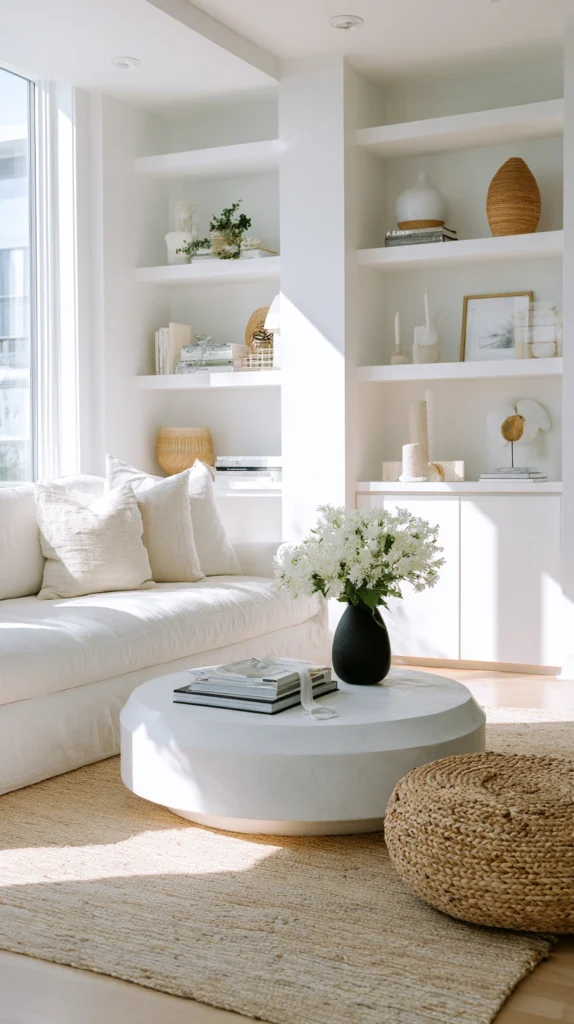
Budget: $0
Remove two-thirds of what is on every surface in the living room — the coffee table, the shelves, the mantelpiece, the side tables — and live with the edited version for one week before deciding what to return. The surfaces of a living room accumulate at a rate that is faster than they are edited, and the accumulated surface communicates the history of decisions made rather than the room as it currently is.
The edit costs nothing and produces more immediate visual improvement than any purchase. Clear surfaces in summer light read as calm and spacious; occupied surfaces in the same light read as cluttered regardless of the quality of the individual objects on them. What comes back from the edited-surface week should be whatever was genuinely missed — which is almost always less than what was removed.
Style tip: When returning objects to the edited surfaces, arrange in odd-numbered groups — one, three, or five — and leave at least one surface completely clear. The completely clear surface is not an oversight; it is the breathing space that makes every other surface in the room more visible and more considered. The empty surface is doing as much work as the styled ones.
5. The Summer Scent
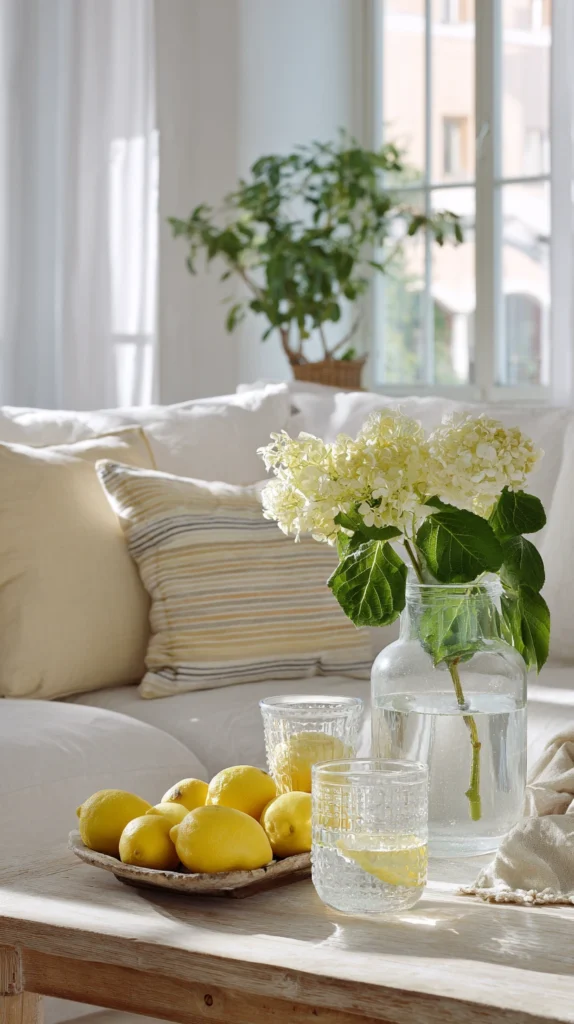
Budget: $10 – $50
A living room in summer should smell like summer — like white flowers, like citrus, like linen dried in the sun, like cut grass carried in through an open window. The heavy warming scents of winter — amber, vanilla, smoke, cedar — belong to closed rooms and dark evenings. A single diffuser or candle in the right summer fragrance shifts the olfactory identity of the room as completely as any visual change.
A quality reed diffuser in a citrus or white flower fragrance costs $12–$40 and lasts six to eight weeks. A scented candle in the same family runs $10–$35. Place the scent source near air movement — by a window that is regularly opened, or near a fan — so the fragrance disperses through the room rather than concentrating in the corner where the diffuser sits. A scent source in moving air scents the whole room; one in still air scents only its immediate vicinity.
Style tip: Use the same fragrance consistently through the summer rather than varying it from week to week. The consistent scent becomes associated with the room and the season — and that association, built over weeks, produces the quality of a room that is experienced as a complete sensory environment rather than a room with a candle on the coffee table.
6. The Botanical Print Gallery
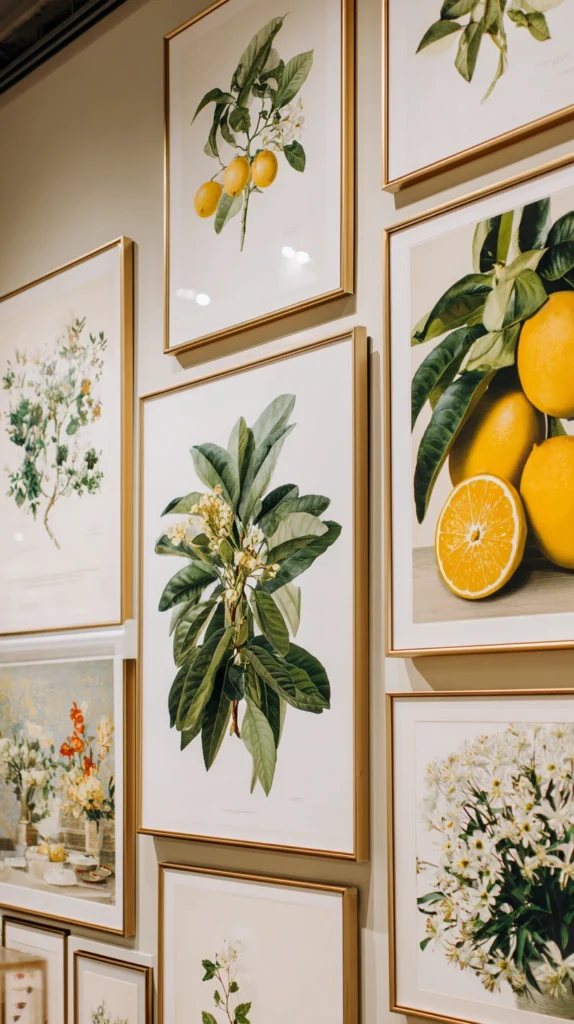
Budget: $15 – $80
A small gallery of botanical prints — fern fronds, citrus cross-sections, pressed flower illustrations — arranged in simple frames on the most visible wall of the living room brings the visual language of the natural world into the interior in the specific aesthetic of summer. Botanical prints in a living room are not a theme; they are the room’s acknowledgement of the season outside it.
Botanical prints from public domain archives cost nothing to download and $0.50–$2 per sheet to print at A4 or A3 size. Simple white or natural timber frames cost $5–$20 each. Arrange four to six prints in a tight grid rather than distributing them across the wall — a tight grouping reads as a curated gallery, a scattered arrangement reads as individual decisions. Choose prints in a consistent colour treatment — all black and white, all full colour, or all with a faded vintage tone — rather than mixing treatments.
Style tip: Position the botanical gallery on the wall that receives the most summer light rather than on the feature wall that receives the least. A botanical print in good summer light — where the paper brightens and the detail is sharp — reads differently from the same print in shadow. The light the gallery receives is part of its styling, and positioning it where summer light falls on it is part of choosing its best position.
7. The Plant Edit and Elevation
Budget: $15 – $100
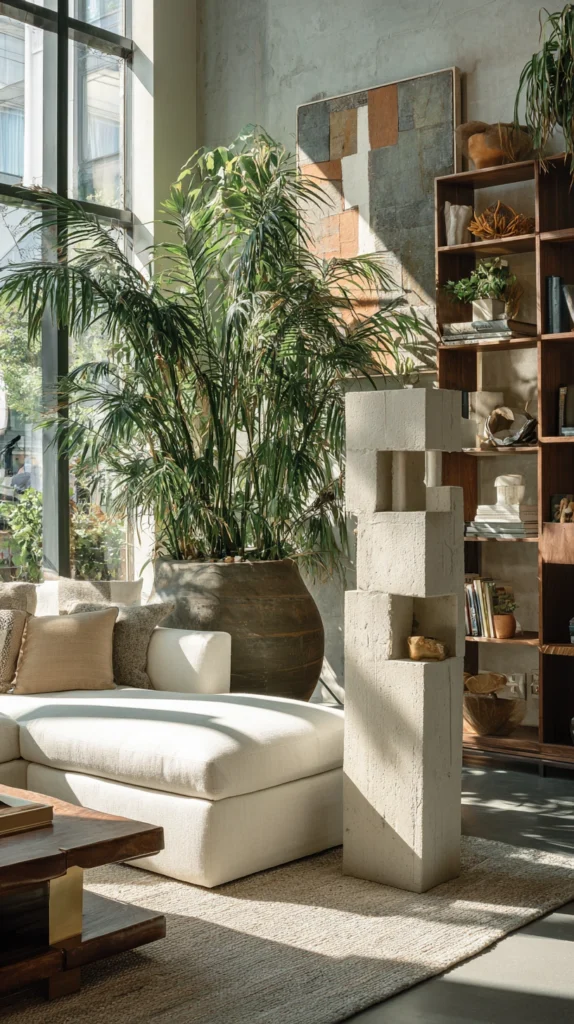
Edit the existing houseplants — remove anything that is declining, struggling, or no longer contributing to the room — and reposition the healthy plants so at least one is elevated above furniture height. A healthy plant at eye level or above it does more for a summer living room than three plants in various states of distress at floor level, and the edit to fewer, better-positioned plants consistently produces a better result than adding more.
Elevating a plant requires only a stool, a side table, or a purpose-built plant stand — $20–$60 for a simple timber or metal version. A large, healthy statement plant — monstera, fiddle-leaf fig, rubber plant — costs $30–$80. Water every plant thoroughly before styling or photographing the room — a fully hydrated plant with turgid leaves looks completely different from a slightly water-stressed one, and the difference is visible in the quality of the foliage from across the room.
Style tip: Group the living room plants in one or two positions rather than distributing them individually across every available surface. A corner with three plants in varying heights reads as a planted environment; the same three plants on three separate surfaces read as individual objects. The grouping effect is the detail that makes houseplants read as a garden feature rather than a collection of pots.
8. The Bare Floor Moment
Budget: $0
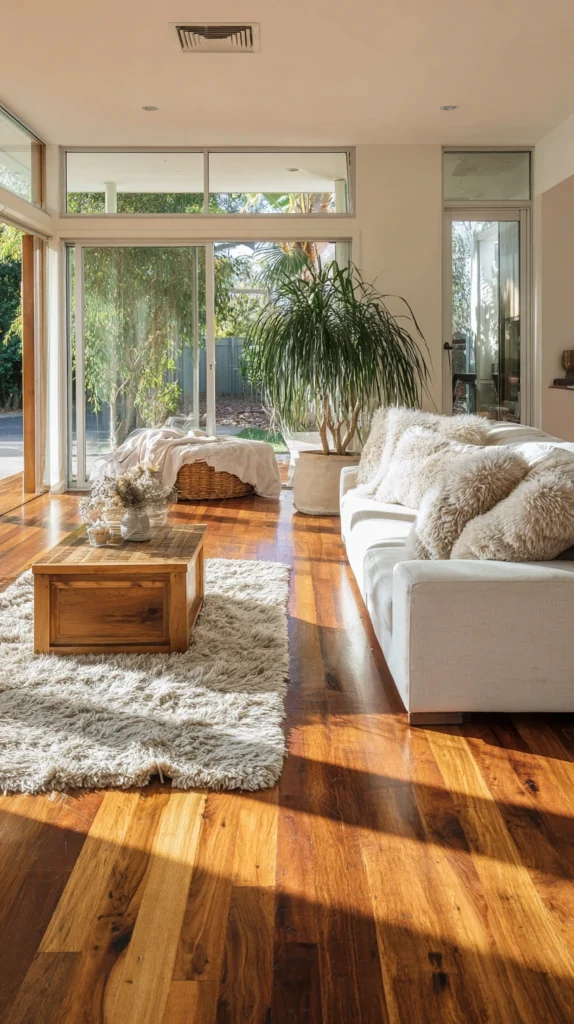
Roll up the rug and live with the bare floor. In many living rooms the floor beneath the rug — timber boards, stone flags, original tiles — is more beautiful than what covers it and benefits from summer light in a way that a rug prevents. A polished timber floor in summer sunlight is one of the most beautiful surfaces a living room can contain, and the rug that was keeping the room warm in January is preventing the floor from performing its summer role.
The cost is zero. The reversibility is complete. Clean and polish the floor before removing the rug — the condition of the floor under the rug is the condition it was in when the rug arrived, and an afternoon of cleaning reveals whether the bare floor option is viable. A floor that is genuinely better without the rug earns the summer barefoot experience; one that is worse suggests the rug remains.
Style tip: If the bare floor is good but not perfect — a stain, some gaps between boards, a patch of discolouration — lean into the imperfection rather than recovering it. A floor with history reads as genuine in a way that a perfect floor rarely does, and in summer light the age and grain of old timber boards look like something worth noticing rather than something to be hidden.
9. The Ceiling Fan Addition
Budget: $50 – $200
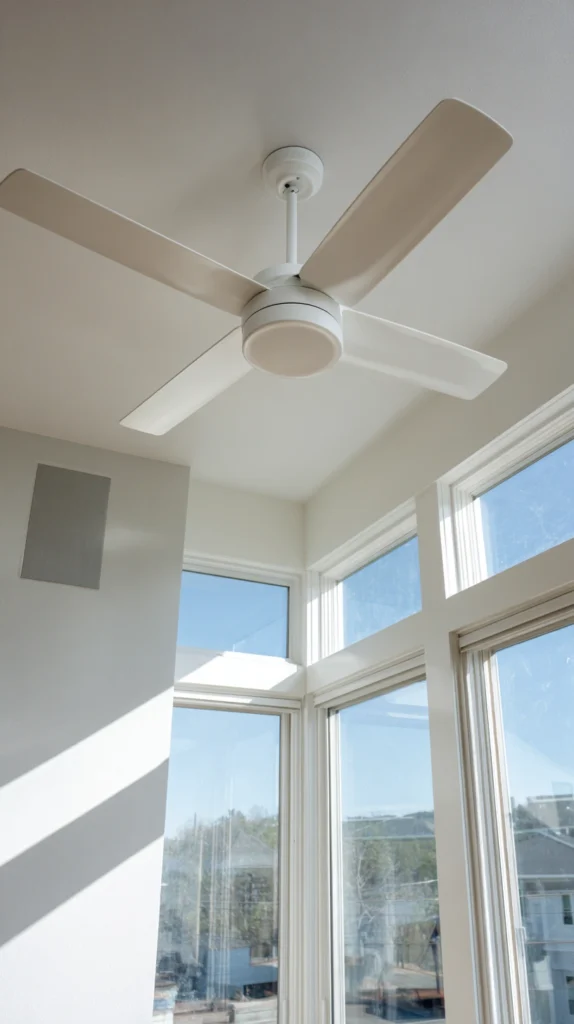
A ceiling fan in the living room changes the quality of the air in summer in a way that no other intervention manages at comparable cost. It does not just move hot air — it creates the specific sensation of a room with a breeze, which is the sensation that makes a warm room feel comfortable rather than airless. The living room with a ceiling fan running is a fundamentally different experience from the same room at the same temperature without one.
A basic ceiling fan costs $50–$100. A more design-conscious version runs $100–$200. Connect to the existing ceiling light fitting — straightforward for anyone comfortable with basic electrical work. Run the fan counterclockwise when viewed from below in summer to push air downward rather than drawing it upward. Choose blades in a light finish — white, pale timber — rather than dark. Dark blades against a pale ceiling are a heavy overhead object; pale blades against a pale ceiling become visible only as movement.
Style tip: Run the ceiling fan at its lowest speed rather than its highest on still, hot days. A fan at high speed moves more air but produces a wind noise that becomes intrusive over a long afternoon. A fan at low speed creates the air movement that makes the room comfortable without the mechanical sound that competes with conversation and eventually becomes the most noticed thing in the room.
10. The Linen Sofa Cover
Budget: $50 – $200
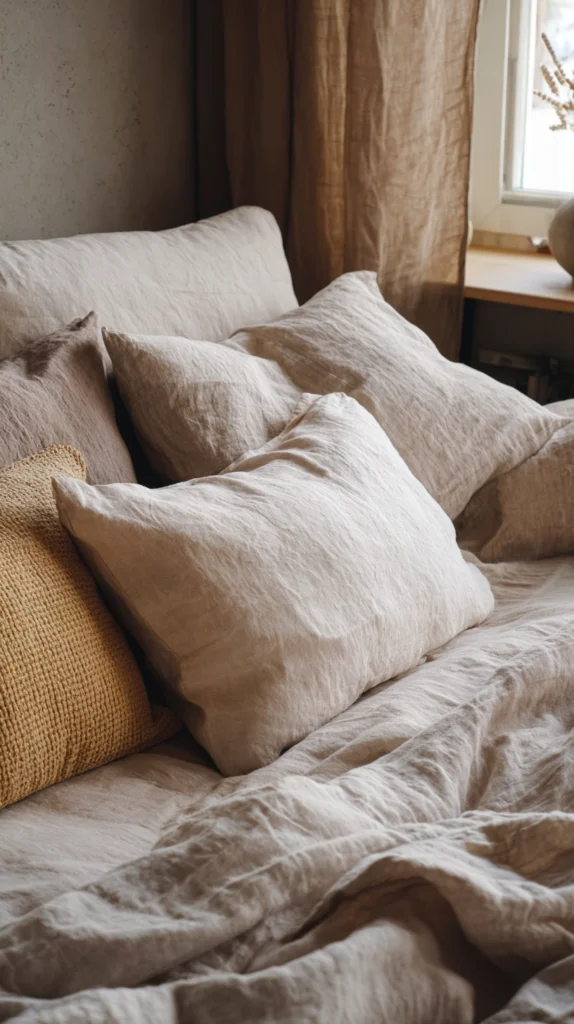
A loose linen slipcover over the sofa — fitted loosely and deliberately, in undyed or pale linen, not pulled tight but allowed to drape with the softness that characterises the material — is the summer version of the sofa’s upholstery. It covers a dark, heavy, or winter-specific sofa with something light and washable, and it protects the original upholstery from the sun cream, the increased use, and the particular wear of summer that is harder on fabric than any other season.
A linen sofa cover in a standard three-seater size costs $80–$200. A custom version runs $150–$400. Wash before the first use to pre-shrink the fabric — a cover that fits perfectly before washing and is too tight after washing is a cover that was not pre-washed, and the first wash reveals the shrinkage that makes the subsequent fit impossible to correct.
Style tip: Iron the slipcover while it is still slightly damp rather than when fully dry. Linen ironed from damp achieves a pressed-but-relaxed finish — the creases are gone but the fabric has not been baked into stiffness — that cannot be replicated from bone-dry linen regardless of the iron temperature. The damp-ironed linen slipcover looks expensive; the same cover ironed dry looks new and stiff.
11. The Summer Book and Magazine Stack
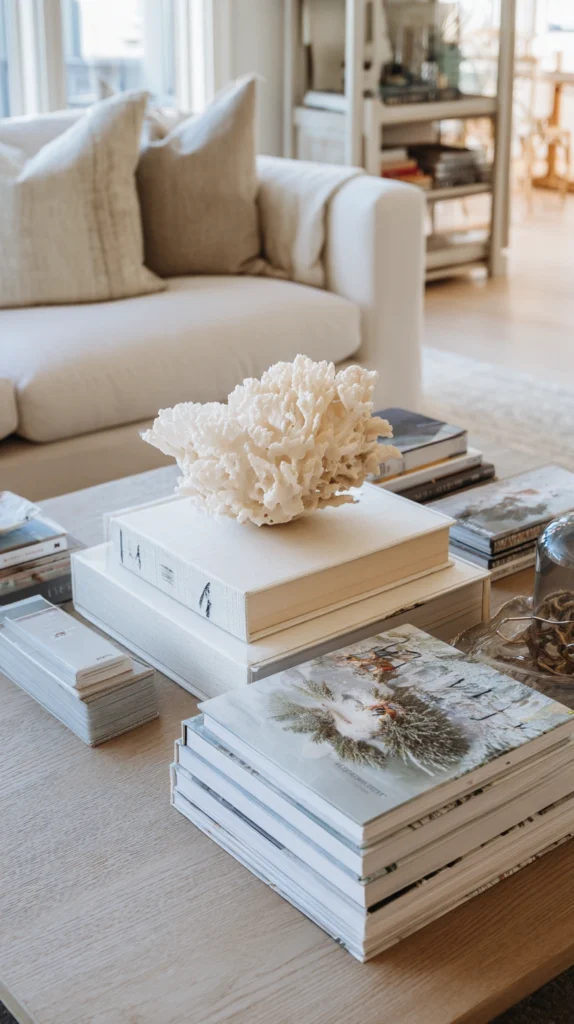
Budget: $10 – $50
A coffee table stack of books and magazines chosen specifically for summer — travel books, gardening books, art books with botanical photography, paperback fiction that would not survive a careful reading of a single other page — gives the living room a seasonal reading identity that the permanent book collection on the shelves cannot provide. The coffee table stack is not the library; it is the current reading life of the room.
Books already owned cost nothing. New summer paperbacks cost $8–$15 each. A stack of three to five with a small object on top — a smooth stone, a single flower in a small vase — communicates the stack as a considered arrangement rather than a pile of unread things. Change the stack when the books have been read or when the season turns — a stack that never changes becomes part of the furniture rather than part of the room’s current life.
Style tip: Include at least one book with a strong visual cover in the stack and position it so the cover rather than the spine faces outward. A book cover that is beautiful adds to the coffee table display rather than simply contributing to its height, and a well-chosen cover facing the room from the coffee table is a piece of graphic design in the same way that a print on the wall is.
12. The Mirror Placement for Light
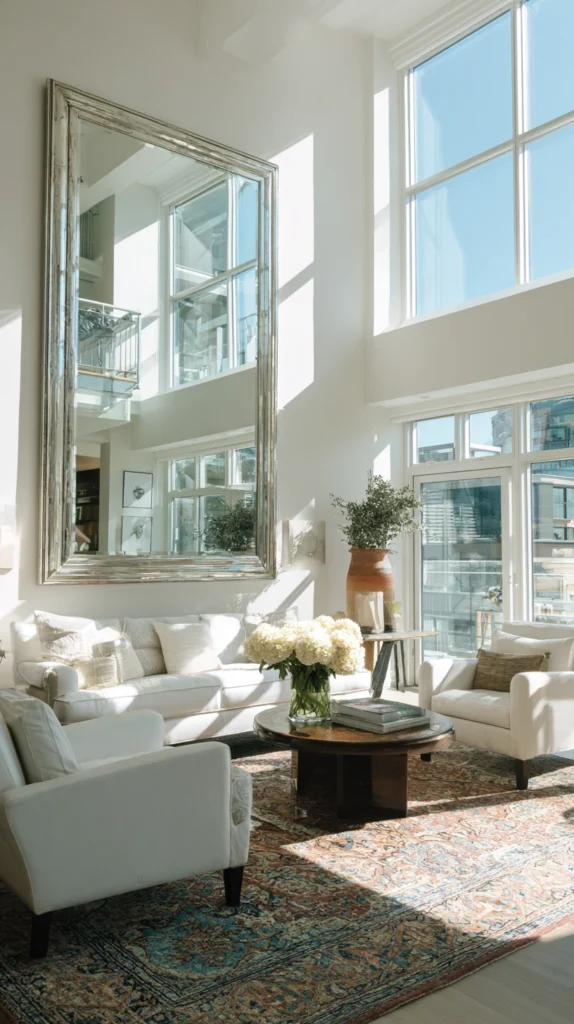
Budget: $20 – $150
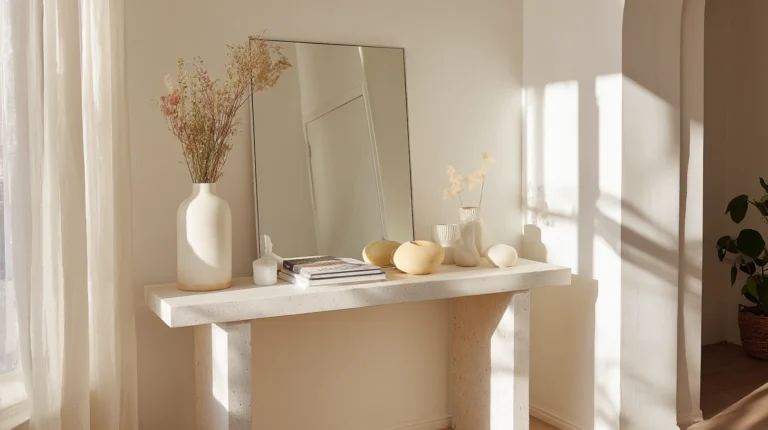
A mirror placed opposite the main window — or at an angle that catches the window light — doubles the natural light in the living room without adding a single watt of artificial illumination. In summer, when the quality of light entering the window is at its best — warm, golden, directional — a mirror that reflects that light back into the room uses what is available rather than supplementing it with something less good.
A large mirror in a simple frame costs $20–$80 from secondhand shops, where mirrors are consistently undervalued. A full-length mirror leaned against a wall rather than hung can be repositioned until the optimal light-reflection angle is found. Clean the mirror before positioning — a dusty mirror reflects a dusty version of the room, and the cleaning produces a more immediate visual improvement than the repositioning.
Style tip: Position the mirror so it reflects the window itself or a view of the garden through the window rather than a view of another wall. A mirror reflecting exterior light or the garden beyond the window brings the outside in; a mirror reflecting an interior wall reflects the room back to itself, which amplifies the room rather than expanding it — a different effect and usually a less useful one.
13. The Open Window and Scent Plant Strategy
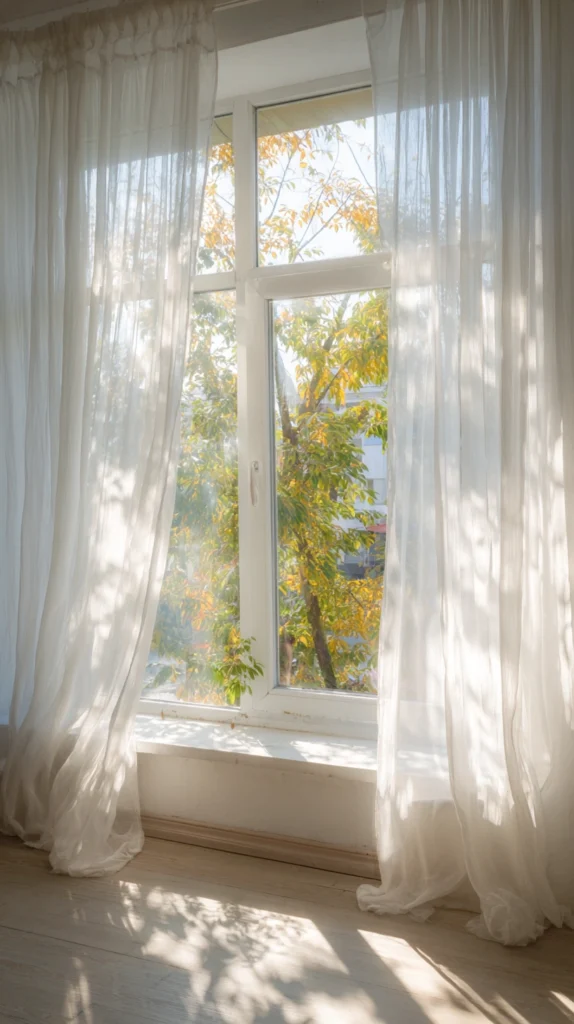
Budget: $15 – $60
Position a scented plant — jasmine, lavender, sweet peas, a scented-leaf geranium — on the windowsill or immediately outside the window that is most regularly opened in summer, so that the breeze carries the fragrance into the living room rather than requiring the plant to be inside the room to be smelled. A fragrant plant outside the window scents the room through natural air movement; the same plant inside the room scents only its immediate vicinity.
A pot of jasmine costs $8–$20. Lavender runs $4–$8. Sweet pea seeds cost $2–$4 per packet and can be grown in a pot outside the window on a trellis. A scented-leaf geranium costs $3–$6. The outdoor placement of a fragrant plant is the approach that produces the most natural and most ambient fragrance in a living room — not a concentrated scent in one corner but a light, moving presence that comes and goes with the breeze.
Style tip: Choose the fragrant plant based on the time of day the window is most opened rather than on preference alone. Lavender is fragrant in the afternoon sun. Jasmine releases its fragrance in the evening. Night-scented stock performs from dusk onward. The fragrant plant that performs at the same time as the window is open is considerably more effective than one that is fragrant at a different time from the air movement that would carry its scent into the room.
14. The Evening Light Plan
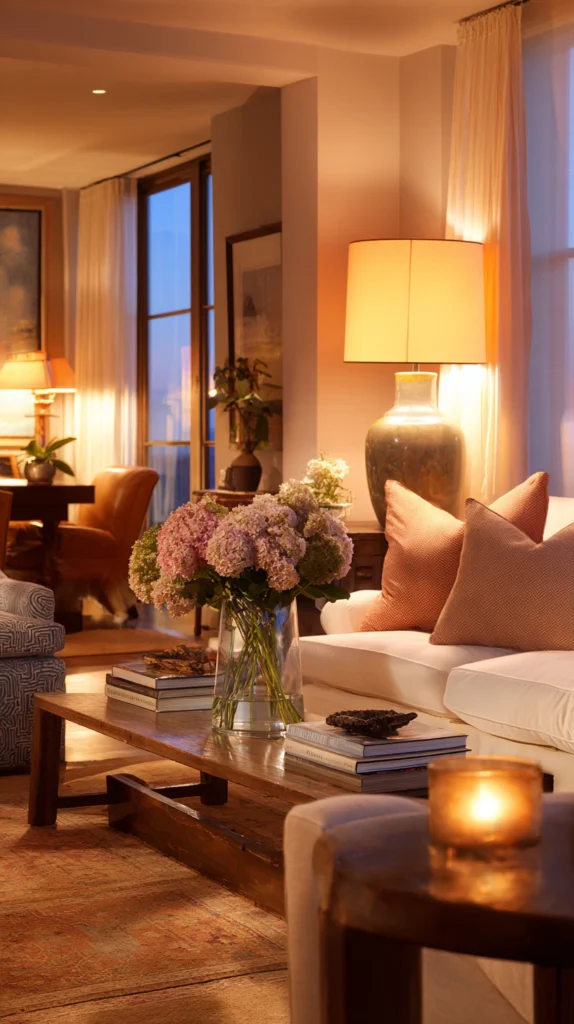
Budget: $20 – $100
A light and airy living room in summer is a daytime experience; the evening version requires a specific plan that maintains the warm, open quality rather than retreating to the overhead brightness that makes any room feel smaller and less considered after dark. The summer living room evening plan uses lower light sources — table lamps, floor lamps, candles — rather than overhead lighting, and keeps the colour temperature warm throughout.
A table lamp with a linen shade costs $30–$80. A floor lamp in a simple design runs $40–$120. A set of pillar candles on the coffee table costs $10–$25. Connecting the table and floor lamps to a single smart plug or dimmer ($10–$20) allows the evening light to shift from full to ambient in a single action. The transition from afternoon light to evening light should happen gradually rather than as a single switch — the overhead light going off and the lamps coming on simultaneously is the moment the summer living room becomes its evening self.
Style tip: Install a dimmer switch on the overhead light before the summer begins rather than relying on the lamps and candles to compensate for its flat brightness. An overhead light on a dimmer at 20–30 percent becomes a useful ambient source rather than the room’s primary illumination, and it fills the ceiling zone with a warm glow that table lamps and candles at lower levels cannot reach. The dimmer costs $10–$20 and thirty minutes to install.
15. The White Linen Throw
Budget: $25 – $80
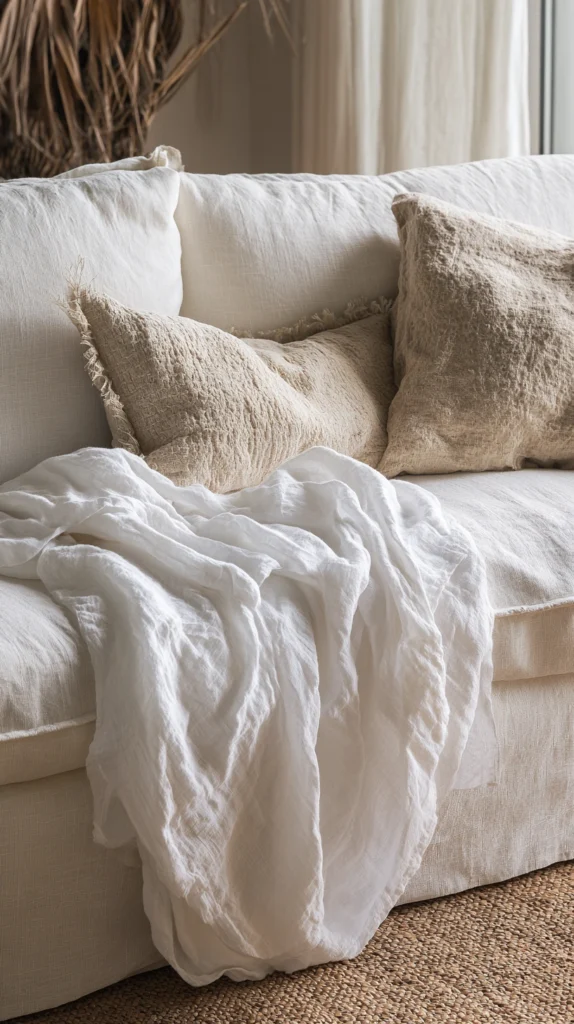
A white or natural linen throw draped over the sofa — replacing the heavy, textured winter throws — is the last and the simplest of the summer adjustments. Linen is the summer textile. It is cool to the touch, it reads as warm weather through its colour and its weight, and it has the specific quality of fabric that is comfortable rather than warming — which is the distinction that summer requires from everything it puts in a room.
A washed linen throw costs $25–$60. Pre-washed versions arrive already in their best state — softened, slightly crumpled, with the particular drape that new linen lacks. Drape over one arm of the sofa asymmetrically rather than spreading it symmetrically across the back — the asymmetric drape reads as used and comfortable; the symmetric spread reads as displayed.
Style tip: Choose a linen throw in a colour that is within the same tone family as the summer cushions but not identical to any of them. A throw that is slightly lighter or slightly warmer than the cushion tones reads as the final layer of a considered scheme; one that matches a cushion exactly reads as a coordinated set, which is a different and more commercial quality than the gathered, personal quality that the summer living room is trying to achieve.
The best summer living room is not the most decorated one or the most transformed one — it is the one that allows summer to work on it rather than resisting the season with winter habits and winter materials. The curtains that let the light in, the surfaces that have been freed to breathe, the floor that accepts bare feet, the window that carries the smell of the garden into the room: these are the adjustments that make the room feel light and airy because it genuinely is, rather than because it has been styled to appear so.
Make the adjustments before the best weeks of summer rather than during them, and then stop adjusting and simply use the room. The summer living room at its best is a room that has been prepared and then left alone to be excellent, which is the condition that good seasonal styling always produces and good rooms always deserve.