12 Sunroom Decor Ideas for a Bright and Airy Summer Vibe
12 Sunroom Decor Ideas for a Bright and Airy Summer Vibe
There is a room in some houses that never quite lives up to what it is supposed to be. The sunroom — the conservatory, the garden room, the glass extension at the back of the house — is designed to bring the outside in, to make the most of whatever light the climate offers, to be the brightest and most pleasant room in the building. And yet, in practice, it is often the hottest room in summer, the coldest in winter, and the one most likely to be filled with things that did not fit anywhere else.
Getting a sunroom right for summer is a specific project with specific requirements. It is not simply about decoration — it is about managing heat and light in a room that has more of both than any other, about choosing materials that do not fade, warp, or deteriorate under sustained sun exposure, and about creating an atmosphere that makes the room genuinely pleasant in the months when it receives the most use.
Each idea below addresses both the decorative and the functional aspects of a sunroom in summer. Each includes what you will need, what it will cost, and a practical tip to make the whole thing work as well as the room deserves.
1. The Linen and Rattan Foundation
Budget: $100 – $500
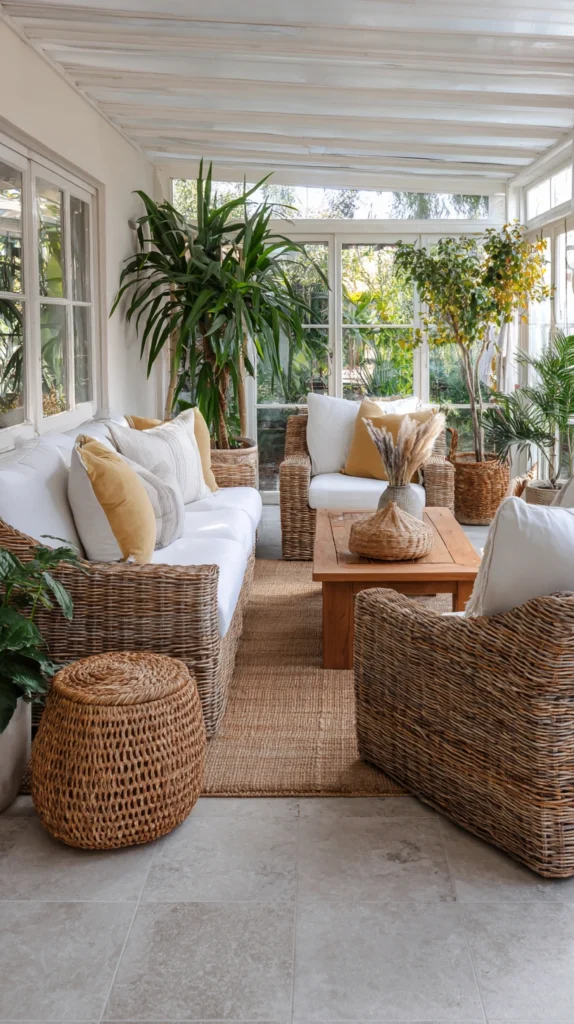
The furniture and textile combination that suits a sunroom better than any other is also the one that reads most immediately as summer: natural rattan or wicker furniture with linen or cotton cushions in bleached, undyed, or soft botanical tones. The combination works because both materials suit the particular light of a glass room — rattan casts interesting shadows, linen catches and diffuses sunlight rather than absorbing it — and because both age gracefully under the UV exposure that synthetic materials resist less successfully.
A rattan two-seater sofa with cushions costs $150–$400. Matching armchairs run $80–$200 each. Linen cushion covers in natural, white, or soft sage cost $15–$35 each. Choose outdoor-grade cushion inserts even for a sunroom — the UV exposure in a glass room is comparable to a shaded outdoor space, and standard indoor foam cushion inserts yellow and deteriorate in direct sun within a single season.
Style tip: Choose rattan with a tighter weave rather than a loose or open one for the primary seating. Tightly woven rattan is more structurally durable under the temperature fluctuations of a sunroom, provides a more comfortable sitting surface than open weave, and reads as more considered and less rustic — the distinction between furniture chosen for the room and furniture that happened to be appropriate for it.
2. The Botanical Print Collection
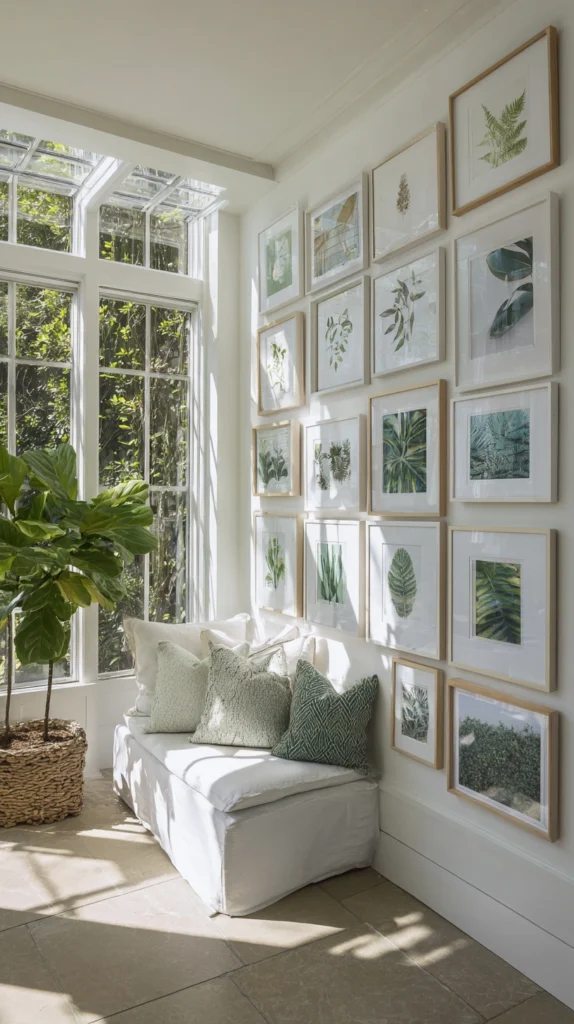
Budget: $20 – $100
A collection of botanical prints — framed illustrations of ferns, tropical leaves, citrus branches, wildflowers — hung on the one solid wall of the sunroom gives the room a point of focus that glass walls cannot provide and connects the interior to the garden beyond in a language that the room’s architecture already speaks. Botanical prints in a sunroom are not decoration added to a room; they are a continuation of what the room is already about.
Botanical prints from public domain archives online cost nothing to download and $0.50–$2 per sheet to print at A4 or A3 size. Simple white or natural wood frames cost $5–$15 each. Arrange four to six prints in a tight grid rather than distributing them across the wall — a tight grouping reads as a gallery; a scattered arrangement reads as individual pictures that have not found their relationship to each other.
Style tip: Choose prints in a consistent colour treatment — all in full botanical colour, all in black and white, or all with a faded vintage tone — rather than mixing treatments across the collection. A gallery of six prints in matching colour treatment reads as a curated series; one where some are colour and some black and white reads as prints from different sources that were assembled without a unifying principle.
3. The Heat Management Blind System
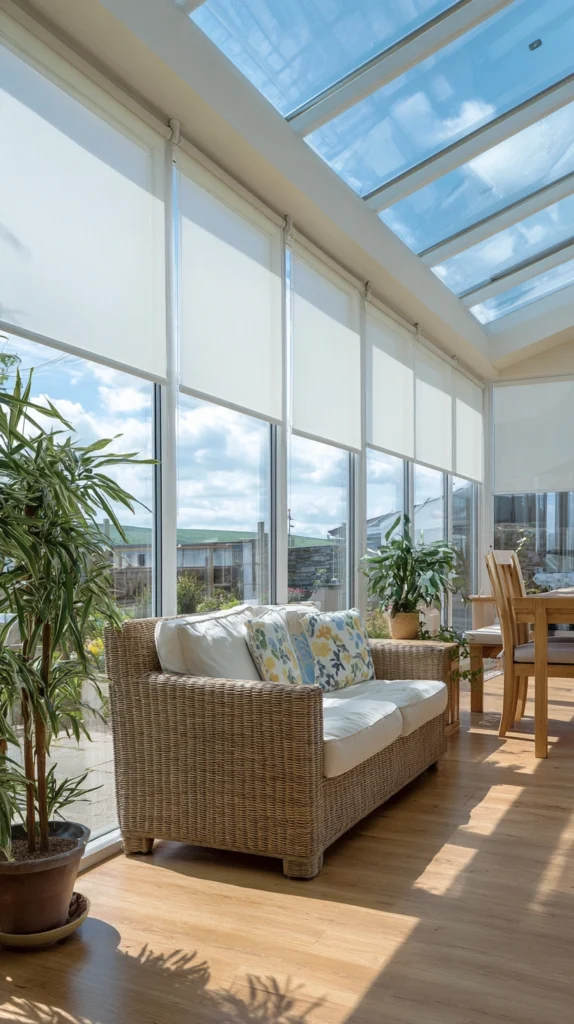
Budget: $80 – $400
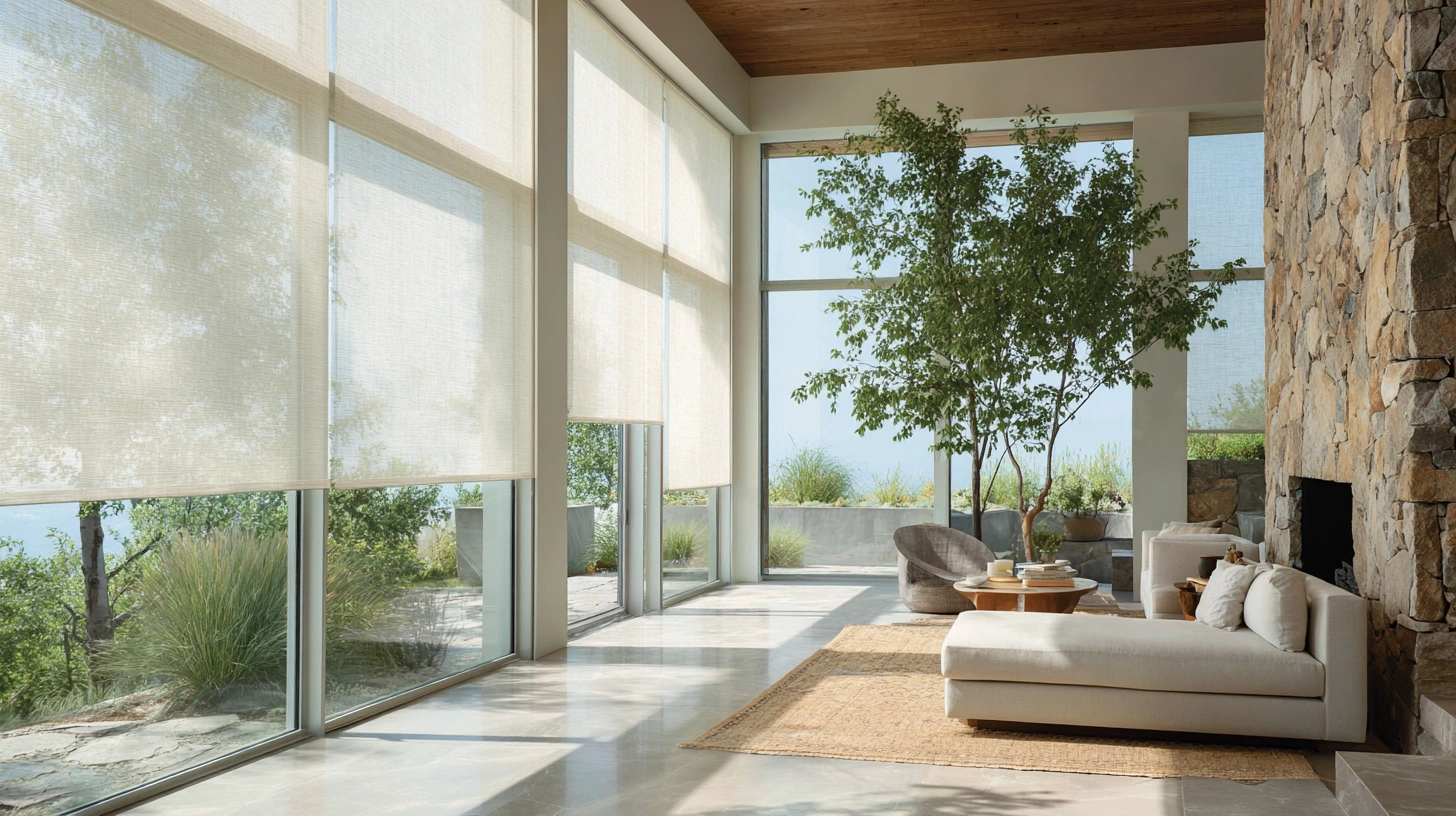
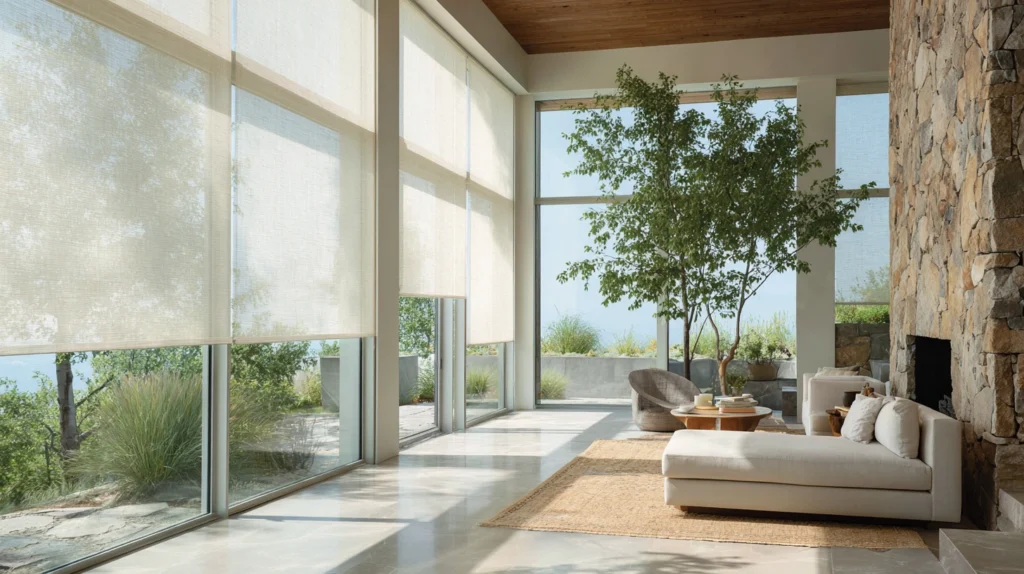
A sunroom without heat management is a room that is pleasant in spring and autumn and unusable in the height of summer. Roof blinds or side blinds in a reflective or cellular fabric — fitted to the glass panels of the roof and the most sun-facing walls — reduce the solar heat gain that makes glass rooms unbearable in direct summer sun while maintaining the bright, light quality that is the room’s principal asset.
Fitted roof blinds for a standard sunroom panel cost $30–$80 each. A full set of roof blinds for a 3 by 4 metre sunroom runs $200–$500 in materials. Cellular or honeycomb blinds ($20–$50 per panel) provide the best combination of heat reduction and light diffusion — the cell structure traps air and acts as insulation in both directions. Fit blinds to the most sun-facing surfaces first and assess the improvement before completing the full installation.
Style tip: Choose blinds in a warm white or natural tone rather than grey or silver. Silver and grey reflective blinds are highly effective at heat reduction but they cast a cool, flat light into the room that changes its character from a warm garden room to something closer to an office. Warm white or natural fabric diffuses the sunlight into the golden tone that makes a sunroom pleasant rather than simply less hot.
4. The Indoor Plant Abundance
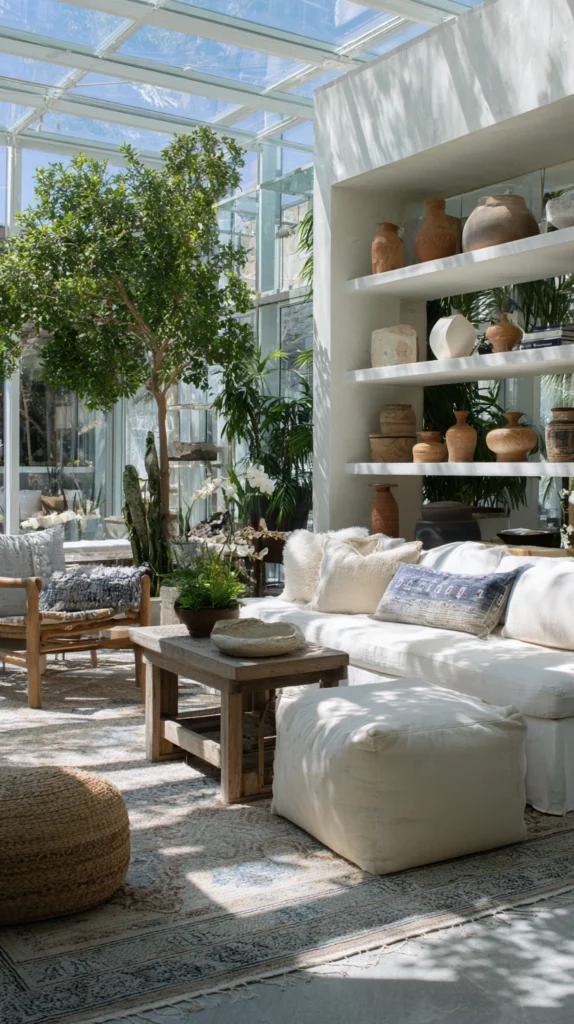
Budget: $50 – $300
A sunroom is the one room in the house that can support a genuine abundance of plants — not a curated collection of three specimens, but a full, generous, growing environment of plants in pots, in hanging baskets, on shelves, and on the floor that makes the room feel like the threshold between the house and the garden that it structurally is. The plants do not need to be rare or expensive; they need to be healthy, well-positioned, and numerous enough to create the impression of a room that is growing.
Large-leafed tropical houseplants suitable for a bright sunroom — monstera, bird of paradise, rubber plant — cost $20–$60 each. Trailing plants for hanging baskets run $5–$12 each. A floor-standing plant shelf or ladder ($25–$60) provides the vertical variation that groups of floor-standing pots alone cannot achieve. Water all plants thoroughly before guests visit a sunroom — dry, wilting plants in a glass room in summer look distressed rather than decorative, and the distress is visible from every angle.
Style tip: Group plants by water requirement rather than by size or aesthetic — plants that need watering daily grouped together, weekly-watering plants together — so the maintenance rhythm of the collection can be managed efficiently. A sunroom full of plants that requires a complex individual watering schedule per plant will be under-watered in practice; one managed in two or three watering groups will be reliably well-maintained.
5. The Natural Fibre Floor Covering
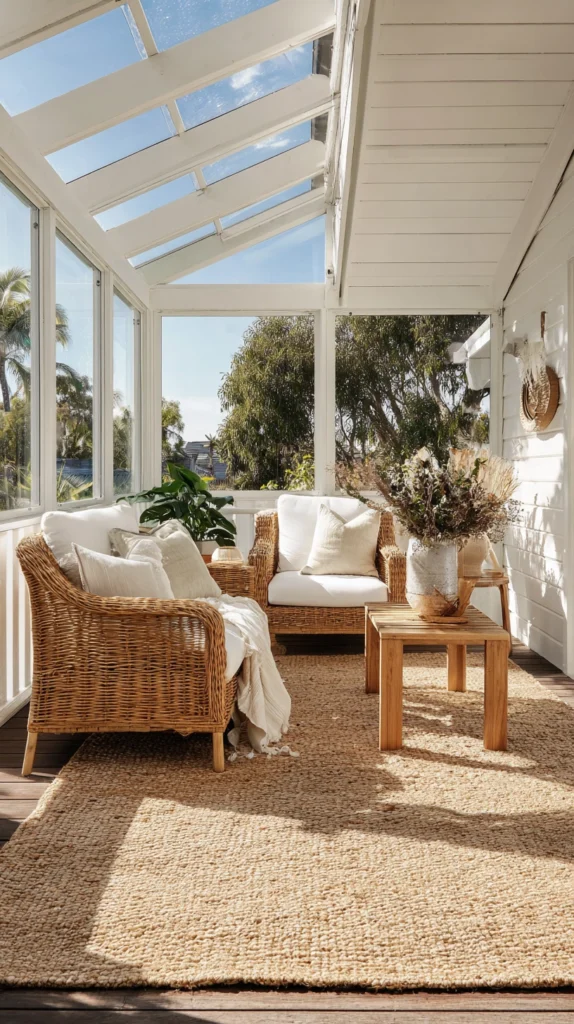
Budget: $50 – $250
A natural fibre rug — jute, sisal, seagrass — on the sunroom floor grounds the space and absorbs the echoing quality that hard floors and glass walls create in a room with no soft surfaces. It also introduces a material that reads as garden-appropriate rather than house-appropriate, which is the tonal quality a sunroom benefits from — slightly more natural, slightly less interior, somewhere between the two in a way that feels intentional rather than unresolved.
A jute rug in a standard 160 by 230 centimetre size costs $40–$120. Sisal and seagrass versions run $60–$180. Natural fibre rugs are not suitable for damp conditions — if the sunroom door to the garden is regularly left open and moisture enters, a synthetic alternative in a natural tone is a more practical choice. Vacuum natural fibre rugs rather than beating and avoid saturating them with water — they shrink and distort when soaked and the damage is not reversible.
Style tip: Choose a rug with a woven border rather than a plain edged one for a sunroom. The border gives the rug a defined perimeter that reads as a considered flooring choice rather than a piece of matting, and in a room where the floor is often visible from multiple angles — including from the garden through the glass — the finished edge of a bordered rug is visible and worth having.
6. The Tropical Colour Accent
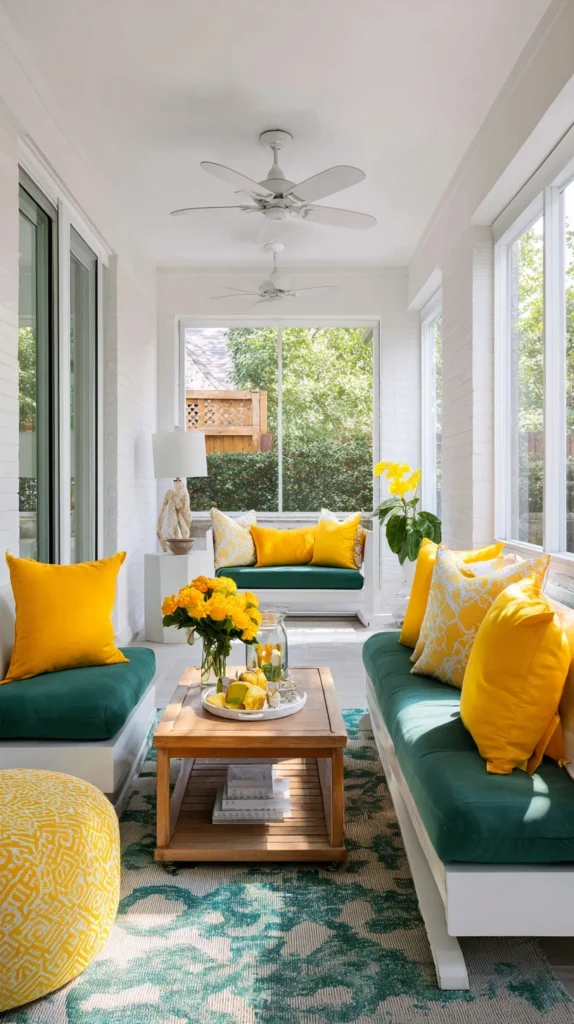
Budget: $20 – $120
A sunroom in summer benefits from at least one strong tropical colour accent — not a full tropical palette, not a themed room, but a single clear colour that references the garden and the season. Deep palm green in a cushion, a pot, or a blind. Mango yellow in a vase or a throw. Faded indigo in a rug or a curtain panel. One colour used consistently across two or three elements gives the sunroom a summer identity that an all-neutral scheme never quite achieves.
A set of cushion covers in a tropical accent colour costs $15–$40. A plant pot in a matching tone runs $15–$50. A ceramic vase in the accent colour costs $10–$30. Use the accent colour in no more than three elements — a colour that appears in every object in the room is wallpaper; one that appears in three well-chosen places is a design decision.
Style tip: Choose a tropical accent colour that relates to something visible through the sunroom glass — a plant in the garden, the colour of the sky on a clear day, the tone of the stone or brick of the garden wall. A colour that echoes what is seen through the glass connects the interior of the sunroom to the exterior world in a way that a colour chosen purely for the interior does not.
7. The Ceiling Fan or Circulating Fan
Budget: $40 – $250
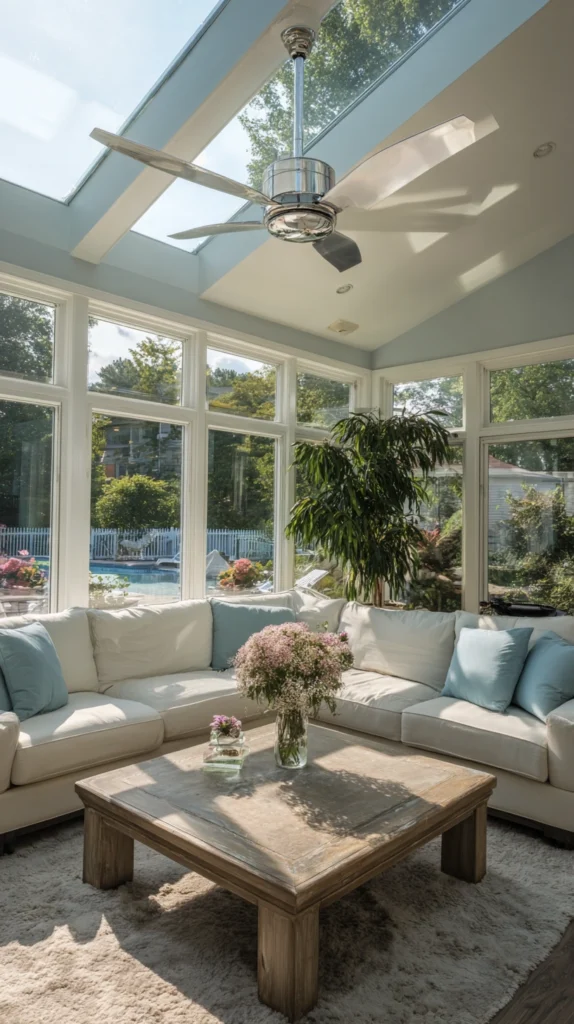
Heat management in a sunroom is not only about blocking the sun — it is about moving the air that the sun heats. A ceiling fan mounted on the sunroom roof structure, or a freestanding pedestal fan positioned to circulate air across the room, reduces the perceived temperature in a glass room significantly and makes the space usable through the hottest part of the afternoon that would otherwise drive occupants back into the cooler interior.
An outdoor-rated ceiling fan suitable for the damp conditions of a sunroom costs $80–$200. A quality pedestal fan runs $40–$100. An outdoor-rated ceiling fan is essential if the sunroom roof is glass rather than solid — the condensation and moisture that accumulates on glass roofs and their supporting structures requires the damp-resistance specification of an outdoor rather than a standard indoor fan. A standard indoor fan in a glass-roofed sunroom will corrode at its motor housing within two to three seasons.
Style tip: Mount the ceiling fan on the lowest practical drop rod rather than flush to the ceiling. A ceiling fan mounted flush to a glass roof pushes air against the glass rather than downward into the room — the clearance between the blade and the glass needs to be at least 30 centimetres for the fan to move air effectively, and a drop rod of 30–45 centimetres achieves this while keeping the fan comfortably above head height.
8. The Daybed or Lounger
Budget: $100 – $600
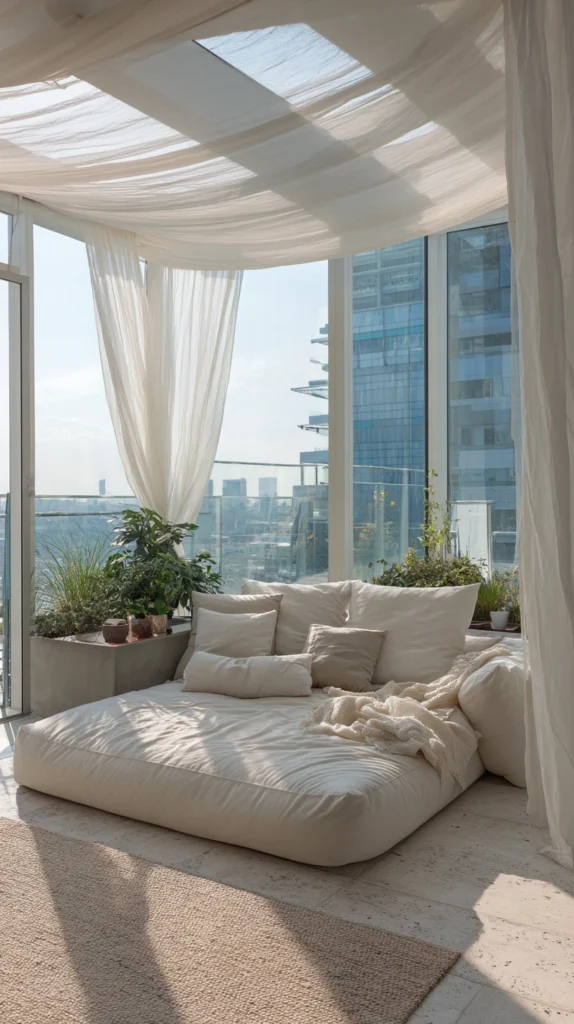
A daybed or indoor sun lounger in a sunroom — positioned to receive the morning sun if the room faces east, or the afternoon sun if it faces west — is the piece of furniture that most directly expresses what a sunroom in summer is for. Not a formal seating area, not a dining setup, but a space to lie in the warmth of the glass room on a summer morning or a cool afternoon when the outdoor temperature has not yet caught up with the sun.
An indoor rattan daybed with a cushion costs $150–$400. A slatted timber sun lounger with a cushion runs $100–$300. A fitted cushion of at least 8 centimetres in thickness ($60–$120) provides the comfort that makes the difference between a daybed that is used and one that is occasionally sat on. Position the daybed on castors ($3–$5 each, four required) so it can be repositioned to follow the sun or to avoid it as the season changes.
Style tip: Add a canopy above the daybed — a simple length of sheer fabric suspended from two ceiling hooks directly above the daybed — to create a sense of enclosure and privacy within the larger sunroom. A daybed with a soft canopy above it becomes a room within a room with a quality of retreat that an open daybed in the middle of a glass room cannot achieve.
9. The Summer Scent Strategy
Budget: $15 – $60
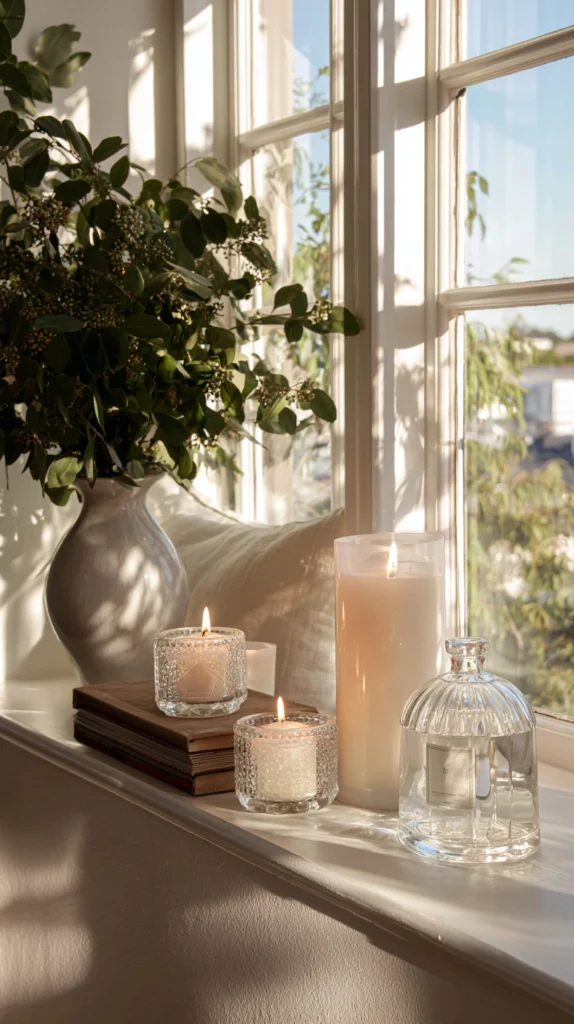
A sunroom in summer has the potential for extraordinary scent — the combination of warm glass-heated air and fragrant plants or candles creates an olfactory intensity that cooler rooms cannot match. The right scent in a warm sunroom is genuinely transformative; the wrong one — or no scent at all — is a missed opportunity that the room’s conditions make entirely avoidable.
A large pot of gardenia or jasmine positioned in the sunroom costs $15–$40 and releases fragrance continuously in warm conditions. A summer-scented candle — white flowers, citrus, fresh linen — costs $10–$35. A reed diffuser in a light botanical fragrance runs $12–$40. Avoid heavy or synthetic fragrances in a sunroom — the heat amplifies every element of a scent and a fragrance that is pleasant at room temperature can become overpowering in a glass room in summer.
Style tip: Use a living fragrant plant rather than a candle or diffuser as the primary scent source in a sunroom wherever possible. A fragrant plant contributes scent, visual interest, and the living quality of something that changes daily — the jasmine vine that has added two new shoots since yesterday, the gardenia that has two new buds forming. A candle contributes only scent and requires replacing; the plant rewards daily noticing.
10. The Glass Shelf Display
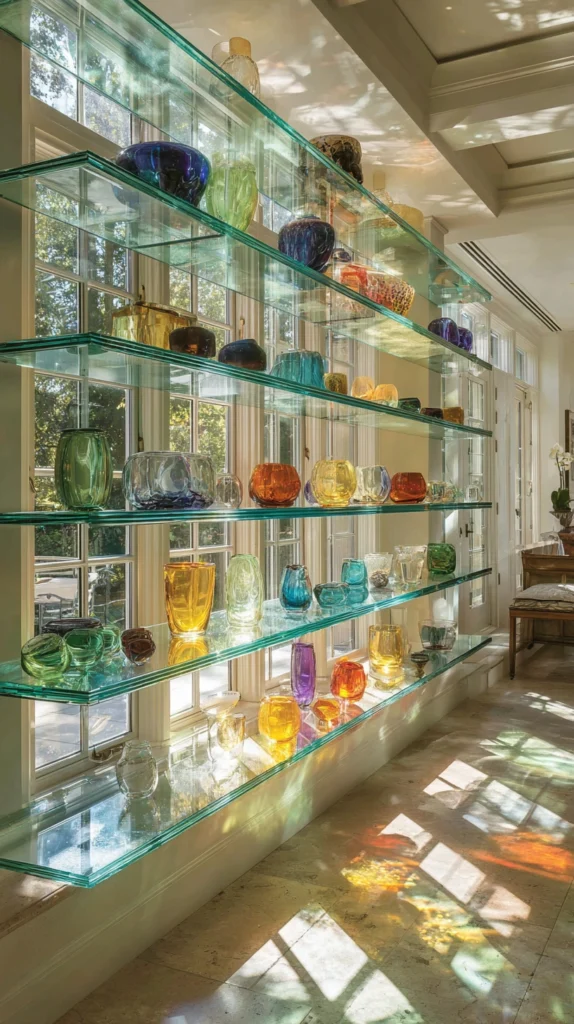
Budget: $30 – $150
A glass shelf fixed to the window or glass wall of the sunroom — with coloured glassware, glass vases, or glass bottles arranged on it — creates a display that exists nowhere else in the house in quite the same way. Sunlight through coloured glass throws coloured light onto the floor and wall behind the shelf, and the effect changes throughout the day as the sun’s angle changes. It is a display that is animated by the room’s primary asset — the light — rather than simply occupying space within it.
Glass shelves with suction cup fixings for window glass cost $15–$40 each. Coloured glass vases and bottles cost $3–$15 each. Arrange the display with taller pieces at the back and shorter at the front, and vary the colours so the light thrown by the display covers a range of tones. Replace plain glass vessels with coloured ones rather than purchasing specifically — many glass bottles, jars, and vases found in the house are suitable candidates for the shelf.
Style tip: Clean the shelf and all glass objects on it before an occasion rather than as a general maintenance task. Glass surfaces and glass objects in a sunroom accumulate a fine layer of condensation residue, dust, and mineral deposits from water that is invisible until sunlight hits it at a particular angle — the angle that makes a beautifully arranged glass shelf look like a dusty storage area. Ten minutes of cleaning produces a display that is genuinely striking in direct sun.
11. The Outdoor-Indoor Transition Zone
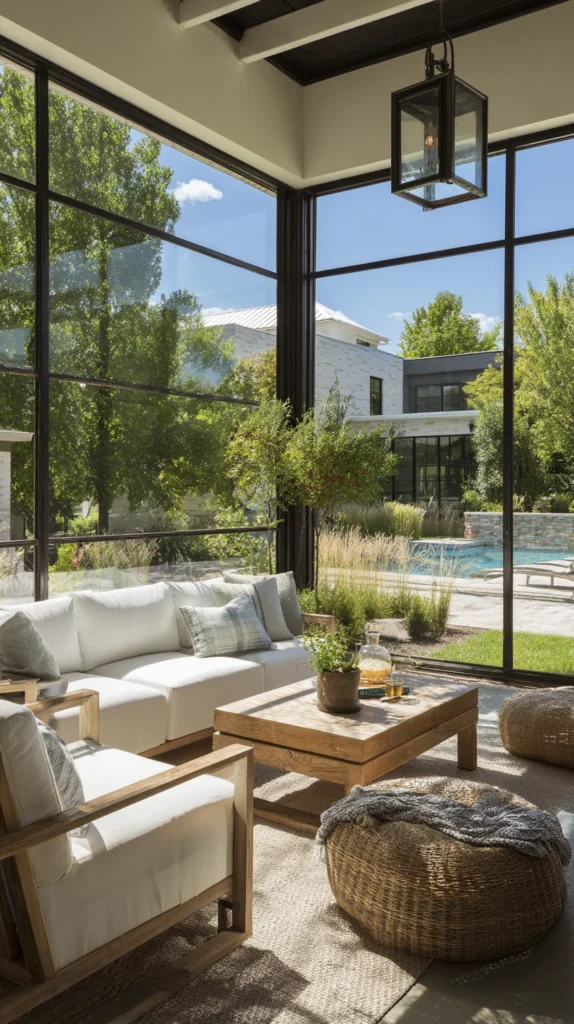
Budget: $30 – $120
Treating the sunroom as the transition between the house and the garden — rather than as either a fully indoor or a semi-outdoor room — produces a specific styling approach: furniture that would work outdoors but is being used inside, plants that bridge the gap between houseplants and garden plants, materials that belong in both contexts. A sunroom styled as a transition zone feels more connected to the garden it overlooks than one styled as either a conventional interior room or a covered outdoor space.
An outdoor bistro table used inside the sunroom costs $60–$150. Garden stool side tables run $20–$50. A collection of terracotta pots — used indoors rather than outside — costs $2–$8 each. The transition zone styling approach does not require purchasing new furniture — it requires rethinking the furniture that already exists in both the indoor and outdoor spaces and redistributing it so the sunroom contains elements of each.
Style tip: Place the outdoor furniture in the sunroom at the start of each summer and return it to the garden at the end of the season. The seasonal exchange keeps the sunroom furniture genuinely seasonal and connects the rhythm of the room’s styling to the rhythm of the garden — both change together at the beginning and end of summer rather than staying static year-round.
12. The Morning Ritual Setup
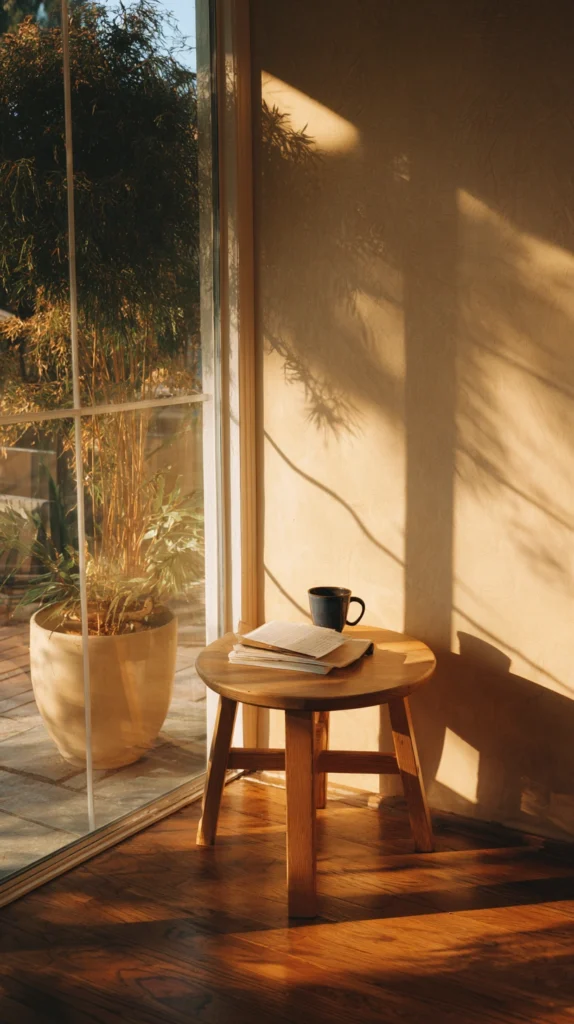
Budget: $20 – $80
A sunroom set up for the morning — a small table with a tray, two cups, a book, a vase of something from the garden — becomes the most used room in the house for the specific duration of summer mornings. The combination of early sun, the smell of coffee, and a room that is already warm before the rest of the house has caught up produces a morning experience that is difficult to replicate anywhere else in the building, and setting the sunroom up for that experience costs almost nothing beyond intention and consistency.
A small ceramic tray costs $10–$25. A vase for cut flowers from the garden runs $8–$20. A comfortable single chair or a small two-seater for morning use costs $80–$200. The morning setup is more habit than decoration — the table set the evening before, the chair positioned to face the morning sun, the book already there rather than fetched — and the habit is what makes the sunroom a morning room rather than a room that could theoretically be used in the morning.
Style tip: Keep the morning setup minimal rather than comprehensive. A tray, a cup, a book, and a vase: four elements, set and ready, requiring nothing additional before the morning begins. A morning setup that requires assembly — finding the tray, selecting the book, cutting the flowers — will be assembled inconsistently; one that is permanently in place will be used every day the weather allows, which across a summer amounts to a considerable number of very good mornings.
The best sunroom in summer is not the most decorated or the most fully furnished one — it is the one that manages the heat and the light well enough to be genuinely usable, that has enough plants and enough natural texture to feel connected to the garden it overlooks, and that has been set up for the specific pleasures of the season rather than the general pleasures of a pleasant room.
Get the heat management right first — the blinds, the fan, the ventilation — and then decorate within the conditions that remain. A cool sunroom with modest decoration is a room worth spending time in. A hot sunroom with beautiful furnishings is a room that is admired and avoided.