14 Summer Console Table Decor Ideas for Light Interiors
14 Summer Console Table Decor Ideas for Light Interiors
There is a surface in most hallways, living rooms, and dining rooms that does more work than it is ever credited for. Not the coffee table, which is noticed, and not the dining table, which is used — but the console table, which is passed a dozen times a day, which registers at the edge of perception every time someone enters or moves through a room, and which communicates more about the mood and the intention of the interior than almost any other single surface.
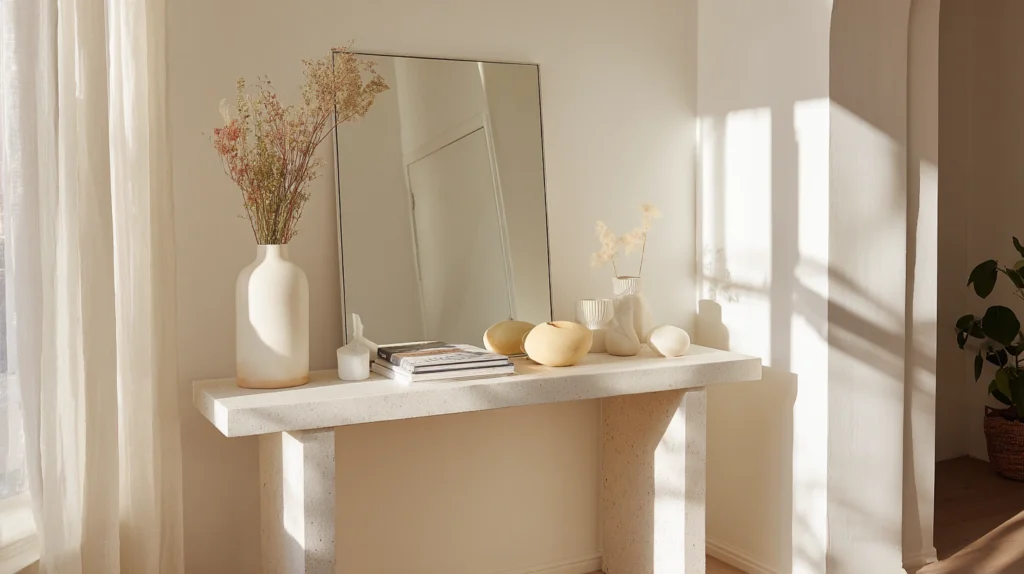
In summer, a console table styled for the season — lighter, more open, with something growing or something glowing or something that moves very slightly in the air from an open window — does something quiet and consistent to the whole room it sits in. It tells you, each time you pass it, that the season has been acknowledged. That someone noticed it was summer and responded accordingly.
Each idea below is a complete styling approach for a console table in a light interior during summer. Each includes what you will need, what it will cost, and a practical tip to make the whole thing work as well as it deserves to.
1. The Single Large Vessel
Budget: $20 – $100
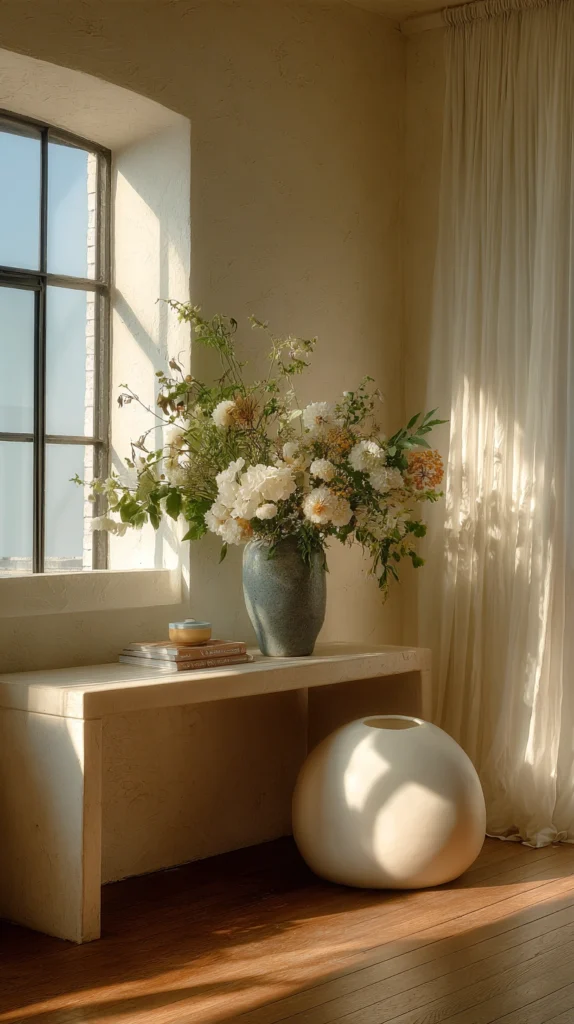
One large ceramic or glass vessel — a tall vase, a wide-mouthed urn, a substantial jug — placed at one end of the console table with a loose arrangement of branches, large-leafed foliage, or a single variety of summer flower. No supplementary objects, no layering, no groupings. Just one thing, chosen well, in the right position. The restraint is the point and the restraint is harder to achieve than it sounds.
A tall ceramic vase costs $20–$60. A hand-thrown studio pottery version runs $40–$100 and has a character that mass-produced ceramics cannot replicate. A generous bunch of a single flower variety — sunflowers, peonies, dahlias, hydrangeas — costs $8–$20 from a florist or garden. Cut stems at an angle underwater and condition in a deep bucket for two hours before arranging — flowers conditioned properly last twice as long as those placed directly from wrapping into a vase.
Style tip: Position the vessel at one end of the console table rather than at the centre. A centred vase on a console table reads as symmetrical styling; one placed at the end with the rest of the surface clear reads as a considered placement that trusts the empty space beside it. The empty space is not absence — it is the context that makes the single vessel worth looking at.
2. The Tray and Edit
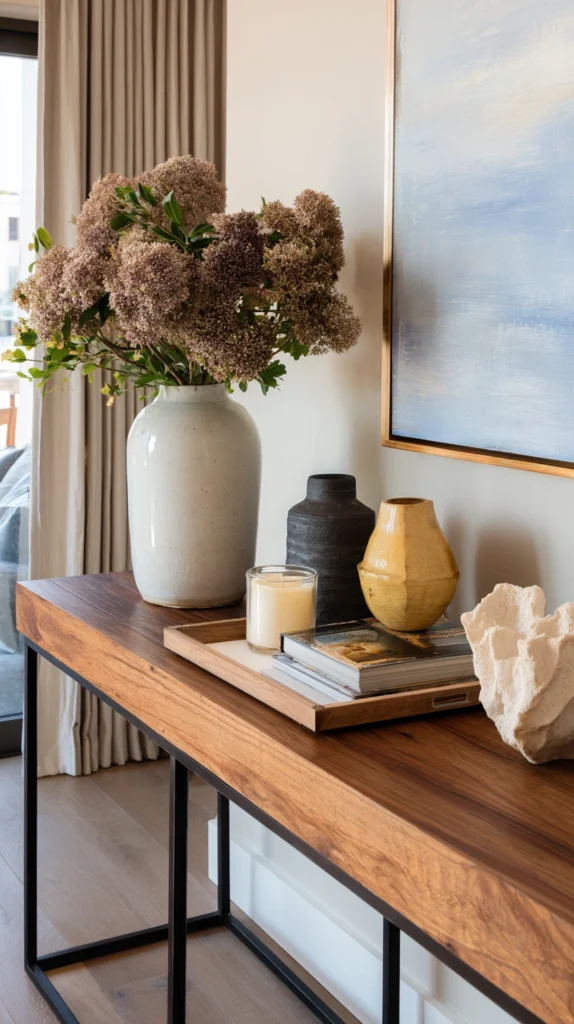
Budget: $15 – $60
A tray placed on the console table — in a material that suits the interior, in a size proportional to the table width — with two or three objects arranged within it creates a contained composition that defines itself against the table surface and reads as intentional from a greater distance than objects placed without a tray ever do. The tray is not a container; it is a frame.
A marble, slate, or rattan tray costs $15–$40. Objects for the interior of the tray — a small candle, a ceramic dish, a smooth stone, a small plant — cost $5–$20 in total. Keep the tray to three objects maximum: the candle, the object of interest, and something green. Four objects in a tray is always one too many. The edit is the exercise and the discipline of stopping at three is what makes the arrangement work.
Style tip: Choose a tray that is slightly smaller than instinct suggests. A tray that fills the console table surface to its edges reads as a liner rather than a frame; one that sits within the surface with visible table on all sides reads as a composed object within the larger surface — and that relationship between the tray and the table is the visual dynamic that makes the styling work.
3. The Summer Botanical Arrangement
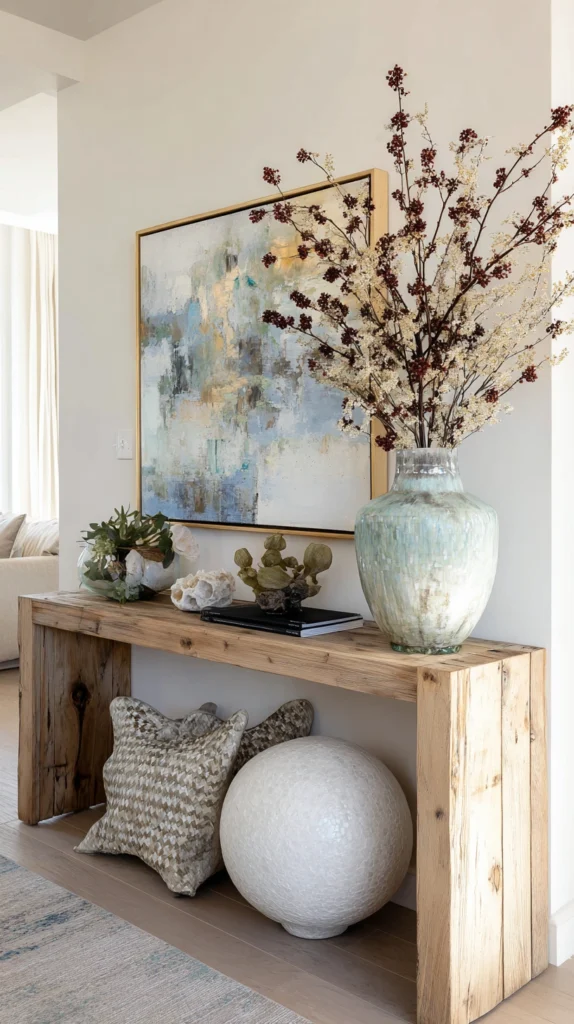
Budget: $15 – $80
A loose arrangement of summer botanicals — not a formal bouquet, not a supermarket bunch in its original wrapping, but a gathered mix of garden foliage, wildflowers, herbs, and a few deliberate blooms combined in a simple vase — brings the specific visual language of midsummer into the interior in a way that purchased arrangements rarely achieve. A jar of sweet peas from the garden, a stem of rosemary, two branches of eucalyptus, and three dahlias: this is a summer arrangement in a light interior.
Garden flowers and foliage cost nothing if the garden provides them. A simple glass jar or ceramic vase costs $5–$20. Supplementary blooms from a florist run $8–$25 per bunch. The loose, gathered quality of a botanical arrangement requires a vase with a wide enough mouth that the stems can be placed individually rather than bunched — a wide-mouthed vase produces a looser, more natural result than a narrow-necked one regardless of how the stems are arranged.
Style tip: Include at least one element with interesting texture — seed heads, rosehip branches, dried grasses, honesty — alongside the flowering stems. A summer botanical arrangement that consists entirely of blooms reads as a flower arrangement; one that includes textural elements alongside flowers reads as something gathered from the garden with both the flowers and the spaces between them considered.
4. The Framed Summer Print
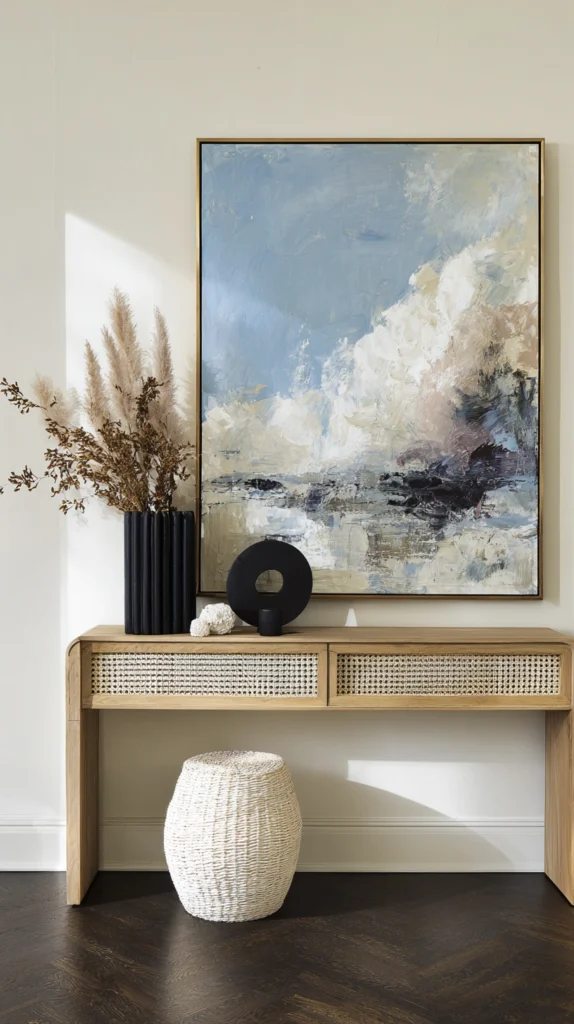
Budget: $10 – $60
A single framed print — a photograph of somewhere meaningful taken in summer, a botanical illustration, a postcard from a warm place, a piece of simple typography — leaned against the wall behind the console table rather than hung on it creates a deliberately casual display that reads as considered rather than finished. The lean signals intention without permanence, which suits summer aesthetics particularly well.
A print at A4 or A3 size costs $0.50–$3 to produce at a print shop. A simple frame in white, natural wood, or brushed metal runs $5–$20. Lean the frame against the wall and place a small object in front of its base — a stone, a small plant, a candle — to anchor it visually and prevent it from appearing as if it has simply not yet been hung. The anchoring object is the detail that transforms a leaned frame from a temporary installation into a styled one.
Style tip: Change the print seasonally rather than finding a permanent image for the frame. The frame becomes a seasonal display surface — a summer landscape in July, a winter interior in December — and the recurring act of changing the print keeps the console table actively styled rather than passively occupied by something that was chosen once and then forgotten.
5. The Plant and Pot Pairing
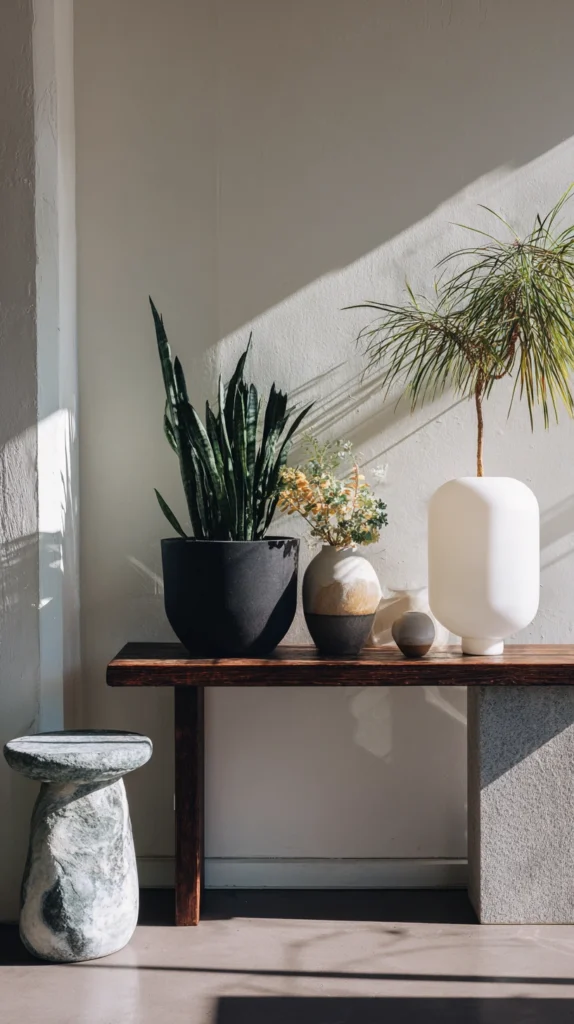
Budget: $20 – $80
A plant chosen specifically for its summer visual quality — a trailing pothos, a variegated monstera cutting, a pot of flowering begonias, a small standard lemon tree — placed in a pot chosen specifically for the interior rather than for generic suitability, creates a living console table presence that changes daily and rewards noticing in a way that static objects cannot. The right plant in the right pot is one of the most satisfying styling decisions available to any interior surface.
A trailing or architectural houseplant costs $15–$50. A ceramic or terracotta pot in a considered colour or finish runs $15–$40. The plant and pot are styled together rather than selected separately — the pot colour should relate to something already present on the console table or in the room, and the plant’s growth habit should suit the position — trailing plants for console tables with space for the stems to fall, upright plants for narrow surfaces where trailing growth would obstruct.
Style tip: Water the console table plant over the sink rather than in position — a console table surface marked by water rings from an overflowing saucer is a styling problem that drip-dry drainage creates. Carry the pot to the sink, water thoroughly, allow to drain completely, and return to its saucer only when the drainage has stopped. The ten seconds this takes prevents the ring marks that eventually require refinishing to remove.
6. The Candle Height Variation
Budget: $20 – $80
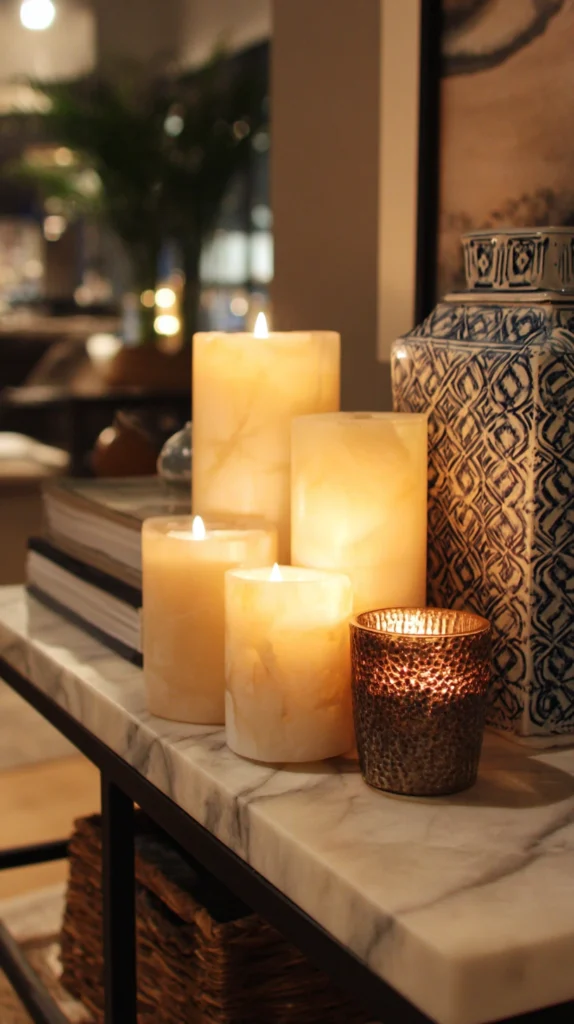
A grouping of candles at three distinct heights — a tall pillar candle, a medium votive in a glass holder, a low tea light in a ceramic dish — creates a console table lighting display of genuine depth and warmth that a uniform arrangement of identical candles never achieves. The height variation catches the eye at three levels simultaneously and produces the layered quality that makes candlelight atmospheric rather than merely functional.
Tall pillar candles cost $5–$15 each. Votive holders run $3–$8 each. Small ceramic candle dishes cost $5–$12 each. Arrange the three heights in an irregular triangle rather than a straight line — the triangle gives the grouping a three-dimensional quality that a linear arrangement collapses into a single flat plane. Keep the tallest candle at the back, the medium at the side, and the shortest at the front and slightly offset.
Style tip: Choose candles in the same colour family rather than identical colours — three candles in ivory, cream, and natural beeswax read as a cohesive grouping with tonal variation; three candles in three unrelated colours read as a collection of individual candles that happen to be in proximity. The family relationship is what makes a candle grouping read as composed rather than assembled.
7. The Collected Object Display
Budget: $0 – $40
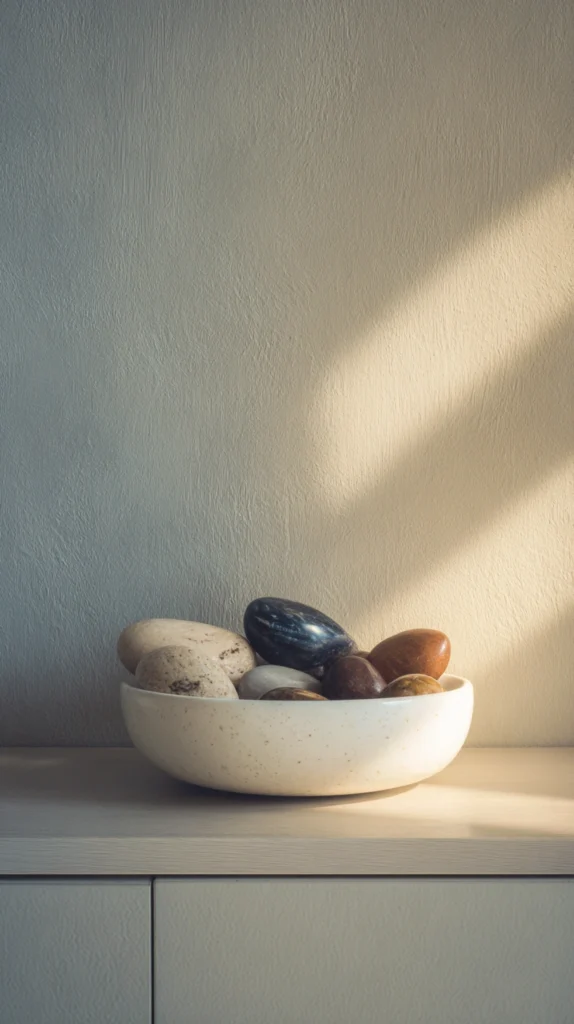
A small collection of objects gathered from somewhere specific — smooth stones from a beach, shells from a walk, seed pods from the garden, fragments of coloured glass tumbled by the sea — arranged in a ceramic bowl or a shallow dish on the console table creates a display of personal meaning that no purchased decoration achieves. The objects themselves are free; the bowl costs $10–$25; the arrangement costs nothing beyond the time to consider it.
The objects already exist in most households that spend time outdoors — in a pocket, on a windowsill, in a forgotten dish somewhere. The console table is the place that makes them visible and gives them the context of being a collection rather than an accumulation. Arrange the bowl so the most interesting objects — the most unusual shell, the most perfectly smooth stone — are visible from the approach rather than hidden at the base of the arrangement.
Style tip: Limit the collected object display to a single category rather than mixing all available types together. A bowl of stones only, a dish of shells only, a tray of seed pods only — the single-category collection reads as more considered than a mixed bowl, and the repetition of a single material across many examples reveals the variation within that material in a way that mixing multiple materials prevents.
8. The Summer Book Stack
Budget: $10 – $50
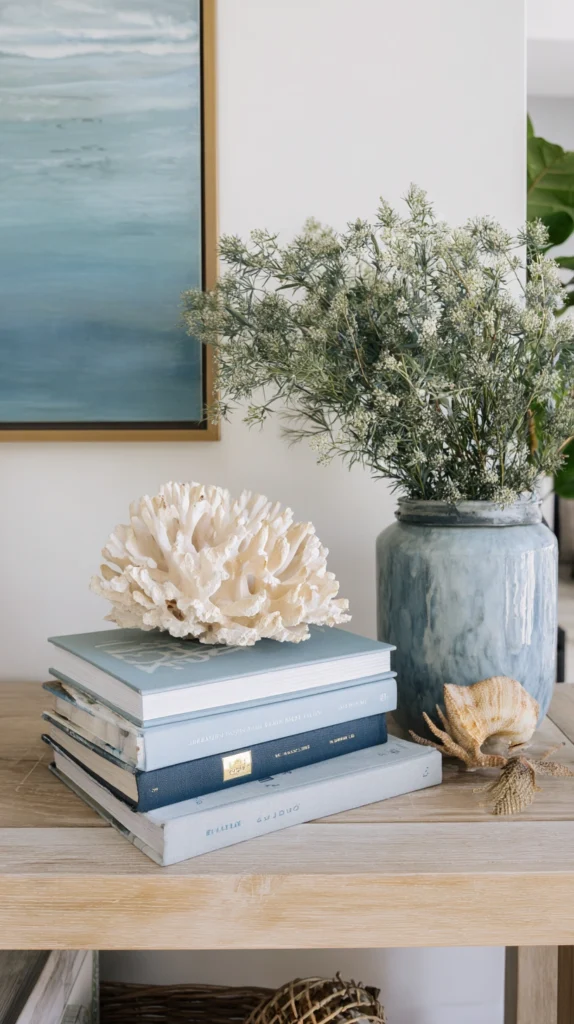
A small stack of books — two or three, chosen for their summer relevance and their visual quality rather than for their literary reputation — placed on the console table as both decoration and invitation creates a display that is both personal and functional. Books on the console table are more interesting than books on the shelf because they are present in the flow of daily movement rather than filed away, and they communicate something about the current season and the current interests of the household.
Books already owned cost nothing. A new summer-appropriate paperback costs $8–$15. A simple object placed on top of the stack — a smooth stone, a small ceramic — weighs the arrangement and keeps the books from sliding. Choose the top cover deliberately — the book whose cover suits the console table styling sits on top; the one whose spine suits the colour palette faces outward.
Style tip: Replace the book stack seasonally rather than adding to it. A console table book stack that grows with each season becomes a pile; one that is edited to two or three titles at any given time remains a display. The rotation is as important as the initial selection — a summer book stack in October is not summer styling, it is styling that has not been updated.
9. The Mirror Lean
Budget: $20 – $150
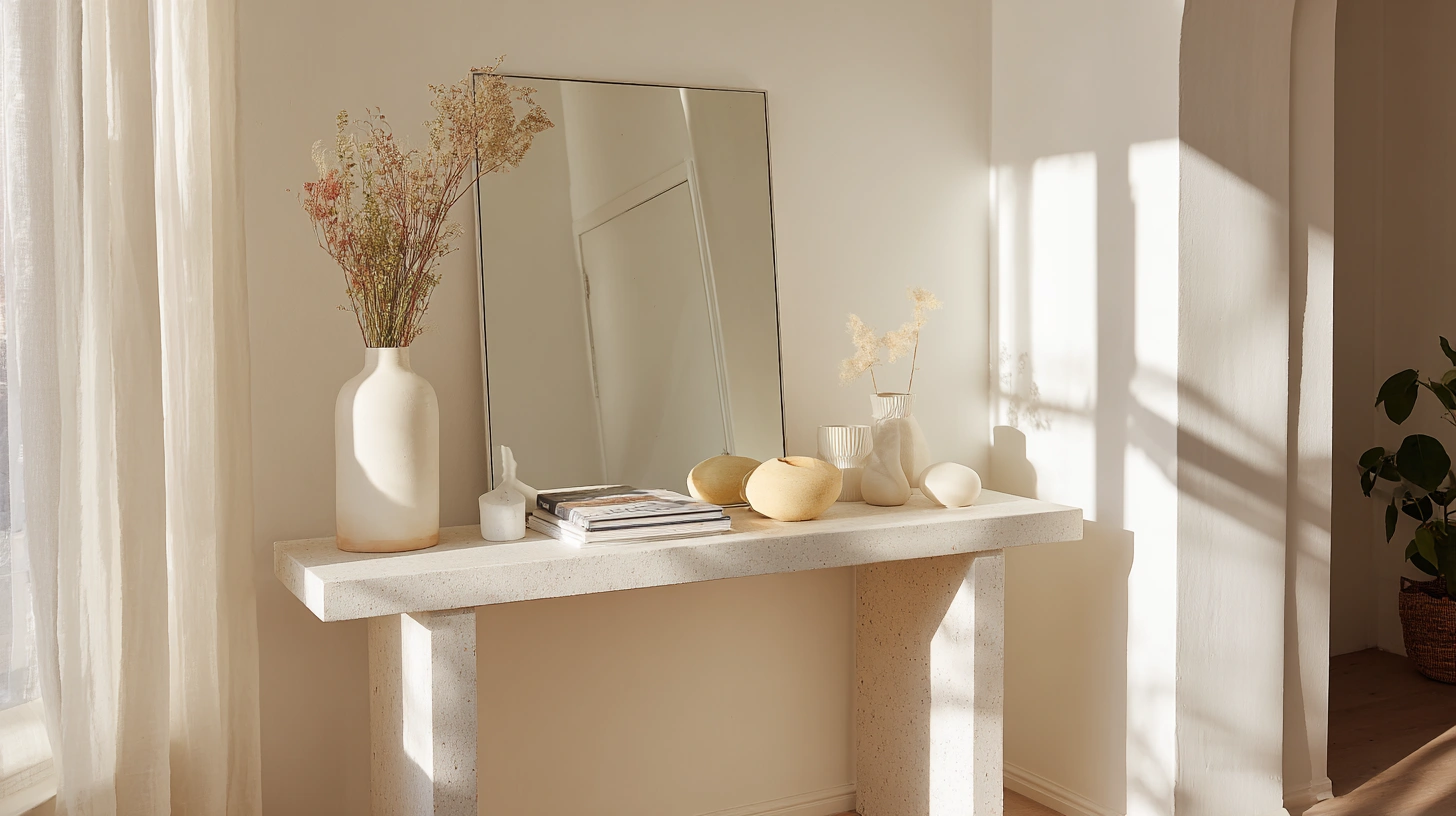
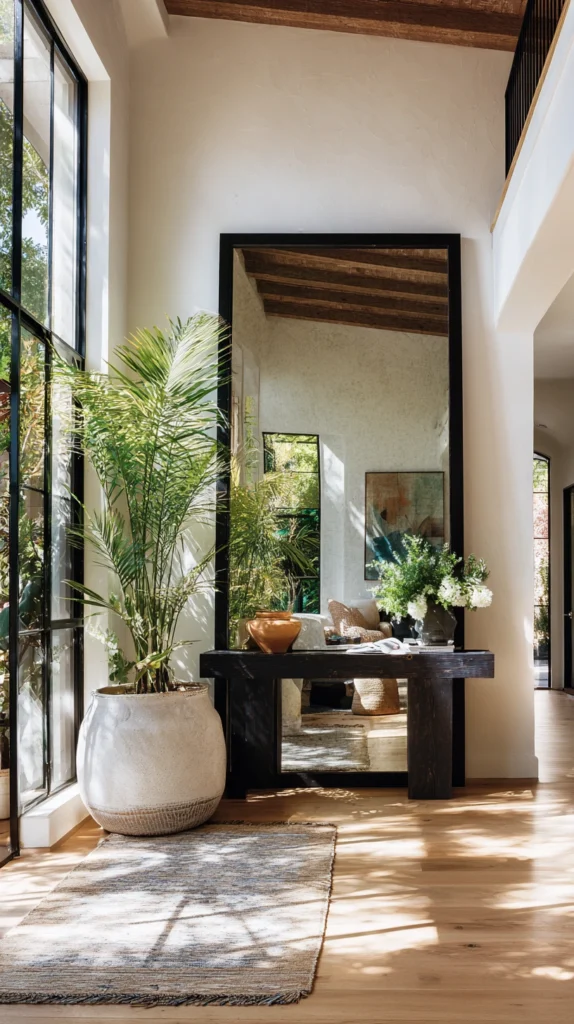
A mirror leaned against the wall behind the console table — rather than hung on it — creates a display that doubles the objects on the table surface, reflects the window and the light, and makes the hallway or room the console table sits in feel larger and brighter simultaneously. The lean rather than the hang is the specific choice that suits summer — it is less committed, more casual, more as if the mirror arrived and found its position rather than being installed.
A simple framed mirror of 50 by 70 centimetres costs $20–$60. A larger version of 60 by 90 centimetres runs $40–$150. Position the mirror so it reflects the window or a light source rather than another wall — a mirror reflecting the exterior light is performing; one reflecting another wall is decorating. The direction the mirror faces is more important than its size or its frame.
Style tip: Place the console table objects in front of the leaned mirror rather than to its sides so the reflection of the objects in the mirror becomes part of the display. A vase of flowers reflected in the mirror behind it appears to fill the table with twice the flowers; the same vase placed to the side of the mirror appears twice in two separate contexts that do not reinforce each other.
10. The Coastal Reference
Budget: $15 – $80
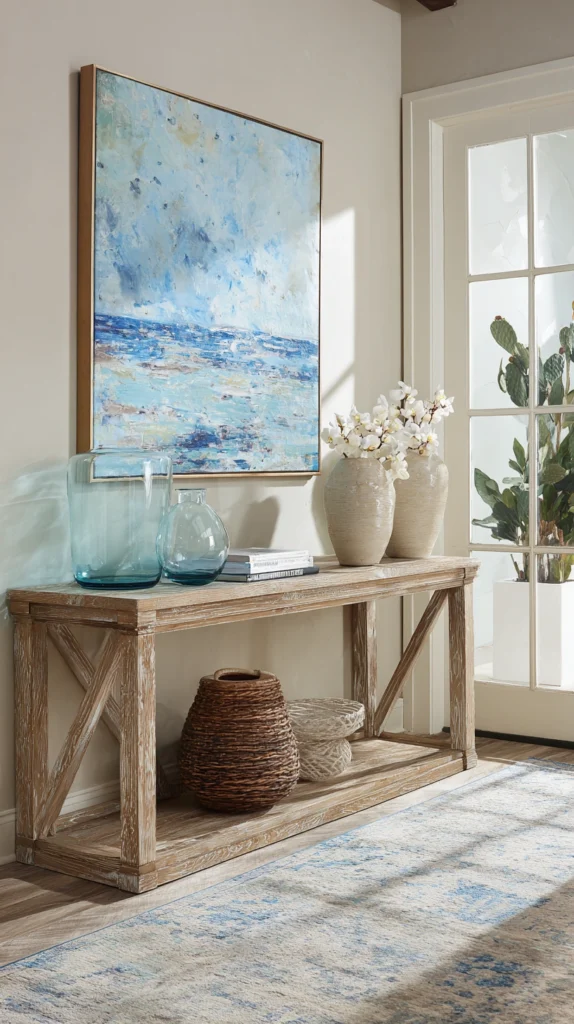
A console table styled with coastal references — not a themed nautical display, not a lighthouse and rope assembly, but a considered selection of materials that suggest the coast through texture and tone — creates a summer association that is specific enough to feel intentional and restrained enough to remain sophisticated. White and cream ceramics, a large piece of driftwood, a glass bottle with a single stem, a bowl of sea glass or smooth white pebbles.
Driftwood costs nothing if collected from a beach. Sea glass is free from the same source. A white ceramic vessel costs $10–$30. The coastal reference is effective precisely because it avoids the obvious — no anchors, no rope, no lighthouse imagery — and instead uses the materials of the coast — wood smoothed by water, glass worn by the sea, pebbles shaped by decades of wave action — as the styling language.
Style tip: Keep the coastal reference to materials and textures rather than imagery. A driftwood piece and a bowl of sea glass communicate the coast through what they are rather than what they represent; a decorative seagull and a rope-wrapped candleholder communicate it through what they depict. The former reads as collected and considered; the latter reads as purchased and themed.
11. The Architectural Foliage Stem
Budget: $10 – $50
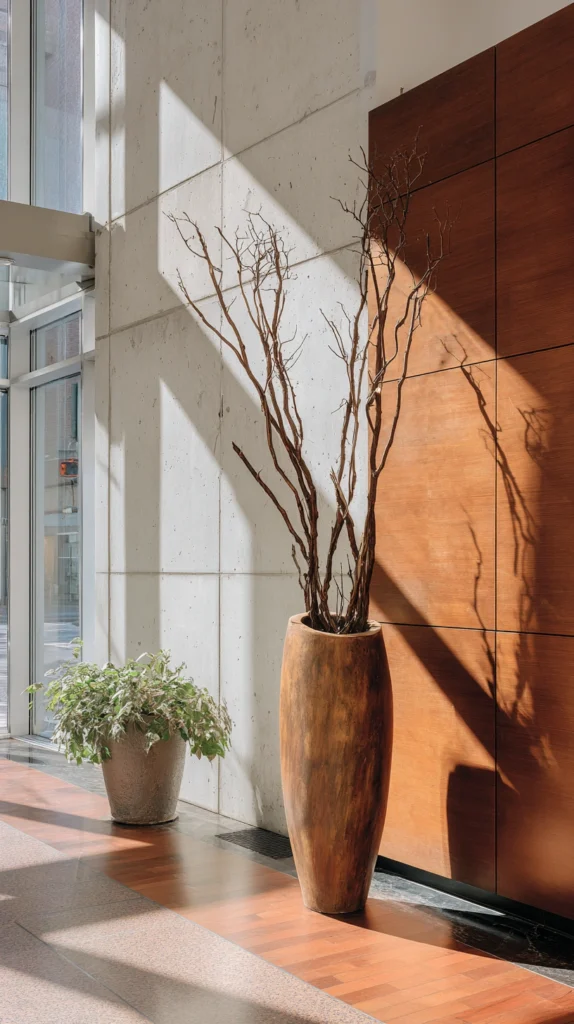
A single architectural foliage stem — one branch of eucalyptus, one stem of tropical leaf, one length of dried pampas grass, one cutting of large-leafed philodendron — in a simple tall vase provides a console table presence of scale and drama at a cost and a complexity that a full floral arrangement requires many times over. The single stem makes the argument that one good thing in the right vessel is always more interesting than many average things grouped together.
A eucalyptus branch from a florist costs $3–$8. A dried pampas stem runs $5–$12. A large-leafed cutting from an indoor plant costs nothing. A tall, simple vase in ceramic or clear glass to hold it runs $10–$30. The vase height matters as much as the stem height — a stem that rises 30–40 centimetres above the vase opening reads as architectural; one that barely clears the rim reads as insufficient.
Style tip: Change the single stem every two to three weeks rather than replacing it only when it deteriorates. A fresh eucalyptus branch on a console table releases a light fragrance for the first week that a dried-out stem cannot replicate, and the act of replacing it keeps the console table actively considered rather than passively occupied. The replacement is the ongoing styling practice rather than the occasional maintenance task.
12. The Ceramic Collection
Budget: $20 – $150
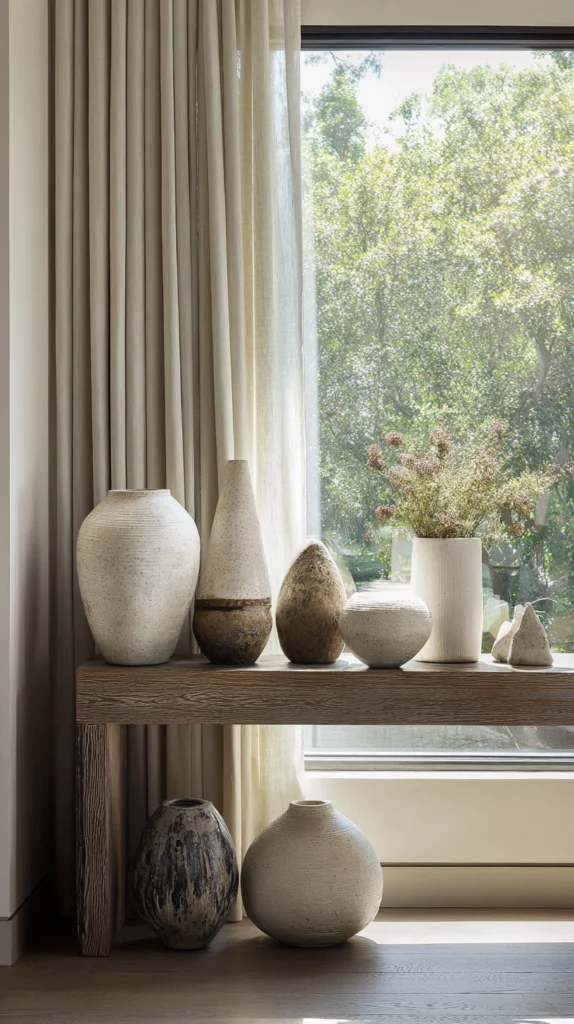
A small collection of ceramics — three to five pieces in a consistent colour family, varied in form but unified in material — arranged on the console table as a composed grouping creates one of the most enduring and most refined styling approaches available. Ceramics in a light interior suit summer because their surfaces catch and reflect light differently from every angle and as the sun moves through the day, and a group of ceramics on a well-lit console table is never entirely static.
Hand-thrown or studio ceramics cost $15–$50 each from local makers and markets. Mass-produced ceramics in similar tones run $8–$25 each. Vary the forms — a tall cylinder, a wide shallow bowl, a small rounded vessel — while keeping the colour family consistent. Three ceramics in varying forms in related tones read as a collection; three ceramics in identical forms in identical colours read as a set placed rather than a collection assembled.
Style tip: Position the ceramic collection so the tallest piece is at the back and the smallest at the front, with the medium piece slightly offset to one side rather than centred between them. The offset placement of the middle piece gives the grouping a three-dimensional quality and prevents the arrangement from reading as a height-graduated line, which is the least interesting version of a ceramic display regardless of how good the individual pieces are.
13. The Trailing Vine Display
Budget: $15 – $60
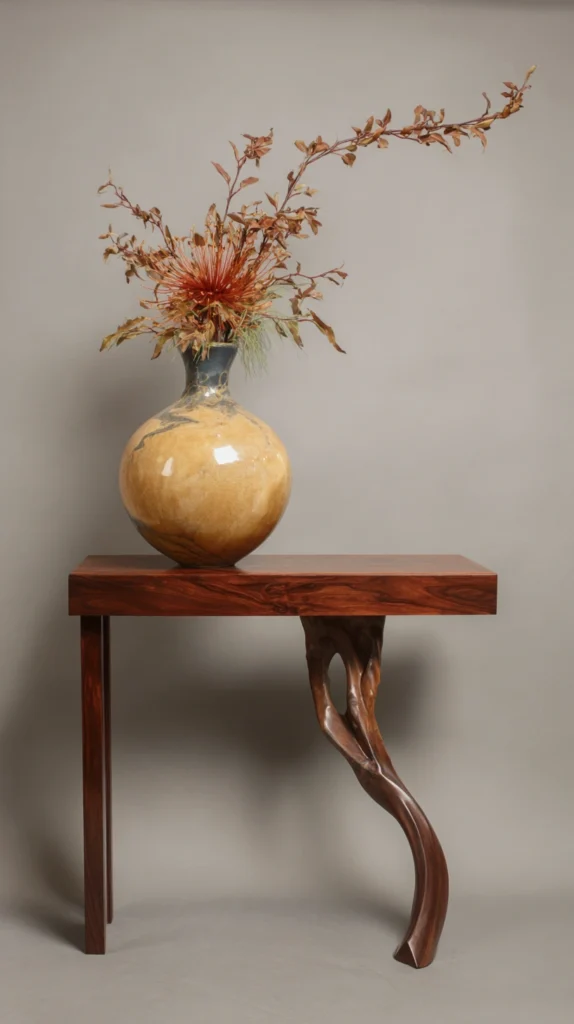
A trailing plant — a pothos, a string of pearls, a tradescantia, a heartleaf philodendron — placed in a vessel at one end of the console table with its trailing stems allowed to fall naturally over the edge and toward the floor creates a console table display of living generosity that no static object can replicate. The trailing vine changes every week as new growth extends and the stems find their natural fall, and the movement of the leaves in any air movement gives the console table a vitality that styled objects alone cannot achieve.
A trailing pothos in a 12-centimetre pot costs $8–$20. A heartleaf philodendron runs $10–$25. A ceramic or woven pot in a colour that suits the interior costs $15–$35. Do not train or tuck the trailing stems — allow them to fall in their natural direction. A trailing plant whose stems have been arranged reads as controlled; one whose stems fall naturally reads as alive.
Style tip: Position the trailing plant at the end of the console table rather than the centre so the trailing stems fall over the side rather than pooling on the table surface. A vine trailing over the edge of a console table creates a vertical dimension to the display and connects the table surface to the floor below it; the same vine in the centre of the table trails onto the table surface, which is a less elegant and less interesting direction for the growth to go.
14. The Scented Summer Moment
Budget: $15 – $60
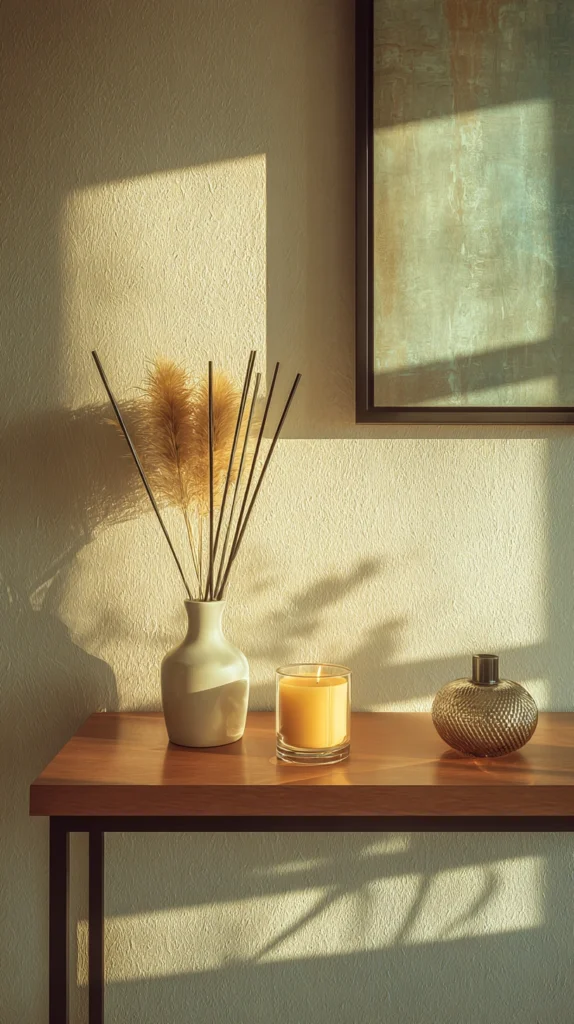
A scented candle or a small reed diffuser placed on the console table in a summer fragrance — citrus, white flowers, cut grass, warm linen — gives the room a scent that registers before the visual styling does. The first impression of any room is olfactory rather than visual, and a console table that contributes a light summer scent to the hallway or living room it sits in is doing something that all the visual styling in the world cannot replicate through the eyes alone.
A quality summer-scented candle costs $10–$35. A reed diffuser in a light floral or citrus fragrance runs $12–$40. Place the scent source near the natural air movement in the room — by the window, near the door — rather than in a still corner where the fragrance concentrates without dispersing. A scent source in moving air scents the room; one in still air scents itself.
Style tip: Use a lighter, more delicate fragrance for a console table than for a dedicated candle display elsewhere in the room. A console table is passed rather than sat beside, and the fragrance it carries should be discoverable rather than declarative — noticed with pleasure as you pass, present without demanding attention, the olfactory equivalent of a well-chosen detail rather than a statement piece.
The best summer console table is not the most styled one or the most carefully assembled one — it is the one that makes each passing glance feel like a small acknowledgement of the season. A branch of eucalyptus in the right vase, a bowl of sea glass collected somewhere specific, three ceramics in tones that the afternoon light reaches at four o’clock.
Small things, placed with consideration, changed often enough to stay alive. That is what a console table in summer is for, and it asks almost nothing beyond attention.