14 Fall Bedroom Updates for the Coziest Sleep Season
14 Fall Bedroom Updates for the Coziest Sleep Season
A bedroom built for summer sleep and a bedroom built for fall sleep are solving two different problems. Summer bedding is designed to keep a body cool through warm, often humid nights. Fall asks for the opposite: warmth that can be added in layers as the temperature drops through the evening, air that isn’t drying out from early heating use, and a room that feels like a genuine retreat once the days get shorter and darker earlier.
Most of what makes a fall bedroom update effective isn’t dramatic. It’s a handful of layering and lighting adjustments that directly address how sleep actually changes with the season — cooler nights, drier indoor air, and more hours spent in the dark. A few of these updates matter more for comfort than for appearance, though most manage to improve both at once.
Here are 14 ways to bring a bedroom into its coziest, best-for-sleep fall configuration.
Why a Summer Bedroom Setup Falls Short Once the Weather Turns
The single-layer bedding problem:
Without layered bedding:
- A lightweight summer duvet or a single flat sheet setup, insufficient once nighttime temperatures drop
- No easy way to add or remove warmth as the temperature fluctuates through a fall night
- The result: either too cold to sleep comfortably, or overheated under emergency extra blankets pulled from a closet
With layered bedding:
- A base sheet set, a mid-weight duvet, and an additional throw or blanket that can be added or removed
- The result: warmth adjustable throughout the night without needing to fully change the bedding setup
The dry-air problem:
- Indoor heating, once it starts running through fall, significantly reduces indoor humidity
- No humidity management in place, leading to dry skin, irritated sinuses, and disrupted sleep
- The result: a room that’s warm enough but still uncomfortable due to air quality rather than temperature alone
The early-darkness lighting mismatch:
- Bedroom lighting unchanged from summer, when evening light lasted much later into the day
- The result: earlier darkness catches the room without an adjusted lighting plan, leading to either too much bright light too late, or an underlit room that doesn’t support winding down
The Five Cozy Fall Sleep Principles
Before choosing any individual update below, these five principles address the specific ways fall changes what a bedroom needs:
Bedding built for layering, not a single fixed weight:
- A base sheet, a mid-weight duvet, and an easily added or removed throw
- Nighttime temperature swings through fall are wider than in summer, and adjustable bedding accommodates that variability
Humidity management as the season’s heating begins:
- A humidifier or other moisture source, addressing the dry air that comes with increased indoor heating
- An often-overlooked factor in fall sleep quality, distinct from temperature alone
Warm light and an earlier wind-down lighting plan:
- Dimmable, warm-toned lighting that supports an earlier transition into a restful state as daylight hours shrink
- A room lit the same way it was in summer doesn’t account for the psychological shift earlier darkness brings
Texture and warmth underfoot and within reach:
- Rugs, throws, and slippers positioned for immediate use getting in and out of bed
- Small comfort details disproportionately affect how a cold morning or evening actually feels
A calming scent and sensory layer:
- A candle or diffuser in a season-appropriate scent, supporting the room’s overall wind-down function
- One of the lowest-cost, highest-sensory-impact additions on this list
1. A Flannel or Heavier Weave Sheet Set
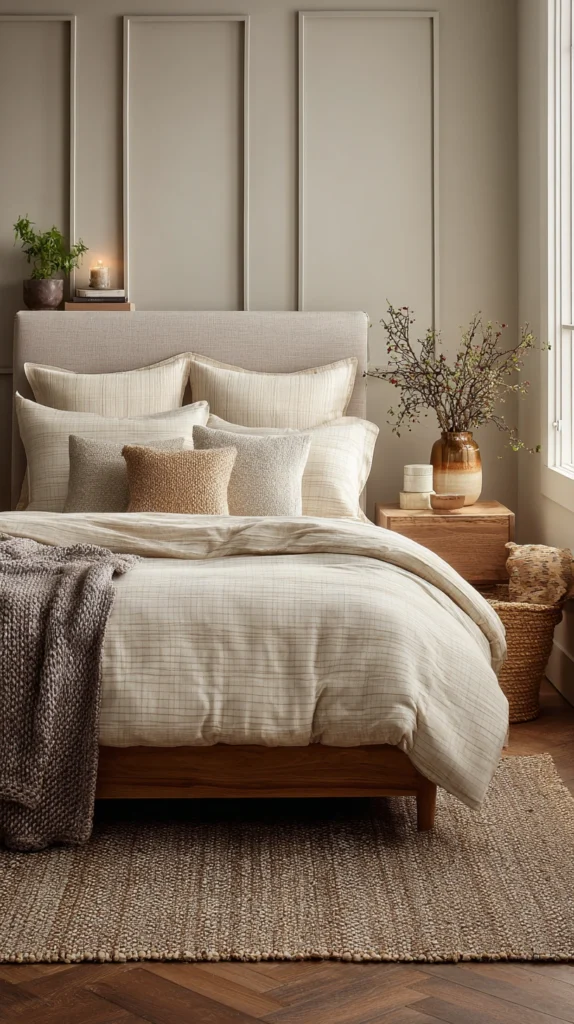
Flannel or a heavier weave cotton sheet set, replacing lightweight percale or a cooling summer fabric, for genuine warmth against the skin through colder nights.
Why sheet weight matters as much as the duvet on top
Sheets are in direct contact with skin throughout the night, and a lightweight summer sheet under a heavier duvet can still leave the sleeping surface itself feeling cool. Flannel or a heavier brushed cotton addresses this directly, warming the layer closest to the body rather than relying solely on the duvet above.
Selection
- Flannel rated by weight (measured in ounces per square yard) rather than thread count, since flannel quality is assessed differently than standard cotton
- A brushed cotton sateen as a slightly lighter alternative for those who find flannel too warm for their personal preference
Cost breakdown
- Flannel or heavy-weave sheet set: $50–90
- Total: $50–90
2. A Layered Duvet and Blanket System
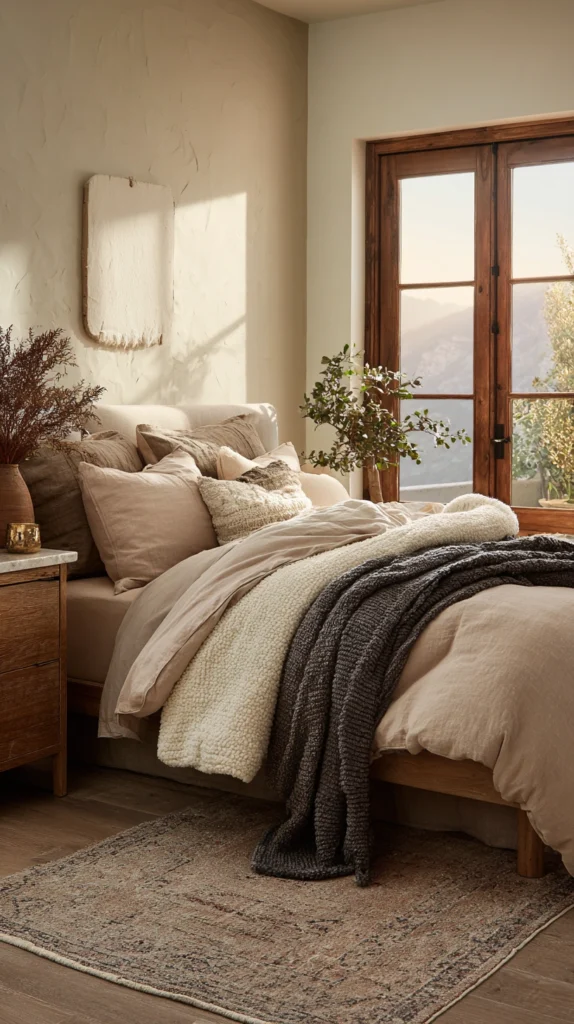
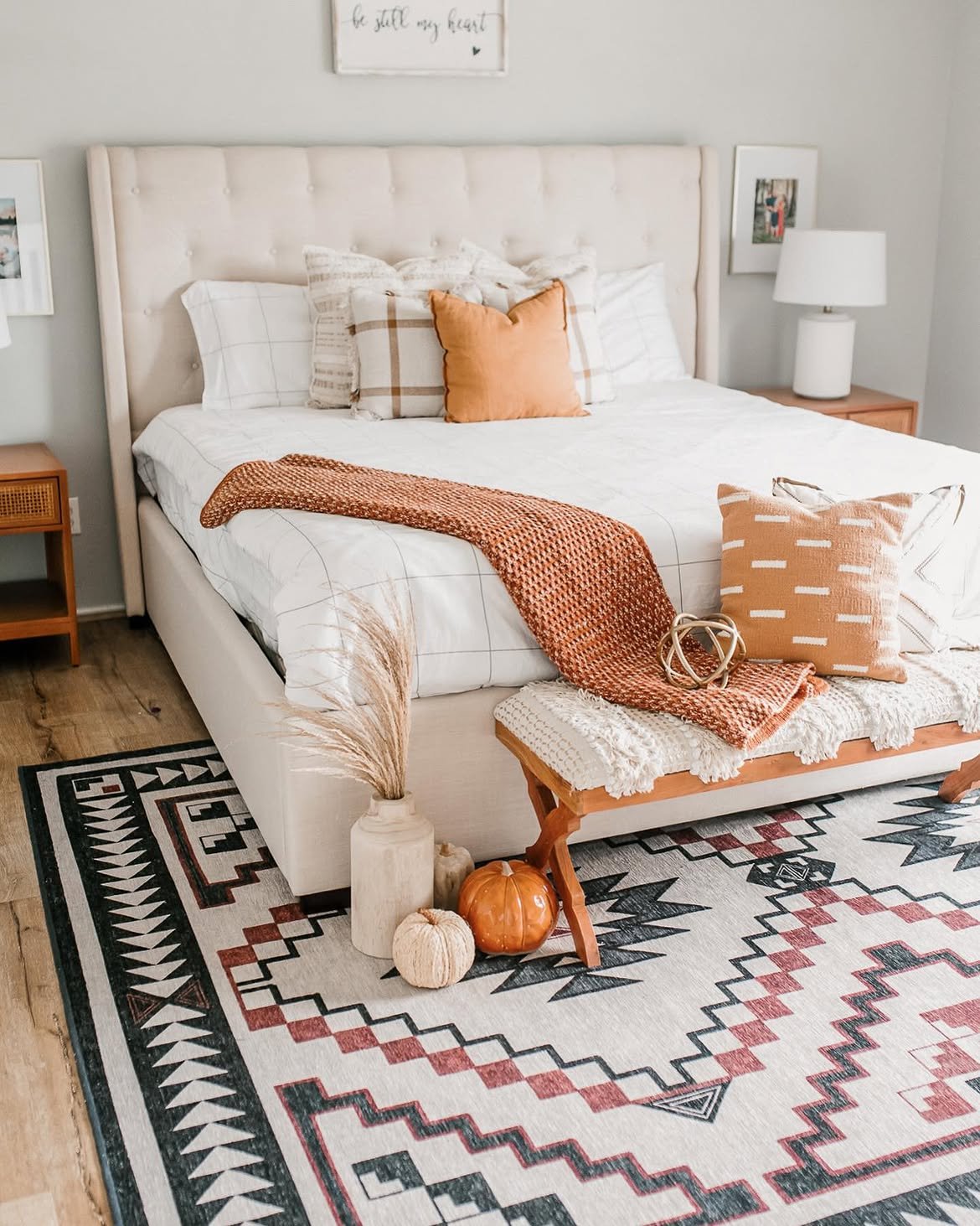
A mid-weight duvet paired with an additional wool or knit blanket that can be added on especially cold nights and removed on milder ones, rather than a single fixed-weight duvet meant to handle the entire season alone.
Why a layered system outperforms one heavier duvet
A single heavy duvet, chosen to handle the coldest nights of the season, is often too warm on the season’s milder evenings, disrupting sleep in the opposite direction. A layered system allows the same bed to adjust across the full range of fall temperatures without needing to swap the entire bedding setup repeatedly.
Building the layers
- A mid-weight duvet (400–600 fill power, if down or down-alternative) as the constant base layer
- An additional wool or heavy knit blanket, folded at the foot of the bed and pulled up as needed
Cost breakdown
- Mid-weight duvet: $80–160
- Wool or knit blanket: $50–90
- Total: $130–250
3. A Warm Throw at the Foot of the Bed
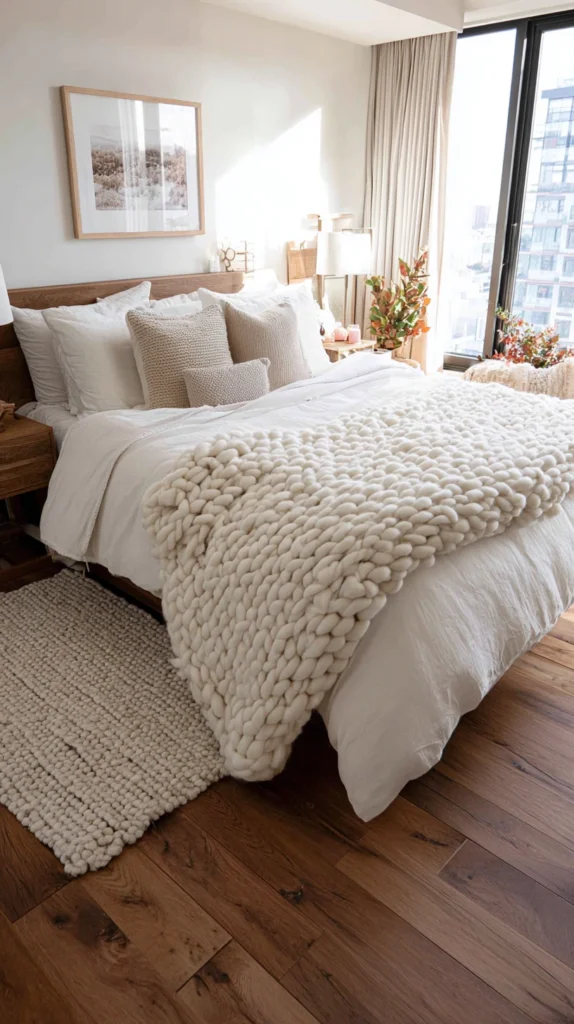
A single heavy knit or wool throw, folded or draped at the foot of the bed, providing an easily accessible extra layer without disrupting the bed’s main styling.
Why this specific placement matters
A throw within immediate reach at the foot of the bed can be pulled up in the middle of the night without needing to get up or search elsewhere, addressing exactly the kind of mid-sleep temperature adjustment fall’s variable nights often require.
Selection and styling
- A chunky knit or wool throw, substantial enough for genuine warmth rather than a purely decorative thin throw
- Folded in thirds and draped across the width of the bed’s foot, rather than bunched to one side
Cost breakdown
- Heavy throw: $40–75
- Total: $40–75
4. A Fall-Scented Diffuser or Candle
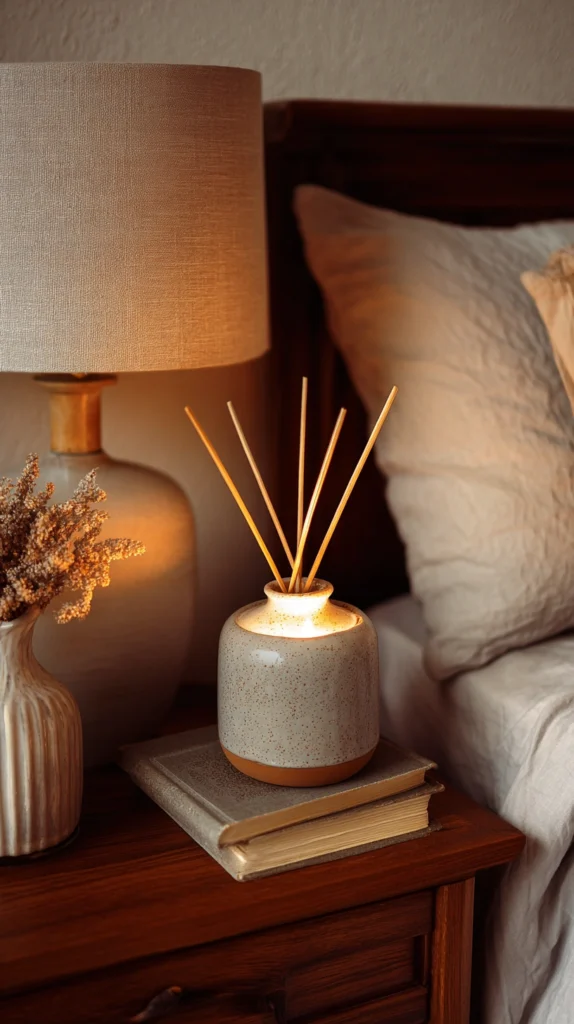
A subtle, warm-scented candle or reed diffuser, positioned on a dresser or nightstand, supporting the room’s overall wind-down atmosphere as evenings grow longer and darker.
Why scent supports sleep quality indirectly
While scent alone doesn’t directly cause better sleep, a consistent, calming scent associated specifically with the bedtime routine can function as a psychological cue that it’s time to wind down, similar to the association many people build with a specific tea or a consistent evening routine.
Selection and placement
- A calming, less energizing scent (cedar, chamomile, or a light spice) rather than an invigorating citrus or mint, which can work against a wind-down goal
- A reed diffuser is a safer, maintenance-free option for a bedroom left unattended overnight compared to an open flame
Cost breakdown
- Candle or reed diffuser: $18–35
- Total: $18–35
5. Blackout or Heavier Curtains
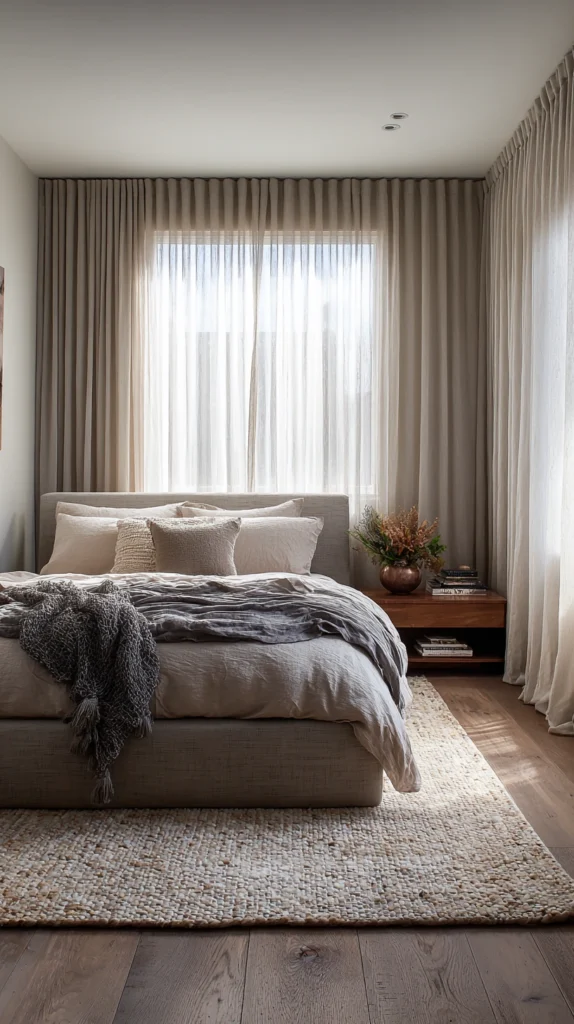
Full-length, heavier curtains with a blackout or thermal lining, replacing lighter summer curtains or sheers, addressing both earlier morning light and additional insulation.
Why curtain weight becomes more relevant specifically in fall
As the season progresses toward shorter days, morning light arrives at inconsistent and often earlier times relative to a normal wake schedule, and blackout lining helps maintain a consistent, undisturbed sleep environment regardless of the sunrise time. The added fabric weight also provides some genuine insulation against a colder window.
Selection
- A blackout or thermal-lined curtain, in a heavier base fabric (velvet or a lined cotton-linen blend)
- Hung close to the ceiling and extending beyond the window frame on both sides for maximum coverage and insulation
Cost breakdown
- Blackout or thermal curtain panels (pair): $50–110
- Total: $50–110
6. A Layered Rug for Warmth Underfoot
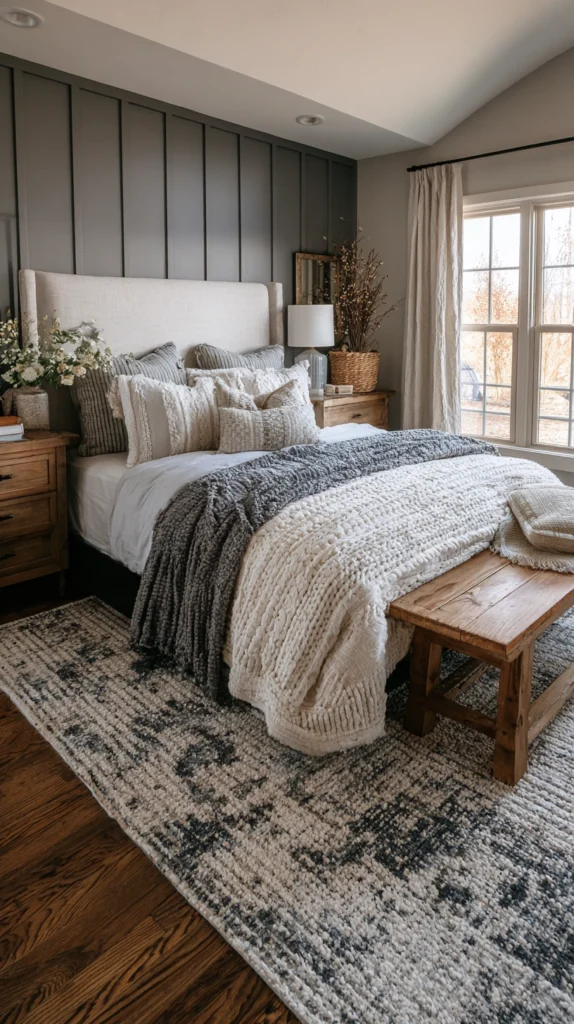
An area rug, or a base and top rug layered together, positioned beside the bed, adding warmth for bare feet on the floor first thing in the morning or last thing before bed.
Why this small addition matters disproportionately
The first and last physical sensation of a day often involves feet touching the bedroom floor, and a cold hard floor in early fall or winter is a small but consistently unpleasant part of that routine. A rug addresses this specific, easily overlooked discomfort directly.
Sizing and placement
- Positioned on both sides of the bed if space allows, or centred beneath the foot of the bed at minimum
- A higher pile for maximum warmth and softness underfoot, rather than a thin flatweave
Cost breakdown
- Bedside area rug: $60–130
- Total: $60–130
7. A Warm-Toned Reading Light Swap

Bedside lamps or sconces swapped to warm 2700K bulbs, if not already at this temperature, supporting the earlier wind-down the season’s shorter days call for.
Why light temperature matters more as evenings lengthen
With more time spent in artificial light as daylight hours shrink, the colour temperature of that light has a larger cumulative effect on the evening’s overall mood and the body’s natural wind-down process. A cool or daylight-toned bulb in a fall bedroom actively works against the earlier, more gradual transition into rest the season supports.
Specification
- 2700K or below for all bedside lighting, avoiding anything marketed as “daylight” or “cool white”
- A dimmable option, if available, for further control over the evening’s gradual lighting transition
Cost breakdown
- Warm-temperature LED bulbs (2, for a pair of bedside lamps): $10–16
- Total: $10–16
8. A Small Bedroom Humidifier

A humidifier positioned on a dresser or nightstand, addressing the drop in indoor humidity that comes with the start of the heating season.
Why humidity affects sleep quality as directly as temperature
Heated indoor air holds significantly less moisture than unheated air, and the resulting dryness can cause irritated sinuses, dry skin, and a scratchy throat, all of which disrupt sleep quality even when the room’s temperature itself is perfectly comfortable. A humidifier addresses this specific, often unrecognized fall sleep disruptor.
Placement and maintenance
- Positioned a few feet from the bed rather than directly beside it, to avoid excess moisture on nearby fabric or wood surfaces
- Requires regular cleaning to prevent mineral buildup or mold growth, an ongoing maintenance consideration worth factoring into the decision
Cost breakdown
- Small bedroom humidifier: $30–60
- Total: $30–60
9. A Wool Mattress Topper
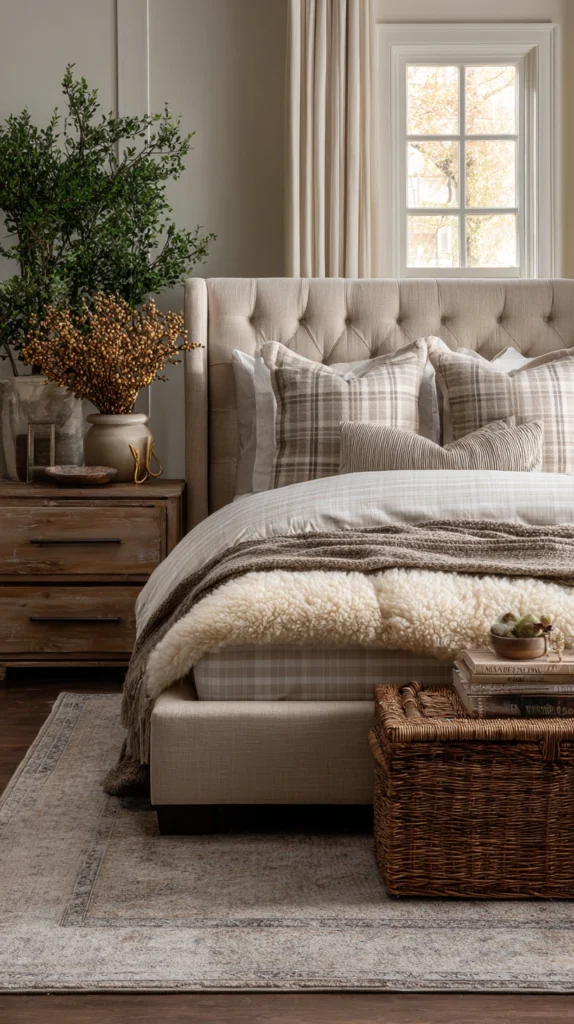
A wool mattress topper, added beneath the fitted sheet, providing both additional cushioning and a natural insulating layer that helps retain body heat through the night.
Why wool specifically suits this seasonal function
Wool has natural insulating properties, trapping warmth more effectively than many synthetic topper materials while still allowing some breathability, avoiding the overheating that a fully non-breathable topper material can cause partway through the night.
Selection
- A wool topper rated for the mattress’s actual size, secured with elastic corner straps to prevent shifting
- Paired with the flannel or heavier sheet set from Idea #1 for a fully layered warm sleeping surface
Cost breakdown
- Wool mattress topper: $100–220
- Total: $100–220
10. A Seasonal Pillow Cover Swap

Decorative pillow covers changed to warmer tones and heavier textures — velvet, corduroy, or a chunky knit — replacing lighter summer covers, both for warmth and visual seasonal signal.
Why pillow covers are a fast, low-cost seasonal marker
Unlike bedding changes made primarily for warmth, a decorative pillow swap serves mostly as a visual and tactile seasonal signal, reinforcing the sense that the room has genuinely transitioned into fall, at one of the lowest costs and lowest effort levels of any update on this list.
Selection
- Two to three covers in warm, heavier textures, avoiding a wholesale replacement of every decorative pillow at once
- Colours drawn from the season’s typical warm palette — rust, olive, warm brown — or a more neutral warm cream depending on the room’s existing scheme
Cost breakdown
- Decorative pillow covers (2–3): $35–65
- Total: $35–65
11. A Robe and Slipper Hook by the Bed
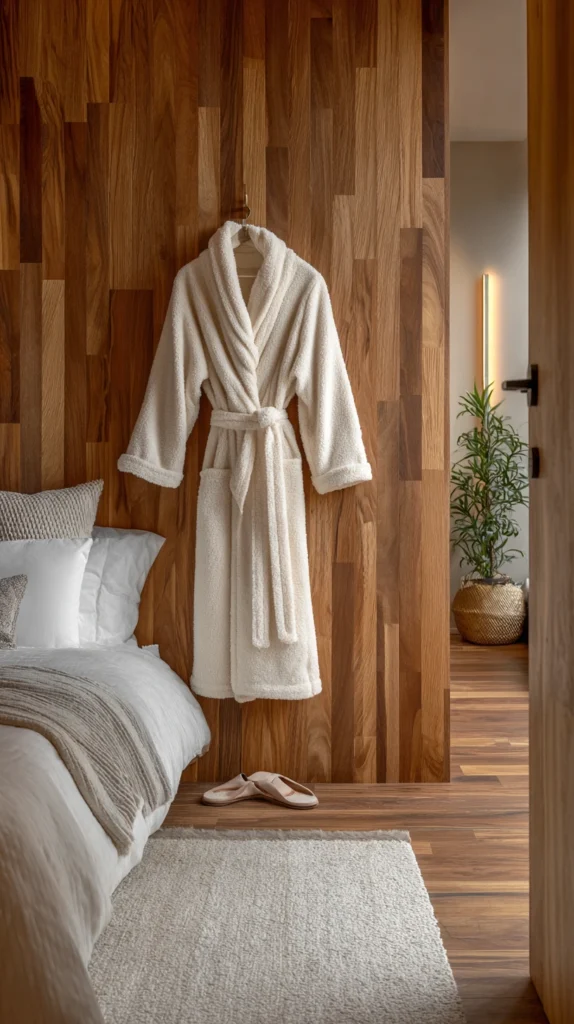
A small hook mounted near the bed, holding a robe and slippers for immediate access on getting up, particularly valuable for the first cold step out of bed on a fall or winter morning.
Why proximity matters for this specific daily moment
The moment of getting out of a warm bed into a colder room is one of the more consistently unpleasant transitions in a daily routine through the colder months, and having a robe and slippers within immediate reach — rather than stored in a closet across the room — meaningfully softens that transition.
Placement
- A small hook mounted on the wall beside the bed, or on the inside of a nearby closet door if wall space isn’t available
- Positioned low enough to reach without needing to fully stand up first
Cost breakdown
- Small wall hook: $8–15
- Total: $8–15
12. Warm Wood Nightstand Styling
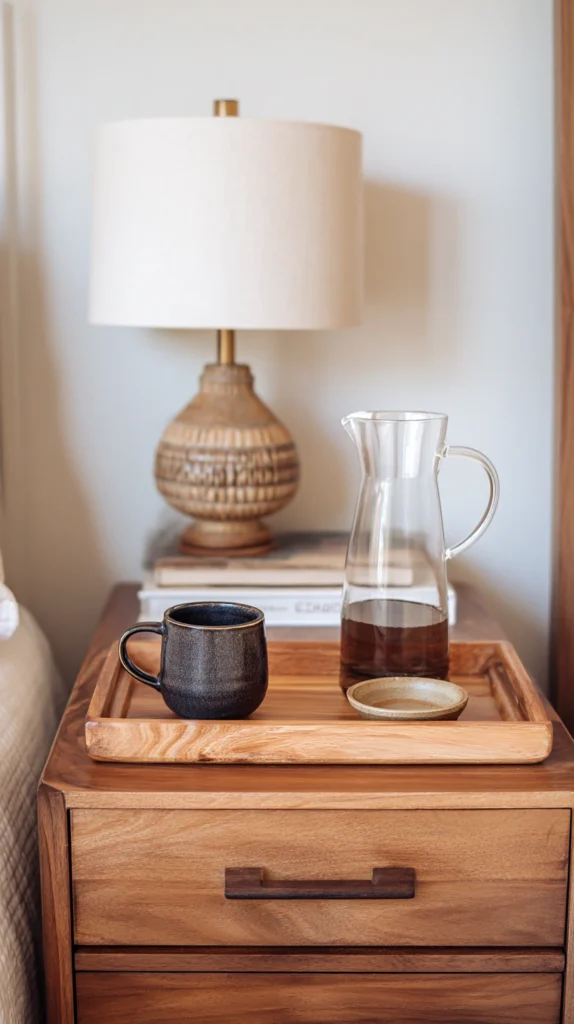
The nightstand styled with warm wood-toned accessories — a small tray, a wood-based lamp, a ceramic mug for water — reinforcing the room’s overall warmth at the point of most frequent nightly interaction.
Why the nightstand deserves specific seasonal attention
The nightstand is touched and viewed more consistently throughout the night and morning than almost any other surface in the bedroom, making its material and styling more influential to the room’s overall feeling than its small size suggests.
Styling
- A small wood tray corralling a water glass, hand cream, and any nightly reading material
- A ceramic or ribbed glass water carafe, rather than a plastic bottle, for a more considered bedside presentation
Cost breakdown
- Wood tray and ceramic accessories: $25–50
- Total: $25–50
13. A Weighted Blanket Addition
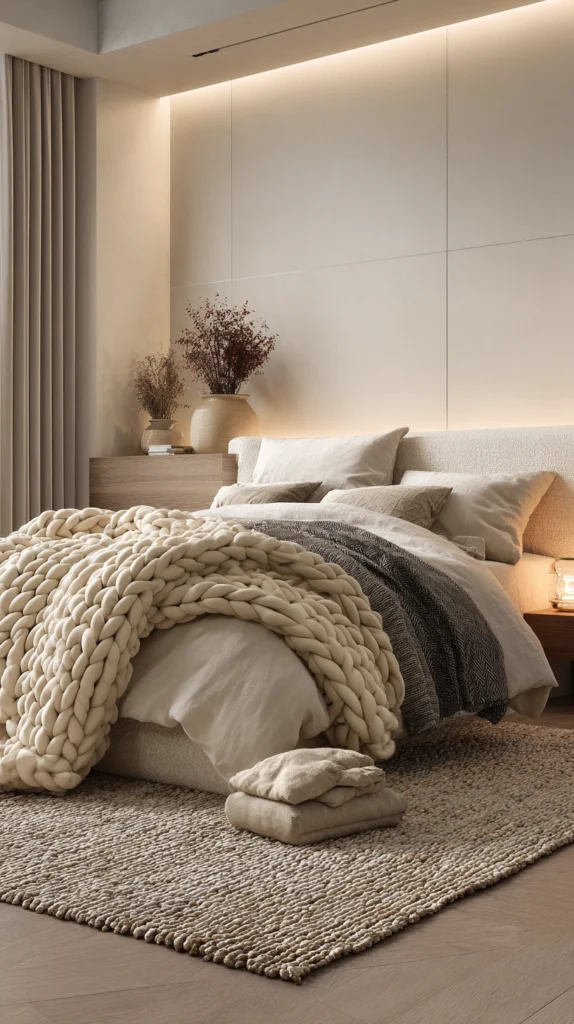
A weighted blanket, added as an additional or alternative layer to the standard duvet, providing both warmth and a gentle, calming pressure some people find supportive for falling and staying asleep.
Why a weighted blanket suits the season specifically
Beyond its general sleep-support benefits, a weighted blanket adds genuine warmth without necessarily adding bulk, since its weight comes from evenly distributed filling rather than the thick loft of a heavier duvet, making it a useful addition for anyone wanting extra warmth without an overly bulky bedding stack.
Selection
- Weight generally recommended at roughly 10% of body weight, though personal preference varies
- A removable, washable cover in a texture consistent with the room’s overall fall palette
Cost breakdown
- Weighted blanket: $60–130
- Total: $60–130
14. The Complete Cozy Fall Bedroom Update

A bedroom updated with every principle above applied together — the definitive version of a fall sleep environment addressing temperature, air quality, light, and comfort all at once.
What separates the complete update from a single cozy addition
A bedroom with a beautiful new throw but the same summer sheets, no humidity management, and unchanged lighting still won’t deliver meaningfully better fall sleep, regardless of how visually cozy that one addition looks. The complete version resolves every actual sleep-quality factor at once — bedding weight, air moisture, light temperature, and physical comfort — so the improvements are functional, not just seasonal decoration.
The elements of the complete update
The bedding layer:
- Flannel or heavy-weave sheets (Idea #1)
- A layered duvet and blanket system (Idea #2)
- A wool mattress topper (Idea #9)
- A throw at the foot of the bed (Idea #3)
- A weighted blanket, if desired (Idea #13)
The air and light:
- A small humidifier (Idea #8)
- Warm-toned bedside lighting (Idea #7)
- Blackout or thermal curtains (Idea #5)
The comfort details:
- A layered rug beside the bed (Idea #6)
- A robe and slipper hook (Idea #11)
- Warm wood nightstand styling (Idea #12)
The sensory and seasonal layer:
- A fall-scented diffuser or candle (Idea #4)
- Seasonal pillow covers (Idea #10)
The bedroom on an ordinary fall night:
The humidifier runs quietly on the dresser as the heating kicks on for the evening. The bed is layered enough to adjust through the night without waking up too warm or too cold, the throw at the foot pulled up around 3am without needing to fully wake. In the morning, feet land on the rug instead of the bare floor, and the robe is within reach on the hook by the bed before the first cold step across the room. Every layer of the update is doing real functional work, not just seasonal decoration.
Cost breakdown for the complete update
Assuming a starting point of a summer-configured bedroom:
- Sheets: $50–90
- Duvet and blanket: $130–250
- Mattress topper: $100–220
- Throw: $40–75
- Humidifier: $30–60
- Light bulbs: $10–16
- Curtains: $50–110
- Rug: $60–130
- Robe hook: $8–15
- Nightstand styling: $25–50
- Candle or diffuser: $18–35
- Pillow covers: $35–65
- Weighted blanket, if added: $60–130
Total: $616–1,246
Phased over two stages:
Stage one ($200–450):
- Sheets and duvet layer
- Humidifier
- Light bulb swap
Stage two ($400–800):
- Mattress topper
- Curtains and rug
- Remaining comfort and styling details
The complete cozy fall bedroom: not a seasonal decoration project, but a genuine adjustment to how the room supports actual sleep through the colder, darker months.
The Question Before Any Fall Bedroom Update
Before buying anything:
Is sleep quality itself currently a problem, or is the room just visually stuck in summer?
If the answer is: sleep quality — start with the humidifier, bedding weight, and light temperature; these address the actual physiological factors most likely disrupting rest through the season.
If the answer is: visually summer, but sleep itself is fine — the pillow covers, throw, and candle deliver the seasonal feeling without needing the more functional (and higher-cost) updates.
If the answer is: both — build the bedding and air quality foundation first, then layer in the styling details once the functional base is addressed.
If the answer is: budget-limited, one change at a time — the light bulb swap and a single throw deliver meaningful improvement for very little cost, making them a reasonable starting point regardless of the underlying issue.
The approach follows what’s actually affecting sleep versus what’s simply cosmetic, since fall bedroom updates split fairly clearly into these two categories. A beautifully restyled room that still runs cold and dry hasn’t solved the season’s actual sleep challenges.
Getting Started This Weekend
The immediate fall bedroom update:
Add one heavier throw and swap to warmer bedside bulbs.
The two lowest-cost, highest-impact changes available in a single afternoon.
Start running a humidifier, if the room doesn’t already have one.
Addresses a genuine, often overlooked source of fall sleep disruption.
Layer in a wool topper or heavier sheet set.
Confirms the bed’s actual temperature comfort before considering any further additions.
Add a rug or something soft underfoot beside the bed.
A small, low-cost comfort detail felt every single morning and evening.
The rest of the update: the elaboration of this weekend.
The layer: the beginning. The cozy fall bedroom: what a room becomes once it’s genuinely adjusted for the season’s sleep, not just its appearance.