14 Modern Mudroom Designs That Feel Clean and Elevated
14 Modern Mudroom Designs That Feel Clean and Elevated
My mudroom used to default to the same farmhouse formula every design site suggests, shiplap, hooks, a chalkboard sign, until it started to feel less like my house and more like a template everyone else’s mudroom was also using.
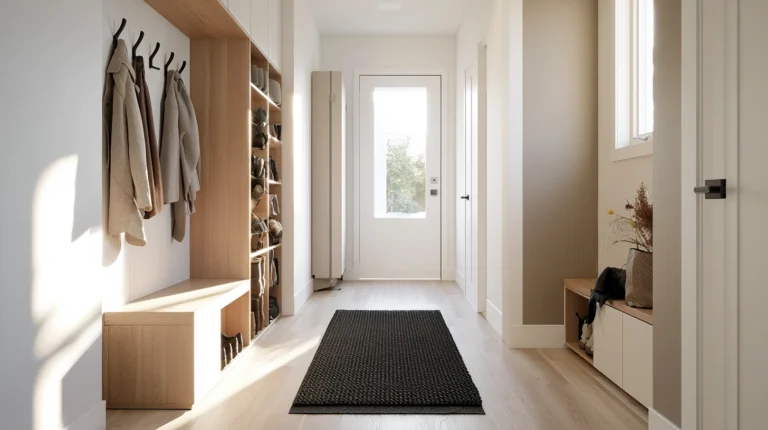
Then I started pulling references from modern kitchens and closets instead of other mudrooms specifically, clean lines, hidden storage, a tighter material palette, and the room finally felt like part of the rest of the house rather than a separate, more rustic add-on.
1. Use Slab-Front Cabinetry Instead of Paneled Doors
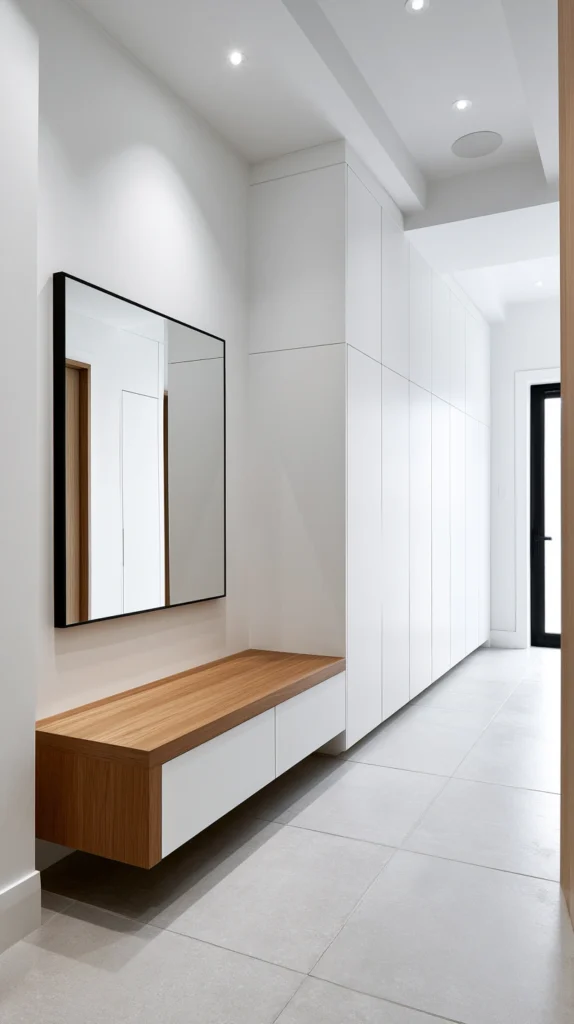
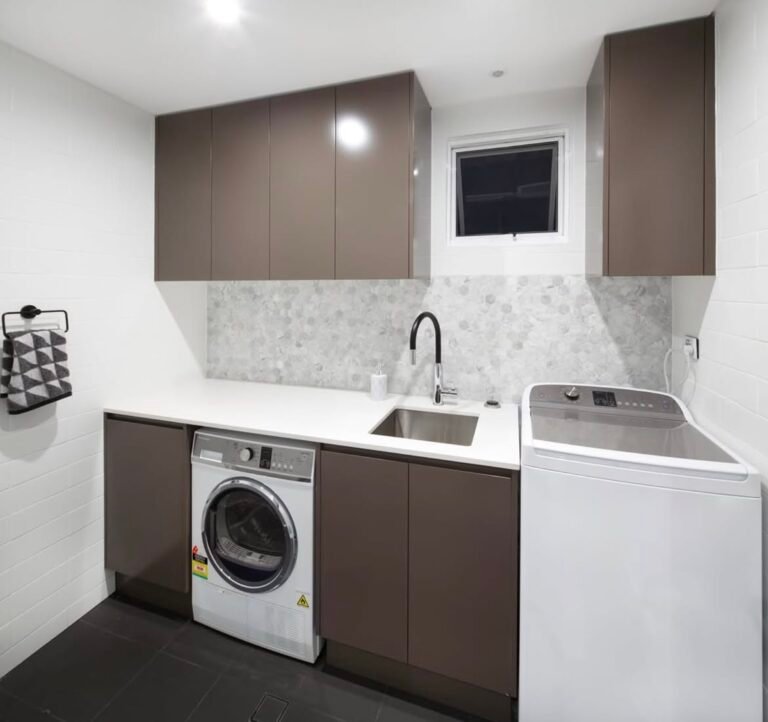
Flat, handleless slab cabinet fronts read as considerably more modern than the paneled, farmhouse-style doors most mudrooms default to, and they hide the same amount of storage behind a much cleaner face. Budget: $300-700 for a run of slab-front cabinetry, depending on size and material.
Choose a push-to-open mechanism if going fully handleless, which keeps the look uninterrupted without sacrificing easy access.
2. Choose One Material for Walls, Floor, and Built-Ins
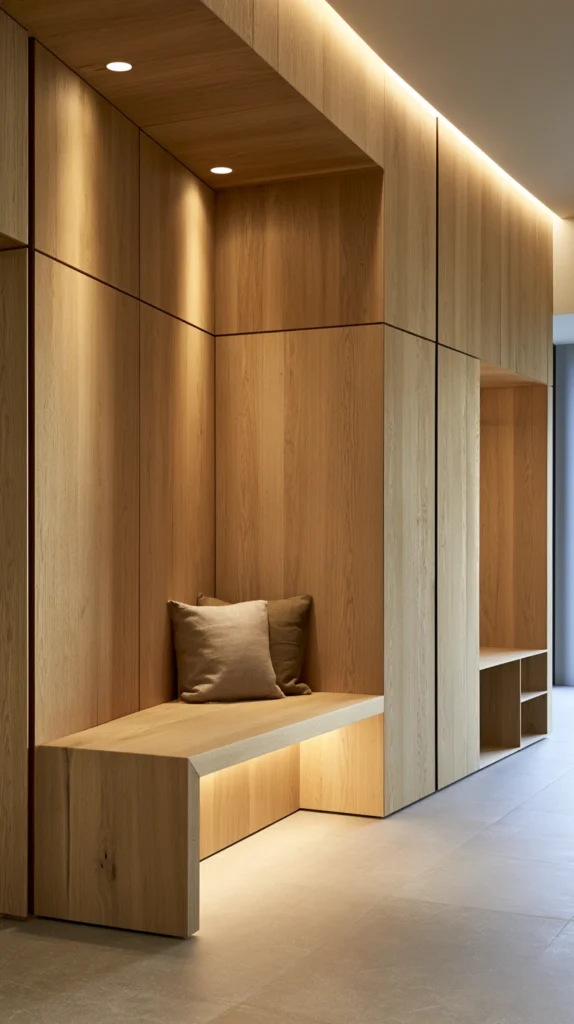
Repeating a single material family, like a warm oak used on both the bench and the flooring, ties the whole room together in a way that mixing several different woods, tiles, and finishes never quite achieves. Budget: variable depending on the material chosen, generally no added cost beyond planning the selection upfront.
Decide on the dominant material before selecting anything else, since every other choice should support it rather than compete with it.
3. Install Hidden Storage Behind a Full-Height Door
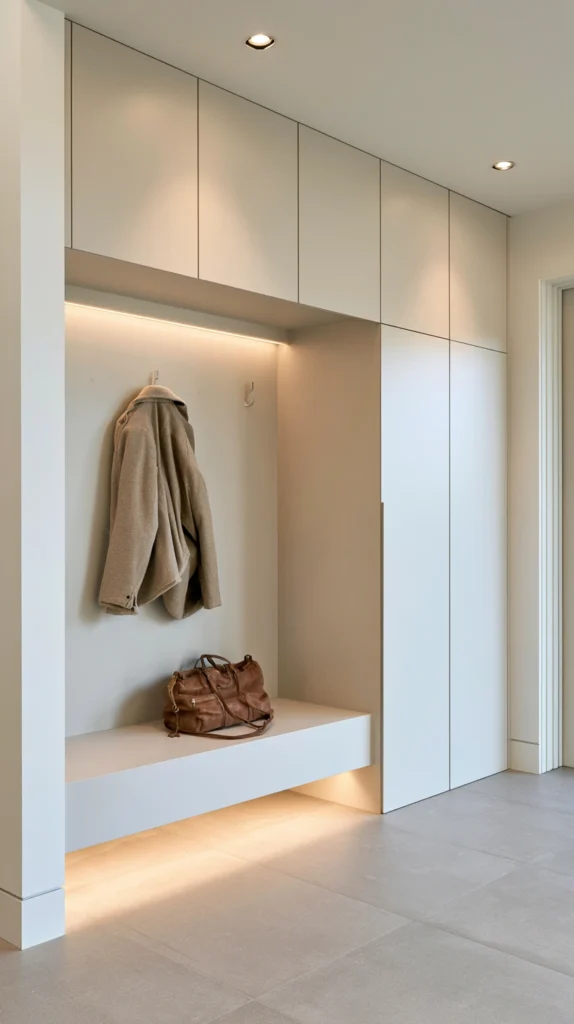
A full-height door, flush with the surrounding wall and without visible hardware, conceals an entire storage wall and reads as architecture rather than furniture, a hallmark of the cleaner, more minimal mudroom look. Budget: $400-900 for a custom flush door and the storage behind it.
Add a discreet pull or touch-latch mechanism specifically, since a visible handle on an otherwise seamless door undercuts the whole effect.
4. Use a Single Long Bench Instead of Individual Seats
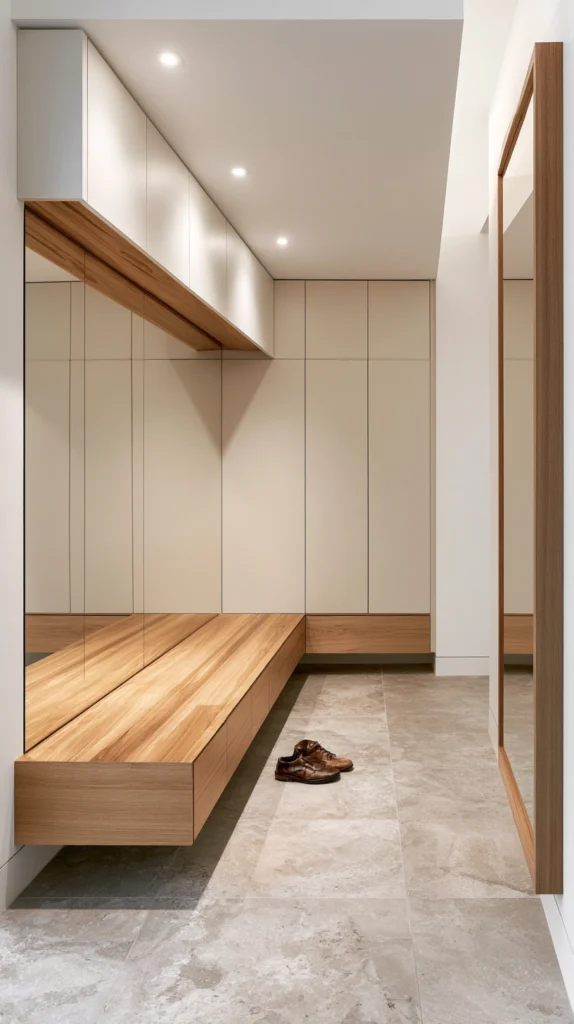
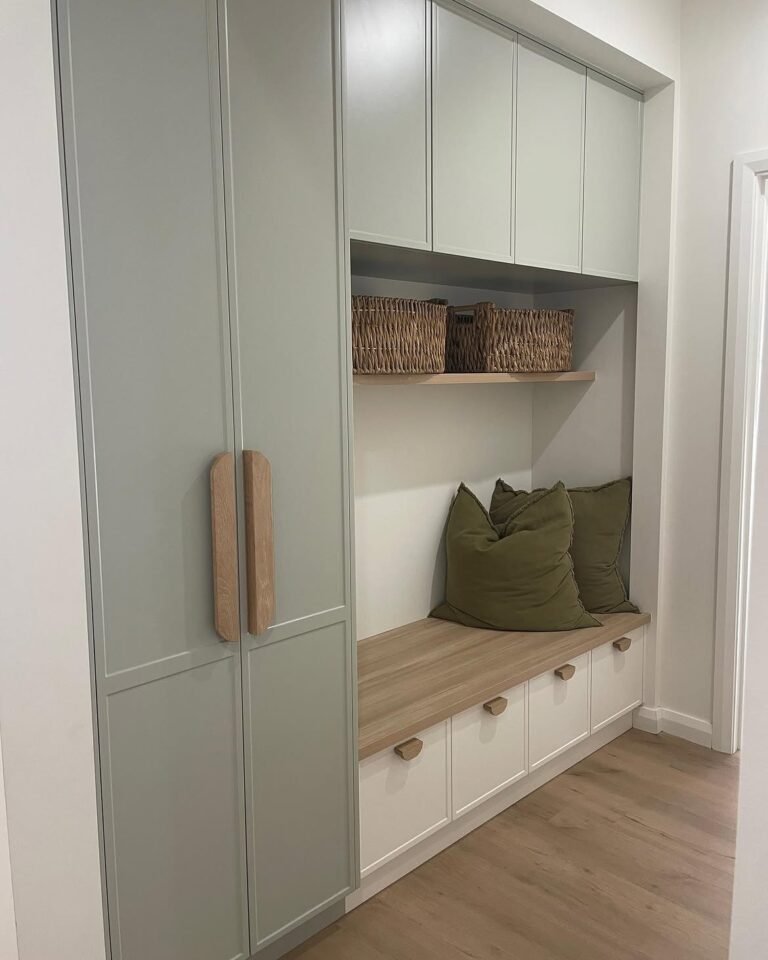
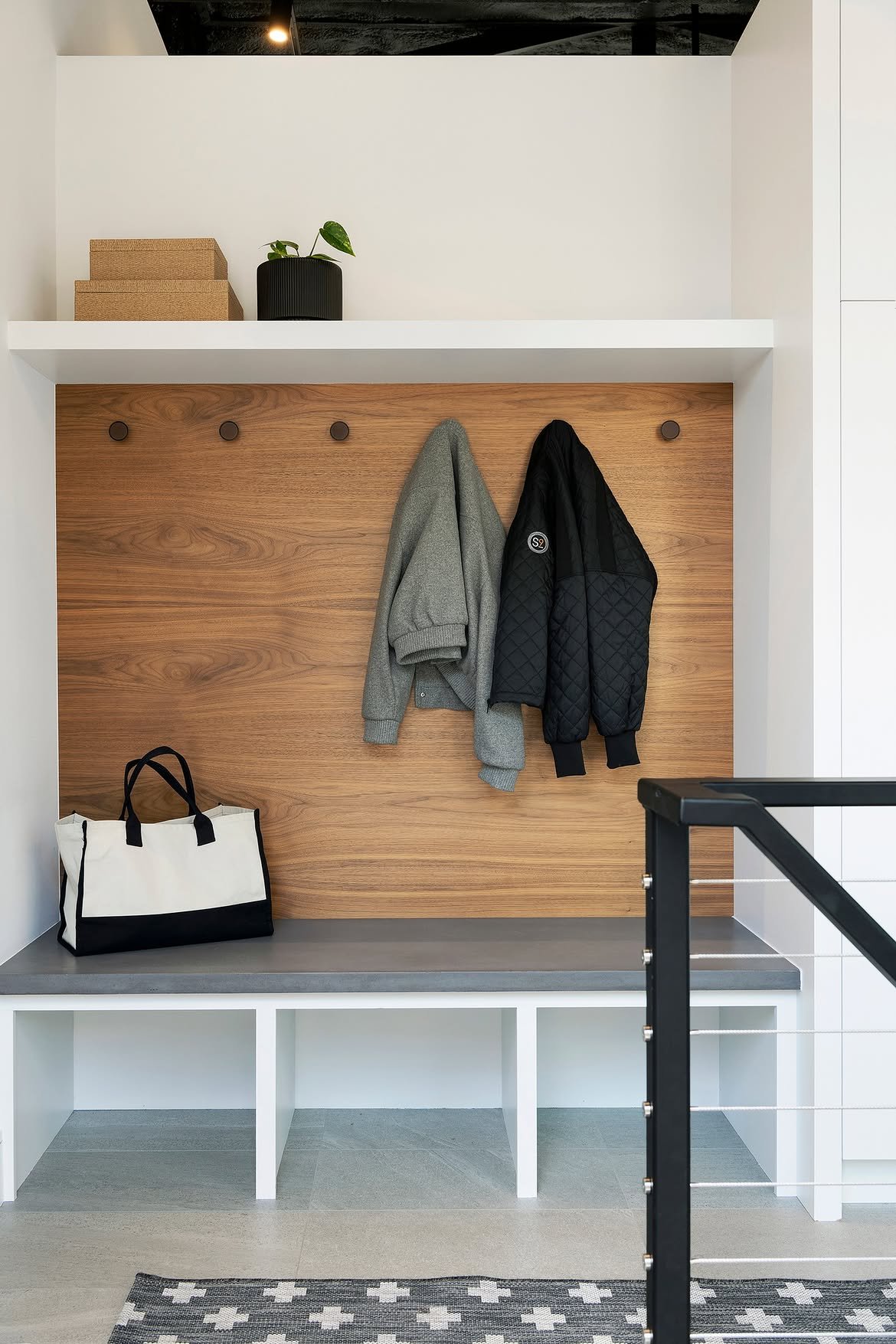
One continuous bench, running the full length of the room, looks more architectural and less furniture-like than several individual stools or chairs scattered along the wall. Budget: $200-500 for a custom or built-in bench.
Build storage directly into the bench itself rather than adding a separate cabinet, which keeps the room’s footprint tighter and the look more unified.
5. Choose a Monochrome or Tonal Color Palette
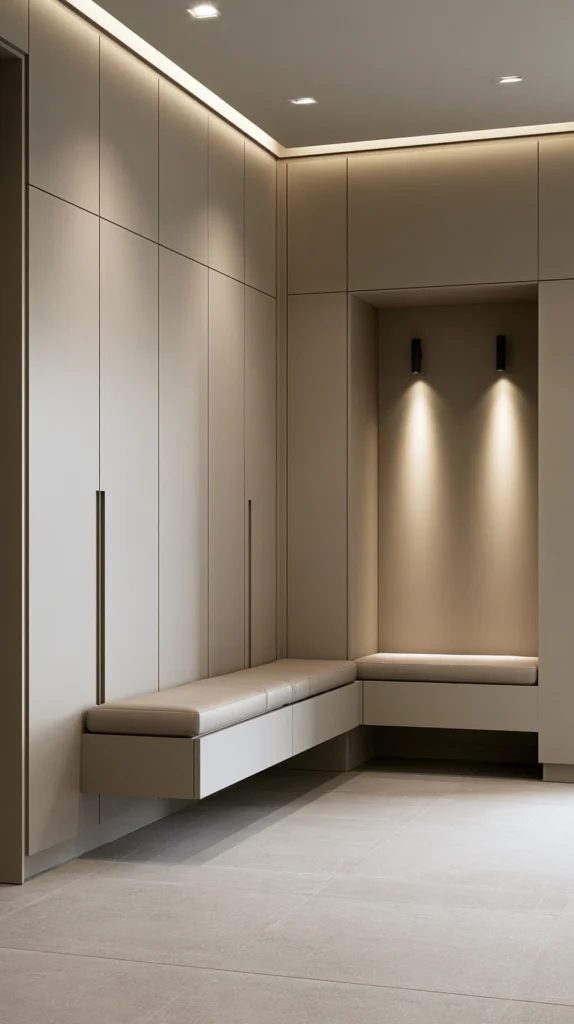
Sticking to varying shades of one color family, several tones of gray or warm beige, rather than introducing several different accent colors, gives a modern mudroom its characteristic calm, considered feel. Budget: $60-120 for paint across walls, trim, and cabinetry in a coordinated palette.
Vary the sheen level between surfaces, matte walls against a satin cabinet finish, for example, to add depth without needing to introduce a second color.
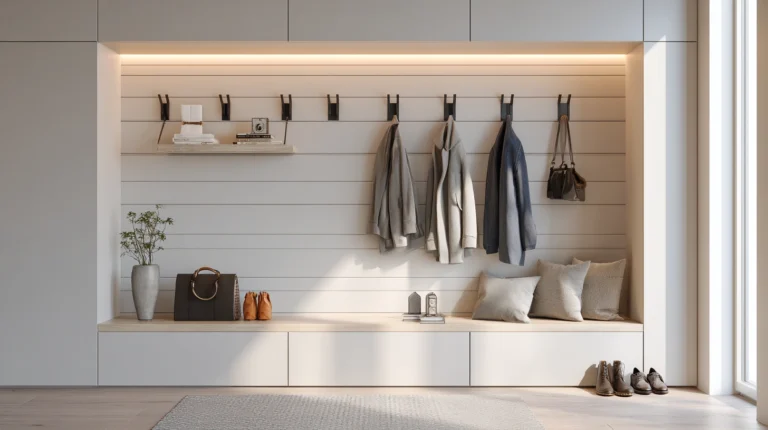
6. Use Integrated LED Lighting Instead of a Single Overhead Fixture
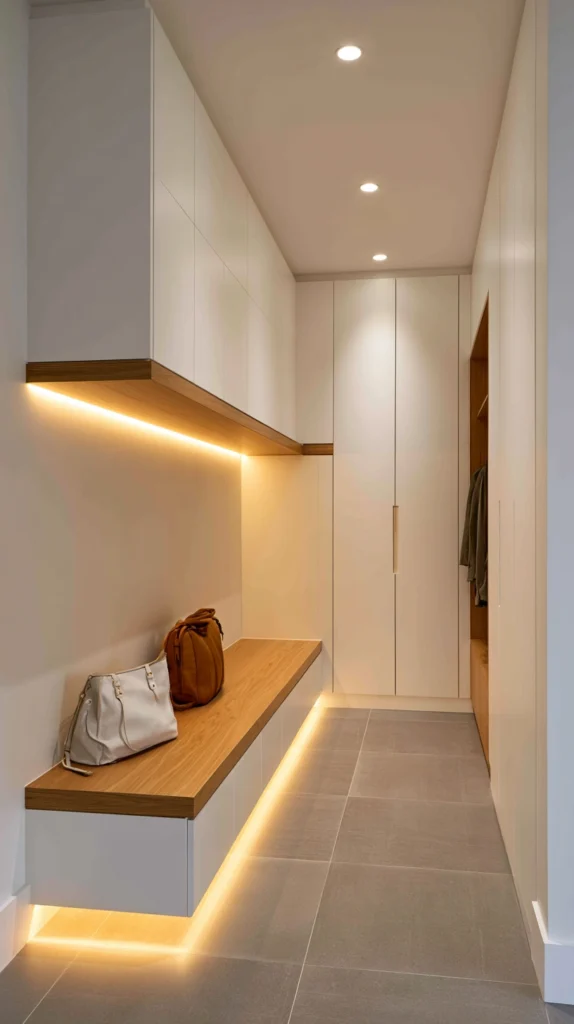
A strip of integrated LED lighting, run along the underside of upper cabinets or open shelving, provides even, shadow-free light and reads as architecturally built-in rather than a fixture added on top of the design. Budget: $40-90 for a quality LED strip kit.
Choose a warm color temperature even in a modern, minimal room, since a cool-toned strip can feel sterile despite the room’s otherwise sophisticated styling.
7. Choose Large-Format Tile for the Floor
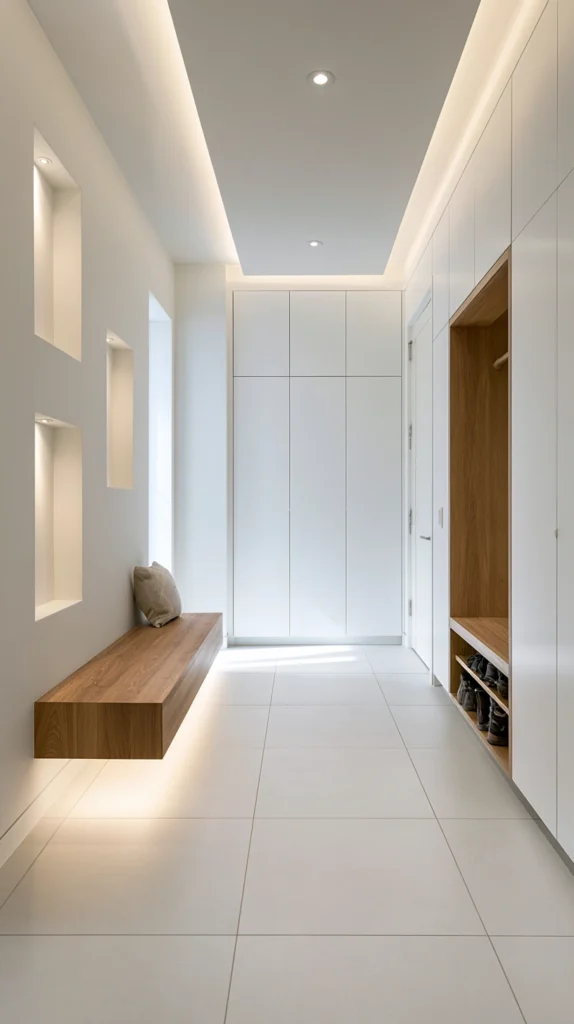
Large-format porcelain tile, with fewer visible grout lines than smaller traditional tile, gives the floor a cleaner, more continuous look that suits a modern design far better than a busy patterned tile. Budget: $8-15 per square foot installed, depending on the specific tile chosen.
Choose a tile with a slip-resistant finish specifically, since this floor handles wet shoes and boots regularly.
8. Add a Floating Shelf Instead of Open Shoe Racks
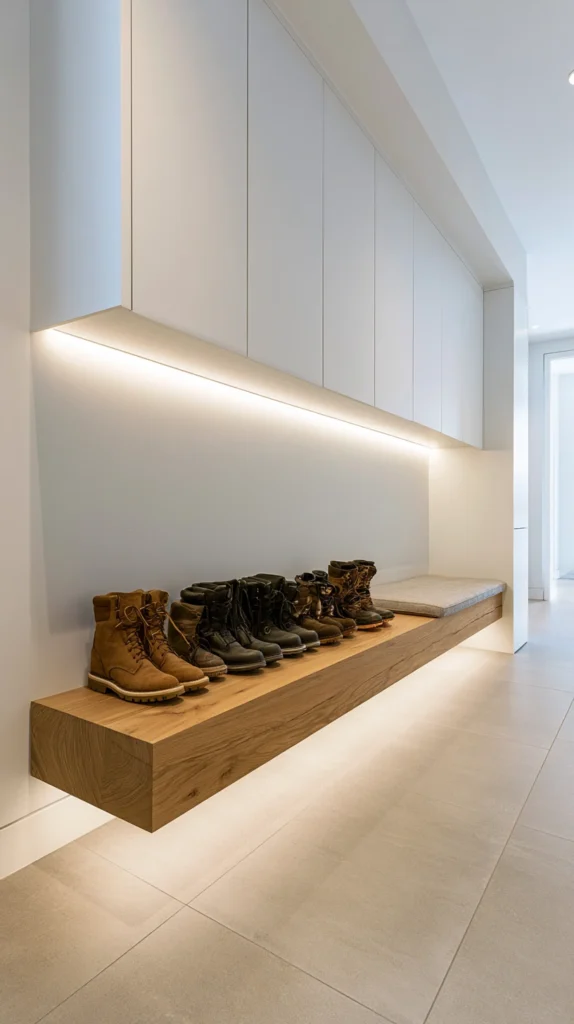
A single floating shelf, rather than a tiered shoe rack with visible shelving brackets, holds the same number of shoes while looking like a deliberate design element rather than overflow storage. Budget: $40-80 for a quality floating shelf rated for the expected weight.
Mount it into wall studs specifically, given how much weight a fully loaded shoe shelf can actually carry over time.
9. Use Closed Cubbies Instead of Open Hooks
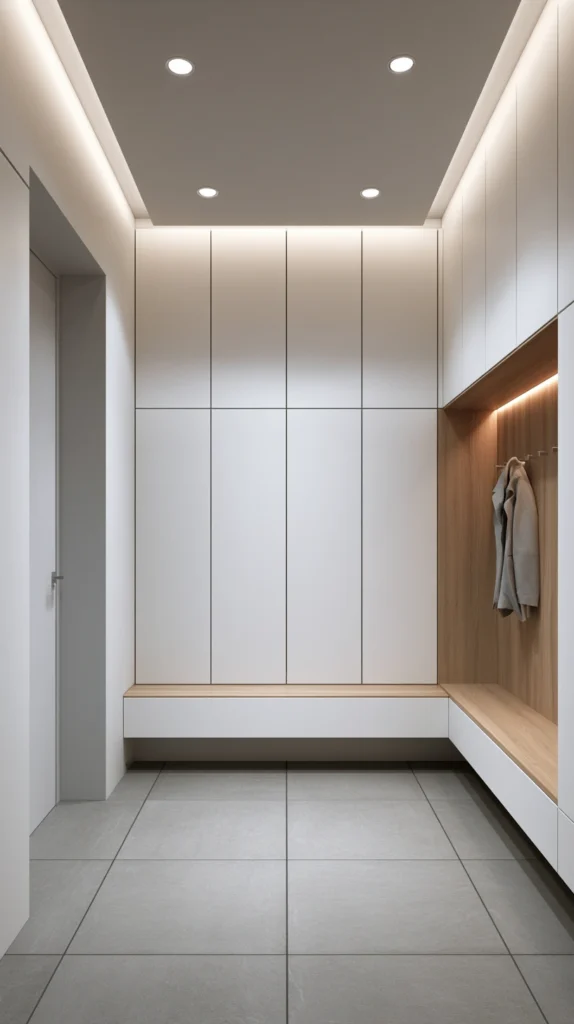
Fully enclosed cubbies, each with its own small door, hide coats and bags behind a clean, uniform face rather than leaving everything visibly hanging, which is often the single biggest difference between a rustic mudroom and a modern one. Budget: $300-600 for a run of closed cubby storage.
Label the inside of each door discreetly if multiple household members share the space, so the clean exterior doesn’t get sacrificed for visible name tags or labels.
10. Choose Brushed Brass or Matte Black Hardware Exclusively
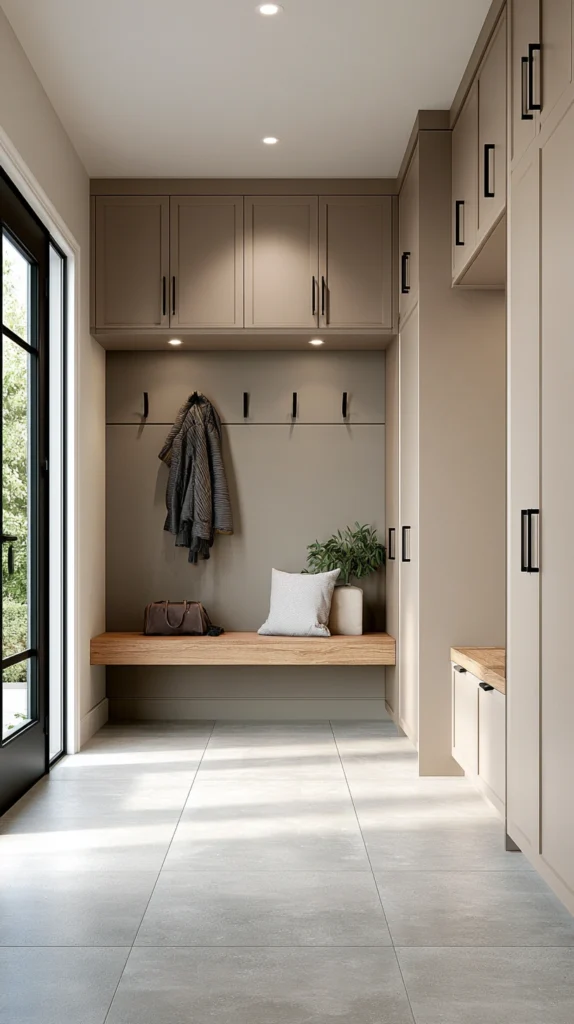
Picking one hardware finish and using it consistently across every hook, pull, and fixture in the room avoids the slightly mismatched look that comes from accumulating hardware over time in different finishes. Budget: $60-150 for a full coordinated hardware set.
Buy a few extra pieces of the same hardware when first purchasing, since matching a discontinued finish later can be considerably harder than ordering enough up front.
11. Add a Built-In Bench With a Waterfall Edge
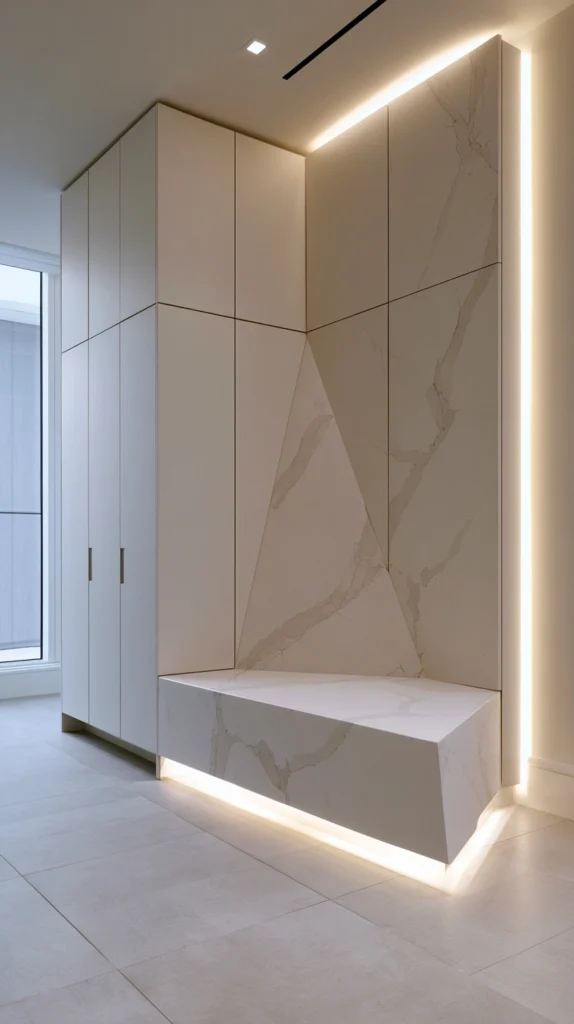
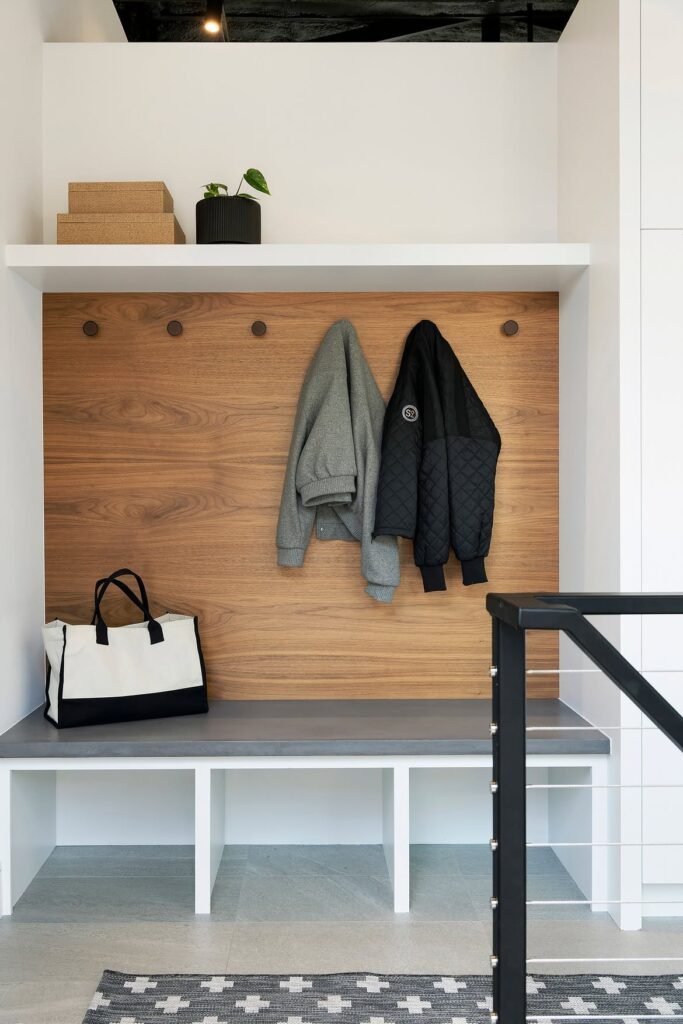
A bench seat with a waterfall edge, where the same material wraps continuously from the seat down the side, creates a sculptural, single-piece look that reads as considerably more elevated than a standard bench with visible legs. Budget: $500-1,200 for a custom waterfall-edge bench, depending on material.
Choose a durable solid surface or quality engineered wood specifically, since this design detail only looks intentional if the material itself is substantial enough to support the continuous line.
12. Use a Wide-Format Mirror Instead of a Decorative Frame
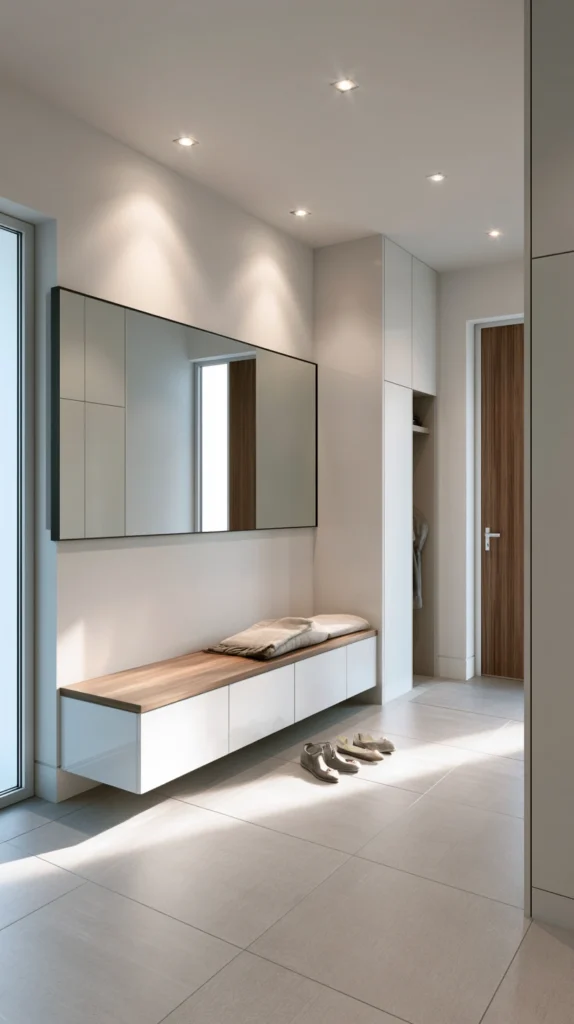
A large, simply framed or frameless mirror, rather than an ornate decorative one, fits the cleaner overall language of a modern mudroom while still serving the practical function of a last-look check before heading out. Budget: $80-150 for a large simple mirror.
Choose a mirror with a thin black or brass edge rather than no frame at all if the room’s hardware already leans toward one of those finishes, for a bit more definition against the wall.
13. Add a Dedicated Charging and Drop Zone Built Into the Counter
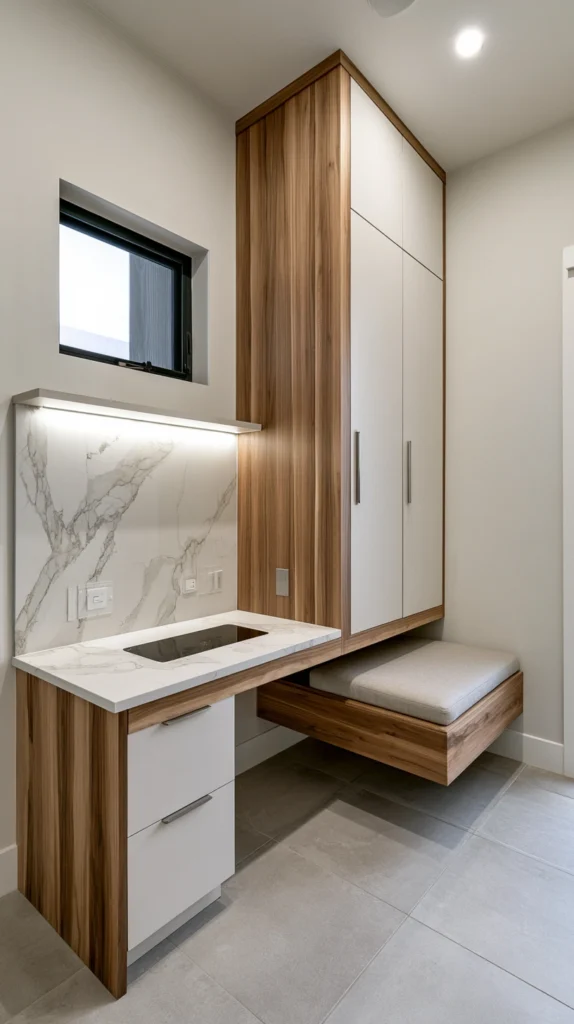
A built-in charging station, with outlets and a small device tray integrated directly into the counter or cabinetry rather than added as a separate gadget, keeps technology from disrupting the room’s otherwise clean surfaces. Budget: $100-250 to add built-in outlets and a recessed charging tray.
Have an electrician add the outlets during any broader renovation specifically, since retrofitting them afterward is considerably more disruptive and costly.
14. Combine Several of These Into One Fully Cohesive Modern Mudroom
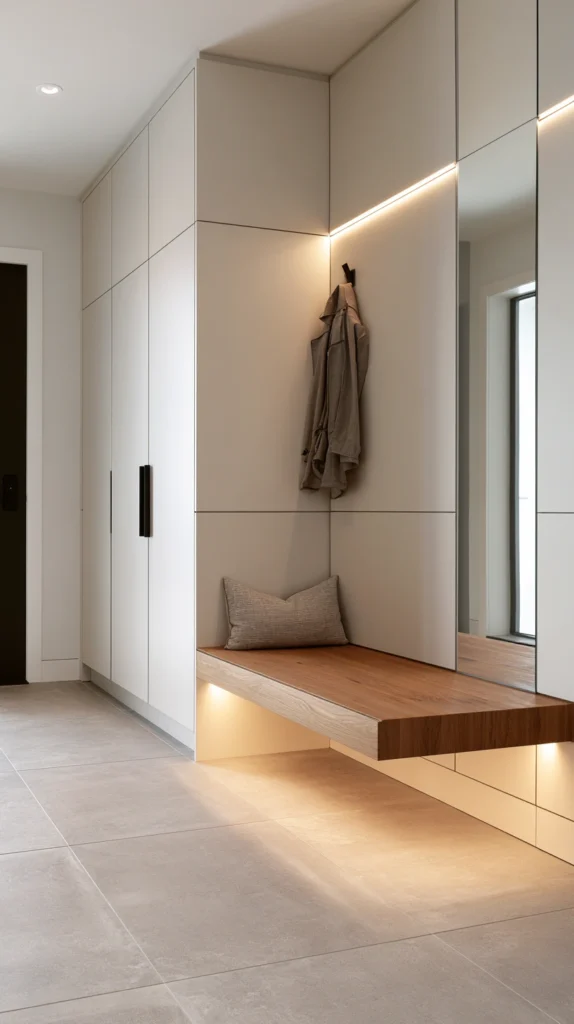
Bringing together slab cabinetry, a single material palette, integrated lighting, and closed cubby storage into one room creates the calm, considered look that defines a modern mudroom, the cohesion across every surface and finish, rather than any single statement piece. Budget: $1,500-4,000 to combine most of the ideas above into one full mudroom renovation.
Settle on the dominant material and hardware finish before any other decision, since every other choice in the room should be built to support that single consistent thread.
Choosing Your Approach
For a lower-cost refresh: the monochrome paint palette (idea 5), coordinated hardware (idea 10), and a floating shelf (idea 8) update the look significantly without any major construction.
For a bigger single change: slab-front cabinetry (idea 1) or closed cubbies (idea 9) shift the whole room’s character at once.
For a full renovation: combine several ideas using idea 14’s approach, starting with material and finish decisions before anything else.
The defining quality of a modern mudroom isn’t really about removing rustic details, it’s about consistency. One material, one hardware finish, and one color story repeated throughout do more for the “clean and elevated” feeling than any single expensive fixture ever could on its own.