15 Pumpkin Decorating Ideas Beyond the Front Porch
15 Pumpkin Decorating Ideas Beyond the Front Porch
There is more to the pumpkin than the front step. The carved jack-o’-lantern by the door, the cluster of orange and white on the porch — these are the pumpkin’s most public and most familiar appearances, and they are fine for what they are.
But the pumpkin is also a genuinely beautiful object: a form of remarkable sculptural variety, a surface that takes paint and texture and carved pattern with unusual generosity, and a natural material that belongs in the autumn home as surely as the dried botanical or the warm wool throw.

The ideas below are for the pumpkin brought inside, taken upstairs, placed in rooms where it was not expected, and treated with the same material consideration as any other object chosen for its form, its colour, and its relationship to the season. The pumpkin beyond the porch is the pumpkin at its most versatile — and, in the right room and the right position, at its most beautiful.
1. The Styled Dining Table Centrepiece
Budget: $15 – $60
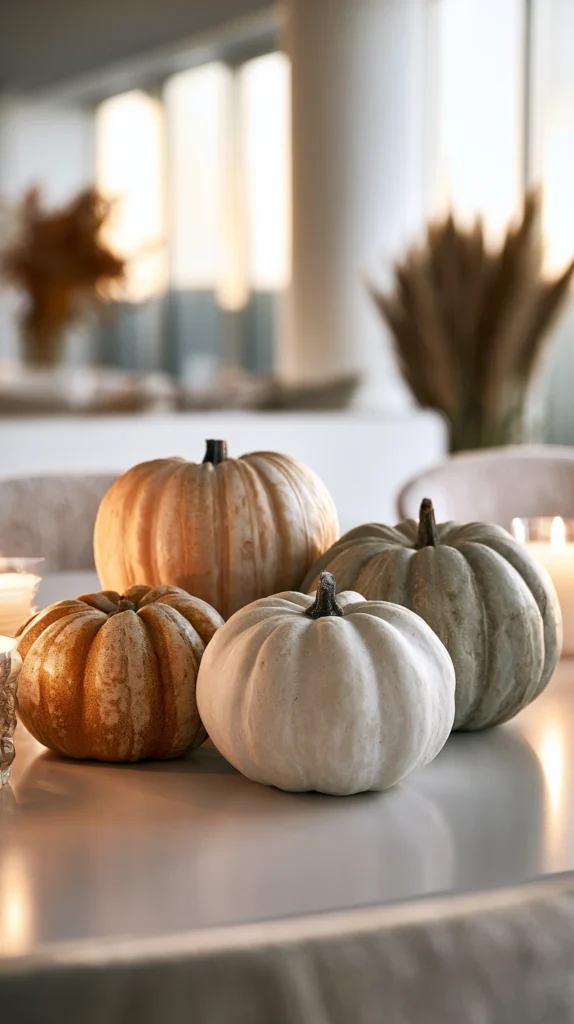
A grouping of three pumpkins in varying sizes — one large, one medium, one small — arranged on the dining table as the season’s centrepiece, surrounded by dried leaves, small gourds, and a pair of taper candles in simple holders, gives the dining room its most naturally abundant and most specifically seasonal table arrangement.
The pumpkin centrepiece on the dining table communicates the autumn harvest at the room where the harvest is most specifically celebrated — the table where the household gathers — and does so in the material of the season rather than in manufactured decoration.
A large display pumpkin — $8 – $20. A medium and small companion pumpkin — $5 – $15 combined. Dried leaves, small gourds, and taper candles — $5 – $20.
Styling tip: Choose pumpkins in two or three different tones rather than matching orange — a warm terracotta, a pale cream, and a deep green or slate grey grouped together read as a composed natural arrangement. Three identical orange pumpkins read as a row of pumpkins. The tonal variation is what elevates the grouping from seasonal decoration to considered display.
2. The Bedroom Windowsill Pumpkin
Budget: $5 – $20
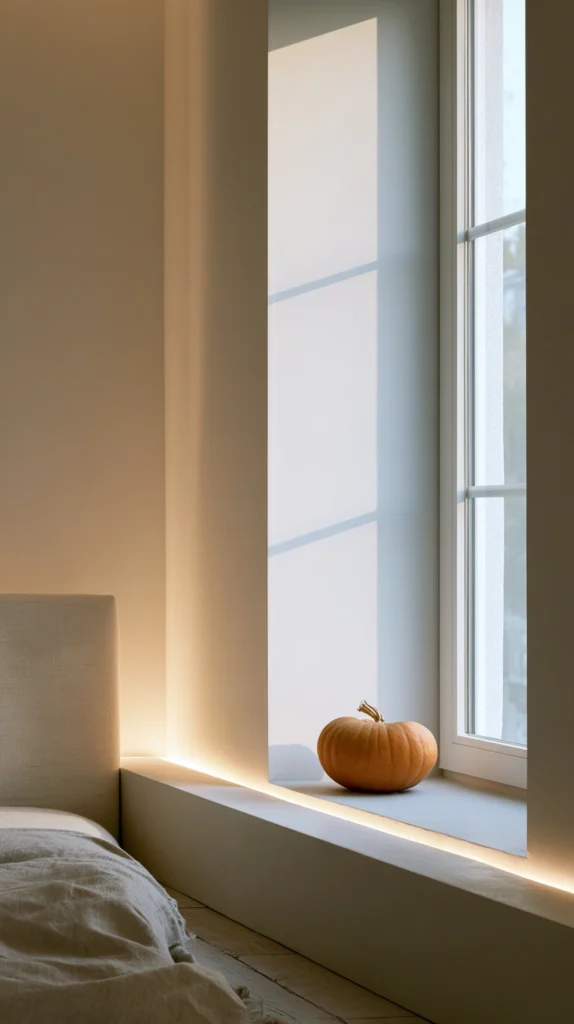
A single small pumpkin — a sugar pumpkin, a mini white pumpkin, or a small ornamental gourd in an interesting form — placed on the bedroom windowsill beside a candle and a dried botanical brings the autumn season into the room where it is least expected and most quietly appreciated.
The bedroom pumpkin is not a decoration for display to others. It is a private seasonal gesture — a small acknowledgement of the time of year placed where it will be seen first thing in the morning and last thing at night, which is the quality of seasonal attention that makes a home feel genuinely inhabited rather than seasonally themed.
A small sugar or ornamental pumpkin — $3 – $10. A taper candle in a simple holder — $3 – $8.
Styling tip: Choose the smallest, most sculptural pumpkin available for the bedroom windowsill rather than the largest or most conventionally shaped one — a tiny pumpkin with an interesting stem, an unusual ridged form, or a pale and ghostly colour communicates an object chosen for its specific quality rather than its seasonal function. The bedroom is not the place for the statement pumpkin; it is the place for the pumpkin that rewards close looking.
3. The Carved Botanical Pattern Pumpkin
Budget: $10 – $30
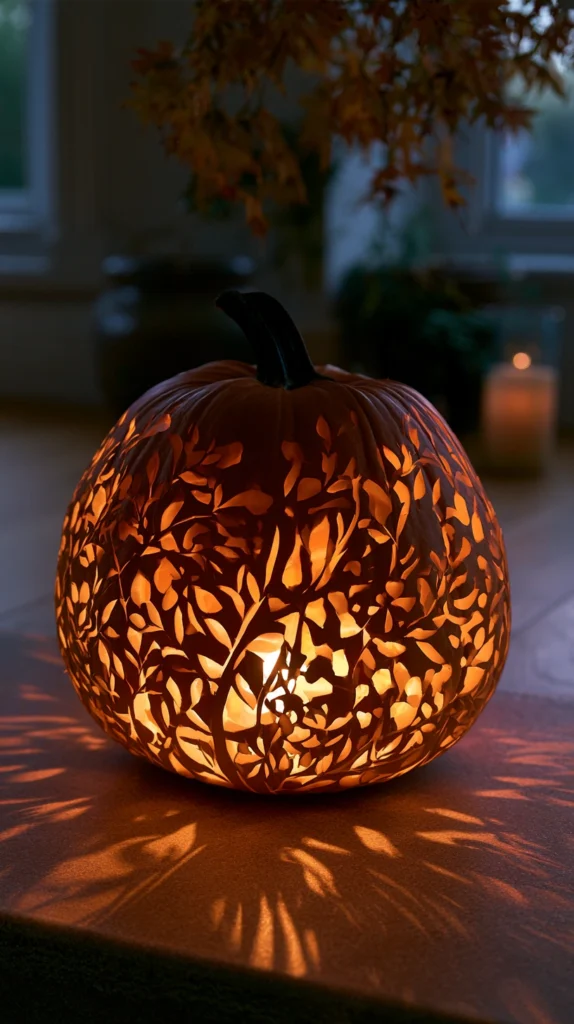
A pumpkin carved not with a face but with a botanical pattern — a leaf silhouette, a repeating fern frond, a simple floral motif — using a linoleum carving tool or a pumpkin carving kit to create a design that reads as a decorative object rather than a Halloween prop, gives the carved pumpkin an entirely different quality and an entirely longer season of display.
The botanical carved pumpkin belongs to autumn rather than to Halloween specifically — it can be lit with a tea light from within and placed on the dining table, the mantel, or the coffee table from the first of October until the end of November.
A carving pumpkin of medium size — $5 – $15. A linoleum or pumpkin carving tool set — $8 – $20.
Styling tip: Carve the botanical pattern without cutting all the way through the pumpkin skin — a shallow carved pattern that removes the outer skin but leaves the inner flesh intact glows when backlit with a tea light in a softer, more diffused way than a fully cut pattern, producing a warm, amber lantern effect rather than the sharp-edged glow of a traditional jack-o’-lantern.
4. The Painted Pumpkin Collection
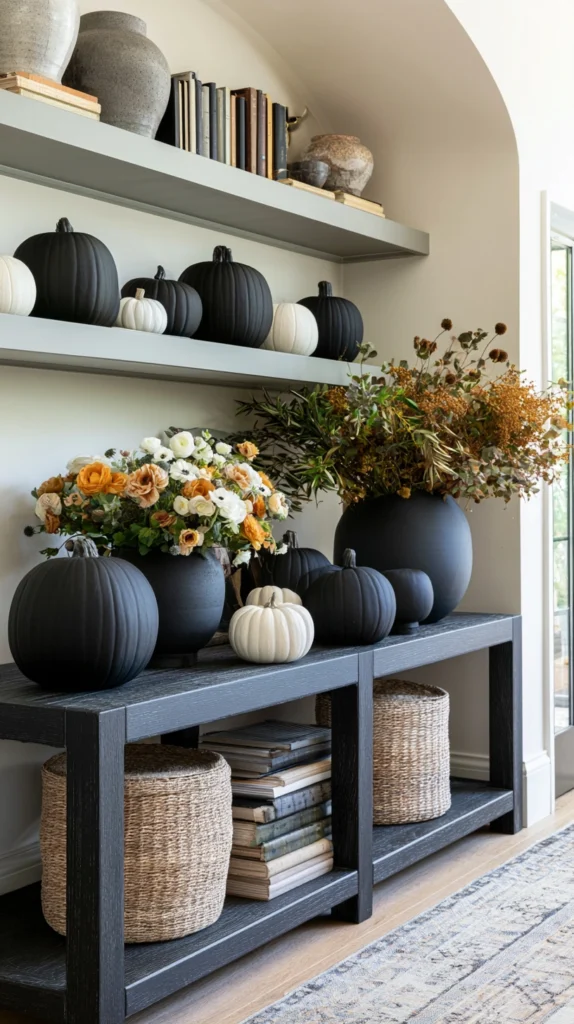
Budget: $15 – $60
A collection of pumpkins painted in a single colour palette — all in matte black, all in warm gold, all in the white-to-cream range, or all in the terracotta and rust family — displayed as a group on the mantel, the console, or the coffee table, communicates the pumpkin as a design object rather than a seasonal prop and integrates it into the room’s existing colour story.
The painted pumpkin collection is the idea that most completely removes the pumpkin from its purely seasonal context and places it in the room’s permanent aesthetic — a group of matte black pumpkins on a dark mantel is an interior detail that communicates autumn without communicating Halloween.
Four to six pumpkins of varied sizes — $10 – $30 total. Chalk paint or matte spray paint in the chosen colour — $8 – $20.
Styling tip: Apply two coats of chalk paint to the pumpkin surface and allow to dry fully before sealing with a matte wax — the chalk paint adheres to the pumpkin’s skin without primer and the wax seal extends the display life significantly beyond what an unsealed painted surface would provide. The sealed chalk paint finish has a soft, velvety quality that communicates a considered decorative object rather than a painted pumpkin.
5. The Kitchen Counter Pumpkin Display
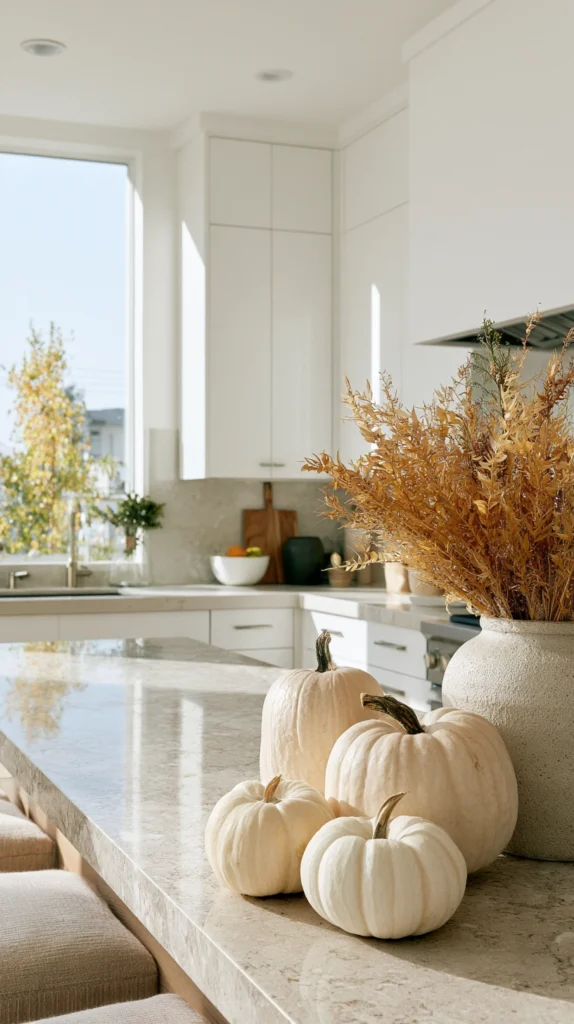
Budget: $10 – $40
A row of small pumpkins and gourds along the kitchen counter — beside the bread bin, along the windowsill above the sink, or arranged on a timber board beside the hob — brings the autumn harvest to the room where food is prepared and communicates the season at the most domestic and most genuinely harvest-appropriate surface in the home.
The kitchen pumpkin is not decoration in the conventional sense. It is the ingredient and the object simultaneously — the pumpkin that will eventually be roasted sitting beside the pumpkin that will be displayed until the season ends, the two together communicating the specific quality of a kitchen that is in active relationship with the season.
Three to five small cooking and display pumpkins in mixed varieties — $8 – $25. A timber board or tray for grouping — $10 – $30.
Styling tip: Mix cooking pumpkin varieties — Crown Prince, Butternut, Delica — with ornamental gourds in the kitchen display rather than using display pumpkins exclusively. The cooking pumpkin has a specific beauty of form and colour that the ornamental version often lacks, and a display that includes the varieties the household will actually eat communicates a kitchen that decorates with what it uses rather than one that decorates alongside what it uses.
6. The Staircase Step Pumpkin Trail
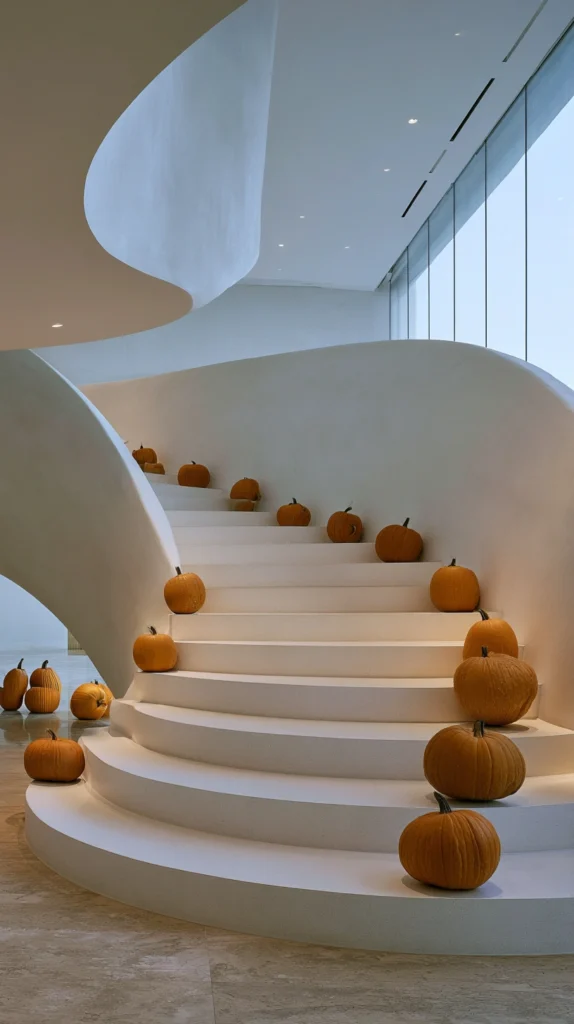
Budget: $20 – $80
A pumpkin or a small gourd placed on every third or fourth step of the staircase — in a descending size sequence from the largest at the bottom to the smallest near the top, or in a mixed arrangement of forms and colours that reads as gathered rather than arranged — gives the staircase its autumn identity and communicates the season at the most consistently trafficked surface in the home.
The staircase pumpkin trail is seen and passed multiple times daily and communicates the autumn season with an immediacy and a frequency that any single room display cannot match.
Six to eight small and medium pumpkins and gourds in varying forms — $15 – $50. Dried leaves or small sprigs of foliage to accompany each pumpkin — gathered outside, at no cost.
Styling tip: Place the pumpkins on the step rather than the tread — positioned against the riser at the back of each step rather than in the centre of the walking surface. The pumpkin against the riser is safe underfoot, visible from below, and communicates a staircase that was deliberately dressed rather than a staircase that has pumpkins on it.
7. The Mantel Pumpkin and Candle Arrangement
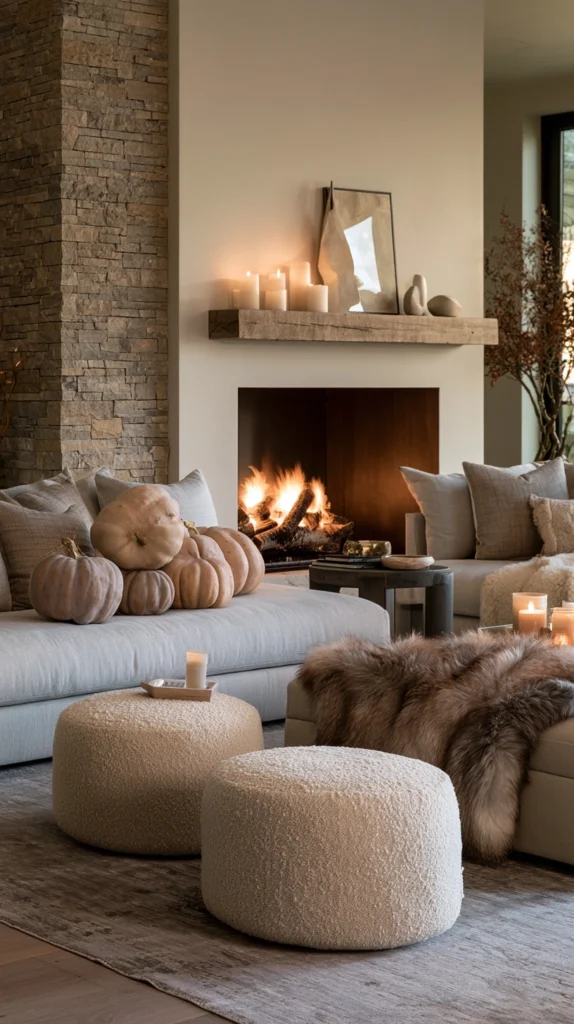
Budget: $20 – $100
A mantel arrangement for autumn — two or three pumpkins in varying sizes grouped at one end of the mantel alongside a cluster of pillar candles in warm amber holders, a bundle of dried wheat or eucalyptus, and a single ceramic object — gives the living room’s primary architectural surface its most specifically seasonal and most naturally abundant autumn identity.
The mantel pumpkin arrangement communicates the harvest at the room’s focal point and gives the candles the specific context of natural material warmth that makes them read as autumn rather than simply as candles.
Two or three display pumpkins in mixed tones — $8 – $25. Pillar candles in varying heights — $10 – $30. A bundle of dried botanicals — $8 – $20.
Styling tip: Arrange the pumpkins and candles at one end of the mantel rather than distributing them evenly across the full length — a grouped arrangement at one end with the other end clear reads as composed. An even distribution across the full mantel reads as objects placed wherever there was space, which is the difference between a styled mantel and a mantel that has been decorated.
8. The Pumpkin as Vase
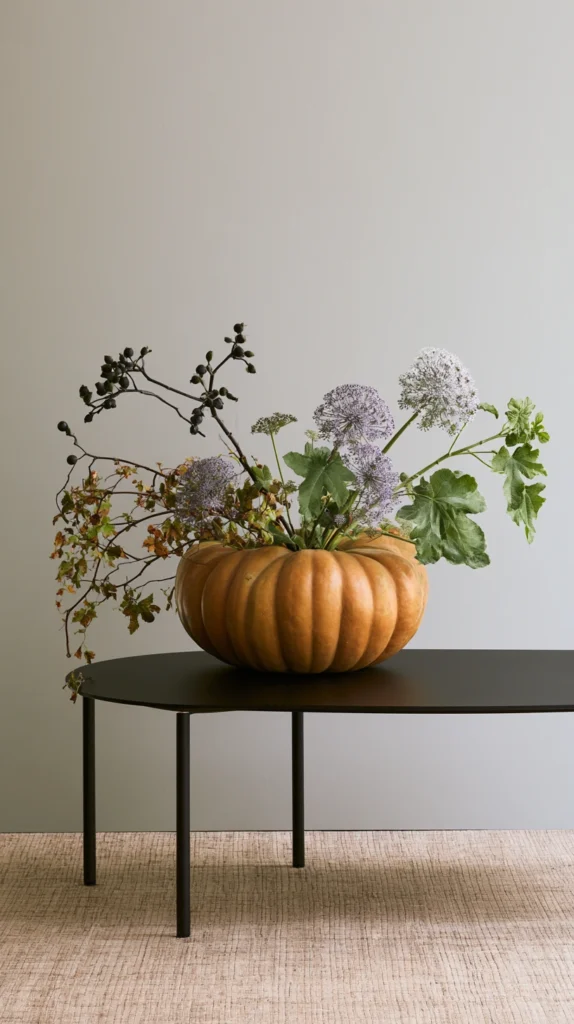
Budget: $5 – $25
A medium pumpkin with its top removed and its interior hollowed, used as a vase for a bunch of autumn flowers — deep burgundy dahlias, orange marigolds, rust-toned chrysanthemums, or a bundle of dried grasses — gives the pumpkin its most functional and most unexpectedly beautiful application and the autumn dining table or console its most specifically seasonal floral arrangement.
The pumpkin vase communicates the creative use of the season’s material at the most immediate and most practical level — the natural object repurposed as the vessel for natural objects, which is a quality of material thinking that communicates more than any manufactured seasonal vase could.
A medium carving pumpkin — $5 – $15. A bunch of autumn flowers or dried grasses — $5 – $20. A small plastic cup or jar to hold water inside the pumpkin — already owned.
Styling tip: Place a small jar or cup inside the hollowed pumpkin to hold water before adding the flowers — the flowers in direct contact with the pumpkin’s interior will wilt more quickly and the pumpkin will degrade faster. The inner vessel extends both the flower life and the pumpkin’s display life by several days.
9. The Children’s Room Pumpkin Activity Corner
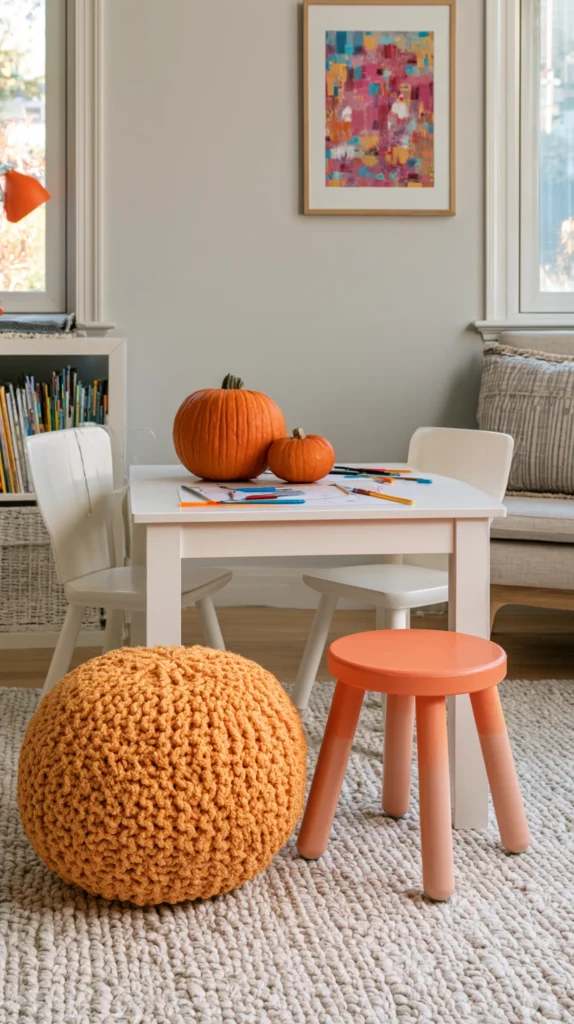
Budget: $15 – $50
A small activity corner in a child’s room or playroom — a pumpkin or two alongside small painting pots, brushes, stamps, and stickers, set up on a low table covered with newspaper — gives the autumn season a specific, creative home within the space the child inhabits most and communicates the season as something participated in rather than observed.
The decorated pumpkin produced by a child and displayed in their room is also the most personal and most meaningful autumn decoration available to any home — the object that communicates that the season was engaged with rather than consumed.
Two small pumpkins for decorating — $5 – $15. Child-safe craft paints, stamps, and stickers — $8 – $25. Newspaper for the table — already owned.
Styling tip: Display the child’s finished pumpkin in a prominent position in their room rather than on the front porch with the household’s other decorations — the decorated pumpkin belongs most specifically in the space of the person who made it, and its placement in their room communicates that the making of it was the point rather than the displaying of it.
10. The Bathroom Pumpkin Detail
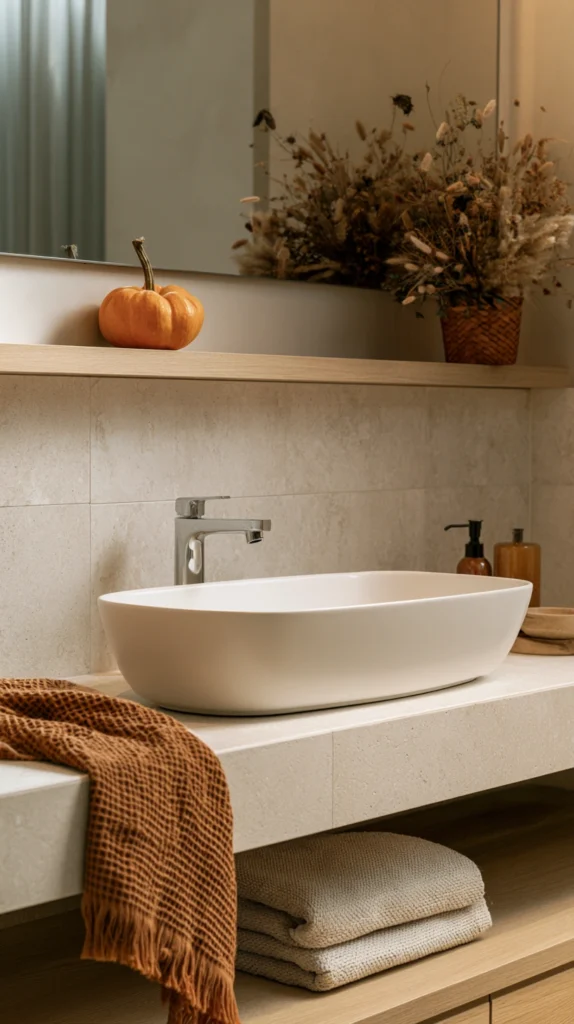
Budget: $5 – $20
A single small pumpkin — a white mini pumpkin, a tiny ornamental gourd in an interesting form, or a petite sugar pumpkin in a warm terracotta tone — placed on the bathroom shelf or windowsill beside the existing toiletry display, brings the autumn season into the room where it is least expected and where a small, well-chosen seasonal detail reads as the mark of a home that was considered in its every room.
The bathroom pumpkin requires no arrangement, no styling, and no further seasonal decoration — a single object of natural form in an interesting colour or shape is sufficient, because the bathroom is a room where less communicates more than anywhere else in the home.
A single mini or ornamental pumpkin — $3 – $10.
Styling tip: Choose a pumpkin for the bathroom in a tone that complements the existing bathroom palette rather than contrasting with it — a white mini pumpkin in an all-white bathroom, a warm terracotta pumpkin beside a neutral stone palette, a dark green or slate pumpkin against a dark-painted bathroom wall. The bathroom pumpkin that relates to the room’s existing colour communicates a considered seasonal detail; the one that contrasts with it communicates a pumpkin placed in the bathroom.
11. The Outdoor Table Pumpkin Centrepiece
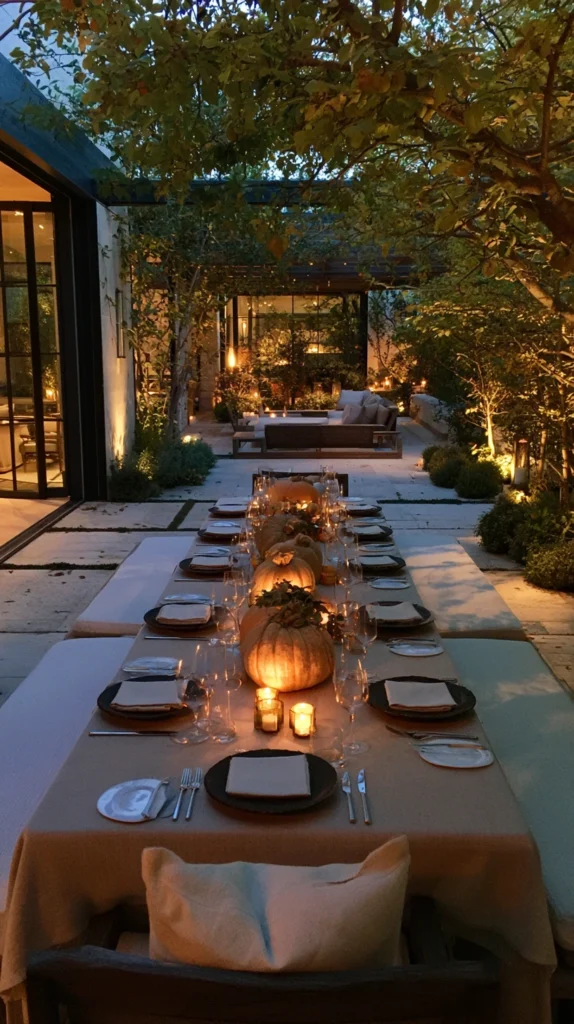
Budget: $20 – $80
A pumpkin centrepiece for the outdoor dining or garden table — a large display pumpkin flanked by smaller gourds, surrounded by scattered dried leaves and tea lights in glass holders — extends the autumn decoration beyond the porch and into the outdoor space that the household uses for as long as the season allows.
The outdoor table pumpkin communicates that the garden or terrace is still in use in autumn, that the household has not yet conceded the outdoor space to the cold, and that the season is being met with a quality of hospitality that sets a candle-lit table against the chill rather than retreating indoors.
A large display pumpkin — $8 – $25. Four to six small companion gourds — $6 – $20. Tea lights in glass holders — $5 – $15.
Styling tip: Weight the outdoor pumpkin centrepiece with the largest pumpkin and anchor it so that it cannot be moved by wind — a large pumpkin whose base is stable does not need to be secured, but a tall, narrow gourd or a top-heavy ornamental variety should be placed in a low, wide vessel or surrounded by smaller gourds that prevent it from tipping. An overturned outdoor pumpkin arrangement reads as a windy evening rather than an autumn table.
12. The Stacked Pumpkin Tower
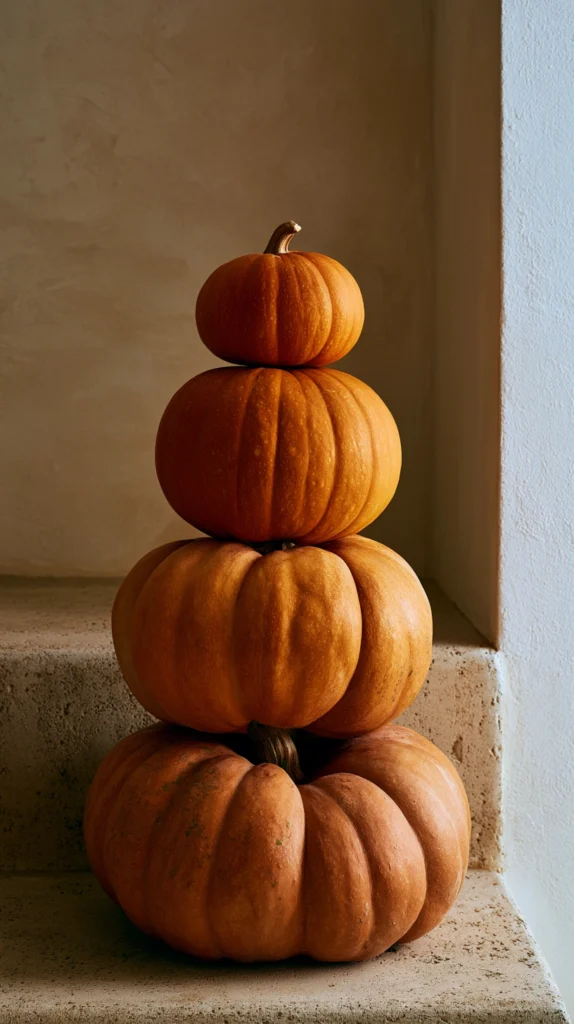
Budget: $15 – $60
Three pumpkins of decreasing size stacked vertically — secured with a long wooden skewer through the centre of all three, with the largest at the base and the smallest at the top — create a sculptural autumn tower that reads as a single composed object rather than a group of pumpkins and takes significantly less horizontal space than a spread arrangement of the same three pumpkins.
The pumpkin tower is the idea that most specifically communicates the pumpkin as a sculptural form — the stacked arrangement emphasising the geometry of the shape in a way that the standard grouped display does not.
Three pumpkins in the same variety and colour family, in large, medium, and small sizes — $10 – $35. A long wooden skewer or a bamboo cane — $2 – $5.
Styling tip: Choose pumpkins with flat bases and relatively flat tops for the tower — a pumpkin with a strongly ridged top surface makes stacking unstable and produces an uneven tower. The flattest-topped pumpkin in the same variety is the correct choice for the middle and base of the stack; the most interesting form can occupy the top, where balance requirements are least critical.
13. The Pumpkin and Book Stack Vignette
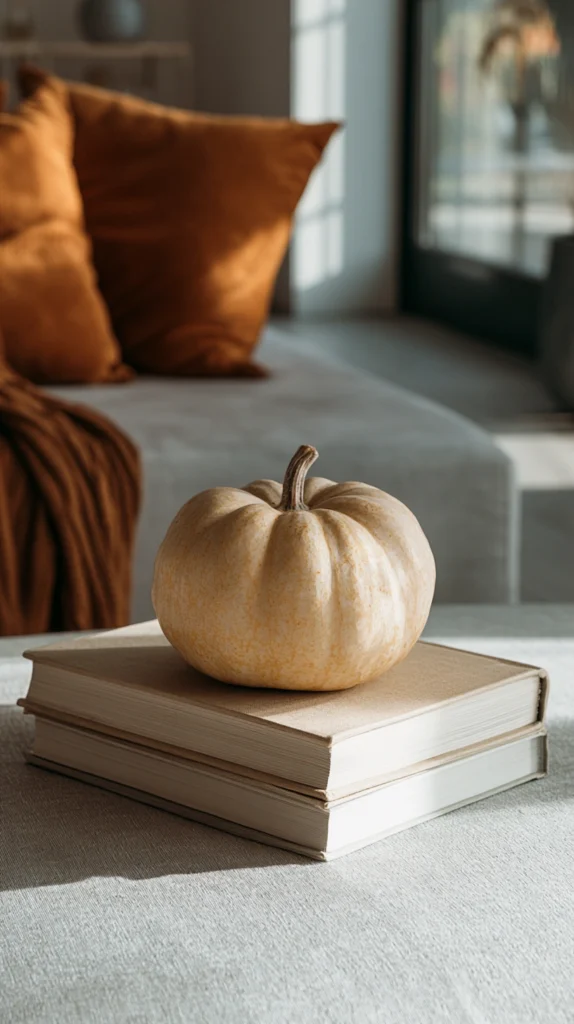
Budget: $5 – $30
A small vignette on the coffee table, the console, or the bedside table — a stack of two or three books with warm autumn tones on their covers, a single small pumpkin placed beside or on top of the stack, and a low candle in a ceramic holder — gives the room a seasonal detail of genuine material simplicity and the specific quality of an arrangement that looks like it happened rather than like it was composed.
The pumpkin and book stack vignette is the autumn living room detail that most directly communicates the season’s quality of the interior life — the book, the light, the small natural object at hand — at the smallest and most accessible scale.
A small ornamental pumpkin — $3 – $10. Two or three books already owned with autumn-toned spines. A small candle in a ceramic holder — $5 – $15.
Styling tip: Choose books for the stack with spine colours that relate to the pumpkin’s tone — warm amber books beside an orange pumpkin, cream or grey-spined books beside a white or pale pumpkin, dark green or brown books beside an earthy terracotta variety. The book stack whose colours relate to the pumpkin reads as a curated vignette. The stack chosen at random reads as books beside a pumpkin.
14. The Metallic and Gilded Pumpkin Display
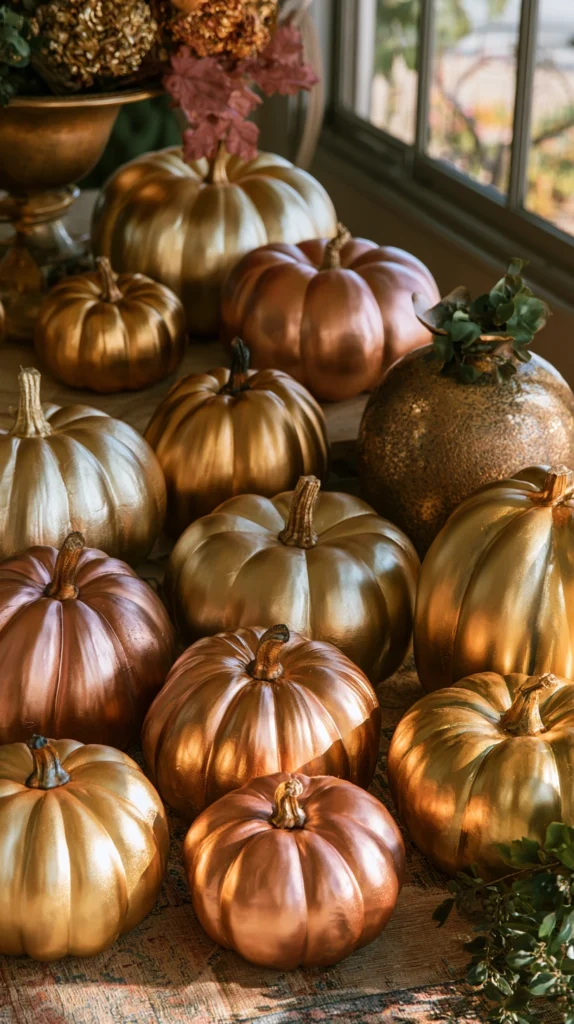
Budget: $15 – $60
Pumpkins with a metallic finish — brushed with gold, copper, or bronze paint, or sprayed in a warm metallic tone and allowed to dry to a matte sheen — sit within the autumn colour palette while communicating a quality of material glamour that the natural pumpkin surface, however beautiful, does not provide.
The gilded pumpkin is the idea that most specifically bridges the autumn display and the festive one — a copper or gold pumpkin on the mantel in October communicates harvest warmth, and the same object in December communicates something that sits comfortably within the festive material palette without requiring any new decoration.
Four to six pumpkins of varying sizes — $10 – $30. Metallic spray paint or gold leaf paint in copper, bronze, or warm gold — $8 – $20.
Styling tip: Apply metallic paint to dried or artificial pumpkins rather than fresh ones for any display intended to last beyond two to three weeks — a fresh pumpkin painted in metallic spray will begin to soften and degrade within a fortnight regardless of the paint application. A dried or artificial pumpkin in the same metallic finish displays through the full autumn and winter season without deterioration.
15. The Full Home Pumpkin Trail
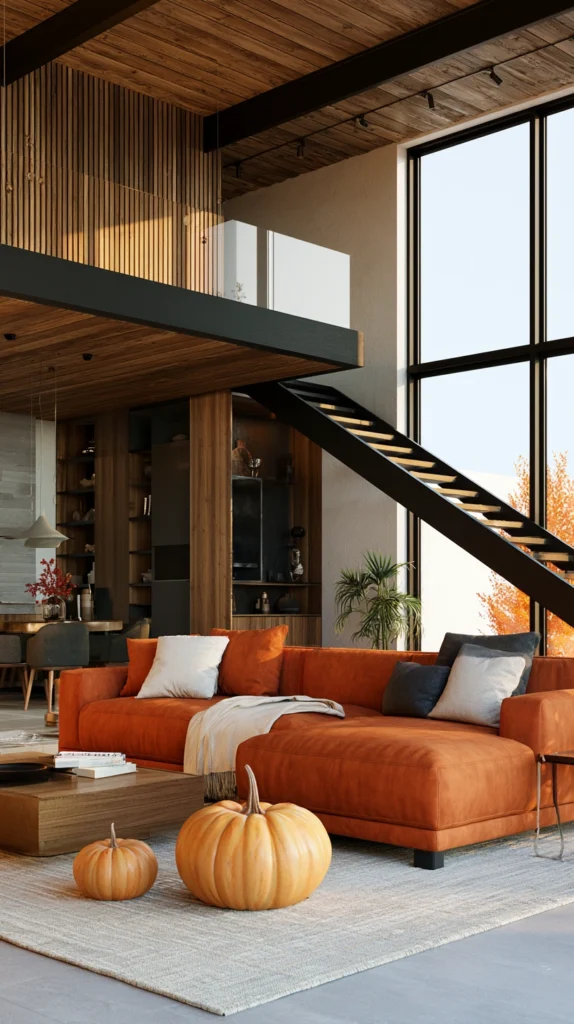
Budget: $40 – $200
The full home pumpkin trail — a large painted or natural display pumpkin on the dining table centrepiece, a trio of metallic pumpkins on the mantel, a stacked pumpkin tower on the console, a pumpkin vase of autumn flowers on the kitchen counter, a small white pumpkin on the bathroom shelf, a single ornamental pumpkin on the bedroom windowsill, a pumpkin and book stack vignette on the coffee table, and a carved botanical-pattern pumpkin lit from within on the side table — moves the pumpkin through every room of the home and gives the autumn season an indoor presence as complete and as considered as the seasonal display on the porch has always been.
The full home pumpkin trail communicates that autumn was taken seriously as an interior season — that the household understood the pumpkin not as a front-door prop but as the season’s own object, as versatile and as beautiful indoors as out.
Display pumpkins in varied sizes and tones: $20 – $80. Paints and materials for decorated versions: $15 – $50. Dried botanicals and candles to accompany: $15 – $50. Total full home pumpkin trail: $50 – $180 for an autumn home considered in every room.
Styling tip: Buy pumpkins in two or three shopping trips throughout the season rather than all at once — a pumpkin purchased in early October and displayed for six weeks will begin to soften before the season ends, while one purchased in late October will be at its best through November. The staggered purchase communicates a household in active relationship with the season rather than one that decorated on a single afternoon in early autumn and considered the season addressed.
The pumpkin beyond the front porch is not a decorating trend. It is the recognition of something that was always true — that the season’s most characteristic object is too good to leave outside, too varied in form and colour to reduce to a single carved face by the door, and too specifically beautiful in the right room and the right light to be treated as anything less than what it is.
Which is the autumn’s own object. Brought inside. Finally given the room it deserved.