15 Luxury Pink Bedroom Ideas That Feel Like a Boutique Hotel
15 Luxury Pink Bedroom Ideas That Feel Like a Boutique Hotel
There is a specific quality that boutique hotel bedrooms possess that most domestic bedrooms never quite achieve, and it is not the thread count of the sheets or the marble in the bathroom or the view from the window.
It is the quality of absolute completion — every surface considered, every material chosen for both its visual and its tactile quality, every light source positioned for exactly the right effect at exactly the right hour. The room that feels like a boutique hotel is a room where no decision was left to default and no detail was allowed to be merely adequate.
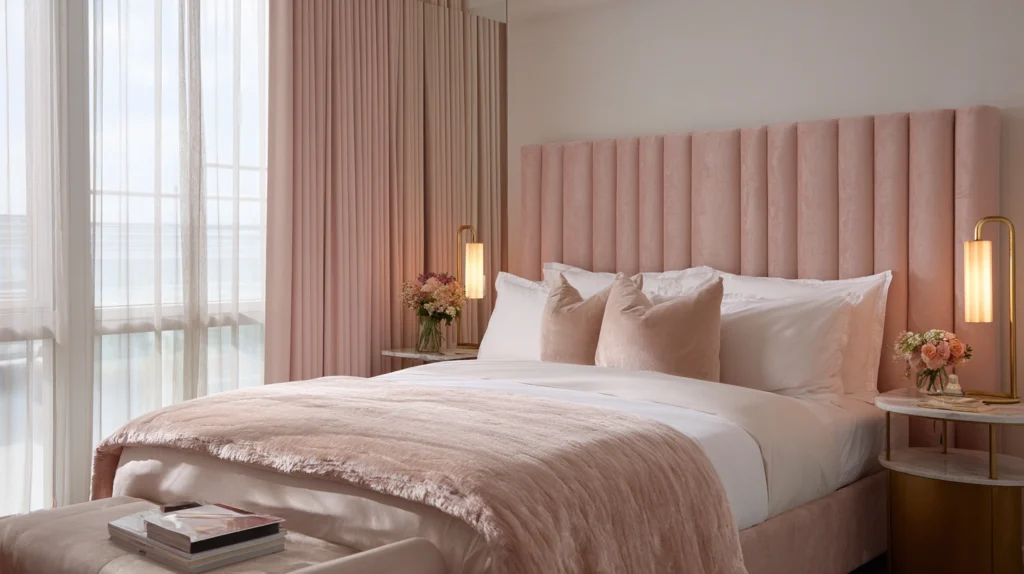
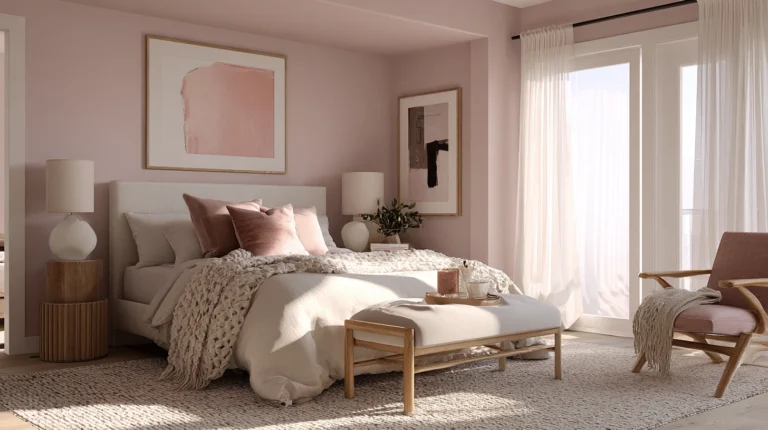
Pink, at its most luxurious, is the colour that boutique hotels have always understood better than domestic interiors. Not the pink of a child’s room or the pink of a trend cycle, but the deep, saturated, complex pink of a Giorgio Armani suite or a Soho Farmhouse room — the pink that reads as confident and opulent and entirely unapologetic, surrounded by the quality of material that makes confidence justified. That is the pink this list is about.
Each idea below is a specific approach to one element of the luxury pink bedroom. Each includes what you will need, what it will cost, and a practical tip to make it work as well as the boutique hotel experience it is reaching for.
1. The Velvet Upholstered Pink Room
Budget: $1,000 – $5,000
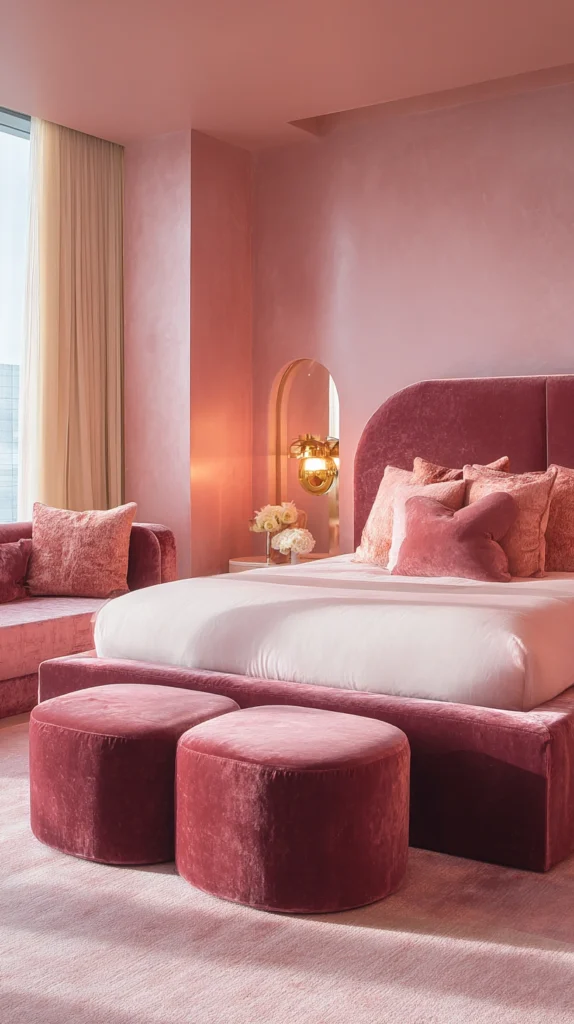
A bedroom where the primary surfaces — the upholstered bed frame, the headboard, the window seat, and the accent chair — are all in the same deep pink velvet creates the most opulent and most specifically boutique hotel of all the luxury pink approaches. Velvet in a deep, jewel-toned pink — raspberry, fuchsia, or rich blush — has a quality of depth and light absorption that no other fabric produces at this scale, and a bedroom where the velvet is the dominant material communicates luxury before any other element is assessed.
A fully upholstered velvet bed frame in a deep pink costs $800–$2,500. A matching velvet accent chair runs $400–$1,200. A velvet window seat cushion costs $150–$400. Matching pink velvet cushions run $40–$120 each. The velvet room requires a restraint in pattern and in competing materials — the velvet is doing all the decorative work and the surrounding materials should be simple enough to allow it to do so without competition.
Style tip: Use a single pink velvet in a consistent pile direction throughout the room rather than combining different velvet weights or pile directions. A room where all velvet surfaces have the same pile — catching the light in the same direction, reading as the same depth of colour — has a material unity that instantly communicates luxury. Mixed velvet types in the same room read as velvet used without the knowledge of how velvet works.
2. The Marble and Pink Suite
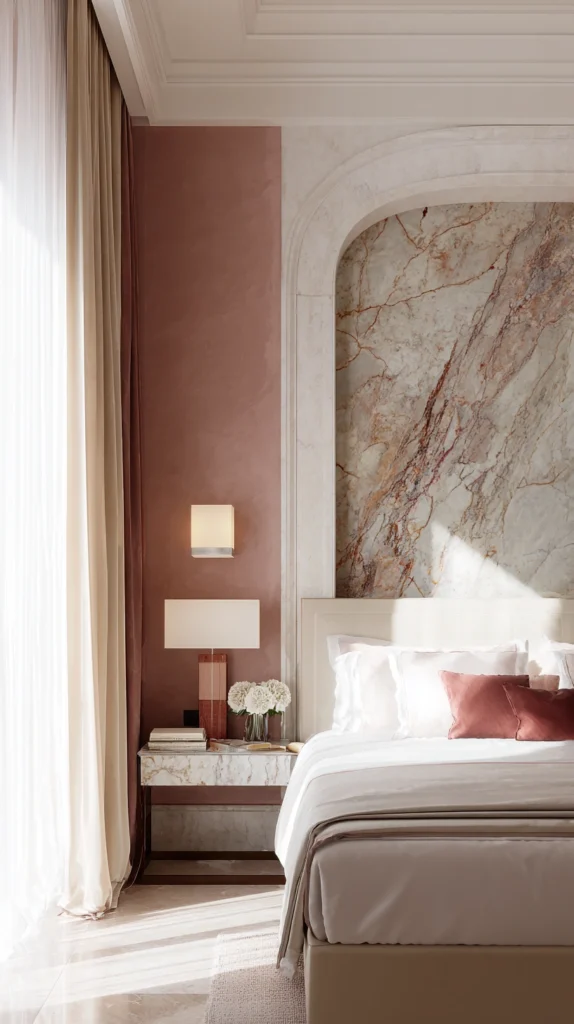
Budget: $2,000 – $10,000
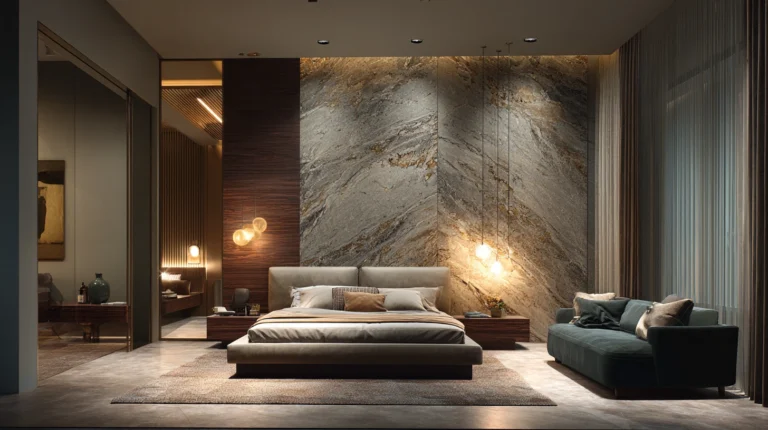
A bedroom that incorporates genuine marble or high-quality marble-effect surfaces — marble bedside tables, a marble fireplace surround in the pink bedroom, marble floor tiles visible through an open bathroom door, or a marble dressing table top — creates the material combination that most convincingly produces the boutique hotel quality. Pink walls and marble surfaces are the colour and material combination of the most photographed hotel suites in the world for a reason that has nothing to do with trend and everything to do with the way the two materials illuminate each other.
A marble-topped bedside table costs $200–$600 each. A marble fireplace surround in a complementary white or grey tone runs $1,500–$5,000. A marble dressing table top costs $300–$800. Marble-effect wallpaper for a feature surface runs $40–$120 per roll as a more accessible alternative. The marble and pink room requires the pink to be warm enough to complement the cool quality of white marble — a blush or deep rose rather than a cool magenta.
Style tip: Choose marble with a warm vein colour — gold, amber, or warm grey veining — rather than cool blue or stark black veining for the pink bedroom. Warm-veined marble relates to the warmth of the pink and creates a colour harmony between the wall surface and the stone surfaces; cool-veined marble creates a contrast that reads as designed tension rather than natural harmony, which is the boutique hotel quality of easy luxuriousness rather than deliberate drama.
3. The Statement Canopy Bed
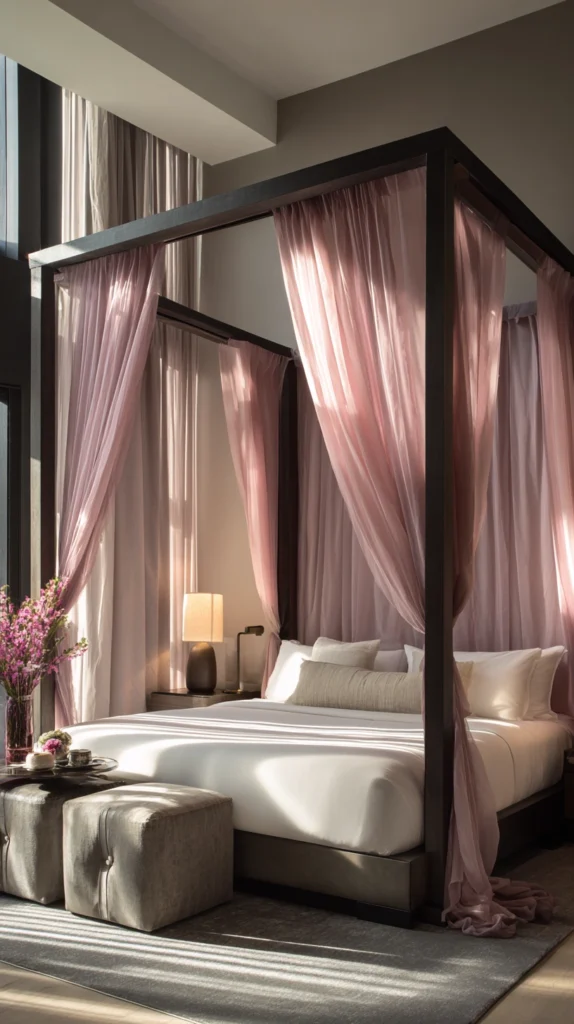
Budget: $800 – $4,000
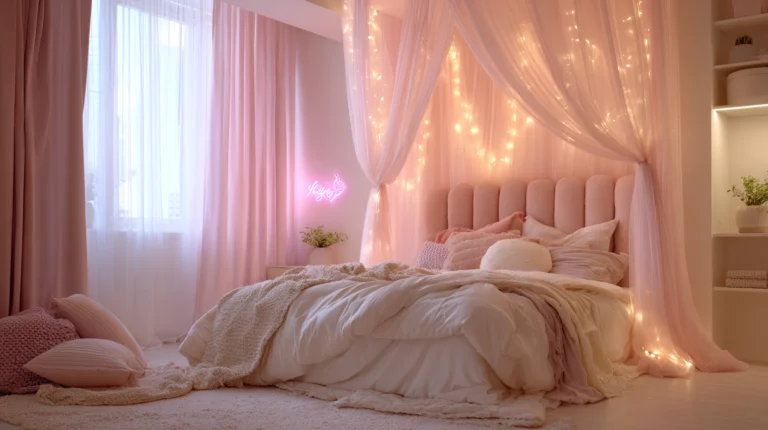
A canopy bed — a genuine four-poster with a fabric canopy, floor-to-ceiling curtain panels on each post, and a ceiling-mounted fabric panel above the mattress — is the single furniture element that most completely transforms a bedroom into a boutique hotel suite. The canopy bed creates a room within the room, an enclosed sleeping space of extraordinary intimacy and visual drama, and in a deep or pale pink fabric it communicates the luxury hotel aesthetic from every angle.
A solid timber or upholstered four-poster bed frame costs $800–$2,500. Canopy curtain panels in silk, velvet, or linen in the bedroom’s pink tone run $60–$200 per panel — six to eight panels for a full canopy. A ceiling-mounted fabric panel costs $100–$300 in materials and basic installation. A canopy bed in pink requires the ceiling height to accommodate the visual weight of the overhead element — a minimum of 2.7 metres is needed for the canopy to read as generous rather than compressed.
Style tip: Line the inside of the canopy panels in a contrasting or complementary fabric — the same pink in a different texture, or a warm gold or cream lining against a deep pink exterior — so the interior of the sleeping space has its own material identity distinct from the exterior. The boutique hotel canopy bed is always finished on both the visible and the intimate face of the fabric, and the inner lining is the detail that communicates the quality of the original specification rather than the afterthought.
4. The Pink and Champagne Gold Room
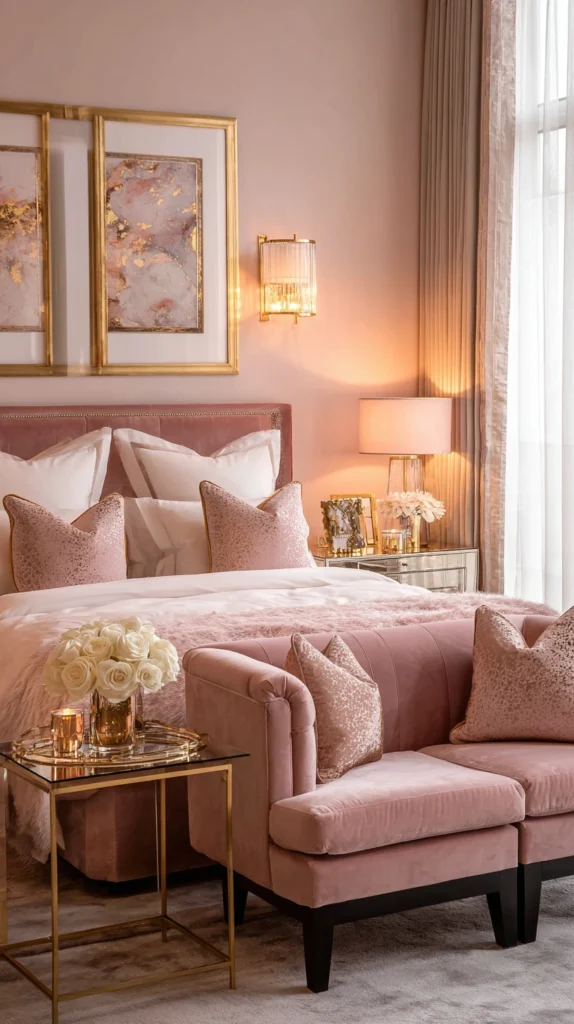
Budget: $500 – $3,000
A bedroom in a warm, sophisticated pink — dusty rose, antique rose, or deep blush — combined with champagne gold accents throughout creates the colour and material combination most associated with the luxury hotel suite aesthetic. Champagne gold is the metal that most specifically references celebration, and in a pink bedroom it creates a quality of effortless glamour that brass, chrome, and matte black all reach for in different ways and none quite achieves.
Champagne gold bedside lamp bases cost $60–$200 each. A champagne gold mirror runs $100–$400. Champagne gold drawer hardware for the bedroom furniture costs $5–$15 per handle. A champagne gold picture frame for the primary artwork costs $30–$100. Champagne gold curtain pole and rings run $40–$120. All champagne gold elements should be in the same finish — the consistency of the metallic tone is the detail that distinguishes a luxury bedroom from a bedroom with gold accessories.
Style tip: Position one champagne gold element at each height level of the room — a ceiling or high-wall element at 200 centimetres, a lamp or mirror at 120–150 centimetres, and a hardware or accessory element at 70–90 centimetres. The vertical distribution of the metallic accents creates the three-dimensional quality of a designed room rather than the flat quality of a room where the gold is applied at a single height.
5. The Luxury Pink Bedding Edit
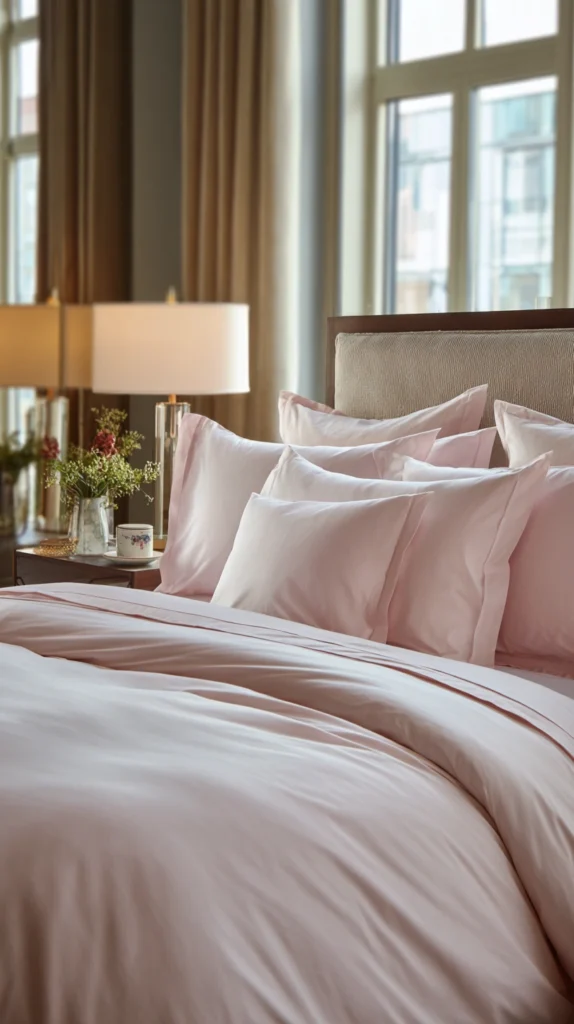
Budget: $300 – $1,500
Hotel bedding quality is determined by three specifications that domestic bedding typically compromises on: thread count above 400, natural fibre content of 100 percent, and a size that is genuinely generous for the bed it covers. A luxury pink bedding set — in a 600-thread-count Egyptian cotton in the palest blush, with a wide hem stitch and matching oversized pillowcases — communicates the boutique hotel quality through the bedding alone before any other element in the room is considered.
A 600-thread-count Egyptian cotton duvet cover in blush pink costs $200–$500. Matching pillowcases run $40–$100 per pair. A pink cashmere or fine merino throw for the foot of the bed costs $150–$400. A blush silk or satin pillowcase for the sleeping pillow runs $30–$80. Press the bedding before the overnight stay — the hotel quality is not only in the material but in the pressed, tight, hotel-cornered making of the bed, and pressing the duvet cover before making the bed is the ten-minute investment that produces the hotel quality.
Style tip: Use a minimum of six pillows on the bed in two distinct categories — the sleeping pillows in the highest thread count available, pressed and stacked against the headboard, and the decorative cushions in a complementary fabric and colour in front of them. The six-pillow hotel bed arrangement is the specific configuration that most consistently communicates luxury hotel quality, and the two-category distinction — sleeping pillow versus decorative cushion — is the detail that gives the arrangement its professional quality.
6. The Dedicated Dressing Area
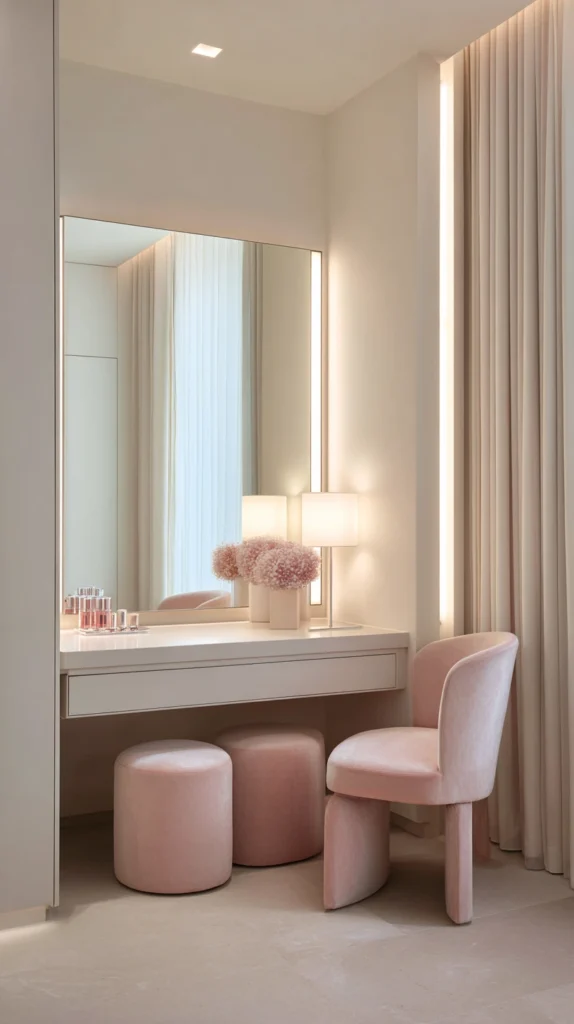
Budget: $500 – $3,000
A dedicated dressing area within the bedroom — either a walk-in wardrobe visible through a doorway, or a section of the bedroom defined by a floor-to-ceiling mirror, a well-lit dressing table, and a upholstered dressing chair — creates the boutique hotel suite quality of a bedroom that has been designed for the full sequence of daily rituals rather than for sleeping alone. The dressing area communicates that the bedroom is a suite rather than a room.
A large floor-to-ceiling mirror in a simple champagne or warm gold frame costs $200–$600. An upholstered dressing chair in pink velvet or blush linen runs $200–$600. A dressing table with a lit mirror costs $200–$800. A small chandelier or a statement pendant above the dressing area costs $150–$600. Good lighting in the dressing area is the functional specification that most determines whether the dedicated dressing space reads as a luxury feature or as a vanity table in a corner.
Style tip: Light the dressing area with a warm-toned light source at face level rather than overhead — a mirror with integrated warm LED lighting, or two sconce lights positioned at each side of the mirror at face height. Overhead lighting for a dressing area creates shadows under the chin and eyes that neither flatter the person using the mirror nor communicate the luxury quality of a space designed for its user. Face-level warm light is the functional luxury that all good hotel dressing areas provide.
7. The Pink Feature Wall With Luxury Wallpaper
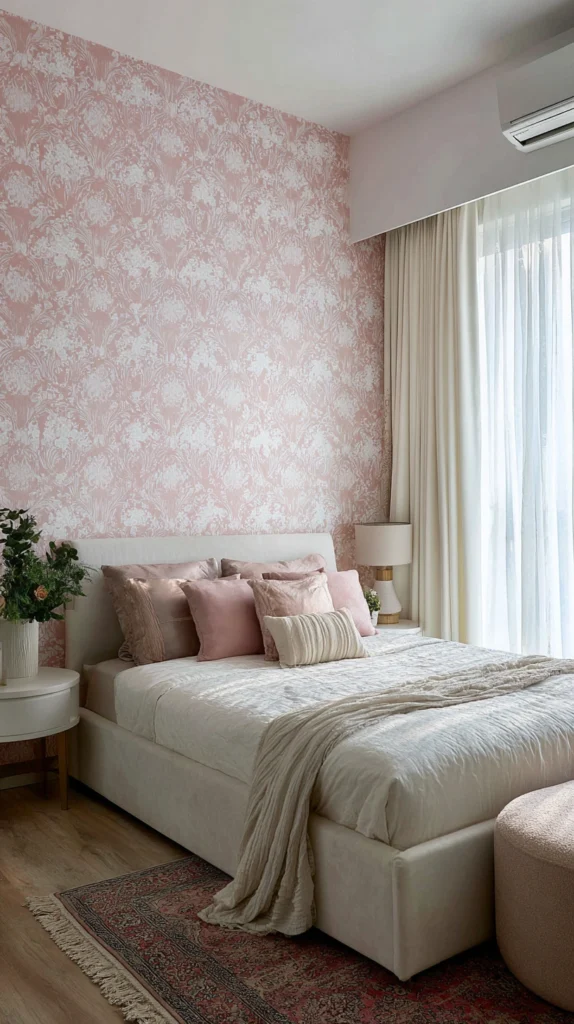
Budget: $200 – $1,500
A feature wall in a luxury wallpaper — hand-blocked botanical prints, silk-effect damask, or a large-scale chinoiserie pattern in pink tones — behind the bed creates the most visually rich and most specifically boutique hotel of all the bedroom wall treatments. Luxury wallpaper on the bed wall is the decoration that does the most design work per square metre of any bedroom element and the one that most clearly communicates that the room was specified rather than decorated.
A luxury wallpaper in a botanical or damask pattern costs $80–$300 per roll. A standard double-bed wall requires two to three rolls — $160–$900 in wallpaper. Installation by a professional paper hanger adds $200–$500 for a feature wall. Silk-effect or fabric-backed wallpaper runs $150–$400 per roll and produces the most specifically luxurious surface quality. The remaining walls should be painted in a tone drawn from the wallpaper’s background colour to create the harmonious room-within-a-room quality of a wallpapered feature in a considered hotel suite.
Style tip: Hire a professional wallpaper hanger for luxury wallpaper rather than attempting a DIY installation. Luxury wallpaper is significantly more expensive per roll than standard wallpaper and significantly less forgiving of the misalignment, bubbling, and visible seams that an inexperienced installation produces. The professional installation cost is a modest addition to the wallpaper cost and the quality difference in the finished result is substantial.
8. The Boutique Hotel Lighting Plan
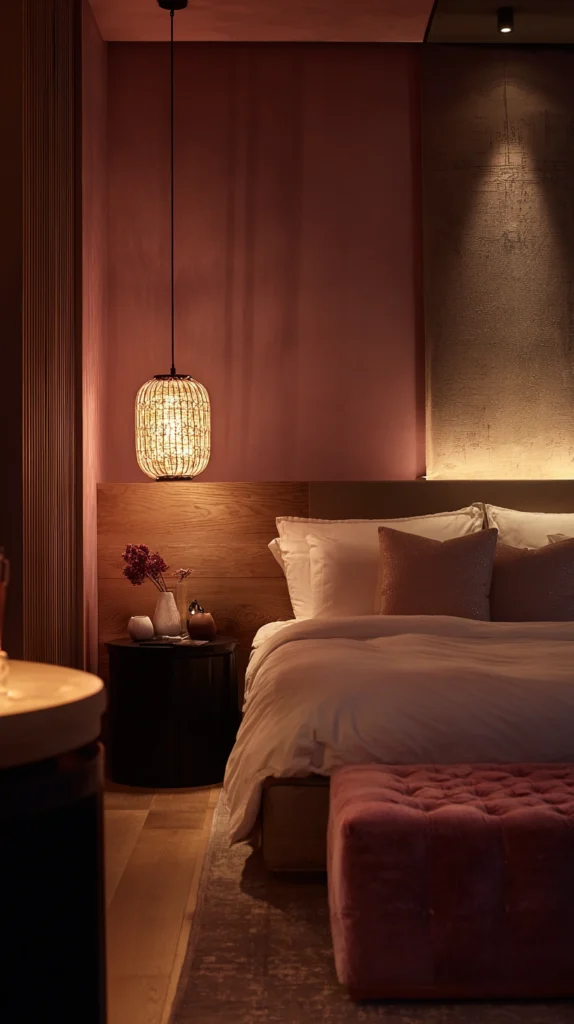
Budget: $300 – $1,500
A considered lighting plan — a statement pendant above the bed, bedside wall sconces at the correct height rather than table lamps on bedside tables, a floor lamp in the seating corner, and recessed accent lighting highlighting the artwork — creates the layered, atmospheric lighting quality of a boutique hotel suite at the cost of careful specification rather than expensive equipment. The lighting plan is the technical investment that most distinguishes a luxury room from an expensive room.
A statement pendant light in a warm pink or gold tone costs $100–$400. Bedside wall sconces cost $60–$200 each. A statement floor lamp in a complementary finish runs $100–$300. Recessed accent lighting for artwork costs $80–$200 for basic track lighting. The boutique hotel lighting plan requires every light source to be on a dimmer — the ability to reduce every light in the room to its most ambient level is the control that creates the evening atmosphere the luxury bedroom exists for.
Style tip: Install all bedroom lights on separate dimmer circuits rather than on a single switch so the pendant, the sconces, and the accent lights can be adjusted independently. A boutique hotel suite is typically managed from a single bedside panel that controls every light in the room — replicating this with a bedside dimmer for each circuit produces the complete control that hotel lighting design provides and that domestic lighting design rarely considers.
9. The Pink Sitting Area
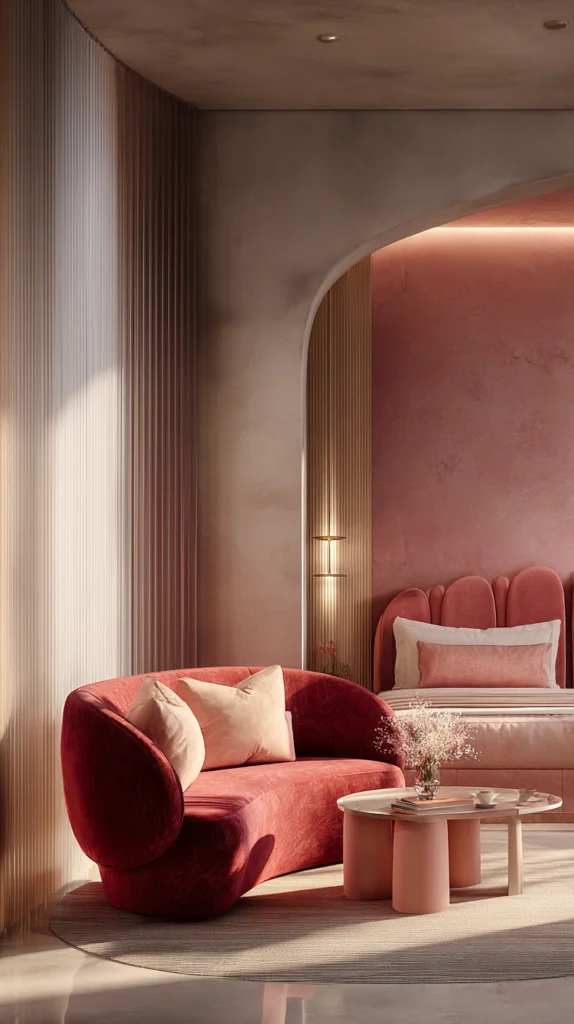
Budget: $600 – $3,000
A sitting area within the bedroom — a sofa or a pair of armchairs in the bedroom’s pink tone, a coffee table, a floor lamp, and a rug beneath the seating that defines the zone as a separate space within the larger room — creates the suite quality that distinguishes a hotel room from a hotel suite. A bedroom with a sitting area is a suite; one without is a bedroom. The distinction is entirely a question of whether the room was designed for multiple activities or for sleeping alone.
A two-seat sofa in a complementary fabric to the bed — velvet, bouclé, or linen in a pink or blush tone — costs $600–$2,000. A pair of armchairs runs $400–$1,500. A small coffee table in marble or warm timber costs $200–$600. A floor lamp above the sitting area costs $100–$300. A rug defining the sitting area costs $200–$600. The sitting area should be positioned so it faces toward a window or a significant artwork rather than toward the bed — a seating area that faces the bed creates an awkward mutual observation between the two zones.
Style tip: Choose a sofa or armchairs in a fabric that is different from but related to the bed upholstery — the bed in velvet and the sofa in a complementary bouclé, or the bed in linen and the seating in a slightly deeper toned velvet. The material variation between the sleeping and the sitting zone creates the suite quality of two designed spaces within a single room; identical materials throughout create a showroom quality that a boutique hotel suite avoids.
10. The Pink Fireplace Feature
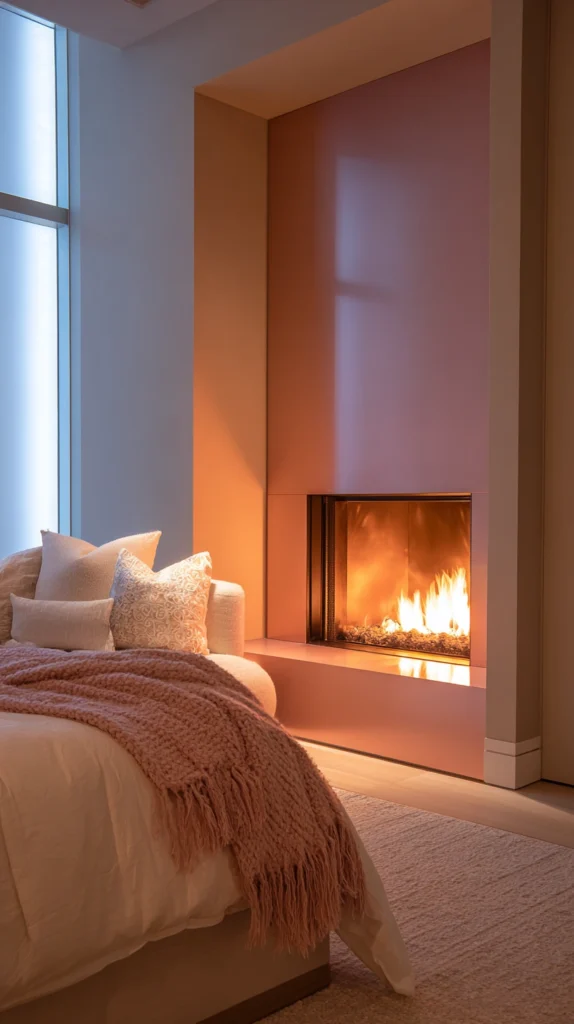
Budget: $500 – $5,000
A fireplace in the bedroom — whether a working wood-burning or gas fireplace, a bioethanol fire in a designed surround, or even a decorative mantelpiece with a realistic electric fire insert — creates the most specifically romantic and most comprehensively boutique hotel of all the bedroom luxury features. A bedroom with a fireplace is categorically a different kind of room from a bedroom without one, and in a pink room the fireplace produces the specific combination of warm light, warm colour, and warm temperature that is the ultimate version of the luxury pink bedroom.
A bioethanol fireplace insert in a designed surround costs $400–$1,500. A gas fireplace with a remote control runs $1,500–$5,000 installed. A realistic electric fire insert in an existing or new mantelpiece costs $200–$800. A decorative mantelpiece to frame the fire costs $300–$1,200. The mantelpiece surface is the bedroom’s most intimate display surface — a few candles, one significant object, and a mirror above it — and it should be styled with the same restraint and quality that a boutique hotel fireplace mantel consistently receives.
Style tip: Style the mantelpiece with a maximum of three objects — one tall, one medium, one small — in a specific relationship to each other and to the mirror above them. A mantelpiece with three considered objects reads as a luxury surface; one with many objects of various scales reads as a decorated mantelpiece. The restraint of three objects is the styling decision that gives the fireplace feature its specific quality of considered luxury.
11. The Custom Scent and Aromatherapy Experience
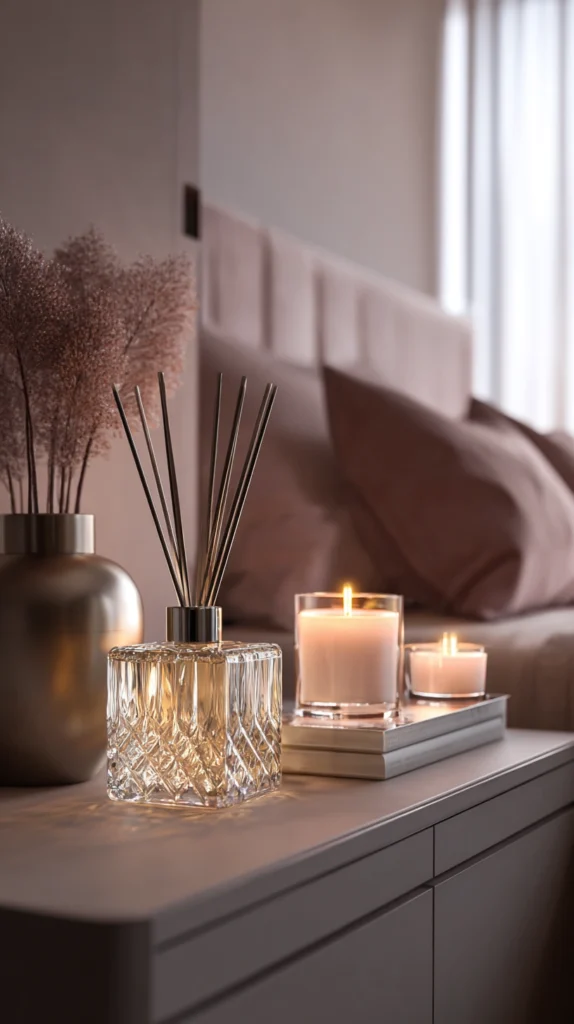
Budget: $80 – $400
A boutique hotel bedroom has a specific scent — chosen for the property, consistent throughout the room, and experienced before any visual element is registered on entry. A custom bedroom scent — a signature candle, a reed diffuser, and a linen spray all in the same fragrance — creates the olfactory dimension of the luxury bedroom that no visual improvement can substitute. The first impression of any room is olfactory, and the luxury bedroom that smells as considered as it looks is the luxury bedroom that most completely replicates the boutique hotel arrival experience.
A luxury scented candle in a ceramic vessel costs $30–$80. A matching reed diffuser runs $25–$60. A linen spray in the same fragrance costs $20–$50. A room diffuser with essential oils runs $30–$100. Choose a fragrance that references luxury rather than domesticity — white florals, sandalwood, cashmere, or a specific floral-amber combination — and apply it consistently as the room’s single signature scent rather than varying the fragrance between different sources.
Style tip: Apply the linen spray to the bedding and the curtains as well as using the candle and diffuser for ambient fragrance. A room that is scented through the air and through the fabrics creates a more complete olfactory experience than one scented only through the air — the fragrance released by warm fabric is different from diffused air fragrance and the combination of both sources creates the layered scent quality of a genuinely considered hotel room.
12. The Bespoke Artwork Program
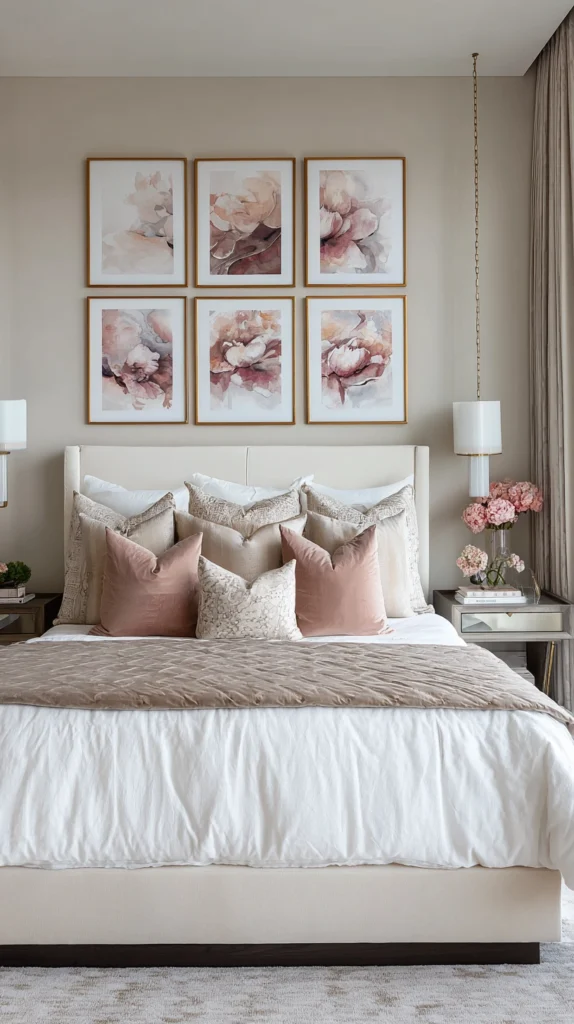
Budget: $200 – $2,000
A coordinated selection of artwork chosen specifically for the pink bedroom — in a consistent palette of blush, gold, and botanical tones, at the correct scale for the walls they occupy, installed with gallery-quality lighting — creates the cultural dimension of the boutique hotel suite that generic or randomly chosen prints cannot provide. Boutique hotels are defined as much by their artwork as by their physical design, and the bedroom that was given artwork with the same seriousness as its furniture and its textiles communicates a quality of completeness that the bedroom without considered art never achieves.
A large-scale art print at 100 by 80 centimetres costs $80–$300 framed. An original artwork of equivalent scale runs $200–$2,000. A pair of smaller flanking prints cost $30–$100 each. Gallery-quality picture lights above the primary artwork run $60–$200. The artwork should be chosen for the quality of the image and the relationship of its palette to the bedroom rather than for the name recognition of the artist — a beautiful image in the right colours earns its wall more completely than a recognisable name in the wrong palette.
Style tip: Hang the primary bedroom artwork so its centre sits at exactly 145 centimetres from the floor — the gallery standard that places the work at the eye level of a standing person viewing it from a metre or more away. Most domestic artwork is hung too high, and artwork hung too high creates the disconnection between the furniture below and the art above that makes a bedroom feel like it has art placed on its walls rather than art hung in the room.
13. The Pink Luxury Bath Connection
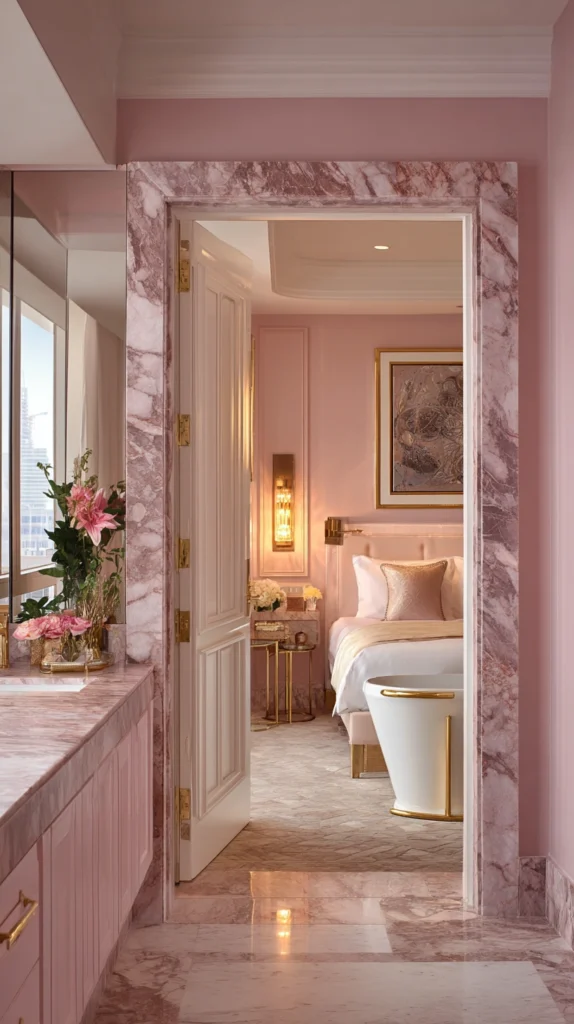
Budget: $500 – $3,000
A bathroom that connects visually to the pink bedroom — through a glass partition, an open doorway, or a shared visual axis that allows the pink palette and the warm lighting of the bedroom to read alongside the bathroom materials — creates the luxury suite quality of a connected sleeping and bathing environment. The bathroom that is visible from the bed, with its marble surfaces and its warm light and its white towels stacked in the boutique hotel fold, is the bathroom that completes the suite rather than merely being adjacent to it.
A glass partition between bedroom and bathroom costs $600–$2,000. An architectural open doorway with no door runs $200–$600 in structural work. A mirror positioned in the bathroom that reflects the bedroom beyond it costs $80–$300. Pink towels in a quality weight — 600 grams per square metre — folded in the hotel style on a timber towel ladder run $20–$60 per towel. The visual connection between the pink bedroom and the bathroom is more powerful than any individual element within either room.
Style tip: Extend the pink palette into the bathroom through one or two significant elements rather than attempting a full pink bathroom renovation. A pink bath sheet in a quality weight, a pink ceramic soap dispenser, and a pink-toned botanical print in the bathroom create the palette continuity between the two rooms that makes the suite feel connected and designed rather than two adjacent rooms that were decorated separately.
14. The Hotel-Quality Turndown Service Setup
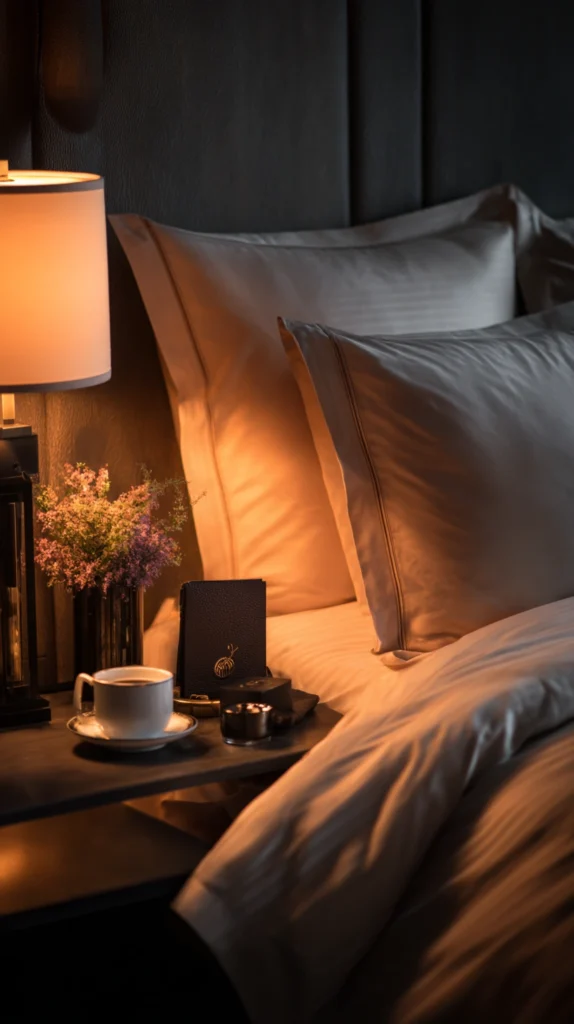
Budget: $50 – $200
A boutique hotel bedroom is not experienced at a single static moment — it is experienced at check-in, at rest, at sleep, and at wake-up, and the turndown service transforms the room from its daytime to its evening version with a specific set of actions. Replicating the turndown service at home — turning down the bed, placing a candle or a small gift on the pillow, closing the curtains, dimming all lights, and placing a carafe of water and a glass beside the bed — creates the specific quality of arriving at your bedroom in the evening to find it prepared for you rather than returning to it in the state you left it.
A small carafe and matching glass set for the bedside costs $20–$60. A pillow chocolate or a small luxurious treat for the evening costs $2–$5 per occasion. A candle lit beside the bed at the correct hour costs whatever the candle costs per burn. Pre-set the bedroom lighting to the evening mode — all lights dimmed, the pink warmth of the room at its most flattering — before retiring for the evening. The turndown ritual is the daily practice that makes the luxury bedroom genuinely luxurious rather than merely beautiful.
Style tip: Create a simple turndown checklist and perform it consistently rather than occasionally. The boutique hotel quality comes from the consistency of the care rather than from the grandeur of the individual elements — a room that is turned down every evening is a room that is experienced as luxurious every evening, while a room that is turned down when the occasion seems to warrant it is a room that is occasionally experienced as luxurious and regularly experienced as a bedroom. The consistency is the luxury.
15. The Monogrammed and Personalised Detail Layer
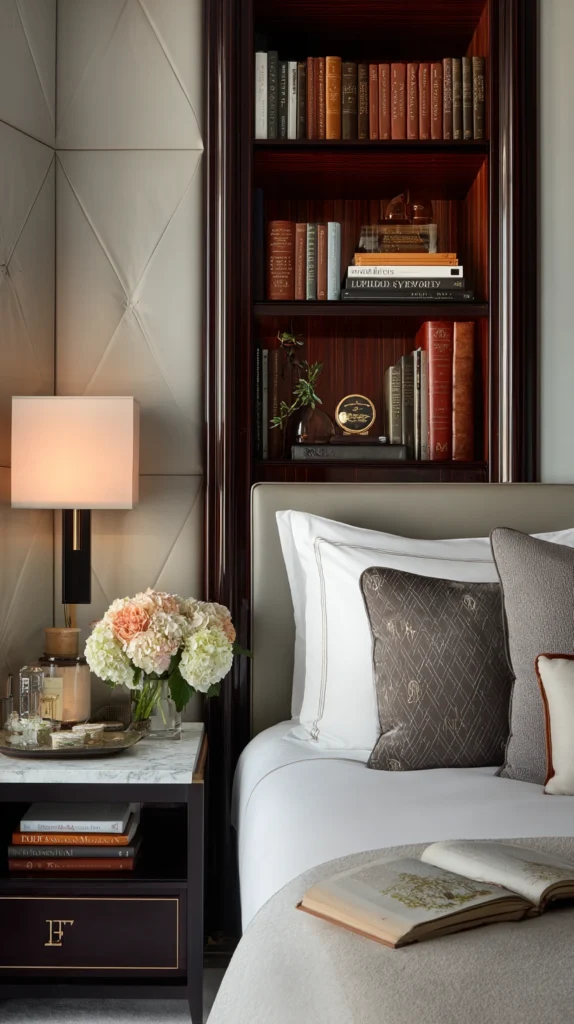
Budget: $50 – $300
A boutique hotel suite is distinguished from a standard hotel room by the details that communicate that the space was created for a specific person rather than for a generic guest — the monogrammed robe, the personalised room spray, the name card on the pillow, the book selected for the specific guest rather than left as a generic amenity. Replicating this quality in a personal bedroom means introducing elements that are specifically, irreplaceably yours — a monogrammed cushion, a framed photograph of personal significance, a piece of jewellery displayed rather than stored, a book currently being read with a beautiful bookmark at the current page.
A monogrammed cushion in the bedroom’s pink tone costs $30–$80. A quality photograph frame for a personally significant image runs $20–$80. A beautiful book on a bedside stand — not a decoration but a genuinely current read — costs $15–$30. A small tray displaying a piece of jewellery or a meaningful object costs $10–$30. The personalised detail layer is the element that transforms the luxury pink bedroom from a beautiful room into a room that belongs to you — which is the specific quality that the best boutique hotels are always trying to create and that a personal bedroom has the advantage of achieving genuinely.
Style tip: Edit the personalised details as carefully as the designed ones — one meaningful photograph rather than fifteen, one currently read book rather than a stack of unread ones, one piece of significant jewellery rather than a cluttered jewellery stand. The personal details earn their place in the luxury bedroom by being specific and significant rather than by being numerous. A room with one deeply personal detail communicates intimacy; a room with many personal details communicates accumulation.
The luxury pink bedroom that feels like a boutique hotel is not the most expensively furnished or the most elaborately decorated. It is the one where every decision was made with the quality of the experience rather than the impression of the design as the criterion — where the bedding was chosen for how it feels at midnight, where the lighting was specified for how it reads at seven in the evening, where the scent was selected for the first impression on entering, and where the pink was chosen as a serious colour decision rather than a decorative gesture.
Begin with the pink that is right for the specific room and the specific quality of luxury being reached for. Apply it with the commitment that the colour deserves. Surround it with materials of quality, light it with warmth and consideration, and maintain it with the consistency of a hotel that cares about its guest’s experience every day rather than only on arrival. The boutique hotel bedroom is the one that is as beautiful to live in as it is to photograph, and the test of whether it has been achieved is not how it looks on the first morning but how it feels on the thousandth.