15 Modern Bedroom Ideas That Look Expensive on a Budget
15 Modern Bedroom Ideas That Look Expensive on a Budget
There is a specific frustration that comes from scrolling through bedroom inspiration and finding that every room that looks genuinely beautiful also appears to cost more than a reasonable person would spend on an entire apartment renovation. The conclusion most people draw from this is that beautiful bedrooms require significant money. The correct conclusion is that beautiful bedrooms require significant decisions, and decisions are free.
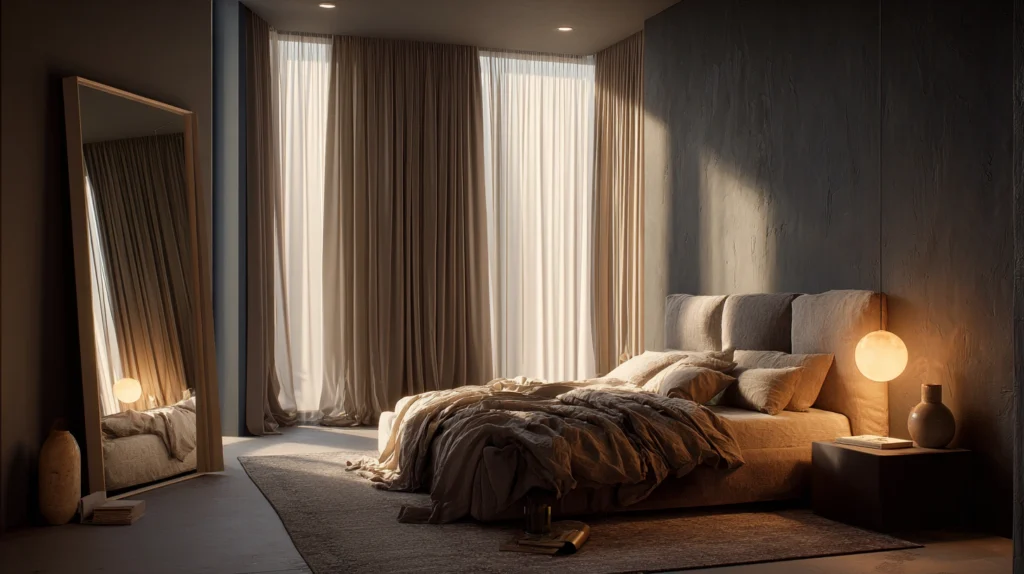
The bedroom that looks expensive on a budget is not the bedroom that found cheaper versions of expensive things. It is the bedroom that understood what makes expensive things look the way they look — the scale, the restraint, the material quality at the specific points where material quality is most visible, the lighting at the right temperature, the surfaces edited to exactly what belongs on them — and applied those principles at a fraction of the cost. The principles are not proprietary. They are available to every bedroom at every budget level.
Each idea below is a specific, actionable approach to one element of the expensive-looking budget bedroom. Each includes what you will need, what it will cost, and a practical tip to make it work as well as the rooms it is reaching for.
1. The Dark Painted Accent Wall
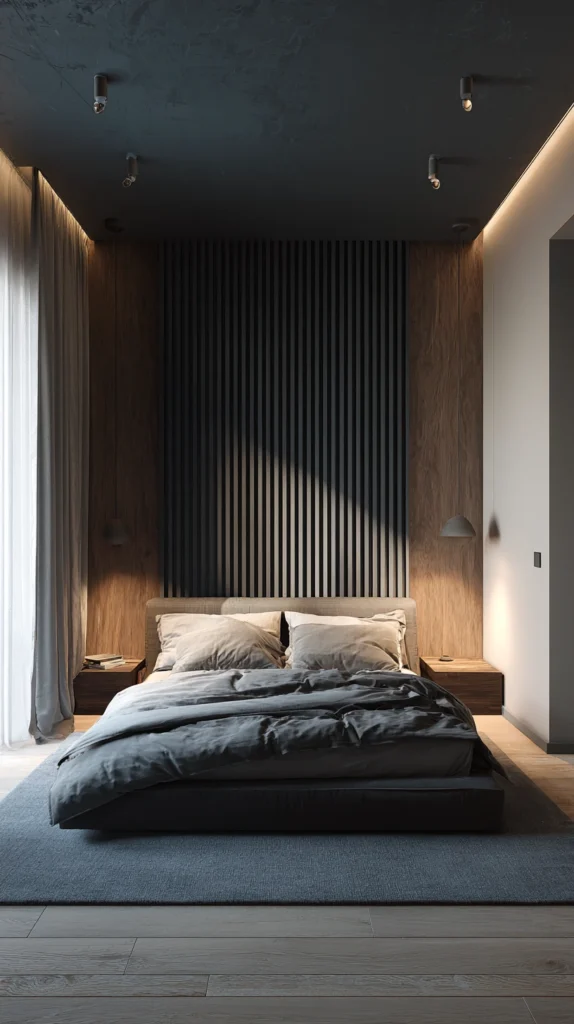
Budget: $20 – $80
A single wall — the bed wall, painted in a deep, rich colour while the remaining three walls stay white or a lighter tone — is the change that most immediately transforms a bedroom from a room with furniture in it to a room with a designed intention. Deep colour on the bed wall creates the visual depth that makes a small bedroom feel considered rather than confined, and it costs one tin of paint and an afternoon.
Deep teal, warm charcoal, forest green, inky navy, or warm plum — all cost $20–$60 per 2.5-litre tin in a quality emulsion. One tin covers the standard bed wall with two coats. The remaining walls stay in their existing colour or are repainted in a warm white — $25–$60 for the room if repainting all four walls. The dark accent wall works because it creates the contrast that makes both the dark wall and the light walls read more intensely than either would alone.
Style tip: Paint the accent wall in a flat or matte finish rather than a satin or eggshell. A matte dark wall absorbs light and creates depth; a satin dark wall reflects light and creates a surface that reads as painted rather than as a quality material choice. The finish specification costs nothing additional and makes a significant difference to the quality of the result.
2. The Oversized Headboard Upgrade
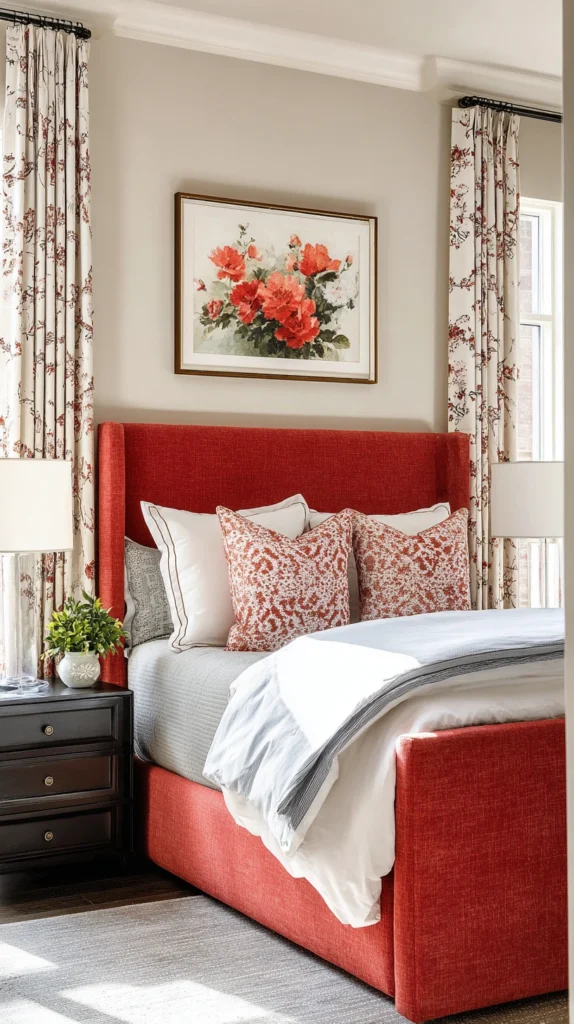
Budget: $80 – $400
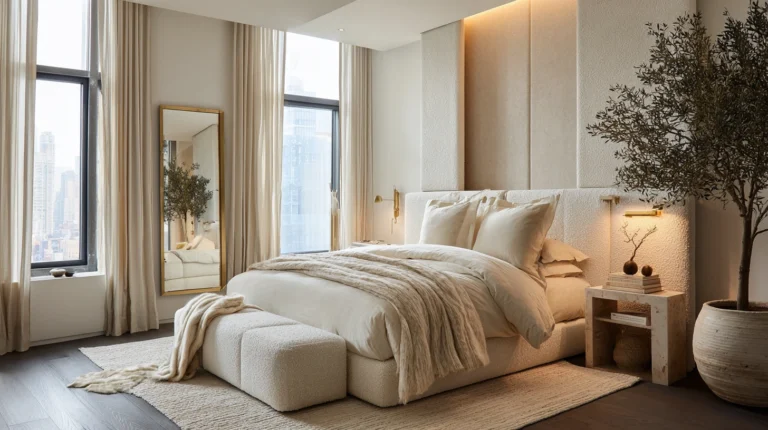
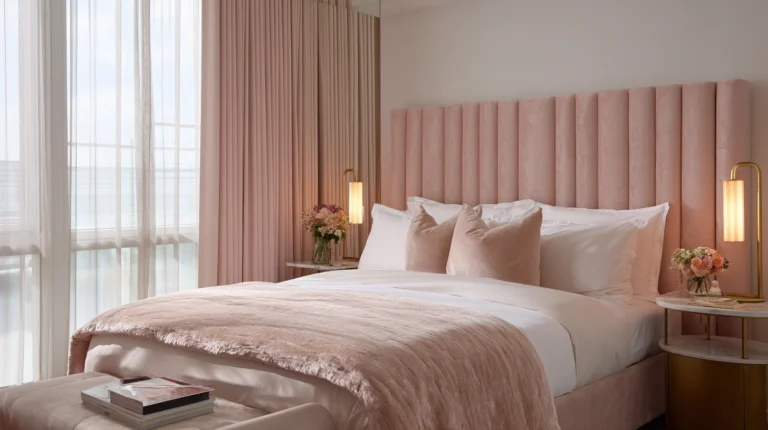
A headboard that is taller and wider than the standard — one that reaches toward the ceiling rather than sitting modestly above the mattress, and that extends beyond the bed width on each side — immediately communicates the scale that expensive bedrooms understand and budget bedrooms typically compromise on. Scale is free to specify and costs the same as a standard headboard in materials; the decision to go large is what is expensive in its effect.
A DIY upholstered headboard in a quality fabric costs $60–$200 in materials — a length of foam, a sheet of plywood cut to shape, a staple gun, and a metre and a half of fabric. A purchased oversized headboard runs $150–$400. A height of 140–180 centimetres and a width extending 15–20 centimetres beyond the mattress on each side are the dimensions that produce the expensive-looking scale. A headboard at standard height and standard width looks like a headboard; one at generous height and width looks like a designed bedroom element.
Style tip: Choose a headboard fabric with a slight texture — a bouclé, a linen, a velvet — rather than a flat plain weave. Textured fabric on a large headboard catches the light and creates visual interest that a flat fabric of equivalent colour does not. The texture is the detail that gives the large headboard the material quality of an expensive piece despite the modest cost of the fabric.
3. The Linen Bedding Set
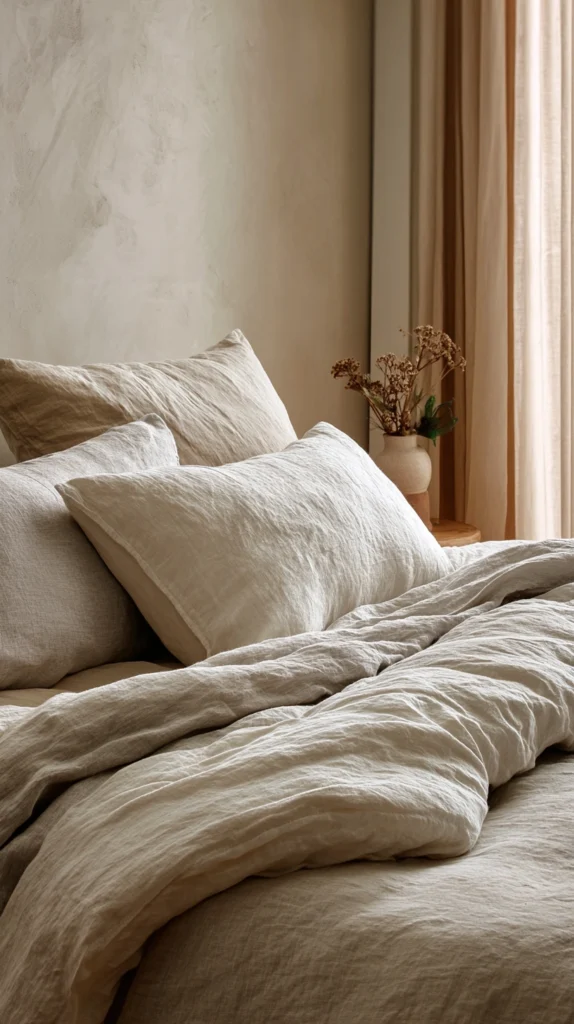
Budget: $60 – $200
Linen bedding in a warm white, natural, or soft tonal colour is the material upgrade that produces the greatest improvement in the perceived quality of a bedroom for the money spent. The specific quality of washed linen — the slight texture, the relaxed drape, the way it looks better the more it is used — reads as expensive without requiring an expensive price point, and a linen duvet cover in the right colour on a well-made bed communicates more about the quality of the room than the cost of any piece of furniture.
A washed linen duvet cover in a double size costs $60–$150. Matching linen pillowcases run $20–$50 per pair. A linen throw folded at the foot of the bed costs $30–$80. Pre-washed linen arrives already in its best state — the stiffness removed, the texture developed, the drape natural. Choose warm white or natural rather than brilliant white — brilliant white linen reads as clinical; warm white reads as the specific quality of genuinely good bedding.
Style tip: Make the bed in the hotel style rather than the domestic style — flat sheet tucked with hospital corners, duvet pulled smooth, pillows stacked at right angles with the opening facing away from the viewer. The hotel-made bed communicates quality through the precision of its making rather than through the cost of the materials, and the difference between a casually made linen bed and a precisely made linen bed is the difference between expensive-looking and merely nice.
4. The Decluttered Surface Edit
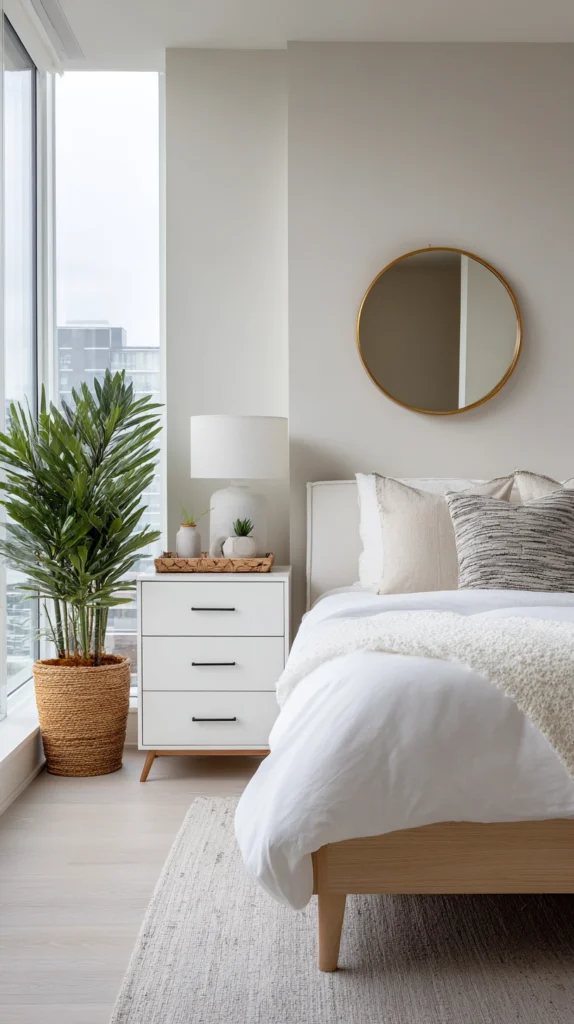
Budget: $0
The single most reliably effective improvement available to any bedroom at any budget is the removal of everything from every surface followed by the return of only what genuinely earns its position. Surfaces in a bedroom accumulate at a faster rate than they are edited, and the accumulated surface communicates the opposite of luxury — it communicates a room that has not been attended to. The expensive-looking bedroom has clear surfaces not because it has fewer things but because it has made stricter decisions about what belongs on each surface.
The surface edit costs nothing. Walk through the bedroom with a box and remove everything from every surface — the bedside tables, the chest of drawers, the windowsill, the floor. Return only what is used every day and what is genuinely beautiful. The things returned should be on the surface; the things not returned should be stored, donated, or discarded. The edited bedroom looks more expensive immediately because cleared surfaces communicate attention and intention, which are the qualities that make expensive bedrooms look the way they look.
Style tip: When returning objects to the edited surfaces, arrange in odd-numbered groups and leave one surface completely clear. A completely clear surface in a bedroom communicates confidence — the confidence that the room does not need to be filled to be complete — and confidence is the quality that expensive bedrooms communicate above all others.
5. The Statement Mirror
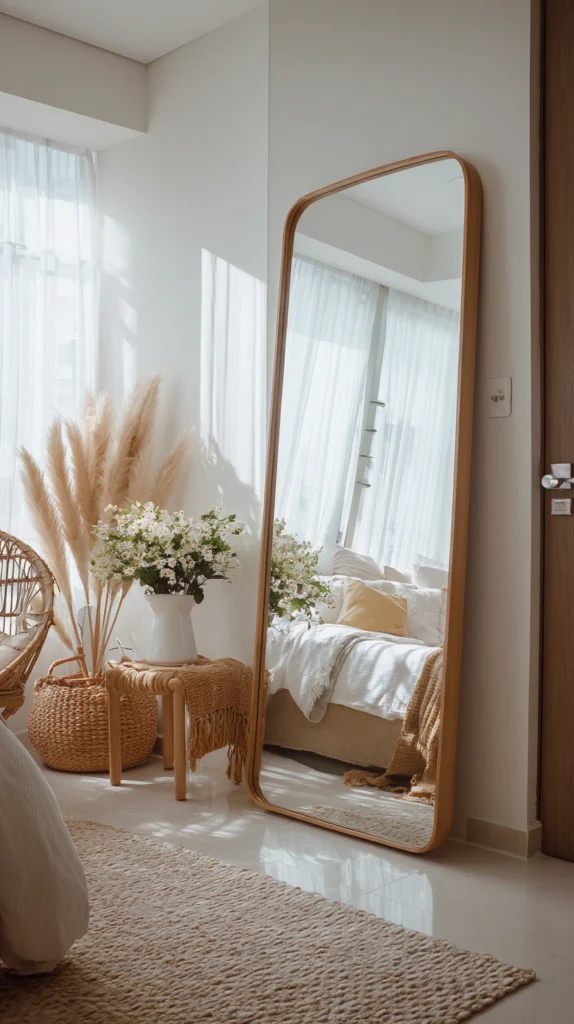
Budget: $30 – $200
A large mirror — leaned against the wall rather than hung, in a simple frame or in a frameless format — makes the bedroom feel larger, reflects the best light in the room back into the space, and communicates a considered design decision from across the room. A large leaned mirror is one of the most cost-effective expensive-looking elements available to any bedroom because its scale and its reflective quality do work that furniture ten times its cost cannot replicate.
A large frameless or simply-framed mirror of 100 by 150 centimetres costs $30–$120 from budget furniture retailers. A vintage or secondhand mirror in a more considered frame runs $20–$100 from charity shops or online listings. Lean rather than hang — the leaned mirror reads as casually confident rather than installed, and the slight forward angle of the lean reflects the lower half of the room where the furniture and the textiles are rather than the ceiling. Clean the mirror before positioning — a dusty mirror reflects a dusty room.
Style tip: Position the mirror to reflect the most attractive element of the bedroom — the natural light from the window, the dark accent wall, the styled bedding — rather than simply placing it wherever wall space exists. A mirror that reflects the bedroom’s best element doubles that element visually; one that reflects a wardrobe door or a blank wall doubles nothing worth doubling.
6. The Upgraded Curtain Treatment
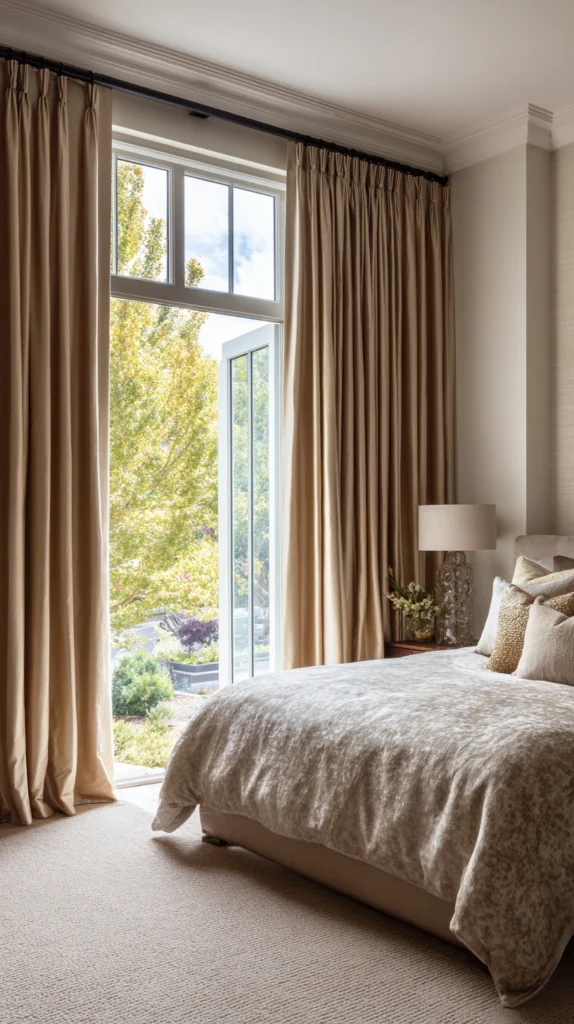
Budget: $40 – $200
Floor-length curtains hung from ceiling height — rather than curtain poles positioned at window-frame height with curtains that barely reach the floor — transform the visual proportions of the bedroom more dramatically than any other single change at this price point. The expensive-looking bedroom always has curtains that begin at the ceiling and end with a slight pool on the floor. The budget bedroom typically has curtains that begin above the window and end 5 centimetres above the floor, and the difference communicates more than the fabric quality.
Inexpensive ready-made curtains repositioned on a ceiling-mounted pole rather than a window-mounted pole cost nothing additional — the curtains already owned become the expensive-looking curtains simply by being rehung at the correct height. New linen or velvet curtains in a quality-looking fabric cost $40–$100 per panel from budget retailers. A ceiling-mounted pole and brackets cost $15–$40. Use two panels per window rather than one — two narrower panels that meet at the centre look considerably more considered than a single wide panel that covers the whole window.
Style tip: Choose curtains that are 15–20 centimetres longer than the distance from the ceiling pole to the floor and allow them to pool slightly rather than hem them to the exact floor length. The pool reads as a deliberately generous curtain treatment; the exact-length hem reads as a curtain that was measured and made to fit, which is the domestic quality the expensive-looking bedroom is specifically avoiding.
7. The Warm Lighting Upgrade
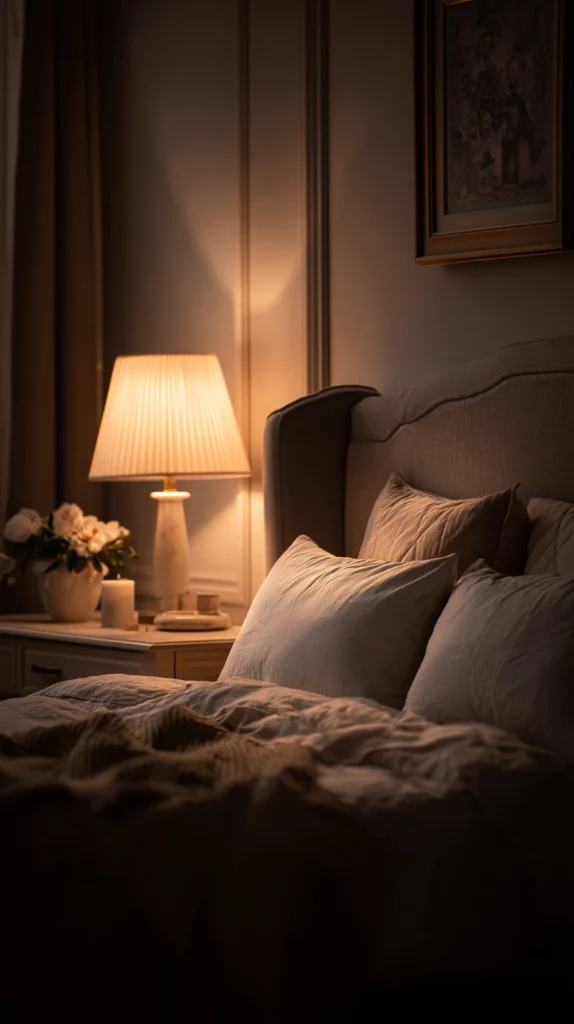
Budget: $30 – $150
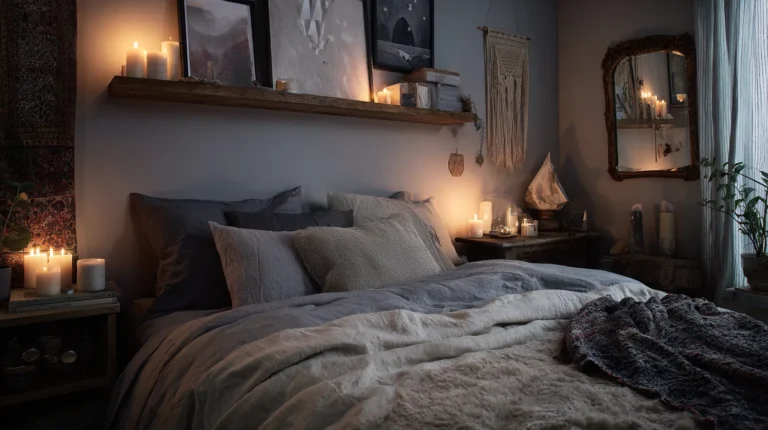
Replacing the overhead ceiling light as the bedroom’s primary evening light source with a combination of warm bedside lamps, a floor lamp, and possibly a string of warm lights creates the atmospheric evening quality that distinguishes every expensive-looking bedroom from every adequate-looking one. The expensive bedroom is not lit by a single overhead source at full brightness. It is lit by multiple warm sources at low levels, and the result at seven o’clock in the evening is a room that looks like a photograph of an expensive bedroom rather than like a bedroom with the light on.
A pair of matching bedside table lamps costs $30–$80. A floor lamp in a simple design runs $40–$120. Smart bulbs that dim to 2700K at the right hour cost $8–$15 each. Warm white fairy lights for supplementary ambient light cost $10–$25. The lighting upgrade requires every visible light source to be changed to 2700K warm white — a single cool bulb in a warm room creates the visual inconsistency that communicates a room where the lighting was not thought about as a whole.
Style tip: Install a dimmer switch on any bedroom ceiling light that does not already have one — $10–$20 and thirty minutes — before investing in additional light sources. A ceiling light at thirty percent brightness on a warm bulb becomes a useful ambient source rather than a room-flattening one, and the dimmer switch turns the existing light into an element of the layered lighting plan rather than the obstacle to it.
8. The Floating Nightstand
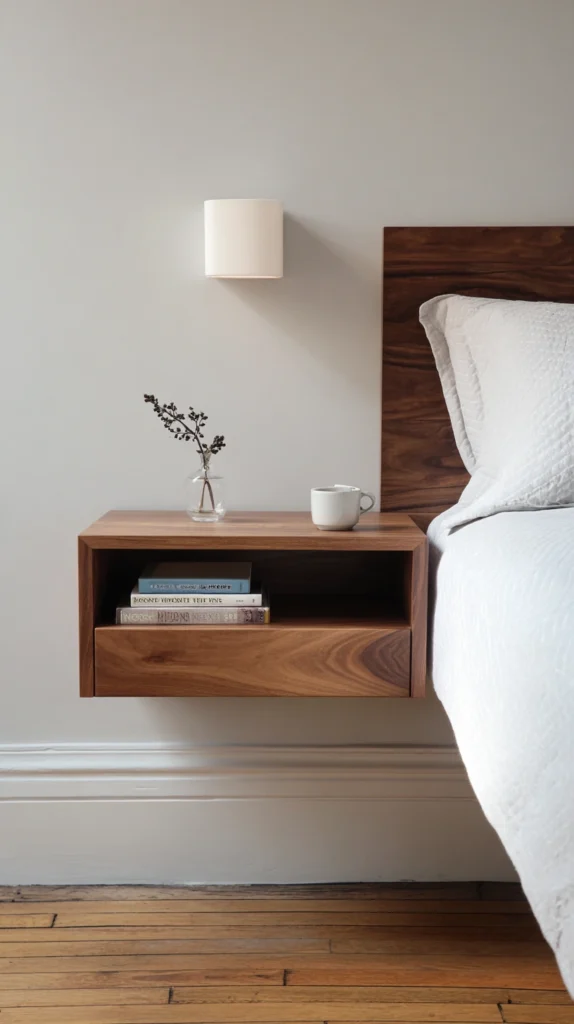
Budget: $30 – $150
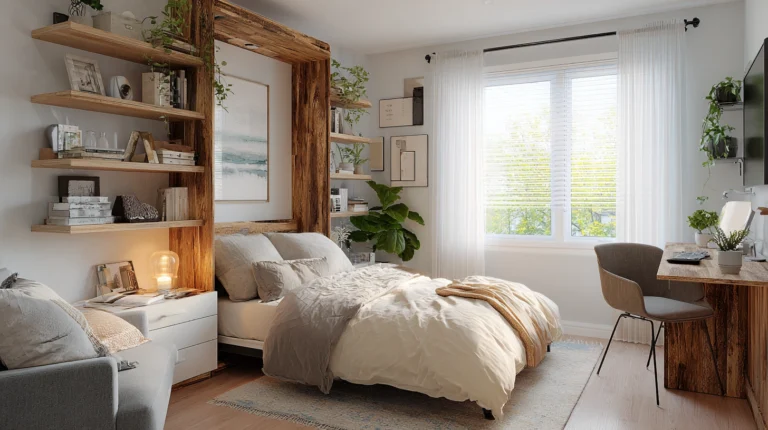
Wall-mounted floating nightstands — a simple timber shelf at the correct bedside height, fixed directly to the wall with no legs visible below — create the clean-lined, furniture-forward quality that expensive bedrooms achieve through custom joinery and that budget bedrooms can replicate with a shelf bracket and a piece of timber. The floating nightstand eliminates the visual gap between the top of a floor-standing table and the bed, creates the impression of bespoke built-in furniture, and keeps the floor clear beneath.
A solid timber shelf of 40 by 25 centimetres costs $15–$30. Heavy-duty shelf brackets cost $8–$20. A pair of floating nightstands for both sides of the bed costs $46–$100 in materials. Fix at the height of the mattress top — approximately 50–60 centimetres from the floor for a standard bed — so the sleeping person can reach the surface without sitting up fully. The floating height is the installation specification that most determines whether the nightstand looks designed or simply installed.
Style tip: Keep the floating nightstand surface limited to three items — a lamp, a book, and one small object — rather than allowing it to become storage for the full contents of the previous nightstand. The restraint of the surface is what makes the floating format look expensive; the same shelf loaded with the accumulation of a floor-standing table looks like a shelf, not a nightstand.
9. The Rugged Layered Rug Approach
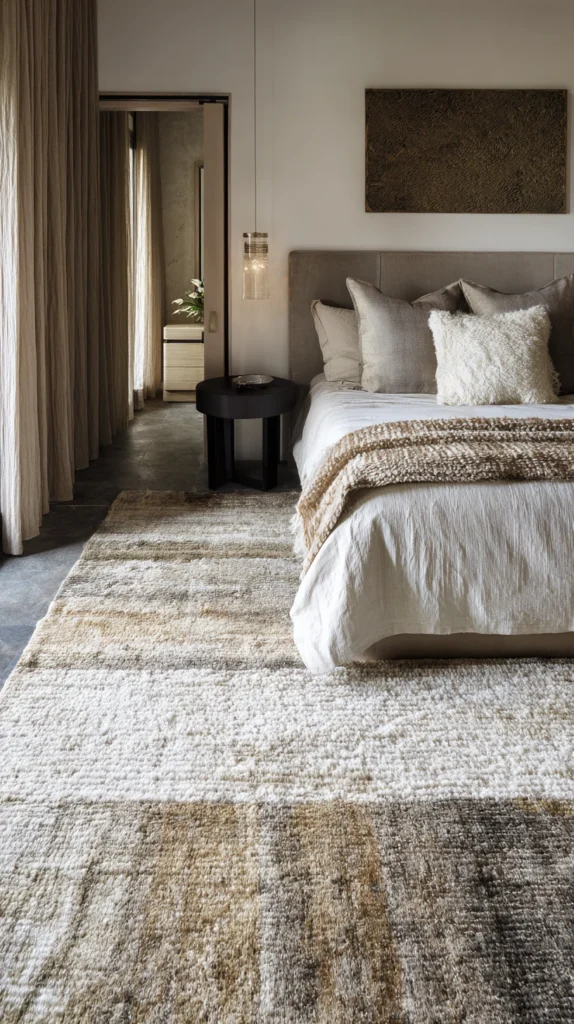
Budget: $60 – $300
A large base rug — natural jute or a simple flatweave — with a smaller, more textural or patterned rug layered over it at a slight angle creates the layered floor treatment that expensive bedrooms achieve with custom-sized rugs and that budget bedrooms can approximate with two overlapping pieces. The layered rug produces the depth and the composed quality of a designed floor without requiring either rug to be exceptional on its own.
A large jute base rug of 200 by 300 centimetres costs $60–$150. A smaller patterned or textural rug of 120 by 180 centimetres for layering runs $30–$100. Position the smaller rug at a 15-degree angle rather than parallel to the base rug — the angle communicates deliberate layering rather than two rugs placed on the same floor. The total cost of the layered approach is less than a single quality rug of the larger size would cost and the result reads as more considered.
Style tip: Place the layered rug so the smaller piece is centred on the foot of the bed rather than centred in the room — the foot-of-bed position is where the eye lands when entering the room and where the rug’s texture and colour read most completely. A rug centred in the room often reads as furniture that was placed to fill space; a rug centred at the foot of the bed reads as a design decision.
10. The Considered Artwork Selection
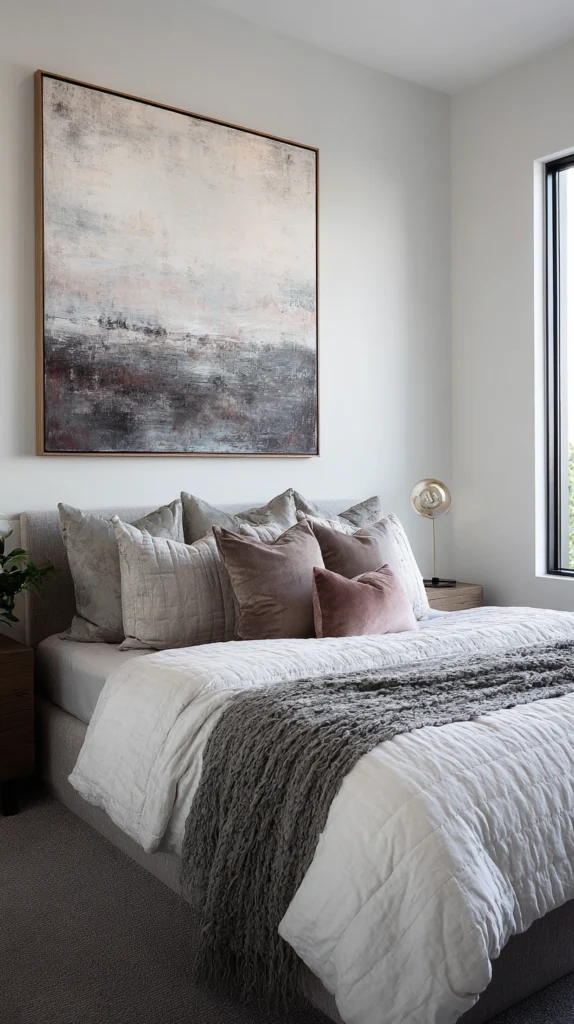
Budget: $20 – $150
One large piece of artwork — at the scale the wall requires rather than the scale that seemed manageable to hang — positioned at the correct height and with its own dedicated lighting is worth more to the expensive appearance of a bedroom than five small pieces arranged in a gallery. The expensive-looking bedroom almost always has one significant artwork rather than multiple modest ones, and the scale and the positioning of that single piece communicates confidence in a way that a gallery of smaller pieces spread across the same wall does not.
A large-format art print at A1 or larger printed at a print shop costs $5–$20. A frame at A1 size runs $15–$60 from budget frame suppliers. A reproduction print from a quality art archive — many nineteenth-century works are free to download and print — costs only the printing and framing. Position the centre of the artwork at 145–150 centimetres from the floor — the standard gallery height that suits both standing viewers and seated viewers from across the room.
Style tip: Choose artwork in a palette that was drawn from the bedroom rather than artwork chosen independently of the room. A print that contains the bedroom’s accent colour, the tone of the bedding, and the depth of the accent wall reads as part of the room’s design; one chosen for its own quality regardless of the room reads as art placed in a bedroom. The relationship between the artwork and the room’s palette is the curation decision that makes the single artwork look like a room decision rather than a picture purchase.
11. The Concealed Storage System
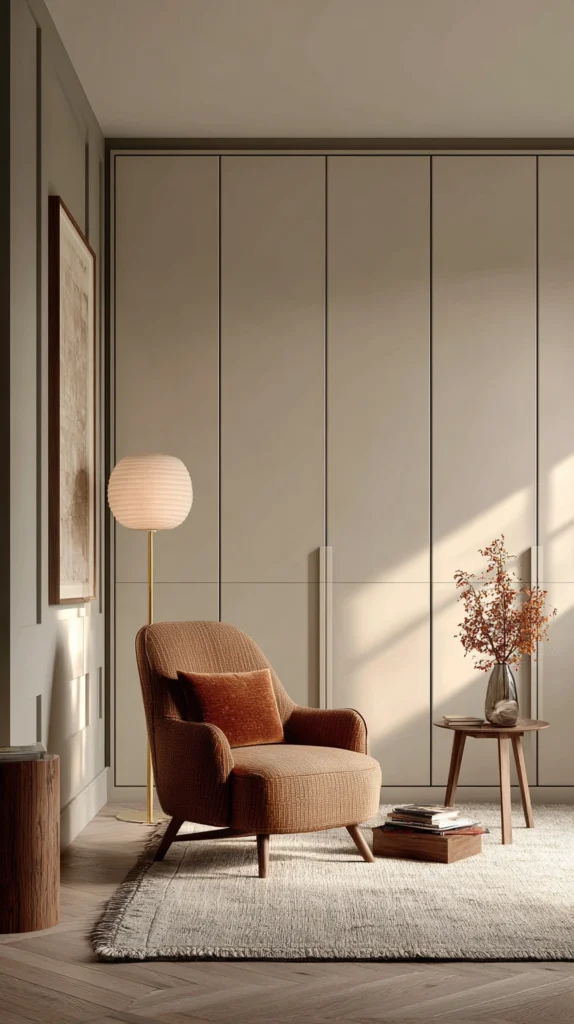
Budget: $100 – $600
The appearance of expense in a bedroom is partly the appearance of no visible storage problem — no visible accumulation of objects without homes, no visible evidence of the domestic logistics of daily life. A concealed storage system — built-in wardrobes with flush doors, a bed frame with storage drawers beneath, a storage ottoman at the foot of the bed — creates the appearance of a bedroom where everything has a place and everything is in it.
A bed frame with integrated storage drawers costs $200–$600. A set of flush-door wardrobe panels added to an existing alcove costs $100–$400 in MDF doors and basic fitting. A storage ottoman at the foot of the bed runs $60–$200. The concealed storage system communicates luxury not through the quality of the storage but through the absence of visible clutter, which is the quality that the absence of storage makes impossible.
Style tip: Paint flush-door wardrobes in the same colour as the walls rather than in white or a contrasting colour. Wardrobe doors in the wall colour disappear into the room and create the impression of walls rather than storage — the bedroom reads as larger and more architecturally resolved than a bedroom where the wardrobe doors are a visible contrasting element.
12. The Plant and Greenery Layer
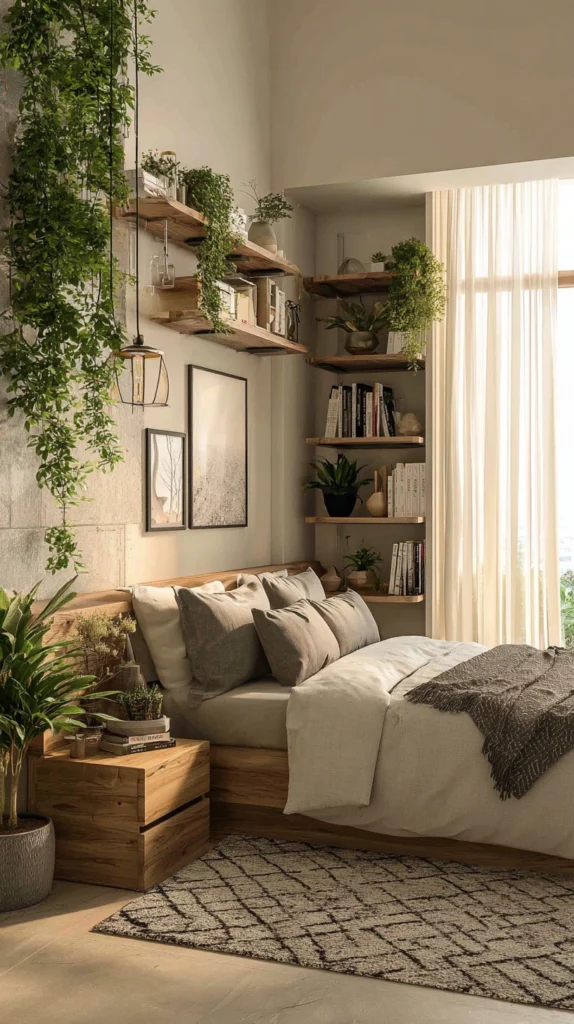
Budget: $20 – $100
One or two well-chosen plants — in ceramic pots that suit the bedroom’s palette, positioned at heights that give the room vertical interest at multiple levels — add the living quality that no amount of decorating achieves. The expensive-looking bedroom almost always has plants, because plants communicate that the room is cared for daily rather than styled once, and daily care is the quality that genuinely expensive rooms always possess.
A large monstera or fiddle-leaf fig in a floor-standing ceramic pot costs $30–$80. A trailing pothos on a high shelf costs $8–$20. A small plant on the nightstand runs $5–$15. Choose plants that genuinely suit the light conditions of the bedroom — a plant in the wrong light declines regardless of how well it was chosen for the aesthetic, and a declining plant communicates the opposite of the daily care that plants are meant to communicate.
Style tip: Choose pots in a neutral or complementary tone to the bedroom rather than in a terracotta default. A large monstera in a matte white ceramic pot reads as a considered plant-and-vessel pairing; the same plant in a standard terracotta reads as a plant that was placed in the bedroom without thought about its relationship to the room’s materials. The pot is as visible as the plant and its colour is part of the bedroom’s palette.
13. The Matching Bedside Lamp Pair
Budget: $40 – $200
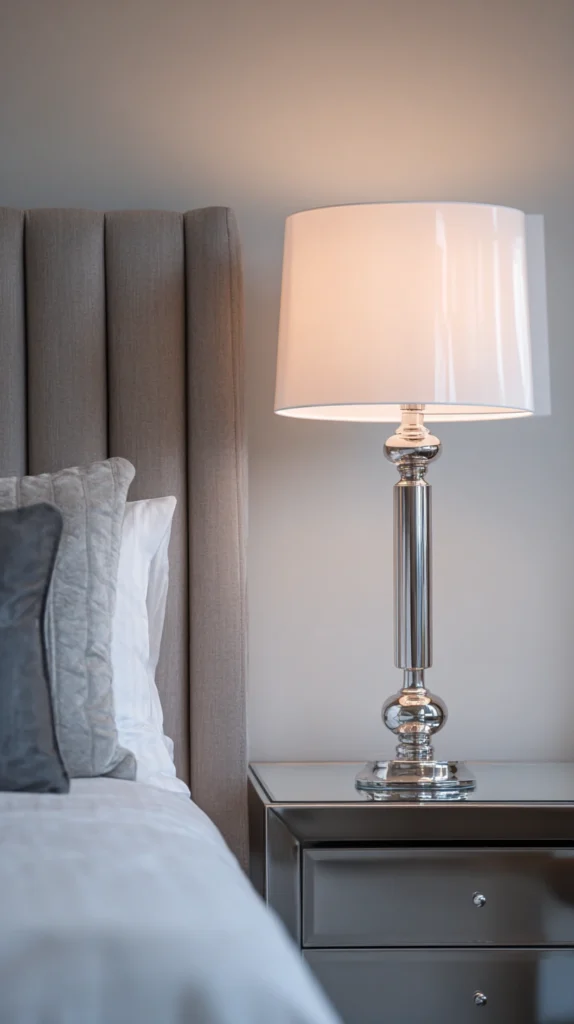
A matching pair of bedside lamps — identical in form and in finish, positioned at identical heights on identical or visually matched nightstands on each side of the bed — creates the bilateral symmetry that communicates the designed bedroom rather than the assembled one. Symmetry on the bed wall is the shortcut to an expensive appearance that requires no expensive materials — it is a compositional decision that a pair of $20 lamps can achieve and that a single beautiful lamp worth ten times more cannot.
A pair of matching bedside lamps costs $30–$80 from budget retailers. Matching lampshades in a quality-looking fabric — linen, cotton, or a textured weave — run $15–$40 each if the base and shade are purchased separately. The matching specification requires both lamps to be identical in height, width, and finish — a pair where one lamp is 5 centimetres shorter than the other communicates that the lamps were purchased at different times without reference to each other.
Style tip: Choose a lamp shade that is wider than the lamp base — approximately 1.5 times the base width — rather than a shade that is equal to or narrower than the base. A wider shade creates the proportional balance that makes a table lamp read as a quality piece; a shade that is too narrow for the base creates a visual top-heaviness that the eye registers as a proportion error regardless of the quality of the individual components.
14. The Gallery-Free Bed Wall
Budget: $0 – $50
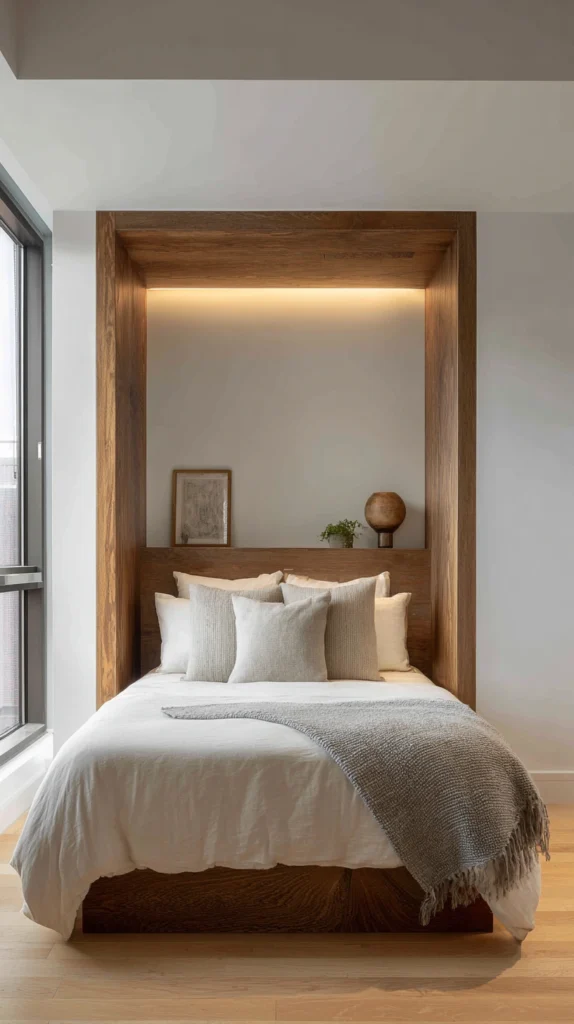
Removing a gallery wall from the bed wall — or resisting the impulse to create one — and replacing it with a single significant element or with nothing at all is the design decision that most improves the expensive appearance of a budget bedroom. Gallery walls are the default solution to an empty wall in a budget bedroom precisely because they distribute the cost of wall decoration across many small purchases. But the expensive bedroom almost never has a gallery wall — it has one considered element at the correct scale or it has a beautiful, deliberate emptiness.
The cost of removing an existing gallery wall is zero — it requires only the decision to take the frames down and fill the holes. A single replacement artwork at the correct scale costs $20–$80. The decision to leave the wall with nothing on it costs nothing and often produces a better result than either the gallery that was there or the single artwork that replaces it.
Style tip: Before replacing a gallery wall with a single artwork, live with the empty wall for one week. The eye adjusts to empty surfaces remarkably quickly, and the empty wall that seemed glaringly bare on the day the gallery was removed often reads as calm, considered, and spacious after seven days of adjustment. The week test reveals whether the wall genuinely needs something or whether it was filled because the impulse to fill was stronger than the case for doing so.
15. The Bed Styling Ritual
Budget: $0
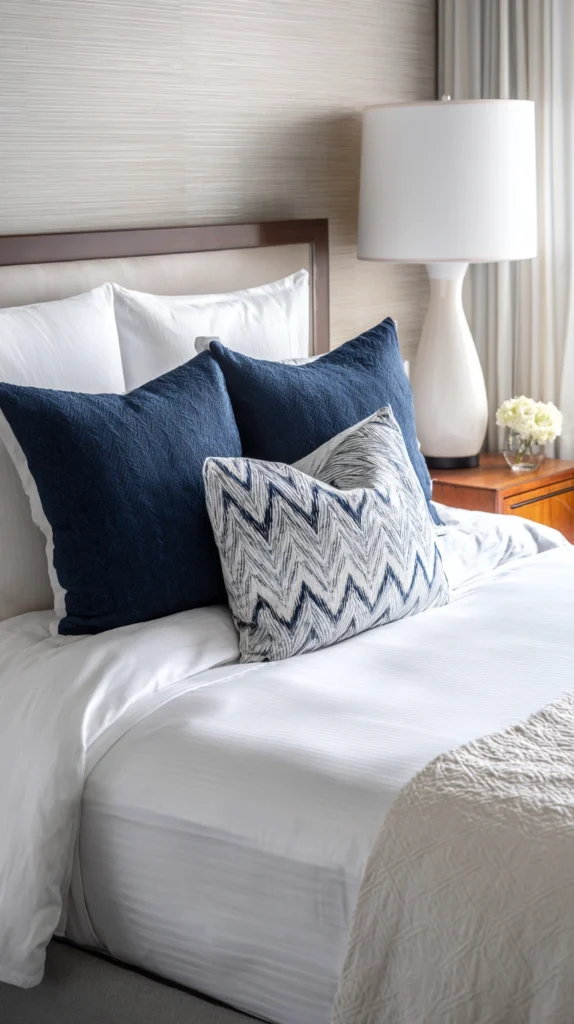
The bed is the bedroom’s primary surface and the one that determines the entire impression of the room from the moment of entry. A beautifully made bed in modest materials looks more expensive than a carelessly made bed in luxury ones, and the bed-making ritual — the same routine every morning, executed with the precision of the hotel housekeeping standard — is the daily practice that keeps the bedroom at its expensive-looking best without spending a single additional pound.
The bed-making ritual: straighten and smooth the fitted sheet first. Add the flat sheet if used, tucked with hospital corners on each side. Place the duvet, pulling it smooth and even from all four edges simultaneously. Arrange the sleeping pillows at the back, stacked squarely against the headboard. Add the decorative cushions in front, arranged in the triangle from large to small. Fold the throw in thirds and place it across the foot of the bed. The ritual takes five minutes and produces the expensive bedroom appearance that no amount of money spent on bedding achieves without it.
Style tip: Photograph the bed after making it on the first morning of the new ritual and use the photograph as the reference standard for every subsequent morning. The photograph reveals what the eye adjusts to and stops seeing in daily life — the cushion that is placed slightly off-centre, the throw that is not aligned with the foot of the bed, the pillow that is a centimetre forward of the others. The reference photograph is the quality control tool that maintains the standard rather than allowing it to drift gradually back toward the casual.
The expensive-looking bedroom on a budget is not a compromise. It is a bedroom that understood which specific decisions produce the appearance of quality — the scale of the headboard, the height of the curtains, the precision of the bed-making, the warmth of the light, the restraint of the surfaces — and applied those decisions rather than the decisions that most budget bedrooms make by default.
Begin with the decisions that are free. Edit the surfaces, hang the curtains at ceiling height, change the bulbs to 2700K, make the bed with hotel precision. These cost nothing and produce more improvement than any purchase. Then make the modest purchases that build on those decisions — the linen bedding, the oversized headboard, the matching lamps. The room that results is not the compromise version of an expensive bedroom. It is the considered version of your own.