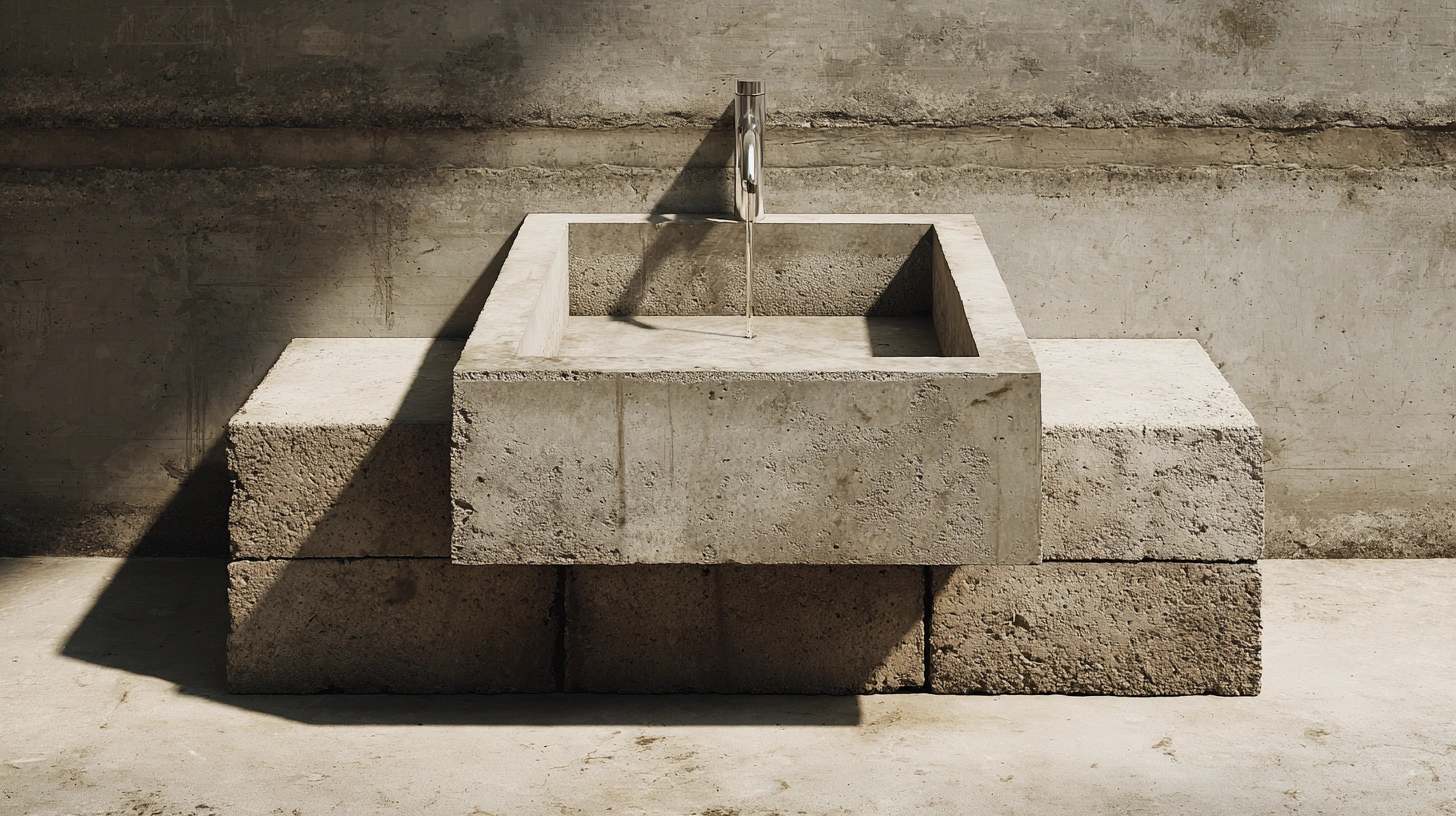
10 Budget-Friendly Outdoor Sink Ideas with Cinder Blocks That Are Surprisingly Stylish and Practical
10 Budget-Friendly Outdoor Sink Ideas with Cinder Blocks That Are Surprisingly Stylish and Practical
There is a specific kind of inconvenience that an outdoor space creates when it lacks a proper sink. The soil that clings to your hands after planting. The grill tools left sitting because bringing them inside feels like too much effort. The repeated trips through the house just to rinse, wash, or clean something that logically belongs outdoors.
What begins as a small inconvenience gradually shapes how the outdoor space is used. Gardening becomes messier than it needs to be. Entertaining feels slightly less effortless. Even simple outdoor routines are interrupted by the absence of running water where it is actually needed.
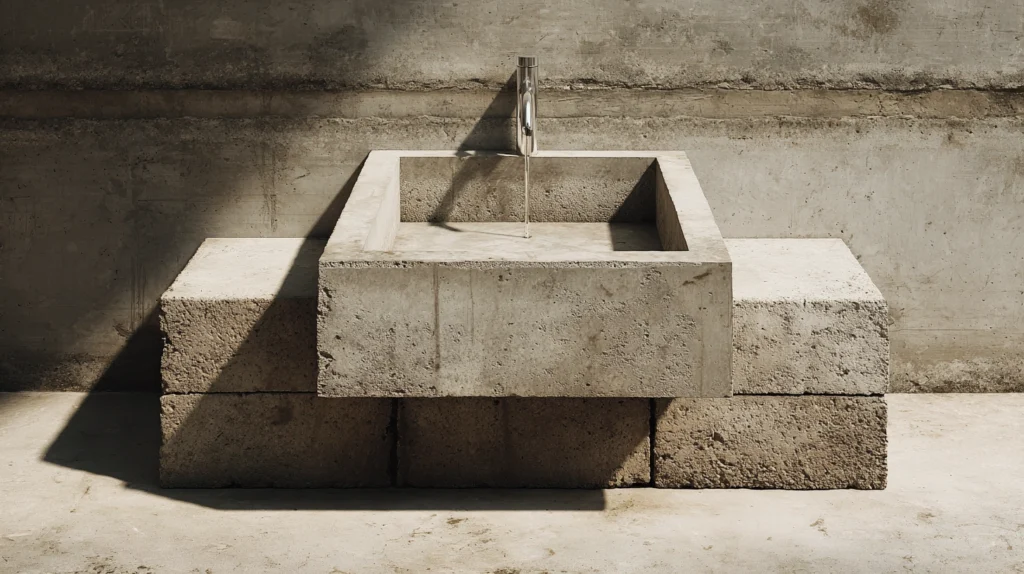
An outdoor sink solves all of this, but it does not need to involve expensive plumbing work or custom-built cabinetry. Some of the most effective solutions are built using cinder blocks — a material that is inexpensive, widely available, structurally strong, and surprisingly adaptable to different design styles.
A cinder block outdoor sink is not a compromise. It is a practical, intentional design choice that prioritizes durability and function while still allowing room for creativity. With the right layout, surface, and small finishing details, it can look as considered as any professionally built feature.
Each idea below explores a different way to build a budget-friendly outdoor sink using cinder blocks. Each includes realistic cost expectations and a practical design tip to ensure the result works as well as it looks.
1. The Basic Cinder Block Utility Sink Station
Budget: $50 – $150
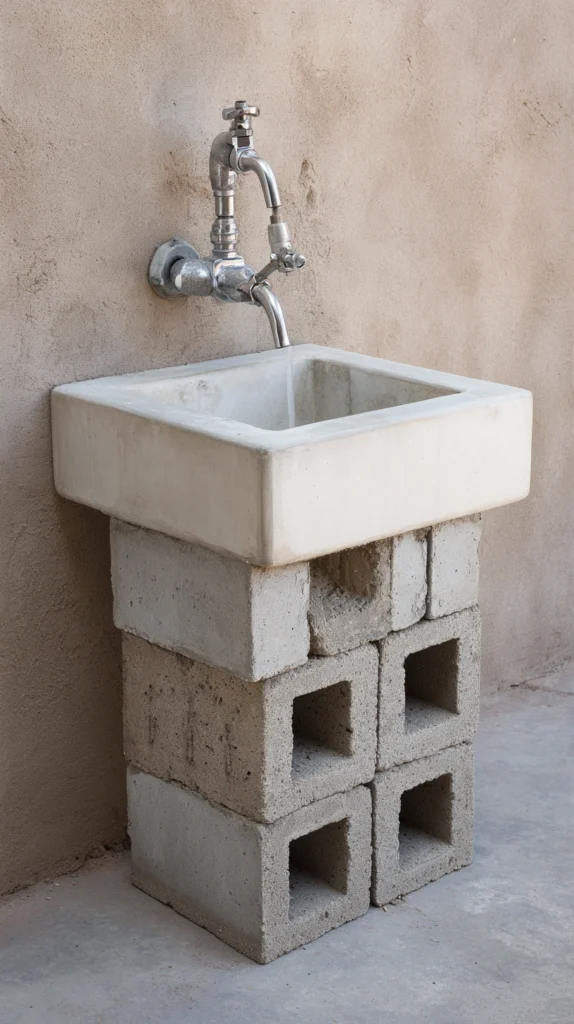
The simplest version of a cinder block outdoor sink is also one of the most effective. Two vertical stacks of blocks on either side, with a supporting back row, create a stable base for a lightweight utility sink. It requires no mortar, no specialized tools, and can be assembled in a single afternoon.
Cinder blocks cost between $1 and $3 each, and a standard setup typically uses 20 to 30 blocks depending on height and width. A plastic or stainless steel utility sink costs $30 to $80, and a hose-fed faucet attachment adds another $10 to $20.
The result is a functional sink station that handles everyday outdoor tasks with ease — from rinsing vegetables to cleaning tools.
Style tip: Paint the blocks in a muted tone like warm white, soft taupe, or light grey. This softens the raw concrete look and helps the sink blend into the rest of the outdoor space.
2. The Rustic Farmhouse Sink Setup
Budget: $100 – $300
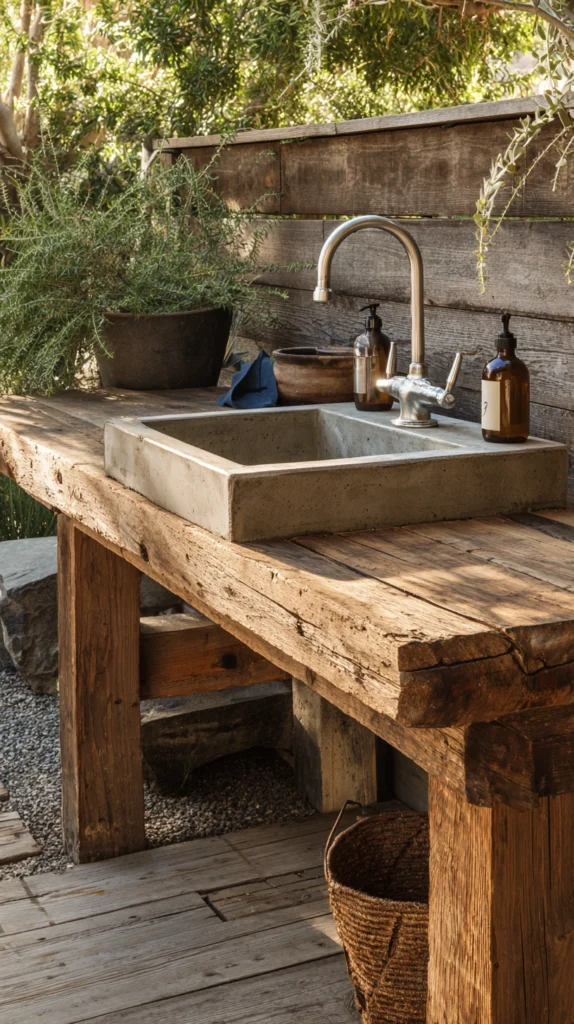
This design combines the practicality of cinder blocks with the charm of a farmhouse-style sink. The base is built from blocks, while a reclaimed or apron-front sink is set into a simple wooden countertop.
The materials create a contrast that feels intentional — solid concrete below, warm wood in the middle, and a classic sink as the focal point. Reclaimed sinks can often be sourced for $50 to $150, while wood and blocks together add another $50 to $150.
This setup works especially well in gardens or backyards with a natural, slightly informal aesthetic.
Style tip: Choose wood with visible grain or slight imperfections. The variation adds character and prevents the structure from feeling too rigid or industrial.
3. The Painted Block Sink with Tile Countertop
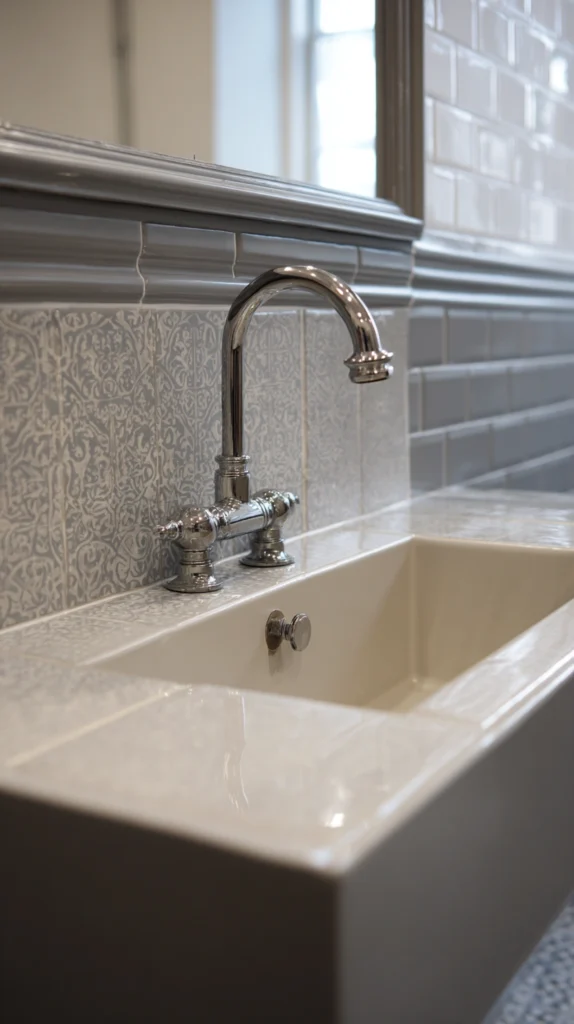
Budget: $120 – $350
Adding a tiled countertop transforms a simple cinder block sink into something more refined. The blocks form the structure, while tile introduces pattern, texture, and a finished surface that is easy to clean.
Blocks typically cost $40 to $80 for this build. Tile sheets range from $30 to $100 depending on style, with adhesive and grout adding $20 to $50. A sink basin completes the setup at $40 to $120.
The tiled surface not only improves durability but also introduces a design element that elevates the entire structure.
Style tip: Use patterned or mosaic tiles in a limited color palette. This keeps the design cohesive while still adding visual interest.
4. The Double-Shelf Prep and Wash Station
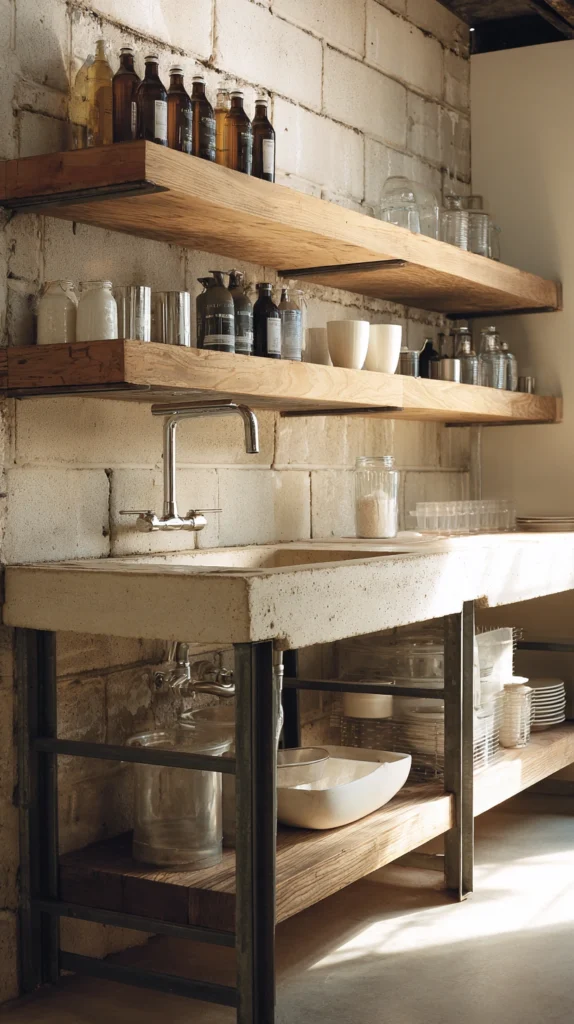
Budget: $150 – $400
A two-level design significantly increases the functionality of an outdoor sink. The top level holds the sink, while a lower shelf provides storage or prep space.
This setup requires 30 to 40 blocks, costing $60 to $120, along with a sink and optional countertop materials costing $80 to $200. The added surface area makes it easier to manage multiple tasks at once.
It is particularly useful for outdoor cooking setups where space is always in demand.
Style tip: Keep the lower shelf organized with matching storage bins or baskets. Consistency in storage keeps the entire structure looking clean rather than cluttered.
5. The Portable Cinder Block Sink
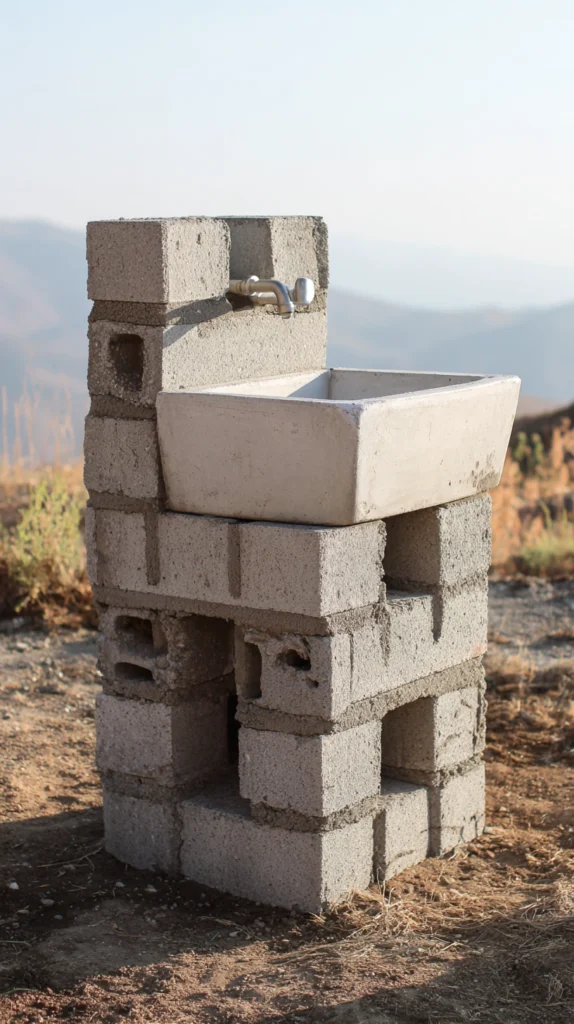
Budget: $60 – $180
Not every outdoor sink needs to be permanent. A dry-stacked design allows the structure to be assembled without mortar, making it easy to disassemble or reposition if needed.
This approach uses 20 to 25 blocks and a lightweight sink, keeping both cost and effort low. It is especially useful for renters or anyone experimenting with layout before committing to a permanent build.
Despite its simplicity, the structure remains stable when properly stacked on level ground.
Style tip: Keep proportions balanced — equal spacing and even stacking make the design look intentional rather than temporary.
6. The Garden Potting Sink Station
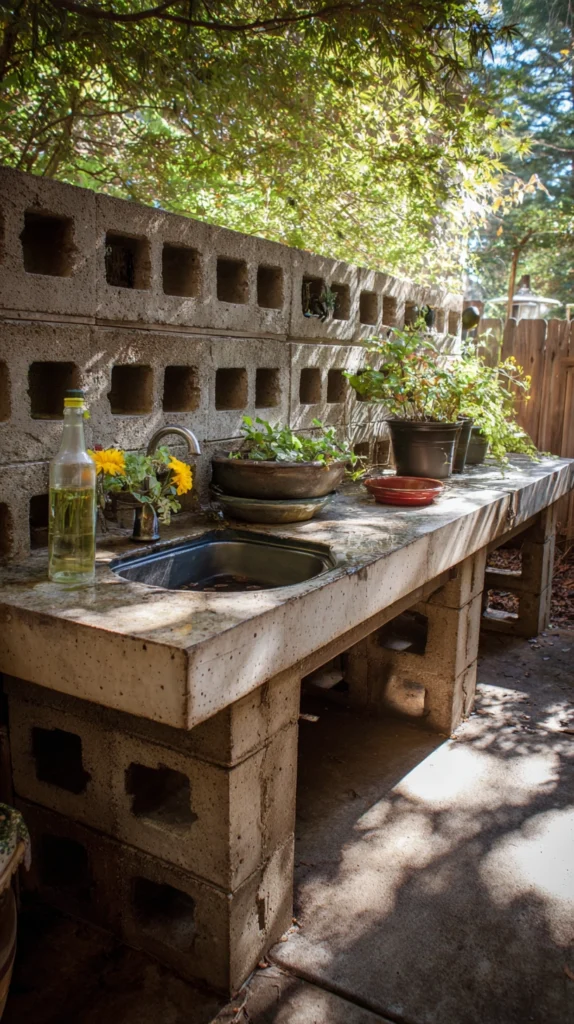
Budget: $80 – $220
For gardening-focused spaces, this design combines a sink with a wider work surface for potting plants. It turns the sink area into a dedicated gardening station.
Blocks cost $40 to $80, a sink costs $30 to $100, and a simple worktop adds $30 to $80. The extra space allows for soil, tools, and plants to be handled in one place.
This setup reduces mess and keeps gardening tasks contained within a single, functional area.
Style tip: Leave selected block openings exposed and use them to store small tools or hold potted herbs. It adds both function and visual detail.
7. The Industrial Outdoor Sink Design
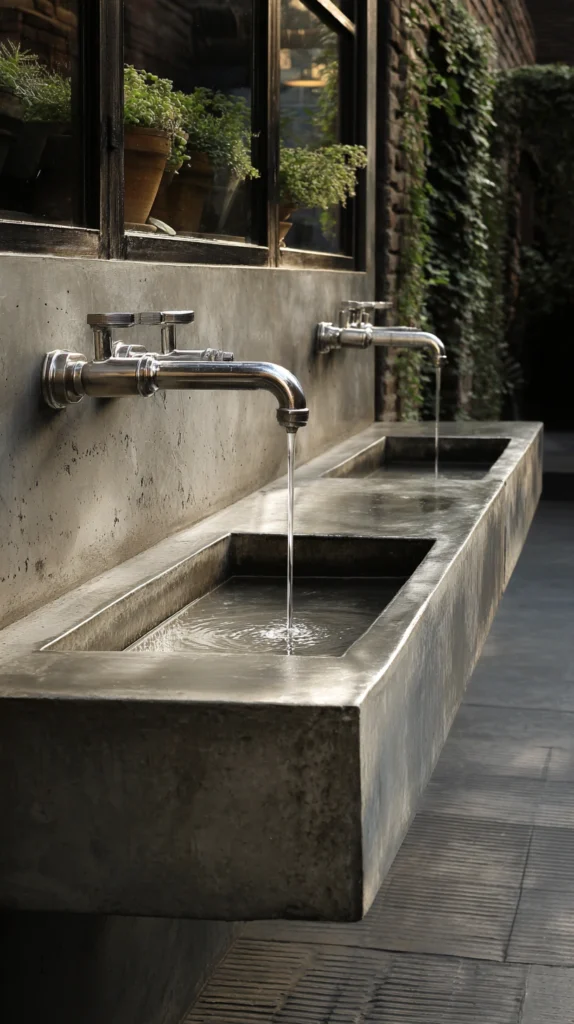
Budget: $120 – $300
Rather than hiding the raw nature of cinder blocks, this design embraces it. Paired with a stainless steel sink and exposed plumbing, it creates a clean industrial look.
Blocks cost $50 to $100, a stainless steel sink costs $50 to $150, and exposed pipe fixtures add $20 to $60. The simplicity of the materials creates a cohesive, modern aesthetic.
This design works particularly well in urban or contemporary outdoor settings.
Style tip: Apply a clear concrete sealer instead of paint. It protects the blocks while preserving their natural texture.
8. The Compact Corner Sink
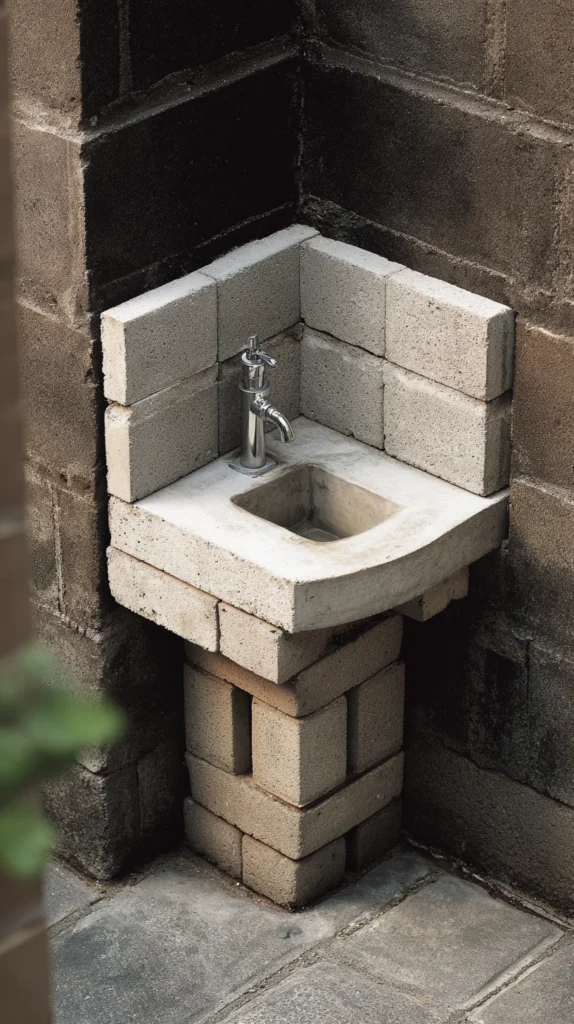
Budget: $70 – $200
Small outdoor spaces benefit from efficient layouts. A corner sink uses an L-shaped cinder block structure to fit neatly into underused areas.
This design requires only 15 to 25 blocks, costing $30 to $75, along with a compact sink basin priced between $40 and $120. Despite its smaller footprint, it provides full functionality.
It is an ideal solution for patios or narrow backyard layouts.
Style tip: Add a small backsplash using tile or wood to visually anchor the sink and make the corner feel finished.
9. The Sink with a Privacy Screen
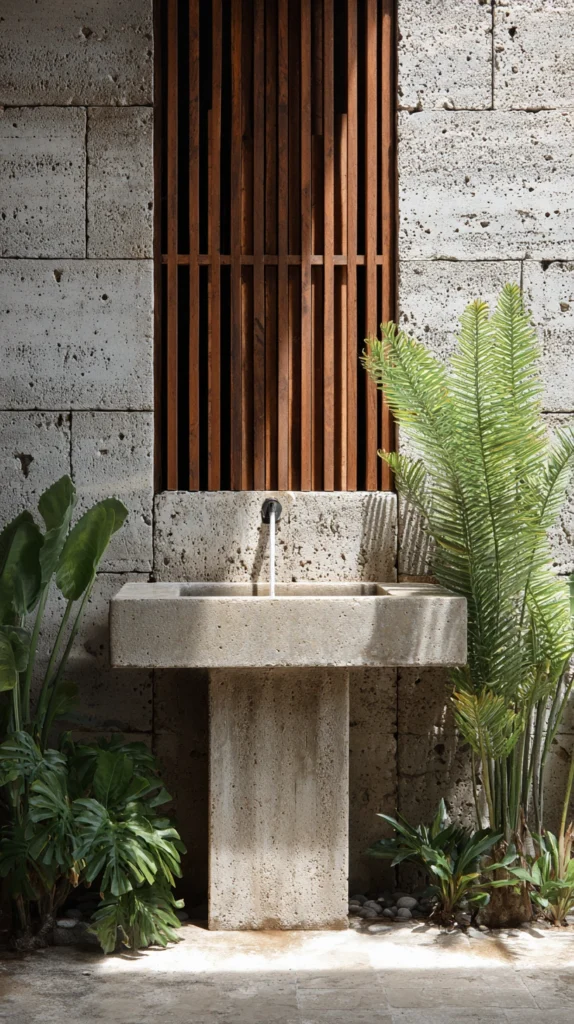
Budget: $150 – $350
Adding a vertical element behind the sink changes the overall feel of the setup. A simple wood slat or lattice screen provides privacy while also acting as a design feature.
Cinder blocks cost $50 to $100, the sink costs $50 to $120, and screen materials add $50 to $150. The screen also helps conceal plumbing and creates a more defined space.
This design works well when the sink is part of a larger outdoor living area.
Style tip: Use a warm wood stain for the screen to contrast with the cooler tones of the concrete blocks.
10. The Full Outdoor Kitchen Sink Base
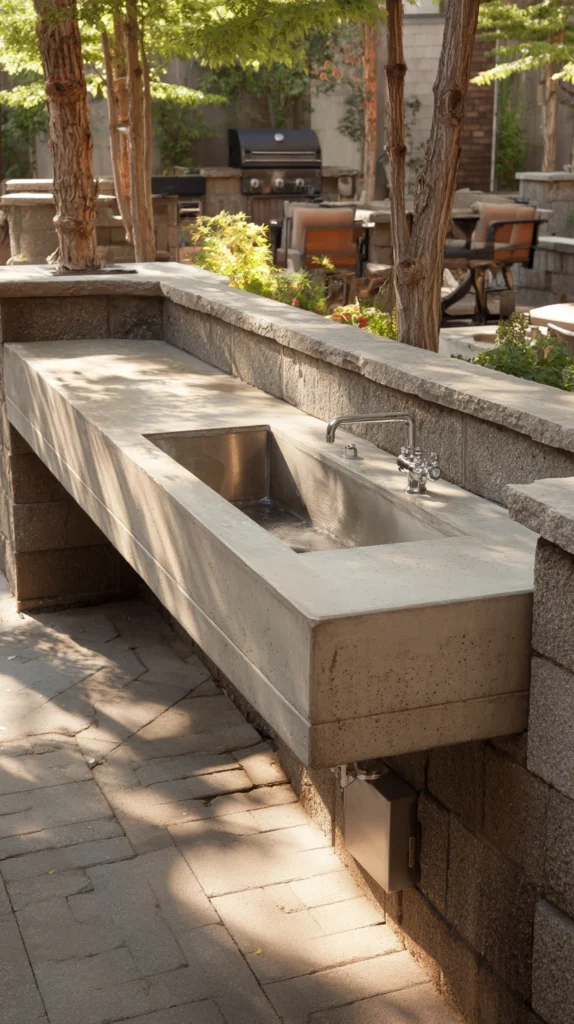
Budget: $250 – $600
At the higher end of budget-friendly builds, cinder blocks can form the foundation of a full outdoor kitchen sink area. This includes extended counter space, storage, and a more permanent structure.
Expect to use 40 to 60 blocks, costing $80 to $180, along with a larger sink priced between $80 and $200. Countertop materials add another $100 to $250.
This setup transforms the sink from a utility feature into a central part of outdoor entertaining.
Style tip: Extend the countertop beyond the sink area to create a dedicated prep zone. This makes the space more functional and visually balanced.
An outdoor sink built with cinder blocks is not simply a cost-saving solution. It is a practical upgrade that changes how an outdoor space functions day to day. It removes friction from routine tasks, supports gardening and cooking, and allows the backyard to operate as a more complete living environment.
The success of the design comes down to thoughtful choices rather than complexity. Stable construction, appropriate materials, and small finishing details determine whether the sink feels temporary or well integrated into the space.
Choose a layout that reflects how the outdoor area is actually used. Build it with care, even if the materials are simple. And allow the design to remain honest — a well-executed cinder block sink does not need to disguise what it is to look good. It simply needs to work well and sit comfortably within its surroundings.