15 Vibrant Modern Mexican Decor Ideas That Bring Soul and Colour Into Any Room
15 Vibrant Modern Mexican Decor Ideas That Bring Soul and Colour Into Any Room
There is a particular quality that Mexican interior design produces that almost no other aesthetic tradition manages quite as well — the ability to be simultaneously bold and warm, visually complex and deeply comfortable, ancient in its references and entirely alive in its execution. It is the interior equivalent of a meal that is too rich, too colourful, and too generous, and that you eat every last bite of anyway because everything about it was made with genuine feeling rather than careful restraint.
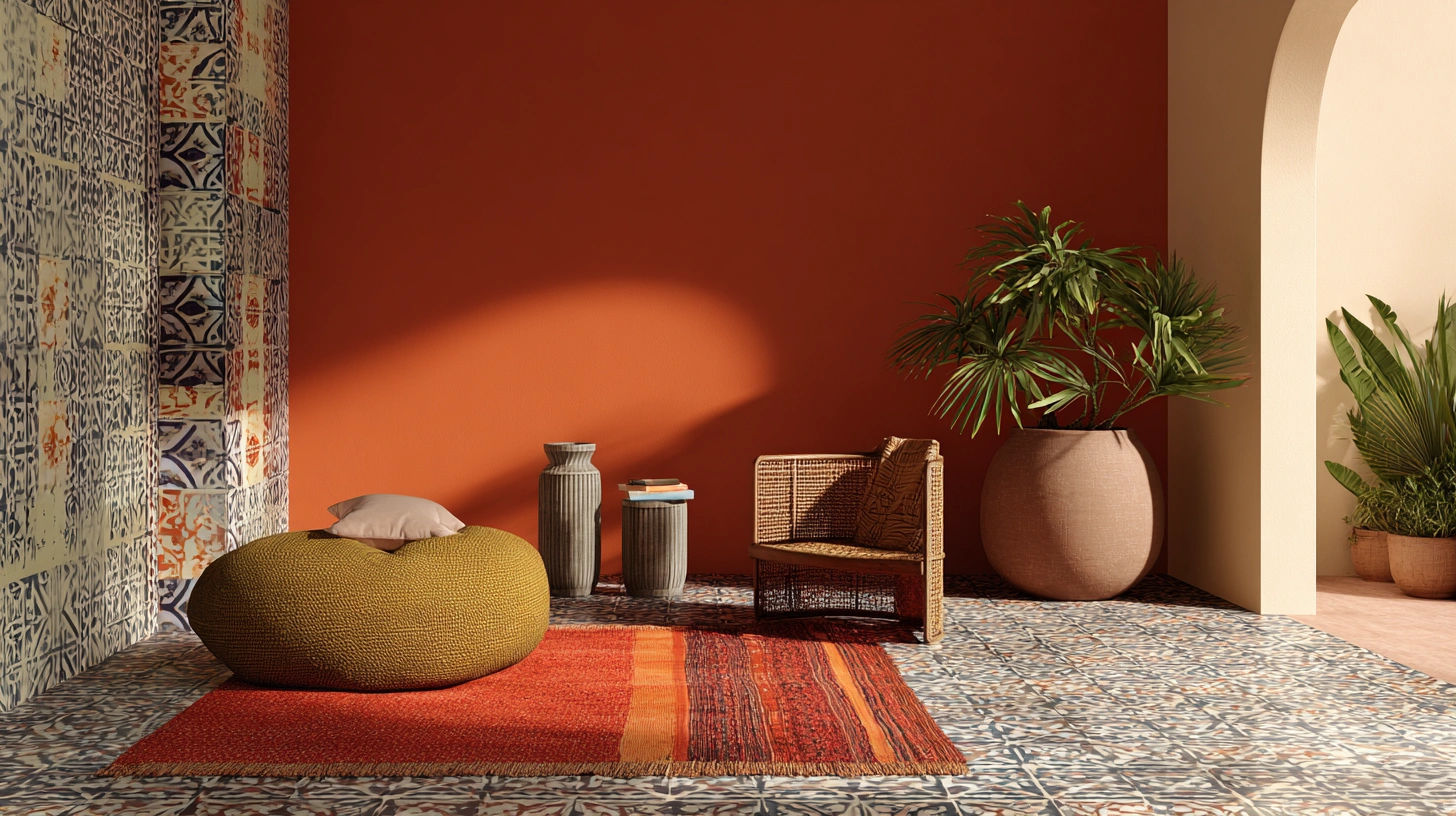
Modern Mexican decor is not a theme park version of folk art. It is the living tradition of craft — Talavera tile, hand-loomed textiles, carved timber, hammered copper, hand-thrown clay — brought into a contemporary home with the same confidence that the tradition itself has always possessed. It does not apologise for its colour or its pattern or its abundance. It simply occupies the room and makes the room better for being occupied.
Each idea below brings one element of this tradition into the home in a specific, buildable, and visually grounded way. Each includes what you will need, what it will cost, and a practical tip to make it work as well as the culture it draws from.
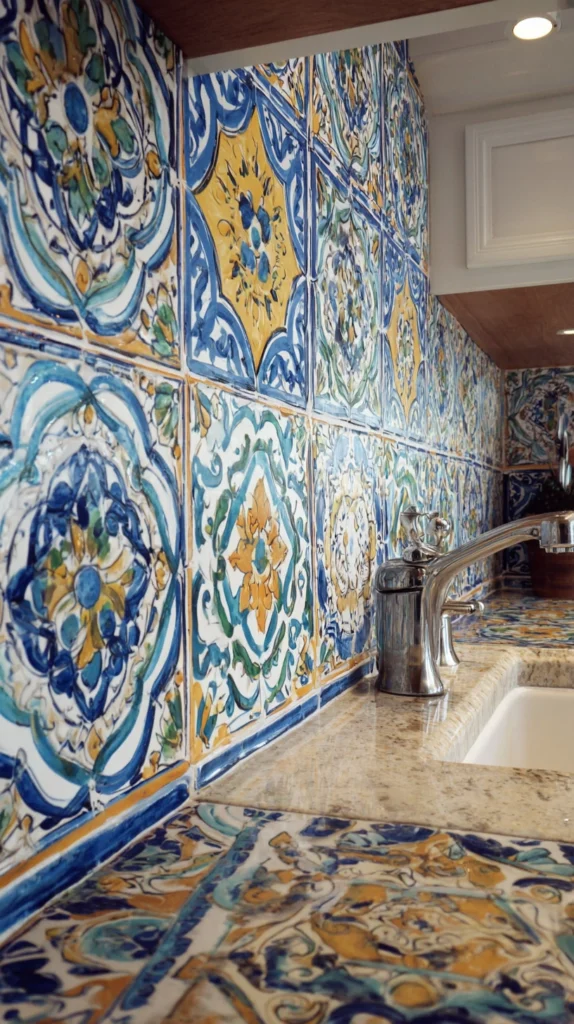
1. The Talavera Tile Splashback
Budget: $80 – $500
Talavera ceramic tiles — hand-painted in the distinctive blue, white, yellow, and terracotta palette of the Puebla pottery tradition — used as a kitchen splashback or a bathroom feature wall create the most immediately recognisable and most visually impactful Mexican design element available to a domestic interior. No two Talavera tiles are identical: the glaze variations, the slight irregularities of the hand painting, and the warmth of the fired clay produce a surface of genuine handmade quality that mass-produced tile cannot approach.
Authentic Talavera tiles cost $3–$12 each depending on size and complexity of design. A standard kitchen splashback of 60 by 90 centimetres requires approximately thirty tiles — $90–$360 in tile costs. Reproduction Talavera in a machine-made version costs $1–$4 each and provides the pattern without the handmade quality. Traditional white grout in a 3-millimetre joint allows each tile to read individually rather than as part of a continuous surface.
Style tip: Mix three or four different Talavera patterns on the same splashback rather than using a single repeated design. The traditional use of Talavera tile involves exactly this kind of pattern mixing — different motifs from the same palette placed in proximity — and the mixed-pattern approach produces the vitality and the genuine artisanal quality that a single-pattern repeat lacks. The palette unity holds the mixture together; the pattern variation gives it life.
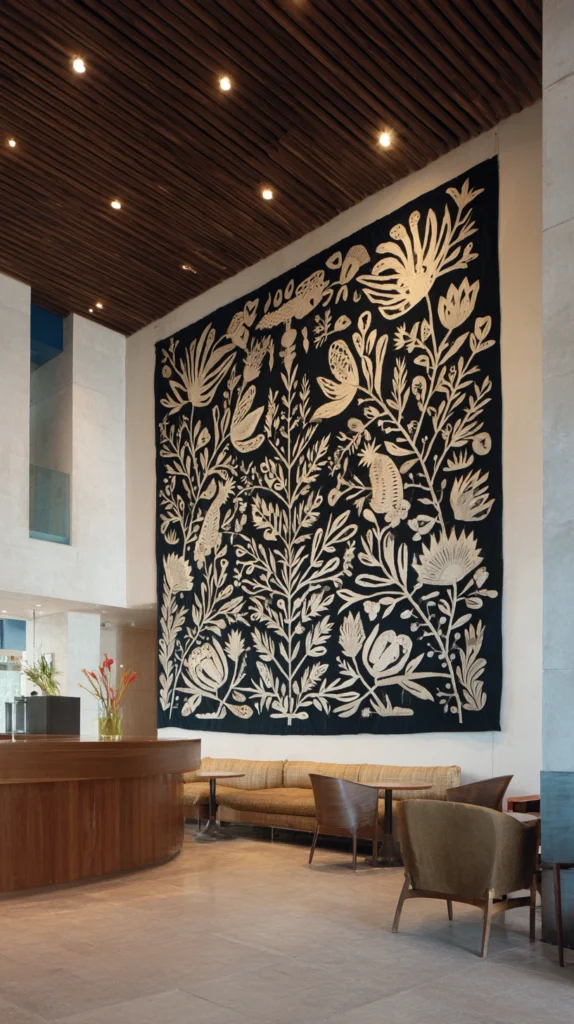
2. The Woven Otomi Textile Wall Hanging
Budget: $60 – $400
An Otomi embroidered textile — the hand-stitched folk art of the Hidalgo region, with its dense, joyful embroidery of animals, plants, and figures in vivid colours on white or natural cotton — hung on the primary wall of a living room, bedroom, or dining room creates the most exuberant and most culturally specific Mexican wall display available. Otomi textiles are not decorative objects; they are records of a living artistic tradition that has been practised continuously for centuries.
An authentic Otomi embroidered textile costs $80–$400 depending on size and complexity. A reproduction Otomi print on cotton fabric runs $30–$100. Hang from a timber dowel fed through the top hem rather than from individual fixings, which distort the embroidery and create an uneven hang. The textile needs a clear wall — no competing artwork, no shelving beside it — because the density of the embroidery means it requires visual breathing space to be read and appreciated at its full complexity.
Style tip: Position the Otomi textile on a wall painted in a deep, warm, absorptive colour — terracotta, deep ochre, warm charcoal — rather than on a white wall. The white base of the Otomi textile against a white wall loses the contrast that makes the embroidery visible and dramatic; the same textile against a warm dark wall reads as vivid, luminous, and fully itself.
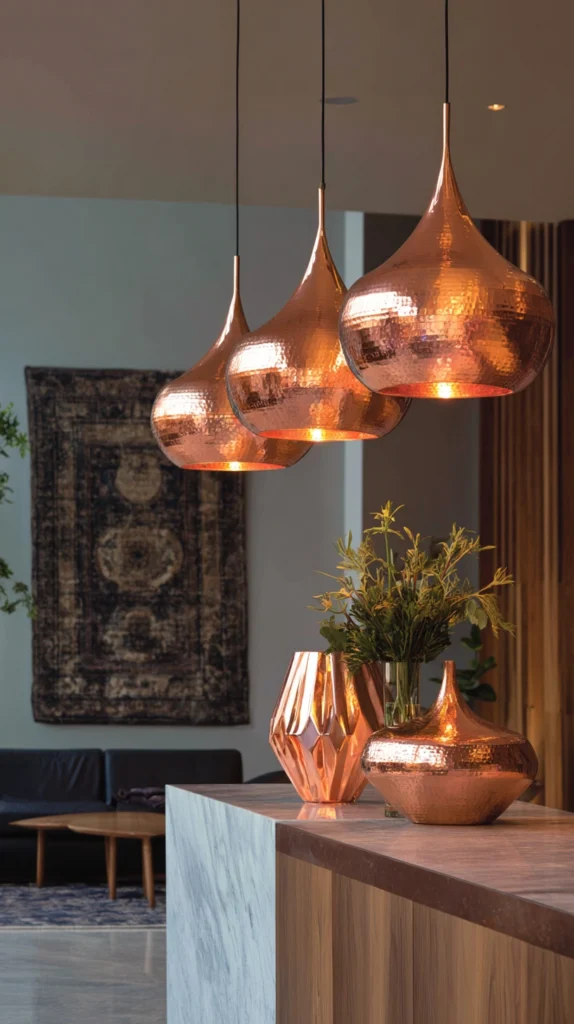
3. The Hammered Copper Accents
Budget: $40 – $300
Hammered copper vessels — a large copper bowl on the kitchen counter, copper pendant lights above the dining table, a hammered copper sink in the bathroom, copper candleholders on the table — bring the specific warmth and the specific craft tradition of Mexican metalwork into the interior. Hammered copper has a surface quality that flat or cast copper does not — the irregular facets of the hammer marks catch and redirect light continuously, making the copper read as dynamic rather than static.
A large hammered copper bowl costs $30–$80. A hammered copper pendant light runs $80–$250. A hammered copper bathroom sink costs $200–$600. A set of copper candleholders runs $25–$80. Copper develops a patina in use — the bright initial surface dulls and deepens over months to the warm, complex tone that makes aged copper one of the most beautiful surface colours in the material world. Resist polishing it back to bright; the patina is the quality.
Style tip: Group copper elements in the same zone of the room rather than distributing them evenly across the space. A kitchen with a copper bowl and copper pendant lights and a copper tap in the same area reads as a considered material palette; the same copper pieces distributed one to each room read as individual objects. The concentration of the material in one zone is what makes it a design decision rather than a decorative accumulation.
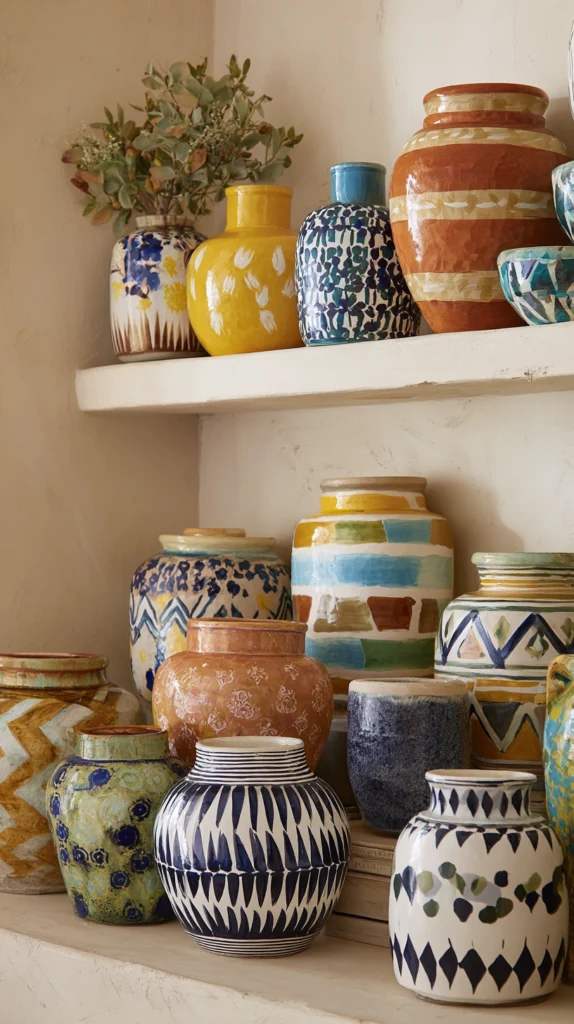
4. The Hand-Painted Clay Pottery Collection
Budget: $30 – $200
A collection of hand-painted Mexican pottery — clay vessels in terracotta with geometric or botanical decoration, black clay from Oaxaca, or the colourful hand-painted ceramics of Tlaquepaque — arranged on a kitchen shelf, a dining room sideboard, or a console creates a display of genuine craft quality that the industrial equivalent cannot replicate at any price. Mexican folk pottery carries the evidence of the hand in every surface irregularity, every slightly uneven glaze, every brush mark.
Individual hand-painted clay pieces cost $8–$40 each. A collection of five to seven pieces runs $40–$200. Black clay Oaxacan pottery — distinguished by its metallic-grey surface and its sculptural quality — costs $20–$80 per piece. Arrange by height — taller pieces at the back, smaller at the front — but allow the collection to be slightly irregular in its arrangement rather than geometrically precise. The irregular arrangement reads as accumulated; the precise arrangement reads as installed.
Style tip: Mix functional pottery with purely decorative pieces in the same collection — a vase that holds flowers alongside a vessel that holds nothing, a bowl used for fruit alongside one used for display. The mixture of functional and decorative objects within the same collection gives it the quality of a kitchen that actually cooks rather than a shelf that was styled for photography.
5. The Serape-Inspired Textile Layering
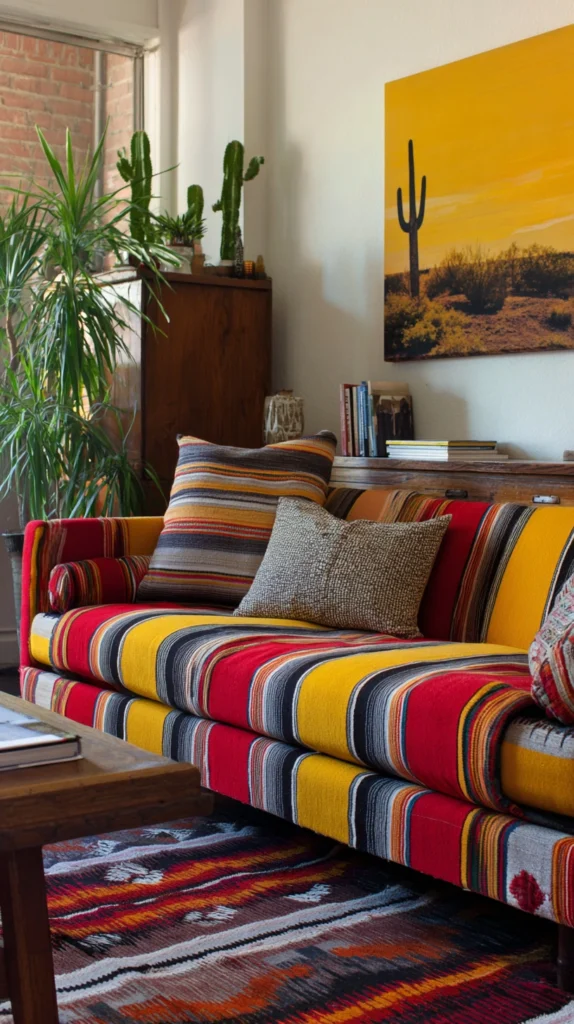
Budget: $40 – $200
The serape — the traditional striped woven blanket of northern Mexico, in its characteristic bold horizontal stripes of red, orange, yellow, black, and green — used as a throw on the sofa, a runner on the dining table, or a wall hanging in the bedroom introduces the most vivid and most architecturally simple of Mexican textile traditions into the contemporary interior. The serape stripe is one of the most boldly beautiful geometric patterns in any textile tradition and it requires no apology and no contextualising.
An authentic hand-woven serape costs $60–$200. A machine-woven reproduction in the same stripe pattern runs $20–$60. A serape runner on a timber dining table — draped down the centre and allowed to fall over each end — costs the same as the blanket and produces a table setting of immediate visual energy that a standard linen runner cannot approach. The stripes of the serape are horizontal — always horizontal — and the direction of the stripe should run across the width of any surface it covers rather than along its length.
Style tip: Use the serape as the room’s single bold pattern rather than combining it with other strong patterns. A room with a serape throw alongside a patterned rug alongside a printed cushion collection has too much pattern competition for any individual piece to be seen clearly. One serape against a room of solid colours and natural materials reads with its full visual force; the same serape in a room of competing patterns reads as one of many.
6. The Carved Timber Furniture Piece
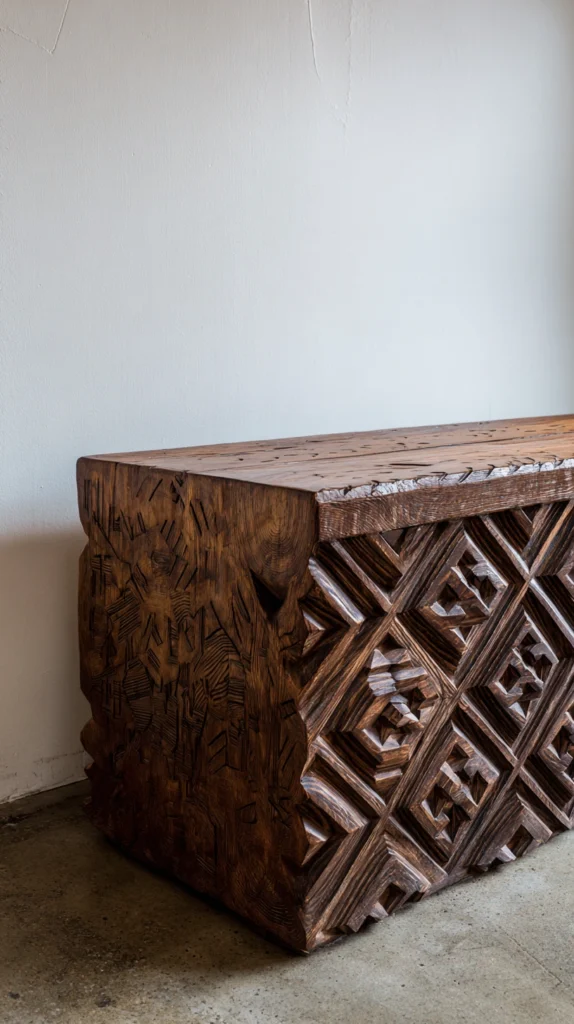
Budget: $200 – $1,500
A piece of carved Mexican furniture — a hand-carved wooden bench with traditional geometric or floral relief, a carved timber headboard, a mesquite wood dining table with its characteristic irregular grain and warm honey tone — brings the woodworking tradition of Mexican craft into the home at the scale of furniture rather than the scale of accessory. Carved Mexican timber furniture has a presence and a weight that industrial furniture at the same price point cannot replicate.
A hand-carved timber bench costs $200–$600. A carved timber headboard runs $300–$900. A mesquite or parota wood dining table costs $600–$2,000. Mexican carved furniture requires minimal maintenance — an annual coat of furniture wax or oil for outdoor pieces, nothing for indoor pieces beyond cleaning. The carving itself does not require sealing and the natural finish of carved and sanded Mexican timber develops a warm patina with age that improves the piece.
Style tip: Position the carved furniture piece against a plain, undecorated wall rather than against a wall that has other decorative elements competing for attention. The carved surface of Mexican timber furniture is itself a pattern and a texture, and it reads most clearly and most beautifully against a plain background. A carved bench against a textured wallpaper or a gallery wall disappears into the visual noise; the same bench against a plain painted wall reads as a sculptural object.
7. The Papel Picado Ceiling Installation
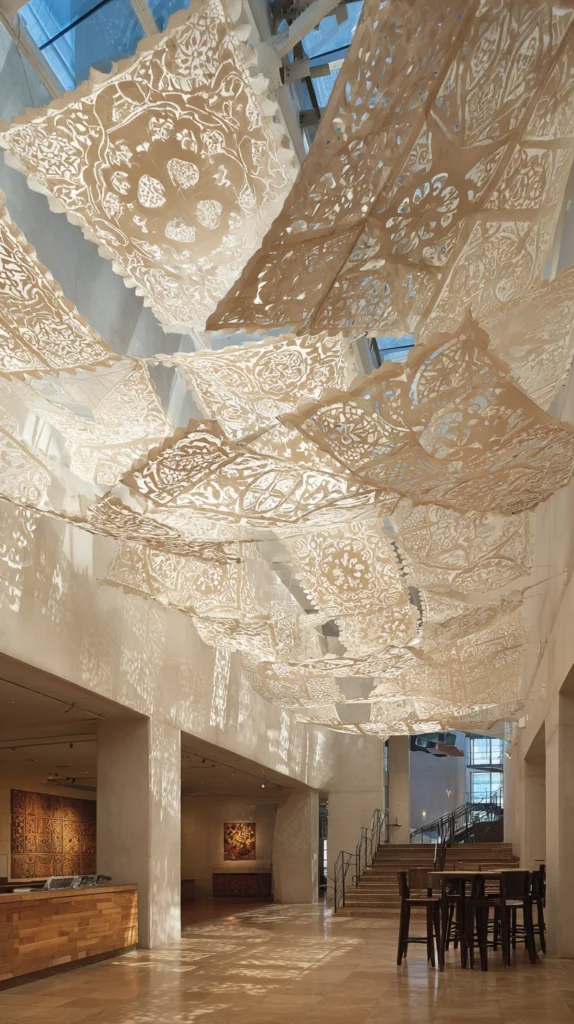
Budget: $10 – $60
Papel picado — the traditional Mexican cut-paper decoration, in its characteristic thin tissue paper with delicate cut patterns of flowers, birds, skulls, and geometric forms — strung between two walls or across the ceiling in overlapping layers creates the most celebratory and most specifically Mexican decorative element available at the lowest cost. Papel picado moves in the slightest air movement, casting delicate shadows, and it gives any room the quality of a room prepared for an occasion.
A string of ten papel picado banners costs $5–$15. A full ceiling installation of six strings across a dining room costs $30–$90 in banners plus $10–$20 in hanging wire and fixings. Choose colours that relate to the room’s palette rather than using the most available mixed-colour sets — a ceiling installation in all terracotta and orange, or all blue and white, reads as designed; one in every available colour reads as festive without being considered.
Style tip: Use paper picado in a covered or indoor position only — the tissue paper deteriorates within a single rain shower and the delicate cutting tears in wind. In a sheltered position it lasts for weeks; exposed to outdoor conditions it lasts for hours. The ceiling installation is genuinely beautiful and genuinely fragile, and treating it as a temporary seasonal decoration rather than a permanent fixture is both the honest and the most aesthetically appropriate approach.
8. The Terracotta and Adobe Colour Palette
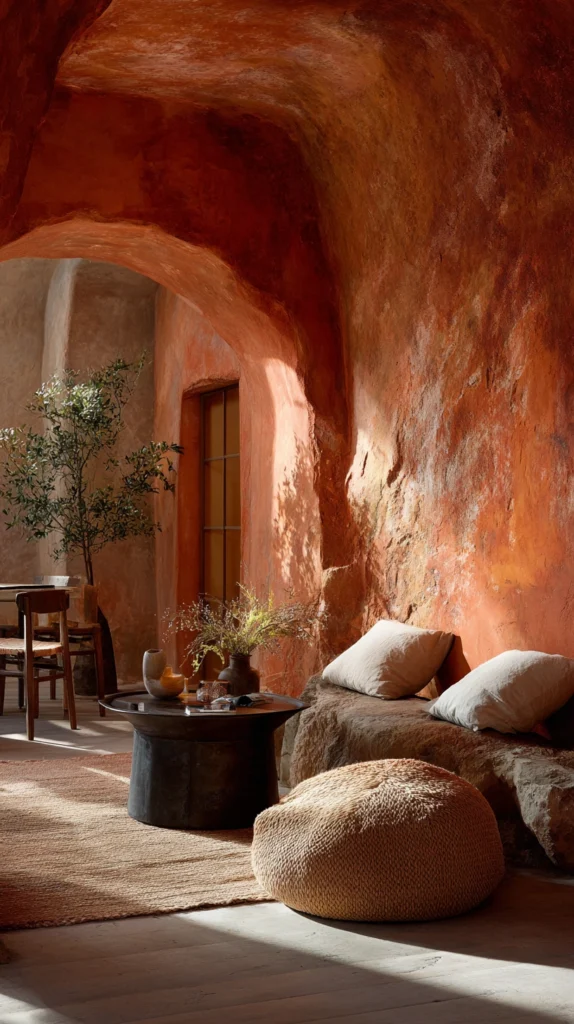
Budget: $40 – $300 to implement
Building the room’s colour palette around terracotta, adobe, warm ochre, and the deep burnt orange of Mexican earthenware — using these tones in paint, in textiles, in accessories, and in floor surfaces — creates the specific warmth of the Mexican interior that exists independently of the folk art objects and craft pieces within it. The colour palette is the foundation of the Mexican interior and without it, the most beautiful Talavera tile and the finest hand-loomed textile will exist in a room that does not belong to the same tradition.
Wall paint in terracotta or warm adobe costs $30–$80 per 2.5-litre tin. Terracotta floor tiles for a kitchen or entrance hall cost $3–$8 each. A deep burnt orange throw runs $25–$60. The warm ochre and terracotta palette requires no other colour to function — it is complete in itself — but it tolerates the addition of deep blue, forest green, and bright yellow in the proportions that folk art uses: warm earth as the dominant, vivid colour as the accent.
Style tip: Paint the interior of an archway or a ceiling in a deeper, more saturated version of the terracotta wall colour rather than in the same diluted tone. The deeper tone on the ceiling or the arch interior creates the visual depth that makes a plain terracotta room feel genuinely architectural rather than simply coloured. The transition from wall tone to a richer ceiling tone is the detail that gives the Mexican colour palette its characteristic warmth and enclosure.
9. The Mexican Tile Floor
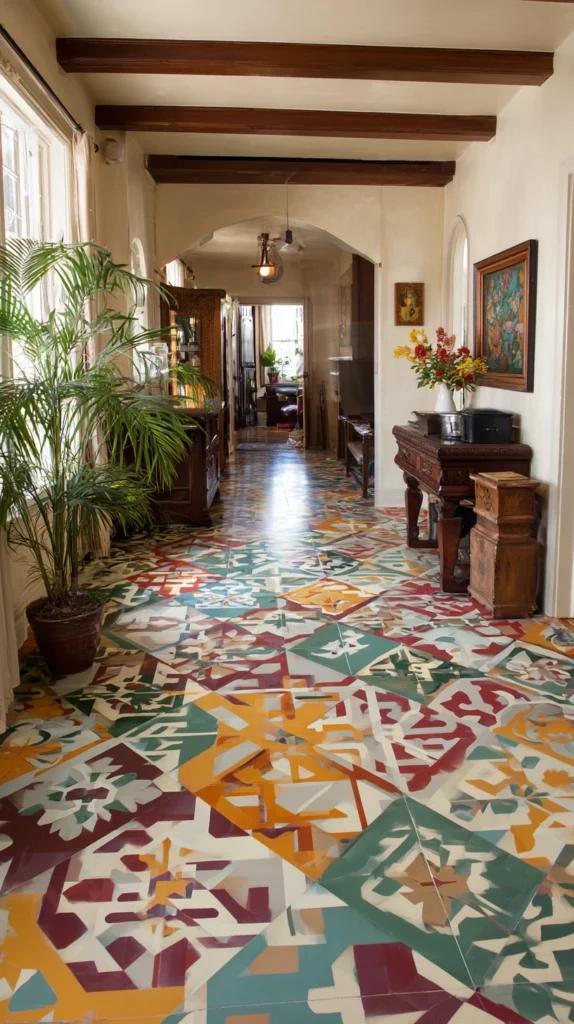
Budget: $200 – $1,500
Hand-encaustic cement tiles in the geometric patterns of the Mexican tile tradition — the eight-pointed star, the interlocking diamond, the bold floral medallion in terracotta, white, cobalt, and ochre — used as the floor surface of a kitchen, bathroom, or entrance hall create a surface of extraordinary visual richness that is simultaneously practical and beautiful. Encaustic cement tiles are durable, cool underfoot in warm weather, and improve with age as the surface develops a patina.
Hand-made encaustic cement tiles in standard 20 by 20 centimetre size cost $8–$25 each. A kitchen floor of 4 by 3 metres requires approximately 300 tiles — $2,400–$7,500 in tile cost at the full handmade price, or $200–$600 for machine-made reproductions of similar patterns. Seal the cement tile with a penetrating sealer before grouting and again before use — unsealed cement tile is highly porous and absorbs spills permanently at the first opportunity.
Style tip: Use a dark grout — charcoal or dark grey — rather than white with encaustic cement tile. White grout between patterned tiles creates a visual grid that competes with the tile pattern; dark grout subordinates itself to the pattern and allows the tile design to read as a continuous surface rather than as individual tiles separated by grout lines. The grout colour is the installation decision that most determines whether the tile floor reads as designed or as tiled.
10. The Cactus and Succulent Indoor Garden
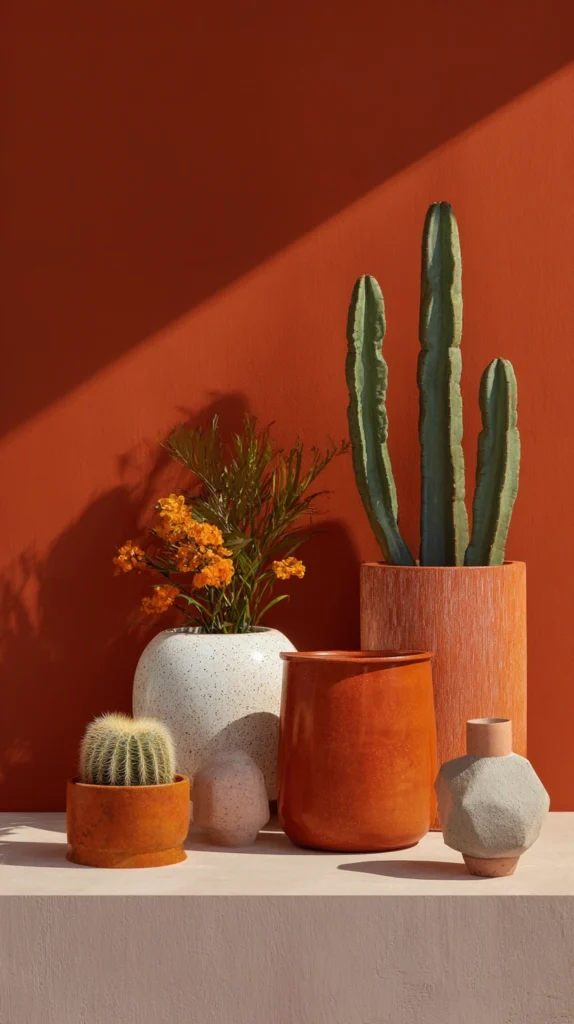
Budget: $30 – $200
A collection of cacti and succulents — in terracotta pots of varying sizes, arranged on a windowsill, a shelf, or a low table — brings the specific botany of the Mexican landscape into the interior in its most honest form. The cactus is not a Mexican decoration; it is a Mexican plant, and a collection of cacti and succulents in the right vessels communicates the same authentic relationship to place that the Otomi textile and the Talavera tile communicate in their respective traditions.
Individual cactus plants in a 10-centimetre pot cost $4–$12 each. Succulents run $3–$8 each. A terracotta pot in standard sizes costs $2–$8. A collection of ten plants in terracotta pots of varying sizes runs $50–$150 in total. Group the collection rather than distributing the plants individually across the room — a windowsill of ten cacti in terracotta reads as a desert garden; the same ten plants one to each surface in the room read as a plant collection.
Style tip: Choose cacti with architectural forms — the columnar saguaro shape, the ribbed globe of a barrel cactus, the flat pads of an opuntia — rather than the densely leafed succulents that read as generic rather than specifically Mexican. The architectural cacti communicate the specific landscape of Mexico in a way that echeveria and sedum, however beautiful, do not. The plant species is the botanical specificity that makes the collection a Mexican garden rather than simply a succulent display.
11. The Hand-Woven Zapotec Rug
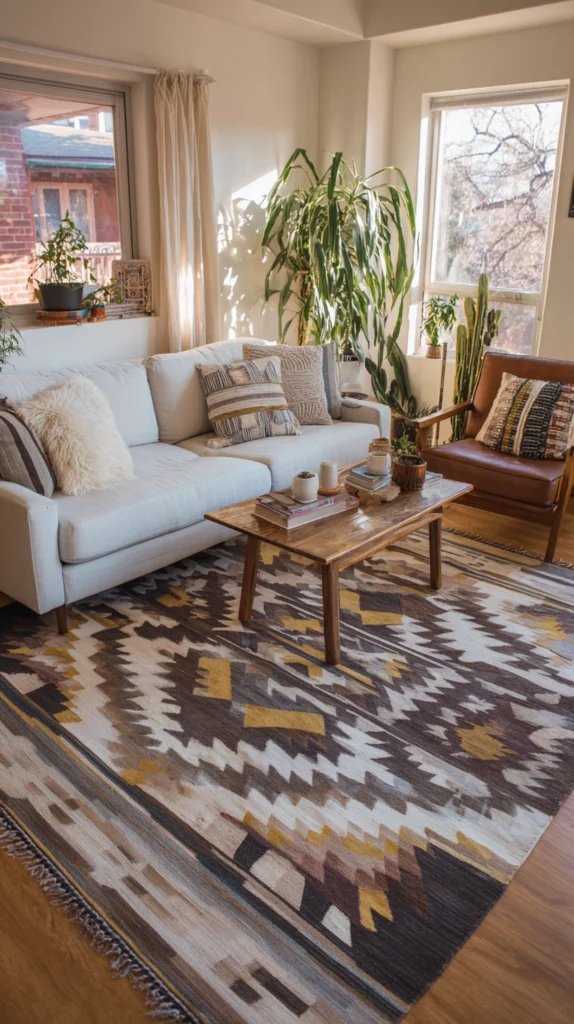
Budget: $150 – $1,000
A Zapotec rug — hand-woven on a backstrap loom by the Zapotec communities of Oaxaca, in the geometric patterns of pre-Columbian textile tradition, using natural dyes derived from cochineal, indigo, and marigold — is one of the most beautiful floor textiles in the world and one of the most culturally significant. In a living room or a bedroom, a Zapotec rug brings a level of craft quality and historical depth that no manufactured equivalent can approach.
An authentic Zapotec rug in a standard 90 by 150 centimetre size costs $150–$500. A larger version of 150 by 240 centimetres runs $400–$1,000. Natural-dyed versions are more expensive than synthetic-dyed — the cochineal red and indigo blue of naturally dyed Zapotec rugs are distinctly different from their synthetic equivalents and age more beautifully over time. The rug should be dry-cleaned rather than machine-washed — the natural dyes and the handwoven structure are both vulnerable to the agitation and heat of a domestic washing machine.
Style tip: Position the Zapotec rug so its geometric pattern faces the primary direction of approach — the pattern reads most completely when seen from the direction it was designed to be viewed from, which is determined by the weaver’s orientation at the loom. Place the rug, stand at the room’s main entrance, and rotate it until the pattern reads most fully from that position. The orientation of the rug is the placement decision that most determines how well its pattern reads in the room.
12. The Day of the Dead Decorative Element
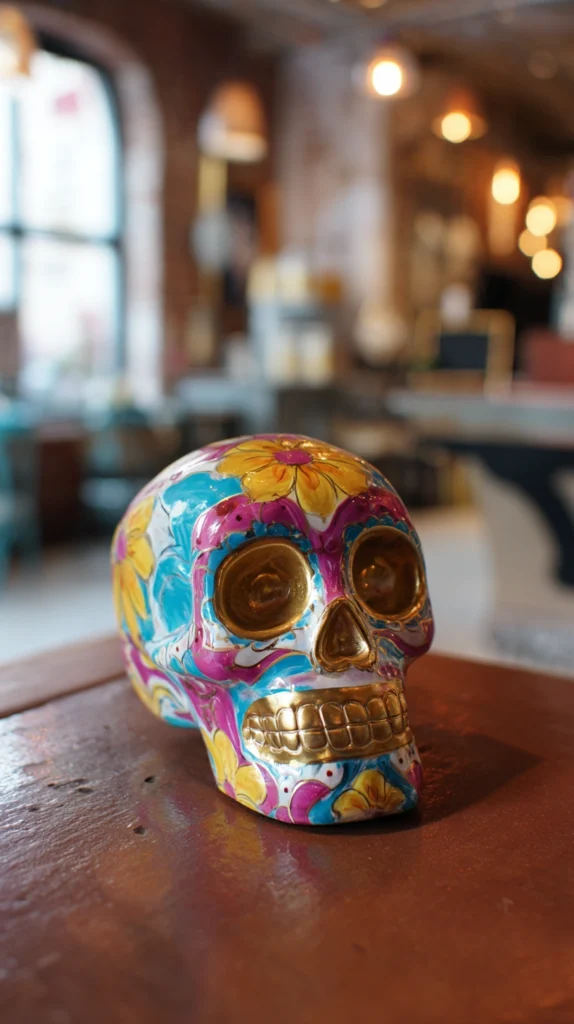
Budget: $15 – $150
A single, carefully chosen Day of the Dead object — a hand-painted sugar skull in ceramic, a Catrina figure in painted clay, a small altar arrangement with marigold colours and candles — introduces the Mexican tradition of celebrating and honouring death with beauty and joy into the domestic interior without tipping into the costume-shop version of the aesthetic. The Day of the Dead iconography at its most considered is some of the most visually sophisticated folk art in the world.
A hand-painted ceramic sugar skull costs $10–$40. A clay Catrina figure runs $20–$80. A small ceramic altar piece with floral detail costs $25–$100. Position the object as a single considered display piece rather than as part of a collection of similar objects — one beautiful Catrina figure on a console is a cultural object that commands attention; twenty sugar skulls arranged across a shelf read as themed decoration.
Style tip: Choose Day of the Dead objects in the specific colour palette of the tradition — deep marigold, vibrant pink, cobalt blue, bright green, and black — rather than versions in more muted contemporary tones. The colour of the Day of the Dead tradition is the tradition’s most important element; objects produced in quieter palettes for a design-conscious market lose the joy and the visual force that make the tradition so visually compelling.
13. The Adobe Arch Interior Element
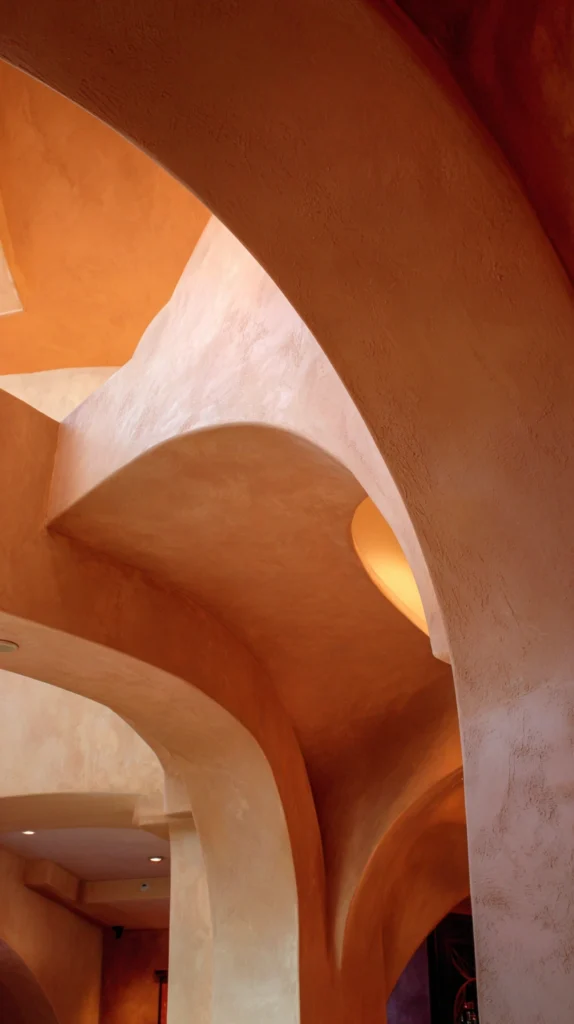
Budget: $500 – $3,000
An arched interior opening — between the kitchen and the dining room, between the entrance hall and the living room, or as a niche in the living room wall — plastered in a warm adobe finish and painted in a deep Mexican colour creates the most architectural of all the Mexican interior elements and the one that most directly references the built tradition of Mexican vernacular architecture. The arch is not decorative; it is structural in its visual logic, and the Mexican interior is built around the arch in a way that most other architectural traditions are not.
Building a non-structural decorative arch in a standard doorway opening using MDF and plaster costs $300–$800 in materials and labour. A rendered adobe finish applied to an existing arch costs $200–$500. Limewash paint in a warm terracotta or deep ochre for the arch interior runs $30–$80 per tin. The arch creates the most significant single architectural change available to a domestic interior at a modest cost, and its effect on the sense of warmth and shelter in the room it creates is disproportionate to the materials required to build it.
Style tip: Decorate the interior curve of the arch — the soffit — in a slightly deeper or more saturated version of the wall colour rather than in the same tone. The deeper soffit creates visual depth within the arch that makes the opening feel genuinely three-dimensional and architecturally substantial. A soffit in exactly the same tone as the surrounding wall reads as a flat cutout rather than as an architectural element with its own interior surface.
14. The Bright Maximalist Colour Blocking
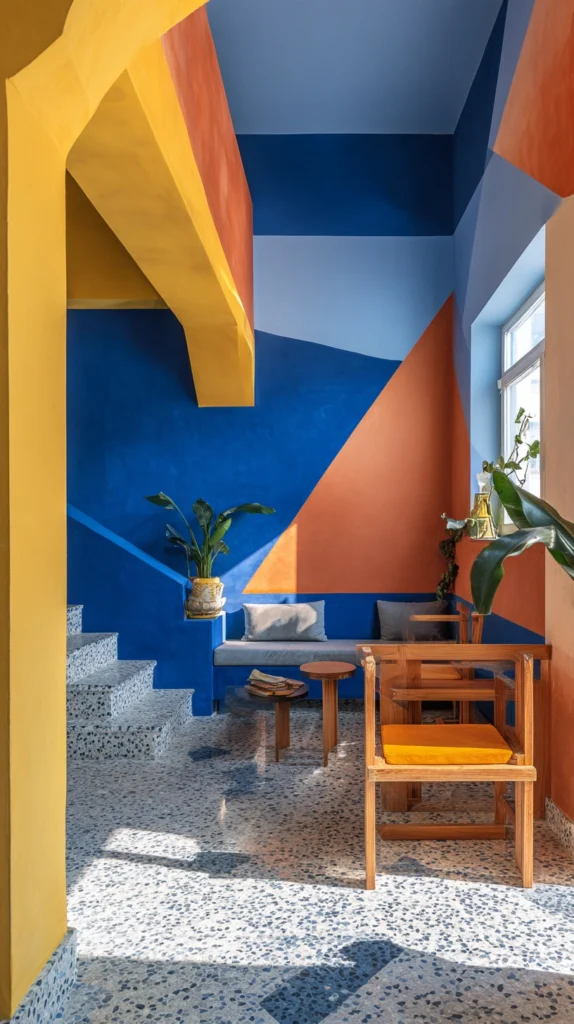
Budget: $60 – $300
Painting adjacent walls or adjacent rooms in bold, contrasting Mexican colours — a bright cobalt blue wall beside a deep terracotta wall, a bright yellow entrance hall opening into a warm pink living room — creates the colour-blocking approach that is characteristic of the Mexican exterior urban landscape, where houses in intense colours sit beside each other without apology or negotiation. The interior colour blocking brings this quality inside in a way that is simultaneously bold, joyful, and entirely grounded in a specific cultural and architectural tradition.
Paint in the required colours costs $30–$80 per 2.5-litre tin. A colour-blocked two-room treatment requires two tins of two different colours — $120–$320 in paint. The colour blocking works because the colours chosen are all from the same saturated register — all are vivid, all are warm, all have the particular intensity of Mexican pigment tradition. Pastel and saturated colours in the same scheme do not produce colour blocking; they produce an unresolved combination of aesthetic registers.
Style tip: Define the colour block at an architectural boundary — at the corner where two walls meet, at the line of an arch, at the threshold of two rooms — rather than at an arbitrary point on a continuous wall. The colour block reads as architectural when it coincides with a physical boundary; the same colour change in the middle of a wall reads as incomplete painting rather than as a design decision.
15. The Courtyard-Inspired Indoor Garden
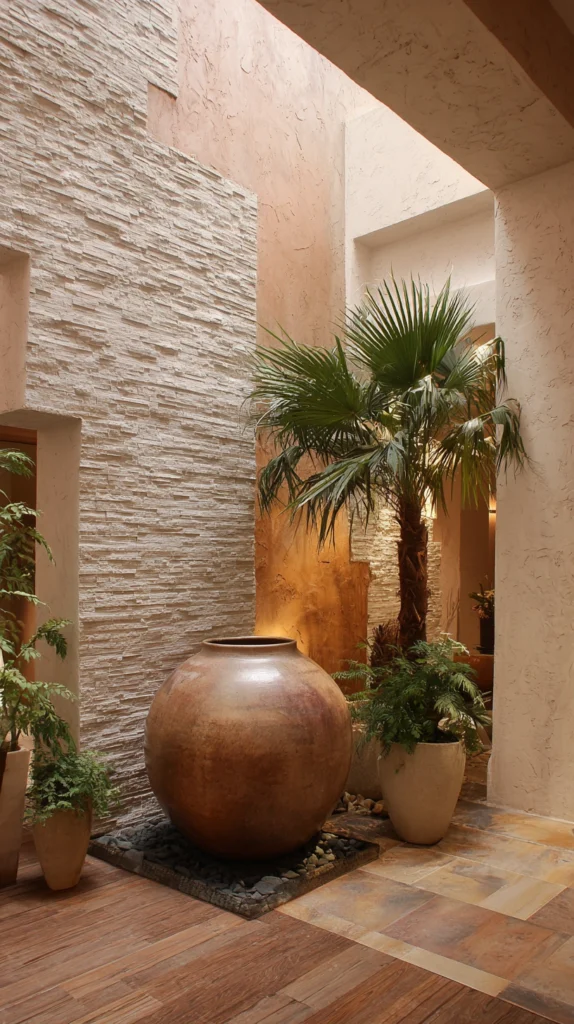
Budget: $80 – $400
The Mexican home is organised around the courtyard — the central planted outdoor space that provides light, air, and the sound of water to all the rooms around it. Replicating this quality in a domestic interior without a courtyard requires a corner of a room dedicated to abundant planting — large-leafed tropicals, bougainvillea trained on a small trellis, a small tiered fountain, terracotta pots at every scale — that creates the indoor garden quality of the courtyard at the room scale.
A large-leafed tropical plant for the corner costs $25–$80. A small tabletop fountain runs $30–$100. A trained bougainvillea in a pot costs $20–$60 and, positioned near a south-facing window, will flower indoors in sufficient light. Terracotta pots at varying scales cost $2–$20 each. The courtyard indoor garden requires the most maintenance of all the elements on this list — regular watering, feeding, and pruning — but it provides the most immersive and most specifically Mexican quality of any single interior intervention.
Style tip: Include a water element in the indoor courtyard garden even at the smallest scale — a small ceramic bowl of water with a floating flower, a desktop fountain, a wall-mounted water blade. The sound of water is the defining quality of the Mexican courtyard and the element that most immediately creates the sense of being within a garden rather than beside one. Without the water, the indoor garden is beautiful; with it, it is transformative.
The modern Mexican interior is not assembled from a catalogue of objects that represent the culture. It grows from the culture itself — from the specific clay and the specific dyes and the specific patterns that have been developed over centuries by specific communities of makers. The objects that carry this quality are the ones that were made by hand, that show the evidence of making, and that arrived in the room because someone recognised their quality rather than because they were available in the right colour.
Buy the authentic piece where the authentic piece is accessible. Use the reproduction where it is not and where the reproduction is honest about what it is. And fill the room with colour and warmth and the particular generosity that Mexican design has always brought to the spaces it inhabits — more than enough of everything that matters, arranged with the confidence that comes from centuries of knowing what a beautiful room looks and feels like.