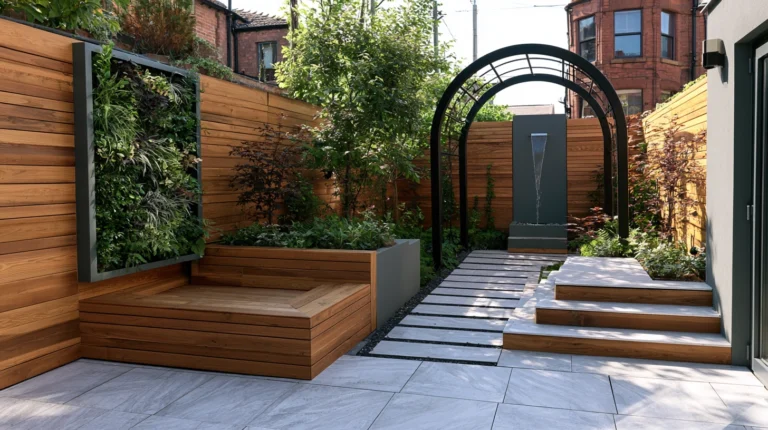
12 Budget Garden Ideas That Look Expensive and Stylish
12 Budget Garden Ideas That Look Expensive and Stylish
The gardens that look expensive are rarely the ones that cost the most. They’re the ones that look intentional. A garden with fifteen different plants bought on fifteen separate impulse trips to the garden centre can cost more than a garden built from a short, disciplined plant list — and still look the cheaper of the two.
What reads as “expensive” in a garden is almost never the price tag. It’s restraint: a limited palette, repeated rather than varied, with clean edges and a small number of confident decisions instead of a large number of small ones. A designer garden and a budget garden can use nearly identical plants. The difference is in how few decisions were made, and how consistently each one was carried through.
That’s good news for a limited budget, because restraint costs nothing extra. It’s often cheaper than the alternative. Here are 12 ways to get the expensive look without the expensive spend.
Why Some Gardens Look Cheap Regardless of Spend
The variety problem:
Without a disciplined plant list:
- One of everything: a rose here, a hosta there, a random ornamental grass, a few annuals
- No plant repeated more than once or twice
- The eye has nowhere to rest — every few feet introduces something new to process
- The result: reads as accumulated, even with an expensive total spend
With a disciplined plant list:
- Three to five plant varieties, each repeated multiple times through the space
- The same plant reappearing creates rhythm the eye can follow
- A single plant purchased in bulk, at scale, often costs less per unit than a wide variety bought in small quantities
- The result: reads as designed, even on a modest total spend
The edge and line problem:
- An unedged garden bed bleeds into the lawn with no clear boundary
- A garden with crisp, defined edges — even without a single expensive material — reads as maintained and intentional
- The edge line is one of the cheapest interventions available and one of the highest-impact
The material consistency problem:
- Mixing gravel, then mulch, then bark chips, then bare soil across different beds reads as unplanned
- One ground cover material, used consistently throughout, reads as a considered design choice
- This is true even when that one material is the least expensive option available
The Five Budget Garden Principles
Before choosing any individual idea below, these five principles do most of the work in making a modest budget look considered:
Repetition over variety:
- Fewer plant types, each repeated several times
- Reads as designed rather than collected
One consistent ground material:
- Gravel, mulch, or bark — pick one and use it throughout
- Consistency reads as intentional even when the material itself is inexpensive
Defined edges:
- A clean line between bed and lawn, or bed and path
- The cheapest, highest-impact structural change in any garden
Height variation with a limited palette:
- Tall, medium, and low plants from the same restrained plant list
- Creates visual interest without requiring more plant varieties
Grouped containers, not scattered ones:
- Three or five pots grouped together, rather than one pot in six different spots
- A single grouping principle applied throughout the garden
1. The Mass-Planted Border
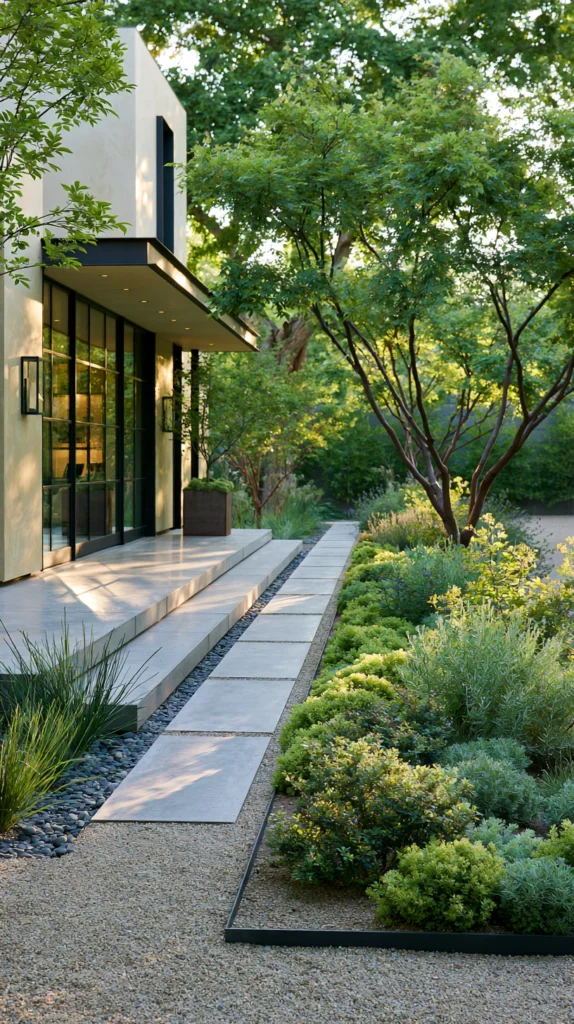
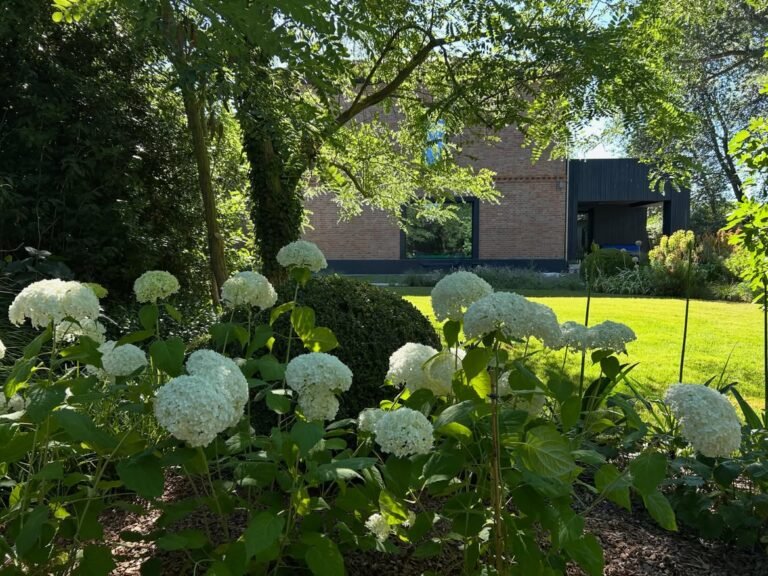
A single plant variety, repeated in multiples of five or more along a border — the technique that reads as professionally designed for a fraction of the cost of a mixed border.
Why one plant repeated beats five plants once each
A border with five different flowering plants, one of each, asks the eye to process five separate decisions. The same border with one flowering plant repeated five times reads as a single, confident decision, and the visual rhythm created by the repetition does more design work than variety ever does.
Choosing the plant
- A hardy, spreading perennial suited to the local climate (catmint, salvia, and lavender all mass-plant well in most temperate zones)
- Buy in smaller pot sizes and in bulk rather than fewer larger, more mature specimens — the mass effect matters more than any individual plant’s size
Cost breakdown
- Perennial plants in 4-inch pots (10–15 plants): $30–60
- Total: $30–60
2. The Crisp Bed Edge
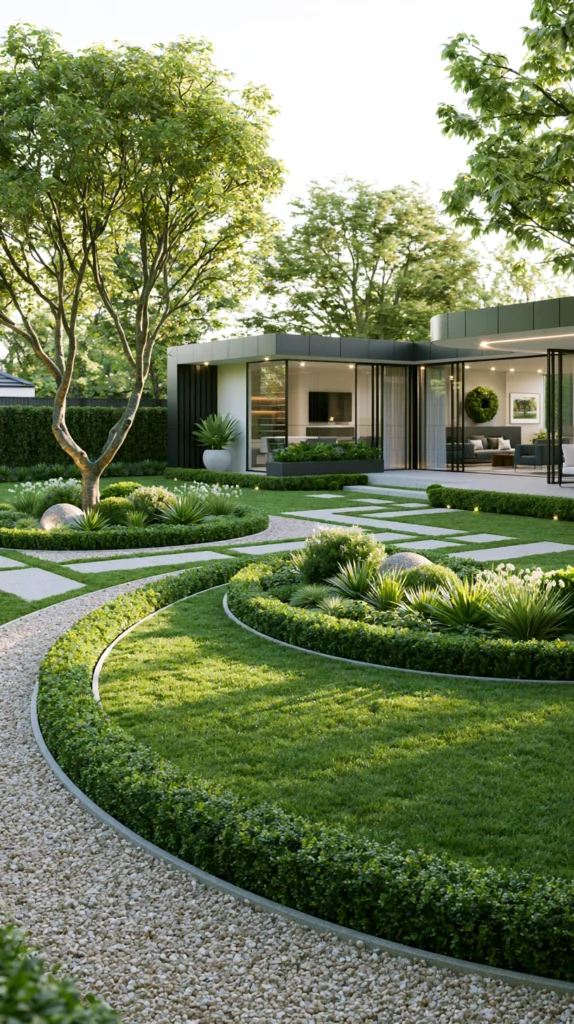
A clean, defined line cut or installed between garden bed and lawn — the single cheapest change that makes an entire garden read as maintained.
Why the edge matters more than what’s inside it
An unedged bed, no matter what’s planted in it, looks unfinished because the boundary between “garden” and “not garden” is unclear. A crisp edge signals maintenance and intention before the eye even registers the plants themselves.
Edge methods by budget
- A half-moon edging tool, used to manually cut a clean line: no material cost, only labour
- Steel or aluminum edging strip, installed flush with the lawn: a permanent, low-maintenance boundary
- Both methods: re-cut or maintained every few weeks to hold the line
Cost breakdown
- Half-moon edging tool (one-time purchase): $15–25
- Or metal edging strip (per 20 linear feet): $25–45
- Total: $15–45
3. The Uniform Gravel or Mulch Bed
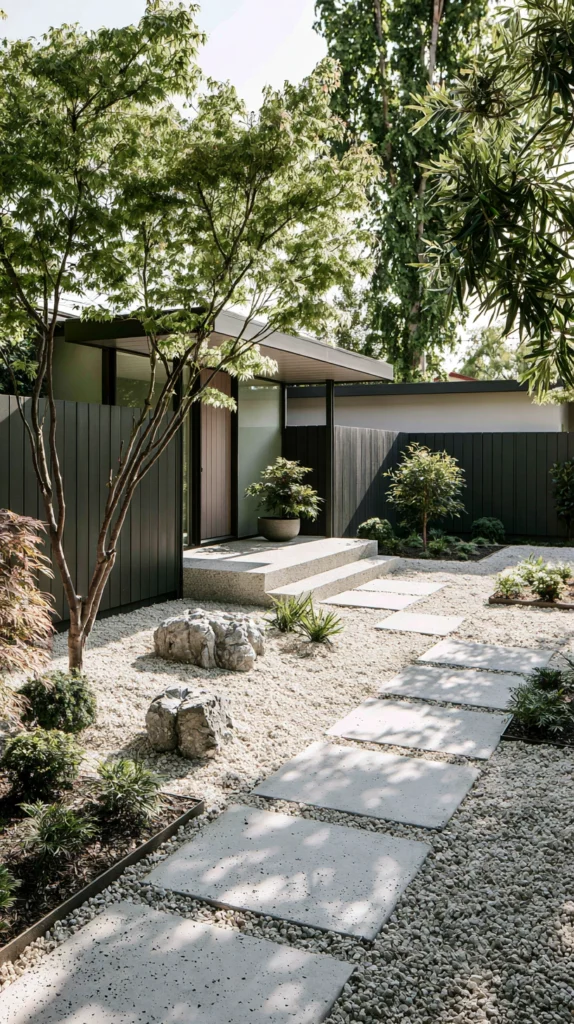
Committing to a single ground cover material — gravel or mulch, not both — across every bed in the garden, replacing a patchwork of bare soil, old mulch, and weeds.
Why one material throughout matters
A garden with gravel in one bed, mulch in another, and bare soil in a third reads as unfinished regardless of the plants in each. The same garden with one material used consistently reads as a single cohesive design, even when that material is the least expensive option at the garden centre.
Material choice
- Mulch: cheaper per square foot, breaks down over one to two seasons and needs replenishing, warms soil and suppresses weeds
- Gravel: higher upfront cost, essentially permanent, drains well and suits a more contemporary look
Cost breakdown
- Bagged mulch (covers ~100 sq ft at 2-inch depth): $25–40
- Or bagged gravel (covers ~50 sq ft at 2-inch depth): $40–70
- Total: $25–70 depending on material and area
4. The Grouped Terracotta Pots
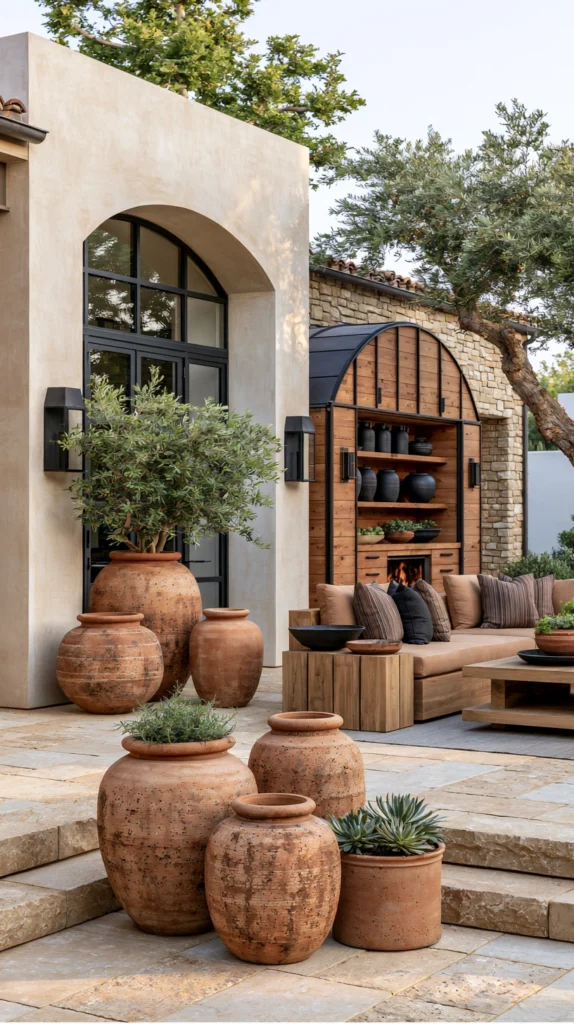
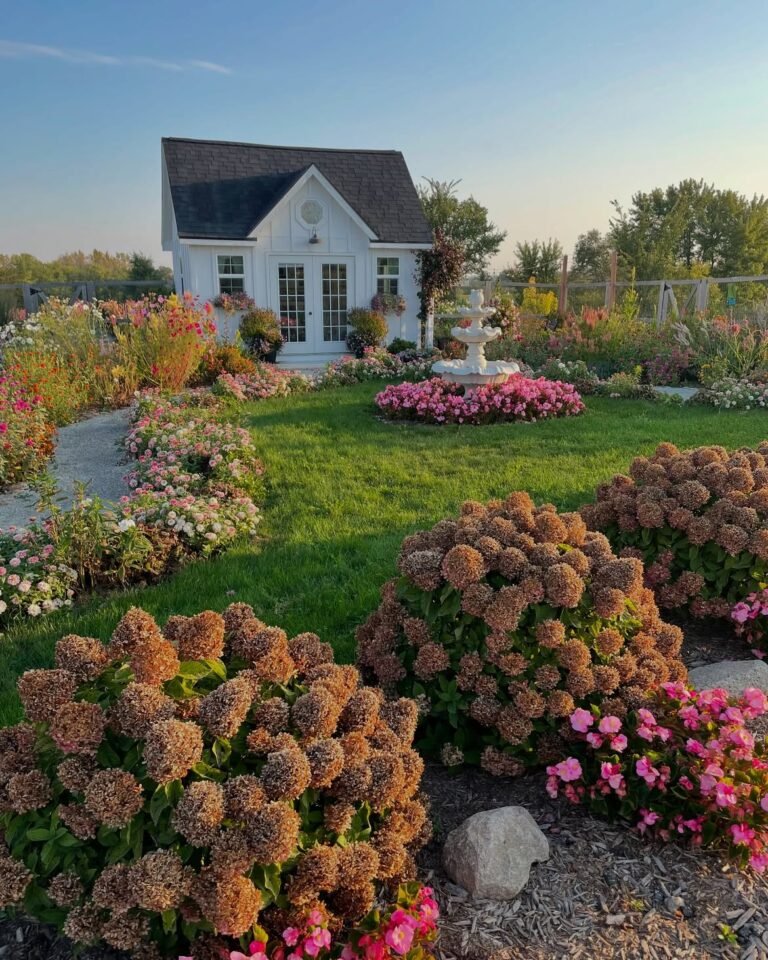
Three or five matching terracotta pots, grouped in a single cluster rather than scattered individually around the garden — a container strategy that multiplies visual impact without multiplying the plant budget.
Why grouping outperforms scattering
One pot on the patio, one by the door, and one by the shed reads as three separate afterthoughts. The same three pots grouped together, at varying heights, read as a single designed vignette, and terracotta’s warm, uniform tone does the unifying work for free.
The grouping formula
- Odd numbers only: three or five pots, never two or four
- Vary height using upturned crates or pot feet under the shortest pots, so the tallest pot sits roughly 1.5 times the height of the shortest
- One plant variety across all pots, or a maximum of two, for the same repetition principle as the border planting
Cost breakdown
- Terracotta pots (3, mixed sizes): $30–60
- Plants for pots (bulk annuals or one perennial variety): $20–40
- Total: $50–100
5. The Painted Fence Backdrop
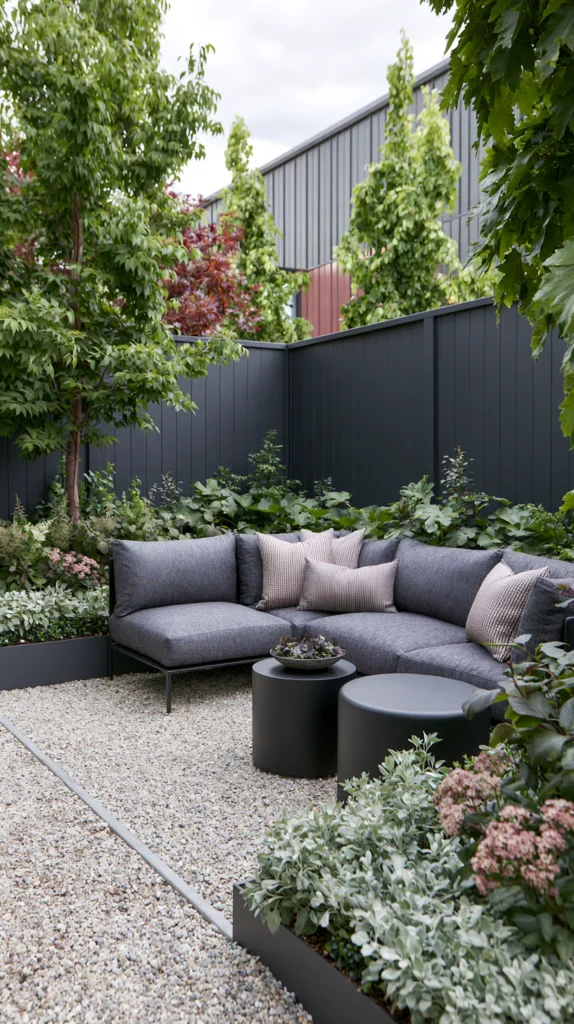
A single coat of exterior paint on an existing fence or wall, in a dark, muted tone — the backdrop change that makes every plant in front of it look more saturated and more expensive by contrast.
Why a dark backdrop elevates the planting
Weathered, unfinished wood or a pale, patchy wall competes visually with the plants in front of it. A single dark, matte colour recedes instead, and green foliage and flower colour read as significantly more vivid against it — the same principle galleries use with dark walls behind art.
Colour selection
- Charcoal, deep forest green, or matte black are the most reliable choices for making planting pop
- Matte or low-sheen finish, not gloss — gloss reflects light and draws attention back to the fence itself
Cost breakdown
- Exterior fence paint (1 gallon, covers ~300 sq ft): $35–55
- Total: $35–55
6. The Vertical Climbing Layer
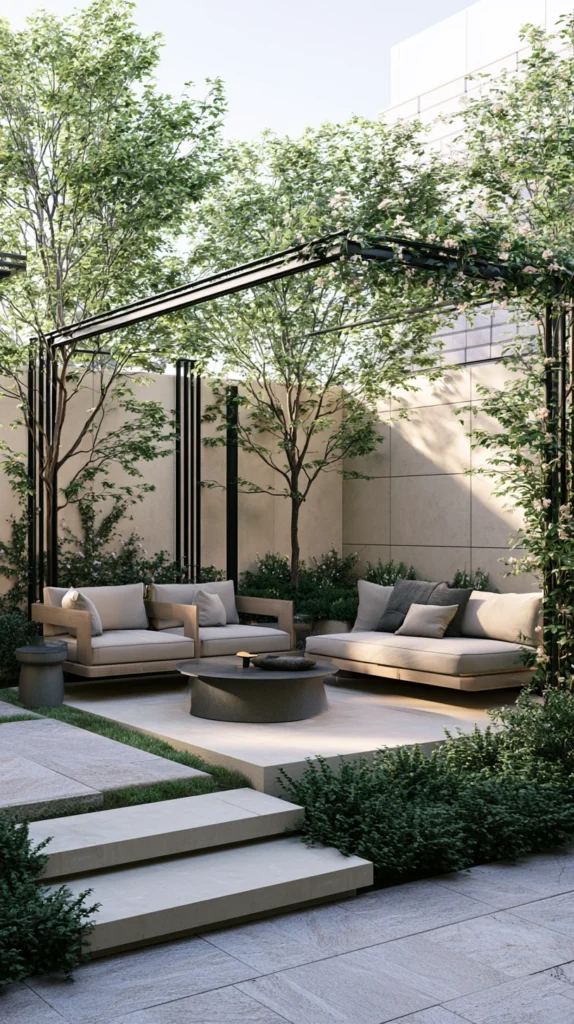
A single climbing plant trained up an existing fence, wall, or a simple trellis — height and density added to a flat garden without requiring additional ground-level bed space.
Why vertical growth reads as more established
A flat garden, regardless of how well-planted the beds are, reads as new. Height — particularly climbing growth that fills a vertical plane — reads as an established, mature garden, and it’s one of the fastest ways to add that impression without waiting years for shrubs to fill in.
Plant and structure choice
- Fast-growing, hardy climbers (clematis, climbing hydrangea, or star jasmine depending on climate) cover the most ground for the least cost
- A simple trellis panel, or training wire strung between two anchor points, is sufficient — an elaborate structure isn’t required for the visual effect
Cost breakdown
- Climbing plant (1-gallon pot): $20–35
- Simple trellis panel or training wire: $15–35
- Total: $35–70
7. The Reclaimed or Secondhand Seating
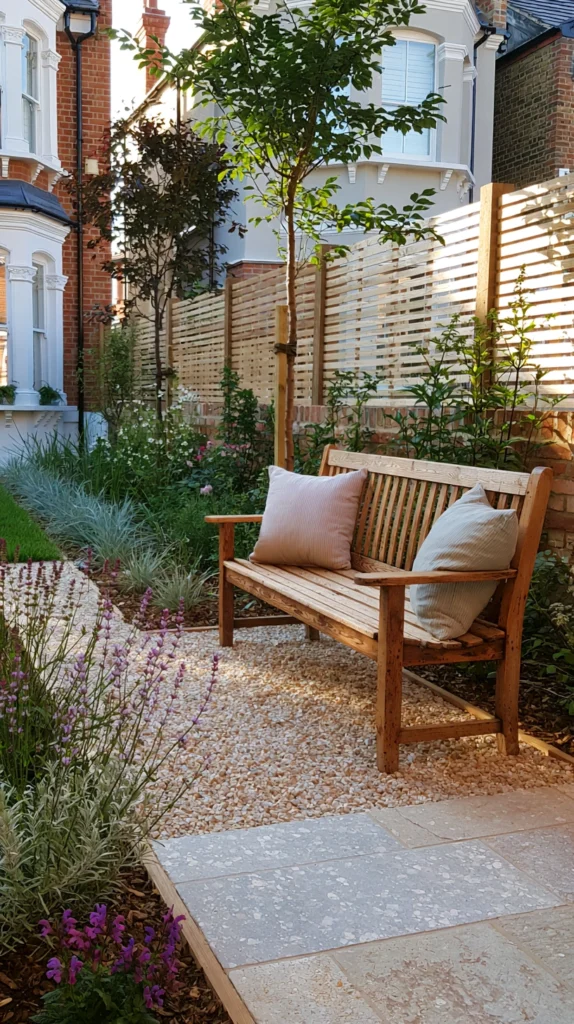
A single well-chosen secondhand bench or chair pair, refinished with paint or oil, in place of new garden furniture — furniture with more visual character than most budget-new alternatives, at a fraction of the cost.
Why secondhand often looks more expensive than new-budget
New furniture at the lowest price points tends toward thin materials and generic proportions. Secondhand wood or wrought iron furniture, even inexpensive to acquire, generally has better proportions and material weight, and a coat of paint or oil restores its finish for a small fraction of a new furniture budget.
What to look for
- Solid wood or wrought iron over resin or thin aluminum
- Structural soundness matters more than surface condition — surface wear is solved with refinishing
- A single bench, or a pair of chairs, is enough — this is a focal piece, not a full furniture set
Cost breakdown
- Secondhand bench or chair pair: $20–80
- Exterior paint or oil for refinishing: $20–35
- Total: $40–115
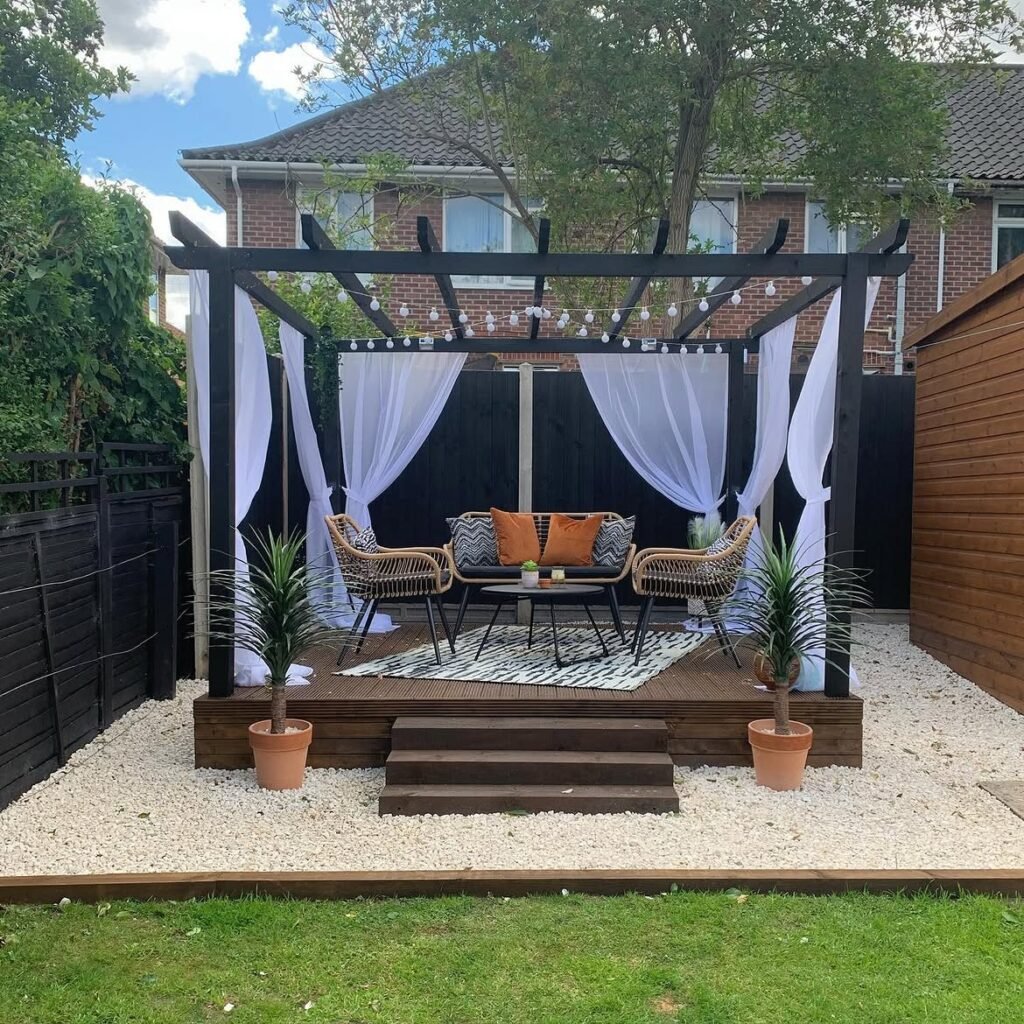
8. The Warm String Light Layer
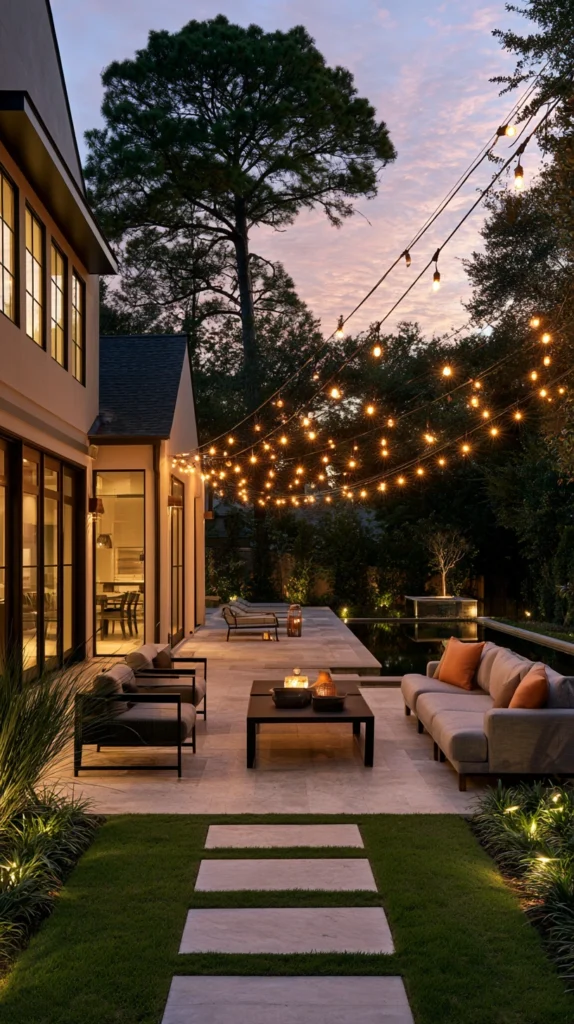
A single run of warm-white string lights, installed along a fence line, pergola, or between two fixed points — the lowest-cost way to make a garden feel finished and usable after dusk.
Why lighting changes the perceived value of a garden
A garden that goes dark at sunset reads as a daytime-only space. The same garden with a single warm light layer reads as a space that was planned for evening use, which is one of the strongest signals of an intentionally designed garden rather than an incidentally maintained one.
Installation and bulb specification
- Warm white (2700K) bulbs only — cool white reads utilitarian outdoors
- A single continuous run along one clear sightline (a fence top, a pergola beam) reads more considered than lights strung in multiple disconnected directions
Cost breakdown
- Warm white outdoor string lights (24–48 ft): $25–45
- Total: $25–45
9. The Single Statement Specimen Plant
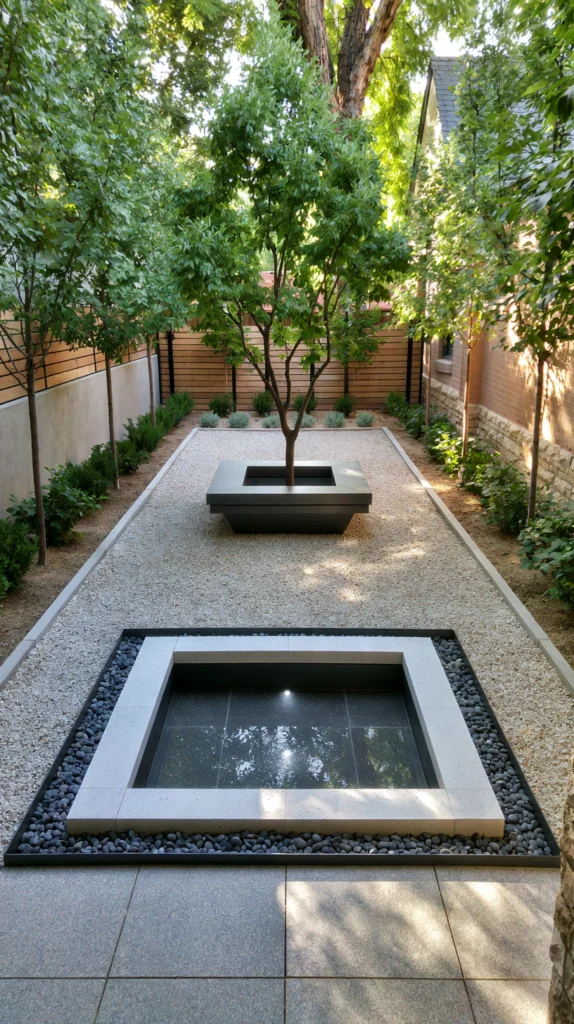
One larger, more architectural plant — a small tree, a large ornamental grass, or a structural shrub — positioned as a clear focal point, anchoring an otherwise simple garden.
Why one larger plant beats several medium ones
The same principle that applies to a living room or entryway shelf applies in the garden: one confident, larger-scale element gives the eye somewhere to land, and everything else in the garden reads as supporting it rather than competing with it.
Placement
- Positioned where it’s visible from the main viewing point (a window, a patio, the entry gate), not tucked in a back corner
- Given enough surrounding open space or ground cover that it isn’t crowded by other planting
Cost breakdown
- Small specimen tree or large structural shrub: $40–120
- Total: $40–120
10. The Single-Material Path
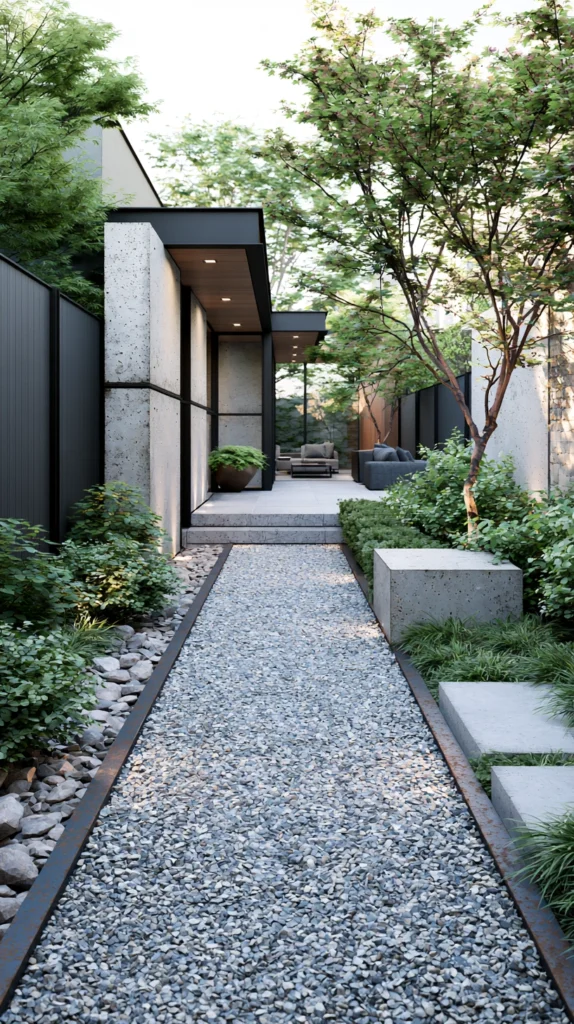
A simple path in one consistent material — gravel, stepping stones, or brick — connecting two points in the garden, replacing a worn dirt track or an absent, informal route.
Why a defined path matters
An undefined route across a lawn or bed reads as wear and neglect. The same route, formalized into a path with a single clear material, reads as a designed circulation feature, and it’s often one of the least expensive structural additions available.
Material and width
- Pea gravel is the lowest-cost option and can be laid directly over a weed barrier without mortar
- Reclaimed stepping stones, spaced at a natural stride length, are a step up in permanence
- Minimum functional width: 24–30 inches for a single-person path
Cost breakdown
- Pea gravel (covers ~30 linear feet at 2 ft wide): $50–90
- Weed barrier fabric: $15–25
- Total: $65–115
11. The Odd-Number Pot Grouping at the Entry
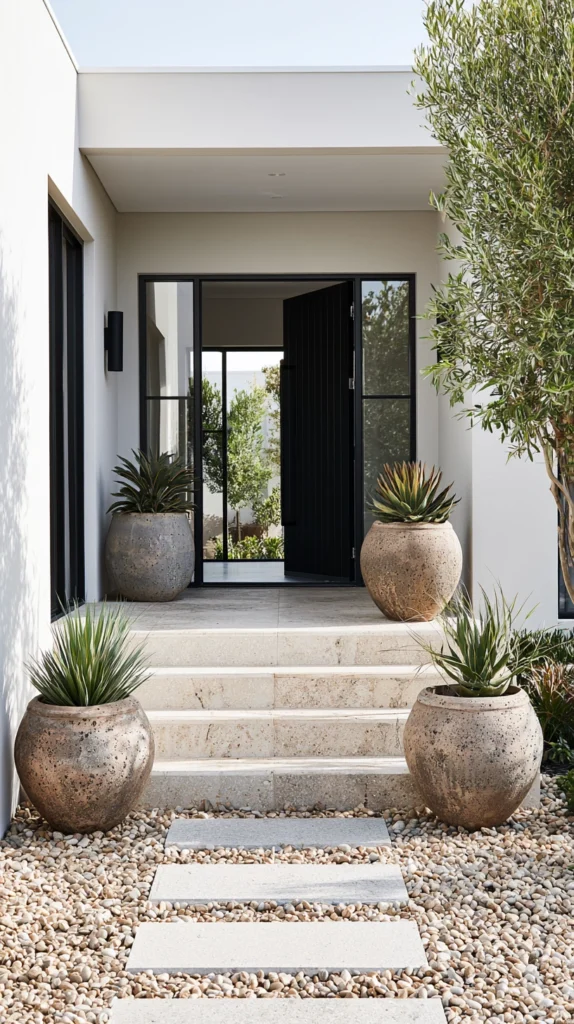
A cluster of three matching pots flanking the front door or garden gate — a small, high-visibility upgrade that applies the same grouping principle as Idea #4 to the highest-traffic sightline in the garden.
Why the entry deserves its own grouping
The entry is seen at close range by every visitor, in a way most of the rest of the garden isn’t. A small, well-executed pot grouping here has outsized impact relative to its size and cost, because it’s guaranteed to be seen and seen closely.
The formula
- Three matching pots, varied slightly in height if grouped to one side, or a symmetrical pair plus one taller accent pot if flanking a door
- A single plant variety, chosen for structure over flowers (boxwood, a small evergreen, or ornamental grass all hold their shape year-round)
Cost breakdown
- Matching pots (3, small to medium): $25–50
- Structural plants (3): $30–60
- Total: $55–110
12. The Complete Budget Garden
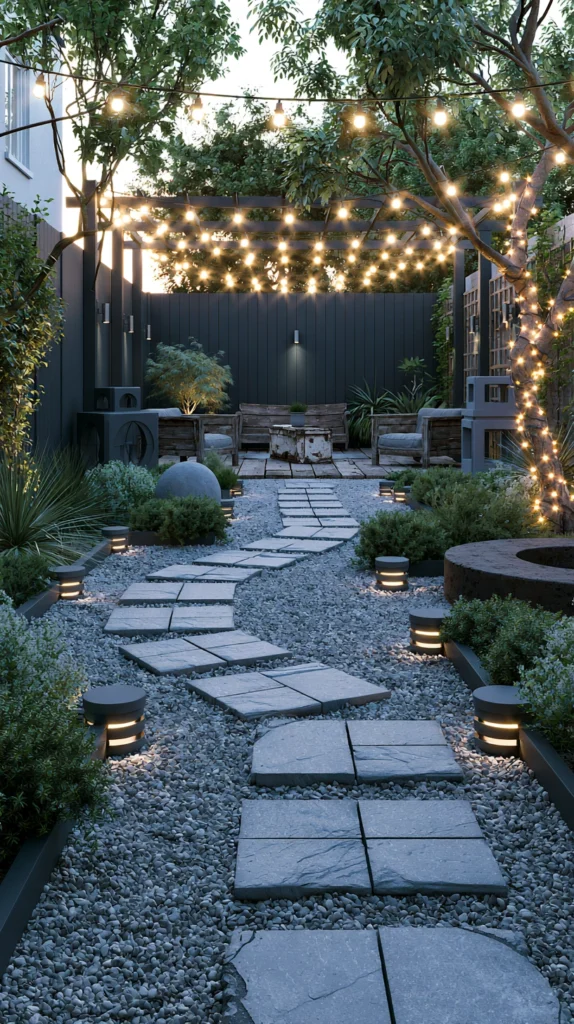
A garden designed with every principle above applied together — the definitive proof that an expensive-looking garden is a matter of discipline, not spend.
What separates the complete garden from a few good ideas
A garden with a beautifully mass-planted border next to a patchwork of mismatched mulch and an unedged lawn line still reads as unfinished. The complete version applies the same restraint everywhere at once — one ground material, one edge treatment, one repeated plant palette — so no part of the garden contradicts another.
The elements of the complete garden
The structure:
- Crisp bed edging throughout (Idea #2)
- A single-material ground cover in every bed (Idea #3)
- A single-material path connecting key points (Idea #10)
The planting:
- A mass-planted border using one repeated variety (Idea #1)
- One statement specimen plant as the focal point (Idea #9)
- A vertical climbing layer on an existing fence or wall (Idea #6)
The backdrop:
- A dark, painted fence or wall behind the main planting (Idea #5)
The furnishing:
- Grouped terracotta pots on the patio (Idea #4)
- A matching pot grouping at the entry (Idea #11)
- One piece of refinished secondhand seating (Idea #7)
The evening layer:
- A single run of warm string lights (Idea #8)
The garden in use on an ordinary evening:
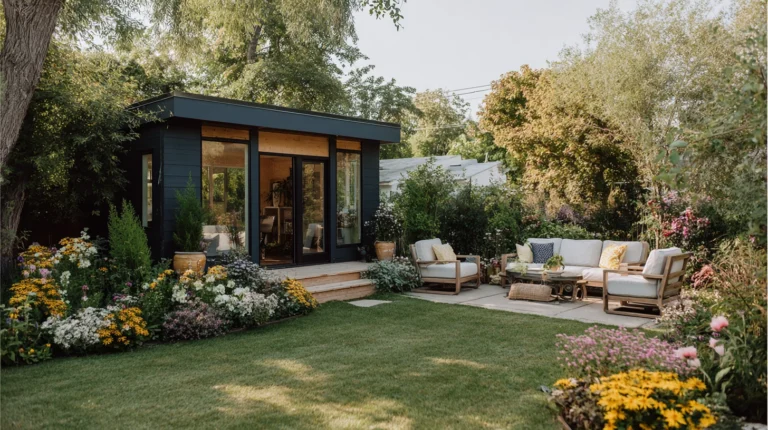
The path leads clearly from the gate to the seating area, gravel underfoot the whole way. The border along the fence is a single wave of one repeated plant, not fifteen competing varieties. The string lights come on as the light fades, and the dark-painted fence behind the border makes the greenery in front of it look saturated even in low light. Nothing in the garden cost very much individually. Together, restrained and repeated the same way throughout, it reads as designed.
Cost breakdown for the complete garden
Assuming a starting point of an unstructured, patchy garden:
- Bed edging: $15–45
- Ground cover material: $25–70
- Mass-planted border: $30–60
- Path: $65–115
- Statement specimen plant: $40–120
- Climbing plant and trellis: $35–70
- Painted fence backdrop: $35–55
- Patio pot grouping: $50–100
- Entry pot grouping: $55–110
- Secondhand seating: $40–115
- String lights: $25–45
Total: $415–905
Phased over two or three seasons:
Season one ($150–300):
- Bed edging
- Ground cover material
- Mass-planted border
Season two ($150–350):
- Path
- Statement specimen plant
- Painted fence backdrop
Season three ($150–400):
- Pot groupings (patio and entry)
- Secondhand seating
- String lights
The complete budget garden: not a bigger spend, but the same modest spend applied with far more discipline than most gardens ever get.
The Question Before Any Budget Garden Project
Before buying a single plant:
What currently makes this garden look unfinished rather than simple?
If the answer is: too many different plants, none of them repeated — the mass-planted border comes first.
If the answer is: no clear boundary between bed and lawn — the edging comes first.
If the answer is: everything looks flat and low — the specimen plant and vertical climber come first.
If the answer is: it just feels unloved after dark — the string lights are the fastest fix.
The project follows the actual source of the unfinished feeling, not the most tempting plant at the garden centre. A restrained, repeated palette applied consistently will outperform a wide variety applied inconsistently every time, regardless of budget.
Getting Started This Weekend
The immediate budget upgrade:
Cut a crisp edge along every bed.
No purchase required if using a manual edging tool — just an afternoon of work.
Choose one ground cover material and commit to it everywhere.
Even patchy existing mulch, topped up and made consistent, reads better than a mix of materials.
Group any existing pots into odd-numbered clusters.
Move what’s already owned before buying anything new.
Add one run of warm string lights.
The single fastest way to make the garden feel finished after sunset.
The rest of the design: the elaboration of this weekend.
The restraint: the beginning. The expensive-looking garden: what grows from applying it consistently.