14 TV Over Fireplace Ideas That Look Elegant Instead of Awkward
14 TV Over Fireplace Ideas That Look Elegant Instead of Awkward
There is a design decision that millions of homeowners make every year with the absolute certainty that it is the only reasonable option, and the quiet nagging sense that it might be completely wrong.
Mounting the television above the fireplace seems logical — the fireplace is already the room’s focal point, the mantel is the obvious shelf, the eye is already drawn to that wall. And yet the result, in most rooms, is a neck-craining viewing experience, a wall dominated by two competing focal points, and a mantel that has been subordinated to a piece of technology it was never designed to support.
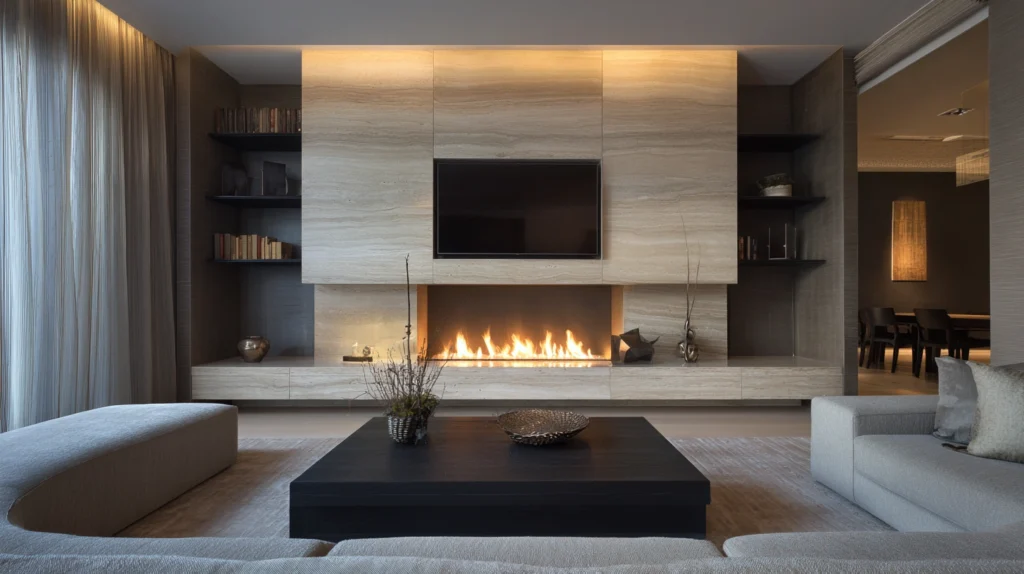
Done well, however, the TV over fireplace arrangement is genuinely elegant. The key is the set of decisions that surround it: the screen size relative to the fireplace opening, the concealment of cables, the height of installation, the treatment of the mantel below it, and the way the two elements — the cultural anchor of the fireplace and the practical centre of the screen — are visually unified rather than simply stacked. The arrangement that fails does not fail because of the concept; it fails because of the details.
Each idea below addresses one specific aspect of making the TV over fireplace arrangement work as well as it looks in its best versions. Each includes what you will need, what it will cost, and a practical tip to make the installation as elegant as it deserves.
1. The Recessed Installation
Budget: $500 – $3,000
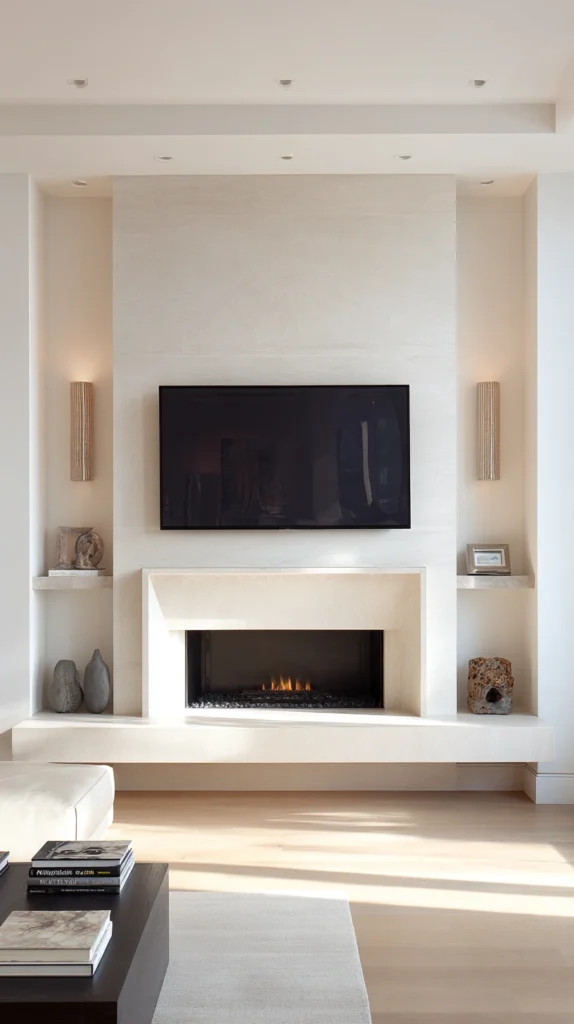
Building the television into a recess above the fireplace — so its face is flush with the surrounding wall or mantelpiece rather than protruding from it — creates the most architecturally integrated above-fireplace TV installation available. A recessed TV does not project into the room; it occupies the wall as a window occupies a wall, and the visual difference between a protruding screen and a flush one is significant enough to justify the additional construction involved.
A timber-framed recess with plasterboard walls and a painted finish costs $500–$1,500 in materials and labour. A stone or marble-faced recess above a traditional fireplace runs $1,500–$4,000. The recess depth needs to accommodate the television’s depth plus a small air gap at the rear for ventilation — most contemporary televisions are less than 5 centimetres deep, so a 8–10 centimetre recess depth is sufficient.
Style tip: Design the recess width to be exactly the width of the television rather than wider. A recess that perfectly fits the television reads as purpose-built; one that is noticeably wider than the screen reads as a niche that has had a television placed in it. The precision fit is the architectural detail that makes the recessed installation feel designed rather than improvised.
2. The Full-Height Panel Wall
Budget: $800 – $4,000
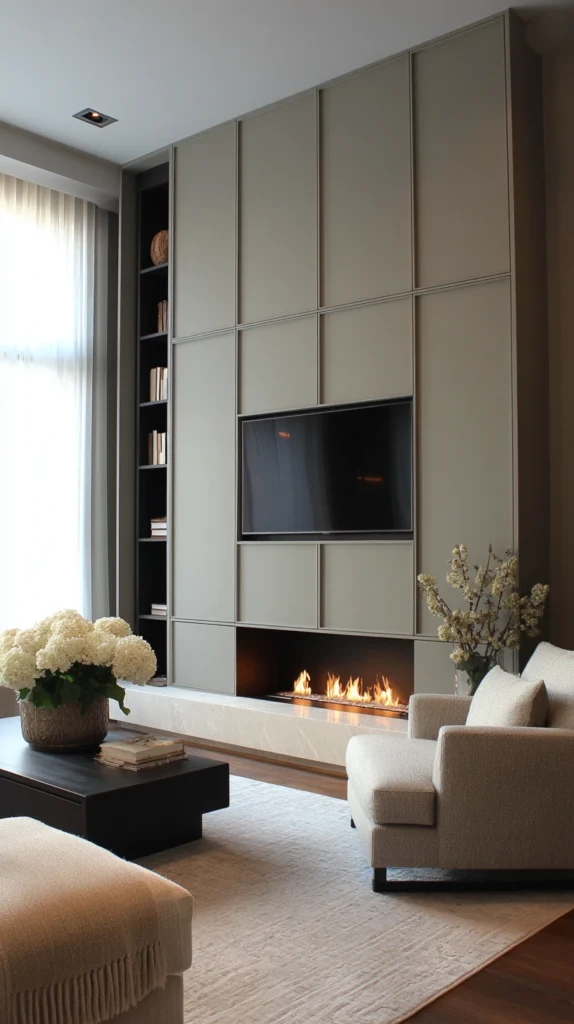
A full-height panelled wall — running from floor to ceiling, incorporating the fireplace surround at its lower section and the television as a panel element in the upper section — creates a unified architectural element that resolves the two-focal-point problem by subsuming both the fire and the screen into a single designed surface. The wall is the feature; the fireplace and the television are elements within it.
A full-height MDF panel wall with integrated shelving, fireplace surround framing, and TV recess costs $1,500–$4,000 in materials and joinery labour. Painting in a single colour — all panels, all shelving, all surrounds — in a deep, warm tone that reads as a single architectural surface costs $100–$200 in paint. The colour unity is the detail that makes the full-height panel wall read as a single designed element rather than a collection of separate components.
Style tip: Incorporate concealed cable management within the panel wall during construction rather than as a retrofit. Cables routed within the wall structure are invisible and permanent; cables managed with surface trunking are visible and impermanent. The concealment decision made during construction costs almost nothing additional; the retrofit of the same concealment after the wall is complete costs significantly more and produces a less resolved result.
3. The Mantel Gallery Balance
Budget: $50 – $300
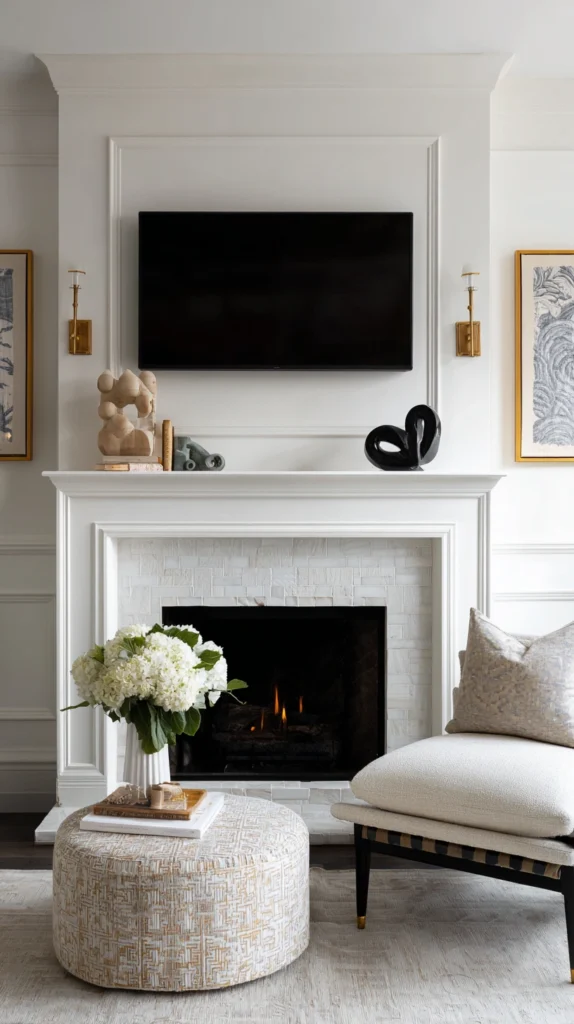
In a room where the television is already mounted above the fireplace, the mantel below it is the styling surface that most determines whether the arrangement reads as considered or accidental. A mantel dressed with a considered arrangement — objects at varying heights, one or two large pieces rather than many small ones, a colour palette that relates to the room — visually grounds the television above it and creates the two-level composition that makes the over-fireplace arrangement feel intentional.
Objects for the mantel display cost whatever the individual pieces cost — the discipline is the arrangement rather than the purchase. A single large vase or sculptural piece at one end of the mantel ($20–$80), one medium piece at the other end ($15–$50), and a small candle or object at the centre ($10–$25) creates the mantel arrangement that most confidently grounds the television above it. Symmetrical arrangements are too formal for most contemporary rooms; asymmetric arrangements read as collected and lived-in.
Style tip: Keep the mantel objects below the screen’s lower edge — nothing on the mantel should visually compete with or overlap the television frame. Objects that rise above the television’s lower bezel read as reaching toward the screen rather than grounding the fireplace below it, and the visual competition between the mantel objects and the screen undermines both.
4. The Sliding Panel Concealment
Budget: $300 – $2,000
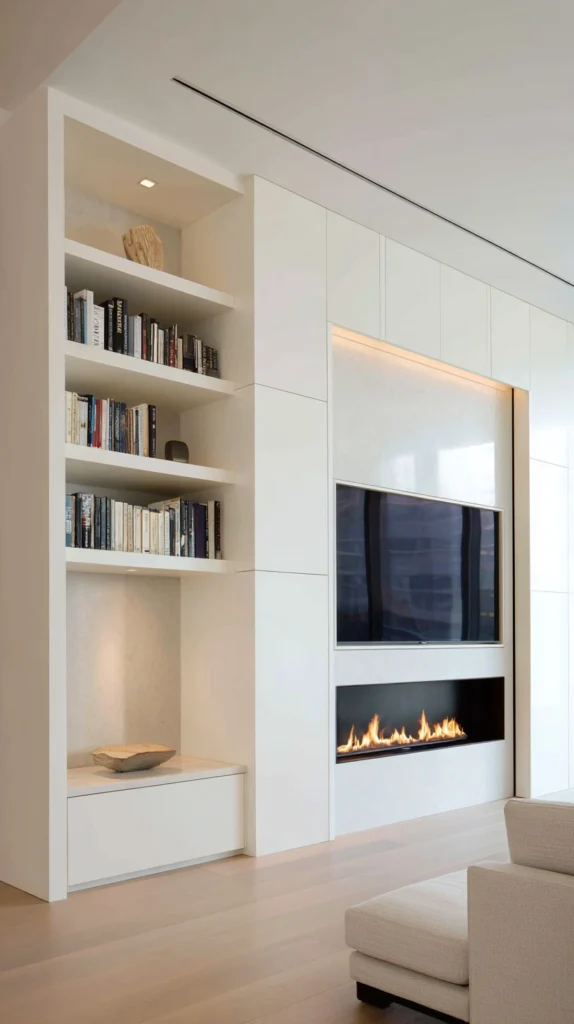
A sliding panel — in timber, painted MDF, or upholstered fabric — that covers the television when it is not in use converts the over-fireplace installation from a permanent technology presence to an occasional one. The panel is the element that allows the fireplace to be the room’s focal point when the television is not needed and the television to be the focal point when it is — without requiring either to permanently subordinate to the other.
A timber sliding panel on a concealed track costs $300–$800. An artwork panel that slides to reveal the screen runs $400–$1,200. An upholstered panel in a fabric that relates to the room’s textile palette costs $200–$600. The panel track is the precision element of the installation — it must slide smoothly, align correctly when closed, and conceal the gap at the edges completely. A panel on an imprecise track that does not close flush reads as unfinished regardless of the panel’s own quality.
Style tip: Commission the sliding panel artwork or surface treatment before specifying the installation dimensions, rather than designing the panel to fit an existing track. The panel’s visual character — the artwork, the fabric, the timber grain — determines the panel’s contribution to the room, and the installation should be built to serve the panel rather than the panel being made to fit the installation.
5. The Frame TV Integration
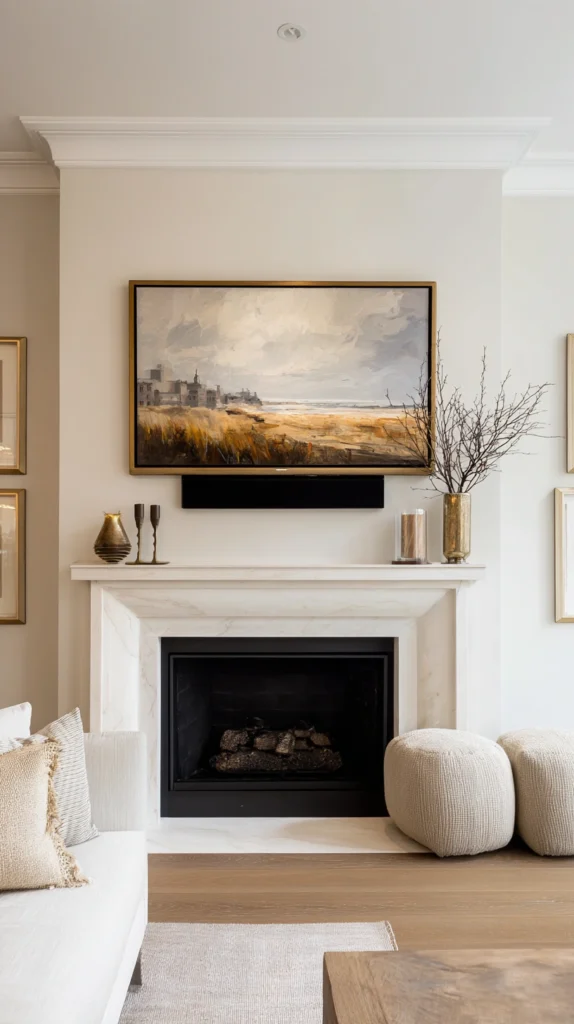
Budget: $1,500 – $4,000
A Frame television — designed specifically to display digital artwork when not in use, with a configurable bezel in different finishes and colours — solves the aesthetic problem of the dormant television above the fireplace by converting it into an artwork display. A Frame TV above a traditional fireplace, displaying a rotating selection of botanical prints, abstract paintings, or family photographs in the television’s off state, reads as a framed artwork rather than as an inactive screen.
The Samsung Frame television in a 55-inch size costs $1,500–$2,000. A 65-inch version runs $2,000–$3,000. The Frame bezel in a colour that relates to the fireplace surround — white above a white painted surround, natural timber above an oak mantel, black above a marble fireplace — is the specification detail that most determines whether the Frame television reads as a television above the fireplace or as a framed artwork that is sometimes used as a television.
Style tip: Subscribe to the Frame’s art store or curate a personal collection of artwork images at the resolution required for display before installation. A Frame television displaying the default demonstration content communicates the product rather than the room; one displaying artwork chosen by the household communicates the specific taste and the specific cultural interests of the people who live in the room.
6. The Tilting Mount Installation
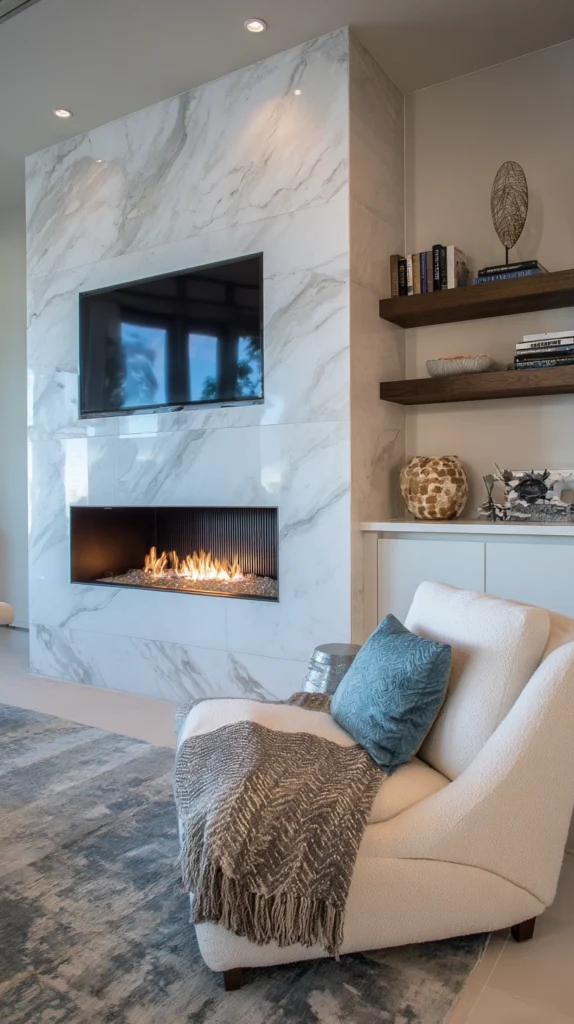
Budget: $100 – $400
A tilting wall mount — one that angles the screen downward by 5–15 degrees from the vertical — addresses the neck strain problem that most over-fireplace television installations create. A screen mounted flat to the wall above a fireplace requires viewers to look upward at an angle that is uncomfortable after twenty minutes; the same screen tilted slightly toward the viewer brings the optimal viewing angle to the eye level of seated occupants.
A quality tilting wall mount rated for the television weight costs $50–$200. Professional installation by a TV mounting specialist runs $100–$200 including cable management. The tilt angle required depends on the height of the installation above the fireplace and the distance of the primary seating from the screen — the further the seating, the less tilt required; the closer the seating, the more.
Style tip: Calculate the correct tilt angle before purchasing the mount rather than estimating it at installation. Sit in the primary viewing position, mark the wall at the height the television will be mounted, and measure the angle between your natural eye level and the mark. The tilt mount should bring the screen to face your eye level directly — a correctly calculated tilt eliminates the neck strain that makes many over-fireplace installations uncomfortable to use.
7. The Cable Management System
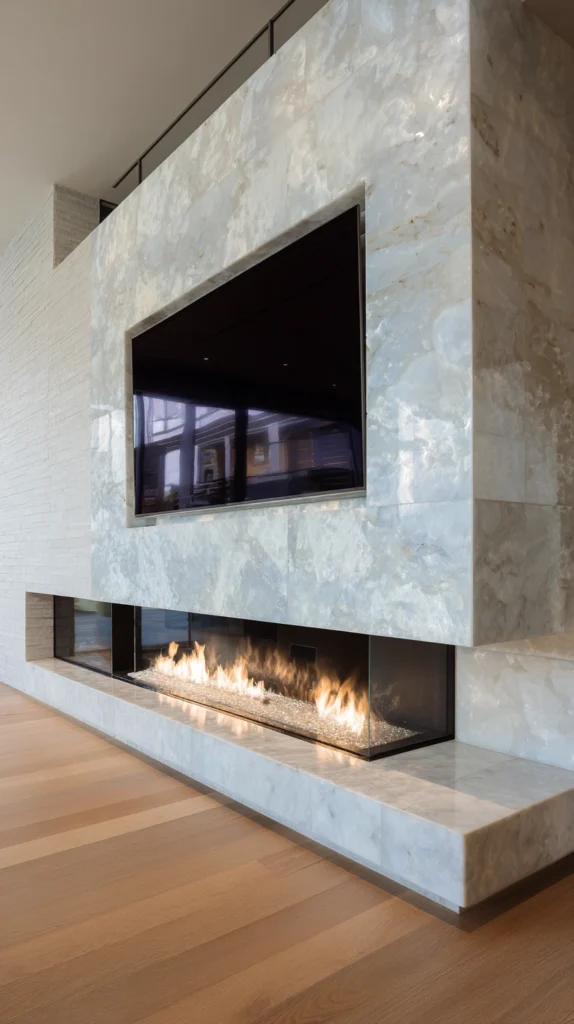
Budget: $30 – $200
The cables that connect a television above a fireplace to the power socket, the media console, and the various devices below it are the detail that most consistently undermines the elegant above-fireplace installation. A television mounted above a fireplace with cables trailing down the wall communicates an installation that was made without finishing; the same television with completely concealed cables communicates a completed installation.
An in-wall cable management kit — consisting of two wall plates and a length of plastic conduit that routes cables through the wall cavity — costs $20–$50. A recessed power socket above the fireplace eliminates the extension cable that most over-fireplace installations require — $80–$200 installed by an electrician. A cable raceway in a colour matching the wall surface ($10–$30) is the surface-mounted alternative for situations where in-wall cable routing is not possible.
Style tip: Hire an electrician to install a power socket directly behind the television position rather than routing the power cable down the wall to the nearest existing socket. The single visible cable that this approach eliminates — the power cable — is the cable that is most visible and most consistently present in over-fireplace installations that are almost but not quite finished. The electrician call-out for a single socket installation costs $80–$150 and produces the cleanest possible installation result.
8. The Symmetrical Alcove Treatment
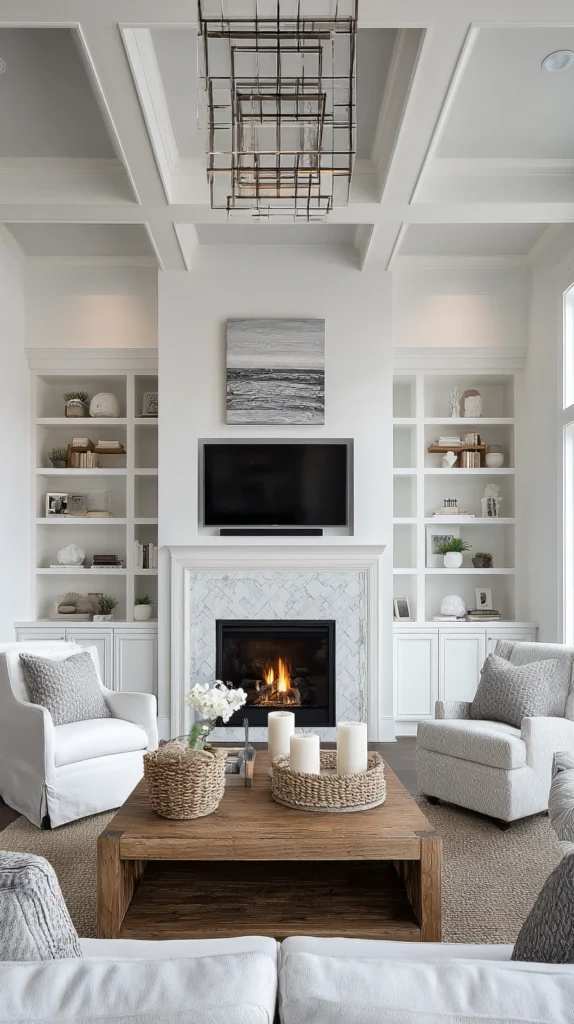
Budget: $200 – $1,500
A fireplace flanked by two symmetrical alcoves — each with built-in shelving, each styled with books and objects at the same scale and in the same palette — creates a wall composition in which the television above the fireplace is framed on each side by the alcove shelving. The symmetrical alcove treatment resolves the single-focal-point problem by making the entire chimney breast wall a unified composition with the television as its upper centrepiece.
Built-in alcove shelving on both sides of a chimney breast costs $400–$1,500 in materials and carpentry labour. Painting the alcove shelving in the same colour as the chimney breast wall — rather than in a contrasting colour — unifies the full-width wall composition. The television, centred above the fireplace opening and flanked by the symmetrical shelving, reads as the logical culmination of a designed wall rather than as a screen mounted above a fire.
Style tip: Style the alcove shelving symmetrically in the broad arrangement but asymmetrically in the detail — the same number of books on each side but in a different colour order, the same height vase on each side but in a slightly different position. Perfect bilateral symmetry reads as formal and designed; the symmetry with small variations reads as considered and inhabited. The room wants to feel lived in at the detail level even when it is formally composed at the large scale.
9. The Vintage or Traditional Surround Upgrade
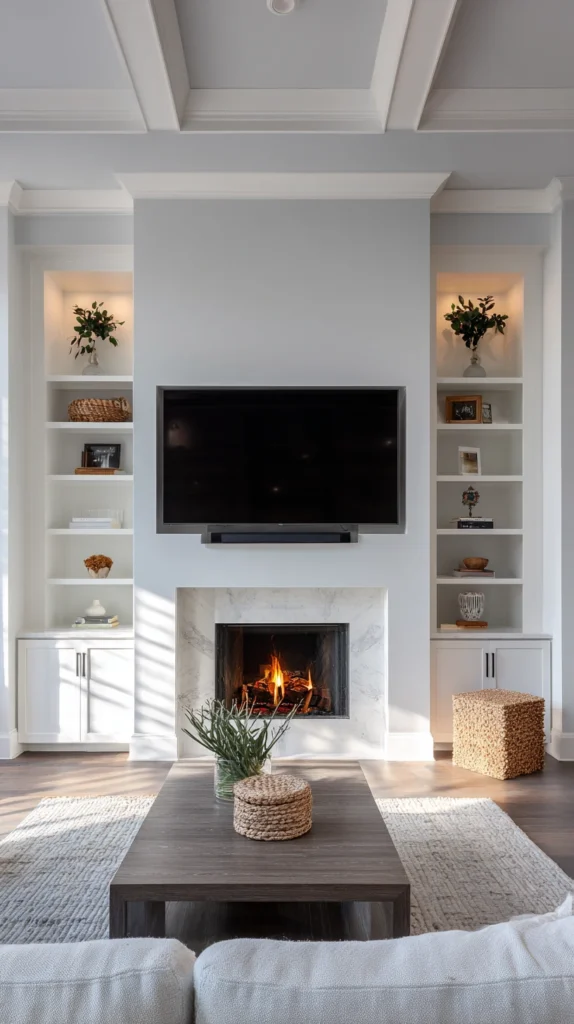
Budget: $200 – $2,000
Installing a traditional or vintage fireplace surround — a period timber mantelpiece, a carved marble surround, a Victorian cast iron insert with a period tile surround — beneath a contemporary television creates the most dramatically resolved version of the over-fireplace arrangement: the ancient tradition of the hearth and the contemporary technology of the screen in explicit conversation. The visual tension between the period surround and the modern screen is the design statement rather than the design problem.
A reclaimed timber fireplace surround costs $200–$600. A Victorian cast iron insert with original tiles runs $400–$1,200. A carved marble surround costs $800–$3,000. The period surround requires the television to be small enough in relation to the surround width that the screen reads as contained by the architecture rather than overwhelming it — the television should be narrower than the width of the fireplace opening by at least 20 centimetres on each side.
Style tip: Choose a period surround whose proportions relate to the room’s ceiling height rather than to the television size. A surround that is architecturally appropriate to the room’s scale will be approximately the right size for the television above it — a room with 3-metre ceilings accommodates a generously scaled surround, and a generously scaled surround accommodates a 55–65 inch television. The room’s architecture, rather than the television, should determine the surround selection.
10. The Minimalist Black Fireplace Combination
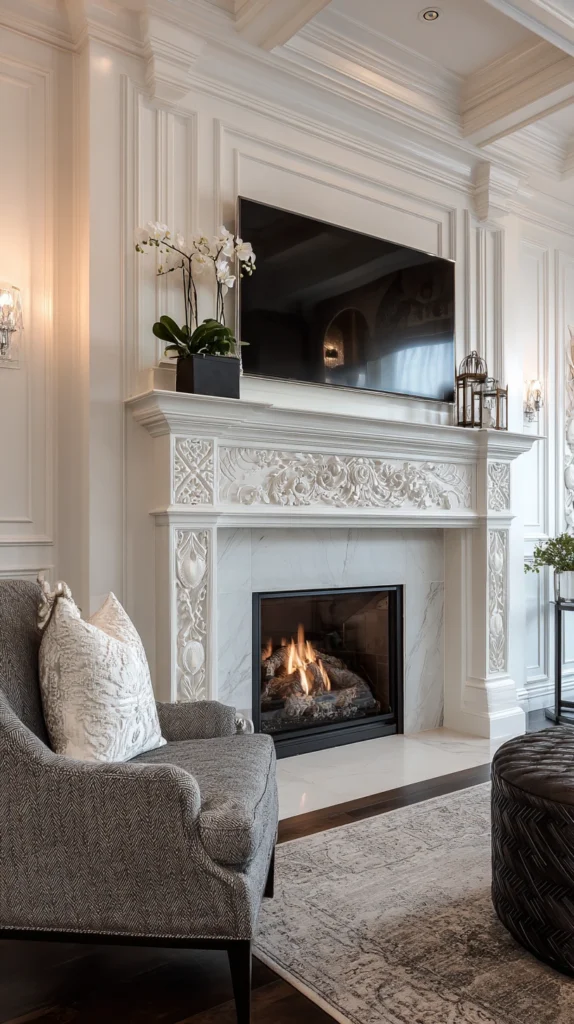
Budget: $1,000 – $5,000
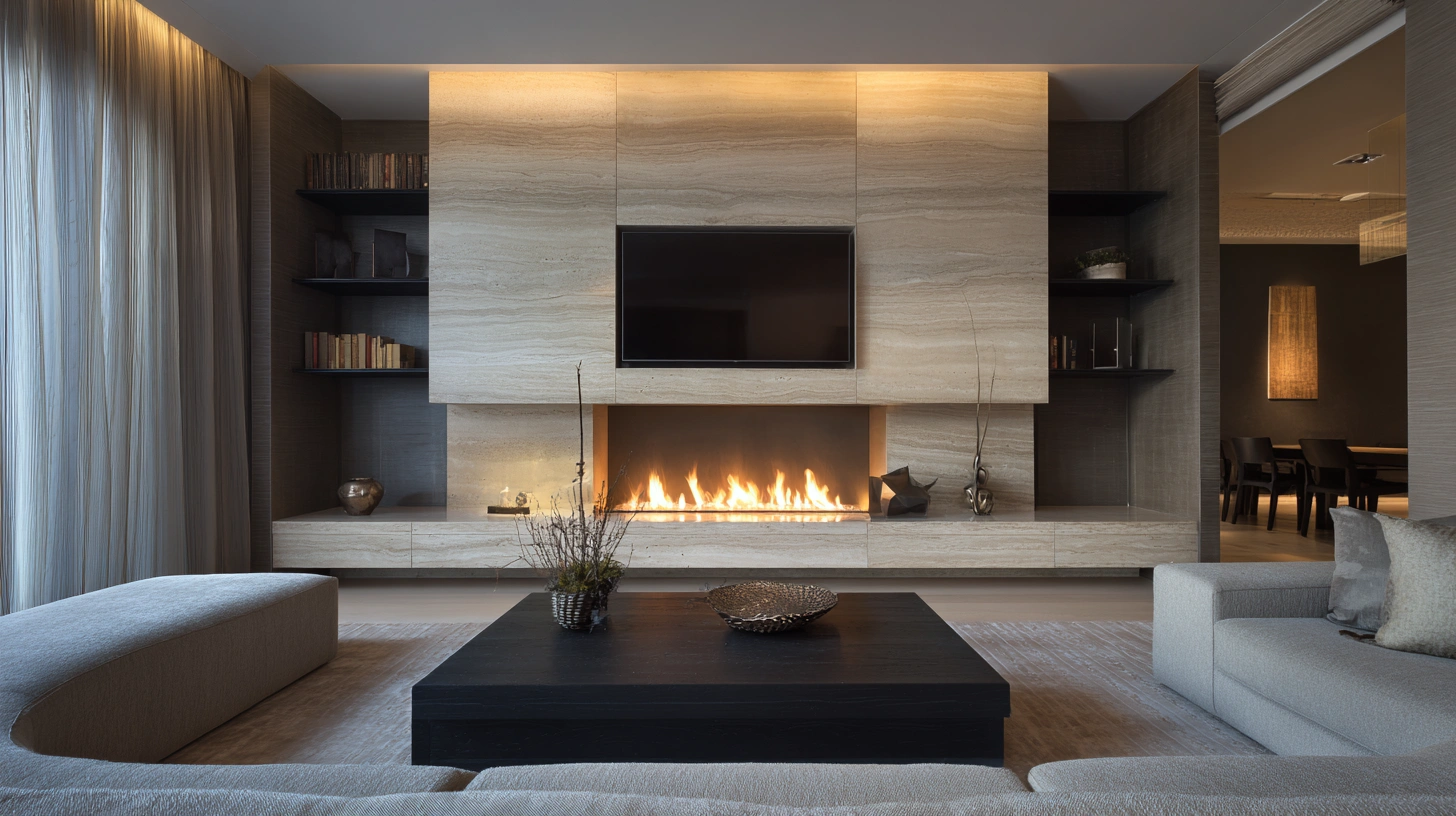
A contemporary minimalist fireplace — a flat black bioethanol or gas fire in a flush-mounted frame, with no mantelpiece, no surround, no projecting architecture — combined with a large-screen television mounted directly above it creates the most graphic and most contemporary version of the over-fireplace arrangement. The two black rectangles — the fire opening and the screen — are aligned vertically on the same wall and read as a composed pair rather than as two competing elements.
A bioethanol wall-mounted fireplace in a black or steel finish costs $400–$1,500. A gas inset fire with a flat contemporary surround runs $800–$3,000. A large-screen television in a black bezel above the fire costs $500–$2,000. The alignment between the fire and the screen is the precision detail of the minimalist combination — both must be centred on the same vertical axis, at the same width or with the television slightly wider than the fire opening.
Style tip: Specify the fire opening width and the television width simultaneously rather than independently. The aesthetic of the paired vertically stacked rectangles requires a proportional relationship between the two — a television that is 1.5 to 2 times the width of the fire opening produces the most resolved visual relationship. The proportional calculation made before either is specified produces a better result than a television chosen and a fire chosen independently that then must be reconciled on the wall.
11. The Artwork Integration Strategy
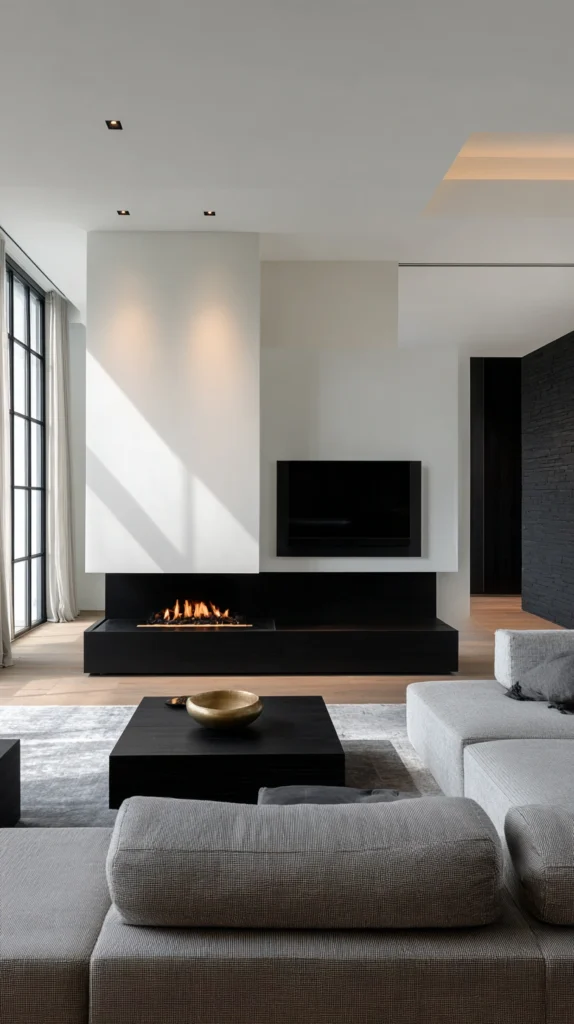
Budget: $100 – $600
Treating the area around the television above the fireplace as a gallery wall — with framed artwork on each side of and slightly below the screen level, creating a composed arrangement in which the television is one element among several — distributes the visual weight of the installation across a wider wall area and prevents the screen from dominating the fireplace wall as a single large element.
Framed artwork of $20–$100 each arranged in pairs or groups on each side of the television at the mantel level creates the gallery treatment. The artwork should be framed in the same finish and at a similar scale — not individually significant pieces but a cohesive collection that frames the screen without competing with it. The television is the visual anchor; the artwork is the frame.
Style tip: Choose artwork whose colour palette is drawn from the room rather than from the artwork itself — pieces selected because their tones relate to the sofa, the rug, and the walls rather than pieces selected for their independent artistic quality. Artwork that belongs to the room’s palette frames the television as part of the room; artwork selected independently of the room’s palette introduces new colour elements that the television installation must then accommodate.
12. The Stone Surround and Feature Wall
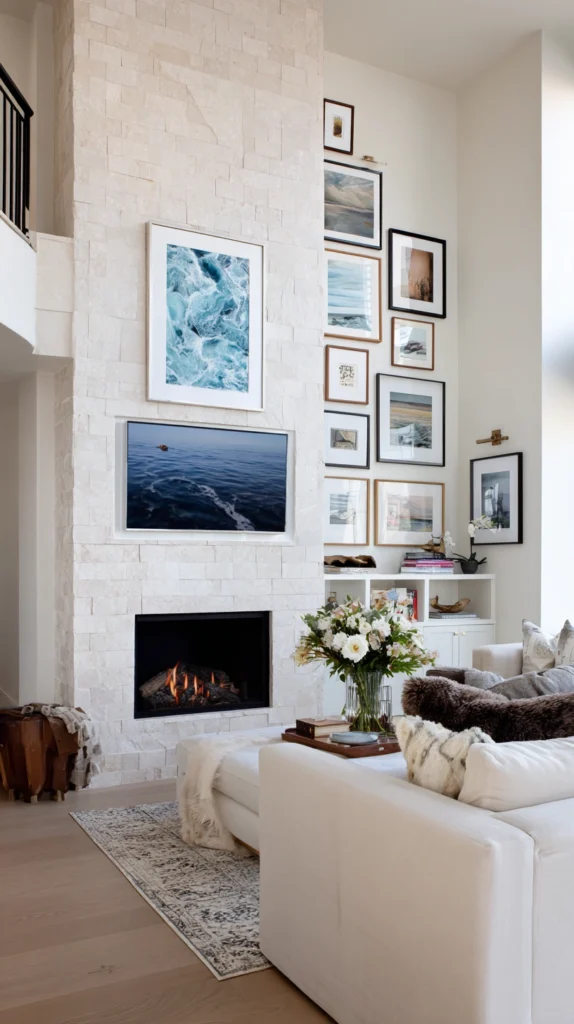
Budget: $500 – $3,000
A stone or brick feature wall — extending from floor to ceiling around the fireplace chimney breast — with the television mounted flush against the stone above the fire opening creates the most textural and most materially substantial version of the over-fireplace installation. The stone wall gives the chimney breast the mass and the gravitas that a plastered wall cannot provide, and the television mounted against stone reads as architecture rather than as technology.
Natural stone cladding tiles for the chimney breast cost $50–$150 per square metre. Brick slips — thin brick sections that create the appearance of a solid brick wall — run $30–$80 per square metre. The television mount for a stone or brick wall requires specific masonry fixings rather than standard plasterboard fixings — the correct anchor type for the stone is the safety decision that determines whether the installation is permanent or hazardous.
Style tip: Use the same stone or brick material for the fireplace hearth as for the chimney breast wall cladding. The material continuity from floor to ceiling — hearth stone, fireplace surround, chimney breast cladding, all in the same stone — creates the elemental, geological quality that the feature wall is reaching for. Mixed materials on the same chimney breast — stone above the mantel, marble below — read as decorative rather than architectural.
13. The Low-Profile Soundbar Integration
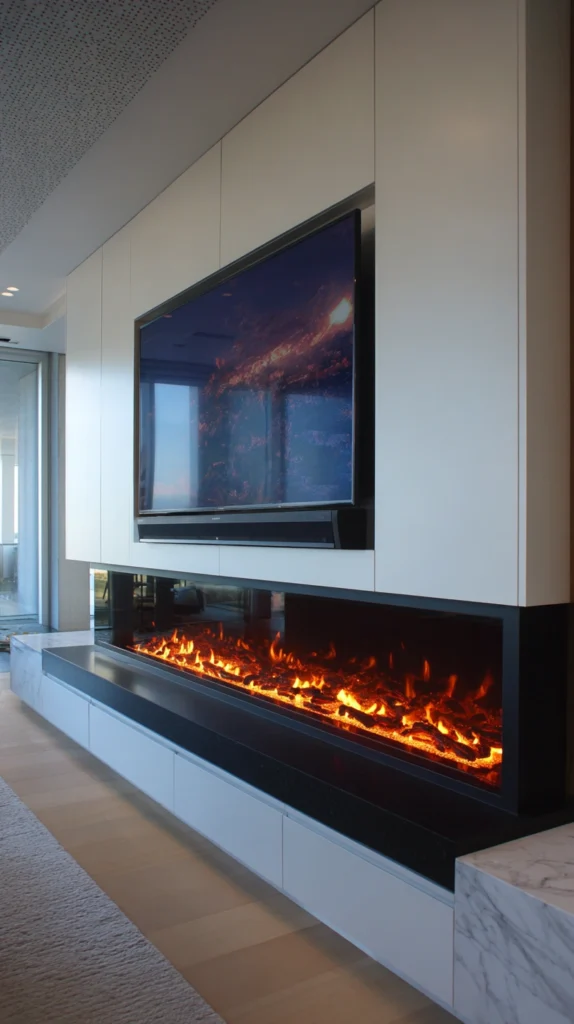
Budget: $100 – $800
A soundbar mounted directly below the television, above the mantelpiece, in a position that provides the television’s audio without the speakers being visible beside the screen or the set-top equipment being cluttered on the mantel — is the audio-visual integration detail that most elevates the over-fireplace installation from a practical arrangement to a considered one. The television and the soundbar as a unified visual unit reads as a designed audio-visual installation; a television with speakers on the mantel reads as equipment.
A quality soundbar of 60–80 centimetres in length costs $100–$400. A Dolby Atmos version runs $200–$800. Mount the soundbar on the wall immediately below the television — within 5 centimetres of the television’s lower bezel — using a dedicated soundbar wall mount ($20–$50). The cable from the soundbar to the television is a single HDMI ARC or optical cable that routes alongside the television cables within the wall management system.
Style tip: Choose a soundbar whose width is within 5 centimetres of the television’s width in either direction. A soundbar that is dramatically narrower than the screen reads as an accessory beside the screen rather than as an integrated element of the audio-visual unit. The proportional relationship between the screen and the soundbar is the visual specification that most determines whether the soundbar is visible as a considered addition or noticeable as an afterthought.
14. The Colour-Matched Bezel and Surround
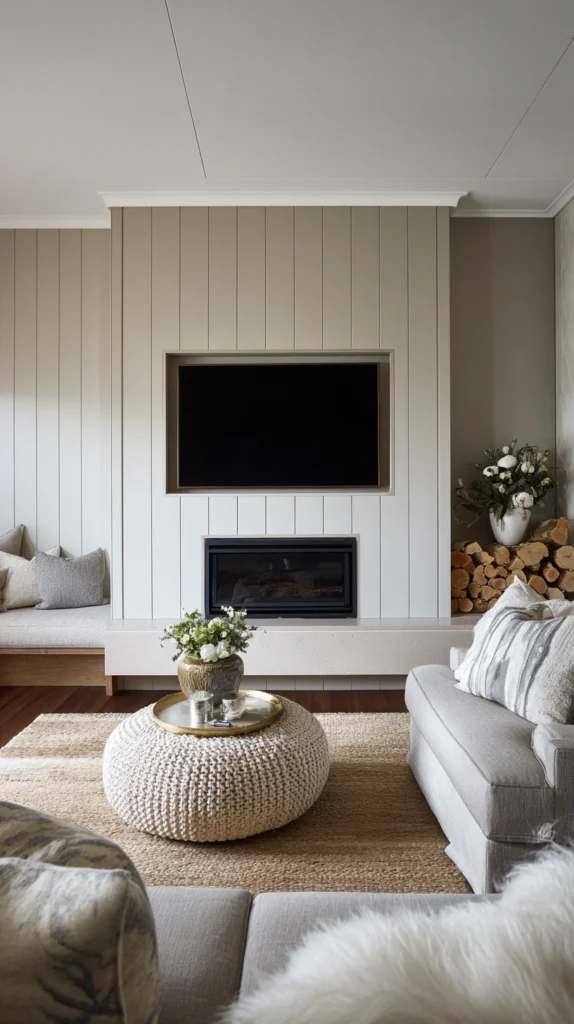
Budget: $50 – $400
Colour-matching the television bezel to the fireplace surround — through the choice of a television model with an appropriate bezel colour, through the application of a bezel wrap or frame cover, or through painting or staining the fireplace surround to match an existing television bezel — creates the visual unity between the screen and the fireplace that most over-fireplace installations lack. A screen whose bezel matches the surround reads as belonging to the wall it occupies; a screen whose bezel contrasts with everything around it reads as placed rather than designed.
Television bezel wrap in a custom colour costs $30–$100. A Frame television with a bezel in natural timber, black, or white — to match the fireplace surround finish — eliminates the need for a separate wrap. Painting a timber fireplace surround in the same colour as a black television bezel costs $20–$40 in paint. The colour match is the single most underused and most effective over-fireplace integration technique available at any budget level.
Style tip: Assess the bezel match from the primary seating position rather than from standing beside the fireplace. The distance at which the over-fireplace arrangement is most consistently viewed is the distance from which the colour relationship between the bezel and the surround is most apparent, and a match that reads correctly from 3–4 metres is more important than one that reads correctly at close inspection.